
#SootinClaimon.Com : ขอบคุณแหล่งข้อมูล : หนังสือพิมพ์ The Nation.
U.S. Olympic officials have yet to decide if vaccinations will be mandatory for Tokyo
Dec 22. 2020
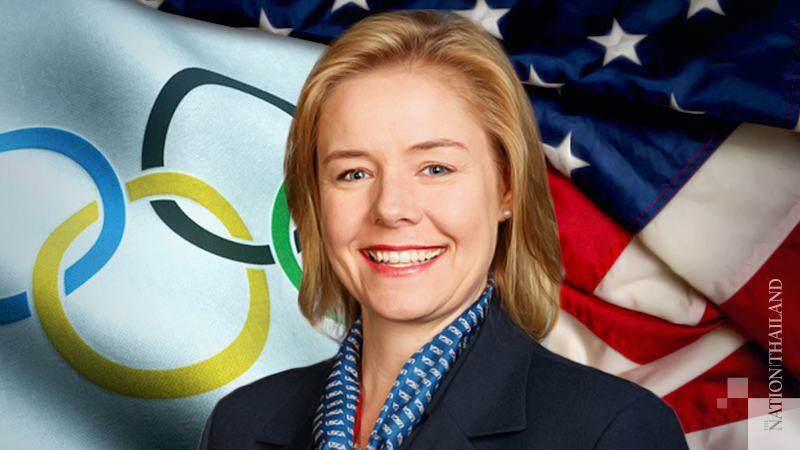
Sarah Hirshland, the USOPC’s chief executive
By The Washington Post · Rick Maese
The International Olympic Committee won’t require coronavirus vaccines of athletes competing at the Tokyo Games next summer, but the U.S. Olympic and Paralympic Committee is working on a plan to educate American athletes and possibly facilitate immunization for its Olympic hopefuls.
USOPC officials said on a conference call with reporters Monday that the organization would encourage Team USA athletes to take the vaccine when it becomes available. When asked whether the organization would mandate a vaccine for its athletes, Sarah Hirshland, the USOPC’s chief executive, said a full plan had not yet been developed.
“Certainly we’ll have discussions about access, availability, the proper timing, ensuring we understand any potential allergy reactions, side effects, things of that nature,” she said, “so we can be very thoughtful as we are providing information to the athlete community as they make their decisions and choices. … Suffice it to say, we will encourage and make available to those who desire it, a vaccine.”
Many leagues and sport organizers are hoping the vaccine brings some normalcy to the 2021 competition calendar, though most officials are also publicly saying they have no intention to jump the line. Hirshland said the country’s priority right now should be vaccinating people who are high-risk and also working on the front-line of the covid-19 battle, not necessarily athletes.
“As time goes on and the vaccine becomes more readily available, we certainly will be ready to be supportive of our athletes and the rest of the delegation as we think about going abroad,” she said.
The United States will send 550-600 athletes to Tokyo next summer for the postponed Summer Games. The American delegation likely will number hundreds more, including coaches, staff and officials.
IOC President Thomas Bach said earlier this month that the IOC would not require the vaccine of its athletes but would encourage everyone coming to Tokyo to seek out the immunization, if possible. He said vaccinating against covid-19 is good for athletes’ “safety and their health” but is “also a sign of respect for their fellow athletes” and for the host nation.
Hirshland said the USOPC is still a month or two away from finalizing any sort of vaccine plan for its Tokyo-bound delegation.
The USOPC addressed the Tokyo Games and several other topics on a conference call with reporters Monday that followed its final quarterly meeting of the year. While the organization’s board of directors was meeting last week, the Court of Arbitration for Sport (CAS) reduced Russia’s ban from high-level international competition from four years to two, sparking frustration and outrage in some Olympic corners.
“The ruling sort of watered down many of the sanctions that [the World Anti-Doping Agency] had initially imposed,” said Susanne Lyons, the chair of the USOPC board. “We don’t believe it honors clean athletes or builds confidence in the global anti-doping system.”
She said the USOPC aims to be “a mediator and an influencer” with other anti-doping stakeholders, and “we’ve made our feelings known to WADA and offered our help and support.”
“What we’ve decided to do is really increase the volume on our concerns about the necessary evolution that has to happen to get to the highest level of transparency, fairness and rigor,” she said, “on how anti-doping is governed around the world.”
Monday marked the first time USOPC officials fielded questions since announcing this month that it would not sanction American athletes who stage podium protests over human rights or social justice issues at an Olympics. Hirshland said Monday athletes who choose to demonstrate could still face punishment from the IOC or international federations. She said the USOPC’s working group that’s focused on protests will continue its work next year, further evaluating the issue and potential consequences for athletes.
“Now comes the hard work of determining, defining and, ideally, asking the IOC to be clear about their rules and the ramifications of those rules in advance,” Hirshland said. “. . . Our timeline to complete that work is certainly in the first quarter, giving us ample time to not only do the work but then communicate and ensure that the athlete population who may be competing this spring has time and clarity in advance, so they can make thoughtful and informed choices.”
Also at its quarterly meeting, the USOPC board added six new members, increasing the number of athletes voting on the organization’s most powerful decision-making body and keeping in line with new federal regulation. Signed into law in August, the Empowering Olympic, Paralympic and Amateur Athletes Act imposed a series of reforms in the Olympic world and called on the composition of the USOPC’s board of directors to include at least one-third amateur athletes. With the addition of two new athlete “at-large positions,” there are now nine current or former athletes serving on the 19-member board,
“The pendulum often swings a bit in the world of governance,” Lyons said. “That last major change was to make the board smaller, to make it more independent. And now we’re realizing perhaps that pendulum swung a little bit too far, as far as not having as much constituent voice from our [national governing bodies] and from our athletes as was necessary.
“We saw some of the dangers of not having athlete voice elevated as much as it could be in governance,” she continued. “When we saw things like what happened with gymnastics, I think, maybe could be avoided in the future if we have the people most impacted by the work that we do sitting more closely at the table.”
The new athletes serving on the board are Daria Schneider, a former champion fencer who now coaches at Harvard; former swimmer Donna de Varona, a two-time Olympic medalist; John Naber, who won five Olympic medals during his swimming career; and Muffy Davis, a seven-time Paralympic medalist.
Three current board members – Robert Bach, Bill Marolt and Whitney Ping – will depart the board their terms end later this month.
 SootinClaimon.Com