
#SootinClaimon.Com : ขอบคุณแหล่งข้อมูล : หนังสือพิมพ์ The Nation.
Lawmakers rush to vote on new 5,593-page tax and spending bill before end of day
InternationalDec 22. 2020
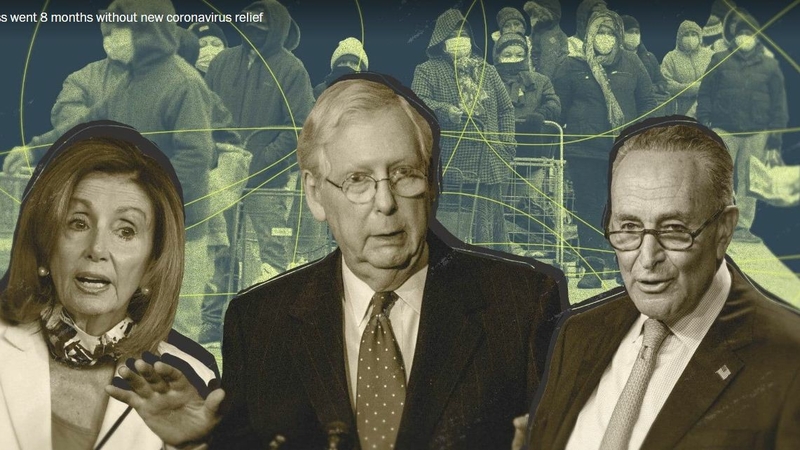
By The Washington Post · Jeff Stein, Mike DeBonis
WASHINGTON – Congressional leaders on Monday introduced a mammoth 5,593-page tax and spending bill that packages together emergency economic relief, government funding, and tax cuts into what is one of the largest pieces of legislation ever considered by the U.S. Congress.
And it might pass by the end of the day.
The bill shows the urgent rush by the White House and Congress to complete numerous unresolved tasks before the holiday recess during a lame duck session of Congress.
The $900 billion economic relief component of the legislation has received the most attention, but the bill would do many other things, including funding of federal agencies through September 2021 and the extension of tax breaks for numerous businesses for at least the next year.
The House is planning to vote on the measure later in the day, though the Senate vote could come late at night. If they do not pass the bill or other measures to fund the government, a government shutdown would begin at midnight. Lawmakers reached a deal on the agreement Sunday.
Senate Majority Leader Mitch McConnell, R-Ky., said Monday that lawmakers are “going to stay here until we finish tonight.”
The speed and scope of the legislative rush startled some lawmakers as details from the massive bill emerged Monday. The proposal includes numerous provisions – from Smithsonian American Women’s History Act, legislation to rein in surprise medical billing, and policies supporting Tibet – that appear to have nothing to do with the coronavirus pandemic or national economic emergency.
Lawmakers will have a short period of time to review parts of the bill before voting on it.
Senate leaders announced the breakthrough agreement on a coronavirus relief package Sunday night after several weeks of negotiations. The legislation brokered by congressional leaders includes about $325 billion in business relief, including about $275 billion for another round of Paycheck Protection Program funding. It would also extend federal unemployment benefits of up to $300 per week, which could start as early as Dec. 27.
The legislation also addresses dozens of other needs, including $45 billion for transportation needs such as state transportation departments and Amtrak, $82 billion for schools, $20 billion for vaccine distribution, and $13 billion for a major expansion in food stamps.
One of the main planks of the bill includes sending direct payments of $600 to Americans who earned less than $75,000 in the preceding tax year. Treasury Secretary Steven Mnuchin on Monday said millions of Americans could begin seeing stimulus payments as soon as next week.
Although many lawmakers from both major political parties have said the bill would provide relief to businesses and households hammered by the ongoing coronavirus pandemic, disagreements had sprung up about whether it would be enough.
Mnuchin said in a CNBC interview Monday that the package was “fabulous” and should see the United States through the other side of the economic recovery.
President-elect Joe Biden said in a statement Sunday that “this action in the lame duck session is just the beginning. Our work is far from over.”
In the CNBC interview, Mnuchin cited conversations with numerous business executives whose firms saw an immediate boost from the disbursal of stimulus payments. “The direct payments get into the economy very quickly,” Mnuchin said. “This is a large bill and it has a little bit of everything for everybody.”
Sen. Pat Toomey, R-Pa., told CNBC on Monday that he opposed another round of stimulus payments, noting that many Americans have not lost their jobs during the pandemic but will still receive the government assistance. A bipartisan framework released this month excluded another round of stimulus payments.
Despite the breakthrough on the deal, market futures tumbled Monday as European countries implemented travel bans in response to a virus mutation in Britain.
The economic relief component of the bill would bring the total level of emergency government spending this year to over $3.3 trillion, illustrating the sheer volume of aid that the White House and Congress tried to use to address the coronavirus pandemic. In March, when the pandemic’s impact on the U.S. economy intensified rapidly, Congress passed the $2 trillion Cares Act. That law distributed $1,200 stimulus checks to more than 100 million people, created a massive small business aid program, extended money for airlines, unemployment benefits, provided rental and student loan assistance, and authorized a range of other programs.
Many economists say that law helped prevent a major economic contraction, but a number of the programs expired over the summer or later in the year, just as the pandemic began raging across the country again. After the November election, Democratic leaders also signaled that they would back down from their previous insistence on a giant spending bill after Biden won the election, expressing hope that he would be willing to pursue another package in early 2021.
The massive bill spotlights how many things were left unresolved by Congress and the White House this year, particularly as political brawls dominated Washington in the months leading up to the election. Many of the tax provisions inserted into the bill have to deal with expiring provisions that lawmakers have had all year to tackle. And they have had months to vote on a government funding bill to keep agencies operating through September, but those talks bogged down into debates about immigration, and lawmakers from both parties dug in before the Nov. 3 election.
The stimulus component was debated for months and led to numerous fights between the White House and congressional leaders. House Democrats passed a $3.4 trillion measure in May that the White House and Senate Republicans largely dismissed. There was an effort to revive talks in July and August, but those also went nowhere amid a fight over whether to extend aid to states and cities.
The stimulus talks were revived in recent weeks after a bipartisan group of mostly rank-and-file lawmakers in the House and the Senate tried to push a more tailored bill into law, worried about what a new surge of coronavirus cases might mean for the economy. They decided to cut out two of the more divisive provisions to secure a broader agreement.
These include a demand from Democrats for more money for cities and states. That money that Democrats wanted was largely stripped out of the final bill. As was a push by many Republicans that companies have broad protection from employee-led lawsuits and regulatory actions if there are outbreaks at workplaces. Fights over those measures are expected to continue in 2021.
 SootinClaimon.Com