Tall, dark and healthy – say hello to Thailand’s newest canned coffee
Aug 24. 2020
By The Nation
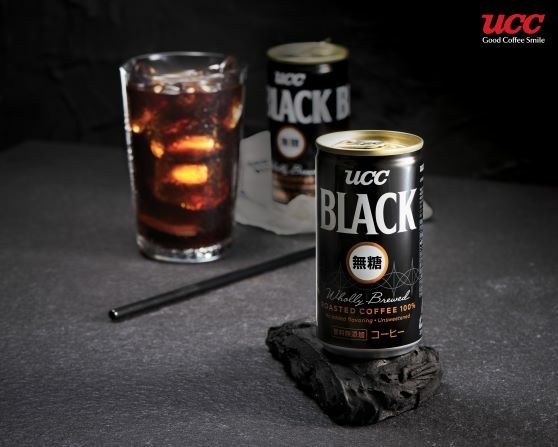
Fifty years after its pioneering brewing techniques delivered the world’s first authentic canned coffee, Ueshima Coffee Company or UCC is launching a healthy version of its ready-to-drink brew.
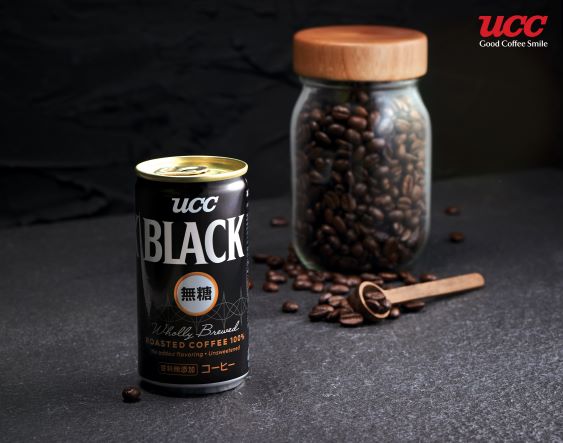
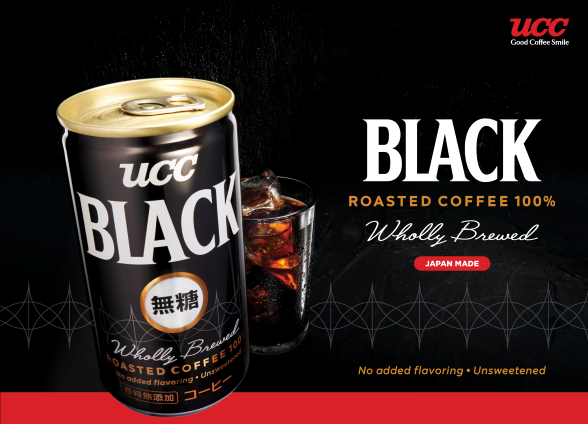
UCC Black is a premium unsweetened black coffee (no sugar, no preservatives, no artificial flavour) suitable for java lovers seeking a healthier option.
The company boasts it uses only 100 per cent roasted pure black coffee beans and natural water to provide real and intense taste. The result, it says, is a 100-per-cent pure black coffee taste with a roasted aroma that lingers in every sip.
Nobuo Kinoshita, chairman of UCC Ueshima Coffee (Thailand), lifted the lid on the new Japan-standard brew:
“Our UCC Black Coffee is the most orthodox product in the line-up. It comes in a convenient can, so you will enjoy its aromas and smoothness on the go. Unlike most coffees, there is no bitter aftertaste: only the great flavour again and again. … Our UCC Black coffee uses a deep-roasting method. The beans are carefully extracted at three temperature levels to achieve the optimum coffee taste, to make our customer smile.”
UCC Pure Black coffee in 185gm cans is now available nationwide at supermarkets and shopping malls for Bt39. Quench your thirst for knowledge at https://www.facebook.com/UccCoffeeThailand/.
Mango Tree and COCA restaurants to be fed by eco-friendly farms
Aug 20. 2020
By The Nation
Thai dining specialist Mango Tree and COCA Restaurants Worldwide says it is getting back to business in Asia by reopening with a renewed focus on natural cuisine, and a brand new supply chain model to ensure healthy and sustainable produce.
The peak of the Covid-19 outbreak saw 68 of the group’s 71 outlets close, but 62 have now relaunched under “new normal” safety and sanitation standards.
Mango Tree and COCA said examples of nature recovering during lockdown – including blue skies over usually smoggy cities and the return of wildlife to tourist areas – had inspired it use the operational hiatus to pioneer a new era of organic farming.
The fruit is the COCA Boutique Farm in Thailand, dedicated to cultivating local and seasonal produce in a responsible manner, the operator said. The farm features five greenhouses for fresh herbs and vegetables plus orchards of mango and banana trees, large fishponds and free-range chicken runs.
The facilities will be run in partnership with local communities and in line with permaculture farming philosophies and techniques, said the operator.
The concept will be gradually rolled out across Asia, ensuring that Mango Tree and COCA restaurants have a trusted source of natural ingredients, it added. This would support the company’s focus on healthy dishes and drinks, including its recently launched vegan menus.
“With our new model, underpinned by our growing network of COCA Boutique Farms, we’re now in a position to continuing expanding across the globe,” said Trevor MacKenzie, global managing director for Mango Tree and COCA Restaurants Worldwide.
The group’s entire collection of non-airport restaurants in China, Hong Kong, Japan and the UAE are now operational, and the company recently launched a new restaurant at the Tokyo Dome. The company said it remains on track towards achieving its target of 100 outlets worldwide by 2025.
Bangkok sushi storm brewing as Oishi launches cloud kitchens
Aug 20. 2020
By THE NATION
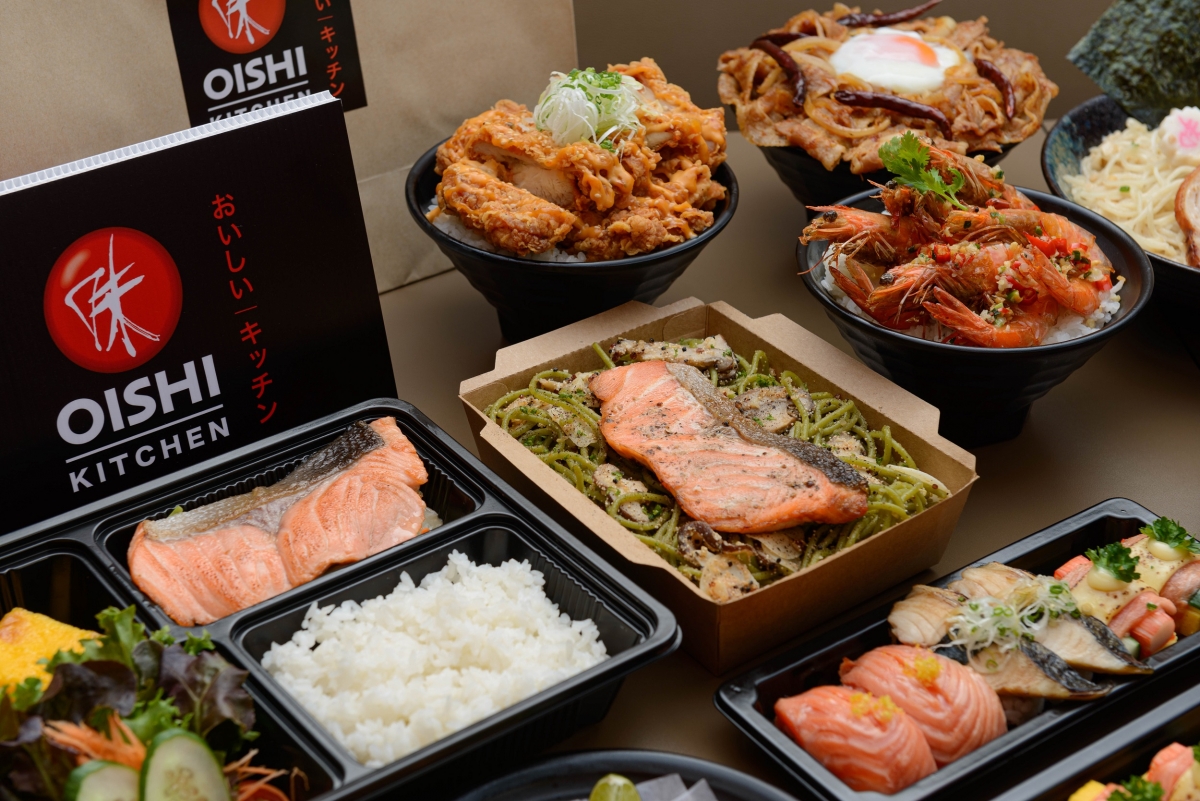
Oishi is opening its first cloud kitchen – Oishi Kitchen – giving local at-home diners access to more than 100 dining options from its four outlets, Oishi Buffet, Oishi Ramen, Kakashi and Oishi Delivery.
The cloud kitchen is a new business model that’s fast becoming popular as dining trends veer away from eating out towards home delivery, said Paisarn Aowsathaporn, Oishi Group’s executive vice president of Food Business.
The Oishi Kitchen will allow diners to order dishes from any or all of the four outlets and combine them in one order via delivery apps like foodpanda, GrabFood and LINE MAN from today onwards.
The first Oishi Kitchen has already opened its doors at Big C Extra on Rama IV Road and the company plans to open another five to 10 cloud kitchens in Bangkok communities by 2021.
“Continuous and consistent development of businesses and services is our key strategy. Our aim is to bring new experiences and maximum satisfaction to customers, as well as reinforce the image of Oishi as the ‘King of Japanese Food’ in Thailand,” Paisarn said.
Singapore Food Festival serves up journey of culinary rediscovery
Aug 20. 2020
By The Nation
As part of the SingapoRediscovers campaign, SFF will go virtual for the first time – allowing festival-goers to support local F&B players by rediscovering the rich depth of Singapore’s gastronomic scene For the first time, the Singapore Food Festival (SFF) will take on a virtual format this year.
Themed “Rediscover the Foodie in You”, SFF 2020 will see more than 25 F&B partners serving up gastronomic experiences for festivalgoers to enjoy at home.
“The Singapore Food Festival has always been about putting the spotlight on our vibrant and evolving local F&B landscape. While we are unable to host SFF in its usual form, we are excited about the possibilities that the festival’s very first virtual edition will bring,” said Ranita Sundra, director of Retail and Dining at the Singapore Tourism Board.
Programme highlights:
This year’s festival has four components: Live Masterclasses, Food Bundles, Virtual Food Tours and SFF food merchandise.
The Live Masterclasses, which are free for viewing, will offer a behind-the-scenes look into the creative process by renowned chefs and experts. Viewers can tune in via Webex for their tips, tricks and secrets. A total of 17 masterclasses will be held, featuring some of the top names in our F&B scene – such as award-winning pastry chef Cheryl Koh of Tarte by Cheryl Koh, chef Julien Royer of three Michelin-starred Odette and bartending honchos Colin Chia and Charmaine Thio of speakeasy bar Nutmeg & Clove.
Meanwhile mobile marketplace Shopee will be hosting Food Bundles that festival-goers can order for delivery. These food bundles feature tantalising offerings and dishes that Live Masterclass chefs and presenters will demonstrate. Look out for treats such as Damn Easy Hokkien Mee (right) by Chef Ming Tan who will cook from Singapore virtually alongside Chef Margarita Forés who will join live from the Philippines, and Kueh Kuehs presented by Jeremy Nguee of Mrs Kueh and Claire Ariela Shen of Cooking Art.
For foodies who also love exploring, the Virtual Food Tours lined up this year will surely whet appetites. Rediscover Singapore’s charming precincts with local TV personality Chua Enlai. Journey virtually through the historical Tanjong Pagar and Chinatown precincts, as well as whimsical Katong and Joo Chiat to discover stories behind popular eats in the area, tales behind its heritage food businesses, and lesser-known food gems..
Limited slots are available for participants to join local tour guides on a physical guided tour over the two weekends, with more details available on the SFF website.
Finally, foodies will be treated to SFF food merchandise such as Uniqlo’s UTme! range of T-shirts that pay tribute to Singapore’s much-loved hawker culture with 8 exclusive limited-edition designs featuring famous hawker dishes – think laksa, kueh tutu and nasi lemak– specially created for SFF 2020 by popular local illustrator Mandy Kew. Local craft brewery, Brewerkz, has developed an SFF exclusive beer, Passion Gao Siew Dai, to accompany the delicious festival dishes. Glico x Wee Nam Kee’s collaboration this year to produce Chicken Rice Pretz will surely be another one to look out for, while local bakery stalwart Cedele’s prawn otah cookies and Violet Oon’s signature Sambal Bajak and Goreng Chilli (the condiments go best with grilled meats and seafood) will also be made available for sale.
The first 90 early-bird participants who pre-book the SFF 2020’s offerings – such as pre-booking a Live Masterclass session or ordering an SFF Masterclass food bundle in advance – will be rewarded with SFF Boxes that contain some of the delicious SFF food merchandise.
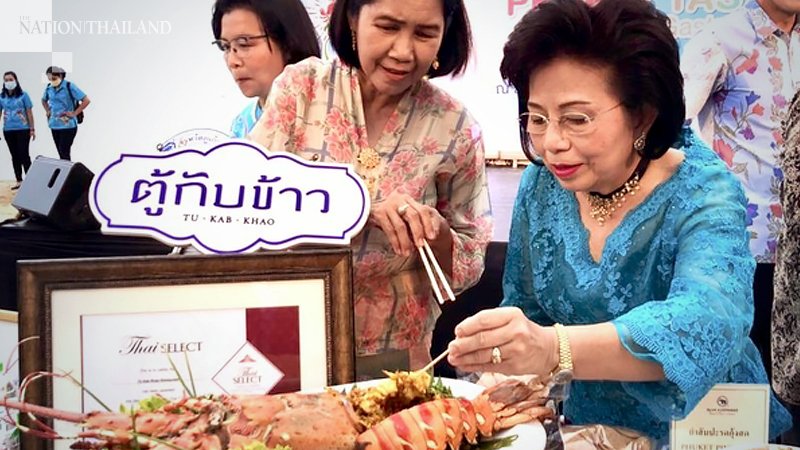
The Commerce Ministry is serving up the “Phuket Tastival & Seafood Gastronomy” festival in August and September to showcase the delicacies of the Unesco-recognised foodies’ paradise.
Phuket was last year named among the world’s top 10 tourist destinations but the Covid-19 outbreak has wrecked its tourism industry worth Bt400-billion per year, closing hotels, restaurants and other tourism businesses – many of them for good.
But visitors are now flowing back to the island, where a moving feast now awaits them. From August 15 streets will be lined with booths selling Phuket’s renowned seafood treats while restaurants and hotels serve up a sophisticated array of southern specialities.
The Phuket Tastival & Seafood Gastronomy festival runs from August 15 until September 20 at the following destinations:
August 15-17 at Chaloem Phra Kiat 10 park, Saphan Hin bridge along the seafront Kho Chan Canal.
August 22-23 at Rawai Beach.
August 29- 30 at Dolphin Park, Patong Beach.
September 5-6 at Palai Beach.
September 12-13 at Queen Sirikit’s 72nd Anniversary Chalerm Prakiat Park (Dragon Park).
Hua Hin to transform into a foodie’s paradise this weekend
Aug 04. 2020
By The Nation
The Tourism Authority of Thailkand (TAT), Hua Hin Municipality and Centara Grand Beach Resort and Villas Hua Hin have tied up to jointly hold a food festival on the popular Hua Hin beach during the first weekend of August.
The event will give holidaymakers a chance to sample offerings from 50 food outlets, serving everything from street bites to high-end fare from top hotels.
Basking in the spotlight, however, will be Centara’s very own “Pizza Paradise” created by its Coast Beach Club and Bistro. Apart from traditional toppings, this trendy pizza bar will also feature some interesting “must-try” options like the quintessential “Thai krapow”, or chicken or pork fried up with chillies and hot basil.
Apart from palate-tempting offerings, the event will also include performances from local bands and a host of activities such as cooking contests and cooking shows.
The Hua Hin Food Festival 2020 will be held on Friday and Saturday (August 7 and 8) from 7pm onwards at Hua Hin Beach. Entrance is free.
Coca-Cola launches new sugar-free Coke with scent of orange
Jul 09. 2020
By The Nation
The Coca Cola system in Thailand has said it has introduced a healthier choice of soft drink.
“Coke No Sugar Orange”, with the fizzy taste of ‘Coke’ is complemented with the fresh scent of orange, for the first time in Thailand, based on consumer preference for orange as one of the most preferred flavours after Cola, the company said.
The launch is in line with the trend for more health-conscious lifestyles in Thai society, the company said.
Munthana Lorgrailers, marketing director of Coca-Cola (Thailand) Ltd, said: “… Thai consumers’ more health-conscious lifestyles are reflected through the rapid growth of sugar-free beverages at 52.5 per cent growth rate – or four times higher than that of the overall carbonated drinks segment, with our ‘Coke No Sugar’ as the brand with the highest market share…
“The launch of ‘Coke No Sugar Orange’ represents our resumption of full-range marketing activities after activities were paused at the end of March for Covid-19 community relief and response efforts,” said Munthana.
White House directs Agriculture Department to extend farmer bailout money to lobster industry
Jun 25. 2020
By The Washington Post · Jeff Stein, Rachel Siegel · NATIONAL, BUSINESS, WORLD, POLITICS, FOOD
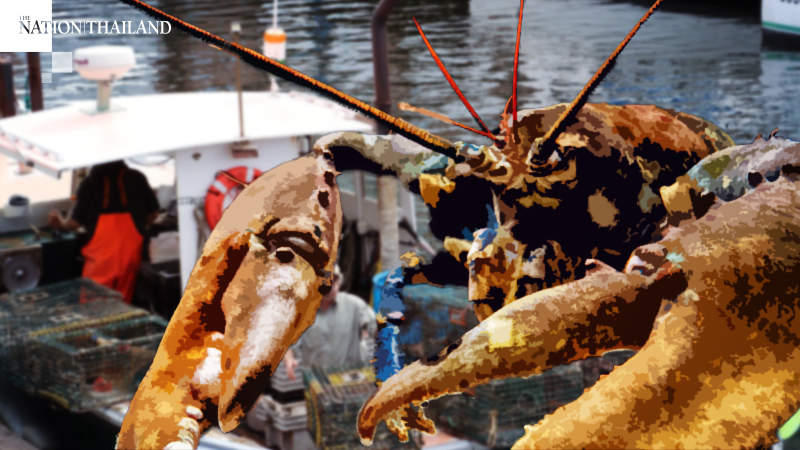
WASHINGTON – The White House ordered the Department of Agriculture on Wednesday to extend farm bailout aid to the U.S. lobster industry, which has suffered under strained trade relations with China and tit-for-tat tariffs that significantly reduced exports to one of its biggest foreign markets.
The order, signed by President Donald Trump on Wednesday, comes weeks after a group of lobster fishermen in Maine asked the president for help and as the administration’s trade agenda is increasingly under strain amid heightened tensions with China.
It was a relatively minor action, though, given the mounting levels of concern about the broader economy and the rapid increase in coronavirus cases around the country.
The Trump administration created a $30 billion bailout program to compensate farmers hurt by its trade war with China. The program has proven popular with some farmers, but the extended bailouts have faced criticism for disproportionately helping states in the Midwest that the president depends on politically. Maine could be a swing-state in the 2020 election five months away, and Republican politicians in the state have urged the president to provide financial relief to the lobster industry.
White House officials defended the action as offering critical relief to lobster fishermen in need of help, while critics said the move underscores the arbitrary nature of the administration’s attempts to ease the pain caused by their trade war.
“On his visit to Maine several weeks ago, lobster fisherman asked for the president’s help defending against the retaliatory tariffs of the Chinese government, and the president delivered today with a presidential memo that provides assistance to those who have been harmed,” said Peter Navarro, a senior White House economic official and trade adviser to the president. “This is yet another example of Trump promises made and kept.”
Tony Corbo, senior lobbyist at the watchdog Food & Water Watch, said: “It just seems to be a political game the Trump administration is playing with taxpayer funds to shore up their base of support … This whole thing is a shell game, as far as I am concerned.”
Lobster exports boomed in the past decade as China’s growing middle class developed a taste for the Atlantic product. After Trump imposed tariffs on a wide range of Chinese products in 2018, Beijing responded with a 25 percent levy on $34 billion worth of U.S. goods, including American lobster.
Much of Maine’s lobster business has since been redirected to Canada, where lobster sales to China have soared. Economists and industry officials worry that the longer these supply chains are reoriented at the hands of the trade war, Maine and its long-standing lobster industry risks permanently losing out.
Last year, when the Agriculture Department revealed the details of the $16 billion aid package, the list covered dozens of commodities, including barley, corn, wheat and hogs. But the lobster industry did not make the cut.
The White House had resisted calls from Maine’s representatives to protect the industry. Sens. Susan Collins, a Republican, and Angus King, an Independent, and Reps. Chellie Pingree, a Democrat, and Jared Golden, a Democrat, had all urged the Trump administration to consider financial relief for the industry as of last fall.
At a meeting in Maine in early June, the president listened to complaints from lobster fishermen and Maine’s former Republican governor, Paul LePage. Told about the tariff problems facing lobster fishermen, Trump responded: “I got it. That’s an easy one to handle. That’s, like, easy.”
The new White House order directs the Department of Agriculture to extend assistance to the industry’s fishermen and producers caught in the trade crossfire. The order also instructed the department to update the White House monthly on China’s progress in meeting its purchase requirements, with respect to U.S. seafood, under its “phase one” pact. It also authorizes U.S. Trade Representative Robert Lighthizer to enact “reciprocal retaliatory tariffs” on seafood exports from China, should China not meet its seafood purchase agreement under the “Phase One” trade deal signed by the two superpowers earlier this year.
In mid-January, Trump and Chinese Vice Premier Liu He signed the “phase one” trade pact, with the expectation that further negotiations were to come. That was before the coronavirus pandemic took root in China and the United States, further straining political ties between the two superpowers and plunging the U.S. economy in the worst recession in decades.
Tai Tong – Bangkok’s tasty secret weapon against wet-season chills
Jun 23. 2020
By The Nation
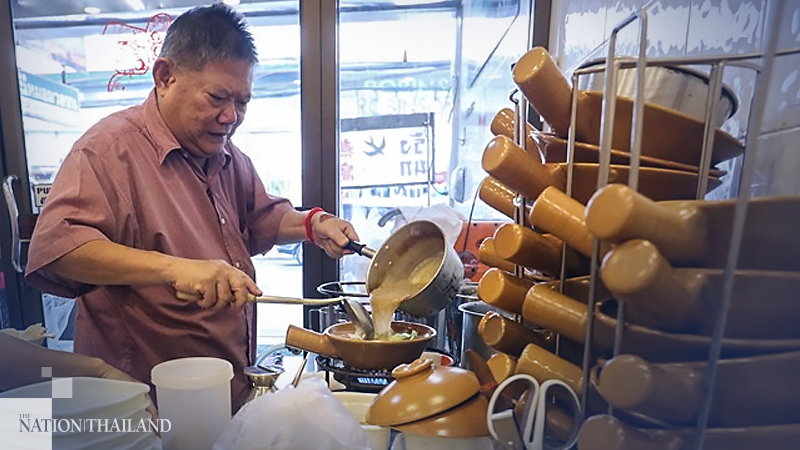
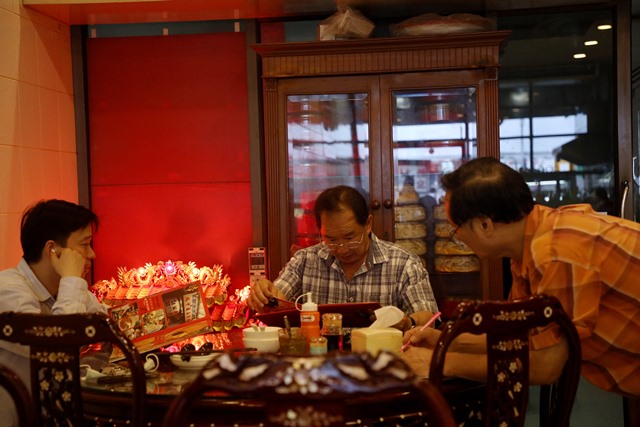
Every year, the first monsoon rains awaken Bangkokians’ appetite for hot soup as a belly-warming defence against the cold wind. Many head straight for Tai Tong, opposite Robinson Bangrak department store, a culinary landmark that has been serving prized Chinese specialities for more than half a century in the neighbourhood.
Phaisan “Hei Hui” Asawathanaphong said his family began selling their now-famous Chinese red-stock soup from a cart in the 1960s, during the dictatorship of Field Marshal Thanom Kittikachorn. As the number of customers swelled, the business grew into a small restaurant, earning his father fame and visits from well-known politicians and historic figures.
“Tai Tong means ‘mainland’. In the past, we mostly served Chinese immigrants who tucked into our food every day on the restaurant’s first floor and second floor,” said Phaisan.
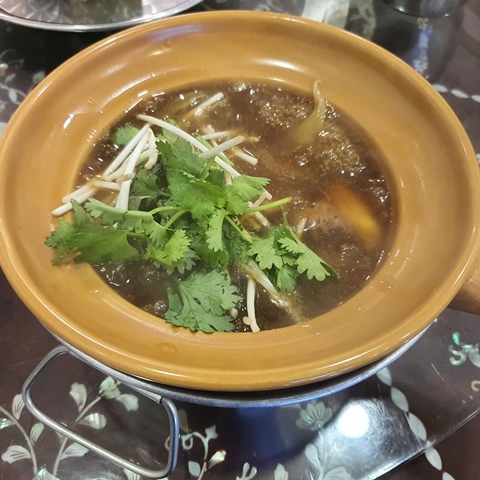
The secret to the red stock’s authentic and addictive flavour lies in high-quality ingredients. Phaisan has sourced sea cucumber from Chile, abalone from Mexico, and noodles from Hong Kong, but refuses to use any MSG or other chemicals. The broth is boiled with the finest quality whole chickens, then simmered to create a clear but rich stock which is used in various dishes, including fish maw soup (with crab meat and shiitake mushrooms) for Bt300 to Bt500, sea cucumber in red gravy priced at Bt1,000-Bt1,500, and mutton in red gravy (Bt600), or abalone with red sauce (Bt1,000-Bt1,500).
However, the restaurant also serves shark fin so may not be to everyone’s taste.
“For soup we use good-quality bird’s nest plucked from caves in Trang and Phuket. In the past, we sold bird’s nest soup for Bt2- Bt3 per cup, or Bt4.50 if egg was added,” said Phaisan.
These days, the same dish costs customers Bt200-Bt500 per cup but there is no shortage of orders. “We order our crab meat from Surat Thani, but we wait for about three months until their claws are very big,” he added, while showing off his cooking skills.
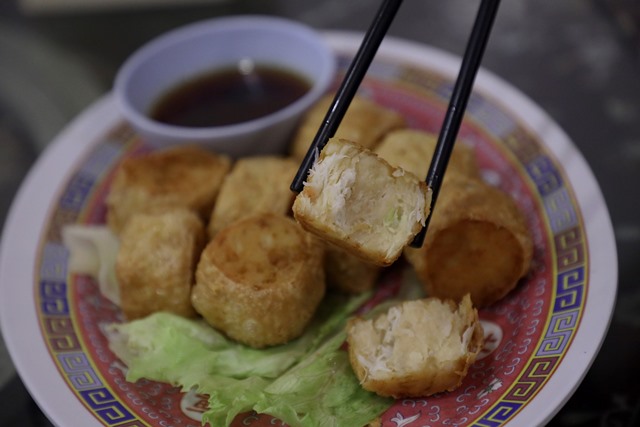
Another speciality at Tai Tong is the Hoi Jo or deep-fried crabmeat rolls, priced at Bt60 per piece. The flavour is rare and prized by customers since the rolls are 100-per-cent crab meat, untainted by the pork, lard or water chestnuts added by other restaurants.
Tai Tong’s owner has been steadfast in refusing to franchise the business, preferring to stay true to his authentic recipes. That authenticity has won him plenty of admirers back in China.
“Some have even tried to hire me to cook in Beijing,” said Phaisan with a grin, before returning to the hot stove to satisfy his small army of loyal Bangkok customers.
From Spam to corned beef, sales of canned meat are booming
Jun 21. 2020Cans of CJ CheilJedang Spam ham sit on the production line at the company’s factory in Jincheon, South Korea. MUST CREDIT: Bloomberg photo by SeongJoon Cho.
By Syndication Washington Post, Bloomberg · Ken Parks, Jackie Davalos, Greg Ritchie, Heesu Lee · BUSINESS, WORLD, RETAIL Canned meat is having a moment.
Demand is booming across the globe. In the U.S., sales surged more than 70% in the 15 weeks ended June 13. In the U.K., consumption of canned corned beef has taken off. Even in South Korea, where Spam is an old favorite, sales are expanding at the fastest pace in years.
At first, people were loading up on pantry staples with a long shelf life during lockdown conditions. Then, shortages of some fresh meat supplies, especially in the U.S., also helped to drive sales. Now, the economic downturn is underpinning demand.
CJ CheilJedang employees sort cuts of pork on the production line for Spam ham at the company’s factory in Jincheon, South Korea in 2019. MUST CREDIT: Bloomberg photo by SeongJoon Cho.
There’s the obvious factor of income here. With millions thrown out of work in the last few months, consumers are looking for a way to cut back on grocery bills, and they’re trading in fresh meat for canned varieties. But there’s also something deeper going on — a return to comfort food and nostalgia in troubled times.
Ray Herras, a graduate student at Columbia University, is a Filipino American. Spam gained popularity in the cuisines of Southeast Asia after occupying U.S. forces brought the canned ham with them. For Herras, Spam is a taste of childhood.
“I grew up eating Spam. It is deeply ingrained in Filipino culture, but I wasn’t really eating Spam until quarantine,” said Herras, who started adding it to his grocery purchases at least every other week. He’s not sure how much longer he’ll keep the buying up, but it’s always a staple whenever he’s “feeling homesick,” he said.
Canned meat has been available for more than 80 years. It’s sometimes frowned upon by filet-mignon loving elites, but it’s also got a cult following. Spam musubi — think of it like a porky twist on sushi — is a popular snack in Hawaii. In Korea, it’s eaten with kimchi and steamed rice. In the U.S., a slice of fried Spam with eggs can be a breakfast treat. And in the U.K., tinned corned beef is served up as hash with potatoes and fried onions.
But while the die-hard fans are always there, the recent boom in sales is something even the canned meat makers didn’t see coming.
“Even I thought it could be difficult to increase our sales of canned meat to more than what we expected,” said Kasper Lenbroch, chief executive officer of the unit that houses the Tulip brand at Danish Crown Group, Europe’s top meat processor. “It’s not very often when you’re in food that you can see traditional products like these grow as much as they have done right now.”
Sales of Tulip Pork Luncheon Meat, sold in 120 markets around the world, are expected to go up 25% this year, Lenbroch said. Sales are “growing all over,” including in the U.K., Germany, Greece, Japan and Singapore, among many others.
Marfrig Global Foods SA, the Brazilian beef giant, is seeing a similar jump at its Uruguay business, which supplies corned beef to the U.S. Sales of the product are expected to reach as high as 3,500 metric tons this year, said Marcelo Secco, CEO of the unit. That would be up almost double compared with 2019, when about 1,800 tons were sold, he said.
Secco points to the recent jump in U.S. meat prices as turning consumers on to canned alternatives. Some of America’s biggest livestock slaughter plants were forced to close earlier this year after coronavirus outbreaks saw thousands of workers falling ill. That caused wholesale beef prices to double in about a month. While the market has come back down, corned beef was there to help fill supply gaps — and now that consumers have returned to the old staple, they may be more inclined to stick with it.
“There isn’t a supermarket in the U.S. that doesn’t have corned beef,” Secco said. “It’s a product that everyone knows.”
While U.S. sales of canned meat have slowed since an initial surge when lockdowns started in mid-March, they are still well above 2019 levels. In the week ended June 13, sales were up 17%, according to Nielsen data.
Hormel Food Corp.’s Spam was already seeing sales growth in the past several years, but nothing like the increase taking place now.
“The last time Spam saw a similar pattern in interest was back to when the brand started during the Great Depression. The economic situation wasn’t great — that was carried into World War II,” said Brian Lillis, Hormel’s senior brand manager for Spam. “What we saw over the last few months is really people all over the country purchasing the product.”
Spam has a storied history in South Korea, the No. 2 consumer after the U.S. It’s a popular holiday gift sold in lavish packages, which make up about 60% of annual sales, according to CJ CheilJedang Corp., the Korean producer of the tinned ham.
When coronavirus cases started spreading in the country in February and March, consumers stayed home and cooked more — but many people still had leftover Spam from holiday packages. It wasn’t until April that sales really started taking off.
In the two months of April and May, CJ saw Spam sales soar more than 50% from a year earlier.
“The outbreak of coronavirus has revived the domestic canned food industry, which was on the verge of entering a period of stagnation,” said Lee Seung Hoon, a spokesman at CJ. “Now we are expecting growth in the market.”


.jpg)
.jpg)
.jpg)
.jpg)
.jpg)
.jpg)

.jpg)

 Cans of CJ CheilJedang Spam ham sit on the production line at the company’s factory in Jincheon, South Korea. MUST CREDIT: Bloomberg photo by SeongJoon Cho.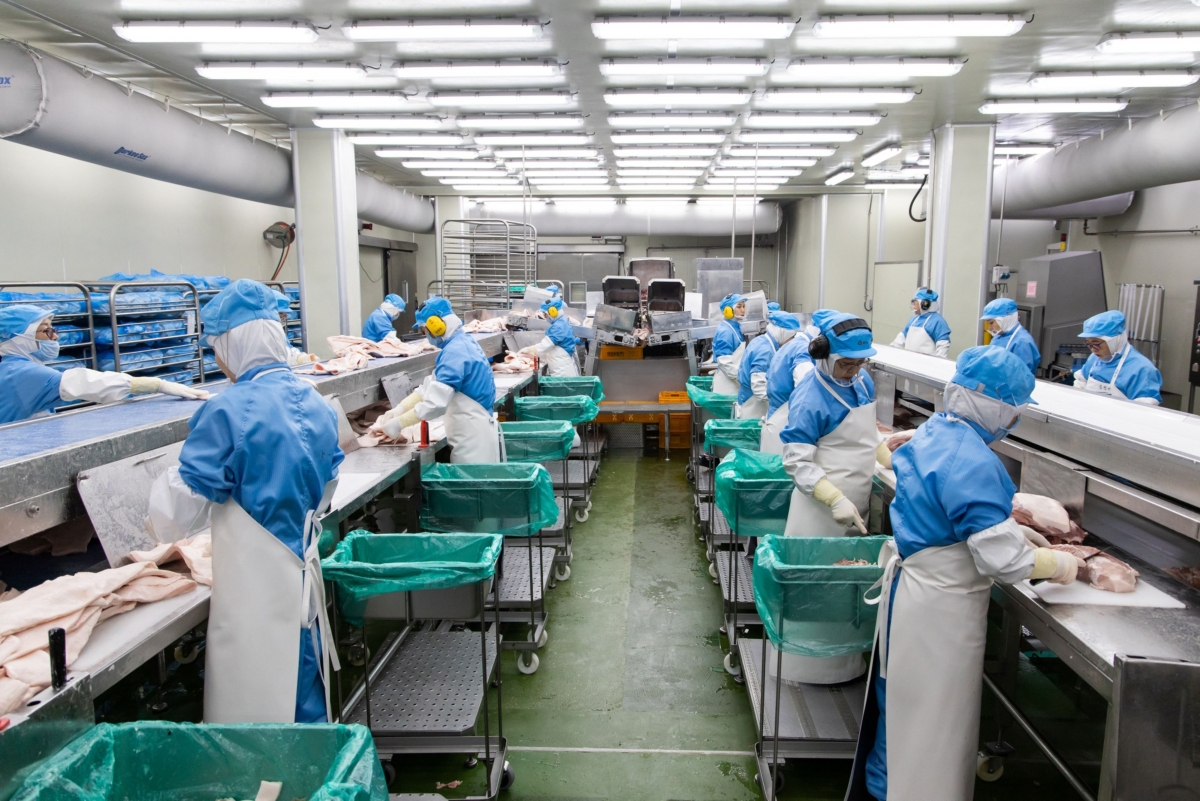
 SootinClaimon.Com