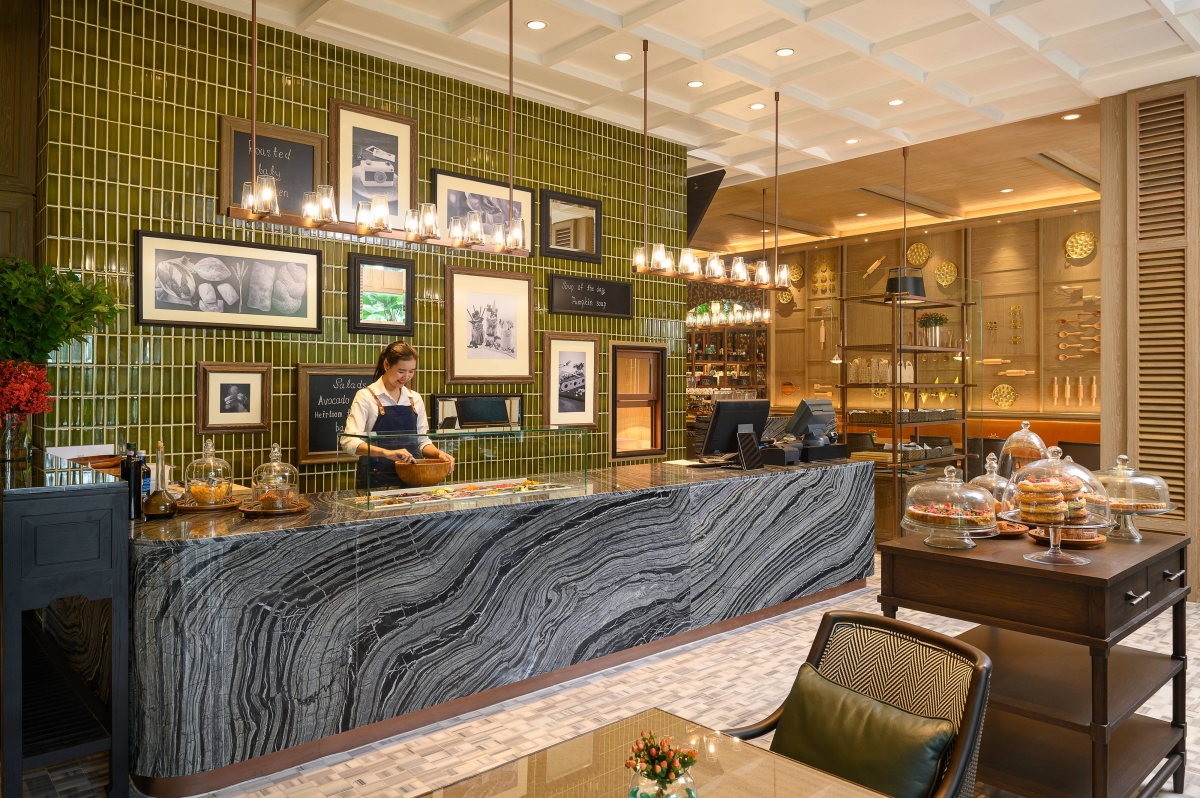
Emquartier’s special markets to support Thai airlines crew hit by Covid-19 #ศาสตร์เกษตรดินปุ๋ย

#ศาสตร์เกษตรดินปุ๋ย : ขอบคุณแหล่งข้อมูล : หนังสือพิมพ์ The Nation.

https://www.nationthailand.com/food/30389388?utm_source=category&utm_medium=internal_referral

Emquartier’s special markets to support Thai airlines crew hit by Covid-19

Jun 10. 2020
By The Nation

The EmQuartier shopping complex is launching a unique “Em Save Thai Crew Market” to support the crew of airlines operating in Thailand that are affected by the Covid-19 pandemic.

The “new normal” market will offer high-quality food and lifestyle products.

The market will be held Thursday to Sunday from June 11-14; June 18-21; June 25-28 and July 2-5 from 11am to 7pm at Helix Garden, 5th floor, The EmQuartier shopping complex.

A wide range of products will be available, from clothing, bags, shoes, accessories, cosmetics, lifestyle goods, collectables, food, to homemade desserts made by pilots and cabin crew.

Over 200 vendors are rotating each week, such as pancake and sweets shop Brix Dessert Bar, Skinhead Kitchen’s banana flakes by Chef Bank from Master Chef Thailand, strawberry fresh cream by Missfayfaye Bake Studio, the hit health-conscious Salad Factory, a signature Khao Tom Mat Yai Foo from Bangkok Airways lounge, rice noodles spicy salad, southern khao yum, and banh coun from Prive Cuisine, authentic southern chilli paste and snacks from Long Ta, and clean food and healthy desserts by Toeyhom Homemade, and Lifestyle products such as 100 per cent reusable masks from Ladyglam, imported ceramics kitchenware from Kutekitchen, and environmentally friendly 100 per cent Japanese cotton tote bags from Soonowaste.

“Em Save Thai Crew Market” prioritises the health and the hygiene of visitors with the highest safety standard, the company said. All shopping bags are subject to the special UV-C sanitising service. Additionally, there are many activities and charitable opportunities for visitors to participate in, the company added.

For more information, check out the Emporium EmQuartier Facebook page.

Treat yourself to a pancake dinner that’s also (sort of) healthy #ศาสตร์เกษตรดินปุ๋ย

#ศาสตร์เกษตรดินปุ๋ย : ขอบคุณแหล่งข้อมูล : หนังสือพิมพ์ The Nation.

https://www.nationthailand.com/food/30389178?utm_source=category&utm_medium=internal_referral

Treat yourself to a pancake dinner that’s also (sort of) healthy

Jun 07. 2020
Use high-protein cooked fonio, shown here with the rest of the ingredients, to make healthier pancakes. MUST CREDIT: Bloomberg photo by Kate Krader

Use high-protein cooked fonio, shown here with the rest of the ingredients, to make healthier pancakes. MUST CREDIT: Bloomberg photo by Kate Krader
By Syndication Washington Post, Bloomberg · Kate Krader · FEATURES, FOOD 

One thing you don’t hear about right now is a trendy new ingredient. They used to be a hallmark of an ambitious restaurant menu, but even as places reopen, the last thing chefs are thinking about is a product no one has heard of.

As home cooks, we’re firmly in the comfort food zone. (Look no further than the rush of love for a good old tuna melt). Sure, you might master a new/old cooking technique such as canning, or bake some bread. (May we suggest a pound cake, instead?) But you’re most certainly not going to fool around with an unfamiliar food, one that you might have to throw away-or worse, face as leftovers for the rest of the week.

Luckily, fonio is not a new ingredient.

The West African grain that looks like fine, granulated brown sugar with a wonderfully toasted, nutty taste dates back more than 5,000 years. It’s not new to people who track U.S. foods news. A couple years ago, fonio made headlines as a climate-resistant “supergrain” that could potentially ease famine worldwide. In the New York Times, Bloomberg Pursuits’ former food editor Tejal Rao called it “the hottest grain you’ve never eaten.”

In addition to trying to save the world, fonio is great because it’s versatile, happily at home as a base for a grain bowl, as a simple side dish with grilled and roasted meats, fried into beignets, or cooked with milk as a comforting breakfast cereal. Plus, it’s good for you: a protein-rich, gluten-free, nutritional powerhouse high in iron and fiber and filled with such micronutrients as vitamin B and antioxidant flavonoids. The quick-cooking grain is available at Walmart and Amazon/Whole Foods. (If you can’t find it, quinoa or couscous are decent, if less interesting, substitutes.)

In the U.S., fonio has a champion in chef Pierre Tham. He’s the co-founder of Yolélé Foods, which imports it from small farmers in such African countries as Mali, Chad, and his native Senegal. Fonio stars at his restaurant Teranga in the Africa Center in New York’s Harlem district. (He’s kept the place open during the pandemic, delivering meals to emergency workers at nearby Mount Sinai Hospital.) “Fonio does everything. It’s light, not dense, and you can take it any direction. It absorbs the salty but also the sweet,” says Tham. To illustrate the point, Tham wrote The Fonio Cookbook: An Ancient Grain Rediscovered (Lake Isle Press; $25). It contains dozens of recipes that feature the grain, from fonio seafood paella to fonio chocolate cake with raspberry coulis.

One of Tham’s favorite recipes in the book is for pancakes, which he hacks by — you guessed it– adding fonio.

The result is less like old-fashioned breakfast pancakes than a delicious fritter, puffy and light, with a tender chew. They’re terrific as the base for a pile of fried chicken, garlicky sautéed shrimp, or spiced-up grilled or roasted vegetables. But don’t discount their appeal as a classic start to your day, topped with melting butter and a stream of maple syrup. (Tham will tell you that the homemade hibiscus syrup he serves them with is even better; more New Yorkers will be able to taste for themselves when his new Teranga outpost opens in Brooklyn’s Dekalb Market later this year.)

The following recipe is adapted from The Fonio Cookbook.

Puffy Fonio Pancakes

Serves 2

3 large eggs, lightly beaten

1 cup cooked fonio (see note) or couscous

1 tsp. pure vanilla extract

1⁄4 tsp. baking soda

1⁄8 tsp. salt

3 tbsp. coconut oil or unsalted butter, for cooking

Maple syrup, for serving (optional)

In a bowl, combine the eggs, cooked fonio, vanilla, baking soda, and salt. Mix with a whisk or electric mixer until the batter is well-combined.

In a small skillet, melt a little of the oil or butter over medium heat. For each pancake, pour a scant 1/3 cup batter into the hot skillet. Using a metal spatula, push in any sides that ooze out. Cook until the bottoms are golden and bubbles form around the edges, 2-3 minutes. Flip and continue cooking for 1 to 2 minutes, until the pancake is cooked through. Transfer to a warm plate. Continue cooking the remaining pancakes, adding more oil or butter as necessary. Serve with maple syrup (optional).

To Cook Fonio: In a small pot with a lid, coat ½ cup fonio with 1 tbsp. coconut oil or vegetable oil. Toast over high heat, stirring, for 1 minute. Add 1 cup water and bring just to a boil. Stir in a large pinch of salt, then cover and cook for 1 minute. Turn off the heat and let steam, covered, for 5 minutes. Fluff with a fork and serve hot or cold. Makes about 2 cups.

Alternatively: Combine ½ cup fonio with 1 cup water. Cover tightly and microwave on high for 2 minutes. Let stand covered for 3 minutes, then season with salt and fluff.

What corks can reveal about the wine in your bottle #ศาสตร์เกษตรดินปุ๋ย

#ศาสตร์เกษตรดินปุ๋ย : ขอบคุณแหล่งข้อมูล : หนังสือพิมพ์ The Nation.

https://www.nationthailand.com/food/30389175?utm_source=category&utm_medium=internal_referral

What corks can reveal about the wine in your bottle

Jun 07. 2020
Some of the wine corks from the bottles our wine critic has consumed. MUST CREDIT: The Washington Post

Some of the wine corks from the bottles our wine critic has consumed. MUST CREDIT: The Washington Post
By Special To The Washington Post · Dave McIntyre · FEATURES, FOOD

Over the past few weeks, we’ve discussed the various stages of wine appreciation. From reading the label and selecting wine in the store; to opening it and assessing its color in the glass; to smelling it and coaxing aromas of the vineyard, the vintage or just the grape; and finally sipping and savoring the wine’s texture and structure, we’ve tried to decipher the story each wine has to tell.

Good wines really do have stories to tell. It may be simple, pleasant conversation, and that’s fine most of the time. It may be the polemic of an argumentative teenager, challenging our worldview. Or a friend offering comfort and solace in turbulent times. All can be delicious, and all are valid. We just need to listen and pay attention. Those who say, “Who cares? Open the bottle, down the hatch, the cheaper the better,” aren’t listening. They insist on doing all the talking, because they may not realize they have something to learn.

You may have guessed by now that I’ve been reading the comments on my columns and defending my worldview over dinner. Both could make the wine taste more bitter, but they’ve actually been positive experiences, seasoned with some head shaking. And there has been good conversation, which can be like a fine wine.

When I wrote about wine’s appearance, a reader with the handle “Mrs Bates” noted that I neglected to discuss the cork. “The cork tells some important details about the wine,” Mrs Bates wrote. “It tells if the bottle was sealed and stored properly.”

She has a point. We can get very nerdy about the different types of cork and synthetic closures, their environmental virtues and how they protect against cork taint or allow precisely the right amount of oxygen into the wine to allow it to age properly. Mrs Bates likes her corks spongy, with a bit of a spring when you squeeze on either end, and a ring of color around the base. That ring, either red or a wet stain from a white wine, indicates the bottle was stored on its side or upside down, the wine in contact with the cork. That’s conventional wisdom for proper storage, and explains why wine racks hold bottles horizontally.

“Don’t forget to sniff the wine-end of the cork,” advised another reader, DaveInNY. If the wine is contaminated with cork taint, a chemical called TCA, “the cork will smell like wet dog. Yuck.” Well, maybe. Sniffing the cork is suggestive, but not conclusive, about the quality of the wine. A cork may smell fine even after it has tainted the wine, and a wine may be fine even if the cork smells moldy.

However, DaveInNY makes a good point in urging us to inspect a wine’s ullage – the gap between the cork and the wine in an unopened bottle, which should be about a quarter to half an inch. A greater gap suggests wine has evaporated or seeped through a faulty cork. This is usually a problem for older wines. The wine may have been stored upright and the cork may have deteriorated over time. If you see excessive ullage in a younger wine (10 years or less) in a store, don’t buy it. If you already have the wine in your cellar, open it but have a backup bottle on hand, just in case the first isn’t good.

A reader emailed with a question about disintegrating corks. While stuck at home, he had decided to open some older vintages dating back to 1995 from his collection instead of waiting for those special occasions that never seem to come.

“Unfortunately, a couple of times the corks were totally dried out, and I managed to decimate them while opening.” The bottles had spent most of their lives stored horizontally, but had stood upright for three months during renovation. Could that be the problem, he asked.

Probably not, I replied, as I’ve frequently found dried-out crumbly corks in older bottles. The culprit is more likely low humidity in the storage area. I recommended he splurge on a Durand, the ne plus ultra of wine openers, specially designed with older corks in mind. The Durand is a combination of a traditional spiral corkscrew and the two-pronged ah-so opener. You insert the spiral through the cork, then the prongs between the cork and the bottle. A slow twist-and-pull motion removes the cork without the force of a lever that can break it in half. A Durand costs about $125, but if you drink a lot of old vintages, it’s worth it.

Several commenters chastised me for advocating alcohol consumption during a global public health emergency that has claimed more than 100,000 American lives and driven millions out of work. This is a wine column, after all. I don’t advocate overindulging, of course – I hope everyone will drink better wine and be more mindful about it. And I hope we will continue to support local wineries and wine stores that have been hurt by the economic downturn, especially now that lockdown restrictions are easing for the time being.

Black-owned restaurants are seeing a surge of interest and support. Advocates say it’s a start. #ศาสตร์เกษตรดินปุ๋ย

#ศาสตร์เกษตรดินปุ๋ย : ขอบคุณแหล่งข้อมูล : หนังสือพิมพ์ The Nation.

https://www.nationthailand.com/food/30389080?utm_source=category&utm_medium=internal_referral

Black-owned restaurants are seeing a surge of interest and support. Advocates say it’s a start.

Jun 05. 2020
Cane chef and owner Peter Prime in the dining room of his H Street NE restaurant. MUST CREDIT: Photo by Deb Lindsey for The Washington Post.

Cane chef and owner Peter Prime in the dining room of his H Street NE restaurant. MUST CREDIT: Photo by Deb Lindsey for The Washington Post.
By The Washington Post · Emily Heil · BUSINESS, FEATURES, FOOD 

Peter Prime’s restaurant, Cane, opened last year in a prominent spot on Washington’s H Street Northeast, near yoga studios, upscale condos and grocery stores. But securing the space for the eatery, where he serves dishes influenced by his native Trinidad and Tobago, wasn’t always a sure thing.

When he and his sister were shopping around for a place to rent, Prime, a graduate of the French Culinary Institute and a veteran of some of the finest restaurants in Washington, interviewed with several would-be landlords.

Two of them turned him down, he says, suspicious because of his skin color about his plans to incorporate a rum bar into the concept. “They thought I was going to open an after-hours club,” he says.

Such tales are common among black restaurant owners. The inequalities they face are many and well documented. Particularly when it comes to financing, black-owned small businesses are at a disadvantage. A 2017 report by the Federal Reserve showed that black-owned firms had a harder time getting loans than any other group: 47% of their applications were fully funded, compared with 75% of white-owned businesses’ applications. And the coronavirus has further battered the restaurant industry, shuttering restaurants to diners and leaving customers without income to spend.

Long-simmering efforts to highlight black-owned restaurants have gotten fresh attention in recent days, as protests against police violence and racial injustice fill streets and screens and conversations. Lists of black-owned businesses – and restaurants in particular – have been assembled and circulated by food media and activists. In Instagrammable images and spreadsheets and Google documents, Facebook pages and Twitter threads, they offer people the names and addresses of eateries, city by city.

In Los Angeles, food writer Kat Hong over the weekend shared a Google spreadsheet of black-owned eateries across her city. With contributions from readers, the list now spans 200 establishments, from ice cream shops to barbecue joints. People have shared the searchable map of Chicago black- and brown-owned restaurants open during the coronavirus crisis created by the blog Seasoned and Blessed.

San Francisco Chronicle restaurant critic Soleil Ho created a database of more than 200 Bay Area eateries.

Their names might be iconic, like Sylvia’s in Harlem, or Prince’s Hot Chicken in Nashville, Tennessee. Others might not be so well known yet: Heard Dat Kitchen in New Orleans, DC Puddin’ in Washington, 18th Street Brewery in Indianapolis, or Salare in Seattle.

Anthony and Janique Edwards, the married co-founders of the app EatOkra, which lets users find black-owned businesses in cities around the country, say they’ve noticed a leap in traffic over the past few days.

They hatched the idea for the app in 2016 when they had just started dating. He was a developer looking for an idea to make into his own project; she was just hungry. She had just moved to Brooklyn and didn’t know the neighborhood. “We were sitting on the sofa and I was like, ‘Let’s get some food, what’s around?’ ” she recalls. “I thought, wouldn’t it be cool if there was an app to tell you about black-owned restaurants? And I said, ‘Maybe you should create something like this.’ ”

The couple is now married with a young daughter, and EatOkra has listings for 2,600 restaurants around the country and 60,000 users. Last week, they released a new version of the app that includes food trucks and delivery options.

Janique Edwards says the protests have made inequalities more visible and have left many people looking for ways big and small to fight them. “People understand the difficulties the black community is facing on a totally different level and from many angles. In these past couple weeks they’ve seen it in economics, health care, police brutality,” she says. “People are desperate to unify and combat these things.”

Anthony Edwards said their app is meant to boost the profile of small black-owned businesses, many of which don’t have the luxury of hiring a social media manager or a marketing director. Real estate costs are high, he notes. “So black businesses might be on the side street, where you can’t depend on walk-in traffic,” he says. “This lets you know that if you take a left instead of a right, you pass three black-owned businesses.”

There’s evidence that the economic impact of the coronavirus has hit black-owned businesses disproportionately. Studies have indicated that they rely more heavily on black customers, and unemployment among African Americans because of the virus is soaring. A May Washington Post-Ipsos poll showed that black Americans reported being furloughed and laid off at higher rates than whites.

The campaign to “buy black” is not new in the black community, notes Rachel Marie Brooks Atkins, an assistant professor and postdoctoral faculty fellow at New York University’s Stern School of Business. She says many people who study black entrepreneurship are skeptical that even more widespread adoption can have a lasting impact, noting that the challenges facing black businesses are more fundamental than cash flow.

But she says that consumers can use this moment to take a deeper look at all their choices. “It’s a chance to evaluate – who do you engage with commercially and why, and are there ways for that to better reflect your values?” she says. For a businessperson, that might mean thinking not just about who you order office lunches from, but also where you get office supplies and how you go about hiring.

“Reevaluating all those things together can make institutional changes,” she says. “Buying black for your next meal? I don’t think it’s nothing, but it’s not enough.”

Anela Malik, a food blogger and activist in Washington who compiled her own list of black-owned food businesses to support during the coronavirus crisis, says most people recognize that they’re not going to solve institutional problems with takeout orders. Still, she says, it’s a way for them to do something, and at least put money into hurting businesses.

“Until we have radical social change, this is a concrete way people can recognize injustice in society and do something about it today,” she says. “There should be space for people to do activism at all levels.”

It’s hard to quantify the effect of the recent push. Prime says his business, which is right now relegated to takeout and delivery because of the coronavirus, is brisk. He’s doing as much business as before the shutdown, he says, though the margins are smaller after you account for the share that delivery services take and the cost of all that to-go packaging. Fellow chefs from other restaurants have been ordering staff meals from him in solidarity, he says.

And he says he’s gotten support both tangible and not: “I have felt a lot of love from the restaurant industry and the community.”

Conrad offers tropical fruit flavour delights #ศาสตร์เกษตรดินปุ๋ย

#ศาสตร์เกษตรดินปุ๋ย : ขอบคุณแหล่งข้อมูล : หนังสือพิมพ์ The Nation.

https://www.nationthailand.com/food/30388870?utm_source=category&utm_medium=internal_referral

Conrad offers tropical fruit flavour delights

Jun 01. 2020
By The Nation

Conrad Bangkok is celebrating Thailand’s finest seasonal fruit this month with a series of “exquisite and authentic new menu items” at its restaurants and lounges.

Guests can discover dishes that showcase the best natural ingredients, locally sourced from fruit farms and orchards in the country.

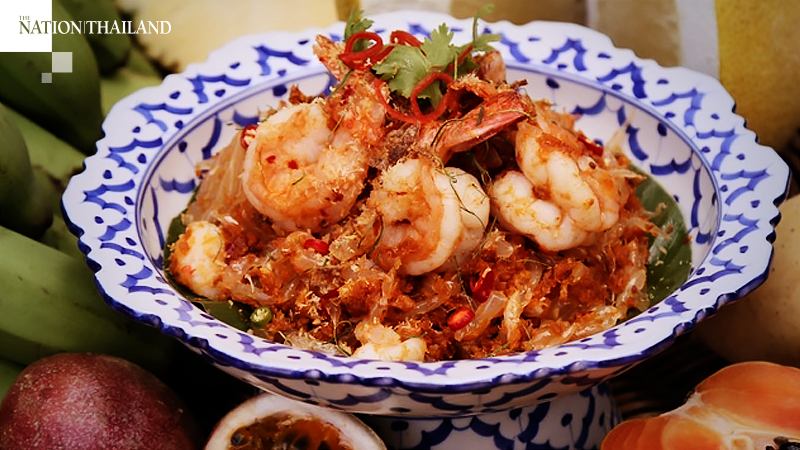
At Café@2, diners can experience the refreshing flavour of Thai pomelo salad with fried shallots, roasted coconut and shrimp (Bt340), “Kuay teow gaeng Nuea”, rice noodle soup with beef curry and coconut milk (Bt540), or “Khao pad saparot”, Phuket pineapple fried rice with chicken (Bt480). For dessert, there’s passion fruit crème brûlée with candied ginger (Bt320).

Local fruits will also be on show at Liu, as a skilled Chinese culinary team presents deep-fried mango seafood roll (Bt320) and deep-fried longan with crab meat and curry spring roll (Bt320),

The hotel’s poolside restaurant City Terrace is also offering special fare, such as rice paper roll with crab meat, green mango, white melon and mint with peanut sauce (Bt340), along with a delectable coconut pudding with lychee and fresh mango salad (Bt290).

For more information and reservations, you can call +66 (0) 2690 9211 or email bkkci.info@conradhotels.com.

Enjoy award-winning delicacies from comfort of your own home #ศาสตร์เกษตรดินปุ๋ย

#ศาสตร์เกษตรดินปุ๋ย : ขอบคุณแหล่งข้อมูล : หนังสือพิมพ์ The Nation.

https://www.nationthailand.com/food/30388666?utm_source=category&utm_medium=internal_referral

Enjoy award-winning delicacies from comfort of your own home

May 28. 2020
By THE NATION

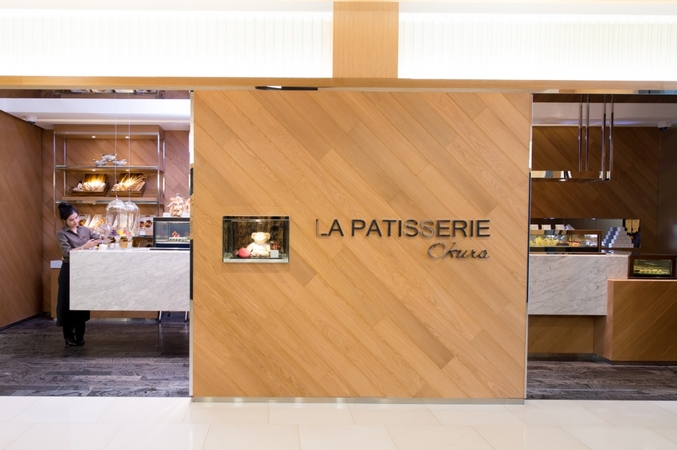
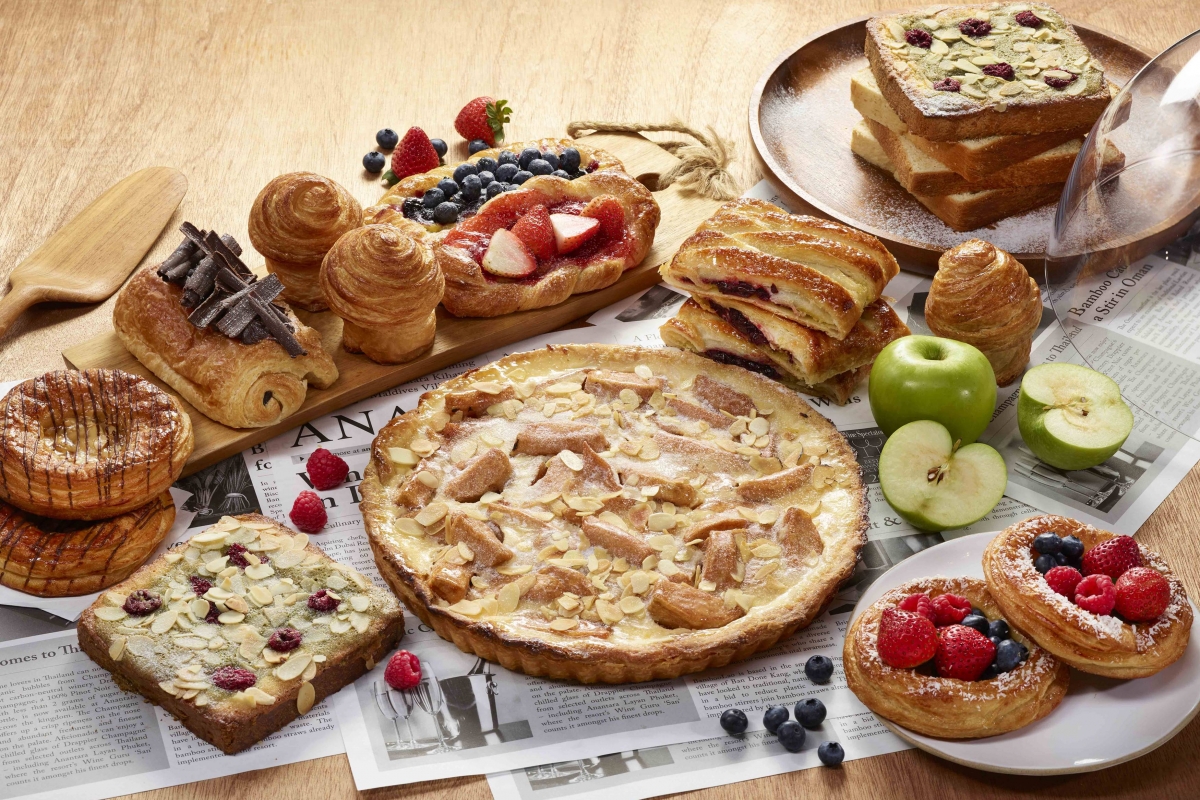
The Okura Prestige Bangkok hotel’s Michelin Plate restaurant, Yamazato, is now offering takeaways and delivery service, while its bakery, La Pâtisserie, will be ready to serve up delicacies from June 1.

Yamazato’s chef Shigeru Hagiwara has come up with a special takeaway menu, so people can enjoy his creations from the comfort of their home. The selection includes grilled eel with rice, salad, Japanese egg roll, vegetable soup and pickles, deep-fried oyster with breadcrumbs and Ebiten maki roll. Beef lovers can tuck into premier Japanese black cattle sirloin flown in especially from Kagoshima Prefecture.

Call (02) 687 9000 or email yamazato@okurabangkok.com between 10am and 10pm to place your order. It takes at least an hour and a half to prepare each order and prices start from Bt300. Deliveries can be made between 11.30am and 2.30pm and 6pm to 8.30pm, though customers can have their orders delivered through third party agents such as Line Man or Grab.

From June 1, La Pâtisserie will be open on weekdays from 7am to 8.30pm, and happy hour starts from 6pm onwards.

Restaurants are suing insurance companies over unpaid claims – and both sides say their survival is at stake #ศาสตร์เกษตรดินปุ๋ย

#ศาสตร์เกษตรดินปุ๋ย : ขอบคุณแหล่งข้อมูล : หนังสือพิมพ์ The Nation

https://www.nationthailand.com/food/30388147?utm_source=category&utm_medium=internal_referral

Restaurants are suing insurance companies over unpaid claims – and both sides say their survival is at stake

May 19. 2020
D.C. restaurateurs and attorneys who have filed a lawsuit against their carrier, Erie Insurance. From left: attorney Mike Davis, Andrew Markert, Tiffany MacIsaac, Attorney Dave Feinberg, Sachin Mahajan, Patrice Cleary, Matt Baker and Lindsay Jordan Baker. MUST CREDIT: Washington Post photo by Marvin Joseph.

D.C. restaurateurs and attorneys who have filed a lawsuit against their carrier, Erie Insurance. From left: attorney Mike Davis, Andrew Markert, Tiffany MacIsaac, Attorney Dave Feinberg, Sachin Mahajan, Patrice Cleary, Matt Baker and Lindsay Jordan Baker. MUST CREDIT: Washington Post photo by Marvin Joseph.
By The Washington Post · Tim Carman · BUSINESS, FEATURES, FOOD 

This month, the proprietors of more than 10 restaurants, bars and bakeries in Washington, including the Michelin-starred Gravitas and Pineapple and Pearls, sued their shared insurance company, joining a growing list of restaurateurs who are seeking relief from an industry they thought would protect them from any unpredictable event, including a pandemic of historic proportions.

The owners are pressing carriers to honor business-interruption policies during an outbreak that has wreaked so much financial havoc that it could bankrupt insurance companies and put at risk claims not related to covid-19. One side has few cash reserves and a trickle of revenue from takeout and delivery. The other side has an $800 billion surplus that, despite its size, could vanish in a matter of months, insurers say, if they start paying out these claims.

Both industries say they’re fighting for survival.

“I want to be there for my customers,” says Tiffany MacIsaac, pastry chef and owner of Buttercream Bakeshop, one of the plaintiffs in the D.C. complaint. “But if I could avoid doing that and just be home and know that I was safe, I mean it’s kind of a no-brainer because all of the rent and everything would be covered by the interruption insurance.”

After governments shut down dining rooms, restaurants large and small started taking their insurance cases to the courthouse: Boston-based Legal Sea Foods sued Strathmore Insurance Co. The owners of Musso and Frank, the century-old Los Angeles institution, sued Mitsui Sumitomo Insurance. A Houston restaurant company sued Scottsdale Insurance Co. Some complaints seek class-action status. Others have been filed by a single operator, such as Thomas Keller, the mastermind behind the three-star Michelin restaurants Per Se in New York and the French Laundry in California, who sued Hartford Fire Insurance Co.

These operators’ claims have usually been denied for one of two reasons: The policy specifically excluded viruses or the property had not suffered any physical damage, like after a flood, hurricane or other natural disaster. Attorneys for the restaurants don’t think the denials are as clear as the carriers say, especially with all-risk policies, those with limited coverage for viruses (like Keller’s) or those that cover “civil authority” actions such as when a city, county or state shuts down in-person dining.

All-risk policies, says Michael Davis, one of the attorneys representing the Washington restaurants, are “supposed to cover every single risk. It doesn’t matter whether the risk is listed. It doesn’t matter if it’s a risk no one ever heard of. It doesn’t matter if it’s Martians coming down from Mars. Unless it’s specifically excluded, you’ve got to cover it. That’s the way all-risk policies work, and that’s how they were marketed to restaurants.”

Davis and David Feinberg are attorneys for Venable, the high-powered firm representing the D.C. restaurants suing Erie Insurance Exchange, the Pennsylvania-based carrier that customizes policies for the hospitality industry. The lawyers say the policies have broader business-interruption coverage than many. For starters, they say, the policies don’t feature a virus exclusion, which was widely adopted by carriers after the SARS outbreak in 2003. But, they add, the policies also provide income protection and other payouts for business interruptions caused by “direct and accidental loss of or damage to covered property.”

“Or” is the operative word, says Davis.

“So you could have loss or damage,” the attorney says. “If you drop your iPhone and smash it on the floor and it’s cracked in half, yeah, it’s damaged. But if you leave it in an Uber, it’s lost. And that’s what’s happened to our restaurants: We’ve lost the ability to use them, because it’s illegal under the government orders.”

A spokesman for Erie says the company does not comment on pending litigation.

Historically, business-interruption coverage has been “tied to the physical loss of the property,” says Michael Menapace, an insurance lawyer and a “nonresident scholar” for the Insurance Information Institute, an industry association. Over the years, policyholders have sued to try to loosen the definition of physical damage. The most pertinent case, Menapace says, is SourceFood Technology v. U.S. Fidelity and Guaranty, in which a Minnesota wholesaler sued its carrier for denying a business-interruption claim after the Agriculture Department prohibited some imports from Canada during the mad-cow crisis of 2003. The USDA order had cut off the wholesaler’s Canadian source for processed beef tallow, which adversely impacted its business. A federal appeals court rejected Source Food’s claim, saying there was no evidence of physical damage to property due to the government intervention.

Most restaurants are not claiming physical damages, Menapace adds. They’re arguing that their policies are broad enough, or don’t include a virus exclusion, so they should be covered under business interruption. “I’ve not seen any cases filed so far,” Menapace says, “where somebody has said we went through and tested our property and it was positive for covid-19. That might be a very different claim.”

John Houghtaling, the attorney representing Keller, said he plans to poke holes in physical-damage demands. The pandemic has meant any enclosed building is a dangerous space, he says, regardless of whether there is physical damage.

“They’re saying that the coronavirus doesn’t cause a dangerous property condition, and a dangerous property condition is necessary for coverage. If there’s a civil authority shutdown, it has to be because there’s dangerous property condition,” says Houghtaling, who helped victims of Hurricane Sandy collect on their flood insurance policies.

So much is riding on these lawsuits – the survival of restaurants and employees; the survival of the insurance industry and the ability of its customers to make other claims – that both sides expect lawyers to parse every clause in the policies and dig up every relevant case.

“It will not be resolved soon,” says Menapace.

Federal and state lawmakers are also getting involved. Legislators in several states have introduced bills that would require carriers to pay business-interruption claims for small companies that have experienced covid-19 related losses or have been ordered closed. Notably, the bills could demand such payouts even if policies excluded viruses or required physical damage. Similar bills have been introduced in the House of Representatives, including one that would have the federal government cover excessive losses in the insurance sector. The Treasury Department recently weighed in on the matter in a letter to Capitol Hill suggesting the proposals “fundamentally conflict with the contractual nature of insurance obligations and could introduce stability risks to the industry.”

Legislative attempts to require insurance carriers to retroactively pay business -interruption claims will face challenges under the contracts clause of the Constitution, say Menapace and others. But more than that, they could push the insurance industry into insolvency, says Sean Kevelighan, chief executive of the Insurance Information Institute.

The insurance business works by spreading risk around so the industry isn’t hit all at once with claims, says Kevelighan. A pandemic disrupts business far and wide, with no end date in sight. About 40% of all companies have business-interruption insurance, Kevelighan says. If lawmakers require carriers to pay these claims, it could cost the insurance industry $150 billion a month, which would quickly deplete its $800 billion surplus, he says.

“In a matter of months, you’re putting systemic pressure on the industry and you’re beginning to look at bankruptcies,” says Kevelighan. What’s more, he adds, policyholders with claims for auto accidents, hurricane damage, flooding and the like might end up empty-handed.

But attorneys for the restaurants say the insurance industry is ignoring the fact that carriers have reinsurance to protect them from severe events. “They don’t have to use their cash reserves, necessarily,” says Houghtaling, the attorney who represents Keller.

Analysts estimate that reinsurance companies could cover between 40 and 60% of the insurance industry’s covid-19-related losses, says Frank Nutter, president of the Reinsurance Association of America. But if the business-interruption lawsuits are successful or the government steps in and carriers are on the hook, insurance companies would be responsible for the remaining share of the payouts, which could still be tens of billions of dollars every month. Plus, Nutter says, all of that assumes that reinsurance companies’ original contracts with carriers apply during pandemics. There could be a “second wave” of legal battles between insurance companies and reinsurance companies, Nutter says.

This is “going to be the most expensive legal battle in history,” Houghtaling says. “The insurance companies are going to win some of those, and they’re going to lose some of those. But in the meantime, the businesses are going to fail. People are going to be out of work.”

If the future is uncertain for these court cases, it’s even worse for the restaurants and bakeries behind the complaints. The owners are trying to stay afloat while earning small fractions of their past revenue, trying to keep employees on the payroll or on health insurance (or both), trying to figure out whether to use Paycheck Protection Program money (which converts to a loan if not used properly), trying to figure out if there will be enough business to hire more staff as cities and restaurants begin to open up again, and trying to understand how they paid all this money in insurance premiums, only to see nothing from it.

“We’re talking about not just the restaurant profession,” says Keller, the man behind Per Se and the French Laundry. “We’re talking about anybody who has business-interruption insurance being threatened to close their business because the insurance companies aren’t willing to abide by their policies. Morally, it’s shameful. It just is. When you get down to it, it’s all about the money.”

Then he pauses and adds: “This should be our primary goal: to save businesses and save jobs.”

You can grow the tiny organisms that give rise to bread #ศาสตร์เกษตรดินปุ๋ย

#ศาสตร์เกษตรดินปุ๋ย : ขอบคุณแหล่งข้อมูล : หนังสือพิมพ์ The Nation.

https://www.nationthailand.com/food/30388021?utm_source=category&utm_medium=internal_referral

You can grow the tiny organisms that give rise to bread

May 17. 2020
By Special To The Washington Post · Jason Bittel · FEATURES, FOOD, KIDS 
Have your parents suddenly become obsessed with sourdough? Does your house often smell like freshly baked bread? Fear not, kids of America – you are not alone.

Despite the many things that have changed for the worse during the past few months of the coronavirus pandemic, one cool outcome is that more people are trying to bake their own bread. Of course, this is far from a new idea.

“Humans have been baking bread for thousands of years, and we know about the earliest bakers from hieroglyphs in Egypt,” said Lauren Nichols, an ecologist at North Carolina State University. “But people were baking bread even before that.”

What many people don’t realize is that humans owe their delicious, chewy loaves to innumerable itty-bitty microbes. In fact, sourdough bread is a product of a sort of partnership between bacteria and tiny life-forms known as yeast, which are kinds of fungi.

If you were to mix a little bit of flour and water together and let the mixture sit on a counter, bacteria would begin to grow, which creates an acidic environment. But certain kinds of yeast – found naturally in flour, on your hands and in the air – have evolved to withstand that acid, and soon they begin to colonize the goo. In a few hours, you can see evidence of this when the whole concoction slowly starts to bubble.

“I like to think of yeast as like little machines, because they eat starches and sugars,” says Nichols. “Then they sort of fart out these little gas bubbles of carbon dioxide.”

Those yeast toots are what make bread dough rise and turn into soft, springy goodness once baked. Bakers call this leavening.

Nichols and other scientists are encouraging people around the world to perform the experiment so they can learn about how location, temperature, ingredients and other factors influence bread-making. They call it the Wild Sourdough Project.

“We want to find out whether sourdough that’s made in New York with wheat flour is going to be different from a starter in France made with all-purpose flour,” says Nichols.

Best of all, Nichols says you can join the project with the help of an adult. You just need to be ready to look after your little jar of flour and microbes. And you’ll have to sniff it occasionally, which is how, she says, you can keep track of what’s happening inside. (Parents can find more information about the project at robdunnlab.com/projects/wildsourdough.)

“What’s cool to me is it’s kind of like having a pet,” says Nichols. You have to feed it and look after it. But unlike a dog or cat, a properly cared-for sourdough starter could outlive a human. In fact, some families have starters that they’ve passed down through generations.

“You can watch it and learn from it. And it’ll have different characteristics than one your friend makes,” says Nichols.

In this way, she says, sourdough starters could become a fad such as the Chia Pet or Tamagotchi virtual reality pet. But better, of course, because no matter how cute a Furby is, it’ll never be able to help you make a grilled cheese sandwich.

America’s missing beef opens the door for plant-based burgers #ศาสตร์เกษตรดินปุ๋ย

#ศาสตร์เกษตรดินปุ๋ย : ขอบคุณแหล่งข้อมูล : หนังสือพิมพ์ The Nation.

https://www.nationthailand.com/food/30387542?utm_source=category&utm_medium=internal_referral

America’s missing beef opens the door for plant-based burgers

May 08. 2020
A customer picks up a package of Impossible Burger plant-based meat at Gelson's Markets in Los Angeles on Sept. 20, 2019. MUST CREDIT: Bloomberg photo by Patrick T. Fallon.

A customer picks up a package of Impossible Burger plant-based meat at Gelson’s Markets in Los Angeles on Sept. 20, 2019. MUST CREDIT: Bloomberg photo by Patrick T. Fallon.
By Syndication Washington Post, Bloomberg · Deena Shanker, Jen Skerritt · BUSINESS, RETAIL, FOOD 

Plant-based protein companies have been trying to sway consumers away from beef for years. Now, meat shortages caused by the covid-19 pandemic are making their job easier.

Faux meat producers have a once-in-a-lifetime opportunity as supplies of beef and pork tighten in the U.S. Wendy’s Co. has been running out of hamburgers at some locations, while Kroger Co. and Costco Wholesale Corp. are limiting customer purchases of some meat products.

Soy-based burger maker Impossible Foods Inc. and pea-based meat imitator Beyond Meat Inc., meanwhile, have spread into grocery stores across the U.S. With meat shelves comparatively barren, shoppers are giving those plant-based burgers and bratwursts a shot, according to the companies and market data. Now is the chance for faux meat companies to hook these consumers and keep them coming back.

“I think it truly is an opportunity,” Bloomberg Intelligence analyst Jennifer Bartashus said. “People will be more willing to embrace plant alternatives.”

Like most of the packaged food industry, plant-based proteins are seeing a pandemic bump as shoppers stockpile their pantries. Americans purchased 5.3 million units of fresh-meat alternative products from retailers in the eight weeks ended April 25 — three times higher than the amount from a year earlier, according to data from analytics firm Nielsen.

That’s still a fraction of the 1 billion units of fresh beef and 952 million units of fresh chicken that moved during the same period, according to the data. But the shortages could tilt the scales in the vegan alternatives’ favor.

“The spike in grocery sales is potentially attracting new customers to try the plant-based products if traditional meat and dairy are temporarily out of stock,” according to Alex Frederick, a venture capital analyst at PitchBook.

Output reductions and temporary closures at slaughterhouses have trimmed more than 30% of America’s beef and pork capacity, withering supplies at grocery stores and forcing farmers to euthanize thousands of animals that could not be sent to processors. The reports of “mass depopulation,” as the industry calls it, is making some question the whole process, Bartashus said.

The big plant-based players are gearing up to take advantage of the situation. Earlier this week, Ethan Brown, chief executive officer of Beyond Meat, said the company would be discounting its products this summer to better compete with higher priced beef.

Beyond’s burgers sell for about $12 a pound. While beef prices are rising, that’s still more than double the $5.54 per pound that beef patties are currently sold for, according to data from the U.S. Department of Agriculture.

“It’s very early days, and the disruption is one we’re all watching,” he said in an interview. “We need to take steps to be relevant during this period.”

On the same day, faux burger maker Impossible Foods said its products would hit the shelves of more than 1,700 Kroger stores. The announcement came shortly after the biggest grocery-store operator in the U.S. warned it was limiting purchases of some beef and pork products at certain stores.

Impossible Foods CEO Pat Brown said stories of consumers swapping beef for faux beef amid the shortage are still anecdotal, but he referred to heightened scrutiny of the dangerous working conditions in slaughterhouses. Any “spotlight illuminating what’s actually involved in producing meat” can only hurt the meat industry, he said.

At Tofurky, a Hood River, Oregon-based producer of imitation meat products, Chief Executive Officer Jaime Athos said sales are popping because of the shortage.

“One of our retail partners told us that they predict animal protein availability to decline by 30%, so they’ve increased their Tofurky product orders by 30%,” he said.

Meatless Farm, a British faux meat maker, reports it’s getting more inquiries as well, from both retailers and fast-food chains.

The shutdown of restaurants amid the pandemic does create an issue, however. Beyond Meat said grocery sales surged last quarter, but not enough to completely offset restaurant closures. Impossible Foods has expanded its retail distribution dramatically but still relies heavily on the restaurant industry for sales.

Beyond Meat said it’s switching products meant for foodservice to retail channels. Impossible Foods is also working to accelerate its rollout to grocery stores. While Impossible Foods, isn’t publicly traded, investors seem optimistic about Beyond Meat’s prospects: Its shares have advanced almost 70% since mid-March.

In contrast with the meat industry, production of alternative proteins hasn’t reported any hitches. Impossible Foods spokeswoman Jessica Appelgren said the company has had “no supply chain issues at all.” Brown, of Beyond Meat, said there hasn’t had any trouble getting the ingredients it needs and has “multiple suppliers around the world.”

Production of faux meat is also less vulnerable to outages from absent or sick workers because it’s more automated and machine-based, which allows for fewer humans.

“It actually takes less manpower to produce a plant-based protein product than it does to produce that of beef,” said Kasper Vesth, general manager for Meatless Farm North America. His company’s output “relies heavily on machines, which allows for fewer people in our manufacturing plants — this allows essential workers to maintain social distancing while at work.”

Bangkok foodies can indulge again #ศาสตร์เกษตรดินปุ๋ย

#ศาสตร์เกษตรดินปุ๋ย : ขอบคุณแหล่งข้อมูล : หนังสือพิมพ์ The Nation.

https://www.nationthailand.com/food/30387324?utm_source=category&utm_medium=internal_referral

Bangkok foodies can indulge again

May 05. 2020
Biscotti's Ossobuco Ravioli Black Truffle

Biscotti’s Ossobuco Ravioli Black Truffle
By The Nation

Great news for Bangkok foodies as some of the city’s most acclaimed dining destinations have reopened their doors as of Monday (May 4), including Anantara Siam Bangkok Hotel, which is home to a collection of award-winning restaurants serving fabulous fare in stunning settings.

Diners looking for a peaceful sanctuary can opt for Aqua, enjoy fresh coffee and pastry in lush surroundings at Mocha & Muffins, or sit back and enjoy high tea in the lobby’s palatial ambience. Meanwhile, chef Alessio Banchero is also at hand to serve up Italian classics at Biscotti.

Mocha & Muffins Bakery

Mocha & Muffins Bakery

Aqua is open daily from 4 to 8.30pm, Mocha & Muffins from 7am to 7pm, the Lobby from 10am to 10pm and Biscotti is open daily for lunch (noon to 2.30pm) and dinner (5pm to 8.30pm).

Reservations are advised. Call (02) 126 8866, email dining.asia@anantara.com or visit www.anantara.com/en/siam-bangkok

Aqua

Aqua

Biscotti

Biscotti

Mocha & Muffins

Mocha & Muffins

the Lobby

the Lobby