
In one month, the meat industry’s supply chain broke. Here’s what you need to know. #ศาสตร์เกษตรดินปุ๋ย

#ศาสตร์เกษตรดินปุ๋ย : ขอบคุณแหล่งข้อมูล : หนังสือพิมพ์ The Nation.

https://www.nationthailand.com/food/30386957?utm_source=category&utm_medium=internal_referral

In one month, the meat industry’s supply chain broke. Here’s what you need to know.

Apr 29. 2020
Workers wait outside of the JBS meat processing plan in Greeley, Colo., on Monday, April 27, 2020. MUST CREDIT: Photo for The Washington Post by Chet Strange

Workers wait outside of the JBS meat processing plan in Greeley, Colo., on Monday, April 27, 2020. MUST CREDIT: Photo for The Washington Post by Chet Strange
By The Washington Post · Laura Reiley · BUSINESS, FEATURES, US-GLOBAL-MARKETS, FOOD 

The coronavirus pandemic is now endangering the U.S. beef, chicken and pork supply chain. Worker illness has shut down meat-processing plants and forced remaining facilities to slow production to accommodate absenteeism and social-distancing protocols.

On Tuesday, President Donald Trump said he plans to sign an executive order addressing bottlenecks in the food supply chain. This problem has been building since mid-March, but appears to have hit a critical point this week. On Sunday, Tyson Foods, the country’s second-largest processor of chicken, beef and pork, warned that the U.S. “food supply chain is breaking.”

In full-page advertisements in The Washington Post, the New York Times and the Arkansas Democrat-Gazette, company chairman John Tyson wrote: “This means one thing – the food supply chain is vulnerable. As pork, beef and chicken plants are being forced to close, even for short periods of time, millions of pounds of meat will disappear from the supply chain.”

American farmers are still raising chickens, beef cattle and hogs-in addition to food crops. But fewer places are available to slaughter and process those animals and get the meat to market.

Q: Why is worker illness at processing plants having such a big effect?

A: In recent years, the farming mantra “Get big or get out” has extended to American meat-processing plants and other sectors of the food system. Consolidation has been a consistent theme, with multinational companies gobbling up smaller operators for economies of scale, increased efficiency and greater speed.

“A single processing plant may kill a million chickens a week, so if one plant drops to 50% capacity that’s 500,000 birds that have a problem,” said Leah Garcés, president of the animal rights group Mercy for Animals.

At least 79 food-processing and meatpacking plants have reported cases of covid-19 as of Monday, with many plants closing temporarily because of illness and absenteeism and to do deep cleaning and retrofitting to accommodate social distancing and proper protective gear. The Food and Environment Reporting Network has calculated that at least 3,720 plant workers are confirmed sick and that at least 17 have died.

Many more plants are struggling to remain open despite significant outbreaks and experts anticipate rolling closures because of sick employees and to allow for deep cleaning of facilities. On Sunday, the Centers for Disease Control and Prevention and the Occupational Safety and Health Administration issued new guidelines for meat-processing workers, advising companies to provide proper protective gear, take employees’ temperatures and space workers at least six feet apart.

This spacing is difficult in a high-speed assembly-line environment, said Gail Eisnitz, author of “Slaughterhouse.” Spacing people out slows production speed and eats into profits.

“In hog plants, they slaughter 1,106 animals per hour,” she said. “And they just raised that with the new swine inspection system,” which increased line speeds to an average of 2,002 to 2,010 animals per hour.

“And with these plants down, there’s nowhere for these hogs to go,” Eisnitz added. “It has a lot to do with the fact that the industry is so consolidated now. There are just so few hog plants in the country.”

Q: What does this mean for American consumers?

A: Steve Meyer, an economist for Kerns and Associates, predicts grocery store shortfalls and price increases over the next three weeks for fresh pork, including chops, butts and ribs. Chicken and beef prices are also likely to rise in the coming weeks.

“If the plants are closed several weeks,” he says, “we’re going to be well short of supplies out there.”

The daily cattle slaughter for the week of April 13 fell nearly 24% from the same week a year ago, and pig slaughter was down 13%. In response to these significant and unprecedented swings, the U.S. Department of Agriculture said last week that it expects beef prices to rise 1 to 2% this year, poultry as much as 1.5%, and pork between 2 and 3%.

But there may be higher price increases in the near term as processing-plant bottlenecks create shortfalls and empty shelves again.

Jayson Lusk, an economist at Purdue University, said that panic buying produced a small price spike in March, but that consumers are likely to face a steeper and more sustained spike now because such a big swath of production is temporarily shut down.

Even at peak buying frenzy, he says, the uptick in sales at grocery stores in March didn’t make up for restaurant orders falling off a cliff.

“But then processing plants started closing,” Lusk said, “and we have seen beef prices spiking back up again, starting April 13, to wholesale levels we haven’t seen in at least a decade.”

Q: Which farmersare going to be most affected?

A: In terms of livestock farmers, some are more vulnerable than others to the processing-plant closures. Almost all of poultry and nearly 40% of pork producing companies are “vertically integrated,” so that individual farmers are contracted by big companies and often don’t own their animals.

But small cattle ranchers may just not have any buyers. “Cattle ranchers mostly own their own animals and there’s much less vertical integration,” said Meyer, the economist. “The ranchers are more financially vulnerable with this.”

With nowhere for farmers to sell their livestock, Tyson said, “millions of animals – chickens, pigs and cattle – will be depopulated because of the closure of our processing facilities.”

Q: What happens to the animals that can’t be processed?

A: “Depopulating” is when a live animal is killed because of a disease outbreak or, in this case, because a farmer doesn’t have access to legal slaughter facilities. Eisnitz estimates that there is a backlog of 687,500 hogs weekly or 100,000 hogs per day that cannot be slaughtered because of processing facility closures.

Eisnitz said the American Veterinary Medical Association guidelines for emergency killing are extremely weak. For poultry and pigs, they allow animals to be killed by simply shutting off the ventilation system fans (heat or carbon dioxide may be added). The animals die of hyperthermia, baking and suffocating over a period of several hours.

According to the Delmarva Poultry Industry, a large chicken processing company in Delaware and Maryland killed 2 million chickens earlier this month because worker shortages left them without workers to slaughter and butcher the animals.

The industry generally uses the ventilator shutdown method or a water-based foam, the consistency of firefighting foam, that flows up and over, suffocating birds in seven to 15 minutes.

Garcés said that some poultry companies, such as Perdue, anticipated processing plant closures and took eggs out of hatcheries and breeder birds out of production and slowed down the whole system to reduce the bottleneck.

That’s much harder to do for pigs, Meyer said.

“Hog producers don’t have any of that flexibility,” he said. “There are six months of pigs out there lined up every week, you can’t put them out on pasture, you have to be feeding them, you have only so much building space. Realize that the pork producers are in a bad spot and they are doing things they abhor.”

When asked how many piglets are being killed and buried, he said, “I can only estimate, but it gets to the millions pretty quick.”

Cows have longer lives and thus there’s a bit more wiggle room in the system – they can be left on pasture or even on a confinement feed lot, their rations adjusted to slow their rate of growth. For cattle ranchers, though, a bottleneck at the processing plant means a diminished revenue stream. They can hold on for only so long while they feed and maintain their animals.

Q: Is there any other meat in the supply chain?

A: The United States has a lot of meat in freezer storage. The USDA reported 921 million pounds of chicken in storage last week and 467 million pounds of boneless beef, which includes ground meat as well as more premium roasts and steaks.

But there are challenges to using frozen beef, pork and chicken to offset shortfalls from meat processing-plant closures.

According to Purdue’s Lusk, a lot of the product in cold storage was packaged for restaurants and food service – huge cuts and whole muscles that may not be easy to repackage for home use. Much of it would require thawing, re-butchering to yield more manageable portions for home use, and then repackaging.

Repackaging frozen meat introduces food safety hazards. Because experts don’t advise refreezing meat, it would have to be sold unfrozen.

And laborers for that kind of skilled work are in short supply. Many of them work in the meat-processing plants that are currently closed or operating at diminished capacity. Others are grocery store butcher counter workers, many of whom have been repurposed to stock and clean stores because of surges in consumer purchasing.

Some of the meat in frozen storage, Lusk said, was slated for export, hung up by coronavirus outbreaks that shut down ports worldwide.

“USDA reports on inventory and cold storage suggest we have more pork, beef and chicken in storage than compared to the same time last year,” Lusk said. “If processing capacity falls even more and prices continue to rise, that stuff in storage has got to be pulled out.”

Q: If the animal agriculture supply chain is messed up, what about plant-based meats and other substitutes?

A: Sales of plant-based meats in the eight weeks ending April 18 were up 265% over the previous eight weeks, said Bruce Friedrich, founder of the Good Food Institute, a trade group for plant-based food. He said conventional meat sales were up 39% for that same period.

As with many other grocery items, demand has outstripped supply in some places, leaving some store shelves bare. Friedrich said that these supply issues are a function of transportation bottlenecks, and that no plant-based meat facilities have been closed because of coronavirus outbreaks because “facilities are significantly more automated and it’s easier to socially distance because there’s no chopping up carcasses to create the cuts of meat.”

He said that before the pandemic, plant-based meat companies were already scaling up to meet increased demand, but that they are quicker to respond to world events than more conventional animal agriculture.

“If you want animal-based pork, you have to plant enough soy to feed the animals, you have to grow breeding animals for years, then it takes 10 months from birth to slaughter. It entails much longer lead times and razor-thin margins at every step,” he said.

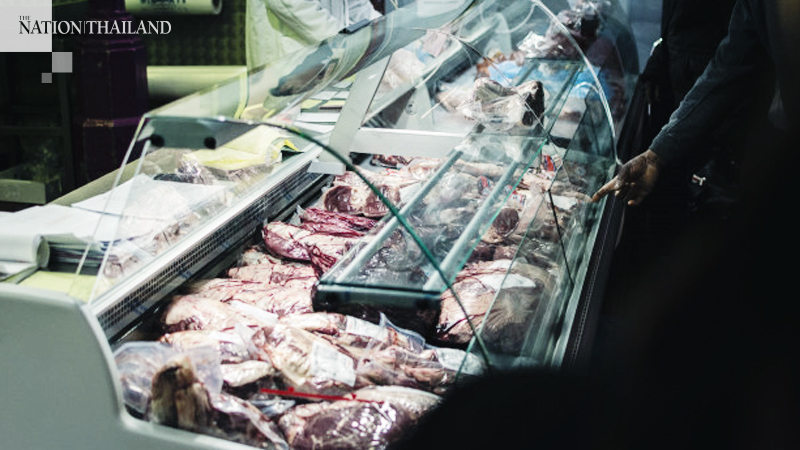
Meat-shortage risk climbs with 25% of U.S. pork capacity offline #ศาสตร์เกษตรดินปุ๋ย

#ศาสตร์เกษตรดินปุ๋ย : ขอบคุณแหล่งข้อมูล : หนังสือพิมพ์ The Nation.

https://www.nationthailand.com/food/30386667?utm_source=category&utm_medium=internal_referral

Meat-shortage risk climbs with 25% of U.S. pork capacity offline

Apr 24. 2020
Photo Credit: PxHere

Photo Credit: PxHere
By Syndication Washington Post, Bloomberg · Deena Shanker, Michael Hirtzer, Jen Skerritt, Lydia Mulvany · BUSINESS, FOOD

The U.S. is edging closer to possible meat shortages with another major plant shut down.

About a quarter of American pork production and 10% of beef output has now been shuttered, according to the United Food & Commercial Workers, which estimates that 13 U.S. plants are down.

On Thursday, Tyson Foods said it was shutting its beef facility in Pasco, Washington, fresh on the heels of the company idling two key pork plants. Case counts are continuing to mount, including in Canada, where industry groups are saying they’ll probably hold back some supplies usually exported to the U.S. And the head of JBS, the world’s top meat producer, is warning of shortfalls.

Meanwhile, 100 U.S. Department of Agriculture inspectors have tested positive for the novel coronavirus. The workers, part of the Food Safety and Inspection Service that employs about 6,500 inspectors, have been traveling between plants with known infections to other facilities. And at least one inspector has died after apparently contracting the disease the virus causes, Covid-19, according to information the federal agency provided Thursday during a phone call with consumer groups.

The infections among inspectors are adding to fears that shutdowns will keep occurring, especially if the sick USDA employees bring the infection to plants where there’s not yet an outbreak.

“A traveling inspector bringing in the disease is our biggest worry,” said Mike Callicrate, a rancher, processor and advocate in Kansas.

Meat prices are surging on the disruptions. U.S. wholesale beef hit the highest on record. Pork bellies, the cut turned into bacon, soared 137% in the five days through Wednesday.

Things are so dire that Iowa, the biggest hog state, activated the National Guard to help protect supplies.

“What people don’t realize is in the coming months, that’s going to be one the biggest issues out there is getting the meats and provisions, for not only restaurants, I hate to say it, but grocery stores as well,” said Peter Cancro, chief executive officer of Jersey Mike’s Franchise Systems.

Jersey Mike’s, which has 1,750 stores across the U.S., is working with its ham supplier Clemens Food Group to ensure its supply of pork, something it sells quite a bit of in its sandwiches, he said.

“We’re backing it up already because of the coming – we feel – the coming shortages,” he said.

With slaughterhouses closing, farmers don’t have a place to sell their animals. That’s forcing livestock producers to dispose of them.

Shuttered or reduced processing capacity has prompted some hog farmers in eastern Canada to euthanize animals that were ready for slaughter, said Rick Bergmann, chair of the Canadian Pork Council. In Minnesota, farmers may have to kill 200,000 pigs in the next few weeks, according to an industry association.

It’s the latest blow to supply chains, with food being wasted en masse at the same time that grocery store shelves are running empty. Dairy farmers are spilling milk that can’t be sold to processors and some fruit and vegetables are rotting in fields due to labor shortages or distribution disruptions.

Meanwhile, the inventory numbers that had long been pointed to as a cushion of supplies for consumers are starting to come into question now that meat-plant shutdowns are taking place indefinitely.

The U.S. government on Wednesday pushed out its monthly figures on frozen food inventories.

Combined pork, beef and poultry supplies in cold-storage facilities now stand equal to roughly two weeks of total American meat production. With most plant shutdowns lasting about 14 days for safety reasons, that raises the potential for deficits.

In March, when U.S. shoppers were clearing grocery shelves amid lockdowns, frozen pork in warehouses slumped 4.2% from February, the biggest drop for any March since 2014. That happened before the meat plants started closing.

“We may see a meat-supply issue ahead, depending on the number and the size of plants shut at the same time,” Gilberto Tomazoni, chief executive officer of JBS, said in a webinar sponsored by XP Investimentos. While at this point it’s hard to predict what will happen, continuous plant shutdown may spur a meat shortfall, he said.

“The virus won’t go away tomorrow,” he said.

Meat processing plants are closing due to covid-19 outbreaks, potentially leading to beef shortfalls #ศาสตร์เกษตรดินปุ๋ย

#ศาสตร์เกษตรดินปุ๋ย : ขอบคุณแหล่งข้อมูล : หนังสือพิมพ์ The Nation.

https://www.nationthailand.com/food/30386189?utm_source=category&utm_medium=internal_referral

Meat processing plants are closing due to covid-19 outbreaks, potentially leading to beef shortfalls

Apr 17. 2020
By The Washington Post · Laura Reiley · NATIONAL, BUSINESS, FEATURES, FOOD

The novel coronavirus has sickened workers and forced slowdowns and closures of some of the country’s biggest meat processing plants, reducing production by as much as 25%, industry officials say, and sparking fears of a further round of hoarding.

Several of the country’s largest beef-packing companies have announced plant closures.

Before the coronavirus hit, about 660,000 beef cattle were being processed each week at plants across the United States, according to John Bormann, program sales manager for JBS, the American subsidiary of the world’s largest processor of fresh beef and pork.

This week there probably will be about 500,000 head processed at U.S. plants still in operation. That’s 25% less beef being produced.

Some of the slowdown is because of facility closures. Two of the seven largest U.S. facilities – those with the capacity to process 5,000 beef cattle daily – are closed because of the pandemic.

Some of the reasons are attributable to absenteeism and fewer employees, and some are because meat processing facilities are slowing down and spreading out employees to maintain social distancing.

JBS USA closed its Souderton, Pennsylvania, beef plant April 7 and shuttered its Greeley, Colorado, beef facility after at least 50 of its 6,000 plant employees tested positive for covid-19, the disease caused by the novel coronavirus. All have been urged to self-quarantine.

National Beef Packing announced Monday the closure of its Tama, Iowa, facility. And Cargill shuttered production at its Hazleton, Pennsylvania, ground-beef and pork processing plant, and then reduced production at one of Canada’s biggest beef-packing plants after dozens of workers were infected.

The meat supply chain is especially vulnerable to the spread of the coronavirus because processing is increasingly done at several massive plants instead of many smaller facilities. Another problem in the beef supply, according to Bormann, is something called carcass utilization – the use of the whole animal.

“The first problem is we don’t have enough people to process the animals, and number two is they can’t do carcass balance because restaurants are down,” he said. “What’s selling? Freaking hamburger.”

Restaurants typically use the expensive stuff – strips, ribs, tenderloins and sirloin, Bormann said, while retail takes the chucks, rounds and trims. With restaurants mostly shuttered, “all of a sudden 23% of the animal isn’t being bought because food service is gone,” he said.

Industry experts said the shutdown of beef processing facilities could prompt another round of hoarding at the grocery stores, as with toilet paper and milk several weeks ago.

U.S. beef sales reached an all-time high in 2019, with 57.7 pounds consumed per capita. Before the pandemic, the National Cattlemen’s Beef Association anticipated a similar outlook for 2020.

“Is there a risk that we go through another round of empty shelves?” asked Don Close, senior animal protein analyst in North America for Rabo AgriFinance. “Yes, that’s a very real risk right now. And we could see higher prices.”

He said meat processing companies could offset the losses due to restaurant closures by increasing exports of premium products. Exports to South Korea have grown sharply in recent months.

Sophie Mellet-Grinnell, the protein specialist for food distributor Baldor Specialty Foods, said the disruptions in the beef supply chain could also affect consumer prices.

“Certain cuts will get more expensive: the grinds and economical cuts like anything off the chuck, minute steaks, London broil,” she said. “There are a lot of people out of work, so you’ll see an even bigger pull on chicken and inexpensive proteins.”

With restaurants closed, some higher-priced cuts may be sold at a discount, she said. “But you can only sell so much at a lower cost before you lose money, so you freeze it.”

Close said the nation’s cold storage is limited, only a week or 10 days’ capacity for supply, so “that’s not a long-term option.”

Ben Lilliston, the interim co-executive director of the Institute for Agriculture and Trade Policy, said the closure of these large meat processing facilities, and any resultant supply shortfalls, is what happens when a small number of multinational companies controls the food supply.

“They have proprietary information about how much food is out there that no one else has,” he said. “In early March there were a whole lot of stories about a surplus of meat. If they say it’s a shortage, maybe it is, but no one really knows.”

Can you raise prices after a pandemic? China’s purveyors of spicy hot pot test the waters #ศาสตร์เกษตรดินปุ๋ย

#ศาสตร์เกษตรดินปุ๋ย : ขอบคุณแหล่งข้อมูล : หนังสือพิมพ์ The Nation.

https://www.nationthailand.com/food/30386187?utm_source=category&utm_medium=internal_referral

Can you raise prices after a pandemic? China’s purveyors of spicy hot pot test the waters

Apr 17. 2020
Photo Credit: PxHere

Photo Credit: PxHere
By The Washington Post · Eva Dou · BUSINESS, WORLD, HEALTH, US-GLOBAL-MARKETS, ASIA-PACIFIC

After weeks of lockdown privation, the more iron-stomached among China’s diners craved a proper Sichuan-style hot pot, with fiery chili peppers and mouth-numbing prickly ash pods bobbing across a cauldron of red broth.

What they couldn’t stomach, though, were the post-pandemic prices.

After public fury over its price increases – about 6 percent over the pre-lockdown menu – popular Chinese hot pot chain Haidilao had to reverse course and apologize to customers last week for the “mistaken strategy,” which it said was meant to offset higher costs as it reopened for business. Analysts say Haidilao could suffer hundreds of millions of dollars in losses this year.

China may be known as the world’s factory floor, but its main economic driver is now domestic consumption. That means the ability of retailers like Haidilao to woo back wary consumers will be pivotal to a rebound following a dismal first quarter.

China is set to post on Friday its first quarterly economic contraction since it began releasing this data in 1992.

The figures will offer a glimpse into wider challenges. Massive stimulus from China helped stave off a deeper global downturn in 2008, but this time a return to business requires more than cash. The adversary is a microscopic one that thrives on many of the most cherished forms of economic consumption: movie theaters, live concerts and, yes, even tongue-obliteratingly hot hot pots.

“This is a long-term change,” said Chiara Capitanio, a Beijing-based advertising executive. “Brands will need to rethink their business models.”

A Chinese hot pot consists of a simmering pot of broth on the table, in which diners dip raw slices of meat and vegetables, “rinsing” them until they are just cooked. It’s been a popular food for centuries, with the powerful Qianlong emperor in the 18th century eating more than 200 hot pots in one year, at least according to folklore. (It’s not known whether Qianlong had to wear a mask and disposable gloves when approaching the sauce bar, as modern-day Haidilao diners are now told to do.)

With the coronavirus outbreak, hot pot took on a new meaning as a vector of infection. Diners sit in a circle for hours dipping into the same pot – often coughing and sneezing from the peppery fumes. When 11 members of one Hong Kong family contracted the coronavirus after sharing a hot pot meal in February, hot pot restaurants across the region went dark.

– – –

Popular demand for hot pot has remained strong in China, despite Western visitors often expressing disbelief at a dish that you must cook yourself for hours in the restaurant. Prominent Hong Kong food critic Chua Lam was met with public wrath last year when he declared that hot pot was not delicious.

In modern China, the slow pace of a hot pot meal makes it a favored choice for gatherings of family and friends, allowing time for stories and confessions to unfold across the steaming cauldron. It’s also popular with carb-conscious young people, even if the health benefits of the fresh vegetables are neutralized by the soup base, which in the classic Sichuan iteration consists largely of molten beef fat.

Founded in 1994, Haidilao built its reputation on detail-oriented customer service, with waiters providing complimentary plastic sleeves to protect diners’ smartphones from splashes of broth, and even hair ties for women to keep their tresses out of their soup. The company – which declined to comment for this article – went public on the Hong Kong Stock Exchange in 2018, and has expanded to Singapore, Seoul and Los Angeles.

Haidilao – whose name means “scooped out of the sea” – was on track for another year of growth before the virus hit. Diners used to wait in dense lines for hours for a table, with Haidilao offering free manicures and shoe shines to help pass the time. Now Haidilao says that at some shops, a robot can scoot to the entrance with take-home orders packed by an employee in a hazmat suit so people can avoid interacting with any other human. As customers wait for the robot, they can read the daily temperature readings of employees on the “Health Wall.”

During the weeks of lockdown across China, Haidilao promoted delivery hot pots, a logistical fright for all sides that required shuttling over a portable butane countertop range and pot that must be returned after use. Hot pot smells, however, could linger for days.

China’s government is expected to step in to support its economy in coming months, though what exactly this will look like is still coming into focus. What’s clear is the country’s current leader Xi Jinping is less interested than his predecessors in economic growth for its own sake, but harbors deep ambitions for a Chinese geopolitical rise.

Beijing will likely consider its diplomatic interests as it shapes its stimulus plan, while keeping a close eye on simmering domestic dissatisfaction.

Michael Spencer, Deutsche Bank’s chief economist for the Asia Pacific, said in the longer-term, he expects the pandemic to speed the decoupling of global supply chains between the United States and China. But that could take decades, he said, with a critical mass of companies in a sector all deciding to move to the same place before the math makes sense.

In the nearer term, what happens with retailers in China – and around the world – will be key. Capitanio, the ad executive, says brands will need to develop new ways to provide customers with experiences and service, and to effectively communicate to customers the reality of higher costs of virus-prevention measures.

Give cottage cheese a chance with these dreamy pineapple pancakes #ศาสตร์เกษตรดินปุ๋ย

#ศาสตร์เกษตรดินปุ๋ย : ขอบคุณแหล่งข้อมูล : หนังสือพิมพ์ The Nation.

https://www.nationthailand.com/food/30386165?utm_source=category&utm_medium=internal_referral

Give cottage cheese a chance with these dreamy pineapple pancakes

Apr 17. 2020
Pineapple Cottage Cheese Pancakes. MUST CREDIT: Photo by Tom McCorkle for The Washington Post.

Pineapple Cottage Cheese Pancakes. MUST CREDIT: Photo by Tom McCorkle for The Washington Post.
By Special To The Washington Post · Ellie Krieger

If you still think of cottage cheese as a stodgy diet food, it’s time to let that notion go.

Sure, it is filling and protein-rich, which is what drew dieters to it in the first place, but that diner-menu “Weight Watchers-plate” pigeonhole has detracted from its delights – its tender curds, creaminess and its lovely, light tang. Happily, cottage cheese has gotten a refresh from food producers recently, with artisanal products, creative flavor varieties and probiotic-rich options now available.

But even through a modern lens, a time-tested truth holds: Cottage cheese goes great with pineapple. You just can’t go wrong with those two in a bowl. And, as this recipe proves, they make for a marvelous pancake, too. These skillet beauties are cooked in a touch of butter, so they are lightly crisp outside and tender inside, with noticeable nubs of cottage cheese curds and bits of pineapple throughout.

Held together with egg and a little whole-grain flour (you could substitute a gluten-free cup-for-cup flour) and lightly sweetened with honey, sure, they are healthful, satisfying and protein-packed, but don’t let those benefits overshadow how scrumptious they are, as well.

– – –

PINEAPPLE COTTAGE CHEESE PANCAKES

20 minutes

4 servings

These pancakes give the classic fruit-and-cheese pairing a fresh new spin. Lightly crisped outside and tender inside, these pancakes boast noticeable nubs of cottage cheese curds as well as bits of pineapple throughout. Held together with egg and a little whole-grain flour, and lightly sweetened with honey, they are a filling, protein-packed treat that are as healthful as they are satisfying.

Ingredients

1/2 cup whole-wheat pastry flour (or regular whole-wheat flour), or more as needed

1 teaspoon baking powder

1/4 teaspoon kosher salt

1/4 teaspoon ground nutmeg

3 large eggs

1 tablespoon honey, plus more for serving (optional)

1 cup cottage cheese, low-fat or full-fat

1 cup finely chopped fresh pineapple, or canned crushed pineapple, drained and divided

2 teaspoons unsalted butter, divided

Steps

In a small bowl, whisk together the flour, baking powder, salt and nutmeg.

In another medium bowl, whisk the eggs and honey until combined. Stir in the cottage cheese. Add the dry ingredients to the wet and stir to combine. (There will be lumps from the cottage cheese.) Stir in 1/2 cup pineapple. (Since some brands of cottage cheese are wetter than others, you may need to add an additional 1 to 2 tablespoons flour if the batter seems too loose.)

Heat a large nonstick griddle over medium-high heat. Use 1 teaspoon butter to coat the griddle, then use a 1/4-cup measure to scoop 3 or 4 mounds of the batter onto the griddle, depending on how many your pan can accommodate. Reduce the heat to medium and cook until the pancakes are browned on the bottom and beginning to dry on the edges, about 2 minutes. Flip and cook until browned on the other side and the pancakes are cooked through, 2 minutes more. Repeat with the remaining butter and pancake batter.

Serve topped with the remaining 1/2 cup pineapple and a drizzle of honey, if desired.

Nutrition | Calories: 214; Total Fat: 7 g; Saturated Fat: 3 g; Cholesterol: 152 mg; Sodium: 427 mg; Carbohydrates: 24 g; Dietary Fiber: 3 g; Sugars: 11 g; Protein: 14 g.

(From nutritionist and cookbook author Ellie Krieger.)

Virus, expats and Ramadan stress test food security in Persian Gulf #ศาสตร์เกษตรดินปุ๋ย

#ศาสตร์เกษตรดินปุ๋ย : ขอบคุณแหล่งข้อมูล : หนังสือพิมพ์ The Nation.

https://www.nationthailand.com/food/30386161?utm_source=category&utm_medium=internal_referral

Virus, expats and Ramadan stress test food security in Persian Gulf

Apr 16. 2020
By Syndication Washington Post, Bloomberg  · Sylvia Westall, Layan Odeh · WORLD, MIDDLE-EAST · 

Around the world the coronavirus pandemic has brutally exposed economic vulnerabilities. For wealthy but parched states in the Gulf, it’s resurrecting deep concerns over food.

Supermarket shelves are still well stocked, if missing some fresh cheeses or imported seafood. But as the virus disrupts global supply chains, desert nations like the United Arab Emirates that import as much as 90% of the food their largely expatriate populations consume are treating the issue as a matter of national security.

U.A.E. officials have eased import regulations, including requirements for Arabic labeling and extended best-before periods, lowered duties and crammed extra cargoes onto flights intended to repatriate citizens. Measures companies had requested for years were pushed through quickly. The nation’s Food Security Council, formed in February, found itself in crisis mode and the government announced it would bolster strategic stocks.

The potential for supply disruptions has stirred memories of the global food crisis that began in 2007, when the Gulf found that vast financial reserves built from oil sales didn’t always guarantee access to food supplies as producing nations imposed export restrictions to protect their own people from surging prices. Some of the supplies now are coming from investments made by the U.A.E. in Eastern Europe and East Africa farmland after the last crisis.

“Countries in the Gulf learned a lot from that experience,” said Eckart Woertz, director of the Giga Institute of Middle East Studies in Hamburg, who specializes in energy and food security. “It spooked them, and rightly so.”

Even with the measures, Gulf states are more exposed to the whims of markets at a time of massive dislocation. The U.S. imports 15% of its total food, according to the website of the Food and Drug Administration, while the U.K. brings in nearly half.

While all Gulf countries are heavily reliant on food imports, some have boosted local production. Qatar responded to a boycott by four leading Arab nations that began in 2017 by ramping up its small domestic output, and says it’s self-sufficient in dairy and fresh chicken. Saudi Arabia produces enough milk and eggs to meet demand, according to the Saudi Embassy in the U.S., and exports to the Middle East. Riyadh has allocated $532 million to finance agricultural imports through loans to support food security during the pandemic, state news agency SPA reported Wednesday.

The U.A.E., which has reported 5,365 covid-19 cases and 33 deaths, has imposed stringent restrictions on movement to stop the virus from spreading as it, along with the rest of the Muslim world, prepares for the holy month of Ramadan that begins next week. Mosques are expected to remain off limits for prayers as authorities try to stem transmission; but food consumption typically rises in Ramadan as people prepare big family meals and desserts to break the daily fast.

Migrant blue-collar workers mostly from Southeast Asia who toil in the U.A.E.’s construction and service sectors would be the most vulnerable to price swings or shortages, with many having lost their jobs or been placed on unpaid leave as the virus savages the economy. The local administration in Abu Dhabi, one of the country’s seven sheikhdoms, has pledged to expand a safety-net fund for the hardest hit.

Authorities also have to appease legions of affluent expatriates who could head home if denied the high standard of living they expect, said an Abu Dhabi-based diplomat who’s been tracking the government response. Officials are worried that the prospect of dimmed job opportunities and the sweltering summer coinciding with the expected virus peak could help spur an exodus.

The Dubai office of BRF Global, Brazil’s largest poultry exporter, said it decided a month ago to increase its stocks in the region, predicting more people would stay in the Gulf after Ramadan because of travel restrictions and virus outbreaks back home. To help with a reported storage crunch, four major food retailers including French retail giant Carrefour agreed to provide suppliers with free space for two months to help keep prices down, the government said.

Potatoes, tomatoes, cucumbers and herbs are already grown in the U.A.E. and there’s some meat, egg and dairy production, and even local oysters. But there’s likely to be a renewed focus on expanding cultivation once the virus crisis has passed.

The Abu Dhabi Investment Office said this month it had invested $100 million to encourage four agricultural technology firms to build research and development facilities in the emirate. U.S-based AeroFarms said it wants to construct the biggest vertical farm of its kind in the world — in which crops are grown in layers — with the first harvest by mid-2021.

Policymakers are “likely to double-down on tech-based solutions following the end of the crisis,” said Daniel Moshashai, geopolitics and infrastructure analyst for the Middle East at Castlereagh Associates, a London-based consultancy. “Technology will help in the much-needed localization, including for food production.”

New York’s Italian Americans relive heartache felt as virus ravaged families overseas #ศาสตร์เกษตรดินปุ๋ย

#ศาสตร์เกษตรดินปุ๋ย : ขอบคุณแหล่งข้อมูล : หนังสือพิมพ์ The Nation.

https://www.nationthailand.com/food/30385942?utm_source=category&utm_medium=internal_referral

New York’s Italian Americans relive heartache felt as virus ravaged families overseas

Apr 14. 2020
Masked people wait to pick up food from Biancardi's on Arthur Avenue in the Bronx, New York, on Friday, April 10, 2020. MUST CREDIT: Photo for The Washington Post by Yana Paskova

Masked people wait to pick up food from Biancardi’s on Arthur Avenue in the Bronx, New York, on Friday, April 10, 2020. MUST CREDIT: Photo for The Washington Post by Yana Paskova
By Special To The Washington Post · Richard Morgan · NATIONAL, WORLD, EUROPE

NEW YORK – Joseph “Papa Joe” Migliucci was the fourth-generation owner of Mario’s, a 101-year-old red-sauce restaurant on Arthur Avenue in the Bronx.

Moe Albanese was known affectionately throughout Manhattan’s Little Italy as “Moe the Butcher.”

Both men – ages 81 and 95, respectively – were among the more than 2,000 New Yorkers who died citywide last week from the coronavirus pandemic. Statistically speaking, their deaths are insignificant. But try telling that to the city’s tightly knit Italian American community, the nation’s largest.

Mauricio Avendano, left, and Jesus Pancheco, line cooks at Antonio's Trattoria, prepare a food order on Friday, April 10, 2020. MUST CREDIT: Photo for The Washington Post by Yana Paskova

Mauricio Avendano, left, and Jesus Pancheco, line cooks at Antonio’s Trattoria, prepare a food order on Friday, April 10, 2020. MUST CREDIT: Photo for The Washington Post by Yana Paskova

“It’s stark and stunning,” said Peter Madonia, the third-generation owner of Madonia Brothers Bakery a few doors down from Mario’s. “It’s so surreal but quite real. I’ve known Joe my whole life. I remember his mother and father and Uncle Clemente.”

Arthur Avenue, which bills itself as the city’s true Little Italy and “the good taste of tradition,” is not just a street, Madonia said. “It’s a collection of families who have been there for a century.”

He and others described perhaps the one thing worse than being in the throes of this pandemic’s epicenter: going through such heartache twice.

As New York state’s confirmed coronavirus infections have now surpassed those in all of Italy (or any other foreign country) and the U.S. death toll now outnumbers that of Italy, Europe’s coronavirus epicenter, Italian Americans here described their lives and their identities as imploding on both ends.

“I always considered myself as a bridge between these places,” said Giorgia Caporuscio, a restaurateur in Manhattan. “Now it is a bridge of sighs. Empty Rome. Empty Venice. Empty Times Square. To see New York slowed down feels strange – but familiar, because I have been feeling it for weeks about Italy. Now we have all lost a loved one because we have all lost our city, our neighborhood, our home which we love.”

Giulio Adriani, a pizza speakeasy chef from Rome who lives in “Italian Williamsburg” in Brooklyn, has been wrestling with his infection for almost two weeks. “No smell. No taste,” he said, flagging his symptoms of covid-19, the disease caused by the novel coronavirus. “It seems like you’re not even living. Even water has a taste. This does not even give you that. Just absence. Such terrible absence.”

Yet pain and panic do not reign uncontested. As China set the bar for restrictions early in the pandemic, Italy set one for resilience – especially its balcony singalongs and daily applauses for essential workers mimicked worldwide.

“It’s been a reflection of how we conduct life,” added Adriani. “Such reflection is the Italian way of life.”

Of the roughly 20 million U.S. residents who identify as of Italian descent, about 1 million are in New York – once their ghetto, now their hub.

It was here that Italian Americans anchored and acquired rapid cultural and political power in the 20th century. It was here a lowly tomato pie first sold by the slice for a nickel became the city’s iconic street pizza.

And it was here an uneducated man from Campania arrived in 1926 to work “pick and shovel” labor. His name was Andrea Cuomo, grandfather of New York’s governor, Andrew Cuomo, who informed New Yorkers on Monday that while the “worst is over,” life here won’t fully return to normal for another 12 to 18 months, when there is likely to be a vaccine against the coronavirus.

In the coming months, Cuomo said, leaders will have to relax restrictions on commerce and movement very slowly to give health experts time to evaluate what impact their actions are having on the spread of the virus. “When they say we have a vaccine,” he added, “that is when it’s over.”

Along Arthur Avenue, boisterous banter and affection on stoops or in cafes have largely been replaced: nods over kisses and kaffeeklatsches tethered by windowsills like Ellis Island-era laundry. It hasn’t been easy. Italian American life – with meals of 20 or 30 people, perpetual church services, soccer fanaticism, espresso-fueled chats, or simple neighborhood hangouts – is highly social. For many, response to the pandemic has made it hard to rewrite a script seemingly inked in their DNA.

“We see each other, we hug, we kiss. Even men,” said Madonia, who was chief of staff to Mayor Mike Bloomberg. “Now it has stopped. It’s like being in jail, social jail.”

But, like Italian perfume, subtle joys linger.

At Antonio’s Trattoria, just off Arthur Avenue, most locals are ignoring owner Anthony Lancione’s offer of 20% off on orders, preferring to pay full price – with generous tips. Recently, an anonymous order was placed for $2,000 worth of food for a local hospital. Last week, 20 pizzas, 20 calzones, and 20 chicken parm rolls went out to the emergency ward of another. And a retired firefighter sent a local firehouse a $500 Good Friday lunch of meatballs, penne vodka, chicken marsala and more.

Meanwhile, from her home in Queens, Lidia Bastianich, the celebrity chef, has spent her lockdown planting an herb and vegetable garden. She interrupted an interview with a reporter to break into song – “Terra Straniera” (“Strange Land”), a nostalgic tune Italian immigrants used to sing in their early New York ghettos.

“This virus cannot bury me because I am a seed. I choose to grow, to flower,” she said. “My garden is an escape to normality, to seasonality, and to life. My tomatoes will never know they grew in crisis.”

And perhaps it feels less like crisis with friends.

Frank Franz, a retired jack of all trades, recalled phoning his Arthur Avenue-area pharmacist late one night in the hopes of getting new pills for his mother, who was dying of cancer. The pharmacist picked up on his cellphone, halfway home to suburban Westchester County. Franz said he would swing by in the morning. An hour later, his doorbell rang: the pharmacist had driven back, picked up the pills, and made a house call. The bill would be paid later.

“How could I ever go anywhere else?” Franz asked. “How can a virus compete with that?”

Making yogurt at home is easier than you think #ศาสตร์เกษตรดินปุ๋ย

#ศาสตร์เกษตรดินปุ๋ย : ขอบคุณแหล่งข้อมูล : หนังสือพิมพ์ The Nation.

https://www.nationthailand.com/food/30385810?utm_source=category&utm_medium=internal_referral

Making yogurt at home is easier than you think

Apr 12. 2020
Homemade Yogurt. MUST CREDIT: Washington Post photo by Marvin Joseph.

Homemade Yogurt. MUST CREDIT: Washington Post photo by Marvin Joseph.
By The Washington Post · Olga Massov · FEATURES, FOOD

When I wonder about the discovery of certain foods – and I wonder about it a lot – I like to imagine the delight of the first person who popped it into their mouth. Take yogurt, for instance.

It’s little more than fermented milk and was most likely an accidental discovery made thousands of years ago. That alchemy of fermentation transforms a humble ingredient, milk, into something nourishing, comforting and versatile.

Eat it plain or showered with granola or drizzled with honey; stir some jam or fresh berries into it; add it to smoothies; use it to marinate chicken; whisk it into dressings or dips; or churn it into frozen yogurt or ice pops. From humble to indispensable – what can’t yogurt do?

As we’re spending a lot more time indoors because of the coronavirus outbreak, being able to make yogurt has become even more enticing. Plus, it makes for a great chemistry lesson for my 5-year-old, who eats yogurt by the bowlful.

It also allows you to teach a little history, too.

The first traces of yogurt are believed to have been found in Mesopotamia from around 5000 B.C., but it’s difficult, if not impossible, to be sure. Today, yogurt is the most popular fermented milk in the world, according to Sandor Katz’s encyclopedic “The Art of Fermentation,” which is astonishing considering that 100 years ago, yogurt was a regional food, made and consumed primarily across Southeastern Europe, Turkey and the Middle East – and by immigrant communities scattered across the globe.

It has been around for so long because it is so basic and easy to create. To make yogurt, you need milk, preferably whole and not ultrapasteurized, a starter culture (such as plain store-bought yogurt with live cultures or an heirloom culture), a pot with a lid, a heat source and, ideally, an instant-read thermometer – though people have made yogurt without one for millennia, so it’s not a requirement.

The bacteria that make the thickest, creamiest yogurt happen are thermophilic, meaning they need elevated temperatures to do their magic. As the bacteria consume the sugars in milk, they produce lactic acid, which is what makes milk proteins curdle. The result is yogurt.

In practical terms, you first need to heat the milk to a range of 180 to 200 degrees – to kill off any unwanted bacteria – then introduce the yogurt starter culture around 110 and 115 degrees and maintain the mixture at that temperature as the yogurt develops.

Because yogurt is a live product, keep in mind that sometimes culturing can take from 6 to 12 hours. Getting it right is a combination of art and science. Don’t add more than the indicated amount of starter culture to the yogurt batch or it can lead to over-culturing, which can manifest as a combination of graininess, separation or bitter taste. Warm your milk too fast, and your yogurt might get grainy. If you see your yogurt separating into liquid and solid layers, it’s probably caused by over-culturing or culturing at too warm of a temperature. A thin layer of liquid on top of your yogurt is whey and is perfectly natural. Either stir it in or strain it for a thicker yogurt.

Today, grocery shelves are filled with a variety of yogurts. Its contemporary global popularity is linked, for the most part, to two people: Ilya Metchnikoff, a Russian zoologist known for his pioneering research in immunology, and Isaac Carasso, a Sephardic Jewish immigrant who had moved his family from Greece to Spain. The former’s research, which focused on longevity, zeroed in on yogurt as a key contributor to health and gave gravitas to the idea that yogurt was a medicinal food. Inspired by Metchnikoff’s research, Carasso established a yogurt facility in Barcelona and named his business Danone (later changed to Dannon) – and the rest is history.

To make yogurt at his facility, Carasso used two bacteria isolated at the Pasteur Institute in Paris: Streptococcus thermophilus and Lactobacillus bulgaricus. Today’s commercially produced yogurt has one or both listed in the ingredients.

In contrast to commercially made yogurt, the homemade yogurt made using an heirloom starter has a more biodiverse community of bacteria (far more than two) that not only help with self-propagation, but also most likely contribute to its tangier, more nuanced taste.

I had been making yogurt for some time with relative ease. I would mix a little plain store-bought yogurt into my fresh batch of warm milk and wait a few hours for the liquid to set. I’d then use a little bit of that resulting yogurt for my next batch, and so on. But a disappointing thing would eventually happen: My yogurts would thin out and weaken over time.

“Traditional yogurt cultures are evolved microbial communities with a good deal of stability and resilience generation-to-generation,” Katz explained. “It seems that their biodiversity scared early microbiologists, so they sought to isolate the strains that were functionally necessary and get rid of the rest.”

Isolated strains in commercial yogurt are weaker than “an evolved community,” he continued, “and can’t perpetuate from batch-to-batch the way heirloom cultures can.

“Thankfully, heirloom yogurt cultures are increasingly available. I have one I’ve been working with for about 10 years.”

One note: With an heirloom starter, your first batch or two may be looser, but it will soon turn out creamy, dreamy yogurt.

Where can you get heirloom yogurt culture? You have two choices: Buy the culture from one of the few places that sell it (I purchased mine at Cultures for Health), or find a friend who makes yogurt using an heirloom culture. I’ve already shared mine.

Once you pick your starter, your next step is to choose your method. And here’s the best part: The best, easiest method requires no fancy equipment, such as a yogurt maker or Instant Pot.

And you can still set it – and forget it. I like to make my yogurt in the evening, and then put the inoculated milk, all snuggled up in a blanket, in my oven with the light on. I wake up to delicious yogurt, and all I did was sleep. Magic!

Because I use an heirloom starter, each batch I make tastes tangier and richer than the one before. The transformation of milk to yogurt never gets old.

– – –

HOMEMADE YOGURT

30 mins, plus culturing time

8 to 10 servings

If you love yogurt, this homemade version will taste more nuanced, creamier and tangier than any store-bought brand. The only equipment you need is a pot with a lid, an oven with a light and a thick towel. The simple recipe calls for whole milk and a bit of yogurt as a starter. If you are able to find organic, non-homogenized whole milk, it is optimal, but plain whole milk will work, too. Lower-fat milks will result in a thinner yogurt. Do not use ultra-pasteurized milk, as it is not friendly to yogurt-propagating bacteria. You don’t have to add heavy cream, but it brings a lovely luxuriousness.

NOTE: For the starter yogurt: If you use store-bought yogurt as a starter, look for plain, whole-milk yogurt with “live cultures” listed on the ingredient label. Using store-bought yogurt will produce fine results, but your batches are likely to weaken over time. If you buy an heirloom yogurt starter or get one from a friend, your batches will be self-perpetuating – meaning you will be able to use a bit of yogurt from one batch to make the next and so on. Keep in mind, if starting with an heirloom yogurt culture you have purchased, your first few batches will be a bit runny, looser than yogurt you might be accustomed to. Keep making it, and the yogurt will thicken as you make subsequent batches. If you want Greek-style yogurt, you can strain it using a fine-mesh strainer and cheese cloth – and strain the yogurt for about 4 hours.

TROUBLESHOOTING: Because yogurt is a live product, keep in mind that sometimes culturing can take anywhere from 6 to 12 hours. If your yogurt is grainy, chances are you heated it too fast over too high of a heat. Take your time with it. If your yogurt separates into liquid and solid layers, this is usually an indication of over-culturing or culturing at too warm of a temperature. Adjust the length of culturing time, and check the temperature at which you are culturing the yogurt to make sure it is within the correct range. If you notice a thin layer of liquid on top of your yogurt, it’s whey. Either stir it in or strain it for a thicker yogurt. Don’t add more than the indicated amount of starter culture to the yogurt batch as it can lead to over-culturing (graininess and/or separation) and bitter taste.

Storage Notes: The yogurt will keep almost indefinitely. The longer it sits, the tangier it becomes. Try to consume it within 3 weeks. Food and Voraciously editor Olga Massov had one batch she once forgot about for 2 months, and it was delicious.

Where to Buy: Heirloom yogurt culture can be purchased online, including at Cultures for Health.

Ingredients

2 quarts whole milk, preferably organic and non-homogenized (do not use ultrapasteurized milk)

1/4 cup heavy cream (optional)

1/4 cup plain whole-milk store-bought yogurt or yogurt made from an heirloom starter (see NOTE)

Steps

Rinse the inside of a medium heavy-bottomed pot with cold water and add the milk and cream, if using. Set the pot over medium heat, stirring from time to time to prevent scorching on the bottom, and warm until tiny bubbles start to form around the edges and the milk grows a wrinkly skin, 180 to 200 degrees, 10 to 15 minutes. Watch the milk carefully as you don’t want it to come to a boil.

While the milk warms, prepare an ice bath in a large bowl wide enough to fit the pot.

Remove the pot from the heat. Place the pot in the ice bath and stir the milk until it is cool enough for you to stick your pinkie in it for 10 seconds, 110 to 115 degrees, 3 to 5 minutes. (You can also cool the milk on the counter, but it will take longer and depend on the ambient temperature of your kitchen.)

Transfer about 1/2 cup of warm milk to a small bowl and whisk in the yogurt until smooth. Whisk the yogurt-milk mixture back into the remaining warm milk. Cover the pot with a lid and keep warm. The easiest way to do this is to cover the pot in a thick towel and transfer the whole thing to the oven with the oven light on.

Let the yogurt mixture sit in the oven with the light on until thick and tangy, 6 to 12 hours – though some batches may require up to 18 hours of propagation. The longer the mixture sits, the thicker and tangier it will become. (The time may vary depending on the warmth in your kitchen.) Transfer the yogurt to containers, cover and chill until completely cold, about 3 hours. The yogurt will continue to thicken in the refrigerator.

– – –

Instant Pot Instructions

Place the milk and the cream, if using, in the multicooker pot and seal. Make sure the steam valve is turned to “pressure.” Select the yogurt function and heat the milk to 180 degrees, about 25 minutes. (If using Instant Pot, the word “Yogt” will appear when the liquid reaches temperature.) Uncover, trying not to let the moisture accumulated inside the lid drip into the milk. Turn the yogurt function on again and let the milk warm at 180 degrees for 5 minutes to thicken it.

Turn off the multicooker and transfer the metal bowl to a wire rack. Let it cool until it reaches 115 degrees, about 45 minutes. Alternatively, you can cool it in an ice bath.

In a medium bowl, combine the yogurt starter with 1/2 cup of warm milk, stirring to fully incorporate. Whisk the yogurt mixture into the rest of the milk and return the metal bowl to the multicooker. Seal, and make sure the steam valve is set to “venting.” Select the yogurt function and set the timer to 8 hours. When done, the display will read “Yogt.” Remove the lid and ladle the yogurt into containers. Cover and refrigerate overnight before eating.

Nutrition (based on 10) | Calories: 124; Total Fat: 7 g; Saturated Fat: 4 g; Cholesterol: 20 mg; Sodium: 87 mg; Carbohydrates: 10 g; Dietary Fiber: 0 g; Sugars: 10 g; Protein: 6 g.

Recipe from Olga Massov; Instant Pot instructions adapted from “Dinner in an Instant” by Melissa Clark (Clarkson Potter, 2018).

As the coronavirus upends their lives, the French flock back to bakeries for comfort #ศาสตร์เกษตรดินปุ๋ย

#ศาสตร์เกษตรดินปุ๋ย : ขอบคุณแหล่งข้อมูล : หนังสือพิมพ์ The Nation.

https://www.nationthailand.com/food/30385776?utm_source=category&utm_medium=internal_referral

As the coronavirus upends their lives, the French flock back to bakeries for comfort

Apr 11. 2020
Florian Berthe, a 39-year-old baker, continues to work despite the covid-19 pandemic. Bakeries have been declared essential in France. MUST CREDIT: Photo by Cyril Zannettacci / Agence VU for The Washington Post

Florian Berthe, a 39-year-old baker, continues to work despite the covid-19 pandemic. Bakeries have been declared essential in France. MUST CREDIT: Photo by Cyril Zannettacci / Agence VU for The Washington Post
By The Washington Post · James McAuley · BUSINESS, WORLD, FEATURES, HEALTH, EUROPE, FOOD

PARIS – Lockdown or no, the lines extend down the block. One person after another, six feet apart, sometimes more. They line up to buy the bread they always buy – baguettes, pain au lait, sourdough – even in a global pandemic.

Bread, made of flour and water, is the definition of essential food and a near-universal image of spiritual sustenance. But it occupies a unique niche in France, where regimes have toppled because of it and where this highly regulated commodity has long been a national symbol.

Loaves sit at the Berthe bakery in Paris's 13th arrondissement. MUST CREDIT: Photo by Cyril Zannettacci / Agence VU for The Washington Post

Loaves sit at the Berthe bakery in Paris’s 13th arrondissement. MUST CREDIT: Photo by Cyril Zannettacci / Agence VU for The Washington Post

In a time of crisis the likes of which France and Europe have not seen for generations, consumers here are turning back to bread – a commodity the French depend on less these days than they once did but that serves as a source of immediate comfort in the midst of uncertainty.

“You have this return to basics,” said Apollonia Poîlane, who runs Poîlane, the famed Left Bank boulangerie that her family has operated since 1932. Classified as essential commerce, bakeries are now allowed to be open seven days a week, unlike before.

These days, Poîlane offers any number of different artisanal breads that are popular with regular customers and tourists alike. But the minute the pandemic began, Poîlane says, its classic sourdough wheat loaf – simple, unadorned and longer-lasting than other varieties – became an undisputed bestseller.

Bakers across France have had to adapt to circumstances. Some, like this one, have installed plastic film between customers and employees to limit the risk of infection. MUST CREDIT: Photo by Cyril Zannettacci / Agence VU for The Washington Post

Bakers across France have had to adapt to circumstances. Some, like this one, have installed plastic film between customers and employees to limit the risk of infection. MUST CREDIT: Photo by Cyril Zannettacci / Agence VU for The Washington Post

“That, to me, is a sign that when everything else goes missing, we come back to something that has fed us for generations,” she said.

This is as true in the provinces as it is in Paris.

Alexandre Viron, a miller who runs a midsize operation in the southern French city of Toulouse, said in a telephone interview that sales of baguettes, the iconic French loaf, have largely declined in recent years in favor of other varieties. But he said the coronavirus crisis has seen bakeries adapt to changing demands.

“In general, bakers have reduced the number of pastries and viennoiseries they make,” he said. “There’s a push toward bread. They’re increasing the number of large loaves that are sold entirely or by the piece, which allows customers to have a bigger daily intake than a baguette. This is bread that lasts longer.”

For Steven Kaplan, a historian of France at Cornell University who specializes in the history of bread, it’s important to note that bread occupies a far less important place in the modern French diet than it did in earlier eras, especially after the Industrial Revolution.

The Berthe bakery in Paris's 13th arrondissement allows only two customers at a time to enter. MUST CREDIT: Photo by Cyril Zannettacci / Agence VU for The Washington Post

The Berthe bakery in Paris’s 13th arrondissement allows only two customers at a time to enter. MUST CREDIT: Photo by Cyril Zannettacci / Agence VU for The Washington Post

In 1875, he said, the average daily diet in France included 800 grams of bread, a figure that then dropped to 630 grams in 1900, 400 grams in 1950 an approximately 82 grams today.

In a crisis such as this, it’s not the calories represented by bread that matter, but the symbolism, he said – a “kind of promise that we’ll get through it.”

“The power of bread is particularly emotional now. It’s no longer caloric, a vital necessity,” Kaplan said. “Bread still is the conveyor of this extraordinary, important feeling we have that the state cares about us. It’s a reaffirmation of solidarity. Solidarity is really represented by sharing bread.” (Baguettes were price-controlled in France until 1986).

On the note of solidarity, one of the most common French words for friend, “copain,” literally means “person with whom you break bread.” In French, bread is “pain.” Similarly, one expression for wealth is “avoir du blé,” to have flour.

The cultural currency of bread is clear. Is there a more perfect image of quintessential Frenchness than the photographer Willy Ronis’ “Le Petit Parisien,” the 1953 snapshot of a little boy gleefully running through the streets of Paris with a baguette as tall as he is?

Another contender for that prize has to be Elliott Erwitt’s “Provence, 1955,” his iconic photograph of a boy on his father’s motorcycle, gazing back at the camera as they head off alone on a poplar-lined country road, berets, baguettes and all. The power of the image is not the whole but the sum of the parts: What we see is “la France profonde,” at least as it used to be.

And the baguettes, of course, are the only aspect of that world that remains: Few people besides tourists wear berets these days.

So it was really no surprise that when France’s lockdown was announced in mid-March, many flocked to bakeries to stock up on the one product they felt they could not live without – a reflex deeply rooted in French history, in which fears of starvation were common.

“For the French, this is a much more Pavlovian jolt than it is for the Americans,” Kaplan said. “There’s no French person who doesn’t have the memory of Grandma or Grandpa talking about how we had nothing to eat except horrible rutabagas in 1943.”

He added: “There’ll be a return, a kind of rhetorical return to basics, to fundamentals.”

It’s getting a lot harder to ship food around the world #ศาสตร์เกษตรดินปุ๋ย

#ศาสตร์เกษตรดินปุ๋ย : ขอบคุณแหล่งข้อมูล : หนังสือพิมพ์ The Nation.

https://www.nationthailand.com/food/30385772?utm_source=category&utm_medium=internal_referral

It’s getting a lot harder to ship food around the world

Apr 11. 2020
File photo

File photo
By Syndication Washington Post, Bloomberg · Jen Skerritt, Leslie Patton, Emele Onu · BUSINESS 

The port backups that have paralyzed food shipments around the world for weeks aren’t getting much better. In fact, in some places, they’re getting worse.

In the Philippines, officials at a port that’s a key entry point for rice said earlier this week the terminal was at risk of shutting as thousands of shipping containers pile up because lockdown measures are making them harder to clear. Meanwhile, curfews in Guatemala and Honduras, known for their specialty coffees, are limiting operating hours at ports and slowing shipments. And in parts of Africa, which is heavily dependent on food imports, there aren’t enough workers showing up to help unload cargoes.

The port choke-points are just the latest example of how the virus is snarling food production and distribution across the globe. Trucking bottlenecks, sick plant workers, export bans and panic buying have all contributed to why shoppers are seeing empty grocery store shelves, even amid ample supplies.

Food moves from farm to table through a complicated web of interactions. So problems for even just a few ports can ripple through to create troubling slowdowns. For example, wheat grown in Europe can be shipped off to India, where it’s processed into naan bread for eventual export into the American market. Disruptions along the way are causing heavy delays.

And there’s the threat that things could get much worse if port problems spread. Just a handful countries, for instance, export the bulk of the world’s rice and wheat, staple sources of calories. Soybeans from South America help keep the planet’s livestock fed, and the vast majority of cocoa supplies are shipped out of small section of West Africa.

Even countries like the U.S., a key food exporter, depend on imports for things like wine, spices, cheese and out-of-season produce — that’s how you can make avocado toast year-round.

U.S. frozen-foods company Saffron Road relies on Indian shipments for naan and other products. A three-week lockdown on the nation’s 1.3 billion people has brought transportation of goods within its borders to a near halt, and the government sparked confusion when it told all major ports that the virus was a valid reason to halt some operations.

Saffron Road may be forced to look for other suppliers if the disruptions continue much longer, said Chief Executive Officer Adnan Durrani.

“It’s uncharted territory,” Durrani said.

Still, in some parts of the world earlier port disruptions have already improved.

China is past the worst of its problems. At the height of the nation’s outbreak, thousands of containers of frozen pork, chicken and beef were piling up at major ports after transport disruptions and labor shortages slowed operations. The logjam also created a dearth of containers elsewhere in the world, which was then compounded by the fact that vessels weren’t making trips out from the Asian nation with manufactured goods. Those issues have since cleared up as the country went back to work.

In Brazil, the world’s top exporter of soybeans, beef, coffee and sugar, shipments are now running at a normal pace amid a joint effort between the government and companies to keep shipping flowing.

A.P. Moller-Maersk A/S, the world’s largest handler of refrigerated containers, is bringing 1,800 empty units to the South American nation to counter a shortfall for Brazil’s meat shipments. Containers are scarce in Brazil after being used for refrigerated stockpiles amid congestion in China’s key ports during the Asian nation’s lockdown, Maersk said.

Brazil also managed to export record volumes of soybeans in March after the government intervened to stop a strike threatened by port workers who were worried about their safety.

“Brazil’s export volumes are so big that any minor issue must be solved very quickly. Otherwise, it may lead to logistic bottlenecks in all the world,” said Sergio Mendes, head of the nation’s grain export group known as Anec.

But with the disease spreading, container issues are popping up in other regions. The sturdy boxes, often made of steel and usually measuring somewhere between 20 feet to 50 feet in length, are constantly sent back and forth across the planet with goods. That flow has been heavily disrupted as the virus slows manufacturing and cripples demand for some products. The Port of Los Angeles, for example, saw a 31% drop in volume in March compared with a year ago as retailers scale back orders.

Food exporters are being forced to wait longer for incoming shipments to be able to empty and refill vessels with their goods. That’s the case in Europe, where operations are running more or less normally, but the container squeeze is causing delays, according to Philippe Binard, general delegate of Freshfel Europe, a produce association.

It’s also a problem in Canada after some shipping routes were canceled by carriers because of lower demand for manufactured goods.

“The outbound capacity is really starting to diminish,” said Mark Hemmes, president of the Edmonton, Alberta-based Quorum Corp., a company hired by the federal government to monitor Canada’s grain-transportation system.

Across the globe in Nigeria, the problem is too many containers, which are piling up and clogging the ports. Workers who would normally be clearing the congestion are facing difficulties coming in as the nation’s lockdown shut public transportation. Banks near the ports are closing, making it harder to process receipts and clearing documents.

With food stuck in containers floating at the docks, it’s exacerbating shortages and driving up prices.

“The ports are jam-packed,” Tony Nwabunike, president of the Association of Nigerian Licensed Customs Agents, the union that represents workers who clear the ports. “The main reason is that there is no movement now. Even those of us that have been given orders to go to the ports as essential service providers, we are not accessing the ports because transportation remain skeletal,” and not all workers have the necessary paperwork to show they are essential employees, he said.

“Police are on the road, so people are scared. There is harassment everywhere.”

Even as some of these issues start to ease, there’s also concern over the possibility of port workers getting sick. Employees in close proximity will have to be quarantined if they are exposed, and there’s the threat of contagion. Hubs like Singapore and Shanghai have halted crew transfers to prevent the spread of the virus.

In Australia, two workers at Port Botany, one of the country’s biggest container ports, tested positive for Covid-19, it was confirmed this week. A further 17 workers went into self isolation for 14 days.

The threat of sick workers is top of mind for Paul Aucoin, executive director of the Port of South Louisiana, the largest tonnage port district in the U.S. The virus has already forced some security personnel to self-isolate, and vessel crews are no longer allowed on shore in an effort to stem the spread, he said.

“I fear we’re going to lose some workers, and when you lose workers it gets harder to keep the same pace,” Aucoin said. “We are going to see a slowdown.”