This crisp, classic potato latke recipe delivers a satisfying, celebratory crunch #SootinClaimon.Com

#SootinClaimon.Com : ขอบคุณแหล่งข้อมูล : หนังสือพิมพ์ The Nation.

This crisp, classic potato latke recipe delivers a satisfying, celebratory crunch (nationthailand.com)

This crisp, classic potato latke recipe delivers a satisfying, celebratory crunch

Dec 01. 2020
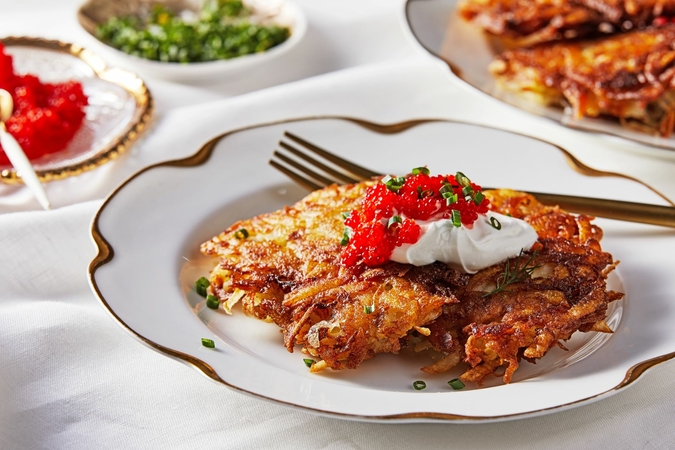
By The Washington Post
Olga Massov

I love latkes so much, I named my dog after them.

That’s not the punchline to a joke. When we got our Labrador retriever puppy in November 2019, we took one look at her pale yellow coat and named her Latke. And last Hanukkah, we even tried photographing Latke with latkes, but being true to her Labrador self, she ate them before we could snap a single frame.

So, latkes are something I’ve obsessed over since I was a kid, begging my mom to make them for me year-round. As an adult, I’ve made all kinds: with potatoes and with other vegetables, coarsely shredded and finely grated, fried and baked, with all manner of seasonings, spins and techniques.

But for me, nothing beats a crispy, lacy classic potato latke with few ingredients.

Latkes are akin to a good pair of jeans: quotidian and humble enough for weeknight dinners, festive and elevated for a dress-up occasion. Making them reminds of the Before Times when I threw latke parties – basically an excuse to eat as many potato pancakes as stomachs would allow, with or without various accoutrements, from simple sour cream and applesauce to decadent caviar. (And, obviously, bubbles to go with it all.)

This year, rather than making mountains of latkes, I’ll scale down for our family of three, but I still plan to throw a latke party. Finding joy and merriment where one can is one of 2020’s great lessons.

Most classic potato latke fans fall into two camps: those who like dense, finely grated ones shaped like hockey pucks and those who want coarsely shredded ones with lacy, crispy frilly bits and a bit of a disheveled look about them. I stand firmly in that latter camp.

To me a great latke is a decidedly crispy one, the kind that almost shatters against your teeth with a satisfying crunch. In the center, there’s a bit of softer potato as well. Like a great cookie, a great latke needs both – the crispy and the chewy – to be heavenly.

My latke recipe is simple and not unlike many out there: potatoes, a little onion, eggs and flour. I season the mixture with a generous helping of salt (don’t be afraid to use a generous hand here – the potatoes can handle it) and a bit of ground black pepper. Then I add my “secret” ingredient, which is potato starch. More starch and less liquid equals a crispier (and thus tastier) latke.

The idea to add extra starch occurred to me one day while patting dry chicken wings, which I was about to coat in cornstarch and then fry until crispy. What if, I thought, I did the same with latkes? Get rid of excess moisture and up the starch content for crispiness beyond compare.

I never looked back.

While the recipe is elementary and pantry-friendly, it’s important to start with the right kind of potato. Russets, packed with starch and relatively low in moisture, are ideal.

Once they’re shredded, it is important to drain the potatoes of as much water as possible – more liquid means a mushier latke. I like to wrap my grated potatoes in a cheesecloth bundle and then twist, twist, twist and squeeze, squeeze, squeeze. I drain that excess liquid into a bowl, which I let sit for a bit while I mix in the other ingredients. Once the starch in the drained liquid settles on the bottom, I carefully pour off the liquid and scrape the thick, chalklike layer of starch into the potato mixture. To answer the siren-call of promised crunch, I add an additional tablespoon of potato starch (though cornstarch will do in a pinch) to the mixture.

Scale and get a printer-friendly version of the recipe here.

And then, I fry.

This Hanukkah, we will skip the decadent accoutrements, as they feel wrong against the backdrop of such a difficult year. We’ll forgo the caviar and the bubbles, and instead keep it simple, with plenty of sour cream and applesauce.

And as we light the menorah candles, we will wish for more light and joy in the upcoming year, looking forward to the time when we can see our loved ones and hug one another.

– – –

Latkes

Total time: 50 minutes / 4 – 6 servings

These straightforward classic latkes customary for Hanukkah meals have one trick up their sleeve: extra potato starch. Draining the extra liquid out of the shredded potatoes and letting the starch in that liquid settle to the bottom, plus sneaking in more potato starch guarantees the crispiest latkes ever. Applesauce and/or sour cream are traditional accompaniments, but if you’re feeling festive, salmon roe or even caviar (with creme fraiche) are not out of the question.

INGREDIENTS

4 large russet potatoes (about 2 pounds 8 ounces total), peeled

1 small yellow onion (4 to 6 ounces), finely grated

2 large eggs, lightly whisked

3 tablespoons all-purpose flour

1 tablespoon potato starch (may substitute cornstarch)

1 tablespoon kosher salt, or more to taste

Freshly ground black pepper

Neutral oil, such as vegetable or canola, for frying

Applesauce, for serving (optional)

Sour cream or creme fraiche, for serving (optional)

Lox, for serving (optional)

Salmon roe, for serving (optional)

Fresh dill fronds and finely chopped fresh chives, for garnish (optional)

DIRECTIONS

Position a rack in the middle of the oven and preheat to 200 degrees. Place a wire rack inside a large, rimmed baking sheet.

Using a food processor fitted with coarse grating attachment, or the large holes of a box grater, grate the potatoes. Transfer to a large piece of folded cheesecloth set in a medium bowl. Twist into a bundle and gently but firmly squeeze out excess liquid into the bowl. (You may need to do this in batches.)

Empty the potatoes into a large bowl. Let the liquid sit undisturbed while you prepare the latke mixture.

Place a large, heavy skillet, preferably cast-iron, over medium heat and warm while you mix the latke mixture.

Add the onion, eggs, flour, potato starch, salt and pepper to the potatoes. Gently tilt the bowl with the potato liquid to drain out the water; you should see a white layer of starch at the bottom. Scrape the starch into the bowl with the potatoes and gently mix all the ingredients to combine.

Add enough oil to come 1/4 inch up the sides of the skillet and gently swirl the oil around – when the oil gently ripples across the surface, it is hot enough for frying.

Working in batches, spoon between 1/4 and 1/3 cup potato mixture per latke into the skillet; you should be able to fit 4 to 5 latkes at a time. Fry the latkes until golden brown on the bottom, 2 to 3 minutes per side, then, using a thin metal spatula, gently flip the latkes. (Your first batch might take up to 4 minutes per side, but as the pan gets hotter, the subsequent batches will go faster. When you see the frilly ends of the latke turn golden brown, it’s time to flip.)

Transfer the latkes to the prepared baking sheet; place the sheet in the oven to keep the latkes warm. Repeat with the remaining potato mixture, adding more oil as needed; you may need to adjust the heat with subsequent batches if the latkes start to brown too quickly. As the potato mixture sits, liquid may pool at the bottom of the bowl; be sure to scoop the mixture, draining away any water before adding to the skillet.

Transfer the latkes to a large platter and serve warm, with your choice of accompaniments, such as applesauce, sour cream, lox, salmon roe and/or dill and chives, if desired.

NUTRITION: Calories 291; Total Fat: 8 g; Saturated Fat: 3 g; Cholesterol: 301 mg; Sodium: 685 mg; Carbohydrates: 41 g; Dietary Fiber: 3 g; Sugar: 2 g; Protein: 15 g.

Recipe from Olga Massov.
Enjoy an amazing culinary journey as Siam Takashimaya, Sooksiam mark their 2nd birthday #SootinClaimon.Com

#SootinClaimon.Com : ขอบคุณแหล่งข้อมูล : หนังสือพิมพ์ The Nation.

Enjoy an amazing culinary journey as Siam Takashimaya, Sooksiam mark their 2nd birthday

Nov 13. 2020

By The Nation

Siam Takashimaya, Bangkok’s only Japanese department store, and Sooksiam have joined up to launch “Zaab Sugoi Thai-Japan Food and Cultural Fair” – a special food and culture festival to mark their second anniversary.

Tourism Authority of Thailand governor Yuthasak Supasorn and Shigeki Kobayashi, counsellor and director of the Japan Information Service from the Japanese embassy presided over the fair’s lift-off on Wednesday.

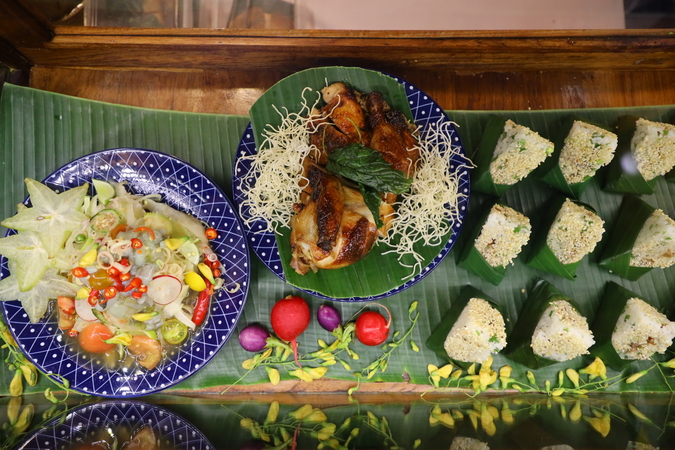
The festival offers a happy, delicious, “sugoi” or amazing culinary journey with delights like somtam with wasabi-fermented squid, grilled pork onigiri with Isaan chilli paste and green curry ramen to name a few.

Visitors will also get to watch well-known chef Yingsak Jonglertjesdawong put together a “Thai-Japanese chilli paste set”, a 3D origami paper-folding workshop by Thailand’s top origami artist Ekkasit Khemnguad, a fish-filleting show by Masa Sushi, as well as a mochi-making demonstration by a Japanese chef to name a few.

Shoppers can also make the most of the “shoot and share” contest or just pick up hugely discounted products such as a 100g Wagyu ribeye steak for just Bt700, a salmon don for Bt499 or a lemon cheese tart for Bt95 among others.

The event runs until November 22 at the ground floor of Siam Takashimaya department store and Sooksiam in Bangkok’s iconic shopping destination Iconsiam.

Enjoy perfectly marbled beef from Spain at Uno Mas #SootinClaimon.Com

#SootinClaimon.Com : ขอบคุณแหล่งข้อมูล : หนังสือพิมพ์ The Nation.

Enjoy perfectly marbled beef from Spain at Uno Mas

Nov 11. 2020

By The Nation

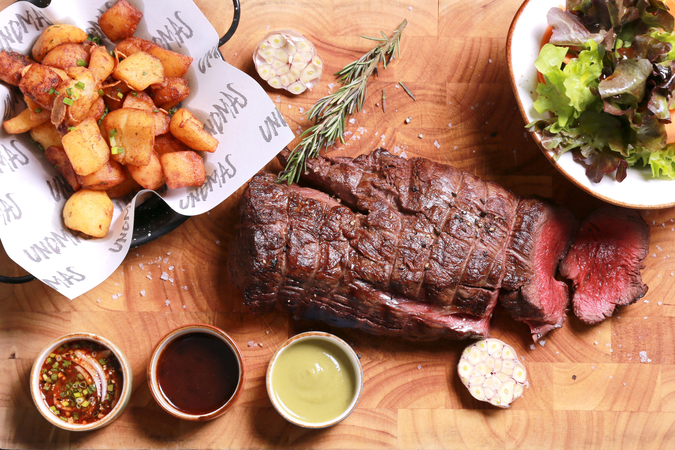
Bangkokians finally get the chance to sample Spain’s famous Rubia Gallega beef tenderloin at Uno Mas restaurant in Centara Grand.

This high-grade cut is beautifully marbled and packs a deep, distinct beefy flavour thanks cattle being left to graze freely for up to 12 years.

At Uno Mas, diners and indulge in executive chef Sandro Aguilera’s signature charcoal oven-roasted one kilo of Rubia Gallega served with fresh green salad, extra virgin olive oil, roasted “ajillo” potatoes with a selection of sauces for Bt3,490++.

Available daily from 4pm until midnight, this dish is ideal for sharing and can be paired perfectly with a large selection of Spanish wines.

Visit www.unomasbangkok.com for more details.

Waldorf’s Front Room reopens with celebration of ‘Mother’s cooking’ #SootinClaimon.Com

#SootinClaimon.Com : ขอบคุณแหล่งข้อมูล : หนังสือพิมพ์ The Nation.

Waldorf’s Front Room reopens with celebration of ‘Mother’s cooking’

Nov 05. 2020

By The Nation

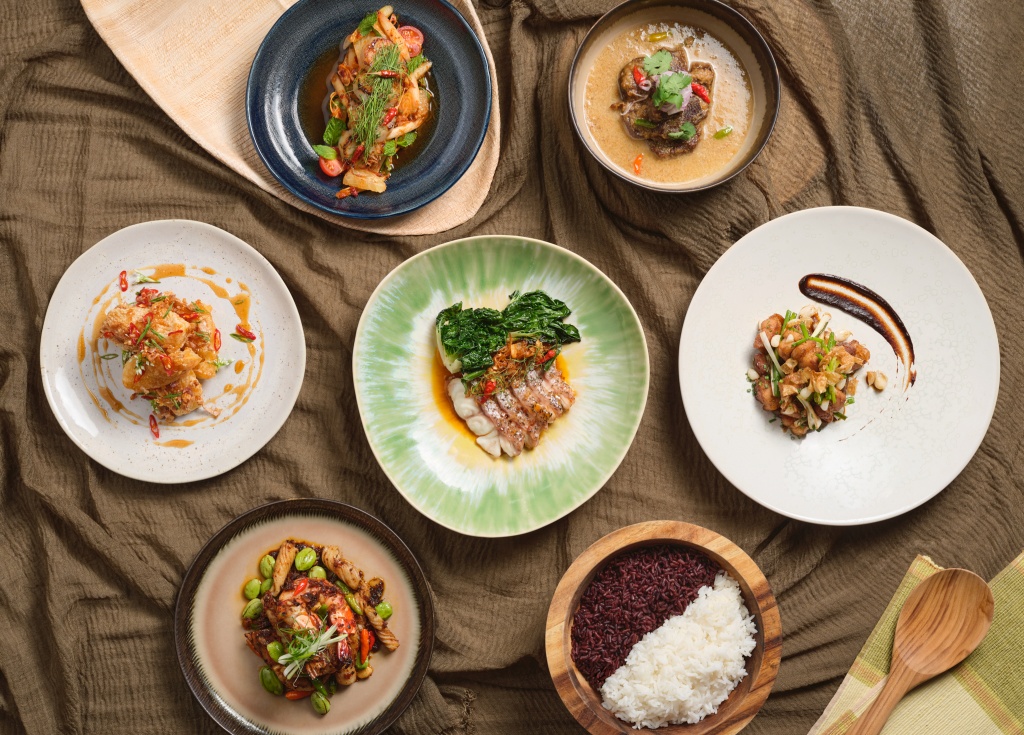
Front Room at Waldorf Astoria Bangkok reopens on Friday, November 6, with a fresh concept celebrating the eight distinctive flavours of Thai cuisine inspired by traditional home-cooking.

“We want Front Room to be a Thai restaurant known for delicious, authentic and comforting dishes that remind diners of ‘ros mue Mae’, or Mother’s home-cooking.

Many of the dishes have their roots in our chefs’ childhood memories of meals at their dining table at home,” said Alessandro Santi, executive chef.

The new menu is the fruit of a collaboration led by Niphatchanok (Ajarn Ning) Najpinij, inspired by her mother and renowned guru of Thai cuisine Asst Prof Kobkaew Najpinij, with back-up from Chef Supanat (Ann) Khanarak and sous chef Sarocha (Bua) Rajatanawin.

The menu celebrates the eight distinctive Thai flavours of sour, sweet, nutty, salty, spicy, bitter, astringent and mild.

Highlights range from Phla Lai Bua Hoy Shell or Seared Hokkaido Scallop with Lotus Stem, Pomelo and Homemade Chili Paste to Moo Sam Shan Pad Grathiam Dong or Stir-Fried Kurobuta Pork Belly with Fermented Garlic and also Ma Phrao Cheesecake or Coconut Cheesecake with Young Coconut Jelly and White Chocolate Mousse.

Also on offer are exclusive plant-based dishes with full Thai flavours.

Front Room is located in the Lower Lobby and open from Tuesday to Saturday for lunch (11.30am to 2pm) and for dinner (5.30-9.30pm).

This year, I need my ancestors more than ever. I’m baking pan de muerto to call them forth. #SootinClaimon.Com

#SootinClaimon.Com : ขอบคุณแหล่งข้อมูล : หนังสือพิมพ์ The Nation.

This year, I need my ancestors more than ever. I’m baking pan de muerto to call them forth.

Oct 27. 2020Pan de Muerto. Photo by Adriana Velez for The Washington Post.Pan de Muerto. Photo by Adriana Velez for The Washington Post. 

By Special to The Washington Post
Adriana Velez

There is a Mexican bread that calls forth the souls of the dead. It’s shaped in a round, crisscrossed with bread “bones” and topped with a little round knob. Under a glittering, sugarcoated crust awaits a sweet, rich, pillowy-soft dream fragrant with star anise, orange zest and orange blossom water. Pan de muerto, bread of the dead, is the signature food of Día de los Muertos, a gift to the beloved departed, a meditation for the living.

Día de los Muertos is one of the great syncretic festivals of Latin America. For centuries, Indigenous people of Mesoamerica observed rituals that prepared the dead for their journey through the nine layers of the underworld to Mictlan Opochcalocan, where the soul meets its conclusion. In the 16th century, Spanish priests brought All Souls’ Day and All Saints’ Day, festivals honoring the dead with gravesite visits and gifts of wine, food and candles – rituals that predate Catholicism itself and that wove themselves into Aztec traditions.

In modern Mexico, in other Latin American countries and increasingly in Latinx communities in the United States, Día de los Muertos spans the first two days of November. Celebrants welcome back the dead with ofrendas, altars bestowed with the deceased loved ones’ favorite things, including food, and with marigolds and decorated calaveras, skulls cast from sugar. They burn copal, a fragrant resin, in homage of the wafting spirits.

On every ofrenda, from gigantic communal public art pieces to intimate household altars, you will find pan de muerto. There are dozens of versions of this bread originating from Mexico, but the most common is the round loaf shaped like a skull. The crossed bones reference the four directions of the Aztec calendar meeting together at the heart of the world, called the quincunx; that’s the knob.

Pan de muerto’s antecedent may be huesos de Santos, hollow, marzipan “bones” filled with a custard “marrow,” the treat traditionally laid on graves during All Souls’ Night in Spain. But pan de muerto is more similar to a spiral-shaped, sugarcoated Mallorcan bread called ensaïmada.

In late October, I like to buy two loaves of pan de muerto from Fany Gerson of La Newyorkina in New York City. I place one on my ofrenda for my ancestors, and eat the second one right away, since it’s luxurious softness doesn’t last more than a day or two. (Then I turn my ancestors’ loaf into bread pudding after the holiday.)

It was partly through Gerson’s bread that I learned about Día de los Muertos. I am Mexican on both sides of my family, but we did not grow up celebrating the holiday. The tradition had fallen away somewhere in past generations. Reclaiming this lost custom has been part of a larger effort to weave my heritage back into my everyday life.

I don’t have to do this alone. In cities with sizable Latinx populations, such as San Antonio, Los Angeles and Chicago, Día de los Muertos is usually celebrated as a community event with music, dancing, processions, feasts and face painting. But not this year. In 2020, festivities will be muted, virtual, restricted to small family gatherings, if even that is possible.

The coronavirus pandemic has hit the Latinx community especially hard. In the United States, cases are 2.8 times higher and hospitalizations are 4.6 times higher compared with White, non-Latinx people, according to the Centers for Disease Control and Prevention. This is attributable to a number of factors, from living in multigenerational homes to a greater likelihood of working in high-exposure essential service fields such as agriculture and meatpacking. To be painfully frank, we have more dead to honor this year; and yet the very gatherings that could help heal these losses pose too great a danger to our health.

“This year is definitely going to be different,” says Patricia Bedoy, co-owner of the nearly 60-year-old Bedoy’s Bakery in San Antonio. The panaderia specializes in a traditional version of pan de muerto in the shape of a man or woman, decorated with colorful glazes. The weeks leading up to Día de los Muertos usually constitute the biggest season for bakeries such as Bedoy’s. In years past, they would have baked for mass school and community celebrations. With events canceled this year, it seems likely that family-owned businesses such as hers will take a hit. But worse, Bedoy says there have been “many, many” coronavirus-related deaths in her family.

Bedoy will still celebrate, albeit with a smaller family gathering. And if anything, the circumstances will underscore the meaning of the occasion. “That is going to bring us back to the meaning of that day,” she says. “It will have a deeper meaning, I think.”

Gerson agrees. “It’s almost like we question ourselves, like, is it OK to celebrate, to continue?” But one of La Newyorkina’s employees lost his mother to the virus, and Gerson worries that people are being denied the space and opportunity to mourn their loved ones the way they otherwise would. “So this year it feels almost, it feels . . .”; She pauses. “I don’t even have the right adjective, to be perfectly honest. But to be able to have a moment where you do stop and celebrate among all this hardship feels especially symbolic.” The importance of the celebration feels heightened for her. “I think it’s going to be cathartic for a lot of people and especially in the communities, because it’s like a collective mourning of sorts.”

Gerson, who was raised Jewish, also did not grow up celebrating Día de los Muerto. But when she learned about the practices, they resonated with her, so she adopted them. Most of all, she loves pan de muerto, a bread whose ingredients – wheat and oranges brought by Spanish conquistadors, star anise from Asia – speak to the cultural blend of Mexican cuisine. “This is my favorite bread in the entire world,” she says. “There’s nothing better to me.” And while she could make it all year long, reserving it for this one season makes it all the more special. (Gerson has an excellent recipe in her cookbook, “My Sweet Mexico.”)

For me, crafting this bread by hand is an embodied meditation. Through its very corporeal motions, I reflect on all the mythologies around the world of gods creating humans, of how they take substances from the earth and animate them, using nothing more than their bare hands. As I knead, I am aware of my breath, my body, and I am a god using the alchemy of seeds, water and motion to create life. When the dough rises, I admire my creation, filled as it is with spirits. I conquer death, if only for today.

And I connect with my ancestors, who help me see past this momentary crisis. I feel the generations before and the generations to come. I cross dimensions of time and space. My ancestors have seen war, genocide, bondage, heartbreak, and yet here I am, their descendant, working dough in their honor, for now, for those we lost this year, for those who will rise up in the future.

– – –

Pan de Muerto

Active time: 35 minutes | Total time: 4 hours

8 servings (2 loaves)

On the days leading to Nov. 1, pan de muerto is traditionally placed on Dia de los Muertos ofrendas, or Day of the Dead altars, along with foods, flowers and mementos of a family’s ancestors. Writer Adriana Velez adapted this sweet, soft bread recipe from Mexico City native and Austin resident Janet Kushner’s popular YouTube channel Jauja Cocina Mexicana. Velez adjusted the traditional method, which calls for 45 minutes of hand kneading and produces a lighter, more feathery loaf. It now calls for only 15 minutes of kneading. Each loaf serves four living humans or an infinite number of ancestors. Serve with Mexican hot chocolate, or champurrado.

Pan de Muerto. Photo by Adriana Velez for The Washington Post.

Pan de Muerto. Photo by Adriana Velez for The Washington Post.

Variations: Flavoring with orange blossom water is traditional, but vanilla extract may be substituted. Fany Gerson of La Newyorkina Bakery mixes in chopped Mexican chocolate. You could also add ground cinnamon to the sugar glaze.

Storage Notes: Leftover bread can be stored at room temperature, tightly wrapped, for up to 2 days.

INGREDIENTS

FOR THE SPONGE:

1 packet (7 grams) active dry yeast

1 tablespoon bread flour

1 teaspoon granulated sugar

1/3 cup (80 milliliters) whole milk, warmed to 110 to 115 degrees (hot enough to have your pinkie in without burning)

1 teaspoon orange blossom water

FOR THE DOUGH:

Scant 3 cups (360 grams) bread flour, plus up to a scant 1/2 cup (50 grams) more, as needed

1/2 cup (100 grams) granulated sugar, plus about 1/4 cup (50 grams) to sprinkle on top

Finely grated zest from 1 medium navel orange (about 2 teaspoons)

1 teaspoon ground star anise

1/2 teaspoon kosher salt

3 large eggs, at room temperature

6 tablespoons (85 grams) unsalted butter, cut into small pieces, plus 2 tablespoons (30 grams) melted and cooled to brush over the finished loaves

1 tablespoon canola or another neutral oil

STEPS

Make the sponge: In a small bowl, using a fork, mix together the yeast, flour and sugar until combined. Add the milk and orange blossom water and gently mix to combine. Cover the bowl with plastic wrap and set it aside in a warm place until the sponge is foamy, about 10 minutes.

Make the dough: In the bowl of a stand mixer fitted with the dough hook attachment, combine the 3 cups (360 grams) of bread flour, 1/2 cup (100 grams) of sugar, orange zest, star anise and salt and mix on medium speed until well combined. Add the eggs and the foamy sponge and continue to mix on medium-high speed until a rough dough has formed.

Raise the mixer speed to high and add the 6 tablespoons (85 grams) butter, a couple of pieces at a time, kneading until the butter is fully incorporated into the dough and no bits of butter are visible, about 5 minutes. Stop the mixer and, using a silicone spatula, scrape down the sides of the bowl. Return the mixer speed to high and continue to knead the dough in the mixer on high speed until it pulls away from the sides of the bowl and starts to climb up the hook, about 10 minutes. The dough will be very soft and a bit tacky. If after 10 minutes the dough has not started to pull away from the sides of the bowl, or looks extremely soft, add a bit more flour, 1 tablespoon at a time, up to an additional scant 1/2 cup (50 grams), and continue to knead the dough for an additional 5 minutes.

[If making pan de muerto by hand, whisk together 3 cups (360 grams) bread flour, 1/2 cup (100 grams) sugar, orange zest, star anise and salt in a bowl and form a well in the center. Whisk the eggs and then pour them, with the sponge, into the center. Knead in the bowl with a plastic scraper until combined, then mix in the butter a few pieces at a time and knead for 10 minutes. Dust a clean, cool countertop with a 1/4 cup (50 grams) flour, turn out the dough, and knead until the flour is incorporated, an additional 5 minutes. Do not add too much flour as you knead the dough or the final bread will be dry and dense.]

Grease a large bowl with 1 tablespoon of oil. Transfer the dough to the bowl and roll it around to grease all over. Cover the bowl with plastic wrap and let it rise in a warm place until doubled in size, about 1 hour.

Shape the dough: Line a large, rimmed baking sheet with parchment paper.

Turn the dough out onto a clean, dry counter. Cut off a roughly baseball-size (200-gram) piece of dough and reserve. Divide the remaining, larger piece of dough in half. Shape the two larger halves into smooth rounds by cupping your palms around them, rolling and dragging them gently toward you. Lay each round on the lined baking sheet, at least 3 inches apart.

Make the “bones”: Divide the reserved dough into 5 pieces, with four equal-sized pieces and one piece slightly smaller. Roll the four equal-sized pieces into ropes long enough to cross over each loaf, about 5 inches long. Spread out your index, middle and ring finger and use them to roll and press indentations into each short rope of dough, so they resemble bumpy bones. Lay two “bones” across each loaf, forming a cross in the center on the top. Gently tuck the ends under each loaf. Divide the fifth, smaller piece of dough in half and roll each half into a ball. Using your index finger, gently press into where the crosses intersect to form a dimple. Place one of the dough balls into each dimple, pressing gently to adhere it. Cover the loaves loosely with plastic wrap, and let rise in a warm place until doubled in size, about 1 hour.

Bake the bread: Position a rack in the center of the oven and preheat to 350 degrees for at least 10 minutes.

Remove the plastic wrap from the risen loaves, and transfer them to the oven. Bake for 20 to 25 minutes, or until deep brown. Transfer the bread to a wire rack and let cool until easily handled, about 30 minutes. Brush each cooled loaf with 1 tablespoon of the melted butter and sprinkle the sugar evenly over the loaves, letting the excess roll off.

To serve, slice the bread into wedges, or tear it apart with your hands.

Nutrition | Calories: 343; Total Fat: 13 g; Saturated Fat: 6 g; Cholesterol: 93 mg; Sodium: 103 mg; Carbohydrates: 48 g; Dietary Fiber: 1 g; Sugar: 14 g; Protein: 9 g.

Adapted by Adriana Velez from Janet Kushner’s recipe on Jauja Cocina Mexicana on YouTube.

Bangkok’s World Gourmet Festival comes of age with culinary firsts, unique local flair #SootinClaimon.Com

#SootinClaimon.Com : ขอบคุณแหล่งข้อมูล : หนังสือพิมพ์ The Nation.

Bangkok’s World Gourmet Festival comes of age with culinary firsts, unique local flair

Oct 16. 2020

By The Nation

Palates will be put through their paces next month when Bangkok’s oldest international culinary spectacular returns to one of the capital’s most exclusive addresses for its 21-year anniversary.

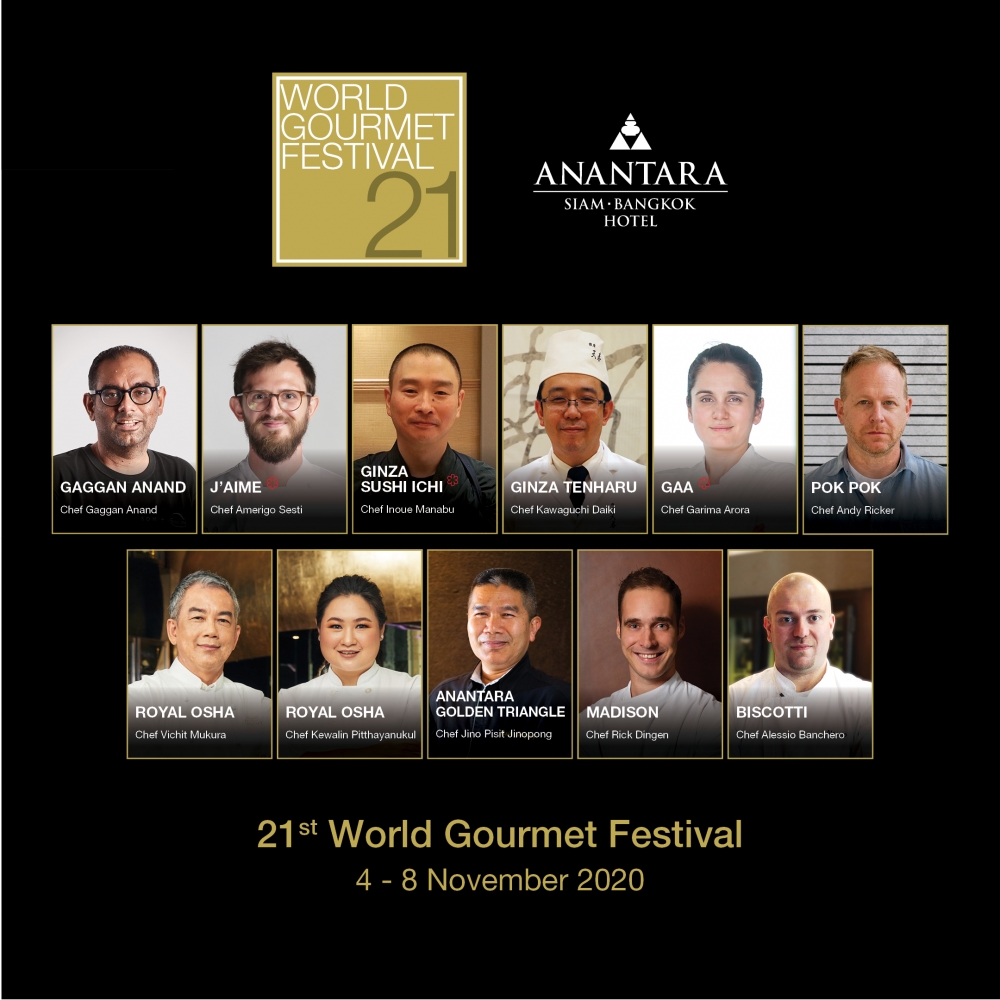
From November 4-8, a star-studded line-up of Thailand-based chefs – some of whom count among the world’s best kitchen practitioners – will gather at Anantara Siam Bangkok Hotel for a celebration of outstanding cuisine and superb wines.

Diners can expect exciting culinary firsts, unique Thai and western collaborations, Bangkok’s longest Sunday Brunch, and an extraordinary gastronomic and cultural journey that will benefit less fortunate communities around the world.

Confirming their participation in the 21st World Gourmet Festival are:

• Gaggan Anand: Gaggan Anand Restaurant, Bangkok (formerly 2 Michelin stars)

• Amerigo Sesti: J’aime by Jean-Michel Lorain, Bangkok (1 Michelin star)

• Garima Arora: Gaa, Bangkok (1 Michelin star)

• Inoue Manabu: Ginza Sushi Ichi, Bangkok (1 Michelin star)

• Andy Ricker: Pok Pok, Portland, USA (formerly 1 Michelin star)

• Vichit Mukura and Kewalin Pitthayanukul: Royal Osha, Bangkok (Michelin Plate)

• Alessio Banchero: Biscotti, Bangkok (Michelin Plate)

• Choy Ped Yang: Street vendor, Bangkok (Michelin Bib Gourmand)

• Kawaguchi Daiki: Ginza Tenharu, Bangkok

• Pisit ‘Jino’ Jinopong and Rick Dingen: Anantara Hotels, Resorts & Spas, Thailand

• Yaowarat Toasted Bread: Street vendor, Bangkok

• Ni-Ang Nam Kaeng Sai: Street vendor, Bangkok

• Sarinthip Thai Crispy Crepe: Street vendor, Bangkok

• Na Projects Group: Five families from Ethiopia; Pakistan; Palestine; Sri Lanka; and Vietnam

On Friday, November 6, Gaggan Anand will present a culinary first for the four-time Asia’s 50 Best topper when he prepares a unique 18-course Escoffier menu. “Till today no one knows how bad or good I am with French food, so I want to challenge myself to create what Gaggan Anand is famous for – to be a rebel, to provoke and disrupt,” said Anand.

Then, Saturday will see another culinary first for both chefs and their restaurants, when Michelin-starred chef Inoue Manabu from Ginza Sushi Ichi and Kawaguchi Daiki from Ginza Tenharu partner to present their signature dishes of sashimi, nigiri and tempura in one menu.

On Wednesday, November 4, five refugee families from Ethiopia, Pakistan, Palestine, Sri Lanka and Vietnam will prepare a feast of traditional dishes from their home countries. Refugees arrive to Thailand as a layover awaiting settlement to a new country that sometimes takes up to 10 years. At the Na Projects Group at Na Café at Bangkok 1899, legal refugees who are temporarily stuck here due to the pandemic are finding a platform for vocational training to become baristas and cooks. All proceeds from this dinner will be paid to the five families.

On Sunday, November 8, Bangkok’s popular street vendors will prepare their fare in food stalls strewn around the Parichart open-air garden courtyard during the hugely popular World Gourmet Festival Brunch. Expect Michelin Bib Gourmand Choy Ped Yang, Yaowarat Toasted Bread, Ni-Ang Nam Kaeng Sai, and Sarinthip Thai Crispy Crepe.

The World Gourmet Festival Brunch, Bangkok’s longest Sunday Brunch, will flow from 11.30am to 5pm and Anantara’s Kids’ Club will entertain the young ones while parents feast.

A portion of each dinner ticket sold will be donated to the HRH Princess Soamsawali Krom Muen Suddhanarinatha HIV Prevention Fund.

Reservations for the 21st World Gourmet Festival at Anantara Siam Bangkok Hotel are essential and can be made by contacting (02) 126 8866 ext 1201, email wgf.asia@anantara.com or visiting www.worldgourmetfestival.asia.

Burger King launches ‘don’t think too much’ campaign this month #ศาสตร์เกษตรดินปุ๋ย

#ศาสตร์เกษตรดินปุ๋ย : ขอบคุณแหล่งข้อมูล : หนังสือพิมพ์ The Nation.

Burger King launches ‘don’t think too much’ campaign this month

Oct 02. 2020

By The Nation

Burger King has launched a new “Christmas, Don’t Think Too Much” campaign, in which diners get an extra burger of choice for free if they order one of the popular burgers.

The fast-food restaurant is also offering nostalgic Christmas vibes and activities at its outlets in Maze Thonglor, Siam Paragon and Esso Ramindra.

Thanawat Damnoenthong, general manager of Burger (Thailand) Co Ltd, said Thai people have had a lot to worry about this year, so Burger King wants to give them a reason to smile.

The burgers included in this promotion are Whopper Jr Cheese, Ninja Burger Pork, Fish N ’Crisp and Tender Crisp.

In the last quarter of this year, Burger King expects its sales to rise by 25 per cent and reckons the Christmas promotion will be a major contributor.

Japanese brewers bet on tax change to revive pandemic-hit sales #ศาสตร์เกษตรดินปุ๋ย

#ศาสตร์เกษตรดินปุ๋ย : ขอบคุณแหล่งข้อมูล : หนังสือพิมพ์ The Nation.

Japanese brewers bet on tax change to revive pandemic-hit sales

Oct 02. 2020

Cans of Kirin Ichiban beer on the production line in a Toride facotry. , Bloomberg

Cans of Kirin Ichiban beer on the production line in a Toride facotry. , Bloomberg

By Syndication Washington Post, Bloomberg · Lisa Du, Grace Huang · BUSINESS 

Japanese brewers suffering from the dropoff in bar and restaurant traffic are about to get some relief, thanks to long-awaited revisions to the liquor tax system that kicks in this week.

Until now, the island nation has had a complex taxation system for beer based on malt content instead of alcohol, where beer with more malt is taxed and priced higher. As of Thursday, the government is starting to bring taxes of different varieties of alcoholic products more in line with each other, which should make some beers more affordable for consumers.

The changes come at a dire time for Japan’s beermakers including Asahi and Kirin. The coronavirus pandemic has wiped out a sizable source of revenue for the brewers and their global rivals as people spend less time eating and drinking out. Almost half of Asahi’s best-selling Super Dry was sold through commercial channels to restaurants, where it does not have to compete with lower-malt or “new genre” beers.

As more people bought beer and alcohol to consume at home, beer sales in Japan fell by 26% by volume for the first half of the year, while new-genre beer products – which are priced lower – increased 6%, according to data compiled by Kirin.

In recent years, Asahi, Kirin and Japan’s largest beermakers have put out a slew of cheaper low-malt beers or new-genre beers with no malt, which are taxed lower. Consumers have flocked to them, shifting drinking habits perhaps more than even the brewers expected.

For the first half of the year, revenue at Asahi and Kirin both fell, dragged down by the beer and alcoholic beverages division, which is usually their most profitable; sales in the domestic alcoholic segment fell 13% and 6%, respectively.

“This odd tax system created a type of beer deflation,” said Nomura Securities analyst Satoshi Fujiwara. Now, it might be too late to get consumers used to cheap drinking to change their mindset, he added.

Now, taxes on high-malt beer will be lowered by 7 yen, a cut that Asahi and Kirin said they intend to pass on to consumers. Although restaurants and retailers get the final say on pricing, it’s likely that they will fall into line.

Still, beer will continue to be more expensive than lower-malt beers, which are taxed as “happoshu,” or bubbly spirits – the same as canned mixed drinks. Taxes on new-genre beers will go up by 9.8 yen. Eventually, the taxation will adopt a single tax for three types of beer in 2026.

The question is whether that will be enough to lure customers back to beer. The pandemic has also made people more aware of cheaper alternatives. At the peak of curtailed business and retail activity in Japan, sales of canned ready-to-drink chuhai – drinks mixed with liquor and priced lower than beer – soared.

“For beer sales to regain ground they need commercial sales to return,” said Tomonobu Tsunoyama, an analyst at Mitsubishi UFJ Morgan Stanley Securities. “For that, ending the coronavirus is much more important.”

In the medium term, it’s more likely that lower-malt or canned mixed drinks will benefit the most from the tax changes while consumers stick to drinking on the cheap, according to analysts. That could be beneficial for the likes of Kirin, whose Hon Kirin drink, which was developed as a new-genre beer, has turned into a massive success – with sales increasing by as much as 40% some months this year, and helping it take market share in Japan’s highly competitive beer market from rival Asahi.

Fast food got slower in 2020, costing millions in lost revenue #ศาสตร์เกษตรดินปุ๋ย

#ศาสตร์เกษตรดินปุ๋ย : ขอบคุณแหล่งข้อมูล : หนังสือพิมพ์ The Nation.

Fast food got slower in 2020, costing millions in lost revenue

Oct 02. 2020A customer wearing a protective mask receives an order from a worker at the drive-thru of a McDonald's in Los Angeles on April 27, 2020. MUST CREDIT: Bloomberg photo by Kyle Grillot.A customer wearing a protective mask receives an order from a worker at the drive-thru of a McDonald’s in Los Angeles on April 27, 2020. MUST CREDIT: Bloomberg photo by Kyle Grillot. 

By Syndication. Washington Post, Bloomberg · Nic Querolo · BUSINESS, RETAIL

In the fast food business, every second counts — especially during a pandemic.

The average time to get an order at 10 of the biggest fast-food chains in the U.S. this year is just shy of six minutes, according to a report from market researcher SeeLevel HX. That’s about 30 seconds slower than last year, and it shows how the pandemic has sent consumers that would normally eat in the restaurant to drive thrus, putting them to the test.

Such a small delay may seem trivial, but it cost the industry millions in lost revenue, according to the report. The slowdown broadly stemmed from the fact that many restaurants were operating with newly hired staff after a rash of Covid-related layoffs, coupled with higher volumes and a surge of delivery orders, SeeLevel HX CEO Lisa van Kesteren said.

“Covid came along and restaurants found their teams just smashed to smithereens,” van Kesteren in an interview. “Because everything went off-premise, they were inundated.”

SeeLevel HX estimates the 30-second delay costs a chain that serves food throughout the day about $32,000 per store over the course of a year. For a store with 2,000 locations, or about the size of Chick-Fil-A, that would add up to $64 million in lost revenue.

KFC, owned by Yum! Brands Inc., has the fastest drive-thru service, with the average order time under five minutes. It was one of only three restaurants to get faster this year from 2019. Chick-Fil-A held its position at the bottom of the list in terms of speed, and Dunkin’ fell from first place to seventh. Chick-Fil-A scored highest for order accuracy and customer service, however.

SeeLevel HX conducted its research by sending researchers on nearly 1,500 restaurant visits, spanning 10 chains across the U.S.

Sizzler offers plant-based ‘meaty’ options for vegetarian festival next month #ศาสตร์เกษตรดินปุ๋ย

#ศาสตร์เกษตรดินปุ๋ย : ขอบคุณแหล่งข้อมูล : หนังสือพิมพ์ The Nation.

Sizzler offers plant-based ‘meaty’ options for vegetarian festival next month

Sep 28. 2020

By The Nation

American chain Sizzler is offering all-vegetarian steaks and burgers to mark the yearly vegetarian festival.

From October 15 to 25, 30 participating Sizzlers branches will serve up OmniMeat steak and spaghetti with truffle sauce for Bt329 and Beyond Burger with barbecue sauce for Bt399.

The salad bar will also include special offerings like the Sichuan hot and sour vegetarian soup with tofu skin, special vegan dressings and fruit salad.

Kreetakon Siriat, general manager of SLRT Co Ltd, a subsidiary of Minor Food Group which runs Sizzler, said the people’s dietary choices have been changing in the wake of the Covid-19 outbreak. Recent statistics show that Thais are consuming 8 per cent less meat than just four years ago.

Nongchanok Sathananon, executive vice president of the marketing division of SLRT, said Sizzler is working with “Green Monday” to offer vegetarian alternatives.

Call (02) 365 6934 or visit SizzlerThai on Facebook or www.sizzler.co.th for more information.