Copyright bots and classical musicians are fighting online, and the bots are winning #ศาสตร์เกษตรดินปุ๋ย

#ศาสตร์เกษตรดินปุ๋ย : ขอบคุณแหล่งข้อมูล : หนังสือพิมพ์ The Nation.

https://www.nationthailand.com/lifestyle/30388286?utm_source=category&utm_medium=internal_referral

Copyright bots and classical musicians are fighting online, and the bots are winning

May 21. 2020
An image from a Camerata Pacifica video that was blocked on Facebook for alleged copyright violations. Molly Morkoski on piano, Richard O'Neill on viola and Jose Franch-Ballester on clarinet play Mozart's

An image from a Camerata Pacifica video that was blocked on Facebook for alleged copyright violations. Molly Morkoski on piano, Richard O’Neill on viola and Jose Franch-Ballester on clarinet play Mozart’s “Kegelstatt.” MUST CREDIT: Camerata Pacifica
By The Washington Post · Michael Andor Brodeur · TECHNOLOGY, ENTERTAINMENT, MEDIA, MUSIC

A few Sundays ago, Camerata Pacifica artistic director Adrian Spence, aided by his tech-savvy son Keiran, went live on Facebook to broadcast a previously recorded performance of Mozart’s Trio in E flat (K. 498), aka the “Kegelstatt” trio. At least they tried to.

The recorded performance was one of many that Spence had drawn from the Camerata’s extensive video archives. When the covid-19 crisis abruptly canceled its season, Spence launched a weekly series of rebroadcasts to fill the silence. These broadcasts, even with their modest virtual attendance of 100 or so viewers per stream, have been essential to keeping Spence’s Santa Barbara, California-based chamber organization engaged with its audience.

Adrian Spence, Camerata Pacifica's artistic director. MUST CREDIT: Timothy Norris

Adrian Spence, Camerata Pacifica’s artistic director. MUST CREDIT: Timothy Norris

That is, until that recent Sunday, when his audience started to disappear, one by one, all the way down to none.

“What the hell is going on?” Spence recalls shouting to his son across the living room as the viewer count conspicuously dropped. Just minutes into the airing of the concert, Facebook issued Spence a notification that his video – an original performance of an hour-long piece composed by Mozart in 1786 – somehow contained one minute and 18 seconds of someone else’s work, in this case, “audio owned by Naxos of America.”

Spence, and presumably Mozart, would beg to differ.

“They’re blocking my use of my own content,” Spence said later in a phone interview, “which feels dystopian.”

As covid-19 forces more and more classical musicians and organizations to shift operations to the internet, they’re having to contend with an entirely different but equally faceless adversary: copyright bots. Or, more accurately, content identification algorithms dispatched across social media to scan content and detect illegal use of copyrighted recordings. You’ve encountered these bots in the wild if you’ve ever had a workout video or living room lip-sync blocked or muted for ambient inclusion or flagrant use of Britney or Bruce. But who owns Brahms?

These oft-overzealous algorithms are particularly fine-tuned for the job of sniffing out the sonic idiosyncrasies of pop music, having been trained on massive troves of “reference” audio files submitted by record companies and performing rights societies. But classical musicians are discovering en masse that the perceptivity of automated copyright systems falls critically short when it comes to classical music, which presents unique challenges both in terms of content and context. After all, classical music exists as a vast, endlessly revisited and repeated repertoire of public-domain works distinguishable only through nuanced variations in performance. Put simply, bots aren’t great listeners.

After the removal of his clips, Spence’s only recourse was to file a dispute with Facebook by filling out a single-field form. This was followed by six hours of fruitless chats with various Facebook representatives. It took nearly four days to clear the spurious claim, and in the interim, Facebook suspended Camerata’s access to live-streaming.

Clearing copyright claims has since become part of Spence’s new routine, casting emails into an opaque dispute system he describes as “the DMV on steroids.”

And the hits keep coming: YouTube blocked a recent live stream of a recorded Camerata performance of Carl Nielsen’s Wind Quintet, Op. 43, after it attracted a swarm of five automated copyright claims from different record companies. It’s gotten to the point where Camerata videos are prefaced by a warning screen, explaining their anticipated disappearance in advance.

“I have no protection for my own produced material,” Spence says. “If you want to put a copyright claim against me, I’m happy to take the time to write back to you and say, ‘This is an erroneous claim and here’s why.’ But when you’re immediately blocking videos or streams, that’s negatively impacting our very mission in a time where this now has become mission critical.”

These systems aren’t just disrupting the relationships between classical organizations and their audiences; they’re also affecting individual musicians trying to stay musically present – and financially afloat – during the crisis.

Michael Sheppard, a Baltimore-based pianist, composer and teacher, was recently giving a Facebook Live performance of a Beethoven sonata (No. 3, Op. 2, in C) when Facebook blocked the stream, citing the detection of “2:28 of music owned by Naxos of America” – specifically a passage recorded by the French pianist Jean-Efflam Bavouzet, whom Sheppard is not.

The takedown led Sheppard into what he describes as “a byzantine web of ridiculousness” starting with Facebook’s dispute form: “Beethoven died in 1827,” he responded. “This music is very much in the public domain. Please unblock it.”

And this wasn’t Sheppard’s first run-in with Facebook, which has blocked or muted past performances of Fauré, Chopin and Bach for being too digitally reminiscent of other performances of Faure, Chopin and Bach. Frustrated with the intrusive claim of infringement, the imposed busywork of defending himself, and the helplessness he felt trying to get these issues recognized and resolved, Sheppard took to Twitter.

“Dear @naxosrecords,” he tweeted May 9, “PLEASE stop muting portions of works whose composers have been dead for hundreds of years. It does 0% of people any good, especially musicians like myself who are trying to make a living in time of crisis. #UnmuteBeethoven.”

Two days later, Naxos tweeted back, thanking Sheppard for his request and confirming that his video had been “whitelisted.”

“There are people worse off than me whose only income is their performances,” says Sheppard, who accompanies his streams with a “virtual tip jar.” “But if it’s muted, what’s the point? Other people are doing the same thing and getting stymied by this.”

The covid-19 crisis has certainly driven more classical musicians online to experiment with streaming, but the struggle between bots and Bach isn’t new. The pianist James Rhodes went viral after Sony claimed ownership of the living room performance of Bach’s First Partita that he posted to Facebook in 2018. The same year, musician and blogger Sebastian Tomczak received multiple copyright claims against a 10-hour stretch of white noise he uploaded to YouTube three years prior.

And in January 2019, students of conductor Jonathan Girard at the University of British Columbia presented a live-streamed program of orchestral works by Beethoven and Tchaikovsky that Facebook cut off and blocked midstream.

“This is a real, viable way of reaching audiences and communicating art to the world,” Girard says. “And it’s going to be blocked by copyright algorithms that don’t actually fairly look at what’s happening. That’s a serious problem for musicians that are playing music that’s in the public domain.”

It might be tempting to glance at the copyright claims and simply blame the names listed at the bottom – the seemingly aggressive record companies issuing them all. But many of those companies are as helpless against the system as the targets of their claims.

Take Naxos, the classical mother ship that represents about 2.5 million tracks and, according to senior manager of video and new media Duncan Hammons, considers copyright protection “among our chief duties per our relationship with our distributed label clients.”

“We’re at the mercy of automation in order to uphold our obligations to our clients,” Hammons says in an email. Like other record companies, Naxos relies on Facebook’s and YouTube’s content identification systems to track potential illegal use.

“Though the technology works most of the time in terms of correctly identifying instances of our clients’ content on-platform, it still generates a not-insignificant amount of mismatches that require human review to differentiate,” Hammons says. “The chances of conflicts with this amount of content are considerable. For these reasons there is always a volume of potentially erroneous auto-generated claims that unless contested, I may never be made explicitly aware.”

Hammons says that most claims contested by Facebook and YouTube users are cleared within a week of dispute, and that arrangements can be made for channel owners who are able to prove “the legitimacy of their status as a performing arts entity, (or) that their channel constitutes a low risk for abuse of the privilege.”

“We would love to work with these platforms to improve their technologies so that they are better adapted for classical music,” Hammons says, “but as the situation stands, our input on the issue is limited.”

For its part, YouTube has invested more than $100 million to refine its proprietary Content ID technology, according to a company representative. And its apparatus for handling disputes – which, according to several musicians, is more robust than Facebook’s -has managed to resolve nearly all copyright issues before they escalate to legal matters. YouTube doesn’t actively mediate content disputes, but it does passively enable them.

And this week, Facebook posted updates to its music and video policies, including clarified guidelines concerning the use of music in video. It highlighted its free Sound Collection library of thousands of unrestricted tracks, and announced pending improvements to the notification system “to give people time to adjust their streams and avoid interruptions if we detect they may be approaching our limitations.”

But the finer points of those limitations remain mysterious. Facebook scans uploaded content through two systems: its own platform-tailored Rights Manager, which, according to Facebook, can be used to protect only copyrighted works, and a third-party platform called Audible Magic, which helps automatically block audiovisual uploads that match content in its database. Audible Magic advertises services that allow such social media platforms as Twitch, SoundCloud and Vimeo to “identify content in real-time with unparalleled accuracy” and “operate in ‘fire-and-forget’ mode using a simple end to end solution.”

Despite the robustness of such databases, classical performances remain sitting ducks for erroneous challenges. And in general, the “solutions” to these growing problems seem more tailored to rights holders than to, say, pianists. Lowly disputers are left to fight their own battles, whether they started them or not.

“There is no good solution right now,” says Meredith Rose of the Washington, D.C.-based intellectual property advocacy group Public Knowledge. “Maybe in another couple of years they’ll get the technology to the point where it can actually distinguish between two recordings of Beethoven’s Fifth or whatever. But they’re not there yet.”

Likewise, the faith that platforms and record companies invest in these technologies may be as flawed as the systems themselves.

“We built these systems around the presumption that everybody is either: A, a pirate, or B, should be a copyright expert,” Rose says.

As it stands, the relationship between classical musicians and copyright bots is a study in contradictions, as newborn technologies police music that has been with us for centuries and individual musicians battle back against the indifference of massive corporations.

But this unhealthy dynamic also presents a consequential conundrum in terms of how the arts engage with social media as they grow more and more dependent on each other.

“These (classical) organizations have been cultivating large audiences through these social media sites,” notes Girard, the conductor, “and now they effectively can’t access those audiences with their most prized content.

“Considering everything that’s going on, it just seems like just yet another thing that’s marginalizing artists’ ability to communicate with the world.”

Shows like ‘Celebrity Watch Party,’ ‘Ultimate Tag’ and ‘Labor of Love’ only seem like TV’s bottom of the barrel #ศาสตร์เกษตรดินปุ๋ย

#ศาสตร์เกษตรดินปุ๋ย : ขอบคุณแหล่งข้อมูล : หนังสือพิมพ์ The Nation.

https://www.nationthailand.com/lifestyle/30388216?utm_source=category&utm_medium=internal_referral

Shows like ‘Celebrity Watch Party,’ ‘Ultimate Tag’ and ‘Labor of Love’ only seem like TV’s bottom of the barrel

May 20. 2020
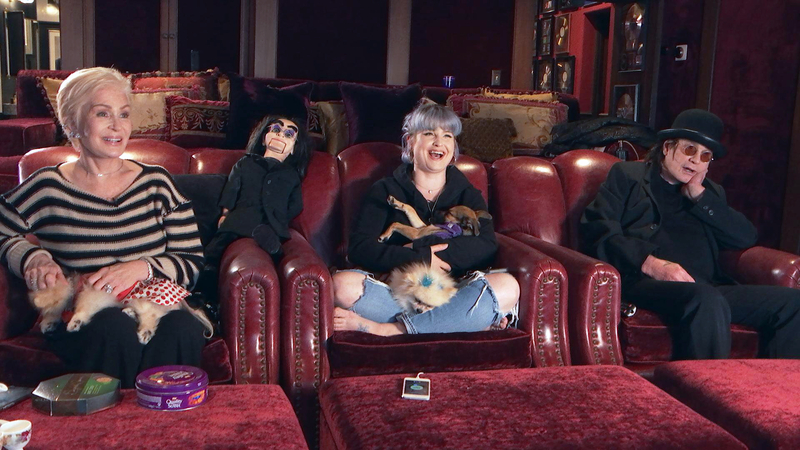
From left, Sharon, Kelly and Ozzy Osbourne use their home theater to watch

From left, Sharon, Kelly and Ozzy Osbourne use their home theater to watch “Dirty Dancing” on “Celebrity Watch Party.” MUST CREDIT: Fox
By The Washington Post · Hank Stuever · ENTERTAINMENT, TV 

By now, it’s entirely possible that you’ve over-binged on television and have grown sick of it. Believe me, I sympathize. The one form of entertainment that was supposed to see us through the pandemic shutdown is also still the fastest route to craptown.

The month of May was like this even in TV’s usual, non-pandemic times. Once the season finales are over and the singing competitions have crowned their winners, networks often set their trash out on the curb, usually just before Memorial Day.

Three new shows from Fox (“Ultimate Tag,” “Labor of Love” and “Celebrity Watch Party”) certainly have that late-spring stink about them – shows that are each mildly enjoyable in a fleeting way while also serving as a sort of omen about what lies at the bottom of most barrels.

Only one – “Celebrity Watch Party,” which premiered May 7 and airs Thursday nights – can be fully regarded as a product of the covid-19 moment. Based on a 2013 British show called “Gogglebox” (which was already copied as “The People’s Couch” on Bravo several years ago), it’s a show about watching people (celebrities in this case) sit on their couches at home and yell at the screen while they watch TV.

Participants include Rob Lowe and his sons; Tyra Banks and her mother; Joe Buck and his wife; Meghan Trainor and her family; Justin Long and his brother; Apple co-founder Steve Wozniak and his wife; Raven-Symoné and some friends; and, it almost goes without saying, the ever-available Osbournes.

It’s hard to think of a show that would be easier to make, which is why Fox ordered 10 episodes last month as a fun, fizzy way to fill up some of the prime-time schedule while the network, like its competitors, rations out what’s left in its cupboards. The celebs are of course game, because all their other gigs dried up. “Celebrity Watch Party” is one of the rare ways left to be on TV without using Zoom.

The viewer’s reflexive response is of course despair: Has it really come to this, you ask – watching other people watch TV?

Luckily, critics and others already worked through this quandary, back when Bravo’s version premiered. “The People’s Couch” seemed at first like a new low in a medium out of ideas, but those of us who actually watched it found it charmingly (if absurdly) intimate, mainly because the viewers Bravo chose to follow were personable, diverse and willing to say whatever was on their minds about what they were seeing. Their passion for good and bad television – as well as their low-stakes regard for it – had a leavening effect on my own self-important sense of criticism. It was a reminder that TV is, after all, just TV. Sometimes the best thing about it is its role as a reliable campfire, around which we gather with those we love.

“Celebrity Watch Party” has a similar vibe, as its participants howl in anguish (on a recent episode) while watching “Kings of Pain,” History’s horrifying reality show in which two dudes (a wildlife biologist and an animal handler) subject themselves to stings and bites from exotic insects and reptiles.

The same episode shifted moods, as the participating households took in a cable broadcast of the 1987 classic “Dirty Dancing.” The pained look on 71-year-old Ozzy Osbourne’s face, as he is made to endure the entire movie! As a visual of 2020’s stay-at-home misery, it should hang in a museum, where, with its subtle range of suffering and ennui, it can beguile visitors for centuries to come.

Wednesday’s premiere of “Ultimate Tag,” meanwhile, comes to us from another time, not so long ago, when it might have been fun to have a sweaty fitness fiend with a name like “The Caveman” or “Banshee” or “The Flow” chase you around an obstacle course and try to rip a tag from your shirt. Now you’d give anything for jockos like that to give you at least six feet when you’re out for a walk or navigating the narrow aisles of a CVS.

Hosted by all three football-playing Watt brothers (J.J. and the other two), the competition seems to have emanated from a semiprofessional tag circuit, which, if you don’t mind, I’ll skip researching so as not get further depressed about the state of American adulthood. Many of the contestants and their costumed pursuers mention participation in CrossFit exercise regimens, which should be all we really need to know.

Aesthetically, “Ultimate Tag” seems to aggregate the look of pro wrestling, roller derby, a trampoline party and an expensive gym membership. It has none of the coded piety of “American Ninja Warrior,” and not much time or inclination to tell contestant’s sob stories, if they have any. Mostly it’s just overproduced, hard-to-follow rounds of tag. When one female contestant shoots a dirty look at the glamazon who just tagged her, there is just a hint of trash talk and escalated conflict. Poor J.J. Watt looks momentarily confused: Is this going to become that kind of show?

“Labor of Love,” a mating reality series which premieres Thursday, is far less confused about what it wants to be. Its central subject is 41-year-old Kristy Katzmann, a Chicagoan determined to find a man who is ready to have a baby. Kristy, whose first marriage ended quickly, has been to the fertility experts and even had some of her eggs frozen as a backup plan. Her doctor says she is ready to roll.

So it’s off to Atlanta (it’s always Atlanta), where Netflix’s recent reality hit “Love Is Blind” made the world safe again for the basic dating show, and where no trope is too tropey and viewers get to experience the process without suffering a whit of voyeuristic regret.

Aided by “Sex and the City’s” Kristin Davis, who hosts the show, Kristy begins meeting a crop of 15 eligible men, all in their 30s and 40s, who swear they’re ready to settle down and be a dad. Their first hurdle is to submit semen samples to a mobile fertility lab parked in the driveway, to determine the volume, concentration, motility and morphology of their sperm.

Some of the men, viewers will see, are more viable than others – microscopically and also on the macro level. How tragically fitting when the hottie with the highest sperm count (317 million! They actually give him a trophy) is also the guy who forgets Kristy’s name.

Unlike “The Bachelorette,” where the dreams are of rings, wedding bells and foofy la-dee-das, “Labor of Love” is more bluntly and even gallingly heteronormative; it is literally about breeding, obsessed with a biological outcome above all other options, including adoption, which Davis mentions was the right solution for her. Most of the men share Kristy’s deadline determination to procreate; one bachelor keeps reminding us he’s the only male left who can pass along his family name. He also happens to be the kind of reality-show bro whose personality and genetic qualities are a dime a dozen.

As Kristy begins to narrow the field (“I don’t see us starting a family together,” she informs each rejectee), “Labor of Love’s” most winning aspect is that it is finished – in the can, as they say, and ready to take its place on a schedule that will look more sparse as the summer continues.

I’m not ready to sound all the alarms, but if I watched four hours of “Labor of Love,” imagine how desperate we’re going to get in the weeks and months ahead.

– – –

“Ultimate Tag” (one hour) premieres Wednesday at 9 p.m. on Fox.

“Celebrity Watch Party” (one hour) airs Thursdays at 8 p.m. on Fox.

“Labor of Love” (one hour) premieres Thursday at 9 p.m. on Fox.

Disney executive to run TikTok #ศาสตร์เกษตรดินปุ๋ย

#ศาสตร์เกษตรดินปุ๋ย : ขอบคุณแหล่งข้อมูล : หนังสือพิมพ์ The Nation.

https://www.nationthailand.com/lifestyle/30388092?utm_source=category&utm_medium=internal_referral

Disney executive to run TikTok

May 19. 2020
By The Washington Post · Steven Zeitchik · BUSINESS

The worlds of entertainment and social media came together unexpectedly Monday as Kevin Mayer, the head of Disney Plus, said he was leaving the company to take the chief executive role at Chinese-owned viral-video titan TikTok.

The move gives a shiny Hollywood face to a company that has come under criticism from lawmakers over its Beijing influence. It also raises questions about succession at Disney Plus, a core part of Disney’s strategy.

TikTok parent ByteDance said Mayer will also become chief operating officer of that company, a growing juggernaut with about 60,000 employees around the world, in a newly created role.

Mayer’s “wealth of experience building successful global businesses makes him an outstanding fit for our mission of inspiring creativity for users globally,” ByteDance chief executive Yiming Zhang said in a statement.

In addition to TikTok, which has become massively popular with teenagers, ByteDance owns the trending-video platform Top Buzz, the photo app FaceU and the social app Helo, among other properties. Mayer will start on June 1 and will be based in Southern California.

Alex Zhu, TikTok’s former leader, will become a vice president of product and strategy at ByteDance.

In response to Mayer’s exit, Disney said it would promote company veteran Rebecca Campbell, currently president of Disneyland Resort, to take his place. Campbell had been an executive at the streaming division, focusing on the Disney Plus launch in Europe, Africa and the Middle East.

Mayer leaves Disney after was not named to the chief-executive spot in the departure of Robert Iger in February. Bob Chapek, who runs the theme-park division, was named to the role, prompting speculation at the time over whether Mayer would seek to leave the conglomerate.

Mayer said in a statement that he was “excited to help lead the next phase of ByteDance’s journey as the company continues to expand its breadth of products across every region of the world.”

The executive was credited with helping to develop and launch Disney Plus, which has 54 million paid subscribers as of earlier this month, according to Disney.

But his skills are a more unexpected fit with TikTok, which is focused on a heavy volume of home-made videos. Analysts say one thing to watch will be whether Mayer will push the site in a more high-end direction.

Yiming, the ByteDance CEO, said he thought Mayer could “take ByteDance’s portfolio of products to the next level.”

More immediately, Mayer could have his work cut out on the political front. TikTok faces bipartisan questions on Capitol Hill over privacy and surveillance concerns. In the fall, Senate Minority Leader Chuck Schumer, D-N.Y., and Sen. Tom Cotton, R-Ark., asked acting director of national intelligence Joseph Maguire look into the company’s data-collection tactics as well as censorship by the Chinese government.

His appointment was immediately highlighted on Twitter by Sen. Josh Hawley, R-Mo., who noted his frustration with TikTok’s refusal to send high-level executives to Washington to testify before Congress. “.@tiktok_us previously told me they couldn’t attend hearings and testify because executives were located in #China,” Hawley tweeted. “But this new executive lives in the USA. I look forward to hearing from him. Under oath.”

The executive would not be made available for comment, said a TikTok spokesman. A Disney spokesman did not respond to a request for comment.

Zhu last year had sought to meet with leaders to allay their worries, though the company’s executives declined to appear at a congressional hearing in March to answer questions about their practices. Relations between lawmakers and TikTok have been challenged as part of the larger economic and more recently virus-related tensions between China and the United States.

ByteDance has continued to gain influence. The company not long ago hit 1 billion active users, many under the age of 25. TikTok is often the most downloaded app in the Apple store.

The pandemic has solidified the app’s popularity further as users have uploaded videos of themselves in self-isolation; many have then gone viral or made their way to late-night talk shows.

Meanwhile, Disney Plus will try to move ahead without Mayer as it looks to the service to provide revenue while many other realms, from theatrical films to ESPN, are severely curtailed due to the coronavirus pandemic.

Campbell said in a statement that “armed with the best creative content engines and technology teams in the industry, I am extremely confident in our ability to continue growing the [Disney Plus] business around the globe.”

The Mayer news represents the latest close relationship between Disney executives and the Chinese government. Companies owned by the Shanghai government are the majority investor in Shanghai Disneyland, and Marvel and other Disney movies regularly get the country’s coveted theatrical distribution slots.

Drive-In theaters are jammed with moviegoers escaping lockdown #ศาสตร์เกษตรดินปุ๋ย

#ศาสตร์เกษตรดินปุ๋ย : ขอบคุณแหล่งข้อมูล : หนังสือพิมพ์ The Nation.

https://www.nationthailand.com/lifestyle/30388022?utm_source=category&utm_medium=internal_referral

Drive-In theaters are jammed with moviegoers escaping lockdown

May 17. 2020
Movie-goers watch an animated short before the feature film at Ocala Drive-In Theater in Florida. MUST CREDIT: Zack Wittman/Bloomberg

Movie-goers watch an animated short before the feature film at Ocala Drive-In Theater in Florida. MUST CREDIT: Zack Wittman/Bloomberg
By Syndication Washington Post, Bloomberg · Thomas Black · BUSINESS, ENTERTAINMENT, FILM 

Daniel Fuller inflated a camping mattress, tossed it into the back of his pickup and settled in with his wife to watch “Trolls World Tour” at the Coyote Drive-In in Fort Worth, Texas.

The Friday night show was the first time the 37-year-old had been to a drive-in movie since he was a kid. The couple isn’t ready to face the risk of indoor theaters, and the Coyote was one of the few options to get out of the house and break the lockdown routine. So they drove 30 miles to see the animated tale of mythological creatures uniting musical tribes, which played out against the glowing backdrop of Fort Worth’s night skyline.

A screen reminds Ocala Drive-In Theater moviegoers to stay safe. MUST CREDIT: Zack Wittman/Bloomberg

A screen reminds Ocala Drive-In Theater moviegoers to stay safe. MUST CREDIT: Zack Wittman/Bloomberg

“This is probably our first date night since before the pandemic started in February,” said Fuller, who works at the restaurant chain Chili’s Grill and Bar. “It’s a fun experience. It’s different.”

In recent decades, drive-in theaters have existed mainly as an entertainment novelty – quirky throwbacks to a bygone era. Now virus-wary movie fans avoid crowding indoors where they face a higher risk of catching covid-19.

Never since their 1950s heyday have drive-in theaters seemed more attractive.

“You’re safe at a drive-in,” said John Watzke, owner of the Ocala Drive-In Theater 80 miles north of Orlando, Florida. If at least one good thing can come out of the deadly pandemic gripping the nation, he says, it might just be the popular rebirth of this particular piece of Americana.

More than 300 drive-in theaters – basically parking lots equipped with a giant outdoor movie screen – are currently in business across the U.S., down from about 4,000 in 1958. With lockdowns beginning to ease across the nation this month, the drive-ins are drawing a whole new corps of customers from the pandemic generation.

Open-air movies were among the first businesses cleared for opening by New York Gov. Andrew Cuomo on Monday. Websites for the theaters promote their outdoor advantage, while stipulating new rules such as wearing masks if you leave your car, tickets that reserve two spaces instead of one, and new apps for ordering concessions from your car.

Cars formed a long line for the May 5 opening of Donna Saunders’s Tiffin Drive-In Theater in Ohio.

“Everyone that drove up said, ‘We are so happy to get out of our house and have something fun to do,’ ” said Saunders, who bought the outdoor theater in 2011. “I assume there were smiling faces behind those masks they were wearing – because we were all wearing masks – but everybody seemed to be in a jolly mood.”

In Florida, Watzke has been turning away customers on weekends. Even with every-other-space parking cutting capacity in half, he deemed it an “exceptional night” for this time of year.

Watzke made some other adjustments for the pandemic, fencing in a 70-foot walkway at the concession stand and laying light strips to mark six-foot intervals where customers should stand. He’s using more to-go packaging and hired extra workers to deliver food to customers who prefer to order over the internet.

For now, Watzke doesn’t want to pass along those extra costs to customers, though they trim his profit margin by about 20%.

Another obstacle is the lack of new releases, which studios are withholding until indoor theaters are open. Watzke is showing a mix of older movies, such as “Wonder Woman,” and independent films, including IFC’s “How to Build a Girl” and “The Wretched.” A few weekends ago, he screened Harry Potter movies.

“I don’t think people care as much about what they’re coming to see,” he said. “They just want to get out of their house.”

All three screens at the Coyote Drive-In were sold out Friday night as Texans seized the chance to get out of their homes. Maribel Rodriguez, 45, loaded up her three kids to see “Trolls World Tour” after spending weeks confined to their house. She wasn’t sure how her children would react, but she thinks the drive-in made some new fans.

“I think we will come out more often,” she said. “It brings us all together as a family.”

The renaissance for drive-ins should last at least through the summer, said Chris Aronson, president of domestic distribution at Paramount, a unit of ViacomCBS Inc. The outdoor venues will have almost a monopoly on moviegoing at least through June, as most indoor theaters remain closed and customers seek alternatives to closed spaces.

“I think people are going to be very comfortable with outdoor, out-of-home entertainment,” Aronson said.

Proprietors are hoping their new customers will stay loyal even after virus risks ease.

If so, it will be another evolution for a peculiarly American tradition.

The nation, with its wide-open spaces and devotion to the automobile, has always been an innovator in devising things that can be done without leaving the car. America gave the world drive-thru windows, which dispense about two-thirds of fast food in the U.S., and the drive-thru pharmacy. In Louisiana you can get a drive-thru daiquiri and Arlington, Texas, once had a drive-thru pawnshop.

Drive-ins boomed during the 1950s and 1960s as a nighttime hangout – and make-out – spot for teenagers and a cheap option for families who paid by the car instead of per person. They got two movies for the price of one if they stayed for the double-feature.

As air-conditioned, indoor multiplexes showing movies throughout the day took over the market in the 1970s and 1980s, drive-ins began to fade. The industry took another hit in 2013 when studios switched to digital, forcing drive-ins to buy new $75,000 projectors for each screen.

Now the pandemic is redefining the drive-in as a community gathering place. The natural social-distancing available in the large parking lots has made them useful for other events besides movies, including church services and graduation ceremonies.

The Sandell Drive-In in Clarendon, Texas, outside Amarillo has been repurposed as a drive-in church by a minister, who stands before the big screen with a microphone to preach to parishioners parked in front of him. In a video livestreamed on Facebook, horns honked enthusiastically to punctuate the sermon instead of the usual “Amen!”

John Knepp in Ohio has booked more than 20 high-school graduation events at his Mayfield Road and Midway Twin drive-ins. The schools will screen a 90-minute video of students receiving their diplomas.

“They’ll see themselves on the big screen,” Knepp said, and then they’ll watch old movies.

Josh Frank, owner of Austin’s Blue Starlite Mini Urban Drive-In, had already begun reimagining the modern outdoor theater before the pandemic hit. His concept for a smaller-footprint, pop-up style drive-in allows him to operate in the city. He keeps costs low with a Blu-ray projector and by showing cheaper “comfort food classics,” such as “Raiders of the Lost Ark” and “The Goonies.”

The theater had a hipness factor that made it a hot ticket among Austinites, and he opened a second location at the end of February. Both are now reopened for business after locking down for a few weeks.

“People are just so grateful that’s there’s a business model for having a cinematic experience that not only is so different from any other, but is literally the safest thing you can go to do right now,” he said.

‘The Masked Singer’ has become the reality TV hit coronavirus can’t touch #ศาสตร์เกษตรดินปุ๋ย

#ศาสตร์เกษตรดินปุ๋ย : ขอบคุณแหล่งข้อมูล : หนังสือพิมพ์ The Nation.

https://www.nationthailand.com/lifestyle/30387400?utm_source=category&utm_medium=internal_referral

‘The Masked Singer’ has become the reality TV hit coronavirus can’t touch

May 07. 2020
A giant human flower that turned out to be Patti LaBelle performs on

A giant human flower that turned out to be Patti LaBelle performs on “The Masked Singer.” The show has flourished during the coronavirus shutdown. MUST CREDIT: Michael Becker/Fox
By The Washington Post · Steven Zeitchik · ENTERTAINMENT, TV 

On a momentous Wednesday in March, the world changed. Within the span of a few hours, the NBA suspended its season, actor Tom Hanks revealed he had tested positive for the coronavirus and President Donald Trump gave a rare Oval Office address on the growing threat.

That same night, the Fox reality-show hit “The Masked Singer” attended to a different matter. The singing character of Bear was revealed to be one-time vice presidential candidate Sarah Palin, who commemorated her “unmasking” with a spirited performance of Sir Mix-a-Lot’s “Baby Got Back.”

Coronavirus-induced quarantines have led to vast sections of American entertainment being shut down or reined in. But “The Masked Singer” has powered along like it’s any other spring. The show, which airs Wednesday nights, has garnered and even grown its audience while others have struggled.

And because it concluded taping in February, it has kept up a schedule of new performances that, with its raucous live crowds, seem to have been zapped in from a distant historical period.

“What we’re finding is that viewers love a show that gives the feeling that this time, post-covid, is no different than the time pre-covid,” said Peter Hamilton, a veteran consultant for unscripted television. “A show exactly like ‘Masked Singer.’ ”

Reality competition shows have become key earners for broadcast networks, attracting large portions of their viewers, especially younger ones. Five of the top eight non-sports programs among adults 18-49 last TV season were reality competition shows.

But nearly all have been thrown into disarray by the virus, which has halted the live spectacle on which these shows rely.

After suspending production for a month, ABC’s “American Idol” has just picked it up again but with the top 20 contestants recording performances from their homes and panelists judging from theirs – a major switch from its live shows at a theater in Los Angeles.

NBC’s “The Voice” has been forced to retool its un-shot final episodes, and no one quite knows what they will look like.

And producers of “America’s Got Talent,” NBC’s summer juggernaut, haven’t shot its final rounds, leaving the show in limbo; many of its performers need a full stage, something they’re unlikely to find in their basements.

“The Masked Singer,” though, will air all its competition episodes as planned all the way to the season finale on May 20, a fact that could well seem mystifying to viewers who have watched so many of its counterparts disrupted. The show will likely continue to draw high ratings throughout.

What makes “The Masked Singer’s” success even more surprising is its noisy tone runs counter to television’s current trend of intimate, stripped-down and Zoom-like musical performances.

“If you had to predict which show was going to do well when the Living Room concert and all that began, ‘Masked Singer’ would be one of the last you’d choose,” said one executive at a rival network, referring to the group of benefit concerts from performers in their homes. The executive spoke on the condition of anonymity to be able to speak about a competitor.

Last month “The Masked Singer” even managed to launch “After the Mask,” a postgame interview show of sorts, shot mostly remotely. The first two episodes saw a retention of about half the flagship’s audience, a high number.

Adapted from a South Korean hit beginning early last year, “The Masked Singer” features a panel of regular and rotating judges in front of a boisterous studio audience. Each episode features several musical performances from a mystery character in elaborate disguise, usually as an animal or food; they sing in their own voice but speak through distortion technology.

After characters are eliminated, their identity is revealed; past personalities include Tony Hawk, Chaka Khan, Bret Michaels and, of course, Palin. The show has a circuslike atmosphere, with many costumed supporting characters, heavy doses of showmanship and a free-for-all bantering spirit between panelists and contestants.

The coronavirus has been one more challenge for a broadcast-television sector beset by them in recent years. Yet “The Masked Singer” is proving adept at avoiding virus problems, like it has many of the others.

With a 25 percent increase among adults 18-49 and a 26 percent increase in average total viewers this spring season, “The Masked Singer” has the largest increases in both categories of any show on network television. Only one other of the roughly 130 network shows this season, ABC’s firefighter drama “Station 19,” has double-digit growth in both categories. And just nine of the 130 have shown positive growth in both categories.

About 9 million people per week watch “The Masked Singer.” But the bigger story is the youth of those viewers: The show this spring has drawn more adults ages 18 to 49 than any other show in 2019-2020 by a margin nearly 50 percent greater than its nearest competitor. That competitor, “The Bachelor,” wrapped its season March 9, just days before the coronavirus crisis exploded in the United States.

Part of “The Masked Singer’s” corona-era success, experts say, is a function of schedule momentum. The show experienced no delays; it was able to wrap its entire season by the end of February, thanks to an accelerated schedule that has it shooting three episodes each week. (The presence of so many celebrities, in contrast to the ordinary-citizen contestants on other competition shows, places a time squeeze; it proved lucky here.) The show began taping in December to make a deadline for a post-Super Bowl slot Feb. 2 and barely slowed down until it wrapped by the end of that month, before states imposed stay-at-home rules.

During a recent episode, the only hint the world had changed came from a brief voice-over recorded later by host Nick Cannon. “While you’re safer at home, our singers’ secrets are safer with us,” he said.

A Fox spokeswoman declined to make “The Masked Singer’s” showrunner, Izzie Pick Ibarra, or the head of the network’s reality division, Rob Wade, available for comment for this story.

The show also has the benefit of forgoing live episodes. While many reality-competition series opt for them, partly to tamp down on spoilers, “The Masked Singer” instead rolls the dice. It tapes the shows months in advance but enforces elaborate secrecy requirements for participants and limits in-studio audience during character reveals, making sure it doesn’t need to still be going in April or May.

But experts say scheduling continuity is only one reason “The Masked Singer” is flourishing. Also important is the show’s pre-covid vibe – far from seeming out of step, they note it’s become a kind of counterprogramming advantage.

“One of the things that made ‘The Masked Singer’ appealing when it first came on was its ridiculousness, its ludicrous fun, its masterpiece stupidity,” said Robert Thompson, a professor of popular culture and television historian at Syracuse University. “And I think one of the things that makes it appealing now is that it doesn’t have any of the melancholy or sincere piano tinkling of so many other shows and every other commercial on TV. People watch all of those and can’t wait to get back to the dancing llamas.”

“The Masked Singer” has sometimes gone the extra step to preserve that anti-earnest quality. Even “After the Mask,” which has been recorded during the time of quarantine, has featured a high level of cartoonishness and trash talk. Only occasionally do performers puncture that bubble.

When they do, though, they can inadvertently explain their show’s success.

After Michaels, the former Poison frontman and reality-TV franchise, was eliminated (he played the character of Banana; fans showed their adulation by making peeling gestures) he came on “After the Mask” from his home.

Cannon asked how he felt about “The Masked Singer” now that he’d appeared on it.

“I want this to go on forever,” he said. “It’s such an upbeat positive party. The world needs it right now.”

Disney plans first park reopening next week #ศาสตร์เกษตรดินปุ๋ย

#ศาสตร์เกษตรดินปุ๋ย : ขอบคุณแหล่งข้อมูล : หนังสือพิมพ์ The Nation.

https://www.nationthailand.com/lifestyle/30387359?utm_source=category&utm_medium=internal_referral

Disney plans first park reopening next week

May 06. 2020
By The Washington Post · Hannah Sampson · BUSINESS, WORLD, ASIA-PACIFIC 

Disney is bringing its theme park business back to life – but only in China.

The company announced plans Tuesday to reopen Shanghai Disneyland on May 11, months after shuttering it in late January as the novel coronavirus spread in China, with new health and safety measures in place. An adjacent hotel, shopping complex and recreational area reopened in March, and the company said that experience is informing the theme park opening.

In an announcement, the entertainment giant said the Shanghai park will have “limited and pulsed attendance,” meaning visitors will only be able to buy tickets for specific dates and annual pass holders will need to make a reservation before getting there.

Walt Disney Company CEO Bob Chapek said during an earnings call Tuesday afternoon that the government is limiting capacity to about 24,000 visitors a day, or 30 percent of normal attendance. The park will wait a few weeks to get to that number, however.

“We’re going to open far below that just to have our training wheels on with our new procedures and processes,” Chapek said. Crowds will also be managed in lines, restaurants, rides and other parts of the park.

Guests will undergo temperature screening and have to use the government’s health QR code system for early detection and contact tracing, and high-touch areas such as railings, turnstiles, rides and handlebars will be sanitized more frequently.

Employees – called “cast members” in Disney lingo – are being trained in social distancing and no-contact interaction with guests. Both visitors and employees will have to wear masks, except while eating. That will not apply to workers who play characters in costumes that don’t cover their faces.

“The only characters that will not wear masks are the face characters, and they will be at a distance from crowds,” Chapek said.

After closing the Shanghai park in late January, the company followed with its Hong Kong park that month, Tokyo in late February, and domestic resorts in Florida and California in mid-March. The company did not have a timeline for reopening its other properties in the U.S., Europe and Asia.

“While it’s too early to predict when we’ll be able to begin resuming all our operations, we are evaluating a number of different scenarios to ensure a cautious, sensible and deliberate approach to the eventual reopening of our parks,” Chapek said during the call with analysts. “The approach we take may include implementation of guest capacity and density control measures as well as health and prevention procedures that comply with state and federal guidelines.”

How ‘The Clone Wars’ turned Ahsoka Tano into a legendary Star Wars character #ศาสตร์เกษตรดินปุ๋ย

#ศาสตร์เกษตรดินปุ๋ย : ขอบคุณแหล่งข้อมูล : หนังสือพิมพ์ The Nation.

https://www.nationthailand.com/lifestyle/30387266?utm_source=category&utm_medium=internal_referral

How ‘The Clone Wars’ turned Ahsoka Tano into a legendary Star Wars character

May 04. 2020
Ashley Eckstein has been the voice of Ahsoka Tano for seven seasons on

Ashley Eckstein has been the voice of Ahsoka Tano for seven seasons on “Star Wars: The Clone Wars.” MUST CREDIT: Disney Plus.
By The Washington Post · David Betancourt · ENTERTAINMENT, FILM, TV

Before she became one of the most recognizable voices in the Star Wars universe, actress Ashley Eckstein was just a kid in Orlando with an orange shag carpet and a dream.

It was as a toddler that Eckstein, like many ’80s babies, discovered the original Star Wars trilogy through the power of VHS tapes. She recalls her mother not being too fond of the orange carpet, but to Eckstein, it was another world.

Tatooine to be exact. The dry planet with two suns that was the childhood home of Darth Vader.

Eckstein, while pretending to be lovable droid R2-D2, would imagine that the carpet was the sands of the desert world that gave us the galaxy’s greatest evil. She had no clue at the time that her vocal cords would one day help create someone who is becoming just as iconic to true fans.

Ahsoka Tano is that icon.

Over the animated course of one film and seven seasons of “Star Wars: The Clone Wars,” Eckstein has been the voice, heart and soul of Ahsoka Tano, the onetime apprentice to future Darth Vader, Anakin Skywalker. Ahsoka fought alongside the all-time Jedi great when he was at his most heroic, during the Clone Wars, which take place between Episodes II and III of the Star Wars prequel saga – before his heartbreaking fall to the Dark Side.

The character has grown up and out of the shadow of her former Jedi Master. She is now the moral center of the story as “The Clone Wars,” which – after traveling from the initial movie version in theaters to a show on Cartoon Network, then Netflix and now Disney Plus – finally comes to an end.

Six years passed between the series’ sixth season on Netflix in 2014 and the final one that began in February. But now that the final episode has begun streaming on Disney Plus, Eckstein is elated to see the tale come to a satisfying close.

“It’s definitely been an emotional journey for sure,” Eckstein told The Washington Post. “I’m so grateful that we were given the opportunity [for a final season] because not only does Ahsoka Tano deserve a proper ending in ‘The Clone Wars,’ but the fans deserve it. The fans started the [social media] hashtag #savetheclonewars and even when we gave up on it, the fans never gave up.”

The trailer for the final season of “The Clone Wars” ends with doors closing on Ahsoka as she wields two lightsabers in a defensive stance. In a universe that gives so much attention to the Skywalkers, the trailer felt like a graduation of sorts into the ranks of the Star Wars elite. That’s a long way from her arrival 12 years ago, which generated a fan response that was indifferent at times, as some thought the young Jedi was too childish or downright annoying.

“Even when she had her haters in the beginning, I asked them for their patience,” Eckstein said. “I asked them to just go on this journey with her and enjoy [it]. Because I was always at least a season ahead of what the fans were seeing and so I knew how far she had come just over the course of a single season. It’s been incredible to see the evolution [of their response].”

When George Lucas and Dave Filoni created the character for the initial 2008 film “The Clone Wars” and hired Eckstein to voice her, she felt as though she was given the piece to a puzzle that had long been hidden. It wasn’t until the film’s debut that it was revealed that Anakin Skywalker had an apprentice. She was just as shocked as fans were.

Previously, Eckstein had been seen on the Disney Channel’s “That’s So Raven” and Nickelodeon’s “Drake and Josh.” What intrigued her the most about “The Clone Wars” was the chance to be a female Jedi with a leading role – and this was years before Daisy Ridley wielded a lightsaber in “Star Wars: The Force Awakens” in 2015.

“That was a really big deal. And I wanted to do right by it,” Eckstein said. “I wanted to live up to the opportunity that was given to me and the expectations that were put on me.”

Another major character “The Clone Wars” can take credit for is Darth Maul, the extremely popular former Sith apprentice who seemingly died at the end of 1999′s “Star Wars: The Phantom Menace.” “The Clone Wars” revealed that Maul not only beat death, but was rebuilt into an even deadlier galactic adversary. He and Ahsoka had a highly anticipated lightsaber duel in this season’s 10th episode, titled “The Phantom Apprentice.”

“Ahsoka and Darth Maul have a lot of similarities,” Eckstein said. They both became outsiders: Maul was replaced as a Sith after his “death,” and Ahsoka walked away from the Jedi after being wrongly accused of a crime. “The meetup between the two of them isn’t necessarily what you would think. Their fight is truly, in my opinion, one of the most epic fights in all of Star Wars.”

Eckstein will hand off the role to another actress, as it has been reported that Rosario Dawson will play a live-action version in the second season of “The Mandalorian” on Disney Plus. It’s a moment Eckstein says she’s ready for whenever it happens.

“Ahsoka is bigger than just me. I’ve always known that there’s going to be more team members added to the bench,” Eckstein said. “That means that we’re going to get more Ahsoka stories. And I will always celebrate more Ahsoka stories.”

Coronavirus concerts are music to our ears and eyes #ศาสตร์เกษตรดินปุ๋ย

#ศาสตร์เกษตรดินปุ๋ย : ขอบคุณแหล่งข้อมูล : หนังสือพิมพ์ The Nation.

https://www.nationthailand.com/lifestyle/30387220?utm_source=category&utm_medium=internal_referral

Coronavirus concerts are music to our ears and eyes

May 04. 2020
Photo credit: YouTube

Photo credit: YouTube
By Syndication Washington Post, Bloomberg Opinion · Joe Nocera · OPINION, ENTERTAINMENT, MUSIC

For me, it began with Steve Martin. In addition to his talent as a comedian and actor, Martin is a superb banjo player and the leader of a bluegrass band called the Steep Canyon Rangers. On March 21, nine days after I began self-isolating, Martin posted a 76-second video on Twitter that shows him standing in the woods, playing a song. He turns on the camera, plays, and then turns off the camera without speaking. The title of his video is “Banjo balm.”

I have no idea what the song is, but it’s beautiful.

I must have watched Martin’s video at least 10 times that day. I found it deeply, surprisingly moving, and I wasn’t alone. “I literally cried watching Steve Martin playing the banjo and I can’t quite explain why,” read one of the thousands of replies. “I did too,” read another. “It’s because we are all in this together. Kind gesture from a beloved entertainer.” It’s since been played more than 500,000 times.

About a week later, Reuters posted a three-minute video of the Rotterdam Philharmonic Orchestra playing Beethoven’s “Ode to Joy.” Arjen Leendertz, the orchestra’s bassist, plays the first bars. Then in come three cellos, followed a few measures later by Galahad Samson, the assistant principal violist. Pretty soon 18 members of the orchestra have joined in.

Except this is no ordinary “Ode to Joy.” With a limited lockdown in place in the Netherlands, the musicians are all playing in their homes. There are no black dresses or tuxedos that can make orchestra members seem indistinguishable in a concert hall. Leendertz is wearing a suit jacket with an open collar shirt; Samson has an aqua baseball hat that says “vegan power;” Josephine Olech, a flautist, is in a bright blue sweater.

As the music nears its climax, the video goes from showing one musician or a small handful to showing all 18, in split screens, playing together. It’s like one of those CNN talking-head panels, except that beautiful music is pouring out of each panel. Although this is one of the best-known pieces of music in the world, viewers react as if they’ve never heard anything more powerful.

An emergency room doctor wrote: “You have touched my heart and given me, and others, strength to keep being what we are – doctors – because of what you are – artists.”

Another viewer wrote: “Expected: a melody we’ve all heard many times. Expected: the slow build as each musician comes in. Unexpected: all of a sudden being overwhelmed by the beauty of it all.” By now, the video has been seen 2.7 million times on YouTube and more than 3 million times on Twitter.

Before playing “Ode to Joy,” the musicians took a moment to explain what they were trying to accomplish. In “adjusting to a new reality,” they said, they searched for “innovation to keep our connection.” They innovation they found – as far as I can tell they were the first orchestra to do so – was simultaneous online video, something that appears to be (but really isn’t) Zoom.

It wasn’t easy. According to an article posted on Classic FM, the video took a week to produce. The musicians played their parts to a metronome and then sent what they had recorded to engineers who spliced it all together and used software to create the big split screens.

I’m guessing it’s become easier since then, because more and more of these virtual concerts are popping up. And thank goodness. Even though concert halls and nightclubs are now dark, music – and the technology that allows us to watch musicians play together while separated – is helping us get through this pandemic.

For sure, some institutions are going back into their archives to fill the musical gap; for a monthly subscription of $9.99, the Blue Note jazz club will send you, daily, a set from one of the jazz greats who has played there in the past. (So far they include Sonny Rollins, Clark Terry, Betty Carter and Herbie Mann.)

The New York Philharmonic streamed Leonard Bernstein conducting Mahler’s Symphony No. 2, which was broadcast in 1963. The Metropolitan Opera has been streaming a nightly opera, including its classic version of “Aida” that starred Leontyne Price.

These are all worth watching. But the virtual concerts are something else again. They allow you to see musicians in a different light. Because they are not on stage, they seem more like the rest of us, just doing their part to help us get through this difficult patch. We can see the expressions on their faces, of ecstasy or sorrow as they play certain passages. Look, and listen, for instance, to Yo-Yo Ma, who has been posting regularly.

And sometimes the musicians tell stories, giving us a glimpse of their lives. I’m no rock guy, but I’ve become hooked on the daily posts by the bassist Leland Sklar. With his bass in his lap, he tells us the backstory of some famous recording he played on. Then he puts a song on while we watch him, up close, playing along.

What I find most compelling about these virtual concerts is how intimate they seem, how they allow us to feel a connection to the music that can be, yes, overwhelming. I didn’t expect that to happen, but it did. I don’t know if this feeling will last; I suspect it won’t because some of this intimacy surely stems from the crisis we’re living through. But for now, the best of these concerts infuse a sense of joy and surprise that even live ones can’t match. I can’t get enough of them.

Finally, you may have already heard about the virtual concert to celebrate Stephen Sondheim’s 90th birthday – the New York Times, The Washington Post and even Forbes all gave it rave reviews. And while almost everybody who performed was sensational, there was one moment that stood out. You’ve probably heard about that, too: Christine Baranski, Meryl Streep and Audra McDonald singing “Ladies Who Lunch.” Enjoy.

– – –

This column does not necessarily reflect the opinion of the editorial board or Bloomberg LP and its owners.

Nocera is a Bloomberg Opinion columnist covering business. He has written business columns for Esquire, GQ and the New York Times, and is the former editorial director of Fortune. His latest project is the Bloomberg-Wondery podcast “The Shrink Next Door.”

Reliable Source: Anthony Fauci praises ‘classy’ Brad Pitt’s ‘SNL’ impersonation of him #ศาสตร์เกษตรดินปุ๋ย

#ศาสตร์เกษตรดินปุ๋ย : ขอบคุณแหล่งข้อมูล : หนังสือพิมพ์ The Nation.

https://www.nationthailand.com/lifestyle/30387044?utm_source=category&utm_medium=internal_referral

Reliable Source: Anthony Fauci praises ‘classy’ Brad Pitt’s ‘SNL’ impersonation of him

Apr 30. 2020
By The Washington Post · Nina Zafar · ENTERTAINMENT, TV
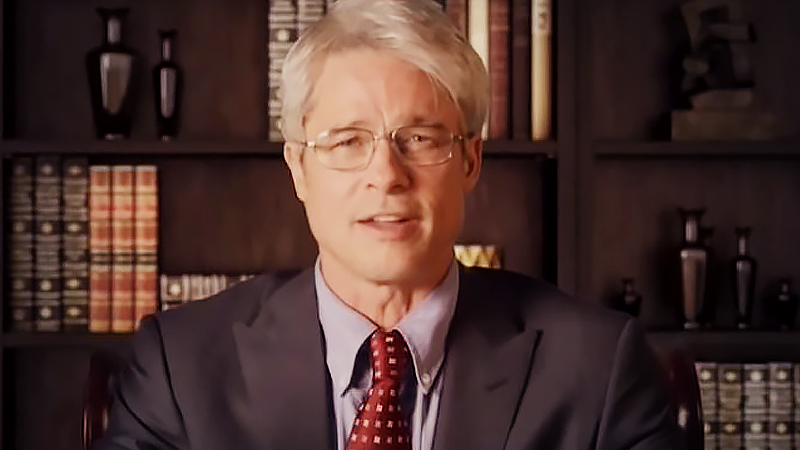
Anthony Fauci, the man preserving our collective sanity with his calm and logic, was granted a wish this past weekend: to be portrayed by Brad Pitt on “Saturday Night Live.”

https://www.washingtonpost.com/video/c/embed/605bcf46-703e-4c41-88c5-bd58d61c9de3

In an interview Monday with Telemundo’s “Un Nuevo Dia,” the director of the National Institute of Allergy and Infectious Diseases praised Pitt’s portrayal, calling him one of his favorite actors.

“I think he did great. I’m a great fan of Brad Pitt, and that’s the reason why when people ask me who I would like to play me, I mention Brad Pitt,” Fauci said.

In a recent interview with CNN, Fauci had joked about having the superstar actor play him on a future episode of “SNL.” On Saturday, Pitt, who had never appeared on “SNL” before, made a surprise appearance on the show’s second “At Home” episode.

Pitt began the cold open by introducing himself as Fauci, speaking in the doctor’s distinctive raspy voice while wearing a gray wig and glasses.

“Now, there’s been a lot of misinformation out there about the virus,” Pitt-as-Fauci said. “Yes, the president has taken some liberties with our guidelines. So tonight, I would like to explain what the president was trying to say.”

He went on to discuss several confusing statements issued by President Donald Trump in his various White House coronavirus task force briefings. Pitt took a few jabs at the president over his comments about ultraviolet light and using disinfectant injections as a treatment, and his claims about how long the virus may last.

“It’s going to disappear one day – one day it’s like a miracle, it will disappear,” Trump said in one clip, to which Pitt’s Fauci responded: “A miracle would be great. Who doesn’t love miracles? But miracles shouldn’t be Plan A. Even Sully tried to land at the airport first.”

In the “Un Nuevo Dia” interview, Fauci was asked about the candidness of Pitt’s portrayal and whether any of the things said during the sketch were things that had actually crossed his mind. Fauci responded with an equal level of candor.

“Everything he said on ‘SNL’ is what’s going on,” the White House task force member said. “He did a pretty good job of putting everything together.”

Though Pitt’s cold open was typical fodder for the sketch show, it was particularly notable when, at the end, the recent Oscar winner broke character, taking off his toupee to address Fauci directly.

“To the real Dr. Fauci, thank you for your calm and your clarity in this unnerving time,” he said. “And thank you to the medical workers, first responders and their families, for being on the front line.”

Fauci said: “I think he showed that he is really a classy guy when, at the end, he took off his hair and thanked me and all of the health-care workers. So, not only is he a really great actor, but he is actually a classy person.”

Based on Pitt’s swift involvement in the sketch and his closing statement, it’s safe to say the feeling is mutual.

‘Cyrano de Bergerac’ gets 21st-century update in new endearing romantic comedy on Netflix #ศาสตร์เกษตรดินปุ๋ย

#ศาสตร์เกษตรดินปุ๋ย : ขอบคุณแหล่งข้อมูล : หนังสือพิมพ์ The Nation.

https://www.nationthailand.com/lifestyle/30387022?utm_source=category&utm_medium=internal_referral

‘Cyrano de Bergerac’ gets 21st-century update in new endearing romantic comedy on Netflix

Apr 30. 2020
Leah Lewis, left, and Daniel Diemer in

Leah Lewis, left, and Daniel Diemer in “The Half of It.” MUST CREDIT: KC Bailey/Netflix
By The Washington Post · Ann Hornaday

May we stipulate that we can all use a feel-good movie around about now?

“The Half of It,” an endearing romantic comedy that gives “Cyrano de Bergerac” a 21st century refresh, is ostensibly a teen movie. But it’s also the self-care we all need. Written and directed with tart intelligence by Alice Wu, and featuring some dazzling breakout performances, this breezy, self-aware and utterly adorable coming-of-age tale keeps one eye on literary and cinematic classics, and the other firmly on a future full of exploration, self-expression and buoyant expectation.

But first, of course, comes the hard stuff. As “The Half of It” opens, the film’s heroine, Ellie Chu (Leah Lewis), is suffering quietly through her senior year in the rainy doldrums of Squahamish, Washington, her ambitions to attend Grinnell College foiled by abiding loyalty to her widowed father (Collin Chou) and her own wobbly confidence. Although she makes extra money writing essays for her less hard-working classmates, Ellie is an outsider, enduring the jeers of car-riding classmates as she huffs and puffs on her bike to and from school. When a sweet, lunkheaded football player named Paul (Daniel Diemer) pays her $25 to write a flowery love letter to a sweet and pretty student named Aster (Alexxis Lemire), Ellie understandably balks. When he ups the price to $50, she’s all in.

Leah Lewis, left, and Alexxis Lemire in

Leah Lewis, left, and Alexxis Lemire in

Thus is set in motion a familiar plot of hidden identities, repressed passions and unexpected twists. But in Wu’s assured hands, the expected reversals give way to even more surprises, as Ellie and Paul discover heretofore hidden truths about themselves and each other. Texting wasn’t around when Edmond Rostand wrote the original play in the 19th century. Here, Wu uses it to clever effect, allowing her characters’ inner conflicts to be expressed in real and often contradictory time. Dotting the narrative with hat-tips to Plato, Camus and Sartre – not to mention “Casablanca,” “His Girl Friday” and “Wings of Desire” – Wu keeps the dialogue sharp and the feelings honest, managing to layer in some sincere spiritual questioning while putting her adolescent protagonists through the usual pressures of conformity, class snobbery, peers and parents. (“We are the source of our own hell,” Ellie’s teacher, played by Becky Ann Baker, intones wisely early in the film.)

Reminiscent of “10 Things I Hate About You” in its winning combination of smarts and romantic fantasy, “The Half of It” provides a fabulous showcase for its young lead actors: Raspy-voiced and flawlessly deadpan behind a pair of wire-rimmed glasses, Lewis seamlessly inhabits a character who may be shy but harbors stubborn faith in her own intelligence. Diemer delivers a delectably funny performance as the dimwitted foil for Ellie’s cerebral bookworm. (For evidence, look no further to the clueless look on his face when he’s gifted with a signed copy of “The Remains of the Day.”)

Early in “The Half of It,” Ellie informs the audience that no one will get what they want in the ensuing story (“Casablanca” is name-checked for a reason). But they will get what they need, in a film that brims with compassion for young characters who are still on the cusp of their most exhilarating and consequential life journeys. Wu suffuses “The Half of It” with supreme generosity, especially when she refuses to give her characters the resolutions they crave, and which similar narratives have taught the audience to crave for them.

Instead, she sets them free – to take risks, mess up and figure things out for themselves. In other words, she gives them the happy ending every teenager deserves.

– – –

Three and one-half stars. Rated PG-13. Available via Netflix streaming. In English, Mandarin and Spanish with subtitles. Contains brief strong language and teen drinking. 104 minutes.

Ratings Guide: Four stars masterpiece, three stars very good, two stars OK, one star poor, no stars waste of time.