
This canine adventure tale feels sloppy, like a big dog – but you can’t deny its gentle heart #ศาสตร์เกษตรดินปุ๋ย

#ศาสตร์เกษตรดินปุ๋ย : ขอบคุณแหล่งข้อมูล : หนังสือพิมพ์ The Nation

https://www.nationthailand.com/lifestyle/30382362?utm_source=category&utm_medium=internal_referral

This canine adventure tale feels sloppy, like a big dog – but you can’t deny its gentle heart

Feb 18. 2020
Harrison Ford plays a prospector with a soft spot for a dog in

Harrison Ford plays a prospector with a soft spot for a dog in “The Call of the Wild.” MUST CREDIT: Twentieth Century Fox
By Special To The Washington Post · Mark Lieberman · ENTERTAINMENT, FILM 

It’s easy to view “The Call of the Wild” cynically: There goes Hollywood again, sanding the edges off a beloved novel – this time about the human-canine bond – to create disposable entertainment.

Harrison Ford, who stars and provides the film’s droning narration, probably earned a bigger paycheck than many moviegoers will see in a lifetime. They spent more than $125 million on this, and the special effects that look that sloppy?

There’s merit to these complaints. The latest screen adaptation of Jack London’s 1903 adventure saga transforms the novel’s menacing gold prospector into a cartoon, played by a sniveling Dan Stevens. Ford’s voice-over, as fellow prospector John Thornton, is sleep-inducing. And the CGI dogs look … very computer-generated, especially when the animals appear side by side with people.

Omar Sy in

Omar Sy in

But there is no trace of such cynicism in the movie itself. In an age of children’s entertainment that’s snarky, self-referential and even meta, “The Call of the Wild,” adapted by director Chris Sanders and screenwriter Michael Green, stands out for its earnest effort to entertain without commenting on itself or the modern world.

As the movie opens, the Yukon Gold Rush of the 1890s is in full swing. The film’s central character, Buck the dog – performed in motion-capture by Terry Notary and digitally rendered later – runs rampant through a small California town, causing all manner of ruckus at the expense of his wealthy owner (Bradley Whitford). Before long, Buck is drafted into service as a sled dog in the snowy north, joining a team pulling husband-and-wife mail carriers (Omar Sy and Cara Gee), who amiably debate Buck’s merits, just before he rescues them from peril.

As in the novel, Buck is bound to embrace his animal instincts and find his true purpose in nature. He doesn’t look like a real dog, exactly, but Notary lends him an impressive array of vivid emotions. When he’s feeling forlorn or enraged, so are we.

The mail carriers eventually get dispatched to another assignment, and Buck falls in with Stevens’s Hal, who arrives suddenly, as if from another, even sillier movie. Hal briefly whisks Buck away – at the expense of his sled dog team’s comfort – on a selfish quest to find gold. That is, until John intervenes.

If it seems like Ford’s character should have been introduced much earlier in this review, well, that’s pretty much how the movie handles him, too. The actor and his robust white beard don’t appear on-screen until deep into the movie, when “Wild” abruptly reveals John’s backstory: He’s living alone and searching for happiness after the death of his young son, by fever, has shattered his marriage. A few chance encounters with Buck leave John with a soft spot for the animal, and together they embark on an adventure that brings them closer.

Sleepy narration aside, Ford’s presence enlivens the movie when he finally shows up. More than four decades after charming the world in “Star Wars,” the performer has lost a fair amount of buoyancy, but few stars can boast a more infectious smile or a brighter twinkle of the eye. Ford expresses John’s grief with enough tenderness that children watching might learn something about how to handle their own emotions.

They’ll need those tools for the movie’s jarring climax, which, while fairly true to the book, will be nonetheless grim for the youngest viewers. “The Call of the Wild” marks the first foray into live-action features for Sanders, a veteran of animation who produced the similarly earnest “How to Train Your Dragon” series, and directed the first of those films. The final product here leaves plenty to lament, from unconvincing approximations of wintry landscapes to a bumpy narrative that struggles to balance danger and sentimentality.

Then again, there is something about that chemistry between man and dog. Even for cynics, it goes a long way.

– – –

Two stars. Rated PG. Contains some violence, peril, mature thematic elements and mildly coarse language. 105 minutes.

Ratings Guide: Four stars masterpiece, three stars very good, two stars OK, one star poor, no stars waste of time.
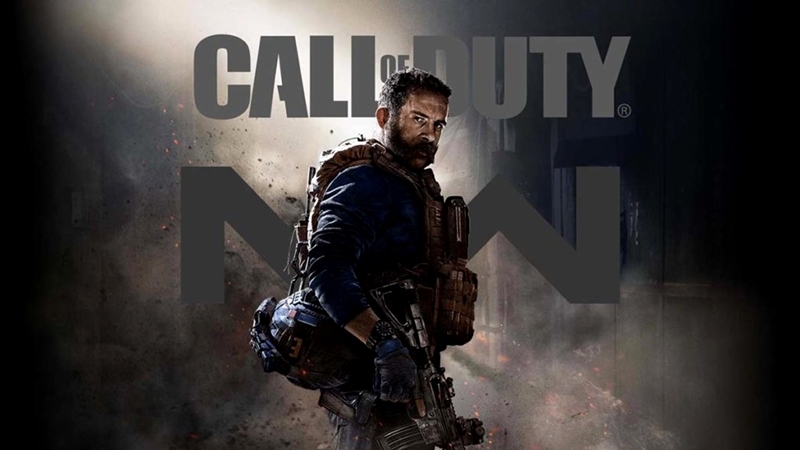

What we know, and what we don’t, about Call of Duty: Modern Warfare’s battle royale #ศาสตร์เกษตรดินปุ๋ย : ขอบคุณแหล่งข้อมูล : หนังสือพิมพ์ The Nation#ศาสตร์เกษตรดินปุ๋ย

#ศาสตร์เกษตรดินปุ๋ย : ขอบคุณแหล่งข้อมูล : หนังสือพิมพ์ The Nation

https://www.nationthailand.com/lifestyle/30382346?utm_source=category&utm_medium=internal_referral

What we know, and what we don’t, about Call of Duty: Modern Warfare’s battle royale

Feb 18. 2020
By The Washington Post · Mike Hume · ENTERTAINMENT 

VIDEOGAME-CALLOFDUTY: For all the leaks, rumors and speculation about Call of Duty: Modern Warfare’s new battle royale mode – and there have been more than a few leaks to date – there is still plenty that remains unconfirmed or flat out unknown about the mode. And despite requests from The Washington Post for more details, Infinity Ward remains tight-lipped.

With anticipation for the new mode running hot, here’s a rundown of what seems most likely based on what’s been discovered so far, and a look at what remains a mystery.

– – –

What we know

– There’s a new mode coming and it’s got all the earmarks of battle royale

Everyone who’s booted up Modern Warfare since the start of Season 2 on Tuesday has been able to see the new “Classified” section smack dab in the center of the mode select screen. The season was also prefaced by a new cinematic that depicts several aspects familiar to battle royale players, such as moving when the ring is closing and parachuting into the fray from an aircraft. It’s that scene, along with much previous speculation of a battle royale mode for the game, that makes most people believe the new mode will be a battle royale, though that hasn’t been specifically confirmed.

When the locked mode will be revealed still remains a mystery – it remained “Classified” as of Friday afternoon’s Valentine’s Day update – but based on several leaks unearthed to date, it appears the mode will be called “Warzone” and it appears to be a last-person/team standing format, as you’d find in a battle royale. Based on several other apparent leaks, the mode will feature several new play dynamics that will incorporate new loadouts and acquiring new gear/weapons on the battlefield. More on those later.

– There’s a new map, and it’s huge

Last week, YouTuber PrestigeIsKey posted screen shots on Twitter of a massive map he said he captured by using the free-roam camera feature on the newly introduced multiplayer map, Atlas Super Store. The Post followed suit and likewise saw a humongous landscape of stitched-together Modern Warfare maps from its multiplayer, ground war and co-op modes. We flew from one end to the other and it seems to be far bigger than the map featured in Black Ops 4’s battle royale mode, Blackout.

The size could be a requirement of the killstreaks it seems will be usable in the mode, as they were not part of Blackout. It could also be due to the number of players thought to be able to play in a match at once. The cinematic, assuming it’s related to the map, showed a number of vehicles as well, which also could use some room to roam. Assuming it is a BR map, it will be interesting to see how much player vs. player contact will occur on such a sprawling battlefield and how fast the ring will shrink the expansive map as the game progresses.

– It appears to be for up to 200 players per match

A video posted to Reddit on Friday appeared to show the “Classified” mode indeed revealed as Warzone. Another user translated the text on the tab, originally written in German, to read: “Plunge into a unique battle with up to 200 other players to be the last survivor.” This matches up with an earlier leak that first put forward the possibility of a 200-player mode, double the size of Blackout.

– There appear to be new loadout options

On Thursday, reports emerged of a bug pushing players into new screens carrying the name “Warzone,” including a shot of a player asked to edit his “drop kit.” This could be a bit of a twist for a BR title. In most battle royales, players land with no weapons or equipment and are required to loot to find that gear. If players can drop in with weapons and equipment, those sweaty, early-game gun battles right after landing are now going to be hot.

That last part again assumes players will enter the game as they did in Blackout: by dropping in from the sky. Given the cinematic, which showed four soldiers parachuting from a cargo plane, it tracks with the clues seen so far.

– There appears to be a new tutorial

Another gameplay leak showed what appeared to be a tutorial for the new mode as a player gears up outside a firing range and shoots a few cardboard cutouts before trying to snag some “plunder.” The latter appears to be fat stacks of cash lying around, which, the tutorial seems to show, can be used to buy weapons and gear. That appears to be in addition to finding them and equipment on the ground or in supply crates.

Based on this screenshot, it also seems like players can purchase score/killstreaks . . . or buy back an operator?

– – –

What we don’t know

– Will it be part of Modern Warfare, or will it be a free-to-play standalone?

It certainly appears this new mode will be playable through Modern Warfare, but it has also been rumored that Activision would introduce a free-to-play battle-royale-only version of Call of Duty to compete with other free BR games such as Fortnite and Apex Legends. With crossplay already a part of Modern Warfare, a free-to-play Call of Duty mode would potentially give Activision access to a massive global audience for the battle royale, far bigger than it had for Blackout, to which it can then market skins and other in-game goods such as Fortnite et al.

– How big will squads be?

Several screen grabs from players that glitched into Warzone appeared to show a menu that offered a trios mode. Will there be solos, duos and full squads of four, too? Unconfirmed reports from Twitter users who claim that they’ve been glitched into the game mode’s lobby have indicated that all four squad types are available, but nothing is confirmed.

– One life to live?

In most previous BRs, be it Blackout, Fortnite or Player Unknown’s Battlegrounds, players are first knocked and then eliminated. In Apex and Fortnite there’s also a chance for teammates to carry killed comrades’ tokens to a respawn beacon so they can reenter the game. Blackout featured a variation with some limited time modes, such as Alcatraz, where players can respawn a set number of times before the final circle. But what will the core life/death dynamic look like in Warzone?

There were rumors, stemming from a November post on Reddit that a Modern Warfare BR mode would allow the dead to return via a 1 vs. 1 gunfight held in the Gulag, the setting from which players freed Captain Price in Modern Warfare 2. Here it is said to serve as a kind of Thunderdome, where two players enter and the victor gets to leave and rejoin the game.

Again, that’s unconfirmed, but many of the other details from that post have proved correct with these latest revelations.

In that case, how accurate are the rest of the claims in the Reddit post?

The aforementioned Reddit post was dripping with details, but most of it remains unconfirmed.

Based on the leaked tutorial footage, the weapon color system from the post appears to be accurate, with rarity following the white, green, blue, purple and gold scale most gamers have grown accustomed to. If this tracks with Modern Warfare’s weapon blueprint system, the rarity will also correspond to the number of attachments the gun features, from none (white) to five (gold). There will also be three different levels of armor and three types of helmets.

Among the other more notable claims, there’s also a note about how respawn tokens can be looted and used once per eliminated player. And with regard to the Gulag 1 vs. 1 dynamic, the Reddit post says you can bet on those in the fight using funds from your plundering. It also notes a “jailbreak” dynamic where all inmates are set free and return to the game. Again, it’s all unconfirmed, but if true this would be a much more complex battle royale than we saw with Blackout.

– How long will matches last?

If matches are 200 players, and you can respawn with tokens, and you can return via the Gulag jailbreak/Thunderdome dynamic . . . how long will each round last? It sounds as if each round alone could come in closer to an hour than 30 minutes if you fight to the end.

And when will this mode drop? It would seem odd for it not to debut some time in Season 2, but when exactly will remain a mystery until it’s either live or Activision or Infinity Ward decide to put a date on it. For what it’s worth, most of the game’s updates have gone live on Tuesdays or Fridays. Perhaps we’ll get an answer as soon as Tuesday.

‘Sonic the Hedgehog’ tops box office over holiday weekend #ศาสตร์เกษตรดินปุ๋ย

#ศาสตร์เกษตรดินปุ๋ย : ขอบคุณแหล่งข้อมูล : หนังสือพิมพ์ The Nation

https://www.nationthailand.com/lifestyle/30382305?utm_source=category&utm_medium=internal_referral

‘Sonic the Hedgehog’ tops box office over holiday weekend

Feb 18. 2020
By Syndication Washington Post, Bloomberg · Hailey Waller · BUSINESS, ENTERTAINMENT, FILM

Paramount’s “Sonic the Hedgehog” outdrew two other new releases over Presidents Day weekend, helping the overall box office climb from a year earlier.

The film brought in $57 million, Comscore Inc. estimated Sunday. Analysts had expected $40 million to $48.5 million. Critics on Rotten Tomatoes gave it a 64% positive rating, an upbeat assessment for a video-game adaptation.

Paramount made adjustments to the design of the Sonic character after fans scoffed at his look in the initial trailer. That helped build positive buzz around the film. “What once had been a film generating mixed-to-poor sentiment across social media has done a complete one-eighty,” Box Office Pro said.

Jim Carrey plays the main antagonist, Dr. Ivo Robotnik, who tries to capture Sonic, the animated blue hedgehog. Carrey’s appeal helped attract the adult demographic, according to Box Office Pro.

Another new release, “Blumhouse’s Fantasy Island,” a Sony horror film based on the 1970s TV show about a magical island resort, took third place with $12.4 million.

Universal’s “The Photograph” landed in fourth place with $12.3 million. It tells the story of a daughter learning about the life of her dead mother, a famous photographer.

“Birds of Prey,” the DC Comics installment from Warner Bros. took in $33 million in its first weekend in wide release last weekend. This weekend, it fell to second place with $17.1 million.

Mary Steenburgen thinks you are capable of growth #ศาสตร์เกษตรดินปุ๋ย

#ศาสตร์เกษตรดินปุ๋ย : ขอบคุณแหล่งข้อมูล : หนังสือพิมพ์ The Nation

https://www.nationthailand.com/lifestyle/30382301?utm_source=category&utm_medium=internal_referral

Mary Steenburgen thinks you are capable of growth

Feb 17. 2020
Mary Steenburgen plays Maggie Clarke in

Mary Steenburgen plays Maggie Clarke in “Zoey’s Extraordinary Playlist.” MUST CREDIT: Sergei Bachlakov/NBC
By The Washington Post · Sonia Rao · ENTERTAINMENT, MUSIC, TV

Just over a decade ago, Mary Steenburgen awoke from minor arm surgery and began to hear music – everywhere. Every street sign she read, every sentence she heard got swept up into what she refers to as a “musical tornado.” Words and melodies swirled around in her head. She was terrified.

“The best way I can describe it is that you have your idea of what it sounds like to be you, to have your mind be what it is,” the Oscar-winning actress told The Washington Post. “And all of a sudden, it doesn’t sound like that anymore. It made concentrating on anything very difficult.”

Steenburgen needed a way to return to normalcy and eventually found it by channeling her new reality into songwriting. But starting out as a beginner at 54 years old was “really sometimes hard on the ego,” she said. It took gumption and an honest sense of self for her to get to where she is now: “I never tried to pass myself off as being more accomplished at it than I was,” she added.

Having successfully “apprenticed” at songwriting – perhaps an understatement, given that one of her compositions landed on this year’s Oscars shortlist for best original song – Steenburgen is ready to take on another challenge. The actress, now 67, stars in the NBC sitcom “Zoey’s Extraordinary Playlist,” which required her to add singing and dancing to her repertoire. The series, which returned Sunday, tells a story oddly similar to her own: After getting an MRI scan, computer coder Zoey Clarke (Jane Levy) discovers she can hear people’s inner thoughts through songs, which she then imagines them performing.

Steenburgen plays Zoey’s mother, Maggie, a grounding force in a show whose premise often lends itself to levity. Maggie’s husband, Mitch (Peter Gallagher), is based on series creator Austin Winsberg’s own father and suffers from a rare neurological condition that has rendered him unable to speak or move. Steenburgen’s mother died of a similar condition, and Steenburgen said she took on the role in part to “honor both the people who have lost their lives to a disease like this, but also their caregivers and the people who had to structure a life to support them.”

She added, “It was emotionally one of the hardest things I’ve ever done, for many reasons. One is that after six months of working with Peter, and with him just being so brilliant in this role, it felt very real and hard to deal with. The other was that my husband and I are not young, so these things land harder.”

Steenburgen also took on the role for the chance to work with Emmy-winning choreographer Mandy Moore, whom she deemed “a genius.” The actress admitted her musical ability did not naturally extend past songwriting to singing and dancing, yet she is seen doing both as early as the second episode (in which the Van Morrison song “Moondance” plays a pivotal role).

“I just like taking risks,” she said of the show. “It was this opportunity to incorporate music into the job I’ve had for 45 years and loved for 45 years … I can’t imagine having said no to it.”

Taking risks has done Steenburgen well. While her Oscar-shortlisted power ballad “Glasgow (No Place Like Home)” did not make the final list of nominations, the film itself – Tom Harper’s “Wild Rose,” about an aspiring country music singer from Scotland – was recognized at the British Academy Film Awards ceremony earlier this month. Best actress nominee Jessie Buckley performed “Glasgow” at London’s Royal Albert Hall – unbeknown to the songwriter, who once lived near the venue.

“If you told me that someday a song of (mine) would be sung there, I wouldn’t have even known what to think about that,” said Steenburgen, who added it is “such a wonder to me still” that the song tied with Elton John and Bernie Taupin’s “(I’m Gonna) Love Me Again” at the Critics’ Choice Awards.

Steenburgen credits much of her success in music to the support she received from people she met in Nashville, like “Glasgow” co-writers Caitlin Smith and Kate York. In working with them, and in writing for Universal Music Group and Warner Chappell, her current label, Steenburgen formed the belief that music was always a part of her, just one she did not previously have access to.

There comes a point in life when people stop telling you to try new things, she said. And while her experience was initially more frightening than she wishes it had been, she remains grateful for how it has encouraged her to step out of her comfort zone. Music has become such an essential part of Steenburgen’s life that on “The Good Place,” the recently concluded NBC sitcom starring her husband, actor Ted Danson, she played a cameo role as a guitar teacher.

“Every moment you are privileged to draw a breath in this life, you are capable of change,” she said. “And you are capable of learning, and you are capable of growth. Why would you close the door to that?”

Renowned presidential historian Doris Kearns Goodwin finally takes on George Washington #ศาสตร์เกษตรดินปุ๋ย

#ศาสตร์เกษตรดินปุ๋ย : ขอบคุณแหล่งข้อมูล : หนังสือพิมพ์ The Nation

https://www.nationthailand.com/lifestyle/30382247?utm_source=category&utm_medium=internal_referral

Renowned presidential historian Doris Kearns Goodwin finally takes on George Washington

Feb 16. 2020
The new History Channel series

The new History Channel series “Washington” premieres Sunday. MUST CREDIT: A+E Networks
By The Washington Post · Lillian Cunningham · ENTERTAINMENT, TV 

On a rainy evening at Mount Vernon, Doris Kearns Goodwin tiptoed around a puddle reflecting light from a colonial lantern and stepped into a golf cart. It shuttled her down a gravel path to the premiere of “Washington,” a miniseries she produced for the History Channel that previewed last week at George Washington’s estate. It is airing on television over Presidents’ Day weekend.

Goodwin is a celebrity in the field of presidential historians. Her tome “Team of Rivals: The Political Genius of Abraham Lincoln” became the basis for the Oscar-winning film “Lincoln,” and her biography “No Ordinary Time: Franklin & Eleanor Roosevelt: The Home Front in World War II” won the Pulitzer Prize.

Yet, for all the iconic presidents she has profiled – Theodore Roosevelt and Lyndon Johnson among them – Goodwin has never written a biography of George Washington.

“I always felt this sense of, ‘Oh, I wish I knew George,'” she told The Washington Post. But at the age of 77, she wasn’t sure she had enough time left to spend chronicling the nation’s first president. (It had taken her a decade to write her book about Lincoln.)

“That was the great joy of being able to work on this project,” Goodwin said of the new three-part series, narrated by Jeff Daniels, which combines the classic historian interviews you’d expect of a television documentary with surprisingly epic live-action sequences that feel closer to the style of a blockbuster film. In the relatively short 18 months she spent as executive producer, “I felt like George finally became one of my guys.”

Hundreds of history fans joined Goodwin at the Mount Vernon premiere, which was held inside the theater at the estate’s visitor center. She said the reason for embarking on this project – her first foray as an executive producer – was to engage a wide audience in an exploration of Washington’s leadership style.

“Resilience and humility and empathy” were trademarks of Washington’s character, according to Goodwin. She was particularly drawn to the foresight of his farewell address in 1796 and his warnings about what she described as “the baneful effects of party spirit, of the spirit of revenge, of sectionalism, and the worry that if we endure such things it could lead to foreign influence and corruption” that would threaten the fragile experiment that was American democracy.

“You think about the partisan divide in the country and the fact that it seems at its worst edge now, but it was troubling in that second term of George Washington,” Goodwin said. “The partisan newspapers were developing. It was the beginning of the big divide that still is there today. And yet somehow we managed to get through that.”

Virus games are going viral as the coronavirus spreads #ศาสตร์เกษตรดินปุ๋ย

#ศาสตร์เกษตรดินปุ๋ย : ขอบคุณแหล่งข้อมูล : หนังสือพิมพ์ The Nation

https://www.nationthailand.com/lifestyle/30382243?utm_source=category&utm_medium=internal_referral

Virus games are going viral as the coronavirus spreads

Feb 16. 2020
Photo Credit: Ndemic Creations

Photo Credit: Ndemic Creations
By The Washington Post · Rick Noack, Stefano Pitrelli · WORLD, ENTERTAINMENT, HEALTH 

The popularity of games centered on the proliferation of pathogens has surged in recent weeks. As officials and experts worked to stem the global spread of the novel coronavirus that originated in Wuhan, China, and has left nearly 1,500 people dead, gamers have turned their attention to parallel, imaginary struggles.

Foremost among them: Plague Inc., a strategy game that rose to the top of Apple Store charts in China, the United States, and elsewhere as coronavirus fears mounted. First released by U.K.-based studio Ndemic Creations in 2012, the game, of which there are a handful of variants, asks players to take the part of a pathogen, helping it evolve to wipe out humanity.

The popularity of such games makes sense amid efforts to cope with the coronavirus and the fears it has sown, researchers and game developers said.

“Games are a type of cultural expression – they’re part of how we make sense of the world,” said Carly A. Kocurek, a cultural historian at the Illinois Institute of Technology. “For some people, horror films are a way to deal with anxiety, and games can be, too.”

Outbreak-themed video games have existed for decades. One of the earliest examples, according to Marco Accordi Rickards, the founder and head of the first Italian museum of video games, was Agent USA. Released in 1984, the game centers on the spread of a plague that robs people of their will.

The concept has remained popular, and Plague Inc. has been around long enough to see surges in interest during previous crises, including the 2014-2016 Ebola outbreak in West Africa.

The game’s creators were quick to preempt the notion that they might be capitalizing on the coronavirus epidemic. In a statement last month, the company said that it had “received a lot of questions” on the coronavirus and that interest in the game tends to rise whenever a major outbreak occurs.

“We specifically designed the game to be realistic and informative, while not sensationalizing serious real-world issues,” the company said. It did not respond to a request from The Washington Post for comment.

The game’s long shelf life is unusual, industry observers said. “Plague, Inc. is a rare phenomenon in that its success entirely hinges on a topic recurrently returning to relevance,” said Andrea Minini Saldini, the publishing director at the Italy-based branch of IGN, a video game site.

Among the key questions Ndemic Creations and other developers face is whether popular games such as Plague Inc. add to players’ understanding of epidemics or have a muddling effect.

Ndemic Creations has characterized its game as “realistic” but urges players to “get their information [on the coronavirus] directly from local and global health authorities.” On the game’s official Facebook page, some players said they considered the simulation essential to their understanding of the coronavirus outbreak.

“(The) first time I heard about [the virus], I instantly thought about this game,” wrote player Izzie Loo Yu, who said she lives in Hong Kong. In the game, a treatment for the spreading disease is usually found, she added.

Pina Lalli, a professor of cultural sociology at the University of Bologna, said the experience of assuming the role of a pathogen while fighting against researchers who try to develop a vaccine or treatment was “not just escapism.”

“Instead of being paralyzed by fear while recognizing your powerlessness, this allows you to cope and feel that there is something you can do,” Lalli said.

Some pathogen-centered games may have sought to back away from the coronavirus connection.

An online version of Pandemic, a popular board game in which players collaborate to defeat viruses as they spread from city to city, was set to be available free on the Epic Games Store in late February. That promotion has been delayed.

Pandemic was a surprise hit when it came out in 2008. Several expansions have been released.

Disease is a “perfect opponent: It’s fairly easy to model in a game, uncaring and scary,” said Matthew Leacock, who created the game.

“I never set out to make it an educational experience,” he said. “I think the best lessons it teaches are those related to cooperation and communication under pressure.”

At least one university has relied on Pandemic to teach students strategies for medical teamwork, Leacock said.

Experts have also embraced Plague Inc.

“It engages you while it teaches you,” said Ali S. Khan, a former senior official at the Centers for Disease Control and Prevention, who hosted James Vaughan, the game’s creator, for a visit to the CDC in 2013. “The game is based on a solid mathematical model of how (a pathogen) spreads in a community. A simplistic (one), but no fantasy.”

“When you play it, you do realize it’s a game.”

Audra M. Swarthout, an associate professor of biology at Delta College in Michigan, has been using Plague Inc. for around six years with her students.

The game, she said, “is actually one (of)my favorite classroom assignments.”

Nonetheless, she cautioned, “the evolution of the diseases in the game is not realistic and provides an extremely distorted view of what really occurs in a pandemic.”

Swarthout usually asks her students to analyze the degree to which the game is faithful to scientific truth – something common players may not be equipped to do.

Plague Inc. and Pandemic may have a certain morbid appeal in the time of the coronavirus. But they have more than that to offer, many experts and players agree.

“I can certainly understand the hesitation around this – no one wants to trivialize the very real human suffering that this coronavirus has brought with it,” said Leacock, Pandemic’s creator. “But the reality is that playing helps us process the world around us, and people may be turning to these games now for that reason.”

[Herald Interview] Playing harmonica more than a hobby #ศาสตร์เกษตรดินปุ๋ย

#ศาสตร์เกษตรดินปุ๋ย : ขอบคุณแหล่งข้อมูล : หนังสือพิมพ์ The Nation

https://www.nationthailand.com/lifestyle/30382204?utm_source=category&utm_medium=internal_referral

[Herald Interview] Playing harmonica more than a hobby

Feb 15. 2020
Harmonicist Park Jong-seong (Music & Art Company)

Harmonicist Park Jong-seong (Music & Art Company)
By Im Eun-byel
The Korea Herald

Harmonicist describes instrument as ‘chameleon’

For Park Jong-seong, the harmonica is a sophisticated instrument with great versatility.

The 34-year-old is a harmonica player, a rare profession in the local music scene. Although many pick up the instrument as a hobby, especially seniors, the number of professional harmonicists remains limited.

Park is therefore unique, having won awards at international competitions in Japan, China and Germany. He has also released three solo albums.

The third album, released in 2019, includes harmonica performances of various genres, from classical music to jazz, tango and folk music.

The artist stressed that the instrument is highly adaptable to different genres.

“One of the reasons is that the reed is very small and sensitive. In other words, it means it can be diversified into different sounds like a chameleon,” Park told The Korea Herald in an interview in western Seoul.

“That is what I love about the harmonica. I do not prefer a specific genre of music, but love all kinds of music,” he said. “Plus, it is small and easy to carry around.”

Park’s wide range of interests stems from his studies. He graduated from Kyung Hee University’s Department of Post-Modern Music. He was the first in Korea to be admitted to a university with the harmonica.

“Though I was accepted to the school as a harmonica player, the curriculum was not solely limited to the instrument,” the artist said. “I studied jazz and more, learning different genres of music from Latin to tango, gugak (traditional Korean music) and more.”

Though Park strives to be bold and adventurous with the instrument, the number of works intended for the harmonica is limited. Not many original pieces are made for the instrument, so Park composes his own music.

“Compared to classical music instruments, the harmonica has had a very short history. To put it simply, the harmonica has not yet met a great composer like Beethoven or Mozart,” he said.

“I always had to play works originally written for other instruments. Of course, that was fun, too. However, there are not many works that can bring out the unique characteristics of the harmonica. As I know the instrument better than others, I began to write songs for the harmonica.”

At a practice room in western Seoul, Park regularly holds recitals, conferences and study sessions for harmonica players, hoping to contribute to the growth of the scene.

“I do not just dream of my personal success,” he said. “I hope to encourage more harmonica players. In turn, the growth of the scene will lead to my own success, right?”

Park is slated to give solo performances at the Seoul Arts Center on March 25 and Lotte Concert Hall on Oct. 23.

‘7th Sector’: An inspired sci-fi game from the point of view of a spark #ศาสตร์เกษตรดินปุ๋ย

#ศาสตร์เกษตรดินปุ๋ย : ขอบคุณแหล่งข้อมูล : หนังสือพิมพ์ The Nation

https://www.nationthailand.com/lifestyle/30382165?utm_source=category&utm_medium=internal_referral

‘7th Sector’: An inspired sci-fi game from the point of view of a spark

Feb 14. 2020
A scene from

A scene from “7th Sector.” MUST CREDIT: Sometimes You Photo by: Sometimes You — Sometimes You
By Special To The Washington Post · Christopher Byrd · ENTERTAINMENT

“7th Sector” Developed by: Sergey Noskov Published by: Sometimes You Available on: Nintendo Switch, PC, PlayStation 4, Xbox One – – –

Sergey Noskov’s “7th Sector” is an inspired sci-fi game that draws on the visual vocabulary of the 1980s. Neon skies, rabbit-eared televisions and moody synth music all play into its analogue vision of the future. Although it has its stealth and action moments, at its heart “7th Sector” is a challenging puzzle game that will occasionally tap into your math or logic skills, or, if you’re like me, send you scurrying to the internet for answers. The game’s atmospheric quality, which evokes themes of confinement and the struggle for liberation, is reminiscent of the work of Playdead, the Danish development studio whose “Inside” (2016) sets the standard for dark cinematic sidescrollers.

“7th Sector” opens with a scene that recalls the haunted television in Steven Spielberg’s “Poltergeist.” On a fuzzy CRT television an indistinct figure materializes. Using the thumbstick on the controller, you can guide it to either side where it will push against the edge as though at the door of a cage. Then, with the press of a button, the phantom on the screen transforms into a spark that can pass through the cables attached to the television.

From there you can hop between other cables snaked along the ground or attached to different surfaces, as well as into transistor boxes and other electronic sources. Over the length of the adventure, the backstory of which is told in collectibles spread throughout the environment, you’ll hijack everything from the power amp on a record player to a child’s RC car, to domestic and killer robots and other forms of machinery.

Traveling as a spark along cables reminded me of the opening shots of Krzysztof Kieślowski’s “Red.” I’ve never seen a game adopt such a novel point of view, so I was captivated by “7th Sector” from the beginning. Given that science fiction has long been an overly represented genre in video games, surprises are rare, and I considered this no small feat. That said, a couple of puzzles stopped me in my tracks and would have seriously derailed, if not outright halted, my progress if I hadn’t consulted an online walk-through.

I wouldn’t have even known where to begin with a puzzle that required calculating the amount of free space available in a few containment cells if I hadn’t realized I hit a bug that made an environmental clue appear on screen in Russian. (Resetting the language option in the menus immediately fixed the problem.) I encountered another bug after working through the correct solution to a simple cart puzzle that was remedied by reloading the chapter.

Although I took issue with the fiddliness of a couple of the other puzzles such as one in a chapter appropriately titled “Physics,” where you must ferry highly insecure cargo on the back of a flying drone, I was, on the whole, impressed with the range of puzzles and different gameplay scenarios available here – especially when you consider that “7th Sector was designed by a single individual.

Sergey Noskov is one to watch.

A memorable Valentine’s Day #ศาสตร์เกษตรดินปุ๋ย

#ศาสตร์เกษตรดินปุ๋ย : ขอบคุณแหล่งข้อมูล : หนังสือพิมพ์ The Nation

https://www.nationthailand.com/lifestyle/30382011?utm_source=category&utm_medium=internal_referral

A memorable Valentine’s Day

Feb 12. 2020
By The Nation

On Valentine’s Day, would you like to go with your loved one to an extravagant dinner with oysters flown in from France or rather go to an exciting concert of romantic music with a 70-piece symphony orchestra or spend the evening curled up on the sofa with your sweetheart watching a favourite Hollywood tearjerker and a glass of champagne?

Opera Siam’s “A Love Letter from Hollywood” gives you the chance to do all of the above — at a single event.

Nadlada "Bow" Thamtanakom

Nadlada “Bow” Thamtanakom

There’s the concert — join Siam Sinfonietta, Nadlada “Bow” Thamtanakom, and the Cherubim Choir — and a lot of oysters — for an incredible Valentine’s evening — “A Love Letter from Hollywood” — a 100 years of the most romantic film music from the most iconic Hollywood films. From noble love to twisted love, from love across a crowded room to love across the galaxy, from epic love to obsessive love … this is music from the movies that shaped our lives. Maestro Somtow Sucharitkul takes us on a journey through the history of love in the movies. Tickets range from Bt500 to Bt1,500 — less with group discounts.

Siam Sinfonietta, equally known for its mastery of the hardest repertoire in classical music (Mahler, Bartok, Stravinsky) and its populist concerts such as its Star Wars, Harry Potter and “The Princess Concert” event, will field 70 musicians plus the sweet voices of the Cherubim Choir. Thai diva from the Belgian National Opera, Nadlada Thamtanakom, will assure all of us that our “heart will go on”.

There are add-ons. Get a VIP seat and a stupendous reception with seafood including imported oysters and free-flow Chandon when contributing Bt3,000, or donate Bt600 and enjoy the Sweetheart Reception in the Half Circle Room, with all-you-can-eat sushi and other delicacies and a glass of Chandon.

Special discounts: 5 per cent for five or more tickets, 10 per cent for 10 or more, and 20 per cent for 20 or more.

For tickets, please visit ticketmelon.com/operasiam/loveletter or contact via Line application at the official account of opera siam.

Peter Serkin, adventurous pianist from a celebrated musical family, dies at 72 #ศาสตร์เกษตรดินปุ๋ย

#ศาสตร์เกษตรดินปุ๋ย : ขอบคุณแหล่งข้อมูล : หนังสือพิมพ์ The Nation

https://www.nationthailand.com/lifestyle/30381565?utm_source=category&utm_medium=internal_referral

Peter Serkin, adventurous pianist from a celebrated musical family, dies at 72

Feb 04. 2020
By Harrison Smith
The Washington Post

A piano prodigy who made his professional debut at age 12, Peter Serkin seemed destined from childhood to carry on the legacy of his father, Rudolf Serkin, one of the 20th century’s most revered pianists.

But while the elder Serkin was celebrated for breathing new life into Beethoven and other old masters, his son became known for championing the work of 20th-century composers such as Oliver Knussen, Toru Takemitsu, Stefan Wolpe and his childhood friend Peter Lieberson, even as he worked to reveal rich new textures in the classical repertoire so cherished by his father.

Serkin, who was 72 when he died Feb. 1, played everything from Bach to Berio and Mozart to Messiaen, sometimes using a 19th-century fortepiano to perform period works. He also acquired a reputation as something of a concert-hall rebel, performing in a dashiki and love beads in the early 1970s before trading his countercultural attire for three-piece pinstripe suits, settling into a role as one of his generation’s preeminent performers.

“He’s one of a handful of pianists who not only possess a cerebral understanding of the music of our time but the ability to communicate it with feeling,” music critic Ira Rosenblum once wrote in the New York Times. “In his hands, even the most formidable works are fluid and expressive.”

Serkin regularly commissioned works from contemporary composers and, like other members of his prodigiously talented family, described music in near-religious terms, telling the Boston Globe it was “a kind of ecstatic experience.”

But his devotion to new music was a stark departure from the traditionalism of his father and maternal grandfather, conductor and violinist Adolf Busch. Together, Rudolf Serkin and the Busch and Moyse music families founded the Marlboro school and chamber festival in Vermont, creating a classical-music incubator that shaped legions of young musicians, including Serkin.

“I like music that I can let enter my head and body, and live with,” he told the Times in 1973, explaining that he listened to Frank Zappa, John McLaughlin, the Grateful Dead, John Coltrane and Sun Ra in addition to classical works. Among the latter, his favorites included Arnold Schoenberg’s keyboard compositions, which he recorded in full, and Olivier Messiaen’s eight-movement “Quartet for the End of Time,” which he performed roughly 150 times with his chamber group the Tashi Quartet.

Serkin recorded numerous albums for RCA Red Seal Records, performed solo recitals around the world, accompanied leading orchestras and chamber groups, and taught at the Juilliard School, Tanglewood, Curtis Institute of Music and Bard College Conservatory of Music. Tall and thin, with a piercing gaze behind a pair of large glasses, he eschewed publicity and once declared that he’d “rather play 20 concerts before 3,000 people than give one interview.”

Early on, it seemed that his music career might collapse under the weight of professional pressures and family expectations. Beginning in the late 1960s, when he was in his mid-20s and primarily focused on standard repertory, Serkin abandoned the piano to embark on soul-searching journeys to Mexico and India. He became interested in religion, immersing himself in the Sufi, Buddhist and Hindu faiths, and recalled ending his Mexico trip after hearing a radio broadcast of Bach’s Fifth Brandenburg Concerto wafting on the breeze.

It was the kind of loose, emotionally intense performance that had long eluded him. For years, he told the Times, he had been “playing concerts largely out of compulsion. . . . I had just fallen into it without ever deciding for myself that it was what I wanted to do.” He returned from his travels with a more relaxed approach to music, even as he maintained an academic rigor that he learned from his father, studying composers’ letters and examining first editions of their scores.

“The idea so many musicians have – that you have to act out the music for the audience, to supply it as a solidified object – is death,” he said. “Music is change, it’s process, not a static thing. And if you want to be part of that process you have to continue to grow.”

The fifth of seven children,Peter Adolf Serkin was born in Manhattan on July 24, 1947. His middle name was an homage to his grandfather Busch, whom the Bohemian-born Rudolf Serkin began performing with in Berlin as a teenager; both men immigrated to the United States after the outbreak of World War II.

His mother, the former Irene Busch, was also a musician who played piano, violin and viola. She was credited with helping to keep the Marlboro festival afloat after Adolf’s death in 1952, and it was there that Serkin made his formal debut, performing a Haydn concerto under conductor Alexander Schneider.

Serkin studied at the Curtis Institute in Philadelphia, taking lessons from Polish-born virtuoso Mieczyslaw Horszowski, American pianist Lee Luvisi and his own father before graduating in 1964. Two years later, his recording of Bach’s Goldberg Variations earned him a Grammy Award for most promising new classical recording artist.

In 1967, at age 19, he made his grand-scale New York debut, performing Beethoven’s notoriously difficult Diabelli Variations at Philharmonic Hall. His ambition and mannerisms, which included humming and crouching over the keys, spurred debate among critics such as Harold C. Schonberg, who wrote in the Times: “His career can go one of two ways – into that of an eccentric, or into that of an unconventional pianist with all kinds of unusual ideas that will be made convincing by intellectual strength.”

In effect, Serkin had it both ways, angering some members of the music establishment with his hippie attire and unconventional music selections before gaining widespread recognition as a bridge between old and new musical traditions. Through the Tashi Quartet, formed in 1973 and named for the Tibetan word for good fortune, he also helped bring younger audiences to the repertoire, touring alongside violinist Ida Kavafian, cellist Fred Sherry and clarinetist Richard Stoltzman.

“Mr. Serkin’s recitals compel a focused quiet that is almost Oriental,” cultural critic Leslie Kandell later wrote in the Times. “His best interpretations are strikingly pristine, as if an immense intellect were illuminating notes from the bottom. To say he is lost in his playing does not give the right image. He is found in it.”

He died at his home in Red Hook, N.Y., from pancreatic cancer, said his manager, Shirley Kirshbaum.

His marriages to Wendy Spinner and Regina Touhey ended in divorce. Survivors include a daughter from his first marriage, Karina Serkin Spitzley; four children from his second marriage, Maya, Elena, Stefan and William Serkin; a brother; three sisters; and two grandchildren.

Serkin’s recitals often featured a mix of old and new, surveying hundreds of years of musical tradition in less than 90 minutes. But he dismissed suggestions that he was trying to update old works, telling the Globe in 1987 that he aimed “to project the up-to-date-ness that already exists in the music.”

Composers like Bach and Beethoven “were so infamous in their own day for being outlandish, outrageous,” he continued. “That’s expressed in the music in a very healthy way. Like crazy sanity. Wild discipline. I try to relate to these pieces now as part of our own lives, in a very personal way, with feeling and emotion, but never with a concern that I want to show the listener how deep my feelings are.”