Coronavirus throws Hollywood’s delicate schedules into disarray #ศาสตร์เกษตรดินปุ๋ย

#ศาสตร์เกษตรดินปุ๋ย : ขอบคุณแหล่งข้อมูล : หนังสือพิมพ์ The Nation

https://www.nationthailand.com/lifestyle/30383476?utm_source=category&utm_medium=internal_referral

Coronavirus throws Hollywood’s delicate schedules into disarray

Mar 06. 2020
By Syndication Washington Post, Bloomberg · Kelly Gilblom · BUSINESS, ENTERTAINMENT, FILM

The crew fled so quickly after last week’s decision to delay filming of “Mission: Impossible 7,” Paramount Pictures forgot to cancel the welcome party at the opulent Gritti Palace Hotel in Venice, Italy. When a handful of straggling technical workers showed up, they feasted with silver cutlery and exquisite china in a mostly abandoned banquet hall.

That kind of confusion — and needless spending — has been characteristic of Hollywood in the coronavirus era. On-location production work, often planned years in advance, has been rescheduled at great cost. After halting filming in Venice, Paramount said this week that “Mission: Impossible” shooting scheduled for Rome this month would also be delayed. And even completed films are in trouble: Shuttered movie theaters in Asia have forced studios to scrap some premieres and rethink their schedules for the rest of the year.

The biggest setback came on Wednesday when the James Bond sequel “No Time to Die” was pushed back till November, turning a spring tent-pole movie into holiday-season fare. The film’s backers looked at the state of the global movie-theater industry — the Chinese market shutdown, and attendance plummeting in France, Italy, Hong Kong and South Korea — and couldn’t stomach putting out a would-be blockbuster for only half the potential audience, according to a person familiar with their thinking.

More films may get pushed back as well, with the hope that coronavirus fears subside in a few months. But no one can predict how soon government restrictions will be lifted or when moviegoers will be comfortable sitting in a crowded theater.

“The thing that’s scary about the coronavirus today is that we don’t know the extent of it,” said Jason Squire, a professor at the USC School of Cinematic Arts and editor of “The Movie Business Book.” In Los Angeles alone, six new cases were identified within a week of expanding testing criteria. City and county officials said they are preparing for more infected patients to pop up.

In the meantime, filming delays can cost $1 million a day, Squire said. Festivals and press events, including the unveiling of Disney+ in Europe, also have been canceled. Apple said Wednesday that it wouldn’t be participating in the South by Southwest film and technology festival in Austin, Texas, where it had been planning to show new programming for its TV+ platform. Netflix also is pulling out, a spokesperson said late Wednesday.

Production problems also are now rippling through the TV industry.

“The Bachelorette” — a reality dating show that’s meant to offer an escape from any concerns of consequence — isn’t immune. The program’s new lead will no longer be courted by her male suitors in Italy next season, veering from original production plans. The country has been in lockdown after facing a spike in coronavirus cases that started in late February.

Hollywood film productions are meticulously planned, making it all the more painful when things go awry.

Every hour of every day is scheduled, and there are complex tasks like shutting down city blocks, doling out pay to dozens or hundreds of crew members, and ensuring mega-props — say, a yacht — are available, said Tyler Thompson, a producer and president of Cross Creek Pictures who worked with Tom Cruise on his 2017 film “American Made.”

While studios are used to dealing with emergencies, particularly weather-related ones, an illness that keeps jumping to new parts of the world is unusual.

With “Mission: Impossible,” a series that features Cruise as both a producer and leading man, the sets and props are particularly ambitious.

For the seventh installment, slated for release in 2021, workers were building a replica of the Gritti hotel to use in filming. It’s now gathering dust. And the crew that had descended on the Italian city earlier this month is in limbo.

“They told us to pack our equipment and to leave ASAP,” Arianna Pascazi, a scene artist from Rome, said by phone. “They told us to leave some of the scenes already made here, but to be honest, we don’t know if we will come back at all.”

Pascazi had just started to paint stained-glass pieces in the windows of faux buildings for the backdrop of the film’s action sequences.

Elsewhere, filmmakers fear their work may not find distributors with this cloud hanging over the industry.

That includes Heather Ross, whose documentary, “For Madmen Only,” is set to premiere March 15 at the South by Southwest festival. Conference participants, such as Apple, Netflix, Amazon.com, Facebook and Twitter, have pulled out, and a petition with more than 45,000 signatures is urging organizers to call off the event to protect against the spread of the disease.

Festival management have said they have no plans to cancel the show and are following guidelines from the Centers for Disease Control and Prevention. Ross said she and a small crew have been working around the clock to prepare her documentary for the premiere. It’s an opportunity to get the movie in front of studios, which may be interested in purchasing it.

“We worked on this documentary for six years and haven’t slept in about three weeks in order to make the film perfect for its debut,” she said. “We’re lighting candles to various gods and deities.”

Shawn Robbins, an analyst at the Box Office Co., expects studios and organizers of big events to stay on edge. The Bond delay “sets a precedent,” he said.

“In terms of productions that are putting a pause on things, it’s the smart decision to make at this point,” Robbins said. “As much as we want to see these films get made, the No. 1 priority is getting the world through this health crisis right now.”

A fierce battle is unfolding to bring a Khashoggi movie to a screen near you #ศาสตร์เกษตรดินปุ๋ย

#ศาสตร์เกษตรดินปุ๋ย : ขอบคุณแหล่งข้อมูล : หนังสือพิมพ์ The Nation

https://www.nationthailand.com/lifestyle/30383400?utm_source=category&utm_medium=internal_referral

A fierce battle is unfolding to bring a Khashoggi movie to a screen near you

Mar 05. 2020
File photo/ Getty Images

File photo/ Getty Images
By The Washington Post · Steven Zeitchik · NATIONAL, BUSINESS, WORLD, ENTERTAINMENT, POLITICS, MEDIA, FILM

Endorsements for a documentary don’t often come from a higher-profile person than Hillary Clinton. At the Sundance Film Festival in January, the former secretary of state not only turned out for the premiere of “The Dissident,” a new documentary about the murder of Jamal Khashoggi, she talked it up afterward.

“If you haven’t seen ‘The Dissident,’ I hope you will,” Clinton told festivalgoers about the movie, which implicates Saudi Arabia’s rulers in the killing of The Washington Post columnist and slams Western companies for enabling the kingdom’s abuses. Hollywood voices such as Sean Penn later voiced their enthusiasm, joining a raft of glowing reviews and making the movie feel like a slam dunk for a content-thirsty distributor.

Yet nearly seven weeks after its Sundance premiere, no buyer has stepped up to acquire the film – an unusually long period of time in a market where most well-regarded movies find deals at the festival or just days after, as Netflix did for the Alexandria Ocasio-Cortes movie “Knock Down The House” last year or Apple for the coming-of-age Texas political doc “Boys State” this year.

That reluctance, particularly from global streamers Netflix and Amazon, has raised fears among experts that media companies are acceding to an authoritarian regime and confirming the movie’s very critique that Western companies enable Saudi Arabia’s lawless behavior. (Amazon’s chief executive Jeff Bezos owns The Washington Post.)

“Without being inside the companies it’s hard to know what the factors really are for someone not to distribute the movie,” said Yasmine Farouk, a fellow specializing in the Middle East at the Carnegie Endowment for International Peace, a nonpartisan think tank. “But it wouldn’t at all surprise me if economic and financial interests are the main motivations here. Money has been what’s sustained the U.S. relationship with Saudi Arabia for 75 years.”

Documentary films have taken on an outsized journalistic role as other news outlets have faced cutbacks, diving into stories and making them popular via a host of major platforms. But the distribution hurdles faced by “The Dissident” highlight the dangers inherent to such a partnership – the potential for conflict between muckraking filmmakers and the risk-averse companies enabling their efforts.

A decorated team of filmmakers has quietly been putting together their own documentary about Khashoggi. “Kingdom of Silence” is produced by a Pulitzer Prize-winning journalist, Lawrence Wright, and Oscar-winning documentarian, Alex Gibney. Their movie also centers on the October 2018 Khashoggi death, casting it against the historical backdrop of U.S-Saudi relations.

Filmmakers for that movie have secured the buy-in of Showtime; the ViacomCBS division financed and will air the movie. But they are still seeking a theatrical distributor to give the story an elevated platform in the U.S. – a release freighted with uncertainty.

At a moment when many activists worry that Saudi Arabia’s alleged abuses under Crown Prince Mohammed bin Salman are in danger of fading from public consciousness, U.S.-based Saudi experts say the competition to reignite interest is heartening.

But they also note that the uphill climb these films face in capturing both distributor and audience interest underscores the very risks the films come to warn about.

“I don’t know what the right word is – censorship or repression or something else,” said Shadi Hamid a senior fellow at the Brookings Institution who focuses on U.S. relations with the Islamic world. “But the basic point holds – a powerful regime that doesn’t have the same scruples as others is creating a culture of fear, and companies react with kowtowing.”

“The Dissident” has been an especially thorny case. The film’s director, Bryan Fogel, told The Post in January he very much wanted a streaming deal (as opposed to theatrical distribution, which would require piecing together agreements in the U.S. and various international territories)

That prompted the film’s sales agent, UTA’s Rena Ronson, to focus Sundance sales efforts on landing one. Fogel’s previous film, the Russian-whistleblowing tale “Icarus,” was distributed by Netflix. It won the documentary Oscar and had a significant impact on doping policy as a result of its wide distribution.

Reviews suggested a similar deal was more than plausible for “The Dissident.” The film takes aim not just at a crime allegedly ordered by the highest levels of the Saudi government but at the way Western companies, after only a brief post-Khashoggi pause, continue to do business with the country, enabling its repressive ways.

Funded by the Human Rights Foundation, the movie also lays out the findings of U.N. investigators that Prince Mohammed was personally involved in hacking the cellphone of Amazon founder and CEO Jeff Bezos as a potential act of revenge for the mogul’s response to the killing (Bezos owns The Washington Post).

Variety called the film “a documentary thriller of staggering relevance. . .[with] urgent colliding themes of free speech, power, greed, technology, violence, and the increasingly global nature of government tyranny.”

Netflix, Amazon and Apple would each be likely distributors, given their frequent pursuit of timely and buzzy documentaries.

Each of those firms, experts note, would also have disincentive to buy “The Dissident.”

Amazon is a prime player in the movie via the alleged Bezos hacking, potentially putting it in a complicated position if it were also to come on as a distributor.

The film also shows the ease with which the iPhone could be hacked, potentially dissuading Apple.

And Netflix has capitulated to the Saudi government before, removing an episode of the Hasan Minhaj series “Patriot Act” in Saudi Arabia last year after the government complained about a joke that suggested Mohammed ordered the killing. The company is also looking hard at international expansion as subscriber growth in the U.S. slows.

Fogel has pressed the narrative that fears of economic reprisal are at the center of streamers’ reluctance to pick up the rights to his movie.

“I’ve come to the realization that the major global distributors are scared of this film,” he told a screening hosted by Penn and Alec Baldwin at UTA last week. “Winning an Academy Award for Netflix was not enough to make them step up to the plate,” he said of the company, which has not made an offer on the film.

Without streaming offers, agents are likely to turn to U.S. theatrical distributors, which have a much smaller reach.

Penn, Baldwin and other celebrities are part of the agency’s strategy, common on independent films, to use celebrity muscle to raise awareness for a movie, particularly among distributors or simply within Hollywood.

Fogel declined to provide a comment to The Post for this story. Ronson also declined to comment.

Spokespeople for Netflix, Apple and Amazon all did not comment when reached by The Post.

An executive at one theatrical distributor who engaged in conversations with UTA and asked for anonymity so as not to jeopardize relationships said that part of the challenge may be the price. The movie has been compared by UTA not only to other documentaries but to scripted films such as “Spotlight,” which grossed $45 million in the U.S., sending the price higher.

U.S. theatrical distributors often pay six figures for documentaries as opposed to the seven- and eight-figure deals scripted movies command.

As the weeks go by without a streaming deal for “The Dissident,” its competitor is speeding ahead under the auspices of Gibney.

“What we are aiming to tell is a beautiful haunting story of a man [Khashoggi] discovering himself even as he’s fighting for the road he thinks his country should be on,” Gibney said in an interview. And,” he added, “how much the U.S.-Saudi dynamic is a toxic relationship governed by money.”

Gibney said the film was born of discussions he and Wright had about a congressional memorial for Khashoggi. They did not know about the Fogel film until they were well underway.

“Kingdom of Silence” is directed by Richard Rowley, who previously directed the U.S.-military expose “Dirty Wars,” nominated for an Oscar. Gibney is the decorated investigative documentarian (“Going Clear,” “Taxi to the Dark Side”) who has won the documentary Oscar. Wright, a New Yorker staff writer, won the Pulitzer for “The Looming Tower: Al Qaeda and the Road to 9/11.”

Footage of the movie has recently been shown to distributors, and Gibney said the movie was “almost done.” The aim, he said, was for a theatrical release this year followed soon after by a Showtime airing. He said the network has “stepped up and never regretted, never asked us to soft pedal or step back” its critique of Saudi Arabia.

Showtime is owned by ViacomCBS. The company has an international division that conducts business in the Middle East, but does not depend on international markets the way Silicon Valley giants Apple, Amazon and Netflix do. A Showtime spokesman declined to comment on behalf of the network.

Still, questions about the theatrical possibilities hover. U.S. consumers have tended to come out largely for feel-good documentaries such as “RBG” and “Won’t You Be My Neighbor,” two movies that became big hits in 2018, but not necessarily darker stories of global tyranny.

Theater owners could be an equally large question especially as major chains seek their own entrance to the Saudi market. AMC opened its first theater there in 2018 and is seeking to build out 40 more in the next five years.

Experts say the cumulative effect of both “Kingdom of Silence” and “The Dissident” is to increase the profile of alleged Saudi abuses – maybe.

“What the movies show is that the Khashoggi story is alive, that filmmakers still have this desire to bear witness, that the murder can still raise considerable concern and outrage,” Hamid said. But “people need to be able to see them,” he added.

Jane Austen fans expect a happy ending, and Masterpiece’s ‘Sanditon’ tested their limits #ศาสตร์เกษตรดินปุ๋ย

#ศาสตร์เกษตรดินปุ๋ย : ขอบคุณแหล่งข้อมูล : หนังสือพิมพ์ The Nation

https://www.nationthailand.com/lifestyle/30382975?utm_source=category&utm_medium=internal_referral

Jane Austen fans expect a happy ending, and Masterpiece’s ‘Sanditon’ tested their limits

Feb 28. 2020
Rose Williams, left, and Theo James appear as Charlotte Heywood and Sidney Parker in Masterpiece's adaptation of the unfinished Jane Austen novel

Rose Williams, left, and Theo James appear as Charlotte Heywood and Sidney Parker in Masterpiece’s adaptation of the unfinished Jane Austen novel “Sanditon.” MUST CREDIT: Simon Ridgway/Red Planet Pictures
By The Washington Post · Sonia Rao

(EDITORS: This story reveals the ending to Masterpiece’s “Sanditon” series.) – – –

Jane Austen had written a dozen chapters of a new novel in 1817 when she put down her pen and, mere months later, succumbed to a deadly illness. The unfinished manuscript satirized English gentry and, similar to her later works, seemed more interested in the dynamics of a small community than with those between a heroine and her love interest. Its working title, “The Brothers,” signaled a shift as well.

The story was renamed “Sanditon” in the early 20th century after the seaside resort town in which it is set. Charlotte Heywood, daughter of a country gentleman, spends a summer there after her family plays host to a Sanditon resident, Mr. Parker, injured in a carriage crash near their home. His dream is to modernize the town by turning it into a wellness getaway for hypochondriacs. The original manuscript ends shortly after Charlotte arrives and encounters, among others, Mr. Parker’s handsome brother Sidney.

Numerous writers have set out to complete Austen’s story – and the latest attempt, an eight-part series that aired in Britain last year before hopping to PBS in the United States, has proved what a challenge that can be. Austen’s happy endings are a security blanket for many of her fans. Showrunner Andrew Davies (1995′s “Pride and Prejudice”), who already raised eyebrows over his decision to include racy sex scenes, made the bold decision to have Sidney propose to a different woman in the finale. This upset fans, but some Austen scholars suggest the reasoning behind this narrative fits with the pragmatism of Austen’s work.

Charlotte (Rose Williams) and her would-be Mr. Darcy figure Sidney (Theo James), are kept apart by tragedy. An uninsured building belonging to Mr. Parker (Kris Marshall) catches on fire, and Sidney decides he must secure his family’s finances by getting engaged to a wealthy heiress instead. The finale cuts to black after Charlotte leaves Sanditon, and Sidney, behind. Jaws dropped across the web: “Wait. So that’s it then?” one fan tweeted.

It could be. The fate of “Sanditon” relies entirely upon how it performed with American audiences, as it failed to earn enough of a following in Britain for original broadcaster ITV to renew it. (The production company Red Planet Pictures tweeted Tuesday that there are “still” no plans for another season, suggesting there’s the slimmest chance this could change.) The series shocked some Austen fans as early as the first episode, which features male nudity, a brief instance of assault and an implied incestuous relationship. In discussions on the r/janeausten subreddit, users have commented on how such scenes are “mostly unnecessary.”

Those who worked on “Sanditon” have defended the series against claims of it being too risque. In a recent interview, Davies noted that, while often implied, “sexual desire is one of the prime motivations in almost all her plots.” British author Paula Byrne, who has written multiple books on Austen and consulted on the series, told The Washington Post she signed on because the production “felt very fresh.”

“People want to believe Jane Austen is cozy, which is just so crazy,” she said. “That’s the narrative they want, but it’s not the true narrative.”

Deidre Lynch, an Austen scholar at Harvard University, expressed surprise at the notion of fans being taken aback by the series’s risque depictions: “There’s been a tradition since the ’90s of sexing up Austen,” she told The Post, referring to the famous moment in Davies’s “Pride and Prejudice” series where Colin Firth’s Mr. Darcy emerges from a lake dripping wet “in order to cool down because he’s feeling so hot and bothered about his encounters with Elizabeth Bennet.”

Even with happy endings like the one in “Pride and Prejudice,” Austen’s primary concern isn’t necessarily romance but the social and economic norms shaping such relationships. What readers have long appreciated about Austen’s work is how it relays “the sense of a writer who had an amazing capacity to convey everyday life,” Lynch said. Her heroines are ultimately in pursuit of self-knowledge and, when faced with a major life decision, often weigh matters of the heart against their economic and social responsibilities.

“Austen is really interested in how women obtain a sense of themselves,” Lynch said. “What’s so funny is that I think the Hollywoodization of Austen has made us think of her as a romantic writer.”

Byrne noted that Austen wrote “Sanditon” in 1817 – significantly later than works like “Sense and Sensibility” and “Pride and Prejudice,” both of which she began to draft in the 1790s. Austen seemed to be exploring new ground with this manuscript, which features her first-ever black character with a significant role – Miss Lambe (Crystal Clarke), a young heiress from the West Indies – and signals a departure from the heroine-focused marriage plot.

By the “Sanditon” finale, both Charlotte and Sidney are different, more self-aware people than they are in the first episode. The fact that Mr. Parker’s failure to insure his property is what keeps them apart is painful yet practical – and maybe not the main takeaway. Lynch noted that Sidney is barely mentioned in Austen’s manuscript, which instead spends much of the 12 chapters poking fun at men “who want to be gallant but are too busy drinking the herbal teas they need for the lining of their stomachs.”

“There might even be signs in ‘Sanditon’ that she’s a little bit tired of the marriage plot,” Lynch added.

Even so, “Sanditon” creators had planned for a more traditional ending all along, crafting their story around a two-season arc. A producer confirmed to Vulture that if the show moves forward, Charlotte and Sidney would, in fact, get together. (“Absolutely! We’re not that perverse!” she said.) Byrne confirmed that a second season would “probably go in a different direction,” but admitted that she likes the complexity of the finale.

“Being Jane Austen, it’s never quite that simple,” Byrne said. “There’s always a sense of, things don’t go quite how we like it. It’s interesting when people say, ‘This is not Jane Austen.’ Well, did you actually read ‘Sense and Sensibility’? … There is precedent for the girl not getting the boy.”

Rebooted ‘Invisible Man’ is one giant missed opportunity #ศาสตร์เกษตรดินปุ๋ย

#ศาสตร์เกษตรดินปุ๋ย : ขอบคุณแหล่งข้อมูล : หนังสือพิมพ์ The Nation

https://www.nationthailand.com/lifestyle/30382933?utm_source=category&utm_medium=internal_referral

Rebooted ‘Invisible Man’ is one giant missed opportunity

Feb 27. 2020
By Michael O’Sullivan
The Washington Post

It’s never fair to judge a movie based on what you want it to be. But when that movie sets an explicit goal and then fails to meet it – heck, doesn’t even try to meet it – it’s open season.

“The Invisible Man,” part of Universal’s attempt to reboot the studio’s classic monster flicks – a multi-movie series that kicked off with the 2017 flop “The Mummy,” starring Tom Cruise – is such a film.

At first, Elisabeth Moss brings a nice, “Handmaid”-ish energy to the role of Cecilia, a woman who leaves her abusive husband, Adrian, a Tony Stark-like tech entrepreneur with a specialization in optics, and who comes to believe that his subsequent suicide is a fake. While wearing an invisibility suit, he is now stalking her.

Or so she says.

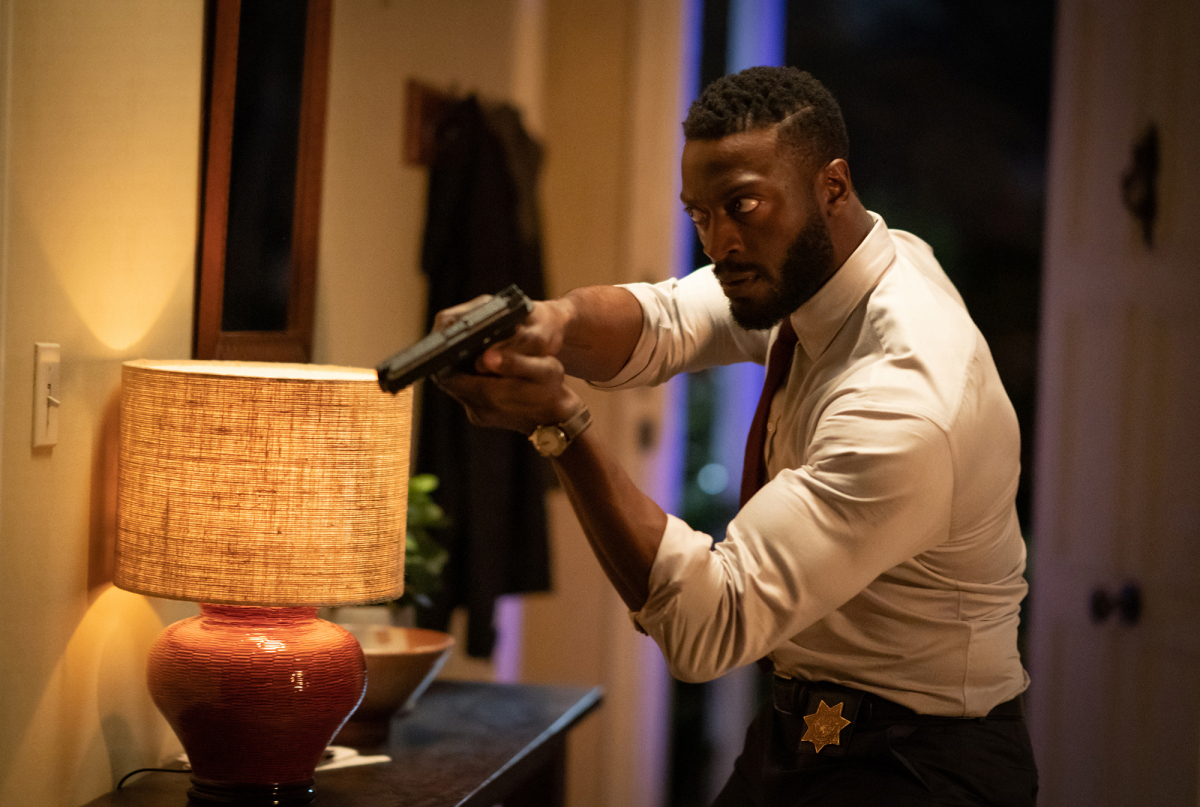
But Cecilia also explains how Adrian (Oliver Jackson Cohen, of “The Haunting of Hill House”) was a master of psychological manipulation, controlling not just what she wore, ate, said and did, but what she thought. Adrian’s true genius, his brother tells Cecilia, was how he “got in people’s heads.” Early in the film, by writer-director Leigh Whannell (“Upgrade”), there’s a deliberate ambiguity as to whether Cecilia is right, or whether she’s imagining things, as it appears to her friend (Aldis Hodge), a police officer who has taken her in, and his teenage daughter (Storm Reid).

In short, there’s an intriguing mystery. Is Cecilia so traumatized by her past that she’s seeing – or fantasizing – things that aren’t there? Or is Adrian, or someone else, trying to gaslight her into doing something rash? Adrian has left her $5 million in his will, which stipulates that Cecilia forfeit the money if she’s ruled mentally incompetent. Whannell introduces a delicious dynamic in the first act, in which Cecilia seems to sense, to almost smell the presence of Adrian, although she – and we – don’t see a thing.

It’s enough to make Cecilia think she’s losing her mind.

But all this tingling psychological horror evaporates as quickly as the phantom breath we see next to Cecilia as she stands outside – supposedly alone – one chilly night. What replaces it is a far more plodding and pedestrian kind of movie, the parameters of which can be revealed because they’re all laid out in the trailer: Yes, there’s someone in an invisibility suit tormenting her.

“There you are!” Cecilia says.

The only question is who “you” is. Harry Potter? Casper the Psychopathic Ghost? Or could it be that other character over there? The one who isn’t even trying to deflect our suspicions?

From this point on, “The Invisible Man” becomes a showcase for a series of not especially cool or expensive-looking special effects: a floating knife here; a gun going off in midair over there; people being thrown around, like rag dolls, by an unseen force. For a long time, no one believes Cecilia, even after it’s plain to us that she isn’t crazy.

So what does that leave us with? A supervillain movie. Not that that’s a bad thing by definition. But “The Invisible Man” has a hole at its center: something that was there for a brief, tantalizing second, and that is gone.

It isn’t Adrian, or whoever will be revealed in the film’s “Scooby-Doo”-like unmasking. It’s just a giant missed opportunity to be something more.

– – –

One and one-half stars. Rated R. Contains strong, bloody violence and coarse language. 110 minutes.

Ratings Guide: Four stars masterpiece, three stars very good, two stars OK, one star poor, no stars waste of time.

In a surprise move, Disney chief executive Robert Iger steps down and is replaced by a theme-park lieutenant #ศาสตร์เกษตรดินปุ๋ย

#ศาสตร์เกษตรดินปุ๋ย : ขอบคุณแหล่งข้อมูล : หนังสือพิมพ์ The Nation

https://www.nationthailand.com/lifestyle/30382860?utm_source=category&utm_medium=internal_referral

In a surprise move, Disney chief executive Robert Iger steps down and is replaced by a theme-park lieutenant

Feb 26. 2020
By The Washington Post · Steven Zeitchik · NATIONAL, BUSINESS, ENTERTAINMENT

In a move that stunned the entertainment world, Walt Disney Co. chief executive Robert Iger announced Tuesday that he was stepping down from his position immediately and would be replaced by Bob Chapek, 60, the head of its theme park division. Iger would remain on as executive chairman focused on creative endeavors, he said.

Iger, 69, has long been planning retirement and had postponed a scheduled departure date several times. The most recent had been slated for the end of 2021, when his current contract expires.

But the news that he would leave his post immediately sent shock waves through the industry, which has seen Disney not only as one of the most successful entertainment conglomerates but its most deliberate. Even its more aggressive expansions, which of late have included the acquisition of 21st Century Fox and the launch of streaming service Disney Plus, unfurled over years before finally becoming official.

“Why now, and was the announcement accelerated for any reason?” analyst Ben Swinburne of Morgan Stanley asked Iger on an investor call, channeling the feeling of many who follow the entertainment giant.

Iger downplayed the suddenness of the news.

“With the asset base in place and with [streaming] strategy essentially deployed, I should be spending as much time as possible on the creative side of our business,” he said, referring to the Fox acquisition and the Disney Plus launch. “It was not accelerated for any particular reason other than I felt the need was now.”

Iger served in the post for 15 years, succeeding Michael Eisner, who held the job for some 20 years.

Chapek, a 27-year veteran of Disney, served as president of consumer products before running theme parks. He will take over as just the seventh chief executive in Disney’s history.

Chapek, who is little-known to many figures in Hollywood, acknowledged his experience on the film and television side was modest. But he said he had “great exposure and a fairly broad overview of how the company operates” from working closely with Iger in recent years.

Iger said his goal was to fly around the world overseeing Disney’s creative holdings – they include everything from ESPN to Hulu to film and television studios – in his new role. But how much Iger will be directly involved in those realms – or whether this was simply a graceful way to make the transition to Chapek – remained unclear.

Modern Disney has never separated the creative and business sides at the top executive level the way some content firms do. That will, at least formally, remain the case: Iger said he did not want to take a chief content officer title and risk undermining Chapek’s influence in that regard.

Asked about the board’s search for his successor, Iger said that “we were extremely fortunate to have someone in Bob who knows the company extremely well that we know so well.” He said the board “obviously did its duty in conducting a thorough process.”

Chapek takes the job after numerous failed efforts to find a successor for Iger. Thomas Staggs, who once ran the theme parks division and later became chief operating officer, was long thought the heir apparent. But he fell out of favor and left the company in 2016.

Investors were relatively nonchalant about the news, sending the stock price down just 2 percent in afterhours trading.

Keith Gangl, a portfolio manager at Gradient Investments, which holds Disney among its core assets, said in an email to The Post that while “we were surprised by the timing of the announcement,” the news did “not dampen the outlook for the company.

“Disney is a strong producer of content and entertainment and with Chapek’s experience with parks and products, his background should continue to drive the company forward,” he said.

Still, the news marks an end of a historic era. Iger leaves the CEO post as one of the most successful executives in modern media.

Arriving at Disney in 1996 via its acquisition of Capital Cities/ABC, at which he had then served as president and chief operation officer, Iger was promoted to the same role at Disney in 2000 before taking over the top spot from Eisner in 2005. He soon set about remaking the company, spearheading an expensive acquisition spree that included Pixar, Marvel Studios and Lucasfilm.

Iger’s Disney tenure was marked by a series of bold but in retrospect intuitive gambles that expanded its reach beyond just a company with a strong children’s success to an all-ages juggernaut. Disney under Iger was both a propellant and beneficiary of the contemporary trend for youthful entertainment as adult product, a trend most evident with comicbook movies. Three of the five highest-grossing films of all time in the United States are Marvel pictures, all of which came out in 2018 or later.

The movie studio was Disney’s crown jewel, particularly with its ability, under the direction of Iger and Marvel Studios’ chief Kevin Feige, to match homegrown product to a chaotic international market. In 2019, Disney notched more than $11 billion in global box office revenue, a record. That number was anchored by “Avengers: Endgame,” with $2.8 billion the highest grossing global movie of all time.

He also undertook the move of competing with Netflix by removing much of the company’s content from the service to feed Disney Plus, which also includes a slew of original programming. The budget-friendly service is seen as an early success with nearly 30 million subscribers in the United States and an international expansion ahead of it. The success of Fox acquisition remains an open question, as the company has consolidated that firm’s film studio and looked to take advantage of its robust TV operations, a Disney need.

Iger was rewarded well for his efforts. In the most recent fiscal year his compensation reached $47.5 million, among the highest for media executives. It was dwarfed by his total from the previous year, when he received $65.6 million. That number was swollen by a stock-incentive package the board gave him to postpone his retirement.

Netflix to rank popularity of shows in move toward transparency #ศาสตร์เกษตรดินปุ๋ย

#ศาสตร์เกษตรดินปุ๋ย : ขอบคุณแหล่งข้อมูล : หนังสือพิมพ์ The Nation

https://www.nationthailand.com/lifestyle/30382798?utm_source=category&utm_medium=internal_referral

Netflix to rank popularity of shows in move toward transparency

Feb 25. 2020
The Netflix logo on Jan. 2, 2020. MUST CREDIT: Bloomberg photo by Gabby Jones.

The Netflix logo on Jan. 2, 2020. MUST CREDIT: Bloomberg photo by Gabby Jones.
By Syndication Washington Post, Bloomberg · Nick Turner · BUSINESS, ENTERTAINMENT, FILM, TV

Netflix, which has been tight-lipped about the popularity of its shows and movies, is taking another step toward transparency.

A new feature on the streaming service will show its top 10 most popular programs and movies, updated daily. Netflix has been testing the approach for about six months in Mexico and the U.K., the company said on Monday.

“Members in both countries have found them useful, so we are now rolling them out to even more,” Cameron Johnson, who oversees product innovation at Netflix, said in a blog post.

The lists should make it easier for viewers to pick what to watch. While Netflix’s algorithm is supposed to make it easy for customers to find shows, the dizzying array of choices is too much for some viewers. Customers often spend long stretches of time just deciding which movie or show to try.

Netflix, the world’s largest streaming subscription service, has frustrated the TV and film industry by not revealing its viewership. Unlike traditional TV, Netflix doesn’t make audience data available, and fans are often left wondering why a favorite show was canceled.

The Los Gatos, California-based company has begun to reveal more information — but only selectively. In December, it disclosed its top 10 programs in 33 countries, offering the most expansive report to date of what is being watched on the service.

But no outside party verified the lists, which Netflix based on viewership in the first 28 days after a show was released. And the numbers counted people who watched at least two minutes of a program — rather than all the way through.

Paramount’s ‘Sonic the Hedgehog’ tops weekend box office again #ศาสตร์เกษตรดินปุ๋ย

#ศาสตร์เกษตรดินปุ๋ย : ขอบคุณแหล่งข้อมูล : หนังสือพิมพ์ The Nation

https://www.nationthailand.com/lifestyle/30382710?utm_source=category&utm_medium=internal_referral

Paramount’s ‘Sonic the Hedgehog’ tops weekend box office again

Feb 24. 2020
By  Syndication Washington Post, Bloomberg · Hailey Waller · BUSINESS, ENTERTAINMENT, FILM 

Video-game adaptation “Sonic the Hedgehog” outdrew two new releases and stayed No. 1 at the box office for a second weekend, a welcome win for Paramount Pictures.

The film brought in $26.3 million, Comscore Inc. estimated Sunday. Analysts had expected about $30 million.

“Sonic” is a rarity among movies based on video games: a box-office winner with legs. It’s also the biggest hit for Paramount since the last “Mission: Impossible” movie in 2018.

A new release – “The Call of the Wild,” based on the Jack London classic about a sled dog – captured second place. The 20th Century Studios film benefited from Harrison Ford’s star power and generally good reviews with a 65% positive rating on Rotten Tomatoes, but there has been a glut of dog movies in recent years. That’s led to diminishing returns for the genre, according to Box Office Pro.

“The Call of the Wild” took in $24.8 million. Analysts had expected about $17.5 million.

The new horror film about a life-like doll, “Brahms: The Boy 2” from STX, landed in fourth place with $5.9 million. Analysts had expected $6 million. It was mostly panned by critics.

The returning “Birds of Prey” from Warner Bros. came in at third place, while Sony’s “Bad Boys for Life” held onto fifth place.

[Weekender] The ‘Parasite’ impact #ศาสตร์เกษตรดินปุ๋ย

#ศาสตร์เกษตรดินปุ๋ย : ขอบคุณแหล่งข้อมูล : หนังสือพิมพ์ The Nation

https://www.nationthailand.com/lifestyle/30382644?utm_source=category&utm_medium=internal_referral

[Weekender] The ‘Parasite’ impact

Feb 22. 2020
The stairway leading to Jahamun Tunnel in Seoul’s Buam-dong neighborhood was featured in the Oscar-winning movie “Parasite.” (Kim Young-won/The Korea Herald)

The stairway leading to Jahamun Tunnel in Seoul’s Buam-dong neighborhood was featured in the Oscar-winning movie “Parasite.” (Kim Young-won/The Korea Herald)
By Kim Young-won
The Korea Herald

How Koreans, markets and society are reacting to the Oscar-winning film that holds up a mirror to Korea’s dark present

For Jeon Da-jung, a 35-year-old office worker who often commutes through the neighborhood of Buam-dong, central Seoul, the concrete staircase that leads to the nearby Jahamun Tunnel didn’t mean much to her.

But “Parasite,” from the acclaimed South Korean director Bong Joon-ho, completely changed her mind. By using the urban landscape as a metaphor for the deepening social divide between the haves and the have-nots, it opened her eyes to the reality of Korea today, she said — to something she had probably known deep inside for years but felt no immediate need to think about.

“I never thought that the stairs and tunnel I just passed by could turn into fascinating places with some socioeconomic implications,” she said Monday on a visit to the site — her way of paying homage to the Oscar-winning film.

“The movie has changed my view on the overall society that still has lingering problems such as poverty and a social chasm between the rich and poor.”

Jeon is one of many Koreans exploring the class-conscious movie by taking day trips to filming locations or copying gestures, recipes or songs that appear in the film.

The stairway leading to Jahamun Tunnel in Seoul’s Buam-dong neighborhood was featured in the Oscar-winning movie “Parasite.” (Kim Young-won/The Korea Herald)

The stairway leading to Jahamun Tunnel in Seoul’s Buam-dong neighborhood was featured in the Oscar-winning movie “Parasite.” (Kim Young-won/The Korea Herald)

The filming locations in Seoul have become hot spots for locals and foreign tourists alike.

Since “Parasite” won four Academy Awards, places shown in the movie — including the tunnel, stairways and the Woori Supermarket — have been bustling with visitors in recent days.

Woori Supermarket (Yonhap)

Woori Supermarket (Yonhap)

The dark comedy starring Song Kang-ho shed light on the ever-widening social divide via two families — the wealthy Parks and the impoverished Kims. The two families show the stark contrast between the opposite ends of the socioeconomic spectrum. But they also invite global audiences to consider untold stories about Korean society through unusual symbols such as a “creative” instant noodle recipe, a catchy song, a semi-basement home and a fake university degree.

The melody that the Kims’ daughter, Ki-jung, sings as a mnemonic to remember her false identity has swept the internet recently. The so-called “Jessica jingle” — “Jessica, only child, Illinois, Chicago,” originates from a song about Korea’s easternmost islets, Dokdo. It is so addictive, according to people on social media, that many “Parasite” fans could not stop humming it after watching the film.

Also trending among young moviegoers on social media are selfies with black or white bars over the eyes, recalling the official movie poster depicting the families posing in an odd arrangement with their eyes covered.

“The younger generation is taking to YouTube and Twitter to share its ‘Parasite’ obsession,” film critic Philip Yoon was quoted as saying in the local newspaper the Hankyoreh.

‘Parasite’ wave in markets

Thanks to the film’s recent achievements at the Oscars, stocks of the companies behind “Parasite” have soared in value. Barunson E&A, which invested $11 million in the production of the film, saw its shares hit record highs Feb. 10-13. After closing at 2,000 won ($1.70) on Feb. 7, they more than doubled to 4,470 won as of Monday.

CJ, which owns the film’s distributor, CJ ENM, saw the value of its shares jump more than 10 percent Feb. 7-17.

Jjappaguri (Yonhap)

Jjappaguri (Yonhap)

A noodle dish called jjappaguri (translated as “ram-don” in the English subtitles) — a combination of black bean-based instant noodle brand Jjapaghetti and instant udon ramen brand Neoguri — boosted sales for the manufacturer of both products, Nongshim, here and abroad, as well as its stocks. In the movie, instant noodles symbolize the social divide. The rich Parks enjoy eating the cheap snack with slices of expensive Korean beef — unlike the poor Kims, who eat instant noodles because that’s all they can afford.

“Every time the movie launches in each nation, jjappaguri goes viral on social media,” said a spokesperson for the instant noodle maker, which has given out the snack at theaters around the world in an effort to promote its brand along with the film.

The Korean food company has also put up YouTube videos providing the recipe for the fusion dish in 11 languages, including English, Japanese and French.

A pizza store in Dongjak-gu, Seoul (Yonhap)

A pizza store in Dongjak-gu, Seoul (Yonhap)

During the four trading days after the movie bagged the four Academy Awards on Feb. 9 (local time), Nongshim shares surged by some 10 percentage points.

Some market analysts forecast that the overall Asian food market will gain popularity around the world thanks to Bong’s latest masterpiece.

The Oscar-winning movie is expected to generate more than $12 million in economic value, according to local brokerage firm Korea Investment & Securities.

“Parasite earned 86 billion won revenue in the domestic market and its estimated operating profit stands at 21.5 billion won,” said Oh Tae-hwan, an analyst from the investment firm.

“The sales will likely increase with the movie launching in more global markets in the near future,” the analyst added.

Some market analysts said the movie has helped take the nation’s content market to the next level, as the local industry will receive more attention from global investors.

“Parasite has proved that content created here can appeal to global audiences, and Korean producers will likely be reevaluated in the global film industry,” Lee Hwa-jeong, an analyst from NH Investment & Securities, said.

By Kim Young-won (wone0102@heraldcorp.com)

President Trump targeted Hollywood for giving best picture to a foreign film. But the man who funded its Oscar run is a car-dealer from Texas. #ศาสตร์เกษตรดินปุ๋ย

#ศาสตร์เกษตรดินปุ๋ย : ขอบคุณแหล่งข้อมูล : หนังสือพิมพ์ The Nation

https://www.nationthailand.com/lifestyle/30382608?utm_source=category&utm_medium=internal_referral

President Trump targeted Hollywood for giving best picture to a foreign film. But the man who funded its Oscar run is a car-dealer from Texas.

Feb 22. 2020
By The Washington Post · Steven Zeitchik · BUSINESS, ENTERTAINMENT, FILM
President Donald Trump on Thursday lamented Oscar voters’ recent decision to name “Parasite,” the Korean-language thriller, as this year’s best picture.

“And the winner is a. . ..movie from South Korea. What the hell was that all about?” Trump told a crowd at a re-election rally in Colorado Springs, Colorado. “I thought it was best foreign film, right? No, it was [best picture].” He said he wanted to see more winners like “Gone With the Wind,” the epic love story set in the American South.

But it turns out “Parasite” won thanks to the backing of the very type of All-American character Trump complained the Oscars overlooked – a Texas car-dealership mogul.

Neon, the company that distributed “Parasite” and staged its successful awards campaign, is controlled by Daniel Friedkin, a born-and-bred Houstonian who owns Gulf State Toyota Distributors, the largest supplier of Toyotas to Texas and surrounding states. His headquarters sits not in Seoul or even Hollywood but on the far west side of Houston, near a local marketing company and an offshore drilling firm.

The “Parasite” moment brought to a head Friedkin’s years-long effort to parlay success from the scrappy world of car wholesaling to the Hollywood hustle. The 30West media-investment arm that Friedkin funded with his car profits bought a majority stake in Neon in 2018, and the cash Friedkin funneled to the distributor helped the company release the movie and run its Oscar campaign.

The game-changing “Parasite” moment, in others words, might never have happened without Texans’ affinity for Toyota Tundras.

“What we see with what Dan Friedkin and 30 West is how profits from a very Middle American business can have a significant effect on global film,” said Ross Fremer, an executive in business development with the production and management company Cinetic Media who follows the space closely.

Contrary to Trump’s assumption, Friedkin’s “Parasite” connection demonstrates the domestic roots of even the most seemingly global part of the entertainment business: a Korean moment in Hollywood was made possible by an American businessman wholesaling Japanese cars in Texas and the nearby states.

Rendering Trump’s comment further ironic is that Friedkin has roots in Republican Texas politics: He was appointed to two six-year terms as commissioner at the Texas Parks and Wildlife Commission by former Texas Republican Gov. Rick Perry, Trump’s first secretary of energy.

Friedkin, who is famously press-averse, declined to be interviewed. So did several of his top Hollywood lieutenants, including Micah Green, the ex-Creative Arts Agency powerbroker who runs 30West, and Tom Quinn, who runs Neon.

But his story demonstrates the unlikely link between a Texas tycoon and the global movie business.

With a Forbes-estimated net worth of $4.2 billion, Friedkin is the 187th richest person in America, just eight spots behind Mark Cuban and 30 spots ahead of Meg Whitman. His fortune comes in large part from Gulf States Toyota, the exclusive distributor of the automaker’s cars and parts to dealers in Texas and surrounding states. The company has nearly doubled its sales over the past decade to $9 billion last year, much of which has gone to Friedkin’s pockets.

Yet the cash hasn’t just been a way for the Texan, 54, to feed interests such as a notorious private-plane obsession – it has fueled his bid to reshape Hollywood. In addition to 30West, he created the production company Imperative and has spent years financially backing movies as varied as “Parasite,” “The Mule,” “I, Tonya” and “The Square” as well as far less-regarded pictures such as the J. Paul Getty kidnapping tale “All the Money in the World” and the Julia Roberts drama “Ben Is Back.”

Interviews with 10 film veterans and executives who have had dealings with Friedkin, many of whom spoke on condition of anonymity so as not to jeopardize relationships, yield a portrait of one of the more enigmatic men in the modern entertainment business. Money and cinema have been mixing uneasily in Hollywood since Thomas Edison flexed his monopoly on film patents more than a century ago. But even in an industry where art and commerce make for odd bedfellows, Friedkin stands out.

The executive, according to two people who’ve worked with him, can have broad commercial tastes. Yet his film ventures involve some of the most upscale projects in town, including Martin Scorsese’s period drama “Killers of the Flower Moon,” which will shoot this year, and “Lyrebird,” a WWII art-heist picture that Friedkin directed himself and was acquired by the upscale Sony Pictures Classics last year for a 2020 release.

Friedkin has an in-person manner that two entertainment veterans who met with him but asked for anonymity so as not to jeopardize relationships described as down-home and not oriented toward foreign-language titles. (“Lyrebird,” despite being populated by foreigners, is in English.) Yet he has often put money in prestige-oriented projects. Those movies also include “The Square,” the layered 2017 Swedish-language film about moral choices and social norms that, like “Parasite,” also won the Cannes Film Festival’s top prize, the Palme d’Or.

Friedkin has a pedigree far from the world of film geekdom. His late father, Thomas Friedkin, was a pilot who became the largest shareholder of the now-defunct discount airline Pacific Southwest, which his own father had started.

A racecar owner and enthusiast, Thomas Friedkin dabbled in Hollywood as a pilot, often on lower-profile movies such as the Disney science-fiction comedy “The Cat from Outer Space” and “Police Academy 4: Citizens on Patrol.” He became a Toyota wholesaler via his racing connections during the 1960′s, when Toyota was not yet a desirable brand in the U.S.

When his father died in 2017, the younger Friedkin inherited not just operating control of the business (his three siblings are less involved day-to-day) but also his father’s affinity for combining flying and Hollywood. As he piloted his own planes all over the world, Friedkin started an aerial photography company. The firm handled a lot of the overhead scenes in the 2017 World War II hit “Dunkirk;” Friedkin flew some of the planes himself.

His actual Hollywood involvement, however, was modest for years. He founded two production companies in 2014. One was Imperative, with the help of Bradley Thomas, a longtime collaborator of the gross-out creators the Farrelly Bros (“There’s Something About Mary,” “Dumb and Dumber”). The other was a nonfiction entity called Pursuit with Lauren Sanchez, the former Good Day LA host who has been romantically linked to Washington Post owner Jeffrey Bezos. Sanchez, a helicopter pilot, also has a love of aerial photography. But neither venture gained much traction, producing few works of note.

Things began to change when Friedkin hired Green away from CAA in 2017. Long a fixture on the film-financing scene, the agent had worked closely with Friedkin while he was at CAA, inhabiting the role of matchmaking the billionaire with directors and scripts that are the mother’s milk of Hollywood agencies.

That set the ball in motion. Green and Friedkin hired the former’s CAA colleague, a financing expert named Dan Steinman. The trio then brought on Trevor Groth, a longtime respected Sundance Film Festival programmer, to cement its indie-film bona fides.

Then came Neon. In keeping with that old adage that nothing happens in Hollywood without the story of a disgraced ice skater, the mogul helped finance “I, Tonya,” the Oscar-winning film about the Tonya Harding-Nancy Kerrigan scandal. Neon, at the time an upstart founded by Weinstein Company refugee Quinn, acquired, distributed and marketed the film, landing an Oscar for star Allison Janney. Friedkin so liked the job Neon did he decided to buy a majority stake in the company.

Friedkin can operate in Hollywood with a kind of Netflixian range, stepping in and writing checks that others won’t. Scorsese’s next movie is a period story of oil and murder on Native American land, is being financed by Friedkin in a manner similar to how Netflix took on “The Irishman”- with a high budget that scared off traditional studios. (Robert De Niro’s in this movie too.)

Friedkin has made other financial decisions that ran against Hollywood wisdom. #MeToo allegations against Kevin Spacey in 2017 threatened to sink “All the Money in the World,” the J. Paul Getty kidnapping drama, with distributor Sony Pictures ready to bury the movie that Imperative had financed. Friedkin stepped in and wrote an additional check for more than $10 million so filmmakers could hire Christopher Plummer, reassemble the cast and crew and reshoot every scene in which Spacey appeared.

“Most people would take the hit and move on,” said a producer who asked not to be identified because he did not wish to offend potential partners. “I think when that happened a lot of people said ‘this is a guy who does things differently.'”

But how much Friedkin can become an established part of the Hollywood firmament remains unclear.

Two prominent film executives The Post interviewed with no competing interest said they were skeptical Friedkin, like many billionaires, would maintain interest in the film business, especially without a steady stream of hits. “All The Money In The World’s” title proved to be misleading; it grossed just $57 million globally. “Ben is Back,” notched just $10 million domestically. Friedkin was noticeably little-seen at events over Oscar weekend even as “Parasite” was racking up prizes, suggesting a desire to keep a low Hollywood profile.

Meanwhile, three producers The Post spoke to, all of whom asked for anonymity for the sake of relationships, said 30West’s strategy remains unclear. “Are they investing in movie companies? Putting equity in movies? Investing in business that have nothing to do with movies? It’s not really clear what they are,” one said.

At this story was about to be published 30West said the it would be acquiring a significant minority stake in Altitude Media Group, a British film sales and production company behind such films as the documentary “Diego Maradona.”

Friedkin’s financial success comes from a mix of skill and luck, according to auto-industry experts.

“Toyotas are some of the best-selling cars around, so to have an exclusive license like that is almost automatically going to be very profitable,” said Jack Cohen, a Los Angeles-based expert on automobile wholesaling and retailing. He noted it would be nearly impossible to obtain such a license today in the face of greater competition and corporate oversight.

“But you still need to manage it well, because if suddenly cars are selling better in other states, Toyota comes in and says ‘why are we giving the exclusive to you?'”

Hollywood is littered with billionaires who’ve packed up their bags when obstacles arose. For every Arnon Milchan, there are five outsiders who came and went. This is particularly true for billionaires who white-knight commercially challenged foreign films that often need the money. Unlike other industries, success in the movie business is often illusory.

It’s a theme Friedkin appears aware of and interested in. “Lyrebird” is about a pricey piece of art and how its value, in a world of fickle perceptions, can quickly evaporate. Speaking at a Toronto international Film Festival screening, he noted the power of these illusions.

“Where do we draw the line on what is a fake?” he said. “Everything comes from a collective view and vision of other experiences and other things that we’ve been exposed to,” he noted. “When does something become a fake and when is it not a fake? We all recognize that those lines are pretty blurry.”

War with Netflix and Disney looms for India’s top local streamer #ศาสตร์เกษตรดินปุ๋ย

#ศาสตร์เกษตรดินปุ๋ย : ขอบคุณแหล่งข้อมูล : หนังสือพิมพ์ The Nation

https://www.nationthailand.com/lifestyle/30382528?utm_source=category&utm_medium=internal_referral

War with Netflix and Disney looms for India’s top local streamer

Feb 20. 2020
By Syndication Washington Post, Bloomberg · P R Sanjai · BUSINESS, WORLD, ENTERTAINMENT, TV

As global streaming giants Netflix Inc. and Walt Disney Co. spend millions of dollars to grab viewers in India, a country that could become their biggest overseas market, a homegrown rival is preparing to defend its turf.

Zee5, the top domestic streaming platform set up by India’s biggest television broadcaster, is betting on local content to fend off big-spending rivals, Chief Executive Officer Tarun Katial said in an interview. The over-the-top, or OTT, service is playing to its advantage by adding more local-language shows and lower-price options to gain market share, he said.

“International OTTs have neither legacy nor library with depth,” Katial said at his office in Mumbai, adding that Zee5 has produced more than 100 original shows in local languages, at least 10 times more than any rival. “We can win this content battle.”

Zee5, which started in 2018, is among dozens of streaming platforms including Amazon locked in a race for Indian users, a market that Boston Consulting Group estimates will reach about $5 billion in 2023. With China closed to foreign streaming services, India has become a battleground for global streaming brands, with an emphasis on delivering films and TV shows to smartphone users expected to number 850 million in two years.

After amassing 61 million active monthly users in its first 15 months in India, Katial says Zee5 has little choice but to keep producing new shows at even faster rates. The platform aims to add between 70 and 80 original shows over the coming year, while making 15 direct-to-digital movies for release in 2021.

Representatives for Netflix and Disney’s Hotstar platform in India declined to comment.

There are 22 official languages in India, creating a broad battlefield for niche audiences.

“It’s a strategy to move away from fighting in the fiercely competitive segment of Hindi or English,” Bhupendra Tiwary, an analyst at ICICIdirect, said of Zee5’s local-content push. “Zee is creating its own space in this war zone where it sees more opportunity.”

Zee Entertainment Enterprises Ltd., part of the Subhash Chandra-led Essel Group, is increasing its investment in streaming, even though the broadcaster has seen its market value plunge on concern the group’s debt had grown too large. Chandra, who opened India’s first amusement park and brought satellite television to the country, has had to sell his stake in Zee, while staying on as a board member.

“We are completely insulated from the financial concern which our parent group went through last year,” Katial said. He declined to say how much the company was planning to spend on growth.

Zee Entertainment shares gained 2% as of 2:36 p.m. in Mumbai trading Thursday.

Zee5, the streaming platform, is planning its local-language expansion just as some of its global rivals are pushing further into India.

– – –

Disney earlier this month said it will introduce its Disney+ streaming service in India through its Hotstar platform on March 29, at the beginning of the Indian Premier League cricket season. Hotstar, which has said it has 300 million active monthly users, has relied on India’s most popular sport to draw users after spending big to secure the rights.

Disney is also re-branding the Hotstar VIP and Premium subscription tiers to Disney+ Hotstar to underline its global brand.

Netflix, the world’s largest streaming platform by paid subscribers, has said it intends to sign on 100 million subscribers in India, almost 25 times the customer base it had in the country as of this year. Chief Executive Officer Reed Hastings said during a visit to the country in December that Netflix intends to spend 30 billion rupees ($419 million) over 2019 and 2020 to produce more local content.

Netflix’s “Sacred Games” series, a local original, has drawn Indian viewers globally, the company has said. “Lust Stories,” a Hindi-language anthology of short films, released in June 2018, also drew attention.

Zee5 has said its original “Rangbaaz Phirse” and “The Final Call” series are hits, along with “Auto Shankar,” a Tamil-language show.

– – –

At the same time, competitors are paring fees to draw subscribers in a country used to free services including Google’s YouTube, while paying little for bandwidth via mobile phone plans.

Last year, Netflix slashed prices by as much as half in India for subscribers that commit to at least three months. Most of the country’s streaming services, including Apple TV+, Amazon Prime and Disney’s Hotstar have also offered discount deals this year and subscriptions at prices well below those in other markets.

Zee5 has begun offering some region-specific packages at 49 rupees a month or 499 rupees a year to attract more viewers, said Katial. That compares with the standard packages at 99 rupees a month or 999 rupees a year.

At the same time, Zee5 is planning to add 90-second videos to its platform to meet demand and compete with the likes of Beijing-based ByteDance Inc.’s TikTok, a platform that is growing fast globally among younger users. That effort will start “soon,” Katial said.