‘Germany’ views technology changing net zero emission #SootinClaimon.Com

#SootinClaimon.Com : ขอบคุณแหล่งข้อมูล : หนังสือพิมพ์ The Nation.

https://www.nationthailand.com/pr-news/perspective/40008388


Climate Change and Climate Action played an important role in the recent general elections. The floods in summer with more than one hundred deaths were a reminder of the dire consequences of extreme weather.

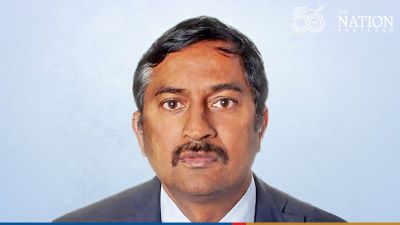
Georg Schmidt, German Ambassador to Thailand gave special interview with Nation Thailand

1. The German Commitment to Achieve Net Zero:

Climate Change and Climate Action played an important role in the recent general elections. The floods in summer with more than one hundred deaths were a reminder of the dire consequences of extreme weather. Germany pulled forward its climate neutrality target to 2045 while more than 110 countries including the EU committed to reach net zero emissions by 2050 (i.e. the amount of emissions added to the global atmosphere is no more than what is taken out). Globally, Germany is one out of eight countries with such ambitious goals. By 2030 Germany aims to slash its greenhouse gas emissions by 65% in relation to 1990 levels. This involves a shift of paradigms in transport, production and consumption patterns. The pandemic might have served as a wake-up call for some to change their ways. The German government borrowed heavily in order to support its citizens. It can also use the money to push for modernization in fields such as digitalization and infrastructure.        

As Germany is a highly industrialized country decarbonizing the economy is an enormous challenge. Germany began its “Energiewende” (energy transition), the shift to more renewable energy, already some time ago and it is a goal shared by all relevant political parties. The Energiewende is an integral part of our climate policy. We are switching our energy system to climate-friendly solar, wind and hydrogen. Less carbon, more renewables and more value added and jobs created. In Germany half of the electricity is already generated from renewable sources (2020: 50.5%), mostly from wind and solar. More than 300,000 people work currently in the generation of renewable energy. To reach our ambitious climate goals, 270,000 new jobs could be added in the next 10 years.         

But it is not about producing energy alone. It is about storing it and distributing it in a stable and economically viable way. The unveiling of Germany’s new national Hydrogen Strategy underlined the importance of going new ways in that field. However, we cannot afford to destroy our industrial base – we can also not afford to destroy our planet. The new German government will have to master the task to steer this transformation with the right mix of incentives (subsidies, tax breaks, increased procurement) and disincentives (higher prices, taxes, prohibitions). The experience so far has shown that the incentives work much better. A sweeter carrot outweighs a bigger stick.

2. The German assistance to developing countries to help them comply with the COP26 pledge:

It does not help at all if Germany alone works to reduce its carbon footprint. Every country has an important role to play. COP26 in Glasgow is crucial in order to mobilize global actions towards to combat climate change. The Intergovernmental Panel on Climate Change (IPCC) says we have only until 2030 to cut global greenhouse gas emissions by 45-50% if we all really aim at limiting global warming to 1.5 C.

Warming beyond this will significantly worsen the risks of drought, floods, extreme heat and sea-level rise, and will exacerbate poverty for hundreds of millions of people. Thailand has seen this: Currently, many people in Thailand are hit by a heavy flood. Last year, Thailand experienced its worst drought in forty years. Thailand is among the ten countries most impacted by extreme weather events linked to climate change

Germany is one of the most active countries globally to support other countries in their combat against climate change. Most of the projects are funded by the International Climate Initiative (IKI) of the Ministry for the Environment. IKI is a key element of Germany’s climate financing mechanism and the funding commitments were made under the United Nations Framework Convention on Climate Change (UNFCCC) and the Convention on Biological Diversity (CBD). Climate change mitigation, adaption to the impacts of climate change and the protection of biological diversity are focus areas. To date, IKI has approved funding for more than 750 climate and biodiversity projects in over 60 countries worldwide, with a total funding volume of 4.5 billion euros (2008–2020). Add to that Germany’s contribution of the European Union and you see that we put our money where our mouth is.

But public sector is only one side of the coin. The transformation cannot be done against business. German companies are world-wide leaders in high-technology. It is their know-how and engagement that enables us to achieve sustainability. With the right national, European and international framework companies can develop and apply products and services compatible with our race for sustainability.

3. The German Cooperation with Thailand to help Thailand achieve the Bio-Circular-Green Economy.

Germany has been Thailand’s largest bilateral climate partner for more than ten years with more than 140 million euros spent. We are happy to share our experiences as well as technical and management expertise on renewable energy, resource efficiency and sustainable production and consumption. This includes policy advice as well as model projects such as on waste management, flood prevention, the production of energy efficient refrigerators or low-emission rice farming as well as the development of standards for sustainable rice. For the next phase we will focus on sustainable urban transport und renewable energy.

4. Examples of German green technologies in Thailand:  

During the last years as German Ambassador I had the privilege to visit many of the projects: To begin with, NAMA rice in Suphanburi reduces green-house gases and increases the yield of farmers. Smart farming also includes the use of drones on rice fields – German companies are active in offering technological solutions here.      

We regularly award buildings in Thailand constructed according to German energy efficiency standards. It is possible to save a lot of money by better insulation, circulation and changes in cooling methods. Cooling is one of the main consumption points for electricity. Check out the RAC Nama Cooling program offering air conditioning with reduced ecological footprints. And to round the examples up, the German-Thai Chamber of Commerce runs a Clean Air Initiative focusing on ways to improve the air quality in Thailand.          

Change is possible, but it starts from change in individual behavior. By now many people know about my personal penchants for electric scooters – much faster in the tight traffic of Bangkok than any cars. That does not mean we are not using cars anymore. We are proud of our electric and hybrid vehicles at the German Embassy. Our small BMW is powered by the electricity generated by our solar panels on the rooftop of the Embassy. We get a lot of support for these measures. Believe me, a vehicle with a small carbon footprint will soon be much cooler than a 400 hp. sports car !

I feel that there is already lot of good will to do things differently in order to protect our environment. Once people have more information about the ecological impact of their behavior, they can make choices accordingly. Of course, prices do play an important role. A combination of government nudging – so that prices reflect externalities –  with companies offering affordable alternatives could pave the way. For instance, if people are aware of the carbon footprint of their food, they might change their behavior to taste the delights of sustainable food. After all, a sustainable lifestyle should be not only cool, but also comfortable.   

Published : November 04, 2021

By : THE NATION
US Commits to Net Zero Pledges. #SootinClaimon.Com

#SootinClaimon.Com : ขอบคุณแหล่งข้อมูล : หนังสือพิมพ์ The Nation.

https://www.nationthailand.com/pr-news/perspective/40008387


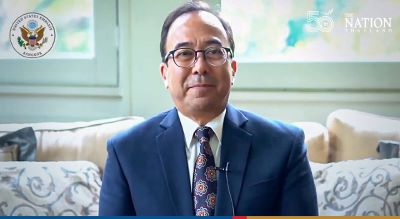
Leading up  to COP26,  Michael Heath, Chargé d’ Affaires of the U.S. Embassy, Thailand  talks about the U.S. commitment to protect environment and collaboration with Thailand to save the planet during an interview with Nation

1.U.S. commitment to achieving Net Zero 

President Biden has put climate change at the center of his domestic and foreign policy and designated former Secretary of State John Kerry as his Special Presidential Envoy for Climate.  The United States is leading by the power of our example, convening a Leaders’ Summit on Climate on Earth Day earlier this year, which included leaders from Thailand.  During the summit, we announced we would increase our nationally determined contribution for reducing greenhouse gas emissions to 50-52 percent by 2030.  In addition, the United States has committed to achieving net-zero emissions by 2050.  We are investing in new technologies to achieve these bold targets, including alternative energy and electric vehicles.  The Biden-Harris Administration is committed to mobilizing a whole-of-society approach that enlists states, cities, businesses large and small, civil society groups, and others to create a net-zero clean energy economy that benefits all. 

2. U.S. assistance to help developing countries comply with the COP26 pledges.

No country can solve the climate crisis alone, and the United States has committed significant resources to help developing countries address climate change.  During the United Nations General Assembly in September, President Biden announced that the United States will double our previous commitment to assisting developing nations to address climate change – to $11.4 billion per year by 2024.  The United States also has robust development assistance programs through our U.S. Agency for International Development (USAID) and U.S. Trade and Development Agency (USTDA), including programs in Thailand focused on both climate change adaptation and mitigation.  We advocate for all countries to increase their climate change ambitions and targets ahead of COP26 in November this year.  

3. U.S. cooperation with Thailand to help Thailand achieve the Bio-Circular-Green Economy model.

The United States applauds Thailand’s efforts to assume a leadership role in addressing climate change, including the bio-circular green economy model.  Our diverse bilateral engagement covers several areas related to sustainable development, including agriculture, energy, transportation, and other sectors.  The United States provides technical assistance to Thai government agencies, for example, a program with the Electricity Generating Authority of Thailand helping to better integrate renewable energy into Thailand’s power grid.  We also facilitate connections with U.S. companies through our U.S. Foreign Commercial Service and provide access to financing through the United States International Development Finance Corporation, which has a regional office in Bangkok that provides yet another set of tools for advancing sustainable development.

4. Examples of the U.S. green projects in Thailand and why they are significant

The United States is supporting green projects in many sectors in Thailand.  One is electric vehicles (EV), where the leading U.S. engineering firm Black and Veatch is helping to electrify SCG International Corporation Co., Ltd.’s 14,500 vehicle fleet with support from the USTDA.  In addition, USAID is assisting Thailand’s electricity regulatory agency in establishing EV charging rates, and the U.S. State Department is helping the Metropolitan Electricity Authority develop an EV readiness plan.  The United States also has broader policies that support green development in the region.  One is the Mekong-U.S. Partnership, which supports projects related to quality infrastructure, national electricity market development, cross-border energy trade, cross-border transport facilitation, renewable and clean energy acceleration and deployment, and other topics. 

Published : November 04, 2021

By : THE NATION

Metaverse, the technology that will change the world #SootinClaimon.Com

#SootinClaimon.Com : ขอบคุณแหล่งข้อมูล : หนังสือพิมพ์ The Nation.

https://www.nationthailand.com/perspective/40008161


Facebook founder Mark Zuckerberg officially changed his company’s name from Facebook to Meta on Thursday. This plan had been announced for a period, and the idea is understandable. Some Businesses normally decide to rebrand when it is bigger or want to change their identity. The interesting point of Zuckerberg’s organisation is that it focuses on metaverse technology, which is expected to change our world completely in the future.

Rebranding is a small point

Facebook was a social media giant, with over a billion users around the world. It became well-known among the public for around ten years, making the founder Zuckerberg one of the top richest people in the world from the social media success.

Previously, Facebook had bought other social media – Instagram and Messenger. The rebranding maybe means Zuckerberg wants to remind people that there is more than Facebook in his kingdom.

Moreover, the Meta underscores the direction of his company toward metaverse technology.

Metaverse

Metaverse is relevant to technologies and inventions that create a virtual world that runs along with our real world. Daily life under this technology will be more connected to the digital world, and a person can live in two worlds at the same time.

Despite the word is not well-known among the public, the metaverse is a hot issue for those persons in the tech sector. If Zuckerberg is successful in developing the metaverse, surely he will be more influential than today and this world will be completely changed.

Changing the world

Under the metaverse technology, people will connect to the digital world more than for playing a video game or consuming entertainment. Digital currency will be more reliable, similar to hard currency in our daily life. Also, human beings will be connected to other borderless, whether in aspects of economy, society or culture.

Presently, several activities are done on the internet and supervised by authorities or institutions. The metaverse will change this, as significant activities will be done in a virtual world, where a relation to the real world is fragile.

This also raised a big question on how governments in the future can collect taxes from economic activities in the virtual world. Moreover, some observers question what will happen to important organisations and institutions in the world, if the virtual world becomes more touchable as Zuckerberg dreams of.

Published : October 29, 2021

By : THE NATION

Employment Led by 11% Quarter on Quarter Rise in Job Opportunities Within Technology: Michael Page Thailand #SootinClaimon.Com

#SootinClaimon.Com : ขอบคุณแหล่งข้อมูล : หนังสือพิมพ์ The Nation.

https://www.nationthailand.com/perspective/40007992


With consistent employment demand, Thai professionals with the right combination of technical and behavioural competencies will continue to be in demand and command a higher ratio of salary. Additionally, competition for talented professionals is intensifying and companies are increasingly adopting a candidate-first mentality and paying more attention to the overall candidate experience, to help improve their brand, their process and their overall ability to attract talent.

Employment Led by 11% Quarter on Quarter Rise in Job Opportunities Within Technology: Michael Page Thailand

The number of jobs within the Thai Technology sector rose by 11% in Q3 from Q2 2021. “This is partly led by a buoyant tech startup community which is experiencing very healthy private equity and venture capital investments. A resulting demand is seen for professionals skilled in data citation, project and program management as well as software development,” observes Kristoffer Paludan, Regional Director of Michael Page Thailand.

Hiring in the Thai Engineering & Supply Chain landscape saw similar levels of heightened activity at a rate of 9% in Q3 2021 compared to Q2. According to Kristoffer Paludan, this upward trend is driven by the significant uplift in food production and packaging, chemical manufacturing as well as electronics and electricals.

“We have seen a number of new players entering the Thai market in the above-mentioned sectors. That combined with the expansion of the domestic marketplace has driven the uplift in hiring activity. In addition, the decline in the Thai Baht is fueling the export market which in turn has seen an increase in vacancies across both procurement, supply chain, engineering as well as manufacturing,” comments Kristoffer Paludan.

Also earmarked for further growth within Thailand’s employment market is the healthcare industry. Thailand being the second largest healthcare market in SEA accounting for roughly 20% of the region’s healthcare expenditure is in urgent need of a talent infusion across most disciplines. As demand for hiring grows, so will the competition for talent.

Source: Michael Page Thailand proprietary data

Published : October 26, 2021

By : THE NATION

Can the Great Powers avoid war? #SootinClaimon.Com

#SootinClaimon.Com : ขอบคุณแหล่งข้อมูล : หนังสือพิมพ์ The Nation.

https://www.nationthailand.com/pr-news/perspective/40007928


Is war inevitable?

As tensions over the Taiwan Straits mount, everyone needs to think through whether war is inevitable.  Leon Trotsky once said “You may not be interested in war, but war is interested in you.”  And if we slip into war by what World War One historian Barbara Tuchman called the March of Folly, can the Great Powers step back from mutual nuclear annihilation? 

When the world’s unipolar power incurred more pandemic deaths (at last count 752,000 deaths) and got defeated in Afghanistan by tribal warriors, no one should be surprised to ask whether America (and by extension Western civilization) is in decline.  The prestigious US magazine Foreign Affairs devoted three issues this year to: “Can America Recover?”, “Decline and Fall – can America ever Lead Again?”, and “Can China Keep Rising?”.  For those reading the endless barrage of invectives against America’s rivals, it certainly feels like the Cold War has returned with a vengeance. 

However, for Greta Thunberg and fellow climate activists, surely the world leaders’ priority is to work together to address our looming climate disaster?

Why are Alphas fighting in a Burning Planet?   Shouldn’t we call “Time Out” to see how to address collectively the urgent and existential issues of human and planetary distress?

Next month, the World Economic Forum is meeting in Dubai with an agenda to move from a Great Reset to a Grand Narrative Initiative “to shape the contours of a more prosperous and inclusive future for humanity that is also more respectful of nature.”  Grand Narratives may sound like a media story, but the reality is that the masses are unlikely to buy an elite-driven dream until they are part of the conversation. 

Take Harvard historian Samuel Huntington’s Clash of Civilizations narrative. Written in 1996, Huntington seemed prescient in predicting the clash between Western Civilization and the rest, namely, Sinic, Japanese, Hindu, Islamic and Latin American.  He asked poignantly, “The central theme for the West is whether, quite apart from our external challenges, it is capable of stopping and reversing the internal process of decay.  Can the West renew itself or will sustained internal rot simply accelerate its end and/or subordination to other economically and demographically more dynamic civilizations?”

Huntington basically reflected the worry of British historian Arnold Toynbee (1889-1975) that since civilizations are born out of primitive societies, the key is whether the elites can respond effectively to new challenges, internal or external.  Toynbee saw clearer than other Western historians like Gibbon (Decline and Fall of Roman Empire) that collapses are not necessarily due to barbarian invasions, but whether the ruling elite can overcome their own greed or interests to address the new challenges.

In pure economic, financial, technology and military terms, few question that the West remains superior in almost all aspects, except in population numbers.  According to the Maddison projections of population and GDP, the rich countries (essentially Western Europe, plus Western Offshoots (US, Canada, Australia, New Zealand) and Japan would be 947 million people and 36.3% of world GDP by 2030, whereas Asia (China, India and other Asia) would have population of 4.7 billion and 49.6% of GDP.  This reverses the 2003 position when the West (including Japan) accounted for half of world GDP, compared with one-third for Asia.  This dramatic reversal is due to the rise of China, India and rest of Asia to  higher middle income levels by 2030, mainly through trade and catch-up in technology.  

In coming decades, roughly one billion rich West must contend with the rising powers of China (1.4 billion), India (1.3 billion) and Islamic countries (1+ billion) which have cultures and ideologies very different from the West.  If the planet heats up as expected, expect more Latin Americans, Africans and Middle East poor arriving on the West’s borders to migrate.  At the same time, with the American demonization of Russia and China pushing them closer together, the United States is confronting at least three fronts (including Middle East) amidst a fractious domestic arena, where political polarization prevents policy cohesion and continuity. 

This current situation reminds Islamic countries, following their great historian Ibn Khaldun (1332-1406 AD) of the cycle of dynastic and empires that Islam went through.  When the social cohesion or bonds (asabiya) is strong, there is state legitimacy and empires rise.  When it is weak, dynasties fall and empires are lost.  After the January 6, 2020 insurrection in Washington DC, many are inclined to believe that fratricidal tribalism is happening now inside America. 

Similarly, Chinese macro-historians Sima Qian (Records of the Grand Historian, 146-86 BC) and Sima Guang (Comprehensive Mirror for Governance, 1019-1086 AD) also recorded that empires fall not so much from external invasion but internal decay.  In Yale historian (Rise and Fall of Great Powers) Paul Kennedy’s terminology, has the United States arrived at the point of “imperial over-reach”, when her global ambitions and responsibilities exceed her financial and industrial capacity?  After all, the US government debt has reached as high as the end of the World War Two level without even starting World War Three. 

But all historians know that rise, decline or fall is never pre-ordained.  The past is not a scientific linear predictor of the future.  The unipolar order has weakened, without any Grand Bargain between the Great Powers on what the new order should even begin to look like.  Any Grand Bargain requires the incumbent hegemon to admit that there are equals and peers in power that want the rules of the game reset from the old order. This does not mean that anyone will replace the United States soon, because everyone wants to buy time to set their own house in order after the pandemic.

In short, before any Grand Narrative, we need a whole series of conversations with all sides, from the weakest to the most powerful, on what individually and collectively, the post-pandemic order should look like.  There can never be one Grand Narrative by the elites, until there are enough dialogues between the many. 

When the meek are weak, they suffer because they must.  But when the strong are insecure, that is when war begins. 

By Andrew Sheng for Asia News Network

Published : October 25, 2021

By : THE NATION

For Women and Girls in Afghanistan, is ‘Geography Destiny’? #SootinClaimon.Com

#SootinClaimon.Com : ขอบคุณแหล่งข้อมูล : หนังสือพิมพ์ The Nation.

https://www.nationthailand.com/pr-news/perspective/40007701


Where do we go from here? On quality-of-life issues pertaining to women and girls in Afghanistan, the world is now wondering.

The return to power of the Taliban, an event brimming with guns and religious pieties, has hurled the international community into an anguished handwringing, as we worry over the fate of all the ‘significant advances’ made in the country over the last two decades.

Were such ‘advances’ only a vast chimera? First, the sensible answer: there is no doubting that the region has recently seen an impressive array of humanitarian advancements. On this score, statistics are especially instructive. As a twenty-year education review by UNESCO has documented as recently as August, between 2001 and 2018 Afghanistan has seen tenfold increase in school enrolments, a 58 per cent increase in the teaching force, and strong gains for young girls in primary education, where they recently numbered 4 out of every 10 students. Two decades ago there were virtually none to be counted in public school classrooms. And over the last decade alone, the female literacy rate in the country has nearly doubled, with the figure currently hovering around 30 per cent of the entire female population.

Some of this progress owes a debt to a global consciousness-raising catalyzed, at least in part, by a succession of UN Conventions and related programs since the founding of UNICEF in the late 1940s. Other kinds of progress are attributable to socio-economic, political, and ideological shifts in world cultures that have transpired over the last 30 years. In the case of women and girls especially, we have seen progress recently even in some of the most conservative countries, as well as in the liberal democracies, particularly in regard to accessibility to social services and to primary, secondary, and higher education.

In a good number of places around the globe, however, we have reached a kind of bottleneck, not only in regard to girls’ access to education, but in regard to whether further opportunities will be made available to girls and women socially, economically, or even politically after they complete their schooling. We find ourselves currently stuck between being able to cite ideological advances, such as how some a countries have recently enshrined gender equality and girls’ rights in their national Constitutions, and the failure of those same countries to concretely deliver on that achievement so that it impacts the everyday life of its people. Take, for example, the question of how to deliver on the constitutional embracing of gender parity, a task that varies tremendously across the world today. It varies even within so-called ‘advanced democracies’ like the United States, where what girls experience in Massachusetts will be vastly different from what they experience in Mississippi or Florida! So for many girls even today, geography is destiny: where you come from can make a significant difference in the amount or kind of equity you will possess.

In the case of Afghanistan, there is still a long way to go, and now with the Taliban regime in place, there’s a real danger of returning to a comparatively ‘pre-modern’ society. So the real question now is how to protect the constitutional obligation of gender parity that has already been agreed to by Afghan society, and by National Parliament. What is truly worrisome is that the Taliban is in a position now to revise all forward-looking legislations, if not the entire National Constitution.

On the matter of equal access of girls to education, it is important to note that we should not only be concerned about the current limiting of access by girls and women to secondary and higher learning; in addition, even if access were to be granted them, what kind of educational content will be offered to women and girls? In truth, women and girls may already be doubly disadvantaged, because the new government is swiftly revising the entire secular component of the public curriculum and moving towards one that is totally Islamic based. Now what in the world does it mean to be ‘Islamic based’? The fact is that we currently have a wide variety of Islamic-based curricula, ranging from liberal to conservative, in countries ranging from Morocco to Malaysia to Indonesia to Saudi Arabia. But to judge from initial statements made by the Taliban, their interpretation of what constitutes an ‘Islamic curriculum’ is an ultra-orthodox one. From this moment forwards the curriculum is being limited to language, science, and Islamic studies. Thus even if young women and girls receive access to secondary or higher education, the ‘Islamic-based’ curriculum will treat them as second-class citizens; moreover, it will instill in them a feeling of being ‘second class’ in their society. Even boys will now receive a severely limited education, one that keeps them from developing humanitarian and empathic capacities that help make for a more equal society.

The Taliban are astutely not only instituting policy changes, but also restructuring the entire education bureaucracy, because they recognize that there could be resistance among Afghan society. They know it will take time for any kind of ‘education activism’ to emerge from the current situation, as teachers and students are currently fearful for their own physical safety. In the short term, the Taliban have agreed to girls’ returning to primary school, but only within the context of community-based education. This is because they do not see community-based education as a threat. They are trying, instead, to get hold of the entire public education system. Thus something like UNESCO-supported, home-based girls and literacy classes will continue to be allowed, at least for the foreseeable future, because they are home-based, delivered by women, and their curriculum revolves purely around literacy. What is key to understanding this situation is that these classes offer no skills-based education that could lead to young women ever being gainfully employed in Afghan society.

Similarly, the current overture the Taliban is making about having to first guarantee girls’ safety before they allow girls to continue their schooling is really an excuse for justifying a broader philosophical position, or what is, in fact, a very circumscribed notion of what in the Taliban’s eyes constitutes ‘equal education’. In truth, most public schools have been segregated for some time now, and the real issue concerning ‘safety’ or ‘security’ is the prospect of male teachers teaching females, and females teaching boys, and so forth.

So where do we go from here? Speaking as a regional observer, and not intending to suggest any official position of UNESCO on the situation, I personally think there needs to be concerted action at all levels — the international, the national, and the regional — in the interest of protecting societal gains already in place. What might that mean? For one, the new de facto authority could be called upon to respect all existing international commitments regarding the rights of girls and women. Broad statements made by the Taliban on respecting human rights would need to be demonstrated by practical actions that guarantee access to education for all girls, and not just those of primary age, as is the case at present. Additionally, the Taliban should immediately promise to reopen secondary schools to girls, offering a target date that might serve both symbolic and concrete purposes.

Another approach that could be taken by the international community would be to make any further financial or in-kind assistance conditional upon the Taliban’s living up to such humanitarian commitments. We need to be quite specific in our terms; just as important, we need to set a timeline for their realization. Despite all the discouraging conditions at present, we must also hope that the Taliban will come to realize that an international community is a necessary partner for sustaining the country. If international assistance could act as a kind of peace lever, one capable of extracting the defense of human rights for all, and for girls and women especially, we might begin to find a way together out of this deeply troubling crisis.

By Jordan Naidoo, UNESCO Country Representative for Afghanistan, Kabul

Published : October 19, 2021

By : THE NATION

Industry 4.0 and Cybersecurity #SootinClaimon.Com

#SootinClaimon.Com : ขอบคุณแหล่งข้อมูล : หนังสือพิมพ์ The Nation.

https://www.nationthailand.com/pr-news/perspective/40007544


While Industry 4.0 paves the way for immense potential for innovation and growth, it also brings new risks and challenges. With this upward trend of digital technologies and interconnectivity, Cyber is no longer limited to certain aspects of operations or people, it becomes everywhere, including places leaders have not considered.

Changes in manufacturing cyber landscape

Manufacturing organisations embrace Industry 4.0 use cases such as performance and predictive maintenance analysis, which rely on highly connected industrial internet of things (IIoT), that provide operational data to corporate or cloud solutions. These technologies allow manufacturers to increase productivity, faster identification and repair of quality defects, and better collaboration across functional areas, and better manage their assets 24/7.

The COVID-19 pandemic has further accelerated these needs as many manufacturers must maintain their assets and services while being isolated from their facilities.

The attack surface and risks to both operational technologies (OT) and information technology (IT) are growing significantly. This is due to the ongoing convergence of IT and OT, and the emergence of Industry 4.0 ecosystems. The boundaries between IT and OT have become more porous, and perimeters of the network have expanded into the cloud.

At the same time, the growing complexity of today’s threats (such as recent ransomware and state-sponsored attacks) makes manufacturers more vulnerable to attacks than ever.

Deloitte and the Manufacturers Alliance for Productivity and Innovation (MAPI) have been formally studying cybersecurity in manufacturing and its associated risks since 2016.The 2019 Deloitte and MAPI Smart Factory Study revealed several risks for smart factory initiatives. 48% of manufacturers surveyed considered that operational risks, which include cybersecurity, are the greatest danger to smart factory initiatives. The study also showed that manufacturers are most concerned about unauthorised access risks (87%), intellectual property theft (85%) and operational disruption (86%).

IT and OT are not in sync.

There are several areas of overlap between IT and OT, where the management of people, process and technology must be aligned. Still, many manufacturers have yet to integrate their IT and OT strategies.

Even though today’s IT departments are often responsible for managing security for the OT environment alongside existing IT systems, decisions on the OT system-related investments are made by operations leaders with little involvement from IT and security departments.

Security can be overlooked when implementing advanced technologies into the OT environment. In general, the continuous security of the OT system is not covered by service level agreements (SLA) and contracts with system integrators and equipment providers. This could have a serious impact on operations if they are targeted by an attack.

IT and OT leaders may not be ready to respond to new threats due to a false sense of security.

90% of manufacturers surveyed reveal that they have capabilities to detect cyber events but only a few companies extended monitoring into their OT environments. Unless there is a negative impact on operations, it can be difficult to identify attacks in the OT environment.

More than 50% of the manufacturers surveyed have not conducted a cybersecurity assessment in the last six months, meaning they are not aware of the impact of a cyberattack on their organisation’s operations.These answers suggest that surveyed manufacturers seem more confident in their cyber readiness than the maturity and capabilities they may have to respond to and recover from a cyberattack.

Building cyber resilience in manufacturing organisation

Manufacturing organisations should invest in a holistic cyber management program that extends across the enterprise (IT and OT) to identify, protect, respond to, and recover from cyberattacks.

Organisations should consider the following steps when building an effective cybersecurity program:

  • Perform a cybersecurity maturity assessment.

If your organisation has not done this in the past year, consider making this a priority. The assessment should include OT environments, business networks, and advanced manufacturing cyber risks.

  • Establish a formal cybersecurity governance program that considers OT.

The program should provide consistency across locations. The governance structure should involve representatives from the business to enable IT and OT teams to work together where practical. Consider using a steering committee to assign decision-making authority to further deliver consistency within the program.

  • Prioritise actions based on risk profiles.

Use cybersecurity maturity assessment results to create a strategy and roadmap that can be shared with the executive to address risks that are appropriate with your organisation’s risk tolerance and capabilities.

  • Build in security.

Since Industry 4.0 use cases are still in the initial stages, it is time to align these projects with your cyber risk program. Design and include proper security controls at the early stage of these projects.

The article is written by Wuthi Nopsuwanchai, Senior Manager, and Sarin Treesiriprasert, Assistant Manager of Risk Advisory, Deloitte Thailand.

Published : October 15, 2021

By : THE NATION

What does the AUKUS deal mean for Asia? #SootinClaimon.Com

#SootinClaimon.Com : ขอบคุณแหล่งข้อมูล : หนังสือพิมพ์ The Nation.

https://www.nationthailand.com/blogs/perspective/40006690


Last week President Biden, in announcing on video the Australia/United Kingdom/United States called Australian Prime Minister Scott Morrison “that fellow from Down Under” in what appears to be a senior moment. Considering that the military alliance has upset a lot of people from China, France and even their own commentators should not have been surprising.

Has Australia, one of the four advanced OECD countries from the Asian region (Japan, South Korea and New Zealand) seriously thought through AUKUS implications on her Asian neighbours?

First, do eight nuclear submarines by 2040 make serious military sense for Australian security? We can understand that a maritime power in the South Pacific with lots of coastal waters to patrol needs a strong navy. But as former Prime Minister Paul Keating rightly pointed out, China is a land-based power and being over 2,000 miles away from Australia, does not present a military threat to Australia. Assuming that the nuclear submarines will be similar to those planned by the United States, which will acquire 12 of the Columbia class nuclear submarines for $128 billion by 2030 (US GAO), Australia may be paying at least $85 billion for equipment that may be obsolete by the time they come onstream. By 2040, even the US Director of National Intelligence has admitted that China’s GDP (22.8% of world GDP) would outclass the US (20.8%). 20 years is a long time to improve defences against submarine attacks. Submarines have at best deterrent effects under conventional warfare, but their real threat comes from carrying nuclear missiles. But even the potential of carrying such missiles would invite enemy nuclear retaliation.

This is exactly why ASEAN countries like Malaysia and Indonesia showed serious concern that the AUKUS deal may become a catalyst to the nuclear arms race. If that is the case, Australia would lose her status as a haven for nuclear-free living, something that New Zealand cares seriously about, which is why she distanced herself from the deal.

Second, which businessman would spend nearly the same amount of money that he earns to point a gun at his best customer? China imported $100 billion in 2020 from Australia, with the latter earning a trade and service surplus of $55.5 billion. Then to spend $85 billion (with likely huge over-runs based on past experience) on defense against your top trading customer defies business logic.

ADVERTISEMENT

Third, the Anglosphere military alliance created a split with Europe, already sore after Brexit and Kabul. France is not only the first foreign ally of the United States (helping in the US Independence War against Britain), but also has serious Indo-Pacific interests with 93% of her maritime economic exclusivity zone (10.2 million sq.km), the second largest in the world, located there.

Fourth, you have to ask whether Australian military intelligence is an oxymoron when they recently ordered 70-tonne US Abram tanks that are too heavy to carry by train nor across Northern Territory bridges by road to defend the Northern Australia coast.

Her Asian neighbours would be much happier if Australia took the lead in the Asia-Pacific region on climate change, rather than spending on arms. Amongst the rich countries, Australia has the highest per capita emission rate, similar to the US. But out of 200 countries, Australia ranks fifth or sixth as biggest global emitter, so her voice on fulfilling the requirements of the Paris Accord matters. Unfortunately, given the huge influence of the mining lobby, Australia may not even achieve her Paris agreement to cut emissions by 26-28% below 2005 levels by 2030, let alone improve on that commitment by COP26.

Australia may be rich enough to mitigate against her own risks of climate warming, but the effect of climate change on her neighbours, particularly the Pacific Islands is going to be devastating. In 2019, Pacific island nations such as Fiji, Kiribati, Nauru, Micronesia, Marshall Islands, Solomon Islands, Vanuatu, Timor Leste and Tonga declared that by 2030, their lands could become uninhabitable by rising seas, water salination, reef destruction and more natural disasters.

The latest World Bank model suggests that the global decline in biodiversity and collapse in ecosystem services such as wild pollination, food from marine fisheries and timber from native forests could result in $2.7 trillion decline in global GDP by 2030. The injustice is that the poorest countries, including those in Asia-Pacific will bear most of such eco-system and GDP losses. In particular, many indigenous people whose livelihood depends on nature will bear the costs of loss of habitat and livelihoods.

Why are we not surprised that on 13 September 2007, when the United Nations Declaration on the Rights of Indigenous Peoples was adopted by 144 member countries, the four votes against were Anglosphere countries of Australia, Canada, New Zealand and the United States? In all four rich countries, the record of treatment of the Indigenous People have been shameful, such as the unmarked graves of Indigenous school children in forced assimilation schools in Canada. According to Human Rights Watch, Aboriginal and Torres Islander people comprise 29% of the Australian adult prison population, but just 3% of the population. In the US, states with large native populations have incarceration rates for American Indians up to 7 times that of whites.

The AUKUS military alliance essentially signals to the world that money spent on real war is preferred to money spent on social justice at home and concerns for people and planet. Who really profits from the nuclear submarine contract? Look no further than the exclusive submarine suppliers such as General Dynamics (US) and British Aerospace (UK).

The AUKUS deal confirms essentially that Australia opts to sink or swim with their rich Anglosphere few, rather than the global many.

Who said the world was fair?

Andrew Sheng writes on global issues from an Asian perspective.

Published : September 27, 2021

Will global charter help accelerate action on NCDs to prevent untimely deaths? #SootinClaimon.Com

#SootinClaimon.Com : ขอบคุณแหล่งข้อมูล : หนังสือพิมพ์ The Nation.

https://www.nationthailand.com/blogs/perspective/40006434


A report released recently by NCD Alliance during the Annual Global Week for Action on Non-Communicable Diseases (NCDs), calls for integration of NCDs prevention and care into global health initiatives and universal health coverage.

Will global charter help accelerate action on NCDs to prevent untimely deaths?

Jointly produced by the George Institute for Global Health and NCD Alliance, the report makes a call for breaking down the existing silos in global health, and reorienting NCDs services to be people-centric and to be integrated. It argues that political commitments to integrate NCDs care and control with services for priority groups – such as people living with HIV, people affected by TB and malaria, and key populations from reproductive, maternal, neonatal and child health programmes – have not translated into reality on the ground in low- and middle-income countries.

Ignoring the interconnections between these target populations, and the reality of the epidemiological shift to NCDs, is resulting in drastic consequences, more so as co-morbidities between infectious diseases and NCDs are becoming more entrenched.

Even though NCDs are the leading causes of death and disability worldwide, and co-morbidities between infectious diseases and NCDs are becoming more entrenched, healthcare in many countries does not yet respond to the needs of people living with NCDs. Covid has further intensified the need to ensure that people can more easily access simultaneous services that prevent and treat both infectious diseases such as HIV, TB and malaria, and NCDs such as cardiovascular diseases, cancers, respiratory diseases, and diabetes.

At an event organised during the report launch, the NCDs community and experts voiced their concerns and shared personal experiences regarding NCDs care and control, especially in low- and middle-income countries.

Integrated healthcare is a compelling need since very long!

ADVERTISEMENT

Global health data is an evidence that year after year, infectious diseases and NCDs have been deeply entrenched but our healthcare responses have failed to integrate effectively to prevent needless human suffering and avert untimely deaths. Even progress on health and development cross-connections has been abysmal – for instance, malnutrition and TB both continue to fuel each other.

Katie Dain, who leads the global NCD Alliance said that, “Integrated care is the future of healthcare. The reality today is that ever more people are living with multiple chronic conditions. If we have to mount an effective public health response to the world’s biggest killer NCDs, we need to ensure that people living with NCDs are recognised as equal partners with the government, the scientific community and the private sector, across policy development, implementation and monitoring, and accountability. When policies, programmes and services are co-designed with communities they are much more likely to be relevant and appropriate to their needs, scalable and sustainable. It is nothing about us without us.”

70% global deaths attributed to NCDs

NCDs account for 70% of the global deaths, killing 41 million people worldwide every year. and almost 66% of these deaths are linked to preventable causes like tobacco, alcohol, unhealthy diets, physical inactivity and air pollution. Also, the great majority (15 million) of these deaths are in people between 30 and 70 years. Then again, as per a Lancet Commission Report, 1 in 3 diseases affecting the poorest 1 billion people globally are NCDs and half of these are affecting children and young adults.

Even before the Covid pandemic less than 20 countries were on track to achieve SDGs target 3.4 (that is, reducing by one-third premature mortality from NCDs, by 2030). One of the reasons for this lack of progress could be a chronic lack of investments, as less than 2% of global financing is directed towards NCDs prevention and care even when NCDs are the major drivers of death and disease worldwide.

Globally, health systems are inequitable, inefficient and underfunded. Global health and development communities have for too long overlooked NCDs by either wrongly treating them as rich countries’ issues, or they have dismissed NCDs care as too costly. This reflects in deeply entrenched silos in global health programmes and funding, which is a real barrier to developing nations in adapting to real health needs. This siloed approach to treat all these diseases as very separate programmes is counterproductive, said Nina Renshaw, Policy and Advocacy Director, NCD Alliance.

Information is power: treatment literacy helps

Sally Agallo, a patient advocate from Kenya, shared her personal experience as a person living with HIV as well as cancer. Despite enormous odds, she somehow managed to live with HIV, which she contracted in the 90s, when no treatment was available for it. But it was not easy. She had severe mental health issues, lost two babies and faced stigma from her husband and in laws.

For Sally, lack of information about the disease is the biggest road block. “As a patient advocate I can say that a lot of people are dying not because of their disease but because of lack of information and because of not getting the required care. Lack of information also brings stigma. My husband left me when I was diagnosed with cervical cancer because he thought I could not give him a baby. What really helped me was treatment literacy training. If this compact model (of sharing correct information and treatment literacy with the patients) can be borrowed for all NCDs it would be very good. Another hurdle is the cost of treatment, which is very high. And the doctor’s room is a place where one cannot bargain”, she says.

Sally cautions that information sharing and treatment literacy training should not leave anyone behind. We must include each and everyone, including those who are visually or hearing impaired or differently abled.

People-centric approach

Jaime Barba, from Mexico is a Covid survivor who is also living with chronic obstructive pulmonary disorder (COPD), as a consequence of his tobacco smoking. He lamented that some decision makers pretend to believe that people with NCDs either do not exist or that they are collateral damages and so they do not pay any attention to them.

Comparing the NCD response to a bicycle factory that manufactures the best bicycles aimed at winning races, but with hardly any focus on the persons or the community for whom they are meant, he said that the people living with NCDs, should not be made to ride bicycles that are either too small or too big for them to fit in. “Policy makers should heed our experiences, and our needs for an efficient response. Active participation of people living with NCDs will help to change the system and focus action on people”.

Covid has further increased mortality in people living with NCDs. Their prognosis has been more severe and their access to healthcare services for their existing health conditions has been severely reduced due to the pandemic. Like many others, Jaime has not been able to visit any doctor in the past 18 months for he could not get any appointment. Then he tested positive for Covid in October 2020. He managed to survive, but psychologically it devastated him. For many days he lived with the fear of impending death. Even now, after 6 months, he suffers from post Covid problems. Some of his colleagues died for want of timely medical care- one died due to shortage of drugs to treat her hypertension.

Holistic healthcare approach

Guro Sorenson, Head Nurse at International Health Care Centre in Accra, Ghana, roots for a fully integrated and client-centred healthcare services. Although the main focus of the facility where she works are HIV positive persons, it also works as a general clinic and provides a variety of healthcare services, including for NCDs, for all. So any person who comes to the facility goes through the same patient flow at the facility. They are all seen by the same staff in the same consulting room and they all pick their medication at the same pharmacy.

“As a service provider we must provide holistic care, and when services are integrated it becomes easy to provide full care for the client. It also helps to ensure treatment adherence. In case of a client who comes because of HIV status, we are also able to take care of their other existing conditions like hypertension, diabetes etc. To our clients we are basically a one stop shop for several health services and that makes it much more convenient for them”, she says.

Global charter on meaningful involvement of people with NCDs

The NCD Alliance has also recently launched the inaugural Global Charter on Meaningful Involvement of People Living with NCDs, aiming to harness the value of lived experience in health policy, programming, and decision-making. The Global Charter lays out 10 key strategies to guarantee that the voices and concerns of people living with NCDs are considered in the response to the epidemic. It underlines that meaningful involvement is crucial at all stages – from design and planning, through to implementation, monitoring and evaluation of NCD initiatives.

By Shobha Shukla – CNS (Citizen News Service), shared under Creative Commons (CC)

(Shobha Shukla is the award-winning founding Managing Editor and Executive Director of CNS (Citizen News Service) and is a feminist, health and development justice advocate. She is a former senior Physics faculty of prestigious Loreto Convent College and current Coordinator of Asia Pacific Regional Media Alliance for Health and Development (APCAT Media). Follow her on Twitter @shobha1shukla or read her writings here http://www.bit.ly/ShobhaShukla)

Published : September 21, 2021

Will inclusion and accountability take centrestage at the Generation Equality Forum? #SootinClaimon.Com

#SootinClaimon.Com : ขอบคุณแหล่งข้อมูล : หนังสือพิมพ์ The Nation.

https://www.nationthailand.com/blogs/perspective/40006183

Will inclusion and accountability take centrestage at the Generation Equality Forum?


Undoubtedly, the Generation Equality Forum which took place earlier this year, was a milestone to galvanize US$ 40 billion financial commitments for gender equality and human rights worldwide. This is the largest amount of investment to advance gender equality and women’s rights ever.

It also launched a 5-year action journey (till 2026) “to achieve irreversible progress towards gender equality, founded on a series of concrete, ambitious and transformative actions, as well as ambitious policy and programme commitments from governments, philanthropy, civil society, youth organizations and the private sector.”

But 92 intersectional feminist groups have raised an issue that cannot be ignored: why was the entire region of Asia and the Pacific on the blindspot in this process? These 92 groups have written an open letter seeking inclusion and accountability in the Generation Equality Forum process. Addressed to UN Women, the statement cites the “lack of engagement and resources provided for the Asia Pacific region in the Generation Equality Forum, and its development”.

Generation Equality Forum which took place in Paris from 30th June to 2nd July 2021, did not feature any government representatives from Asia Pacific nor did it have enough representation from groups like sex workers and transgender people.

“Notwithstanding our concerns, as intersectional feminists, we ask UN Women to provide space for civil society organizations to strengthen the commitments of Generation Equality Forum. We will continue to engage in good faith but we will seek increased accountability and transparency in content, structure, and process,” said Alexandra Johns of the Asia Pacific Alliance for Sexual and Reproductive Health and Rights, a Bangkok-based SRHR network.

“We fear that the de-prioritization of the largest region in the world will result in missed opportunities to advance the gender equality agenda,” said Natassha Kaur of the International Planned Parenthood Federation East & South East Asia and Oceania Region (IPPF ESEAOR).

ADVERTISEMENT

The statement also cited concerns about the lack of accessibility of the online platform used by the Generation Equality Forum. “We were faced with barriers that are not only due to the technology-related challenges but also because of the timing and language”, said Marevic Parcon of the Philippine-based Women’s Global Network for Reproductive Rights (WGNRR).

The feminists provided recommendations as to ways forward for the Generation Equality Forum rocess. These include establishing regional communities that collaborate with regional UN offices and support engagement of intersectional feminists and women in all their diversity; establishing a strong and effective accountability framework at regional, national and global levels; engaging with intersectional feminists and civil society groups to properly resource and implement a robust and inclusive accountability framework that evaluates transformative impact at the grassroots level; and strengthening engagement with multi-stakeholder groups across the region as the GEF process continues to be planned and implemented.

Climate Justice also merited its own recommendation with the feminists asking for “urgent fundraising” to fund a global campaign to increase political will on climate change, ecological and gender equality. The Asia-Pacific region is the most vulnerable to climate-related disasters, disproportionately affecting women and marginalized groups, according to the statement.

The open letter rightly puts the spotlight: “Asia Pacific is home to the world’s largest population, with over 60% of the world’s youth. It is the most vulnerable to climate-related disasters, disproportionately affecting women and marginalized groups. Almost 40% of women in South-East Asia and up to 68% of women in the Pacific experience sexual and gender-based violence from intimate partners. The Pacific region has some of the lowest rates of women in national legislative bodies on the globe. Generation Equality Forum was envisioned as a space to position some of these issues with our governments and we expected that the Paris Forum would provide a platform to raise our critical collective advocacy issues. Yet, we observed that no government from Asia or the Pacific took part in the Paris opening or closing ceremonies; feminist leadership was not well represented throughout the forum and specific groups like sex workers and trans people were excluded. This is a huge missed opportunity to advance the gender equality agenda across our region and accurately represent global Generation Equality realities.”

The open letter added “Without guaranteeing the participation of those marginalized by ableism, heteronormativity, patriarchy and colonial legacies, we shall never achieve gender equality, and ‘leaving no one behind’ will simply be empty rhetoric. The Generation Equality Forum must adhere to and exemplify the core Action Coalition principles of intersectionality, feminist leadership and transformation.”

The open letter recommended:

* Transforming the Action Coalitions into inclusive Communities of Practice with full accessibility, and establishing regional communities of practice with resources for regional UN offices and development institutions to support engagement of intersectional feminists and women in all their diversity, including those in urban poor, informal settlements, rural and maritime areas, sex workers, LGBTQIAP, fluid, and non-binary people and people living with disabilities, from across the region;

* Making available adequate, sustainable and flexible funding to civil society, feminist, women, community and grass-roots, and youth-led organisations;

* Establishing a strong and effective accountability framework at regional, national and global levels by the end of the year to monitor commitments made by all Action Coalition leaders and commitment-makers;

* Engaging with intersectional feminists and civil society groups in the region to advocate with governments, regional development institutions and funders to properly resource and implement a robust and inclusive accountability framework that evaluates transformative impact at the grassroots level;

* Urgent fundraising by Generation Equality Forum for the work of the Feminist Action and Climate Justice Action Coalition, and a global cross-Action Coalition campaign to increase political will on climate change, ecological and gender equality;

* Strengthening engagement with multi-stakeholder groups across the region as the Generation Equality Forum process continues to be planned and implemented, including all future fora and accountability mechanisms, to ensure that no one in our region is left out in the future.

By Bobby Ramakant – CNS (Citizen News Service)

Published : September 15, 2021