White Man’s Media. A short history #SootinClaimon.Com

#SootinClaimon.Com : ขอบคุณแหล่งข้อมูล : หนังสือพิมพ์ The Nation.

https://www.nationthailand.com/pr-news/perspective/40005778

White Man’s Media. A short history


To be fair, modern media is white men’s invention. Even though the Chinese invented paper and printing, Gutenberg’s type-set printing of the Bible and papal indulgences launched media into the religious, commercial and cultural space which, in turn, kicked off the Industrial Revolution and imperialism. Western science, driven by religious fervour for capitalism, paved the way for the information revolution that became global.

Nothing succeeds like success. White Man’s Media became successful through both new technology and its business model. The medieval Catholic Church grew rich by issuing indulgences (forgiving “sins” of divorce, abortion and crime) and granting letters patent, franchises and charters to go out and conquer colonies. As the commercial class rose in power, so did its demand for information. Venetian merchants created political and war news sheets in 1566. By 1609, Germany was printing the first newspapers. The new printed media spread information and knowledge beyond the hands of the royalty, clergy and elites to the masses. This paved the way for the first French and American revolutions with populist cries for equality, freedom and democracy. American media invented advertising, pushing the right of everyone to consume, enter into debt and freely erode our natural resources.

But the power of media cuts both ways. Just as markets need true, fair and timely information to perform effectively, society needs a courageous media to speak truth to power. Sound political decisions cannot be made with bad or corrupted information. Thus, as early as 1695, Britain abolished the licensing of the press, and by 1791, the newly independent United States of America institutionalised the freedoms of speech, press and assembly into the First Amendment to the Constitution.

Armed with these freedoms, the White Men’s media played a crucial role in the advancement of science, technology, and colonisation. Media, power and technology formed a formidable toolbox that gave the West the decisive edge of knowledge to dominate the rest of the world. As the 20th-century Arab Orientalist scholar Edward Said lamented, mental colonisation through religion and ideology was more powerful than physical colonisation and this was achieved largely through education in Western languages, taught through Christian schools.

Ergo, media is power that can be used to dominate others, inseparable from war and beliefs. As Kenyan independence fighter Jomo Kenyatta quipped: “When the missionaries arrived, the Africans had the land, and the missionaries had the Bible. They taught us how to pray with our eyes closed. When we opened them, they had the land and we had the Bible.”

Nazi propaganda chief Goebbels understood the power of media in politics when he realised that a lie repeated enough becomes the truth. This prompted Winston Churchill to proclaim that “in wartime, truth is so precious that she should always be attended by a bodyguard of lies”.

Fast forward to today, the drums of war are again being beaten by White Man’s Media, again attended by a bodyguard of lies. Internet guru Yochai Benkler, in his 2018 book “Network Propaganda” summed up the dangers: “First, having a segment of society that is systematically disengaged from objective journalism and the ability to tell truth from partisan fiction is dangerous to any country. It creates fertile ground for propaganda. Second, it makes actual governance difficult … Third, the divorce of a party base from the institutions and norms that provide a reality check on our leaders is a political disaster waiting to happen.”

These disasters are unfolding by the day.

Former CIA media analyst Martin Gurri stated succinctly in “Revolt of the Public” (2016) that, “We live in an age of misinformation – an age of spin, marketing and downright lies. Of course, lying is hardly new, but the deliberate propagation of false or misleading information has exploded in the past century, driven by new technologies for disseminating information – radio, television, the internet – and by the increased sophistication of those who would mislead us.”

In short, White Man’s Media is today being challenged by the rise of new media channels such as Al Jazeera, CGTN, RT and myriad of small social media channels (eg johnmenadue.com) that provide a whole range of information that portray different perspectives and views in different languages from White Man’s Media. And that is what should be the case, because truth comes not from “my way or no way”, but from a myriad different colours of opinions and perceptions. Global media cannot be controlled by a small minority that has only its own interests at heart.

The debacles of the Iraq and Afghanistan wars show that wars fought on the basis of outright lies end up badly for everyone. What role did the White Man’s Media play in such disasters by not speaking truth to power?

The American writer James Baldwin wrote in 1962 about racism in his country: “Whatever white people do not know about Negroes reveals, precisely and inexorably, what they do not know about themselves.” Events have shown that White Man’s Media know far less about the rest of the world than they admit, and that they know themselves even less.

We have a situation where the white man is still dominant in global economics, finance, military, technology and media, but may lose that dominance with rapidly changing circumstances. We have a majority that feels insecure because it realises that soon it may be a global minority, in both population and power. No minorities can feel secure when the majority is insecure.

That is not a good foundation for global peace and stability.

The article was first published in Australia-based Pearls and Irritations public policy platform https://johnmenadue.com/a-short-history-of-white-mans-media/

Andrew Sheng writes on global affairs from an Asian perspective. He is a former central banker and financial regulator.

Published : September 06, 2021

Next iPhones cater deftly to creators and influencers #SootinClaimon.Com

#SootinClaimon.Com : ขอบคุณแหล่งข้อมูล : หนังสือพิมพ์ The Nation.

https://www.nationthailand.com/perspective/40004808

Next iPhones cater deftly to creators and influencers


For many consumers, this falls Apple iPhone lineup may not be a “must have” with its modest improvements compared with last years big 5G upgrade. But the smartphone maker is doing something, well, smart.

The company is focusing feature enhancements for its new models toward a key constituency: creators and influencers. And it will pay dividends.

Last week, Bloomberg News’s Mark Gurman reported that the next-generation iPhones will have designs similar to the 2020 models but with a faster main chip and better screens. Here’s where it gets interesting. Gurman says the models will have new camera and video capabilities – including an AI-driven filter system that stylizes photos and a higher-quality video-recording format. The filters will let users adjust the color temperature, shadows and contrast more precisely than with traditional software app methods, while the video offerings will enable more editing flexibility and the ability to change the amount of background blurring afterward.

ADVERTISEMENTx

At first blush, it may not seem like much, but these additions are tailor-made for online creators such as short-video makers on TikTok and the fashion and beauty stars of Instagram. Nearly every influencer is going to need to get the new iPhones to compete. According to SignalFire, a venture capital firm that tracks industry data, more than 2 million people work full time creating content for social media and video sites. That means any edge they can get to publish the highest quality photos and videos, along with the ability to edit and manipulate quickly, is critical.

And then there’s the follow-on marketing effect. According to a Piper Sandler survey earlier this year, 90% of teenagers said their next phone would be an iPhone – the highest level ever in the teen survey’s history. Anecdotally, it seems as if the vast majority of creators use iPhones. With the top influencers sporting the latest Apple devices, it should keep the smartphone giant on top of the most sought-after brand rankings with the younger demographic, driving more sales.

In addition, catering to the creator economy should plant the seeds for future growth at Apple. First, as large technology companies invest large amounts of money to expand the category, it is only going to get bigger. For example, Facebook, Inc. announced last month that it would pay more than $1 billion by 2022 to creators who make content on its social media platforms. Alphabet Inc.’s YouTube and ByteDance Ltd.’s TikTok have also disclosed similar payout funds for the next two to three years. Second, Apple also benefits from keeping the creator community loyal to its hardware in another way. It can then track their activities closely for clues about which innovative ideas it should add next before the competition.

Ultimately, will influencer-driven demand be enough to spark a big upgrade cycle this coming year? Probably not. But it should buttress demand with minimal engineering effort, allowing Apple to bide its time before the better iPhone release next year. That’s a pretty good deal for the company.

– – –

This column does not necessarily reflect the opinion of the editorial board or Bloomberg LP and its owners. Tae Kim is a Bloomberg Opinion columnist covering technology. He previously covered technology for Barron’s, following an earlier career as an equity analyst.

Published : August 18, 2021

By : Syndication Washington Post, Bloomberg Opinion · Tae Kim

The Moral Vacuum at the heart of modernity #SootinClaimon.Com

#SootinClaimon.Com : ขอบคุณแหล่งข้อมูล : หนังสือพิมพ์ The Nation.

https://www.nationthailand.com/perspective/40004659

The Moral Vacuum at the heart of modernity


Man and Nature are running out of time. That’s the core message of the UN Intergovernmental Panel on Climate Change (IPCC) report released this week. UN Secretary-General António Guterres called the report a “code red for humanity”. “The evidence is irrefutable: greenhouse gas emissions from fossil fuel burning and deforestation are choking our planet and putting billions of people at immediate risk.”

Man and Nature are running out of time. That’s the core message of the UN Intergovernmental Panel on Climate Change (IPCC) report released this week. UN Secretary-General António Guterres called the report a “code red for humanity”. “The evidence is irrefutable: greenhouse gas emissions from fossil fuel burning and deforestation are choking our planet and putting billions of people at immediate risk.”

ADVERTISEMENTx

What can we, individually and collectively, do about it?

Many animals, including humans, cannot survive at high temperatures. Seattle, a temperate climate city, hit 104 degree Fahrenheit in June, only 4 degrees below the maximum 108 degrees where humans can’t survive. Like the pandemic, the twin effects of climate warming and biodiversity loss are hurting the bottom half of society who are most vulnerable to natural and/or man-made disasters. Indeed, indigenous and native people who live closest to nature, comprising 5-6% of world population scattered in remote areas, are likely to face loss of culture, lives and habitat because all their water, food and livelihoods will be devastated by climate change. .

In essence, we are in an existential situation whereby nature is being destroyed by human excess consumption, which creates pollution and carbon emission, but all this is made possible by monetary creation by bankers and businesses who seem to care more about their profits than the human condition. Thus, decisions over climate change, human activities, financialization and globalization are essentially moral questions over the power to lead us out of the wilderness of nuclear destruction through war or planetary burning..

In his monumental History of Western Philosophy (1946), British philosopher Bertrand Russell argued that those in power understand that they have twin powers over nature and political power to rule other human beings. Traditionally, the limits to such power have been God and truth. But today, religions are also in turmoil on what is their role in finding pathways out of the current mess. Furthermore, FakeNews obscures what is truth.

The current mess is not unlike the Lost People wandering in the desert waiting for a Moses to find the 21st century version of the Ten Commandments. Unfortunately, the 17 UN Sustainable Development Goals (SDGs) are aspirations and not commandments. As economists say, climate change is a market failure, but there is no modern day Moses, nor operating manuals to translate SDGs to environmental, social and governance (ESG) projects and programmes for businesses, governments and social institutions.

In this twin injustices against man and nature, people sense that there is both a moral vacuum in globalized modernity, as well as lack of a shared, practical pathway out of planetary destruction. If secular science or politics cannot help us, Is religion the solution?

Ironically, religion has played a far larger role in the current quandary than meets the eye.

Two Papal Bulls empowered the Portuguese and Spanish conquests of new lands in the second half of the 15th century. Papal bulls are public decrees, letters patent or charters issued by a Catholic pope. The Papal Bull Romanus Pontifex issued by Pope Nicholas V in 1455 gave Portuguese King Alfonso the right to “invade, search out, capture, vanquish and subdue all Saracens and pagans whatsoever, and other enemies of Christ whatsoever placed, and the kingdoms, dukedoms, principalities, dominions, possessions and all movable and immovable goods whatsoever held and possessed by them and to reduce their persons to perpetual slavery,..to convert them to his profit..[such assets becoming] justly and lawfully acquired.”

The Papal Bull Inter Caetera, issued after Christopher Columbus returned from America in 1493, not only reinforced the Spanish right to property and slavery seized or colonized from non-Christian kingdoms or pagan natives, but also established the Doctrine of Discovery. This doctrine formed the basis of national and later international laws that gave license to explorers to claim vacant land (terra nullius) on discovery. Vacant land meant land not populated by Christians, and thus the Christian discoverers and occupiers could have legal title to them, regardless of the rights of the indigenous people.

In short, historically it was the Church that gave the moral blessing for colonization, slavery and genocide during the Age of Globalization. The tragedy is that the Doctrine of Discovery is now embodied in US laws. In the historic case of Johnson vs McIntosh (1823), Supreme Court Justice John Marshall ruled, “According to every theory of property, the Indians had no individual rights to land; nor had they any collectively, or in their national capacity; for the lands occupied by each tribe were not used by them in such a manner as to prevent their being appropriated by a people of cultivators. All the proprietary rights of civilized nations on this continent are founded on this principle. The right delivered from discovery and conquest, can rest on no other basis; and all existing titles depend on the fundamental title of the crown by discovery.”

If humanity still treats nature as a free asset to be mastered, and other human beings to be dominated and disenfranchised because of the Doctrine of Discovery, how can we move forward morally to create human inclusivity and planetary justice?

Under secular science, the elites that control the media, military, economy, political or social institutions have forgotten that they are not masters of man and nature, but stewards to protect human well being and nature for future generations. In this polarized age, we forget that the shamans of the indigenous people carry ancient wisdoms about how to live with nature and each other through traditional values, medicine and shared rituals. The shamans are not seers but healers and carriers of tribal memories and values.

When modern scientists and technocrats have no solutions to present problems except more speed, scale and scope in the rush to modernity, isn’t it time to listen to traditional wisdoms from those who have living but dying memories of how to live with nature and each other?

Without moral bearings, no wonder we have no maps out of the current mess.

Published : August 14, 2021

By : Andrew Sheng for Asia News Network

Why the delta variant threatens the economic recovery #SootinClaimon.Com

#SootinClaimon.Com : ขอบคุณแหล่งข้อมูล : หนังสือพิมพ์ The Nation.

https://www.nationthailand.com/perspective/40003793

Why the delta variant threatens the economic recovery


The U.S. economic recovery is being threatened by the covid-19 delta variant. Increasing vaccination rates is the most important thing the U.S. can do to sustain the economy over the next few months. Beyond that, however, full recovery might require creating new vaccines against delta and other emerging variants.

U.S. stock markets and Treasury yields took big dips in recent days before rebounding. Despite the bounce-back, the volatility is evidence that investors are worried about the health of the recovery. It’s not just markets, either – there are some concrete signs of economic weakness, such as a week with an unexpectedly high number of initial jobless claims. The lights aren’t flashing red yet, but these are clear warning signs.

The obvious reason is the delta variant of covid. This variant, which is both more infectious and more resistant to vaccines than previous versions of the virus, has become the dominant strain in the U.S. As a result, cases are rising again. If the U.S. ends up looking anything like the U.K., the country is in for another big wave of disease.

The economic risk isn’t a renewed policy of lockdowns and mandatory social distancing; the American populace and government officials seem to have had their fill of such restrictive measures. But in fact, lockdowns were never a very big contributor to the economic devastation of 2020. Evidence on the timing and the strictness of government-mandated social distancing measures has shown that economic harm occurred pretty much regardless. Nor did state-level reopenings give economies much of a boost.

But if lockdowns weren’t what hurt the economy, what was it? It was simply widespread fear of the virus. The existence of a deadly, highly contagious plague is a powerful reason to order from Amazon.com instead of going to a store, or to dine at home instead of going to a restaurant. Some people went out, heedless of the danger, but that paltry demand wasn’t enough to sustain local service businesses, which laid off workers.

After the initial wave, when masking became commonplace and people began to understand the risks of what they were facing, economic activity wasn’t so hobbled by fear, even during the disheartening fall and winter surge in late 2020 and early 2021. But it was only after vaccines became widely available that local economies really began to roar back to life.

ADVERTISEMENTx

Delta puts that rapid recovery under threat. Its high infectiousness means that even a fairly substantial percent of vaccinated Americans won’t be enough to protect the unvaccinated from getting the virus. And America has quite a lot of unvaccinated people, thanks in part to a right-wing campaign against the (safe and highly effective) vaccines. Even an apparent recent positive shift in Fox News’ tone toward vaccines is unlikely to counteract the corrosive effect of months of highly politicized anti-vaccination propaganda. And while some of those unvaccinated Americans will doubtless be as macho in their defiance of delta as they were with the original version of the coronavirus, some will deem it more prudent to avoid crowded indoor spaces just a little bit more.

Meanwhile, even vaccinated Americans may be hesitant to go out in the face of delta. The mRNA vaccines from Moderna Inc. and Pfizer Inc.-BioNTech SE significantly lower the risk of becoming infected with delta, and in the vast majority of cases they prevent the vaccinated from getting sick enough to be hospitalized or die. But they don’t entirely eliminate the risks – there’s a fairly substantial number of “breakthrough” infections, even among the fully vaccinated. And while that’s rarely life-threatening, there remains the possibility of the protracted symptoms called “long covid,” even among young people.

Perhaps if this were March 2020, this level of risk wouldn’t be enough to deter Americans from going out to eat and shop. But they’ve had a year to adapt to the habits of social distancing, and many may just decide to extend their pandemic life a little while longer until the threat of delta has passed. To monitor whether this is happening, keep an eye on OpenTable restaurant reservation data. So far it doesn’t look too bad, but if that changes, watch out:

What can anyone do to allay this possibility? As before, only defeating the virus through more comprehensive vaccination will bring the economy fully, reliably back. We need an intensified public information campaign – including the right-wing media – to make that happen. But in the longer term, confidence might improve with rapid government approval of vaccine boosters specifically designed for delta and other variants that may now be emerging. Ultimately, it may take several iterations of vaccination to clean covid out of the U.S. economy.

– – –

Noah Smith is a Bloomberg Opinion columnist. He was an assistant professor of finance at Stony Brook University, and he blogs at Noahpinion.

Published : July 27, 2021

By : Syndication Washington Post, Bloomberg Opinion · Noah Smith

One size does not fit all when it comes to preventing HIV #SootinClaimon.Com

#SootinClaimon.Com : ขอบคุณแหล่งข้อมูล : หนังสือพิมพ์ The Nation.

https://www.nationthailand.com/perspective/40003784

One size does not fit all when it comes to preventing HIV


Great strides have been made in the prevention of HIV, treatment and care since the first case was reported 40 years ago. Thanks to the work of the HIV community, activists and medical fraternity, 27.5 million of the 37.7 million people living with HIV now have access to lifesaving antiretroviral therapy. However, governments’ promise of ending HIV/Aids by 2030 is still far from our sight.

The recently concluded 11th International IAS Conference on HIV Science shed light on important progress in HIV prevention, treatment and cure efforts despite major disruptions caused by the Covid-19 pandemic.

Keeping in mind that there were 1.7 million new HIV infections in 2020 (which is three times higher than the UNAIDS 2020 targets), HIV prevention must remain a key focus.

Prof Linda Gail Bekker, who is director of Desmund Tutu HIV Centre at the University of Cape Town, South Africa, and former president of the International AIDS Society (IAS), said HIV prevention options should be in line with humanity and its many shapes and forms.

This article showcases an array of prevention options that are either already at our disposal or are in various stages of development.

Pre-Exposure Prophylaxis (PrEP): Once daily pill

It has been 10 years since it was proved that adherence to antiretroviral-based oral PrEP provides robust protection against HIV.

But, in some users, the daily oral PrEP can be a barrier to adherence and can lead to pause or discontinuation. This has led to the next discovery of taking the pill on-demand at the time of exposure and not daily. So we have PrEP 1.5, TDF/FTC as oral HIV prevention on-demand. The dosing for PrEP on Demand is 2-1-1, that is, two tablets taken two to 24 hours before engaging in sex, one tablet taken 24 hours after the first two, and another tablet 24 hours after that. But it can be used only by men who have sex with men.

While nearly 1 million people have accessed the PrEP prevention option globally, the oral daily or on-demand PrEP is not feasible for everyone. Many people may find it difficult to remember to take the pill daily or at the right time. If it is taken off and on, there is a risk of poor coverage of exposure, as substantiated by a study on Global Evaluation of Microbicide Sensitivity, which found high rates of HIV drug resistance in some individuals who were diagnosed with HIV while participating in HIV PrEP rollout programmes in Eswatini, Kenya, South Africa and Zimbabwe.

The level of the drug in their blood suggested they were taking PrEP at least four times a week, which was not enough to prevent HIV infection, but enough for the resistant virus to emerge. The moral of the story is to take PrEP every day as prescribed, to stay free of HIV.

So for those who cannot adhere to a daily regimen, the solution lies in having long-acting agents in different formulations – like the once-a-month pill or a long-acting injection or the vaginal ring.

ADVERTISEMENTx

Dapivirine Ring: Once a month vaginal ring

This monthly vaginal ring, developed by the International Partnership for Microbicides, is the first woman-controlled, topical long-acting HIV prevention method to reduce the risk of acquiring HIV through vaginal sex. It is a silicon ring that contains the antiretroviral drug, dapivirine, and when worn inside the vagina, it releases the drug slowly for 28 days, after which it should be replaced by a new ring. The dapivirine ring offers a discreet and long-acting alternative to daily oral PrEP.

Interim results from the REACH study show encouraging levels of adherence to dapivirine ring and oral PrEP among adolescent girls and young women in Africa. High adherence was observed in 50 per cent of users as against 22 per cent of oral PrEP users. Moreover, 88 per cent of the participants preferred the ring.

The European Medicines Agency and the World Health Organization have already approved the ring for use as an additional prevention choice for women in high HIV burden settings.

Zeda Rosenberg, CEO of International Partnership for Microbicides, said Zimbabwe has already given the go-ahead for its use and many other African nations are expected to follow suit. Rosenberg also said that studies are underway for its use in pregnant and breastfeeding women and for those who are 15-18 years old.

ADVERTISEMENT

A 90-day dapivirine ring has successfully completed Phase-1 clinical study in which it was found to be well-tolerated and delivered target levels of the drug over three months, showing the potential to provide long-acting and sustained HIV protection. Next phase studies are to begin this year and Rosenberg is hopeful that results would be available by 2023.

Long-acting Cabotegravir: Once every eight weeks injection

This belongs to a new class of HIV drugs called integrase inhibitors and is delivered once every eight weeks via intramuscular injection. Long-acting Cabotegravir has been found to be safe and well-tolerated. Two studies (HPTN 084 and HPTN 083) done in sub-Saharan Africa have found it to be statistically superior to daily oral PrEP in preventing HIV infection among cisgender women, cisgender men and transgender women who have sex with men.

This much-awaited prevention method is now in the implementation phase and is moving towards licensing.

However, neither the long-acting dapivirine ring nor Cabotegravir offers contraceptive benefits. Women of reproductive age need multipurpose prevention technology products to address two or more overlapping health risks, such as unintended pregnancy and HIV. The dual prevention pill is an answer to their prayers.

ADVERTISEMENT

Dual Prevention Pill: A daily oral pill for women for protection against HIV and pregnancy

Dual prevention pill, a co-formulated tablet containing oral PrEP and a combined oral contraceptive, is currently being developed for daily use to prevent both HIV and pregnancy and is likely to be a new multipurpose prevention technology to go to market. Since both the ingredients of dual prevention pill are already approved for individual use, their combination pill just needs to undergo a bio-equivalence study to determine if they are as safe and effective in combination. Regulatory timelines suggest that dual prevention pill could receive US FDA approval by 2024.

Several other multipurpose prevention technologies for HIV and pregnancy prevention are in various stages of development but are still many years away from market launch.

Islatravir: Once a month oral PrEP

Islatravir is the first nucleoside reverse transcriptase translocation inhibitor currently being evaluated across a variety of dosing regimens, for both treatments as well as prevention of HIV infection. It has a novel mechanism, as it can persist in the body for a long time and is being developed as a monthly pill and also as a subdermal implant for prevention that could provide protection for one year.

Interim data from a Phase-2a study show that it is safe and generally well-tolerated through 24 weeks. Monthly doses of Islatravir also achieved the pre-specified efficacious pharmacokinetic threshold for PrEP.

Two Phase-3 clinical studies to evaluate its efficacy and safety in cisgender women, men, and transgender women who have sex with men, have already begun. But it could be another two to three years from now until we have it. Phase-2 studies for the once-a-year removable Islatravir implant are also underway.

Lenacapavir Long-Acting: twice-yearly injectable for HIV prevention

Lenacapavir as a once every six months injectable for HIV prevention is in the early stages of development. Two studies to evaluate its efficacy and safety are to take place – one in South Africa and Uganda (in adolescent girls and young women) and the other in the US, Brazil, Peru and South Africa (in cisgender men, transgender women, transgender men and gender non-binary individuals). It is also being developed as a long-acting treatment and implant.

Broadly neutralising antibodies

Broadly neutralising antibodies provide a new approach to HIV-1 prevention and treatment. But they are still in very early stages of development.

HIV Vaccine

There is currently no vaccine available to prevent or treat HIV infection. However, scientists are working on one. Research efforts undertaken by the US National Institutes of Health include two late-stage, multinational vaccine clinical studies called Imbokodo and Mosaico.

Basket of choices to prevent HIV

We need a basket of HIV prevention options. It is about choices and preferences depending on where people are in their life cycle, local realities, and contexts. Moreover, prevention options should be accessible, affordable, simple to use, and easy to adhere, for everyone! It is only then that we may expect better coverage of all people and of all exposures, rightly said Bekker.

Shobha Shukla is the founder of CNS (Citizen News Service) as well as a feminist, health and development justice advocate. Follow her on Twitter @shobha1shukla or read her work on www.bit.ly/ShobhaShukla

Published : July 26, 2021

By : Shobha Shukla/Special to NationThailand

Tale of two pandemics: Follow the science and do not forget one at the cost of the other #SootinClaimon.Com

#SootinClaimon.Com : ขอบคุณแหล่งข้อมูล : หนังสือพิมพ์ The Nation.

https://www.nationthailand.com/perspective/40003598

Tale of two pandemics: Follow the science and do not forget one at the cost of the other


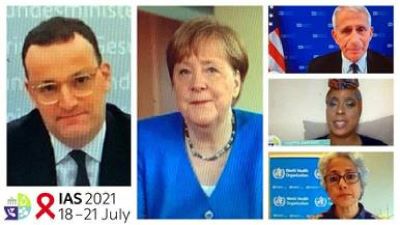
Covid-19 has posed innumerable health, economic, and social challenges for all, including people living with HIV. It has exposed the fragility of health systems around the globe and has diverted political attention and funding from other infectious diseases like TB and HIV. The opening session of the 11th International IAS Conference on HIV Science (#IAS2021) held virtually from Berlin, saw a lively panel discussing the tale of the two most horrendous recent pandemics in the history of our civilisation: Covid-19 and HIV/AIDS.

Here is a glimpse of what the scientists, politician and activist had to say:

Intersectionality of Covid-19 and HIV

Dr Anthony Fauci, Director of National Institute of Allergies and Infectious Diseases, USA, said that we cannot forget HIV just because we happen to be in the middle of Covid-19. Decades of investment and science in HIV research, albeit as yet unsuccessful in developing an HIV vaccine, has played a major role in the development of highly successful Covid-19 vaccines in a very short period of time. But the fact that we have a Covid-19 pandemic does not lessen the importance and devastation associated with the HIV pandemic that has resulted in substantial mortality and morbidity during the last 40 years.

Dr Fauci said that in terms of preparedness for future pandemics (which will be there) we are better prepared in some respects, but in others we are not. To deal with any emerging outbreak there is a public health response and there is a scientific response. The public health response for Covid-19 has been fragmented in many countries. It was characterised by a disturbing degree of divisiveness when there was a politicisation of how one approaches an outbreak. When you are dealing with a pandemic, the common enemy is the virus, and not the people you may have disagreements with. A global pandemic requires a global response in a synergistic way, and not just an individual country response.

Fortunately, the scientific response has been tremendous and resulted in the rapid development of effective and safe vaccines, said Dr Fauci. The challenge now is to get equitable distribution of these vaccines throughout the world. The rich countries of the world have a moral obligation to ensure that the low and middle income countries are able to access these life saving vaccines in real time.

Dr Fauci shared that an important lesson learnt is to have a global system so that life saving scientific interventions can be rapidly distributed to people in real time without them having to suffer unnecessarily.

ADVERTISEMENTx

Lessons learnt from HIV to address inequalities in the Covid-19 response

Dr Soumya Swaminathan, Chief Scientist at the World Health Organization (WHO); former Director General of Indian Council of Medical Research; former Secretary, Department of Health Research, Ministry of Health and Family Welfare, Government of India; and former head of National Institute for Tuberculosis Research, said that the HIV response was successful when affected communities were actively engaged. When anti retroviral therapy (ART) was not available for many people living with HIV in Africa, they rallied around and fought for access to treatment. A record 27 million people living with HIV are now on ART globally. Unfortunately we are seeing a sort of repeat of the same with inequity in the distribution of Covid-19 vaccines.

Dr Soumya Swaminathan said that it was the community-led and community-based health delivery solutions that worked in Covid-19 as well. Countries with strong primary healthcare systems, where community health workers play an important role, have better managed to keep the pandemic under check. Role of political leadership is also critical. Countries where there has been a strong scientific evidence based data led response to the pandemic, where data is collected, disseminated and used transparently to inform the public- those are the countries that have done well in managing the pandemic. We have to redouble efforts to scale up infection control measures and vaccinations, and at the same time not take the focus away from diseases like HIV and TB that still kill millions every year.

Trust, transparency and proper communication with the public are extremely important in dealing with any public health challenge, rightly said Dr Swaminathan. We saw stigma for people affected with Covid-19 just as we saw it in those affected by HIV or TB. In countries where people generally have a higher trust in the government and in public health authorities, there has been more public acceptance of preventive social measures, and vaccination as well. Also, the data that has been available in many countries is far removed from the ground reality. This brings out the importance of investing in data systems (especially for mortality and cause of death statistics) to really understand the burden of any disease.

But along with having the scientific tools- whether for diagnostics, treatment, or prevention (including vaccines), we also have to focus on making them accessible to all and the private sector plays an important role in delivering these tools, said Dr Swaminathan.

Multilateral and inclusive response to global health challenges

Jens Spahn, Federal Minister of Health, Germany, said that HIV has taught us that a multilateral response, that includes people and affected communities, is the way to get through it, and this applies to Covid-19 response as well. What we have learnt from HIV is that universal health coverage is the key. Primary healthcare makes a big difference in fighting all these diseases. But we are yet not there. That is why Germany, Ghana, and Norway have asked for a global action plan for healthy lives.

It is one thing to have a drug or a vaccine, but you still need to be able to deliver and administer it in all countries. And for that you need a working healthcare system. So, besides multilateral cooperation on certain diseases, we also need strong primary healthcare systems in every country, said Germany’s Health Minister Jens Spahn. While the world coming together very quickly to speed up the Covid-19 response is a humanitarian help, it is in our own national interests to vaccinate the world, because no one is safe until everyone is safe. That should be the motto of our engagement. If we put our heads together and really want to make a difference to science and public health, we can. I accept that there is not yet equitable access to Covid-19 vaccines, but it would be there soon within months and not within years, he said.

Jens Spahn rightly underlined that there is no vaccine against hate or fear that we have seen manifesting during these pandemics. The demonstrations against Covid-19 control measures- the fears and blunt aggression in people’s eyes- reminds us that liberal democracy is about having a good sober debate which presumes that the other person might be right too. I do hope that we leave behind us all the hatred, false information and the nationalist view that many had, and learn from the good that happened- having a vaccine in a very short a time within a pandemic situation.

Personal experience as a Covid survivor as well as a black woman living with HIV

Yvette Raphael, Executive Director of APHA (Advocates for Prevention of HIV), South Africa, shared her experience of not only living with HIV as a black woman since last 20 years, but also as a Covid-19 survivor. She said that “I carried 3 burdens- being black, being a woman and being poor. My journey started when I was diagnosed with HIV in the midst of HIV denialism and lack of political will in South Africa at that time. My involvement with HIV struggle started due to my experiencing stigma myself for being HIV positive. Never did I imagine that I would be infected with HIV and also recover after getting very sick from Covid-19 infection only a few days ago. Never did I imagine I would be at the centre of fighting for the rights of people living with HIV, fighting for access to HIV treatment and also be in the forefront of fighting for the research and development agenda.”

She added that many countries and governments have spent billions of dollars on Covid-19 response, while diverting resources from HIV and TB – like TB is the poor cousin of HIV and Covid-19 is the rich aunt. We did not act how we should have acted! The biggest mistake was to not have proactively engaged the HIV sector globally and make community leaders part of the Covid-19 response. Leadership is needed at all levels. Community action and information must be available in real time for local responses and for communities to be able to act, embrace the science, and innovations while protecting human rights. Advocates and scientists must speak through to power. Now is the time to start planning for the next pandemic today, as it might be there tomorrow, alerted Yvette.

“Most of us have lost so many family members, friends, leaders globally to Covid-19 (as well as to HIV). I see faces where scientists see statistics. For us, our own lived experiences matter more than mere data. Treat people not as numbers, but as human beings so that HIV does not become a forgotten pandemic” was Yvette’s important message to remember while we shape global health responses.

Germany’s Angela Merkel speaks at IAS 2021

It would be pertinent to end this piece with some of the remarks made by Angela Merkel, the Federal Chancellor of Germany, (and a scientist herself) during her welcome address at #IAS2021. “The Covid-19 pandemic is not the first event to teach us that infectious diseases know no borders. AIDS has sadly been proof of this for decades. Infectious diseases confront us with global challenges. So the fight against these diseases is only conceivable in the form of worldwide cooperation. During the Covid-19 pandemic we have seen how international cooperation has enabled multiple effective vaccines to be developed in record time. However, we have also witnessed how in the shadow of the pandemic, the achievements made in the fight against HIV have slipped from our grasp. AIDS must not be allowed to fade into the background due to Covid-19. In fact the international community must redouble its efforts to reach the global SDGs relating to HIV, because the ongoing fight against AIDS too can succeed through global cooperation. Germany stands ready in its capacity as a hub for science and research to partner with others so that together we can continue to make progress in the fight against AIDS and other infectious diseases.”

And as the US President Joe Biden told Dr Fauci, no matter what, we must follow the science. We may not be right all the time but if we are not, we are going to correct it and we are going to go in the right direction. That is going to be a pathway to ending this terrible pandemic.

(Shobha Shukla is the award-winning founding Managing Editor and Executive Director of CNS (Citizen News Service) and is a feminist, health and development justice advocate. She is a former senior Physics faculty of prestigious Loreto Convent College and current Coordinator of Asia Pacific Regional Media Alliance for Health and Development (APCAT Media). Follow her on Twitter @shobha1shukla or read her writings here http://www.bit.ly/ShobhaShukla)

Published : July 22, 2021

By : Shobha Shukla – CNS

The CFO as the driver of Sustainability #SootinClaimon.Com

#SootinClaimon.Com : ขอบคุณแหล่งข้อมูล : หนังสือพิมพ์ The Nation.

https://www.nationthailand.com/perspective/40003495

The CFO as the driver of Sustainability


Sustainability has a variety of impacts – and now that competitive advantage is at risk, companies can no longer afford to ignore it. The ESG (Environmental, Social, and Governance) issues are not only important to company’s profitability goals, but also regulatory requirements for compliance with non-financial (ESG) requirements.

As ESG issues are all interconnected and are relevant for several departments, companies need to designate one overarching position to steer sustainability prerequisites, identify opportunities, connect the dots and communicate the derived insights across the entire organisation.

Companies need to expand the role of chief finance officer (CFO) to include sustainability issues, if they want to satisfy all internal and external demands as well as ensure long-term success. CFO are not only key stakeholders in a company’s successful transition to a sustainable enterprise, they are predestined to take the lead thanks to their organisational network and in-depth overview of data, processes and reports. In order to make it more clear in CFO expanding role, we can see the Characterisation of the CFO based on the model “Four Faces of the CFO”.

1. Catalyst : Implementing strategy and steering operations

CFOs can stimulate and drive timely transition, not only within the Flfinance department, but also across the entire organisation. Using the power of the purse strings, they can prioritise initiatives that add value to the company. CFOs can also promote the transition to sustainability by rethinking their company’s underlying performance model to be aligned with the organisation sustainability strategies. Ensuring that the non-financial KPIs become a central pillar of the incentive system, CFO can create more drive towards sustainability within the organisation.

2. Strategist : Setting strategic goals, making decisions and deriving finance strategy

CFOs have a key role in the strategy development and help steer the future direction of the company. They are vital in providing financial leadership and aligning business and financial strategies. We are seeing the shift in the CFO role around the world as a result, encompassing a broader mandate through increased involvement in sustainability strategies and investments. CFOs must use their core finance skills from financial analysis and resource allocation to reporting systems as part of the transition to a sustainable enterprise. As key executives, CFOs can help quantify the financial value that is created with investments in sustainability and resolve potential conflicts that come from embedding sustainability into the corporate strategy.

3. Steward : Managing compliance and control systems

It is the CFO’s job to protect the vital assets of a company, to ensure compliance with various financial regulations, to close the books and to communicate value and risk issues to investors, boards, and other stakeholders. CFOs also have a key role to play in making sure that the sustainability information is relevant, compliant, and accurate. In addition, CFOs must ensure that the company has understood and complied with the increasingly complex sustainability legislation in order to avoid penalties. It is also essential to develop a good understanding of the most pressing ESG issues and quantify their impact on long-term performance. By expanding the process of risk identification, CFO can make sure they address and measure sustainability related risks. The entire C-suite needs to be involved in this process, because sustainability risks can arise in all areas of the company. Once quantified, it is important to separate the material issues to manage sustainability in the most effective way.

4. Operator: the skills, quality and efficiency of the finance function

Demands for more reliable sustainability information are increasing. Finance departments have a key role to play in ensuring companies can report non-financial information. In this sense, the CFO’s overview of both financial and non-financial performance is unique. Moreover, finance departments need to integrate new systems, new flows of data and new data sources. Finance professionals need to be equipped with sufficient knowledge of ESG issues and the related legislation as well as data modelling capabilities – while still keeping their expenses at an acceptable level. And as ESG impacts factor into more C-suite decisions, the finance team must be able to quickly access, transform and interpret this vital data.

In summary, regardless of your industry or business model, sustainability has become one of the corporate success factors for the future. That said, finance departments are the essential departments to transform and pave the way for a sustainable enterprise. CFO who are head of finance departments will have to change their role. Using the “Four Faces of the CFO” as describe above, which is assist CFO to define strategy and evaluate the financial impacts of sustainability initiatives to ensure that the company stays on track.

(Kasiti Ketsuriyonk is partner, Audit and Assurance, Deloitte Thailand)

Published : July 20, 2021

By : Kasiti Ketsuriyonk, Special to Nation Thailand

Governments must adopt a strong political declaration that the global crisis mandates #SootinClaimon.Com

#SootinClaimon.Com : ขอบคุณแหล่งข้อมูล : หนังสือพิมพ์ The Nation.

https://www.nationthailand.com/perspective/40003104

Governments must adopt a strong political declaration that the global crisis mandates


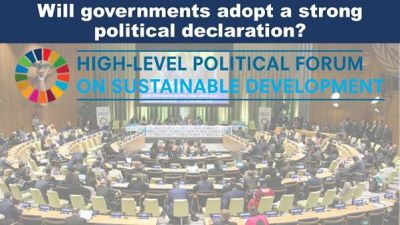
Because if they do not, then we are doomed to fail to deliver on the Sustainable Development Goals (SDGs) by 2030 (for which only 104 months are left).

The clock is ticking but governments from around the world, who are convening at the United Nations High Level Political Forum (HLPF) seem to be regurgitating old timid commitments and shying away from taking bold decisions. The Covid-19 pandemic and cascading humanitarian crises warrant governments to adopt a strong enough Ministerial Declaration at HLPF 2021 which is critical for progressing towards a resilient recovery post-pandemic as well as for SDGs. The Ministerial Declaration is a major outcome of the HLPF, but sadly our governments failed to adopt one last year. The price of inaction for not taking genuinely transformative actions globally will not only be regressive, but will also worsen the already existing inequalities and injustices for the majority of the people.

“Adding to the existing crises of sustainability and climate, rapid biodiversity loss, inequality and poverty traps for low and middle income countries, Covid-19 pandemic has given a serious blow not only to the economic and social sectors but also to whatever little (and howsoever fractured) progress was made so far towards achieving the SDGs. The HLPF presents an acid test for the governments to walk-the-talk on multilateralism, political ambition and courage to take a step forward from usual intergovernmental rigmarole to make good on the promise of Agenda 2030” said Wardarina, Co-Chair of Asia Pacific Regional CSO Engagement Mechanism (AP-RCEM), and Ajay Jha of AP-RCEM. Wardarina and Ajay were also speaking to CNS (Citizen News Service) on behalf of members of the Global Coordination Committee of the Major Groups and Other Stakeholders of the HLPF.

The HLPF shoulders the responsibility to help the current highly unsustainable world navigate its way to eradicate poverty and hunger, and ensure ecological balance by 2030. To achieve this, it is an absolute imperative that the governments at the HLPF adopt a strong Ministerial Declaration this year to address these issues effectively.

Even before the pandemic, a large majority of the global population was reeling under the severe impact of deep rooted injustices and inequalities. The promise of SDGs by the world leaders does provide a direction towards sustainable development where “no one is left behind”, but it fails to address the real problems that plague our people and our planet. “We are extremely concerned with consistent refusal to address the systemic barriers (climate change, seeking infinite growth from extractivist economies, unequal power relations engendering unsustainable debt and illicit financial flow, patriarchy as a political tool, corporate capture of the governance, development and sustainability agenda and its implications on the fulfillment and respect of human rights, among others)” said Wardarina and Ajay Jha.

The pandemic is not an excuse for the governments for inaction. It actually heightens the urgency for governments at the HLPF to come out with a strong political (Ministerial) Declaration which addresses:

Equitable universal free access to Covid-19 vaccines and treatment: HLPF should encourage countries to recognize ongoing efforts to take vaccines out of the patent regime (including those at the World Trade Organization or WTO) and make efforts to remove other impediments related to infrastructure and capacity gaps, resistance of the vaccine manufacturers, embargo and trade-related restrictions on raw materials, and facilitating movement and distribution of vaccines. It is also important that vaccine related requirements do not impose universal coercive measures and otherwise adversely affect movement of essential goods and supplies, and mobility of migrants and other travellers.

Poverty and hunger eradication: The impact of Covid-19 necessitates an urgent stronger action towards ending poverty and hunger, and is certainly not an excuse to dump or slacken efforts towards these essential goals.

Means of Implementation: The target of 0.7% of the Gross National Income of the developed countries made 52 years ago in the 1970 Resolution of the UN General Assembly (which was reiterated in the Monterrey Consensus 2002 and Addis Ababa Action Agenda 2015) is not sufficient today to rid the world of poverty. The USD 100 billion too is equally insufficient to prevent the climate crisis and its impacts. Developing countries face a financing gap of USD 2.5-3 trillion every year through 2030. Full range of means of implementation, including aid, finance, trade, technology transfer and capacity building, needs to be deployed besides addressing systemic barriers like addressing asymmetry in global power relations, debt sustainability, preventing illicit finance flow, among others.

Climate crisis: The looming climate emergency is making it almost impossible to achieve the SDGs. Several parts of the world are reeling under record-breaking heat waves. Corporate Accountability rightly points out that far from signifying climate ambition, the phrase “net zero” is being used by a majority of polluting governments and corporations to evade responsibility, shift burdens, disguise climate inaction, and in some cases even to scale up fossil fuel extraction, burning and emissions. The term is used to greenwash business-as-usual or even business-more-than-usual. Emissions have only reduced slightly and are already claiming a comeback. The countries have agreed to awfully inadequate contributions as part of the global climate treaty negotiations (formally called United Nations Framework Convention on Climate Change or UNFCCC), which fail to respond to an ever raging crisis. The HLPF Ministerial Declaration must be an additional opportunity (besides the UNFCCC process) to bring countries together on progressive ideas and real solutions.

Science technology and Innovation: It is an important reminder that public money was invested majorly in the research and development of treatments for major diseases, for example, TB, HIV as well as Covid-19 vaccines. Governments must not get trapped in the narrow narrative of science, technology and innovation that is propelled by the private sector. Instead it must recognize a broader understanding of science, technology and innovation, that includes wide knowledge systems developed on centuries of experience by indigenous populations, women, farmers, among others. Profiteering from illness has to end.

The United Nations is an intergovernmental platform, but the people of the world must remain its primary focus. A response that restores faith in multilateralism, and the SDGs which are grounded in the ecological balance and human rights, should be central to all recovery and restoration efforts.

If governments of our countries truly want to address the real problems confronting our people and our planet (including the pandemic), they must unanimously adopt a strong Ministerial Declaration at HLPF 2021.

Shobha Shukla – CNS (Citizen News Service)

(Shobha Shukla is the award-winning founding Managing Editor and Executive Director of CNS (Citizen News Service) and is a feminist, health and development justice advocate. She is a former senior Physics faculty of prestigious Loreto Convent College and current Coordinator of Asia Pacific Regional Media Alliance for Health and Development (APCAT Media). Follow her on Twitter @shobha1shukla or read her writings here www.bit.ly/ShobhaShukla)

Published : July 12, 2021

By : Special to The Nation, Shobha Shukla – CNS

G20 faces three big tests to deal with global impact of Covid-19 #SootinClaimon.Com

#SootinClaimon.Com : ขอบคุณแหล่งข้อมูล : หนังสือพิมพ์ The Nation.

https://www.nationthailand.com/perspective/40003098

G20 faces three big tests to deal with global impact of Covid-19


Since the start of the Covid-19 pandemic, we have heard a lot about global solidarity. Unfortunately, words by themselves will not end the pandemic – or curb the impact of the climate crisis. Now is the moment to show what solidarity means in practice. As G20 finance ministers meet in Venice, they face three crucial solidarity tests: on vaccines, on extending an economic lifeline to the developing world, and on climate.

First, vaccines. A global vaccination gap threatens us all. While Covid-19 circulates among unvaccinated people, it continues to mutate into variants that could be more transmissible, more deadly, or both. We are in a race between vaccines and variants; if the variants win, the pandemic could kill millions more people and delay a global recovery for years.

But while 70 per cent of people in some developed countries are vaccinated, that figure stands at less than 1 per cent for low-income countries. Solidarity means delivering on access to vaccines for everyone – fast.

Pledges of doses and funds are welcome. But let’s get real. We need not one billion, but at least 11 billion doses to vaccinate 70 per cent of the world and end this pandemic. Donations and good intentions will not get us there. This calls for the greatest global public health effort in history.

The G20, backed by major producing countries and international financial institutions, must put in place a global vaccination plan to reach everybody, everywhere, sooner rather than later.

The second test of solidarity is extending an economic lifeline to countries teetering on the verge of debt default.

Rich countries have poured the equivalent of 28 per cent of their GDP into weathering the Covid-19 crisis. In middle-income countries, this figure drops to 6.5 per cent; in least developed countries, to less than 2 per cent.

Many developing countries now face crippling debt service costs, at a time when their domestic budgets are stretched and their ability to raise taxes is reduced.

The pandemic is set to increase the number of extremely poor people by some 120 million around the world; more than three-quarters of these ‘new poor’ are in middle-income countries.

These countries need a helping hand to avoid financial catastrophe, and to invest in a strong recovery.

The International Monetary Fund has stepped in to allocate US$650 billion in Special Drawing Rights – the best way to increase the funds available to cash-strapped economies. Richer countries should channel their unused shares of these funds to low and middle-income countries. That is a meaningful measure of solidarity.

I welcome steps the G20 has already taken, including the Debt Service Suspension Initiative and Common Framework for Debt Treatment. But they are not sufficient. Debt relief must be extended to all middle-income countries that need it. And private lenders must also be brought into the equation.

The third test of solidarity concerns climate change. Most major economies have pledged to cut their emissions to net zero by mid-century, in line with the 1.5-degree target of the Paris Agreement. If COP26 in Glasgow is to be a turning point, we need the same promise from all G20 countries, and from the developing world.

But developing countries need reassurance that their ambition will be met with financial and technical support, including $100 billion in annual climate finance that was promised to them by developed countries over a decade ago. This is entirely reasonable. From the Caribbean to the Pacific, developing economies have been landed with enormous infrastructure bills because of a century of greenhouse gas emissions they had no part in.

Solidarity begins with delivering on the $100 billion. It should extend to allocating 50 per cent of all climate finance to adaptation, including resilient housing, elevated roads and efficient early warning systems that can withstand storms, droughts and other extreme weather events.

All countries have suffered during the pandemic. But nationalist approaches to global public goods like vaccines, sustainability and climate action are a road to ruin.

Instead, the G20 can set us on the road to recovery. The next six months will show whether global solidarity extends beyond words to meaningful action. By meeting these three critical tests with political will and principled leadership, G20 leaders can end the pandemic, strengthen the foundations of the global economy, and prevent a climate catastrophe.

(Antonio Gutteres is the secretary-general of the United Nations)

Published : July 11, 2021

By : Special to The Nation, Antonio Gutteres

Three core strategies to kickstart Thai tourism this year #SootinClaimon.Com

#SootinClaimon.Com : ขอบคุณแหล่งข้อมูล : หนังสือพิมพ์ The Nation.

https://www.nationthailand.com/perspective/40002725

Three core strategies to kickstart Thai tourism this year


A leading business scholar has outlined three core strategies for reopening Thailand in the third quarter this year.

Assoc Prof Nattavud Pimpa, an international business and diversity management scholar at the College of Management Mahidol University (CMMU), advises the following three-pronged strategy as the country prepares to relaunch the tourism industry:

1. Promoting domestic tourism

2. Connecting Asean tourism via the Digital Roadmap

3. Building confidence in local and international tourists

Prof Nattavud is urging organisations nationwide to join hands with the government in strengthening the country under this strategic plan.

Meanwhile, easy and equitable access to vaccination would fuel restoration of the tourism industry and other sectors vital to Thailand’s economic recovery, he adds.

“The pandemic is far from over. Accumulated infections are rising and the fourth wave of the outbreak is likely to take shape. However, the government has a policy to reopen the country as part of its economic recovery effort. Therefore, to restore confidence in people and tourists, the national strategy has to be adjusted urgently to regain the country’s strength.”

Nattavud proposes the following strategy plan:

Promoting domestic tourism

Completing the vaccination programme means more locals and foreign visitors would be able to travel with confidence and continue their daily activities. As a result, the country could set a strategy to stimulate domestic consumption and tourism in various forms. These include waiving quarantine for cross-provincial travel or allowing tourists to use travel passports (with full-vaccination status or fit-to-travel medical certificate) as an alternative to quarantine. Fully vaccinated travellers could also receive special discounts on airfares and hotel accommodation, for instance, when travelling to key cities where full vaccination is required. This would stimulate the circular flow of income within local communities leading to benefits for the provincial and national economies.

Connecting Asean through a Digital Roadmap

When the Covid-19 situation in Thailand improves, the country would be wise to promote regional tourism. It should start with a city-to-city model rather than country-to-country cooperation, as the latter is more difficult to control. For better collaboration, each city should be well-informed about the travel requirements – a complete guide that helps bolster confidence in tourists and foreign investors – through the use of a Digital Roadmap.

The Digital Roadmap approach will drive Asean tourism by exploiting online tools like Digital Tourist, a system that uses digital vaccine passports to create a tourist information repository that gives relevant agencies in partner countries the ability to track and verify travel history, health records, vaccination status, etc.

Instilling confidence in locals and foreign tourists

By using innovations and effective communication, the economy can be driven with confidence via international tourists and Thai residents alike. Innovations can simplify the complexity of interpersonal communication in a specific city or country and then ensure safety, convenience and clarity in communication while travelling.

Regarding vaccination, in particular, things to be considered include the efficacy of each alternative vaccine, the plan for importing and allocating enough vaccines to meet domestic demand. Importantly, vaccination needs to reach the herd immunity threshold of around 70 per cent of the population by the end of 2021.

The charter of the World Health Organisation (1946) stipulates cooperation between all governments globally to ensure the health rights of all people. The charter also establishes governments’ responsibilities to offer international assistance and cooperation for access to essential health services.

“Therefore, amid the Covid-19 pandemic, vaccines must be distributed to regions across the world in an equitable manner to strengthen the immunity of the people and for national security. Remember, promoting easy access to vaccination is a low-cost investment. When everyone gets a full course of timely vaccination, it will help strengthen the foundation for human well-being and then drive businesses while revitalising the economy, locally and internationally, in the long term and in a sustainable way. Simply said, everyone has the right to equitable access to vaccination,” concluded Nattavud.

Published : July 01, 2021

By : The Nation