Manhattan apartment rents plunge 10% in pandemic-fueled exodus
Aug 14. 2020
By Syndication Washington Post, Bloomberg · Oshrat Carmiel · BUSINESS Manhattan apartment rents plunged last month by the most in nearly nine years. That’s only one sign of weakness for the borough’s leasing market.
By almost every measure, the news is dismal for landlords, who are trying to keep units filled amid a global pandemic that’s sparked an urban exodus.
July’s vacancy rate climbed to a record of 4.33%, according to a report Thursday by appraiser Miller Samuel Inc. and Douglas Elliman Real Estate. There were 13,117 apartments listed for rent at the end of the month, the most in data going back to 2006.
The median rent, with concessions such as free months factored in, plummeted 10% to $3,167. It was the biggest rate of decline in records dating to October 2011.
New Yorkers have been fleeing Manhattan since March, when the covid-19 lockdown began. They went in search of a break from dense urban living and room to stretch as they worked and schooled children from home. Now, those with the flexibility to stay remote are making their departure more permanent.
Manhattan’s rental market “is experiencing increased competition from the outer boroughs and the suburbs,” said Jonathan Miller, president of Miller Samuel. “The high vacancy indicates that it’s losing the battle.”
Brooklyn fared better. Rents in that borough slipped only 0.5% last month from a year earlier to a median of $2,902.
In Northwest Queens, a waterfront market of high-rises that benefited from its proximity to midtown Manhattan, new leases fell 60%. The median rent tumbled 15% to $2,424.
Ananda Development (ANAN), which specialises in condominium projects close to mass transit systems, said it had exceeded targets for presales and transfers by 28 per cent and 15 per cent in 2020 second quarter results released today.
Ananda faced a challenging second quarter due to the Covid-19 lockdown, which hit the property sector and wider economy, said the firm’s chief financial officer Chaiyuth Chunnahacha.
However, the company is satisfied with second quarter results with presales of Bt4.918 billion, 28 per cent above its target and up 13 per cent from the previous quarter.
The value of transfers is Bt3.767 billion, 15 per cent above target and up 7 per cent from the previous quarter.
Ananda’s backlog as of the second quarter is Bt28.5 billion, to be recognised over three years. Meanwhile, the company’s Q2 backlog to be recognised in the second half of 2020 stands at more than Bt10 billion, equivalent to 78 per cent of the transfer target.
The third quarter will see the company complete and start to transfer five new condominium projects worth a total Bt21 billion. They are Ashton Asoke-Rama9, Ideo Q Sukhumvit 36, Ideo Mobi Sukhumvit Eastpoint, Ideo Ratchada-Suthisan, and Elio Sathorn-Wutthakat. The latter will be finished in the third quarter, ahead of schedule.
The company also has serviced apartment projects to generate recurring income for long-term growth. Somerset Rama-9 and Lyf Sukhumvit 8 will open their doors in the third quarter this year, in line with government measures on tourism and improving market sentiment.
Luxury Arom Wongamat fills last gap on coveted Pattaya beach
Jul 23. 2020
By The Nation
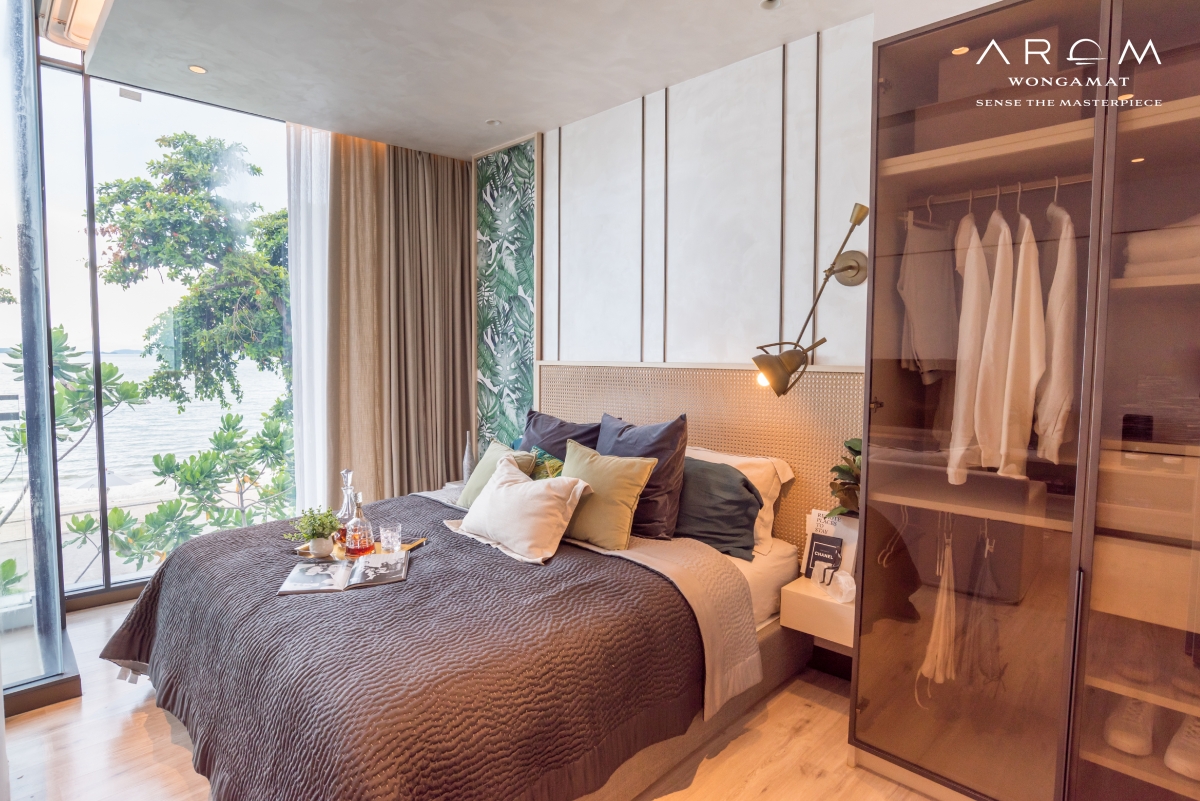
Luxury condominium Arom Wongamat is the latest addition to Pattaya’s Wongamat Beach, bringing a concept developers call “Sense the Masterpiece” in a Bt3.7-billion property project. Located in the last and most expensive freehold beachfront slot at Wongamat, the condo is the creation of Colours Development, a joint venture between leading real estate developers Apus Development Group, The Urban Property, and Sirisa Group.
Chalermphon Khoncham, CEO and founder of Colours Development Company Limited
“Buyers are continuously seeking super luxury and luxury units in Pattaya, but there has been a low supply, especially on the beachfront,” said Colours Development’s CEO and founder Chalermphon Khoncham. “Wongamat Beach is perceived as the prime area with the most expensive land prices in Pattaya and the value has been increasing consistently every year. Arom Wongamat has been developed on the last and most desirable private beachfront site available to give Pattaya a truly unique masterpiece of super luxury living, a combination of exclusivity and sustainability to fulfill the desires of modern-day lifestyles.”
He added that the Covid-19 outbreak should not impact sales since the project was targeted at customers with high purchasing power, with Bangkokians and foreign residents already snapping up units.
“After the Covid-19 crisis is resolved, Pattaya’s real estate market will be stronger than Bangkok’s because of infrastructure in the Eastern Economic Corridor, such as U-Tapao International Airport and high-speed rail,” he added.
Arom Wongamat offers 319 units over 55 floors. Sizes are one-bedroom, (37.5 to 63 square metres), two-bedroom (81-87sqm) and penthouse units (201-210sqm), with floor to floor heights 3.2m-4 m. All units boast panoramic sea views while signature units come with a Sky Jacuzzi (semi-pool) on a private balcony. Facilities in the common area, which is spread over.
Prices start at Bt6.2 million with first-class services and facilities. Offering an auto parking system, Electric Vehicle Charging Point for electric cars and private elevators for the 2-bedroom units. The 4,820sqm common area is surrounded by greenery and features a multi-level pool with adults and kids areas, a large onsen space, salon, sauna, fitness room, yoga room, spa and massage room.
Singha Estate halves 2020 revenue target but maintains Bt68bn 5-year plan
Jul 20. 2020
By The Nation
Property giant Singha Estate said it will continue with plans to invest Bt68 billion under its five-year business plan (2020-2024) despite market challenges in the second half of 2020 from the Covid-19 crisis.
However, the company has revised down its 2020 revenue target by 50 per cent but expects its business to recover in the fourth quarter of this year.
Singha Estate will concentrate on developing a new business model under the “New Living & Working Cluster” concept in potential locations to serve changing consumer demand and investment in the “new normal” era, and developing smart merger and acquisition to build portfolio for sustainable growth, said Naris Cheyklin, chief executive officer.
Naris Cheyklin, CEO of Singha Estate Public Company Limited
“The company hopes the Covid-19 crisis will eventually end soon. We see many business opportunities and potential investments arising along with the economic improvement. We will consider investment suitability under the strict M&A criteria to have quality asset that will create added value in the future,” he said.
“Therefore, we will keep building our three core business units as long term planned. For the residential and commercial businesses, we will penetrate new locations and develop quality projects under the “New Living & Working Cluster” Business model concept to respond to the New Normal trend, while the hospitality business will generate additional incomes and grows business sustainably with Smart M&A and Asset Light Model.”
“With these business practices, we aim to recover and will also support our business partners to overcome the crisis together.”
During the Covid-19 crisis, the company has managed to maintain a low net interest debt-to-equity ratio of 0.86 times.
This came after the listing of S Hotels & Resorts Plc (SHR) on the Stock Exchange of Thailand late last year, and the sale of Suntowers’ 30-year lease rights into S Prime Growth Leasehold Real Estate Investment Trust (SPRIME REIT), enabling the company to invest and expand as expected.
Meanwhile, the company said it plans to strengthen its financial position by transferring rights of Metropolis Building and Sun Plaza into REIT and issuing bonds when the market is favourable.
Singha Estate said it has an inventory of residential units valued at about Bt1-2 billion baht, and can therefore implement a sales policy to maintain a good profit margin for its projects.
In the second half of this year, the Bt6.5-billion ESSE Sukhumvit 36, with sales at 60 per cent, will be completed for ownership transfer to customers in the third quarter, it added.
Three or four new low-rise residential projects will also be launched, said the company. For the next four years, the target to launch five to seven new projects per year will be maintained, it said.
For the commercial business, Singha Estate has kept its target to grow its total office space to 300,000 square metres over the next five years, upgrading hygiene standards with touchless solutions and UV air-conditioning. It will reach out new potential tenants such as those in the high-growth sectors of e-commerce, technology, and consumer products.
For the hospitality business, the company through S Hotels and Resorts (SHR) has plans to acquire hotels in Asia Pacific and expand the hotel portfolio to 80 hotels over the next five years from 39 hotels currently.
It will also pursue the Asset Light Model by generating additional income through home grown brands, including a new brand expected to launch soon. The programme will commence late this year or in 2021. SHR has already launched SAii, its first home-grown hotel brand, with a flagship opening in CROSSROADS Maldives.
Dirk De Cuyper, CEO of S Hotels & Resorts Plc
SHR expects tourism to recover progressively this year in Thailand after being hit hard by the pandemic.
Meanwhile the company sees opportunities to develop residential projects in new potential areas along the expansion of mass transit systems and road networks. The low-rise projects with mix-used concept including single house, townhouse, retail, and low-rise office as well as wellness residential project will be emerging opportunities.
For office space, Singha Estate said it will focus on the “Work Space Solution” concept – flexible space solutions in different locations including large building, medium-sized building, or low-rise building as well as co-working space in new locations, all with IT systems. The company plans to launch the workspace concept at Sun Towers late this year.
Property developers upbeat about second half despite sliding current situation index
Jul 16. 2020
By THE NATION
The current situation index that reflects property developers’ confidence in the market in Bangkok and perimeter areas fell for the fifth successive quarter, the Government Housing Bank’s Real Estate Information Centre (REIC) said.
The REIC said the index fell to 42.6 as of the second quarter of 2020, from 44.4 in the same period last year.
“The current situation index has been on the downward trend for five consecutive quarters now,” said Wichai Wiratkaphan, REIC director. “The reason behind this, besides the Covid-19 situation, is the use of macroprudential measures by the Bank of Thailand that requires commercial banks to employ the LTV [loan to value] practice to limit the loan granted to home buyers. The LTV has greatly reduced customers’ purchasing power while the supply of new properties is still climbing.”
Wichai added that property developers who are not listed on the Stock Exchange of Thailand tended to have less confidence in the current situation compared to their listed counterparts, due to the different size of capital and the ability to take risks.
“The current situation index among listed companies is at 45.7, increasing from 41.7 in the previous quarter, while the index among non-listed companies is at 38.0, decreasing from 40.5 in the previous quarter,” he added.
The REIC also revealed the expectations index, which reflects the confidence of property developers in the next six months at 51.8, slightly increasing from the previous quarter at 51.5, and above the median of 50.
“This indicates that property developers are positive that the market will improve in the second half of the year, thanks to the improving Covid-19 situation and the government’s easing of lockdown measures,” he said.
Government Housing Bank (GHB) reported that Samut Prakarn property prices, especially for homes in projects located along the MRT Green Line, plummeted as much as 36 per cent in the second quarter, compared to the same period last year.
“Owners of property projects have been cutting prices to increase sales in the hope they can regain liquidity due to the economic contraction caused by the Covid-19 crisis,” said Wichai Wiratkapan, deputy director of GHB’s Property Data Centre.
“Condos in Samut Pakarn are selling at 36 per cent cheaper than last year’s prices, while townhouses are going for around 32 per cent cheaper to attract customers. Prices of detached houses have also gone down by 12 per cent,” he said.
“Decreased demand and increasing availability of new homes are causing the price war to escalate, and could adversely affect the second-hand property market in the second half of the year,” he warned. “If this trend continues, financial institutes will suffer from decreased earnings from property sales and could reduce loans granted to home buyers.”
GHB reported the house price index in Bangkok and its surroundings at 128.3 in the second quarter, a 1.9 per cent increase year on year, but a decrease of 0.1 per cent from the previous quarter. The condo price index in Bangkok and its perimeter is 153.2, a 1.8 per cent increase year on year, but a 0.1 per cent decrease from the previous quarter.
“Although projects along the MRT Green Line are slashing their prices, those along the now-being-built Yellow Line and Orange Line tend to jack up their prices in response to an increased population in inner Bangkok,” Wichai added.
Uncertainty shrouds the housing market through 2020
Jul 10. 2020Clarksburg Town Center is a planned community of about 1,000 homes in Clarksburg, Md. When the pandemic seized the country, sellers retreated faster and in larger numbers than buyers, prompting the nationwide inventory of homes to dip precipitously. MUST CREDIT: Photo by Benjamin C Tankersley for The Washington Post.
By Special to The Washington Post · Dima Williams · BUSINESS, US-GLOBAL-MARKETS
Mending from the sudden sharp drop in activity due to the coronavirus crisis, real estate across the United States is heating up, rekindled by growing demand and insufficient supply.
The National Association of Realtors’ (NAR) pending home sales index, a future-looking indicator of completed sales based on signed contracts, posted a staggering comeback in May, the latest month for which data is available. The index spiked 44.3 percent, registering the highest month-over-month increase since its inception in 2001.
First-time home buyers Stuyve Pierrepont and his wife said they have seen this shift occur almost overnight.
The Pierreponts, who work in Washington, D.C. and previously rented in Northern Virginia, renewed their 18-month home search in early 2020. Prior to the viral outbreak, the couple looked at roughly a dozen homes. During the pandemic, they only saw four residences in person. But the couple wasn’t ready for the speed with which fellow home shoppers were scooping those houses off the market.
“It’s a seller’s market,” said Pierrepont, a finance professional who runs a blog about leading an environmentally conscious lifestyle. “We were back and forth on whether timing was right to buy a home, given everything that’s happening. The big surprise was that the markets we were considering didn’t slow down at all.”
The couple toured a house in Annapolis, Md., for example, which went under contract later the same day. “There were a couple of times when we saw places we really wanted, and they sold before we could act,” Pierrepont said. “We were really discouraged by that fact.”
Their real estate agent, Shane Hall of the Shane Hall Group, newly associated with Compass and formerly with TTR Sotheby’s, said in late June that Annapolis, which lies less than an hour east of the District of Columbia, had a single month of supply, meaning that if no new listings were to come on the market, all existing stock would be purchased in 30 days.
“That’s incredibly rare,” Hall said. “We just don’t have a ton of inventory. And we have a lot of demand.”
– – –
With the country’s economy tentatively reopening and shelter-in-place restrictions easing, housing experts forecast that home sales will rise through the summer. The biggest constraint is the number of listings, which are returning to the market only gingerly compared to the appetite for them.
The latter is in part whetted by historically low mortgage rates that are now hovering around 3 percent, nearly 2 percentage points below their level about a mere 18 months ago and where they are expected to remain this year. Annualized new mortgage applications have trended up for weeks.
“Today’s low mortgage rates are a true game changer,” said Ali Wolf, chief economist at Meyers Research, a new-home data and consulting firm. “As the economy reopens, it comes down to four words: Fear of missing out.”
Home buyers’ vigor has powered the national housing market, despite declines in mostly all economic indicators. For the most part, home showings – enhanced with hand sanitizer and face masks – have continued throughout the pandemic. The various services supporting the industry, from inspections to closings, have shifted to alternative modes such as the Internet, staying operational. And with the start of summer, home shoppers’ desire to make what is probably the largest financial commitment in their lives – in such an uncharted time – hasn’t seemed to slacken.
“If anything, that seems to be a ray of sunlight: We’re seeing buyers more active than expected,” said George Ratiu, senior economist with listing website Realtor.com. “Looking at our weekly inventory statistics, we’re seeing that total listings are down partly because new listings are down. But [also because] those homes that are on the market are clearly finding buyers quickly and that’s key.”
For instance, in the Tampa area in Florida, which has seen an influx of buyers from the Northeast because of the pandemic, active upscale inventory through June 23 was 26 percent lower than a year ago, said Jennifer Zales, luxury real estate agent with Coldwell Banker. At the same time, however, completed sales of homes above $1 million totaled 109, or three more than for the whole of June 2019, Zales said. Meanwhile, a little over 230 residences asking $1 million and up, including condos, townhouses and single-family houses, were under contract.
“We have a lot of pent-up demand from the spring season that did not happen,” Zales said. “I feel like somebody took my regular summer season, which is usually very regular, but dumps the whole spring season on top of the summer season. We’re extremely busy.”
This appears to be the latest recurring theme across the United States, even if the summer months traditionally are calmer with vacations and family activities stealing the focus from buying or selling a house. Beyond the next couple of months, angst about the fall, when the uncertainty of the presidential election mixes with a still-wobbly economic outlook and fears of a second wave of coronavirus infections, still permeates forecasts.
– – –
When the pandemic seized the country, sellers retreated faster and in larger numbers than buyers, prompting the nationwide inventory of homes to dip precipitously. After somewhat recovering from an all-time low in April, new listings remained about 22 percent below their level from a year ago in May, according to real estate brokerage Redfin.
This has not only exacerbated the chronic shortage of homes for sale, it has done so during the months when sellers are typically most engaged. A forecast by Realtor.com indicated the loss of spring inventory would translate to 15 percent fewer sales of existing homes in 2020.
“I think people are prepared to stay in their houses longer,” said Hall. “That was already a trend that’s been going on for the last five to 10 years.”
Despite a market tipped in their favor, sellers, especially those who still live in their residences, remain reluctant about letting strangers in. Increasing coronavirus infection rates in some states might strengthen this disinclination.
Moreover, home sellers are often also shoppers. Those not pressed to move might be loath to search for their next home amid tight inventory and rising competition. “It is now amazing to sell,” said Hall. “It is not amazing to buy.”
Yet Katie Day, a Houston-based real estate agent with Coldwell Banker, said she expects more homeowners to enter the market later this year to finally chase the housing aesthetics the pandemic has advanced as priorities.
“Probably toward the latter part of this year and into 2021, we will see more preference changes with people wanting to have a bigger home or wanting additional amenities in their house,” Day said.
Day’s remarks align with Realtor.com’s projection of a gradual increase of new listings through August before their numbers again hit the “historical trend” from September through December, when fewer homeowners generally decide to sell.
– – –
Because of the restricted supply of existing homes for sale, some buyers have flocked to new construction, especially single-family houses that, unlike their pre-owned counterparts that have been occupied, pose less risk associated with the coronavirus – and are more customizable.
Sales of newly built houses rose nearly 13 percent year-over-year in May, growing at a rate for that month not seen in more than a decade, according to the Census Bureau.
“There are just so few homes on the market today compared to last year, and last year already had historically low inventory levels,” said Wolf. “So, builders have been capturing market share left and right, selling homes at record May levels.”
This positive dynamic, though, might not alleviate the overall shortage of inventory. For years, builders have strained to build homes fast enough to meet demand. And, Wolf said, many of them have already sold their standing inventory in 2020. The Census Bureau’s data shows that most contracts in May were inked for houses under construction.
Meanwhile, new permits and housing starts in May continued to lag year-over-year, which could reflect builders’ sustained struggles in filling construction jobs and acquiring materials.
“The home supply shortage as the economy opens up is going to be even more severe,” Wolf said, “unless we all of a sudden see more existing homeowners put their homes on the market.”
– – –
The pronounced seller’s market has buoyed home values, contrary to early expectations of deflated prices resulting from a coronavirus-chilled real estate industry.
“We’re going to have this really surprising situation where, even though demand has certainly been impacted by the much weaker job market, supply has fallen even more,” said Mike Fratantoni, chief economist of the Mortgage Bankers Association. “Prices, as a result, are going up at the time that we’re in, in this very deep crisis.”
In May, the median price for all existing home types notched up 2.3 percent to $284,600, marking 99 straight months of yearly gains, the NAR reported. According to Realtor.com, in the third week of June, median asking prices grew at an annual rate of 5.6 percent, surpassing their pre-coronavirus pace.
“The increase in prices is fairly universal across most markets,” said Ratiu.
But not all cities have experienced price spikes.
A viral hot spot for months, New York City, for instance, saw the median sale price in its spiffiest borough, Manhattan, decrease about 18 percent in the second quarter, the largest annual slump in a decade, according to a joint report by real estate brokerage Douglas Elliman and real estate appraisal and consulting firm Miller Samuel.
In fact, median asking prices in May fell in all five boroughs, with the highest drop approximately 5 percent in Manhattan, according to Realtor.com.
The deflated home values rest on the backdrop of record low sales, which were a mere half of their year-ago number of 2,730. This is the most pronounced decline in 30 years of record-keeping.
The real estate industry in the city, though, only formally reopened in the second half of June with agents optimistic about a slow but steady recovery and even a silver lining for some home shoppers.
“For people who have been trying to move to Manhattan for a while and felt it’s so expensive, there’s some opportunity now for them to buy something they can afford,” said broker Lisa Lippman with Brown Harris Stevens.
– – –
Betsey Rider, who works in luxury goods sales and lives in Annapolis, and her husband, who is retiring this December, readied to sell their four-bedroom house, rebuilt a decade ago, later this year so they could move to a warmer climate.
But in the early days of the pandemic outbreak, three homes in their neighborhood of about 250 residences came on the market – and didn’t stay long.
“They sold within days,” Rider said. “I was shocked by that. At first, I found it really interesting that people were still house hunting.”
To tap the current demand and to evade any uncertainties down the road, the Riders decided to list the property. In early May they met with Hall, the Annapolis-based real estate agent, on a Saturday to discuss selling. The next day, having already tapped his industry network, Hall called to say that there were buyers from Texas interested in the home. That Monday, after a day of cleaning, the Riders showed their still-unlisted residence via a video phone call.
The offer followed quickly, a little under the $850,000 the Riders were going to ask. They accepted.
“We were happy with the price and the fact that we never had to list the house and go through all of [that process],” Betsey Rider said. “There were a few things that we were going to do prior to putting the house on the market that we ended up not having to do.”
The sale was completed in late June, after the Riders had already settled in a temporary rental before moving South.
According to the NAR, nearly 60 percent of the homes sold in May found new owners in less than a month. While Realtor.com reported slightly longer lead times, the company anticipates those spans to shrink as home buyers pick up the pace of making offers in competitive markets.
The Pierreponts, the first-time house hunters in the Washington area, experienced that quick tempo first-hand. After several homes they liked vanished to other fast-to-act shoppers, the couple in early June made a successful offer on a house in Deale, Md., about 30 miles east of the District, that had been for sale for a week. Asking $610,000, the residence sits on 1.7 acres and features a chicken coop, enough for the micro garden and farm the couple had dreamed of. The Pierreponts planned to close on the property on Saturday.
“We will still be able to work in Washington, D.C., and follow a career path,” Pierrepont said. “It gave us the best of both worlds in that sense. A longer commute is a small price to pay for having more usable land.”
– – –
The Pierreponts are among the many buyers who are leaving cities for the suburbs, secondary metropolitan and rural areas. While this exodus underlines Americans’ search for privacy amid the health crisis, it is in large part enabled by the rapid adoption of work-from-home arrangements that a number of companies have said would last beyond the pandemic.
“I believe that this is a permanent change,” said Lawrence Yun, chief economist with the NAR, about the movement to the suburbs and away from densely populated hubs.
Redfin found that a record 27 percent of searchers on its website in April and May looked to relocate, mainly to small towns from large cities.
For instance, New Yorkers have flocked to Florida and Southern California, where properties are generally larger and cheaper. Yet even local buyers in these states are searching for bigger, more remote homes.
“Even though Los Angeles is not a dense city compared to the vertical city that is New York, our local wealthy people are trying to get out to Laguna, Santa Barbara, Malibu, even Palm Springs,” said Ernie Carswell, luxury real estate agent with Douglas Elliman. “They’re buying beach homes. They’re moving farther from our populated areas.”
Cities such as Austin, Indianapolis and Des Moines are welcoming out-of-state home shoppers. Even second-home enclaves and resort towns like Aspen, Colo., are experiencing heightened demand.
“What we are seeing now is a huge uptick [in interest] in properties that are more rural and away from Aspen,” said Raifie Bass, real estate agent with Douglas Elliman. “So a farm or a ranch or a gentleman’s ranch properties that have a little bit more space. That market is stronger than it’s ever been. We’re seeing full-price offers on properties that have been on the market for a long time.”
Suburban and small-town markets are typically cheaper, but Ratiu said the ballooning interest in them would likely push prices up.
– – –
While the U.S. housing market is entering an invigorated summer season, characterized by low mortgage rates, rising home values and steep competition among home shoppers, uncertainty still shrouds the outlook for late 2020.
Even if some predictions point to a V-shaped coronavirus recovery, some forecasts, including Realtor.com’s, say the rebound would actually look like a W. Home selling and purchasing naturally slow down during the colder months, but factors such as a rise in new coronavirus cases and prolonged unemployment would exacerbate any seasonal declines – and soften home values.
“One of my biggest concerns is a second outbreak of the coronavirus and a second lockdown, which will be completely demoralizing, create more economic damage and people will remain unemployed for much longer,” said Yun.
UK’s Kew Green Hotels expanding to SE Asia with 7 properties in Bangkok
Jul 09. 2020
By THE NATION
Kew Green Hotels, a leading UK hotel management company with over 55 hotels in its portfolio, is expanding to the Southeast Asia market through a joint venture with Siamese Asset.
The new entity, Siamese and Kew Green Management Company Thailand, is launching seven properties in Bangkok, four of which are under the Wyndham Hotels & Resorts brand umbrella.
Kew Green Hotels has also chosen Bangkok as the location for its commercial hub for Southeast Asia.
Confident in Thailand’s position as a world-class tourism destination, Siamese and Kew Green Management Company Thailand will launch four hotels and branded residences in the heart of Bangkok in early 2021: The Wyndham Queen Convention Centre, Wyndham Garden Sukhumvit 42, Ramada Plaza by Wyndham Sukhumvit 48 and Ramada by Wyndham Sukhumvit 87, with an additional three properties in the pipeline.
Meanwhile the commercial hub will integrate proactive and reactive sales, marketing, analytics and revenue management, to support the company’s increasing hotel portfolio in the region, providing a consolidated approach to deliver growth.
Kew Green Hotels CEO Chris Dexter
“As a growing company, this milestone reflects Kew Green Hotels’ broadening expertise in the international hotel market and reputation for operational excellence, strong commercial awareness and industry leading profit delivery,” said Kew Green Hotels CEO Chris Dexter.
Siamese and Kew Green Management Company was founded in February as a joint venture Company between Kew Green Hotels UK and Siamese Asset in Thailand. It is a third-party management company cooperating with IHG, Hilton and other global brand companies under a Brand Franchise Agreement.
Bangkok condo supply in Q2 sees sharp fall of nearly 80 per cent
Jul 04. 2020
By THE NATION
There has been a sharp decline in the number of new condominium projects in Bangkok in the second quarter of 2020, according to a Colliers International Thailand survey.
The survey said only five projects were launched in the Bangkok area, offering 1,206 condo units worth Bt2.6 billion, 79.5 per cent lesser than the 4,674 units in the previous quarter. Net supply of condo units in Bangkok in the first six months of 2020 was only 7,086, 61.9 per cent lower than the 11,499 units in the same period last year.
The survey also revealed that the investment value in the condo market in the second quarter also dropped by Bt13.62 billion year on year. It estimated that the total condo supply in 2020 might not exceed 25,000 units, which could be the lowest in the last 10 years.
Colliers International said the reason behind this trend is that major developers are reducing the construction of new condominiums and switching to horizonal projects in rural areas, especially in the Eastern Economic Corridor.
“Many companies also revealed that they will not introduce new projects this year in order to dispose of unsold units in finished condo projects,” said the company.
“Furthermore, the current economic recession due to the impact of Covid-19 outbreak is not a suitable moment to debut a new project.”
Dull debenture market forces property firms to take bank loans, pushing costs up
Jun 26. 2020
By THE NATION
Property companies are facing problems in issuing debentures in the second quarter, and are having to take loans from banks, which will push up their costs.
Debentures of six property companies – Ananda Development, Land & Houses, Pruksa Holding, Quality Houses, Sansiri, and Supalai – worth a total of Bt23 billion were due for redemption in the second quarter of this year.
Samanun.Polsomboonchok, Capital Nomura Securities’ senior analyst, informed that new debentures worth a total of Bt8.6 billion were issued to repay the ones due for redemption. Bank loans had to be taken to redeem the balance debentures.
“This shows that the debenture market this time is not in a bright situation,” he added, mentioning that using bank credit this way would increase the companies’ cost. However, the cost this time was not that high as the interest rate has come down.
Samanun said that the debentures of three other companies – AP, LPN Development, and SC Asset Corporation – in addition to the earlier mentioned six companies worth a total of Bt67 billion were due for redemption in 2020.
Long-term debentures total Bt51.2 billion, but companies need to pay back Bt22.5 billion in the second half of this year.
Samanun added that the last quarter was of the most concern for those companies, since assistance from banks would reduce, after numerous companies used their financial credits before.
“However, the government can give the property companies a helping hand by buying the investment-graded debentures,” he said.
The debenture market is expected to recover in the first quarter of next year.
Nevertheless, the current situation was not as severe as in 1997, since the interest rate was low and the companies have spread the risk by joining with foreign companies.
The most concerning ones were small companies, because they did not have the financial capacities of the big ones, he added.


 Chaiyuth ChunnahachaAnanda CFO,



1.jpg)



.jpg)
 Representational Image
 Clarksburg Town Center is a planned community of about 1,000 homes in Clarksburg, Md. When the pandemic seized the country, sellers retreated faster and in larger numbers than buyers, prompting the nationwide inventory of homes to dip precipitously. MUST CREDIT: Photo by Benjamin C Tankersley for The Washington Post.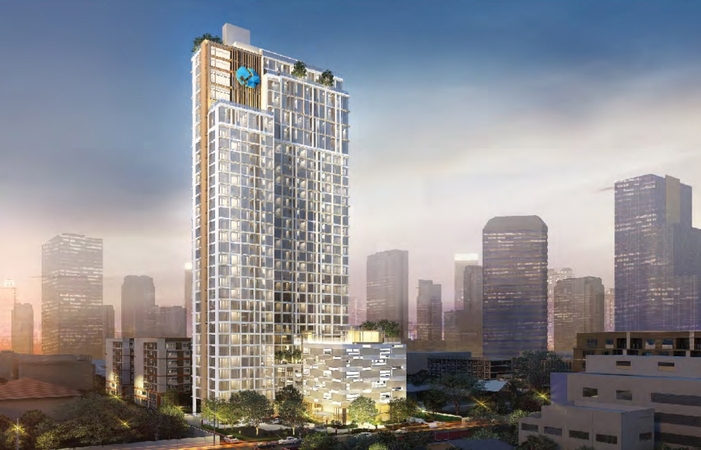
_m(1).jpg)

 SootinClaimon.Com