Mortgage rejections jump as bankers worry about high household debt eroding ability to repay
Nov 09. 2020
By The Nation
Amid the continuing Covid-19 pandemic, the central bank’s business trend report for the third and fourth quarters found the property sector to be contracting.
The Bank of Thailand (BOT) revealed that the rejection rate of mortgage loans had increased sharply.
Prices in the medium- and high-end market look alright due to market demand for homeownership. However, the lower-price market segment — both condominium residential units and low-rise homes — need to be closely monitored, according to the BOT report.
The rejection rate in the central region of the country rose 30 per cent while in the North it jumped between 40 to 50 per cent, even though borrowers had pre-approved loans, according to the BOT report.
In the South, bankers’ loan to value (LTV) is unusually low or loan applications are being entirely rejected.
Payong Srivanich, president of Krungthai Bank, said the bank has to take into account the general economic situation and bank capital.
The rising household debt is also making banks very cautious in lending because banks do not want borrowers to have excessive debt, he said.
“We have committed to responsible lending, taking into account weaker economic health, our capital and rising household debt,” he said.
Nathapol Luepromchai, executive vice president responsible for the mortgage loan division at Krungsri Bank, said borrowers faced a decline in income and that hurt their ability to repay debt.
For example, many borrowers have seen their incomes decline by 30 to 40 per cent, he pointed out.
He predicted new mortgage lending by his bank would contract by double digits this year due to the impact of the economic slowdown and the lingering Covid-19 pandemic. He, however, believed that outstanding property loans would grow as existing mortgage borrowers do not refinance their mortgage debts. The mortgage portfolio of his bank is currently worth Bt280 billion, up from Bt260 billion last year, he added.
Naris Sathapholdecha, executive director at TMB Analytics Centre, projected TMB’s new mortgage lending is expected to contract by 10 to 12 per cent this year from the current 8 per cent contraction. Outstanding mortgage loans are expected to fall by 0.5 per cent to Bt230 billion this year, compared with a 3 per cent rise in the third quarter. Bad debt is expected to rise as borrowers have more debt and lower income.
Household debt in the first quarter this year stood at 80.2 per cent of GDP and shot up to 83.8 per cent in the second quarter, a record high, according to BOT.
Siam Commercial Bank’s Economic Intelligence Centre projected that household debt-to-GDP ratio could rise to 88 per cent by the end of this year and shoot up to 90 per cent in the first quarter next year.
The rising household debt is mainly blamed on the Covid-19-induced economic crisis, mostly due to people losing their jobs or seeing their incomes reduced.
EEC, high-speed railway airport link make Pattaya attractive to hotel investors
Nov 05. 2020Chakkrit Chakrabandhu Na Ayudhya
By The NationPattaya will become a bright spot for hotel investors next year thanks to domestic demand potential, as well as the development of the Eastern Economic Corridor (EEC), property consultancy firm JLL said.
The seaside town has been one of Thailand’s major tourism markets, with its 64,000 hotel rooms coming in just after Bangkok and slightly ahead of Phuket.
Its proximity to Bangkok and development of the EEC has put Pattaya on the spotlight since the new economic zone is expected to stimulate demand for hotels from both leisure and corporate standpoints.
Also, U-Tapao Airport’s aim to serve 5 million passengers and the planned high-speed railway linking it with Suvarnabhumi and Don Mueang airports will further make Pattaya more attractive to investors. The railway link is expected to be up and running in 2025.
Despite suffering badly from the Covid-19 pandemic, the Pattaya hotel market is catching the attention of investors.
“In recent months, we have been getting an unprecedented number of enquiries from investors looking for an opportunity to invest in hotels in Pattaya. Though we have yet to see a trend of deeply discounted hotels in the market, the situation is delicate and the landscape could potentially shift,” said Chakkrit Chakrabandhu Na Ayudhya, executive vice president of investment sales in Asia at JLL’s Hotels and Hospitality Group.
“Owners are being pressured by the extended burn rate. As the crisis prolongs, the pricing gap between owners and investors will naturally become narrower,” he said.
Pimpanga Yomchinda
Pimpanga Yomchinda, vice president of investment sales in Asia for JLL, said: “Since the pandemic started, we have seen a lot of engagement from hotel owners. They want to understand the implications of various hold-and-disposal scenarios so they can make the most informed decisions. As there is no one-size-fits-all approach, the best way for us to understand the situation is to meet owners on the ground, look into their needs and help them customise their asset/portfolio strategy.”
Chakkrit added: “The disposal process will need to be refined to accommodate the current situation by allowing more flexibility with additional deal features such as vendor financing, income guarantee, staged payments or delayed handover. This will, in turn, optimise deal certainty and proceeds.”
Pattaya has seen no major hotel transactions since 2018 due largely to the lack of investment-grade assets being offered in the market. It remains to be seen whether the pandemic will unlock some of them over the next 12 months, said Chakkrit.
According to JLL, the average number of keys for hotels sold in the last five years in Thailand was approximately 180. While hotels in Pattaya have approximately 100 keys on average, almost half of the hotels across the city have less than 50 keys.
“With a lower-key count, it is harder to achieve sufficient economies of scales from an investor’s point of view. In addition, investors are more interested in Pattaya’s upscale hotel segment that accounts for less than 20 per cent of the city’s total hotel stock. The rest of the stock is in the midscale and budget segments, which faces strong competition.
“Traditionally, investor demand for Pattaya hotels would lean more towards rarer and more sought-after upscale and upper-upscale segments because the midscale and budget segments are viewed as offering lower profitability and being difficult to differentiate due to large supply of rooms.”
Domination of domestic investors
“Due to border restrictions, we are naturally seeing more engagement from domestic investors compared to what we saw in almost 40 hospitality deals [worth over Bt40 billion] that we brokered in Thailand since 2010. We are also seeing more enquiries from corporates with diverse income streams and private equity funds since the pandemic started,” Chakkrit said.
JLL’s Hotels and Hospitality Group in conjunction with the Thai Hotels Association has planned a series of hotel investment conferences in Thailand’s key hotel markets this year. The last event was held in Pattaya and the next is planned for Phuket on November 11.
Dusit International has signed a hotel management agreement with Yasuda Real Estate Co to operate the luxury Dusit Thani Kyoto – its first Dusit-branded hotel in Japan.
Dusit Thani Kyoto is slated to open its doors in the heart of the city in September 2023.
The Thai firm said the historic deal reflects Dusit’s commitment to sustainable expansion by bringing long-term value to its local communities through creating jobs, contributing to the economy, and encouraging responsible tourism.
Located in the heart of the city, 850 metres from Kyoto Station in the Honganji Monzen-machi district, the new property will comprise approximately 150 rooms set over four floors.
Dusit said guests will enjoy easy access to the nearby attractions of Higashi Honganji Temple, the Unesco heritage Nishi Honganji Temple, Kyoto Tower, and Kyoto Aquarium.
Kyoto saw 87.91 million visitors last year, an increase of 2.86 million on 2018. Dusit’s management expects the city will quickly regain its status as a major tourism hub when global travel restrictions are lifted.
“Continuing our strategy for sustainable expansion, the signing of Dusit Thani Kyoto serves as a major milestone for our company,” said Suphajee Suthumpun, group CEO, Dusit International. “It also highlights our confidence in the strength and resilience of Japan’s travel market and its ability to bounce back strong after all the current challenges.”
InterContinental bets on Phuket with two new Holiday Inns
Oct 30. 2020
By The Nation
Phuket’s popular Kata Beach is set to expand its accommodation options with the arrival of Holiday Inn and Holiday Inn Express hotels.
IHG (InterContinental Hotels Group) has signed a management agreement with KW Group to open the hotels in 2022 at The Beach Plaza Phuket, the largest mixed-use development in Kata Beach, located just five minutes from the sea.
Holiday Inn Phuket Kata Beach will have 134 rooms and offer guests a range of dining options and meeting facilities as well as a swimming pool and gym. Holiday Inn Express & Suites Phuket Kata Beach will bring another 135 rooms.
Serena Lim, vice president of Development for IHG, South East Asia and Korea, said:
“We remain on track to double the size of our mainstream estate across the Kingdom in the next three to five years and the combined strength of this partnership will ensure we deliver on our brands’ promise and delight guests when the two hotels open in 2022.”
IHG said the Beach Plaza exemplifies the government’s new vision to position Phuket as a leading tourism, wellness and long-stay destination in Asia.
IHG has 19 hotels under its Holiday Inn and Holiday Inn Express brands in Thailand, with another 16 due to open in the next three to five years.
Hamptons home prices soar to a record in rush for beach retreats
Oct 25. 2020Homes in Southampton, N.Y. MUST CREDIT: Bloomberg photo by Johnny Milano
By Syndication Washington Post, Bloomberg · Oshrat Carmiel · BUSINESS New Yorkers searching for a pandemic retreat have sent Hamptons home prices to a record high.
The median for properties that changed hands in the third quarter soared 40% from a year earlier to $1.2 million, the highest in more than 15 years of data-keeping, appraiser Miller Samuel Inc. and brokerage Douglas Elliman Real Estate said in a report Thursday. Sales jumped 51%, the biggest annual increase since 2014.
The Long Island resort towns, a popular summer address for New York City’s executive set, have drawn residents looking to settle in through the winter. With many schools still online and Manhattan offices mostly empty, some city-dwellers are making their escape more permanent.
“At least for now, this is going to be their primary residence,” said Todd Bourgard, who oversees sales in the Hamptons for Douglas Elliman. “They realized they can work from home, and they’re doing it.”
With all that buyer competition, bidding wars became more common. In the third quarter, 15% of purchases were completed above the asking price, the largest share in data going back to 2016, said Jonathan Miller, president of Miller Samuel.
Sales jumped in every Hamptons neighborhood east of the Shinnecock Canal, according to a report by brokerage Corcoran Group. In Southampton Village, there were 34 home sales, up 89% from last year. In the Bridgehampton and Sagaponack areas, deals rose 80% to 36.
The combined dollar value of all Hamptons home sales doubled from a year earlier to $973 million, brokerage Brown Harris Stevens said in its own report.
“At one point, everyone out here wanted to have a second home,” Bourgard said. “Now their feeling is they need to have a second home.”
Oct 25. 2020Tim Mastic in front of his tiny house in the Escape Tampa Bay Village community in Florida. MUST CREDIT: David Peterson.
By Special to The Washington Post · Harriet Edleson · BUSINESS, FEATURES, US-GLOBAL-MARKETS, HOMEGARDEN · Even before the pandemic hit, Tim Mastic had been thinking of buying an Airstream travel trailer, distinguished for its rounded, polished aluminum body.
He would sell his three-bedroom, two-bath house with a two-car garage in Tampa, and work and see the United States at the same time.
Community sheds are in the middle and tiny homes are on the outside of the circle at Tampa Bay Village. The sheds can be used by anyone in the one-acre village. MUST CREDIT: David Peterson.
“I was spending all my money on the house and on the property,” says Mastic, 31, a project manager for an international software company based in New Jersey. “I wanted to live and travel. I wanted to spend money on people and places and experiences rather than on maintaining a home,” he says. “I wanted to collect experiences, not things.”
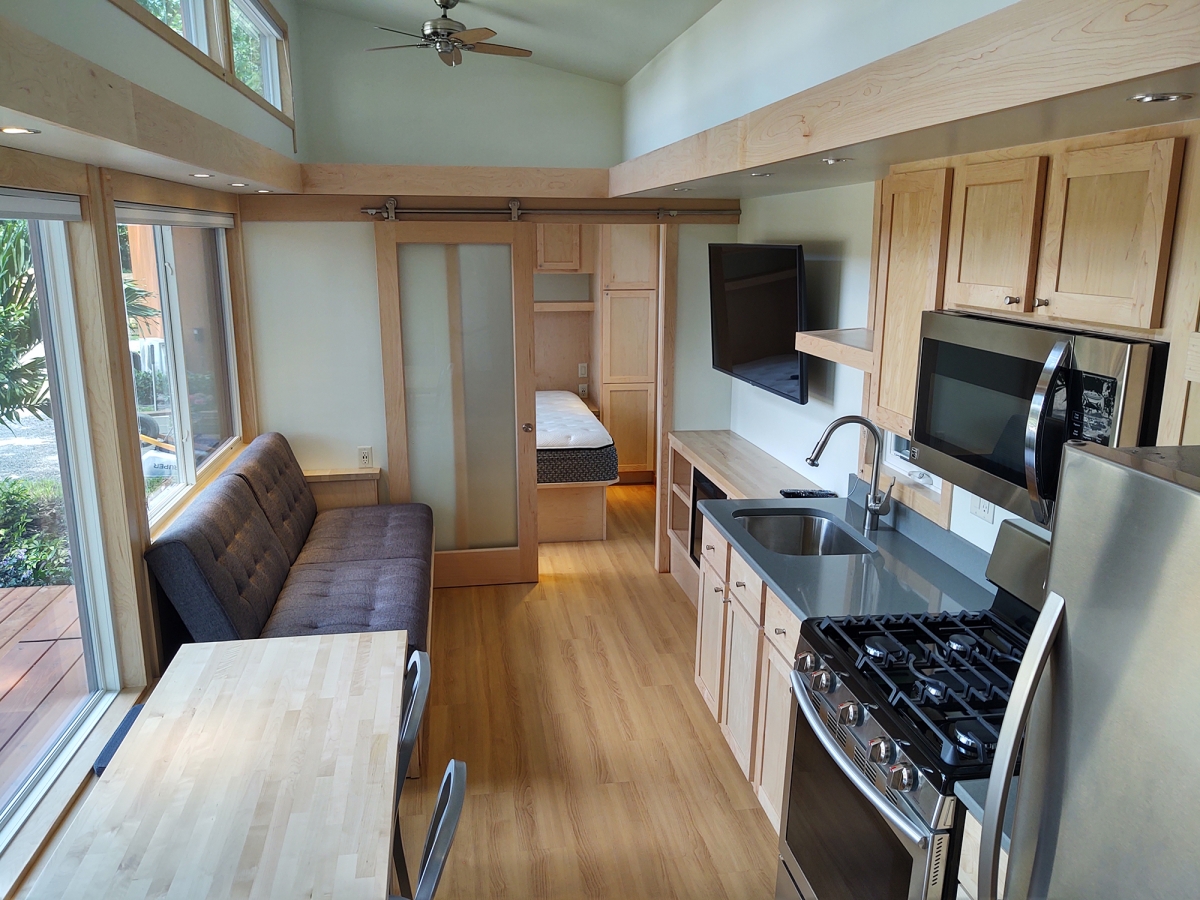
The kitchen in this tiny house in the community has full-size appliances. MUST CREDIT: David Peterson.
But in the spring he revised his plan. Campgrounds were closing down as were national parks. “When covid hit and everything was shutting down, I didn’t want to get stuck in that situation, “he says. “I literally would have been with nowhere to go.”
Mastic didn’t give up on his idea completely. After reading a newspaper article about a tiny house village in Thonotosassa, Fla., about six miles from the University of South Florida in Tampa, he decided to take a look. These tiny houses range from 300 to 650 square feet and are situated on a one-acre piece of land in a gated community, Escape Tampa Bay Village.
Dan George Dobrowolski, founder of the Tampa Bay Village and CEO of Tiny House Escape Villages, says that in the past six months, sales of the tiny houses jumped 120 percent. “There’s been a dramatic change because of the virus.” . MUST CREDIT: David Peterson
Indeed, the tiny houses designed in a Frank Lloyd Wright style have become increasingly popular. Since the coronavirus shutdowns in March, “our business has gone from growing rapidly to growing exponentially,” says Dan George Dobrowolski, founder of the Tampa Bay Village and CEO of Tiny House Escape Villages, in Rice Lake, Wis. In the past six months, sales of the tiny houses jumped 120 percent, he says. “There’s been a dramatic change because of the virus.”
Tiny houses afford privacy. “You have your own space, and you’re safe,” Dobrowolski says. For example, there are 10 tiny houses on the acre site in Tampa Bay. They are mostly 400 to 450 square feet, with the smallest at 300 square feet. The largest is 650 square feet with two bedrooms. The village is designed as an actual neighborhood.
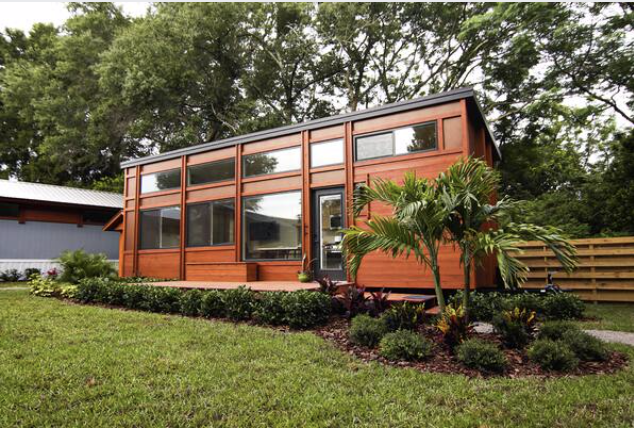
Judie Clark’s tiny house at Tampa Bay Village is roughly 400 square feet. She downsized from a 1,700 square foot house in Tampa, Florida. Clark, 82, worked as a tour director aboard a 35-foot tour bus for 20 years. MUST CREDIT: David Peterson.
Of the pandemic, Dobrowolski says, “People are trying to get out” of urban areas. “They want to be peripheral to cities, near the city.” Of the tiny house, they tell him, “we need it right now.” Those who buy come from all parts of the economic spectrum. They want to leave places like Chicago and Portland, Ore., as well as Silicon Valley and Manhattan, he says.
For example, executives have bought tiny houses from Escape to leave Silicon Valley for the Santa Cruz Mountains or San Francisco for Sonoma County.
Often, tiny houses are home to one or two people, though the larger homes can accommodate more. For some, rather than living in a condominium, co-op or apartment where they might have to rely on elevators, living in a tiny house village sets houses apart with adequate space for social distancing.
A tiny house village eliminates the need to find a place where the structures are allowed under zoning regulations and laws on the state and local level. The location has to be zoned for tiny houses, and zoning regulations that allow them have been passed in some places. Among tiny house-friendly states are California, Florida, North Carolina, Oregon and Texas.
If you live in a tiny house village, the landowner has typically already researched those regulations and laws before developing the land. In this case, Tiny House Escape Villages owns the land, and home purchasers pay a monthly rent for the site their house occupies within the village.
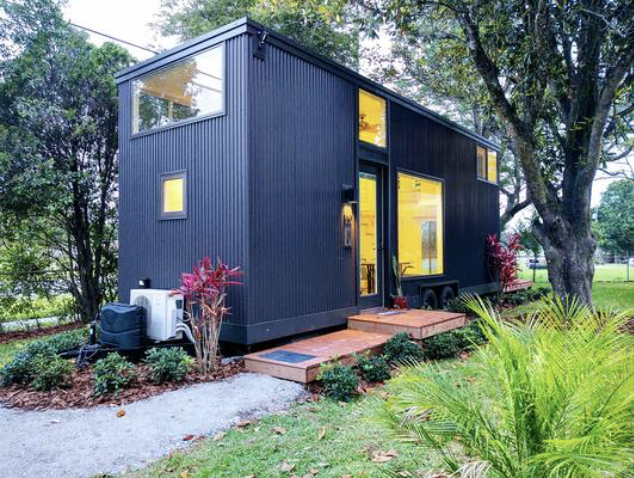
Mastic, who moved to the village in June, says his costs are approximately $1,000 a month, including a monthly fee to rent the lot and an RV loan for the tiny house that cost $96,000. The lot fee covers water and sewer. The tiny house, called a One XL Tall, is 30 feet long and 8½ feet wide, with a second-story loft for sleeping that can accommodate a queen-size bed.
At roughly 344 square feet, it has a living area on the main level, a kitchen equipped with full-size appliances, a microwave and a stackable washer and dryer. The house also includes a 50-inch TV and an electric fireplace. “I can have the microwave, ceiling fan, AC, coffee maker and toaster oven running all at the same time,” Mastic says, noting that there is enough power to run everything simultaneously. In addition, he keeps two bicycles in the tiny house.
Dobrowolski bought the land about two years ago, and came up with a master plan for Tampa Bay Village – 10 tiny houses and a couple of additional structures, such as a community space, that residents of the one-acre village can use. “We designed it specifically only for 10 units,” he says.
Owners can reserve the community space if they prefer to work or entertain in them. “There’s a whiteboard where you put a note that says when you want to use the space,” Mastic says.
Working with Kelly Davis, principal emeritus of SALA Architects, the company builds the tiny houses in an RV Industry Association-inspected plant. In addition to a focus on design, the tiny houses are insulated with closed cell foam to resist heat flow, and have large windows for maximum light and views.
For Judie Clark, who worked as a tour director on a 35-foot tour bus for 20 years, traveling mostly in the United States, moving to a tiny house made sense – and made space. “This is an improvement,” she says, half-joking, about the tiny house she moved into in July.
Clark, 82, had been living in a 1,700-square-foot house in Tampa, when she became interested in tiny houses.
Three years ago, she “hung up her traveling shoes,” and was working part-time at a sporting goods store. A “tumble” in March that required a hip replacement left her in a rehabilitation center for a couple of months.
When she was back in action, Clark, who is divorced and has been on her own for many years, began to think seriously about her next move. “I began to rethink what I needed to do with my life,” she says. “The timing was right. I was looking for a change. Everything kind of came together at the right time.”
One of her sons found the tiny house village online, and Clark went to see it two or three times in May before deciding it was right for her. “I went from 1,700 square feet to 400 square feet,” she says.
Once she had decided to make her move, within two to three days she had sold her house, and moved into her tiny house. Hers is 12 feet wide and 30 feet long on one level. Her mortgage was paid off so she chose to pay cash for her new home, just under $100,000. She pays the monthly lot rental fee that includes water, and her electricity costs much less than in her previous house. The Internet and cable were already set up, and cost less as well. “I think it’s going to be considerably cheaper to live here,” she says.
Clark likes the minimal maintenance on her new space. Since finishing out-patient physical therapy and being able to drive her car, she is enjoying her new lifestyle. “It’s pretty liberating actually,” she says. One convenience she cited is being able to vacuum the house without having to unplug the appliance and plug it in somewhere else.
Clark said she looked at other properties and wanted to avoid gated communities, though she likes this one. Entry to the village is through a gate using a card-key system.
“You get a real feeling of being in the country,” she says. “I love it. It’s quiet. If you want go-go all the time it’ll be a little quiet. For me, it’s perfect.”
Singha Estate reaches out to 100 agencies for sale of condo units to foreigners
Oct 20. 2020
By THE NATION
Singha Estate plans to work with over 100 agencies to sell condos to foreigners, aiming to achieve sales of 70 per cent of units by year-end.
Natthawut Matthayomchan, chief property development officer at Singha Estate Pcl, said that the impact of the Covid-19 outbreak had greatly reduced the company’s sales which relied heavily on foreign customers. “As foreigners are not yet allowed to enter Thailand, we are planning to invite over 100 property agencies, both big and small, to help sell our condos to foreign customers who are interested in buying condos in Thailand,” he said.
“Thailand has proven to be highly efficient in controlling the outbreak, resulting in foreigners interested in our property market more than that of competitors in Hong Kong or China. These are high potential customers who are able to afford luxurious condos worth over Bt10 million per unit,” he added.
Natthawut said that the company had recently introduced a new project called “The ESSE Sukhumvit 36”, a 43-storey high-rise condo project with 338 units and total value at Bt6.5 billion. “This project is a joint investment with Hong Kong Land Plc and aims to attract foreign investors living in Thailand,” he added.
Due to the outbreak the company has also adjusted the ownership transfer target from Bt9 billion to Bt4 billion. “In the first half of 2020 we have achieved over Bt1 billion worth of ownership transfer from our customers, 40 per cent of whom are foreigners,” added Natthawut.
As for the trend of new projects next year, Natthawut said that the company would focus on developing horizontal condos at a price lower than Bt100 million per unit to attract new generation buyers who want home-like space in a condo format. “These projects will be under a new brand, as currently we already have a horizontal project under the Santi Buri brand but the units are priced around Bt150 million,” he said.
Land in Phuket becoming more attractive to local investors
Oct 07. 2020
By The Nation
Over the past nine months, Phuket has weathered an economic storm from the loss of foreign tourists due to the Covid-19 outbreak.
Yet, despite a scarcity in available land, leading property consultant CBRE has seen an increased demand from domestic investors and individual buyers.
Prakaipeth Meechoosarn, who oversees investment and resort land for CBRE Phuket, said: “In the past, the Phuket real-estate market attracted more foreign investors, as it is a leading resort destination. However, due to travel restrictions, now more local players are eyeing Phuket as a potential investment, especially if the property has an attractive price tag.”
Though the government launched a Special Tourist Visa since October 1 to attract high-end, long-stay tourists in a bid to rebuild the tourism sector, foreign investors are not rushing to purchase land in Phuket.
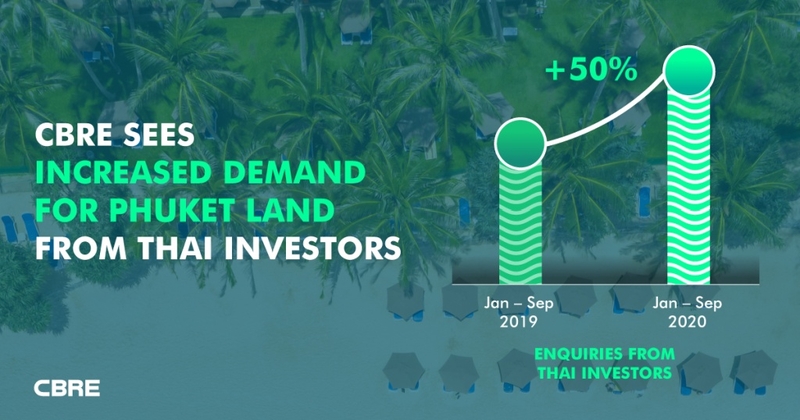
Records from CBRE’s Investment and Resort Land team in Phuket show that land enquiries from local buyers in the first nine months of this year had risen by 50 per cent compared to the same period last year. Of these inquiries, 62 per cent are from local developers seeking plots for new developments or private buyers looking to build holiday homes.
“Land that fits conventional requirements for development, such as beachfront and ocean view, is still low in supply. However, more plots are becoming available. As the current situation is a buyer’s market, landowners are more open to negotiations and willing to consider options,” Prakaipeth added.
“Phuket is a good option for investment as land is being offered at reasonable prices. The market has not been this attractive since the pre-COVID-19 days. However, investors and buyers may have less time for decision-making, due to a shortage in supply.”
Manhattan landlords’ latest lure: Free rent until next year
Oct 05. 2020A New York apartment building on Dec. 10, 2017. MUST CREDIT: Bloomberg photo by Victor J. Blue. Photo by: Victor J. Blue — Bloomberg Location: New York United States
By Syndication Washington Post, Bloomberg · Oshrat Carmiel, Natalie Wong · BUSINESS, PERSONAL-FINANCE “Don’t pay rent until 2021,” is the message blaring from a web page of New York apartment listings by Related Cos.
Manhattan landlord Stonehenge says you can “Live free for 3” in some of its units. That’s in addition to the Citi Bike membership and American Express gift cards the company is offering students and recent graduates who sign leases.
Landlords are growing more desperate as they struggle to fill apartments amid an urban exodus. And they’re no longer reluctant to show their hand: Generous giveaways that just months ago were hashed out behind the scenes are now advertised boldly for anyone browsing online.
“You can’t hide it anymore,” said Gary Malin, chief operating officer of brokerage Corcoran Group, which represents landlords. “Owners are saying to themselves, ‘I’d rather be honest from the beginning, rather than play a game back and forth, and otherwise lose a tenant.'”
With many people still working from home, restaurants largely shuttered and schools mostly online, New Yorkers are finding few reasons to stay put in the city’s costliest borough. Manhattan rental listings soared last month to more than double the inventory from a year earlier, according to appraiser Miller Samuel Inc. and brokerage Douglas Elliman Real Estate. The vacancy rate jumped to a record-high 5.1% from under 2% last August.
That gives renters leverage, and they’ll choose an apartment with “the best possible deal” over one they love the most, Malin said.
“Tenants are filling out four to five applications at the same time and negotiating one offer against the other,” he said. “Owners want to lead with their best foot. If you sit and try to hold on for every last penny, for every last dollar, tenants are just going to go somewhere else.”
Enticements such as a free month, complimentary gym membership or payment of a broker’s fee have long been standard in New York when landlords want to fill units in a slowing market. These days, it’s not uncommon to see pitches for three free months, especially in buildings that have fancy public amenities that have been off limits during the pandemic.
Brookfield Properties is offering three months free at downtown’s New York by Gehry tower. Equity Residential has the same deal on select units at some of its pricier buildings, including Prism at Park Avenue South, where perks include a golf simulator, spin room and an indoor lap pool.
At Stonehenge’s buildings — all but one in Manhattan — occupancy was almost 99% before the lockdown, Chief Executive Officer Ofer Yardeni said. That figure slipped to 85% as tenants moved back with their parents, to the suburbs or to the beach to ride out the summer while working remotely.
Now, with the weather cooling and more businesses reopening, people are starting to consider coming back, and Yardeni is using the sweeteners to get their attention. Stonehenge is offering three free months because its competitors are, too, he said. And behind the scenes, current tenants are being paid as much as $4,000 if they find takers for empty units in the company’s buildings.
“I’ve been in the business for over 30 years and I’ve never seen the market this way,” Yardeni said. “It’s almost like a falling knife.”
Related is giving renters up to three free months on new leases at buildings including One Union Square South and Tribeca Tower, a spokeswoman for the developer confirmed. For a time, it also offered brokers a fee equivalent to two months rent — larger than the traditional payout.
The incentives apply only to new tenants, creating a “slippery slope” for landlords who also need to hang on to existing renters, according to Yardeni. He added that his company offers adjustments on renewals on a case-by-case basis.
With the rental market heading into its typically slowest season, property owners know if they don’t fill apartments now, the job will get even harder in the coming months.
“Most landlords, especially the smaller ones, can’t afford to leave their properties vacant,” said Michael P. Feldman, chief executive officer of Choice New York Cos., one of New York’s biggest apartment managers. “You’ll start to see four to five months of free rent consistently throughout the winter.”
While offering such big breaks sounds like surrender, it’s actually a smart move, according to Malin.
“Whatever you give away, you’re bringing in tenants quicker, you get rent quicker,” he said. “You start to mitigate your losses and you’ll come out ahead.”
Sena rolls out condos at under Bt1 million to woo first jobbers
Oct 02. 2020
By THE NATION
Property developer Sena Development Plc is focusing on low-price condominiums that are affordable for first jobbers because of the fallout of the Covid-19 crisis that has hit several sectors hard, including property, and led to contraction of the economy.
Kesara Tanyaluckpak, Sena’s deputy chief executive officer, said the company was targeting those aged 25-30 years with a monthly salary of Bt15,000 and above.
“We have introduced the brand “Sena Kitt” that features eight condo projects at sub-Bt1 million price with total value at Bt2.37 billion,” she said. “Four projects have already opened, in the Rangsit, Bankradee, Phaholyothin and Phetkasem areas, in the first half of 2020. We plan to announce the rest of the projects before the year-end.”
Kesara added that the latest project, “Sena Kitt Theparak”, which opened last week, was able to secure the sale of 158 out of 328 units, valued at Bt126 million.
Samma Keetasin, the company’s independent board member, added that the condo market in Bangkok and surrounding areas in the first half of 2020 had seen a huge drop from 66,367 units sold last year to only 8,792 units sold.
“Condos priced at Bt1 million to Bt3 million have the highest sales of over 6,000 units in the first half of this year, while those under Bt1 million sold only 221 units,” he said. “We estimate that towards the year-end, the demand for low-price condos will rise corresponding to the economic status and average household income that have been affected by the outbreak.”


 Chakkrit Chakrabandhu Na Ayudhya
 .jpg)


 Homes in Southampton, N.Y. MUST CREDIT: Bloomberg photo by Johnny Milano
  Tim Mastic in front of his tiny house in the Escape Tampa Bay Village community in Florida. MUST CREDIT: David Peterson.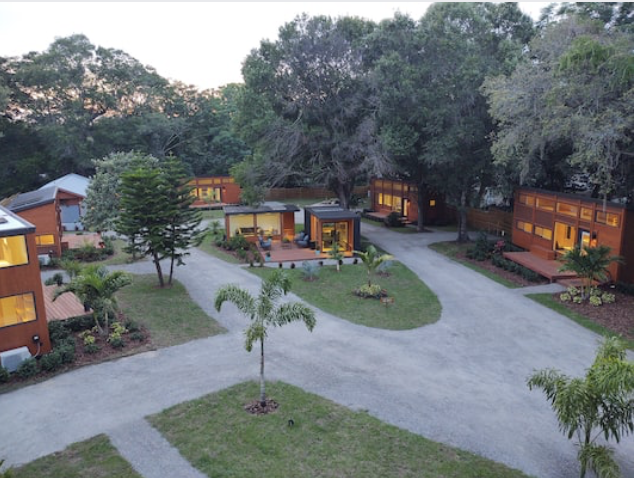

 A New York apartment building on Dec. 10, 2017. MUST CREDIT: Bloomberg photo by Victor J. Blue. Photo by: Victor J. Blue — Bloomberg Location: New York United States
 SootinClaimon.Com