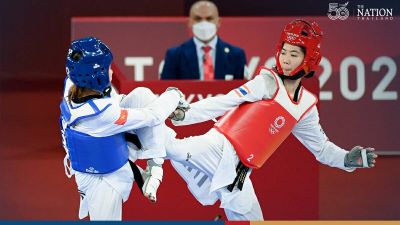
Thailands 23-year-old taekwondo champ Panipak Wongpattanakit carries the countrys hopes at Olympic Games on Saturday, but she faces three formidable opponents from South Korea, China and Serbia in her quest for the gold.
Among Thai athletes participating in the delayed 2020 Olympics, Panipak is considered the best bet for a gold.
She is ranked world No. 1, and had won the bronze medal at the 2016 Olympics in Rio de Janeiro.
Panipak faces her first challenge in South Korean Sim Jae-young, a two-time champion in the women’s 46 kilogram category. Panipak might face her in the semi-final.
Her next opponent could be Wu Jingyu, a 39-year-old from China, who was the world champion and an Olympic gold medalist. She has beaten Panipak twice before. They might face each other in the final because they are in different pools.
ADVERTISEMENTx
Thai Olympic gold hope Panipak begins campaign todayHer other major hurdle is Tijana Bogdanović from Serbia. She is second in the world ranking. Although Panipak has beaten her three times in the past, the Serb could still be a formidable rival for the Thai.
In other sports, Thai athletes likely to win medals are Chatchai-decha Butdee (boxing), Ratchanok Intanon (women’s singles, badminton), Dechapol Puavaranukroh- Sapsiree Taerattanachai (mixed doubles, badminton).
There are 42 Thai athletes competing in 14 disciplines. One boxer reportedly got injured and had to withdraw from the competition. Thailand has the highest number of participants among Asean countries, followed by Malaysia with 30 athletes in 10 sports.
Today is the first official day of the Summer Olympics or Tokyo 2020 in Japan. The competition had to be postponed for a year due to the Covid-19 situation. The competition ends on August 8.
Chinese shooter Yang Qian wins 1st gold of Tokyo 2020 in womens 10m air rifle
Yang Qian, 21, scored 251.8 points in the final, beating Russian markswoman Anastasiia Galashinas 251.1 points to set off Team China to a fine start at the Tokyo 2020.
Chinese young gun Yang Qian claimed the first gold of the Tokyo Olympics with a victory in women’s 10m air rifle here on Saturday.
ADVERTISEMENTx
Russian markswoman Anastasiia Galashina took the silver and Nina Christen of Switzerland bagged the bronze.
Yang, who was ranked sixth in the qualification, scored 251.8 points in the final, beating Galashina’s 251.1 points to set off Team China to a fine start at the postponed Tokyo games.
Trailing by a mere 0.1 point ahead of the two final shots, Yang saw the gap widened despite a 10.7-point shot, as her rival made an impressive 10.8.
However, when it came to the last shot that would define the eventual champion, Galashina surprisingly shot for 8.9 points and conceded the Olympic title to Yang, who had a sub-par 9.8.
Highlights of Opening Ceremony of Tokyo 2020 Olympics
After an extra year of waiting, the Tokyo 2020 Olympic Games finally opened Friday night at Tokyos Olympic Stadium behind closed doors.
The biggest sporting event on the planet is exactly one year later than originally planned due to the postponement caused by the COVID-19 pandemic.
Only about 950 people, including officials and reporters, were allowed into the 68,000-capacity venue to watch the opening ceremony for fears of the spread of the coronavirus. But perhaps for the first time in Olympic history, billions of the audience members enjoy the show in addition to the very limited number of Olympic family members present in the stadium.
ADVERTISEMENTx
Photo taken on July 23, 2021 from Shibuya Sky in Tokyo, Japan shows fireworks at the Olympic Stadium during the opening ceremony of Tokyo 2020 Olympic Games.
Photo taken on July 23, 2021 shows the Olympic Motto at the opening ceremony of Tokyo 2020 Olympic Games in Tokyo, Japan.
Fireworks explode over the Olympic Stadium during the opening ceremony of Tokyo 2020 Olympic Games in Tokyo, Japan, July 23, 2021.
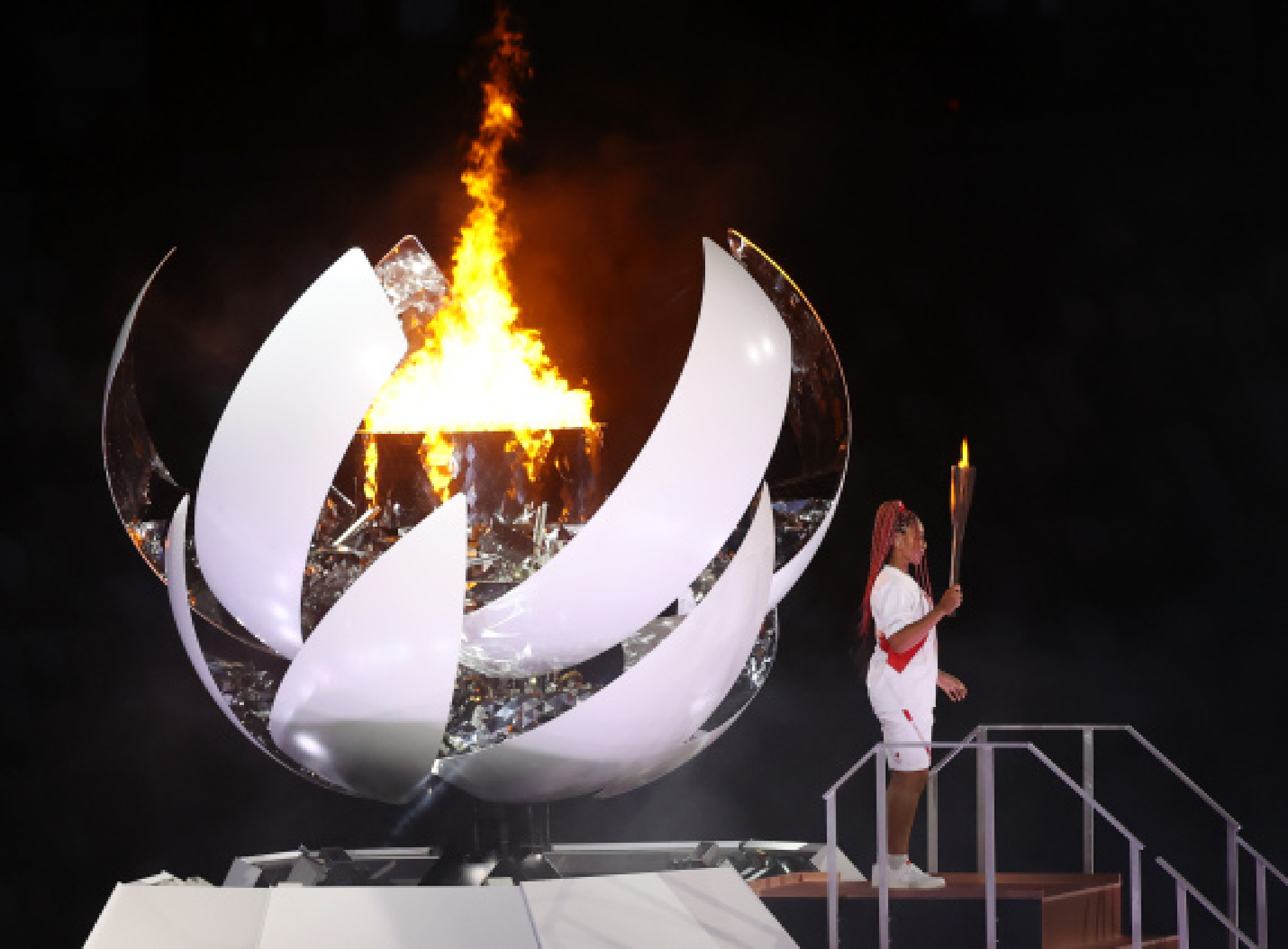
The cauldron is lit by Osaka Naomi during the opening ceremony of Tokyo 2020 Olympic Games in Tokyo, Japan, July 23, 2021.
The cauldron is lit during the opening ceremony of the Tokyo 2020 Olympic Games at Olympic Stadium in Tokyo, Japan, July 23, 2021.
The cauldron is lit during the opening ceremony of the 2021 Tokyo Olympic Games at the Olympic Stadium in Tokyo, Japan, July 23, 2021.
International Olympic Committee (IOC) President Thomas Bach speaks during the opening ceremony of Tokyo 2020 Olympic Games at the Olympic Stadium in Tokyo, Japan, July 23, 2021.
A fleet of drones is seen over the Olympic Stadium during the opening ceremony of the Tokyo 2020 Olympic Games in Tokyo, Japan, July 23, 2021.
A fleet of drones form the Tokyo 2020 emblem over the Olympic Stadium during the opening ceremony of the Tokyo 2020 Olympic Games in Tokyo, Japan, July 23, 2021.
Thailand Athletes
Olympic delegation of China parade into the Olympic Stadium during the opening ceremony of Tokyo 2020 Olympic Games in Tokyo, Japan, July 23, 2021.
The Olympic delegation of Refugee Olympic Team parade into the Olympic Stadium during the opening ceremony of Tokyo 2020 Olympic Games in Tokyo, Japan,
Photo taken on July 23, 2021 shows the night view of Tokyo, Japan. The opening ceremony of the Tokyo 2020 Olympic Games is held Friday.
After a years delay, Tokyo Olympic Games finally opens amid pandemic
It has been a long journey full of challenges since the Japanese capital was awarded the right to host the 2020 Games. From the coming-together of athletes from 205 NOCs and the IOC Refugee Olympic Team, to the lighting of Olympic Flame, the message was clear: these Games will, hopefully, represent a turning point for the world.
After an extra year of waiting, the Tokyo 2020 Olympic Games finally opened Friday night at Tokyo’s Olympic Stadium behind closed doors.
The biggest sporting event on the planet kicked off exactly one year later than originally planned due to the postponement caused by the COVID-19 pandemic.
Japanese Emperor Naruhito declared the Games open at the stadium which only about 950 people including officials and reporters were allowed to enter for the opening ceremony due to the coronavirus.
International Olympic Committee (IOC) President Thomas Bach delivered an emotional speech at the opening ceremony.
“Today is a moment of hope,” Bach said.
“Let us cherish this moment, because finally we are here, all together. Athletes from 205 National Olympic Committees and the IOC Refugee Olympic Team, living under one roof together in the Olympic Village. This is the unifying power of sport.
“We can only be all together here because of you, our gracious hosts – the Japanese people, to whom we would like to express all our appreciation and support.”
ADVERTISEMENTx
Before the athletes parade began, Bangladeshi social entrepreneur and banker Muhammad Yunus was honored the Olympic Laurel for his extensive work helping athletes “become socially responsible entrepreneurs” and building a new sustainable Olympic model.
Unable to attend the opening ceremony, the 81-year-old Yunus received the award by video link from his home in Dhaka.
The opening ceremony highlighted Japanese tradition with modern culture, while the cauldron was lit by Naomi Osaka after the Olympic flame had traveled to all of Japan’s 47 prefectures since late March.
The Olympic flame, probably not “the light at the end of the dark tunnel” yet as envisioned by the IOC and Japanese organizers, at least illuminated the way towards the eventual victory against the virus and challenges brought by it that is sure to come.
A TURBULENT JOURNEY
ADVERTISEMENT
It has been almost eight years since Japanese people celebrated the return of the Olympic Games after the 1964 Games, but the journey to this point has been full of challenges.
On March 24, 2020, Japan’s then Prime Minister Shinzo Abe and International Olympic Committee (IOC) president Thomas Bach agreed to delay the Tokyo Olympics and Paralympics by one year due to COVID-19, four days after the Olympic flame, which was lit up in Olympia, Greece without spectators, arrived in Japan.
The unprecedented postponement brought about tons of work both for the IOC and local organizers, and undoubtedly extra cost – about 294 billion yen (some 2.83 billion US dollars) – which made it among the most expansive Olympic Games in history to stage.
However, money is perhaps not the biggest problem, compared with the pandemic and controversies over the games.
Fireworks explode over the Olympic Stadium during the opening ceremony of the Tokyo 2020 Olympic Games in Tokyo, Japan, July 23, 2021.
ADVERTISEMENT
It wasn’t until late Thursday night that the organizers confirmed the opening ceremony will stick to its original programs following the firing of ceremony director Kentaro Kobayashi after a joke about the Holocaust joke he made in 1998 resurfaced.
This was just an array of scandals the organizing committee faced en route to making the Games ready. Ex-Tokyo 2020 president was forced to resign due to sexist remarks in February before former executive creative director stepped down for a remark calling a plus-sized female entertainer and composer an “Olympig,” and the composer for the opening ceremony quitting for past bullying behavior.
The cauldron is lit during the opening ceremony of Tokyo 2020
To make it worse, the coronavirus is still threatening the Games, with Tokyo put under its fourth state of emergency for the duration of the entire Olympic Games. On Thursday, Tokyo 2020 organizers reported 12 new positive COVID-19 cases related to the Olympics, including two infected foreign athletes in the athletes’ village, bringing the total number of Olympics-linked cases to 87 since July 1.
This dashed the organizers’ last hope of a 10,000 cap for fans decided in late June after banning overseas spectators in March. Consequently, the majority of the venues barred spectators from entering, with cheers and chants from previous games to be put in place as part of the IOC’s digital engagement campaign to ensure athletes won’t feel alone.
Yet, against all odds, a virtual seed under the ground of the Olympic Stadium sprouted out of the ground after intensive struggles displayed by its human representation inside the arena, starting a countdown that led to the eventual start of the spectacle.
The Olympic Rings displayed at Odaiba Marine Park, Tokyo
Despite some domestic groups’ opposition of holding the Games in the face of the pandemic, Tokyo 2020 organizers have pushed ahead resolutely with hopes of strengthening solidarity around the globe.
“Citizens of the world and the people of Japan are with us in spirit as athletes from around the globe gather here at the Olympic Stadium in Tokyo under the Olympic flag. Here is a vision for the future, one that embodies ‘Unity in Diversity’, one of peace and respect for one another. This is the power of sport, and an expression of the fundamental values of the Olympic Movement. This is its essence,” said Tokyo 2020 President Seiko Hashimoto.
Mori Yoshiro, ex-president of Tokyo 2020 Organizing Committee of the Olympic and Paralympic Games, speaks at a meeting at the committee headquarters in Tokyo, Japan, on Feb. 12, 2021.
A LOOK INTO FUTURE
This is probably the first time in Olympic history that audience in front of the screen got to enjoy the show more than those very limited number of IOC stakeholders who were present in the stadium. Applying high technology including virtual and augmented reality, Tokyo 2020 sought to fulfill its goal of “Discover[ing] Tomorrow,” the slogan that guided the city’s winning bid.
An artist performs during the opening ceremony of Tokyo 2020 Olympic Games at the Olympic Stadium in Tokyo, Japan, July 23, 2021.
A creative show of sport pictograms, which was an innovative design by the Tokyo 1964 organizers and became part of the Olympics ever since, enabled TV viewers to jump between virtual life and reality.
The history of pictograms were reviewed in a video clip before the little blue man of Tokyo 2020 ones walked out of the screen and began acting the logos out one by one rhythmically on the stage to a dynamic music, and switched to hand tricks inside a virtual studio. The show then came back to stadium again with the pictogram of triathlon wrapping up the 33 sports of the Tokyo 2020 program, before the three performers stood on the podium celebrating their victory.
Dancers replicate a shooting pictogram during the opening ceremony of Tokyo 2020 Olympic Games at the Olympic Stadium in Tokyo, Japan, July 23, 2021.
Through the eyes of 100-year-old Agnes Keleti, the oldest living Olympic champion and medalist, the audience saw how the sporting showpiece traversed over a century inspiring generations after generations, and is now embracing the future.
Skateboarding, surfing, karate and sports climbing are included in the Olympic program in Tokyo. Thirteen-year-old skateboarder Sky Brown, one of the youngest Olympians at Tokyo 2020, and her young counterparts all over the world represent the future of the games.
For host Japan, the Olympics is a chance to showcase the recovery of the tsunami-devastated northeastern coast after 10 years, with the country’s widely-loved softball and baseball games to be held in Fukushima.
“Ten years ago, when we decided to bid for the Olympic Games, many people in Japan faced profound difficulties, and were in mourning following the massive Great East Japan earthquake and tsunami. Many of the affected communities were losing the will to pick themselves up and move forward. People from all over the world extended a helping hand, encouraging us to ‘Move forward together!'” said Seiko Hashimoto.
“Now, 10 years later, we can show you the extent of Japan’s recovery. We are most grateful to all of you.”
In line with the Olympic Agenda 2020’s focus on sustainability, Tokyo 2020 also marks the first Olympics to be carbon neutral and to run entirely on renewable energy. Recyclable cardboard beds and medals made from small electronic devices collected nationwide were among the efforts the organizers took to be environmentally-friendly.
The Tokyo Olympic Games, attracting 11,000 athletes from 205 delegations and the refugee team, will run through August 8.
China has dispatched a 777-member delegation to Tokyo, its largest ever participation in an overseas Games. The 431 Chinese athletes, including 24 Olympic champions, will compete in 30 out of 33 sports in Tokyo.
This photo taken on January 9, 2020 shows recyclable cardboard beds at the Athletes Village of the Tokyo Olympics.
Feature: Ethiopian athletes aspire triumph at Tokyo Olympics
Ethiopian athletes will be going for gold in long and middle-distance events at Tokyo Olympics.
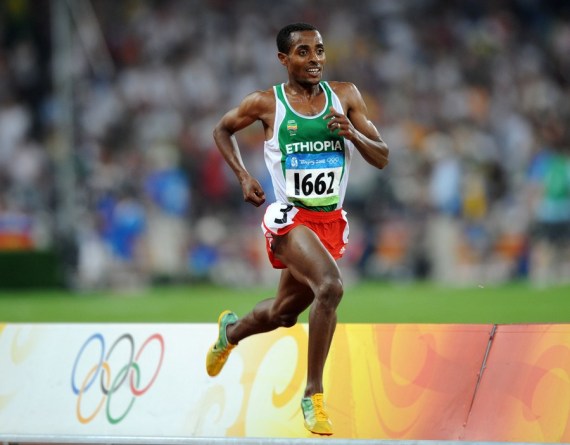
Nibret Melak, 21, has been dreaming of shining at the Olympics ever since he saw his childhood idol and Ethiopia’s running great Kenenisa Bekele run at the 2012 London Summer Olympics on a television screen.
Melak, who will be competing in the 5,000m athletics event at the upcoming Tokyo Olympics, carries the hopes of millions of people in Africa’s second-most populous nation.
ADVERTISEMENTx
The Tokyo Summer Olympics, delayed for a year due to the COVID-19 pandemic, is scheduled to be held from July 23 to August 8.
“I am aiming for a gold like what the Ethiopian people expect me to get. I hope I have done a good preparation to represent my country on the winners’ podium,” Melak told Xinhua recently.
Melak expects tough competition from Kenyan, Ugandan and Eritrean athletes as well as his countrymen at the Olympics.
The young athlete was inspired by Ethiopia’s athletics legend and Beijing Olympics gold medalist – Kenenisa Bekele.
Ethiopia has over the years won multiple Olympic medals at long-distance events such as the 5,000m, 10,000m and marathon.
ADVERTISEMENT
Unlike in the past, the East African country aims to achieve rare Olympic medals in middle-distance athletics events.
One such athlete is Abraham Sime, 19, a 3,000m steeplechase runner, aiming to be in the medals in an athletics field usually dominated by athletes from Ethiopia’s neighbor Kenya.
“Ethiopian coaches normally focus on 5,000m and 10,000m athletics events, with the 3,000m steeplechase field normally dominated by Kenyans,” said Sime.
“But there is no reason why we won’t get medal results if we work hard on it, just like 5,000m and 10,000m athletics fields,” he further said.
Like many other athletes worldwide, Sime’s Summer Olympics preparation was nearly derailed by the outbreak of the COVID-19 pandemic, but the support he received from the Ethiopia Athletics Federation in the last seven months has helped him stay motivated to compete in Tokyo Olympics.
ADVERTISEMENT
“The COVID-19 pandemic had a negative impact on my preparation as many athletics tournaments were canceled, but the federation gave us good support in the last seven months,” said Sime.
Ethiopia will send an all-time high number of athletes to the Tokyo Olympics, with 34 athletes expected to compete from 800m up to marathon. The first Ethiopian athletics team will fly to Tokyo on July 24.
Hussein Shibo, 5,000m and 10,000m coach and overall coordinator for Ethiopia coaches at Tokyo 2020, stressed that what makes sports events exciting is unpredictability.
Shibo hopes the Ethiopian athletes will win medals in every athletics event they participate in the Tokyo Olympics.
“We have prepared our athletes, not only physically but also psychologically and tactically,” he said. “We expect tough competition from the likes of Kenya, Uganda and Eritrea with their star athletes.”
“We are aspiring to get gold, if not silver or bronze, in every event that our athletes are participating,” Shibo stressed, also affirming the importance of scientific and tactical training given to athletes in order to achieve the national aspiration.
Ethiopia’s Letesenbet Gidey, 5,000- and 10,000-meters female world record holder, is expected to face tough competition from 5,000m road race world record holder Sifan Hassen of the Netherlands and Hellen Obiri of Kenya.
In the 10,000m, Yomif Kejelecha of Ethiopia, currently an indoor mile world record holder, is expected to face competition from the likes of Geoffrey Kamworor from Kenya.
Sitthichai Sitsongpeenong: If I hurt him, Im going to finish him
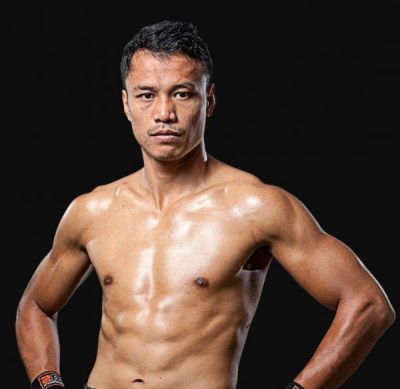
Fourth-ranked featherweight kickboxer Sitthichai “Killer Kid” Sitsongpeenong is looking to move up in the division and further his quest for a World Title. In his way is a highly regarded veteran looking to break into ONE Super Series with an eye-catching performance.
Sitthichai is scheduled to face #5-ranked featherweight kickboxer, promotional newcomer Tayfun “Turbine” Ozcan at ONE: BATTLEGROUND, which broadcasts live from the Singapore Indoor Stadium in Singapore on Friday, 30 July.
“I think a victory over Tayfun can definitely help me to rank higher in the division. I have one goal, and that’s to become a ONE World Champion,” Sitthichai said.
ADVERTISEMENTx
Sitthichai was last seen in the Circle against countryman Superbon the previous year. “Killer Kid” dropped a three-round unanimous decision. Despite the loss, however, Sitthichai says he discovered a lot about himself and is now a better fighter because of it.
“I learned a lot from Superbon. He’s a great fighter, fast and strong. It really helped me take a look at myself and what I lack. Now I’m a better fighter because of it as my speed has improved and so has my conditioning,” Sitthichai said.
“I looked back at my last fight and studied what happened and what I could have missed. I feel like there are a lot of areas where I could improve. On top of that, I need to be stronger, faster, and more explosive. I hadn’t fought in a long time, so I wasn’t as sharp with my techniques. That affected me a lot in the fight.”
ONE: BATTLEGROUND marks ONE Championship’s much-anticipated return in the second half of 2021. In the main event, Thai legend Sam-A Gaiyanghadao defends his ONE Strawweight Muay Thai World Title against young phenom Prajanchai PK.Saenchai Muaythaigym.
In the co-main event, former two-division ONE World Champion Aung La N Sang takes on Leandro Ataides in a pivotal middleweight clash.
Also seeing action are female atomweights Ritu Phogat and Victoria Lee who compete in separate bouts.
Sitthichai will be looking to score a spectacular victory against a tough opponent, and he plans on ending matters inside the distance if he gets the chance.
“He’s a real kickboxer. He’s very sharp and has dangerous punches. He looks very strong too. I think his biggest strength is his boxing. He’s dangerous with both hands, so I have to be careful. But I think he’s lacking a little on defense, and I’m looking to test his gut and his chin,” Sitthichai said.
“He hasn’t fought for a while, so that may come into effect. If I hurt him, I’m going to finish him. I will knock him out if the chance comes.”
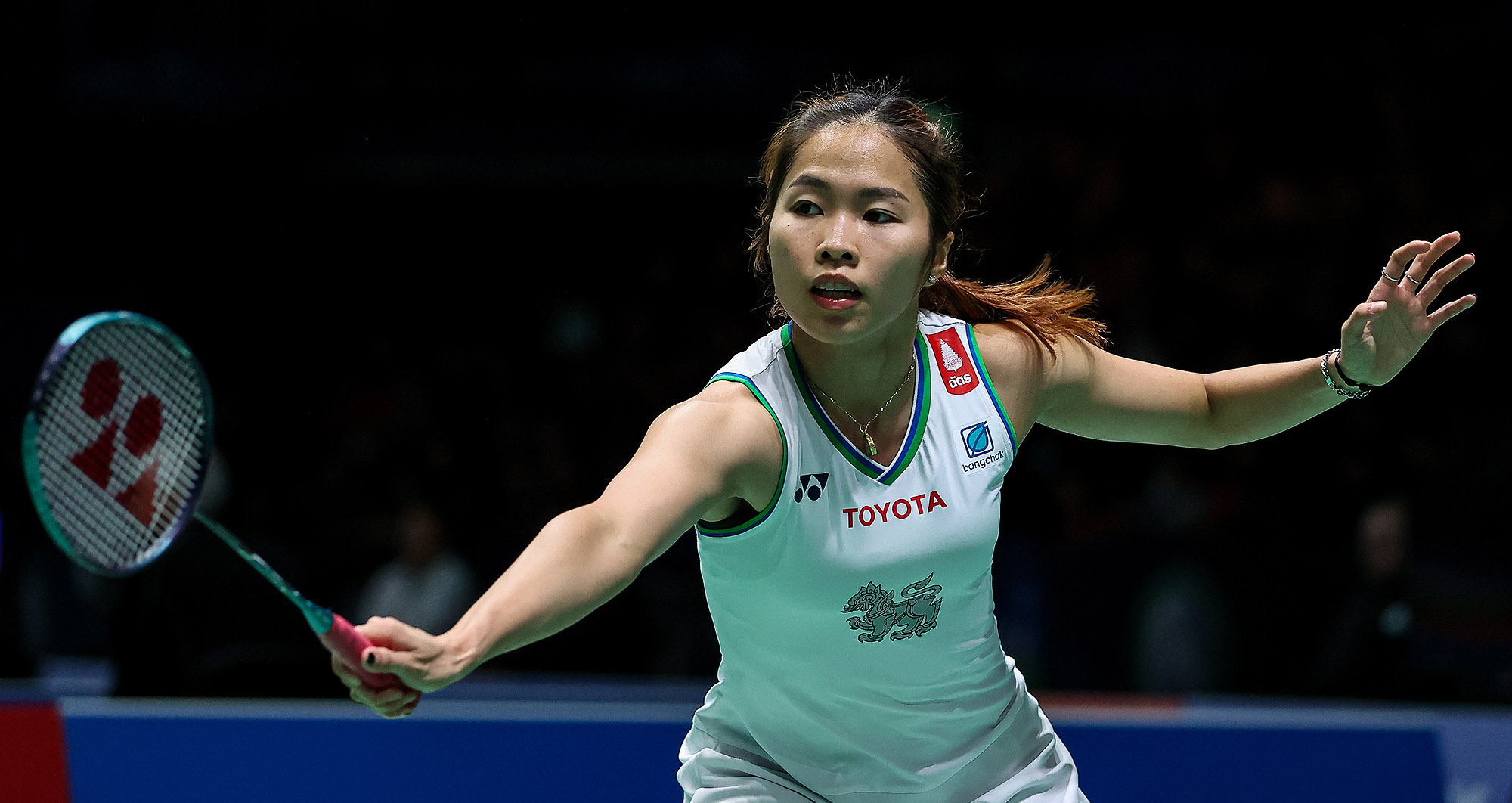
Ratchanok shuttles into Tokyo for one last shot at Olympic gold
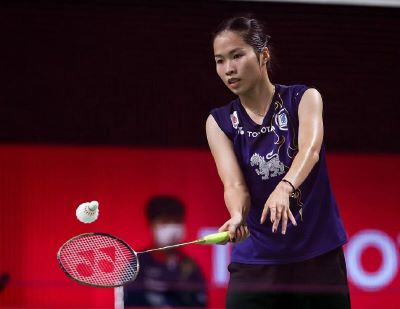
Ratchanok Inthanon has almost everything in her life: house, car, millions in her account and a bunch of prestigious titles including the World Championships gold medal. But theres one thing that still eludes her – an Olympic medal.
The former world No 1 will roll the dice again in Tokyo, which marks her third appearance at the Olympics. Her last two campaigns hit the buffers with a 21-17 18-21 14-21 loss to Wang Xin of China in the London 2012 quarter-finals and a 19-21 16-21 defeat against Akane Yamaguchi of Japan in the last 16 five years ago in Rio.
The determined world No 6 has vowed to grab a podium place this time as badminton emerges as one of three disciplines – with taekwondo and golf – tipped to yield glory for Thailand in Tokyo.
ADVERTISEMENTx
“I want to win a medal,” said the 2013 world champion. “I’ve got everything in my life except an Olympic medal. A gold medal will be even better.”
Ratchanok has been drawn in group N alongside Soniia Cheah Su Ya of Malaysia and Laura Sarosi of Hungary.
Now aged 26 and with only two title wins (India Open and Indonesian Masters) over the past 24 months, the Thai star is still convinced that an Olympic medal is still within her reach.
“It’s not a mission impossible. It depends on how well you and your opponent play on that particular day. I’ve learned from the two previous Games that I put too much pressure on myself. If I can stay mentally solid throughout, I stand a chance,” said Ratchanok, who has competed in only four tournaments this year amid the COVID-19 outbreak. Her best results so far this season are two semi-final places at the Thailand Open in January and All England Championships in March.
The Thai has been out of action since the All England after the Badminton World Federation (BWF) suspended tournaments to prevent the spread of Covid-19. However, the layoff gave her time to address her weaknesses and focus fully on the Olympiad.
“During the break, I worked on my fitness to make sure that I will be physically fit for three tough games. I also take practice sessions as seriously as real matches. I’m determined to put up a hard fight in the Olympics,” she added.
Despite the absence of defending champion Carolina Marin of Spain, who was forced to withdraw due to a knee injury, the Thai still foresees a highly competitive women’s singles competition and says the door is open for anyone.
“There are plenty of tough players signing in. Others will put up a great fight as it’s the Olympics. I don’t write off anyone’s chances,” said Ratchanok, who is not sure if this will be her farewell Games.
“I will be 29 in 2024. There could be some new and better girls coming up by then. But if I’m still strong and good enough to represent Thailand, I will not hesitate,” said Ratchanok who kicks off her campaign in Tokyo on July 25.
Thais urged to cheer national Olympic team – albeit virtually
The Tokyo Olympics runs from July 23 to August 8, while the 2020 Summer Paralympics will also be held in Tokyo from August 29 to September 4.
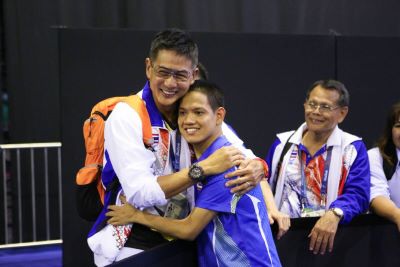
Boon Rawd Brewery, the producer of Singha beer, is calling on Thais to cheer Thailand’s national team competing in the Tokyo Olympics and Paralympics.
Chutinant Bhirombhakdi, the company’s CEO who is also president of the Paralympic Committee of Thailand, said every athlete needs a cheering audience.
ADVERTISEMENTx
Thais urged to cheer national Olympic team – albeit virtuallyThais urged to cheer national Olympic team – albeit virtuallyThais urged to cheer national Olympic team – albeit virtually
“The national team has trained very hard for the Games and to win medals for Thailand. So, our cheers are very important for them, especially when the competition is being held without a live audience due to Covid-19,” he said.
Boon Rawd Brewery supports several sports associations in Thailand, including the Professional Golf Association, Taekwondo Association and Banthongyord Badminton School.
The Tokyo Olympics runs from July 23 to August 8, while the 2020 Summer Paralympics will also be held in Tokyo from August 29 to September 4.
Anime and manga will take center stage at the Olympics. It could fuel a boom in interest.
When the inevitable rush arrives, and a slew of customers descend upon her store next month in search of Japanese anime and manga merchandise, Alice Goldberg-FitzHugh wants to be prepared.
Over the past month, Goldberg-FitzHugh, co-owner of Purple Narwhal Music & Manga in Rockville, Md., has contacted vendors and stores worldwide to accumulate as many anime and manga products as possible. Specifically, Goldberg-FitzHugh is seeking anything that features an image of a Tokyo Olympics ambassador, all nine of whom are anime characters.
She normally orders manga – Japanese comics and graphic novels – once or twice per month. This year, she has placed orders weekly, attempting to meet the anticipated demand of new readers.
Friday will mark the start of the Olympics in Japan, where anime and manga are created. While these platforms have seen their followings grow significantly over the last two decades, many in the anime and manga industry are preparing for another spike in interest in the United States and worldwide because of the exposure the series and characters are expected to receive during the Olympics.
“I definitely think it will make them more popular,” said Susan Napier, a professor of rhetoric and Japanese studies at Tufts University. “People will be curious. Anime style is a very distinctive style, and if you’re not used to it, you’re going to say, ‘Wow, what is this? This is cool.'”
ADVERTISEMENTx
Many anime – an umbrella term for animation produced in Japan – are adapted from manga, similar to how American comics are shaped into movies. The Olympics ambassadors, who are featured on official Olympics merchandise, are Son Goku (from the “Dragon Ball” series), Usagi Tsukino (Sailor Moon), Naruto Uzumaki (Naruto), Monkey D. Luffy (One Piece), Astro Boy (Astro Boy), Cure Miracle and Cure Magical (Pretty Cure), Shin-chan (Crayon Shin-chan) and Jibanyan (Yo-kai Watch).
Goku is perhaps the most well-known of the group. He’s a naive but determined warrior who is the main character of “Dragon Ball Z,” which was one of the first popular anime in the U.S. in the 1990s and introduced many fans to the genre. Usagi Tsukino, whose alter ego is Sailor Moon, is the star of another popular 1990s anime, and she welcomed many women into what had previously been a predominantly male fan base.
Naruto, which ran between 1999 and 2014 and is one of the world’s most popular series, is a quirky teenager determined to become his village’s strongest ninja. Astro Boy, the first series in the 1960s that inspired the anime genre, is a compassionate kid robot. Luffy is the main character of “One Piece,” the best-selling manga of all-time with about 490 million copies sold.
“This has been a tough year-and-a-half,” Napier said. “People really want something kind of exciting and colorful and vivid. I’m betting that they’ve got a pent-up hunger for something like this among young people around the world. These are characters who keep going, who endure and persevere and keep fighting. I think that will be a very impressive message.”
Not everyone has been pleased with the inclusion of the characters. There has been controversy in Japan, where many citizens are upset about the Olympics using beloved anime characters to advertise an Olympics that they believe will present health risks during the coronavirus pandemic.
But for many others, the games will represent a good opportunity for anime to reach new audiences – including, potentially, via exposure from athletes in Tokyo. Many anime series have become popular conversation topics in locker rooms at every level of sports, and some of the Olympics’ top competitors count themselves among the fans.
U.S. sprinter Noah Lyles, who’ll compete in the 200-meter dash, has pondered performing one of Goku’s signature moves, the “spirit bomb,” before a race in Tokyo. U.S. middle-distance runner Isaiah Jewett credited “Naruto” for helping him qualify for the Olympics. And Japanese tennis star Naomi Osaka is known to be an anime fan.
One reason for anime’s growth is that popular streaming services have bought into the genre. Crunchyroll and Funimation exclusively stream anime and broadcast episodes minutes after they premiere in Japan. Netflix, HBO Max and Hulu have added a large anime selection, and Netflix has created multiple live-action adaptations of anime shows.
When Goldberg-FitzHugh opened her store in September 2016, manga regularly sat on the store’s shelves for months, and many customers sold her books in bulk. Now, she often sells out of manga before they can be replaced. The 55-year-old has been stocking up on manga featuring the Olympic ambassadors and is seeking T-shirts, models and keychains displaying those characters.
“If there are adults who now have kids, when their kids see it, they may want to introduce their kids to it,” Goldberg-FitzHugh said. “There’s going to be a lot of nostalgia with the mascots.”
U.S. stores have encountered the issue of selling out of anime and manga products. Manga publishers have not been able to keep up with the demand, making some stores wait months before obtaining new volumes. The pandemic has also played a role, limiting international sales and shortening vendor and publishing staffs worldwide.
Shawn Hour, the manager of the Sweet Kitty anime store in Kent, Wash., said she’s now receiving anime merchandise from last Christmas. She worries her store could be behind when a new group of shoppers emerge.
“It’s [messing] up our whole financial system and also customers’ requests,” Hour said.
Anime streaming services, which license anime shows and movies online, may gain the most from the Olympics. According to Joellen Ferrer, Crunchyroll’s senior vice president of communications, Crunchyroll needed a decade to reach a million subscribers after launching in 2006. In five years since, Crunchryoll has added more than three million users, Ferrer said. Experts believe that number could skyrocket in a few weeks as new fans across the world become infatuated with anime.
“We aim to create experiences for anime fans to just come together and share that love for the storytelling and emotion that we know these shows can bring,” Ferrer said. “If the Olympics can be a springboard, then it’s truly a win for everybody.”
Tokyos fraught Olympics are set to begin after decade of drama
When a nearly empty National Stadium in Tokyo lights up on Friday evening in Japan to mark the beginning of the delayed Summer Olympics, Covid-19s scar on the event will be glaring.
Gone will be the celebratory cheer that accompanies the start of any Games. Instead of thousands in the audience, there will be empty stands and performers in masks.
For the first time in history, events at Tokyo 2020 will be held without spectators and winners will place their own medals around their necks. Delegations landed amid the looming threat of the infectious delta variant, which has triggered case surges throughout Asia. Athletes social distance in the Olympic Village and eat between plastic barriers in the cafeteria.
“To be honest, I did not expect the Olympics to be happening like this. I thought the coronavirus would be gone or settled by the time the Olympics started,” Tokyo 2020 chief Toshiro Muto told a press briefing earlier this week. “It hasn’t, and in some ways the problem has gotten more serious.”
Covid has been only the latest, albeit biggest, challenge for an Olympics that’s been mired in drama for nearly a decade, from a scrapped stadium design to a bribery probe. The senior officials who championed the bid – including former Prime Minister Shinzo Abe – are no longer in office, undone by scandal and stress. The official cost of the Games has more than doubled to $15.4 billion from its original estimate, including an extra $3 billion needed for the delay and Covid-related safety measures.
Support from the Japanese public – long known globally as enthusiastic Olympic fans – has waned amid concerns about the Games becoming a superspreader event. A July 3-4 survey by broadcaster JNN found that 34% wanted to cancel, or postpone them again. The country’s largest companies have made moves to distance themselves, including global sponsor Toyota Motor Corp., which said this week it won’t be airing ads in Japan that feature the Olympics.
Even though athletes and other participants aren’t allowed to interact with the Japanese public, concerns have grown over the past week about the potential for outbreaks in the so-called Olympic bubble. A handful of athletes have already tested positive for Covid, including an alternate for the U.S. women’s gymnastics team. And in another blow, the director of the opening ceremony was fired a day before the Games started for comments he made about the Holocaust two decades ago.
ADVERTISEMENTx
Japan’s journey to the 2020 Olympics started more than a decade ago and was preceded by disaster. In March 2011, as officials were readying to announce another bid after losing out to Rio de Janeiro for 2016, a magnitude-9.0 earthquake struck off the northeastern coast and caused the worst nuclear disaster since Chernobyl.
“There was a strategic decision made to tie the Tokyo bid to reconstruction of the earthquake-devastated area as that would be the biggest appeal,” recalled Yuji Ishizaka, a sports sociologist at Nara Women’s University who researches the Olympics. The reconstruction theme was used initially to gain the acceptance of the Japanese public for the bid, and then later as a pitch to the International Olympic Committee, Ishizaka said.
Tokyo’s first setback after winning the 2020 Games came in 2015, when the budget for its new national stadium – designed by late celebrity architect Zaha Hadid – swelled to over 50% its original estimate and was set to become the most expensive ever built. Under the pressure of falling support numbers, Abe scrapped the design in favor of a do-over.
“What was striking about it was just the indecision around it. They were all like, ‘what should we do?'” said Jules Boykoff, a professor at Pacific University in Oregon who has written several books on the Olympics. “That really opened my eyes. Maybe this safe pair of hands isn’t so safe after all.”
Accusations of plagiarism from a Belgian designer over the Tokyo Olympics logo also forced a redo a few months later.
In January 2019, Bloomberg reported that then-Japan Olympic Committee President Tsunekazu Takeda had been charged as part of a French corruption probe into the Games’ being awarded to Tokyo. The investigators suspected Japan was picked following unspecified clandestine arrangements aimed at obtaining the votes of African members of the IOC. Takeda, who said at that time that he hadn’t been indicted, stepped down that March.
Still, the Games had the general support of the public before Covid erupted. The Olympics were the crown jewel in the government’s strategy of turning tourism into an economic growth engine. A successful Rugby World Cup in late 2019 set expectations even higher for global sporting events as tourism drivers.
“Suddenly, all of Japan became rugby fans. For me, all I could think about is… imagine that for two weeks at the Tokyo Olympics. It was going to be a massive party. That’s what we all thought was going to happen,” said Roy Tomizawa, author of a book on the 1964 Tokyo Olympics. “And it all came crashing down in the beginning of 2020.”
Before the pandemic, organizers had enlisted 80,000 volunteers, sold over 4 million tickets to domestic residents – amid demand that was nearly 20 times more than the supply – and raised over $3 billion from Japanese corporations, making it most heavily-sponsored sporting event in history.
Although the IOC and Japan initially insisted the Olympic schedule would not be affected by the spreading coronavirus, Abe finally announced in March that the Games would be postponed.
“It was like we were at 40 kilometers in a marathon and suddenly we were told, ‘you have another 10 kilometers,'” said Masa Takaya, a spokesman for Tokyo 2020.
The year that followed the delay took out the last two men involved in the winning bid. Abe resigned due to health reasons last September, and Tokyo Olympics chair Yoshiro Mori stepped down this February after international uproar over his comments that women spoke too long in meetings, prompting a last-minute leadership shuffle.
Some see the entire episode as adding to the argument that the Olympics are now of diminishing returns for host cities, even without a historic public health crisis in the mix.
“The economic benefits of the Olympics come from history, and I think it’s impossible to achieve again,” said Tomoyuki Suzuki, a sports governance researcher who worked on the failed 2016 bid. “But still, it keeps going.”
For Japan, the time for second thoughts has passed. All alternatives are off the table. Let the Games begin.
Published : July 23, 2021
By : Syndication Washington Post, Bloomberg · Lisa Du, Yuki Hagiwara
 Thai Olympic gold hope Panipak begins campaign todayHer other major hurdle is Tijana Bogdanović from Serbia. She is second in the world ranking. Although Panipak has beaten her three times in the past, the Serb could still be a formidable rival for the Thai.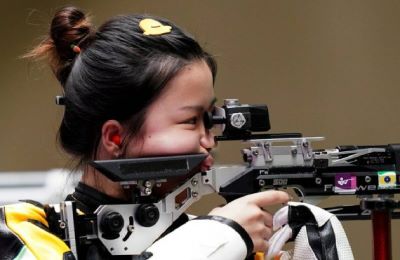

 Photo taken on July 23, 2021 from Shibuya Sky in Tokyo, Japan shows fireworks at the Olympic Stadium during the opening ceremony of Tokyo 2020 Olympic Games.
 Photo taken on July 23, 2021 shows the Olympic Motto at the opening ceremony of Tokyo 2020 Olympic Games in Tokyo, Japan.
 Fireworks explode over the Olympic Stadium during the opening ceremony of Tokyo 2020 Olympic Games in Tokyo, Japan, July 23, 2021.
 The cauldron is lit by Osaka Naomi during the opening ceremony of Tokyo 2020 Olympic Games in Tokyo, Japan, July 23, 2021.
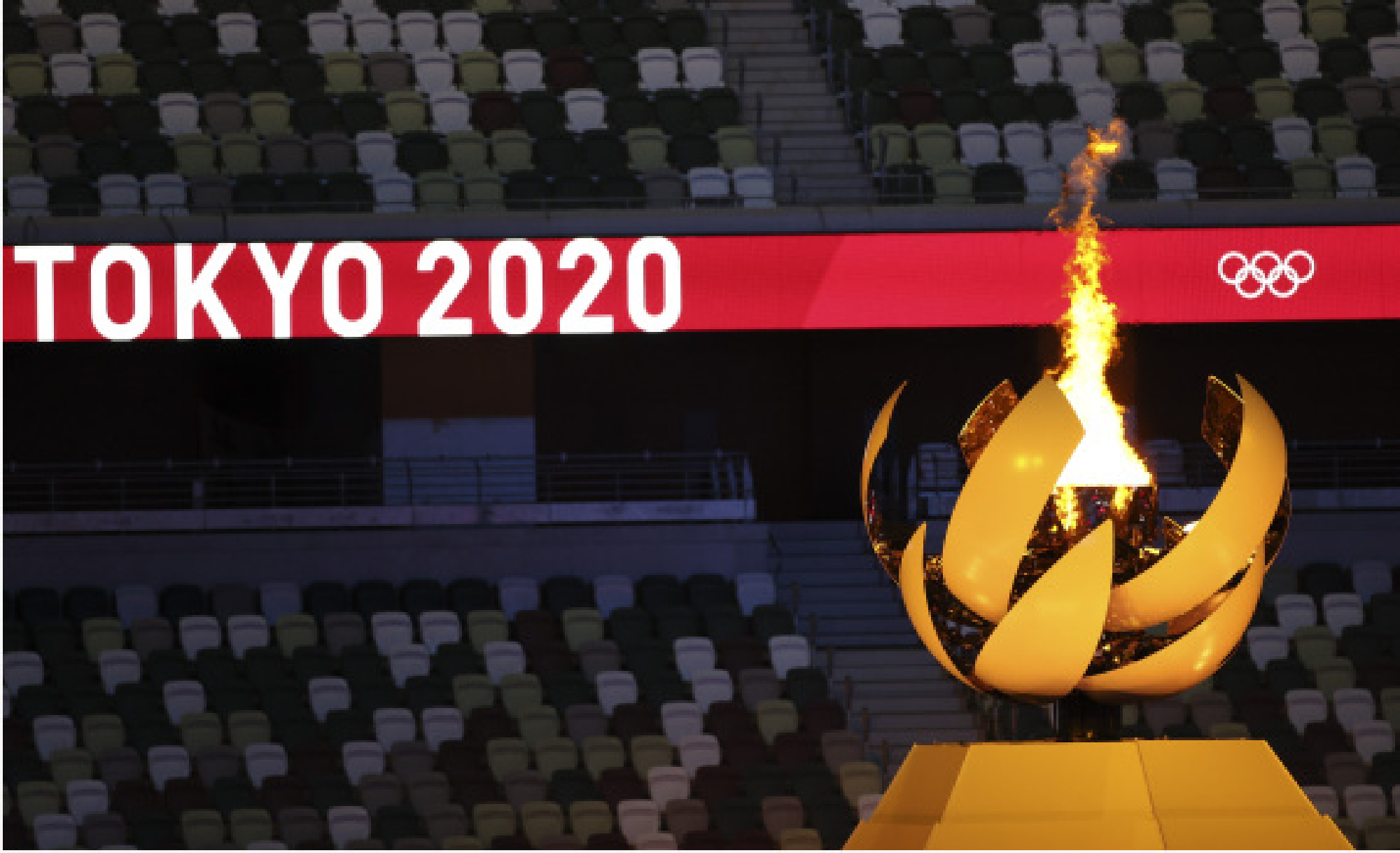 The cauldron is lit during the opening ceremony of the Tokyo 2020 Olympic Games at Olympic Stadium in Tokyo, Japan, July 23, 2021.
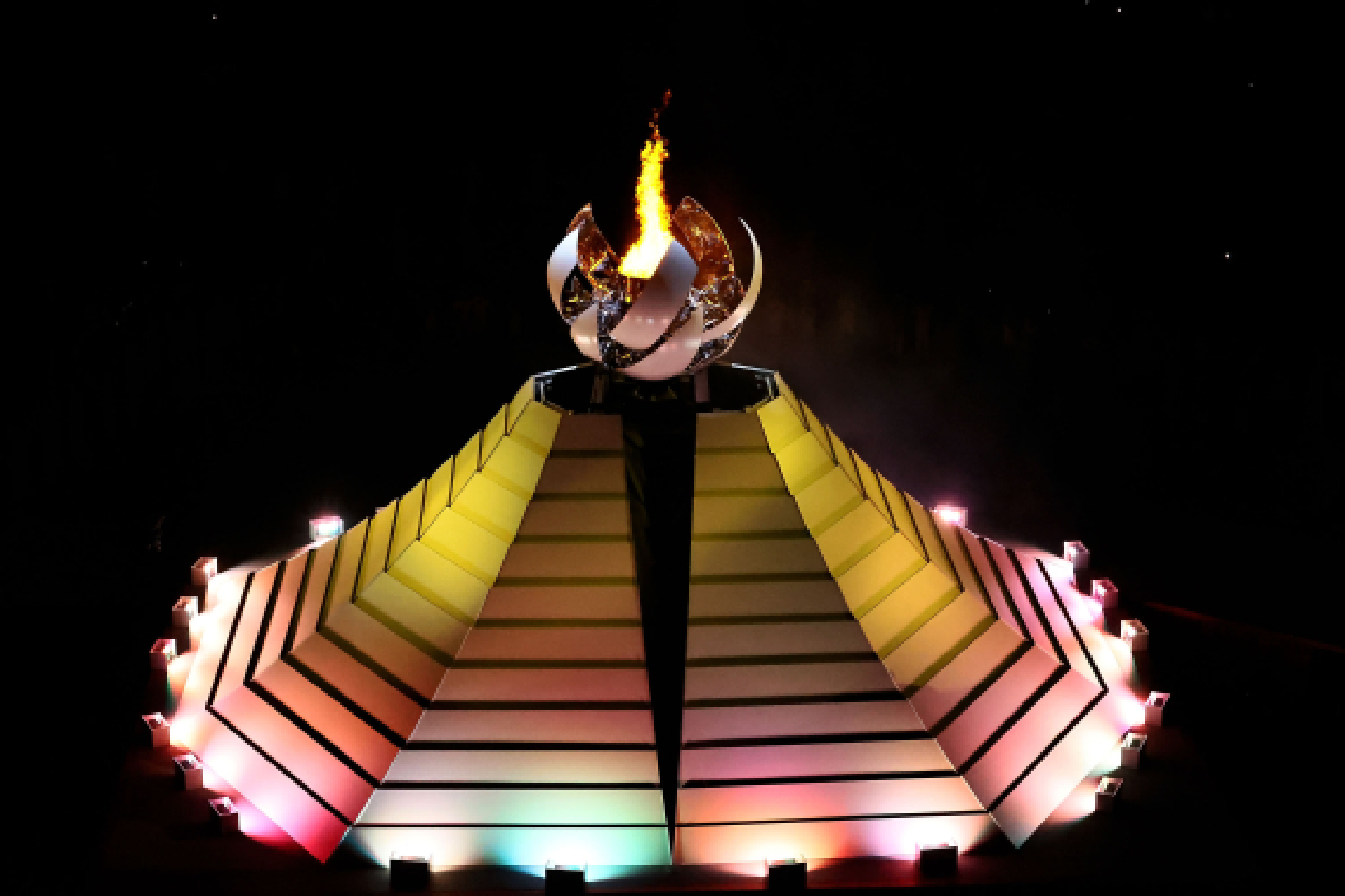 The cauldron is lit during the opening ceremony of the 2021 Tokyo Olympic Games at the Olympic Stadium in Tokyo, Japan, July 23, 2021.
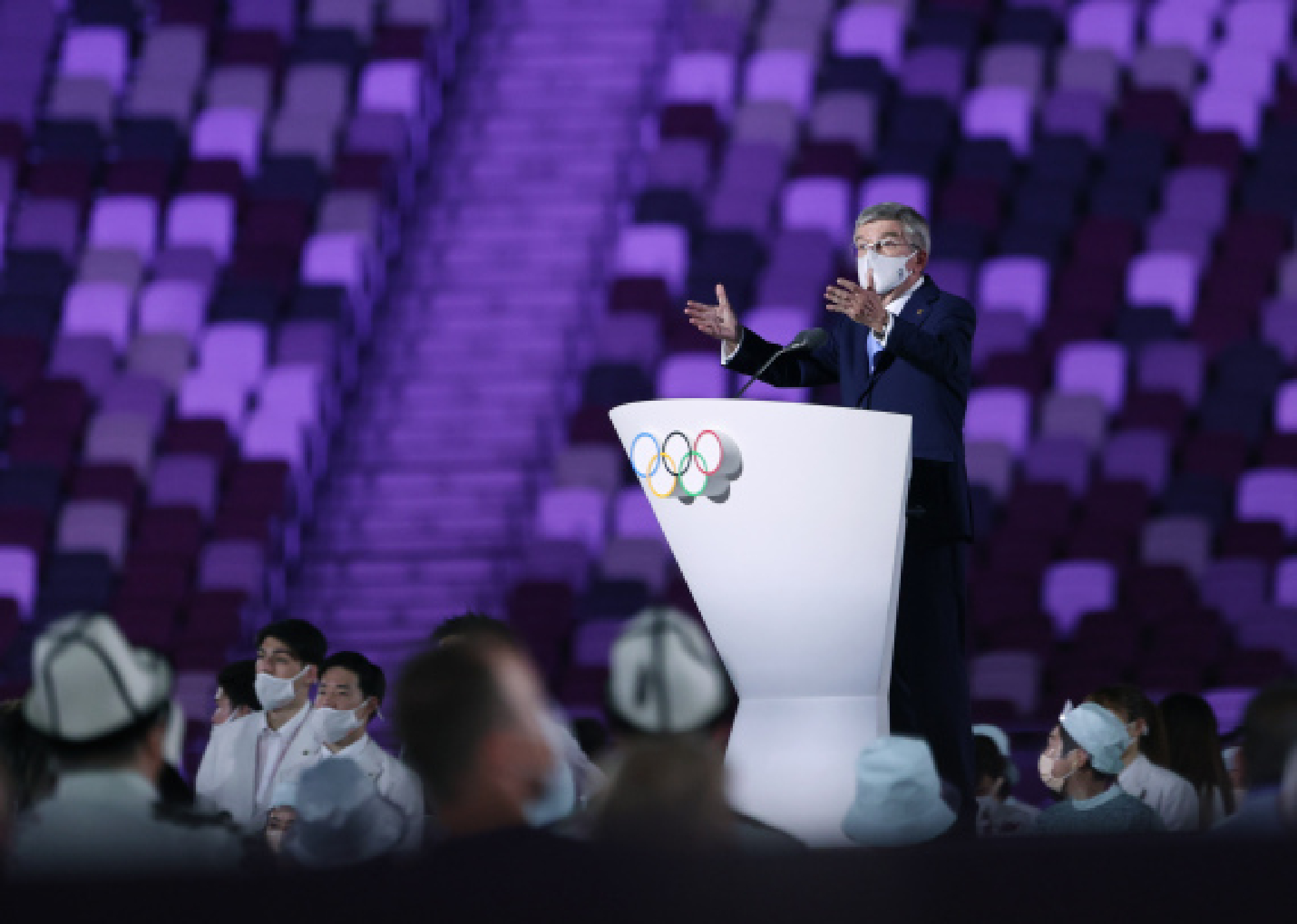 International Olympic Committee (IOC) President Thomas Bach speaks during the opening ceremony of Tokyo 2020 Olympic Games at the Olympic Stadium in Tokyo, Japan, July 23, 2021.
 A fleet of drones is seen over the Olympic Stadium during the opening ceremony of the Tokyo 2020 Olympic Games in Tokyo, Japan, July 23, 2021.
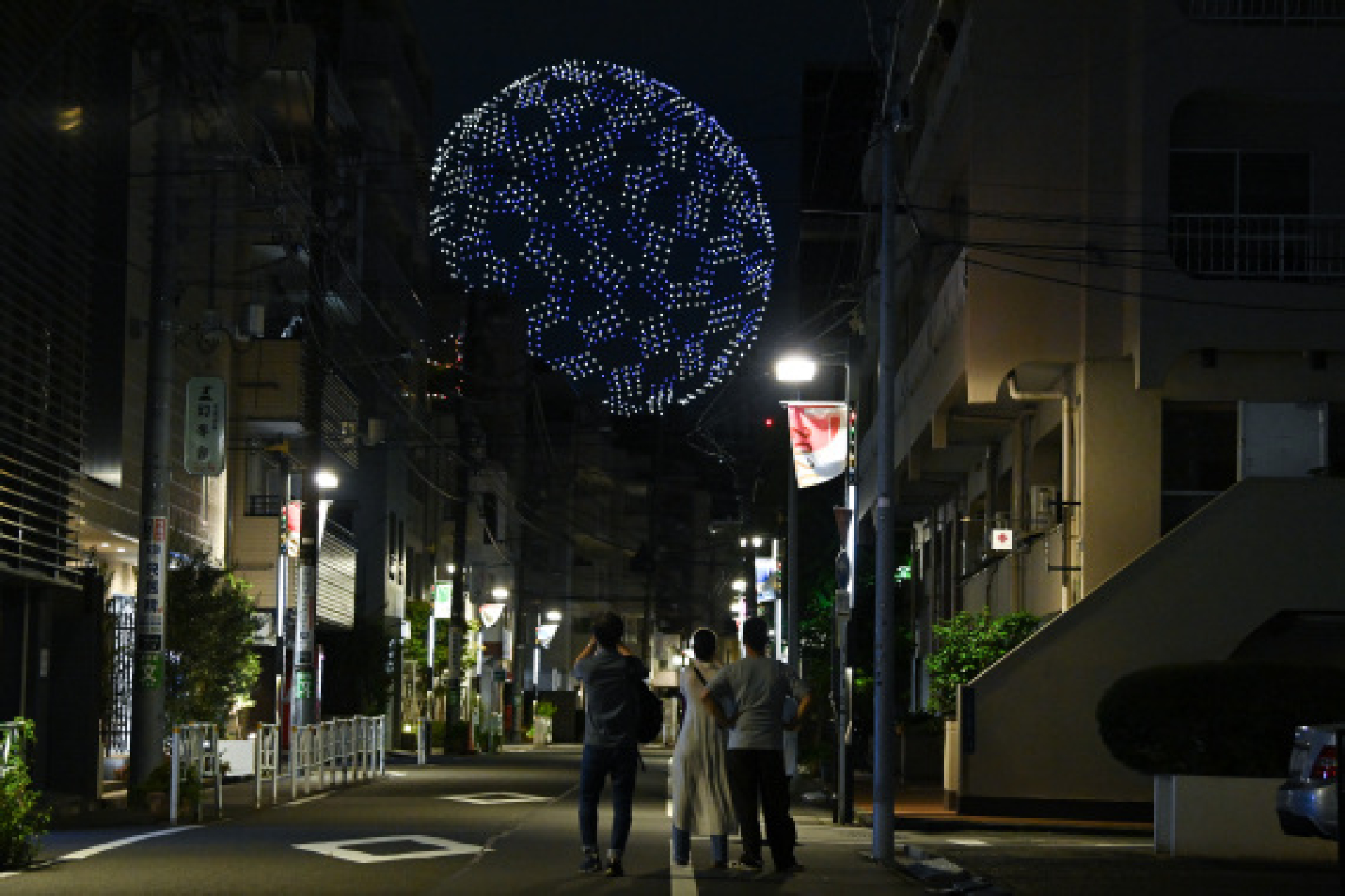 A fleet of drones form the Tokyo 2020 emblem over the Olympic Stadium during the opening ceremony of the Tokyo 2020 Olympic Games in Tokyo, Japan, July 23, 2021.
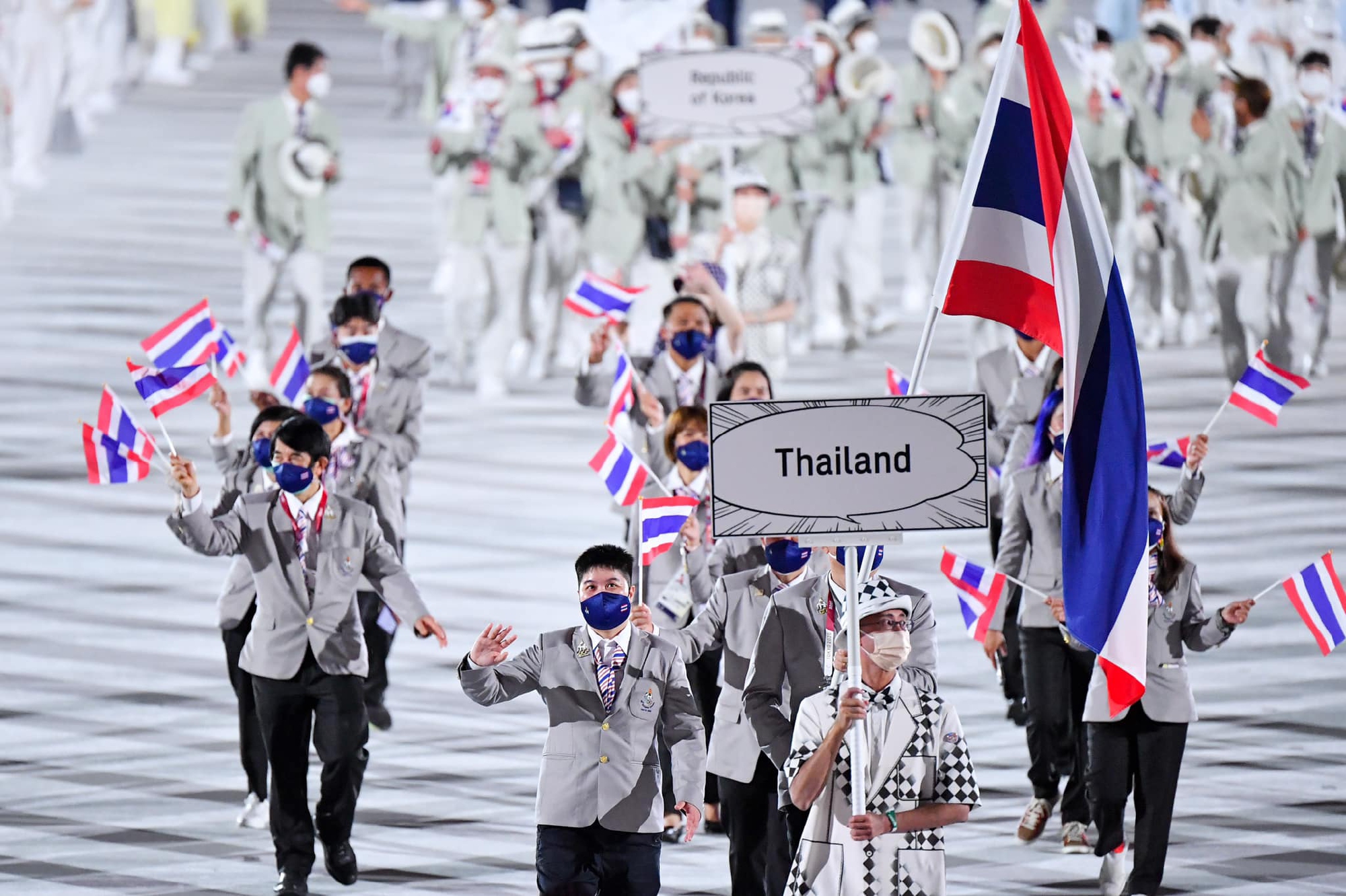 Thailand Athletes
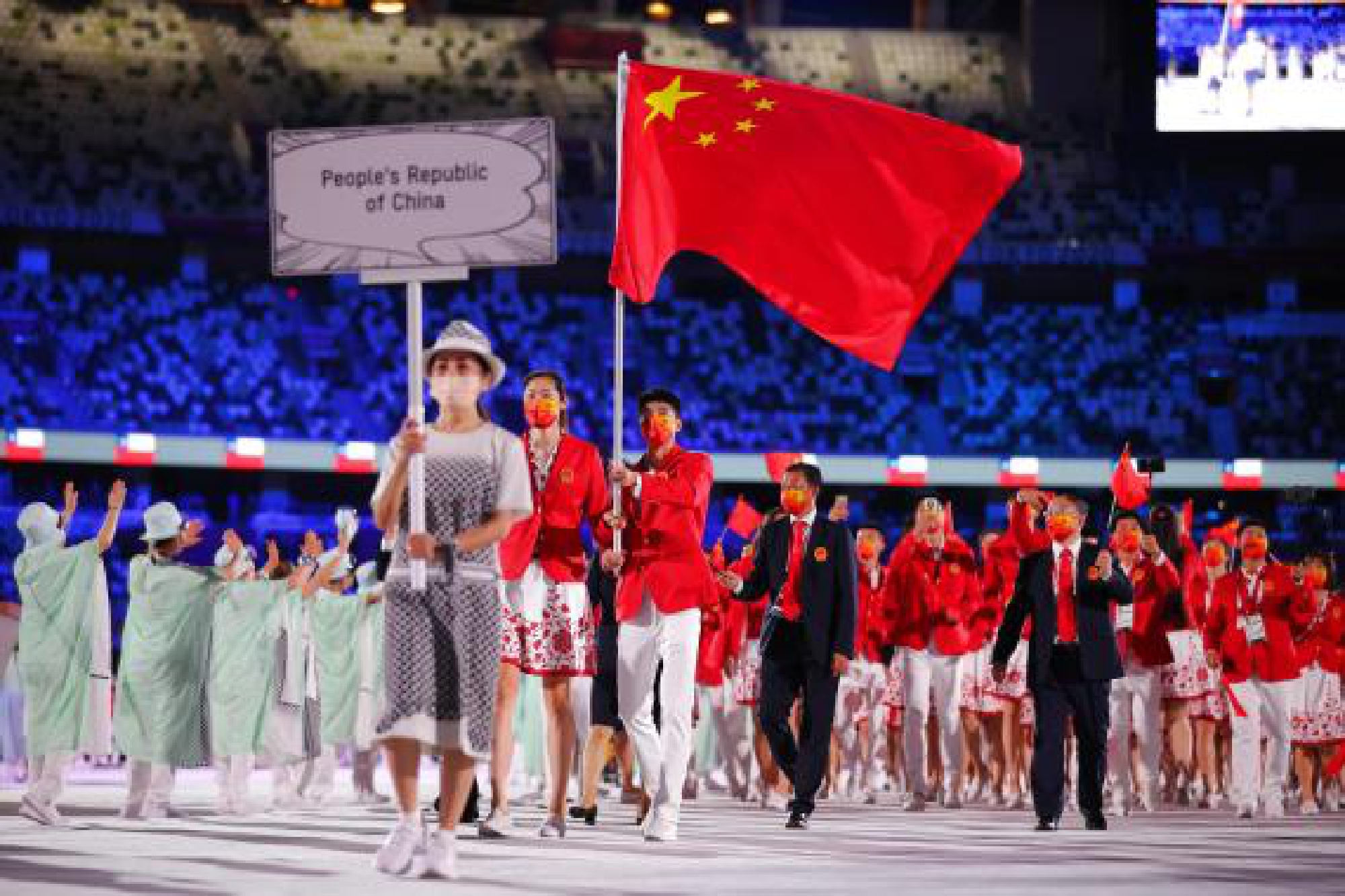 Olympic delegation of China parade into the Olympic Stadium during the opening ceremony of Tokyo 2020 Olympic Games in Tokyo, Japan, July 23, 2021.
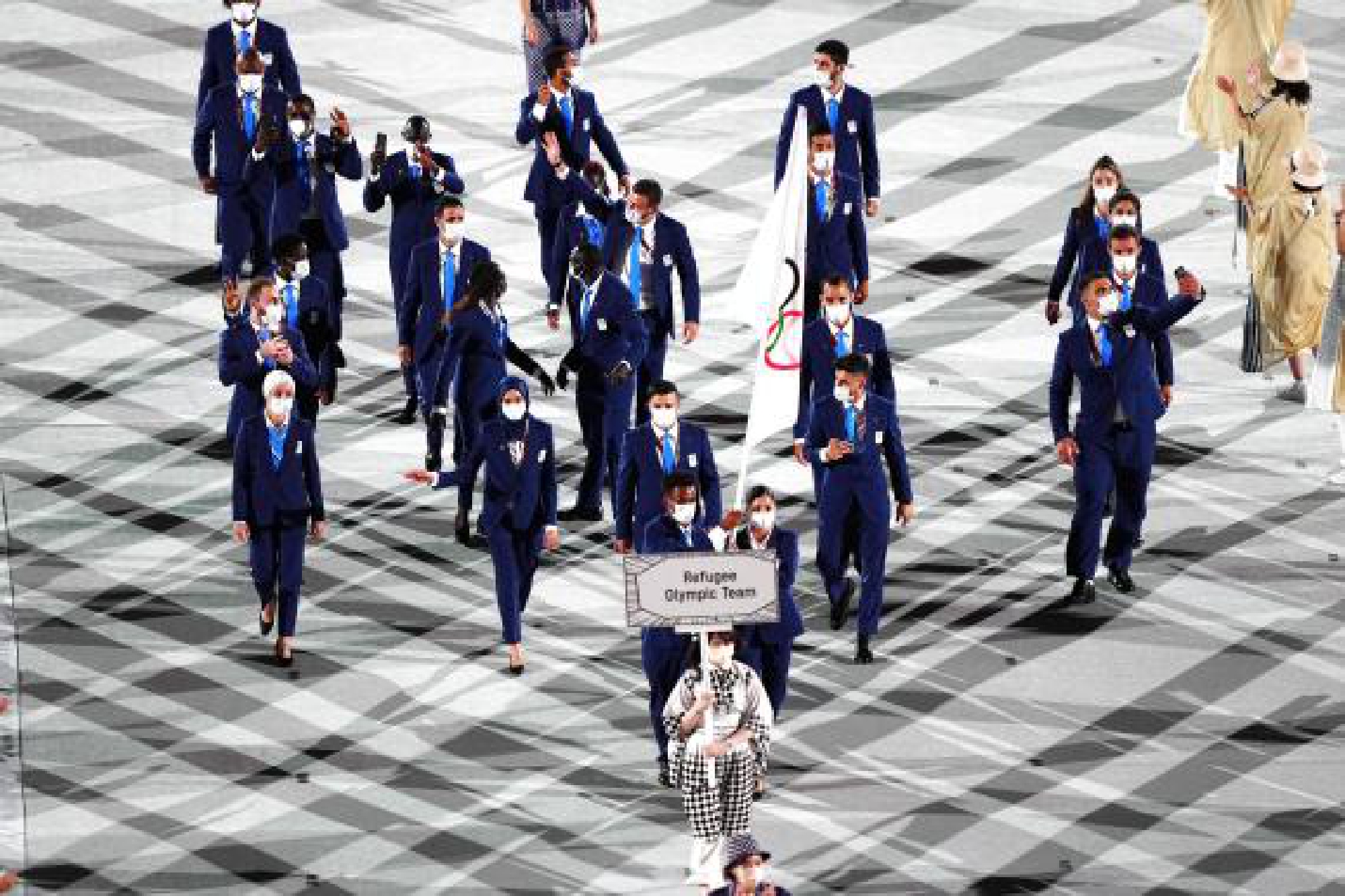 The Olympic delegation of Refugee Olympic Team parade into the Olympic Stadium during the opening ceremony of Tokyo 2020 Olympic Games in Tokyo, Japan,
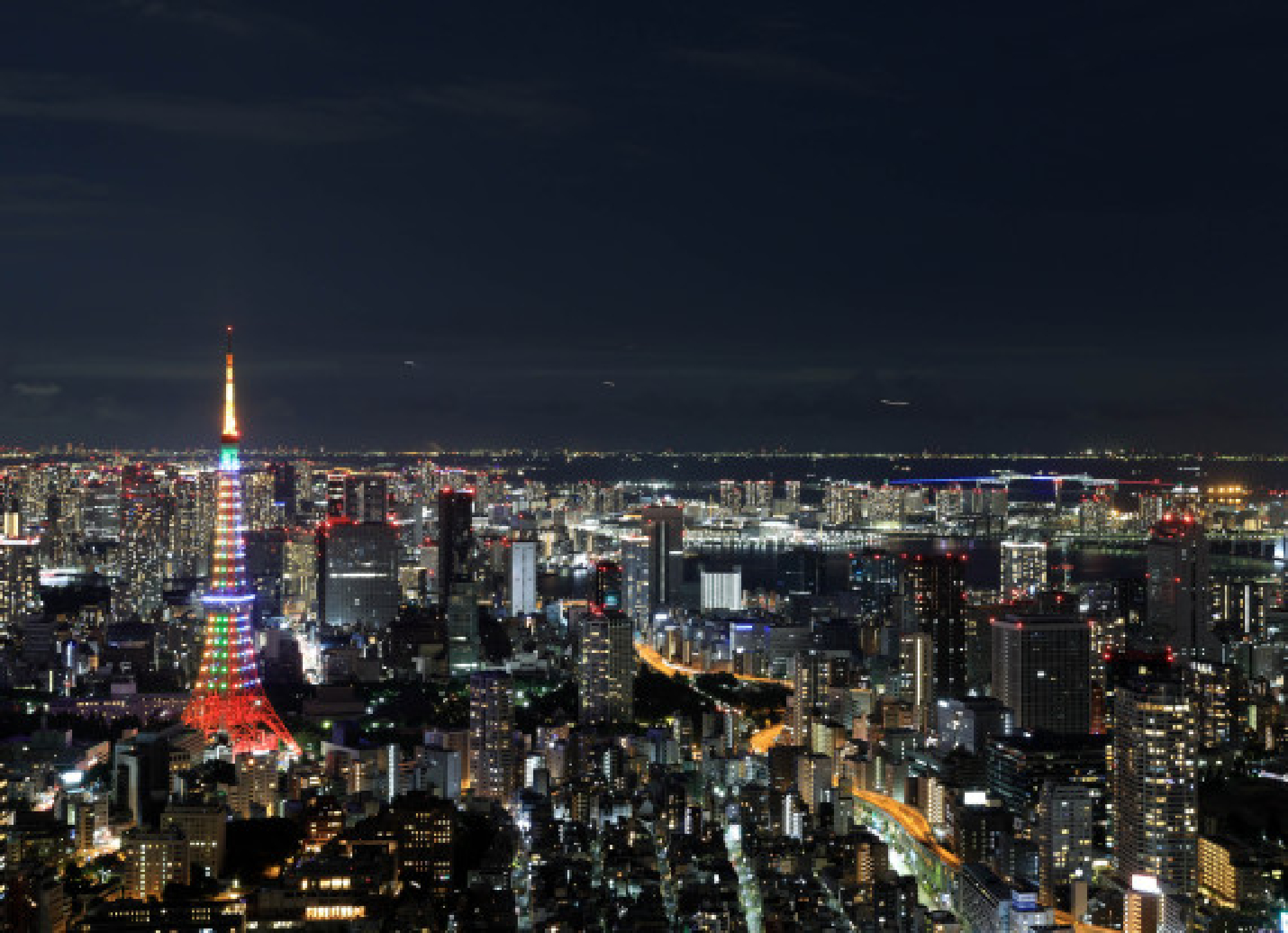 Photo taken on July 23, 2021 shows the night view of Tokyo, Japan. The opening ceremony of the Tokyo 2020 Olympic Games is held Friday.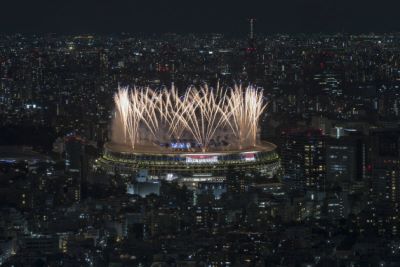
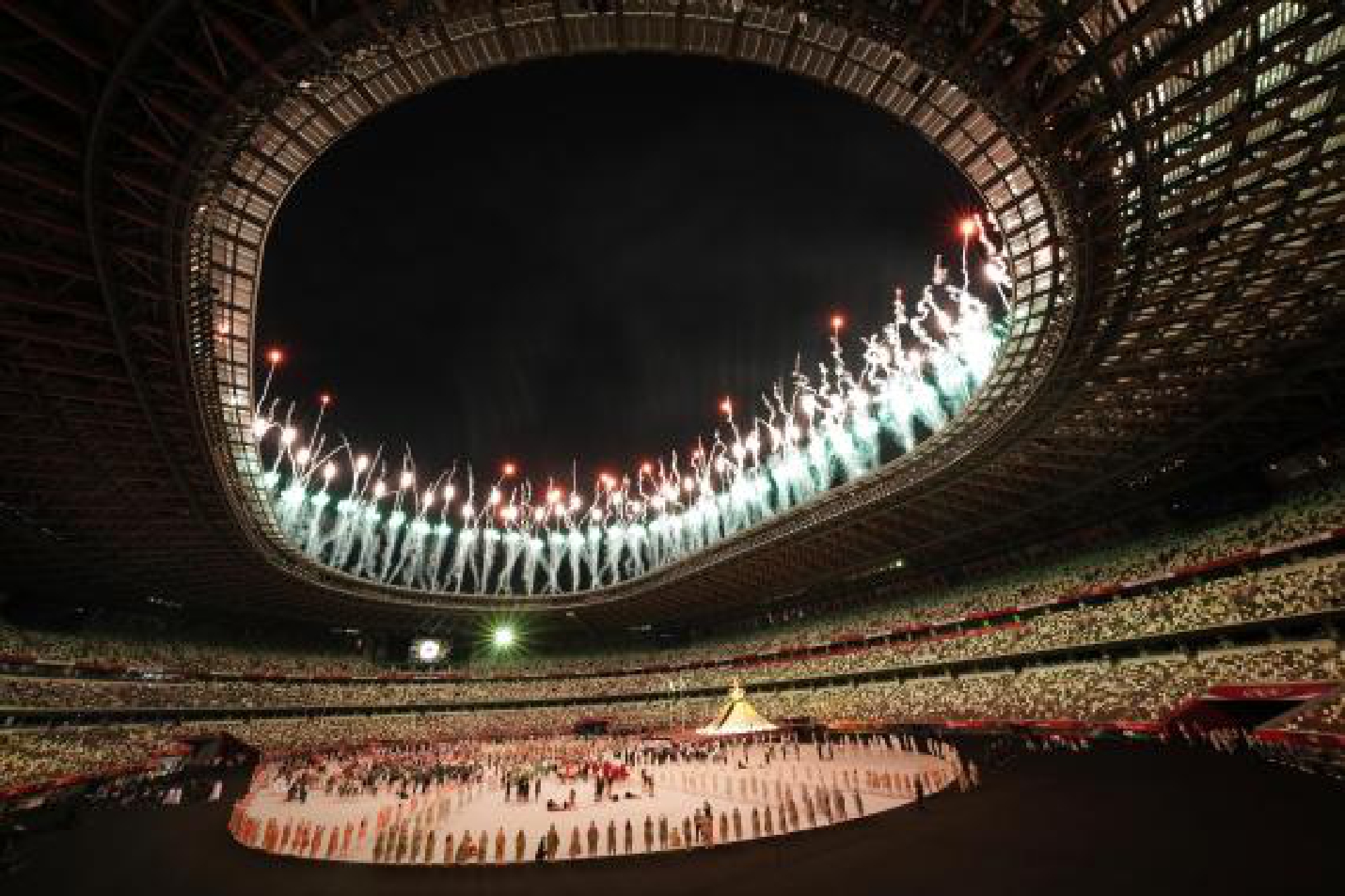 Fireworks explode over the Olympic Stadium during the opening ceremony of the Tokyo 2020 Olympic Games in Tokyo, Japan, July 23, 2021.
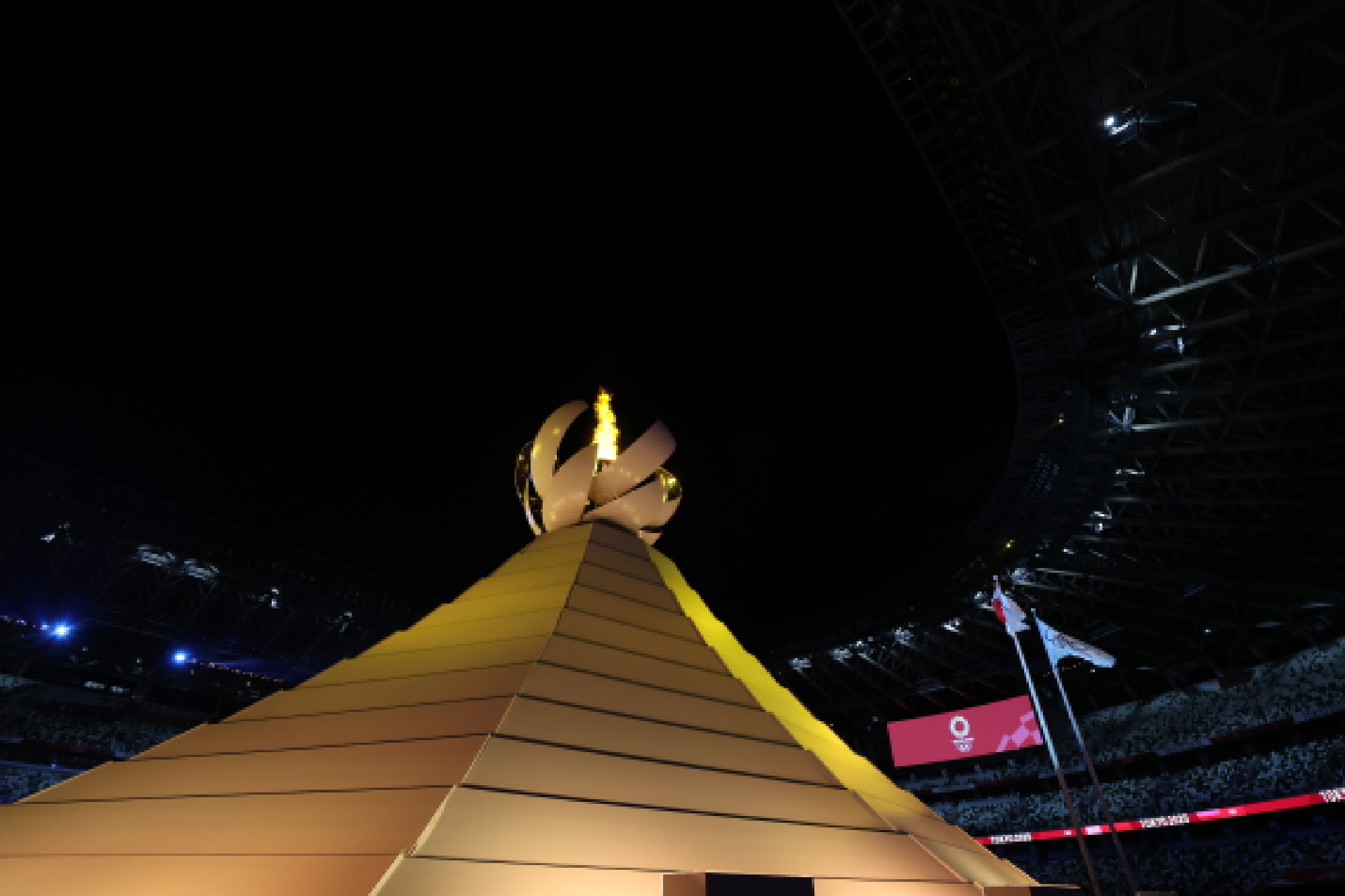 The cauldron is lit during the opening ceremony of Tokyo 2020
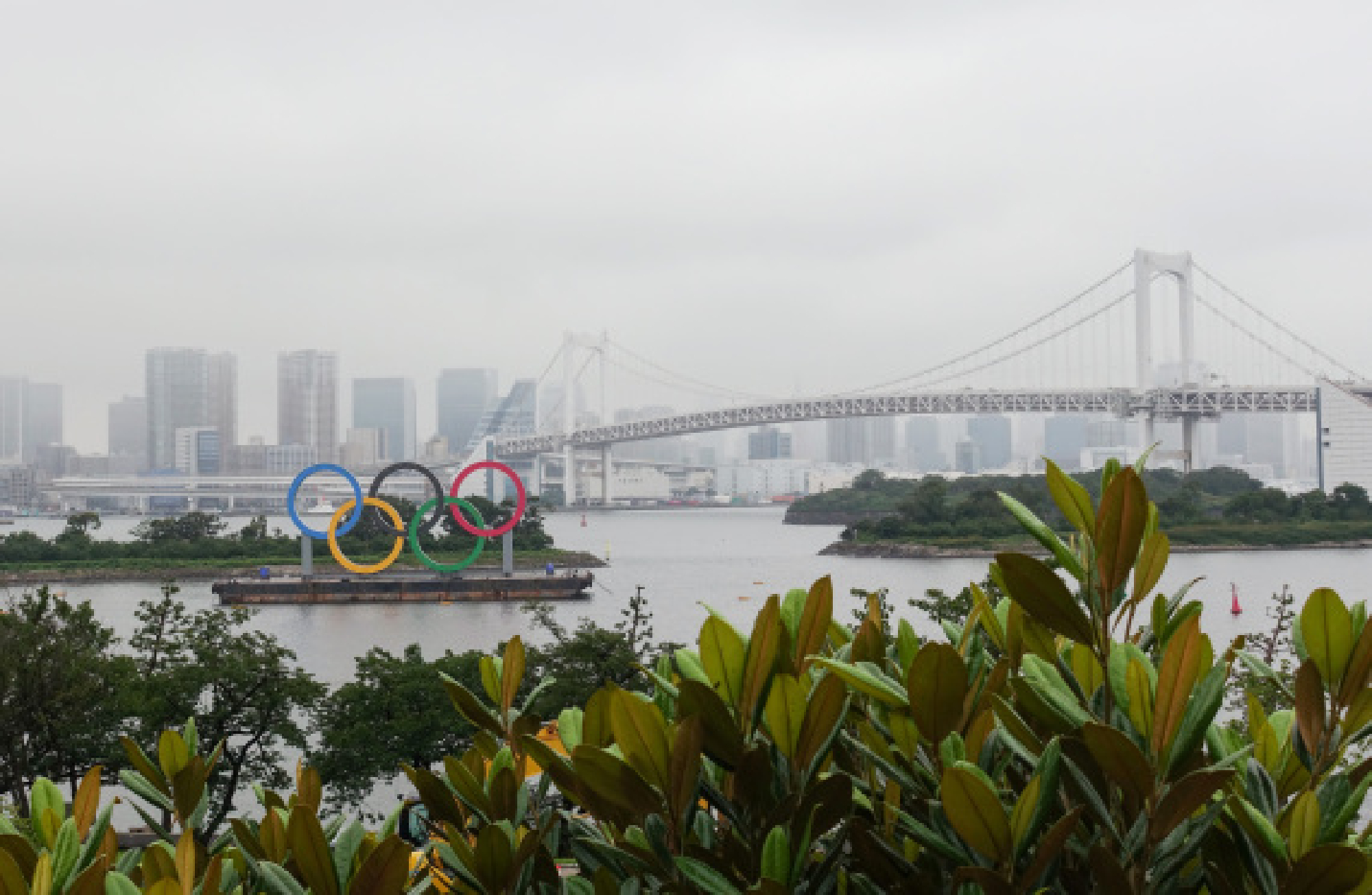 The Olympic Rings displayed at Odaiba Marine Park, Tokyo
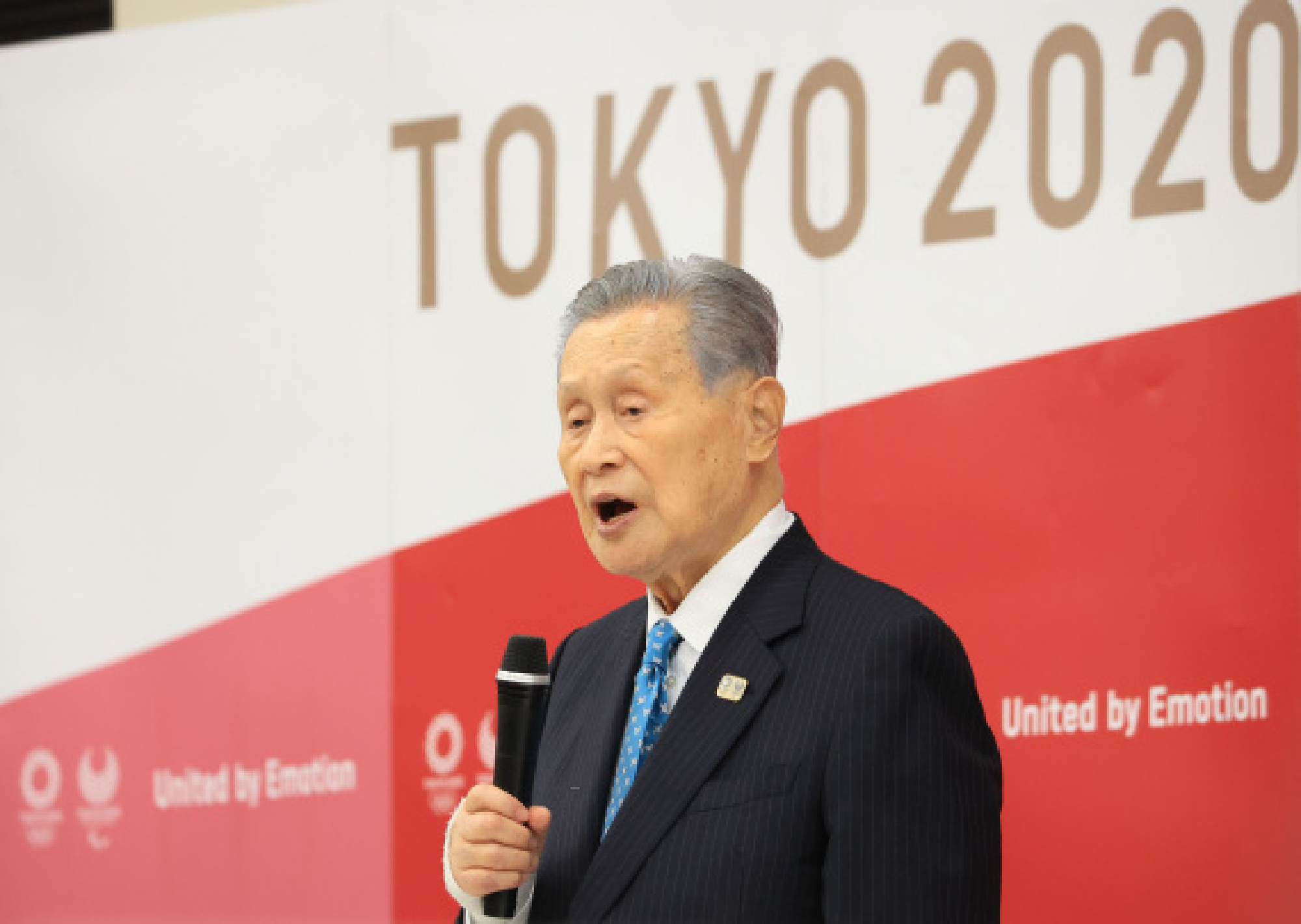 Mori Yoshiro, ex-president of Tokyo 2020 Organizing Committee of the Olympic and Paralympic Games, speaks at a meeting at the committee headquarters in Tokyo, Japan, on Feb. 12, 2021.
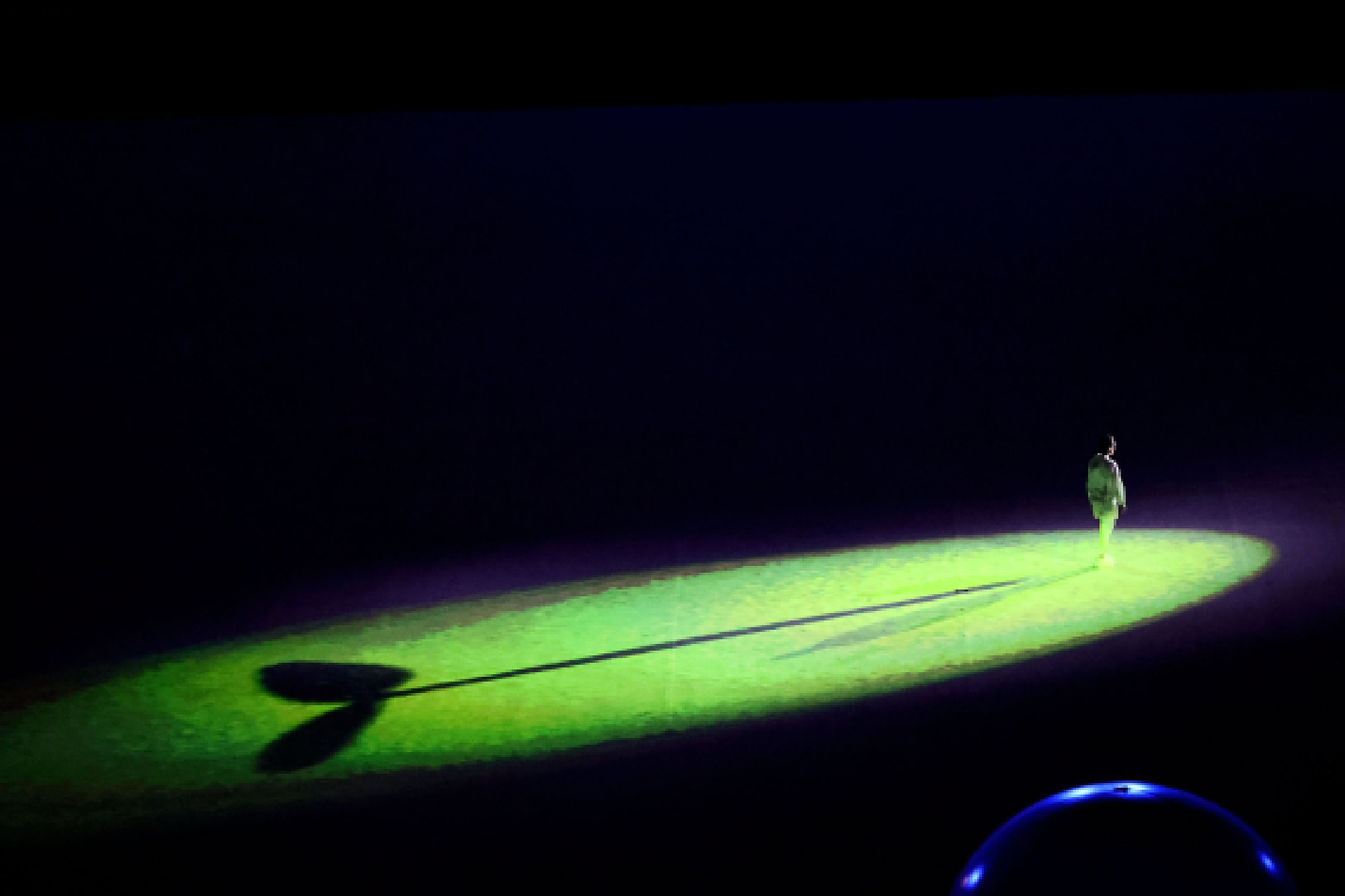 An artist performs during the opening ceremony of Tokyo 2020 Olympic Games at the Olympic Stadium in Tokyo, Japan, July 23, 2021.
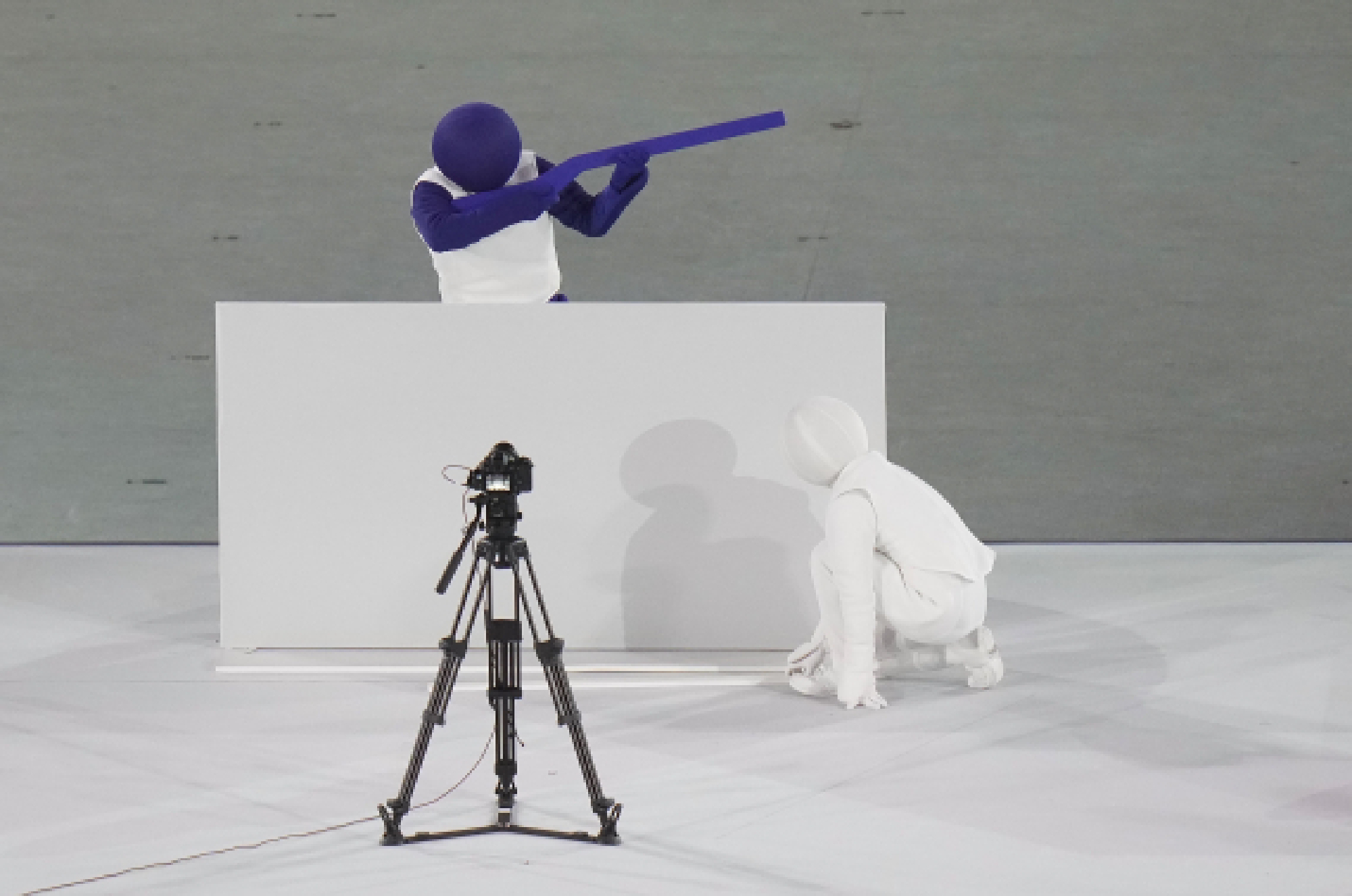 Dancers replicate a shooting pictogram during the opening ceremony of Tokyo 2020 Olympic Games at the Olympic Stadium in Tokyo, Japan, July 23, 2021.
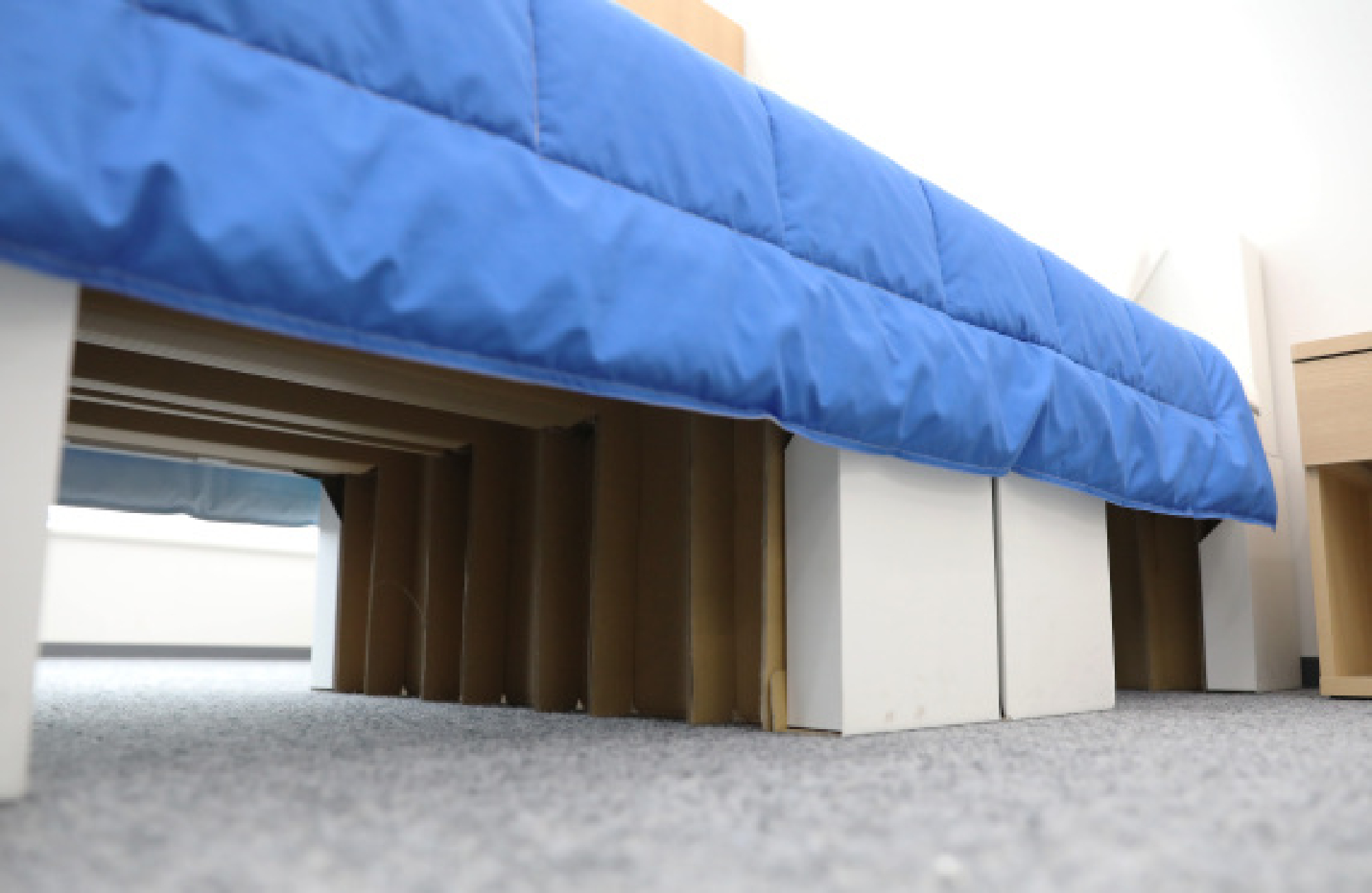 This photo taken on January 9, 2020 shows recyclable cardboard beds at the Athletes Village of the Tokyo Olympics.
 Thais urged to cheer national Olympic team – albeit virtually
 Thais urged to cheer national Olympic team – albeit virtually
 Thais urged to cheer national Olympic team – albeit virtually

 SootinClaimon.Com