ศาสตร์เกษตรดินปุ๋ย : ขอบคุณแหล่งข้อมูล : หนังสือพิมพ์ The Nation
http://www.nationmultimedia.com/news/travel/30303962
ศาสตร์เกษตรดินปุ๋ย : ขอบคุณแหล่งข้อมูล : หนังสือพิมพ์ The Nation
http://www.nationmultimedia.com/news/travel/30303962
The showpieces were Yangliuqing New Year paintings that belong to a select style of traditional Chinese New Year pictures.
Yangliuqing New Year painting art originated from the middle to late period of the Ming Dynasty (1368-1644) and enjoyed its prime during the Qing Dynasty (1644-1911). It was listed as National Intangible Cultural Heritage in 2006.
Using bright colors and fine lines, Yangliuqing New Year pictures are well-known for the harmony and auspiciousness they convey to people. Chubby babies and children, lucky tokens, folk stories, fine ladies and landscapes are most often portrayed in the paintings.
The exhibition is on until March 26.
ศาสตร์เกษตรดินปุ๋ย : ขอบคุณแหล่งข้อมูล : หนังสือพิมพ์ The Nation
http://www.nationmultimedia.com/news/travel/30303956
According to a recent survey many Malaysians can only dream of a holiday by a beach, as their circumstances do not allow them to take a vacation. Filepic
Many Malaysians admit to checking their e-mails and work messages while on vacation. Filepic
Work commitments at the office is one of the main reason many Malaysians can
However, Malaysians don’t seem to think so, as 67% say they feel they don’t take enough vacations. This was according to the 2016 Expedia Vacation Deprivation survey across 28 countries worldwide.
What’s more, based on the results, we are the third most vacation-deprived nation globally. The slightly good news is that we don’t seem to be as deprived compared to 2015 when the nation was the second most deprived in the world.
The majority are taking only 25% of their allocated leave days. The main reason most Malaysians don’t take their vacations is likely poor finances (36%).
The survey also reveals significant disparity in the number of vacation days received across the globe. From countries like Germany and France where average annual allocation for leave is 30 days, Australia (20) and Singapore (18), Malaysia is close to the lowest world bracket with its 16 days a year.
Only 51% of Malaysians use up all their allocated vacations days. But even then, there seems to be difficulty disconnecting from work as 35% admit to checking work e-mails or voicemail at least once or twice while on holiday.
“From the survey findings, we realise that a significant number of Malaysians go from six months up to a year without going on a vacation (37%). Aside from lack of money, the impossible work schedule (34%) and difficulty in coordinating time with loved ones or friends (29%) seem to be the common reasons behind Malaysians’ vacation deprivation.” said Expedia group general manager (South-East Asia and India) Simon Fiquet.
A total of 48% of Malaysians admitted that they have cancelled or postponed vacation plans because of work. Being vacation deprived does not come without consequences. Malaysians reveal that lack of vacation leaves an impact on their professional lives, with 35% admitting to being more stressed at work.
What would Malaysians be willing to give up for one extra day of vacation? The survey asked respondents on what they are willing to give up for an entire week in exchange for one extra day of vacation.
Going on vacations may leave a positive impact and improve a person’s quality of life.
From the survey, the findings reported that after returning from a vacation, Malaysians feel – happier (37%); better rested (29%); less stressed/more relaxed (28%); and in better health (27%).
They are so deprived that 42% of Malaysians stated that they are willing to give up watching television for a week to get an extra day of vacation. This was followed by alcohol and social media with 39% and 33% respectively.
ศาสตร์เกษตรดินปุ๋ย : ขอบคุณแหล่งข้อมูล : หนังสือพิมพ์ The Nation
http://www.nationmultimedia.com/news/travel/30303839
The United Nations has declared 2017 as the International Year of Sustainable Tourism for Development. It’s a noble goal and one to which most people will pay lip service, but can tourism really be sustainable? This week we take a look at five destinations where visitors can make a difference. From selecting seeds at an organic farm in Chiang Mai to planting trees for wild elephants and bathing domesticated pachyderms in their sanctuary, these experiences could change your life.
Helping wild elephants in Kanchanaburi
The Asian elephant is disappearing from Thailand as humans increasingly exploit its natural habitat – the forest. You can help remove them from the endangered species list by rebuilding their habitat while also enjoying a holiday. Bring the Elephant Home (BTEH), a conservation project founded by Dutch national Antoinette van de Water who lives in Chiang Mai, provides wild elephants and other wildlife with extra living space and food. BTEH, together with Salak Phra Wildlife Sanctuary in Kanchanaburi Province, plants trees, makes salt licks and builds firebreaks, all with the aim of restoring the forest for its wild residents. The activities mainly involve cutting firebreaks, building check dams and monitoring the seed germination process. Kanchanaburi, on Thailand’s western frontier, is a tourist destination in itself. When you’re off duty, you can visit the Death Railway, The Bridge over the River Kwai, Prasat Mueang Sing Historical Park or simply plunge into one of the many outdoor pools fed by a waterfall.
Call (+66 8) 3566 5223 or visit www.Bring-The-Elephant-Home.org.
Save the seeds in Chiang Mai
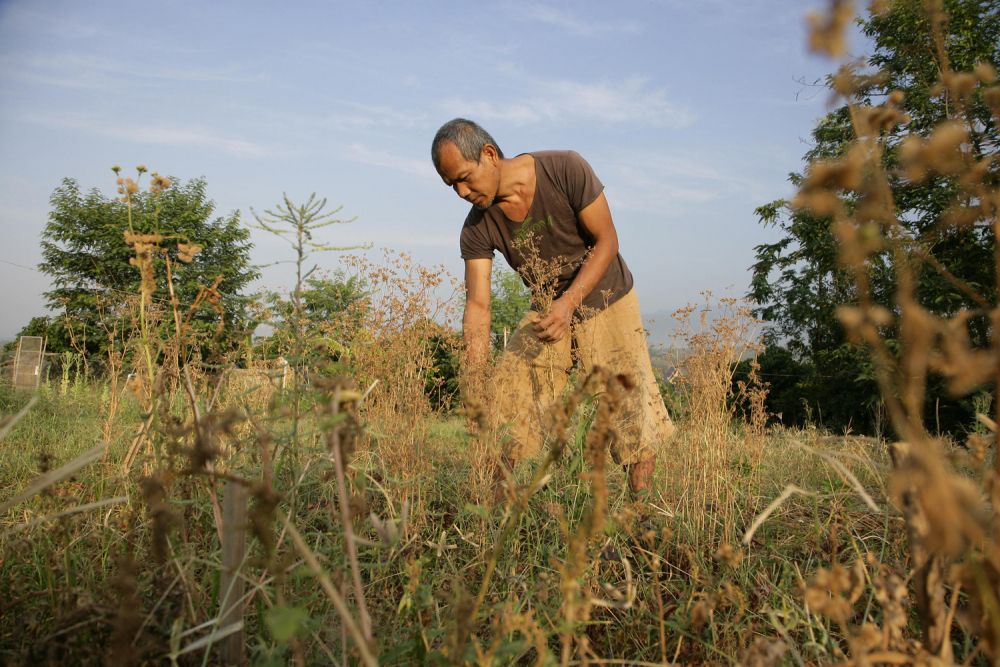
Have you ever wondered why tomatoes from supermarket taste like cardboard while the red fruits from a farmer’s market are sweet and juicy. Today a good seed has become a bad seed, thanks to the greedy agro-industrialists and their GMO magic. If you buy a packet of sweet corn from the seed racks, for example, the seeds might produce beautiful corn. However, gardeners cannot keep the seeds of the first growth for the next season. If they try, the plants will be deformed. In Chiang Mai, Jon Jandai is crusading against hybrid cultivars in order to save melons, garlic, pumpkins, corn and many other varieties of vegetables and fruits grown from heirloom plants. His organic farm can accommodate big and small-time horticulturists interested in seed-saving techniques. Visitors will learn a lot about the sustainable lifestyle while working and staying with Jon at his farm in Mae Taeng district.
Call (+66 8) 1470 1461 or email kritsadasabai@gmail.com. Visitwww.PunPunThailand.org.
Learning the art of permaculture in Chiang Mai
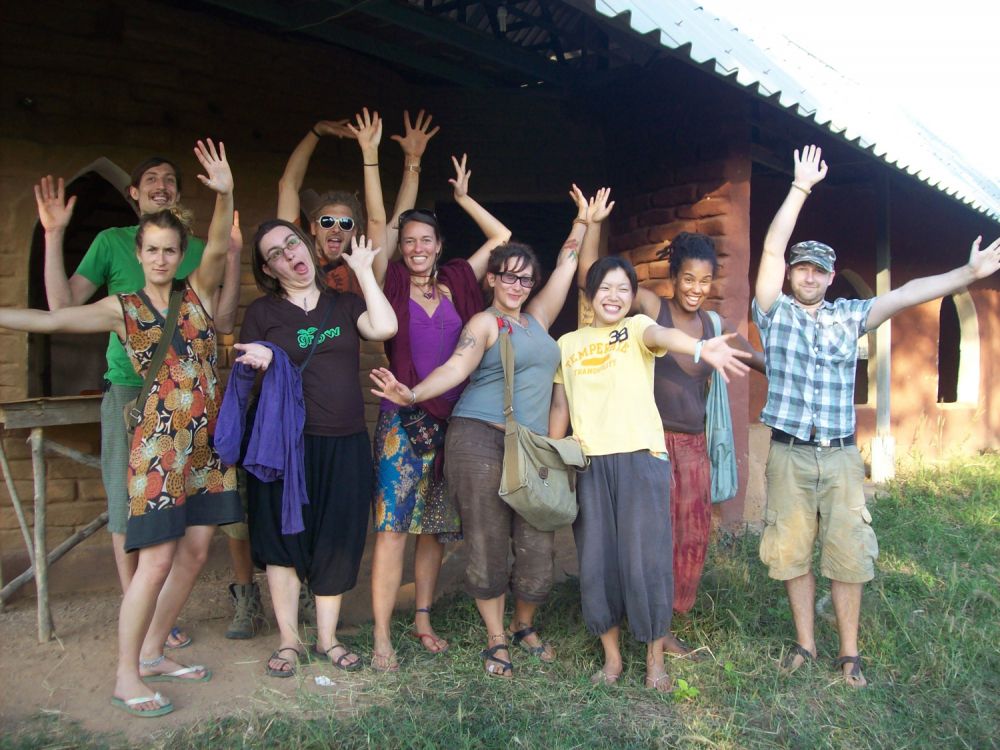
Inspired by permaculture, best defined as the development of agricultural ecosystems that are self-sufficient, the Panya Project in Chiang Mai is an education centre that teaches the sustainable way of life. Nestled in the peaceful surroundings of Ban Mae Cho, the centre invites visitors to experiment with an integrally sustainable way of living in the tropics. Permaculture is an ancient technique that has been practised for centuries but today is often forgotten or overlooked. On the organic farm, for example, visitors will work in the kitchen garden creating new garden beds, planting seeds, mulching, weeding, making weed barriers, and harvesting food for the kitchen. If the visitors stay long enough, they will get to learn the whole process of permaculture living from making adobe bricks to building natural buildings.
Call (+66 9) 3037 6219, (+66 9) 3037 6220 or email panyaproject@gmail.com. Visitwww.PanyaProject.org.
Helping hilltribes in Chiang Rai
The Hill Tribes Development Association in Chiang Rai province provides support to ethnic villagers through responsible tourism and volunteer activities. Visitors can help support the development of the community through teaching English to the children. If teaching is not your cup of tea, then building a classroom might be. Volunteers are always welcome to take part in community development projects such as building a classroom for the school or constructing wells or toilets.
Call (+66 8) 1765 5352 or email somsakbannok@yahoo.com. Visitwww.HilltribeGuide.com.
Wash an elephant in Chiang Mai
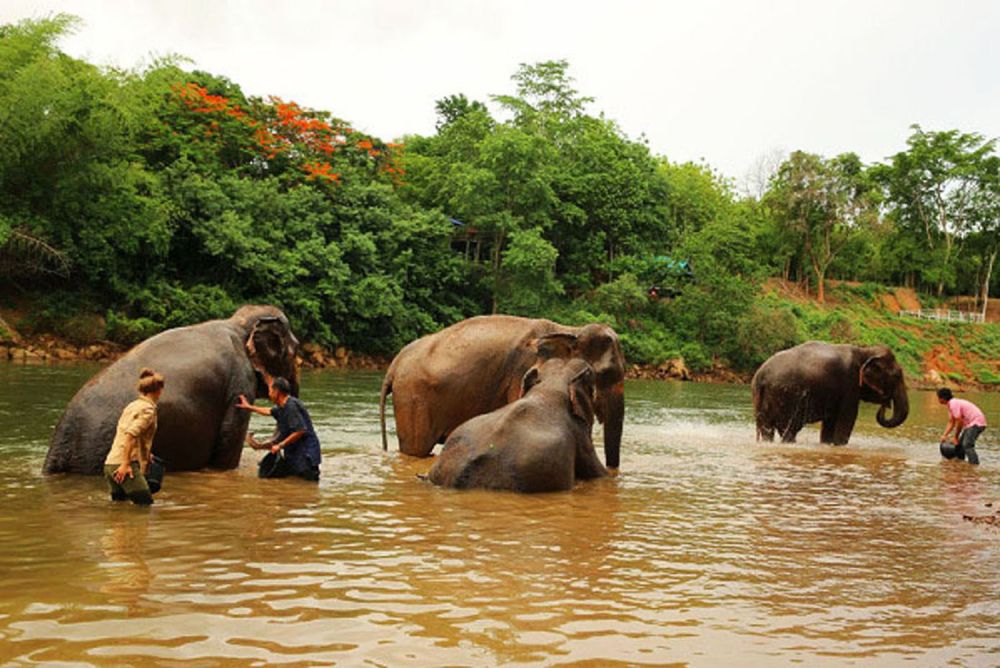
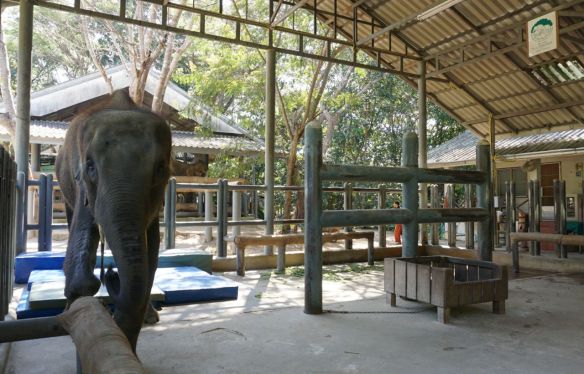
You don’t have to join the circus to work with elephants. At Elephant Nature Park (ENP) in Chiang Mai, volunteers work alongside professional mahouts (keepers) to walk, water, feed and bathe the animals. Many of these elephants have been rescued from the city streets where they were used for begging. You can choose between a full-day Elephant Care programme – where you will bathe the pachyderm in the river – to a 7-day volunteer stay to improve elephant’s plight. Elephants are sweet and intelligent. They love taking a bath as much as they love eating, and visitors can get up close and personal with them by bathing them and splashing them with water.
Call (+66 5) 327 2855, (+66 5) 5320 8246-7 or visit www.ElephantNaturePark.com.
ศาสตร์เกษตรดินปุ๋ย : ขอบคุณแหล่งข้อมูล : หนังสือพิมพ์ The Nation
http://www.nationmultimedia.com/news/travel/30303381
Most Of Us have a love-hate relationship with airports.
The misery of queuing to check in and go through security, endless long walkways and uncomfortable departure-lounge seats can usually be alleviated by snapping up a bargain in duty free and thinking about the excitement of the upcoming trip.
But some airports do a better job of making that dead time bearable than others. Skytrax, the British airport and airline review site, collates the views of millions of customers to rank the world’s best airports.
Singapore Changi Airport came out on top in the 2016 list yet again, closely followed by Seoul-Incheon in South Korea. Munich Airport in Germany came third.
Passengers answer questions about 40 different aspects of their travel experience, from the airport’s transport links to the language capabilities of airport staff. The survey is detailed and focuses on comfort and service.
But it isn’t the questionnaire alone which gives Skytrax the answer to what makes a good airport.
Frequent flyer and editor-in-chief of Aerotelegraph magazine Laura Frommberg says a rule of thumb is that the more destinations an airport connects to, the better it is. Airports where airlines are headquartered and keep a lot of planes have a particular advantage.
These are airports which airlines choose to be their “hub”, an industry term for a main junction. For example, Zurich is the hub for Swissair and London Heathrow is the hub for British Airways.
Passengers getting connecting flights want to kill time while they’re waiting for the next leg of their journey.
In Munich, they can while away the hours in a covered beer garden – the Airbraeu. In Hong Kong travellers can go to the cinema. And in Heathrow’s Terminal 5, there are more than 50 stores to peruse.
But it’s not all about amusements. A good airport also has to function properly. Thomas Jahn, a pilot who has been flying for German airline Lufthansa since 1989 and has spent nearly three years of his life in total airborne, looks for rapidity of transit.
His time in airports has taught him the value of short walkways, efficiency and – above all – a speedy check-in, security check and passport control.
One of the most stressful moments of the airport experience is in the baggage claim area after landing, when suitcase after suitcase goes past on the conveyor belt, none of them is yours and you have to file a missing bag claim.
Usually the passenger has to wait for days for their luggage to eventually arrive from the place where it was stranded. If it turns up at all.
The risk of your luggage being left behind is the lowest at Japanese airports. Departing from Tokyo-Haneda, Osaka-Kansai or Centrair, near Nagoya, it practically never happens, says Frommberg.
Alongside all of these practical considerations, there is another important point Frommberg takes into account when she’s at an airport: the atmosphere. Narrow corridors provoke feelings of anxiety, not wanderlust.
Older airports are often dark, like Berlin-Tegel. Natural light has become much more important in the planning of new terminals, where you can normally look out onto the manoeuvring area at the waiting planes, Frommberg adds.
“You need to be able to come in and immediately feel happy and in a holiday mood,” she says.
ศาสตร์เกษตรดินปุ๋ย : ขอบคุณแหล่งข้อมูล : หนังสือพิมพ์ The Nation
http://www.nationmultimedia.com/news/travel/30303380
THAI Smile on the move
Following the expansion of its services to include more regional destinations, THAI Smile Airways will move its operation at Bangkok’s Don Mueang International Airport to Suvarnabhumi Airport from January 16. The move follows the integration of the airline’s operating base with Thai Airways International, its big sister. THAI Smile Airways recently introduced scheduled flights to Jaipur, Lucknow and Gaya in India and is planning to add new routes to China as well as more domestic flights to such popular domestic destinations such as Phuket, Chiang Mai and Khon Kaen. Call 1181 or visit http://www.ThaiSmileAir.com.
The Fireplace Grill and Bar at Bangkok InterContinental hotel introduces a new “Savour the Season” menu to celebrate the New Year. Available from now through March, it features such highlights as freshly-hunted organic duck, beautifully complemented with beetroot and duck jus, and blue mussels, prepared to the diner’s personal preference. For something lighter, check out the marinated scallop carpaccio with avocado and crabmeat, and charcoal grilled heirloom beetroot with goat cheese. Designed and prepared by chef Sebastian Reische, the new menu underlines the harmony between tastes and textures. Book a table at (02) 656 0444 extension 5502 or visit http://www.Bangkok.Intercontinental.com.
Brewski, Bangkok’s latest watering hole at Radisson Blu Plaza, is offering craft beer fans more than 100 kinds of beer from microbreweries around the world. Ranging from light and refreshing to bold and hoppy with sweeter accents, the rooftop bar is the perfect place to taste pilsners, wheat ales, stouts, brown ales and IPAs. Located in the heart of Sukhumvit, one of Bangkok’s most exclusive districts, the sleek and sophisticated watering hole has such brews as “Dead Guy Ale” from Oregon, “Wild Turkey Bourbon Stout” (a stout noted for its deep ebony hue and a beautiful mahogany head), and “Chouffe Soleil” from Belgium. Brewski is open daily from 5pm to 1am. Visit VenuesBkk.com or call (02) 302 3333.
Amazing Thailand on show
The Thailand Tourism Festival returns to Bangkok’s Lumpini Park from January 25-29 and as ever will be offering lots of festive events and tourism promotions. This year’s highlight is “The Villages of Five Regions” featuring the best and finest from different parts of Thailand. In the Northern Village, for example, visitors can admire colourful Lanna parasols and lanterns. This annual tourism event also celebrates Thailand’s ethnic diversity with the Akha, Lahu, Hmong, Karen and other hill tribes showing off their food and traditional dances.
ศาสตร์เกษตรดินปุ๋ย : ขอบคุณแหล่งข้อมูล : หนังสือพิมพ์ The Nation
http://www.nationmultimedia.com/news/travel/30303379
Hosted by Haru in Tokyo, this stylish boy
A couple admires the cherry blossoms in Tokyo from the water. With cheap accommodation from Airbnb.com, Thai visitors can now enjoy longer holidays in Japan. DPA
There’s little doubt that Airbnb.com has become a game-changer in the way we travel and remains the best tool to find a cheap room (that won’t make you feel cheap) just about anywhere in the world.
As we head into 2017, we take a look at Japan – a favourite destination among Thais – to see how the website can serve room-seekers.
For example, you can stay in an apartment just two stops away from Tokyo’s Shibuya Station for just Bt635 a night while Yukie, who lives in Hokkaido, offers her Hello Kitty-themed room for a mere Bt1,186 per night.
So if you’re heading to Japan, check out our list for the best rooms under Bt2,500 per night.
TOKYO
Host: Tomo
Description: Cosy Japanese style house (Meguro)
Price: Bt1,595 per night
Accommodates: Two guests/ whole house
Located just five minutes walk from Naka-Meguro train station, this Japanese style house is a great base from which to explore Tokyo and its immediate surroundings. There are plenty of restaurants in the immediate area and if you happen to be there in the spring, you’ll see plenty of cherry blossoms in full bloom. After booking, host Tomo will send a detailed PDF guideline on the location and how to get the key to the room. Check in is 24 hours. There is no TV but Wi-Fi is always available. The place offers one bedroom, one bathroom, living area and veranda. It is equipped with refrigerator, air-conditioner, bathtub, hair-dryer and washing machine. Amenities like towels, bed sheets, soap, toilet paper and shampoo are also available. Smoking is not allowed though and all electric devices especially the air-conditioner should be turned off before leaving. From 116 guest reviews, Tomo is quick to respond and considered a nice and helpful host while the place is clean, quiet and in a nice neighbourhood. Tomo loves vegan food so vegan and vegetarian guests can ask for his advice on vegan options in Tokyo.
Location: Centre of Shibuya
Price: Bt2,374 per night plus cleaning fee and security deposit
Accommodates: Four guests/ whole apartment
Synonymous with easy access, the apartment is a five- minute walk from Shibuya train station, three minutes walk from the Airport Limousine bus boarding point, and one minute walk to the nearest convenience store, sushi restaurant, ramen shop and fast-food restaurant. Check in time is 3pm and check out is 11am. The apartment has one bedroom, one bathroom and is equipped with unlimited Mobile-Wi-Fi, air conditioner, electric kettle, cooking utensils, coffee machine, TV, refrigerator and microwave. Yoji, the host, provides bed sheets, towels, soap, shampoo and conditioner. Pets, parties, loud noise and drugs are all prohibited. Following the house rule is the key to a smooth stay. Most of Yoji’s guests love the place for its location and are full of praise for Yoji’s quick response to their queries.
Host: Haru
Description: Two train stops from Shibuya station
Price: Bt635 per night plus cleaning fee and security deposit
Accommodates: Two guests/ shared room
Those who love to live like the locals and with the locals should check out this place. The room is two minutes walk from the Komabatodaimae train station and two stops away from Shibuya train station. The room has one bedroom and bathroom. Check in time is anytime after 2pm while check out time is 10am. Microwave, hair dryer, towels, bed sheets, soap, shampoo, toilet paper are available. Cooking and smoking are not allowed. Wireless Internet is always available. Convenience stores and supermarkets are nearby with some open 24 hours a day. From 142 reviews, Haru, the host, is friendly, extremely helpful, listens to good music and speaks good English. While clean, it is small (exactly as shown in the photo though) but good value as a base to explore Tokyo.
Host: Noriyuki
Description: Few minutes from Shinsaibashi Station
Price: Bt1,818 per night plus cleaning fee
Accommodates: Two guests/ whole apartment
Located just a few minutes walk from Shinsaibashi Station, Noriyuki’s Shinsaibashi 504 is within walking distance of Dotonbori, home to the Glico Man and the Kani Doraku Crab, as well as Namba entertainment district and shopping arcades. The apartment consists of one bedroom, one bathroom, and amenities like towels, bed sheets, soap, shampoo and toilet paper. It also provides TV, air conditioner, wireless Internet, cooking utensils and cutlery. Pocket Wi-Fi is available for a fee (500Yen per day). Noriyuki’s guests admire the location, the cosy clean room and Noriyuki’s advice and help. Some complain it’s a little noisy but that’s to be expected for somewhere so close to many attractions, as well as the shopping and entertainment area.
Description: Relaxation in Osaka (Umeda)
Price: Bt1,556 per night plus cleaning fee and security deposit
Accommodates: Four guests/ whole apartment
Slap in the centre of Osaka Umeda area, this apartment is a 10-minute walk from Osaka (Umeda) Station. The room offers one double bed, two floor mattresses, bathroom and kitchen. TV, air conditioner, hair dryer, refrigerator, washing machine and wireless Internet. Amenities like towels, shampoo, hair conditioner, soap, hairbrush, shower cap, cotton and cotton swabs, razor and slippers are also listed in the offer. As the room is in a serene neighbourhood, host Shinji advises his guests to keep their voices down and respect the neighbours. Most of his guests love the clean and well-equipped room and appreciate Shinji’s kindness and quick response.
Host: Sato
Description: Reserved, independent house
Price: Bt965 per night plus security deposit
Accommodates: Four guests/ entire house
Enjoy a home away from home in a two-storey house in Kobe. The house is a 10 to 15-minutes walk to Sanomiya station and the area has lots of places to eat and shop. It is also an easy walk to the main shops, restaurants, bars and nightlife that Kobe has to offer. Sato gives detailed instructions about the “do’s and don’ts” so read carefully before making a decision. The house is equipped with pocket Wi-Fi, air conditioner, refrigerator, microwave and electric kettle. Soap, shampoo, towels and hair dryer are also available. From 120 guests’ reviews, Sato’s place is clean and fully equipped, the location is great and it’s easy to make a day trip to nearby cities like Kyoto, Hiroshima and Osaka while Sato is helpful and quick to respond.
HOKKAIDO
Host: Yukie
Description: Free Wi-Fi. One minute from Sapporo station.
Price: Bt1,186 per night plus cleaning fee
Accommodates: Four guests/ whole apartment
Hop back into your childhood dream and stay in a Hello Kitty Room in Sapporo. The room is just one minute from Motomachi subway station while Sapporo Station, a major rail hub, is four stations away. Restaurants, bars, grocery stores and a shopping mall are all within 10-minutes walk. Check in is anytime after 1pm and check out no later than 10 am. The room offers cooking area, TV, heater, wireless Internet, toiletries, towels, and bed sheets. Ukie’s guests love the spacious room and its great location and most agree that Ukie is a nice host, kind, flexible and quick to respond.
Host: Akina
Description: One minute from Sapporo station
Price: Bt1,706 per night plus cleaning fee and security deposit
Accommodates: Three guests/ whole apartment
The apartment is one-minute walk from Kikusui Station, and only two stops from Odori Station, Sapporo city centre. It’s close to Sapporo’s main entertainment area and Odori Park and has plenty of restaurants with reasonable prices. There are no fussy house rules but guests should communicate with the host clearly about the “do’s and don’ts” in Japanese culture. Check in is available anytime after 3pm while check out time is 10am. TV, washing machine, refrigerator, microwave, rice cooker, wireless Internet, hair dryer, bed sheets, towels and toiletries are provided. Guests report that Akina, is friendly, flexible and very helpful and the room is clean and in a prime location.
Host: Kumiko & Miri
Description: Three-minute walk from station. Free Wi-Fi.
Price: Bt1,595 per night plus cleaning fee and security deposit
Accommodates: Four guests/ whole apartment
Less than five minutes’ walk to Nakajima Koen subway station, this apartment is within walking distance to Nakajima Koen and Susukino, the large amusement district in central Sapporo which is home to cafes, restaurants, sushi bars, a ramen alley and the red light district. The apartment offers Wi-Fi, a washing machine and kitchen utensils. Towels, toiletries and hair dryer are also available. Kumiko and Miri’s guests love the location though as it is located opposite a fire station, it can be a little noisy. Guests appreciate the tidy room and detailed advice and recommendations from Kumiko and Miri about Japanese culture and where to eat out.
ศาสตร์เกษตรดินปุ๋ย : ขอบคุณแหล่งข้อมูล : หนังสือพิมพ์ The Nation
http://www.nationmultimedia.com/news/travel/30302999

Sometimes it is quite easy to instantly earn $420 (Bt15,000): all you have to do is raise your hand fast enough while you are waiting to board your plane.
It happened recently when passengers were waiting at Munich Airport to leave on a flight to Toronto. When they were ready to board their plane, a Lufthansa employee said the flight was overbooked, and she asked whether there were three passengers willing to fly the next day instead, in exchange for immediate compensation of 400 euros.
The airline would of course pay for their overnight hotel stay too.
Students with little money, for example, often don’t need to think twice: they get to spend a night eating and sleeping at a five-star hotel and their holiday finances suddenly look a lot better.
On every flight, there are almost always passengers who fail to show up despite having booked and paid for their tickets. These no-shows are the reason why every airline routinely overbooks its planes.
With Lufthansa alone, for example, there are 3 million such no shows every year, says airline spokesman Florian Graenzdoerffer. That would be enough to completely fill 8,700 Boeing 747-model long-distance planes.
This is a big financial challenge for airlines, since planes are most profitable when they are flown full. We need to assume that planes are on average 10 per cent overbooked, says David Hasse, of the specialist portal Airliners.de.
The fact that it is rare for anyone to be left behind fuming at the gate “has to do with airlines’ clever prediction management,” Hasse says.

Airlines know exactly on what routes passengers are most likely not to show up, and why.
Lufthansa confirms that they do have a system in place: while Japanese passengers almost always turn up at the gate, India’s no-show rate is particularly high, Graenzdoerffer says.
In order to calculate the probability that a certain number of places will remain empty on any given route, airlines need to take into account many parameters beyond behaviour-based empirical values in the various cultures, however.
“The prediction system includes reservation change statistics, up-to-date weather data, public holiday calendars, holiday periods and event information for the place of origin and the destination,” Hasse explains.
For instance, a Swede may have bought a cheap ticket for a weekend in Barcelona that set them back less than 50 euros. A few days before their flight, it becomes clear that it will be rather chilly due to a storm front over Spain.
“There will then be a relatively high probability that this passenger will not show up for their flight,” the expert notes.
Lufthansa, for example, begins to feed data into its prediction system as many as 361 days ahead of any given take-off. The result of such a procedure is that last year 300,000 extra passengers actually got to fly in overbooked planes.
“For every passenger we have to tell at the gate that they cannot board the plane due to overbooking, there are eight we can offer a seat to, although the plane is overbooked,” Graenzdoerffer notes.
This not only leads to a more efficient use of plane capacity, but also allows airlines to “keep ticket prices as low as possible,” the Lufthansa spokesman says.
Some parts of the world regulate overbooking strictly. The EU’s Air Passenger Rights Regulation ordain that every airline compensate anyone left on the ground when no-show predictions go wrong.
They must also be booked on the next available flight, obviously at no extra cost, and the airline has to pick up the bill for a potential hotel stay and any meals, calls and transfers the change makes necessary.
Volunteers who opt to stand in for them get exactly the same rights, Graenzdoerffer says.
And it’s rare that nobody at all is open to the cash inducement.
Under some circumstances, the passengers who do not show up at the gate may face penalties.
“This can particularly happen someone games the ticket prices with a certain flight combination,” says Holger Hopperdietzel, a lawyer who specialises in travel and tourism cases.
For example, a ticket from Vienna to Bangkok via Frankfurt costs less than simply flying straight from Frankfurt to Bangkok, so it’s attractive to buy the cheaper ticket and throw away the first, short-haul coupon.
If you are caught doing that though, the airline will demand you pay extra, Hopperdietzel notes.
Most airlines state in their terms and conditions that passengers are obliged to use all flights included in their ticket in the order of the itinerary.
But if you simply call off a non-refundable there-and-back trip, there’s no contractual obligation to tell the airline that you won’t be on the plane.
ศาสตร์เกษตรดินปุ๋ย : ขอบคุณแหล่งข้อมูล : หนังสือพิมพ์ The Nation
http://www.nationmultimedia.com/news/travel/30302995

Airbnb.com has revolutionised how we stay when travelling. With a network of spare rooms and homes for rent, the website is a popular tool for finding a cheap room (that doesn

Residents of Phang Nga province in Thailand

Samsung Gear 360 is becoming a hot travel document tool. Photo/vrscout.com

Persian treat
GET INSPIRED
Once a postcard from a travelling friend or a picture in a travel magazine was the inspiration to explore a new destination. That changed with the advent of Facebook. From the Sutongpe bamboo bridge in Mae Hong Son to camel trekking in India, today finding travel ideas is as easy as logging into your Facebook account. Thanks to social network friends – and a computer algorithm that allows for the posting of holiday photos on Facebook pages – technology is changing the way we discover new places. Virtual reality too is playing a bigger role in influencing our travel choices. So sign up, get chatting with friends and other like-minded folks, and discover a brave new world of culture, food and sights.
GRAB A BED
When you’re on the road, accommodation costs often take up more than half your budget. Here too, technology has changed the way we live away from home. Airbnb.com is today the preferred tool for finding a room at your destination anywhere in the world for a fraction of the hassle. Based on the concept of “sharing”, Airbnb allows people to share their spare rooms and lodging with visitors for a small charge. Airbnb.com helps you find a cheap room to rent. One night in a decent hotel in Prague could cost you around Bt5,000, but a private room from Airbnb.com can be Bt800 per night. And not only do you end up with more money in your pocket, you also have a much better opportunity to immerse yourself in another culture.

GO SOLO
Solo travel is becoming popular, and it has nothing to do with the stigma of sad singletons. You might be surprised to find out that not all solo travellers are dreadlocked students on a journey of self discovery but professionals who want to experience the world their way. And while it starts as a solo adventure, you get to meet plenty of interesting fellow singletons at your destination. There is, of course, an app for that. Solo Traveller connects travellers wanting to see and do the same things within a specific location. The app also has a practical side as travellers can connect to share costs for taxis, tours, or anything else that’s cheaper when organised in a large group.
VISIT INDIA
Forget South Korea. India is destination that counts in 2017. Thai Smile Airways knows this and is now operating direct flights from Bangkok to Gaya, Lucknow, Jaipur and Varanasi. The direct flight from Bangkok makes travelling to India’s ancient cities more convenient and cheaper than a transit in India. A flight to Jaipur, Rajasthan’s capital, for example, starts from just Bt4,910. So whether you fancy riding camels in the Rajasthan desert or dipping in the Ganges at Varanasi, check out the airfares today.
SEE IRAN
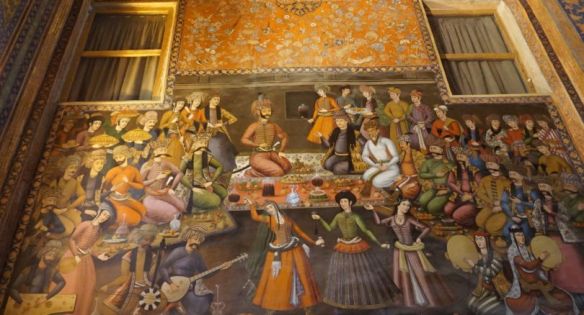
For those who have never been to Iran, the Islamic republic tends to invoke images of a dark, dangerous place full of fundamentalists. Travel is the best way to shake off such notions. The Iranian kebab is excellent, and choices of herbal teas and spices are unlimited. Iran is one of the most rewarding destinations on earth, and the Iranians are very friendly. Walking around the sublime, turquoise-tiled domes and minarets of Esfahan’s Naqsh-e Jahan Square is quite an experience, as is being dazzled by a kaleidoscope of colours at Nasir Al-Mulk Mosque in Shiraz. Iran has become a popular destination for the Europeans over the past few years. This trend is expected to make its way to this part of the world in 2017, thanks to new direct flights to Tehran offered by Thai Airways International and AirAsia.
ACTION CAMERA
Forget the selfie. With adventure travel being more popular than ever, it’s no surprise that people are also looking for creative ways to document their experiences. The Samsung Gear 360 is now on the market for 360-degree video and photos. It produces some of the best spherical video you can get from a consumer-grade 360-degree camera at the moment. It is easy to use on its own or with its full-feature mobile app. The camera can be used as a single-lens wide-angle video camera. Clips can be transferred, trimmed and shared with your Galaxy phone or edited on a computer before sharing on social media platforms.
GO LOCAL
Most trips and/or vacations planned and booked are extravagant, taking you someplace far away and undeniably foreign. While there is nothing wrong with that, the trend recently has been to stay close to home. In 2017, people will treat travel as a lifestyle instead of a luxury treat and so a short ride to a new destination becomes a simple pleasure and rewarding experience. With creativity and internet connectivity, many more local destinations are making themselves known. Just take Jaboo, a noodle stand with a panoramic view in Mae Hong Son, which has seen a major rise in trade since photos were posted to the social media.
GO GREEN
United Nations has declared 2017 as the International Year of Sustainable Tourism for Development. Both travellers and accommodation owners have chosen to become more environmentally friendly and sustainably aware in recent times. This mirrors the way in which people are increasingly finding ways to fulfil their aesthetic travel needs while maintaining cultural and environmental integrity by taking longer, more scenic routes and modes of transport. Eco-friendly stays are no longer the preserve of the few, but an expectation of the many.
ศาสตร์เกษตรดินปุ๋ย : ขอบคุณแหล่งข้อมูล : หนังสือพิมพ์ The Nation
http://www.nationmultimedia.com/news/travel/30302553

Located 85 kilometres south of Chiang Mai, the Friends of Asian Elephant Foundation(FAE)’s Elephant Hospital in Lampang is the world’s first medical centre for these elephantine giants and treats all kinds of problems suffered by its pachyderm patients.
Motala, for example, stepped on a landmine in 1999 in Myanmar. She walked three days and three nights to cross the border into Thailand from where it took another 10 hours to arrive at Lampang’s elephant hospital. The poor elephant lost her left front leg.
Mosha came into the hospital in 2006 with a similar problem. The young elephant had stepped on a landmine and lost her right front leg.
Fortunately, thanks to prosthetic limbs, both elephant are now able to stand on their feet again. Mosha and Motala became the first two elephants to receive prosthetic legs thanks to the FAE and its generous donors.
Other inpatients are “Donte”, a cheeky and playful baby elephant, “Boonmee”, another landmine victim, and “Bobo”, who was abused in captivity.
You don’t have to be a sick elephant to visit the Elephant Hospital. The medical centre is always ready to welcome visitors and elephant lovers.
The hospital is right next door to the Thai Elephant Conservation Centre – Lampang’s famous tourist destination that’s home to many adorable elephants.
ศาสตร์เกษตรดินปุ๋ย : ขอบคุณแหล่งข้อมูล : หนังสือพิมพ์ The Nation
http://www.nationmultimedia.com/news/travel/30302506


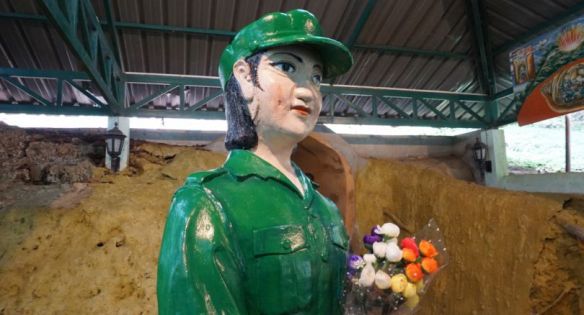
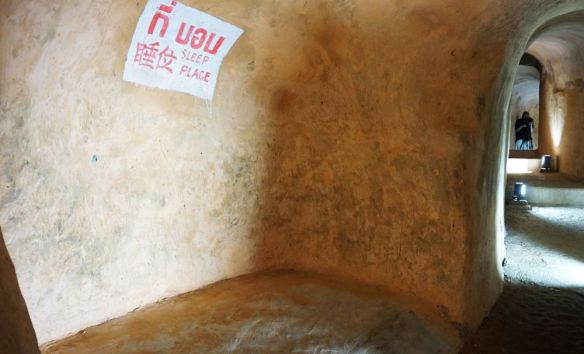
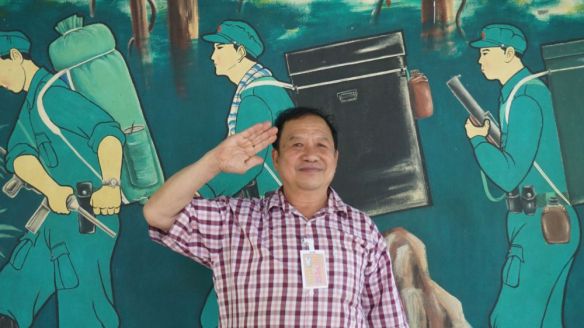
I’ve never thought of myself as particularly claustrophobic but I find myself shivering as I squeeze through a small opening in the earth. The feeling doesn’t entirely vanish as I emerge into a dim and cold cave but I cheer myself up by imagining that I’m in a wine cellar and surrounded by casks and bottles of vintage wine. A plaque on the wall reads “Sleep Place” so perhaps it’s a hobbit hole. But there are no hobbits here, only many retired comrades.
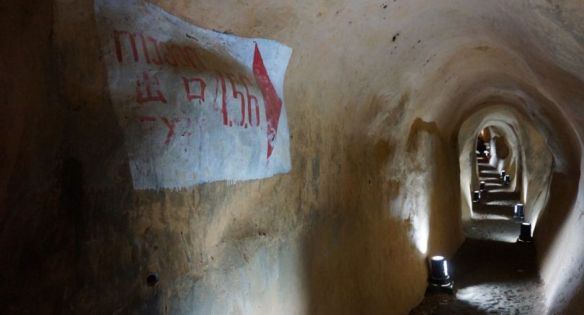
The Piyamit Tunnel just outside Betong was dug in 1977 by members of the Malaya Communist Party in Yala to serve as a bomb shelter and a place to store supplies. Communism was rife back in the 1970s when the Americans retreated from the Vietnam War, with comrades filling the ranks of the anti-government parties across Thailand. Search and destroy raids were frequent and the communists quickly learned how to play hide and seek.
“This tunnel is a kind of secret hideout,” says the village headman, who has undertaken to show us around the tunnel.
Today Piyamit Tunnel is a reminder of the underground movement and resistance. It’s also a tourist destination, drawing visitors to this Southern province to walking through this man-made cave beneath the forest. At one end is a restaurant frequented by durian-loving Malaysian tourists. It also serves beer.
Inspired by Cu Chi Tunnel in Southern Vietnam, Piyamit Tunnel is little more than an underground passage. While the famous Viet Cong’s tunnel stretches around 200 kilometres under a labyrinth of subterranean villages, the Thai edition is just one kilometre long. On the other hands, with widths varying between 1.2 and 1.8 metres, it’s luxurious compared to the Cu Chi, which is no wider than the shoulders.

Some parts of the cave network are more claustrophobic than others and I frequently hit my head while walking from one end to the other. The tunnel, which has nine entrances, also boasts a kitchen, restroom, working station, medical station and, of course, sleeping room. All are made of earth.

Visitors are invited to live the communist experience. I lay down on the bedroom – which is no more than cold, hard earth but am much more fascinated by the “studio” room where the comrades would edit and encode messages to send through short-wave radio.
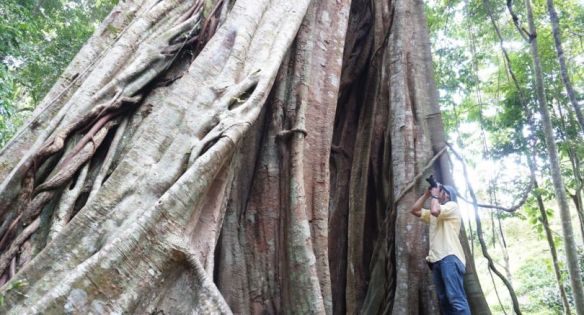
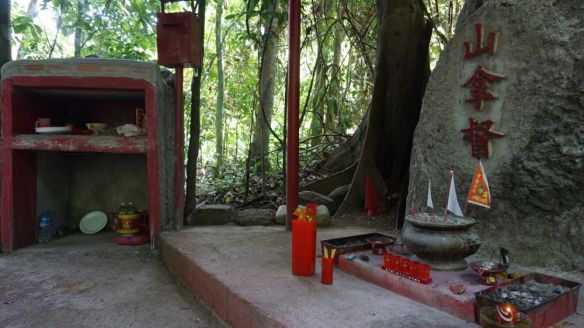
Of course, there are many things to see above ground too. The communist’s base camp is perched on the slope of the mountain. Follow the trails under the canopy and you’ll soon come across a Chinese shrine and Buddhist temple. I find that strange. Aren’t communists supposed to be atheists?
And then there is a stove named after Kongming – a Chinese strategist during the Three Kingdoms period.
“The Kongming stove is smokeless. It kept us safe from the eyes of the soldiers,” says the guide. “We would send the smoke from the burning chamber through the tunnel then release it into a wet filter.”
The anti-Communism battle ended in 1980 with a peace agreement. The communists gave up their arms and kept quiet about their beliefs, choosing instead to focus on community and country development. The communist villages were later renamed “Piyamit”, meaning a good friend.

While the communists lived a hard life as they fought against the government, they also found time to enjoy themselves. The Piyamit Museum, with photos and remnants of the Communist battle, shows the effects of fighting for what they once believed. Young comrades jumped into the tug of war when they wanted to have fun; others would lie around in a hammock or use the sewing machine.
Visitors can talk to the former communists over plates of durian and bottles of beer to hear what life was like during the 1970s and why Communism didn’t work here.
There are some fascinating stories to be heard.
IF YOU GO
+ Piyamit Tunnel is 25 kilometres north of Betong, Yala province.
+ Betong is Thailand’s southernmost district. The easiest way to reach it is by air to Hat Yai’s Songkhla province then a passenger van, which travels through the far north of Malaysia to avoid the insurgency.
Watch the video at www.NationMultimedia.com.