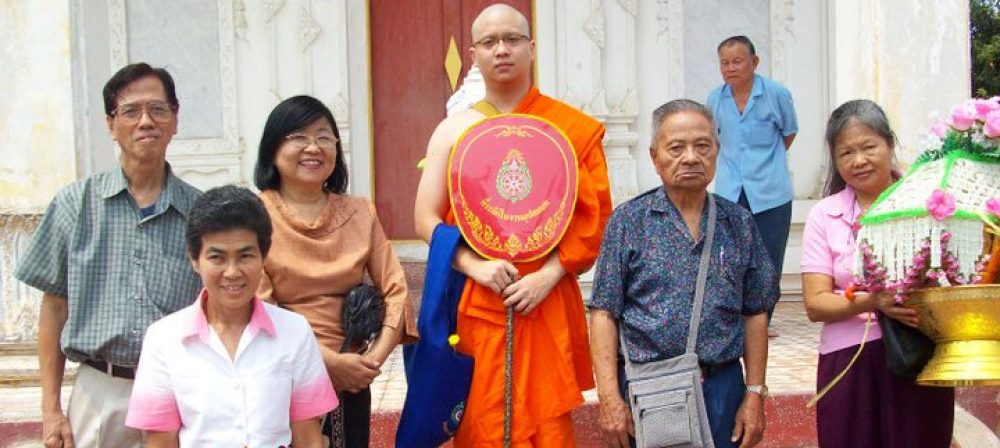
The peaceful side of Pattani

ศาสตร์เกษตรดินปุ๋ย : ขอบคุณแหล่งข้อมูล : หนังสือพิมพ์ The Nation

http://www.nationmultimedia.com/detail/thailand/30351403

  • Pattani’s China Town is located on Anoru Road and lined with old Chinesestyle houses built in the reign of King Rama III.
  • The newly opened skywalk offers a panoramic view of the Gulf of Thailand and the swamp forest.
  • Sai Khao waterfall is a popular picnic spot with local families.
  • The newly opened skywalk offers a panoramic view of the Gulf of Thailand and the swamp forest.
  • Baan Sai Khao village arranges farm tours in a jeep.

The peaceful side of Pattani

Thailand August 04, 2018 01:00

By Pattarawadee Saengmanee
The Nation Weekend

2,178 Viewed

Long beset by insurgency, this southern province bordered by Narathiwat, Yala, and Songkhla has plenty to offer the visitor

THE FORMER capital of the ancient Langkasuka Kingdom, Pattani province in Thailand’s far south has traditionally been feted for its multiculturalism, though sadly the ongoing violence has kept it well off the tourist path for more than a decade.

But not all the residents have given up on drawing visitors to their home. On a recent visit that saw a group of journalists wrap up a tour of all three southernmost provinces, we were taken around China Town by Melayu Living, a club of innovative artists who are hoping to bring tourists back to this thriving trading hub on the bank of the Pattani River and the border of Thailand and Malaysia.

Pattani’s China Town is located on Anoru Road and lined with old Chinesestyle houses built in the reign of King Rama III

The group has also collaborated with the Association of Siamese Architects under Royal Patronage to create maps and guidebooks to illustrate the city layout and indicate the locations of tourist attractions.

Along the 1.4-kilometre walking route, visitors can learn about history, enjoy some local delicacies and get a feel for the simple way of Southern life. Contrary to the negative pictures painted by the media, it’s normal to see Muslims sitting alongside Chinese-Buddhists eating roti and drinking coffee or tea and sharing space in an art gallery.

Sulaiman “Lee” Chemae is our tour guide for the walk and one of my travel companions greets him not with “hello” but a question – “It is safe to roam on foot?”

Lee doesn’t appear put out. “This area is like the yolk of an egg, protected by checkpoints controlled by armed soldiers. So, yes, tourists can feel safe. I admit we can’t guarantee 100-per-cent safety but we can recommend places to which visitors can go as well as those best avoided,” he says.

China Town is populated by Hokkian Chinese, whose ancestors migrated from Fujian and set up shop on Anoru Road. Lined with old Chinese-style buildings mostly constructed during the reign of King Rama III, it’s home to the Lim Ko Nieo Shrine, worshipped by local residents and seafarers alike to ask for fortune, success, good health and protection. Built in 1634, it was originally called Leng Chu Kiang Shrine.

Legend has it that Lim Ko Niao crossed the South China Sea from China to Pattani to bring her brother back home to be with their dying mother. The young man, Lim To Kiam, declined her request, preferring to stay in Pattani because he had married a daughter of Phraya Tani and converted to Islam. Lim Ko Niao was frustrated by her brother’s refusal and ended up hanging herself from a cashew nut tree. The villagers later carved a wooden statue to her memory.

Lim Ko Nieo Shrine is always packed with pilgrims and seafarers praying for protection and good fortune. 

A short distance from the shrine is the former residence of taxman Luang Wichit Sulkakorn. Made from wood and cement, the main structure has been maintained to celebrate its long history.

When Wichit and his family moved out, the house was turned into a Thai dessert shop by Xuan Lui Kowittaya and became the first grocery on Anoru Road. Today, it’s under the care of the Kamolwittaya family.

“In the past, the Chinese residents traded with sea merchants from Singapore, Malacca and the Malay Peninsula, while the Muslims made their living from fishing. King Rama III recognised the potential for border trade, so he sent a tax collector to Pattani, making our community stronger,” Lee explains.

Next door is the White Building, which was constructed in 1883 by Luang Cheen Kananurak. Anan, the third generation of the Kananurak family, recently had it completely refurbished and gave it a more modern look.

The building is divided into three zones linked by walkways from the front building to an old wooden house in the middle. There is a kitchen and a lush courtyard at the back, where the air-raid shelter hastily constructed during World War II, has been turned into a fish and lotus pond.

Commonly known as Baan Kongsee, the bright blue, 150-year-old house was constructed by another tax collector, Luang Samret Kitjakorn Jangwang – an ancestor of the Kanaurak family, during the reign of King Rama III.

The roof has a perforated design that resembles ancient currency, symbolic of fortune, while the front of house features two windows to protect against inauspicious happenings in line with feng shui beliefs.

The structure is built with glazed bricks coated with white honey-mixed lime and oversize earthenware tiles cover the floor. The living room has a huge stand to accommodate the many statues of Chinese deities.

Baan Kongsee boasts traditional Chinese architecture and is based on feng shui philosophy. 

Khun Phitak Raya, the two-storey house in the corner of the compound now belongs to Senator Anusat Suwanmongkol, who runs the Pattani’s

CS Hotel. He has poured some Bt8 million into restoring the old structure, working with skilled craftsmen from the Fine Arts Department.

Lee leads us to Pattani Phirom Road, once home to a theatre, a smattering of opium dens, Chinese-style taverns, a foundry and gold shops. Surrounded by European-style buildings, the Melayu Living club has set up its own In_t_af Cafe & Gallery and this has become a hip hangout for Pattani’s younger generation.

“It’s not easy to teach other local residents what this art space is all about, which is setting aside fear of violence and bringing tourists to Pattani. Even with the support of the provincial officials, it took us a few years to persuade the Chinese residents to open their houses and welcome visitors,” Lee says.

Our sightseeing tour ends at the present-day shopping district on Ruedee Road, home to a block of colonial buildings influenced by British construction designs with a gap between them to prevent fire from spreading. This street once housed a big market that sold fabrics and spices and was operated by Indian entrepreneurs.

The newly opened Sky Walk offers a panoramic view of the Gulf of Thailand and the swamp forest. 

“Before the violence, this area was really colourful. It was lined with restaurants and always packed with foreign labourers and local fishermen. Because of its proximity to the huge fish market and pier, some Bt100 million changed hands every night,” Lee says.

“We want to promote other tourist routes that take in artisan villages and encourage people to take a cruise to a swamp forest in Yaring district so that visitors can experience our culture.”

Just a 15-minute drive away from downtown Pattani next to Her Royal Highness Princess Galyani Vadhana Garden is the recently opened Pattani Adventure Park, which is billing itself as the best vantage point for admiring Tachee Cape and azure waters of the Gulf of Thailand.

The 400-metre skywalk stands as high as a three-storey building and can hold up to 400 kilogram per square metre, thus ensuring safety for all visitors. It’s also connected to a long nature trail on the ground, home to a lush massive swamp forest.

A mere 35 kilometres from town is

Sai Khao, which won the Most Outstanding Community-based Tourism Award back in 2007 for its eco-cultural tours and homestay services. Local residents have modified their vintage Jeep trucks to transport visitors to the Namtok Sai Khao National Park, where a golden statue of the Buddha looks down at visitors from the top of the mountain.

Baan Sai Khao village arranges farm tours in a jeep. 

“The province invested Bt32 million to construct the Buddha statue and it took 41 years to complete. It is a great viewpoint to look out over the verdant landscapes of Sai Khao district,” says Uncle Chanin Siannin, the head of Baan Sai Khao community.

The mountain is also home to a sacred pond, which the monk Luang Pu Tuad discovered during a pilgrimage in the jungle, a huge snake-like rock attached to the steep cliff and the Sai Khao waterfall, which is a popular picnic spot for local families.

Our day out ends with a visit to the massive rubber plantations and orchards, where we’re allowed to pick durian, bananas and rambutan straight from the tree and stock up on such snacks as preserved garcinia and miang kham made from banana to remind us of our visit.


IF YOU GO

>> Tourists can arrange a walking tour with Melayu Living by visiting its Facebook page.

>> The eco-cultural tour organised by the Baan Sai Khao community costs Bt500 per person. For a private tour by jeep, you pay an additional Bt1,000. For more information, call (089) 737 9553.

Textiles and tunnels

ศาสตร์เกษตรดินปุ๋ย : ขอบคุณแหล่งข้อมูล : หนังสือพิมพ์ The Nation

http://www.nationmultimedia.com/detail/thailand/30350916

  • The Piyamit Tunnel was built in 1976 as an air raid shelter and food store for the Communist Party of Malaya.
  • A sea of mist hangs over Aiyorweng district.
  • A sea of mist hangs over Aiyorweng district.
  • Shophouses in Betong are adorned with street arts depicting the local lifestyle.
  • Master craftsman Phiya Sawanpruk has successfully brought the traditional the pa la nging textile back to life.

Textiles and tunnels

Thailand July 28, 2018 01:00

By Pattarawadee Saengmanee
The Nation Weekend

7,248 Viewed

Yala province in Thailand’s south unveils a wealth of fascinating traditions

BORDERED TO the west, north and east by Pattani, Narathiwat and Songkhla and to the south by Malaysia, the landlocked province of Yala is a veritable showcase of Malay, Thai and Chinese culture.

The provincial capital, which is laid out like a spider’s web with a park at its centre, is the much-loved home of master craftsman Phiya Sawanpruk, owner of the Sri Yala Batik brand. In 2005, he converted his house, just 10 minutes away from Yala Railway Station, into an art studio and it is from here that he proudly presents his batik fashion garments and home furnishings.

An artisan at Sri Yala Batik demonstrates her craft.

One of his proudest achievements is reviving an ancient fabric known as pa la nging. Once popular in Thailand’s three southernmost provinces, it’s a luxurious yok dok brocade silk with motifs of gold leaves and local flowers that merges tie-dying, printing and batik techniques.

“I first discovered the pa la nging textile in my grandmother’s room. In the past, civil servants used pa la nging to make sarongs and turbans but it vanished almost a century when the newer generations turned away from sericulture to cultivating rubber trees and other economic crops,” says Phiya, who graduated in crafts and arts from Rajamangala University of Technology Rattanakosin.

“I’ve worked with skilful weavers in Khon Kaen’s Chonnabot district on developing designs for hand-woven gold-thread silk and cotton to conserve our traditions. Khon Kaen’s cotton is famous for its soft texture, which looks smooth after being dyed making it ideal for batik.”

All pa la nging fabrics are organically dyed using extracts from local plants – banana gives brown and green, Indian almond, clay orange and lac, pink. Phiya also carves his own woodblocks for printing more than 200 different patterns including tiles, balusters, saba banana and khao tom mad (steamed sticky rice wrapped with banana leaves).

“I paint the fabric piece by piece, making them into one-of-a-kind artworks,” Phiya says, adding that he also lectures at several universities around the country to pass on his knowledge to the next generations.”

Shophouses in Betong are adorned with street arts depicting the local lifestyle. 

Visitors to his studio will be fascinated by the collection of fashion apparel for men and women, as well as totes, shawls, scarves, key rings and tissue boxes. The pa la nging textiles, meanwhile, are available at King Power, leading resorts and on Thai Smile flights.

“I want to help women in the community to generate more income and our members can earn at least Bt5,000 a month. I also want to invite tourists to my home, where they will see the Muslim and Thai-Chinese Buddhist villagers living and working happily together and not focus on the violence in this part of world,” Phiya adds.

Leaving Yala, we drive through the breathtakingly beautiful Bang Lang National Park towards Betong, the southernmost town in Thailand.

We explore the small town on foot and admire the stunning street art that covers many walls and portrays the Thai-Chinese lifestyle including old coffeeshops, dim sum shops, vegetable stalls and Betong’s iconic post box.

The clock tower circle is a popular shopping and dining venue and is home to boutiques, barbers, Chinese and Thai restaurants, noodle shops and bakeries. Here too we find the roti pushcart run by two young girls, which has been highly recommended to us by a group of military volunteers. Its popularity is evidenced by the long queue but soon we are munching on roti that are crisp on the outside and soft on the inside and smothered in egg, banana and coco powder.

Two Muslim girls serve roti from a pushcart near Betong’s clock tower. 

The next morning, we leave Betong at 5 to travel to the summit of San Kala Khiri Mountain. Crowded with Thai and international tourists, it’s the best vantage point in Aiyoeweng district to take in the beautiful sea of mist though we are unfortunate with the weather and see only one per cent of mist.

We continue to Piyamit Tunnel in Tano Mae Ro district, once a stronghold of the Communist Party of Malaya. Spread over one kilometre under the mountain, it was built in 1976 with multiple entrances to serve as an air raid shelter and to store food.

Hemmed in by a tropical forest, the Piyamit Histories Museum is boasting a rare collection of old weapons, self-produced prosthetic legs, black-and-white photographs, kitchenware and musical instruments. Also on view is a Chinese shrine and an imitation smokeless stove made of clay.

“We had almost 1,000 members who wanted to fight for democracy. The battles continued for 50 years and in 1987 our party split after the Thai government offered us 15-rai of land per family for farming,” says Uncle Sue Chong,68, who serves as a tour guide.


IF YOU GO

>> Sri Yala Batik is at 85 Soi Weruwan 12, Amphur Muang, Yala. Call (087) 837 4007 or check out the Sri Yala Batik page on Facebook.

>> Piyamit Tunnel is open daily from 8am to 5pm. Tickets are Bt40 for adults and Bt10 for children.

Fun for all the family

ศาสตร์เกษตรดินปุ๋ย : ขอบคุณแหล่งข้อมูล : หนังสือพิมพ์ The Nation

http://www.nationmultimedia.com/detail/thailand/30350785

Fun for all the family

Thailand July 25, 2018 13:00

By The Nation

7,548 Viewed

Phi Phi Island Village Beach Resort is inviting families with kids of all ages to enjoy the ultimate island experience with comfortable bungalows, childfriendly facilities and features, all set within 70 tranquil acres of beachfront beauty.

Catering to the whole family, the resort boasts two freeform infinity pools overlooking the whitesand beach at La Ba Gao Bay, which boasts clear, protected, shallow waters perfect for swimming and snorkeling.

The resort also offers plenty of engaging activities with a fitness centre, yoga classes, tennis court and watersports centre. Four restaurants include kids’ meals, and babysitting and childfocused services are also available, as well as a schedule of activities collectively known as the Phi Phi Family Playground.

“Parents choose to stay with us because they want their children to get away from the screen and enjoy nature with fun, energising, activities to fill their day,” says general manager Chao Treenawong.

All the rooms, bungalows, suites and villas are designed for three or more occupants, and many come with an extra sofabed suitable for a child. There’s also a spacious twobedroom Family Bungalow, also with a sofa bed, perfect for four or more guests. Meanwhile, cots and extra beds are available on request.

When it comes to dining, families have plenty of choice with international buffet breakfasts, a la carte lunches and dinners, as well as snacks, icecream, juices and fruit served from the pool bar or bean/Co caf้. There are also plenty of dishes designed specially for younger guests.

The unique Phi Phi Family Playground ticks all the family friendly boxes. Youngsters are kept entertained with a Little Islanders Programme for 310 year olds while older kids can enjoy the Young Explorers Programme, specially designed for 1016 year olds with activities that range from crafts to swimming classes, kayaking adventures to beach games and fitness boot camps, cooking classes to handson sustainability workshops.

Creating a healthy connection between families who stay at the resort and the environment is part of the ethos at Phi Phi Island Village Beach Resort and new Marine Discovery Centre launched earlier this year as an interactive attraction to showcase local marine life with colourful displays and an integrated clownfish and bamboo shark nursery onsite.

“The centre not only teaches families about how we’re taking an active role in protecting Thailand’s endangered marine species,” explains the GM. “It also encourages young people to get involved and feel connected to the destination, which adds tremendously to their enjoyment.”

Another family friendly bonus at Phi Phi Island Village Beach Resort is that guests looking to book a late summer getaway or an early winter vacation in 2018 can take advantage of the Early Bird Promotion with a special 15% discount for bookings made 60 days in advance.

For more information, please call (075) 628 900 or visit reservations@phiphiislandvillage.com.

Centara’s two Maldives resorts offer promotions throughout October

ศาสตร์เกษตรดินปุ๋ย : ขอบคุณแหล่งข้อมูล : หนังสือพิมพ์ The Nation

http://www.nationmultimedia.com/detail/Tourism/30351356

Centara’s two Maldives resorts offer promotions throughout October

Tourism August 03, 2018 09:23

By The Nation

Centara Hotels & Resorts is offering more accessible promotions to two Maldives distinctive resorts — Centara Grand Island Resort & Spa Maldives and Centara Ras Fushi Resort & Spa Maldives.

Centara Grand Island Resort & Spa Maldives is a luxury where superb food and drinks, activities and spa treatments are part of the unique All-Inclusive Concept. Centara Ras Fushi Resort & Spa Maldives is a romantic destination for couples. Both resorts feature the spectacular scenery and “private island” environment the Maldives are famous for.

Centara is  offering two different packages to help guests enjoy its stunning resorts in the Maldives, it said in a press statement.

It said Centara Grand Island Resort & Spa Maldives’ popular “Stay 3 Pay 2” promotion is now extended for bookings and stays until the end of October 2018. Customers can book online and for every three nights you stay, the third night is free! Up to two children stay free when sharing bed with parents.

Guests will aslo be provided with free domestic flight or speedboat transfers, in addition to a 20% discount on rooms at both Centara Grand Island Resort & Spa Maldives and Centara Ras Fushi Resort & Spa Maldives.

CentaraThe1Card members get an extra 10% discount, the statement added.

Chinese visits to Thailand to fall after deadly boating accident

ศาสตร์เกษตรดินปุ๋ย : ขอบคุณแหล่งข้อมูล : หนังสือพิมพ์ The Nation

http://www.nationmultimedia.com/detail/Tourism/30351308

File photo
File photo

Chinese visits to Thailand to fall after deadly boating accident

Tourism August 02, 2018 15:42

By Agence France-Presse

Thailand will lose more than half a million Chinese tourists in response to a deadly boating accident that killed nearly 50 people last month, a potential blow to the country’s vital tourism sector.

The Phoenix was carrying 105 people — mostly Chinese — when it sank on the way back from a popular snorkeling spot on July 5 off the southern resort island of Phuket.

It was among three vessels which ignored a bad weather warning against island day trips.

The boat’s captain, an engineer and the owner of the company that operates the vessel have been arrested and are being held while authorities conduct an investigation, Phuket police told AFP.

Divers and the navy spent more than a week retrieving bodies, some from inside the boat, with the final death toll at 47 Chinese nationals.

Tourists from China made up almost a quarter of Thailand’s 35 million visitors last year, official statistics show.

In a statement provided to AFP, the the Ministry of Tourism and Sports revised down its forecasted number of Chinese arrivals for July-December by nearly 670,000, to 5.1 million.

“The factors that caused Chinese tourist numbers to plunge is unsatisfaction over the boat accident which mainly directly affected tour groups,” the statement said, adding that August will see a 60 percent decrease in arrivals.

But Thailand is confident that Chinese arrivals will continue rise year on year, the ministry said, adding it expects to welcome more than 11 million Chinese tourists this year.

The disaster was one of the worst boating accidents in recent history in Thailand.

But it received little attention compared to the dramatic rescue of 12 children and their football coach from a cave in northern Thailand, which was occurring around the same time.

Choose Nai Harn for your next corporate meeting

ศาสตร์เกษตรดินปุ๋ย : ขอบคุณแหล่งข้อมูล : หนังสือพิมพ์ The Nation

http://www.nationmultimedia.com/detail/sleep/30351067

Choose Nai Harn for your next corporate meeting

sleep July 31, 2018 01:00

By The Nation

2,525 Viewed

Phuket’s Nai Harn luxury resort is crafting attractive MICE experiences for businesses and organisations looking to gather, inspire and collaborate with their teams, all with an added emphasis on gourmet tastes and other indulgent incentives.

Guests can fuel exclusive board meetings with seasonally sourced cuisine created with international flair, savour fine wines and enjoy extra-curricular local experiences ranging from private yacht charters to post-work spa experiences.

With two fully equipped modern meeting rooms ranging in size from 48 to 91 square metres and multifunctional outdoor spaces including a stunning rooftop terrace, the resort provides the perfect setting for creative productivity.

There’s a choice of dining concepts run by top foreign and Thai chefs, all boasting picturesque views of the sand and sea, including Hansha – Phuket’s first rooftop sea-view sushi and sashimi bar.

After meetings, guests can unwind within the sanctuary of the Spa and select custom treatments from an extensive menu of services inspired by nature.

Groups or individuals can also choose to sail through stunning Phang Nga Bay, kite-surf in the bay, tour the Chalong Bay Rum Distillery, or try their hands at a Thai cooking class.

“If a quick walk can clear your mind and boost productivity, just think what an escape to one of the world’s most sought-after tropical destinations can do,” says Nai Harn general manager Frank Grassmann.

“Along with our multipurpose meeting facilities and seamless scheduling, companies can choose to integrate an array of cuisine choices, inspiring indulgences and unique island activities.”

Special meeting rates and services are available until October 31 for groups booking a minimum of eight rooms. Groups can receive additional discounts and benefits inclusive of complimentary upgrades, express check-in and check-out, spa discounts, attractive pre- and post-stay rates for those who would like to extend their stay.

Find out more details at http://www.TheNaiHarn.com.

Discover Ratchaburi Art Centric 2018

ศาสตร์เกษตรดินปุ๋ย : ขอบคุณแหล่งข้อมูล : หนังสือพิมพ์ The Nation

http://www.nationmultimedia.com/detail/Travel_log/30351123

Discover Ratchaburi Art Centric 2018

Travel log July 31, 2018 11:38

Ratchaburi Art Centric returns on August 10 to 12 with one of the coolest happenings in Thailand’s annual calendar of events. Artists and craftsmen from all around the province will converge for a three-day celebration of creativity along the banks of the Mae Klong River.

Sponsored by the Tourism Authority of Thailand (TAT), Ratchaburi municipality, and Ratchaburi WE Art, the event highlights the famous art and craft communities synonymous with Ratchaburi. Multiple event grounds are divided into four zones and seven activities featuring: ‘Art cetera’ interactive art exhibition; ‘Art… licious’ showcasing the province’s tasty and unique traditional Thai food; ‘A(rt) coustic’ concert, and ‘Super Art Market’ with new designs by emerging artists.

Two activities are being organized in front of the Ratchaburi National Museum. One showcases ‘Ong Mungkorn’, the large sculpted water jars which the province is famous for and a DIY sculpture workshop to teach visitors how to sculpt.

Along the Mae Klong River ‘Dek Din’ sculpture activities will be held for children, traditional dramatic arts like ‘Nang Yai Wat Khanon’ light and shadow puppet performances, and concerts featuring Thai pop artists will also be held.

Tourism on three wheels

ศาสตร์เกษตรดินปุ๋ย : ขอบคุณแหล่งข้อมูล : หนังสือพิมพ์ The Nation

http://www.nationmultimedia.com/detail/Tourism/30351284

File photo

Tourism on three wheels

Tourism August 02, 2018 09:39

By The Nation

The Ayutthaya provincial administration is holding a tuk tuk rally on August 18 and 19 to promote tourism to the historical site.

Ayutthaya governor Sujin Chaiyachumsak said 250 teams of contestants can take part in the rally, for which the application fee is Bt1,000.

At least one member of the team must be dressed in an Ayutthaya period costume, the governor added.

Each team will be driven in a tuk tuk around sites to solve various puzzles during which the contestants will learn about the traditional lifestyles of the Ayutthaya people in bygone days.

The locations include Wat Phra Sri Sanphet, Wat Mongkol Bophit, Wat Mahathat, Wat Ratburana and Wat Chai Watanaram, the governor said.

Foreign tourists drive boom in secondary destinations

ศาสตร์เกษตรดินปุ๋ย : ขอบคุณแหล่งข้อมูล : หนังสือพิมพ์ The Nation

http://www.nationmultimedia.com/detail/Tourism/30351160

x

Foreign tourists drive boom in secondary destinations

Tourism August 01, 2018 01:00

By The Nation

FOREIGN travellers have become the driving force behind a boom in the Kingdom’s secondary tourism destinations, an online travel agency says.

Statistics show that nearly 90 per cent of the demand for stays in Chiang Rai, Koh Lipe, Mae Hong Son, Trang and Trat came from international travellers in the 12 months to the end of the second quarter of 2018, online platform Expedia said. It said the pace of overall inbound demand to these destinations has grown by 30 per cent year on year.

A closer look at the inbound trends by destination showed that Trat was the most popular destination amongst the five, seizing nearly half of the overall inbound demand followed by Koh Lipe and Chiang Rai. While Trat and Koh Lipe each experienced inbound growth of 20 per cent year on year, it was Chiang Rai that led the chart with 60 per cent growth. During the same period, Mae Hong Son and Trang enjoyed a healthy year-on-year growth above 40 per cent.

Dotted with islands, beaches and forests, Trat and Trang were particularly popular among European travellers. Swedish, German and Danish travellers made up nearly 40 per cent of the overall international demand in these destinations. They also booked on average of 71 days in advance before they travel (25 days earlier than average booking window), paid 15 per cent more than the average daily rate (ADR), and stayed five days per trip (1.3 times longer than average length of stay). Hence, this makes them an attractive source of demand for hotel partners.

Up north, blessed by the historical charm of Wat Rong Khun with mountainous trails and hill tribes, Chiang Rai and Mae Hong Son proved to be more appealing to Asian travellers. Almost half of the inbound demand originated from Indonesia, China, Japan and South Korea. However, when it comes to the high-value spenders, it was the US and UK travellers that fuelled the steady ADR growth in Mae Hong Son and Chiang Rai with a positive growth of 10 per cent and more than 5 per cent year on year respectively. These long-haul travellers also tend to book for accommodation 25 days to 35 days in advance.

Among the five destinations, Koh Lipe recorded the highest ADR, thanks to its white-sand islands, coral reefs and tropical forests. While the inbound demand was led by Sweden, travellers from the US demonstrated strong growth momentum (40 per cent year on year), coupled with positive ADR growth (under 10 per cent year on year).

Data from the Expedia Group also confirmed that the American travellers were more generous than Swedish visitors as they typically paid 20 per cent more on accommodation than their Swedish counterparts. Travellers from the UK proved to be another valuable source for revenue growth as they were the only long-haul travellers that contributed a double-digit ADR growth (10 per cent year on year) to Koh Lipe during the same period.

“It is encouraging to see the surge of international travellers exploring the lesser known destinations of Thailand,” said Pimpawee Nopakitgumjorn, market management director at Expedia Group.

“With 675 million visitors to our portfolio of travel brands every month, we believe Expedia Group is playing an important role in supporting the Tourism Authority of Thailand’s latest Go Local campaign.”

How China’s travel boom expands soft power and distributes $115 bn in hard cash

ศาสตร์เกษตรดินปุ๋ย : ขอบคุณแหล่งข้อมูล : หนังสือพิมพ์ The Nation

http://www.nationmultimedia.com/detail/Tourism/30351091

Mainland Chinese tourists pose for photographs on a beach at Repulse Bay in Hong Kong, China on July 16.//EPA-EFE

How China’s travel boom expands soft power and distributes $115 bn in hard cash

Tourism July 31, 2018 01:00

By CHINA DAILY
ASIA NEWS NETWORK
BEIJING

A VIBRANT economy boosts tourism, strengthens soft power – that zip file-like aphorism, when uncompressed, would unfold a fascinating story of a delicately interlinked travel ecosystem involving China and the rest of the world.

Newly affluent, upwardly mobile Chinese on the mainland are spending big money on their outbound travels for enhanced life experiences. More and more countries are realising Chinese tourists are good for their local economies. According to a June report from the China Tourism Academy, Chinese outbound travellers spent more than US$115 billion outside the mainland, 5 per cent more than in 2016.

Much of that spending was on high-end, customised, memorable trips, confirming their rising purchasing power, evolving tastes and China’s consumption upgrade. In the bargain, overseas star hotels and tourist attractions were laughing all the way to the bank. So did domestic airlines and travel agencies, industry insiders said.

The net result of all this wanderlust of millions of better-behaving, high-spending, quality-conscious Chinese is solid goodwill for China. Call it the goodwill economy, if you will, an industry analyst said.

It would not be a misnomer because such goodwill could go a long way in enabling international trade and the creation of new tourism-related infrastructure like airports, new flights, hotels, sightseeing spots and the like, insiders said. This summer, Ctrip, China’s largest online travel agency, saw bookings for overseas luxury hotels surge nearly 50 percent year on year, according to its Ctrip Hotel College Data Research Centre.

Ctrip will probably thank travellers such as Du Ni, 29, for that. Du, who works with a bank in Beijing, travels abroad two to three times every year. She loves trips involving rides in self-driven cars and tours where she could get to know a place inside out over a few days. “I prefer customised trips to group tours because I’ll have a more flexible schedule and can change it as I like. I’d also have more time to go shopping and find good local restaurants,” Du said.

“Besides, the planning of trip schedules itself is quite interesting. For accommodation, I look for higher-end hotels with stylish decorations, and choose popular places|to eat and explore some local art museums.”

This intense attention to detail has inflated Du’s average per-trip spend to 20,000 yuan, almost double the amount she used to spend in the past.

Interestingly, as tourists such as Du increase in number, hotel room prices at many popular overseas destinations edged down this summer, suggesting that life-enriching experiences may be becoming cost-effective gradually, particularly in places like Bali in Indonesia; Kyoto, Osaka, Tokyo and Sapporo in Japan; and in Bangkok and Chiang Mai, which are among the top 10 most popular overseas destinations of Chinese travellers this summer.

“With tourism growing, more new hotels are opening, and the supply of hotel rooms is growing. Besides, hotel prices are tending to become more rational, and the price difference between busy seasons and slack seasons is narrowing,” said Xie Wendan, general manager of the overseas platform of the hotel business unit of Ctrip.