The D.C. lawyer using a D.C. way to make Hollywood more inclusive. Is it working? #ศาสตร์เกษตรดินปุ๋ย

#ศาสตร์เกษตรดินปุ๋ย : ขอบคุณแหล่งข้อมูล : หนังสือพิมพ์ The Nation

https://www.nationthailand.com/lifestyle/30381934?utm_source=category&utm_medium=internal_referral

The D.C. lawyer using a D.C. way to make Hollywood more inclusive. Is it working?

Feb 11. 2020
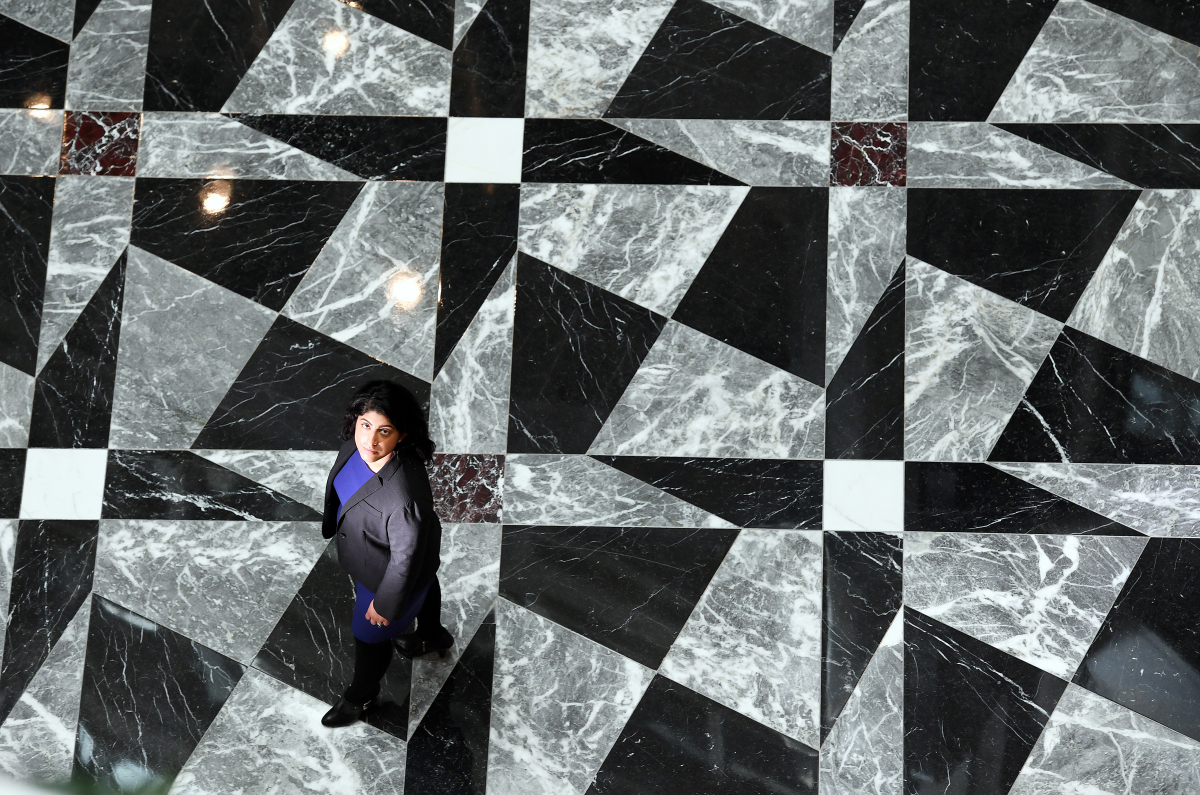
Kalpana Kotagal at her D.C. law firm in 2018. MUST CREDIT: Washington Post photo by Matt McClain.

Kalpana Kotagal at her D.C. law firm in 2018. MUST CREDIT: Washington Post photo by Matt McClain.
By The Washington Post · Petula Dvorak · OPINION, ENTERTAINMENT, FILM 

No, Kalpana Kotagal didn’t make it through the Oscars. Again. Like any other exhausted mom chasing around two little boys, she crashed around the time editing and sound awards were being handed out Sunday night.

Even though, on that glamorous stage 3,000 miles away, some of her life’s work would be up for discussion.

This happened two years ago, when Frances McDormand said two words that sent Google ablaze – and upended Kotagal’s life – during her Oscar acceptance speech: inclusion rider.

Kotagal in the lobby of her D.C. law firm. MUST CREDIT: Washington Post photo by Matt McClain.

Kotagal in the lobby of her D.C. law firm. MUST CREDIT: Washington Post photo by Matt McClain.

It’s a way to legally guarantee that a film production crew – from off-leads and extras to grippers and makeup artists – reflects the diversity of America.

Kotagal is the D.C. attorney who helped write the rider. And she slept through all that and woke up that Monday morning to a bazillion messages – including one from me – asking her about it.

I caught up with her two years later, after McDormand’s two words rocked Hollywood, to see how much has changed. And to ask the question – could a civil rights and employment attorney in D.C. change Hollywood with a very D.C. solution?

A little has changed. But mostly, it hasn’t.

“Just Mercy” – a legal drama about an attorney working to free a wrongfully convicted man on death row – the highest profile film to be created using Kotagal’s legal framework, was snubbed in the best picture category.

The female directors – whose names were embroidered on a Dior cape worn by Natalie Portman to the awards – were also snubbed.

But what about “Parasite”?

The South Korean film made history by becoming the first foreign-language movie to win best picture and three other Oscars. That’s some diversity in the films the academy would consider, yes.

But there was still little representation in the categories for black or female stories.

And that’s not really what Kotagal’s framework is about.

She’s in the District, remember. And the stuff we do here is more incremental.

The inclusion rider is a way to make change project by project, which is not as onerous as trying to change an entire industry’s culture. It’s also a tool that can be used by big-shot stars who have huge influence over the entire workplace aspect of a film. Kotagal tried to blend a wonky, D.C. approach with a very Hollywood one.

You’ve heard of the ridiculous riders some celebrities ask for in their dressing rooms, “4 Small, clear, square vases with White Tulips, no foliage” (Rihanna), or “6 Full and leafy floor plants, but no trees. We want plants that are just as full on the bottom as the top” (Sir Paul McCartney).

The same way they can legally dictate the color of the couch (Mariah Carey: “no busy patterns; black, dark grey, cream, dark pink are fine”), a star can demand the diversity and inclusivity of a multimillion-dollar workplace by adding the inclusion rider to their contract.

It’s not something to dictate who gets to be a lead, or to create a strict box-checking quota. It’s a way to make sure the big shots cast a wider net to include folks outside the usual, white standbys who get hired, from caterers to extras.

An array of reports on inclusivity in Hollywood collected in an analysis by Deadline showed that diversity in Hollywood is slowly increasing, but at a glacial pace.

That night at the Oscars two years ago, Michael B. Jordan heard McDormand’s two words.

“I was like, ‘Oh! So, there’s something in writing I can put in place to make sure our cast and crew is a reflection of the world I live in, and is diverse?’ ” Jordan told Screen Daily. And a month later, Jordan used his Black Panther hotness to insist that his company use the rider.

The indie film “Hala” – a hit at Sundance – used it, too.

Matt Damon and Ben Affleck said their company, Pearl Street Films, would use the rider.

Kotagal created it with Fanshen Cox DiGiovanni, a development executive at Pearl Street, and Stacy L. Smith, executive director of the Annenberg Inclusion Initiative at the University of Southern California.

Kotagal, an employment and civil rights attorney who is a partner at Cohen Milstein in the District, had worked on workplace issues her entire career. From pregnancy discrimination lawsuits to a high-profile sex bias cases – the one against Sterling Jewelers is likely headed to the U.S. Supreme Court – it became clear that a lot of these places could avoid the messes they are in if they had something similar to the inclusion rider, too.

But how many companies have the budget to hire a white shoe law firm to write it up for them?

So Kotagal and her partners decided to Jonas Salk their legal work, to make it public, free and available to anyone, the way Salk made the polio vaccine available.

And now there are theater companies, arts festivals and even JAMS, the global arbitrations and mediation services provider, working with the rider.

“We made the template public, and we made it flexible,” Kotagal said, so that a variety of companies and institutions can tailor it to their needs.

It’s a start. And it’s a long arc of change that Kotagal said is exhausting, but possible. With faith, persistence and a good night’s sleep.

Oscar-winning ‘Hair Love’ director calls attention to efforts to ban race-based hair discrimination #ศาสตร์เกษตรดินปุ๋ย

#ศาสตร์เกษตรดินปุ๋ย : ขอบคุณแหล่งข้อมูล : หนังสือพิมพ์ The Nation

https://www.nationthailand.com/lifestyle/30381933?utm_source=category&utm_medium=internal_referral

Oscar-winning ‘Hair Love’ director calls attention to efforts to ban race-based hair discrimination

Feb 11. 2020
By The Washington Post · Jena McGregor · NATIONAL, FEATURES, ENTERTAINMENT, RACE, FILM

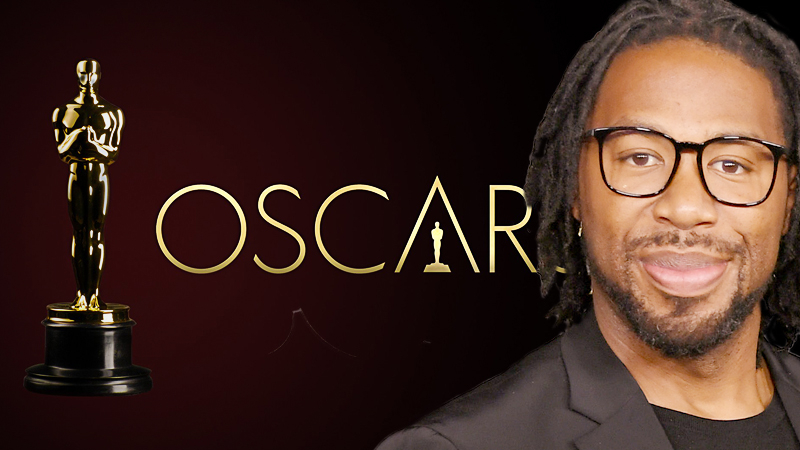
In his Oscar acceptance speech Sunday, Matthew Cherry, the director of the Academy Award-winning animated short film “Hair Love,” called attention to efforts to ban discrimination by schools and employers against black hair styles amid growing momentum for the movement to normalize natural hair styles.

” ‘Hair Love’ was done because we wanted to see more representation in animation,” Cherry said after accepting the award with Sony Pictures Animation executive Karen Rupert Toliver. “We wanted to normalize black hair. There’s a very important issue that’s out there, The CROWN Act, and if we can help to get this passed in all 50 states it will help stories like DeAndre Arnold’s . . . stop to happen.”

The story of the Texas high school senior who was required to cut his dreadlocks to walk out at graduation drew national attention. On Thursday, the Texas Legislative Black Caucus announced it is working on its version of the CROWN Act, which stands for Create a Respectful and Open World for Natural Hair, to. explicitly ban discrimination based on race-related hair textures and styles.

With Texas, some 25 states are considering or have passed similar legislation, according to a web site for the CROWN Coalition, a network of civil rights organizations, black advocacy groups and the beauty brand Dove.

New Jersey, New York and California have all passed laws based on those bills; Montgomery County, Maryland has also passed similar legislation. A federal bill was introduced by Sen. Cory Booker, D-N.J., and Rep. Cedric Richmond, D-La., in December.

“The film itself is not focused on hair discrimination, but in his remarks, he elevated the CROWN Act and the need to normalize black hair,” Adjoa Botwe-Asamoah, a political consultant who has led advocacy efforts for the CROWN Act, said in an interview. She added that the recognition for the short film, which follows a black father’s efforts to style the hair of his little girl, “is a huge win for the movement and all of us focused on this issue.”

Cherry’s film, which was created after a 2017 Kickstarter campaign took off, blowing past its initial goals of $75,000 and then $125,000 to bring in more than $280,000, reflects growing interest in the issue, The Washington Post.

“Hair Love” started as a side project for Cherry, a former NFL player, who was working at the time as an executive at the production company Monkeypaw; he pulled in a number of celebrity funders and several long-time animators, and attracted Toliver, who also worked on the short film as a side project, Butler reported.

92nd Oscar Award winners: #ศาสตร์เกษตรดินปุ๋ย

#ศาสตร์เกษตรดินปุ๋ย : ขอบคุณแหล่งข้อมูล : หนังสือพิมพ์ The Nation

https://www.nationthailand.com/lifestyle/30381892?utm_source=category&utm_medium=internal_referral

92nd Oscar Award winners:

Feb 10. 2020
Photo credit: Oscars official website

Photo credit: Oscars official website
By The Nation


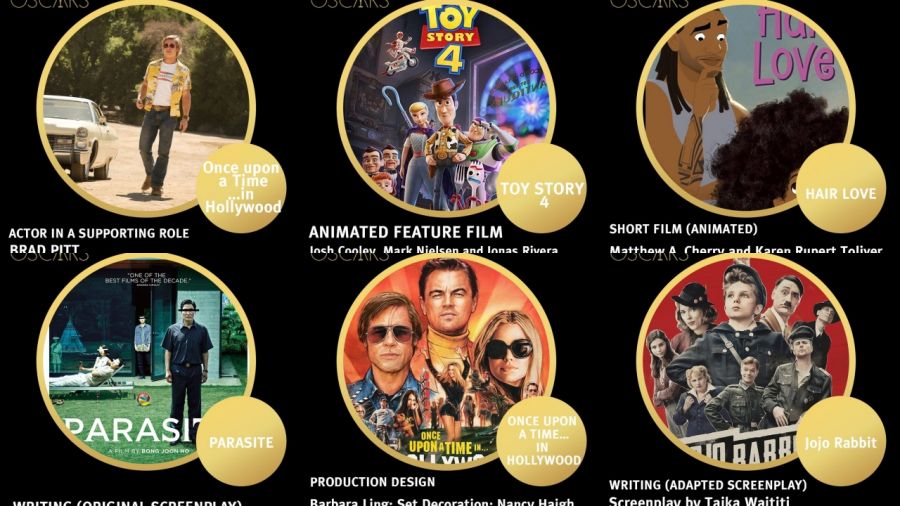
> “Parasite”, a South Korean black comedy thriller, claimed four awards, including best picture, best director for Bong Joon Ho, best international feature film and best original screenplay.

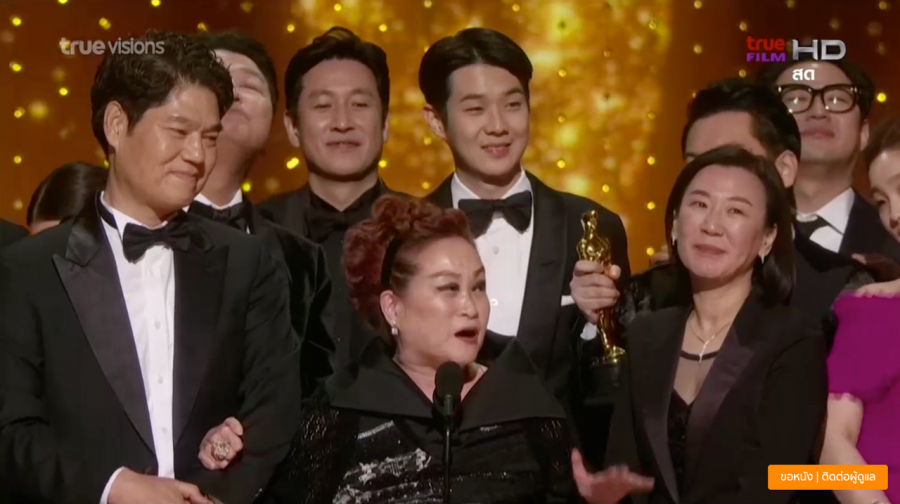
Parasite's film crew during speech

Parasite’s film crew during speech

Bong Joon Ho

Bong Joon Ho

> “1917”, a British World War One film, won in three categories – visual effects, cinematography and sound mixing.

> Joaquin Phoenix bagged the lead actor award for “Joker”, a comic-book-related film, which also won for original score.

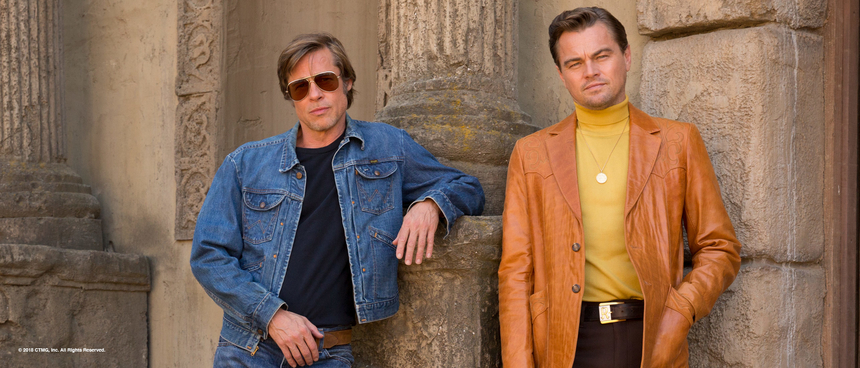
> Brad Pitt won the best supporting actor trophy for “Once Upon a Time in Hollywood”, which also picked up the award for production design.

Brad Pitt (left) and Leonardo DiCaprio (right)

Brad Pitt (left) and Leonardo DiCaprio (right)

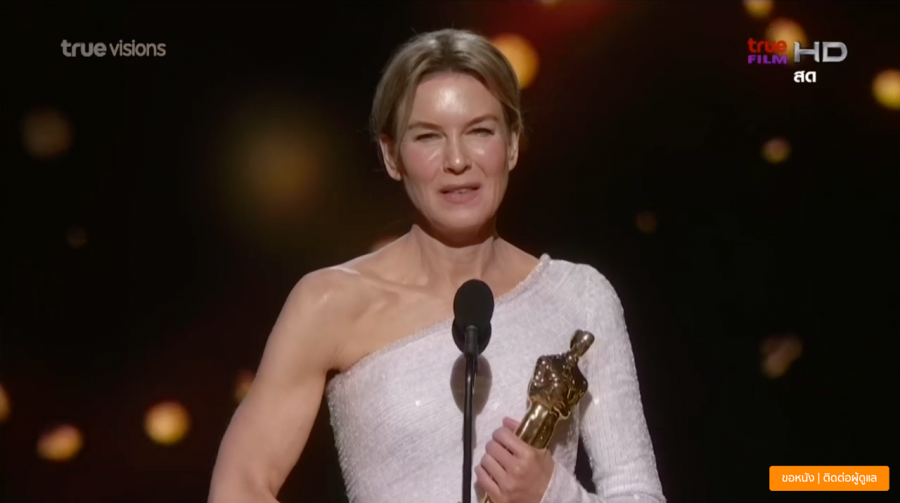
> Renée Zellweger took home the lead actress award for “Judy”.

Renée Zellweger

Renée Zellweger

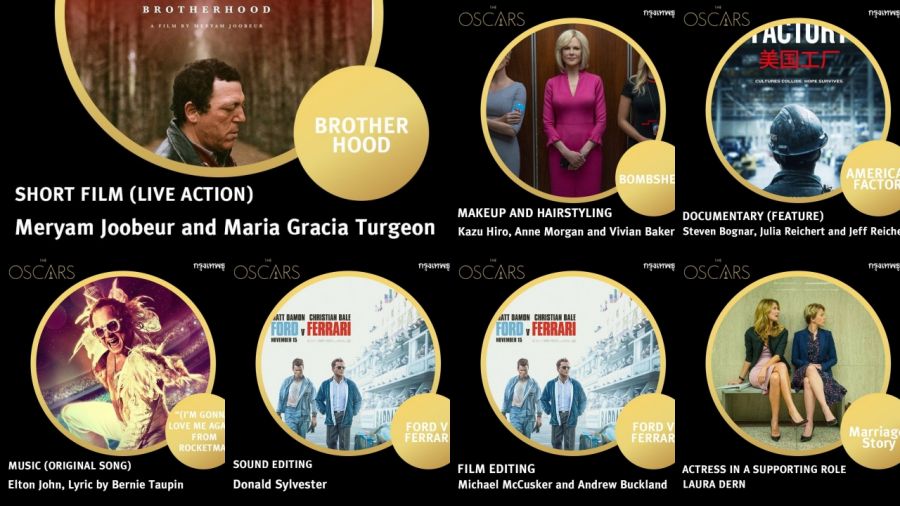
> Laura Dern won supporting actress for “Marriage Story”.

> Taika Waititi grabbed the adapted screenplay honour for “JoJo Rabbit”.

> “Ford v Ferrari” won for film editing and sound editing.

> “Toy Story 4” bagged the animated feature prize.

> “Hair Love” won the animated short film award.

> The trophy for original song went to “(I’m Gonna) Love Me Again”, with music by Elton John and lyrics by Bernie Taupin.

> “American Factory” walked away with the best documentary feature award.

> “Learning to Skateboard in a Warzone (If You’re a Girl)” won the best short documentary award.

> “The Neighbors’ Window” bagged the best live-action short trophy.

> Kazu Hiro, Anne Morgan and Vivian Baker won the makeup and hairstyling award for “Bombshell”.

> Jacqueline Durran picked up the costume design trophy for “Little Women”.

‘Parasite’ wins best picture at Oscars #ศาสตร์เกษตรดินปุ๋ย

#ศาสตร์เกษตรดินปุ๋ย : ขอบคุณแหล่งข้อมูล : หนังสือพิมพ์ The Nation

https://www.nationthailand.com/lifestyle/30381889?utm_source=category&utm_medium=internal_referral

‘Parasite’ wins best picture at Oscars

Feb 10. 2020

South Korean director Bong Joon-ho arrives with the cast and crew of

South Korean director Bong Joon-ho arrives with the cast and crew of “Parasite” for the 92nd Oscars at the Dolby Theatre in Hollywood, California on Feb. 9, 2020. (AFP-Yonhap)
By The Korea Herald
Choi Ji-won

Korean satirical-thriller “Parasite” won best picture at the Oscars on Sunday, making history in its home country and the international film scene.

Director-producer Bong Joon-ho shared the honor with co-producer Kwak Sin-ae, CEO of film production company Barunson E&A.

With the award, “Parasite” became the first foreign-language picture to win the most coveted prize in film.

Conquering the Oscars, Bong and the “Parasite” team have reached what may be considered the pinnacle of their 10-month awards race, which began last May with their acceptance of the Palme d’Or at the Cannes Film Festival. The film has clinched more than 50 trophies.

Why are the #OscarsSoWhite? Google searches give us a clue #ศาสตร์เกษตรดินปุ๋ย

#ศาสตร์เกษตรดินปุ๋ย : ขอบคุณแหล่งข้อมูล : หนังสือพิมพ์ The Nation

https://www.nationthailand.com/lifestyle/30381876?utm_source=category&utm_medium=internal_referral

Why are the #OscarsSoWhite? Google searches give us a clue

Feb 09. 2020
By Special To The Washington Post · Bethany Lacina · OPINION, ENTERTAINMENT, OP-ED 
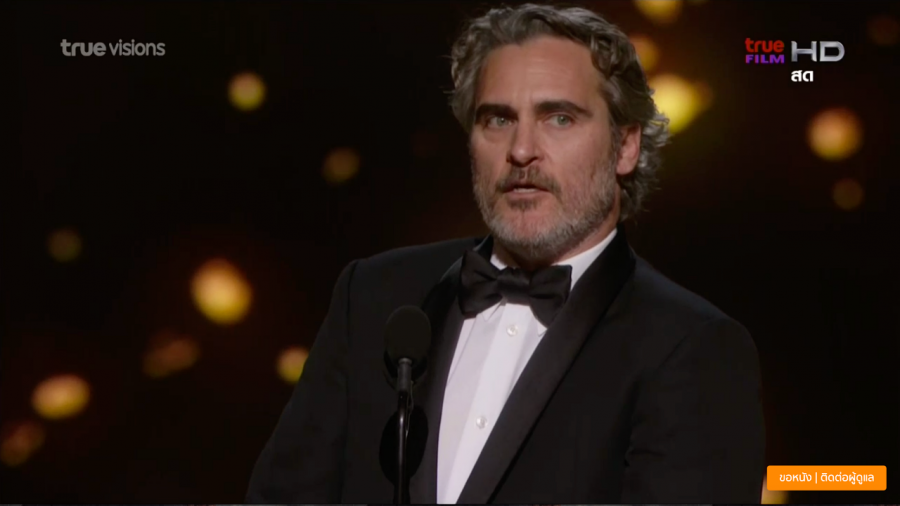
Joaquin Phoenix received an acting award from the British Academy of Film and Television Arts last Sunday. In his acceptance speech he argued that the American and British film industries give “preferential treatment” to white actors.

Phoenix is correct. Major film studios encourage their audience to develop an affinity for white actors and then cast more white actors because of audience affinity.

To understand that cycle, consider how Americans consume celebrity news. When Americans are curious about the actors and actresses up for Oscars this weekend, they assess what they have in common with those performers. Those internet searches reveal how people become invested in particular celebrities – and why white actors have an easier road to fame.

In communications research, the term “para-social relationship” describes the sense of closeness with someone you do not know personally but see in various media.

Psychologists have found that the strength and warmth of such a relationship is based on the amount of time spent “with” the celebrity and on the viewer’s perception that they and the celebrity have things in common. People try to avoid relationships with celebrities whose tastes or values are at odds with their own, according to research.

Media consumers look for evidence that their identities or experiences overlap with the lives of celebrated individuals.

For instance, one Oscar nominee, Adam Driver, previously served in the U.S. Marine Corps. I used Google Trends to measure where internet searches for “Adam Driver marine” took place between Dec. 15, 2019 and Jan. 15, 2020. The top five media markets for that search include San Diego, California, home to many retired veterans as well as the Marine Corps Recruit Depot, and Colorado Springs, Colorado, home of the U.S. Air Force Academy.

In fact, there is a positive relationship between media markets with more veterans and greater search interest in Driver’s military career. A one percent increase in U.S. military veterans in a media market’s population is correlated with just over one percent more traffic for the phrase “Adam Driver marine.” Curiosity about his military service is higher in places where more people share that experience.

The hunt for points of sympathy with celebrities shows up in internet searches for other Oscar nominees, as well. Two of the top five media markets for Brad Pitt searches are in Missouri, where he grew up. Searches for Pitt’s name plus “religion” or “Christian” are more common in politically conservative media markets. The same pattern holds for searches of “Leonardo DiCaprio” with “religion” or “Christian.” Curiosity about whether actor Jonathan Pryce can speak Spanish is highest in Miami-Fort Lauderdale and Los Angeles.

Most Americans have few real-life relationships that cross racial lines. Some may also feel a particular affinity for celebrities of the same race.

For movie actors, race matters in a more subtle manner, as well. Actors with leading and speaking roles in Hollywood films are overwhelmingly white. Whiteness is an unexceptional trait for a character and does not reveal much about their story line.

By contrast, in many films, characters of color serve the plot in stereotypically subordinate ways. For instance, there’s the trope of a “magical Negro” helping a white protagonist, as in “Ghost,” “The Matrix” and “The Help.” And many observers have mocked the fact that, in horror movies, a black character often dies first.

Hollywood’s audience expects to pay attention to the white characters if they want to follow the plot. That habit strengthens the audience’s relationship with white actors. A white actor may play a wide variety of characters, encouraging curiosity about what they are like when they are not in character.

Only two out of this year’s 19 Oscar nominees, Antonio Banderas and Cynthia Erivo, are people of color. Combining the Oscar nominees with adults nominated for Screen Actors Guild and Golden Globe awards produces a list of 83 actors – of whom five are women of color and eight are men of color.

How does the internet traffic for each of these actors vary depending on the diversity of a media market? To find out, I measured search traffic for each celebrity’s name by media market. I compared that data to the percentage of the media market’s population that is white.

For the 70 white nominees, there is no strong pattern. Some attract more interest in whiter media markets, some less, and for some, interest is similar regardless of diversity. On average, these stars add 5 percent to their Internet traffic when the population share of whites in a media market is 10 percent higher.

By contrast, there is a clear negative correlation between searches for any of the 13 nominees of color and whiter media markets. On average, actors of color lose 20 percent of their internet traffic where the population share of whites is 10 percent higher.

In whiter media markets, there is also less curiosity about the personal lives of nonwhite actors.

For each nominee, I looked at the internet traffic for their name in combination with 30 neutral-to-positive words about personal relationships (e.g., “married” but not “divorced”). I used that information to estimate what share of the total internet searches about an actor were also searches for sympathetic information about his or her personal life.

As the share of whites in a media market increases, searches for this kind of information fall faster for actors of color than for white actors. In whiter media markets, people seek out personal information about actors of color less, reducing the likelihood that they’ll make emotional investments in them.

It’s impossible to begrudge people – veterans, say, or Spanish speakers – the desire to feel connected to people who are admired and celebrated. Yet, Hollywood casting frequently denies that experience to people of color. It also reinforces white audiences’ affinity for white stars. Hollywood films are part of the socialization that teaches Americans, especially white Americans, that whiteness is not an identity but a neutral setting. Movies train us to notice things about white characters other than whiteness; that carries over to the actors themselves.

– – –

Lacina is an associate professor of political science at the University of Rochester.

The Oscars nominated ‘Parasite’ but looked right past its all-Asian cast; it’s part of a pattern #ศาสตร์เกษตรดินปุ๋ย

#ศาสตร์เกษตรดินปุ๋ย : ขอบคุณแหล่งข้อมูล : หนังสือพิมพ์ The Nation

https://www.nationthailand.com/lifestyle/30381807?utm_source=category&utm_medium=internal_referral

The Oscars nominated ‘Parasite’ but looked right past its all-Asian cast; it’s part of a pattern

Feb 08. 2020
By The Washington Post · Elahe Izadi · ENTERTAINMENT
The cast of “Parasite” gasped and jumped from their seats last month when they heard the news: They won the Screen Actors Guild award for best ensemble, a first for a foreign-language film. Hollywood’s biggest stars gave them a standing ovation as they collected the prize bestowed upon on them by their fellow actors.

“Although the title is ‘Parasite,’ I think the story is about coexistence and how we can all live together,” lead actor Song Kang-ho said through an interpreter. “But to be honored with a best ensemble award,” he jokingly added, “it occurs to me that maybe we haven’t created such a bad movie.”

By every metric available, South Korea’s “Parasite” is far from a bad movie. It did well at the box office, earned near-universal praise from critics and is up for six Oscars, including best picture. But despite the accolades for Bong Joon-ho’s biting drama, none of the film’s actors received nominations, and their performances were given little consideration this awards season beyond the SAG trophy.

It follows a familiar pattern. Just a handful of actors of Asian descent have ever won an Oscar, including Miyoshi Umeki, a Japanese American who won best supporting actress for 1957′s “Sayonara,” and Ben Kingsley, whose father was of Indian descent, who won best actor for 1982′s “Gandhi.”

Asian actors have historically had few roles in major theatrical releases; in 2018, they held 4.8 percent of roles in the 200 top-grossing films, according to the latest Hollywood Diversity Report released Thursday by the University of California at Los Angeles. Some films featuring largely Asian casts have received academy recognition. But while “Last Emperor,” “Crouching Tiger, Hidden Dragon,” “Memoirs of a Geisha,” “Slumdog Millionaire” and “Life of Pi” all received more than five Oscar nominations, none was for acting.

Other films have racked up at least the same number of nods with no recognition for acting, including this year’s “1917.” But of the 58 movies that reach that threshold, ones featuring Asians and Asian Americans are overrepresented, said Ben Zauzmer, author of “Oscarmetrics.”

“Historically and to the present day, the academy is more willing to honor films with Asian casts than to honor individual Asian actors,” Zauzmer said.

The history of Asian and Asian Americans in Hollywood has been one of troubling or very little representation, said Catherine Ceniza Choy, a professor of Asian American and Asian diaspora studies at the University of California at Berkeley.

They’ve been shown on-screen “as one-dimensional stereotypes,” such as subhuman villains, “a racialized horde or invasion” or “superhuman” model minority characters, she said. The moviegoing public, including Oscar voters, may therefore be conditioned to seeing Asians as “a type, as opposed to a human being with an individual personality who would be of interest, a nuanced character,” she added.

During the silent-film era, Asian actors were confined to playing stereotypical parts, and soon the movie industry’s depiction of Asians came via white actors “with scotchtaped eyes,” said Elaine Kim, a professor emerita of Asian American and Asian diaspora studies at UCB.

Kim cited decades of policy that excluded Asian immigrants from entering the United States as influencing perceptions of Asians, including on-screen. “Until recently, many Americans thought that Asians were foreigners who could never be considered ‘American,’ so naturally it would be jarring, they thought, for white viewers to see Asians portraying ‘Americans’ on the silver screen even as black Americans were coming to be thought of as quintessentially ‘American,'” Kim said via email.

And while “yellow face” may no longer be a standard Hollywood practice, “whitewashing” – white actors playing Asian characters – still happens, from Emma Stone’s casting in “Aloha” to Tilda Swinton in “Doctor Strange.”

“Asian and Asian Americans couldn’t even play themselves, the assumption being that talented acting belongs to white, Western actors,” Choy said. “That has also infused the industry’s consciousness, as well as of the general public.”

To be considered in the Oscar acting categories, Asian and Asian American actors often have to compete against their better-known white counterparts, who are more likely to have star power and a history of appearing in top films. “To even be put in the dialogue about who gets to deserve the awards – do we even know who this person is?” said culture critic and “They Call Us Bruce” podcast co-host Jeff Yang. “We have a self-fulfilling prophecy of people who have already gotten visibility getting more visibility.”

The conversation around representation has become more prominent in the wake of the #OscarsSoWhite campaign. The academy made pledges to diversify its membership and, since 2016, the share of voting members who are people of color has doubled – to 16 percent.

The lack of acting nods for “Parasite,” as well as “The Farewell,” another critically acclaimed film with Asian and Asian American actors, speaks “to the membership of the academy and who is actually doing the voting,” said #OscarsSoWhite founder April Reign. Despite the changes, the Asian American Pacific Islander “community is still woefully underrepresented within the academy, on-screen and behind the camera.”

Because new members are being added to an Oscars voting body that was overwhelmingly older, white and male, “it’s going to take years and years before you approach anything resembling the diversity of America,” said Darnell Hunt, a sociologist and dean of social sciences at UCLA who co-authors the annual Hollywood Diversity Report.

There’s an additional hurdle in the case of “Parasite”: No foreign-language film has ever won a best picture Oscar, signaling the academy’s attitude toward such movies. “Once you overcome the one-inch-tall barrier of subtitles, you will be introduced to so many more amazing films,” Bong said through an interpreter as he accepted the trophy for best foreign-language film at the Golden Globes last month.

“Both Asian and Asian American actors tend to be (perceived as) anonymous and vaguely foreign, and therefore sort of invisible in the minds of prospective academy voters,” Yang said. “It’s even harder in some way for Asian films, as they’re often relegated to the foreign-language or best international film categories. Therefore the visibility of Asian actors is almost nil.”

For an actor, winning an Oscar represents industry respect, more meaningful roles or better career opportunities. But that’s not always the case. Reign pointed out how Octavia Spencer, a black actress who won an Oscar for “The Help,” didn’t make commensurate pay on a film set until Jessica Chastain, a white actress who didn’t have an Oscar, advocated for her. “With respect to the black women who have been nominated for Academy Awards, we have not seen the opportunities that we expect,” Reign said.

Still, an Oscar win sends a message to studios and production companies about film budgets and what kinds of projects deserve attention. “The Oscars are critical because what they do is establish standards,” Hunt said. “If a particular type of film is routinely or traditionally considered Oscar-worthy, then the industry will keep making that.”

“Parasite” could win best picture. It’s one of the front-runners, thanks in no small part to that SAG ensemble award. So although the actors won’t be able to collect individual trophies on Sunday, their work could still prove crucial in helping make Oscars history.

“It is true that the momentum is building and we are part of the awards race and campaign,” Bong told journalists after the SAGs. “But I think today what’s truly important is that these actors were acknowledged by fellow peers, acknowledged as the best ensemble cast of this year, and that’s the greatest joy of this night.”

Virus shatters China’s dream of overtaking Hollywood in 2020 #ศาสตร์เกษตรดินปุ๋ย

#ศาสตร์เกษตรดินปุ๋ย : ขอบคุณแหล่งข้อมูล : หนังสือพิมพ์ The Nation

https://www.nationthailand.com/lifestyle/30381802?utm_source=category&utm_medium=internal_referral

Virus shatters China’s dream of overtaking Hollywood in 2020

Feb 08. 2020
By  Syndication Washington Post, Bloomberg · Shirley Zhao · BUSINESS, WORLD, ENTERTAINMENT
China is no longer on track to dethrone the U.S. as the world’s No. 1 movie market this year.

The coronavirus has clobbered the burgeoning Hollywood rival, virtually wiping out ticket sales during the recent seven-day Lunar New Year holiday — a week that’s been historically the busiest for box-office collections. Theaters across the country have remained shut since Jan. 24, while the fear of infection has prompted people to avoid crowded places.

Losses from the collapse of ticket sales mounted to $1 billion during the festive period, according to estimates by Rance Pow, chief executive officer of cinema industry consulting firm Artisan Gateway. That number is about 10% of the anticipated revenue in 2020, and is set to rise as uncertainty over the outbreak persists.

The impact of a virus that’s killed more than 600 people and slammed the local movie market is likely to spread to Hollywood, which is increasingly relying on Chinese audiences for growth as domestic ticket sales decline. Walt Disney Co. said this week that the epidemic is a headwind for its studio.

“The loss will do significant financial damage to both theaters and production companies in China, and if theaters remain closed for several more weeks, the financial harm will expand,” said Lindsay Conner, partner and leader of the entertainment consultancy of Los Angeles-based Manatt, Phelps & Phillips. “With Chinese theaters closed due to the outbreak, Hollywood’s plans for distributing new films in China are also uncertain.”

Shares of Wanda Film Holding Co., a cinema operator controlled by billionaire Wang Jianlin, have plunged 25% since Jan. 17. Imax China Holding Inc., which operates giant screens, has tumbled 21%, while Beijing Enlight Media Co., Ltd., one of China’s largest studios, slid 17%.

China has already overtaken the U.S. in terms of numbers of cinema screens following a building boom that helped box-office sales climb sixfold since 2010. Analysts were predicting the market to surpass the U.S. in terms of revenue this year.

Movie ticket sales in the country, excluding booking fees, rose 4.1% last year to 58.9 billion yuan ($8.5 billion), compared with 9.7 billion yuan in 2010. Imported films accounted for about 36% of box office sales last year in China, the largest overseas market for U.S. films.

Exhibitors have said they have set no date for re-opening cinemas. That means potential delays in China for big-ticket films from Hollywood such as Disney’s “Mulan” — based on a legendary Chinese female warrior — and Pixar’s “Onward,” which are set for March debuts in the U.S., according to Pow.

For companies such as Disney, the hit is not just on the movie business. Its theme park in Shanghai has closed as well, along with Disneyland in Hong Kong, which had already been hit by the city’s political unrest. Executives at the Burbank, California-based entertainment giant said Tuesday the theme park shutdowns would pare about $175 million off revenue in the current quarter.

Local language movies set to open during the Lunar New Year holiday then canceled included “Detective Chinatown 3,” the third installment of one of China’s most commercially successful comedies, “Leap,” based on the true story of the Chinese women’s volleyball team, and “Jiang Ziya: Legend of Deification.”

“Even if the virus ended today, the backlog of films to release – all Chinese – is pretty large,” said Chris Fenton, a film producer and U.S.-Asia Institute trustee. A delay in the China release of “Mulan,” would also raise the question of whether Disney would postpone the U.S. release, he said.

The Oscar category that best reflects the state of film isn’t best picture – it’s visual effects #ศาสตร์เกษตรดินปุ๋ย

#ศาสตร์เกษตรดินปุ๋ย : ขอบคุณแหล่งข้อมูล : หนังสือพิมพ์ The Nation

https://www.nationthailand.com/lifestyle/30381797?utm_source=category&utm_medium=internal_referral

The Oscar category that best reflects the state of film isn’t best picture – it’s visual effects

Feb 07. 2020

“The Irishman,” left, in which Robert De Niro is digitally de-aged to play the same character at different points in his life, and “Avengers: Endgame,” featuring Chris Hemsworth as Thor, are two of the films up for best visual effects. MUST CREDIT: Netflix; Walt Disney Studios Motion Pictures/Marvel Studios/Film Frame
By The Washington Post · Travis M. Andrews · ENTERTAINMENT, FILM

Wedged each year among the smorgasbord of critical darlings, art house films and prestige dramas that fill the various Oscar categories sits what is quietly the most relevant one to casual moviegoers: best visual effects.

The below-the-line, insider category is generally the one place on awards night where box-office successes and nominees match up, as the films competing for the trophy are the few blockbuster movies that people actually pay to go see.

Just look at the numbers: The nine movies nominated for best picture this year collectively made roughly $2 billion worldwide. The five up for best visual effects made $5.7 billion. While the best picture category has long been where Hollywood presents the best version of itself, visual effects is where we see what Hollywood really is – and increasingly, what it might become in the near future.

The visual effects nominees for 2019 include two major franchise pictures, per usual (“Avengers: Endgame,” “Star Wars: The Rise of Skywalker”); a CGI-rrific remake of a beloved animated classic (“The Lion King”); and two “classic” Oscar movies, each of which was promoted partially by its nifty visual tricks (“The Irishman,” which employed technology to de-age its actors, and “1917,” which was shot and edited to look like one continuous take). These last two were also nominated for the academy’s highest honor, a crossover that isn’t unprecedented but remains an anomaly.

The number of visual effects nominees has grown alongside technology, expanding from a slate of two or three each year to a consistent five in 2010, more often than not encompassing multiple franchise films.

“Endgame,” “The Rise of Skywalker” and “The Lion King” are emblematic of that trend, as each is part of an established series and, notably, all are Disney products. The company acquired Marvel Studios in 2009 and Lucasfilm in 2012 and, with the exception of 2011, a superhero or Star Wars film has been nominated for best visual effects every year of the past decade.

“The Disney model is basically, if you can’t create it, you buy it. And (Disney CEO) Bob Iger has gone and bought almost every major brand that there possibly is,” said industry vet Scott Ross, who co-founded and previously served as chief executive of visual effects company Digital Domain.

Disney’s latest trend of turning animated classics into “live action” is already awards fodder, as evidenced by the nomination for “Lion King’s” photorealistic animals in a movie that has virtually the same script as the 1994 hand-drawn animated version.

Ross pointed out we can expect many more of this kind of film because there’s “no creative, marketing or sales risk.” That box-office success – those three nominees each made more than $1 billion worldwide – ensures these types of films aren’t going anywhere.

The familiarity of these sorts of movies resonates with audiences in the United States and also works well in foreign markets where the “translation of a volcano going off and crushing cities is much more easily understood in Mandarin than some pithy dialogue of a British drama,” Ross said.

That’s why it’s particularly surprising that the category this year also includes Martin Scorsese’s mob drama and Sam Mendes’ World War I epic, two types of movies that generally attract more praise from the academy in above-the-line categories such as acting and directing.

These movies have become as buzzy for their plots as the technology used to tell the stories. As a result, this is the “only category where you have ‘The Irishman’ and ‘The Avengers’ competing head to head,” pointed out Adam Nayman, film critic and author of “The Coen Brothers: This Book Really Ties the Films Together.” But visual effects have become more accessible and are arguably more necessary for films of any stripe, just in a different manner.

“It’s interesting that in the special effects category, you have these two big prestige movies in ‘The Irishman’ and ‘1917.’ And in both cases, you could argue the special effects are quite invisible or in the service of realism,” Nayman said. While the other movies “want spaceships and creatures to look realistic, they are movies in a fantastic universe. ‘The Irishman’ and ‘1917’ are trying to be as realistic as possible. So you’ve got these schisms between commercial and personal filmmaking and illusionism and realism.”

In other words, digital special effects are being utilized in new and more subtle ways.

“Movies are all about magical mythmaking, enhanced by the new ‘toys’ of technology,” Columbia University film professor Annette Insdorf said via email. “These often become a fad, used for a brief experimental period (like 3-D in the 1950s, or Sensurround in the 1970s for ‘Earthquake’ and ‘Rollercoaster’). But advances in digital technology increasingly impact storytelling: we now can rejuvenate (De Niro in ‘The Irishman’) and resurrect (Carrie Fisher in [‘Star Wars: The Rise of Skywalker’]).”

Those advances are already happening on a larger scale: In the near future, Magic City Films will release a movie co-starring a digitally re-created James Dean, a man who’s been dead for 65 years.

Even casual filmgoers know to expect more action blockbusters and cartoon reboots. But Nayman believes a “subtler” type of effect, that takes “an incredible amount of time and resource and skill but doesn’t necessarily announce its presence,” will become more prevalent in our more classical dramas.

So perhaps in addition to more of the same in this age of spectacle, the future includes space for a quieter, more reserved type of film – one that uses grand special effects, even if the audience doesn’t realize it.

At the Oscars, Geena Davis will get a humanitarian award for making Hollywood see women as fully human #ศาสตร์เกษตรดินปุ๋ย

#ศาสตร์เกษตรดินปุ๋ย : ขอบคุณแหล่งข้อมูล : หนังสือพิมพ์ The Nation

https://www.nationthailand.com/lifestyle/30381794?utm_source=category&utm_medium=internal_referral

At the Oscars, Geena Davis will get a humanitarian award for making Hollywood see women as fully human

Feb 07. 2020
Geena Davis will be recognized Sunday at the Oscars after receiving the Jean Hersholt Humanitarian Award for her work in promoting gender parity on screen. MUST CREDIT: Photo for The Washington Post by Brinson+Banks

Geena Davis will be recognized Sunday at the Oscars after receiving the Jean Hersholt Humanitarian Award for her work in promoting gender parity on screen. MUST CREDIT: Photo for The Washington Post by Brinson+Banks
By The Washington Post · Ann Hornaday · ENTERTAINMENT, FILM, TV

LOS ANGELES – Geena Davis arrives for lunch at a beachside hotel looking as understated as humanly possible for one of Hollywood’s most recognizable celebrities. Dressed modestly, her hair in a bob and her famously sculpted cheekbones and pillowy lips adorned with minimal makeup, she makes small talk about the brush fires raging just two miles from her Los Angeles home, where she lives with her three teenage children. “I’ve never gotten so many texts in my life,” she says of concerned acquaintan

Davis speaks softly and with careful consideration, her thoughts often giving way to free-associative digressions. It’s October, and she looks preternaturally relaxed for someone who, in a few days, is scheduled to deliver a speech at one of the movie industry’s most exclusive events. Davis was being honored at the Governors Awards of the Academy of Motion Picture Arts and Sciences, where she would receive the Jean Hersholt Humanitarian Award for her work in promoting gender parity on screen.
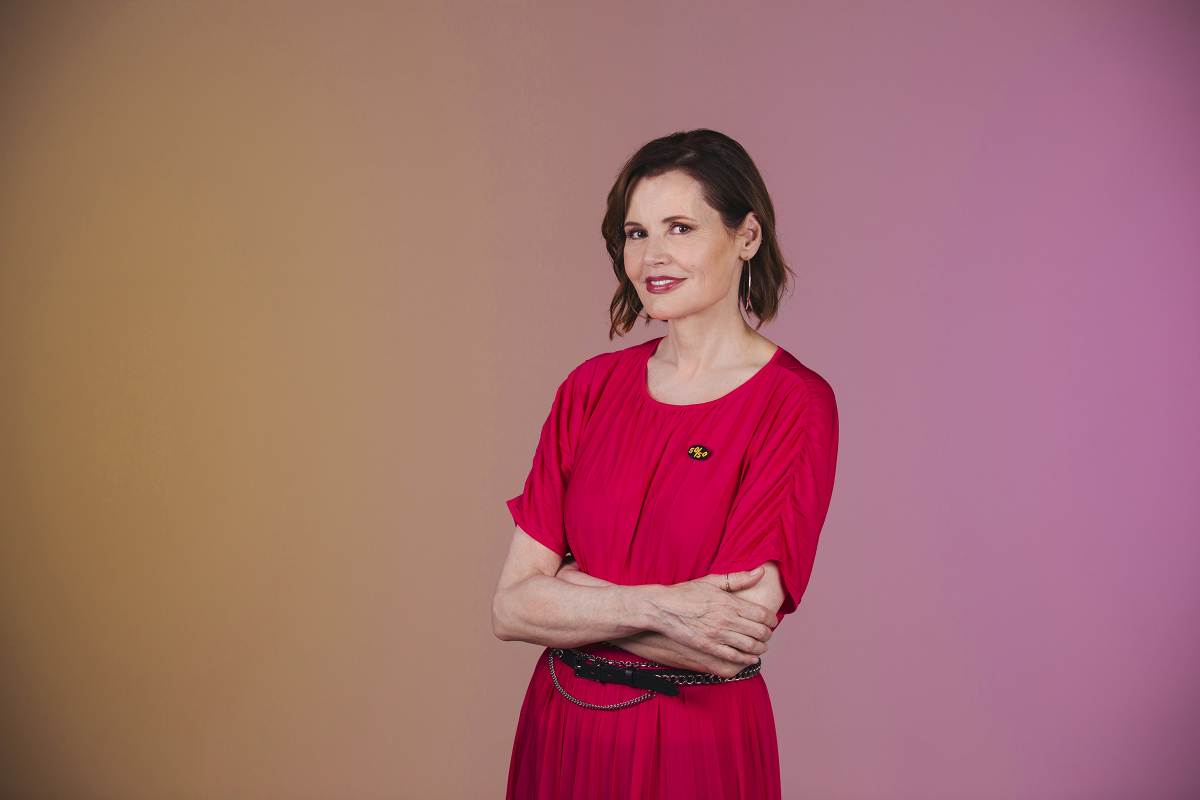
Using her own money, as well as funds she raised, Geena Davis financed the largest research study ever conducted on gender in children's entertainment, with the results confirming her hypothesis that male characters far outnumbered female characters on screen. MUST CREDIT: Photo for The Washington Post by Brinson+Banks

Using her own money, as well as funds she raised, Geena Davis financed the largest research study ever conducted on gender in children’s entertainment, with the results confirming her hypothesis that male characters far outnumbered female characters on screen. MUST CREDIT: Photo for The Washington Post by Brinson+Banks

It promised to be a tough room, as sexism and what to do about it continue to fuel contentious debate in certain precincts. But Davis is unfazed.

“I never get nervous – I have ice water in my veins,” she says simply, adding that she hasn’t even begun writing her prepared remarks. “I think that may be part of why I was attracted to acting. There’s a gun to your head. You have to do it right now. That’s been me forever.”

On Sunday, Davis and her fellow recipients of honorary Academy Awards will be recognized from the stage during the Oscars telecast and required only to smile and soak up the love. But let the record reflect that, when the Governors Awards ceremony took place on Oct. 27, her speech was a barnburner, with Davis striking an irresistible balance of the humor, hard data and friendly persuasion that has made her such a quietly effective advocate for the past several years. After a few self-deprecating jokes, she shared a dispiriting statistic about how rarely films depict women holding jobs. (“We make it worse than the crappy reality.”) She then gently chided her colleagues for continuing to write and produce scripts that lack diversity, not only when it comes to gender, but a wide range of underrepresented groups.

“People characterize us Hollywood types as bleeding-heart liberals,” she observed. “Hardly. If we’re supposed to be a bunch of gender-fluid intersectional feminists, then by God let’s do it up right. Let’s live up to our label!”

Davis has earned the right to scold, however lightheartedly. In 2004, when she started watching TV shows with her then-toddler daughter, she was “floored” by the paltry number of girls in preschool-oriented programs. When Davis brought it up to her colleagues, she recalls, “they all said, ‘Yeah, but that’s not true anymore.’ So that made me think this is completely unconscious, and therefore data would make a big difference.”

Using her own money, as well as funds she raised, Davis financed the largest research study ever conducted on gender in children’s entertainment, with the results confirming her hypothesis that male characters far outnumbered female characters on screen, presenting a skewed version of reality and perpetuating the damaging idea that boys are more valuable and interesting than girls.

Davis could have stopped there, content to sign off on a ghostwritten op-ed or become the face for a nonprofit’s well-meaning PSA campaign. Instead, she founded her own nonprofit: the Geena Davis Institute on Gender in Media at Mount St. Mary’s University, which collects data on the representation of women and girls in television shows, movies and advertisements and then shares it with content creators. (Davis has focused on children’s media on the assumption that “people who do kids’ entertainment care about kids. So once they learned what they were doing wrong, they’d want to change it.”)

In October, Davis revealed that Disney would be a pilot partner in using the tool GD-IQ: Spellcheck for Bias, software that analyzes scripts for representation across gender, ethnicity, sexual orientation and varying abilities. But even before that announcement, her efforts had begun to show stunning results: Earlier in the fall, her institute announced that gender parity had been achieved in lead and co-lead roles in children’s television shows. This past New Year’s Eve, Davis received news that the same benchmark had been reached in family films.

“I did handsprings when I heard the TV results, and I did a double backflip when I heard the film results,” she says. “This is one of the huge pieces of what the whole institute was established to accomplish.”

What Davis set out to accomplish is nothing short of “world domination,” according to Geena Davis Institute CEO Madeline Di Nonno, who recalls her using that phrase when they started working together. “She set forth a very specific thesis, with a very specific theory of change, and now she’s able to say, ‘My theory of change worked.’ And on the heels of that, now we can say we’ve achieved gender parity in family films for the first time in history.” (There’s good news for adult-oriented movies as well: The USC Annenberg Inclusion Initiative just released a study that found 43 percent of lead or co-lead characters in the top 100 films of 2019 were female, a 13-year high.)

For Davis, the sea change has often been achieved one consciousness at a time. Producer Amy Pascal, who worked with Davis on the 1992 movie “A League of Their Own” and 1999’s “Stuart Little,” recalls a moment years after the latter film was released, when Davis showed her a still photograph of a scene set at the boat pond in Central Park. “Every man who was an extra is holding a newspaper, an umbrella, a briefcase, a (toy) boat,” Davis told Pascal. “And every woman is holding nothing. Nothing.”

Pascal says she was “mortified” by the message that sent about female agency. “I was focused on getting these movies made,” she says, “never on the specifics of what we are telling people.”

A key element in Davis’ strategy is never naming and shaming, an ethos she adopted from the very beginning, Davis says. “One, I work in the industry, and I wanted these exact same people to keep hiring me,” she explains. But she also says that, especially when it comes to children’s media, “there’s no reason to use a cudgel to tell them this information. … The data almost does the work for us.”

Davis’s style is also of a piece with her personality, which is reserved, but also disarmingly confident. Growing up in Wareham, Massachusetts, as a tall girl (6 feet) and a natural performer, she was taught that “being nice was the most important thing in the universe” and that she had to temper her most spontaneous inclinations if she was to succeed.

Davis remembers watching a friend’s ballet class and being invited to participate by the teacher. “Everybody was leap-leap-leaping across the room, so when it was my turn, I leap-leap-leaped across the room. And she looked at me and said, ‘You may sit down.’ Like somehow I’d shamed myself.”

She also recalls the sting of being told by an aunt who was a role model: “You’re going to have to work on your laugh because boys aren’t going to like that.”

The fact that those memories are still so vivid and painful, she says, must hold deeper meaning. “Something must have told me even then that it was incredibly unfair.”

Luckily, Davis – who describes herself as a class clown despite her shyness – held on to her sense of humor. Producer and longtime television executive Nina Tassler was Davis’ roommate when they were studying acting at Boston University in the 1970s. She recalls being asked to leave a history of theater class when she cracked up at Davis, who had turned to her and stuck out her tongue, revealing a tiny toy truck that she proceeded to push around her face.

Later, in a stage combat exercise, Davis masterminded a bit where she and the 5-foot Tassler played conjoined twins, complete with giant rattles and baby bonnets. Davis’ comic timing and penchant for the absurd, Tassler says, “is why she has won the hearts and minds of an entire industry when it comes to making a point. Because it always incorporates irreverence and humor and irony. It’s one of the hallmarks of her means of communicating.”

Even when Davis made a screen debut that would reduce seasoned veterans to a pulp, she maintained her signature brand of quiet self-belief. The movie was 1982’s “Tootsie,” and after a couple of takes, the film’s director, Sydney Pollack, took Davis aside. “He says, ‘Let me ask you something,’ ” Davis recalls. ” ‘Why are you not nervous? It doesn’t make any sense to me. You’re in your underwear doing your first scene in a movie with Dustin Hoffman. Why are you not nervous?’ And I said, ‘Oh, I don’t know. Was I supposed to be?’ ”

In her mind, she insists, all she was thinking was, “Hot dog, this is what I’m supposed to be doing!”

Davis won an Oscar in 1989 for her role as an eccentric dog trainer in “The Accidental Tourist,” which, combined with her distinctive looks, threatened to pigeonhole her in the kind of “quirky” roles she instinctively mistrusted. “I remember getting sent a lot of scripts where the female character was really boring and they thought that by (casting) me it would become interesting and colorful.”

It wasn’t until the early 1990s, when she co-starred with Susan Sarandon in the road picture “Thelma & Louise,” followed by the baseball comedy “A League of Their Own,” that Davis began to “think about the parts I said yes to.” From that point on, she decided “to look for parts where I feel good about the women in the audience identifying with my character.” Not that she only wants to play role models or “strong female characters” (a term she abhors). “I want female characters who are f—ed up and flawed and everything we want to see in characters.”

When Davis, who turned 64 last month, told her friends and co-workers that she was forming her own nonprofit, some thought it would torpedo her career. But the many presentations and speaking gigs she does every year have only strengthened her relationships within the industry.

Her most recent role was a recurring character on the Netflix series “Glow,” and she’s also been hoping to reboot the lamentably short-lived 2005 TV series “Commander in Chief,” in which she played the U.S. president. (“I think if my show had stayed on longer, we would have had a female president by now.”) Failing that, she’d love to explore what the world of burgeoning platforms has to offer.

“I want a streaming show where I’m a badass,” she says conspiratorially.

In the meantime, when she waves to the crowd in the Dolby Theater on Oscar night, Davis will be savoring the fact that she’s receiving a humanitarian award for advancing the radical notion that women are fully human.

“What I always say is, this is not controversial,” she says. “We’re asking that the on-screen population reflect real life. That’s all you’ve got to do. Reflect real life. Don’t make it worse.”
In Hollywood, a finale for the ‘Witness Tree,’ a century-old oak made famous in countless movies #ศาสตร์เกษตรดินปุ๋ย

#ศาสตร์เกษตรดินปุ๋ย : ขอบคุณแหล่งข้อมูล : หนังสือพิมพ์ The Nation

https://www.nationthailand.com/lifestyle/30381792?utm_source=category&utm_medium=internal_referral

In Hollywood, a finale for the ‘Witness Tree,’ a century-old oak made famous in countless movies

Feb 07. 2020
The Witness Tree at Paramount Ranch's Western Town when it was healthy, in an undated photo. MUST CREDIT: National Park Service

The Witness Tree at Paramount Ranch’s Western Town when it was healthy, in an undated photo. MUST CREDIT: National Park Service
By The Washington Post · Meagan Flynn · FEATURES, ENTERTAINMENT

Even in death, the Witness Tree looked alive. With twin trunks and a regal crown of tangled branches, the gigantic valley oak stood in the middle of Hollywood’s Paramount Ranch for at least a century, perhaps witnessing enough films to rival Roger Ebert.

It witnessed the making of silent movies and TV westerns, fake gunfights and real car crashes. It saw Bob Hope in “Caught in the Draft” and Sandra Bullock in “The Lake House.” And it witnessed weddings and parties too, hosting hundreds of guests beneath its leafy outstretched branches.

But early in the morning of Nov. 9, 2018, it witnessed something frightening. The flames of Southern California’s Woolsey Fire ravaged through the Santa Monica Mountains, taking out a stand of willow trees before surging onto Paramount Ranch. The entire Western Town’s Main Street, recently the set of HBO’s “Westworld,” burned to the ground.

The tree’s bark was charred black. Its bare branches looked spindly and skeletal. Yet despite all the destruction in the 750 acres around it, the Witness Tree was somehow still standing.

The National Park Service, which oversees the historic movie ranch, kept hoping that the tree would come back to life, maybe next year.

But last month, a pair of arborists – tree surgeons – visited the tree to make a prognosis, Ana Beatriz Cholo, a National Park Service spokeswoman, told The Washington Post.

They declared the beloved tree dead.

On Saturday, the National Park Service will host a memorial service for the Witness Tree, so people can pay their respects to the majestic valley oak before it is cut down.

It will be, in some ways, just like a funeral: The Park Service will set up easels, displaying pictures of the tree over the course of its life, through movies and weddings and events. Paramount Ranch film historians will tell stories, tracing the valley oak’s journey through a diverse amount of pretend film landscapes.

“We wanted to give folks an opportunity to say goodbye,” Cholo told The Post.

No one quite knows how old the Witness Tree was when it died. Given its size, 100 inches in diameter at breast height, Cholo said the park’s plant specialists believe the tree is likely more than 100 years old.

“It may have even witnessed the settlement of Native Americans, the Chumash, who are the historic native people who inhabited these lands,” Cholo said.

It witnessed, at the very least, the settlement of Paramount Pictures in 1927, when the company purchased 2,700 acres of what was then called Rancho Las Virgenes, a former Spanish land grant. In the ensuing years, the ranch would be transformed into a cascade of distinct worlds, ranging from colonial Massachusetts in the “Maid of Salem” to ancient China in “The Adventures of Marco Polo,” according to the Park Service.

Cary Grant, Gary Cooper, Marlene Dietrich and later even Elvis Presley and Sylvester Stallone starred in films on the set.

The ranch’s western-themed heyday would arrive in the ’50s, in the glory days of the TV cowboy. William Hertz, an entrepreneur who moved out west aspiring to be a real cowboy, bought a portion of the land not far from the first Ronald Reagan Ranch, according to the Malibu Times. There, he built a new Western Town out of old Paramount prop storage sheds and studio buildings.

With dusty streets and mountains in the backdrop, the revitalized ranch would become the set for popular westerns including “The Cisco Kid,” “Gunsmoke,” and much later, the ’90s drama “Dr. Quinn, Medicine Woman.”

The Park Service ultimately bought the site in 1980, opening it to the public.

Since the fire, the Santa Monica Mountains Fund has been set up to help rebuild the town and return the site to its former glory.

Only a few buildings survived the blaze, including a stately white church built for “Westworld” and a train station from “Dr. Quinn, Medicine Woman.” Debris still litters the landscape, and a chain-link fence surrounds the decaying Witness Tree.

“It really did put up a good fight,” Cholo said of the tree’s efforts to revitalize itself. “It even put out some leaves shortly after the fire. But it just seemed like it couldn’t hang on.”

Cholo said it will be felled within the month. Once it’s chopped down, arborists will count its rings to discover its exact age. Then, in wooden benches and signs and hitching posts, the Witness Tree will live on.