Your most pressing Oscars ceremony questions, answered #ศาสตร์เกษตรดินปุ๋ย

#ศาสตร์เกษตรดินปุ๋ย : ขอบคุณแหล่งข้อมูล : หนังสือพิมพ์ The Nation

https://www.nationthailand.com/lifestyle/30381790?utm_source=category&utm_medium=internal_referral

Your most pressing Oscars ceremony questions, answered

Feb 07. 2020
By  The Washington Post · Sonia Rao · ENTERTAINMENT

Like any good bit of orchestrated fun, the Academy Awards relies on a bunch of rules and safeguards to keep the ceremony from descending into chaos. Rules and safeguards are what will provide comfort to the television producers and vote-tallying accountants who wait with bated breath to make sure the presenters don’t accidentally announce that “Joker” has won best picture when, in fact, they were just handed the best actor card with Joaquin Phoenix’s name on it. Without rules and safeguards, dea

Perhaps you are interested in reading about some of those rules. Or maybe you have questions of the simpler sort, about, say, the difference between sound editing and mixing. We have the answers to both.

Here’s what you might want to know about the Oscars ahead of Sunday’s ceremony.

– Who is hosting the show this year?

Nobody. When the Academy Awards went hostless after the Kevin Hart debacle last year, ratings actually improved – not that the bar was high, of course, as 2018’s nearly four-hour ceremony turned out to be the least-watched telecast in Oscars history. The boost in viewership could have been due to curiosity piqued by Hart’s ousting – the result of widespread criticism over tweets seen as homophobic – or maybe because 2019′s films had a slightly higher profile. Either way, forgoing a host didn’t NOT work for ABC and the academy. So they’re doing it again.

“We’re extremely proud of how the show turned out creatively,” ABC chief Karey Burke said in May, per Deadline. “We’re not messing with that format, to the best of our abilities.”

– How were all these nominees chosen? What about the winners?

While presenting this year’s Oscar nominees, actors John Cho and Issa Rae made a point of clarifying that the names were selected by members of each respective academy branch. Cinematographers vote for best cinematography nominees, directors for best director, etc. But everyone can vote for best picture.

When it comes time to select the Oscar winners, those restrictions are lifted. All academy members can vote on all categories, meaning cinematographers can now weigh in on directing, and vice versa. (Voters can abstain from certain categories if they haven’t seen the nominated projects, of course.)

– How do you join the academy?

No one can apply to become a part of the academy; they have to be sponsored by at least two existing members of a branch. (Oscar nominees bypass this, according to the academy’s website, as they are automatically considered for membership.) Each of the 17 voting branches has its own set of requirements, outlined here. Actors, for instance, must have had at least three speaking roles in a theatrical feature film.

Statistics on the academy’s exact makeup are hard to come by. The organization most recently released demographic details for the entire academy in 2018. Including the 928 new members that year, people of color made up 16 percent of the overall academy, and women made up 31 percent. The next year’s class of 842 likely improved those stats somewhat, as 29 percent of the new members were people of color, and 50 percent were women.

– What happened to that popular film category?

It’s done for, as far as we know. The academy set off quite the brouhaha when it announced in August 2018 that it would be creating a new category to recognize “achievement in popular film” as a way of keeping the Oscars, and the overall academy, “relevant in a changing world.”

Accused of being a ratings grab, the proposal prompted questions: What constitutes a “popular” film? Did the academy really believe that box-office numbers reflected the quality of a movie? “We have the MTV Movie Awards for that kind of junk,” IndieWire critic Eric Kohn told The Washington Post.

The category, planned for the 2019 ceremony, was officially “put on hold” the preceding September.

– Are there any awards that aren’t presented during the live telecast?

Nope. Accompanying the popular film disaster was another uproar regarding the academy’s proposed method of limiting the telecast length. Having just come off the four-hour show, leaders realized they needed to shorten it to keep viewers’ attention. They announced that certain categories – cinematography, film editing, live-action shorts and makeup and hairstyling – would be presented during commercial breaks and edited into shorter clips that would play later in the telecast.

The academy eventually backpedaled after prominent filmmakers and industry figures signed an open letter calling it an “insult” for the organization to devalue the artists in these categories.

– What’s the difference between sound mixing and sound editing?

Editing involves the creation and gathering of individual sounds, while mixing is what happens to those sounds afterward. Craftspeople who worked on a few of last year’s nominated films told The Post: “If sound editing is like composing music, designing a set or collecting materials for a house … then sound mixing would be like conducting that music, filming on that set or actually building the house.”

The monsters in John Krasinski’s 2018 thriller “A Quiet Place” emit some sort of electrical frequency, for example, so editors Erik Aadahl and Ethan Van der Ryn created the noise by shooting a grape with a stun gun. That’s editing. Incorporating that zing! into the actual film’s soundscape is mixing.

– Who actually receives the Oscar for best original song?

The best original song award goes to the songwriters, not the performers. That’s why Kristen Anderson-Lopez and Robert Lopez won in 2014 for “Let It Go,” instead of Idina Menzel, who voices Elsa and sang at the ceremony. It’s also why, despite kicking off the award-winning song “Shallow” with his gravelly tones, “A Star Is Born” director Bradley Cooper remains without an Oscar. His songwriter co-star, Lady Gaga, accepted the award with Mark Ronson, Anthony Rossomando and Andrew Wyatt.

– What about best picture?

Speaking of Cooper, did you notice he landed his eighth Oscar nomination this year? While he didn’t act or direct in any of the nominated films – aside from voicing Rocket Raccoon in best visual effects contender “Avengers: Endgame” – he did produce one: “Joker.”

Best picture is awarded to a film’s producers. The academy caps the number of credited producers at three, though it counts producing partners as a single entity (e.g. Martin Scorsese, Emma Tillinger Koskoff, and partners Robert De Niro and Jane Rosenthal are all nominated for “The Irishman”).

– How have they kept the best picture fiasco from happening again?

Quick recap: After Warren Beatty and Faye Dunaway mistakenly presented best picture to “La La Land” at the 2017 ceremony – when “Moonlight” was the actual winner – Beatty told the audience they had received the incorrect envelope. He was handed the card stating that Emma Stone had won best actress, he said, and Dunaway read the “La La Land” portion out loud before he could stop her.

The following year, the Associated Press reported that the accounting firm PricewaterhouseCoopers, which works out Oscars numbers on the academy’s behalf, had instituted additional safeguards and protocols to prevent the disaster from happening again. In addition to requiring presenters to double-check they have the right envelopes before heading onstage, an accounting partner who has memorized the list of winners sits with Oscar producers to ensure the correct names are read.


Could ‘Once Upon a Time in Hollywood’ win the Oscar for best picture? The case for Quentin Tarantino’s ode to Tinseltown #ศาสตร์เกษตรดินปุ๋ย

#ศาสตร์เกษตรดินปุ๋ย : ขอบคุณแหล่งข้อมูล : หนังสือพิมพ์ The Nation

https://www.nationthailand.com/lifestyle/30381668?utm_source=category&utm_medium=internal_referral

Could ‘Once Upon a Time in Hollywood’ win the Oscar for best picture? The case for Quentin Tarantino’s ode to Tinseltown

Feb 06. 2020
By The Washington Post · Travis M. Andrews · ENTERTAINMENT, FILM

(This story is part of a series evaluating the chances of all nine best picture nominees.) – – –  Quentin Tarantino doesn’t make traditional “Oscar movies.” His nine films to date are filled with violence, cursing, politically incorrect observations, more violence, more cursing and a good deal of pulp. They tend to be angry, bloody affairs. Despite that, he’s won two Academy Awards for best original screenplay. And this year presents his best chance to finally nab the top prize with his se

The movie doesn’t just depict the Hollywood of the 1960s, it downright glamorizes it. One sequence finds us at the Playboy Mansion, decked out for a party, as Steve McQueen smokes a joint and slyly watches Sharon Tate dance. Our characters drive down the Sunset Strip, visit the Spahn Movie Ranch and dine at El Coyote. The whole thing is a shot glass full of nostalgia for anyone who’s spent time in Los Angeles, particularly during the latter half of last century (a number that includes many academy voters). It doesn’t hurt that the movie is funny, well-crafted and, in a strange turn for the auteur, sweet.

Is that enough?

Total nominations: Ten (picture, director, actor, supporting actor, original screenplay, cinematography, sound mixing, sound editing, costume design, production design).

Synopsis: A washed-up actor (who lives next to Roman Polanski and Sharon Tate) and his stunt double stare down the end of their careers in 1969, as the Manson Family cult continues to grow.

Directed by: Quentin Tarantino.

Starring: Leonardo DiCaprio as Rick Dalton, Brad Pitt as Cliff Booth and Margot Robbie as Sharon Tate, with a supporting cast rounded out by Emile Hirsch, Margaret Qualley, Timothy Olyphant, Julia Butters and Bruce Dern.

Why it could win: The academy has a soft spot for movies that present Hollywood in a good light. Who doesn’t enjoy a bit of self-adulation? In the past, we’ve seen films like “Argo” and “The Artist” earn the top prize against arguably better fare, probably because they bathe Tinseltown in a golden light. Well, “Once Upon a Time in Hollywood” does that and more, correcting a historical atrocity while romanticizing the movie industry of the 1960s. Toss in a few movie stars and killer soundtrack, and we’ve got a real contender on our hands.

Why it might not win: The movie ends with a quick but intense bout of pulpy violence, the kind generally found in the sort of genre fare that hasn’t historically resonated with the academy. Such gore (along with a nearly comedic amount of strong language) isn’t uncommon in Tarantino films, but it’s also a major reason his movies tend not to earn best picture. Still, “Once Upon a Time in Hollywood” is arguably his warmest, most traditional film. Perhaps in this instance, nostalgia will outweigh the brutality.

Could ‘1917’ win the Oscar for best picture? The case for Sam Mendes’ WWI drama #ศาสตร์เกษตรดินปุ๋ย

#ศาสตร์เกษตรดินปุ๋ย : ขอบคุณแหล่งข้อมูล : หนังสือพิมพ์ The Nation

https://www.nationthailand.com/lifestyle/30381667?utm_source=category&utm_medium=internal_referral

Could ‘1917’ win the Oscar for best picture? The case for Sam Mendes’ WWI drama

Feb 06. 2020
By The Washington Post · Travis M. Andrews · ENTERTAINMENT, FILM 

(This story is part of a series evaluating the chances of all nine best picture nominees.) – – – From “The Hurt Locker” to “Platoon” to “Lawrence of Arabia,” war movies have a history of winning best picture (along with a glut of other awards) at the Oscars. That bodes pretty well for “1917,” the World War I epic directed by previous Oscar winner Sam Mendes and shot by cinematographer Roger Deakins, who is widely considered to be the best in the business. The two made the movie appear as i

The movie also comes with a compelling backstory, complete with the sort of sentimentality the academy gobbles up: Mendes’s grandfather Alfred fought in World War I and would tell stories of his time serving. One of these tales found Alfred delivering a message across no man’s land, the area between the warring trenches. “That image of him, that little man alone in that vast emptiness, stuck with me,” Mendes told The Washington Post. “And when I came to have the courage to sit down and write my own script, that was the story I felt compelled to tell.”

Total nominations: 10 (picture, director, score, original screenplay, cinematography, visual effects, sound mixing, sound editing, production design, makeup and hairstyling).

Synopsis: Two young British soldiers are ordered to abandon the trenches and enter enemy territory to deliver a message calling off an attack on a German platoon.

Directed by: Sam Mendes

Starring: Dean-Charles Chapman as Lance Corporal Blake and George MacKay as Lance Corporal Schofield, with a supporting cast rounded out by Andrew Scott, Benedict Cumberbatch, Colin Firth, Mark Strong and Richard Madden.

Why it could win: Let’s set aside the fact that this is a prestige war movie, something of a nectar for academy voters. Let’s also set aside that Mendes dedicated the film to his grandfather, who inspired it. The filmmakers spent months speaking to the press about the actual creation of the movie, and “1917” is the rare instance in which the behind-the-scenes stories are actually interesting.

The movie is shot to look like it’s happening in real time, which required the entire film to be painstakingly outlined beforehand. Mendes and his team set up camp in an enormous field and mapped out the entire film, plunking down different colored flags to show where this actor or that camera should be when shooting commenced. The dialogue was precisely timed; the sets built with a set of strict guidelines in place. The movie is a true technical feat.

Why it might not win: The movie didn’t receive a wide release until January, long after the other eight contenders began marinating in the public. Historically, that places it at something of a disadvantage, one that might be somewhat mitigated by the barrage of press preceding its initial, limited December release. It’s also been criticized for being more of a technical achievement than an emotional one, which could prove problematic, depending on how many voters agree with that statement.

Thai short ‘Prison Rat’ wins Asian Television Award #ศาสตร์เกษตรดินปุ๋ย

#ศาสตร์เกษตรดินปุ๋ย : ขอบคุณแหล่งข้อมูล : หนังสือพิมพ์ The Nation

https://www.nationthailand.com/lifestyle/30381630?utm_source=category&utm_medium=internal_referral

Thai short ‘Prison Rat’ wins Asian Television Award

Feb 05. 2020
Credit: Wonderland Films official Facebook page

Credit: Wonderland Films official Facebook page
By The Nation

Acclaimed Thai short film “Prison Rat” earned the trophy for best branded content at the 14th Asian Television Awards held in Manila.

The short film directed by Weerasak Saengdee and written by Wesaratt Sangkawanitt was inspired by people who have made mistakes in life.

It has been viewed more than 50 million times on all social media.

He yearns to escape war. His best shot: Dancing to stardom. #ศาสตร์เกษตรดินปุ๋ย

#ศาสตร์เกษตรดินปุ๋ย : ขอบคุณแหล่งข้อมูล : หนังสือพิมพ์ The Nation

https://www.nationthailand.com/lifestyle/30381612?utm_source=category&utm_medium=internal_referral

He yearns to escape war. His best shot: Dancing to stardom.

Feb 05. 2020
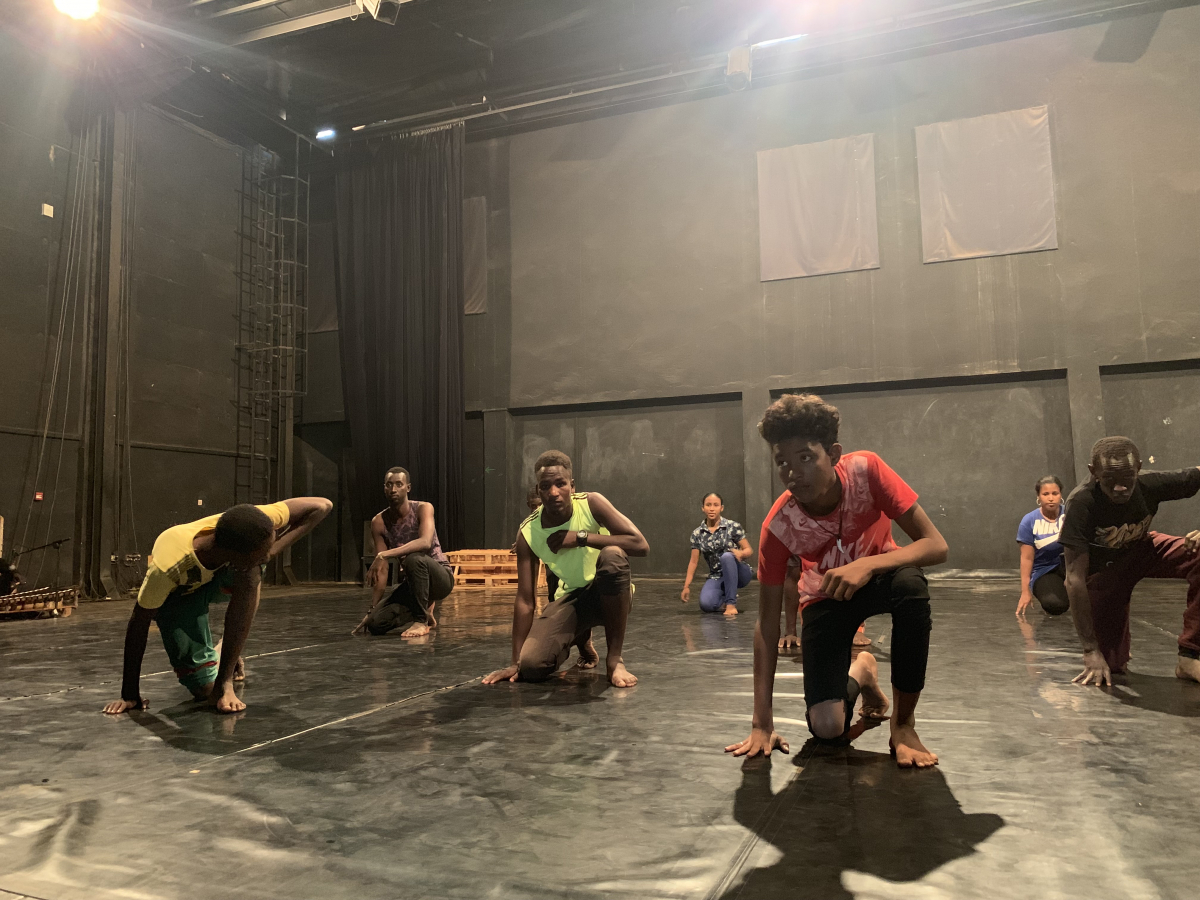
Amiri Ag Abdoulaye, 18, practices his dance routine before a performance at a studio called the Termite Mound in Ouagadougou, Burkina Faso. He dances

Amiri Ag Abdoulaye, 18, practices his dance routine before a performance at a studio called the Termite Mound in Ouagadougou, Burkina Faso. He dances “basically all the time” to forget the violence he has seen. MUST CREDIT: Washington Post photo by Danielle Paquette.
By The Washington Post · Danielle Paquette · WORLD, ENTERTAINMENT

OUAGADOUGOU, Burkina Faso – When he moves to the drumbeat, he forgets the corpses. He forgets the darkest hours of a life spent running from terrorists who destroyed his childhood home and now threaten to seize his haven.

When 18-year-old Amiri Ag Abdoulaye closes his eyes, he’s onstage in Paris or New York.

“I forget where I am when I’m dancing,” said the refugee of eight years, whose passion is also his master plan. “It’s how I’m going to get out.”

Amiri Ag Abdoulaye, in red, rehearses at the studio in Ouagadougou, Burkina Faso. MUST CREDIT: Washington Post photo by Danielle Paquette.

Amiri Ag Abdoulaye, in red, rehearses at the studio in Ouagadougou, Burkina Faso. MUST CREDIT: Washington Post photo by Danielle Paquette.

Fighters linked to the Islamic State and al-Qaida have forced his family and millions of others from their rural homes, killing thousands in an increasingly bloody campaign to build a vast new stronghold in West Africa.

Burkina Faso, a farming country of nearly 20 million, is falling to the extremists at an alarming speed, with violence erupting in new parts of the north and east seemingly every week, emptying village after village. In 2019 alone, the number of displaced Burkinabes shot up from 87,000 to 560,000, according to the United Nations, with no slowdown in sight.

People are fleeing the restive countryside for the capital city, Ouagadougou, hoping that a shelter closer to the presidential palace will offer relative security as the army, backed by French troops, struggles to hold the line in the battle for the future of the country.

Abdoulaye, a fidgety teenager with pop-star curls, is among the uprooted.

They’re a mix of people from his native Mali, who ran to neighboring Burkina Faso after conflict erupted in 2012, and those who opened their backyards to the refugees, only to pack up themselves once terrorists spilled over the border.

“It happens so fast,” Abdoulaye said: Another Monday, another attack, another family sent scrambling through corn fields and dirt roads. He knows people like him wait years or decades to leave war zones – if the opportunity ever arrives. He must stand out to have a chance.

More than 1.4 million people worldwide “urgently” needed to be resettled in 2019, the United Nations said, and fewer than 60,000 saw their wish come true. The rest stay in camps, living in tents or other makeshift dwellings. Children go without school. Life blurs into limbo.

Abdoulaye fears an eternity of sitting around. He practices in the bath, in the street, in the line for fish and rice – “everywhere,” he said, “all the time.”

– – –

He remembers when it struck him – a love at first sight.

A troupe of dancers visited the Mentao camp six years ago in northern Burkina Faso, where his family landed after the war reached their hometown in central Mali.

They taught Abdoulaye, who was 12 at the time, and other kids in the tent city of roughly 12,000 how to lunge, leap and twist to music that gave him butterflies.

It was the first time in months he hadn’t thought about the three-day escape in the back of a neighbor’s truck, of the bodies on the roadside.

Before long, he became Mentao’s miniature entertainer, belting out tunes in his mother tongue, Tamasheq, while showing off moves in the West African style. An aid worker gave him an acoustic guitar.

He woke up with a sense of purpose: Sing, dance. Sing, dance. Get better, better, better.

Every few months, Abdoulaye could take a six-hour bus ride to the capital and work with instructors at a studio called la Termitière, or the Termite Mound – the brainchild of Burkinabe choreographers Salia Sanou and Seydou Boro.

The classes kept him going. He was thrilled to improve with each session. But he was quietly jealous of the dancers who could pay the fees to practice daily. They brought crowds to their feet, clapping furiously.

Dance was their ticket to the world. How could he move that powerfully? That freely?

Three years passed this way: dreaming away the tranquil days. Then conflict screeched into Burkina Faso in 2016 with a terrorist attack on an upscale hotel and restaurant, killing 30.

Islamist militants began striking markets, churches and schools. They planted bombs on roads. They stole cars and kidnapped boys – recruiting for their mission at gunpoint.

Abdoulaye’s world was crumbling again. Suddenly the road between his refugee camp and the studio turned perilous.

“If I went, I knew I could die,” he said, “but if I did not go, I’d die in another way.”

So off he slipped to the Termite Mound on public buses, sweating the whole way.

He continued even as gunmen wearing turbans and camouflage began targeting villages closer and closer to Mentao.

Attackers thought to be armed with automatic weapons from disintegrating Libya had been trying for years to establish a caliphate in West Africa

They’d trickled across porous borders, despite heavy military intervention from France and the United Nations, and quickly overwhelmed Burkina Faso’s cash-strapped government in the hot, dry terrain.

Abdoulaye’s camp was woefully vulnerable. By late fall, aid groups could no longer reach it – extremists had stolen SUVs, kidnapped workers and shot up cars on the main road.

The U.S. Embassy evacuated the children of staffers in Burkina Faso and updated its travel advisory: “Terrorists may conduct attacks anywhere with little or no warning.”

Then one day last November, Abdoulaye’s cousin returned to Mentao shaking and covered in blood. He had just escaped an ambush.

The family had to get to Ouagadougou quickly, he said. They bought one-way tickets.

– – –

The Termite Mound is hidden.

“In trash and dust,” joked the co-founder, Salia Sanou, a prominent choreographer who grew up in western Burkina Faso.

Students reach it on motorbike, weaving through bumpy roads, grilled sheep stalls and concrete houses in what used to be one of Ouagadougou’s most run-down neighborhoods.

Sanou, 50, built the campus there in 2006 with the help of government funds and French donations. He wanted to clean up the streets and give rudderless youths a productive hobby – even careers. Which is how he connected with Abdoulaye’s camp.

“Dance,” he said, “gives them the confidence to rebuild their lives.”

It’s a sort of cultural exchange program. The refugees from Mali pair with dancers from Burkina Faso. They concoct interpretive routines based on loneliness, love and war.

“Suddenly, in a split second, everything is turned upside down,” reads one show’s description on the studio’s website. “A devastating storm leaves us helpless.”

They perform regularly as the violence inches toward Ouagadougou.

“We all feel it in our stomachs,” Sanou said, “but we refuse to stop living.”

Abdoulaye, wearing a red Nike shirt, wandered behind the choreographer.

“He could do this professionally,” Sanou said, pointing him out.

The teenager glowed at the praise on a recent January afternoon, fist-bumping the friends he has made over the years.

“There’s our star,” one woman shouted.

He had restarted his life, once again, from a cramped apartment on the outskirts of the city. He shares a room with his mother, father and sister. They rely on the kindness of their neighbors as they look for odd jobs.

Abdoulaye, who spends every second he can at the Termite Mound, padded over to the bleachers. As he watched the older students practice, the familiar longing crept back.

If only he could join them on the mat. Full-time.

He doesn’t have the money, but he has heard people can get scholarships to train at studios abroad. Some even get talent visas. He doesn’t know how that works.

People from everywhere turn up at the studio.

He could always get noticed by a scout. Or on the internet. An international nonprofit posted a video of him singing last year on Facebook.

Of course, he dreams of returning to Boni, his old village in Mali, where his family raised cows and goats. He loves Ouagadougou, too, but he’s scared of what could happen next.

He’s tired of running from war.

“It’s your turn to practice,” an instructor shouted.

Abdoulaye bounded to the dance floor. The drums started. He closed his eyes.

He was onstage in Paris or New York.

Disney Plus had 26.5 million subscribers in the first six weeks of its existence #ศาสตร์เกษตรดินปุ๋ย

#ศาสตร์เกษตรดินปุ๋ย : ขอบคุณแหล่งข้อมูล : หนังสือพิมพ์ The Nation

https://www.nationthailand.com/lifestyle/30381606?utm_source=category&utm_medium=internal_referral

Disney Plus had 26.5 million subscribers in the first six weeks of its existence

Feb 05. 2020
By  The Washington Post · Steven Zeitchik · BUSINESS, ENTERTAINMENT

Disney said Tuesday that its new streaming service, Disney Plus, garnered 26.5 million subscribers in its first six weeks of existence, making a strong start for the closely watched digital effort. The number nearly triples what the company said it had just after launch.

Disney, which revealed the latest numbers as part of its quarterly earnings report,said it had the 26.5 million subscribers as of Dec 28. It also said it had 30.4 million Hulu subscribers and 6.6 million subscribers to ESPN Plus, its sports streaming service, as of that date.

In an investor call later Tuesday, Disney chief executive Robert Iger said that about 2 million more Disney Plus subscribers have been added since the holidays, with the total now standing at 28.7 million subscribers.

“It validates the concept of putting those brands together,” Iger said to analysts. “The decision we made to go with quality over quantity is working,” he said, highlighting the company’s strategy to go with more franchise titles instead of Netflix’s high-volume approach.

The figures suggest a significant period of growth; consumers pay $6.99 on a monthly basis, or about a dollar less per month for an annual subscription, to watch new shows such as “The Mandalorian” and a catalogue of Marvel, Pixar and other content.

An undisclosed number of people were included in Disney’s figures for signing for up for a $12.99-per-month bundle that includes Disney Plus, Hulu and ESPN Plus.

Disney Plus began streaming Nov 12. Despite technical glitches, Disney said it garnered 10 million subscribers in a day. The company marketed the service heavily as it rolled out, particularly with ads on network television.

The 28.6 million figure shows the company’s intense bid to convince American consumers to tune directly to Disney for their content – instead of intermediary providers and distributors – was initially successful.

Iger said that while shows such as “The Mandalorian” attracted subscribers, many of the other offerings were retaining them.

“Sixty-five percent of people who watched ‘The Mandalorian’ watched at least 10 other things on the service,” he said.

Still, the question remains how many will stick with the service long-term as Disney seeks to avoid “churn” – the industry term for subscriber cancellations – or who give up the service after a free trial period.

That’s particularly true as Comcast’s Peacock and Warner Media’s HBO Max are set to launch later this year as the so-called streaming wars intensify.

Despite the growing number of rival services, Iger sounded a confident note about the future of Disney Plus.

There is a lot of competition, he said, but “there isn’t any competition that is like ours,” he said, noting the high volume of franchise titles on the service.

Still, he told investors that he is sticking with initial expectations that Disney Plus won’t be profitable until 2024.

“We have a long way to go,” he said.

Disney also has a long road ahead to close the gap on Netflix, the premier streaming service with about 170 million subscribers worldwide. Disney is planning to launch in much of Western Europe in March in a bid to make up ground.

On the call, Disney chief financial officer Christine McCarthy cautioned investors that much of the growth will come from overseas in the next few months, with no significant domestic spike expected until new shows such as Marvel’s “The Falcon and the Winter Soldier” launch in the second half of the year.

Separately, she said, the company has been hit hard by the ongoing closure of theme parks in Shanghai and Hong Kong in the wake of the coronavirus outbreak in Asia. The Hong Kong closure could cost the company $40 million alone, she said.

Disney’s earnings for the quarter came in above analyst expectations, with revenue at $20.86 billion compared with forecasts of $20.79 billion, and earnings per share at $1.53 vs. projections of $1.44.

The revenue was driven in part by global theatrical releases in the quarter, including “Frozen 2” and “Star Wars: The Rise of Skywalker” around the holidays.

But Iger cautioned against high expectations for the coming year. The idea of an $11 billion global box office total, he said, is “not something we’re likely to repeat right away.”

“2020 is not going to be the same as 2019 for the studio,” he noted. “But we still expect a very strong year.”

Could ‘Parasite’ win the Oscar for best picture? The case for Bong Joon-ho’s biting drama #ศาสตร์เกษตรดินปุ๋ย

#ศาสตร์เกษตรดินปุ๋ย : ขอบคุณแหล่งข้อมูล : หนังสือพิมพ์ The Nation

https://www.nationthailand.com/lifestyle/30381564?utm_source=category&utm_medium=internal_referral

Could ‘Parasite’ win the Oscar for best picture? The case for Bong Joon-ho’s biting drama

Feb 04. 2020
By Elahe Izadi
The Washington Post

This story is part of a series evaluating the chances of all nine best picture nominees.

“Parasite,” a deliciously dark and haunting dramedy from Korean director Bong Joon-ho, has become one of the most buzzed-about movies of the year since its release in the United States in October.

According to Box Office Mojo, “Parasite” has earned $129 million internationally and $31 million at the American box office as of Friday, impressive for a foreign-language film. And now it has several Oscar nominations in hand, including for the biggest prize of the night.

Despite South Korean cinema’s growing stature, “Parasite” is the first film from that country to receive best picture and best international film consideration at the Oscars.

“It’s a little strange, but it’s not a big deal,” Bong told Vulture last year. “The Oscars are not an international film festival. They’re very local.”

Let’s break down “Parasite’s” chances at this “very local” affair.

Total nominations: Six, including for directing, film editing, international feature film, production design and original screenplay.

Synopsis: Perhaps more than any other nominated film, “Parasite” is difficult to describe without giving it all away. So we’ll just say this: The film begins with the son of a working-class family (the Kims) agreeing to tutor the daughter of a wealthy family (the Parks), and then follows what happens as the two families become increasingly intertwined. “Parasite” does not fit neatly into any particular genre; there’s dark humor, suspense, drama and some horror elements.

Directed by: Bong Joon-ho, who also co-wrote the screenplay with Han Jin-won.

Starring: The cast represents a massive ensemble effort, with leading man Song Kang-ho as the Kims’ father; Lee Sun-kyun as the Parks’ father; Cho Yeo-jeong as the Parks’ mother; Choi Woo-shik as the Kims’ son; Park So-dam as the Kims’ daughter; Lee Jung-eun as the Parks’ housekeeper; and Chang Hyae-jin as the Kims’ mother.

Why it could win: Simply put, “Parasite” is one of the year’s best-reviewed movies. It has a 99 percent on Rotten Tomatoes, the highest number of any best picture nominee. It also took home the prestigious Palme d’Or at Cannes.

The genre-bending film may be specific to South Korea and Seoul in particular, but its themes about class, struggle and human dignity are universal. “Parasite” received no acting nominations (as tends to be the case with Oscar films featuring predominantly Asian casts), but it made history as the first foreign-language film to win best ensemble at the Screen Actors Guild Awards. That considerably boosted its chances for Oscar love come Feb. 9.

“Although the title is ‘Parasite,’ I think the story is about coexistence, and how we can all live together,” Song said as he accepted the SAG award on behalf of the cast.

Why it wouldn’t win: Perhaps the biggest barrier for “Parasite” is a cultural and linguistic one: No foreign-language film has ever won best picture, although several have been nominated in years past. “Roma” in 2019 was considered the film to beat; “Green Book” took home the Oscar instead.

The lack of acting nominations could also spell doom for its chances (only 11 other films have ever won best picture without receiving nominations in any acting categories). In the end, Oscar voters may opt instead to give the best international film feature Oscar to “Parasite” and show best picture love to another movie.

Could ‘Jojo Rabbit’ win the Oscar for best picture? The case for Taika Waititi’s WWII satire. #ศาสตร์เกษตรดินปุ๋ย

#ศาสตร์เกษตรดินปุ๋ย : ขอบคุณแหล่งข้อมูล : หนังสือพิมพ์ The Nation

https://www.nationthailand.com/lifestyle/30381543?utm_source=category&utm_medium=internal_referral

Could ‘Jojo Rabbit’ win the Oscar for best picture? The case for Taika Waititi’s WWII satire.

Feb 04. 2020
Roman Griffin Davis, left, and Taika Waititi appear in

Roman Griffin Davis, left, and Taika Waititi appear in “Jojo Rabbit.” MUST CREDIT: Kimberley French/Twentieth Century Fox.
By The Washington Post · Sonia Rao · ENTERTAINMENT, FILM

This story is part of a series evaluating the chances of all nine best picture nominees.

Fox Searchlight marketed “Jojo Rabbit” as an “anti-hate satire” – a disclaimer suggesting that the distributor expected some blowback. That’s understandable, given the film’s risky premise: the story of a Hitler Youth whose imaginary friend is, well, Adolf Hitler. Some festivalgoers in Toronto, where the film premiered in September, also anticipated controversy. But the resulting back-and-forth over whether the twee treatment worked was largely limited to critics and cinephiles, many of whom found the film, despite its edgy premise, to be quite tame in execution.

After the initial buzz died down, “Jojo Rabbit” reemerged as a talker when it landed multiple Oscar nominations in January, including best picture. But the feel-good flick is up against award season giants such as “1917” and “Once Upon a Time in Hollywood,” not to mention the stealth awards magnet “Parasite,” which has won a number of critic and industry accolades.

So does it stand a chance? Let’s take a closer look.

Total nominations: Six, including picture, supporting actress, adapted screenplay, film editing, costume design and production design

Synopsis: Jojo Betzler, a 10-year-old German boy in the Hitler Youth, reconsiders his blind adherence to the Nazi doctrine after discovering his mother, Rosie, has been hiding a Jewish teen, Elsa, in their attic.

Directed by: Taika Waititi, who wrote an adaptation of Christine Leunens’ book “Caging Skies.”

Starring: Roman Griffin Davis as Jojo, Scarlett Johansson as Rosie and Thomasin McKenzie as Elsa, with Waititi and Sam Rockwell in supporting roles as Hitler and a Hitler Youth leader, respectively.

Why it could win: “Jojo Rabbit” won the Toronto International Film Festival’s audience award when it premiered in September, an accolade often used to predict Oscar nominees. Of the past 12 festivals, 11 films that won TIFF’s audience award have also received best picture Oscar nominations; four (“Green Book,” “12 Years a Slave,” “The King’s Speech” and “Slumdog Millionaire”) ended up winning.

The feel-good nature of “Jojo Rabbit” also works in its favor, as the academy tends to embrace movies about people overcoming their differences. (For another example of the “we’re not so different, you and I” cliche, consider last year’s best picture winner.) It could also be seen as the film that made supporting actress Johansson a double nominee, given that she was all but guaranteed to land a nod for her leading role in Noah Baumbach’s “Marriage Story.”

Why it might not win: “1917” and “Once Upon a Time in Hollywood” are the front-runners this year, and even if the preferential ballot works in another film’s favor, it probably wouldn’t be “Jojo Rabbit.” The film isn’t quite an underdog, but it isn’t a polarizing force like “Joker,” either. It falls somewhere in the middle.

“Jojo Rabbit” earned mixed reviews from critics. Some praised its boldness and the sincerity of its empathetic mission. Those who didn’t love it pointed to tonal inconsistencies and often compared it to Roberto Benigni’s Holocaust dramedy, “Life Is Beautiful.”

Streaming changed Sundance Film Festival #ศาสตร์เกษตรดินปุ๋ย

#ศาสตร์เกษตรดินปุ๋ย : ขอบคุณแหล่งข้อมูล : หนังสือพิมพ์ The Nation

https://www.nationthailand.com/lifestyle/30381441?utm_source=category&utm_medium=internal_referral

Streaming changed Sundance Film Festival

Feb 02. 2020
By The Washington Post · Steven Zeitchik 
The Sundance Film Festival long has been a place where independently made movies slowly get absorbed into the Hollywood mainstream – a snowy paradise where boutique film buyers come every winter in search of the next big theatrical hit or Oscar nominee.

No more.

In the age of tech dollars and subscription business models, Sundance – like so much else in entertainment – has changed. The country’s preeminent showcase for independently financed and produced films, which ends this weekend, has quietly become a different beast.

Gone are the days when prestige-oriented studios justified buying a “Little Miss Sunshine” or “Winter’s Bone” with the hope they would slowly make inroads in theaters.

Now, instead, the world’s largest media and tech companies spend top dollar – often well above what traditional buyers offer – to land a movie that can be deployed for bragging rights among competitors and potential subscribers. There’s often little by which to gauge what impact, financial or cultural, the movie eventually has; the acquisitions are simply submerged into the well of a streamer’s offerings.

Experts see far-reaching – and dramatic – consequences in the development.

In interviews with eight film executives, producers and sales agents, many of whom spoke on the condition of anonymity so as not to upset negotiating partners, a portrait emerged of a sales market radically remade by the streaming era.

At this year’s Park City, Utah, gathering, Disney-owned streamer Hulu paid $17.5 million for “Palm Springs,” a high-concept romantic comedy from Andy Samberg and the comedy collective Lonely Island. It is the most expensive deal in Sundance history. (The sale was characterized as a joint acquisition with the independent distributor Neon, which will help raise the film’s awareness by handling a theatrical release.)

Few box-office experts believe the movie could actually break even theatrically. Even if the companies somehow spent not a penny on marketing, the film would have to do at least $35 million in ticket sales, an exceedingly high number for an independent comedy. (Theatrical distributors typically collect about half of box-office grosses in the United States.) Instead, the money was spent to attract buzz – and potential new subscribers – for Hulu.

The “Palm Springs” purchase was just the tip of the spear. Three other films at Sundance sold for a price higher than the once-inconceivable ceiling of $10 million. Another streamer, Amazon Studios, bought the gay-themed period drama “Uncle Frank” for $12 million, while Apple was the key financier behind a deal to pay as much as $10 million for a documentary about Texas high-schoolers called “Boys State.” (The boutique distributor A24 will put the movie in theaters.)

The only eight-figure sale that didn’t involve a streamer was the $12 million acquisition by Searchlight Pictures of the thriller “The Night House” – though the company as of last year was owned by Disney.

All of this happened before two of the larger streamers – WarnerMedia’s HBO Max and Comcast’s Peacock – have even launched.

The trend is a major departure from Sundance precedent. In 2007 – regarded as a kind of pre-Great Recession peak of independent film – no movie was acquired for more than $10 million, even though the independent box office was thriving compared with now. The biggest deal was when a then-extant studio division, Paramount Vantage, paid $7 million to acquire “Son of Rambow,” a coming-of-age British dramedy.

That year at least a half-dozen deals were made for movies between $4 million and $7 million – all, of course, to traditional theatrical distributors. Several of the acquired titles, including “Waitress,” broke out at the box office.

But the tide began to turn in earnest last year when Amazon paid an estimated $13 million each for three movies – “Late Night,” “The Report” and “Brittany Runs a Marathon.” “Late Night” and “Brittany” were both box office disappointments, grossing $15 million and $7 million, respectively. “The Report” did not get a significant theatrical push as Amazon shifts away from theaters. (Amazon founder and chief executive Jeff Bezos owns The Washington Post.)

The idea of fewer deals for more money, experts say, has created a climate that’s less about making investors whole as striking it rich – never mind the many films that strike out.

“Sundance used to be about the bottom, middle and top – it was a volume business,” said James Schamus, the former head of Focus Features and an independent producer who brought a new movie called “The Assistant,” which already had distribution, to screen at this year’s festival.

“But in the last year it’s totally changed. There are a few movies that line up cherries across the slot machine. And everyone else goes home on the Greyhound bus with quarters.”

Notably, he and others say, the high-end deals are driven by companies that often care more about the ability to boast that they’ve landed a big fish than making a traditional investment. That has basically created two different markets under one umbrella – or one set of products being sold to two very different kinds of buyers.

As the story was set to be published, Hulu spent another $8 million at Sundance on “Bad Hair,” a horror comedy.

For now, traditional companies – among them Sony Pictures Classics, Magnolia, Neon, Bleecker Street, A24, Roadside Attractions and Lionsgate – are still certainly in business. But unless they team up with a streamer, they are often buying movies below the top tier of buzz. Occasionally, they can rely on a filmmaker preferring the theatrical attention over money, as “The Farewell” director Lulu Wang and her team did when selling their movie to A24 at last year’s Sundance for about $7 million, half of what an unidentified streamer was offering.

Ironically, Netflix, which made arguably the first of the eye-popping Sundance deals when it bought the historical drama “Mudbound” for $12.5 million three years ago, despite no other buyer coming close to its offer, has been relatively quiet this year. The company made no major purchases in Park City, in part because it spent a lot of money on films, including the new Taylor Swift documentary “Miss Americana,” that it previously bought and brought to Sundance to promote.

Representatives for Amazon, Netflix, Hulu and Apple did not comment for this story.

Sales agents and producers are not inclined to lament a market in which prices routinely top $10 million; after all, they have a responsibility to return value to investors and incentives to increase their own payouts.

But some are hesitant about what the streaming world has wrought.

“The money that’s in the marketplace is, to my mind, unprecedented,” said sales agent John Sloss, a Sundance and independent-film veteran, as he took stock of the change. “Whether it’s an improvement is a much more complicated question.”

At least one sales agent said the trend concerned them because it could price traditional distributors out of the biggest movies – and ultimately out of the market entirely – leaving a key void.

“What happens when the streamers stop spending? Who will still be around?” said the sales agent, who spoke on the condition of anonymity so as not to ruffle feathers with potential buyers.

“And of course there’s the effect on theaters,” the agent added. The streamers’ entree means consumers have fewer options to see these movies in theaters, while theaters have fewer shots at a breakout.

The rise of the streamers at Sundance has other long-term effects: It can shape how a movie even gets made in the first place. Traditional independent films are financed by selling off rights before cameras start rolling – a foreign territory sold here, a cable platform sold there.

But streamers almost always want to buy all rights around the world, which puts producers in a bind. No filmmaker wants to take the option of streamers off the table before they make their movie. But to do that they’d have to shun the preproduction deals that often allow an independent film to be financed in the first place.

“As buying goes more toward the streamers, you have a tough decision as a producer – a very tough decision,” said Jonathan Dana, a longtime film producer who has been on both the buying and selling sides of the indie-film table. Basically, he said, filmmakers have to decide between making the film at the budget they’d like, even though it will turn off streamers – or accept a less favorable budget in the hope of ultimately landing one of those coveted streaming deals.

Past eras have seen new players descend on Sundance. Large Hollywood studios, for instance, have shown intermittent interest in opening their wallets for a buzzy title.

But insiders say this is different.

“It used to be that new companies come in spending a lot of money but under the same terms of success,” said the head of an independent theatrical distributor who spoke on the condition of anonymity so as not to appear to be criticizing competitors. “You had to weather the onslaught, but at least you were all judged the same. Now you’re not even playing the same game.”

Another executive offered a stark analogy.

“It would be like two teams arriving at the Super Bowl,” the executive noted, except one team took the field trying to score touchdowns while their opponent was trying buy a lot of hot dogs.

“How would you know who won?” the executive said. “And how much effort would you expend trying to win?”

Roku falls as Fox dispute threatens users’ Super Bowl Sunday #ศาสตร์เกษตรดินปุ๋ย

#ศาสตร์เกษตรดินปุ๋ย : ขอบคุณแหล่งข้อมูล : หนังสือพิมพ์ The Nation

https://www.nationthailand.com/lifestyle/30381399?utm_source=category&utm_medium=internal_referral

Roku falls as Fox dispute threatens users’ Super Bowl Sunday

Feb 01. 2020
By Syndication Washington Post,  Bloomberg · Kamaron Leach 
Roku fell to its lowest in more than two months on Friday as the company began notifying customers that FOX channels will not be accessible on its platform ahead of the network’s Super Bowl broadcast this weekend.

Beginning Jan. 31 “all standalone FOX channels will no longer be available on Roku streaming devices,” the company said in an e-mail. Roku encouraged customers to continue using its system to access FOX channels through other streaming apps, including: FuboTV, SlingTV, YouTube TV and Hulu’s live television option.

The news sent the stock on an abrupt slide, falling as much as 7.6% to $120.71 in New York, its lowest since Nov. 11. Shares of Fox Corp. fell as much as 1.7% intraday.

Roku’s notice to customers comes as a distribution agreement with Fox is scheduled to expire, after hosting the network’s channels for years. The dispute could be a big blow to Fox prior to Sunday’s match-up between the San Francisco 49ers and Kansas City Chiefs.

According to a Fox spokesperson, “Roku’s threat to delete FOX apps from its customers’ devices is a naked effort to use its customers as pawns. Only Roku can pull apps from its customers’ devices, and we would urge them to stop the intimidation tactics and reconsider the merits of irritating their best customers in pursuit of Roku’s own interests.”

Rosenblatt Securities views the weakness in Roku as an opportunity for investors to increase their holdings. Mark Zgutowicz, a media analyst at the firm, commended the company for “acting from a position of strength” and leveraging its leadership among over-the-top streaming providers.

In a blog post, Roku asserted that it “tried for months” to reach a deal and even offered Fox an extension although the network operator declined.

“If an agreement is not reached, we will be forced to remove FOX channels from the Roku platform because we can’t distribute content without an agreement,” Roku said. “Our discussions with FOX continue and we hope that FOX will agree to an agreement soon.”