Myanmar’s 2020 election: A tale of Chinese money, new ethnic parties and censorship
ColumnsOct 23. 2020Myanmar’s ruling National League for Democracy (NLD) leader Aung San Suu Kyi
By Htun Aung Gyaw Special to The Nation
Myanmar’s ruling National League for Democracy (NLD) led by Aung San Suu Kyi is preparing for national polls on November 8. But this time around, the election is taking place amid talk of a huge China-backed operation to subvert the vote.
The NLD’s main rival, the army-backed USDP, was overshadowed after an outfit called the UDP or “Rose Party” sprang forward to field 1,130 candidates – second only to Suu Kyi’s party.
After the UDP (Union Democratic Party) emerged as the second-largest election contender, people started digging into the past of its founder, Michael Kyaw Myint.
It turned out that Kyaw Myint was a fugitive from justice, having escaped from Mandalay prison in the 1990s while serving nine years for breaking investment laws.
Kyaw Myint fled to the United States, before moving to Canada in 2002 and applying for asylum as a refugee.
He then broke Canadian laws on insider trading by spending millions on shares in a company while party to undisclosed information about its negotiations for a biodiesel project in China. He was caught, fined CAN$1.5 million and banned for life from trading.
The episode prompted questions over how a Burmese fugitive was able to transfer millions of dollars for his business dealings. Where did the money come from?
Burmese sources living in Canada offered a clue: Kyaw Myint was very friendly with the Chinese Embassy in Canada and was reportedly using a Chinese passport to travel to Europe and China.
More interesting still was that Kyaw Myint was accused of laundering drug money for the United Wa State Army in the 1990s.
In 2010, he had enough money to launch the UDP and pay monthly salaries for party organisers and leaders. For the next 10 years he spent millions of dollars secretly funding his network of party organisers in villages and townships. His party contested the 2010 and 2015 elections but failed to win a single constituency.
China connection
In 2013 the fugitive Kyaw Myint took over as UDP chairman.
That same year, he and his party’s executive met with the Chinese ambassador Yang Houlan on December 31, according to a news post at the Chinese Embassy in Yangon.
The Chinese ambassador’s friendly meeting with the fugitive party chief was questionable, to say the least.
On September 22 this year, Kyaw Myint was exposed as an escaped convict by news journal Myanmar Now.
He was arrested by police, who found out he had 23.5 billion kyat (about US$18 million) in his possession.
After an investigation, the President’s Office said Kyaw Myint had violated anti-money laundering laws by receiving 16 billion kyat ($12.2 million) from China in 2015 and conducting illegal business activities. The investigation also found he had used the money to fund the UDP, in violation of election laws. The Union Election Commission promptly disbanded his party.
Sources inside Myanmar said evidence pointed to Kyaw Myint being a member of the Chinese Communist Party who was assigned and funded by Beijing to subvert Burmese politics. In response, politicians, lawyers and activists voiced worries that vote-buying could see Myanmar slide into China’s hands in the near future.
Suppressing free speech
Meanwhile as the election draws near, the ruling party and its main opposition USDP are criss-crossing the country in motorcycles and cars decorated with their party flags. Polls in the United States and Myanmar are going ahead despite the raging Covid-19 pandemic.
But in Myanmar, political parties are complaining that the ruling party is using disease control rules to restrict campaigning by its rivals. Also, candidates need to submit their speeches to the Union Election Commission (UEC) before speaking on state-run television. The UEC has been accused of censoring candidates’ speeches, including their policies and concerns about Burmese politics.
88 Generation leader Ko Ko Gyi, who recently formed the People’s Party, and Aung Moe Zaw, chairman of the New Society Party, cancelled their appearances on state-run television because of the censorship. Journalists and rival politicians have expressed dismay that the government of democracy icon and Nobel Peace laureate Aung San Suu Kyi is violating the basic human right of free speech.
Journalists are also complaining that their Facebook posts are being blocked or suppressed if they criticise Suu Kyi’s NLD. Facebook Southeast Asia representative Rafael Frankel denied accusations of suppressing political opinions. But in reality, one of my own Facebook posts in Burmese, pointing out the weak and strong points of the NLD and its army rival, was denied the “boost” feature, with Facebook commenting that the post might influence the coming election result. This means someone in the Facebook team who understands Burmese had judged my article and decided to suppress it. Coincidently, Suu Kyi is reportedly spending $6 million to monitor Facebook for fake news and hate speech.
Ethnic solidarity vs the NLD
In another development, ethnic political parties have learnt a lesson from the 2015 elections, when they were criticised by their people for not working together. Now, the Kachin, Chin and Mon parties have united and are competing as one party in the elections.
Several new parties emerged in 2019 and 2020 after splitting from the NLD. Ko Ko Gyi formed the yellow-red flagged People’s Party (PP) when only one member of his group gained NLD endorsement to run in the 2015 election. Meanwhile the People Pioneer Party (PPP) is led by former NLD MP Thet Thet Khine, who criticised Suu Kyi openly before resigning to form her own party, which has adopted blue colours.
Retired General Shwe Mann, once No 3 in the junta government and a former House speaker, has formed his own electoral outfit called the Union Betterment Party (UBP; yellow colours). All the parties command a following.
The PPP, UBP and UDP are financially strong but the Peoples’ Party receives strong support from activists frustrated with the NLD government’s performance and looking for alternative leadership.
Flags of red, yellow, blue, and stripes will fill the air come Election Day on November 8. Ethnic parties are hoping to win in their respected states and form a coalition government. All are competing to make their own dreams a reality.
The NLD won a landslide in 2015, gaining 80 per cent of the seats – but this year will be different. The ruling party is set to lose some constituencies in the ethnic states, but still win enough seats to form the new government. However, mystery still shrouds the NLD’s fate after the election, when it will face two big challenges: boosting the Covid-hit economy and changing the military-scripted 2008 Constitution to a Federal Union Constitution.
Htun Aung Gyaw is a former president of the All Burma Students Democratic Front (ABSDF) who later studied at Cornell in the US.
Enhanced social protection an opportunity Asia Pacific must grasp
ColumnsOct 20. 2020United Nations under-secretary-general and executive secretary of the Economic and Social Commission for Asia and the Pacific (ESCAP) Armida Salsiah Alisjahbana
By Armida Salsiah Alisjahbana, Chihoko Asada Miyakawa
Special to The Nation
In the fight against Covid-19, success has so far been defined by responses in Asia and the Pacific. Many countries in our region have been hailed as reference points in containing the virus. Yet if the region is to build back better, the success of immediate responses should not distract from the weaknesses Covid-19 has laid bare.
Too many people in our region are left to fend for themselves in times of need. This pandemic was no exception. Comprehensive social protection systems could right this wrong. Building these systems must be central to our long-term recovery strategy.
International Labour Organisation (ILO)’s regional director for Asia and the Pacific Chihoko Asada Miyakawa
Illness or unemployment, pregnancy or old age, disability or injury should never be allowed to push people into poverty. During a pandemic, social protection schemes facilitate access to health care and provide lifelines when jobs are lost, rescuing households and stabilising economies. This has been recognised by governments in the face of Covid-19. Over 300 new social protection measures have been taken across 40 countries in the region. Existing schemes have been strengthened, ad hoc packages rolled out and investment increased.
This recent appreciation for social protection is welcome. It must be maintained, because the most effective responses to Covid-19 have been from countries which had robust social protection systems in the first place. The logistics of taking measures during an unfolding crisis are complicated; setbacks and delays inevitable. Well-resourced social protection systems built over time are just better placed to deal with the unexpected. However, these systems still do not exist in many of parts of our region.
A recent report by the International Labour Organisation (ILO) and the United Nations Economic and Social Commission for Asia and the Pacific (ESCAP), “The Protection We Want”, finds that more than half the region’s population has no coverage whatsoever. Only a handful of countries have comprehensive social protection systems and public spending in this area remains well below global average. In many countries in South Asia and the Pacific, public expenditure on social protection is as low as 2 per cent of GDP.
Where social protection systems do exist, their coverage is riddled with gaps. The youngest, least educated and poorest are frequently left uncovered by healthcare in the region. Many poverty targeted schemes never reach families most in need. Maternity, unemployment, sickness and disability benefits are the preserve of a minority of workers in the formal economy, leaving 70 per cent of workers locked out of contributory schemes. Lower labour force participation among women accentuates gaps in coverage. Population ageing, migration, urbanisation and increasing natural disasters make social protection ever more urgent.
Investing in a basic level of social protection for everyone – a social protection floor – would immediately improve livelihoods. United Nations’ simulations across 13 developing countries in the region show that universal coverage of basic child benefits, disability benefits and old-age pensions would slash the proportion of recipient households living in poverty by up to 18 percentage points. The decrease in poverty would be greatest in Indonesia, followed by Sri Lanka and Georgia. Purchasing power would surge in recipient households supporting increases in per capita consumption in the lowest income groups. In 9 out of 13 countries analysed, more than a third of the population currently living in poverty would no longer be impoverished.
These phenomenal development gains are within reach for most countries in Asia and the Pacific. Establishing basic schemes for children, older persons and persons with disabilities would cost between 2 and 6 per cent of GDP. It is a significant investment, but affordable if we make universal social protection systems a fundamental part of broader national development strategies.
Yet it is not only the level of funding that matters, but the way the funds are spent. To achieve universal coverage, we need a pragmatic mix of contributory and non-contributory schemes. This would deliver a vital minimum level of protection regardless of previous income and support a gradual move to higher levels of protection through individual contributions.
New approaches to funding participation can extend social protection to workers in the informal economy. Schemes that reward unpaid care work and are complemented by subsidised childcare services can form a decisive step towards more inclusive and gender equal societies. And new technologies, including phone-based platforms, can accelerate delivery across populations.
As we focus on building back better in the aftermath of the pandemic, our region has an opportunity to make universal social protection a reality. In so doing, we could bring an end to the great injustice that leaves the vulnerable in our societies most exposed. Governments from across Asia-Pacific will convene later this month at ESCAP’s Sixth Committee on Social Development to strengthen regional cooperation in this area. Let us seize the opportunity to accelerate progress towards universal social protection, and reduce poverty and inequality in Asia and the Pacific.
Armida Salsiah Alisjahbana is the United Nations under-secretary-general and executive secretary of the Economic and Social Commission for Asia and the Pacific (ESCAP).
Chihoko Asada Miyakawa is the International Labour Organisation (ILO)’s regional director for Asia and the Pacific.
Releasing protest leaders the first step to deal with spiralling crisis
ColumnsOct 19. 2020An ambulance makes its way through a huge crowd of demonstrators gathered at Victory Monument on Sunday. Korbphuk Phromrekha#NationPhoto
By Opinion: The Nation Editorial
The confrontation between government and pro-democracy protesters over the past few months has been aggravating.
The government imposed a “severe state of emergency” in Bangkok on Thursday morning to disperse protesters outside Government House, and on Friday evening police used water cannons to clear demonstrators gathered in large numbers, mostly school children and youth, at Bangkok’s Pathumwan intersection.
The government’s action of arresting many pro-democracy leaders has escalated the protests across the country over the weekend.
Anti-government protests are snowballing and PM Prayut Chan-o-cha’s administration has come under fire locally and among the international community for its harsh action against peaceful protesters.
Not only civil groups, but even the Buddhist monk community has expressed concern about Friday’s event. The Students’ Council of Mahachulalongkornrajavidyalaya University, a monk educational institution, issued a statement on October 16 strongly opposing the authority’s use of violence against youth, students and people. The youth monks’ statement also referred to how Buddhism had emerged during a period when humans were oppressed, browbeaten by the caste system, human rights were violated, causing inequality in society and social disparity, especially the caste system as practised in India at that time.
The statement pointed out that the Buddha had used the principle of peaceful resistance to oppose the caste system just as the Thai youth, students, and people tried to use peaceful means to seek change.
The international community, including the UN High Commissioner for Human Rights, expressed concern at Thai authorities slapping serious charges, including sedition, against individuals for peacefully exercising their fundamental rights.
Some people might argue that the international community should not interfere in Thai domestic affairs, but in this instance we see a commonality of opinion among local civil groups as well as international organisations.
PM Prayut often tells people to embrace Buddhist wisdom in order to live their lives happily, just as he told protesters to pray in temples instead of protesting on the streets when he gave a press conference on Friday, after his Cabinet had approved a state of emergency he had declared the previous day. On Thursday, Arnon Nampa, a human rights lawyer and other protest leaders who had led a large number of demonstrators to camp outside Government House from Wednesday evening to Thursday morning, were arrested.
After the state of emergency was imposed in Bangkok, police aggressively pursued the arrest of protesters. Many of them are still in custody, facing severe charges.
The action is more or less like throwing oil into fire, antagonising people and prompting more protesters to join the demonstrations on Saturday and Sunday. The confrontation has been intensifying with no sign of compromise from the government side.
To explore a peaceful resolution of the crisis, the first thing the government must do is immediately release the protest leaders and drop the charges against them. The government must also scrap the state of emergency as demanded by many people and organisations. The government must embrace a spirit of compromise to bridge widening divisions in society.
By Gita Sabharwal, Suphachai Chearavanont Special to The Nation
The Covid-19 pandemic has shown us clearly how our societies are bound together and our welfares are interdependent.
We must be committed to a recovery that leaves no one behind and restores progress towards the sustainable development goals (SDGs). To reach those goals by 2030 will require strong partnerships among all stakeholders and remarkable innovation to ensure that we all are included.
The 17 interlinking SDGs are vital to ensure inclusive development for all, covering such areas as poverty reduction, gender equality and humanity’s relationship with the environment, to name just a few aspects. As we have seen during the Covid-19 pandemic, the most marginalised and vulnerable groups are the most affected in times of crisis, but the crisis also starkly shows that everyone’s welfare is connected and the well-being of the poorest among us directly affects us all.
Progress towards the SDGs will determine the welfare of people and communities across the world, including in Thailand. Yet a recent survey in the country found that there is relatively low awareness about the SDGs, especially among young people who are so crucial to the future of sustainable development.
Polling suggests that only 26 per cent of people in Thailand are aware of the United Nations, and only 19 per cent of young people. Clearly more needs to be done to raise awareness that the SDGs are fundamentally about people and communities, not some rarified theoretical concept.
The UN estimates that Bt50 per day per person would achieve the SDGs in Thailand. To achieve that benchmark, partnerships are essential. In fact, all of the UN’s work depends on building strong partnerships with and between governments, the private sector, non-governmental organisations, civil society and the general public, including young people. These coalitions must be based on the principles of inclusiveness and equality, ensuring that no one is left behind.
In Thailand, as elsewhere, the private sector has an essential role to advance the SDGs, address poverty and inequalities, and work collectively to weather the pandemic and build back better.
A critical coalition within the private sector in the country is represented by the Global Compact Network Thailand, which brings together nearly 60 business leaders from across the country, representing major companies that are mainstays of the economy.
Members of the network have already pledged their commitment to sustainable projects spanning nearly 1,000 projects and investments totaling Bt1.2 trillion. This is putting the SDGs into practice and having a tangible impact on people’s lives. More needs to be done.
Business leaders, at all levels of the organisation, can help to affect change in their own enterprises and in the wider community. As we raise awareness about the importance of the SDGs to Thailand and everyone in this society, leaders themselves need to be better informed about how to implement the goals and the barriers that still must be overcome.
For leaders in the private sector to fulfill their social responsibility, they must not only steer their own enterprises, but also help to affect positive change for society as a whole, addressing both sustainability and equality to ensure that no one is left behind. In other words, we need more “change agents”, who are aware of the global challenges around themselves. With determination and partnerships, raising awareness among these change agents can contribute to the resilience that we need to face and overcome challenges even on the scale of this pandemic while continuing to move forward on progress towards the SDGs.
This year marks the year of action, set in unprecedented times due to Covid-19, the climate crisis and other challenges. There is just a single decade ahead of us to fulfill the promises of Agenda 2030. The time to act is now.
We cannot lose sight, however, that the pandemic is occurring in the context of other crises that are affecting our region and humanity as a whole. There remain, however, longer-lasting global threats pressing upon us all: social inequality and discrimination, the global threat of climate change and environmental degradation, and many economic and human security emergencies, to name just a few. They, in fact, have been wrought by our unbalanced lifestyles. Many of the problems that we now face are driven by human behaviour – which means, of course, that we can find solutions by changing behaviours, but there must be a sense of urgency in the current environment.
UN Thailand sees three crucial pillars to our response moving forward, both to address the pandemic and these other challenges. We must create strong partnerships with a shared responsibility to advance the SDGs and implement them on the ground. In the context of the pandemic, there is also an opportunity to build back better for a greener and more equitable “new normal”. Innovation will play a crucial role in building back better and greener: it goes beyond just technological innovation to include innovation of business models; methods of work; organisational behaviours; and even ways to upskill and reskill our employees. And lastly, this response must be inclusive, ensuring that no one is left behind as the country moves forward.
This response must be global, regional and at the national level, but it also must involve communities and civil society at every level as well. In Thailand and elsewhere, partnerships with the private sector is absolutely essential to ensure that collaboration and development are reaching every sector and community.
This year marks both the 75th anniversary of the United Nations and the 20th anniversary of the Global Compact. This is a remarkable opportunity for us together to unite and set out the pathway for Thailand to meet the SDGs.
Gita Sabharwal is UN Resident Coordinator in Thailand and Suphachai Chearavanont is the chairperson of the Global Compact Network Thailand
ColumnsOct 11. 2020US Secretary of State Mike Pompeo
By The Statesman
While Mr Pompeo emphasised the need to “collaborate to protect our people and partners from the CCP’s exploitation, corruption and coercion,” the others including Indian External Affairs Minister S Jaishankar were measured in their approach, preferring to pin their hopes on a free, inclusive and open Indo-Pacific, without directly targeting China. Mr Pompeo was acerbic as usual, saying “When we met last year, the landscape was very different.
Quite the most glaring feature of the meeting between foreign ministers of the United States, India, Japan and Australia ~ or the Quad as it is called ~ was the sharp contrast in emphasis in the positions taken by US Secretary of State Mike Pompeo on the one hand and his three counterparts on the other.
While Mr Pompeo emphasised the need to “collaborate to protect our people and partners from the CCP’s exploitation, corruption and coercion,” the others including Indian External Affairs Minister S Jaishankar were measured in their approach, preferring to pin their hopes on a free, inclusive and open Indo-Pacific, without directly targeting China. Mr Pompeo was acerbic as usual, saying “When we met last year, the landscape was very different. We couldn’t have imagined a pandemic that came from Wuhan. That crisis was made infinitely worse by the Chinese Communist Party’s cover-up. The regime’s authoritarian nature led its leaders to lock up and silence the very brave Chinese citizens who were raising the alarm.”
The problem for America’s allies is that while they realise the need to contain an expansionist and increasingly aggressive Beijing, they are handicapped by the extent to which their economies are intertwined with that of China. For this reason, they are loath to resort to the sort of rhetoric that seems to come easily to Mr Pompeo.
Mr Jaishankar, for instance, would only go so far as to say that India remains committed to “upholding a rules-based international order” underpinned by “transparency, freedom of navigation in the international seas, respect for territorial integrity and sovereignty and peaceful resolution of disputes.” While the objective of advancing security and economic interests binds Quad countries, it is the tone of their rhetoric that separates them.
While the Quad was set up initially to keep critical sea routes in the Indo-Pacific free of any influence and for the four member countries to create a shield that could thwart Chinese assertiveness, its scope has widened because of events that followed the outbreak of the coronavirus epidemic. Tensions between China and Japan have increased over the past few months over what Tokyo calls “relentlessly continued attempts to unilaterally change the status quo by coercion in the sea area around the Senkaku islands”.
Australia was targeted with additional tariffs on barley and a suspension of beef exports, after it called for an international inquiry into the outbreak of the virus in China. A few weeks ago, matters came to a head with the detention – without charge ~ of an Australian journalist. India, of course, has spent the entire summer fighting off Chinese incursions in Ladakh and is now preparing to dig its troops in for a crippling winter. While these imperatives are enough to bring the four countries together, their approaches will be far more nuanced than the US might like.
Oriel College in Oxford University is home to the statue of its favourite son Cecil Rhodes — the avowed imperialist who single-handedly carved out the country Rhodesia (now Zimbabwe). Rhodes is fittingly recognised for the colossal expanse of land he gifted to the country named after him, but is equally reviled for the legacy of the racist laws he bequeathed to the people.
The controversy surrounding him reached his alma mater Oriel College.
For over a decade, students at Oxford have been remonstrating that the statue of Rhodes evokes painful memories of racism among black students from Africa, and that eulogising Rhodes tarnishes the prestige of the college. The battle cry of this campaign was “Rhodes Must Fall”. The protest against his statue intensified with the anti-racism marches across the world following the death of George Floyd in the US, in May this year. In June, the Governors of the Oxford University College finally voted to take down the statue. Underlying this dissent is the story of Rhodes who fanned the flames of racism in South Africa.
It all began in the garden city of Cape Town.
In the shadow of the Table Mountain are the sprawling Dutch East India Company Gardens. Near the entrance is the infamous Slave Lodge — now a museum — where, in the 17th century, slaves were lodged before they were sold to traders. In the centre of the historic park grounds is a life-sized statue of Rhodes, which, despite the anti-Afrikaans sentiments in the country, remains intact. A group of black South African students posing for photographs with the statue told us “You know, the campaign ‘Rhodes Must Fall’ began in 2015 at Cape Town University that was built by Rhodes. His bronze statue there was removed during the protest. This statue too is likely to fall soon, so we want to preserve it in our pictures.” They suggested we visit the famous monument to him outside the city. A long drive through the rolling hills to Devil’s Peak took us to the shrine.
Removing statues does not redress the wrongs of the past, but deprives posterity of valuable allusions to historical narratives, however unpalatable
Rhodes is indeed immortalised in the majestic Rhodes Monument, which overlooks the Kirstenbosch Botanical Gardens, spread over miles of verdant land, undulating up to the horizon. Rhodes owned the entire property and gifted it to the nation before his death in 1902. We climb up the imposing steps that lead to the once beautifully crafted marble sculpture. The wall behind the statue is singed from the fire set by protesters who also defaced it. In July this year, the head was removed by vandals.
The story of South Africa is inextricably intertwined with the life and times of Rhodes. Up to the mid-19th century, Africa was still a ‘mysterious continent’ into whose heartland few western explorers had ever ventured; it was the vast and empty res nullius, a no-man’s land.
In 1866, an event occurred, after which South Africa would never remain the same. On the banks of the Orange River near Cape Colony, a farmer’s son was innocently playing with stones. One strangely configured stone caught the eye of a discerning neighbour, who approached the boy’s family and negotiated the stone in exchange for 500 sheep, 10 oxen and a robust horse. This ‘stone’ turned out to be an 83-carat diamond, which was subsequently purchased in London for 25,000 British pounds. This particular stone had lain on the surface, but the real riches were the ‘diamond pipes’ extending down into the earth. The owner of a small farm, whose name would become synonymous with diamonds, was Johannes de Beer. Word went around about unfathomable riches in the Northern Cape province and, as prospectors invaded the farms in Kimberly, the area began to sprawl with tents, wagons and mud piles. The Diamond Rush had begun.
Four thousand miles from Kimberly, Cecil Rhodes, a son of a vicar in Bishop’s Stortford in England, was still in school. The family, anxious about his poor health, sent the 17-year-old to live with his brother in South Africa. Many young men then, were heading to Kimberly in search of diamonds. The Rhodes brothers entered into partnership with a mining company, which quite accidentally uncovered a diamond that became known as ‘The Star of Africa’. With his share of profits from the sale of this diamond, Rhodes bought off De Beer’s farm. Around this time, the Rothschilds — the famous London bankers — were exploring investments in Africa. They agreed to a partnership with Rhodes to acquire several mining companies, which eventually merged into one giant conglomerate — De Beers. The 21-year-old Rhodes became rich beyond imagination.
In 1873, he left South Africa to study law in Oriel College, but soon became disenchanted with his studies. He came under the spell of liberal politicians, who convinced him that British imperialism was a godsend for its colonies and their natives. Rhodes went to Oxford as a wealthy entrepreneur and returned to South Africa as an ardent imperialist.
Within a few years, Rhodes’ corporation controlled the diamond trade of the entire Europe, and the wealthy idealist was ready to make a mark on South Africa. He entered politics and, after serving as a member of parliament, was elected prime minister of the Cape Colony for several terms. He set about acquiring land in the name of the Queen of England. His racist streak surfaced when he passed the notorious Glen-Grey Act that expelled non-whites from their land, to make room for European investors. Next, he approved the Natives Land Act, which demarcated areas in the country where black Africans could settle only on 10 percent of the land, thus disenfranchising and denying them their homes. His inaugural address set the direction for his government: “I contend that we are the first race in the world, and that the more of the world we inhabit, the better it is for the human race.”
Rhodes unashamedly resolved to spend his vast personal fortune buying or extorting land from helpless natives in the name of the British. His view of the world order was to bestow more power to the imperialists. “We must find new land… for raw material and cheap labour of the natives of the colonies,” he said. “What we hold surplus can be dumped in their lands… we must adopt a system of despotism, such as works in India, in our relations with the barbarians of South Africa.”
In 1889, Rhodes made an extraordinary request to Queen Victoria, for a Royal Charter to form the British South African Company (BSAC) under his personal authority. It was promptly granted. The BSAC was empowered to acquire through treaties or “understanding” all the land and its minerals across South and Central Africa. It was even permitted to raise a police force. Just like the East India Company in Calcutta, BSAC would be a government within a government.
By the end of 1894, BSAC had extorted concessions and treaties with natives who owned large areas of land between the Limpopo River and Lake Tanganyika. What he could not extract by negotiations, his police would forcibly ensure through swift compliance of the helpless locals. In May 1895, Rhodes allowed this vast territory to be named Rhodesia — the first instance in the world of a country to be named after an individual.
Rhodes’ already poor health worsened after he fell off his horse and he remained unconscious for a day. In 1899, realising that he may not have long to live, he wrote his will, allocating a sizeable endowment for scholarships to Oriel College with certain stipulations.
Only men would be eligible. “I am against scholarship merely to people who swot over books… learning Greek and Latin; scholastic achievements stand for four-tenths; ‘brutality’ which stands for two-tenths; ‘unctuous rectitude’ two-tenths. That makes up the whole. You see how it works.”
Scholars had to be from colonies of the British Empire or from the United States but, after meeting Kaiser Wilhelm, he included Germany among the eligible countries.
Rhodes died in 1902 at the age of 48. He had wished to be buried in Rhodesia. A funeral train carried his body from the Cape to bury him in his favourite hills of Matobo, outside Bulawayo, but his burial became contentious. The locals called his grave an insult to their African ancestry and they were convinced that it would bring bad weather and misfortunes. They demanded his body be removed from the country but surprisingly, President Mugabe, himself a diehard anti-white nationalist, decreed that Rhodes’ grave would stay.
The government of Nelson Mandela wisely authorised that all monuments from the pre-apartheid era were national heritages which are part of South Africa’s history — albeit a bitter one for the blacks. The statue of Afrikaans President Paul Kruger in the capital city Pretoria is detested in the country, yet securely fenced to safeguard against vandals.
Several conquerors in history are heroes to some but tyrants to others. Alexander was ‘Great’ for the west but the Persians reviled him as the devil incarnate. Taimur, who called himself ‘The Sword of Islam’ executed millions of people, including Muslims when he invaded Delhi. His colossal statue in Samarkand is a national monument.
On the canvas of history, statues are visual references, physical props that illustrate both the glorious and the shameful past. Removing them will not redress the wrongs, but will deprive posterity of valuable allusions to historical narratives, however unpalatable they may be.
One statue in Pretoria that the South Africans have erected is that of its saviour Mandela, who will always be revered. Literally and figuratively, the larger-than-life image dwarfs all who come to honour Mandela’s greatness. It conveys a message of truth, reconciliation, forgiveness and hope. The world celebrates him as mankind’s hero and the universal plea is “Mandela must never fall.”
The writer is author of Jerusalem — A Journey Back in Time
Our world was shaped by empires. Its languages, cultures, infrastructures, maps and monuments mark the movements of power across its surface. It was said that the British Empire turned one quarter of the world pink, the colour that designated its colonial possessions in imperial atlases.
Parts of North America, Australia, New Zealand and Africa were named Jamestown, Victoria, Wellington and Livingstone. Nor was the British lion the only conquering beast to mark its territory. Alexander the Great named most of the cities he founded Alexandria. Several Roman towns were called Caesarea. Columbus named Caribbean islands La Isla Española and Juana. German imperialists created Caprivi and Schuckmannsburg in Namibia. The Belgian Congo had a Léopoldville, an Élisabethville and a Baudoinville. These places were littered with monuments to the greatness of their conquerors: names, public institutions, parks, places of worship and statues.
As the controversy over the statue of Cecil Rhodes at Oriel College, Oxford shows, imperial legacies may be contested many generations later. For all the talk now that Rhodes was a ‘man of his time’, he was profoundly controversial when he was alive: loathed by the peoples whose lands he colonised and by his rivals the Boers, disdained by many in Britain, who feared his amorality and megalomania.
He oversaw war, plunder, civil injustice and the deaths of thousands of Africans. He was also a generous and transformative benefactor to Oxford University. In recognition of this last fact, since 1911 a rather mousy statue of him has stood above Oriel’s main entrance. The students running the ‘Rhodes Must Fall’ campaign have called for its removal to a museum, where they feel it might appear less like a relic for uncritical veneration.
Monuments to historical figures and regimes stand not by divine right but by the grace of those who live alongside them
There are options less polarising than keeping the statue as it is or taking it away; it could be imaginatively altered or given a new inscription. Oriel responded to ‘Rhodes Must Fall’ in December 2015 with an impeccably balanced statement pledging six months of discussion. Then, in January this year, the college suddenly announced that the statue would stay — reportedly in response to wealthy alumni threatening to withdraw bequests worth up to £100 million. There has been a backlash against ‘Rhodes Must Fall’, led by F.W. de Klerk, the last leader of apartheid South Africa; Tony Abbott, former prime minister of Australia; and Lord Patten, chancellor of Oxford University. The students have been accused of vandalism, political correctness and trying to obscure historical facts that they do not like.
Whatever the rights or wrongs of removing the statue, it is misleading to suggest the campaigners want to obscure the facts about Rhodes. Their objection is born of remembering those facts all too vividly.
Statues are not history in the sense of having significant pedagogical value. They are political symbols, which drift in or out of favour along with political and aesthetic tastes. The protesters who hauled down Saddam Hussein’s statue in Baghdad in 2003 did not deny or diminish the history of Iraq. They remembered Saddam’s legacy; for that reason, they rejected his glorification. Many in the West cheered when rebels in Hungary tore down Stalin’s statue in 1956 and when those in Ukraine knocked over several of Lenin in 2013-14. The history of the Soviet Union and its satellites may still be told and freely debated regardless of the loss of these monuments.
The continuing memorialisation of the Confederacy is controversial in the US. Nathan Bedford Forrest High School in Jacksonville, Florida was originally whites-only: its name honoured a slave-owning Confederate general who was the first grand wizard of the Ku Klux Klan. By 2014 its students were mostly African-American and its board elected to change the name to Westside High.
Whatever the rights or wrongs of removing the statue, it is misleading to suggest the campaigners want to obscure the facts about Rhodes. Their objection is born of remembering those facts all too vividly. Statues are not history in the sense of having significant pedagogical value.
New Orleans recently voted to remove four statues of Confederate generals. It could follow the example of Delhi, Moscow and Budapest, which have created ‘graveyards’ for the monuments of past regimes. The stone countenances of party apparatchiks and colonial bureaucrats slowly erode when exposed to the elements, or are swallowed up by tangles of overgrowing plants. The grand bronze of Queen Victoria, which once sat under a canopy in Charing Cross, Lahore presides over a collection of nicknacks under strip lighting in a back room of the Lahore Museum. Schoolchildren sprawl across the Great White Queen’s lap to take selfies.
Some cities still bear the imperial mark: Abbottabad in Pakistan, Livingstone in Zambia, Brazzaville in Congo. If the residents are content with these names, they need not change. Others have.
Alexandria Arachiosa is now Kandahar. Juana is Cuba. Léopold-ville is Kinshasa. Southern Rhodesia, named for Cecil Rhodes, is Zimbabwe. The history of the British Raj did not vanish when Calcutta decided to spell its name Kolkata; neither the Empire’s critics nor its defenders can achieve that. In Russia, St Petersburg became Petrograd, then Leningrad, then St Petersburg again. A campaign now aims to restore Volgograd’s former name, Stalingrad, changed by Khrushchev in 1961 as part of his de-Stalinisation programme. New statues of Stalin went up last year in several Russian towns. His portraits hang in streets in Donetsk (formerly Stalino). The rehabilitation of Stalin is a disquieting trend, yet, like the others before them, these new monuments will probably not last forever.
In much of the criticism of ‘Rhodes Must Fall’, the question echoes: where will it stop? Who will be next? Cromwell, Clive, even Churchill? The answer is that it will not stop. Future generations can and will interrogate the past.
Whatever happens to Rhodes’ statue, it is a sign of healthy public engagement with history that there is such a vigorous debate. Monuments to historical figures and regimes stand not by divine right, but by the grace of those who live alongside them. No vision of the past can be set permanently in stone.
Sixty-three years before Cecil Rhodes went up to Oriel, Percy Shelley matriculated at University College next door. His poem Ozymandias describes a traveller in an empty desert who comes across two ‘trunkless legs’ and a ‘shattered visage’ of a statue, with the inscription: ‘My name is Ozymandias, King of Kings; Look on my Works, ye Mighty, and despair!’
The British Empire was not the first and will not be the last great power to see its icons crumble. In the historical longview, as Ozymandias fell, so Rhodes will fall. It is only a question of when.
The writer is a historian and author. She tweets @AlexvTunzelmann
By Special To The Washington Post · Ron Knox · OPINION, OP-ED This week, Congress released a report on big tech monopolies that makes clear what so many Americans instinctively know: A handful of powerful corporations rule over our lives and our economy.
The report details the actions the four big tech platforms – Amazon, Google, Facebook and Apple – have taken in gaining and preserving their monopoly power across numerous markets. (Amazon CEO Jeff Bezos owns The Washington Post.) The report’s prescription for undoing their power is just as clear: We must break them up. Alongside this essential recommendation, the report also calls for strengthening the antitrust laws and adopting new rules to ensure the dominant platforms do not exploit their power. If we fail to confront the tech monopolies head on, the report argues, we relinquish our control over the way we shop, sell and speak to one another.
While the report itself falls in line with the other great anti-monopoly documents in the history of the U.S. Congress, it also situates the big tech companies in their historical context, likening them to “the kinds of monopolies we last saw in the era of oil barons and railroad tycoons.” That’s a valuable approach, because the United States can allay the situation the report describes only if policymakers situate it in its proper historical context. The big tech companies may be relatively new, but their monopolistic practices aren’t unique. And neither are the remedies – or what would happen if Washington implemented them.
A century ago, another cabal of powerful businesses controlled much of the American economy. It was the dawn of the formal American anti-monopoly movement. The Sherman Act, our first antitrust law passed some decades before in 1890, had been successfully used to break up the most notorious monopolies of the time, Standard Oil and American Tobacco. But despite these early victories against corporate control, the rot at the heart of the economy persisted.
Wall Street financiers, led by J.P. Morgan, bankrolled industrial titans in their pursuit of monopoly. Rather than the American people or a democratic market picking winners and losers, Morgan’s capital paid for the mergers and permitted the cutthroat pricing that created U.S. Steel, AT&T, General Electric and the railroad monopolies. As Harvard University historian J. Bradford De Long wrote, “Morgan and a small band of fellow financiers exercised a degree of control over corporate America not even remotely paralleled by any group since World War II.” The public called this dominance over the democratic market “the money trust.”
The House convened a group of lawmakers, led by Rep. Arsène Pujo, to investigate the money trust and its effect on major U.S. industries. The Pujo Committee’s findings led to major reforms, including the passage of the Clayton Act, which banned corporate concentration through mergers and barred people from controlling an industry by sitting on the boards of directors of competing companies. At the same time, Congress created the Federal Trade Commission to use the new law to fight and prevent monopoly power.
Congress’s democratic intervention worked. By January 1914, as Congress and the public chastised the money trust, Morgan announced he would withdraw from more than two dozen directorships. Although the grip of Wall Street finance wouldn’t be fully broken until the Great Depression and passage of the Glass-Steagall Act two decades later, Morgan had relinquished control of the railroads and AT&T.
The reform project stalled during the First World War and, with persistent bad actors in the economy, monopoly power would rise again. After a series of economic shocks, President Franklin Roosevelt in 1938 sent a letter to Congress charging its members with ending, once and for all, the reign of concentrated corporate power. Congress responded by creating the Temporary National Economic Committee – the “monopoly committee” as it was better known – to investigate a broad swath of American industry for the existence and abuses of concentrated corporate power. The committee published its findings in 1939, just as the war against fascism raged in Europe. In its report, the committee correctly worried that “the democracies might attain a military victory over the aggressors only to find themselves under the domination of economic authority far more concentrated and influential than that which existed prior to the war.”
After World War II, President Harry S. Truman took up the findings of the monopoly committee’s report and the anti-monopoly cause once again. In his State of the Union address in 1950, Truman told Americans that if the country did not address its monopolized economy, the country could fall under the control of groups so powerful they would “be a challenge to democratic institutions.” That year, Congress followed the committee’s findings and amended the antitrust laws to prevent vertical mergers that built powerful conglomerates. Before its passage, government lawsuits to block mergers were rare. But from 1956 to 1960, the antitrust agencies sued 78 times to stop corporate tie-ups, leading to case law that remains crucial to preventing monopolies today.
From the New Deal through the 1960s, these democratic reactions to rising monopoly power, through both antitrust reforms and worker protections, created a prosperous and largely decentralized economy. In the mid-1960s, there was a far narrower gap between the incomes of the top and bottom earners in America than today. By the late 1970s, when data was first collected, the creation of new businesses stood at an all-time high. This middle class prosperity was not shared equally among all Americans. Black and Latino communities were largely and often intentionally left out of the New Deal programs that lifted many White families into the middle class. That has yet to change – median income for Black and Latino households lags behind White households at almost exactly the same rate today as in the 1960s.
Still, antitrust programs generally raised wages, supported new businesses and built strong communities. Until, very suddenly, our democratic checks on corporate power faltered.
In late 1967, President Lyndon Johnson secretly organized a task force to review concentration in U.S. industries and recommend how the antitrust laws could be changed to reverse it. Despite the previous attempts to curb monopoly power, many American industries were controlled by just a few companies, which tended to raise prices together or cut into supply until prices, and profits, went up.
While the antitrust laws should address monopolies’ bad conduct, the Johnson administration report found, it should also be able to alter the structure of industries where corporate concentration could lead to problems. “Effective antitrust laws must bring about both competitive behavior and competitive industry structure,” the report read. “In the long run, competitive structure is more important since it creates conditions conducive to competitive behavior.”
While a few bills were introduced that would have allowed the government to break up concentrated industries, they never received a vote. The report’s release also coincided with the end of the Johnson administration. President Richard Nixon, no friend of antitrust reform, instead commissioned his own industrial study that reached just the opposite conclusion – that concentration in American industry did no harm. Behind it all was the creeping influence of the pro-monopoly Chicago School that would eventually rise to power under Reagan – and is still today desperately clinging to influence within the government. That ideology has led directly to our economy today: dominated by concentrated corporate power, with fewer new businesses than ever before and staggering economic inequality.
Today, with Congress’s powerful big tech report in hand, we’re faced again with a choice between democracy and monopoly. Congress’s report makes clear that these corporate titans have flouted antitrust laws in ways that not only subvert the functioning of industry, but that threaten the foundations of our democracy: strong communities, a trust in the news we read and watch, fair wages for work, and the right to succeed or fail in a fair and open marketplace.
Drawing on more than a century of anti-monopoly practices and policies, the report suggests legal changes that would repair and diversify our economy. Powerful tech platforms, bloated through acquisitions, should be broken up in ways that ensure they can no longer leverage their monopolies to take over other markets, the report says. The merger laws should be strengthened to prevent the kind of takeovers that created the tech titans and nearly every other monopoly in America. Our anti-monopoly law should be expanded to make clear that overcharging and locking in customers, spying on rivals or abusing workers by a dominant company is illegal. The list of proposed updates to the law is long.
The report calls on Congress to pass laws reinforcing the democratically set rules of our core antitrust statutes and their amendments. Over the last century, lawmakers studied monopoly power and passed legislation to curb it. Now, however, a half century of pro-monopoly court decisions have undone that democratic intent, allowing companies to build monopolies and buttress them through predatory pricing, forcing customers to buy products and services, and gouging small businesses that rely on the monopolies to sell and ship their goods. In that way, this report is a reclamation project. This is our democratically elected representatives taking power back from monopoly, manifested in a 450-page declaration that both looks back at our proud anti-monopoly history, and forward to a more hopeful future.
Should Congress fail to act, as it did in the 1960s, it risks handing over our economy and our democracy to the powerful private interests Americans have fought for a century to keep at bay. As the report says, “These firms have too much power, and that power must be reined in and subject to appropriate oversight and enforcement. Our economy and democracy are at stake.”
—
Knox is the Senior Researcher and Writer at the Institute for Local Self-Reliance.
The fate of Thailand’s Constitution is hanging in the balance after Parliament last week failed to vote on whether it should be amended. Instead, lawmakers, mainly government MPs and senators, overwhelmingly voted to set up a committee to study charter amendment proposals – a move widely seen as a delaying tactic.
The move also disappointed the student-led anti-establishment movement, which has been holding protests for more than two months, calling for the current Constitution to be amended, the House dissolved and the monarchy to be reformed.
Six charter amendment motions were submitted to Parliament by government and opposition parties last month.
Critics say certain provisions in the 2017 Constitution, written by military appointees after the 2014 coup, are “undemocratic” and were designed to enable the post-coup junta National Council for Peace and Order (NCPO) to retain power after the March 2019 general elections.
Among the six motions, two proposed by government coalition parties and five opposition parties seek to amend Article 256 of the Constitution to pave the way for the setting up of a Constitution Drafting Assembly (CDA) to write a new charter.
Four more motions proposed by opposition parties, including Kao Klai (Move Forward), aim to reduce the power of military-appointed senators enshrined in Articles 270, 271 and 272, revoke Article 279 which legalises all NCPO executive orders, and change the electoral system.
In a positive sign for their proponents, Prime Minister Prayut Chan-o-cha on Tuesday reportedly asked coalition party leaders to support the two motions seeking the setting up of a CDA, provided it does not touch Chapter 1 on general provisions and Chapter 2 on the monarchy.
However, votes from government MPs will not be enough. For an amendment to pass, it also needs the okay from at least 84 of the 250 senators.
The new panel set up to study the six motions has 30 days or until October 23 before it has to submit its conclusion to Parliament when it reconvenes on November 1. The 31-member committee is made up of senators and government coalition MPs. The opposition refused to be part of it.
Three scenarios are seen for the study result. First, the panel suggests that some or all six of the motions are voted in. Second, it proposes all six are rejected. Third, it does not propose voting either way, but merely weighs the pros and cons of each motion. But no matter which scenario, each will require all 737 parliamentarians to cast votes on the motions in the chamber.
However, the process may be delayed if the panel seeks an extension of 15 or 30 days to further study the motions. It may also ask for a national referendum to see if the public agrees with the idea of redrafting a new charter before the Parliament votes to pass the motions. A public referendum can take 90 to 120 days.
After attending the panel’s first meeting on Wednesday, its deputy chairman Paiboon Nititawan said they discussed a previous Constitutional Court ruling that a national referendum is necessary before an existing charter is amended to allow redrafting of a new Constitution. He said a working panel may have to be set up to look into this issue.
A hurdle at every turn
The current Constitution was drafted with the aim of making changes next to impossible. Despite being approved by a national referendum, the 2017 Constitution puts forth several obstacles for any moves to revise it.
Under Article 256, at least half of both chambers or 369 votes are needed to pass a motion in the first reading and this must include at least one-third or 84 of the 250 senators. If parliamentarians do agree to approve any draft bill, then a 45-member ad hoc committee will have to be set up to scrutinise the bills.
For the second reading, in which the amendment draft will be scrutinised article by article, a majority vote from both chambers or at least 369 “yeas” are required for each article.
To win an endorsement from Parliament in the third reading, it needs support from more than half of Parliament or 370 votes, which must include yeses from at least 84 senators and 20 per cent or 43 votes from opposition MPs.
But Parliament is only the first hurdle. A bill that involves charter amendment process, as well as changes to the chapters on general principles and the monarchy, must then undergo a national referendum.
However, if all motions are rejected, then the chance of removing the junta’s legacy in the next Parliament session will be zero. According to regulations, motions that share the same principles as those that have failed to pass cannot be reproposed in the same session. So, lawmakers will have to wait until Parliament reconvenes in May next year when they can submit a new draft. Critics say the decision to set up a committee is a ploy and will eventually result in the axing of proposed motions.
Critics also say the 250 senators, who were handpicked by the junta, will again play a decisive role in passing or rejecting the amendments after 229 of them voted in favour of setting up the study panel last week.
“It will be very difficult for the amendment to be approved [by Parliament]. Support from government and opposition MPs is not enough, it also needs a yes from 84 senators,” said Yuthaporn Issarachai, a political scientist at the Sukhothai Thammathirat Open University.
During the student-led rallies over the past two months, government MPs and some senators appeared to be sympathetic to calls for charter change, seeing it as a means to address widespread frustration. However, during the debate in the chamber last week, most senators voiced strong opposition to the amendment.
Fighting duplicity
Leaders of the student-led movement see the decision to delay voting on the motions as a political betrayal and are threatening to step up their protests. Their next rally is scheduled for October 14. Student co-leader Parit “Penguin” Chiwarak called for a general strike on that day, which is also the anniversary of the 1973 student uprising.
Another protest leader, human-rights lawyer Arnon Nampa, said he was passing his clients on to fellow lawyers so he can “fight in full force” in “serious street protests” from October 14.
Arnon said the current Constitution was a legacy of military dictatorship and must be replaced with a more democratic one. He said the first priority was to get rid of the Senate, seen as a power base of the Prayut government.
Yuthaporn, meanwhile, thinks the upcoming student-led rally will garner support from other groups in society.
“I think there will be people who may not share the same ideology as the students but will attend the rally because they hope amendment [of the charter] will help solve economic problems,” the academic said.
However, whether the rally is successful in pushing parliamentarians to alter the charter will depend very much on how long it lasts, the analyst said.
Meanwhile, a recent public poll showed that the majority wants the supreme law to be amended even though they have never read it.
In a Super Poll survey last week, 85.3 per cent of respondents wanted the Constitution to be amended because that’s what others say is necessary, not because they had read it. Only 14.7 per cent said they had read every article of the charter.
The majority, or 95.6 per cent, indicated that some articles can be amended, but said chapters related to the monarchy should be left untouched. Just 4.4 per cent were okay with every article being altered.
Chinese development ‘miracle’ points way for world after virus battle
ColumnsOct 01. 2020Yang Xin, charge d’affaires at the Chinese Embassy in Thailand
By Yang Xin, charge d’affaires at the Chinese Embassy in Thailand
The following is a speech on the 71st anniversary of the founding of the People’s Republic of China, given by Yang Xin, charge d’affaires at the Chinese Embassy in Thailand:
In the past 71 years, under the leadership of the Communist Party of China (CPC), China has gone from being poor and weak to being independent and prosperous, and achieved a tremendous transformation from standing up, growing rich to becoming strong, which created great miracles one after another in the history of human development.
Since the beginning of this year, facing the Covid-19 outbreak that caught us all by surprise, the Central Committee of the CPC with Comrade Xi Jinping as the core, united and led the whole nation in heart-stirring combat against the epidemic, underwent an extremely hard and bitter historical examination, made great efforts to achieve the major strategic achievements in the fight against the epidemic, creating another eastern miracle in the history of humans combating diseases. The great combat and fighting spirit against the epidemic are a surging embodiment of China’s power, a highlight of the advantages of China’s system, and a vivid invocation of China’s spirit. It once again shows the world that in the past 71 years, under the leadership of the CPC, the Chinese people have composed a magnificent “song of struggle” and have walked a glorious way forward.
Over the past 71 years, China’s economic capacity and comprehensive national strength have greatly increased. The economic aggregate has increased from more than 60 billion renminbi (RMB) at the beginning of the founding of the People’s Republic of China to nearly 100 trillion RMB in 2019. China is now the world’s second largest economy, the world’s largest industrial producer, the largest trader, with the largest foreign exchange reserve, and the second largest foreign capital inflow. At present, China’s economy continues to improve and is expected to become the only major economy to achieve positive growth this year, continuously injecting confidence and impetus into global economic development.
Over the past 71 years, living standards of the Chinese people have greatly improved. Chinese average life expectancy has increased from 35 to 77 years. Reform and opening up have lifted more than 750 million people out of poverty. The nine-year compulsory education coverage rate has reached 94.2 per cent. Medical insurance covers more than 1.3 billion people, and basic endowment insurance covers more than 960 million people. The total treatment costs of Covid-19 patients are borne by the Chinese government.
At present, we are standing at the historical intersection of the Two Centenary Goals. We are working together to overcome difficulties, resolutely ensure the successful completion of building a moderately prosperous society in all respects and completely eliminate absolute poverty, a beautiful ideal that the Chinese nation has longed to make a reality for thousands of years.
Over the past 71 years, China’s international status has improved unprecedentedly. China adheres to an independent foreign policy of peace, actively develops friendly cooperation with other countries in the world, and is increasingly approaching the centre of the world stage. At present, in the face of the complex situation of the global Covid-19 epidemic and all kinds of great changes in the world in the past century, following the guidance of Xi Jinping’s “Thought on Diplomacy”, we uphold the concept of a community of a shared future for mankind and have joined hands with the international community to tackle the challenges.
Not long ago, President Xi Jinping delivered an important speech at the general debate of the 75th session of the UN General Assembly, explaining the idea of “supremacy of people and supremacy of life”, and injecting strong impetus for strengthening international cooperation in combating the epidemic. He reiterated the concept of openness, inclusiveness and win-win cooperation and pointed out the right direction for building an open world economy. He pointed out that all countries are closely linked and people of all countries share a common destiny, sending a clear signal of firm support for the United Nations and the multilateral system. He announced that China will enhance its national independent contribution and will adopt more effective policies and measures to strive for carbon neutrality by 2060. President Xi also announced a series of major initiatives to support the United Nations and promote world peace and development, stressing that China will continue to be a builder of world peace, a contributor to global development, and a defender of international order. China is willing to work with other countries to promote the construction of a new type of international relations, a community of a shared future for mankind, and jointly create a better future for the world.
China and Thailand are good neighbours, good partners, good friends and good relatives who live in harmony and share weal and woe. This year marks the 45th anniversary of the establishment of diplomatic relations between China and Thailand. Over the past 45 years, China-Thailand relations have gone through an extraordinary path of development. With the deepening of political mutual trust, economic and trade cooperation, closer people-to-people exchanges, and fruitful results have been achieved in all-round cooperation between the two countries. In July, President Xi and Prime Minister General Prayut Chan-o-cha held a telephone conversation to exchange views on bilateral relations and cooperation, and reached a new consensus, which injected new impetus and pointed out new directions for further promoting the development of the comprehensive strategic cooperative partnership between China and Thailand.
Earlier this year, in the face of the global Covid-19 epidemic, China and Thailand and their peoples have always trusted and supported each other in the fight against the epidemic. They have interpreted the profound kinship between China and Thailand and the great spirit of a community of a shared future for mankind with practical actions, so as to make positive contributions to global public health. It is gratifying that China and Thailand have worked hand in hand to coordinate the two major events of combating the epidemic and economic development, and comprehensively promote practical cooperation. In the face of the severe impact of the epidemic, the bilateral trade volume between China and Thailand increased by 6.7 per cent in the first eight months of this year. In the first half of this year, the China-Thailand railway, as the flagship project of the Belt and Road cooperation between the two countries, is progressing smoothly, and the cooperation between the two sides in innovative fields such as 5G, e-commerce and telemedicine has accelerated. China-Thailand relations will be greatly strengthened after the epidemic and changes in the international situation.
“Rivers flow far, and the friendship between China and Thailand lasts long.” Standing at the new starting point of the 71st anniversary of the founding of the People’s Republic of China, the 45th anniversary of the establishment of diplomatic relations between China and Thailand, and the continuation of bilateral cooperation, I believe that through the joint efforts of both sides, China-Thailand relations will continue to expand the shared interests, enhance consensus, deepen cooperation, achieve more brilliant achievements, create a brighter future, and benefit the people of the two countries, as well as the whole world with more tangible achievements. Let’s join hands to turn confidence into action and turn expectation into reality, so as to meet the bright future of the People’s Republic of China and China-Thailand relations.
May the People’s Republic of China and the Kingdom of Thailand thrive and be prosperous and its two peoples be happy and healthy!
May the friendship between China and Thailand flourish and last forever!
May China and Thailand defeat the epidemic as soon as possible, and may everyone in Thailand enjoy good health!
ColumnsSep 30. 2020US Ambassador to Thailand Michael George DeSombre
By Michael George DeSombre
As an American who has lived overseas and raised my family abroad, I have been able to see my country more clearly and appreciate the freedoms enshrined in our Constitution.
One of the most important of these freedoms is freedom of religion. Like the United States, Thailand has a long-standing tradition of respecting religious freedom. This year, Thailand celebrates the 142nd anniversary of the Edict of Religious Tolerance. First announced by King Chulalongkorn in 1878, the edict says that whoever wishes to embrace any religion, after seeing that it is true and proper, can do so without any restriction, and that the responsibility rests on the individual. This powerful idea has been included in every subsequent constitution of Thailand.
In recognition of this important historical event, I will be hosting a roundtable today to provide a forum in which approximately 15 leaders from religious institutions, government ministries, civil society organisations and universities will reflect on Thailand’s long-standing respect for the right to freedom of religion and belief, and explore opportunities for and challenges to expanding inter-religious harmony in the present day.
The edict came not long after the arrival of the first American missionaries to Thailand in the mid-1800s. These men and women of strong religious faith worked with their Thai brethren to establish medical institutions throughout the country such as McCormick Hospital – where the father of King Rama IX Prince Mahidol treated patients after returning from Harvard Medical School. They also built schools like Dara Academy – one of the first to educate girls in northern Thailand – as well as Payap University, which have trained a generation of Thai healthcare workers, lawyers, and clergy. These were men and women of different faiths, drawn together by a respect for religious freedom and the common call to improve people’s lives.
The forebearers of these men and women helped to shape the United States’ commitment to freedom of religion. In the 17th century, those who came to the shores of what is now the United States sought a new home where they could be free to worship as their conscience dictated. The early faith of these first immigrants – whom today we call Pilgrims – was the genesis for our belief in the freedom of religion, a belief that quickly grew to cover not only the many forms of Christianity but also Islam and Judaism as early as the mid-1600s. At the very foundation of our republic, freedom of religion was established as a first principal, in the same breath as freedom of speech, the freedom to peacefully assemble, and the freedom to petition our government for a redress of grievances.
Waves of subsequent immigrants from around the world saw the US welcoming many other religions, including Buddhists, who began arriving in the 1820s, with the first Buddhist temple built in San Francisco in 1853.
Americans continue to welcome people of all faith traditions, and we work to protect all faiths. As Americans, not only do we accept the faith of others, but we also oppose those who target others for their faith or who oppress religion for ideological reasons.
Today religion is under attack across the globe. Churches and mosques are torn down and people of faith are detained and forced to renounce their ethnic identities, cultural practices and religious faiths. More than eight out of 10 people in the world today live in countries where not all are free to follow the faith of their own choosing. We must not yield to those who would control how we practise our religion.
Today the US is taking the lead to protect religious freedom throughout the world. We believe that by embracing freedom of religion as a fundamental right, a country will grow stronger and flourish. By empowering people to pursue their own faith, countries like the US and Thailand build foundations of tolerance and trust that benefit their societies. In such societies, interfaith cooperation flourishes and religious communities contribute significantly to social welfare and serve as a moral compass for their nations. Together, the US and Thailand must continue to defend the right of people everywhere to freely practise their religion.
I am proud to champion a value held not only by Americans, but by people of faith across the globe, including here in Thailand, where you have opened your doors and hearts to those of diverse faiths.

 Myanmar’s ruling National League for Democracy (NLD) leader Aung San Suu Kyi
  United Nations under-secretary-general and executive secretary of the Economic and Social Commission for Asia and the Pacific (ESCAP) Armida Salsiah Alisjahbana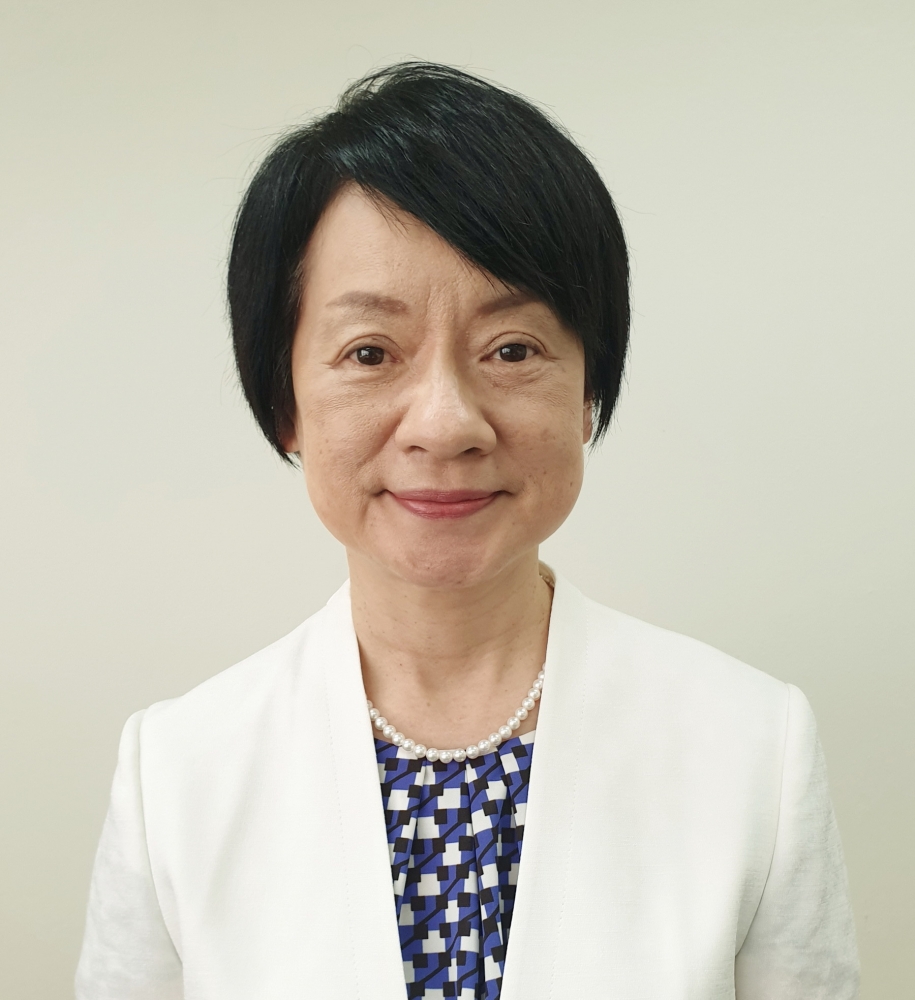
 An ambulance makes its way through a huge crowd of demonstrators gathered at Victory Monument on Sunday. Korbphuk Phromrekha#NationPhoto
 US Secretary of State Mike Pompeo

 Ron Knox
 Yang Xin, charge d’affaires at the Chinese Embassy in Thailand
  US Ambassador to Thailand Michael George DeSombre
  SootinClaimon.Com