Building a resilient and inclusive global health system together—Taiwan can help #SootinClaimon.Com

#SootinClaimon.Com : ขอบคุณแหล่งข้อมูล : หนังสือพิมพ์ The Nation.

https://www.nationthailand.com/perspective/40001265

Building a resilient and inclusive global health system together—Taiwan can help


The threat that emerging infectious diseases poses to global health and the economy, trade, and tourism never ceases. Up until April 2021, coronavirus disease 2019 (COVID-19) has caused more than 150 million cases and more than 3.16 million deaths worldwide.
Building a resilient and inclusive global health system together—Taiwan can help

The disease caused enormous medical, economic, and social impacts around the world, and significantly threatened global efforts to achieve the United Nations Sustainable Development Goals (SDGs) .

Taiwan had been expected to be one of the countries that might be severely affected by the epidemic due to the proximity to China. However, given the past experience of fighting SARS outbreak in 2003, Taiwan was able to piece together various information to foresee a picture that implied the scope and severity of this pandemic might be much worse than the global society perceived. Authorities thus launched heightened monitoring on December 31, 2019, and have tirelessly implemented public health containment measures. In contrast to the global economic recession, Taiwan’s GDP growth for 2020 was approximately 3.11%, with even higher growth of 4.94% in the fourth quarter.

Public trust and comprehensive cooperation with the government’s measurements have certainly been a crucial element in Taiwan’s practices in containment of COVID-19. The government of Taiwan has worked hard to maintain the balance between people’s right and effective intervention to safeguard public health. Under the pandemic, Taiwan has demonstrated an emphasis on the right to health, the fairness of people and the protection of minority groups as well as strong opposition to human rights violations. The effort to secure both freedom and safety of people by the Taiwan government hast thus gained public trust and understanding in complying with all COVID-19 countermeasures.

Recently, many countries have suffered from the fast-spreading variants of COVID-19 virus, which have triggered the latest wave of transmission immediately. Meanwhile, the dramatic rise in the number of confirmed cases has also laid a growing burden on the healthcare system to many countries. The influx of infected people has challenged the capacity of hospitals and caused shortage of wards. Medical supplies and intensive care units are tested to their limits on a daily basis. As a reliable partner-in-waiting to the global health system, Taiwan would like to share with the world a valuable lesson acquired from past experience. After dealing with SARS pandemic, Taiwan established a nationwide infectious disease healthcare network that is led and overseen by related experts across six regions of the country. More than 100 secondary response hospitals are included in the network and all twenty-two special municipalities, counties and cities have designated their primary response hospitals. The network also provides the legal authority for transferring patients with highly contagious diseases to designated facilities based on public health and clinical need.

This has proven instrumental in protecting health systems and health professionals from being overwhelmed, and allowed most non-COVID-19 health services to continue to operate without disruption during the pandemic. To date, there is zero death of health professionals related to hospital outbreaks of COVID-19.

This pandemic has proven yet again that Taiwan cannot be ruled out of the global health network. The pandemic has also called for Taiwan’s capacity to research, develop, produce, and supply therapies and associated tools (including two COVID-19 vaccines that are presently in Phase 2 trials). Being able to comprehensively participate in and contribute to international COVID-19 supply chain systems, as well as global diagnostics, vaccine, and therapeutics platforms, would allow Taiwan to work with the rest of the world.

We urge WHO and related parties to include Taiwan in WHO and its meetings, mechanisms, and activities. Taiwan will continue to work with the rest of the world to ensure that every person enjoys the fundamental human right to health as stipulated in the WHO Constitution. Echoing the mantra of the United Nations’ 2030 Sustainable Development Goals, no one should be left behind.

Published : May 25, 2021

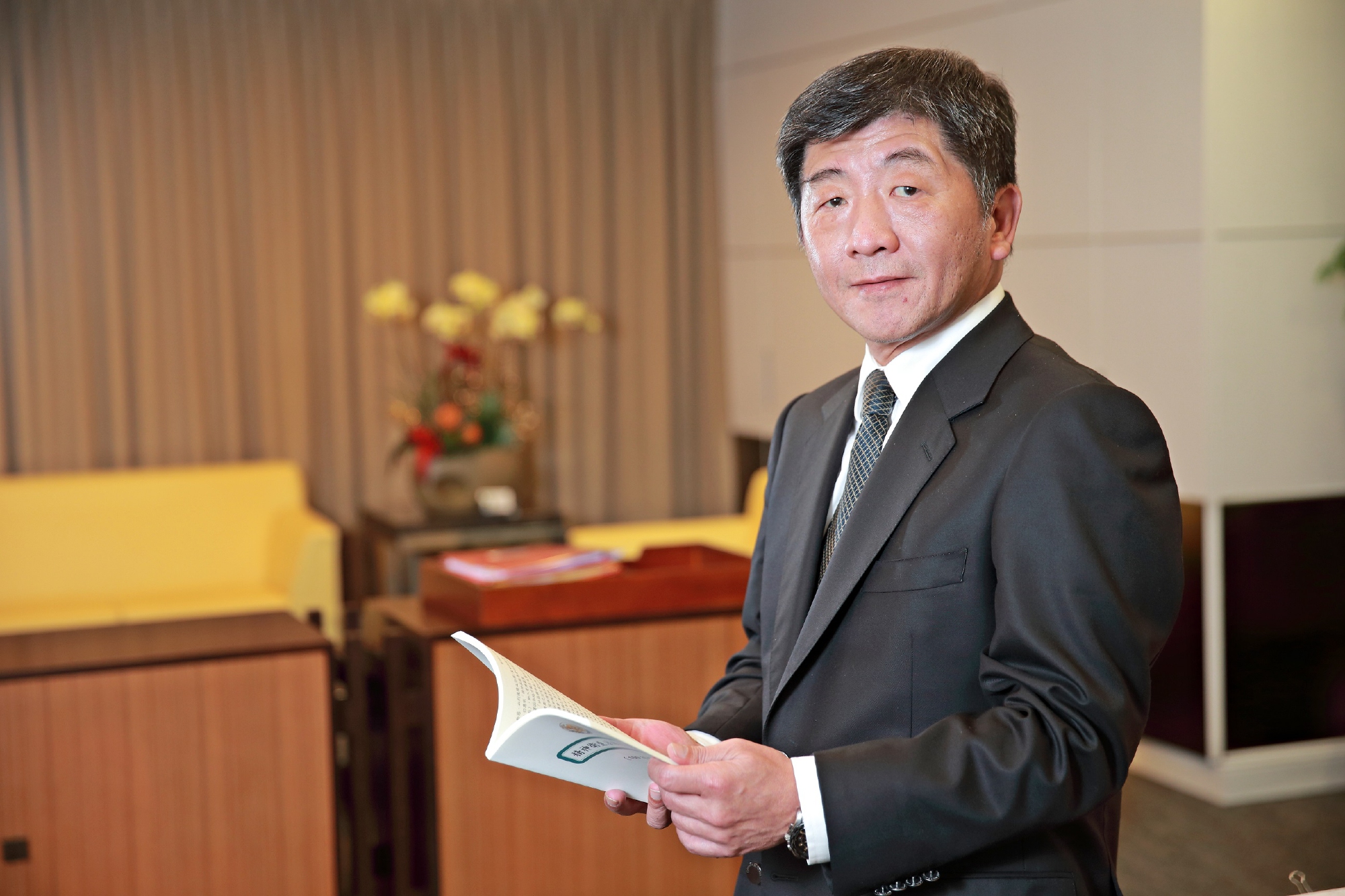
By : Dr. Shih-chung Chen, Minister of Health and Welfare, Republic of China (Taiwan)

How working remotely has brought human touch back to business #SootinClaimon.Com

#SootinClaimon.Com : ขอบคุณแหล่งข้อมูล : หนังสือพิมพ์ The Nation.

https://www.nationthailand.com/perspective/40001020

How working remotely has brought human touch back to business


Though 2020 has come and gone, travel bans remain, which means virtual meetings are here to stay. According to the latest Nutanix Enterprise Cloud Index (ECI), 68 per cent of businesses in the Asia-Pacific/Japan (APJ) region plan to conduct more business using video conferencing and limit travel where possible.

How working remotely has brought human touch back to business

This brave new world of business continues to turn a lot of long-held beliefs on their head. Business leaders have celebrated the value of face-to-face meetings for decades, suggesting that being face-to-face was the only way to build relationships based on trust. Nowhere is this more ingrained than in Asia, a region where professional travel is a way of life and in-person meetings are crucial for engaging new customers, showing respect to partners and navigating both business and cultural nuances.

There is also a belief in Thai organisational culture that humility and face-to-face meetings enable smooth negotiations and facilitate immediate reaction nuances.

However, the Covid-19 outbreak has shifted all long-held beliefs. Many businesses are inevitably increasingly turning to online meeting tools and looking for solutions that meet the needs of their organisations.

The Digital Government Development Agency (DGA), for example, provides online teleconferencing via a high-speed internet network called GIN Conference (Government Information Network) to government agencies, aiding the effective deployment of resources to deal with emergencies and crises.

Adapting to a new world

In essence, never has the power of technology been so felt and understood. Without it, the pandemic would have forced us to retreat into our enclaves. Instead, while we haven’t been able to travel corporeally, technology has enabled us to maintain and build new human connections.

The companies I have seen truly embracing technology as a means to “carry on” are the ones I deem to have a truly innovative mindset. For example, KTBST Securities Public Co Ltd (KTBST SEC) is a Thai securities brokerage firm that uses technology to digitise its working processes and strategic plans. Before the transformation from its legacy infrastructure to a hyper-converged one, the company spent time training and changing the mindset of its employees. The payback was very positive. Chosen solutions were implemented in a much speedier and smoother fashion than expected. In addition, the company has the capacity to upgrade or enhance its systems seamlessly and with confidence to meet changing customer expectations.

Embracing changes

Some countries have made the most of the changes. We have already seen companies pivot to deal with the significant uptick in work from home, with 46 per cent of global organisations and 62 per cent of Thai organisations modifying their IT infrastructures to improve support for remote workers according to the ECI research. This rapid change has been supported by technologies like hybrid cloud, which allowed organisations to deliver secure and efficient access to virtual apps, desktops and data to all remote workers.

Now, business leaders need to apply similar technological transformations to their external business relationships.

This is already starting to happen. Company executives that were once hard to pin down for in-person meetings were suddenly available to take virtual meetings that they would have previously demanded be face-to-face. And once they settled into the fact that face-to-face was no longer possible, they embraced the benefits that virtual meetings enabled – including more time available to actually do business, rather than sitting in traffic, or being stuck on the train during the morning commute. They have also gained the chance to turn “administrative” meetings into emails or messages, and the ability to conduct business with people around the world from the safety and comfort of their own homes.

Great paradox: Physical separation creating deeper emotional bonds

There is another silver lining to doing business virtually. Thanks to technology, we’ve all inadvertently been invited into the homes of our peers and colleagues and witnessed children, pets, partners, or tradespeople wandering in and out of frame. This has allowed us to build relationships that are more real and based on our shared human experiences, rather than on the hyper-professional facades we present to each other on short business trips.

Likewise, with everyone working remotely, we have all faced the struggle of making ourselves understood via video conference or group call. Previously, a room full of people would have a speakerphone in the middle of the table and maybe a video on a big screen to connect to one or two remote workers. Now, remote work is everyone’s challenge – creating a common ground that a new generation of business relationships can be built upon. When everyone is remote and often communicating asynchronously, it is easier to use translation tools as well, which broadens participation around the region.

The pandemic has been undeniably hard and, as we’ve all experienced, it has changed the very fabric of society. But being grounded hasn’t stopped me from connecting with my employees, customers and partners. On the contrary – being in one place on a more predictable schedule has enabled me to fit in more one-on-one calls, more conversations with team members on the frontline, and more online meetings with a larger number of partners than I would ever be able to fit into a business trip. This ability to come together despite distance and considerable challenges exemplifies humankind’s capacity for innovation – one of our greatest assets – and I am excited for us all to embrace our newfound resilience and create better ways of doing business soon.

Published : May 18, 2021

By : Thawipong Anotaisinthawee, Country manager, Nutanix (Thailand)

New trends emerge in luxury residential market, as pandemic prompts change in lifestyle #SootinClaimon.Com

#SootinClaimon.Com : ขอบคุณแหล่งข้อมูล : หนังสือพิมพ์ The Nation.

https://www.nationthailand.com/perspective/40000696

New trends emerge in luxury residential market, as pandemic prompts change in lifestyle
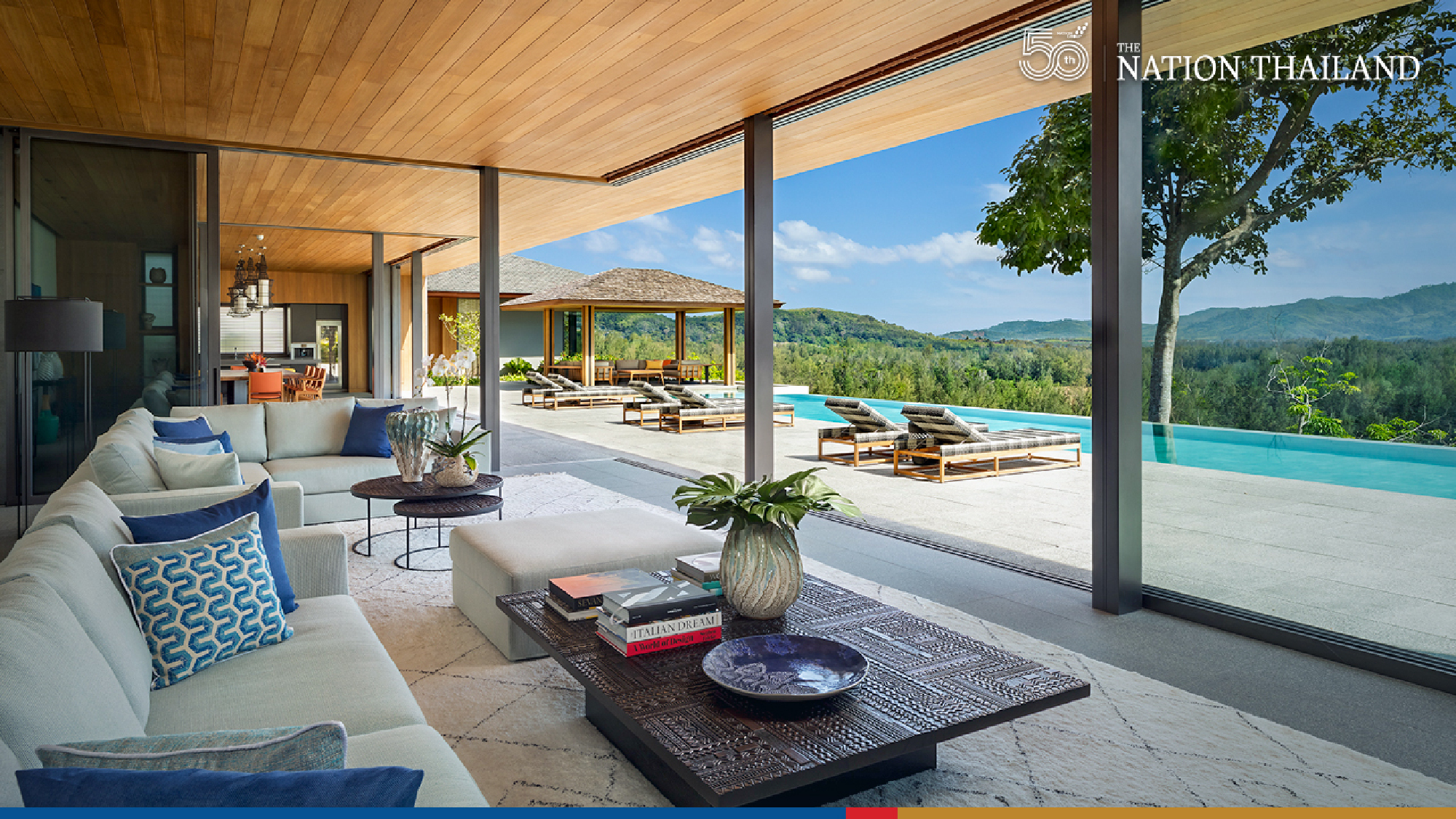

What will happen in the wake of the pandemic when people begin to look again at investing in luxury residential properties? While our fight against Covid-19 continues, changes in buyers’ behaviour over the past 12 months have already begun to reshape the luxury real estate market.

New trends emerge in luxury residential market, as pandemic prompts change in lifestyle

Encouraged by the need for social distancing and the rise of remote working, an increasing number of people living and working in major cities now split their time between home and ‘away’ – a long stay in a holiday destination or a second home.

The trend towards purchasing second homes reflects this shift. According to Knight Frank’s Global Buyer Survey – undertaken in June 2020 across 44 countries – over 26 per cent of respondents said they were more likely to buy a second home as a result of the pandemic.

The pandemic has also underscored the importance of nature and space, wellness and well being, and quality time spent with family.

Within the luxury segment in Asia, we are seeing a trend towards multi-generational real estate purchases – with pooled investment being made in residences that can be used by grandparents, parents and children, as well as preference for landed and single-family homes – where outdoor space abounds, privacy is a given and living spaces are customisable to fit the needs of a large or growing family.

What we are most excited about, however, are some of the shifts that are happening within the travel and hospitality sector.

With border restrictions confining the majority of travellers to domestic destinations, many have taken the opportunity to discover lesser-known, off-the-beaten-path destinations. We are also seeing a move away from “big box” travel and towards a “boutique” holiday experience, with an increasing number of travellers seeking a more bespoke or personalised experience during their stay.

New trends emerge in luxury residential market, as pandemic prompts change in lifestyleNew trends emerge in luxury residential market, as pandemic prompts change in lifestyle

Branded leverage

The post-pandemic era offers an opportunity for branded residences – those that are managed by a hospitality brand through an adjoining hotel or resort – to position themselves as the investment property of choice.

The branded residence sector is growing around the world, especially in this region. According to a March 2020 report by C9 Hotelworks on the sector, Asia now has a third of the world’s branded residences, with most developments located in Thailand, Vietnam and the Philippines.

New trends emerge in luxury residential market, as pandemic prompts change in lifestyleNew trends emerge in luxury residential market, as pandemic prompts change in lifestyle

The promise of a global hospitality brand is at the core of the branded residence offering. Leveraging the developer’s and operator’s combined expertise, they offer assurance in terms of quality and service standards, including those governing the safety and well-being of residents, for additional peace of mind amidst the current global pandemic.

From a real estate standpoint, the branded residence model presents an opportunity for investors to generate both short- and long-term returns. With a full complement of hotel or resort amenities, buyers benefit from hassle-free home-ownership, and the opportunity to earn returns through a resort-managed rental programme.

In the long run, buyers stand to benefit from an increase in resale value. Savills, in its 2019 Branded Residences Report, estimates that the average premium for branded residences over a non-branded product starts at 35 per cent, rising to as much as 70 per cent in emerging destinations, where buyers also stand to benefit from first-mover advantage.

The trend and demand for luxury branded residences will only continue to gain traction in the future, driven largely by the rise of the upper- and middle-class market segment in Asia. Its growth trajectory will be closely linked to the travel and hospitality sector: we foresee branded residences growing in importance as drivers of tourism development in emerging destinations. Adding a branded residential project to a destination helps strengthen its attractiveness as a travel and investment destination, supporting the development of the destination from an economic perspective.

New trends emerge in luxury residential market, as pandemic prompts change in lifestyleNew trends emerge in luxury residential market, as pandemic prompts change in lifestyle

Hospitality advantage

With over 500 hotels, resorts and residences globally – 40 of which are under the Anantara brand – Minor International has built a reputation as a luxury hotel owner and operator over the past 50 years. As a real estate developer, we leverage this depth of experience when we build and manage our residential developments. Where relevant, we seek emerging destinations with growth potential, and invest in these locations as a pioneering developer, together with local partners that share our vision.

Our branded residences portfolio in Thailand, Malaysia and Indonesia allows us to offer a more attractive real estate investment opportunity than pure home-ownership. Our portfolio is purposefully small, which enables us to nurture a personalised relationship with every buyer, which lasts throughout the duration of their ownership. All our developments are also boutique-sized, to create and foster a strong sense of community within our owners.

Despite the challenges that remain, we feel there is sound cause for optimism in this post-pandemic world. For the luxury real estate sector, it is crucial that we remain cognizant of how the market is changing and how these shifting trends can be leveraged to uncover new opportunities.

The writer is vice president for real estate at Minor International

Published : May 09, 2021

By : Micah Tamthai

Resident Evil VIII rekindles the illogical, weird magic of the series #SootinClaimon.Com

#SootinClaimon.Com : ขอบคุณแหล่งข้อมูล : หนังสือพิมพ์ The Nation.

https://www.nationthailand.com/perspective/40000573

Resident Evil VIII rekindles the illogical, weird magic of the series


Resident Evil is about the balance of fear and power. Its a staple of the series. At the beginning of each game, the player is meant to feel overwhelmed and confused. By the end, they can fight back against these emotions – usually with a rocket launcher.

Resident Evil VIII rekindles the illogical, weird magic of the series

“Resident Evil VIII: Village” continues this tradition, dropping faceless protagonist Ethan Winters – also the star of “Resident Evil 7: Biohazard” – in the middle of a wildly unfamiliar situation. But if you loved the understated horror of Ethan’s adventure in the seventh game, you’ll only get a bit of that here. In fact, you’ll likely leave disappointed. But if you’re like me and your favorite title is “Resident Evil 4,” this will delight.

Built like a Disneyland of horror tropes and gore, the eponymous village funnels you toward gory sights and sounds, with Ethan circling a drain of carnage. Resident Evil games are almost literally visceral experiences, holding up guts and gross things up to the camera to intimidate, bewilder and occasionally even charm. The good news: “Village” is a visually stunning ride. Later in the game, when the action ramps up, I couldn’t help but compare it to 2019′s “Call of Duty: Modern Warfare,” with its arresting visual and audio fidelity. (Just swap the guns and militants for werewolves and biomechanical freaks).

“Village” quickly moves along narrative beats familiar to “Resident Evil 4” veterans, including oddball villains like the now-infamous Lady Dimetrescu, the 9-foot-tall vampire that dominated the game’s marketing. She and the other lords of the village conjure gleeful energy throughout the game, fabulous and fearsome. It’s the kind of gory glamour the series sometimes loves to dress itself in, as in the opera-house drama of “Code Veronica,” or the sixth sequel’s climactic battle between a zombie Tyrannosaurus Rex and a Jeep. In “Village,” Ethan trades the small-town Louisiana horror of “Biohazard” for weirder territory.

Now we turn to some bad news: Dimetrescu is far from the game’s focus. Rather, she’s just one of four villains Ethan must topple to rescue his daughter. Yes, it’s another horror game about the travails and emotions of being a dad. The premise is stale, so it’s good that the four “children” of the chief antagonist, Mother Miranda, try to breathe life (or death?) into it. Not all of them do. A third villain’s section of the horror theme park is a swampy trial-and-error drudge, and his fight fails to excite.

Dimetrescu is charismatic to the detriment of your other foes. She is imperious and poised, and you’ll find it impossible to unglue your eyes from the screen any time she appears, or even as she stalks you throughout her castle. No one, not even the mysterious Mother Miranda, commands as much attention, and it’s hard not to notice once she exits the stage.

Fortunately, the horror showcase that follows is immediately terrifying. Anyone concerned that Dimetrescu’s flamboyance might subdue the game’s fear factor need not worry. The next monster is a constant startling presence, with a face so unsettling it had the polar opposite effect of Dimetrescu: I kept having to look away.

“Village” gives players plenty of opportunity to explore. It’s very much a lighter “Metroid” experience, where accomplishing certain tasks gives you the key to explore more areas and find more secrets. The actual village hub has a few locked doors and treasure chests with ample rewards and story nuggets about what exactly is going on. It’s surface-level stuff, and hardly any of it is coherent or compelling, but this is Resident Evil, not “The Last of Us.”

Make no mistake: the environment isn’t interactive, it’s mostly there to set a majestic mood while leaving just enough visual cues to push you forward. This game is far from clever, and the puzzles are about as hard as they were in the recent remakes. But they’re enough to make some players feel clever, and that’s all you can ask. And the backdrop for these simplistic puzzles almost never gets old to tour. Outside of the village and the castle, the story takes you to the expected tropes of past Resident Evil titles, but plays with your expectations enough to keep it engaging and surprising.

As audience surrogate and everyman, Ethan Winters is not an interesting or wise character. But “Village” eventually turns him into a sympathetic one, painting him as a hapless, entangled victim. By the end of the game, Ethan Winters is no longer the dogged, serious and scared hero of “Biohazard.” He’s the tragic superhero protagonist of a Zack Snyder film, a singular, narrow vision of emotion maximized to mythology. It’s here where Resident Evil returns to its classic escalation of stakes and action. Unlike the lonely “Biohazard,” “Village” ends with a muddy conspiracy and muddier motivations, and at a scale we haven’t seen since the loud, ridiculous “Resident Evil 6,” all the way back in 2012.

This is why your enjoyment of “Village” depends on what you want out of Resident Evil. I love when “Village” leans into camp and slapstick goth violence. I love when it magically, without logic, gives me the tools I need to fight against the madness. I love how many aesthetic cues it takes from the fourth game. I love how many gameplay mechanics “Village” borrows from it too, especially the return of the attaché case. Resident Evil games are as much about inventory management as they are about killing zombies, and “Village” allows you to play “Tetris” with your items. My Ethan Winters took plenty of breaks to play Marie Kondo, decluttering and rearranging until the joy sparked.

A mercantile system also returns in the very large body of the Duke, who lords over the proceedings with a watchful eye. The Duke is absolutely related to the famous “What’re ya buying” anonymous merchant of “RE4,″ whose identity has confounded fans and lore theorists. But the Duke gives a few more clues about the nature of these retailers, and about the whole series in general. After buying one of the many upgrades for your weapons (which persist in future playthroughs), the Duke will cheerfully tell you to “have a wonderful adventure.”

The Resident Evil series is eternally challenged by balancing its aggressive violence, the grim beauty of its environments, and the whimsy of its typecast, entirely moronic characters. “Village” almost walks that line – until it can’t help itself, and runs amok with its own imagination. Many fans, myself included, will welcome it. If the end of the world already feels like a bunch of nonsense with irrational, emotional people, might as well make an adventure of it.

Published : May 06, 2021

By : The Washington Post · Gene Park

Pandemic highlights need for resilient occupational safety and health systems: ILO #SootinClaimon.Com

#SootinClaimon.Com : ขอบคุณแหล่งข้อมูล : หนังสือพิมพ์ The Nation.

https://www.nationthailand.com/perspective/40000493

Pandemic highlights need for resilient occupational safety and health systems: ILO


The pandemic has reinforced the need for resilient national Occupational Safety and Health (OSH) systems to be put in place. To mark Safe Day 2021, ILO’s assistant director-general and regional director for Asia-Pacific, Chihoko Asada-Miyakawa, explains what they are and what needs to be done.

Pandemic highlights need for resilient occupational safety and health systems: ILO

Workplaces can easily become contaminated, exposing workers, their families and communities to the risk of infection. In addition to infection, workers in all sectors face additional hazards that have emerged due to new work practices and procedures adopted to mitigate the spread of the virus.

Working at home, for instance, has led to ergonomic and psychosocial risks with some 65 per cent of surveyed enterprises reporting that worker morale has been difficult to sustain.

Certain workplaces have been particularly affected, such as the 136 million health and social workers at serious risk of acquiring Covid-19 during the course of their work. Moreover, those workers, as well as essential staff in many other sectors, have faced increased workload, longer working hours and reduced rest periods. The risk of violence and harassment at work has also risen, with consequences for both physical and mental well-being.

The protection of workers against sickness, disease and injury related to their work environment has been a central issue for the ILO since 1919.

Since the start of the Covid-19 crisis, principles contained in the ILO Occupational Safety and Health standards have shown to be more relevant than ever, especially the principle of prevention.

Faced with an unprecedented public health emergency, governments have taken measures to curb the spread of the virus through public health systems. Actors in the world of work, particularly in the field of OSH, have been crucial in the emergency response for protecting workers including those who support public health systems.

At the same time, special attention has been needed to ensure that policies and strategies do not discriminate against anyone, and consider those in vulnerable situations including the young, women, disabled and migrant workers, the self-employed and the informal economy.

Among the many lessons learned from this crisis, is the need for countries to have a sound and resilient OSH system in place, one that can build capacity for future emergencies and protect workers’ safety and health while supporting the survival of enterprises.

The ILO’s Promotional Framework for Occupational Safety and Health Convention, 2006 lays out key elements of a national OSH system.

They comprise regulatory and institutional frameworks; occupational health services; information, advisory services and training; data collection and research; and mechanisms for strengthening OSH management systems at the enterprise level to prevent and respond to OSH risks. Investing in these systems enables countries to better face and recover from crises by safeguarding lives and livelihoods, and advancing the protection of workers.

In the Asia-Pacific region, the Covid pandemic has led to many countries taking steps to strengthen priority elements of their national OSH system.

For example, Singapore has adopted new regulations on teleworking or leave with a view of protecting vulnerable populations. In India, the Health and Family Welfare Ministry has produced and disseminated materials on how to effectively communicate with workers and people who are suspected or confirmed to have Covid-19.

In New Zealand, occupational health professionals have helped workers set up ergonomically sound home office environments to support healthy teleworking. In Bangladesh, research has looked at instances of suicides by workers due to Covid-related unemployment or business closures. Meanwhile, a study in Malaysia examined the specific risks that migrants face in connection with Covid-19.

The pandemic has furthermore demonstrated the importance of social dialogue between governments, employers’ and workers’ organisations not only in responding to crises but also in promoting good OSH conditions. A climate of trust, built through social dialogue, is essential for the effective implementation of measures to address emergencies such as Covid-19, which require quick but effective action. Strengthened respect for, and reliance upon, mechanisms for social dialogue create a strong foundation for building resilience and encouraging commitment from employers and workers to the necessary policy and practical measures.

Covid-19 has undoubtedly been one of the gravest occupational safety and health challenges the world has ever faced. A strong national OSH system can only be built through concerted action and commitment of all stakeholders.

Published : May 03, 2021

By : THE NATION

Biden’s star trek on climate change #SootinClaimon.Com

#SootinClaimon.Com : ขอบคุณแหล่งข้อมูล : หนังสือพิมพ์ The Nation.

https://www.nationthailand.com/perspective/40000244

Biden’s star trek on climate change


Joe Biden reaches a milestone on Thursday, marking his first 100 days as the 46th president of the United States. After four years of chaotic Trump governance, the world was relieved at how quickly Biden shifted to calm and competent professionalism in tackling the pandemic, economy and foreign affairs.

Biden’s star trek on climate change

Biden used April 22, Earth Day, to call a Global Summit on climate change. The theme this year was to “Restore our Earth” after last year was marked by the pandemic, unprecedented natural disasters and the second-hottest year on record. It also witnessed record stock market prices coupled with rising poverty, indicating a growing wealth gap.

The 40 global leaders invited to the global summit included not only heads of G-20 countries but also of small nations like Bhutan, Gabon, Antigua and Barbuda and Marshall Islands. Within the Asian region, leaders of non-G20 members like Vietnam, Singapore and Bangladesh joined heavyweights like China’s President Xi, Indian Prime Minister Modi, Indonesian President Jokowi, Japan’s Prime Minister Suga and South Korean President Moon. Significantly, this was German Chancellor Merkel’s last global summit appearance, while Pope Francis was also invited to add a moral tone.

President Biden’s opening remarks tackled not just the existential threat of climate change but also jobs and getting the economy moving through clean investments. He urged global leaders to take concrete action to prevent the Earth’s temperature from rising more than 1.5C. To show American leadership, he committed the US to two significant steps. The first is a formal commitment to cut US emissions in half from 2005 levels by 2030. The second is to double his country’s annual public climate financing for developing countries by 2024.

How significant was this Global Climate Summit? Optically, it could be the Green New Deal of the Century. Practically, it’s all about delivery – whether the US can lead the world out of the climate warming trap with action and not just words. If America is not able to put its own house in order in terms of social inequality, economy and climate change, it will cede leadership elsewhere.

So far, Biden has had most of his nominated officials approved, so that tested professionals are now busy cleaning up Trump’s legacies. This is a calmer and more effective White House, in sharp contrast to the constant barrage of angry and wild tweets emerging from the Trump White House.

Under Biden, the US has led the vaccination rollout, allowing the economy to reopen, and committing $5.1 trillion – $0.9 trillion under Trump, $1.9 trillion in February and $2.3 trillion for infrastructure – in stimulus and infrastructure spending plans, equivalent to nearly a quarter of GDP. Economically, in the medium term, the US is set to have the fastest recovery ahead of Europe and Japan, though not China.

Given bipartisan support for US foreign and national security policies, Biden has retained many of Trump’s hard-line actions on China. If anything, the tone has sharpened in maintaining China tariffs, sanctions and the decoupling of technology and reshoring of manufacturing.

The second phase of Biden’s foreign policy is his decisions to pull out of Afghanistan and make overtures to Iran. The Afghanistan war is the longest in American history and has ended exactly as the Korean and Vietnam wars – in defeat disguised as withdrawal. The history books have been proved right: Afghanistan is a graveyard for empires, from Alexander the Great’s army to the British to the Russians to American military might today.

What the latest Afghanistan war proved is that intervening with “humanitarian” intentions can end in worse human right abuses by destroying families, communities and even nations. This tragedy has been repeated time and again – in Iraq, Libya, Yemen and Syria – with neighbouring countries teetering on the brink of failure amid refugee influxes, overwhelmed infrastructure and, today, the pandemic catastrophe.

Simply put, the strategy behind the Climate Summit was to regain the moral high ground that Trump ceded by signalling a global race to the top on climate action, rather than a race to the bottom through another arms race. However, both will likely be pursued.

Three points stand out from Biden’s maiden 100 days. First, the funding commitment to help the rest of the world tackle climate change is minimal. Doubling current US climate financing of $2.5 billion to $5.7 billion by 2024 is a mere 0.03 per cent of 2020 GDP – hardly generous compared to the 1948 Marshall Plan of $12 billion or 4.3 per cent of GDP. Furthermore, this aid amounts to 0.3 per cent of the $175 billion in US weapons exported last year, or 0.19 per cent of the $3 trillion in quantitative easing created by the Fed last year.

Second, on what moral or legal grounds can the US justify condoning Japan’s move to dump millions of gallons of Fukushima nuclear wastewater into the Pacific Ocean without the approval of those affected? Does transparency in doing bad things make them right?

Third, fixing the domestic economy by relying mainly on foreign funding with a US net liability to the rest of the world of $14 trillion, or 67 per cent of GDP, is highly risky. As former Treasury Secretary Larry Summers has warned, the large stimulus package will in the short run lift the economy, but at the cost of growing inflation risks. Any interest rate hikes will kill the asset bubbles and may trigger the next financial crisis.

In essence, Biden is trying to steer what American futurologist Buckminster Fuller called in 1978 the Critical Path of Spaceship Earth between two existential threats of nuclear destruction or climate burning. In the TV series Star Trek, the USS Enterprise ventured into deep space where no man has gone before, fully armed to the teeth, but with the Prime Directive of Non-Interference in alien societies’ development.

President Biden has boldly and rightly staked his reputation on saving the planet through climate action.

As planetary citizens, we salute him. We will watch the next episode with great anticipation.

Andrew Sheng comments on global affairs from an Asian perspective. The views expressed are his own.

Published : April 27, 2021

By : The Nation

Experts demand generic version of drug effective against Covid-19 #SootinClaimon.Com

#SootinClaimon.Com : ขอบคุณแหล่งข้อมูล : หนังสือพิมพ์ The Nation.

https://www.nationthailand.com/opinion/30404749

Experts demand generic version of drug effective against Covid-19

ColumnsApr 10. 2021

By Bobby Ramakant
Citizen News Service

Shouldn’t a medicine like Remdesivir, which has proved to be life-saving in certain cases of Covid-19, be made available to all those who need it without delay?

Even if Big Pharma has a patent, there are provisions in global trade treaties that allow governments to issue compulsory licences for such a life-saving drug, and keep public interest above profit. This is why medical experts are demanding that governments use compulsory licensing for generic production of such a drug to help save lives.

Compulsory licensing is one of the key public health and social justice safeguards that allows governments to use, produce, and import or export patented technologies in the public interest.

When confronted with intellectual property barriers that block access to affordable life-saving treatments, governments of countries like Thailand, Brazil, India, South Africa, Malaysia among others, have used this mechanism of compulsory licensing in the past, to ensure life-saving medicines reach the people who need it most (for HIV, hepatitis C, cancer, etc).

Compulsory licensing enables local production or importation of generic medicines, multiple supply options, reduces price and increases access to life-saving treatments for those most in need.

The Indian state of Maharashtra is registering high numbers of Covid-19 cases as of now, and the situation is equally bad in several states. Among the medicines that have shown to work in Covid-19 are steroids and Remdesivir. The patent owner of Remdesivir, Gilead, had given voluntary licence to six Indian pharmaceuticals. Even then, there is an acute shortage of Remdesivir injections, possibly due to hoarding and racketeering, especially in Maharashtra. This will have a cascading effect in the rest of India. Its maximum retail price ranges between 2,800-5,400 Indian rupees (Bt1,200-Bt2,500) as per the company that produces it, whereas procurement rates at hospitals range between 600-1000 rupees. “After we pointed out this discrepancy, the Maharashtra government has once again capped the price from 1,000 to 1,400 rupees per injection. Each eligible patient needs six doses and is required only for treating moderate or severe Covid cases” said Dr Ishwar Gilada, secretary-general of Organised Medicine Academic Guild (Omag), an umbrella network of several professional medical experts’ associations in India.

Omag has appealed to the Indian prime minister to put Remdesivir in Drug Price Control Order, as is done for other life-saving medicines. This will help reduce the maximum retail price to an affordable level and remove buffer margins and scope for black-marketing.

Another ask of Omag is to grant a compulsory licence under Section 84 of Indian Patents Act, 1970, to ramp-up production of Remdesivir. It can bring down procurement cost to below 500 rupees per vial, to save millions of Indian Covid patients as also several more globally, who will benefit from made-in-India generic Remdesivir.

Omag has also insisted on rationalising the use of Remedesivir with strict adherence to the guidelines, making multiple Remdesivir stores or Remdesivir banks with strict sales control, and making racketeering of Remdesivir punishable under the Epidemic Act of India.

Gilada, who is also the president of Aids Society of India and Governing Council member of International Aids Society, added that Remdesivir (GS-5734) was originally developed by Gilead Sciences in 2009, to treat Hepatitis C and respiratory syncytial virus, but failed. It was then repurposed and studied as a potential treatment for Ebola and Marburg virus infections. In collaborative study it was subsequently discovered that it had antiviral activity in-vitro against multiple filoviruses, pneumoviruses, paramyxoviruses, and coronaviruses. It is now repurposed for use in Covid-19. Remdesivir was granted a patent in India in 2010. A compulsory licence can be issued against any drug with a three-year-old patent and hence this demand from Omag.

One of the lessons from the global public health emergency, is that profiteering from illness has to end. It is an essential cog-in-the-wheel of sustainable development where no one is left behind and that all healthcare services reach every human being in a rights-based manner, not dependent on the capacity to pay.

Médecins Sans Frontières (MSF or Doctors Without Borders) had earlier stated that a compulsory licence is a licence for alternative production or importation of a generic version of a patented medicine which is granted by the government and does not require the consent of the patent-holder. The Doha Declaration on TRIPS Agreement and Public Health confirms that countries are free to determine the grounds of compulsory licences. TRIPS, or Trade-Related Aspects of Intellectual Property Rights, is an international legal agreement between all the member nations of the World Trade Organization. Examples of different grounds for compulsory licence include, for instance to remedy anti-competitive practices, failure to work or insufficient working of the patent, when the patented medicine is unaffordable or unavailable making it inaccessible to patients and when public health is at stake including but not limited to emergency/extreme urgency, epidemics and public non-commercial use.

Bobby Ramakant is a 2008 WNTD Awardee of the World Health Organization director-general.

Open banking system still a distant dream for Thailand #SootinClaimon.Com

#SootinClaimon.Com : ขอบคุณแหล่งข้อมูล : หนังสือพิมพ์ The Nation.

https://www.nationthailand.com/opinion/30404397

Open banking system still a distant dream for Thailand

ColumnsApr 01. 2021Vilaiporn TaweelappontongVilaiporn Taweelappontong

By THE NATION

Thailand’s financial sector could take as long as 10 years to fully embrace open banking due to a lack of necessary infrastructure, customer confidence to share data and collaboration between banks, PwC Thailand said.

Hence, it added, government and regulatory bodies should put in place an open banking infrastructure as well as legislation governing data sharing and security to unlock the sector’s potential and strengthen Thailand’s data-driven financial ecosystem.

Vilaiporn Taweelappontong, consulting lead partner and financial services leader for PwC Thailand, said the global financial services industry is developing open banking technology that allows third-party providers (TPPs) such as tech firms, fintech players and other banks to access the financial information of banking customers through open Application Programming Interfaces (APIs).

This shift would make it easy for customers to access financial offerings with personalized services in real-time. Banks and financial institutions can add new revenue streams from innovative financial products and services by partnering up with non-banks such as technology firms and fintech players. All of this will help to accelerate digitalisation, save costs and add more flexibility to operations.

Even so, developing open banking in Thailand still faces many challenges.

“It could take at least 10 years for the financial sector in Thailand to fully embrace open banking simply because it still has a lot more to do both in terms of getting the infrastructure ready and building user confidence,” Vilaiporn said.

Currently, most Thai banks are investing in API development portals and other internal capabilities to share technology within affiliated companies, joint ventures or trading partners, Vilaiporn said. But the accessibility of data remains limited.

“If we want to take further steps to fully adopt open banking, the government and regulators must put in place a regulatory framework concerning interconnectivity, usage and data security while also building awareness among the population around the safety of sharing financial data,” she said.

Loopholes in development

Over the last couple of years, open banking has been revolutionising the global financial services sector. But many countries are still in different stages of adoption, Vilaiporn said.

Many Thai banks are reluctant to share customer data with entities they see as business competitors, and so far, there are no extensive regulations and incentives to convince them to start doing so, she said.

“The open banking revolution has greatly challenged the traditional financial ecosystem in every aspect because banks have to allow third-party providers to access the financial information of their customers.

“However, many banks today still worry about the security of letting other TPPs access their customer data. They are also concerned about competing in an already fierce market, losing business to new entrants such as fintech. And it’s more difficult to manage customer relationships when transactions at the counters of physical banks are diminishing fast,” Vilaiporn said.

A successful push to fully embrace open banking in Thailand would require efforts from all parties along with government incentives to foster collaboration. This would include tightening the regulatory framework and preparing data-security infrastructure in the event of an attack that could cause irreparable damage to the financial services system, she said.

Customers at the heart of open banking

Technological advances and changing consumer behaviour have prompted financial institutions and banks to focus on improving the customer experience to retain existing customers and attract new ones.

Asian banking customers who are frustrated with their traditional banks are shifting to virtual banking, according to “Beyond Digital: Data-Driven Strategies to Grow, Scale and Profit”, a report by PwC and Oracle.

These end-customers demand a single platform that integrates financial and non-financial services, allowing them to transition from one channel to another seamlessly. Such market trends underline the need for banks to adopt open banking solutions to accelerate data-based innovation and interoperability, it said.

“The development of open banking will provide a better customer experience from bringing together all the offerings that people want from different providers to a single platform, be it transferring money, checking balances or paying for goods and services.

“Customers can wire money at bank A, pay a bill via app B or apply for a loan via app C, all of which can be done through the same interface without switching in and out of so many apps or platforms. By giving them greater control of their data, it also means they get to have access to an array of services from third parties more easily,” the report said.

Day of the Landless sparks call for reform of global food system #SootinClaimon.Com

#SootinClaimon.Com : ขอบคุณแหล่งข้อมูล : หนังสือพิมพ์ The Nation.

https://www.nationthailand.com/opinion/30404269

Day of the Landless sparks call for reform of global food system

ColumnsMar 30. 2021

By Bobby Ramakant
Special to The Nation

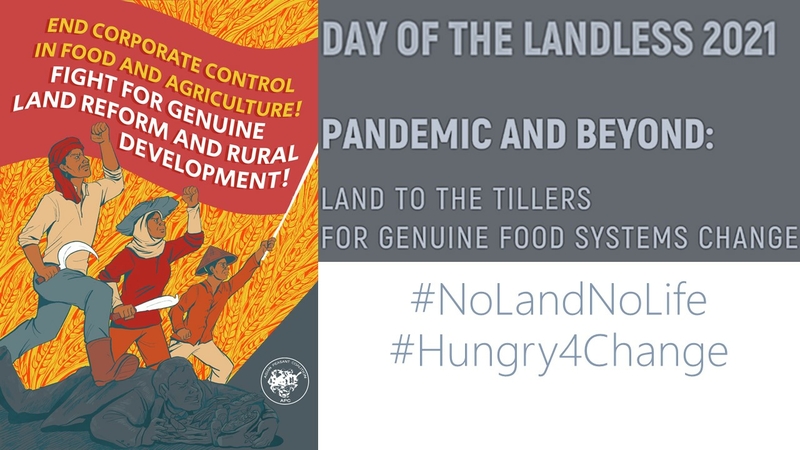
Today (March 29) marks the Day of the Landless, inaugurated by the Asian Peasant Coalition to spotlight the struggle for land rights by rural people in countries around the world.

Landless farmer groups from around Asia joined a summit ahead of the Day of the Landless in a bid to strengthen their push for land rights and reforms.

The theme this year – “Land of the Landless: Land to the Tillers” – recalls the words of Mahatma Gandhi: “In reality, the toiler is the owner of what he produces. If the toilers intelligently combine, they will become an irresistible power.”

Indian independence leader Ram Manohar Lohia echoed that point: “The most exploited element in Indian society is the landless village labourers and farmers,” said Lohia, adding that the freedom struggle in India could not be completed until the prosperity of the humble kisan (farmer) became a reality.

In 1949, two years after India gained independence, Lohia said reconstruction of the country was primarily a question of the reconstruction of her 550,000 of villages. Like Gandhi, he wanted a village-based democracy in India. Each village should be a zone of peace where land should be given to the impoverished residents who actually tilled the soil, and even landless labourers would secure rehabilitation and social justice. Lohia exposed the bitter truth of so-called urban “development” when he said the government had sacrificed Indian villages for the benefit of cities. Village dwellers were exploited economically and culturally. In Lohia’s scheme of agrarian revolution, those who till the land must also own it.

Land still does not belong to the tillers

More than eight decades after India won independence, Gandhi and Lohia’s words speak louder than ever: most land still does not belong to the tiller. Far from securing the land for tillers, the “development” model India is chasing puts many at risk of losing it. Under the policies of globalisation, privatisation and liberalisation implemented since the early 1990s, even landholder farmers are becoming landless, said Harinder Singh Manshahia, a farmers’ leader and Punjab state president of the Socialist Party (India).

According to National Sample Survey Organisation (NSSO) data, 60 per cent of India’s population has rights to only 5 per cent of the land. Meanwhile 10 per cent has control over 55 per cent of the land. The 2011 Socio Economic and Caste Census shows that 56 per cent of households in rural India do not own any agricultural land. The NSSO 2013 revealed that the top 7.18 per cent of households own more than 46.71 per cent of the land.

For the Day of the Landless 2021, the Asian Peasant Coalition (APC) has joined with regional farmers to call for an end to corporate control of food and agriculture.

They called for strengthening of the battle for genuine land reform and rural development to truly transform the world’s food systems.

“On the Day of the Landless, we – farmers and peasants, poor farmhands, agricultural workers, contract farmers, Dalits, rural women and youth, and land reform advocates across Asia – vow to further our resolve in fighting against landlessness,” said Raja Mujeeb, a member of the Pakistan Kisan Mazdoor Tahreek farmers’ alliance.

“Landlessness breeds social injustice, hunger and impoverishment. Landlessness is a bane to farmers and all the people of the world,” he added.

Sandeep Pandey, Ramon Magsaysay Awardee and vice president of the Socialist Party (India), said: “It is unacceptable that farmers and food producers who feed our nations do not have access to land and are food insecure because of land and resource grabs, and of corporate capture of agricultural production and trade.”

Why hunger when farmers grow more than we need?

The Covid-19 pandemic that ravaged the world in 2020 further exposed the profit-oriented nature of global food systems as it drove millions of people into chronic hunger. By the end of 2019, at least 690 million people went hungry. By the start of 2020, hundreds of millions of people continued to suffer acute food insecurity as they faced conflict, climate change, and economic crises of epic proportions.

A staggering 7 million people died of hunger last year as of October 2020. Pandemic-related hunger also led to the deaths of 10,000 more children each month over the first year of the health crisis. Forecasts even warned about multiple famines in the coming months as the lowest-income households are most likely to face increased hunger. Strict lockdown policies and quarantines have affected all stages of food supply, resulting in a steep rise in food prices and widespread food insecurity.

APC leaders said that hunger and poverty of Asian peasants and sectors in agriculture are among the direct results of centuries-old landlessness. Large-scale land deals and acquisitions (land grabs led by corporations) have dispossessed and displaced farmers from the plots they till. Millions of hectares of land planted with staples, grains and other food crops, as well as indigenous lands, and public lands were grabbed and converted into plantations, extractive mining projects, and farms devoted to export cash crops. Governments have become willing accomplices in these land grabs through public-private partnerships that take away land, water, and other natural resources from the people. Profits keep pouring into the pockets of the few as the majority of peasants and their families endure worsening landlessness and land grabs amid a pandemic. Farmers who assert land rights are faced with attacks from local landlords, big corporations and even government agencies. Peasant killings and other forms of brutalities against farmers happen on a daily basis.

In Asia, the largest protests we have seen in recent months are by Indian farmers, taking to the streets in hundreds of millions to oppose neoliberal agricultural laws that will make them more vulnerable to a few powerful corporations.

The APC warns that “ongoing efforts to address the rising global hunger and poverty through the upcoming UN Food Systems Summit will only end up in legitimising and further advancing tighter imperialist control over food and agriculture”.

At the summit, the APC called for just, equitable, healthy, and sustainable food systems that would bring to the fore the peasant’s aspirations and struggles for land and genuine agrarian reform.

Cathy Estavillo, chairperson of Amihan women peasant federation (Philippines) and vice chair of APC; Ravindra, landless person from Hardoi in UP, India; and Anil Mishra, a farmer from Uttar Pradesh, India and president of the Socialist Kisan Sabha also addressed the summit under the unifying call that “Land Must Belong to the Tillers”.

Bobby Ramakant is a member of CNS (Citizen News Service), Asha Parivar, APCAT Media, and the Socialist Party (India). Follow him on Twitter @bobbyramakant or read www.bit.ly/BobbyRamakant

ASEAN must stop Myanmar from becoming cold war theater #SootinClaimon.Com

#SootinClaimon.Com : ขอบคุณแหล่งข้อมูล : หนังสือพิมพ์ The Nation.

https://www.nationthailand.com/opinion/30403947

ASEAN must stop Myanmar from becoming cold war theater

ColumnsMar 21. 2021

By Endy Bayuni
The Jakarta Post

At the current rate, the crisis in Myanmar will have serious geopolitical and security implications, not only for the country itself but also for its Southeast Asian neighbors. An economically weak and politically unstable Myanmar makes it easy prey for China and the United States to wage their proxy battles.

This is bad news for ASEAN.

China’s nonchalant attitude towards the military coup in Myanmar raises speculations that it is ready to accept and recognize the junta as the legal representative government. At the most, Beijing has expressed concerns about the fate of its investment projects in Myanmar as some protesters opposing the military are venting anger at China’s business interests.

China’s attitude stands in sharp contrast to the reaction of most of the rest of the world, which has condemned the Tatmadaw, Myanmar’s armed forces, for the Feb. 1 coup that prevented the National League for Democracy (NLD) from assuming power after the party’s landslide electoral victory in November.

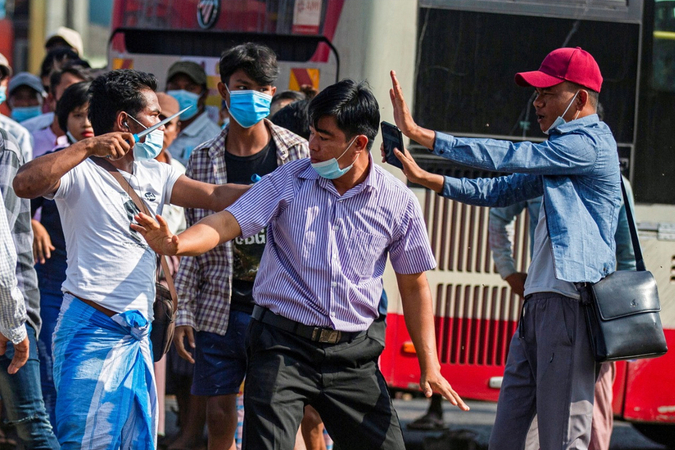
Widespread global condemnation has not stopped the Tatmadaw from killing peaceful protesters who have demonstrated in the streets of Yangon since the power grab. At least 150 people have died in military crackdowns. Calls for allowing peaceful protests and for the release of hundreds of protesters and NLD leaders, including Aung San Suu Kyi, have fallen on deaf ears.

With ASEAN powerless to stop the escalation and the United Nations Security Council paralyzed by great power political games, the opposition forces in Myanmar are inevitably turning to the West for help. But the US and other Western countries could, at best, impose economic sanctions, which, judging by the history of such sanctions, will have a limited impact.

Myanmar will soon become polarized in the hegemonic contest emerging in Asia. The country is ripe to be the next cold war arena, especially with tensions growing between China and the US.

Read also: Government offers relief flights for diaspora in Myanmar

Both powers have upped the ante, moving outside the original economic and trade domain to the COVID-19 pandemic and, inevitably, to a contest for power and influence in the Asia.

US President Joe Biden has formalized the Indo-Pacific Quad, an informal alliance founded in 2007 to counterweigh the rise of China consisting of the US, India, Japan and Australia. The Quad’s first summit was held by video conference last week. The alliance is matching China’s COVID-19 diplomacy with promises to supply vaccines to Asian countries. Quietly, Quad countries are inviting other Asian countries to join the anti-China group, calling it Quad-Plus.

Southeast Asia could once again become a theater for great power competition to expand spheres of influence. From the perspective of the contestants, if lives are lost along the way, they are nothing more than collateral damage.

This would unravel more than five decades of ASEAN’s hard work turning Southeast Asia into what we know today, a region relatively free of conflict that has allowed member countries to forge ahead with economic development and build prosperity for their people.

Pre-ASEAN Southeast Asia was full of conflict and wars between neighboring countries as they were pulled apart by competing superpowers. The Vietnam War was the largest, longest and probably the most remembered, but there were other big conflicts and tensions in the region in the 1960s, including the bloody confrontation between Indonesia and Malaysia. ASEAN diplomacy led to the signing of the Cambodian peace agreement in Paris in 1991.

It took the vision of the foreign ministers of Indonesia, Malaysia, Singapore and Thailand in 1967 to launch ASEAN with the goal of transforming Southeast Asia from a region of conflict to one of peace. And it took ASEAN another 30 years before the five other countries in the region joined: Brunei, Vietnam, Cambodia, Laos and Myanmar.

Read also: Anti-China outrage pulls Beijing into Myanmar coup crisis

Much of today’s wealth and prosperity in Southeast Asian countries would have been impossible without ASEAN, albeit to differing extents. To the frustration of many, ASEAN could have moved faster in establishing its charter and becoming a community, which is now postponed to 2025.

The ASEAN achievement, after 53 years of work, could quickly crumble if the situation in Myanmar spins out of control and competing big powers take their battles to the region.

History shows that ASEAN countries cannot afford to sit on their laurels and watch the tragedy in Myanmar unfold.

Indonesia’s initial diplomatic efforts, putting together an ASEAN foreign ministers meeting, may have failed to make a dent, but this is not a reason to give up the effort. The endgame of Indonesian and ASEAN diplomacy is to help restore democracy, peace and stability in Myanmar for the sake of the country’s people and for the sake of all people in Southeast Asia.

***

Senior editor at The Jakarta Post