Oriental has coolest meal for summer #ศาสตร์เกษตรดินปุ๋ย

#ศาสตร์เกษตรดินปุ๋ย : ขอบคุณแหล่งข้อมูล : หนังสือพิมพ์ The Nation

https://www.nationthailand.com/food/30383448?utm_source=category&utm_medium=internal_referral

Oriental has coolest meal for summer

Mar 05. 2020
By THE NATION

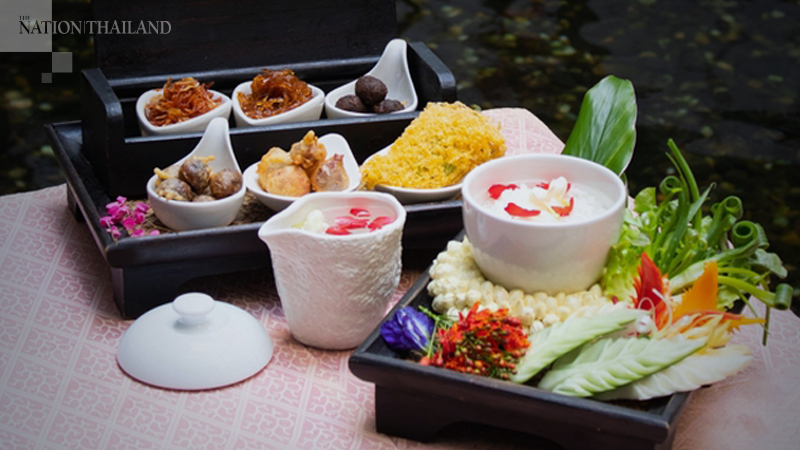
The restaurant Sala Rim Naam at the Mandarin Oriental in Bangkok will be welcoming the arrival of summer all through April with the traditional Thai dining set khao chae.

It features chilled rice in jasmine-scented water with fried sweet pepper, deep-battered salted egg, stuffed shallot, fried shrimp paste, sweet fish and pickled vegetables and fruits like cucumber and mango.

The khao chae experience costs Bt470 net.

Sala Rim Naam is open daily except Wednesday. Lunch is served from noon to 2.30 and dinner from 7 to 10pm.

As coronavirus spreads, the people who prepare your food probably don’t have paid sick leave #ศาสตร์เกษตรดินปุ๋ย

#ศาสตร์เกษตรดินปุ๋ย : ขอบคุณแหล่งข้อมูล : หนังสือพิมพ์ The Nation

https://www.nationthailand.com/food/30383401?utm_source=category&utm_medium=internal_referral

As coronavirus spreads, the people who prepare your food probably don’t have paid sick leave

Mar 05. 2020
By The Washington Post · Kimberly Kindy · NATIONAL, BUSINESS, FEATURES, HEALTH, FOOD 

When Detroit restaurant chef Nik Cole gets sick, she pops a few vitamin C tablets, heads into work and then tops it off with Alka-Seltzer Plus so she can power through her day.

She is one of nearly 7 million food service workers in the United States who is forced to go without pay if she is too sick to work. Although 75% of Americans receive some paid sick days, government and industry data show that only 25% of food service workers have such benefits.

“I would have to have a fever and be really weak in order to call off for work,” said Cole, 40, who has worked in food service for 15 years and has never had paid sick leave. “If you aren’t here, you don’t get paid. And there is no way for you to really make up the hours.”

The U.S. Centers for Disease Control and Prevention says one in five workers have reported working at least once in the previous year while sick with vomiting or diarrhea.

As the threat of the coronavirus grows in the United States, public health experts are concerned about it being spread by sickened food service workers who prepare, serve and deliver a significant share of the meals consumers eat each day.

Americans depend heavily on food service workers. Half of all the money spent on food in the United States is for meals prepared in restaurants, cafeterias, food trucks and delis, according to Technomic, a restaurant industry research group. That amounts to about one-quarter of all meals Americans consume.

The food service industry is already wrestling with the long-standing threat of another disease called norovirus, which causes nearly 60% of all foodborne illness outbreaks. Of the reported outbreaks, 70% are caused by infected food workers, the CDC says.

The methods used to reduce the spread of norovirus during food preparation are the same as they are for coronavirus: sanitizing surfaces, proper and frequent hand washing, coughing into an elbow instead of a hand.

But those procedures are either not being properly followed or they don’t always work. The norovirus annually causes millions of people to develop gastrointestinal problems, with thousands hospitalized and hundreds dying.

Benjamin Chapman, a food safety expert at North Carolina State University who studies norovirus and other foodborne diseases, said the good news for consumers is that coronavirus is much easier to kill with standard sanitation products and procedures.

“Norovirus is very resistant to disinfection,” Chapman said. “It can persist for months in labs.” Coronavirus, on the other hand, dies within two to nine days, preliminary research shows.

Cole, the head chef at a vegan restaurant called the Kitchen, is trying to set an example of proper sanitation for other employees. She said she routinely sprays surfaces with Lysol, frequently washes her hands and uses hand sanitizer.

Cole said customers can also infect food workers, so a hand-washing station and a bottle of hand sanitizer is located at the front of the restaurant. “We can’t afford to get sick as employees — please wash your hands, too!” she said in a phone interview from the restaurant.

The National Restaurant Association has renewed efforts to reeducate workers about safe food-handling procedures in response to the coronavirus outbreak. Industry research groups say that the virus has not affected business, except in some regions that specialize in Asian cuisine.

“Even if we were to have some social disruption of some kind, people will continue to eat,” said David Portalatin, a food industry adviser with the NPD Group, a market research group. “We may see what happened in China, where food delivery increased by 20%.”

Consumer trends show that Americans have grown increasingly comfortable with having meals regularly delivered to their homes.

For example, Grubhub, which delivers meals from takeout and full-service restaurants to customers’ homes, experienced explosive growth in recent years. From 2014 to 2019, the company said it went from delivering at least one meal a year to 5 million people to delivering at least one meal a year to 22.6 million people.

The restaurant industry plays a large role in the U.S. economy. It employs about 10% of the private sector workforce in about 615,000 restaurants around the country.

The National Restaurant Association said the potent threat of the coronavirus – and the tight intersection between American consumers and the food service industry – may fuel a movement to provide more workers with paid sick days.

“Coronavirus has a unique quarantine and recovery period that transcends the traditional policy debates surrounding paid sick leave,” said Vanessa Sink, spokeswoman for the association. “Tackling this challenge will require that employees, businesses and government officials come together and follow proven procedures to protect the health of employees, customers and communities.”

New research shows that laws requiring businesses to offer paid sick days to service workers may help. Two Cornell University researchers published a report last month that revealed that influenza infection rates dropped by 11% in the first year after legislatures in 10 states required employers to offer paid sick leave.

“All these arguments that employees take advantage of it and become lazy — we see no evidence of that,” said Nicolas Ziebarth, an economist and associate professor of human ecology at Cornell, who co-wrote the report. “They took an average of two days of paid sick leave after they had earned it. That is not a crazy amount of sick leave in a year. They are not shirking.”

Sen. Patty Murray, D-Wash., introduced legislation last year that would require all businesses with 15 or more employees to give their workers an opportunity to earn up to seven days a year of paid sick leave. The sick days could be used to recover from an illness, get preventive care, tend to a sick family member or attend meetings related to the health or disability of a child.

Her legislation did not get any traction — but that was before the coronavirus struck. Like the National Restaurant Association, Murray thinks the growing threat of deadly disease may change things.

“This virus is so highly contagious, it is everyone’s problem . . . not just service workers,” she said in an interview. “Everybody gets hurt.”

Food mogul’s PLNT Burger builds on success of Beyond Meat #ศาสตร์เกษตรดินปุ๋ย

#ศาสตร์เกษตรดินปุ๋ย : ขอบคุณแหล่งข้อมูล : หนังสือพิมพ์ The Nation

https://www.nationthailand.com/food/30383188?utm_source=category&utm_medium=internal_referral

Food mogul’s PLNT Burger builds on success of Beyond Meat

Mar 02. 2020
By The Washington Post · Thomas Heath · BUSINESS, FOOD 
Entrepreneur Seth Goldman took on the beverage industry with Honest Tea, a low-sugar drink he created out of his home in 1998. Honest Tea put him on the food map, was purchased by Coca-Cola and made the Chevy Chase, Maryland, resident a millionaire.

Then he helped shake up the beef industry with Beyond Meat, the plant-based meat substitute that has upended taste buds and Americans’ food habits.

Beyond Meat’s success has made Goldman a food mogul. His family owns more than 1 million shares of the company, which as of Friday’s stock market close is worth about $100 million.

Now he is taking on the food service industry.

Goldman has teamed up with Washington, D.C., restaurateur Spike Mendelsohn and others to launch a quick-serve concept at a Whole Foods Market in Maryland that offers food that is free of animal products. (Whole Foods is owned by Amazon, whose founder and chief executive Jeff Bezos also owns The Washington Post.)

The start-up, known as PLNT Burger, “is a bit of a blend of Honest Tea and Beyond Meat,” Goldman said. “We are incorporating organic ingredients, such as our mushrooms and drinks, along with Beyond Meat, into our recipes.”

The menu includes the Crispy Chik N’ Funguy sandwich, “made from the fruiting body of an organic oyster mushroom.” The sandwich was inspired by a visit to a mushroom farm, where Goldman noticed that parts of the mushroom were being thrown away.

“Instead of waste, we are turning it into food that people can consume,” he said.

Goldman is the lead investor in PLNT Burger along with his wife, Julie Farkas, and son Jonah Goldman. They have created a holding company called Eat the Change that will produce a broad line of similar, plant-based food that they hope to sell across the country.

PLNT Burger opened its first location at the Whole Foods in downtown Silver Spring, Maryland, in August. Goldman said the restaurant has been successful enough that he and his partners are planning to open more locations.

On a good day, “we are making as much as the previous concept was making in a week,” said Goldman, who kept the menu items below $10 to reach a wide audience. “We have our sights set on at least four more locations around Washington this year.”

Sales of plant-based foods have surged as more Americans move to reduce their meat intake on health and environmental grounds. Piper Sandler reported plant-based meat could be a $6 billion to $8 billion market by 2025, while Goldman Sachs estimates that the plant-based category will grow to $15 billion in the United States and $47 billion globally by 2029.

Driving Goldman’s business plan, in part, is an American Psychological Association study that cited a condition known as “ecoanxiety.”

“People are scared and unsure whether their choices are contributing to climate change,” he said. Beyond Meat and PLNT Burger are businesses designed to assuage that guilt by having minimal impact on the environment while also serving popular products.

“The climate crisis has broken through to people’s consciousness,” he said. “It is no longer a problem we will have to worry about 10 years from now, or when our kids grow up. This is more than ‘good business.’ It is urgently needed business.”

Savour the taste of traditional Thai Khao Chae delights #ศาสตร์เกษตรดินปุ๋ย

#ศาสตร์เกษตรดินปุ๋ย : ขอบคุณแหล่งข้อมูล : หนังสือพิมพ์ The Nation

https://www.nationthailand.com/food/30383103?utm_source=category&utm_medium=internal_referral

Savour the taste of traditional Thai Khao Chae delights

Mar 01. 2020
By The Nation

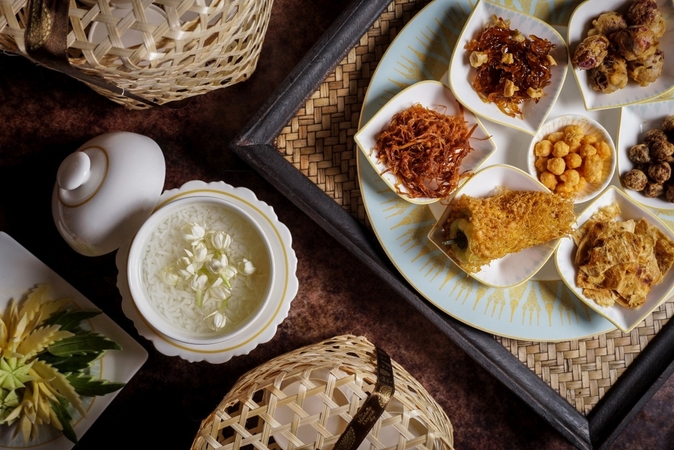
Escape the heat of the summer and savour traditional Thai cuisine “Khao Chae”. Delve into a delicious set of Khao Chae – steamed rice soaked in cool jasmine-scented water – and six tasty typical Thai side dishes “Kapi Song Krueng” – deep-fried shrimp paste balls, “Hua Pak Kard Warn” – sweet dried turnip, “Hom Sod Sai” – deep-fried shallots with shredded pork, “Pla Yie Son” – sweet shredded fish, “Prig Yuak Sod Sai” – steamed green chili stuffed with minced pork wrapped in egg net, and “Moo Foi Warn” – sweet shredded pork, carefully prepared by Thai chef Warinthorn Sumrithphon.

Experience this Thai summer treat “Khao Chae” at Spice Market, available daily this summer (except Sunday), from 11.30am to 2.30pm, from March 16 to May 16, priced at Bt780++ per set. (Price is subject to 10 per cent service charge and 7 per cent value-added tax.)

For more information and reservations, please call +66 2126 8866 Ext. 1232 or visit https://www.anantara.com/

Burger King trims artificial additives, with one big exception #ศาสตร์เกษตรดินปุ๋ย

#ศาสตร์เกษตรดินปุ๋ย : ขอบคุณแหล่งข้อมูล : หนังสือพิมพ์ The Nation

https://www.nationthailand.com/food/30382850?utm_source=category&utm_medium=internal_referral

Burger King trims artificial additives, with one big exception

Feb 26. 2020
By Syndication Washington Post, Bloomberg · Leslie Patton, Deena Shanker, Lydia Mulvany · BUSINESS, FEATURES, FOOD
Burger King is cutting artificial flavors and additives from its menu, but at least one controversial ingredient is sticking around.

That’s soy leghemoglobin, or heme, the highly processed and genetically-modified ingredient used by Impossible Foods. It’s the “magic ingredient” that turns the plant-based Impossible Whopper into a meat-like burger, and it’s one that the U.S. government considers a color additive, and therefore artificial, when the product is sold red and uncooked.

This highlights the inherent contradiction of two of today’s top food trends: While growing numbers of consumers want to eat more natural foods, many are also cutting down on meat and turning to processed substitutes, such as the Impossible Whopper. That leaves companies like Burger King, which are trying to appeal to both, to navigate a tricky landscape.

Impossible’s heme, made from genetically modified yeast and nodules found on the roots of soy plants, is an ingredient that few would consider natural, said Michael Hansen, senior scientist at Consumer Reports. When consumers are surveyed about the word ‘natural,’ they always assume it means no added chemicals and pesticides or genetically modified ingredients, Hansen said.

Impossible’s heme is artificial because “the combination they’re doing doesn’t exist in nature. It is synthetic,” he said. “It’s something they’re creating by engineering yeast proteins to produce it.”

For government agencies such as the FDA, “anything used for the purposes of coloring food is considered an artificial color additive, even if it is a natural ingredient such as carrots, because it is not naturally occurring in the ingredient,” according to Elmis Medina, head of product sustainability at Burger King. “What we are doing at Burger King is removing colors from artificial sources.”

The restaurant chain does use natural colorants, such as paprika and lycopene from tomatoes, she said in a statement to Bloomberg News.

Impossible Foods spokesperson Rachel Konrad told Bloomberg in an email that it takes no position on what the terms “natural” and “artificial” flavors mean, as there are “various ways” to define them.

Burger King is airing commercials featuring a moldy Whopper, touting “the beauty of no artificial preservatives,” to highlight the changes to the menu. Konrad said Impossible doesn’t comment on restaurant partners’ ad campaigns. She added that the company is proud of its genetic engineering that created the patty.

Any color additive “meets the definition of an artificial color additive for labeling purposes,” said Nathan Arnold, an FDA spokesperson. Because raw Impossible burgers are red, just like raw meat, Impossible Foods needed the FDA to approve heme as a safe color additive in imitation beef before it could be sold in grocery stores. The company won the approval last year.

Impossible’s faux meat has given Burger King a lift in the past six months, sending a new group of customers into restaurants to try the burger. The Restaurant Brands International Inc.-owned chain is expanding the Impossible line with a limited test of a new breakfast patty that imitates sausage.

Burger King’s same-store sales rose 2.8% in the latest quarter, but it’s seeing more competition from rivals that are quickly adding their own plant-based meats to their menus.

Last week, Burger King said that 90% of its food ingredients had no colors, flavors or preservatives from artificial sources. Burger King also announced that it had nixed MSG and high-fructose corn syrup from its menu.

While faux meat from Impossible Foods and competitor Beyond Meat is appearing in growing numbers of U.S. restaurant menus, not everyone is a fan. Chipotle Mexican Grill Chief Executive Officer Brian Niccol said last year that his chain wouldn’t use the products because they’re too processed.

Inspired by Welsh rarebit, a cheesy cauliflower soup dishes up comfort for a crowd #ศาสตร์เกษตรดินปุ๋ย

#ศาสตร์เกษตรดินปุ๋ย : ขอบคุณแหล่งข้อมูล : หนังสือพิมพ์ The Nation

https://www.nationthailand.com/food/30382678?utm_source=category&utm_medium=internal_referral

Inspired by Welsh rarebit, a cheesy cauliflower soup dishes up comfort for a crowd

Feb 23. 2020
Cheesy Cauliflower Soup. MUST CREDIT: Photo by Tom McCorkle for The Washington Post.

Cheesy Cauliflower Soup. MUST CREDIT: Photo by Tom McCorkle for The Washington Post.
By The Washington Post · Cathy Barrow · FEATURES, FOOD 

A pipe burst at my neighbor’s house. A friend is coming to town at the last minute. A colleague has arrived home after a week on the road. There are dozens of reasons to make a big pot of soup to share, especially when it’s quick to the table and satisfying to boot.

This cauliflower soup takes inspiration from Welsh rarebit, a classic pub dish of piping hot cheese sauce spiked with beer spooned over thick toast. In this iteration, it’s the cauliflower that gets the rarebit treatment, resulting in a soup that is cheesy and slightly bitter from the beer. Mustard and Worcestershire sauce add depth, and sharp cheddar cheese delivers a tangy zing.

I’m always suspicious when a recipe writer claims that you’ll have everything in the pantry to make something. My pantry might be different from yours, so instead I’ll say that a head of cauliflower, a hunk of cheese and a bottle of beer may be the outliers. If, like me, you buy a head of cauliflower every week while dreaming of peas and asparagus and tender lettuce, you may be set.

I used a dark stout (similar to Guinness) for the soup but made it another time with a light lager because that was all I had. I preferred the raspy bitterness of the stout, but the beer flavor came through even with the lager. “Use what you have” has to be one of the three pillars of soupmaking (joining “cover the pot while cooking” and “serve it hot” for the triumvirate of soupy success).

Chop the cauliflower into spoon- or bite-size pieces. Not too small or it will cook too quickly and turn mushy. Work to make most of the pieces equal in size so that they cook through at the same time. The onion and cauliflower cook in the chicken (or vegetable) stock to boost all the flavors.

While the cauliflower is cooking, make a quick white sauce. Whisk the foaming butter and flour together until smooth and then cook until the flour smell is gone and it’s a toasty golden brown. Pour in the warmed milk and continue to whisk until the sauce is thick enough to coat the back of a spoon. Once the beer is added to this sauce, it’s ready to be incorporated into the soup. At this point, it’s very easy to break the sauce – separating the fats so that it curdles – so keep the heat low and slow.

Finally, stirring in the grated cheese at the end protects the soup from breaking, too. This soup is best when made at the last minute (it only takes about 25 minutes). If reheating, do so slowly and gently, and never in the microwave.

I’ve served this soup with pretty pieces of cauliflower floating in the creamy base. I’ve also whirred the vegetable in my blender for a smooth soup served in small sipping cups, as prelude to dinner.

It looks pretty with a shower of chives on the top or a floating crouton. But we served it to our friend, road-weary and slightly shattered from too many hours on airplanes, with no garnish, ladled straight from the pot. She had three bowls. There’s something wonderful about devouring warm soup with friends. I hope you’ll share some this week.

– – –

CHEESY CAULIFLOWER SOUP

8 servings (makes 3 quarts)

This soup takes inspiration from Welsh rarebit, a classic pub dish of piping hot cheese sauce spiked with beer spooned over thick toast. Here, the cauliflower gets the rarebit treatment, resulting in a soup that is cheesy and slightly bitter from the dark beer.

Cooled soup can be stored in the refrigerator in an airtight container for up to 3 days.

Ingredients

2 tablespoons olive oil or vegetable oil

2 cups (10 ounces) diced onion, 1 large

1 teaspoon kosher salt, divided

4 cups (16 ounces) cauliflower florets, 1 medium

2 cups (16 ounces) low-sodium chicken broth or vegetable broth

3 tablespoons unsalted butter

3 tablespoons all-purpose flour

2 cups whole milk, warmed

1/2 cup dark beer, such as Guinness

1 teaspoon fresh thyme leaves or 1/2 teaspoon dried thyme

1 tablespoon Worcestershire sauce

1 teaspoon dry mustard

1/4 teaspoon freshly ground black pepper

2 cups (8 ounces) grated sharp cheddar cheese

Steps

In a 5-quart stock pot over medium heat, heat the olive oil until shimmering. Add the onion and 1/2 teaspoon salt, stir and cook until the onion turns slightly golden, about 10 minutes. Add the cauliflower, stir everything together to coat with the oil, cook for an additional 3 to 4 minutes, add the broth and bring to a boil. Reduce the heat to medium-low so the liquid is just simmering. Cover the pot and cook until the cauliflower is fork-tender, 7 to 10 minutes.

While the cauliflower cooks, in a small saucepan over medium-high heat, melt the butter until foaming. Sprinkle the flour over the melted butter and whisk until smooth, forming a roux. Reduce the heat and continue to whisk until the roux turns golden brown, about 7 minutes. Add the warmed milk in a stream, whisking until thick and smooth. Add the beer, whisking until smooth, and bring to a simmer, warming just until the bubbles have dispersed, 2 to 3 minutes.

Using a rubber spatula, scrape the beer sauce into the soup and stir until smooth. Add the remaining 1/2 teaspoon salt, the thyme, Worcestershire, mustard, black pepper and cheese. Stir and heat until a silky cheese soup surrounds the cauliflower, 3 to 4 minutes. Serve hot.

Nutrition | Per serving: 280 calories, 12 g protein, 16 g carbohydrates, 19 g fat, 11 g saturated fat, 40 mg cholesterol, 410 mg sodium, 3 g dietary fiber, 7 g sugar

(From columnist Cathy Barrow.)

Sensational summer dining at Royal Orchid Sheraton #ศาสตร์เกษตรดินปุ๋ย

#ศาสตร์เกษตรดินปุ๋ย : ขอบคุณแหล่งข้อมูล : หนังสือพิมพ์ The Nation

https://www.nationthailand.com/food/30382484?utm_source=category&utm_medium=internal_referral

Sensational summer dining at Royal Orchid Sheraton

Feb 20. 2020
Daily signature special feast

Daily signature special feast
By The Nation

The restaurants of the Royal Orchid Sheraton Hotel and Tower will be presenting an array of delightful summer delicacies by the riverside dining from March 1-April 30.

Giorgio’s offers the flavours of Tuscany with Ravioli di Ricotta (Bt450-plus), Pasta Calamarata (Bt390), Risotto Capesante (Bt420), Bistecca Toscana (Bt900) and Pollo Toscano (Bt650).

There is a perfect Tuscan wine to complement each selection.

Thara Thong is paying homage to the essence of Thai cuisine with Kaeng Ka Ree Poo Nim (Bt620), Chu Chee Pla (Bt550), Panang Wagyu (Bt1,200) and Kaeng Leung Salmon (Bt550).

The restaurant Feast will have a Daily Signature Special as well as its international dinner buffet – a complimentary signature dish served at the table from Sunday to Thursday.

The dinner buffet costs Bt1,250-plus. On Sundays it’s Signature Seafood Tower, Mondays Cilantro Lime Spiced Salmon Tostadas, Tuesdays Toasted Wagyu Sushi, Wednesdays BBQ Pork Spare Ribs and Thursdays Wagyu Beef Ramen Noodle with Onsen Egg.

New ALATi brings a taste of the Mediterranean to Siam Kempinski #ศาสตร์เกษตรดินปุ๋ย

#ศาสตร์เกษตรดินปุ๋ย : ขอบคุณแหล่งข้อมูล : หนังสือพิมพ์ The Nation

https://www.nationthailand.com/food/30382403?utm_source=category&utm_medium=internal_referral

New ALATi brings a taste of the Mediterranean to Siam Kempinski

Feb 19. 2020
By The Nation

Casual dining at Siam Kempinski Hotel Bangkok has got a taste of the Mediterranean with the opening of ALATi, an informal yet stylish restaurant with a menu that reflects the diverse culinary traditions of the entire Mediterranean region.

“Alati is the Greek word for salt, a seasoning and preservative used for centuries by many different cultures and civilisations,” explained executive chef Carlo Valenziano. “Eating salt is a symbol of friendship in many regions, and at ALATi we believe that friendship and good food is a perfect combination. ALATi combines high-quality ingredients, an open kitchen and a relaxed atmosphere in a casual yet stylish setting.”

ALATi is designed to evoke memories of times spent travelling in countries that border the Mediterranean Sea, the chef said. For diners yet to experience this region in person, Valenziano uses his considerable experience to combine ingredients and flavours from a multitude of Mediterranean countries, creating new dishes.

Chef Carlo Valenzianoin

Chef Carlo Valenzianoin

“Our mission is to provide well-balanced dishes suitable for sharing that meet the demands of local diners as well as business and leisure travellers,” explained Valenziano.

The ALATi dinner menu is a reflection of the diverse cultures and traditions of the Mediterranean region with the chef drawing inspiration from culinary traditions in countries such as Spain, Tunisia, France, Greece, Turkey, Lebanon and Italy.

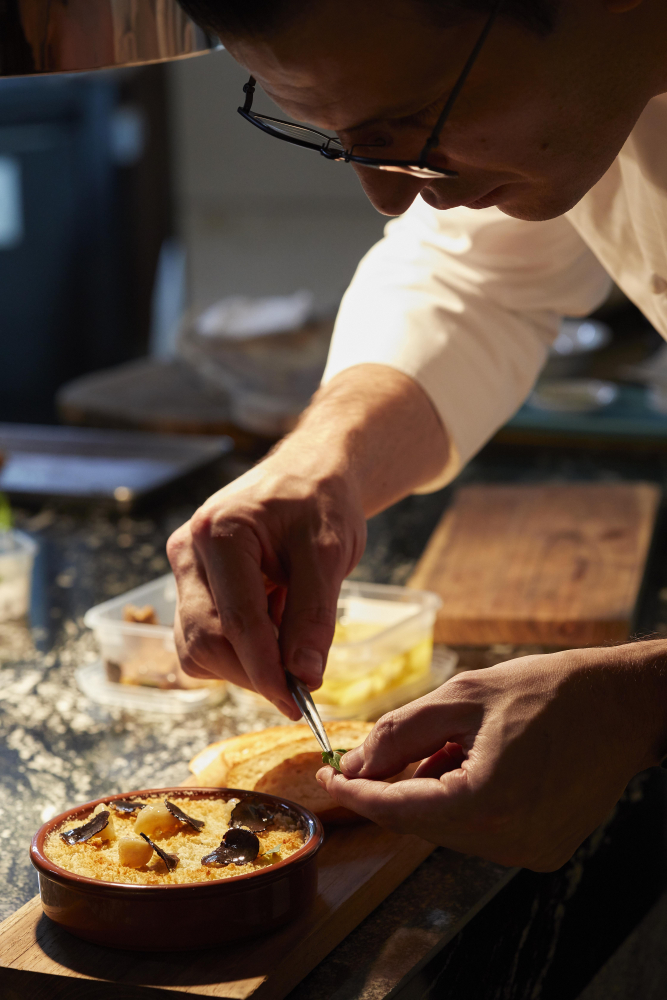
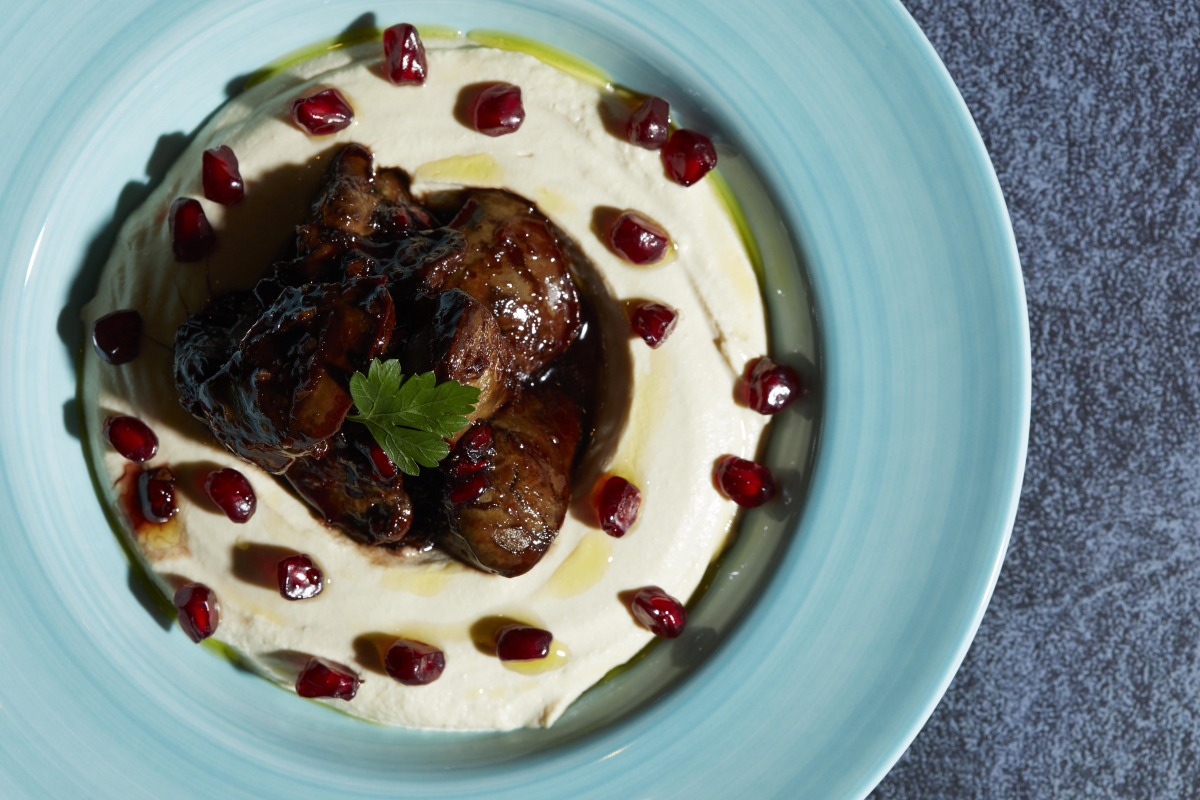
The dinner menu also features a number of the chef’s signature dishes, beginning with flatbread baked with cheese and served with sliced truffles. Muhammara is a tapas-like dish, suitable for vegetarians, served with flatbread, walnuts, burrata cheese, olives and pomegranate.

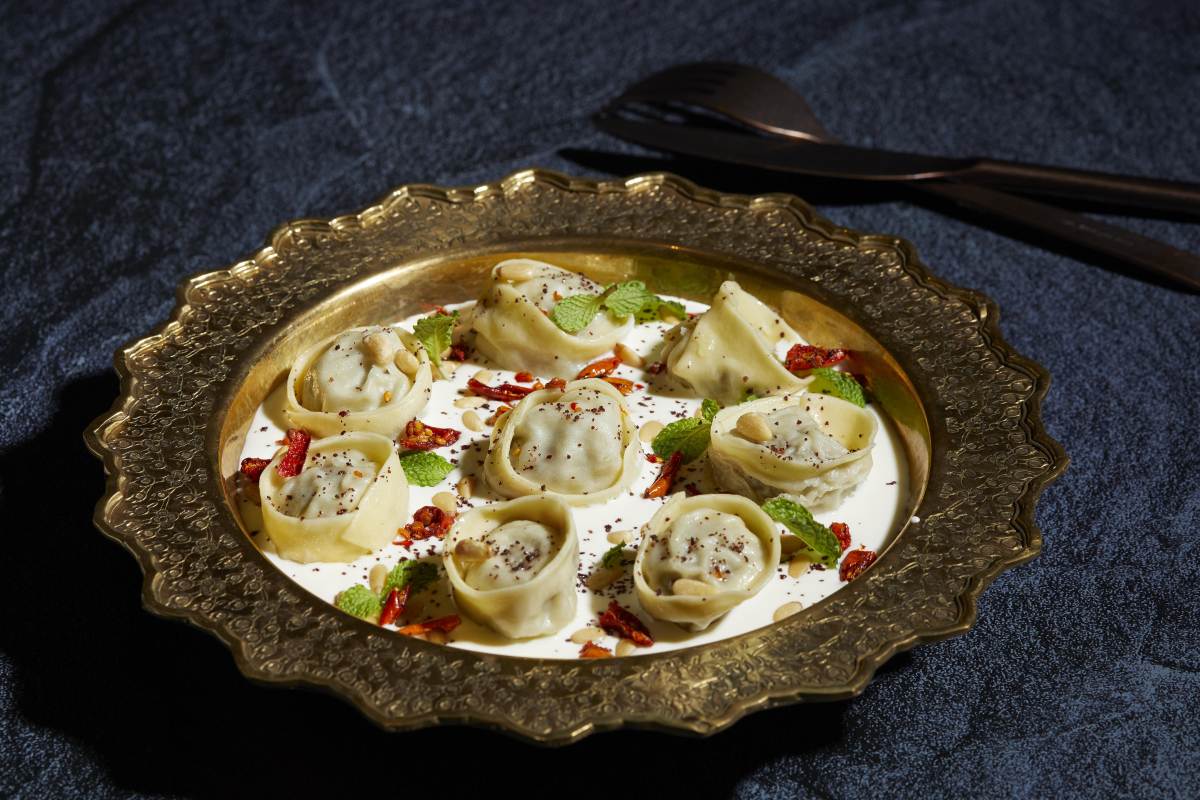
The Lebanese-style shish barak is home-made ravioli filled with a lamb stew that has been slow-cooked for many hours to ensure maximum tenderness. The dish is served traditionally with labneh sauce, but Valenziano has added sumac, pine nuts and mint to broaden the tasting experience on the palate.

Amongst the selection of main courses is Iberico lamb rack. This dish uses milk-fed lamb from northeastern Spain, which produces a unique flavour and texture. The lamb rack is cooked the classic French way (‘pink’) unless otherwise requested and served with roasted garlic, potatoes cooked with rosemary, and gremolata Italian dressing.

The North African tajine dishes include the chef’s signature cauliflower cooked with saffron, apricots, shallots, almonds and oranges.

The charcoal grill at ALATi offers a combination of meat and seafood dishes, including Turkish-charred organic chicken (600g).

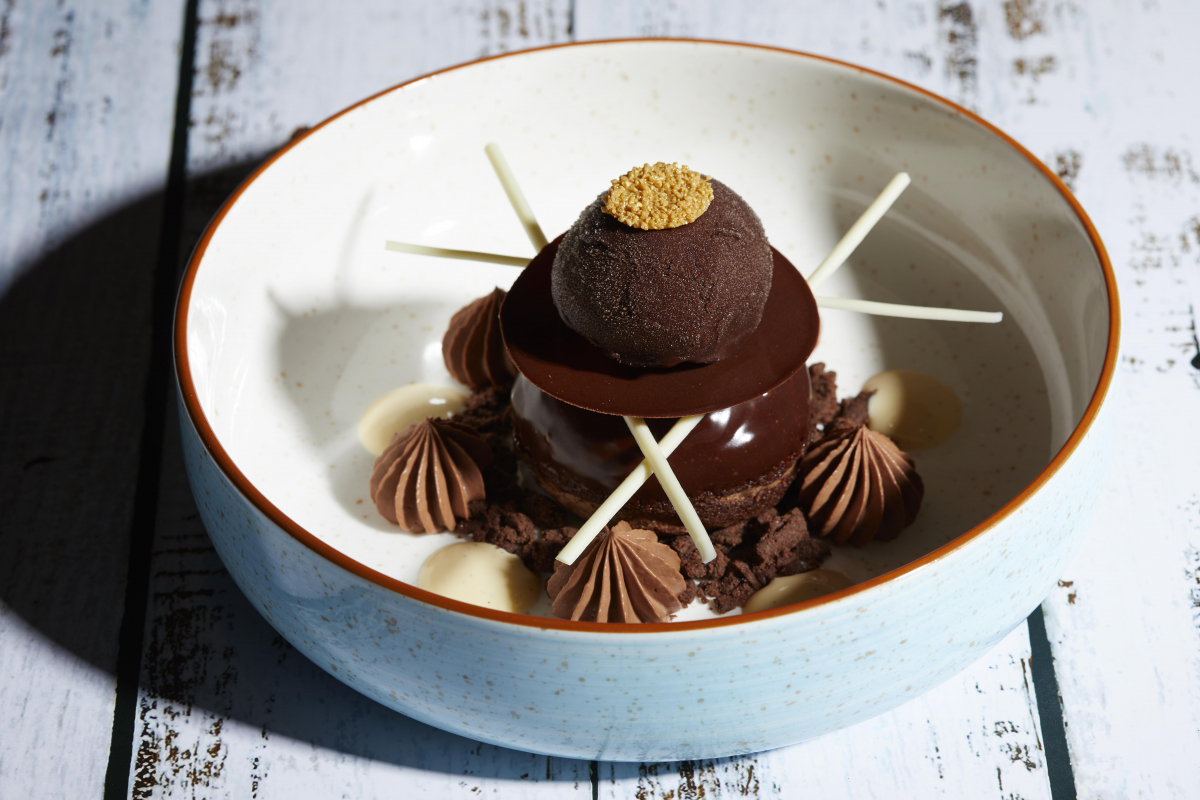
“Naturally, we hope that all our guests will embrace the desserts as part of their ALATi dining experience,” adds the chef. The selection of desserts includes chocolate choux with crumble and cocoa sorbet.

All labels in the ALATi cellar are from vineyards in Mediterranean countries and many are certified “natural” and “biodynamic”. The wine list includes some “hidden gems” uncovered during intensive research for the new restaurant. This enables patrons at ALATi to broaden their knowledge and appreciation of the region’s amazing variety of red, white and sparkling wines.

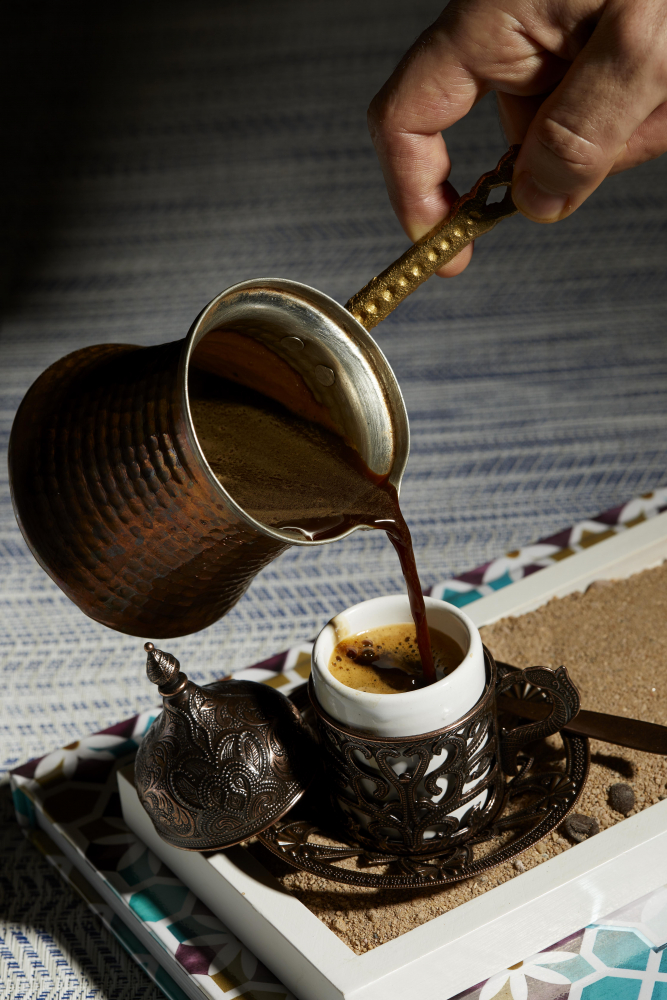
The choice of hot beverages includes Moroccan mint tea, Karak tea and Turkish coffee. The Moroccan mint tea is served in the classic style using teapots, trays and cups purchased in Morocco. Karak tea, popular throughout the Eastern Mediterranean, is made from black leaves boiled in evaporated milk and blended with Iranian saffron, cardamom and cinnamon. Turkish coffee is growing in popularity throughout the world. At ALATi, the beverage is made from Kurukahveci Mehmet Efendi powder and served with Turkish delight confectionery.

ALATi is located on the lobby floor of Siam Kempinski Hotel Bangkok and opens daily for an à la carte lunch from noon to 2.30 pm and dinner from 6.30pm to 10.30pm.

For more information or to make a reservation, please contact ALATi on +662 162 9000 or email alati.siambangkok@kempinski.com.

[News Focus] Overseas Korean food fairs to entice palates #ศาสตร์เกษตรดินปุ๋ย

#ศาสตร์เกษตรดินปุ๋ย : ขอบคุณแหล่งข้อมูล : หนังสือพิมพ์ The Nation

https://www.nationthailand.com/food/30382205?utm_source=category&utm_medium=internal_referral

[News Focus] Overseas Korean food fairs to entice palates

Feb 15. 2020
The Korea Agro-Fisheries & Food Trade Corp. operates a promotion booth for Korean food in Paris. This year’s K-food Fair in the city is slated for September. (Agriculture Ministry)

The Korea Agro-Fisheries & Food Trade Corp. operates a promotion booth for Korean food in Paris. This year’s K-food Fair in the city is slated for September. (Agriculture Ministry)
By Kim Yon-se
The Korea Herald

SEJONG — South Korea’s food producers are pinning high hopes on the overseas K-food Fair events this year on the back of the growing popularity of local dishes thanks to TV programs and movies.

Over the past few years, the annual exhibition has provided local producers — mostly food processing firms — with wider opportunities to tap overseas markets, including in Asia, America and Europe.

Small and medium-sized enterprises mostly participate in the events, organized by the Ministry of Agriculture, Food and Rural Affairs and the state-funded Korea Agro-Fisheries & Food Trade Corp.

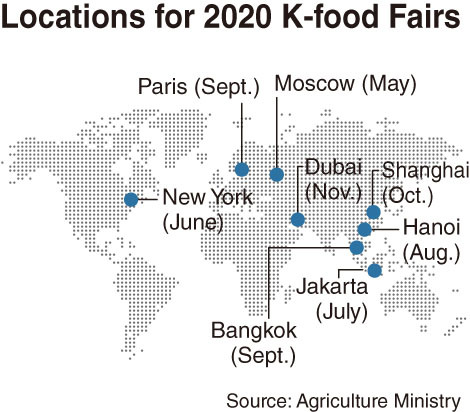
This year, the fair will be held in eight big cities with the participation of 252 companies in total — around 20 to 50 local companies in each location — between May and November, according to the Agriculture Ministry.

The first of the eight events will kick off in Moscow from May 23-25. Russians have expressed great interest in Korean cup ramen (instant noodles).

The next destination of the K-food Fair slated for June 13-16 is New York, targeting buyers from the US, Canada and Mexico as well as ordinary consumers. Business-to-business and business-to-consumer events will be held at a hotel and convention center, respectively, in Manhattan.

(Graphic by Kim Sun-young/The Korea Herald)

(Graphic by Kim Sun-young/The Korea Herald)

Jakarta will mark the third venue of the event, scheduled for July 9-12, amid Korean policymakers’ effort to make inroads into the largest market. Indonesia has the world’s fourth-largest population and ranks 14th in terms of area.

While the fourth is scheduled for Vietnam’s Hanoi this August, dates and exhibition places are yet to be confirmed. Park Hang-seo, a Korean soccer hero and the head coach of the Vietnamese national soccer team, has been the honorary ambassador for Korean farm products since 2018.

Paris is the venue for the fifth event from Sept. 10-12, followed by Bangkok from Sept. 24-27. Both of them will target B2B deals for export contracts and B2C for public promotion.

“Europe was regarded as an unexplored market for Korean farmers,” a ministry official said. “But awareness of Korean cuisine has risen rapidly over the past few years on the back of participation by domestic exporters in international food fairs.”

He said that jjajangmyeon (noodles in black bean sauce) and tangsuyuk (pork or beef with sour and sweet sauce) are showing growth potential overseas, just like bulgogi (marinated beef), galbi (steamed ribs) and kimchi.

Among traditionally popular items in the past fairs were ginseng, gim (dried laver), makgeolli (alcoholic drink from fermented rice), kimchijeon (kimchi pancake) and tteokbokki (stir-fried rice cake), according to organizers.

Shanghai and Dubai will mark the next two locations for this year’s food fair tour, which are slated for Oct. 21-25 and Nov. 3-4, respectively.

According to the ministry, the eight fairs will offer demonstrations, consultations and networking opportunities. And companies will be matched based on their needs, creating opportunities for future business.

Meanwhile, the government has the daunting task of reducing the trade deficit in agricultural products involving fresh food.

Last year, the Trade Ministry asked other ministries, including the Agriculture Ministry, to map out measures to reinvigorate the nation’s exports amid the lackluster performance.

When it comes to farm product exports, Korea has faced hurdles such as protectionism by advanced countries despite bilateral trade pacts.

The National Assembly Research Service issued a warning about the trade deficit in the farming industry in a report.

“There is a need to protect the local market to prevent the trade balance in the agriculture-livestock segment from worsening further,” it said. “(The government) should provide support for industries that have suffered losses.”

It also cited the steady trade deficit with the US in the area of farm products. Noting that the deficit started in 2011, it said livestock product imports from the world’s largest economy has grown sharply.

We tried Pizza Hut’s mozzarella popper crust pizza and contemplated how we ended up here #ศาสตร์เกษตรดินปุ๋ย

#ศาสตร์เกษตรดินปุ๋ย : ขอบคุณแหล่งข้อมูล : หนังสือพิมพ์ The Nation

https://www.nationthailand.com/food/30382161?utm_source=category&utm_medium=internal_referral

We tried Pizza Hut’s mozzarella popper crust pizza and contemplated how we ended up here

Feb 15. 2020
Pizza Hut's mozzarella popper crust pizza. MUST CREDIT: Photo by Stacy Zarin Goldberg for the Washington Post.

Pizza Hut’s mozzarella popper crust pizza. MUST CREDIT: Photo by Stacy Zarin Goldberg for the Washington Post.
By The Washington Post · Emily Heil · FEATURES, FOOD

This is the state of fast food today: We are putting hats on hats on top of bicycles. We are gilding lilies to the point that they resemble bloated, glitzy hippopotami.

We are running out of portmanteau.

In our journey to the land of Over the Top, the latest stop is Pizza Hut, where the new limited-edition pie is not content merely to be a pizza. No, this disc of dough dreams bigger – it’s also the delivery system for something that the chain is calling “mozzarella poppers.” Before we dive into how we’re being asked (allowed?) to eat chunks of fried cheese on top of the same cheese, in melted form, can we get something out of the way first? Guys, I think Pizza Hut is trying to sneak something by us here. I don’t think there is actually an existing snack called a mozzarella popper.

Since the dawn of the deep fryer, there have been jalapeño poppers, and there have been mozzarella sticks. Mozzarella poppers? Never heard of one! But Pizza Hut just introduced them like we are supposed to be familiar with this foodstuff. It’s as if you are at a party and your friend introduces you to some guy named Chris you’ve never met and also gives you no context clues. No “this is my colleague Chris” or “this is Chris, from book club.” Which is confusing, right? So who is Chris and what is a mozzarella popper, Pizza Hut?

I mean, it doesn’t take long to get the gist – they (the poppers) appear to be squattier, square versions of mozzarella sticks affixed to the crust of the pizza.

But do these alleged snacks add anything to the pizza party? Not really. In fact, they are disappointingly soft, which could be because their breaded exterior crust has been steamed into squishiness by the hot pie beneath them. It seemed to me that there were two equally problematic ways to eat them. The first method is to pluck them off and dunk them into the accompanying marinara sauce. (This method, though, merely means that you’re getting pizza and mozzarella poppers, not the transformative pizzandmozzarellapoppers combo that was promised.)

The other technique is to eat the slice up to the crust, then fold the remaining edge around the fried cheese. But there’s an issue here: unless you are eating this solo, it’s kind of gross to dip something that’s already been in your mouth into a communal tub of sauce. And you want to dunk them in the sauce, I promise, because without it, the cheese is very bland. If someone has figured out another way to consume this beast, please let me know.

The questions the Hut’s new product raises aren’t just mechanical. They are existential, too, as in “how the heck did we get here?” Here being a place where news of this unholy chimera of a pizza is greeted with glee.

“THIS LOOKS AMAZING AND I NEED IT! I think I found my first meal after I get my appetite back and kick the flu! @pizzahutwith the Mozzarella Poppers Pizza for the win!!”

– Ryan Stilwell (@RyGuy0793) February 11, 2020

But it all makes sense if you consider the parade of food mash-ups that have come before it, including from Pizza Hut itself, which has previously stuffed its crust with cheese, garlic knots and hot dogs (really). It created something called the Stuffed Cheez-It Pizza, which resembles an oversize version of the snack cracker with a pizza jammed inside of it – or a safety-orange flotation device.

Recall the Doritos Locos taco, where within the Dr. Frankensteinian labs of Taco Bell, taco scientists created a shell made from everyone’s favorite orange-dust-leaving snack chips. The taco chain also gave the world tacos whose exteriors were made of biscuits and waffles, respectively, and it stuffed Fritos inside burritos. McDonalds created a breakfast sandwich that swapped blueberry pancakes for bread.

Various other things have been pressed into service as burger and sandwich buns, such as ramen noodles, glazed doughnuts and waffles. KFC’s Double Down famously employed fried chicken patties in bread’s stead.

There are sushi burritos.

Among Instagrammable breakfast mash-ups, first there was the Cronut (a croissant crossbred with a doughnut), followed by croiffles and cragels, bronuts (brownies meets doughnuts) and doissants (which are Cronuts by another name). Pinterest is a breeding ground for this scourge, home to recipes for cheesecakeadillos, ravioli nachos and pasta doughnuts.

But I have a confession to make. I am no innocent in this war against simplicity. There is blood – er, make that queso – on my hands: every year, my Super Bowl spread includes something called toffles, which is a bag of frozen tater tots shoved into a waffle iron and browned to crispness. And is combining these two formerly unrelated foods enough for me? No, it is not.

I sometimes top my toffles like nachos – which makes them . . . tofflos and me part of the problem.