An Italian feast for pasta and cheese lovers #ศาสตร์เกษตรดินปุ๋ย

#ศาสตร์เกษตรดินปุ๋ย : ขอบคุณแหล่งข้อมูล : หนังสือพิมพ์ The Nation

https://www.nationthailand.com/food/30382130?utm_source=category&utm_medium=internal_referral

An Italian feast for pasta and cheese lovers

Feb 14. 2020
Culargiones

Culargiones
By THE NATION

La Gritta Restaurant at Amari Phuket is inviting guests to taste five pasta dishes featuring Italian cheeses throughout February.

Chef Patrizia from Rome is offering guests tastes of popular cheeses from five regions of Italy – Sardinia, Lombardy, Campania, Piedmont and Lazio/Rome.

The selection of cheeses includes fiore sardo, gorgonzola, buffalo mozzarella, castelmagno, parmesan, mascarpone and pecorino Romano. The five pasta dishes on the menu are:

Culargiones (cheese from Sardinia), which is priced at Bt490++

A vegetarian dish from Sardinia, the home-made pasta is filled with potatoes, fresh mint, fiore sardo cheese and tomato sauce.

Culargiones

Culargiones

Gnocchi di Spinaci al Gorgonzola (cheese from Lombardy) is priced at Bt510++

Home-made spinach gnocchi in a creamy sauce made with Gorgonzola cheese is one of the most popular cheeses in the world.

Gnocchi di Spinaci al Gorgonzola

Gnocchi di Spinaci al Gorgonzola

Paccheri alla Sorrentina (cheese from Campania) is priced at Bt550++

A popular dish in Italy, Paccheri pasta is made with tomato sauce, basil leaves and buffalo mozzarella cheese.

Paccheri alla Sorrentina

Paccheri alla Sorrentina

Gnocchi al Castelmagno (cheese from Piedmont) is priced at Bt590++

Home-made potato gnocchi is filled with castelmagno cheese on Parmesan fondue, dry pears, honey and hazelnut powder. Castelmagno is a small village located in the mountains of Piedmont.

There are 300 citizens in this village and all of them are engaged in the production of castelmagno cheese. Castelmagno has been rated as one of the kings of cheeses.

Gnocchi al Castelmagno

Gnocchi al Castelmagno

Spaghetti del Leone ai Gamberi (cheese from Lazio) is priced at Bt610++

It is a special spaghetti with prawns in a cheese sauce made with mascarpone and pecorino Romano, the favourite cheese of Rome.

Spaghetti del Leone ai Gamberi

Spaghetti del Leone ai Gamberi

All prices are subject to a 10 per cent service charge and 7 per cent VAT. Terms and conditions apply.

Museum Hua Hin goes mulberry mad for Valentine’s #ศาสตร์เกษตรดินปุ๋ย

#ศาสตร์เกษตรดินปุ๋ย : ขอบคุณแหล่งข้อมูล : หนังสือพิมพ์ The Nation

https://www.nationthailand.com/food/30381756?utm_source=category&utm_medium=internal_referral

Museum Hua Hin goes mulberry mad for Valentine’s

Feb 07. 2020
By The Nation

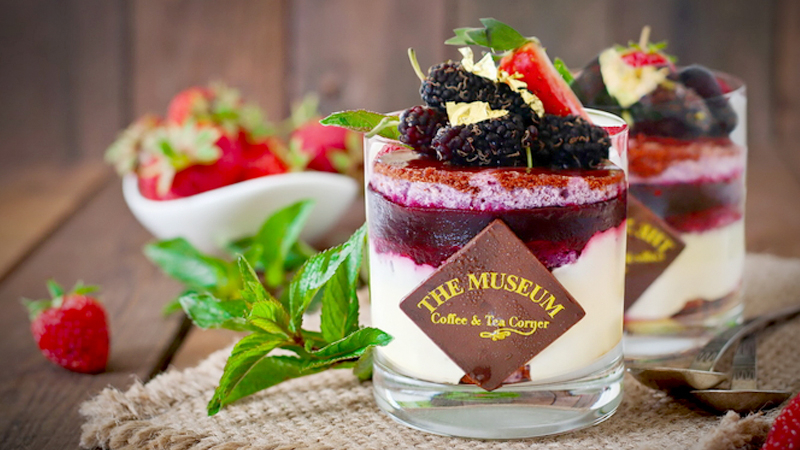
The Museum Coffee & Tea Corner at Centara Grand Beach Resort & Villas Hua Hin is serving a romantic dessert throughout the month of love.

“Marvellous Mulberry Treats” boasts a perfect balance of sweetness and tartness coaxed from the season’s best mulberries.

Highlights include the all-time favourite Mulberry & Cream Jelly Cake with vanilla sponge cake and lashings of cream and jelly, and Mulberry, Pistachio & White Chocolate Trifle Cake, featuring multiple layers of summertime deliciousness.

Mulberry and Lemongrass Yoghurt Tart is a refreshing, citrusy treasure.

Also on the menu are freshly made breads, pastries and sandwiches available daily for dining in or taking away.

Prices start at Bt120-plus.

Wuhan’s signature noodles become a symbol of solidarity amid the coronavirus outbreak #ศาสตร์เกษตรดินปุ๋ย

#ศาสตร์เกษตรดินปุ๋ย : ขอบคุณแหล่งข้อมูล : หนังสือพิมพ์ The Nation

https://www.nationthailand.com/food/30381722?utm_source=category&utm_medium=internal_referral

Wuhan’s signature noodles become a symbol of solidarity amid the coronavirus outbreak

Feb 07. 2020
Wuhan's signature noodles at Mama Chang. MUST CREDIT: Washington Post photo by Emily Heil.

Wuhan’s signature noodles at Mama Chang. MUST CREDIT: Washington Post photo by Emily Heil.
By The Washington Post · Emily Heil · FEATURES, FOOD

This is how most Americans have come to know the Chinese city of Wuhan, where health workers are trying to contain the spread of the deadly coronavirus outbreak: a panicked metropolis, a hastily constructed hospital built to accommodate masses of victims and an eerie scene of empty streets.

But Wuhan has other faces – such as its thriving punk scene, abundant cherry blossoms and historic temples. Then there’s the city’s signature dish, hot dry noodles, or re gan mian. Picture a bowlful of springy spirals coated in a thick brown paste of toasted sesame, sometimes graced with flecks of fiery red pepper, pickled vegetables, green onions or soft herbs.

With Wuhan on lockdown and the world watching through the grainy lens of newspaper photos, hot dry noodles have become its unlikely ambassador, a reminder that Wuhan, the river-crossed home to more than 11 million people, is more than just the epicenter of a lethal virus.

For Lydia Chang, they are the taste of childhood. Chang, director of business development for her family’s Washington-based restaurant empire, grew up in Wuhan, where her mother, chef Lisa Chang, is from. Her father, chef Peter, is a native of Hubei, the province of which Wuhan is the capital. “If you ask anyone who has been to Wuhan what is the flavor you miss most when you are away, they will say the sesame noodles,” she says.

She wishes the world hadn’t been introduced to her hometown the way it has. “It’s sad for the city that it has so much wonderful culture to be recognized internationally for the first time for something tragic,” she says.

A better way to meet Wuhan, she says, can be found on the menus at all four of her family’s Washington-area restaurants. There, the curly flour noodles are topped with the traditional sauce and a crown of rust-red pepper mixture that contributes a warm but not scorching heat, which diners stir together with shards of pickled radish and sprigs of cilantro for a complex bowlful. The dish might resemble those served at street stalls all over her hometown, Lydia says, but the paste’s precise ratio of toasted-sesame sweetness, savory soy and salt is her mother’s “secret.”

In the pantheon of Chinese noodles, Wuhan’s hot dry noodles are far lesser known to American diners than others such as dan dan or zhajiang, says Jennifer 8. Lee, author of “The Fortune Cookie Chronicles: Adventures in the World of Chinese Food.” They’re not even ubiquitous in other parts of China, she says. What distinguishes them from the more common noodles seen stateside is that they are not served in a soupy sauce, nor are they usually fried, hence the “dry” descriptor. They’re typically eaten for breakfast, though if you find them on American menus, it’s usually as a lunch or dinner appetizer.

In addition to being a touchstone for far-flung Wuhan natives, the noodles have become a symbol around the globe of solidarity with the people of the quarantined city. As news of the virus spread, a touching Chinese cartoon circulated on social media. It featured a bowl of noodles, depicted as a hospital patient being attended to by a doctor. Outside the window, a gaggle of other characters gather, each depicting the signature dishes of other regions, holding signs that read, “Hot dry noodles, get better.”

In another gesture of unity, people spliced images of other iconic dishes with bowls of the hot dry noodles to create a single dish and shared them on Twitter. The message? We’re not so different from one another.

Yuli Yang, an editor for CNN International based in Hong Kong, posted a thread of tweets this week paying tribute to her hometown of Wuhan. They included a love letter to the dish, along with some of the city’s other points of pride: its many lakes, its lotus blossoms and the first Asian Grand Slam champ, Li Na. “With these mini-tales of Wuhan, I hope you can open up a small space in your heart,” Yang concluded. “A space for compassion. A space to love and to support the millions of my fellow Wuhaners.”

Caffeine has been a boon for civilization, Michael Pollan says. But it has come at a cost. #ศาสตร์เกษตรดินปุ๋ย

#ศาสตร์เกษตรดินปุ๋ย : ขอบคุณแหล่งข้อมูล : หนังสือพิมพ์ The Nation

https://www.nationthailand.com/food/30381665?utm_source=category&utm_medium=internal_referral

Caffeine has been a boon for civilization, Michael Pollan says. But it has come at a cost.

Feb 06. 2020
By The Washington Post · Tim Carman · FEATURES, FOOD
Michael Pollan laughs and says, yes, he’s on drugs while conducting this interview. Okay, he doesn’t use those exact words, but he acknowledges that he has a “tall, takeout container” of half-caff coffee at his side as we discuss, via phone, his latest project, simply titled “Caffeine,” available only as an audio book from Audible.

Pollan, the author of “The Omnivore’s Dilemma,” “The Botany of Desire,” “In Defense of Food” and “How to Change Your Mind” – in which he has explored our complicated relationship with food, plants, drugs and many other things we take for granted – has turned his imposing analytical skills to caffeine, the most popular mind-altering chemical on the planet.

“For most of us, to be caffeinated to one degree or another has simply become baseline human consciousness,” Pollan writes, well, reads in “Caffeine.” “Something like 90% of humans ingest caffeine regularly, making it the most widely used psychoactive drug in the world and the only one we routinely give to children, commonly in the form of soda. It’s so pervasive that it’s easy to overlook the fact that to be caffeinated is not baseline consciousness but, in fact, is an altered state.”

After others suggested the idea, Pollan decided to get off caffeine, cold turkey, to better understand the stimulant’s effects on human consciousness. Last year, he abstained from coffee and tea for three months. As he notes in “Caffeine,” the experiment nearly killed his enthusiasm for the book. “How can you possibly expect to write anything when you can’t concentrate?” Pollan writes about his withdrawal symptoms, a state so intense that it’s officially classified as a mental disorder by the American Psychiatric Association.

When Pollan ended his caffeine fast, he promised himself to drink coffee and tea only on Saturdays. Our interview was on a Monday. So what happened?

His Saturday-only policy was proceeding as planned, Pollan says, but then he went to Scandinavia on a book tour in December, when the days are shorter than the attention span of a tween on Twitter. “It was really dark,” he says. “It got dark at 2:46 in the afternoon in Stockholm. I remember this. So people are like caffeinated till then, and then they switch over to alcohol, and that’s basically how they survive. And I was jet-lagged on top of it, so I started having some caffeine then, and it did get me through that whole experience.”

“And now I’ve lapsed,” he adds. These days, he has a half-caff every morning.

Pollan’s fall from the wagon is more testimony to the addictive nature of caffeine, a drug that the author argues helped advance civilization while, simultaneously, disrupting our sleep. The introduction of coffee and tea to Europe in the mid-17th century – at the time, alcohol was the drink that fueled and befogged workers – freed “people from the natural rhythms of the body and the sun, thus making possible whole new kinds of work and, arguably, new kinds of thought, too,” Pollan writes.

Caffeine would transform the world around us in ways large and small, magnificent and horrific. It would stimulate and focus the mind in a way that would influence the workplace, politics, social relations and “arguably even the rhythms of English prose,” Pollan writes. But the cultivation of, and trade in, coffee and tea plants (and the sugar used in both) would also enslave countless people and lead to the East India Company opening an opium trade with China. The drug trade was good for British coffers, but it crippled a great empire.

Once business executives discovered caffeine could improve worker production, coffee became capitalism’s silent co-conspirator. Pollan delves into a Fair Labor Standards Act case from the 1950s in which a company, Los Wigman Weavers, made 15-minute coffee breaks mandatory, but refused to pay workers for the breaks. The courts ruled against Wigman, ushering in a law that requires employers to pay workers for short breaks.

Historically, Pollan says, drugs that favor business have fared better under U.S. law than those that don’t, though the increasing legalization of marijuana counters that trend.

“I think there is a kind of a bias against drugs that interfere with the smooth working of the economic machine,” the author says. “As soon as you get into jobs that involve machines or numbers, alcohol is a challenge. And we did try to ban alcohol, without success. I just think it’s too deeply rooted in everyday life to take it on. But in general, you find that the drugs that increase productivity are the ones that are most supported in our society.”

With “Caffeine,” though, Pollan wanted to separate what’s good for civilization (and business) from what’s good for humans as a species. He spent considerable time with sleep researchers, most of whom don’t touch caffeine because of what it does to the body and the quality of one’s shut-eye. Coffee, in particular, has become the solution to the problem that coffee has created, Pollan notes in the book.

“There is no free lunch,” Pollan says, laughing at the memory of his struggle without caffeine. “You know, these drugs give us something, and they take something, too. I think, on balance, the advantages exceed the disadvantages. I’m drinking coffee, and it’s not just because I’m enslaved to it. I get a lot from it. I get a lot of pleasure, and I’m convinced it helps me with my writing. Getting off it certainly hurt my writing.”

Pollan says he started drinking coffee at age 10, more than 50 years ago, mostly as a way to bond with his father, who worked in New York City and would not return home to suburban Long Island until late at night. “So my time with him was in the morning when he was getting ready to go to work. I’d get up early so I could hang out with him, and I started drinking coffee because he drank coffee.”

In other words, until Pollan gave up caffeine last year, he had rarely, if ever, known an adult consciousness that was not altered by the drug. Perhaps not surprisingly, he prefers the clarity of mind that caffeine provides. Or what his wife, the painter Judith Belzer, calls the morning “cup of optimism.”

Although he prefers the caffeinated life, Pollan is not sure where he stands on whether coffee and tea have been good for humans in general. And even if he were clear, he probably wouldn’t tell us, he says.

“Caffeine makes us work harder. Is that good for us or not? What is good for a species?” Pollan says. “The kind of person caffeine made us, someone more likely to be striving and ambitious and highly productive, does that necessarily make us happier?”

“The benefits are clear on the civilization ledger,” he adds. “On the species ledger, it really depends if you see civilization as a plus or minus for the species. It does a lot for us, but it also has an enormous cost.”

Cast-iron skillet pizza delivers the crunchy crust we crave #ศาสตร์เกษตรดินปุ๋ย

#ศาสตร์เกษตรดินปุ๋ย : ขอบคุณแหล่งข้อมูล : หนังสือพิมพ์ The Nation

https://www.nationthailand.com/food/30381643?utm_source=category&utm_medium=internal_referral

Cast-iron skillet pizza delivers the crunchy crust we crave

Feb 05. 2020
Italian Sausage and Kalamata Olive Cast Iron Skillet Pizza. MUST CREDIT: Photo by Tom McCorkle for The Washington Post.

Italian Sausage and Kalamata Olive Cast Iron Skillet Pizza. MUST CREDIT: Photo by Tom McCorkle for The Washington Post.
By The Washington Post · Ann Maloney · FEATURES, FOOD

 Crispy pizza crust is so satisfying. It’s essential if I’m going to give a pie a gold star, especially if we’re talking about the thick crust style, with the dough battling the toppings for a starring role.

The first thing I noticed as I took my first bite of this incredibly easy Italian Sausage and Kalamata Olive Cast Iron Skillet Pizza was the sound – that crunch.

The beauty of this little pizza, made in a piping hot cast-iron skillet, is that you can have it ready in less time than ordering takeout. And, because you’re making the pizza at home, it doesn’t get softened by delivery-box steam.

I looked at many variations of cast-iron skillet pizza, settling on one that I adapted below. (The original version called for whole wheat dough and kale.) I opted for easy-to-find store-bought white dough. I kept the 500-degree cast-iron skillet and fairly dry toppings. It baked in 15 minutes.

Pizza dough is easy enough to make at home. The pizza dough you’ll get will be superlative, but you’ll be adding many more minutes to the recipe preparation. Lots of folks make their dough in advance and store it in the refrigerator or freezer, so it is ready to roll when they walk in the door at 7 p.m. on a weeknight.

Otherwise, look for a ready-to-bake dough at your grocery store. You can use the pop-open-can brands like Pillsbury. Or, try dough made at grocery stores, such as Whole Foods or Trader Joe’s. You also can swing by your local pizzeria on your way home and see if they’ll sell you a ball of dough – some parlors are happy to do that.

Keep in mind, though, that the golden key to unlock the crunch in this recipe is the blazing hot cast-iron skillet. When the raw dough hits the hot metal, it almost immediately begins forming a crust.

The other key to that crunch is to keep the toppings mostly dry. Rather than a sauce, this recipe calls for diced, fire-roasted canned tomatoes that are drained. Because the pizza cooks at such a high temperature, it’s important to layer the ingredients as directed, start with tomatoes, then layer cheese, sausage, cheese, sausage. Do not end with cheese on top because it will burn at that high heat.

The 12-inch cast iron skillet heats up in a 500-degree oven while you prepare the toppings, so it is essential to be prepared. Gather everything you’ll need to protect your hands (sturdy oven mitts) and your counters (a heatproof surface, such as cookie rack) before pulling that hot pan out of the oven.

Don’t have a cast-iron skillet or just don’t want to deal with that heavy, hot metal? You can still make a quick, delicious pizza. In addition to the cast-iron method, we also tested this recipe using a lightly oiled sheet pan. We baked our pizza at 375 degrees for 35 minutes. It wasn’t as crunchy or deep-dish, of course, but we still had a delicious dinner on the table in, well, minutes.

– – –

ITALIAN SAUSAGE AND KALAMATA OLIVE CAST IRON SKILLET PIZZA

Active: 25 minutes | Total: 45 minutes

4 servings

High heat and cast iron come together to help produce a crunchy, crispy crust on this easy-to-make pizza.

Don’t want to mess with that hot skillet? Make this pie on a sheet pan.

Storage note: Let pizza cool completely, then store in an airtight container in the refrigerator for up to 3 days.

Ingredients

3 tablespoons extra-virgin olive oil, divided, or more as needed

6 ounces (about 2 links) sweet Italian sausage, removed from casing

1/4 cup (about 10) pitted Kalamata olives, roughly chopped

1 cup (about 1 ounce) arugula leaves

13 ounces to 1 pound ready-to-bake pizza dough, at room temperature

1 teaspoon cornmeal or semolina

1/2 cup (about 4 ounces) canned, no-salt-added fire-roasted tomatoes, drained and diced

4 ounces (about 1 cup) shredded part-skim mozzarella

Grated Parmesan (optional)

Fresh basil (optional)

Steps

Position a rack in the middle of the oven and preheat to 500 degrees. Place a well-seasoned 12-inch cast-iron skillet, or other ovenproof, heavy-bottom skillet, in the oven.

In another large skillet over medium-high heat, heat 1 tablespoon oil until shimmering. Add the sausage and cook, breaking up the pieces with a wooden spoon, until no longer pink, 5 to 8 minutes. Add the olives and stir to combine. Remove the skillet from the heat. Stir the arugula into meat.

Stretch dough into a 12-inch circle on a lightly floured surface.

Using sturdy oven mitts, carefully remove the very hot skillet from the oven and place it on a heatproof surface. Sprinkle the cornmeal into the skillet. Carefully place the dough on top of the cornmeal and press the dough out toward the edges of the pan, being careful not to touch the very hot skillet. It’s okay if the dough bounces back a bit. Brush the edges of the dough with the olive oil, creating a 1-inch border of oiled dough.

Spoon the tomatoes over the dough, leaving a 1-inch border. Top with half of the mozzarella, followed by the half of the sausage-arugula mixture. Repeat with the remaining mozzarella and sausage mixture.

Return the skillet to the oven and bake for about 15 minutes, until the bottom of the pizza is crisp and the cheese is starting to bubble.

Let cool on a wire rack for at least 3 minutes before serving. Using oven mitts to hold the hot pan, tilt the pan over a cutting board and use a spatula to gently slide the pizza onto the board.

Sprinkle with Parmesan and fresh basil, if desired, then cut and serve.

NOTE: If you don’t want to use the hot-skillet method, this pie can be baked on a sheet pan. Reduce the oven temperature to 375 and bake for about 35 minutes. The crust should be golden brown and the cheese bubbling.

Nutrition | Calories: 500; Total Fat: 24 g; Saturated Fat: 6 g; Cholesterol: 30 mg; Sodium: 1010 mg; Carbohydrates: 46 g; Dietary Fiber: 4 g; Sugars: 1 g; Protein: 21 g.

Famed Thai chef at “Taste the Tradition” wine dinner #ศาสตร์เกษตรดินปุ๋ย

#ศาสตร์เกษตรดินปุ๋ย : ขอบคุณแหล่งข้อมูล : หนังสือพิมพ์ The Nation

https://www.nationthailand.com/food/30381505?utm_source=category&utm_medium=internal_referral

Famed Thai chef at “Taste the Tradition” wine dinner

Feb 03. 2020
By The Nation

Centara Grand Hua Hin will present Thai chef Santiphap ‘Por’ Petchwao to food enthusiasts this February, at the latest “Taste the Tradition” wine dinner of the Suan Bua Restaurant.

Known for his passion and attentiveness, chef ‘Por’ Petchwao will create a dining sensations at its finest.

Well-regarded for not compromising on the quality of his native cuisine, chef Por has over 20 years of expertise and experience in the culinary trade. Many of his dishes reflect recipes dating back to the Ayutthaya period, some 100 years ago.

Set in the evening of Saturday, February 29, the exclusive full-course dinner features nine dining sensations that highlight top-of-the-line ingredients, while honouring age-old cooking techniques and recipes that promote the Art of Thai cuisine.

Some of Chef Por’s featured creations for the meal include Goong Sa Rong, fried shrimps wrapped in Phuket noodles, drizzled with mango sauce; Sang Wah Ped, Thai old-fashioned roasted duck salad with traditional herbs; and Goong Tod Sauce Makam, deep-fried river prawns with sweet & sour tamarind sauce. Another highlight sees diners enjoying Ngob Pla Krapong, grilled sea bass curry wrapped with banana leaves.

For the sweet course, Suan Bua presents Chef Por’s rendering of Som Chun. This Thai traditional dessert showcases pulpy morsels of lychee, long kong and salacca in a light syrup, seethed with bitter orange and kaffir lime zest for a harmonious contrast. To make for an even more enjoyable moment, each culinary course will be paired with an outstanding, well-balanced wine list from Hua Hin’s acclaimed Monsoon Valley.

Visit Suan Bua Restaurant at Centara Grand Beach Resort & Villas Hua Hin and enjoy this sensational culinary experience by Chef Santiphap ‘Por’ Petchwao and his never-ending passion.

Savour traditional Thai-style dining at Spice Market #ศาสตร์เกษตรดินปุ๋ย

#ศาสตร์เกษตรดินปุ๋ย : ขอบคุณแหล่งข้อมูล : หนังสือพิมพ์ The Nation

https://www.nationthailand.com/food/30381361?utm_source=category&utm_medium=internal_referral

Savour traditional Thai-style dining at Spice Market

Jan 31. 2020
By The Nation

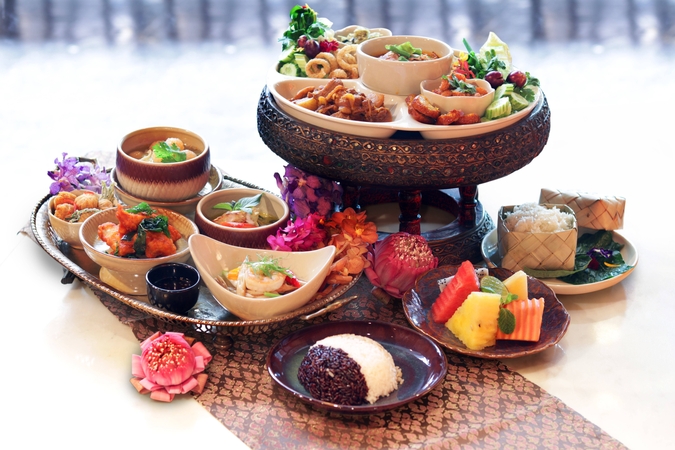
Anantara Siam’s authentic Thai eatery, Spice Market, will showcase a range of new sharing platters under the concept of Sumrub Thai, from February 10 to March 20.

Spice Market’s head chef Warinthorn Sumrithphon has carefully curated texture, flavour and aroma, with ancient recipes based on seasonal produce, highlighting Thailand’s well-known regional delicacies. They include rarer treats that diners might not find elsewhere.

Each platter of soups, curries, salads, and fried and steamed dishes is designed to be enjoyed with steamed rice and shared.

From February 10 to 29, Spice Market presents the Sumrub Thai Northern Set, featuring pork sausage with spicy dip and grilled eggs in a banana cup, and the Central Set, which stars green curry crab, stir-fried sea bass and wok-fried lotus flower.

From March 1 to 20, the Northeast Set will showcase a spicy pork soup and a young jackfruit dip, while the Southern Set will include scallop marinated in red curry, stir-fried melinjo leaves with egg and spicy shrimp paste with honey.

Sumrub Thai Set will be served for lunch from 11.30am to 2.30pm (Monday to Saturday), and dinner from 6pm to 10.30pm. Prices start from Bt1,250++ per set. (Prices are subject to 10 per cent service charge and 7 per cent government tax.)

Spice Market is located on the first floor of Anantara Siam Bangkok Hotel (BTS Ratchadamri).

Why classic white bread dinner rolls are suddenly trendy #ศาสตร์เกษตรดินปุ๋ย

#ศาสตร์เกษตรดินปุ๋ย : ขอบคุณแหล่งข้อมูล : หนังสือพิมพ์ The Nation

https://www.nationthailand.com/food/30381094?utm_source=category&utm_medium=internal_referral

Why classic white bread dinner rolls are suddenly trendy

Jan 26. 2020
Angler's Parker House rolls are finished at a hearth. MUST CREDIT: Bonjwing Lee/Angler's.

Angler’s Parker House rolls are finished at a hearth. MUST CREDIT: Bonjwing Lee/Angler’s.
By Syndication Washington Post, Bloomberg · Larissa Zimberoff · FEATURES, FOOD

In the U.S., bread sales aren’t rising the way they used to. The market in bread and bakery products is projected to grow at a dismal 1.5% from 2020 to 2023. Yet a modest dinner roll is elbowing its way into the kitchens of top restaurants across the country.

The ascension of Parker House rolls isn’t just surprising because so many diners continue to forgo bread as part of low-carb, high-protein diets-and when they do indulge, it’s with rustic, seeded, more “artisanal” styles perceived to be more nutritious. Parker House rolls are as white as you can get in the baking world (with the possible exception of Japanese milk bread), its pearly, puffy interior encased in a golden-brown top that’s invariably drenched in butter. At a time when dark, dense, fermented loaves are the cool kids in the bread basket, Parker House rolls could be their grandmother.

Notable chefs such as Joshua Skenes don’t care. He’s been making the rolls for around eight years, starting at his three-Michelin-starred Saison in San Francisco. Now at Angler, his cult seafood spots in Los Angeles and San Francisco, a lard-glazed version-cooked first in the oven in a copper pan, then finished beside an open hearth-arrives tableside, piping hot, with high-fat butter made from Petaluma cow milk.

“We picked the rolls up from back in history because we saw a way to make them taste better with fresh milled flour-with fire,” he says. At $12, they’re a bargain; Skenes says they lose money on the butter.

There are two origin stories for the widespread adoption of the Parker House roll. The first comes from the Parker House Hotel that opened in Boston in 1854. Allegedly, a rankled baker tossed a batch of unfinished rolls into the oven. They came out with a distinct shape, a light interior, and a buttery exterior.

Food historian Ken Albala credits efficiency as one reason the roll took off: “The Parker House was simply a more efficient delivery system for white bread. It’s more compact, fits in a basket, and is easier to butter.”

An additional story comes via another baker, L.B. Willoughby, who had the idea to sell fresh biscuit dough to consumers. In 1932, he patented his method for processing and packaging the unbaked dough in a pressurized can. Willoughby’s patent was eventually acquired by Pillsbury, which introduced the seminal canned crescent rolls to the world in 1965; they continue to be its best seller.

“When I grew up in Hingham, Mass., it was the only bread we had,” says chef Chris Bleidorn, owner of Birdsong in San Francisco.

Although Bleidorn points to the Pillsbury version as his inspiration, he didn’t embrace Parker House rolls for nostalgia. “We do it because it’s efficient,” he says-and as an unconventional showcase for the restaurant’s open flame cooking.

His straightforward yeast-leavened recipe is hard to bungle. After being pre-baked, the rolls are finished over an open fire and then brushed with boar fat, honey butter, or seaweed butter. “The fire gives it rustic qualities where you might get burnt ends, or smoke hangs on to the fat that you brush on. You get a really special experience,” says Bleidorn.

In New York, Crown Shy pastry chef Renata Ameni also began baking Parker House rolls for the experiential aspect. “We wanted something that was communal. I like the idea of breaking bread,” says chef-owner James Kent, so they settled on the special bread with a singular shape. The Crown Shy version arrives warm, stuffed with a three-olive blend-green, cured, and Kalamata-plus capers, roasted garlic, parsley, and lemon zest. Instead of a butter accompaniment, guests are given labneh yogurt spread.

Unlike most of the current crop of premium Parker House rolls, Crown Shy’s are complimentary. “When restaurants sell the bread, maybe only 10% of customers will buy it. It’s not usually worth it for a restaurant,” says Kent. The good will of a free snack, though, is invaluable.

Mitchell Davis, cookbook author and executive vice president of the James Beard Foundation, sees the rolls as Exhibit A in the casualization of fine dining and chefs’ desires to upgrade homey foods. It’s “a huge switch,” he said, from the dense, dark bread that’s been popular. He notes that it also makes retro sense: In the ’70s, one of the hallmarks of a fancy place was the hot bread.

“I want to take a humble food, and make it discussed as seriously as a black truffle,” says San Diego chef William Bradley, who serves a Parker House roll “course” midway through his 10-course, $270 tasting menu at Michelin-starred Addison. The rolls come with three types of butter churned in-house: clover, fleur de sel, and fines herbes.

For Bradley, who doesn’t have the space to devote to an entire bread program, the rolls make sense. “It’s a simple technique, it isn’t labor intensive, and the results are great.”

A post shared by Le Jardinier (@lejardiniernyc) on Nov 12, 2019 at 11:14am PST

The Parker House movement is wide enough to embrace special diets as well.

At Le Jardinier in New York, baker Tetsuya Yamaguchi spent five months perfecting a gluten-free version. Yamaguchi uses a blend of Japanese rice flour and sorghum flour, plus a special mold that allows the roll’s outside to get caramelized. Yamaguchi initially described the rolls to staff as “mini pain de mie.” But, he says, “the team started describing them as Parker House rolls once we opened, because more people recognize the name, and they like them.”

Reflecting the hardships of the business, an iconoclastic critic of ‘Big Wine’ sells his indie vineyard #ศาสตร์เกษตรดินปุ๋ย

#ศาสตร์เกษตรดินปุ๋ย : ขอบคุณแหล่งข้อมูล : หนังสือพิมพ์ The Nation

https://www.nationthailand.com/food/30381062?utm_source=category&utm_medium=internal_referral

Reflecting the hardships of the business, an iconoclastic critic of ‘Big Wine’ sells his indie vineyard

Jan 26. 2020
Randall Grahm of Bonny Doon Vineyard. Grahm sold the brand this month. MUST CREDIT: Alex Krause-Bonny Doon Vineyard

Randall Grahm of Bonny Doon Vineyard. Grahm sold the brand this month. MUST CREDIT: Alex Krause-Bonny Doon Vineyard
By Special To The Washington Post · Dave McIntyre · FEATURES, FOOD

The romantic idea of a small, individualistic winery tilting quixotically at the windmills of corporate wine took a hit this month with the news that Randall Grahm has sold Bonny Doon Vineyard. Grahm’s story – his successes and failures – is quite personal and individual, yet the sale illustrates the difficulty small independent wineries face in a market that is increasingly consolidated at every level.

If it is possible for anyone to be both icon and iconoclast, Grahm accomplished that. He launched Bonny Doon in 1981 hoping to make pinot noir in the Santa Cruz Mountains of California. But he quickly turned to Rhone varieties such as grenache and syrah. He named his flagship red blend Le Cigare Volant, after a 1954 ordinance passed by the famous wine town of Chateauneuf-du-Pape in southern France that banned “flying cigars” – UFOs – from landing in the vineyards. Wine Spectator featured him in Lone Ranger regalia on its cover in 1989 as “The Rhone Ranger,” helping launch a movement that still thrives today. He was one of the first U.S. winemakers to champion screw caps, even staging a lavish, if premature, news conference “funeral” for the cork. His literary newsletters delighted his fans with humorous jabs at “big wine” and the critics who rewarded higher alcohol with higher point scores, including a lengthy riff on Dante’s “Divine Comedy” called, “The Vinferno.” His collected writings were published in book form in 2009 as “Been Doon So Long” and won Grahm a James Beard Award.

He created the Big House line of wines, which offered high quality at prices almost impossibly modest for California, but sold it in 2006 because he didn’t want to become the type of “big wine” corporation he loathed. He also created Pacific Rim Riesling, with innovative labeling you read through the wine in the bottle, and built that into a successful brand before selling it in 2011. Bonny Doon’s Vin Gris de Cigare was a hit rosé before rosé became a craze. He was also among the first – and still very few – to advocate ingredient labeling on wines.

Grahm’s creativity and restlessness didn’t always work in his favor. He acknowledges impatience with “the business side of the business,” adding, “spreadsheets give me a headache.” In a conversation I had with him late last year, he tended to begin his answers with “Well, it seemed like a good idea at the time . . . ” He grew Bonny Doon to 40,000 cases, not large by California standards, but he had so many different wines it was often hard to keep up. The market couldn’t keep up, either, and ultimately it moved on.

Bonny Doon’s new owner is WarRoom Ventures, the parent company of Lapis Luna Wines in Santa Margarita, Calif. The price was not disclosed. Grahm will remain with the company as a partner and “guarantor of gravitas.” Bonny Doon’s production manager, Nicole Walsh, will continue to oversee wine production. Grahm remains owner of Popelouchum, a vineyard in San Juan Bautista, where he is attempting to breed new grape varieties suited to California’s soils and climate.

While Grahm tried to succeed with Bonny Doon in both traditional distribution and direct-to-consumer sales, he said those two paths are increasingly difficult to navigate, because they value opposite attributes.

“There has been a greater consolidation of the wholesale channel, with mid-sized fine wine distributors – those ideally suited to sell Bonny Doon wines – becoming an endangered species vulnerable to either acquisition or non-viability,” Grahm explained to me in an email after the sale was announced. His “eclectic experimentation” was “anathema” to wholesalers, who favor “ubiquity, simplicity, availability,” he said.

WarRoom Ventures was founded in 2018 to “focus on great value wines with branding that evokes emotion,” company president Andrew Nelson said in the statement announcing the partnership with Bonny Doon. The company’s website features three brands: Lapis Luna and Wildlife Wine, both with vibrantly colored labels, and a rosé wine seltzer called Bubble Butt.

WarRoom “has taken the wise course of focusing on wholesale” to grow the Bonny Doon brand, Grahm said. That will come at a price. The new focus will have only four wines: Le Cigare Volant and Le Cigare Blanc, a vermentino-based white, the popular Vin Gris de Cigare, and another white from the picpoul grape. Familiar labels like Old Telegram, Clos de Gilroy and Cardinal Zin will no longer be produced.

That sounds a bit like the strategy that made Big House wines a success before Grahm turned away from it, as well as a line from the opening of “The Vinferno,” as his narrator begins the descent into the nine circles of vinous hell.

“The vast portfolio of labels, brands, had once seemed all to the good . . . ”

– – –

The world of wine lost two French giants in January. Georges Duboeuf, the “king of Beaujolais,” died Jan. 4 at age 86. Duboeuf was a marketing genius who turned Beaujolais Nouveau, the barely fermented wine of the recent harvest, into a global party each November.

While Duboeuf popularized Beaujolais, Michel Lafarge created sublime burgundies that entranced many connoisseurs. Lafarge died Jan. 15 at age 91. He was a fifth-generation vigneron, based in Volnay, with small vineyards in other villages of the Cote de Beaune.

How to season your cast-iron skillet – and keep it seasoned #ศาสตร์เกษตรดินปุ๋ย

#ศาสตร์เกษตรดินปุ๋ย : ขอบคุณแหล่งข้อมูล : หนังสือพิมพ์ The Nation

https://www.nationthailand.com/food/30381058?utm_source=category&utm_medium=internal_referral

How to season your cast-iron skillet – and keep it seasoned

Jan 26. 2020
How to season your cast-iron skillet - and keep it seasoned. MUST CREDIT: Photo by Tom McCorkle for The Washington Post.

How to season your cast-iron skillet – and keep it seasoned. MUST CREDIT: Photo by Tom McCorkle for The Washington Post.
By The Washington Post · Becky Krystal · FEATURES, FOOD

Seasoning your food? Great! Seasoning your cast-iron? Good – but also . . . intimidating. I can’t tell you how many times we’ve had readers ask about seasoning – or reseasoning or maintaining seasoning – their skillets and other cast-iron cookware.

I get it. There’s a lot of paranoia and misinformation, including whether dish soap will ruin it (nope) and what type of fat to use to create the protective layer. Here are some tips to help you figure it all out:

– What it is. Seasoning is what happens when fats are heated to a certain point that causes them to reorganize into something resembling a plastic coating and bond to the metal. That coating is smooth and slick, allowing for foods to easily release from the pan. Cast iron is “the original nonstick cookware,” says Mark Kelly, the public relations manager at Lodge, the brand synonymous with cast-iron cookware.

Often, the fats come from oils, although depending on what you use, anything from bacon fat to shortening can contribute to seasoning. I like this explanation from cookbook author Anne Byrn, from her recently released “Skillet Love”: “Oil is the best friend to the skillet. It keeps it protected, impervious to any moisture that might cause it to rust. Think of oil on a skillet like moisturizer on your skin. . . . Heat plus oil builds the patina and makes your skillet naturally nonstick.”

Most of the cast iron you buy comes preseasoned. That means you can start cooking in it right away.

To see whether your pan is well-seasoned, Cook’s Illustrated recommends this test: Heat 1 tablespoon of oil over medium heat in a skillet for 3 minutes and then fry an egg. If there’s no major sticking, your seasoning is good.

– It improves with age. If you’re afraid of cooking in cast iron because you don’t want to mess up the seasoning, that’s the exact wrong approach. The more you cook in cast iron, the more seasoning will build up. It takes time, though. “It’s a natural process,” Kelly says. “You need to be patient.”

If you’re wondering whether vintage or newer-produced cast iron is better in terms of seasoning, it depends. Older pieces that have been used a lot and well cared for will have a superb established seasoning. But those heirloom skillets (and also some newer boutique brands) tend to be smoother than Lodge’s current more pebbly-surfaced cast iron. According to Byrn, “Lodge attests that the seasoning on the pan has a better chance to get into the crevices and form its own barrier against water if the surface isn’t smooth as glass.” That’s not to say you can’t season a smoother skillet, but you should be aware of the potential differences if it takes longer.

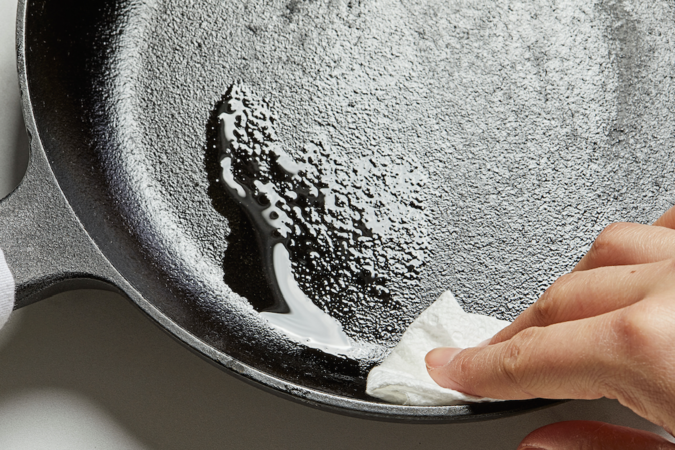
– Maintain it. To maintain the seasoning, oil the pan after each use, returning it to the burner over medium-low heat after cleaning (see below) and then rubbing it down with oil and paper towels until it’s smooth and shiny with no visible residue. Kelly says you can do your coat of maintenance oil in a 200-degree oven for 15 to 20 minutes, too. As for what type of oil to use, Byrn recommends the least saturated options, including canola, corn, soybean, sunflower and flaxseed. Cook’s Illustrated’s top pick is flaxseed, because it is faster at creating a more durable seasoning. Sunflower and soybean oil (Lodge uses soybean on its cookware) are good, affordable options. If you prefer to use lard, Burn cautions to wipe off any excess on the surface so it doesn’t go rancid in your cabinet.

Even if you’re short on time and can’t reheat the pan, at the very least wipe on a thin layer of oil before you put the pan away, buffing it until no greasy spots remain.

– Don’t be scared of ruining it. “A happy skillet is sitting at the back of the stove right now, cared for, talked about, needed,” Byrn writes. “But don’t get so obsessive about this process that you are fearful of using your skillet. There is a reason that iron skillets have survived the centuries. They withstand a little abuse but really appreciate being coddled, too.”

Some mild dish soap will not remove seasoning when cleaning. It’s also unlikely to be scratched or chipped off by metal utensils, since, as we’ve established, it’s chemically bonded to the cast iron. Moreover, contrary to what you may have been told, a well-seasoned pan can stand up to acidic foods such as tomato sauce, to a certain extent. To protect the seasoning and prevent metallic flavors in your food, Cook’s Illustrated recommends limiting the cook time for acidic foods to 30 minutes and then removing the food immediately. Serious Eats chief culinary adviser J. Kenji López-Alt also suggests staying away from cooking liquid-based dishes in cast iron until the seasoning is well-established.

– But if you do damage it, all is not lost. As Kelly likes to say, “Leave no cast iron behind.” If your pieces have been damaged or neglected, or you salvage some that have been roughed up, “you can always resurrect them.” There are a variety of strategies for stripping and reseasoning cast iron. Choose what works best for you. When it comes to addressing small patches of rust, Kelly recommends using steel wool to rub it down before proceeding with reseasoning. Lodge’s preferred method is to rub the seasoning oil or melted vegetable shortening all over the pan and let it bake on the middle rack of the oven at 350 degrees for an hour, with a sheet of aluminum foil underneath to catch any drips. Repeat as necessary until the seasoning is where you want it to be. For her part, Byrn cranks the oven to 500 degrees, coats the skillet with a tablespoon of oil, wipes off the excess and bakes it upside down for an hour over foil.

If you have a truly abused skillet, you’ll need to start from scratch by stripping the seasoning and going through multiple rounds of restoring it. Again, strategies vary on how to strip seasoning, including using the self-cleaning feature of your oven. Cook’s Illustrated, though, prefers using a spray-on oven cleaner. For less intense situations, check out Lodge’s troubleshooting guide.