Betong gets ready for arrivals once flights start landing in April
Feb 25. 2021
By THE NATION
Local businesses in Yala’s Betong city are getting ready to greet visitors once flights from Bangkok’s Don Mueang Airport start landing in Betong’s new airport from April.
The Betong District Tourism Association said relevant agencies and businesses have discussed plans of opening the city to visitors, as well as putting in Covid-19 curbing measures.
The association also said some 2,000 hotel rooms are being prepared for the influx of tourists and should be ready by April.
The top tourist attraction in Betong is the 61-metre-long skywalk, which gives visitors amazing views of the Ai Yerweng sea of mist from an altitude of over 600 metres. As many as 230,000 visitors have walked down the skywalk between October and December last year.
TAT exploring idea of cryptocurrency use in tourism
Feb 19. 2021
TAT Governor Yuthasak Supasorn
By THE NATION
The Tourism Authority of Thailand (TAT) plans to draw digital asset holders from Japan to Thailand, and allow cryptocurrency to be used in the tourism sector.
TAT Governor Yuthasak Supasorn said he had discussed this idea with the Technology Promotion Association (Thailand-Japan). He explained that this strategy would serve the growth of cryptocurrency in the future, as well as the usage of technology in tourism business in the post-coronavirus era.
“If this idea is successful, Thailand will be one of the countries where cryptocurrency can be spent in the tourism sector,” Yuthsak said.
The governor added that Japanese people were the world’s top bitcoin holders with 11 per cent of holdings.
He said cryptocurrency was popular among young people in Japan. Some hotels and restaurants have grown by receiving the digital asset.
Yuthasak also claimed that Elon Musk would visit Thailand in the post-coronavirus era, if cryptocurrency could be used in Thailand.
He added that TAT was now focused on “the big fish in the market”, and cryptocurrency was one of them. The cryptocurrency tourist idea will be discussed with restaurant and hotel entrepreneurs, as well as the Bank of Thailand.
He said there was awareness of malafide elements taking advantage of the use of cryptocurrency in Thailand to act in illegal ways.
Voucher incentive for visitors to Chonburi, Pattaya City
Feb 13. 2021
By THE NATION
The Tourism Authority of Thailand (TAT), together with its allies in Chonburi and Pattaya City, is giving away Bt500 e-vouchers to people visiting the areas, under a campaign “Check in Chonburi Free 500”.
Visitors will receive the vouchers when they check in at hotels participating in this campaign, from February 12 to March 31. The total voucher amount a visitor can receive is Bt1,000.
The vouchers are also available at attractions, spas, cafes and restaurants participating in this campaign. Total quotas are over 3,500.
A Facebook user posted photographs of coral growing on artificial reefs and a bounty of marine creatures captured while diving near Koh Libong and Koh Kradan islands off the coast of Trang.
Photo credit: Wachirun Chaisawatt
Wachirun Chaisawatt shared the photographs and his experience of the beauty of the Andaman Sea on Monday.
Photo credit: Wachirun Chaisawatt
The artificial reefs were built more than 15 years ago in a bid to provide a stable growing area for coral and a habitat for marine creatures.
Photo credit: Wachirun Chaisawatt
Apart from time, the other factor that is helping coral recovery is the Covid-19 pandemic, which has paralysed the tourism sector.
The scourge of the sea – crown-of-thorns starfish – is reportedly scavenging coral off the coast of Krabi’s Phi Phi Island.
On Thursday, Hat Noppharat Thara-Mu Ko Phi Phi National Park officials found more than 30 crown-of-thorns starfish off Ko Po Da Nok Island, near Phi Phi.
This high number of starfish will prove to be a blight to the area, officials said.
The park’s chief, Prayoon Pongpan, said officials will speak to related experts on how this scourge can be eradicated to preserve a balance.
The crown-of-thorns is a large starfish, ranging in size from 25 to 30 centimetres with up to 21 arms, that climbs onto the coral to absorb nutrients, reducing the coral down to a skeleton.
Reports say these starfish damaged up to a kilometre of coral a month in Guam. This sort of destruction takes nearly 40 years to recover.
The best way of dealing with the crown-of-thorns starfish is to expose it to sunlight.
Natural Resources and Environment Minister Varawut Silpa-archa on Monday ordered national parks nationwide to cut visitors by 40-50 per cent as part of Covid-19 control measures.
The move follows news that a recent visitor to Phu Tub Boek mountain in Phu Hin Rong Kla National Park, Petchabun, later tested positive for Covid-19.
National parks could remain open, said Varawut, but their committees must implement containment measures in line with the severity of the outbreak in their area.
“We have instructed national park chiefs to follow guidance from provincial governors on disinfecting areas such as toilets and crowded places,” he said. “We also instructed them to ask people for cooperation on social distancing.”
John Steinbeck’s classic travelogue showcases man’s best road-trip friend
WorldJan 01. 2021Hamilton, the author’s beagle, with a much-loved copy of John Steinbeck’s “Travels with Charley.” MUST CREDIT: Photo for The Washington Post by Melanie D.G. Kaplan Photo by: Melanie D.G. Kaplan — The Washington Post
By Special to The Washington Post · Melanie D.G. Kaplan
Fourteen years ago, I decided to drive across the United States. This came after a childhood of cross-country rides in the back seat of my parents’ car, visiting my grandparents in Southern California. But in 2007, when I was a full-fledged grown-up, my grandmother worried about this trip well before my departure. My mother wanted to know where I would sleep. My sister said she couldn’t imagine driving all those miles by myself.
“Don’t you wish you had someone there to share it with?” she asked.
Reminding them about my four-legged travel buddy did nothing to quell their unease. “I’m not alone,” I said, time and again. “Darwin will be with me.”
Perhaps I carried an extra air of confidence when I reiterated that statement about my co-pilot and explained that this trip was wholly different from a solo adventure. I had just read John Steinbeck’s “Travels With Charley: In Search of America,” and it spoke to me. Loudly.
“I took one companion on my journey – an old French gentleman poodle known as Charley,” Steinbeck wrote. He described Charley as a born diplomat, expert sniffer and poor fighter. He was an early bird, a good watchdog and friend who “would rather travel about than anything he can imagine.” The pair set off on their journey in September 1960.
Darwin was also a good friend – a sassy, independent beagle, occasional growler and regular howler who loved road trips second only to eating. In 2007, we traveled 8,800 miles in 30 days. Since then I’ve made the trip out West every two years, on average, always with a beagle – first Darwin, now Hamilton.
The surge of euphoria and pure bliss I experience on these long trips is unequaled in any other part of my existence. Over the years, when friends in Washington, D.C., bought houses out West and prepared to drive there with their dogs, I could barely contain my excitement. I fell just short of inviting myself to join them. The “blasts of a ship’s whistle still raise the hair on my neck and set my feet to tapping,” Steinbeck wrote, and he felt equally impatient to travel when he heard an engine warming or horse hoofs clopping. “I fear the disease is incurable,” he wrote. I feel his pain.
“Travels with Charley” was published in 1962, the same year Steinbeck was awarded the Nobel Prize in literature. The book recounts his drive around the country in the autumn of 1960, years after publishing famous titles such as “Of Mice and Men” and “The Grapes of Wrath.”
He lived in New York at the time and considered it “criminal” that an American writer writing about America didn’t know his own country. At 58, he set out to answer the question: “What are Americans like today?” Wanting to avoid recognition, he went to great lengths to remain anonymous and self-contained, “a kind of casual turtle carrying his house on his back.” He ordered a customized vehicle with a camper top – complete with a double bed, four-burner stove and chemical toilet. He named it Rocinante after Don Quixote’s horse. Over 10,000 miles through 34 states, he was not recognized once.
Aching for a road trip and grounded at home in December, I reread Steinbeck’s travelogue, slowly. I appreciated it anew, particularly his description of trip planning. He overpacked Rocinante with “tools enough to assemble a submarine,” emergency foods, two rifles and a shotgun (although his hunting days were over by then), fishing rods, canned goods and what he estimated was four times too many clothes, blankets, pillows, shoes and boots. Thinking he might write, he packed a typewriter, paper, pencils, notebooks, dictionaries and a compact encyclopedia, noting, “I suppose our capacity for self-delusion is boundless.”
Before the trip, Charley knew something was afoot – of course. He whined, paced and made a “damned nuisance of himself,” while friends stopped by and spoke of their own hunger to move, no matter the destination.
The reason for my first cross-country trip was clear: a friend’s wedding in Palo Alto, Calif. Subsequently, I cared less about the reason I was driving to the West Coast and found myself concocting motives to satisfy others: helping my grandmother move, covering travel assignments, dog-sitting for friends. Hammy, a trauma survivor who is a more bashful and tentative beagle than his predecessor, has become an equally enthusiastic traveler. He has now visited 44 states. Until the pandemic, when Hammy and I itched for a trip we never missed an opportunity to scratch.
As I reread “Travels With Charley,” I chuckled, recognizing from every one of my trips the hesitation Steinbeck experienced as his departure date approached. “My warm bed and comfortable house grew increasingly desirable and my dear wife incalculably precious,” he wrote. “To give these up for three months for the terrors of the uncomfortable and unknown seemed crazy. I didn’t want to go. Something had to happen to forbid my going, but it didn’t.” He set off and was overwhelmed. “I wondered how in hell I’d got myself mixed up in a project that couldn’t be carried out.”
On my first day of driving in 2007, I left Washington and was overcome by fatigue in the first couple of hours. I stopped in Virginia for a nap, certain that I couldn’t continue. Darwin seemed to understand that when I napped, she would stay alert, which she did from the passenger’s seat. I woke up refreshed and pressed on.
Steinbeck headed north to Maine then turned west. He visited Niagara Falls for the first time and crossed through Minnesota and North Dakota, eventually visiting his sisters in Monterey, Calif., near his hometown of Salinas. Along the way, he fell hard for Montana, a state I’ve come to love. He wrote that if it “had a seacoast, or if I could live away from the sea, I would instantly move there and petition for admission.”
In his travels, Steinbeck struck up conversations everywhere, often enticing strangers with the offer of coffee and a “dollop” of whiskey or applejack at his camper table. He talked to Americans of every stripe – sailor, waitress, veterinarian, student – covering topics as varied as race relations, mobile homes and politics. Steinbeck presented pages of dialogue, leaving some readers wondering how much was fabricated; he was, first and foremost, a novelist.
With his mind free for thinking, Steinbeck said, “I myself have planned houses I will never build, have made gardens I will never plant.” At one point, he wondered how much energy in foot-pounds is expended in driving a truck for six hours. In long, quiet stretches, I’ve pondered similar puzzles, such as the engineering of road curves along a cliff. I’ve imagined utility bills and love letters inside mail trucks. More than once, I have written entire articles in my head.
Like Steinbeck, I drove roughly along the perimeter of the country. We both went through Badlands and Yellowstone national parks, and we both visited California’s redwoods. I relished interactions with strangers – and still do. Darwin and I met a motorcyclist from Toronto, a saloon bartender in Deadwood, S.D., a Nashville-to-Alaska traveler with a leashed cat named Charcoal, and a man named Smooth in Cooke City, Mont., who shared his local recommendations on an index card. In my notebook, I jotted down snippets of conversations that made me laugh. I entertained myself by counting dozens of items and creating a Harper’s Index-style list:
1. Times considered turning around the first day: 4
2. Average nights I slept in each of 21 beds: 1.4
3. Speeding tickets: 0
4. Harley-Davidson showrooms visited: 14
5. D.C. plates previously seen by a 21-year veteran inspector at the California border agricultural station: 0
Some of the best writing in “Travels,” unsurprisingly, is about Steinbeck’s companion, a character whose presence we can easily imagine enjoying on a trip. In Maine, Steinbeck wrote: “The temperature lifted and it rained endlessly and the forests wept. Charley never got dry, and smelled as though he were mildewed.” And in Wisconsin, parked next to cattle trucks being cleaned of manure, “Charley moved about smiling and sniffing ecstatically like an American woman in a French perfume shop.”
As I sat on the couch reading recently, Hammy was curled up next to me in a tiny ball, his nose tucked under his back leg and tail. The book may have inspired me in 2007, but this time, I felt deeply connected to this traveling pair. When Steinbeck wrote about his whole body aching from the road, I suffered with him. When he grumbled about roadside food, I recalled the time I settled on a Chipwich for dinner, the best of several pitiful options. When the miles and fields and faces became a blur at the end, when Steinbeck acknowledged that the journey – which began before he left home – had ended while he was still on the road, the anguish was familiar.
“The road became an endless stone ribbon,” he wrote. “My bed was unmade. . . . My stove was unlighted and a loaf of bread gathered mold in my cupboard. . . . I know it was cold, but I didn’t feel it; I know the countryside must have been beautiful, but I didn’t see it.” Then, at last, Steinbeck was home.
When I return from a trip, it can take months before I want to travel any distance by car. (Hammy is ready much sooner.) Then, bit by bit, the longing returns. I flipped back to the beginning of the book and savored one of my favorite lines. Steinbeck wrote that a trip “has personality, temperament, individuality, uniqueness. A journey is a person in itself; no two are alike.”
I contemplated the notion that a new road trip – unlike any other – awaited. The thought was comforting. I closed the book and snuggled closer to my co-pilot for warmth. Hammy sighed. I dreamed.
By The NationPhitsanulok’s Phu Hin Rong Kla National Park has turned into a vision of red, offering visitors a perfect backdrop for photographs.
Park chief Suriya Kalasuk said on Thursday that the foliage on more than 100 maple trees, known in Thai as “kuam daeng”, has turned red now that the temperatures have dropped.
Thanks to the cool temperatures, the one-kilometre hike to Man Daeng Waterfall will be a deep shade of ruby until early next year, he said.
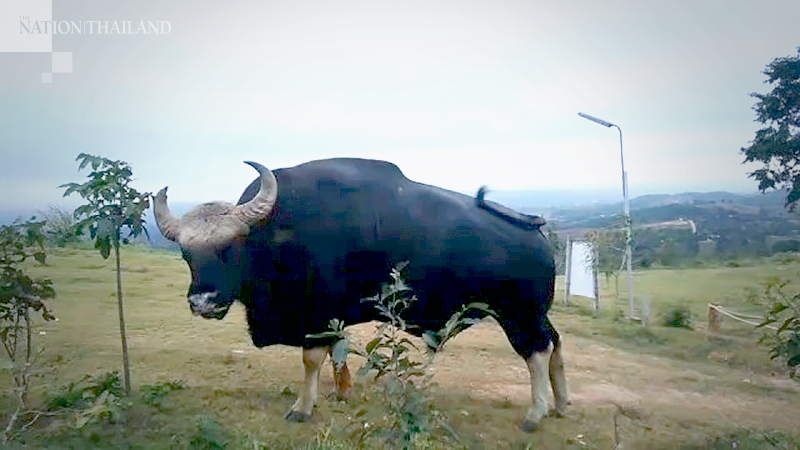
Tourists camping at the Khao Phaeng Ma Reforestation Project in Nakhon Ratchasima’s Wang Nam Kheow district woke up on Wednesday to find a friendly wild bull grazing nearby.
The eight-year-old Thong Dee is occasionally seen at the camping site looking for food and doesn’t appear to be afraid of humans.
Pongtep Malachasing, president of the district’s tourism promotion organisation, said the reforestation project area is a perfect spot to observe wild animals.
He said thanks to the lush greenery, more than 300 wild bulls come out to graze on the hill’s peak and are easily visible from the camping site.
When you think of “Koh Tao”, beautiful beaches, clear water, coral reefs, and scuba diving immediately come to mind. The island is acclaimed as one of the world’s most famous diving destinations. Each year, hundreds of thousands of international tourists travel to the island.
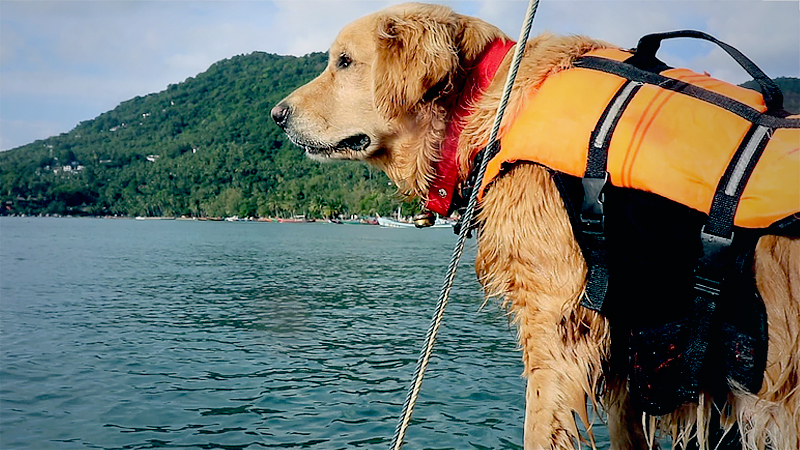
Yet Koh Tao has another story that is equally captivating — the story of two golden retrievers, a two-year old mother dog “Money” and her nine-month-old pup “Fanta”.
Money and Fanta are celebrities. Young hipsters who visit Koh Tao are eager to meet them. Not only are they cute and healthy dogs, but they also possess “green hearts”.
Money and Fanta’s stories have been continuously covered by many Thai celebrities and bloggers as well-trained dogs who show their love for nature by collecting marine debris.
Bunthin Daenthaisong (Uncle Chai), the owner of Money and Fanta, said the mother-son duo became known among local and international tourists after a group of youngsters hired a boat ride with the two dogs tagging along.
“Money and Fanta started to sail with me since they were young. In the beginning, the mother, Money, was just three months old and now both of them are used to sailing,” said Uncle Chai.
Tourists enjoy spending time with Money and Fanta and always post photos of them on social media channels, thus ensuring popularity of the duo.
The most impressive thing about both dogs is that they are trained to collect marine debris. When the owner throws a bottle or branches into the sea, Money and Fanta would jump off to collect the debris. If Money and Fanta spot any marine debris, such as bamboo or bottles, they would jump off the boat and swim to collect them. They are truly ‘green-hearted dogs’ who truly love nature, according to Uncle Chai.
This story has enabled Uncle Chai to earn extra income even in the Covid-19 crisis, compared to other small tourist boat drivers on Koh Tao, thanks to Money and Fanta.
“Koh Tao was affected by Covid-19 because tourists were unable to visit due to the national lockdown policy. Before the pandemic, many foreign tourists visited the island for diving and stayed more than a week, but after the Covid-19 outbreak there are no foreigners at all. Only groups of Thai visitors came during the holidays, for only 2-3 days. The situation created a huge impact on small tourist boat drivers in Koh Tao as they lacked the income to survive and to take care of their families.”
The upside of Covid-19 in Koh Tao is the respite provided to nature and the resulting restoration of Koh Tao’s natural beauty and the clear waters, ideal for snorkelling and diving. Highlights of the famous tourist spots in Koh Tao include Nang Yuan Pinnacle, Mango Bay, Hin Wong Pinnacle, Aow Leuk, Japanese Gardens, and Shark Island.
Since October 2020, a crowdfunding campaign — “Koh Tao Better Together” — by Biofin, UNDP Thailand, Krungthai Bank, Raks Thai Foundation and Koh Tao subdistrict municipality has been ongoing to raise money to support a group of small tourist boat drivers in Koh Tao under the “cash for work” modality for three months. Recently, a Big Cleaning Day was organised through the campaign in preparation for an expected return of tourists.



 Photo credit: Wachirun Chaisawatt

.jpg)

 Photo credit: Wachirun Chaisawatt
 Photo credit: Wachirun Chaisawatt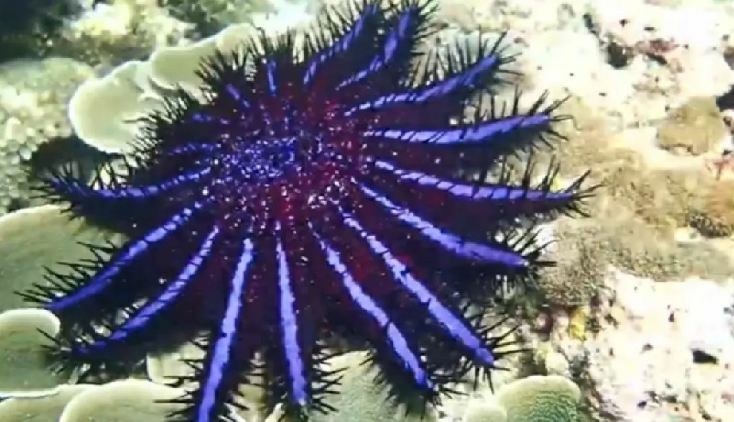
 Varawut Silpa-archa
 Hamilton, the author’s beagle, with a much-loved copy of John Steinbeck’s “Travels with Charley.” MUST CREDIT: Photo for The Washington Post by Melanie D.G. Kaplan Photo by: Melanie D.G. Kaplan — The Washington Post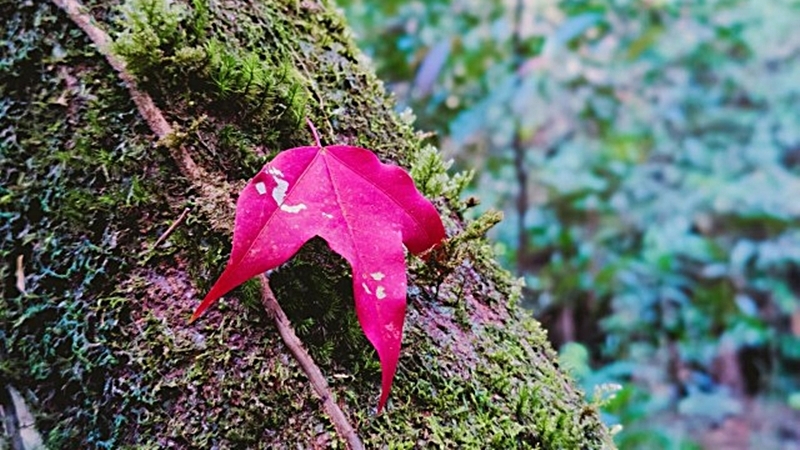




 SootinClaimon.Com