Nong Nooch Tropical Garden is hoping free entry and six new life-size dinosaur statues will help bring back visitors next month.
This is part of the many measures put in place to revive the tourism sector, which has been hit hard by the Covid-19 outbreak.The six figures, that were built in just 86 days, include a 13-metre tall Tyrannosaurus Rex, the 14-metre tall Saurophaganax, Acrocanthosaurus and Carcharodontosaurus statues, a 15m tall Giganotosaurus and an 18m tall Spinosaurus.Provincial representatives from Khon Kaen, Kalasin, Mukdahan, Sakon Nakhon, Nakhon Phanom, Bueng Kan, Nong Khai, Udon Thani, Nong Bua Lam Phu and Bangkok were invited for the opening ceremony.Nong Nooch Tropical Garden is considered one of the 10 most beautiful gardens in the world and features 811 dinosaur statues and many plant species.
New Sheraton resort in Phuket to offer close-up view of Pernakan art heritage
Sep 22. 2020
By The Nation
Four Points by Sheraton Phuket Patong Beach Resort will welcome guests to a vibrant world of art when it opens its doors on October 1.
The new resort, designed in partnership with Artslonga, who specialises in art that reflects Phuket’s Pernakan heritage, also harnessed the skills of young graduates from Silapakorn University.
Strolling through the resort, guests will be able to admire a collection of almost 70 paintings and sculptures. Ornamental vases can be seen in the corridors, just like in a traditional Phuket home, while images of classical ceramics adorn walls in the restaurants.
Phuket’s Peranakan culture was created by the arrival of Chinese immigrants, predominantly Hokkien, who originally came to work in the island’s tin-mining industry. Their unique traditions are reflected in the local art and architecture – especially in the elegant shophouses of Phuket’s Old Town. Today, it is estimated that approximately 70 per cent of Phuket’s population has Peranakan roots.
Tourism authorities are planning to market Loei province as a world-class destination, as the government works on stimulating the country’s tourism sector.
The Designated Areas for Sustainable Tourism Administration (Dasta) said Loei possesses a diversity of natural resources, culture and ways of life that can be presented as part of a “Leisure in Loei” promotion.
The province’s safety measures, cleanliness and sustainable tourist attractions also meet the Global Sustainable Tourism Criteria, Dasta said.
Loei’s Chiang Khan district already welcomes more than a million visitors every year and is expected to be added to the Sustainable Destinations Top 100 list next year.
Meanwhile, in a bid to revive the tourism industry and woo tourists in the fallout of Covid-19, the Tourism and Sports Ministry will next month launch an “Explore Unseen Thailand” promotion, which will focus on lesser known provinces like Loei.
Pha Sam Kleur viewpoint in Nakhon Ratchasima is welcoming back tourists with its stunning views of Thap Lan National Park’s emerald mountains and turquoise Lam Sae reservoir.
Visitors scaled the Khao Makha mountain peak on Monday to bask in the chill between rainy season and winter, when the valleys below are carpeted in lush green.
Pha Sam Kleur means the peak of three mountains – the other two mountains can be seen from its viewpoints. The spot is also renowned as great place to watch the sunset and farmers toiling in the fields below.
To get there, visitors take highway 224 from Nakhon Ratchasima city (Korat) past Ban Mai sub-district administration organisation and turn left onto rural road 3115 to Korn Buri district. After 3 kilometres, turn right and take the unsurfaced road to Khao Makha. The drive from Korat takes about an hour.
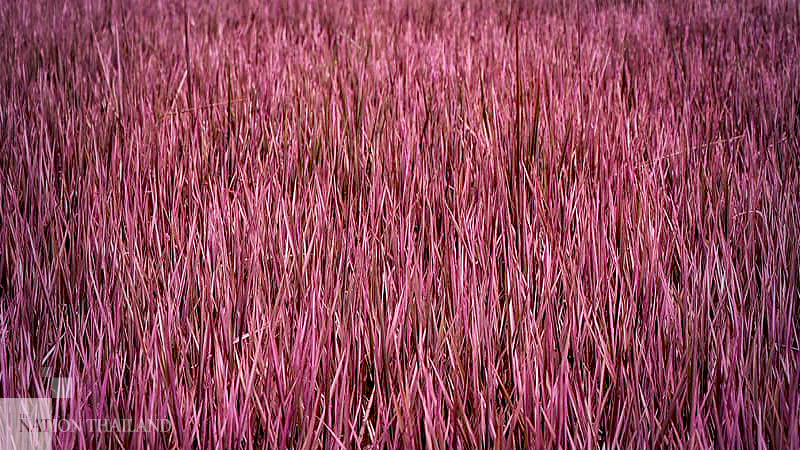
The pink rice field that Phitsanulok’s Ta Pho subdistrict is so famous for will be open to tourists from October 1.
Jaturong Chomphusa
Jaturong Chomphusa, 32, who turned his back on office jobs three years ago, said he found the pink riceberry strain while harvesting rice one day.
After conducting four experiments, he sowed the pink rice in a four-square-metre field and named the variety Pink Lady.
“We have been conducting the fifth experiment since July 16 and the rice has started changing its colour. We expect to see grains in the field by mid next month,” he said.
“We will harvest the rice in November and save the best grains for further experiments.”
He added that only natural fertilisers are used in this rice field.
“Though people can come to see the Pink Lady from tomorrow, the coffee shop and souvenir outlet will open from October 1,” he said.
ThailandSep 13. 2020Photos by Tatchadon Panyaphanitkul
By The Nation
Bryde’s whales are being seen again in the Gulf of Thailand, thanks to the abundance of food resources, which has drawn the attention of tourists.
Boats sailed into the sea to take visitors to the spot from where they can get a glimpse of the giant marine mammal, surfacing to eat fish.The whales use their tails to paddle small fish towards their head so that they can easily swallow them.The whale is usually visible from September to the end of the year, since tonnes of anchovies come to the area.Visitors can take the boats at Samut Sakhon and Phetchaburi provinces to see a family of whales or a lonely whale searching for food in the gulf.
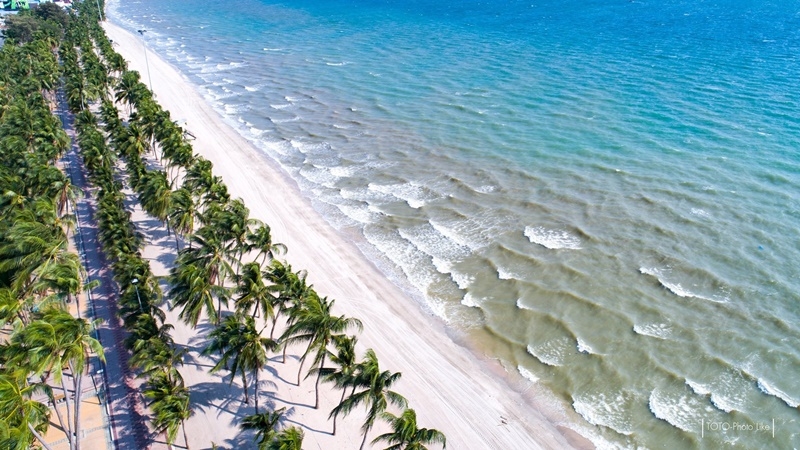
The Bang Saen beach in Chonburi province was crowded with visitors on Sunday (September 6), as people from all over the country came in large numbers during the extended holiday weekend.
On Monday, the number of tourists is expected to remain high while Saen Suk Police Station is ensuring roads around the beach allow smooth flow of traffic.
Pol Lieutenant Krittikorn Chanpleng said the visitors were lucky it did not rain. She expected a good crowd on Monday too, the last day of the long holiday weekend.
Tourists told the media that they experienced some traffic jams because of the huge number of people visiting the beach, and they had to protect themselves from Covid-19 infection by wearing masks and maintaining social distancing.
King Power Mahanakhon offers thrilling views of the capital
Sep 01. 2020
By The Nation
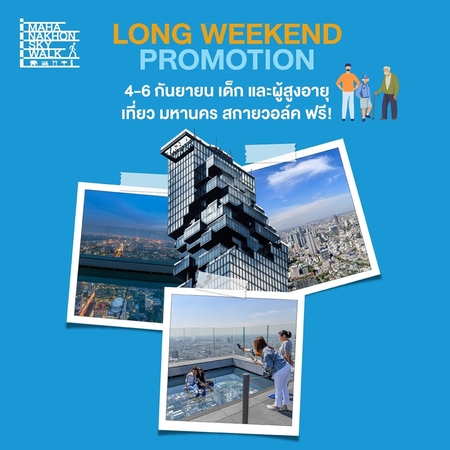
In a move to mark the upcoming long weekend, King Power Mahanakhon is granting free access to its famous Mahanakhon Skywalk to adults above the age of 60 and youngsters below 18 with every purchase of a Bt880 ticket.
The skywalk, located in Bangkok’s iconic pixelated building, features a thrilling all glass observation deck offering a 360-degree view of the capital from 78 floors up. Visitors can also stop off at “The Peak”, which is 314 metres above ground.
This offer runs from September 4 to 7 and the skywalk is open daily from 10am to midnight.
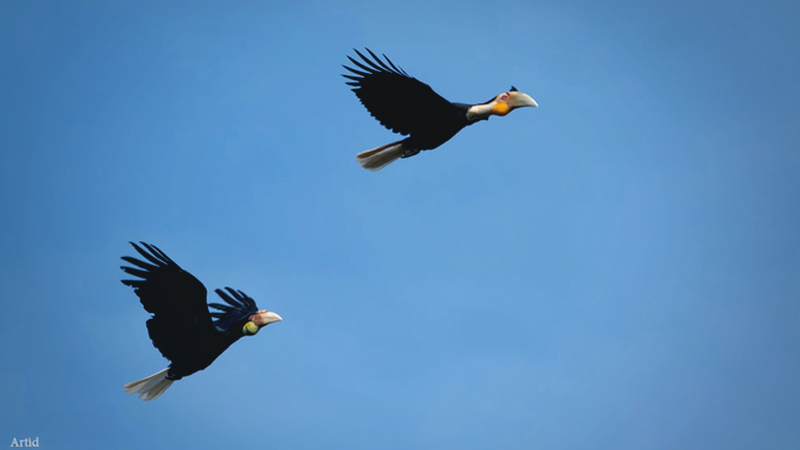
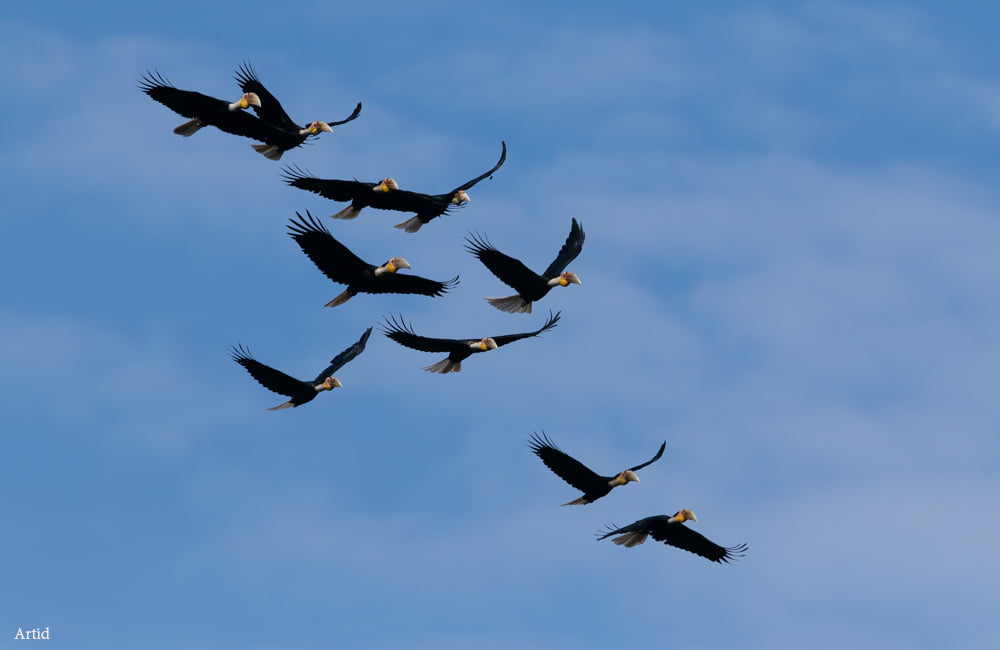
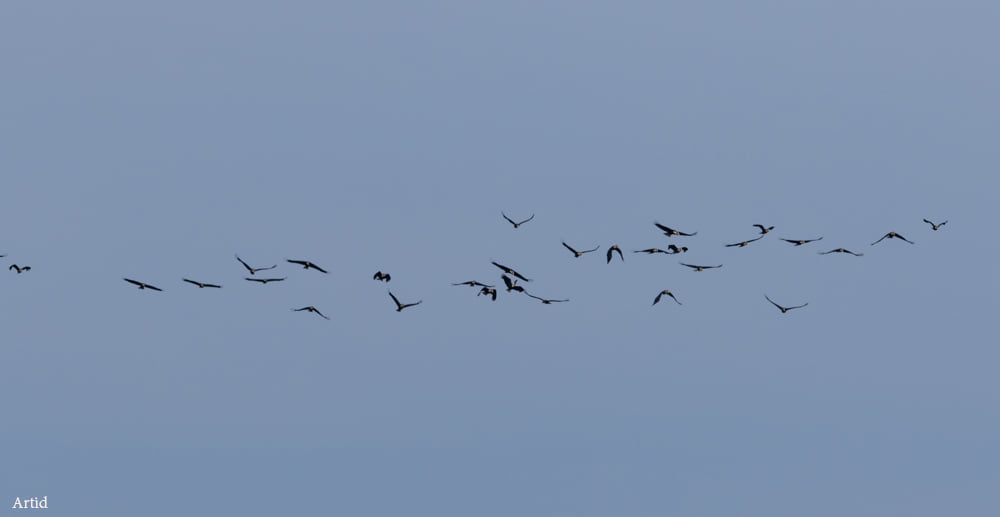
Nearly 30 wreathed hornbills fearlessly spread their wings over Mae Wong National Park, a sight rarely seen in over a decade.
Nearly 900 square kilometres of verdant jungles, rich in flora and fauna, make up the Mae Wong National Park. The park lies adjacent to the Khlong Lan National Park and the Huai Kha Khaeng Wildlife Sanctuary in Uthai Thani province.
It is home to elephants, tigers, and birds like the hornbill and kingfisher have staked their claim to the park’s lands.
The highlight is the Phu Sawan Viewpoint located approximately 300 metres uphill to see the impressive sunrise and sunset. It is one of the important bird-watching spots in Thailand and also a habitat for a wide variety of birds.
During this period, there are many kinds of birds flying by. The bird species that are outstanding and are of great interest to bird watchers are rufous-necked hornbill and wreathed hornbill, plus 300 other species of birds.
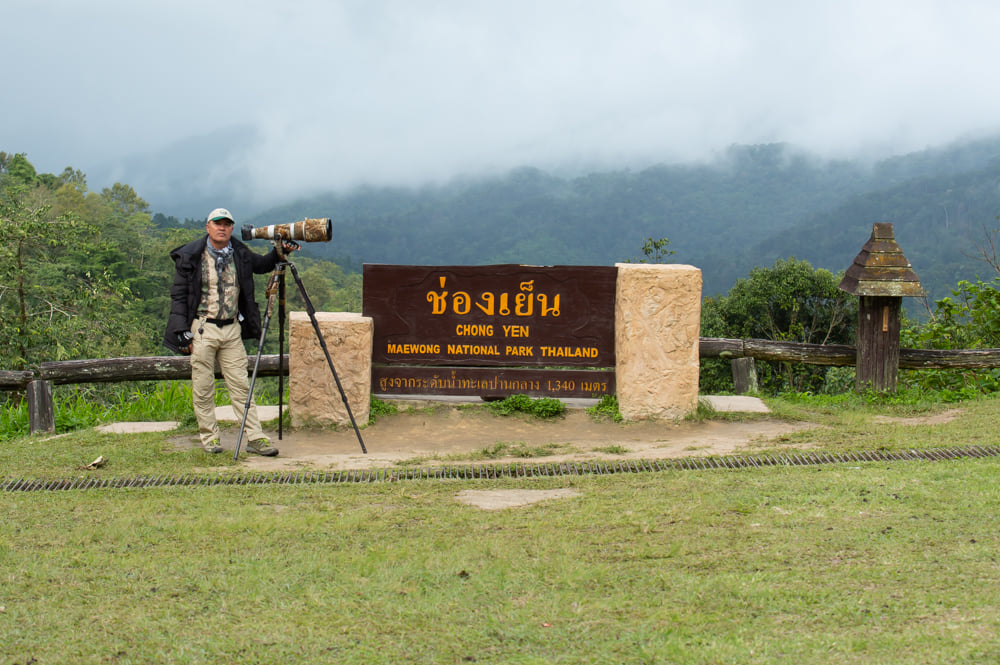
Artid Nima, a Nakhon Sawan-based photographer, who took a picture of a hornbill, at 8.45am at the Chong Yen Campground, said on Sunday that the weather at Khun Nam Yen Forest and Chong Yen Campground in Mae Wong National Park was refreshing. He said he was lucky to be ready to take a close-up picture of a group of 30 wreathed hornbills, seen there for the first time in a decade.
Jungle paradise in Khao Lak takes concrete steps to preserve nature
ThailandAug 28. 2020The signature giraffe-shaped Banyan tree in front of the beach at Khaolak Merlin Resort. /Photo by Jintana Panyaarvudh
By Jintana Panyaarvudh
Special to The Nation
Takua Pa, Phang Nga
Twenty years ago, when the second-generation of the Chirayus family wanted to build a resort on Phang Nga’s Khao Lak beach, they decided to go with the concept of sustainability to preserve the environment – and the result was well beyond expectation.
Following the belief that a resort and forest can live together, the Khaolak Merlin Resort was built along environment-friendly practices from the very beginning. Each and every old, original tree on the grounds was carefully preserved, including the more than 50-year-old Takian, resin, golden teak and Siamese Rosewood trees.
An endangered slow loris is spotted hiding on an old tree at night at Khaolak Merlin Resort. /Photo by Parinya Chawsamun
The makers of the resort worked on recreating a tropical ecosystem by digging canals and freshwater springs, as well as planting rare, endangered plants in the garden such as wild jungle orchids.
They also built a wastewater treatment and cleansing system using purely organic filtration methods. Treated water is used to water the garden and fill the resort’s streams – a practice that helps it save around 3 million litres of water per month and reduces the impact on environment.
An aerial view of Khaolak Merlin Resort, which is nestled in a jungle. /Photo by Parinya Chawsamun
Unlike other resorts, where more rooms are built to serve more guests, Khaolak Merlin has followed the 50-50 principle – half of the 30-rai property is given to humans and half is devoted to nature. An aerial view makes it look as if the resort has a jungle growing around it, and every step on its grounds feels as if one is walking through a rainforest.
Chanon Wongsatayanont, left, and Nancy Lynne Gibson. /Photo by Parinya Chawsamun
“Sustainability is the key goal of our resort. We believe in giving a better world to future generations by being mindful of the impact we have on the environment and local communities,” said Chanon Wongsatayanont, director of Merlin Phuket Group.
Bowls of water are left in the forest for birds to bathe. /Photo by Parinya Chawsamun
“We have built this resort as a jungle paradise, where the rainforest meets the sea. Preserving nature has had a good result. Our regular guests, mostly Europeans, return to stay here every year [thanks to untouched nature]. They are also very excited about the wildlife here,” he added.
The resort has also joined forces with Love Wildlife, a non-profit conservation foundation, to help promote wildlife conservation and has also kicked-off a number of new eco-inspired projects within the hotel and its surrounding landscape, including signs around the resort to help guests identify the wildlife they spot.
The foundation surveyed the property and found more than 50 animal species, including birds, lizards, frogs, butterflies, flying squirrels to name a few, and over 40 plant species. Just recently, at least two slow lorises were spotted hiding on the resort’s ancient trees.
Up close and personal
These discoveries have further expanded cooperation between the resort and Love Wildlife. Now they will jointly work on surveying, tracking and observing the behaviour of slow loris in the area, so they can do more to preserve this endangered species.
Slow lorises are a group of several species of nocturnal strepsirrhine primates that make up the genus Nycticebus, found in Southeast Asia and bordering areas. The species is listed as endangered on the 2020 International Union for Conservation of Nature Red List. The two greatest threats to slow lorises are deforestation and the wildlife trade.
Since there is little new information about the animal, this will be a great opportunity for the foundation to join hands with Khaolak Merlin to study their behaviour so we can know their conservation status, said Nancy Lynne Gibson, president and founder of Love Wildlife Foundation.
She said the aim of the study is to find out what kind of fruit the slow loris eats, what kind of trees they prefer to live on and in what environment, so more attention can be paid to these trees, more trees of the fruit they like can be planted and the area further improved to cover the needs of local wildlife.
“We don’t know yet what happens to the environment or ecosystem when the animal goes extinct,” said Gibson, who was lucky enough to spot two slow lorises when she was exploring the area recently.
“I also want to raise awareness that it’s important to preserve endangered animals and not raise them as pets,” said Gibson, who has been interested in slow loris since she was child.
Under the partnership, the foundation will train hotel staff to monitor the animals and collect information.
Chanon said the habitat for slow lorises has reduced as more forested areas in Khao Lak are cleared. “But if we know their behaviour, we can adjust the environment in our resort, making it as close to their habitats as possible,” he added.
In order to learn how to preserve old trees on its grounds, resort is partnering with Big Trees Project, an environment advocacy group that promotes awareness and activities that help preserve public green spaces in the capital and beyond. The group will train the hotel’s staff on now to keep the trees healthy so they can continue providing homes for local wildlife.
Chanon said he hopes both partnerships will help the hotel gather pertinent information and know-how.
“We live with nature and biodiversity, but don’t know how and when it will be destroyed,” he added.

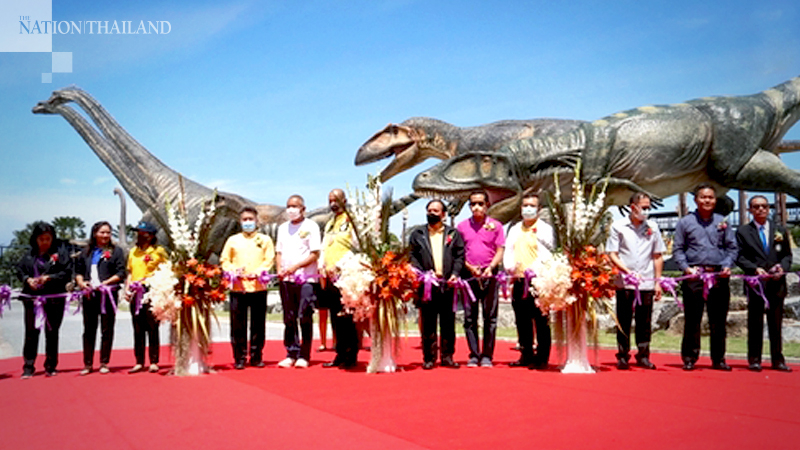
 This is part of the many measures put in place to revive the tourism sector, which has been hit hard by the Covid-19 outbreak.
 The six figures, that were built in just 86 days, include a 13-metre tall Tyrannosaurus Rex, the 14-metre tall Saurophaganax, Acrocanthosaurus and Carcharodontosaurus statues, a 15m tall Giganotosaurus and an 18m tall Spinosaurus.
 Provincial representatives from Khon Kaen, Kalasin, Mukdahan, Sakon Nakhon, Nakhon Phanom, Bueng Kan, Nong Khai, Udon Thani, Nong Bua Lam Phu and Bangkok were invited for the opening ceremony.
 Nong Nooch Tropical Garden is considered one of the 10 most beautiful gardens in the world and features 811 dinosaur statues and many plant species.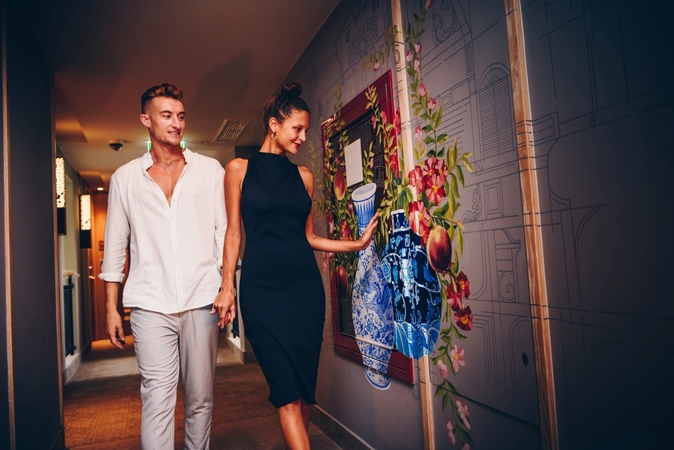
 Strolling through the resort, guests will be able to admire a collection of almost 70 paintings and sculptures. Ornamental vases can be seen in the corridors, just like in a traditional Phuket home, while images of classical ceramics adorn walls in the restaurants.

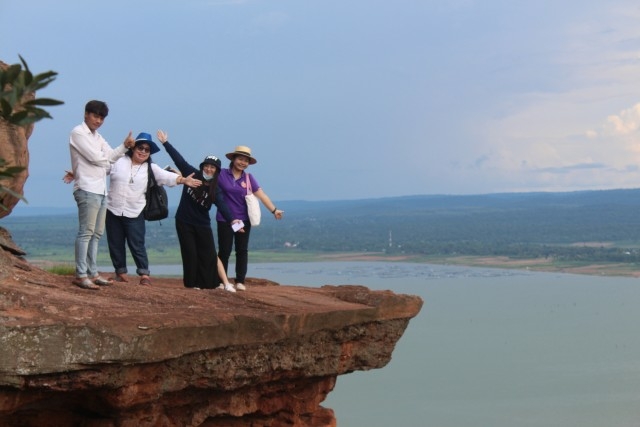

 Pha Sam Kleur means the peak of three mountains – the other two mountains can be seen from its viewpoints. The spot is also renowned as great place to watch the sunset and farmers toiling in the fields below.



 Photos by Tatchadon Panyaphanitkul
  Boats sailed into the sea to take visitors to the spot from where they can get a glimpse of the giant marine mammal, surfacing to eat fish.
 The whales use their tails to paddle small fish towards their head so that they can easily swallow them.
 The whale is usually visible from September to the end of the year, since tonnes of anchovies come to the area.
 Visitors can take the boats at Samut Sakhon and Phetchaburi provinces to see a family of whales or a lonely whale searching for food in the gulf.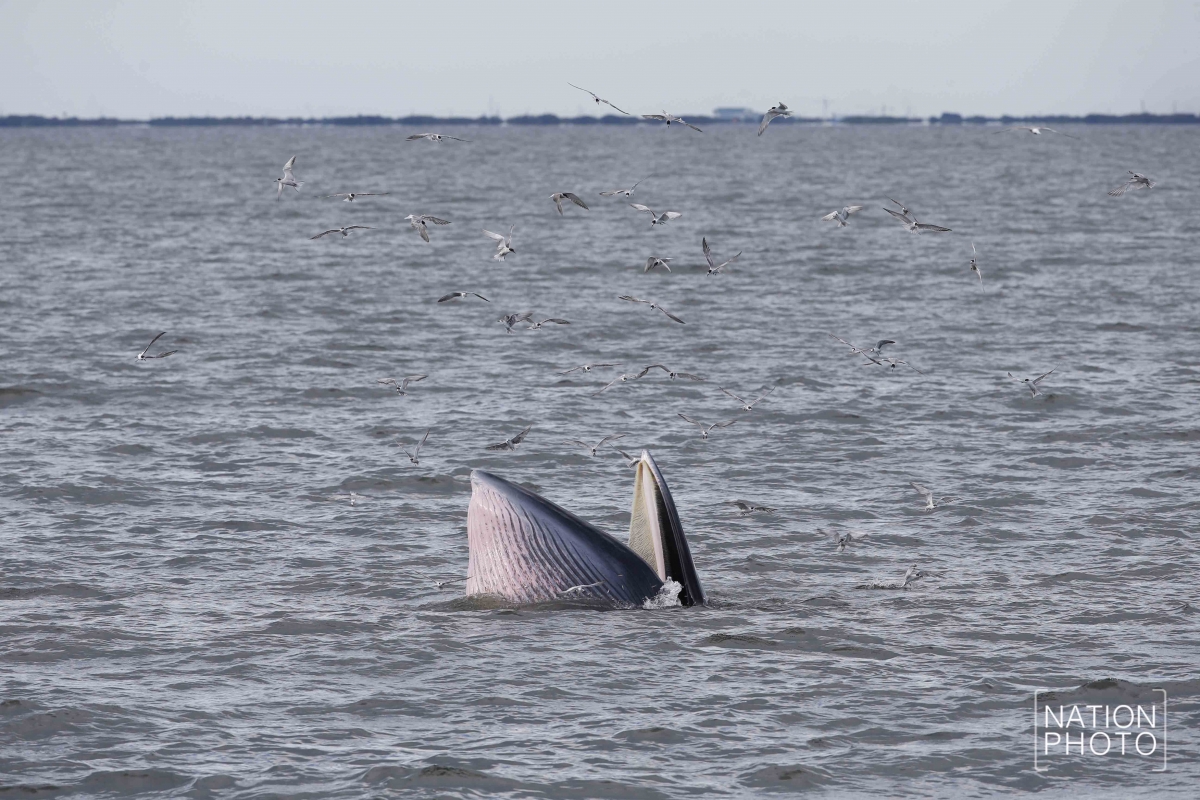
 The signature giraffe-shaped Banyan tree in front of the beach at Khaolak Merlin Resort. /Photo by Jintana Panyaarvudh


 SootinClaimon.Com