How ‘The Clone Wars’ turned Ahsoka Tano into a legendary Star Wars character #ศาสตร์เกษตรดินปุ๋ย

#ศาสตร์เกษตรดินปุ๋ย : ขอบคุณแหล่งข้อมูล : หนังสือพิมพ์ The Nation.

https://www.nationthailand.com/lifestyle/30387266?utm_source=category&utm_medium=internal_referral

How ‘The Clone Wars’ turned Ahsoka Tano into a legendary Star Wars character

May 04. 2020
Ashley Eckstein has been the voice of Ahsoka Tano for seven seasons on

Ashley Eckstein has been the voice of Ahsoka Tano for seven seasons on “Star Wars: The Clone Wars.” MUST CREDIT: Disney Plus.
By The Washington Post · David Betancourt · ENTERTAINMENT, FILM, TV

Before she became one of the most recognizable voices in the Star Wars universe, actress Ashley Eckstein was just a kid in Orlando with an orange shag carpet and a dream.

It was as a toddler that Eckstein, like many ’80s babies, discovered the original Star Wars trilogy through the power of VHS tapes. She recalls her mother not being too fond of the orange carpet, but to Eckstein, it was another world.

Tatooine to be exact. The dry planet with two suns that was the childhood home of Darth Vader.

Eckstein, while pretending to be lovable droid R2-D2, would imagine that the carpet was the sands of the desert world that gave us the galaxy’s greatest evil. She had no clue at the time that her vocal cords would one day help create someone who is becoming just as iconic to true fans.

Ahsoka Tano is that icon.

Over the animated course of one film and seven seasons of “Star Wars: The Clone Wars,” Eckstein has been the voice, heart and soul of Ahsoka Tano, the onetime apprentice to future Darth Vader, Anakin Skywalker. Ahsoka fought alongside the all-time Jedi great when he was at his most heroic, during the Clone Wars, which take place between Episodes II and III of the Star Wars prequel saga – before his heartbreaking fall to the Dark Side.

The character has grown up and out of the shadow of her former Jedi Master. She is now the moral center of the story as “The Clone Wars,” which – after traveling from the initial movie version in theaters to a show on Cartoon Network, then Netflix and now Disney Plus – finally comes to an end.

Six years passed between the series’ sixth season on Netflix in 2014 and the final one that began in February. But now that the final episode has begun streaming on Disney Plus, Eckstein is elated to see the tale come to a satisfying close.

“It’s definitely been an emotional journey for sure,” Eckstein told The Washington Post. “I’m so grateful that we were given the opportunity [for a final season] because not only does Ahsoka Tano deserve a proper ending in ‘The Clone Wars,’ but the fans deserve it. The fans started the [social media] hashtag #savetheclonewars and even when we gave up on it, the fans never gave up.”

The trailer for the final season of “The Clone Wars” ends with doors closing on Ahsoka as she wields two lightsabers in a defensive stance. In a universe that gives so much attention to the Skywalkers, the trailer felt like a graduation of sorts into the ranks of the Star Wars elite. That’s a long way from her arrival 12 years ago, which generated a fan response that was indifferent at times, as some thought the young Jedi was too childish or downright annoying.

“Even when she had her haters in the beginning, I asked them for their patience,” Eckstein said. “I asked them to just go on this journey with her and enjoy [it]. Because I was always at least a season ahead of what the fans were seeing and so I knew how far she had come just over the course of a single season. It’s been incredible to see the evolution [of their response].”

When George Lucas and Dave Filoni created the character for the initial 2008 film “The Clone Wars” and hired Eckstein to voice her, she felt as though she was given the piece to a puzzle that had long been hidden. It wasn’t until the film’s debut that it was revealed that Anakin Skywalker had an apprentice. She was just as shocked as fans were.

Previously, Eckstein had been seen on the Disney Channel’s “That’s So Raven” and Nickelodeon’s “Drake and Josh.” What intrigued her the most about “The Clone Wars” was the chance to be a female Jedi with a leading role – and this was years before Daisy Ridley wielded a lightsaber in “Star Wars: The Force Awakens” in 2015.

“That was a really big deal. And I wanted to do right by it,” Eckstein said. “I wanted to live up to the opportunity that was given to me and the expectations that were put on me.”

Another major character “The Clone Wars” can take credit for is Darth Maul, the extremely popular former Sith apprentice who seemingly died at the end of 1999′s “Star Wars: The Phantom Menace.” “The Clone Wars” revealed that Maul not only beat death, but was rebuilt into an even deadlier galactic adversary. He and Ahsoka had a highly anticipated lightsaber duel in this season’s 10th episode, titled “The Phantom Apprentice.”

“Ahsoka and Darth Maul have a lot of similarities,” Eckstein said. They both became outsiders: Maul was replaced as a Sith after his “death,” and Ahsoka walked away from the Jedi after being wrongly accused of a crime. “The meetup between the two of them isn’t necessarily what you would think. Their fight is truly, in my opinion, one of the most epic fights in all of Star Wars.”

Eckstein will hand off the role to another actress, as it has been reported that Rosario Dawson will play a live-action version in the second season of “The Mandalorian” on Disney Plus. It’s a moment Eckstein says she’s ready for whenever it happens.

“Ahsoka is bigger than just me. I’ve always known that there’s going to be more team members added to the bench,” Eckstein said. “That means that we’re going to get more Ahsoka stories. And I will always celebrate more Ahsoka stories.”
Reliable Source: Anthony Fauci praises ‘classy’ Brad Pitt’s ‘SNL’ impersonation of him #ศาสตร์เกษตรดินปุ๋ย

#ศาสตร์เกษตรดินปุ๋ย : ขอบคุณแหล่งข้อมูล : หนังสือพิมพ์ The Nation.

https://www.nationthailand.com/lifestyle/30387044?utm_source=category&utm_medium=internal_referral

Reliable Source: Anthony Fauci praises ‘classy’ Brad Pitt’s ‘SNL’ impersonation of him

Apr 30. 2020
By The Washington Post · Nina Zafar · ENTERTAINMENT, TV
Anthony Fauci, the man preserving our collective sanity with his calm and logic, was granted a wish this past weekend: to be portrayed by Brad Pitt on “Saturday Night Live.”

https://www.washingtonpost.com/video/c/embed/605bcf46-703e-4c41-88c5-bd58d61c9de3

In an interview Monday with Telemundo’s “Un Nuevo Dia,” the director of the National Institute of Allergy and Infectious Diseases praised Pitt’s portrayal, calling him one of his favorite actors.

“I think he did great. I’m a great fan of Brad Pitt, and that’s the reason why when people ask me who I would like to play me, I mention Brad Pitt,” Fauci said.

In a recent interview with CNN, Fauci had joked about having the superstar actor play him on a future episode of “SNL.” On Saturday, Pitt, who had never appeared on “SNL” before, made a surprise appearance on the show’s second “At Home” episode.

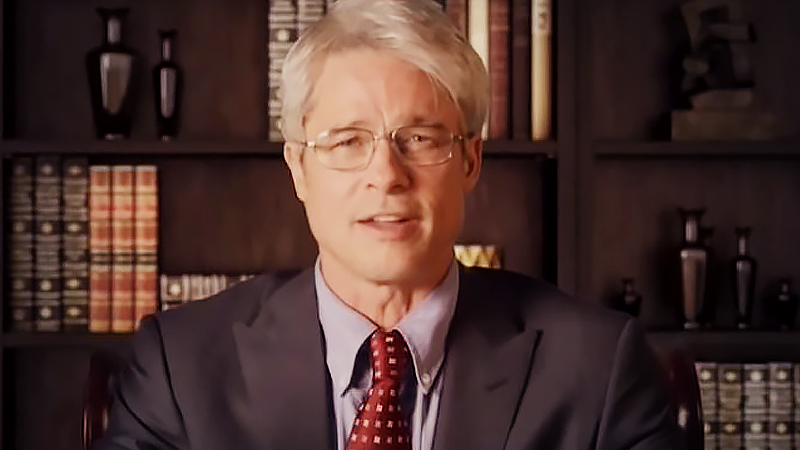
Pitt began the cold open by introducing himself as Fauci, speaking in the doctor’s distinctive raspy voice while wearing a gray wig and glasses.

“Now, there’s been a lot of misinformation out there about the virus,” Pitt-as-Fauci said. “Yes, the president has taken some liberties with our guidelines. So tonight, I would like to explain what the president was trying to say.”

He went on to discuss several confusing statements issued by President Donald Trump in his various White House coronavirus task force briefings. Pitt took a few jabs at the president over his comments about ultraviolet light and using disinfectant injections as a treatment, and his claims about how long the virus may last.

“It’s going to disappear one day – one day it’s like a miracle, it will disappear,” Trump said in one clip, to which Pitt’s Fauci responded: “A miracle would be great. Who doesn’t love miracles? But miracles shouldn’t be Plan A. Even Sully tried to land at the airport first.”

In the “Un Nuevo Dia” interview, Fauci was asked about the candidness of Pitt’s portrayal and whether any of the things said during the sketch were things that had actually crossed his mind. Fauci responded with an equal level of candor.

“Everything he said on ‘SNL’ is what’s going on,” the White House task force member said. “He did a pretty good job of putting everything together.”

Though Pitt’s cold open was typical fodder for the sketch show, it was particularly notable when, at the end, the recent Oscar winner broke character, taking off his toupee to address Fauci directly.

“To the real Dr. Fauci, thank you for your calm and your clarity in this unnerving time,” he said. “And thank you to the medical workers, first responders and their families, for being on the front line.”

Fauci said: “I think he showed that he is really a classy guy when, at the end, he took off his hair and thanked me and all of the health-care workers. So, not only is he a really great actor, but he is actually a classy person.”

Based on Pitt’s swift involvement in the sketch and his closing statement, it’s safe to say the feeling is mutual.

‘Cyrano de Bergerac’ gets 21st-century update in new endearing romantic comedy on Netflix #ศาสตร์เกษตรดินปุ๋ย

#ศาสตร์เกษตรดินปุ๋ย : ขอบคุณแหล่งข้อมูล : หนังสือพิมพ์ The Nation.

https://www.nationthailand.com/lifestyle/30387022?utm_source=category&utm_medium=internal_referral

‘Cyrano de Bergerac’ gets 21st-century update in new endearing romantic comedy on Netflix

Apr 30. 2020
Leah Lewis, left, and Daniel Diemer in

Leah Lewis, left, and Daniel Diemer in “The Half of It.” MUST CREDIT: KC Bailey/Netflix
By The Washington Post · Ann Hornaday

May we stipulate that we can all use a feel-good movie around about now?

“The Half of It,” an endearing romantic comedy that gives “Cyrano de Bergerac” a 21st century refresh, is ostensibly a teen movie. But it’s also the self-care we all need. Written and directed with tart intelligence by Alice Wu, and featuring some dazzling breakout performances, this breezy, self-aware and utterly adorable coming-of-age tale keeps one eye on literary and cinematic classics, and the other firmly on a future full of exploration, self-expression and buoyant expectation.

But first, of course, comes the hard stuff. As “The Half of It” opens, the film’s heroine, Ellie Chu (Leah Lewis), is suffering quietly through her senior year in the rainy doldrums of Squahamish, Washington, her ambitions to attend Grinnell College foiled by abiding loyalty to her widowed father (Collin Chou) and her own wobbly confidence. Although she makes extra money writing essays for her less hard-working classmates, Ellie is an outsider, enduring the jeers of car-riding classmates as she huffs and puffs on her bike to and from school. When a sweet, lunkheaded football player named Paul (Daniel Diemer) pays her $25 to write a flowery love letter to a sweet and pretty student named Aster (Alexxis Lemire), Ellie understandably balks. When he ups the price to $50, she’s all in.

Leah Lewis, left, and Alexxis Lemire in

Leah Lewis, left, and Alexxis Lemire in

Thus is set in motion a familiar plot of hidden identities, repressed passions and unexpected twists. But in Wu’s assured hands, the expected reversals give way to even more surprises, as Ellie and Paul discover heretofore hidden truths about themselves and each other. Texting wasn’t around when Edmond Rostand wrote the original play in the 19th century. Here, Wu uses it to clever effect, allowing her characters’ inner conflicts to be expressed in real and often contradictory time. Dotting the narrative with hat-tips to Plato, Camus and Sartre – not to mention “Casablanca,” “His Girl Friday” and “Wings of Desire” – Wu keeps the dialogue sharp and the feelings honest, managing to layer in some sincere spiritual questioning while putting her adolescent protagonists through the usual pressures of conformity, class snobbery, peers and parents. (“We are the source of our own hell,” Ellie’s teacher, played by Becky Ann Baker, intones wisely early in the film.)

Reminiscent of “10 Things I Hate About You” in its winning combination of smarts and romantic fantasy, “The Half of It” provides a fabulous showcase for its young lead actors: Raspy-voiced and flawlessly deadpan behind a pair of wire-rimmed glasses, Lewis seamlessly inhabits a character who may be shy but harbors stubborn faith in her own intelligence. Diemer delivers a delectably funny performance as the dimwitted foil for Ellie’s cerebral bookworm. (For evidence, look no further to the clueless look on his face when he’s gifted with a signed copy of “The Remains of the Day.”)

Early in “The Half of It,” Ellie informs the audience that no one will get what they want in the ensuing story (“Casablanca” is name-checked for a reason). But they will get what they need, in a film that brims with compassion for young characters who are still on the cusp of their most exhilarating and consequential life journeys. Wu suffuses “The Half of It” with supreme generosity, especially when she refuses to give her characters the resolutions they crave, and which similar narratives have taught the audience to crave for them.

Instead, she sets them free – to take risks, mess up and figure things out for themselves. In other words, she gives them the happy ending every teenager deserves.

– – –

Three and one-half stars. Rated PG-13. Available via Netflix streaming. In English, Mandarin and Spanish with subtitles. Contains brief strong language and teen drinking. 104 minutes.

Ratings Guide: Four stars masterpiece, three stars very good, two stars OK, one star poor, no stars waste of time.

How a 6-year-old Russian girl became YouTube’s most popular child star #ศาสตร์เกษตรดินปุ๋ย

#ศาสตร์เกษตรดินปุ๋ย : ขอบคุณแหล่งข้อมูล : หนังสือพิมพ์ The Nation.

https://www.nationthailand.com/lifestyle/30386809?utm_source=category&utm_medium=internal_referral

How a 6-year-old Russian girl became YouTube’s most popular child star

Apr 26. 2020
 Anastasia Radzinskaya/ Credit: Like Nastya YouTube channel

Anastasia Radzinskaya/ Credit: Like Nastya YouTube channel
By Syndication Washington Post, Bloomberg · Mark Bergen, Lucas Shaw · TECHNOLOGY, ENTERTAINMENT, MEDIA

In a video posted online in December, Anastasia Radzinskaya, a 6-year-old YouTube star who goes by Nastya, plays a tough-talking cop. At the start of the skit, the pixyish blond performer looks in the mirror and pulls on a police cap. “I’m going to teach you a lesson, criminals,” she says, rapping a toy baton in the palm of her hand.

For the next several minutes, she patrols a street, blowing a traffic whistle, brandishing her shiny police badge and sternly laying down the law. At one point, she pulls over a careless driver, played by her father and frequent co-star Yuri, who tries to connive his way out of trouble by slipping her a stack of bills. “A bribe!” she yells. “Go to jail, now!”

Since December, when the video first appeared on her “Like Nastya” YouTube channel in Radzinskaya’s native Russian, the kid cop routine has generated more than 90 million views. Another version of the video, re-edited for English-speaking viewers, has since tallied up another 7 million views. Two additional versions, dubbed in Indonesian and Korean, have generated more than 2 million views since February. Spanish and Arabic versions will be posted soon.

While Nastya is hardly the first youngster to earn laughs online by mock disciplining a naughty parent, she has achieved a level of global stardom that is rare for artists of any age. Depending on the month, “Like Nastya” has been the third- or fourth-most-popular channel on YouTube in the world, according to SocialBlade. Nastya’s broader network of channels, which dub her performances into nine different languages, generates around 100 million views a day.

Last year, thanks to Nastya’s popularity and global reach, the Radzinskayas earned more than $18 million from YouTube. Recently, they relocated to South Florida, where they continue to crank out videos for her young fans around the world.

“They’re the first family to really understand the globalization opportunity,” said Eyal Baumel, who advises Anastasia and her parents on their YouTube strategy in exchange for a cut of their advertising sales.

In the past, most YouTube creators didn’t feel compelled to tailor their videos to different international markets because the video service is huge and can help them reach every country without having to pay for dubbing. Nastya’s success may force other top YouTube acts to rethink that strategy. “For some content, localization can double or triple revenue,” Baumel said.

As with many top YouTube acts, Nastya’s rise to fame and fortune can feel somewhat baffling. Her parents, Yuri and Anna, don’t speak English fluently, and the origin story they tell about their prodigy daughter has always been shrouded in a bit of mystery. During a recent video interview, conducted through a translator, her parents said they weren’t dreaming of international fame and fortune when they posted their first video of Nastya on YouTube on Jan. 25, 2016, two days before her second birthday. They just wanted to prove she was not fatally ill.

At the time, doctors in Krasnodar, a city of more than 700,000 resident in southern Russia where Nastya was born, believed she had cerebral palsy and might never speak. But their diagnosis, her parents said, was wrong. When they first witnessed their daughter making significant verbal progress, they were overjoyed and wanted to capture it on film. They sent the resulting video to her doctors, to their relatives, and posted it online. “We didn’t expect anyone else to watch it,” said Yuri.

For months, not many people did. But as it turned out, not only could their daughter speak but she had a strong presence on screen. She could ham it up like a seasoned pro. Eventually, one clip featuring Nastya playing with a batch of colorful “slime” (a beloved genre among toddler fans on YouTube) resulted in tens of thousands of viewers. “It was unreal,” said Anna. “We couldn’t understand what was going on.”

As Nastya’s audience grew, the Radzinskayas applied for YouTube’s partner program, in which video creators get a cut of the revenue generated from the ads that the video-sharing giant automatically loads onto their channels. For the first few months, they failed to top the $100 minimum revenue threshold that YouTube creators must surpass before they start getting paid. But then, in the middle of 2017, they got their first check. Things grew rapidly from there.

Anna, an event planner by training, began writing scripts and coordinating filming schedules for the videos, which featured her daughter playing with dolls, exploring playgrounds and opening up “surprise eggs” (another YouTube favorite) to reveal the toys hidden inside. Yuri, who ran a construction company, quit his day job and essentially became a full-time sidekick performer on “Like Nastya.” Thick armed and tattooed, Yuri could pass for a goon in a Russian mobster flick. Over time, he and Anastasia have developed a strong comedic rapport, which the Radzinskayas cite as the primary reason for their astounding popularity.

While other YouTube child performers tend to adopt the site’s popular blogging style, speaking directly to viewers as they unbox toys or shop in a mall, “Like Nastya” videos usually involve short, episodic plots. The storylines are simple enough for a 3-year-old to follow. Heavy doses of sound effects, jump cuts and slapstick humor are like sugar for young audiences, said Heather Kirkorian, a professor at University of Wisconsin-Madison who studies cognitive development and media. “It’s like ‘The Three Stooges,'” she said. “That plays really well with preschoolers.”

During a trip through Southeast Asia in 2017, the family realized just how far their videos had traveled. Children recognized them from YouTube and stopped them in public. In Malaysia, Yuri recalled, “They came up to us and said, ‘Why aren’t you in our language? We like watching you.'”

Yuri and Anna searched online for help to manage their newfound fame and eventually teamed up with Baumel. Along with a team of fellow Russian ex-pats, Baumel runs Yoola, a YouTube multichannel network based in Los Angeles, which specializes in maximizing the attention paid to YouTube creators. Part of Baumel’s skillset is to take a rising YouTube channel from one country and to repackage its videos to appeal to viewers around the world. The key, he says, is dubbing the videos into multiple languages and editing them to match the viewing habits of particular countries.

Among Baumel’s clients is SlivkiShow, a Russian YouTube account with 16 million subscribers, that posts baroque science experiments. (Typical video headline: “EXPERIMENT! WHAT IF you smoke 300 CIGARETTES!”) After signing the performers on with Yoola, Baumel set them up with an English channel that added 1 million subscribers in three years, and a German channel that is nearing 2 million.

For “Like Nastya,” Baumel applied the same formula, helping the family create channels in English and German and doubling their sales within four months. The Radzinskayas now employ a staff of about 20 people, some of whom are responsible for finding people to translate and dub the videos into the various languages. The translators hail from all over the world, and many of them are native speakers so they can understand local cultures and slang. The translators send in the audio, and a team of technicians then sync it up with the action onscreen. After the main Russian channel, Nastya’s four biggest offshoots are in English, Spanish, Arabic and Portuguese.

Frequent posting also matters, and that’s where it can get tricky working with a performer who is still in elementary school. Nastya attends a private school five days a week. She also studies Mandarin and Spanish in her free time, according to her parents, and takes lessons in singing, acting and dancing. Every weekend, her family films two videos. During the week, they shoot one more. “She is very talented; she is very creative,” Yuri said. “Out of every situation, out of everything, she is able to make something unusual.”

The parents say they won’t make their daughter work any more than she wants to and that a large portion of her earnings are set aside in a separate bank account. “It all depends on her, truly,” Yuri said. “If she’ll wake up tomorrow and say she doesn’t want to do it, we won’t do it.”

As every top YouTube performer knows, you can never rest for too long. There is always a tireless crop of up-and-comers, cranking out videos, hungry to supersede them. In recent weeks, another child star has supplanted Nastya in some YouTube popularity rankings. Along the way, SocialBlade showed Nastya suddenly trailing behind “Kids Diana Show.” The channel stars a Ukrainian girl who is 6 years old.

Book World: ‘If It Bleeds’ reaffirms Stephen King’s mastery of short fiction #ศาสตร์เกษตรดินปุ๋ย

#ศาสตร์เกษตรดินปุ๋ย : ขอบคุณแหล่งข้อมูล : หนังสือพิมพ์ The Nation.

https://www.nationthailand.com/lifestyle/30386577?utm_source=category&utm_medium=internal_referral

Book World: ‘If It Bleeds’ reaffirms Stephen King’s mastery of short fiction

Apr 22. 2020
If It Bleeds
(Photo by: Scribner — handout)

If It Bleeds (Photo by: Scribner — handout)
By Special To The Washington Post · Bill Sheehan

If It Bleeds

By Stephen King

Scribner. 436 pp. $30

Stephen King’s affinity for the novella form goes back to the early stages of his long, prolific career. In 1982, King published “Different Seasons,” a quartet of long stories that contained some of his finest work, and eventually led to some memorable film adaptations, among them “The Shawshank Redemption” and “Stand by Me.” Since then, at roughly 10-year intervals, King has produced three similar volumes that have allowed him to play with a wide variety of themes, scenes and settings. The latest of these, “If It Bleeds,” contains four new, exceptionally compelling novellas that reaffirm his mastery of the form.

King, of course, has made good use of virtually every mode of storytelling: short stories, screenplays, novels, multivolume epics and what he referred to as his “novel for television,” the miniseries “Storm of the Century.” But the mid-length narrative suits his talents particularly well, permitting a degree of expansiveness while maintaining a controlled, disciplined approach to the material at hand. The results are stories that cover a surprising amount of emotional territory but can still be read in a sitting.

“Mr. Harrigan’s Phone,” for example, is yet another reflection of King’s sometimes baleful fascination with technology and its effects on our lives. At the heart of the story is the relationship between Craig, the adolescent narrator, and John Harrigan, retired billionaire and borderline Luddite. As their uneven relationship develops, Craig gifts the older man a cellphone. The gift is designed to facilitate “normal” communications, but – this is, after all, a Stephen King story – those communications darken and change, connecting the world of rural Maine to the unknown world beyond. At its deepest level, “Mr. Harrigan’s Phone” is about the lasting connections we sometimes make despite seemingly insurmountable differences.

“The Life of Chuck” gets my vote as the collection’s most original story. It opens on the image of billboards bearing the portrait of a middle-aged accountant named Charles Krantz. Each billboard bears the words: “39 GREAT YEARS! THANKS, CHUCK!” Who is Chuck? And what is the story behind those billboards? In time, we learn a good deal about this character as the story, constructed in three acts, moves backward in time to Chuck’s early life. The result is a slightly surreal, wholly engaging narrative about dance, music, mortality and acceptance, and about the bedrock notion that all of us, like Chuck, contain multitudes.

“Rat” returns to one of King’s recurring subjects: the problematic nature of the writing life. His protagonist, Drew Larson, is a struggling writer who has produced a half-dozen short stories, and has tried and failed three times to finish a novel, each failure bringing with it a greater degree of psychological damage. “Rat” recounts Drew’s final desperate attempt to bring a novel to completion. Isolated in a cabin deep in the woods of Northern Maine, he learns once again that art is a double-edged sword, one that can lead to exhilaration, despair and – in extreme moments – madness. An unpredictable, often hallucinatory narrative, this is one of King’s definitive explorations of the dark side of the creative impulse.

The centerpiece of this volume is the title story. By far the longest story in the book, “If It Bleeds” is a fully developed short novel with multiple ties to King’s recent fiction. The protagonist – and true hero – is Holly Gibney, the damaged, savant-like young woman who first appeared in 2014’s “Mr. Mercedes,” and who played a pivotal role in King’s 2018 novel “The Outsider.” “If It Bleeds” is, in fact, a direct sequel to “The Outsider,” though it contains enough relevant detail to stand on its own.

As in “The Outsider,” when Holly and a police detective tracked down an ancient vampiric creature, “If It Bleeds” finds her battling a similarly daunting monster. This time, though, she must do so on her own. Watching her overcome obstacles, among them her own fear, her troubled past and the disbelief of others, is one of the central pleasures of this book.

Holly is that rarest of creations: a wholly admirable person. King’s affection for her is evident on every page and adds a measure of emotional weight to the narrative. Holly has now appeared in five of King’s novels, and I fully expect to see her again. Her latest appearance adds a welcome grace note to a collection filled with startling, sometimes unsettling pleasures. In “If It Bleeds,” King continues to draw from a rich and varied reservoir of stories. At its best, his work remains deeply empathetic and compulsively readable. May the reservoir never run dry.

Sheehan is the author of “At the Foot of the Story Tree: An Inquiry into the Fiction of Peter Straub.”

Virtual nightlife grows past DJ livestreams to paid Zoom clubs #ศาสตร์เกษตรดินปุ๋ย

#ศาสตร์เกษตรดินปุ๋ย : ขอบคุณแหล่งข้อมูล : หนังสือพิมพ์ The Nation.

https://www.nationthailand.com/lifestyle/30386364?utm_source=category&utm_medium=internal_referral

Virtual nightlife grows past DJ livestreams to paid Zoom clubs

Apr 19. 2020
By Syndication Washington Post, Bloomberg · Michelle Lhooq · TECHNOLOGY, ENTERTAINMENT, MUSIC 

It’s only 5 p.m. on a Saturday in Los Angeles, but the Zone-a 16-room virtual club on the videoconferencing app Zoom-is already in full swing.

“You’re late!” admonishes a bouncer with a glowing Celtic symbol on her forehead, peering through a pixelated window at a gaggle of new guests tuning in from their homes, making sure they are properly outfitted, both with drinks and in looks. She clicks them into different “dance floor” chat rooms, where revelers in colorful costumes shimmy to a live-streamed DJ set while two fluffy puppets maneuvered by an invisible hand waltz in each other’s arms. In an additional networked room, a man in a pink wig leads a spirited conversation about sustainable farming. At the end of the night, the party’s host invites everyone to the “hot tub” room-swimming attire required. Shirts are peeled off and snorkels pulled on as guests gamely play along.

“Someone has handed Zoom to us, and we’re just playing around,” observes one guest, dressed in a Santa hat, who claims to be the son of a pig farmer turned crypto-investor. “This is the cutting-edge, and I’m confident it will bloom into something else.”

Welcome to the new era of clubbing under quarantine. Somewhere on the internet, a virtual party is always going down.

As in Asia earlier during the outbreak, livestreaming has emerged as an ad hoc emergency support system for the flailing entertainment industry across Europe and the U.S. Musicians across every genre are broadcasting sets from their bedrooms on platforms such as Instagram Live alongside donation links to their PayPal, Venmo, or Patreon accounts. Such brands as Beatport and Amazon Music have partnered with Twitch to launch marathon sessions featuring prominent DJs like Diplo and A-Trak, with the former raising $180,000 for the AFEM (Association for Electronic Music) and WHO’s Covid-19 funds on March 27 and 28.

The coronavirus crisis has hit the music and nightlife industry hard: With event cancelations stretching through the lucrative summer festival season, an economic model increasingly reliant on touring and live shows has imploded, leaving musicians and event organizers scrambling for alternative financial streams. Even after the lockdowns are lifted, a probable long-term contraction of the live music industry, which was projected to be worth $27.9 billion in 2019, has underscored how badly the current economic model is broken. It is unsustainable for working musicians-many of them gig workers without employer-based safety nets.

Some artists doubt that livestreaming is inherently emancipatory, or even financially viable. “I resent the idea that musicians have to invent an awkward new medium of performance-and busk for tips-when people could just buy their record,” says artist and tech researcher Mat Dryhurst, who coined the term “e-busking” to describe this practice. “The tech isn’t there to make it more engaging than, say, radio,” he continues. “Even in this charitable climate, it isn’t producing impressive financial results.”

Yet simple, one-directional livestreams only scratch the surface of the rapidly expanding virtual-clubbing landscape. As nightlife appropriates technologies built for corporate conferencing and gaming, new party experiences are emerging to encourage interactivity and community, making the audience active participants rather than passive consumers. (Even this year’s just-cancelled Burning Man plans to go virtual.)

In addition to providing moments of social connection, could virtual clubs emerge as a new model for live shows-and be sustained by brand sponsors, advertisers, and paying subscribers?

At a Zoom party called Club Quarantee, all the usual trappings of a bottle-service club remain-except for the buckets of Champagne. Guests purchase tickets for $10, or can pay $80 for a private room to party alongside Instagram-famous DJs and burlesque dancers. There is ostensibly a dress code. On a recent weekend, the party is full of European models and bearded men in fedoras, dancing along to Macarena.

“A bottle-service club is a symbol of exclusivity and high-quality entertainment. Of course, we can’t sell bottles, but we try to deliver this vibe,” says Club Quarantee’s founder, a promoter who goes by the name Cristian. He worked at such New York celebrity hangouts as 1Oak and estimates that he’s lost about $10,000 in income since the city shut down.

Working with a network of 20 promoters, Cristian says his first virtual party drew around 300 people, covering half his costs, which included hiring talent, a videographer, and staffers to check tickets and run security. In the party’s second edition, he broke even. “The main objective is to create a space where promoters can maintain important relationships with our clients and keep them entertained during this time,” Cristian notes. “People are longing for social interactions, and we can offer an important part of the club experience: the emotional connection.”

Creating a safe space for the LGBTQ community to connect with each other is critical to a virtual party called Club Q, which recently earned the title of hottest club on Zoom and has amassed almost 40,000 followers on Instagram.

Run by a crew of four Toronto-based friends, the nightly party is a glittering spectacle of drag queens, queer club kids, and guest DJ sets from such celebrities as Charli XCX, Tinashe, Kim Petras, and HANA. Keeping the club accessible is essential to its ethos. “We have access to people who can’t attend clubs because they have children, social anxiety, disabilities, or live in places that don’t have clubs,” says one of the party’s founders, Andrés Sierra. “We want to maintain this equality, with no elitism.” Thus, the party does not charge a cover and has, so far, covered its $200-per-night expenses (including a professional Zoom subscription to boost capacity to 1000 people, as well as DJ fees) through voluntary audience donations and a one-time Red Bull Canada sponsorship.

As the party grows, brands have started to eye the popular platform as a new way to access youth culture.

“Companies don’t have a lot of branding opportunities right now, and no one wants to see an influencer advertising, like, hair gummies,” says co-founder Brad Allen. So far, Club Q has collaborated with Paper magazine on a few nights, which helped pull in more celebrity DJs, and is waiting to see if additional partnerships emerge, says Allen. “Without knowing how long the quarantine will be, brands don’t know if they should throw money and commit to this as something for the future.”

It’s clear that virtual clubs are giving us a chance to reconsider how we experience music in a live setting, but it remains to be seen if the freedom, playfulness, and democratizing potential of digital spaces translate to new economic models-and if both brands and audiences are ready to pay to access these experiences.

“There’s a learning process. At first, people were not willing to spend money on Netflix; they were used to streaming movies illegally,” says Club Quarantee’s Cristian. “It takes a while to be accepted and for people to understand it’s not a scam.”

In some senses, if you’ve been to one Zoom club, you’ve been to them all. The platform’s layout is always the same: A featured musician performs a set underneath a carousel of small windows with voyeuristic views into people dancing or lounging in their homes. Channeling the true spirit of nightlife, it’s up to the crowd to create the party’s vibe via active participation-turning down the lights, throwing on a costume, talking to each other in the group chat. These social interactions can feel new and awkward, but we’re hungry for it.

What we’re really paying for is this community, along with a sense of discovery and participation.

“Parties are at the heart of most of what is good in human life: love, friendship, fun, escape, spiritual exploration, etc.” writes London-based Ted Cooke of the Co-Reality Collective in a blog post. “It’s obviously therefore of great importance that we continue partying despite physical distancing.” But how? “It’s not like anyone was attending online parties before the lockdown.”

Virtual parties like the Zone sought to mimic the magic of moving through a club’s different rooms and stumbling into unexpected moments of both dance floor ecstasy and intimate conversations. Cooke’s co-op made about $1,000 on its first outing with some 250 guests, writing an online party manifesto in the process. Just as a choose-your-own-adventure book hacks the static nature of a novel, these parties are hacking corporate technology for new purposes; Club Quarantee, which has become an essential lifeline for the LGBTQ community, is effectively “queering” Zoom.

Meanwhile, a subscription model has been fueling Club Matryoshka, a members-only club accessed via a private Minecraft server in Manila. Founded in 2019, the lo-fi virtual game space runs on PayPal donations and a growing subscriber base on Patreon; members are required to fill out a questionnaire in order to gain admission. It will host a 24-hour virtual music festival on April 26.

Club Matryoshka’s co-founder, a musician named Jorge Juan B. Wieneke V, was surprised at the financial support he’s gotten. “In Manila, most people don’t even like paying entrance for shows, but even without a call-to-action, people have been donating regularly,” he says, adding that he doesn’t see virtual clubs as a substitute for real-life versions but rather as a testing ground for them.

“I’ve been organizing shows for eight years, and this makes it easier to test out an artist’s marketability before flying them in,” he says. “I’ve lost a lot of money bringing artists into Manila, only to realize no one’s down to pay for the show.”

“Some people just treat us like a meme,” he adds, “but I really believe in its potential as a new model for gigging.”

Fan-made tools to help you get the most out of Animal Crossing: New Horizons #ศาสตร์เกษตรดินปุ๋ย

#ศาสตร์เกษตรดินปุ๋ย : ขอบคุณแหล่งข้อมูล : หนังสือพิมพ์ The Nation.

https://www.nationthailand.com/lifestyle/30386357?utm_source=category&utm_medium=internal_referral

Fan-made tools to help you get the most out of Animal Crossing: New Horizons

Apr 19. 2020
By The Washington Post · Elise Favis · BUSINESS, TECHNOLOGY, ENTERTAINMENT, SPORTS, VIDEO-GAMES

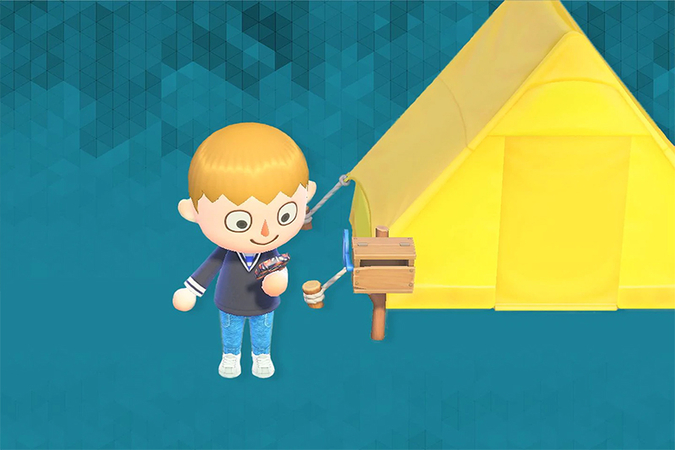
In Animal Crossing: New Horizons, your NookPhone (the in-game smartphone) helps you keep track of much of the game’s features, with a built-in encyclopedia of critters you’ve found or donated, as well as a progress tracker displaying how far along you are in completing Nook Miles objectives.

But some systems, like the ins and outs of the fluctuating Stalk Market for selling turnips and the occasionally resource-rich Mystery Island Tours, have hidden algorithms shrouded in mystery. Others, like your custom design creator, can be limited depending on your creative ambitions. Luckily, players from around the world have been data mining and building third-party tools to help you navigate these areas with ease.

– – –

Custom designs portal

Once you’ve unlocked the Able Sisters tailor shop, you can use a kiosk in the back of the store that utilizes a code-based system to download and share custom-made designs. These designs can be used to style clothes, wallpapers, paths and more.

If you’re looking for something specific, the online custom designs portal from NookNet can help. Navigating the portal is simple: Just type in keywords, and be as specific as possible. For example, instead of searching for ‘Nightmare Before Christmas,’ you may have more luck with ‘Jack Skellington.’ Applying filters can narrow down your search further, especially if you’re only looking for a certain type of clothing or want to sort by popularity or relevancy.

In the code-based system, there are two types of codes: a creator’s code, which brings up every custom item a single player has made, and an item code, which just surfaces one particular item. Talented players have also taken to Twitter and Reddit to share their codes, so keep an eye out for them there.

– – –

Online pattern tool

Animal Crossing: New Horizons has a decent custom design toolset within your NookPhone, but it can be difficult to draw precisely when using joysticks (the touch screen, unfortunately, is not compatible, like it was on the Nintendo 3DS for New Leaf). If accuracy is important to you, this unofficial online pattern tool is the best way to go.

With its larger grid for drawing, and a feature that lets players transfer saved photos into the game, this tool is essential for artists. The latter is especially fun: You can load any image from your computer into the editor, then crop it and choose specific parameters like length and width, and finally, import it into your game. If you’re converting photos, it’s best to plop them in an image editor first to reduce their size to 300 by 300 pixels.

Importing these images from the editor to your game is easy: Download the official Nintendo Online App and set up NookLink. From there, you can use your real-life phone camera to capture the QR code of the pattern made in the editor to instantly bring it into the game.

– – –

Happy Island Designer

If you’re big into island design, this browser-based map designer can help you plan everything out. Happy Island Designer is a tool that was especially popular in the weeks before New Horizons released, so that players could arrange the layouts of their islands early. With this virtual island map, you can tweak the landscape, flora, infrastructure and so on and see the result from a top-down view.

Considering New Horizons gives players so much more control over island aesthetic, this can be a helpful way to envision the end result before committing to ambitious terraforming tasks or costly construction projects. Even if you have already made progress in New Horizons, you can import an image of your map to Happy Island Designer so it can be superimposed atop your map editor at low opacity. This is practical if you want the virtual map to be identical to what your island layout already looks like, which can make planning out additions easier.

– – –

Tools to master the Stalk Market

Every Sunday morning, you can buy turnips from visitor Daisy Mae, and sell them later in the week at your island’s retail shop Nook’s Cranny. However, buying and selling turnips doesn’t solidify your chances of turning a profit. Prices fluctuate every day, so how much you stand to earn is a gamble.

This is where Turnip Prophet comes in. This turnip price calculator, built by Twitter user Ninji and based on data-mined code, can help players navigate the Stalk Market more efficiently.

With Turnip Prophet, you input your daily prices from an entire week, and the tool can then correlate that info into a graph predicting whether your prices will spike or decrease throughout the next week. As this is an unofficial tool, it may not always be spot on, but from my own experience, the price ranges have been more accurate than not.

If you’re more interested in taking advantage of turnip prices on other players’ islands, Turnip Exchange may be for you. With this website, you can enter a bustling community of turnip entrepreneurs who are constantly buying and selling. You can join a queue to wait for your turn to visit a seller’s island, or you can host your own. Wait times can be long, and some users on Reddit complain of the system being overrun by bots. If you face issues with the website, a secondary option is using the turnip traders system within the iOS app AC Exchange.

– – –

Exchange items online

Turnips are far from the only item that’s in high demand. Furniture, DIY crafting recipes, K.K. Slider albums and even villagers are being exchanged on the online retailer-like website Nookazon. Similar to Craigslist (not Amazon, surprisingly), Nookazon lets sellers and buyers choose their desired prices or what they want in exchange. Because of this, you should be wary of being ripped off. If you want to confirm what certain items regularly sell for in Nook’s Cranny, you can use Nook Plaza, the unofficial catalogue of New Horizons’s assortment of goods. Nook Plaza is continuously updated, but so far it includes over 5,000 listings.

– – –

Create and discover island tunes

Within New Horizons, a fun tune creator is provided to write a theme song for your island. The website NookNet has imported that same mechanic to browsers, so that you can tinker with the tool on your computer when you’re away from your Switch. Furthermore, you can easily share custom-made songs with the website community or find certain beats within their database, such as the Imperial March from Star Wars.

If you want even more options, a website named Animal Crossing Community shares custom-made island tunes within its large online library as well.

– – –

Breakdown of Mystery Island Tours

Mystery Island Tours, which are far-off islands that you can visit with a purchased Nook Miles Ticket, have different resources and fruit depending on which you end up on. Since these trips are randomized, you never know what island you’ll find or what’s out there. This short guide provides a breakdown of each and every known island and how much chance is involved with that island spawning. It was put together by Ninji, the same data miner behind Turnip Prophet.

YouTube sees 75% jump in news views on thirst for virus updates #ศาสตร์เกษตรดินปุ๋ย

#ศาสตร์เกษตรดินปุ๋ย : ขอบคุณแหล่งข้อมูล : หนังสือพิมพ์ The Nation.

https://www.nationthailand.com/lifestyle/30385939?utm_source=category&utm_medium=internal_referral

YouTube sees 75% jump in news views on thirst for virus updates

Apr 14. 2020
By Syndication Washington Post, Bloomberg · Mark Bergen, Emily Chang · BUSINESS

News viewership on YouTube soared 75% in recent weeks from the same time last year, with millions of people turning to the video site for updates on the coronavirus, Chief Product Officer Neal Mohan told Bloomberg Television.

YouTube, part of Alphabet Inc.’s Google, reaches more than two billion viewers a month and has had a significant traffic surge since the pandemic took hold. One of the largest upswings went to videos the company classifies as “news,” according to Mohan. “People are trying to consume as much information around this crisis,” he said. “It’s top of mind for everybody.”

The world’s largest online video hub ranks news and medical videos according to their “authoritativeness,” using a mixture of automation and human evaluators, although it does not share those ranking scores publicly. On videos that mention the virus, YouTube began running an information panel linking to health agencies, which Mohan said has been viewed more than 10 billion times. YouTube also added a tab on its homepage to feature news videos about Covid-19.

As the virus spread, YouTube had to confront misleading and outright false videos, too, a persistent problem for the site. It has so far removed “thousands” of videos for violating policies on disinformation related to the virus. And YouTube has adjusted these policies repeatedly, restricting videos promoting a conspiracy theory tying the virus to 5G networks and those that “might encourage people to flout stay-at-home orders,” Mohan said. Additionally, the company now says it is removing videos connected to #filmyourhospital — a social-media misinformation campaign designed to suggest the virus is a hoax.

“We’re remaining as vigilant as possible,” Mohan said. The executive also added that the new policies would remain intact once the pandemic subsides.

Despite the jump in viewing, YouTube, like other big online platforms, has seen a drop in advertising spending as many of its marketing clients slash budgets. Mohan declined to discuss changes in sales.

Tom Hanks hosts ‘Saturday Night Live at Home,’ the show’s first remote episode in history #ศาสตร์เกษตรดินปุ๋ย

#ศาสตร์เกษตรดินปุ๋ย : ขอบคุณแหล่งข้อมูล : หนังสือพิมพ์ The Nation.

https://www.nationthailand.com/lifestyle/30385849?utm_source=category&utm_medium=internal_referral

Tom Hanks hosts ‘Saturday Night Live at Home,’ the show’s first remote episode in history

Apr 12. 2020
By The Washington Post · Travis M. Andrews · ENTERTAINMENT, TV 

Since its inception in 1975, “Saturday Night Live” has been broadcast live from Studio 8H in 30 Rockefeller Plaza. But if the rise of covid-19 has taught us anything, it’s that even our most hallowed institutions can adapt both quickly and deftly to our new reality. And so, in the footsteps of the weekday late night shows, “SNL” returned in a new self-quarantining, video-streamed-straight-from-their-homes-to-ours format that paradoxically felt both entirely alien and as comfortable as a worn-in

Of all the shows forced to reformat, “SNL” arguably faced the biggest challenge. It derives its magic from the fact that it’s collaborative, live and in front of a studio audience. Going into Saturday, nobody knew what to expect. NBC kept the show’s contents fairly hush-hush, making the episode one of its most highly anticipated – and it didn’t disappoint.

The first sign that things were going to be a little different, as if we needed such a sign, was the absence of a cold open. Instead of the usual opening credits, we were treated to clips of the cast (many sporting some wonderful quarantine beards) at home.

A besuited Tom Hanks appeared as the surprise host, live-streaming from his (very nice!) home, appearing to tremendous applause.

“That is some sound effect of applause and whistles. Thank you engineers!” he said, before quipping that he’s something of the “celebrity canary in the cold mine” of coronavirus, since he was the first famous actor to contract the disease. Thanks to that, he said, he’s become more like America’s dad because “no one wants to be around me very long, and I make them uncomfortable.”

He assured the audience at home that the cast did everything it could to recreate the “SNL” experience. To prove it, Hanks even did an audience Q&A, playing all the audience members who asked flattering questions like “How do you stay in such great shape?”

Quick sketches featuring only one cast member at a time comprised the majority of the episode. It began with Pete Davidson rapping a Drake parody aptly titled “A Drake Song” from his mom’s basement with the chorus: “This is a Drake song / I miss my ex / This a Drake song / No. 1 on the Billboard.” Then Kate McKinnon reprised her Supreme Court justice Ruth Bader Ginsburg, offering workout tips as she lifted Q-Tips and AA batteries while asking Anthony Fauci to answer her DMs.

The first sign that this odd format could be an advantage came during an inspired sketch that tackled Zoom, the video chatting app everyone seems to be using to connect both professionally and socially. It riffed on the idea that some people just don’t understand the technology. McKinnon’s and Aidy Bryant’s characters both couldn’t figure out how to use the cameras, either placing their faces far too close to the lens or turning the camera off and replacing themselves with an image of Wayne Brady – before crying that they “ruined the Zoom.”

The show also took advantage of the temporary format by airing “Bailey at the Movies,” the YouTube show that Heidi Gardner’s teen movie critic Bailey Gismer often discusses on Weekend Update but that we never see. Needless to say, she found most of the movies she’s seen lately as “awkward” and has a crush on the invisible man. Mikey Day, meanwhile, used the format to become terrible gamer streaming himself consistently dying in the new Call of Duty while streaming himself on Twitch.

Other sketches were simply goofy, but strange enough that it’s hard to imagine them airing during a normal episode, such as the animated short “Middle-Age Mutant Ninja Turtles,” which finds Donatello worrying about a mass on his spine and Raphael in debt from betting on golf.

Weekend Update itself felt most similar to what we’re used to seeing, even though it was conducted through a video chat app. They had a small audience watching it online when they filmed it because, as Michael Che put it, “telling jokes with nobody feels like hostage footage.”

Guest stars appeared throughout the episode. Larry David reprised his Bernie Sanders to announce that, yes, he’s going to endorse Joe Biden but not that enthusiastically. He also discussed his greeting of choice, “the half-wave. It’s 50 percent hello and 50 percent, eh, go away. It’s been working for me for years.” Alec Baldwin as President Donald Trump called into Weekend Update. Fred Armisen appeared on a FaceTime call with Beck Bennett and Kyle Mooney for a futile brainstorming session.

“SNL” was at least somewhat prepared for a night like this. For decades, the show has mixed in prerecorded or animated sketches with its live ones. In recent years – partially due to the rise and success of former cast member Andy Samberg’s “Lonely Island” on digital streaming platforms such as YouTube – these pretaped segments have become more prominent.

Throughout the episode there were also messages of hope amid reminders to wash your hands and continue social distancing. Coldplay’s Chris Martin – who played one of the first makeshift, live stream concerts during self-quarantine that have become all the rage – played Bob Dylan’s “Shelter from the Storm.”

But the most straightforwardly sentimental moment was a sorrowful one that found McKinnon, Armisen, Davidson, Adam Sandler, Kenan Thompson, John Mulaney, Bill Hader, Tina Fey, Amy Poehler, Maya Rudolph and many more singing Lou Reed’s “A Perfect Day” to honor their colleague Hal Willner, who served as the show’s sketch music producer since 1980. He died last week at 64 from complications of covid-19.

That the show included such a touching moment isn’t surprising. It has long attempted to be something of a balm during national crises. Its 27th season debuted 18 days after the terrorist attacks of 9/11, and it opened with Paul Simon performing “The Boxer” after then-mayor of New York City Rudy Giuliani, flanked by police officers and firefighters, announced that America would persevere. And days after the 2017 Las Vegas massacre, country singer Jason Aldean spoke to the importance of Americans banding together to help each other through a difficult time before covering Tom Petty’s “I Won’t Back Down.”

Saturday night’s broadcast closed with Hanks saying “That’s our show. We hope it gave you something to do for a little while.”

Book World: What UFOs can tell us about life on Earth #ศาสตร์เกษตรดินปุ๋ย

#ศาสตร์เกษตรดินปุ๋ย : ขอบคุณแหล่งข้อมูล : หนังสือพิมพ์ The Nation.

https://www.nationthailand.com/lifestyle/30385766?utm_source=category&utm_medium=internal_referral

Book World: What UFOs can tell us about life on Earth

Apr 11. 2020
They Are Already Here
(Photo by: Pegasus — handout)

They Are Already Here (Photo by: Pegasus — handout)
By Special To The Washington Post · Steven Gimbel

They are Already Here

By Sarah Scoles

Pegasus. 248 pp. $27.95

Intimate Alien

By David J. Halperin

Stanford. 292 pp. $26

The Contact Paradox

By Keith Cooper

Bloomsbury. 336 pp. $28

UFO sightings happen in clusters. The same is true of books about UFOs. While clusters of UFO sightings are called “flaps,” there is no similar term for clusters of UFO books. I propose calling them a “Sagan” (despite the risk of implying that there are billions and billions of them).

The 1950s saw one Sagan, with Gray Barker and Frank Scully shaping our idea of flying saucers while skeptics sought to expose them as Barnum-esque bunk-peddlers. Another occurred in the 1970s, with Erich von Daniken and Charles Berlitz pointing to phenomena like the carved stone heads on Easter Island as evidence that ancient astronauts influenced the development of humanity. In the 1990s, Whitley Strieber’s “Communion,” first published in 1987, ushered in a host of alien abduction books. In each of these Sagans, half the authors required observed phenomena to believe in extraterrestrial contact, while the skeptics worked to show that the reports were false or had alternative, more likely explanations.

We are in the midst of a new Sagan of UFO books that is different and, frankly, more interesting. The central concern in these books is not truth but meaning. UFOlogy is similar in many ways to religion. While writers from Thomas Aquinas to Richard Dawkins argue for and against belief in God, a different approach was taken by William James, who sets aside concern about God’s existence and starts from the fact that people do have religious experiences. Whether or not there is a God, James asks, what does it mean that there are so many who have these transcendent experiences? Sarah Scoles’s “They Are Already Here: UFO Culture and Why We See Saucers,” David J. Halperin’s “Intimate Alien: The Hidden Story of the UFO” and Keith Cooper’s “The Contact Paradox: Challenging Our Assumptions in the Search for Extraterrestrial Intelligence” take a similar approach to the question of UFOs. Maybe we have been visited, maybe not (probably not), but regardless, what does it mean that so many of us have these experiences and beliefs?

Scoles treats UFOlogy sincerely as a religion replete with congregations and sects, holy sites, sacred texts, and theological debates. A lapsed Mormon, Scoles sees parallels between her religion and UFOlogy, both derived from American culture, not Middle Eastern antiquity. “They Are Already Here” presents the reader with an exploration of this new religion – its leaders, schisms and followers – while reading like a travel narrative. Scoles, often accompanied by her sister, visits Area 51, Roswell, UFO conventions and offbeat roadside attractions. She does not get into Area 51 or provide insider information about government coverups or alien autopsies. Rather, she camps in the vicinity, takes sketchy private tours, gets approached by park rangers and federal agents, gets scared by trucks rumbling by during the night, and chats with lots of people. Her interest is not in supporting or debunking claims, but in understanding the beliefs and the believers.

Scoles successfully navigates between otherizing (making people into bizarre, foreign objects) and going native (becoming one of the group observed). She is charitable, treating those she meets as rounded individuals full of hope and pain, not as a motley collection of rubes and charlatans to be mocked. Yet, she maintains her position as an outsider journalist making sense of the intricate stew of conspiracy theory, spectacle and kitsch. Scoles marries a thoughtful objectivity with a warm subjectivity as she talks to serious-minded UFO report investigators, tour guides for ET sightseers, and movers and shakers in the UFOlogy community.

Where Scoles is always careful to distance herself from the UFOlogist congregants, Halperin admits to being a lifelong member. Growing up a smart but alienated child with a terminally ill mother in the early 1960s, he buried himself in the world of ETs, full of mystery. He became a professor of religious studies, researching Jewish mysticism – and realizing that his youthful fascination and professional studies were intertwined.

Halperin considers extraterrestrials to be a myth. But where we commonly use that word to mean a false story, he takes it as a technical term from a Jungian perspective. Psychoanalyst Carl Jung held that there is a universally shared portion of the unconscious mind that connects all people and shows itself in myths: deep-seated mental constructs used to make sense of the world.

UFOs, Halperin argues, are such myths. They do not come from space but from the human mind. This does not make them false, he contends; quite the opposite. What they expose about us individually and collectively is, in fact, a much deeper truth.

Those who seek to debunk UFO claims focus wrongly on the object of the experience (flying saucers, aliens with large eyes, men in black). But whether or not the object of the experience is real, the experience itself certainly is. Indeed, the experiences are held to be deeply meaningful. We can suspend belief about the object of an experience while honoring the experience itself as worthy of intellectual analysis. Whether aliens have visited Earth or not, what do the commonalities in the experiences of those who have engaged with UFOs say about us?

The first promoted story of alien abduction involved Barney and Betty Hill, a mixed-race couple, in 1961. Shortly after an uncomfortable experience with racist ruffians, the Hills claimed, they were abducted by a UFO. Halperin examines the transcripts of the Hills under hypnosis, noting language that uncannily connects to the experiences of enslaved Africans. Could such experiences be buried in the subconscious of those whose ancestors lived through them? Do our UFO experiences allow us to direct away from Earth that which we need to unearth within ourselves?

In “The Contact Paradox,” Cooper approaches the question from the opposite direction. Where Scoles and Halperin look at past claims of extraterrestrial interactions, Cooper looks at those who are seeking them using our best current theories and tools. The editor of Astronomy Now and Astrobiology Magazine, Cooper examines the assumptions and inferences made by the professional researchers engaged in the SETI (Search for Extraterrestrial Intelligence) project. The presuppositions of scientists seeking evidence of life beyond Earth tell us a lot about what we consider the essence of the life-forms doing the looking.

Searching for evidence of extraterrestrial life is trickier than it would seem. Just listen for a signal, we say. But what kind of signal? How do we know if it is a signal? What would be used to send the signal? We think automatically of large radio telescopes, their concave dishes pointing skyward. But what frequency should we monitor looking for non-random noise?

Scientists have reasoned that you often find different kinds of life around a water hole, so we should look at the telescopic water hole. Chemical elements emit telltale frequencies when excited. Hydrogen peaks at 1420 MHz and a molecule of hydrogen and oxygen at 1666 MHz. Since the two combine to create water, the radio telescopes keep track of what they hear between those two frequencies – the water hole. It would make sense if there was someone out there like us trying to contact us.

But would the life out there be like us? What other kinds of intelligences could there be? Cooper points out that there are other sorts of intelligences right here on Earth: dolphins, octopi, elephants. We need to understand how they think to broaden our sense of what we might be looking for.

And what has been the result of contact between earthly cultures? Sometimes the interactions are friendly, but often they are exploitative. Should we be afraid of extraterrestrial life? Are we better off not knowing whether there is anyone out there, lest they actually be like us? Cooper weaves together the thoughts of leading scientists, science fiction writers and social scientists to ponder these questions.

The great virtue of Cooper’s discussion is that it gives readers a picture of living science. Too often, science is presented as fixed, solved, completed. Cooper shows us scientists disagreeing, presenting and supporting alternative theories, and gives clear discussions of the differing views, letting the science live.

So, is there intelligent life beyond Earth? This Sagan of books will not answer that question. But what these three books will do is make you think much more deeply about what such questions mean. If you look into a telescope backward, it becomes a microscope. Looking from both ends can be the source of fascinating insights.

Gimbel is a professor at Gettysburg College and the author of “Einstein’s Jewish Science: Physics at the Intersection of Politics and Religion.”