Only 2 pct of worlds COVID-19 vaccines administered in Africa: WHO
COVAX has also faced several challenges which, according to the WHO, were triggered by manufacturers prioritizing bilateral deals and many high-income countries tying up the global supply of vaccines.
Less than 3.5 percent of Africans have been vaccinated against COVID-19, which is far short of the official target of 60 percent.
Africa has been “left behind by the rest of the world” as only two percent of the more than 5.7 billion COVID-19 vaccine doses administered globally have been administered there, the head of the World Health Organization (WHO) said on Tuesday, warning the world against vaccine inequity.
The WHO’s aim is to vaccinate at least 40 percent of the population of every country by the end of this year and 70 percent by the middle of next year. However, only two countries in Africa have reached the 40-percent target, the lowest of any region, WHO Director General Tedros Adhanom Ghebreyesus said at an online press briefing.
ADVERTISEMENT
“That’s not because African countries don’t have the capacity or experience to roll out COVID-19 vaccines. It’s because they have been left behind by the rest of the world,” he said.
Last year, the WHO and its partners launched COVAX, the global initiative to ensure fair and equitable access to COVID-19 vaccines. To date, it has delivered more than 260 million vaccine doses to 141 countries. However, COVAX has also faced several challenges which, according to the WHO, were triggered by manufacturers prioritizing bilateral deals and many high-income countries tying up the global supply of vaccines.
Photo taken on Sept. 8, 2021 shows a tag about trees planted at a memorial garden dedicated to those who lost their lives due to the COVID-19 pandemic in Cape Town, South Africa.
According to John Nkengasong, director of the Africa Centers for Disease Control and Prevention who also attended the briefing, less than 3.5 percent of Africans have been vaccinated against COVID-19, which is far short of the official target of 60 percent.
“This leaves people at high risk of disease and death, exposed to a deadly virus against which many other people around the world enjoy protection,” Tedros said.
“The longer vaccine inequity persists, the more the virus will keep circulating and changing, the longer the social and economic disruption will continue, and the higher the chances that more variants will emerge that render vaccines less effective,” he warned.
The WHO, the African Union and COVAX have been calling on vaccine manufacturers to prioritize the COVAX program and urging countries to fulfill their dose-sharing pledges and facilitate the sharing of vaccine technology and intellectual property.
In August, the WHO also called for a global moratorium on booster vaccine doses at least until the end of September to prioritize vaccinating the most at-risk people around the world who are yet to receive their first dose. As vaccine inequity continues to persist, it then called for an extension of the moratorium until at least the end of the year to enable every country to vaccinate at least 40 percent of their populations.
A medical worker takes a swab sample for COVID-19 test in Rabat, Morocco, on Sept. 13, 2021.
Lack of equitable access to COVID-19 vaccines is public health tragedy: Bill Gates
“We face the very real risk that in the future, wealthy countries and communities will begin treating COVID-19 as yet another disease of poverty. We cant put the pandemic behind us until everyone, regardless of where they live, has access to vaccines,” Bill Gates said.
The lack of equitable access to COVID-19 vaccines is a public health tragedy though the fast development and deployment of COVID-19 vaccines help avert some of the worst-case scenarios in regards to United Nations Sustainable Development Goals, according to philanthropist Bill Gates.
“We face the very real risk that in the future, wealthy countries and communities will begin treating COVID-19 as yet another disease of poverty. We can’t put the pandemic behind us until everyone, regardless of where they live, has access to vaccines,” Bill Gates, co-chair of Bill & Melinda Gates Foundation, said on Monday.
More than 80 percent of all COVID-19 vaccines have been administered in high- and upper-middle-income countries to date, with some securing two to three times the number needed so they can cover boosters, according to the latest annual Goalkeepers Report by the Bill & Melinda Gates Foundation.
ADVERTISEMENT
By contrast, less than 1 percent of COVID-19 vaccine doses have been administered in low-income countries.
Further, COVID-19 vaccine access has been strongly correlated with the locations where there is vaccine research and development and manufacturing capability. Though Africa is home to 17 percent of the world’s population, for example, it has less than 1 percent of the world’s vaccine manufacturing capabilities, according to a release by the foundation.
A South Sudanese woman receives AstraZeneca COVID-19 vaccine at Juba Teaching Hospital in Juba, capital of South Sudan, April 7, 2021.
The report calls for the world to invest in research and development, infrastructure, and innovation in places closer to the people who stand to benefit.
“We must invest in local partners to strengthen the capacity of researchers and manufacturers in lower-income countries to create the vaccines and medicines they need,” said Mark Suzman, chief executive officer with the foundation.
The report shows that disparities caused by COVID-19 remain stark, and those who have been hardest hit by the pandemic will be the slowest to recover.
The COVID-19 pandemic pushed as much as 31 million people into extreme poverty in the world within 2020 compared to 2019, said the release. And while 90 percent of advanced economies will regain pre-pandemic per capita income levels by 2022, only a third of low- and middle-income economies are expected to do so.
However, the world stepped up to avert some of the worst-case scenarios on United Nations Sustainable Development Goals, according to the report.
New analysis from the Institute for Health Metrics and Evaluation (IHME) at the University of Washington shows that the decline in global vaccine coverage due to the COVID-19 pandemic was only half of what was anticipated a year ago, said the release.
To ensure a truly equitable recovery from the pandemic, the world needs long-term investments in health and economies like the ones that led to the rapid development of the COVID-19 vaccine, according to the report.
This year’s report is co-authored by Bill Gates and Melinda French Gates, co-chairs of the Bill & Melinda Gates Foundation, which is one of the largest charitable foundations in the world.
Photo taken on March 5, 2021 shows AstraZeneca-Oxford vaccines from COVAX vaccine sharing program being unloaded from a plane at Entebbe International Airport, Uganda.
COVID-19 lockdown extended in Australian capital amid battle against 3rd wave
The COVID-19 lockdown in Australias capital city Canberra has been extended until Oct. 15 as the country continues to battle the third wave of infections.
The COVID-19 lockdown in Australia’s capital city has been extended by a month as the country continues to battle the third wave of infections.
Andrew Barr, chief minister of the Australian Capital Territory (ACT), said on Tuesday that Canberra will remain in lockdown until Oct. 15.
Restrictions were due to end on Friday after 36 days in lockdown but Barr said the risk to the community remained high.
ADVERTISEMENT
On Tuesday morning, Australia reported 1,595 new locally acquired cases of COVID-19.
New South Wales (NSW), Australia’s most populous state with Sydney as the capital city, reported 1,127 new cases and two deaths.
“There have been 186 COVID-19 related deaths in NSW since June 16, 2021,” said the statement from NSW Health.
Photo taken on Sept. 14, 2021 shows an empty street in front of the Old Parliament House in Canberra, Australia.
Asean sees slightly fewer new Covid cases, more deaths
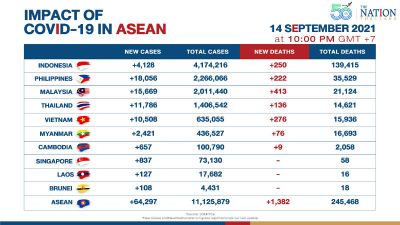
The number of Covid-19 cases in Southeast Asia crossed 11.12 million, with 64,297 new cases reported on Tuesday, lower than Monday’s tally of 67,017.
But there were an 1,382 deaths, increasing from Monday’s 1,341 and taking total coronavirus deaths in Asean to 245,468.
Singapore reported 837 new cases on Tuesday, bringing cumulative cases in the city-state to 73,130 patients and a total 58 deaths.
The Public Health Ministry announced that its vaccine expert team is researching the possibility of using a non-mRNA vaccine as a booster shot. The ministry currently recommends that those over 60 years get a booster shot after they have received two doses of Covid-19 vaccine within 6-9 months.
Meanwhile, Cambodian Prime Minister Hun Sen posted on his Facebook page that he and his wife received their third shots of Covid-19 vaccine on Tuesday.
He said almost 780,000 people in Cambodia have already had their third jab, while the overall vaccination rate in the country is at 71 per cent. Hun Sen insisted that all citizens would eventually get a booster shot.
Cambodia reported 657 new cases and nine deaths on Tuesday, bringing cumulative cases there to 100,790 patients and a total 2,058 deaths.
Vladimir Putin self-isolates after covid exposure but has not tested positive, Kremlin says
Russian President Vladimir Putin said he will self-isolate after individuals close to him tested positive for the coronavirus.
The news came from the Kremlin in a transcript of a call between Putin and Tajik President Emomali Rahmon, where Putin said he will attend a meeting of the Shanghai Cooperation Organization, planned later this week in the Tajik capital of Dushanbe, virtually instead of in person.
The Kremlin also said Putin is “absolutely healthy” and has so far not tested positive for the coronavirus. The Russian president was vaccinated against the coronavirus in March with his country’s own Sputnik V.
Putin met in person with Syrian President Bashar Assad at the Kremlin on Monday. Assad said he and his wife had and recovered from covid-19 in March.
British government to start booster shots for vulnerable populations next week
LONDON – The British government on Tuesday announced a Plan A and a Plan B for getting through the challenging autumn and winter months in the face of a stubborn pandemic driven by the highly contagious delta variant.
The hope is that Plan A will be enough. As part of it, the government will offer free booster shots to 30 million people to protect front-line health workers, those older than 50 and any other medically vulnerable people.
However, if the virus begins to spread exponentially and threatens to overwhelm hospitals during flu season, Plan B might be required. In that case, the government said, it was prepared to reinstate restrictive measures, including mandatory mask-wearing in crowded spaces and the use of vaccine passports to allow people to go to large events and nightclubs.
The news that booster shots are coming follows an announcement Monday night that the government would offer vaccines to all children ages 12 to 15.
Health Secretary Sajid Javid said the booster program would begin next week in England, with the rest of the country expected to quickly follow suit.
ADVERTISEMENT
Speaking in the House of Commons, Javid said some of the emergency powers Parliament introduced in 2020 as Britain went into the first of its pandemic-induced lockdowns would be repealed. But others would be kept as part of Plan B.
This included contingency measures such as legally mandating face masks – a remark that prompted one Conservative lawmaker to cry out “No!” – and pressing people to work from home. Javid also said that although plans to introduce vaccine passports in October for large gatherings have been paused, “we will be holding that power in reserve.”
At news conferences from 10 Downing Street on Monday and Tuesday, Prime Minister Boris Johnson and his scientific advisers stressed that the pandemic was ongoing and that the coming months would be about “living with the virus” and “getting through the winter.”
Johnson said it was vital to get the remaining vaccine holdouts – about 5 million people – to come forward to get vaccinated.
The first booster shots will be offered at mass vaccination sites and will start with those in nursing homes and those over 80 before proceeding down through the age groups, health experts said.
Britain is the ninth country, including the United States, to announce a booster campaign. But its decision-making has been closely watched, since Britain has been conducting some of the most extensive studies on coronavirus boosters.
The government has been reviewing data from those studies as it devised its policy, though the findings have yet to be made public.
The booster will be given to those whose second dose of the two-dose regimen was at least six months ago. Britain will offer a full dose of the Pfizer vaccine or a half-dose of the Moderna vaccine as a booster. In the United States, the question of whether Moderna boosters should be given as full or half doses has delayed authorization.
Britain’s homegrown vaccine developed by Oxford researchers, in partnership with the pharmaceutical company AstraZeneca, will not be used here as a booster.
British health experts, citing ongoing studies about side effects and efficacy, said the messenger RNA vaccines – Pfizer and Moderna – appear a better option for a booster than the AstraZeneca shot.
“We all want a normal winter life,” said Deputy Chief Medical Officer Jonathan Van-Tam, but he cautioned that the world was still in an active phase of the pandemic and that the cold months could be “bumpy at times,” especially if this winter produces a bad flu season.
Other respiratory viruses are “highly likely to make their return,” he added, so the “aim of the game, the mantra if you like, is to stay on top of things.”
The World Health Organization has said that wealthy nations with large supplies of coronavirus vaccines should hold off on giving booster doses until more countries in the developing world can access first doses.
Medical experts advising the British government said offering boosters for those older than 50 – as opposed to the entire population – was a reasonable “middle way.”
Van-Tam said Britain’s vaccination program has helped stop 24 million covid-19 cases and averted 112,000 deaths. He also stressed that this was a “bespoke” booster campaign and was intended for this winter only.
Wei Shen Lim, a leader of the Joint Committee on Vaccines and Immunization, said evidence shows that vaccine efficacy especially wanes over time among people older than 50. He gave the example of a vaccine that was 90% effective in the weeks after a second dose at stopping symptomatic covid-19 but only 80% effective after six months.
That 10% decrease in protection might not sound like much for an individual, but at a broader population level, it could mean many thousands more hospitalized.
Infection rates in Britain are about 10 times as high today as a year ago. But deaths have plummeted as more than 80% of those older than 16 are protected by vaccines. The country is recording more than 100 coronavirus deaths a day, far lower than in January, when there were more than 1,200 coronavirus deaths a day.
On Monday, health officials confirmed that all children ages 12 to 15 will be offered a single dose of a coronavirus vaccine in England, discounting earlier advice that the shots were of only “marginal” medical benefit to youths.
Britain has lagged behind other wealthy countries, including the United States, which have been immunizing those 12 and older through most of the summer.
Just 10 days ago, Britain’s top vaccine task force recommended against vaccinating 12- to 15-year-olds, saying the shots were safe and effective but not really worth it for children and young teens, who rarely suffer from severe covid-19 but would risk very rare serious side effects from the vaccine.
The British chief medical officers said Monday that the risks to children were not only medical and that a vaccine would help protect them from the “massive impact” of missing classes, caused when teachers or students who test positive must isolate at home for 10 days or when schools – as they have in the past – are closed to in-person learning.
Chris Whitty, chief medical officer for England, said at a news conference that there was “extremely powerful evidence that disruption in education . . . has been extraordinarily difficult for children.”
Whitty stressed that the recommendation to offer vaccination was based only on what was best for the children and was not an attempt to protect parents, teachers or the wider society from infection.
The decision for England to begin giving single doses of the Pfizer vaccine at school – which is about 50% effective in protecting against symptomatic covid-19 – was confirmed by Nadhim Zahawi, the vaccines minister, to lawmakers Monday night.
As in the case of booster shots, Wales, Scotland and Northern Ireland are likely to follow in coming days.
Both children and parents will be asked to give consent, following a law established in the 1980s that gives competent young people a final say.
South Korea fines Google for abusing smartphone dominance
South Korea fined Google $177 million for hampering the development of rivals to its Android operating system, sustaining a campaign targeting the U.S. search giants dominance in smartphone software.
Regulators accuse Google, whose mobile operating system powers more than 80% of smartphones around the world, of using its immense bargaining power to squeeze out the competition. The Korea Fair Trade Commission said Google’s anti-fragmentation agreements (AFA) with manufacturers like Samsung Electronics and LG Electronics prevented gadget makers from developing or using modified versions of the Android OS. The watchdog banned Google from forcing manufacturers to sign AFA contracts and ordered that it modify existing ones.
Korea in August became the first country to pass a law forcing Apple and Google to open up their app stores to outside payment systems, setting a potentially radical precedent for their lucrative operations everywhere from India to the U.S. That bill becomes effective Sept. 14, the Korea Communications Commission said in a statement. Tuesday’s 207.4 billion won fine is one of the highest levied in the country over abuse of market dominance, with only Qualcomm Inc.’s mobile chipsets drawing higher sanctions.
Google responded by saying Android has accelerated innovation — including among Korean companies — and improved the user experience, and that it will appeal the decision. “The KFTC’s decision released today ignores these benefits, and will undermine the advantages enjoyed by consumers,” the company said in a statement.
ADVERTISEMENT
“It shows the KFTC is taking action after years of sitting on the fence,” said Tom Kang, research director at Counterpoint. “It has made the verdict that Google enjoys monopoly power so the regulator will continue to monitor and fine the company and other internet giants like it. It’s a big win for increased competition.”
The new measures from the KFTC are intended to spur competition by freeing companies to create so-called forks of Android — versions built from the same basic building blocks but modified to suit the manufacturer’s aims, such as targeting different device classes or use cases — without fear of punitive measures from Google.
“The Fair Trade Commission’s action was not limited to mobile devices, but corrective measures included emerging smart device-related areas such as smart watches and smart TVs,” Chairperson Joh Sung-wook said in a briefing on Tuesday. “Therefore, we expect that new innovations will occur as some competitive pressures in this area are activated.”
Korean regulators have stepped up scrutiny of tech giants this year, including of local players. Kakao Corp.’s group of companies lost more than $16 billion of market value at one point this month after prominent lawmakers called the nation’s biggest messaging and social media service “a symbol of greed.” Consumer protection has been a focal point of measures designed to curb the market-control powers of the largest companies, especially in developing spheres such as fintech services.
The market dominance of Google in the mobile arena has solidified as a result of the tech giant’s obstruction of competitors, the Korean regulator said. Amazon.com Inc. and Alibaba Group Holding Ltd. failed to launch mobile OS businesses while Samsung and LG were not able to release devices such as smartwatches and speakers with new services on time due to Google’s obstruction, according to the Commission.
Separately, the KFTC is investigating three other cases related to Google and competition restrictions in its Play Store app market, in-app purchases and the advertisement market.
Lito Adiwang to Hiroba Minowa: You Cant Escape From Me
Team Lakay strawweight star Lito Adiwang has a tough test ahead of him when he meets Hexigetu at ONE: REVOLUTION on Friday, September 24, live at the Singapore Indoor Stadium.
But though he says he’s not looking past his dangerous Chinese opponent, Adiwang also has a message he wants to deliver to former adversary, Hiroba Minowa.
Adiwang and Hiroba battled to a close split decision in October of 2020, with the final verdict swinging in the Japanese fighter’s favor.
“Thunder Kid” says a rematch with the #4-ranked strawweight contender is still a fight he very much wants, and is determined to get Hiroba back in the Circle after he takes care of business against Hexigetu.
“That’s definitely one win I want back. I still think I did enough to win that fight. But I guess that’s why you don’t leave the decision at the hands of the judges,” Adiwang told ONE Championship.
“Even after that fight, I was already clamoring for an immediate rematch. I wanted it. I wanted to clear all doubts. A lot of fans thought I won the fight as well. But on his side, he threw out a lot of excuses. He said I needed to prove myself and whatnot. I wanted to settle that issue right then, but I guess he didn’t want another piece of me.”
In their controversial strawweight contest, Adiwang, then ranked fifth in the division, caught Hiroba in a deep submission attempt early in the first round. The Japanese fighter appeared to have tapped, but the referee missed the call and the fight continued. Hiroba battled back in the final two rounds, enough to earn the split nod.
Following the bout, there was tremendous clamor for a rematch to settle the score. However, it appeared Hiroba was fully intent to move on from the Adiwang saga.
The Filipino fighter says not so fast.
“I’ll climb my way back through the rankings and keep on winning. He can avoid me now, but once I’m in range, he will have nowhere to go. He can’t run forever,” Adiwang said.
“I will claw my way back to the top five, and he will have nowhere to run. He can’t escape from me.”
But before Adiwang can even think of a Hiroba rematch, he has to get past Hexigetu, who poses a legitimate threat. The Filipino strawweight is confident he will pass his next test with flying colors.
“I’ve had enough preparation for this fight. I’m in great physical condition. I feel strong and ready. This is going to be one of my best performances yet. I can’t wait to step inside the Circle and do what I love to do,” Adiwang said.
“[Hexigetu] has my respect. I don’t think this is a step down for me. I respect every athlete I step into the cage with, whether you’re ranked or not. I know [he] will do everything in his power to beat me. I’ll be doing the same. In my mind, whoever finishes the fight first, wins. That’s my mindset. Let’s see what kind of mindset he comes into this fight with.”
ONE: REVOLUTION happens live on Friday, September 24 at the Singapore Indoor Stadium and features three world title bouts.
Also on the card, Adiwang’s Team Lakay teammate, reigning ONE Strawweight World Champion Joshua “The Passion” Pacio is set to defend his belt against former titleholder Yosuke Saruta in a highly anticipated trilogy match.
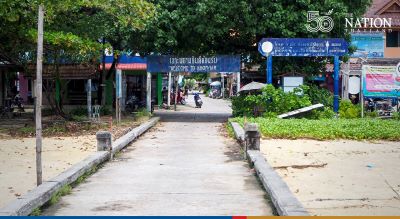
Koh Phayam next Thai island set to reopen to foreign travellers
Koh Phayam in Ranong province looks set to be the next Thai destination reopened to vaccinated foreign travellers under the Phuket sandbox scheme.
Commerce Minister Jurin Laksanawisit proposed adding Phayam to the list of islands under the quarantine-free scheme during a Cabinet meeting, said government spokeswoman Rachada Dhanadirek.
Jurin made the proposal after visiting Ranong, where representatives of the private sector told him that foreign tourists wanted the Phuket sandbox to expand to Koh Phayam.
He added that the island was sparsely populated and could control public health efficiently.
Prime Minister Prayut Chan-o-cha ordered the Centre for the COVID-19 Situation Administration (CCSA) to consider the proposal.
Phuket sandbox rules for travellers 1. Vaccinated foreign travellers must travel from countries approved by the CCSA and must have been for no less than 21 days before their travel date. They must apply for a Certificate of Entry (COE). 2. The tourist must also test negative for Covid-19 via an RT-PCR test, which will be performed twice during their stay in Phuket. 3. Travellers must stay in an SHA+ hotel or accommodation for the first 14 nights.
Travellers who stay on Phuket for less than 14 nights must leave the island immediately on an international flight to another country.
Travellers must complete 14 nights on Phuket before being allowed to visit other Thai destinations such as Bangkok, Chiang Mai or Krabi. They can also stay seven nights in Phuket and another seven nights on nearby islands.
These islands are: Koh Samui, Koh Pha-ngan and Koh Tao in Surat Thani province; Koh Phi Phi, Koh Ngai and Railay Beach in Krabi province; and Khao Lak, Koh Yao Noi and Koh Yao Yai in Phang Nga province.
Koh Phayam next Thai island set to reopen to foreign travellersKoh Phayam next Thai island set to reopen to foreign travellersKoh Phayam next Thai island set to reopen to foreign travellersKoh Phayam next Thai island set to reopen to foreign travellers

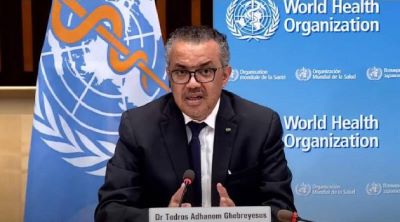
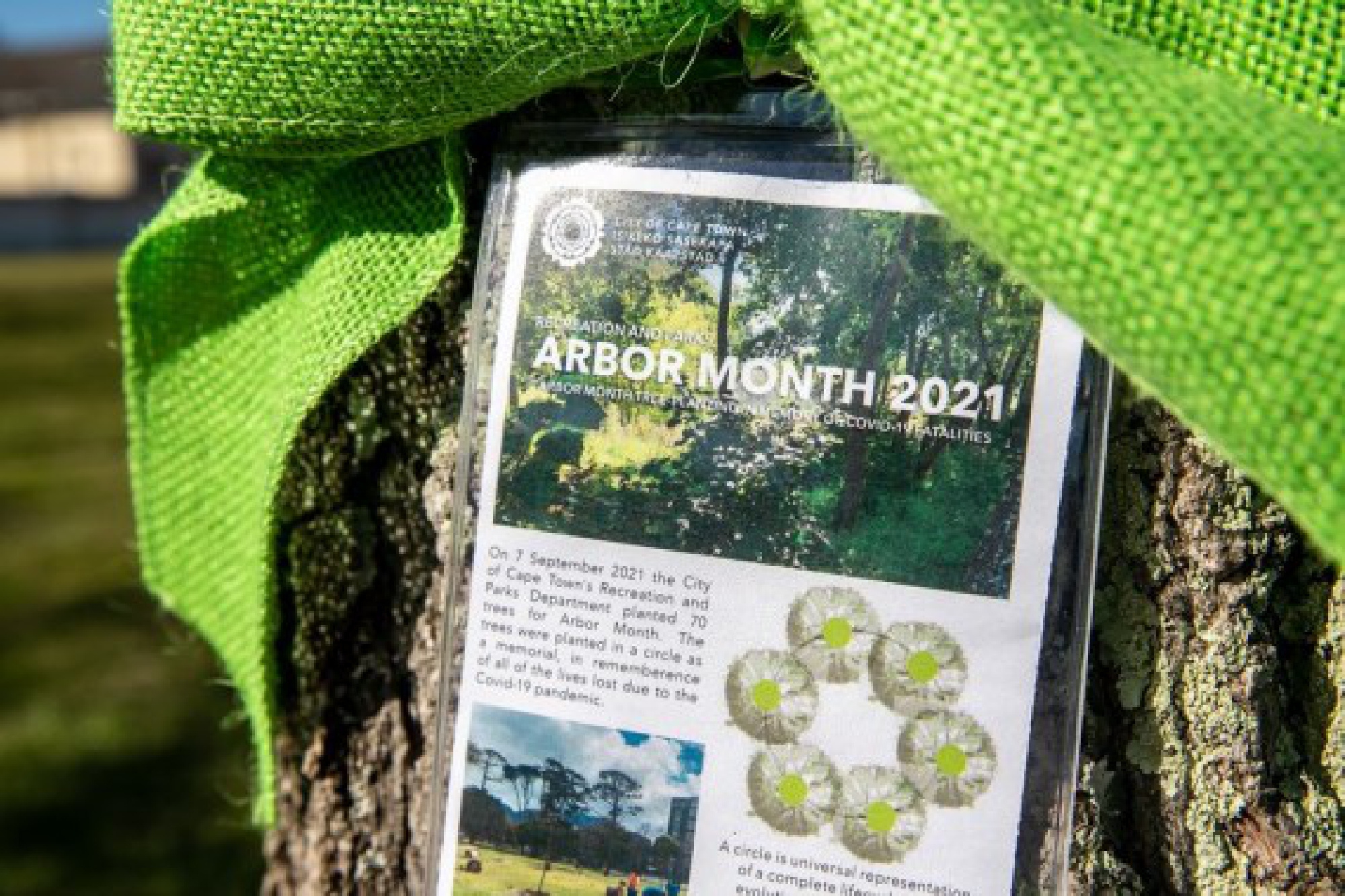 Photo taken on Sept. 8, 2021 shows a tag about trees planted at a memorial garden dedicated to those who lost their lives due to the COVID-19 pandemic in Cape Town, South Africa.
 A medical worker takes a swab sample for COVID-19 test in Rabat, Morocco, on Sept. 13, 2021.
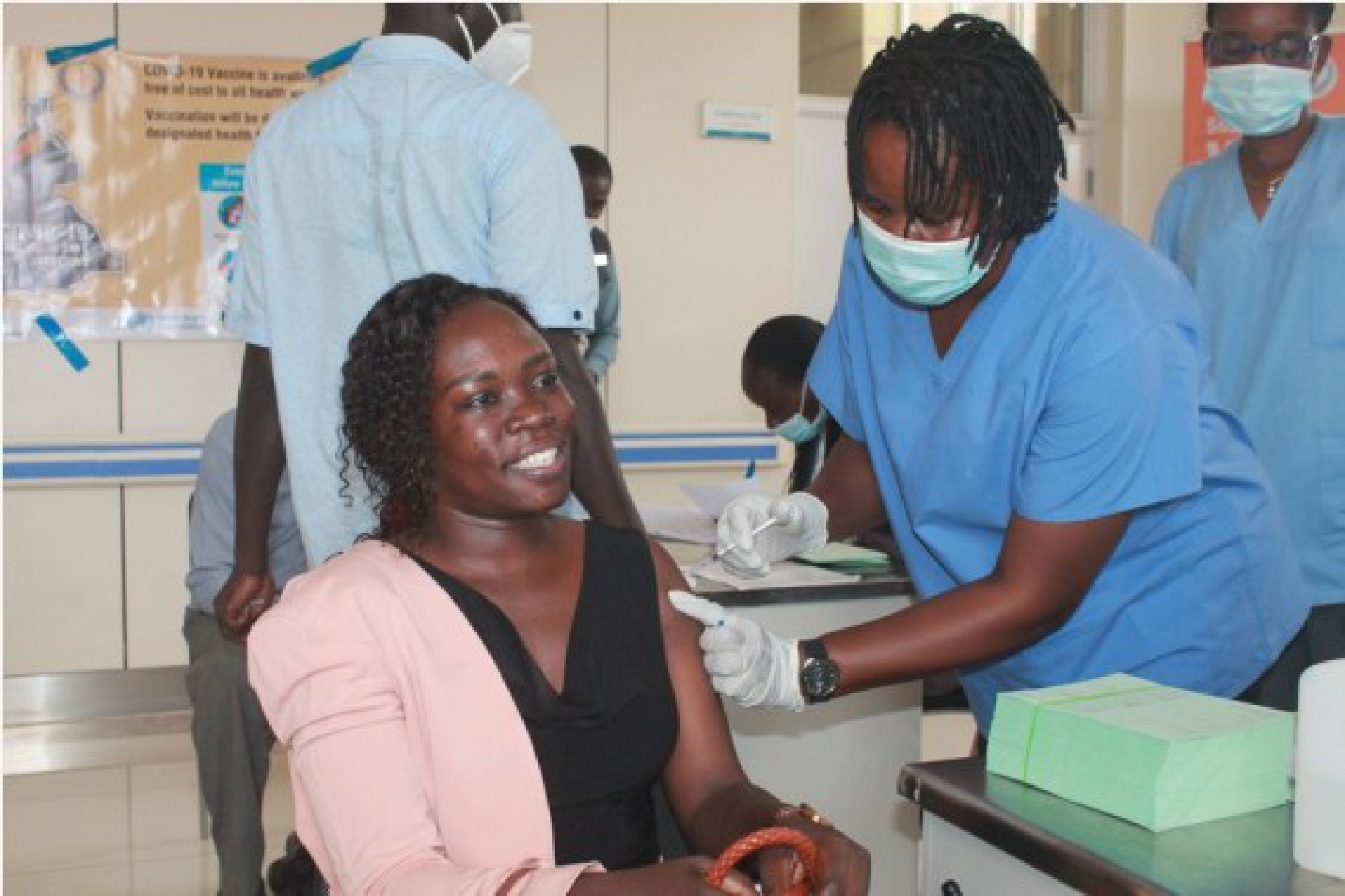 A South Sudanese woman receives AstraZeneca COVID-19 vaccine at Juba Teaching Hospital in Juba, capital of South Sudan, April 7, 2021.
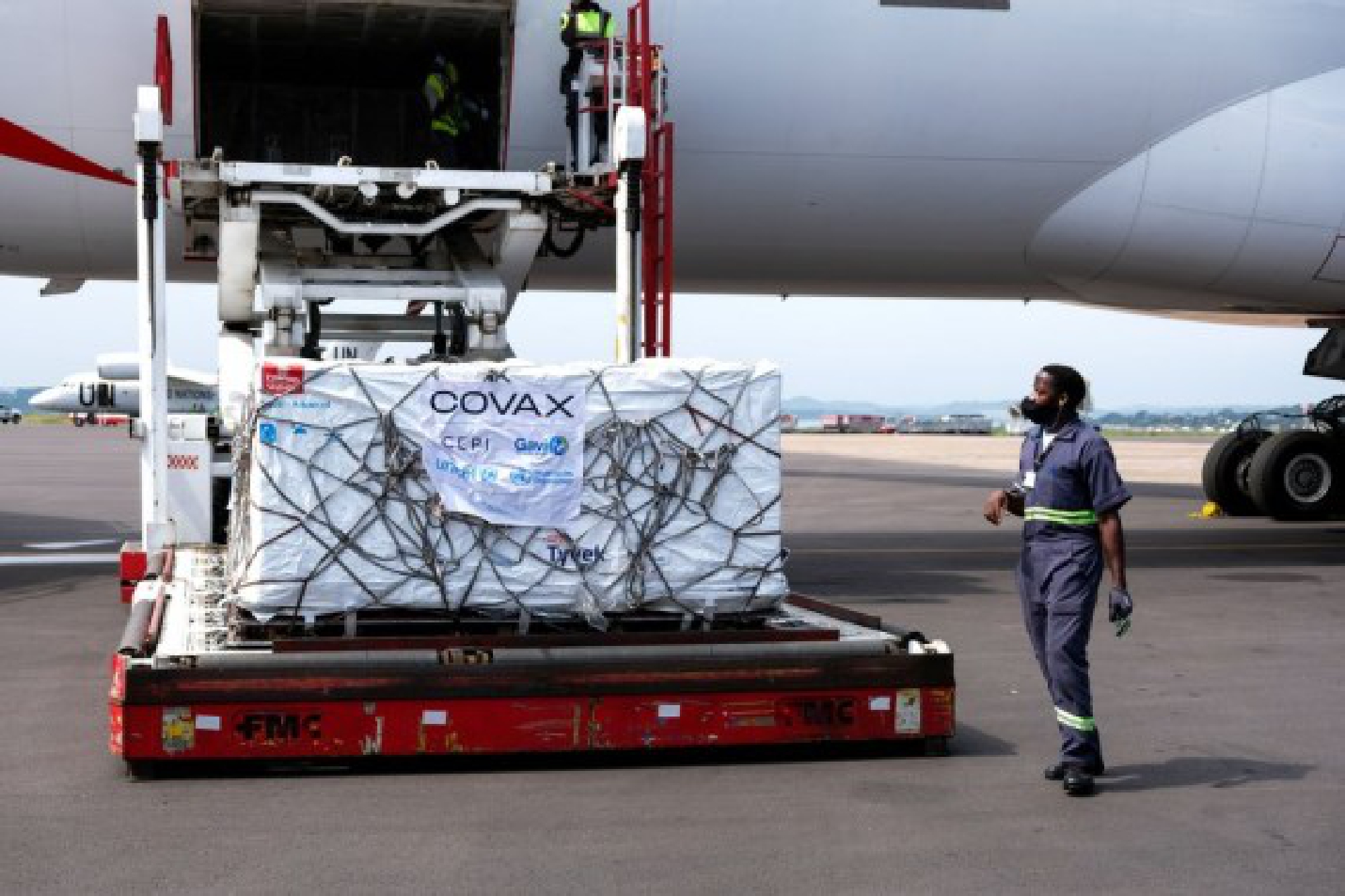 Photo taken on March 5, 2021 shows AstraZeneca-Oxford vaccines from COVAX vaccine sharing program being unloaded from a plane at Entebbe International Airport, Uganda.
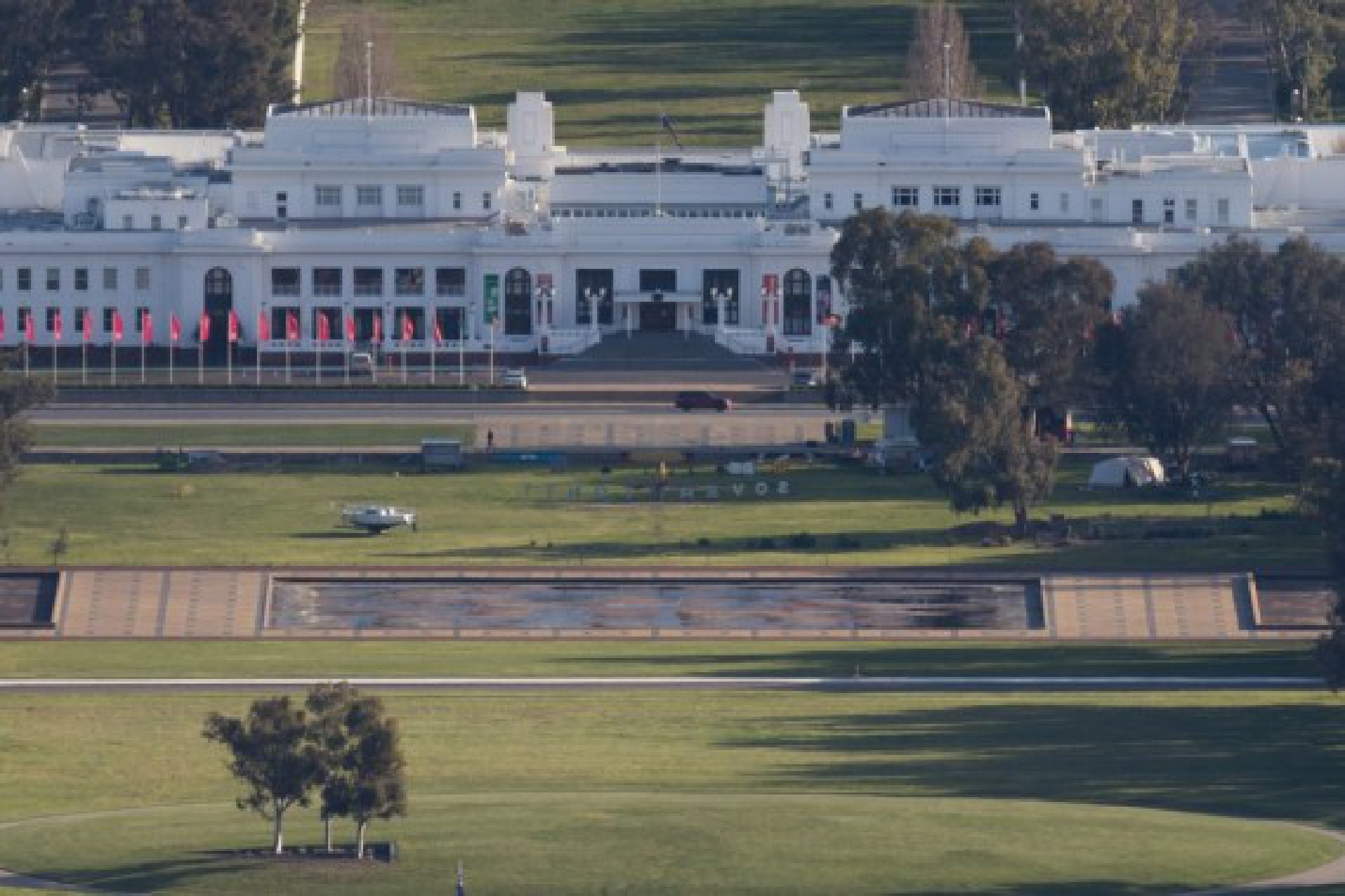 Photo taken on Sept. 14, 2021 shows an empty street in front of the Old Parliament House in Canberra, Australia.
 Photo taken on Sept. 14, 2021 shows a thoroughfare in Canberra, Australia.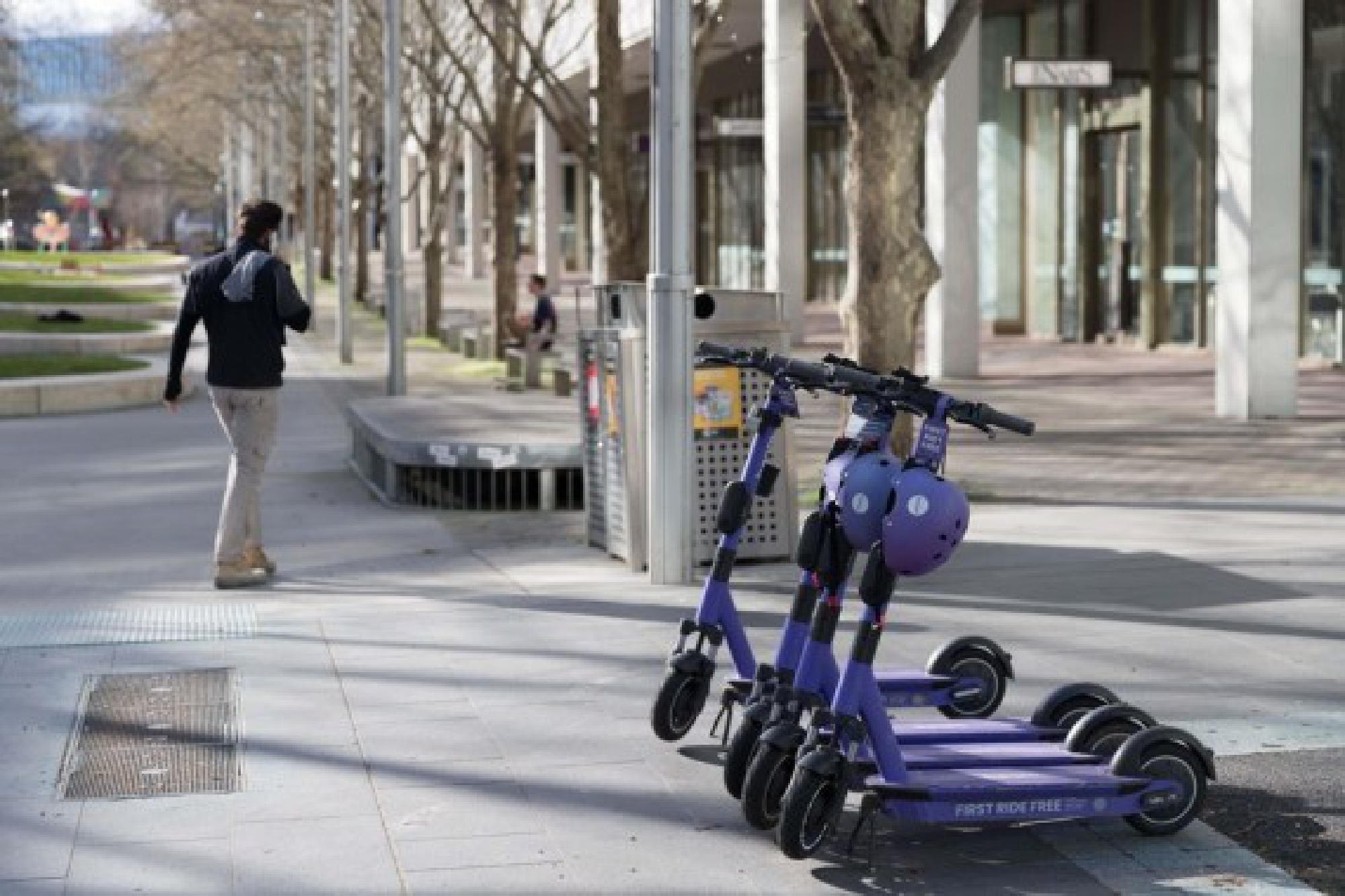




 Koh Phayam next Thai island set to reopen to foreign travellers
 Koh Phayam next Thai island set to reopen to foreign travellers
 Koh Phayam next Thai island set to reopen to foreign travellers
 Koh Phayam next Thai island set to reopen to foreign travellers
 SootinClaimon.Com