US, Vietnam work together on pushing back threats to freedom of navigation, international rules-based order: Harris
HÀ NỘI — The issues of the COVID-19 crisis, economy and trade, climate change response as well as the vision of a free and open Indo-Pacific were high on the agenda during the historic trip of US Vice President Kamala Harris to Hà Nội.
HÀ NỘI — The issues of the COVID-19 crisis, economy and trade, climate change response as well as the vision of a free and open Indo-Pacific were high on the agenda during the historic trip of US Vice President Kamala Harris to Hà Nội.
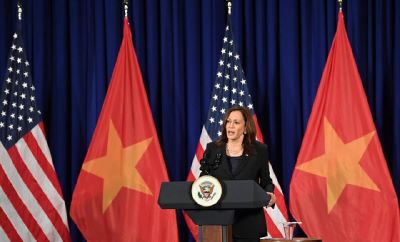
In a press briefing held on Thursday in Việt Nam’s capital city, Harris said she is honoured to be the first vice president to visit Việt Nam since diplomatic relations were established in 1995, and expressed the belief that “this signals the beginning of the next chapter in the relationship between the United States and Việt Nam.”
“We have had an enduring commitment to this relationship, because it matters to the people, to the security and to the prosperity of the American people, and we believe, the people of Việt Nam.”
She remarked the trajectory of bilateral ties since normalisation “has been nothing short of remarkable, when we think about where we’ve been, where we are and where are headed.”
As Việt Nam is currently battling a huge wave of COVID-19 infections with rising cases and deaths after successfully containing the outbreaks in 2020, Harris said the US will be with Việt Nam as it battles this surge and has provided donations of vaccines and freezers to Việt Nam.
She earlier in the day visited the National Institute of Hygiene and Epidemiology in Hà Nội to witness the delivery of parts of the 1 million doses of Pfizer COVID-19 vaccine the US donated to Việt Nam that she announced on Wednesday during a meeting with Prime Minister Phạm Minh Chính.
ADVERTISEMENTx
In the remarks, she also noted how the two countries have strengthened economic ties during the pandemic.
“During our meetings with the officials and leaders here in Việt Nam, I advocated for a reduction of tariffs on American agricultural goods and there was a positive reaction, and we’re looking forward to following up on that conversation.”
The US has also launched initiatives that will help Việt Nam transition to a more digital economy and help grow women- and ethnic minority-owned businesses, she said.
Addressing the climate crisis and green transition were also items of much discussion.
The United States welcomed Việt Nam joining the Agricultural Innovation Mission for Climate (AIM4C), an initiative announced at President Biden’s Leaders’ Summit on Climate that will be launched at COP-26 in November 2021.
The US official said she has had “extensive conversations” with PM Chính regarding this smart agriculture initiative, saying that the Vietnamese leader is interested in what the US is doing with satellite technologies to help farmers predict weather cycles.
Harris said that throughout the trip to Southeast Asia, she has reaffirmed “the commitment that the US has to our common vision for a free and open Indo-Pacific.”
The US will continue to have high-level security cooperation in support of a strong, prosperous and independent Việt Nam, she said, adding that the country will continue to work with Việt Nam to “push back against threats to freedom of navigation and the rule-based international order.”
She said both the US and Vietnamese leaders placed high priority on freedom of navigation not only as a security but also as a commerce issue.
“The US intends to strengthen our participation and partnership with partners and allies, in a way that is collaborative to meet the challenges of the moment and of the future together,” she said, whether it’s Việt Nam, Singapore, Southeast Asia or the Indo Pacific.
She also noted how during the visit and meetings with officials and different organisations in Việt Nam, there is still so much potential in this region “when we have the ambition to achieve what is possible, around common interests and common goals.”
“We know it matters deeply to the well-being of the American people that we maintain and strengthen these partnerships, and that’s why in the years ahead we will be coming back time and time again, as we follow through and chart this next chapter in the partnership in the relationship we have with the spirit of understanding that it is mutually beneficial and that there is much that we can do together,” Harris said. — VNS
Korea mulls ‘living with COVID-19’ after reaching 70% vaccine target
Public health officials and political leaders in South Korea are teasing the possibility of adopting a new exit plan of “living with COVID-19” in a couple of months’ time, when the country expects to reach its target vaccination rate of 70 percent.
Jeong Eun-kyeong, the Korea Disease Control and Prevention Agency’s commissioner, told a Monday meeting of the parliamentary Health and Welfare Committee that around October, the country may be able to switch to a new strategy of minimizing mitigation measures and allowing more “normal” to return.
She added that the prerequisite for moving on was a full vaccination rate of 70 percent.
“When the vaccination is high enough to suppress deaths and hospitalizations, and the spread of the virus is kept under control through efficient testing and contact tracing, then it can be possible,” she said.
Last week, the Ministry of Health and Welfare said preparations for a more social distancing-free life could take place after the Chuseok holiday, which falls Sept. 18-22, by which time more than 70 percent of the population will have received at least one dose of a vaccine.
The Moon Jae-in administration aims to give 70 percent of the 51 million people in Korea at least one dose before Chuseok, and then get to a full vaccination rate of over 70 percent by October.
The push to get back to normal has been gaining steam lately, with more politicians advocating the move. Moon’s former prime minister-turned-Democratic Party presidential candidate Lee Nak-yon said Monday it was “time for a change in paradigm in pandemic response.” “We should move on from managing all cases to managing just the severe cases,” he said.
Minister of SMEs Kwon Chil-seung likewise said Tuesday that social distancing was “not sustainable” and “in need of a change” in order to protect small businesses.
The fourth surge in infections has placed Greater Seoul under the most stringent tier of social distancing — which bans social gatherings of more than two people past 6 p.m. and shuts down food outlets and other risky places at night — since the first week of July.
A recent report out of Seoul National University’s preventive medicine department suggested the measures currently in place have been ineffective in containing the latest surge. The weekslong intensive social distancing, the report said, was not leading to decline in movement.
“Korea’s pandemic control strategy has relied on people willingly following safety steps, without imposing a lockdown or travel restriction. But the compliance appears to be waning,” said Dr. Jung Ki-suck, former chief of the Korea Centers for Disease Control and Prevention.
“Korea is around the same size as the US state of Indiana. People can easily travel to cities where the rules are more lenient,” he pointed out. “The same intensity of restrictions should be implemented outside Seoul.”
Amid the hopes of more freedoms, the number of COVID-19 patients requiring critical care reached 420 on Monday — the highest since the government began keeping statistics in March of last year.
By Monday’s end there were 67 patients with COVID-19 who were put on extracorporeal membrane oxygenation, or ECMO — the final stage of life support, reserved for the sickest patients — up from the previous day’s 61.
Respiratory disease specialist Dr. Park Sung-hoon at Hallym University Medical Center’s ECMO center said that since July he had seen more and more younger patients come in.
“Before this summer outbreak, the patients who ended up on life support were elderly. Now, all of the eight patients on ECMO at our center are in their 40s and 50s,” he said. “They are the age group that is yet to be vaccinated.”
Son Young-rae, spokesperson for the Ministry of Health and Welfare, told reporters Monday that the latest surge in infections was becoming a “pandemic of the unvaccinated.”
“I urge you to get vaccinated,” he said, although most people who haven’t gotten vaccinated in Korea remain not yet eligible.
Five out of eight COVID-19 deaths in patients in their 20s in Korea occurred in the last three weeks. All five had existing medical conditions and none had received a vaccine, said Lee Sang-won of the national health agency’s contact tracing team, because they were not eligible for one.
The vaccination efforts in August mainly focused on delivering the first doses to people in their 50s. For people under 50, their turn for a vaccine comes later this week.
According to official statistics, 93 percent of some 61,000 patients who were diagnosed between May and July were not vaccinated. Among the around 1,400 patients who fell critically or fatally sick during the same period, 99 percent were not vaccinated, and about half of them were younger than 60.
Dr. Jerome Kim, director general of the International Vaccine Institute, based in Seoul, said the hurdle facing Korea in vaccination progress was supplies, not hesitancy.
“(Vaccine hesitancy) is not a problem in Korea, where people actually want to be vaccinated that the reservation system crashes, because so many people are signing up,” he said. “Korean parents are really good at vaccinating kids, and Korea has health care resources that are up to the task.”
Kim added that delta, which is also considered the dominant strain in Korea, changed the number of people that need to be vaccinated. The estimated threshold now “may need to be 80 percent or higher,” he said.
The government said the full vaccination timeline could be moved up depending on the vaccine supply situation. As more deliveries arrive, the gap between the first and second Pfizer and Moderna shots — which are recommended to be given three and four weeks apart, respetively — could be shortened from the current six weeks.
Roughly 7 million doses of the Moderna vaccine are due to arrive in Korea within two weeks, according to the government announcement, with 450,000 more doses of the same vaccine to be supplied from Romania.
By Monday afternoon’s count, a combined 10 million doses of vaccines from AstraZeneca, Pfizer, Moderna and Johnson & Johnson were left in the country.
Over the month of August, Korea has administered an average of 239,838 vaccine doses daily. To date 51 percent of the Korean population has received at least one dose of a vaccine while 23 percent are fully vaccinated.
In the past week, the number of new cases confirmed each day has averaged 1,777. Since the pandemic began, a total of 239,287 people have been infected, of whom 2,228 died.
Over four million peoples receive Covid-19 vaccines in Myanmar: MOHS
YANGON—-The Ministry of Health and Sports (MOHS) reported that over four million peoples already have been vaccinated against Covid-19 vaccine in Myanmar as being of August 21st.
With the aim to prevent measures against deadly Coronavirus, Myanmar begins Covid-19 vaccination program in relevant States and Regions.
Totaling 4,456,857 peoples were given the vaccines across the country.
In Myanmar, three million of Sinopharm and Sinovac jabs had been arrived from China in July. Moreover, more three million of jabs will be arrived in August, according to the MOHS.
Currently, Myanmar purchased four million of Covid vaccines so also China donated two million of Covid jabs and two million of Covid-19 vaccines being purchased from Russia will be arrived in near soon.
Although Covishield jabs being purchased from India will be arriving in Myanmar, India temporarily bans on export of its vaccines.
The MOHS also urged 50% population which is above 18 years old to vaccinate against Covid-19. Moreover, MOHS warned the citizens to follow the COvid-19 guide lines.
Currently, the People’s Liberation Army of the People’s Republic of China together with Myanmar embassy staffs in Beijing donated 400,000 Covid-19 jabs and medical supplies to Myanmar.
US offers to host Apec meeting in 2023: Kamala Harris
SINGAPORE – The United States has offered to host the Asia-Pacific Economic Cooperation (Apec) in 2023, recognising the large and dynamic market of South-east Asia and its importance to America.
America’s economic outlook is a critical part of advancing an optimistic vision of its partnership with the region, said US Vice-President Kamala Harris on Tuesday (Aug 24).
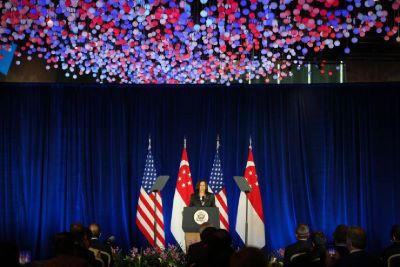
In a policy speech hosted by the Lee Kuan Yew School of Public Policy and the US Embassy in Singapore at Gardens by the Bay, Ms Harris said the US economy is growing faster than it has in nearly 40 years, and wages and employment rates in the country are rising.
“We believe that our growth should not stop at the water’s edge, but it can and will also benefit our partners. Our economy shares so much with South-east Asia, from supply chains to a steady flow of two-way trade,” she said, noting that collectively, South-east Asian nations represent the US’ fourth-largest export market, and trade with the region supports more than 600,000 American jobs.
She said the world is now more interconnected and interdependent, and nations must be more willing to take on challenges and create opportunities together.
The US’ partnerships will be grounded in candour, openness, inclusiveness, shared interests and mutual benefit, and it will pursue a free and open Indo-Pacific that promotes its interests and those of its partners and allies, she added.
“In addition to deepening close bilateral relations, we will also work multilaterally through longstanding institutions like Asean, which remains central to this region’s architecture. We will also work with new results-oriented groups like the Quad and the US-Mekong partnership.
“I believe that when the history of the 21st century is written, much of it will be centred right here in the Indo-Pacific. Our intention is to strengthen our partnerships and reinforce our shared vision… In doing so, there should be no doubt – we have enduring interests in this region, and we have enduring commitments as well.”
Moving on to the issue of security, Ms Harris reiterated the US’ security commitment to the region and its vision of freedom of navigation.
Freedom of navigation is vital to the livelihoods of millions who depend on trade that flows through sea lanes each day. Yet, China, she said, continues to “coerce” and “intimidate”, and make claims to the vast majority of the South China Sea.
“These unlawful claims have been rejected by the 2016 arbitral tribunal decision, and Beijing’s actions continue to undermine the rules-based order and threaten the sovereignty of nations.
“The US stands with our allies and partners in the face of these threats.”
ADVERTISEMENTx
She added that the US’ engagement of South-east Asia and the Indo-Pacific is not directed against any one country, nor is it designed to make anyone choose between countries.
The Quadrilateral Security Dialogue, also known as the Quad, is a strategic dialogue between the US, Japan, Australia and India.
The US-Mekong partnership, which was launched in 2020 and builds on the Lower Mekong Initiative, seeks to enhance cooperation among the governments of the US, Cambodia, Laos, Myanmar, Thailand and Vietnam.
In her speech, Ms Harris also stressed the US’ interest in strengthening global health security and leading with values, such as a respect for human rights at home and abroad.
In this regard, she expressed deep alarm at the military coup in Myanmar and condemned the use of violent repression.
“We are committed to supporting the people there as they work to return their nation to the path of democracy, and we do hope that nations throughout the Indo-Pacific will join us in that effort,” she said.
Since the military junta seized power in Myanmar in February, it has – under pressure from fellow Asean members – agreed to accept a special envoy from the group to mediate the crisis.
Singapore’s Foreign Minister Vivian Balakrishnan indicated in a recent interview that the 10-member group would consider it progress if the special envoy – Brunei’s Second Foreign Minister Erywan Yusof – could make his inaugural trip to Myanmar before Asean’s November summit.
Concluding her speech, Ms Harris said she hoped that years from now, everyone could look back on this moment and say that this was when the region joined together to realise a better future, and took action to improve the lives of its people.
“I hope that we will be able to point to our partnerships between the US and Singapore, between the US and South-east Asia and throughout the Indo-Pacific, as the partnerships that made this shared vision of the future possible.”
Following the speech and panel discussion, the Vice-President hosted a round-table discussion with Singapore’s Trade and Industry Minister Gan Kim Yong and private sector leaders on the importance of supply chain resilience, the value of cooperation with allies and partners on supply chains, and the impact that supply chains have on American families.
She stressed the interconnectedness of countries and the importance of preventing and ending supply chain shortages.
This followed from her meeting with Prime Minister Lee Hsien Loong on Monday, when they announced a supply chain dialogue that would bring together government and business leaders.
Ms Harris left for Vietnam on Tuesday evening for the second leg of her trip.
HK proposes film censorship bill to ward off national security risks
HONG KONG – Hong Kong’s government planned to introduce an amendment bill on film censorship to the Legislative Council (LegCo) in September to ward off national security risks.
In a statement issued on Tuesday, the government said the legislation aims to enhance the film censorship regulatory framework and ensure the effective fulfillment of duty to safeguard national security as required by the National Security Law for Hong Kong, which was implemented in the financial hub a year ago.
The Film Censorship (Amendment) Bill, approved by the Chief Executive in Council on Tuesday, also aims to prevent and suppress acts or activities that may endanger national security.
The government proposed to set out explicitly that a censor should consider whether the exhibition of a film would be contrary to the interests of national security, so as to provide clear statutory backing for a censor to give due consideration to national security when making film decisions.
It proposed to give the chief secretary for administration the right to direct the Film Censorship Authority to revoke any approval or exemption if a film doesn’t comply with the interests of national security.
The government also recommended heavier penalties for showing films that have not been approved. Those who violate the law could be sentenced to three years imprisonment and fined HK$1 million ($128,400).
The bill will be gazetted on Friday and is expected to be tabled at the LegCo on Sept 1 for first and second readings.
In June this year, the government amended guidelines for censors under the Film Censorship Ordinance to provide them with clearer guidelines on film examination and classification following the National Security Law’s implementation on July 1, 2020.
Athletes assemble in Tokyo as Paralympics commence
The 2020 Tokyo Paralympic Games began Tuesday night with the opening ceremony at the National Stadium.
Atotal of 539 events in 22 para sports will take place over the 12-day period from Wednesday to Sept. 5.
According to the International Paralympic Committee, a total of 161 countries and regions, plus the Refugee Paralympic Team, are participating. This is the second-largest number after the 2012 London Paralympics, in which 164 countries and regions participated.
About 4,500 para athletes are expected to compete. As of Sunday, Japan’s team comprised 254 people, its highest number ever.
People related to Afghanistan, which withdrew from the Paralympics due to the fraught domestic situation in that country, participated in the opening ceremony bearing the Afghan flag.
“We’ve always said the Tokyo Games won’t be successful unless the Paralympics are a success,” Seiko Hashimoto, president of the Tokyo Organizing Committee of the Olympic and Paralympic Games, said at a press conference Monday.
Hashimoto stressed that thorough measures would be taken against the coronavirus. “We’ll do everything we can, so the public can feel safe and secure,” she said.
IPC President Andrew Parsons said: “One of the questions I am asked very often is, ‘Can we have safe Games?’ and the answer is yes, we would not be here if we did not believe we could deliver safe Games.”
■ Raising awareness
Para sports organizations are putting their all into the Tokyo Paralympics, hoping to use these Games to promote their respective sports.
“I want to see an event open to everyone,” Hidetaka Sugimura, a leading player on the Japanese boccia team, said about his dream of organizing an event in which anyone can participate.
Japan won the first silver medal in boccia at the Rio de Janeiro Games in 2016. In this sport, para athletes throw balls toward a white target ball.
“It can be enjoyed by everyone, regardless of gender, age or degree of disability,” said Sugimura, 39. He is aiming to win a gold medal to further promote the sport and realize an event in which all sorts of people can participate.
Japan will make its first appearance in blind soccer at the Tokyo Games. Japan’s blind soccer para athletes will wear the same jersey as the men’s U-24 team and the Nadeshiko Japan women’s team, as a symbol of unity between the Olympics and Paralympics.
Team Japan aims to win at least a bronze medal — finishing better than the Japanese men’s team at the Olympics, which finished fourth — to help gain public recognition for blind soccer.
The sport requires verbal communication skills to support team members, and this element is being utilized in corporate training programs. In 2012, the Japan Blind Football Association started full-fledged efforts to assist education programs at companies, and has received many applications from a wide range of businesses.
The association wants to widen the scope of such activities with a strong finish at the Paralympics.
Continued cash shortages pose dim prospects for banks in Myanmar
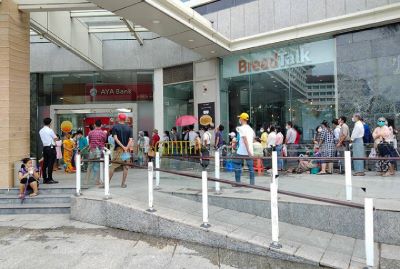
MYANMAR: Currently, difficulty withdrawing cash from banks, withdrawing cash by paying a certain percentage to brokers, and cash shortages are a tremendous challenge to Myanmar.
“Until now, we have had problems with withdrawing cash from banks. The Central Bank also issued restrictions such as a withdrawal of Ks 20 million only for companies and Ks 2 million only for individuals and allowing more cash withdrawals for Covid-19 medicine and equipment. But, banks are facing cash shortages. So they can’t even pay the amount the Central Bank has set. Both private and government banks are the same now. We are still facing cash shortages,” said a local businessman, Dr Soe Tun.
Even before the current situation, a majority of banks in Myanmar have already been facing problems such as non-performing loans, disbursement of loans more than a set amount ,and seeking of loans in excessive amounts, according to the community of bankers.
Normally, banks runs by receiving deposits and giving loans. Due to current challenges, the banks are losing public credibility. Particularly, difficulty withdrawing cash has made the public lose their trust in banks.
“If we can’t withdraw our money, loss of our trust will be the problem for those banks. We can’t pay or receive cash between accounts. With the use of cash-only methods, the economic mechanism can run only with the cash the country has in hand. I don’t know much about accounts. Suppose I have a 10% amount of total cash on hand, my business has to rely on that amount. The remaining 90% is seated in the bank. If that’s so, our economy will be stagnant,” Dr Soe Tun said.
As of mid-July, the Myanmar kyat had depreciated by around 23 percent against the US dollar compared to late January, which combined with trade disruptions has led to rapid price increases for some imported products, including fuel, according to the World Bank report.
With depreciation of Myanmar kyat, trade and logistical restrictions and other external reasons,prices of imported goods have increased significantly. Fuel prices have jumped up to nearly 50%.
Despite bank branch re-openings and several interventions from the Central Bank of Myanmar, physical currency continues to be in short supply and access to banking and payment services remains limited.
Due to inconveniences in banking services, most of the public members have to pay a certain percentage (5% or 6%) when they withdraw cash from their own bank accounts.
Rumors surfaced recently that three local banks would go into liquidation amid difficulties with cash withdrawals from both banks and ATMs. The Central Bank dismissed the rumors about bank closures and demonetization of 5,000-kyat notes and 10,000-kyat notes. It said it had instructed the banks to operate their regular services.
In its statement issued on August 13, the Central Bank said such rumours triggered public concern and large crowds at the banks withdrawing their money. It urged the people not to be worried about banking services and their money, assuring that the banks could be trusted.
“The closure of three banks is just a rumour. It was designed to disrupt the stability of state economy, the bank rules and regulations.
Currently, the Central Bank will not take any action against any bank. We have no plan to close any bank,” said U Win Thaw, vice governor of the Central Bank of Myanmar.
The statement also pointed out that the Central Banks is placing emphasis on monetary stability in the country, while the local banks are providing services in accord with the strong rules and regulations.
“They are just issuing statements. But it is not enough because the banks cannot pay Ks20 million as they have promised. Cash cannot be paid even for government projects, tenders and construction projects. We have to solve our problems by ourselves. It’s a great problem for foreign companies. A lot of them have stopped operation, said a businessman in Yangon city.
“Myanmar citizens still can try to withdraw their cash in various ways by paying a percentage or another. For foreigners, however, it doesn’t work. Some are public companies or corporations. Paying a percentage to access cash is not OK. They have to wait and see. Consequently, most have stopped their operation. It is only in Myanmar where we have to pay a 6% to 8% percent to withdraw cash from our own bank accounts. The world will have never heard of it,” the businessman continued.
If the situation goes on like this in the banking and monetary sector, coupled with the current political turmoil and Covid-19 impacts, local SMEs will find it harder to survive. Meanwhile, some have closed down, some businesspeople said.
Dr Soe Tun pointed out that unlike other countries, Myanmar’s economy was being affected by several issues, not just a single one.
“Most people want to withdraw their money. The Central Bank suggested opening new bank accounts. We also did it,” said another businessman. “The amount of money they got is said to be about 2 trillion kyats. We want to urge the banks to seek ways to transfer money from the old accounts to new ones. Now, six months have passed. It’s better if we get a timeline.”
Some business persons commented that monetary system and banking system are built with public trust and credibility. The banking system and businesses will only be able to survive only if unnecessary controls and restrictions are to be eased. They added that it is necessary for policy makers in in Myanmar to adopt correct policies to remedy the economic downturn.
Typhoon Omais leaves behind flooded homes, damaged roads, railways in S. Korea
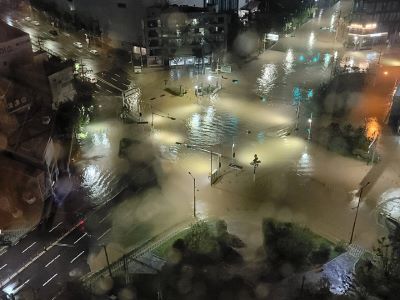
Typhoon Omais weakened into an extratropical cyclone Tuesday morning, after making landfall around midnight Monday, flooding roads and houses, and forcing more than 1,000 people to evacuate in southern South Korean cities that lay in its path.
Typhoon warnings issued the previous day were all lifted, but the weather service forecast heavy rains with strong winds to continue throughout the day in the coastal areas and southern parts of the country.
Firefighters rescued 11 people from flash flooding and no injuries were reported as of early Tuesday, according to the Central Disaster and Safety Countermeasures Headquarters, but 10 people were displaced in Tongyeong, South Gyeongsang Province, and 1,106 people were evacuated amid fears of landslides and flash floods in eastern Busan, Changwon and South Jeolla Province.
The railway connecting Gwangju and Miryang in South Gyeongsang Province was cutoff after parts of the railway became covered with piles of mud from heavy rainfall early Tuesday morning.
Six roads in the provinces of South Gyeongsang and South Jeolla were inundated with flash floods.
Twenty-one shopping quarters in Ulsan and three houses in Tongyeong were flooded. Flash floods swamped an outdoor parking lot in Sacheon, South Gyeongsang Province. In Ulsan and Busan, 217 homes temporarily lost power.
High winds and heavy downpours forced 86 flights and 70 ferries to stop service. (Yonhap)
HCM City issues urgent directive on pandemic prevention, residents not allowed to go out to buy food
HCM CITY — HCM City authorities issued an urgent Directive No 11 on COVID-19 prevention on Sunday), following the Government’s order to impose its toughest-ever measures beginning today (August 23) that require “everyone to stay at home” and not go out to buy food.
“No one, including those living in “green” zones, is allowed to go out to buy food,” Nguyễn Thành Phong, chairman of the People’s Committee, said.
Directive No 11 requires authorities of all districts and Thủ Đức City to strictly impose all preventive measures so that the outbreak can be controlled by September 15.
Previously, the city said that households in a green (COVID-19 free area) or orange zone would be allowed to go out once a week to buy food. But the city has changed the rule.
The city has classified all 312 communes or wards in three levels: green zone (free-COVID zone), orange zone (high-risk zone) or red zone (extremely high-risk zone). The goal is to maintain and expand the green zones while isolating and reducing the red and orange zones.
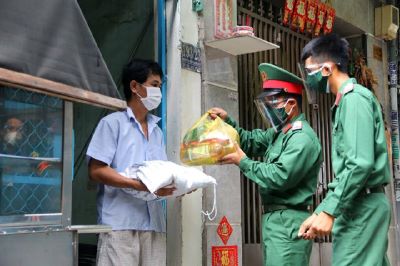
To ensure food supply, the city has set up special working groups in wards, communes and townships to help buy food and essential goods on behalf of residents and deliver them to their door.
Phong said the city’s 312 wards, communes and towns, as well as factories and enterprises, play a key role in the prevention measures.
The directive also requires enhanced inspection of people on city streets. They must have a travel paper issued by appropriate agencies or an authentic identification badge.
The city requires “thorough isolation between people, families, wards and communes”. The strict measures aim to protect the health of everyone in the city, according to Phong. “Every citizen plays a major role in the fight against the pandemic.”
The city will continue to provide up to two million social welfare packages (rice, vegetables, cooking oil and spices for one week) to the poor, and will prepare nutritious meals for disadvantaged COVID-19 patients.
Tests for everyone
Phong said the city would test the entire population during the two-week stay-at-home period. The COVID-19 testing, to be undertaken under the guidance of the Ministry of Health, is being done to isolate and treat COVID patients in a timely manner.
The city will also continue to speed up its vaccination schedule.
It has asked the city Department of Health to work with districts to set up mobile vaccination teams fully equipped with protective equipment and clothing to go to “red” and “orange” zones. People living in these areas will go to their nearest mobile unit for their vaccination.
Phong has warned heads of agencies and district authorities (such as chairpersons of people’s committees of Thủ Đức City and city districts) and businesses that they will be held responsible for violations of pandemic prevention regulations.
The strict prevention measures will last until at least September 6. Military forces have been mobilised to help supply food and essential items for people so that no one lacks food.
The city aims to contain the outbreak by September 15.
HCM City residents can check the status of their neighbourhood on the following pandemic map from city authorities: https://bando.tphcm.gov.vn/ogis/ (English available).
By August 27, the city will set up an additional 400 mobile medical stations each equipped with medicine, 3-5 oxygen tanks, SpO2 (oxygen) metres, and quick-test equipment.
The city has also ordered strict punishment of anyone who distributes false or misleading information about pandemic prevention measures, causing panic or confusion in the community.
HCM City has recorded more than 176,000 cases since late April when the fourth wave began. — VNS
PM Lee Hsien Loong, US Vice-President Kamala Harris hail robust, enduring S’pore-US partnership
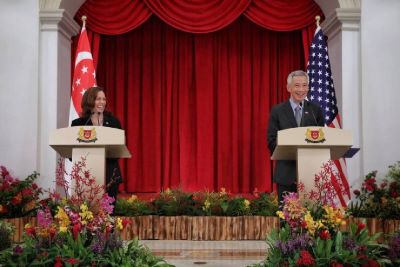
SINGAPORE – Prime Minister Lee Hsien Loong and United States Vice-President Kamala Harris hailed the robust and enduring partnership between their two countries at the Istana on Monday (Aug 23) as they announced new areas of cooperation in cyber security, climate, the economy, and combating pandemics.
Ms Harris underlined America’s appreciation for Singapore’s longstanding and enduring friendship in the context of South-east Asia and the Indo-Pacific, while PM Lee reaffirmed Singapore’s appreciation for the US’ active role in the Asia Pacific, especially in Southeast Asia.
They also expressed their shared support for a stable, rules-based international order in the region, where all countries can both cooperate and compete peacefully with one another and prosper together.
Ms Harris’ high-level visit, the first under the administration of President Joe Biden, comes as Singapore and the US mark 55 years of diplomatic ties.
Speaking at a joint press conference at the Istana after Ms Harris called on President Halimah Yacob, followed by meetings with him as well as several Singapore ministers, Mr Lee said the visit emphasises the US administration’s commitment to the region.
“It shows that the US has both strategic and economic stakes in South-east Asia. We value the US renewing ties with its friends and partners here, especially Singapore,” he said.
Ms Harris said the pandemic has had a profound impact on economies, families and workers and exposed the vulnerability of supply chains, which the US hopes to shore up with regional partners.
“Supply chains, without any question, are critical to ensuring that businesses can source the materials they need, get products to market, and enable people to buy these products,” she said, adding that a shortage of semiconductor chips would impact the production of a range of items from smartphones to laptops and cars.
“So working together with partners like Singapore on strengthening supply chains is critical in… ensuring Americans can provide for their families.”
As he has done on previous visits to the US as well as other forums, Mr Lee stressed the importance of the US being engaged in the region.
He also reiterated calls he made at the virtual Aspen Security Forum earlier this month for the US to pursue opportunities for regional cooperation, in areas such as digital trade and green growth.
“There is a substantial agenda of deliverables which will enhance our partnership, and I am confident that our longstanding and multi-faceted bilateral relationship will continue to strengthen year by year,” Mr Lee said, noting that bilateral trade has more than doubled since the US-Singapore free trade agreement was inked in 2004.
ADVERTISEMENTx
Singapore is the second-largest Asian investor in the US, with direct investment stock of US$65 billion (S$88.5 billion). These investments and American exports to Singapore support over 250,000 American jobs.
The Republic is also home to nearly 5,500 US companies. The US is its largest foreign investor, with foreign direct investment stock of US$315 billion – more than the US investments in China, India and South Korea combined.
Regional and security cooperation
Turning to regional and security cooperation, Mr Lee said Singapore appreciates US participation in Asean and regional groupings like the Asean Regional Forum, Asean Defence Ministers’ Meeting Plus, and Asia-Pacific Economic Cooperation.
“We work together in these forums, reflecting our shared commitment to multilateralism to tackle regional and global issues like climate change,” he said.
ADVERTISEMENT
He noted that the US has played an important and constructive role in defence and security in the region for over 70 years.
Defence cooperation between both countries is underpinned by the 1990 MOU regarding the use of facilities in Singapore, which provides the US with military access to Singapore’s naval and air bases.
And as the US’ major security cooperation partner, Singapore has consistently supported a strong US presence in the region through its words and actions, said Mr Lee.
“Our two countries have robust cooperation on transnational issues including terrorism, cyber security and counter-proliferation… We were later the first South-east Asian country to contribute personnel and assets to the Global Coalition to Defeat ISIS.”
He added that the US is a partner nation in Singapore’s newly established multilateral Counter-Terrorism Information Facility, and intelligence and law enforcement agencies on both sides hold regular dialogues.
ADVERTISEMENT
Ms Harris is visiting Singapore and Vietnam to deepen US engagement with South-east Asia.
This is her second foreign trip since taking office in January, and she is the most senior US official to visit the region since Mr Biden was sworn in.
Her trip comes on the heels of Secretary of Defence Lloyd Austin’s visit to Singapore, Vietnam and the Philippines in July.
Singapore and the US have had regular, high-level engagements under both Democratic and Republican administrations. Most recently in September 2019, Mr Lee made a working visit to New York where he met then-President Donald Trump.
Collaborating on trade, pandemics
Both sides also announced a flurry of agreements to strengthen their collaboration in cyber security, climate change, the economy, pandemics, and space.
A new initiative is the US-Singapore Partnership for Growth and Innovation, which will strengthen bilateral and regional collaboration on trade and investment, beginning with four pillars: the digital economy, energy and environmental technologies, advanced manufacturing, and healthcare.
“We are elevating the US-Singapore Collaboration Platform MOU to a new Partnership for Growth and Innovation, and look forward to the MOU’s early conclusion and expansion of cooperation in advanced manufacturing and the digital economy,” said Mr Lee at the joint press conference.
The MOU was signed in 2016 and renewed in 2018. Both sides have agreed to work towards concluding discussions on the partnership later this year.
Mr Lee also welcomed a supply chain dialogue which will bring together government and industry leaders to discuss ways to strengthen supply chain resilience.
He also noted three cyber-security agreements which had been concluded by the cyber, defence and finance agencies on both sides, as well as pandemic cooperation on genome sequencing and epidemic intelligence.
“This will speed up identification of new Covid-19 variants as well as emerging disease threats, and augment regional preparedness for current and future pandemics,” he said.
Responding to questions from the media during the joint press conference, Mr Lee said that what will influence perceptions of the US’ resolve and commitment to the region will be what it does, going forward – including how it repositions itself and engages its broad range of partners and allies in the region, and how it continues the fight against terrorism.
Countries make calculations and take positions, and they have to adjust these from time to time, he added.
“Sometimes it can be done smoothly, sometimes there are hiccups, sometimes things go awry and take time to put right. But countries remain with long term interests, with long term partners, and it is the mark of a country which can succeed that it takes these interests and partners seriously and in a dispassionate way, and maintains them over the long term.
“And the US has been in the region… more than 70 years ago. There have been ups and downs, there have been difficult moments. There have also been over decades, dramatic transformations in Asia, wrought by the benign and constructive influence of the US as a regional guarantor of security and supporter of prosperity.
“Singapore hopes and works on the basis that the US will continue to play that role, and continue to engage the region for many more years to come.”
Ms Harris expressed her belief that South-east Asia and the Indo-Pacific will in large part dictate the future of the world.
She said that the agreements the US has inked with Singapore and the region are evidence of its strength and enduring relationships around the globe.
These are not only priorities that relate to the US’ security or economic interests, she added, but they also relate to challenges the world faces going forward – such as future pandemics and what countries can do together to research on and stop them.
“This is a relationship that is based on a shared vision, both in terms of the challenges we face, and also the opportunities that we face… It is about the future in terms of our mutual commitment, curiosity and interest,” she said.
“It is about what we have in terms of shared values for the need for universal norms on the issue of cyber security. It is about the interest that we have in being a global partner on the issue of vaccines, for example, and our shared commitment – understanding that when we have the resources, we will share them with the world.
“These are the things that Singapore and the United States have in common. And with that common purpose, and with a similar approach to our responsibility for our own citizens, and our responsibility as global citizens… We will continue to partner in a way that benefits not only Singaporeans and Americans, but the rest of the world.”
On Monday, Ms Harris is also due to visit Changi Naval Base and US littoral combat ship USS Tulsa, which is in port for a multilateral exercise.
On Tuesday (Aug 24), she will deliver a policy speech and participate in a round-table discussion with the business community at Gardens by the Bay.