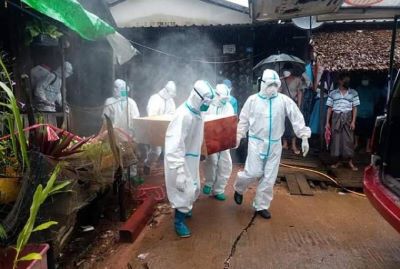
India Taliban challenge and Afghan policy #SootinClaimon.Com

#SootinClaimon.Com : ขอบคุณแหล่งข้อมูล : หนังสือพิมพ์ The Nation.

https://www.nationthailand.com/international/40005075

India Taliban challenge and Afghan policy


The joke going around in diplomatic circles in New Delhi is that the Taliban takeover of Afghanistan was much smoother than the change of guard at the White House after Joe Biden won the presidential elections in the worlds biggest democracy.

It is a deceptive calm that preceded and followed the ultra-conservative group’s seizing the levers of power in Kabul on August 15. What lies behind the smoothness and calm is the danger of a radical ideology that has serious security and geostrategic implications not just for India, but for South Asia as well. It is nothing more than a geographical indicator that Afghanistan is a member of the South Asian Association for Regional Cooperation (SAARC) given the dysfunctional nature of the forum.

As the second coming of the Taliban to power—the first time was in 1996 with horrific consequences for Afghanistan—plays out, one of its first announcements was to establish an Islamic Emirate. New Delhi seems to be reworking its Afghan policy. On August 18 and 19, Prime Minister Narendra Modi deliberated with his top cabinet colleagues and National Security Adviser on the developments in Afghanistan and the way forward for India. Clearly, India does not have many options as the rise of the Taliban has clearly led to a new power shift and set off jockeying for influence by regional powers like China, Russia, Turkey and Afghanistan’s next door eastern neighbour Pakistan. This is an area of great concern for India, according to strategic affairs experts.

ADVERTISEMENTx

The Taliban regime in Afghanistan of the 1990s was recognised by Saudi Arabia, Pakistan and the UAE. Russia and China had not recognised the Taliban then but they are now falling head over heels to embrace the group. This is a big change from 1996. China, with its deep pocket, is not only looking at making investments in the Afghan economy, but also taking its Belt and Road Initiative to that country to complement its project already going on in Pakistan. China is particularly keen on tapping the deposits of copper, iron ore and lithium which is important for the electric vehicles of the future. There could be a quid pro quo between China’s financial muscle to help out the Afghan economy, heavily dependent on foreign aid, and mineral mining rights.

The assessment in the strategic establishment in New Delhi is that Pakistan, which has for decades invested heavily in the Taliban by supplying it with funds, weapons and intelligence, is in the driver’s seat on matters relating to Afghanistan and will now try to whittle down India’s role in the economic development of that country. Pakistan is looking to benefit from a friendly regime in Kabul to take advantage of Afghanistan’s extremely strategic location as a transit hub linking South Asia with Central Asia and beyond. So, India’s challenges today are quite different and complicated. Will India finally reconcile itself with recognising the Taliban?

After being so closely tied to the governments in Afghanistan over the last two decades, India, which did not recognise the Taliban in 1996, is in no hurry to recognise the new dispensation in Kabul this time around. How India reworks its Afghan policy will depend a lot on a number of variables. Will India go with the western democracies and other Asian countries it has strong relations with based on shared values of democracy, fight against terror and a rule-based international order? Indian Foreign Minister S Jaishankar’s recent visit to the US and Qatar is aimed at, among other things, to ascertain the thinking in Washington and the influential Gulf country about the future of Afghanistan. As part of the same exercise, a team of Indian officials led by Deputy National Security Adviser Pankaj Saran was in Moscow this week meeting Russian National Security Adviser Nikolai Patrushev.

Right now, India is waiting to see the contours of the new power structure and the character of a new government that is expected to emerge in Afghanistan. Senior Taliban leader Amir Khan Motaqi has already held talks with former President Hamid Karzai and senior leader Abdullah Abdullah. India is also keeping a close watch if the talks on the future government could include non-Talibans in view of the ethnic diversity of Afghanistan—Pashtuns, Tajiks, Uzbeks and Hazaras. What India is looking at with keenness is can Afghanistan come up with a system that can preserve the gains of the last two decades. After its military prowess shown in the speed with which it captured Afghanistan this time, the Taliban is under no obligation to share power with anyone else. Buoyed by its military victory, the Taliban will try to dictate terms from a position of strength.

Some strategic affairs experts in India rue that New Delhi should not have hesitated to reach out to the Taliban, a policy that sees India squeezed out of the big picture of international power-play in Afghanistan. Such an outreach would have required India to make deft diplomacy and a subtle shift from its stand of looking at the Taliban from a UN-designated terror outfit.

India may be wary of the Taliban but it is far from abandoning the people of Afghanistan where there is considerable goodwill generated by India’s soft power in constructing welfare projects in all the 34 provinces of that country like roads, power, dams, hospitals, setting up educational facilities and giving scholarships. Being mindful of this even after the Taliban takeover on August 15, India was quick to announce e-visa facility for Afghans, wanting to come to India in view of the situation in that country. India is also considering offering help to Afghan students who have taken admission in Indian universities but are unable to come to the country due to the flight disruptions in Kabul. To sustain its image as a reliable development partner, India may have to rethink on its decision to reopen its shut diplomatic missions in Kabul, Kandahar and Mazar-e-Sharif. To sum up, India has to find a way to stay invested in Afghanistan post-Taliban takeover.

Much will depend on how the Taliban conducts itself in Afghanistan, deals with the international community, if it distances itself from various terror groups, including Al Qaeda, which helped it, and how it deals with Pakistan, the principal backer of the hardline Islamist group. If the Taliban sticks to its medieval mores like in the 1990s, oppressing women and indulging in revenge killings, it could run the risk of once again becoming an international pariah. Post-takeover, initial vibes emanating from Kabul is that the group is trying to signal its transformation into a force of moderation by promising no reprisal violence and that women are welcome in government offices. During the talks on government formation with Karzai and Abdullah Abdullah, Motaqi reportedly pledged to form an “inclusive” government that would give representation to all ethnic groups. So, the Taliban seems to be making the right noises, keeping an eye on the international community in a bid to get acceptance and legitimacy. But these words need to be verified on the ground in the months to come.

The Taliban must realise that winning a military victory is quite different from the challenges of governance, the foremost of which is to ensure development projects of the last 20 years in connectivity network, energy supply, healthcare facilities and several community development projects.     

 A key marker of India’s response to the new regime in Kabul will, of course, be the Taliban’s relations with Pakistan. The Taliban has close links with Tehreek-i-Taliban of Pakistan and other anti-India terror groups like Jaish-e-Mohammed and Lashkar-e-Taiba. Recently, TTP leader Mufti Noor Wali Mehsud has thanked the Taliban leader Haibatullah Akhundzada for releasing their deputy leader Maulvi Faqir Muhammad from Bagram high security prison—from where around 7,000 hardcore terrorists were freed by the Taliban. The issue is: will Pakistan stop using cross-border terrorism as an instrument of state policy and give more stress on geo-economics rather than geo-politics? It does not look like it.

The question also is: will the Taliban be able to snap its ties with non-Afghan terror outfits which will try to extract their pounds of flesh for having helped the Taliban. One must remember that Jaish chief Maulana Masood Azhar was taken directly to Mullah Omar (who had led the Taliban’s charge in Afghanistan in 1996), in Kandahar after he was freed by India in return for the safe release of passengers of the Indian Airlines flight hijacked from Kathmandu in December, 1999.

The change of guard in Kabul has set off security concerns for India and some other parts of South Asia. India will have to be on guard against the possibility of the Taliban sending is fighters or helping other terror groups to Jammu and Kashmir. Both India and Bangladesh must recognise that Jamaat-ul-Mujahideen Bangladesh has its roots in an earlier Afghan war. The JMB was founded by Afghan war veterans, and how the outfit went on a rampage in Bangladesh in the early 2000s is well-known. The Taliban recruited a large number of fighters from Bangladesh in the 1990s and some from India. The spill-over of the Taliban takeover in Afghanistan may result in a rise in extremism not only among radicals in Bangladesh and Rohingyas there, but also in India.

Published : August 22, 2021

By : The Daily Star / ANN
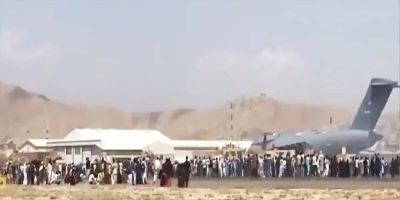
150 Indians abducted from Kabul airport but later released: Reports #SootinClaimon.Com

#SootinClaimon.Com : ขอบคุณแหล่งข้อมูล : หนังสือพิมพ์ The Nation.

https://www.nationthailand.com/international/40005074

150 Indians abducted from Kabul airport but later released: Reports


Amid reports that around 150 Indians were allegedly abducted from outside the Hamid Karzai International Airport in Kabul on Saturday, local Afghan journalist Zaki Daryabi said that the kidnapped persons were released and they were on the way to the airport.

“Two sources confirmed that the Indians were released by the Taliban. They are on the way to Kabul airport,” Daryabi tweeted. He also said that these Indians were taken to the nearby Alokozai compound from the Kabul airport, adding they were safe.

The reports also said that these Indians were taken to the nearby area of the Alokozai compound, a garage designated for US forces, as there was a huge rush at the airport and the Taliban allegedly inspected their documents and released them.

ADVERTISEMENTx

The abductors later ushered them to the right place at the airport from where their evacuation flight would take off for India after getting the slot, the report added.

Earlier the day, the Afghan media reported that men affiliated with the Taliban have abducted over 150 people, mostly Indian citizens, from an area close to the airport.

A local publication ‘Kabul Now’ had also confirmed the development.

“Over 150, mostly Indian citizens, abducted near Kabul airport Men affiliated with the Taliban have abducted over 150 people, mostly Indian citizens, from an area close to Hamid Karzai International Airport earlier this morning, Saturday, August 21, a reliable source confirmed to Kabul Now,” Daryabi said in a different tweet.

However, the Taliban denied the report of abducting Indian nationals.

ADVERTISEMENT

“The report about kidnapping is a rumor. The Taliban members are helping all foreign nationals to get access to the airport. We are determined to provide safe passage to all foreigners to get to the airport,” Ahmadullah Waseq, a Taliban spokesperson, told local media Eitlalatroz.

He said Taliban forces were escorting about 150 Indian citizens to safely enter the airport, reports Xinhua news agency.

Following the Taliban’s takeover of the Afghan capital on August 15, thousands of Afghans have flooded to Kabul airport to leave the country.

The evacuation flights were continuing as three flights took off on Saturday morning, resident Farhad Mohammadi said.

About 5,000 US troops have been deployed in Kabul airport to help with the airlift process. At least 12 people have been killed in gun shootings and stampedes in the airport since the capital city’s fall.

ADVERTISEMENT

The situation in Afghanistan remains uncertain after the Taliban’s swift takeover of most parts of the country.

Published : August 22, 2021

By : The Statesman / ANN

UN: Kids in 4 South Asia nations most at risk of climate impact #SootinClaimon.Com

#SootinClaimon.Com : ขอบคุณแหล่งข้อมูล : หนังสือพิมพ์ The Nation.

https://www.nationthailand.com/international/40005073

UN: Kids in 4 South Asia nations most at risk of climate impact


DHAKA – Young people living in Afghanistan, Bangladesh, India and Pakistan are among those most at risk of the impacts of climate change, threatening their health, education, and protection, according to a new UNICEF report received here Friday.

In addition, Nepal and Sri Lanka are among the top 65 countries most impacted globally.

“The Climate Crisis Is a Child Rights Crisis: Introducing the Children’s Climate Risk Index” is UNICEF’s first child-focused climate risk index.

It ranks countries based on children’s exposure to climate and environmental shocks, such as cyclones and heatwaves, as well as their vulnerability to those shocks, based on their access to essential services.

Pakistan, Bangladesh, Afghanistan and India are among four South Asian countries where children are at extremely high risk of the impacts of the climate crisis, with a ranking of 14, 15, 15 and 26 respectively. While Nepal is ranked 51, Sri Lanka is at 61st place. Bhutan is ranked 111, with children at relatively lower risk.

“For the first time, we have clear evidence of the impact of climate change on millions of children in South Asia. Droughts, floods, air pollution and river erosion across the region have left millions of children homeless and hungry, and without any healthcare and water,” said George Laryea-Adjei, UNICEF regional director for South Asia.

ADVERTISEMENTx

“Together, climate change and the COVID-19 pandemic have created an alarming crisis for South Asian children. The time to act is now – if we invest in water, healthcare and education, we can protect their futures from the impacts of a changing climate and degrading environment.”

The report found that these South Asian children are in constant danger from riverine floods and air pollution, yet investments in child health, nutrition, and education can make a significant difference to protect children from climate change.

South Asia is home to over 600 million children and has the highest number of young people globally.  

Published : August 22, 2021

By : China Daily / ANN

State of emergency takes effect in 7 more of Japan’s prefectures #SootinClaimon.Com

#SootinClaimon.Com : ขอบคุณแหล่งข้อมูล : หนังสือพิมพ์ The Nation.

https://www.nationthailand.com/international/40005050

State of emergency takes effect in 7 more of Japan’s prefectures


The government declared a state of emergency for seven prefectures on Friday amid a surge of novel coronavirus infections, while an additional 10 prefectures were placed under emergency-level priority measures.

The state of emergency, which was already in place for six prefectures including Tokyo, has now expanded to cover 13 prefectures with the additions of Ibaraki, Tochigi, Gunma, Shizuoka, Kyoto, Hyogo and Fukuoka. The government also newly added 10 prefectures, including Miyagi and Kagoshima, to the list of areas under priority measures, bringing the total number of prefectures to 16. Both the state of emergency and the priority measures are currently scheduled to last through Sept. 12.

In the areas subject to the state of emergency and priority measures, the governors of the prefectures issued requests for large-scale commercial facilities of more than 1,000 square meters to restrict the entry of customers and visitors.

The Matsuzakaya Shizuoka department store in Shizuoka City has now limited the entry of customers to about half the number present when the store is considered crowded. The store also restricts the entry to the basement food section when the number of customers there reaches a certain level.

The store counts the number of customers entering with sensors at each entrance, and monitors display the number of customers present in real time. The store hopes displaying such figures will help customers avoid congestion.

“I’ve had two vaccine doses, but I’m worried about [shopping] during crowded hours. So I feel safer if there is such a monitor,” said a 72-year-old woman who was shopping at the store.

In Osaka Prefecture, which was already under a state of emergency, the Hanshin Department Store’s Umeda main store in Osaka City, where a cluster of infection had occurred among employees, reopened its food section on Friday with the number of customers in the section limited to about half of ordinary levels. The food section currently has only one entrance and customers cannot enter the section directly from other floors. Employees working in the food section are also required to take PCR tests once every two weeks.

In Kagoshima Prefecture, which was placed under priority measures for the first time, the prefectural government requested large-scale facilities in Kagoshima City and two other cities to shorten business hours.

As the spread of infections continues unabated, the main focus of the strengthened measures against COVID-19 is to curb the flow of people. The central government has asked companies to reduce the number of people commuting to work by 70%. However, the spread of telework appears to be tepid.

“I think only about 10% of employees are teleworking,” a 34-year-old man, who commutes from Ibaraki Prefecture to Tokyo, said of his company.

According to Tsukuba Station in Ibaraki Prefecture, which is connected to central Tokyo by the Tsukuba Express rail line, the number of passengers dropped by 30% in the first wave of infections in spring last year. However, there have been no significant changes since then.

“I don’t see much change from the day before,” Tatsuya Suzuki, the assistant stationmaster, said Friday morning.

The Yomiuri Shimbun analyzed data from NTT Docomo, Inc.’s Mobile Spatial Statistics to compare foot traffic at 7 a.m. on Friday with the figure from Aug. 6, two weeks earlier. The analysis showed that the seven prefectures newly placed under the state of emergency all saw the number of people at major stations drop, but the decrease was less than 10%.

In eastern Japan, the number of people at Mito and Tsukuba stations in Ibaraki Prefecture fell by 4.7% and 1.2%, respectively. In Tochigi Prefecture, Utsunomiya Station saw a 9.2% decrease. In Gunma Prefecture, the figure fell at Maebashi Station by 7.1% and at Takasaki Station by 6.3%. In Shizuoka Prefecture, the declines were 8.8% at Shizuoka Station and 6.4% at Hamamatsu Station.

Published : August 21, 2021

By : The Japan News/ANN

HCM City to begin strict lockdown from Monday, military forces to help supply food to people #SootinClaimon.Com

#SootinClaimon.Com : ขอบคุณแหล่งข้อมูล : หนังสือพิมพ์ The Nation.

https://www.nationthailand.com/international/40005049

HCM City to begin strict lockdown from Monday, military forces to help supply food to people


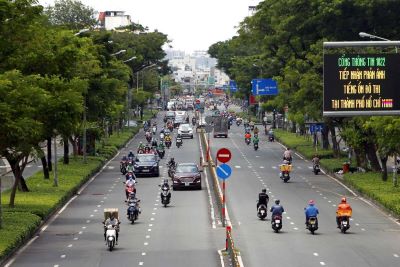
HCM CITY — Prime Minister Phạm Minh Chính has urged the country’s pandemic hotpot HCM City to impose its toughest COVID-19 prevention measures ever beginning on Monday as “everyone is asked to stay at home”.

Speaking at an online meeting on pandemic prevention late Thursday, PM Chính said the fight against the virus would focus on major roles played by ward and commune authorities.

“Everyone is asked to stay at home,” said PM Chính, adding that each ward or commune will ensure that  residents are supplied with food, essential items and accommodation.

The Prime Minister ordered the city to classify the pandemic situation in all 312 communes or wards according to three levels: green zone (COVID-free zone), red zone (extremely high-risk zone)  and yellow zone (high-risk zone).

The goal is to maintain and expand the green zones while isolating and reducing red and yellow zones.

The PM has ordered the city to strictly implement Directive 16 by fulfilling six key tasks.

Firstly, the city must implement “thorough isolation between people, families, wards, and communes”. The police and army forces will be mobilised in case of a personnel shortage.

Second, the army will be responsible for providing food and essential items for people so that no one lacks food. 

Thirdly, medical capacity will be enhanced, including more medical equipment (including oxygen supply), as well as nurses and doctors, to treat patients in communes and wards. 

The city must prepare emergency vehicles and emergency centres in each district to respond immediately when needed. Treatment is on three levels: commune or ward level (mild or moderate symptoms), and district level and city level (more severe and critically ill cases).

The PM recommended that the city continue piloting home treatment of asymptomatic cases. 

Chính also ordered the Ministry of Health to research and determine whether a combination of oriental and western medicine is needed in order to minimise the number of deaths. 

Fourth, the city must strengthen the police force to ensure security, order and safety for the people.

Fifth, the Ministry of Labour, Invalids and Social Affairs will work closely to provide timely support to people in need of relief. Police forces at grassroots level will provide food to the homeless.

Sixth, the city will speed up testing under the guidance of the Ministry of Health with appropriate forms, including testing at home, and will detect cases in the community so the city can isolate and treat all COVID patients in a timely manner.

The PM also asked the city to consider relocating certain people out of densely populated areas to reduce the number of cross-infections. This proposal is based on what northern provinces did in fighting a COVID outbreak. The city should use military sites, schools and accommodation facilities for this purpose.

PM Chính has assigned Deputy Prime Minister Phạm Bình Minh to be in charge of vaccine diplomacy. Deputy Prime Minister Lê Minh Khái is in charge of logistics, finance, and allocation of national reserves, and Deputy Prime Minister Vũ Đức Đam pandemic prevention and healthcare issues.  Deputy Prime Minister Lê Văn Thành is in charge of goods supply. 

Since the fourth COVID wave began in April, HCM City has recorded about 165,000 cases. The city has carried out social distancing for 43 days under the Government’s Directive 16. — VNS

Published : August 21, 2021

By : THE NATION

Biden reaffirms commitment to S. Korea’s defense amid Afghan withdrawal #SootinClaimon.Com

#SootinClaimon.Com : ขอบคุณแหล่งข้อมูล : หนังสือพิมพ์ The Nation.

https://www.nationthailand.com/international/40005048

Biden reaffirms commitment to S. Korea’s defense amid Afghan withdrawal


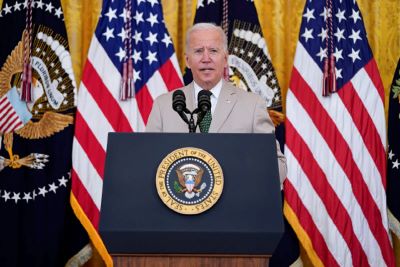
US President Joe Biden said Thursday in the US that his country is committed to the mutual defense treaty with South Korea, noting the situation in South Korea is different from Afghanistan, where the Taliban swiftly took over the government after the withdrawal of US troops.

The US, whose military still has wartime operational control of South Korea’s armed forces, has been pressed over its commitment to collective security as chaos grips Afghanistan.

“We are in a situation where they are in — entities we’ve made agreements with based on not a civil war they’re having on that island or in South Korea, but on an agreement where they have a unity government that, in fact, is trying to keep bad guys from doing bad things to them,” Biden said in an ABC interview, referring to Taiwan alongside Korea.

And the US will respond to any attack on its Asian allies including South Korea, Japan and Taiwan, Biden said, referring to the North Atlantic Treaty Organization’s mutual defense doctrine. NATO is a 30-nation military alliance that includes the US, Canada and 28 European countries.

Earlier this week, Biden’s national security adviser Jake Sullivan said the Biden administration is not seeking to reduce American troops in South Korea, describing its commitment to the alliance as sacrosanct.

But Sullivan hardly dampened speculation here over a troop drawdown, with a leader of the ruling Democratic Party of Korea calling on the government to take initiative in taking over wartime operational control of its troops from the US.

“The Afghan withdrawal is an opportunity for us to reclaim our wartime role,” Rep. Song Young-gil said. The Moon Jae-in administration had promised to complete the transfer by next year, but it is not expected to achieve the goal because the two allies have missed too many joint military drills to test Seoul’s readiness.

Song, who underscored the importance of the alliance, said the transfer should take place as quickly as possible for South Korea to manage its independent armed forces.

South Korea is a military and economic power, whereas Afghanistan has an incompetent, corrupt government, Song said, describing a comparison between the two as slanderous.

Published : August 21, 2021

By : Choi Si-young/The Korea Herald/ANN

Pakistan expects Taliban will fulfil promises on women and human rights: Army chief #SootinClaimon.Com

#SootinClaimon.Com : ขอบคุณแหล่งข้อมูล : หนังสือพิมพ์ The Nation.

https://www.nationthailand.com/international/40005046

Pakistan expects Taliban will fulfil promises on women and human rights: Army chief


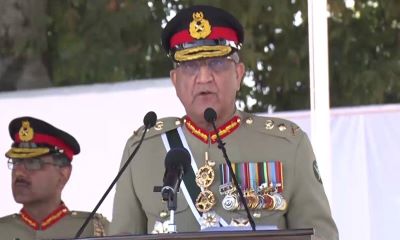
Pakistan expects that the Taliban will fulfil promises made to the global community regarding women and human rights and will not allow Afghan land to be used against any other country, Army Chief Gen Qamar Javed Bajwa said on Friday.

He made the comments during a wide-ranging speech at the Pakistan Military Academy (PMA) Kakul where he was the chief guest for the Flag Presentation Parade.

Gen Bajwa said that Pakistan wanted peace in the country and the region and this desire was shown by its “sincere efforts” to support an Afghan-led process to resolve the decades-long conflict in the neighbouring country.

“We have unambiguously and repeatedly asked [the] global community to play its part in an inclusive and unbiased Afghan process as well as economic sustenance of Afghanistan,” he stressed.

Despite paying a “huge price” for the instability in Afghanistan and its own economic challenges, Pakistan had been hosting over three million Afghan refugees for the last four decades, he pointed out.

The chief of army staff reiterated that Pakistan would continue to play its role for peace and stability in Afghanistan, which he said was “direly needed” for the entire region but especially for Afghans themselves.

“We expect that Taliban will fulfil promises [made to the] global community [regarding] women and human rights and Afghan territory won’t be used against any other country,” he said.

Gen Bajwa also talked about the Kashmir issue, saying the people in Indian-occupied Kashmir (IoK) were under the “worst military occupation in human history”.

He said the hearts of Pakistanis beat with their brethren in Kashmir and they would continue to stand with the people of the occupied valley “always and ever”.

“Regional peace will remain elusive without a just and peaceful resolution of the Kashmir issue,” he said.

‘Forces trying to weaken society through hybrid war’

The army chief said people of the subcontinent must not forget that the ultimate goal in the struggle against imperialism was to “secure [an] independent, harmonious and prosperous region wherein all [newly] created countries could live peacefully”.

However, those goals had become “hostage to increasing polarisation and radicalisation in our neighbourhood”, he stated, warning that inimical forces were “trying to weaken the society and state through hybrid war”.

Gen Bajwa said the Pakistan Army was “fully cognisant” of the challenges and was prepared to tackle them.

“We will ensure the country’s defence by focusing on core competencies and technology.”

Addressing the cadets at the ceremony, he reminded them that “only strong armed forces can guarantee the defence of the motherland.”

He advised them to focus on their training and gain knowledge about the latest technologies. “Pakistan Army is proud of its young officers who continue to lead their men from the front with courage and devotion to defend the freedom of the motherland,” he added.

During the ceremony, the COAS also awarded the Battalion Standard to 4th Pakistan Battalion which was raised on October 10, 2016.

Published : August 21, 2021

By : DAWN/ANN

Tencent announces 50b yuan social charity investment plan #SootinClaimon.Com

#SootinClaimon.Com : ขอบคุณแหล่งข้อมูล : หนังสือพิมพ์ The Nation.

https://www.nationthailand.com/international/40005045

Tencent announces 50b yuan social charity investment plan


Long-term and constant move an effort to leverage tech to help society develop

Tencent Holdings Ltd announced a plan to double its fund for social charitable causes in a bid to help promote “common prosperity” in China.

The internet giant is investing an additional 50 billion yuan ($7.7 billion) on supporting everything from rural revitalization, enhancing efficiency of the rural economy, increasing incomes for low-income people, funding inclusive education programs and other measures to enhance social fairness, the company said on Thursday though its official WeChat channel.

This latest move, which Tencent promised to be “long-term and constant”, adds to an April pledge of 50 billion yuan for the “Sustainable Innovations for Social Value” program, which is dedicated to basic science, education innovation, carbon neutrality, food/energy/water provisions, and technology for the elderly and digitalization of public welfare.

In a news release, Tencent said the efforts “underscored its initiatives in China’s wealth redistribution campaign and constant exploration in enhancing social welfare and contributing to common prosperity”.

Tencent’s new initiatives mark a proactive response to the nation’s development strategy. The recently-convened 10th meeting of the Central Committee for Financial and Economic Affairs has turned the spotlight on the country’s pursuit of common prosperity.

Participants at the meeting encouraged some people to become prosperous first, then help others get rich later. They also called for the creation of conditions and opportunities for more people to develop and become prosperous.

“As a Chinese technology company growing up in the tide of reform and opening-up, we are constantly pondering how we can leverage our own technology and digital capabilities to help the society develop,” the company statement said.

It outlined two parallel paths for development: Exploring future and unknown realms to help bolster China’s long-term sustainable development, and training sets on social inclusiveness, using technologies to improve more people’s lives by improving welfare and creating opportunities.

It pledged to play the role of a “connector”, linking more partners in the ecosystem, government departments and various social forces to embark on inclusive social causes.

Tencent has spared no effort in its social endeavors. The invention of a smart phone-based digital Health Code embodies its dual efforts in fighting the COVID-19 pandemic to constructing smart cities, it said. In August, Tencent also cut the playing time for its signature gaming title Honor of Kings for minors.

It has made initial steps in optimizing its philanthropic platform where some 20,000 public welfare agencies set foot, fostering emergency relief endeavors, establishing labs for rural development, carbon neutrality, basic discipline research and technology products for the elderly.

“An excellent internet company is not only an innovative company that uses big data, artificial intelligence, 5G, cloud computing, blockchain and other new technologies to lead a new economic model. It shall also be a mature company embracing humanistic care and goodwill that actively assumes social responsibilities,” said Tian Feng, a researcher at the National Institute of Social Development of the Chinese Academy of Social Sciences.

Tencent on Wednesday reported a 29 percent rise in second-quarter profit at 42.6 billion yuan, while revenue climbed 20 percent to 138.3 billion yuan.

Published : August 21, 2021

By : HE WEI/China Daily/ANN

Tougher regulations cast shadow over crypto markets in S. Korea #SootinClaimon.Com

#SootinClaimon.Com : ขอบคุณแหล่งข้อมูล : หนังสือพิมพ์ The Nation.

https://www.nationthailand.com/international/40004984

Tougher regulations cast shadow over crypto markets in S. Korea


Ko Kwang-nam invested 5 million won ($4,251) in cryptocurrencies but lost about half of his holdings as the nations cryptocurrency markets showed signs of cooling down ahead of tougher regulations.

As things stand, Ko, a 30-something office worker in Seoul, is likely to lose most of holdings because he made big bets on smaller or “alternative” coins.

“I am not going to cut my losses because I believe that prices will go up again if regulatory issues are over,” Ko said.

About a month before South Korea enforces tougher regulations against cryptocurrency exchanges, there was a sense of confusion in cryptocurrency markets and fears of a mass shutdown of minor exchanges dampened cryptocurrency interest.

By Sept. 24, both foreign and local cryptocurrency exchanges targeting Korean investors must register with the nation’s anti-money laundering body and disclose their details on risk management.

Under the tougher regulations, which were announced in March with a six-month grace period, banks will issue real-name accounts in line with stricter guidelines to prevent money laundering.

Beginning Sept. 25, cryptocurrency exchanges will be banned from withdrawing money for cryptocurrency trading if they have no real-name bank accounts.

Currently, only four major exchanges — Bithumb, Upbit, Coinone and Korbit — have real-name bank accounts issued by commercial banks.

Minor cryptocurrency exchanges, which have been using opaque accounts to lure investors, are unlikely to meet such regulatory requirements, analysts said.

Finance Services Commission (FSC) Chairman Eun Sung-soo has said about 200 cryptocurrency exchanges could face a shutdown unless they are registered as “virtual asset service providers” by the September deadline.

In July, Eun said cryptocurrency exchanges that are based outside South Korea must register with the Korea Financial Intelligence Unit (KFIU), the anti-money laundering body, if they use the Korean currency.

When asked by a lawmaker whether Binance, the world’s largest cryptocurrency exchange, needs to comply with the tougher regulations, Eun replied, “If a cryptocurrency exchange serves local customers with the won-currency settlement, it must register with the (Korea) Financial Intelligence Unit.”

For months, worries about regulatory crackdowns have hammered prices of smaller coins and some minor exchanges voluntarily discontinued operations or delisted smaller coins.

According to a report released by the office of Rep. Kim Hee-gon of the People Power Party, the combined trading volume of the four major exchanges stood at 401 trillion won at the end of June, compared with 1,322 trillion won a month earlier.

The price of Siacoin, one of the smaller coins that Ko invested in, plunged to 20.21 won on Thursday from its April 17 peak of 100.2 won.

In June, Upbit, the country’s largest cryptocurrency exchange, suspended won-based trading of five types of smaller coins It also put 25 minor virtual currencies on the warning list, which virtually means they will be removed from the trading platforms.

At least 11 of 20 certified cryptocurrency exchanges have decided to delist some smaller coins or place them on a warning list for investments since late May, according to industry sources.

Between June 15 and July 16, the FSC conducted on-site consulting on 25 crypto exchanges to review their preparation for registration and check the level of stability in their transactions system.

However, no exchanges were found to have met all the registration requirements, and they have shown inadequate levels of preparedness for complying with anti-money laundering efforts, the FSC said last week.

“At the time of consulting, the level of internal control mechanisms for stable maintenance and management of virtual asset transactions appeared to be inadequate,” the FSC said in a statement.

“Unlike in stock markets where a variety of players take up different functions and provide different services, different types of services are often provided by the same entities in the virtual asset market. This has exposed the issues of fairness in market order, safety in user’s assets and system stability,” it said.

As the nation is set to step up efforts to curb speculation, some foreign cryptocurrency exchanges have distanced themselves from Korea.

The KFIU has sent a notice to 27 foreign cryptocurrency exchanges that have business operations targeting Korean people about this requirement under the tougher regulations.

So far, no foreign exchanges have expressed their willingness to comply with the regulations.

Unless foreign exchanges register with the KFIU, they shall cease business operations targeting Koreans starting Sept. 25, FSC officials said.

“If they continue to operate without registration, they will be subject to up to five years of imprisonment or a maximum fine of 50 million won ($43,455),” an FSC official said.

Earlier this month, Bitfront, a US-based cryptocurrency exchange set up by the messaging app company Line, said it will stop providing a Korean-language service on Sept. 14.

Citing the tougher regulations, Bitfront also said it will discontinue payments with Korean credit cards on Sept. 14.

Last week, Binance, the world’s largest cryptocurrency exchange, announced it halted trading pairs and payment options using the Korean currency.

Despite repeated warning from policymakers, Korean investors have been heavily buying virtual currency as they see it as a lucrative asset amid the COVID-19 pandemic.

More young people have been investing in cryptocurrencies, anticipating higher returns, with some saying they cannot buy homes solely with their income amid skyrocketing home prices.

In the latest warning against cryptocurrency investors, the FSC said earlier this week that a closure of crypto exchanges starting Sept. 25 “may result in losses.” (Yonhap)

Published : August 20, 2021

By : The Korea Herald/ANN

COVID-19 infection rate declines in most of the regions and states, including Yangon, except for Mandalay, Tanintharyi and Kayah #SootinClaimon.Com

#SootinClaimon.Com : ขอบคุณแหล่งข้อมูล : หนังสือพิมพ์ The Nation.

https://www.nationthailand.com/international/40004983

COVID-19 infection rate declines in most of the regions and states, including Yangon, except for Mandalay, Tanintharyi and Kayah


Although COVID-19 infection rate is gradually declining in most of regions and states, including Yangon Region, except for Mandalay and Tanintharyi regions and Kayah State, where there is a slight uptrend, according to the Ministry of Health.

“Looking back at the regions and states, Yangon Region has a long holiday and in the first week it started to drop by more than 20 percent. In the second week, it dropped by more than 40 percent. In the third week, the figure dropped by more than half. The infection rate is declining in Nay Pyi Taw, Sagaing, Bago, Ayeyawady and Magway region and Kayin, Rakhine, Mon and Kachin states. There are some areas where the infection rate is unchanging,” said an official from the ministry.

Although the COVID-19 infection rate has dropped in most regions and states, the infection rate in three regions and states is found to be slightly increased. Efforts should be made to minimize contact with special caution in those areas and to comply with COVID-19 regulations, He said.

“We found that the infection rate in Mandalay and Tanintharyi regions and Kayah State is increased although there is a three-week long holiday,” he said.

In Mandalay Region, three townships, where the highest infection rate occurred, are Natogyi, Thabeikkyin and Sintku. In Tanintharyi Region three townships, where the highest infection rate occurred, are Dawei, Myeik and Launglon. In Kayah State, the infection rate is increased in percentage and three townships, where the highest infection rate occurred, are Loikaw, Hpasawng ung and Bawlakha.

“As for Kayah State, it is increasing by a percentage. The infection rate is high due to the population. However, there is a risk of a contagion if one person is found infected, so special care must be taken,” he said.

“Nationwide, the diagnostic graph is downward and it will be successful if only the rate is not continued to rise in areas where the rate is high. If so, it will be the condition to overcome the COVID-19 third wave,” he said.

The death toll from COVID-19 in Myanmar has dropped since August 5 with the infection rate around 30 percent, according to the ministry.

Published : August 20, 2021

By : Eleven Media/ANN