Tokyo Olympic organizers decided Tuesday it will request that fans refrain from lining the streets to watch the Olympic marathons and race walking events to be held in Sapporo.
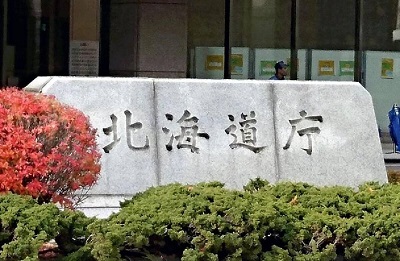
Officials from the Tokyo Organizing Committee of the Olympic and Paralympic Games met with their counterparts from the Hokkaido and Sapporo governments to discuss the issue as a means of preventing spread of the novel coronavirus.
On Monday, Hokkaido Gov. Naomichi Suzuki expressed his concerns in a meeting with Hiroshi Sato, vice director general of the organizing committee, of an outbreak in Sapporo being caused by spectators coming from the Tokyo metropolitan area, which is having a resurgence of infections. He asked for the call on people to refrain from watching the races.
The matter of what to do about spectators at the marathons and race walking events was left undecided at the five-way meeting held in June between the organizing committee, Japan government, International Olympic Committee and other concerned parties. It was left up to the organizing committee to work out the issue in consultation with the local governments.
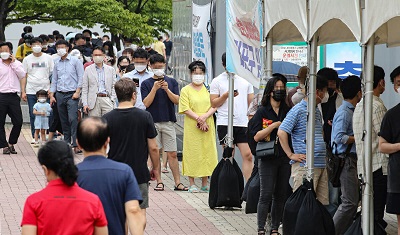
South Korea confirmed over 1,000 new coronavirus cases Tuesday for the first time in six months amid a resurgence in the Seoul metropolitan area, the Korea Disease Control and Prevention Agency (KDCA) said.
The country reported 1,006 more COVID-19 cases from 12 a.m. to 6 p.m. and the number is expected to further rise when the daily total is announced Wednesday morning.
The figure shot up to over 1,000 for the first time since Jan. 3 when the nation was undergoing a third wave of the pandemic, raising concerns over the fourth wave hitting in the summer.
On Tuesday morning, the KDCA announced 746 additional cases for the past 24-hour period. It reported 711 cases on Monday, 743 on Sunday, 794 on Saturday and 826 on Friday, which marked a nearly six-month high due to the sharp spike in new cases in the Seoul metropolitan area.
Numbers tend to be lower on the weekend and early in the week because of fewer tests done on Saturday and Sunday, before they tick back up in the middle of the week.
By region, 86.5 percent were from the wider Seoul area, with 521 from Seoul, 313 from Gyeonggi Province and 46 from the western port city of Incheon, authorities said.
Several private English institutes in the Seoul metropolitan area have become the virus hotbed after students got infected from foreign teachers, who dined together in a restaurant in western Seoul last month, with related cases amounting to 314 so far, health authorities said.
Health authorities expressed concerns over the rising ratio of patients in their 20s and 30s as the vaccination program currently gives priority to the elderly population, medical workers and essential workforces. (Yonhap)
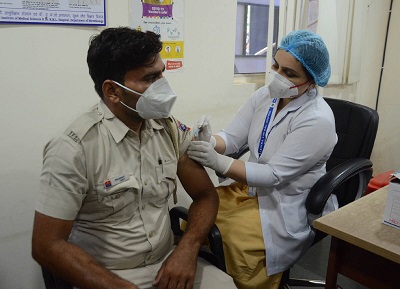
With 553 fresh deaths, India recorded the lowest daily death toll in around 90 days while 34,703 new cases of coronavirus were reported, the lowest in 111 days, the Union Health Ministry said on Tuesday.
With the fresh cases, the total tally of COVID-19 cases climbed to 3,06,19,932, while the death toll climbed to 4,03,281. The active cases further declined to 4,64,357, the lowest in 101 days, and comprise 1.52 per cent of the total infections.
The national COVID-19 recovery rate has improved to 97.17 per cent, the data updated at 8 am showed. A net decline of 17,714 cases has been recorded in the active COVID-19 caseload in a span of 24 hours.
Also, 16,47,424 tests were conducted on Monday taking the total cumulative tests conducted so far for detection of Covid-19 in the country to 42,14,24,881.
The daily positivity rate was recorded at 2.11 per cent. It has been less than three per cent for 15 consecutive days, the ministry said, adding the weekly positivity rate has declined to 2.40 per cent. Recoveries continue to outnumber daily new cases for the 54th consecutive day.
The number of people who have recuperated from the disease surged to 2,97,52,294, while the case fatality rate stands at 1.32 per cent, the data stated. Cumulative vaccine doses administered so far has reached 35.75 crore under Nationwide Vaccination Drive.
India’s COVID-19 tally had crossed the 20-lakh mark on August 7, 30 lakh on August 23, 40 lakh on September 5, and 50 lakh on September 16. It went past 60 lakh on September 28, 70 lakh on October 11, crossed 80 lakh on October 29, 90 lakh on November 20, and surpassed the one-crore mark on December 19. India crossed the grim milestone of two crore on May 4 and three crore on June 23.
The 553 new fatalities include 106 from Maharashtra, 102 from Kerala and 67 from Karnataka. A total of 4,03,281 deaths have been reported so far in the country including 1,23,136 from Maharashtra, 35,434 from Karnataka, 33,059 from Tamil Nadu, 24,997 from Delhi, 22,646 from Uttar Pradesh, 17,817 from West Bengal and 16,122 from Punjab.
The ministry stressed that more than 70 per cent of the deaths occurred due to comorbidities. “Our figures are being reconciled with the Indian Council of Medical Research,” the ministry said on its website, adding that state-wise distribution of figures is subject to further verification and reconciliation.
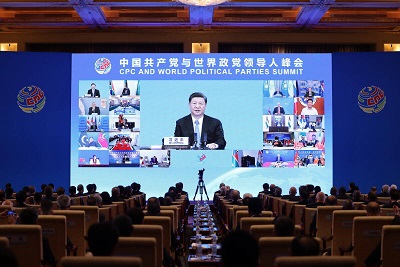
MANILA, Philippines — The Philippines should sustain its “constructive dialogue” and “peaceful engagement” with China to further build mutual trust and confidence between the two countries, President Rodrigo Duterte said at an online summit on Tuesday.
Speaking at the Communist Party of China and World Political Parties Summit, Duterte said he considered China as a “friend and a partner for peace and development” and that he expected that bilateral relations between the Philippines and China to “expand and deepen.”
“We value the friendships, ties, between PDP-Laban and Communist Party of China (CPC) that have grown significantly over the years. To further build mutual trust and confidence, we must sustain our constructive dialogue and peaceful engagement. This is crucial as the bilateral relations bet our two countries expand and deepen,” he said.
“We count on China as a friend and a partner for peace and development. We trust in the collective wisdom of the great Chinese nation, that China will use its newfound strength in defense of what is good and just for all humanity,” Duterte added.
He further said that the ties between Filipinos and Chinese would continue to be “deep and enduring” as long as the two countries would value “win-win cooperation, amity, and mutual respect.”
During the speech, Duterte praised China for its “extraordinary rise to prosperity” under the leadership of the CPC, adding that the country would “play an important role in the global affairs for decades to come.”
He also thanked China for its assistance to the Philippines in addressing the COVID-19 pandemic, particularly China’s donation of COVID-19 vaccines.
Party will actively promote global governance so it can make new contributions to mankind
Xi Jinping, general secretary of the Communist Party of China Central Committee, called on Tuesday for international cooperation for shared development and opposing technological blockades, scientific divides and development decoupling, saying any political manipulation for the purpose of blocking other countries’ development is doomed to fail.
Xi, also Chinese president, made the remarks while delivering the keynote speech in Beijing at the CPC and World Political Parties Summit via video link.
He called on the world’s political parties to shoulder their historic responsibility to promote development with results shared by people of all countries and improve the fairness, efficiency and coordination of global development.
Development is the right of all countries, instead of being a privilege of a small minority of countries, Xi said, adding that all countries should enjoy equal opportunities and rights for development.
He said the CPC will actively promote global governance to make new contributions to mankind in dealing with common challenges.
Xi underscored the need to uphold multilateralism, saying international rules should be recognized by all countries, not formulated by a small number of individuals. International cooperation should be for the purpose of serving the whole of mankind, instead of using group politics to seek world hegemony, he added.
Xi called on the world’s political parties to strengthen international cooperation to cope with the global risks and challenges.
Facing a COVID-19 pandemic that is still surging globally, countries should intensify solidarity and cooperation to narrow the vaccine gap, oppose politicizing the disease and jointly advance the building of a global community of health for all, he said.
Xi underlined the need for countries to improve governance in order to raise their capacity for enhancing people’s well-being.
People of all countries have the right to choose their own development path and institutional model, he said, and there are various ways of realizing democracy. Whether a country is democratic or not should be judged by its own people, not by a small minority of individuals, he added.
Xi also called on the world’s political parties to build up consensus for upholding the common value of humanity in promoting peace, development, fairness, justice, democracy and freedom. The parties were also urged to promote international coordination and cooperation and to advance the building of a community with a shared future for mankind.
Noting that the CPC remains true to its founding aspiration and mission for people’s happiness, Xi said it has also been striving to promote peace and development.
China has worked to be a promoter of world peace, contributor of global development and champion of international order, he added.
Xi said that the country will firmly pursue the path of socialism with Chinese characteristics to develop itself and at the same time benefit the world. A country’s efforts to independently explore a path that suits its national conditions to achieve modernization should be respected, he added.
The CPC will unite and lead the Chinese people to comprehensively deepen reform and expand opening-up and make new contributions to the common development and prosperity of all countries, Xi noted.
Saying that the trend for opening-up and cooperation remains unchanged, Xi pointed out that the CPC stands ready to strengthen communication with the world’s political parties to guide economic globalization to become more open, inclusive, mutually beneficial and balanced toward greater win-win results.
China is willing to intensify high-quality cooperation with the international community on joint construction of the Belt and Road, promote global mutual connectivity and enable more countries and their people to enjoy the development results, he said.
The summit, on the theme of “For the People’s Well-Being: The Responsibility of Political Parties”, is an important multilateral diplomatic event held at a time when the CPC is marking the 100th anniversary of its founding. More than 500 leaders of political parties and organizations from more than 160 countries, as well as over 10,000 party representatives participated in the event.
Over 17,000 in Singapore received Sinovac Covid-19 vaccine; 2 non-serious adverse events reported
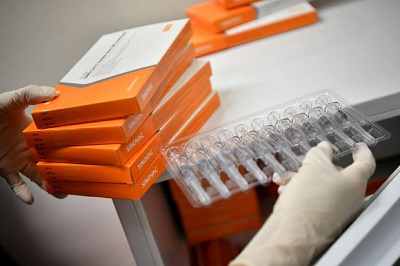
SINGAPORE – As at last Saturday (July 3), 17,296 people here have received one dose of Sinovacs Covid-19 vaccine, Health Minister Ong Ye Kung said on Monday.
In a written response to several parliamentary questions on the vaccine by Mr Yip Hon Weng (Yio Chu Kang), Mr Ong added that as of June 29, two non-serious adverse events relating to the Sinovac vaccine had been reported.
He did not elaborate on what the events were, but said that the Ministry of Health (MOH) and the Health Sciences Authority (HSA) would continue to monitor the situation and provide updates if any significant safety concerns are detected.
The first batch of Sinovac vaccines arrived in Singapore on Feb 23, but the vaccine has yet to be approved for use in the national vaccination programme.
This is because the drugmaker has still not submitted certain data which the HSA needs to complete its evaluation of the vaccine’s safety and efficacy.
Mr Ong confirmed this was still the case on Monday, in response to opposition MP Gerald Giam (Aljunied) who asked whether the vaccine could be made part of the national vaccination programme for those who have contraindications to the vaccines by Pfizer-BioNTech and Moderna.
Contraindications are reasons that an individual should not continue with a particular medicine or treatment, as it may be harmful to them.
In the case of Singapore’s Covid-19 vaccines, this includes those who had allergic reactions to the first dose of the Pfizer-BioNTech or Moderna vaccines, or those who are allergic to other vaccines and have been assessed by an expert to be unsuitable for the two vaccines.
Making Sinovac’s vaccine part of the national vaccination programme would allow such individuals to get their jabs at vaccination centres and polyclinics, and to be eligible for the Vaccine Injury Financial Assistance Programme (Vifap) should they develop any adverse reactions, noted Mr Giam.
Currently, those who wish to take Sinovac’s vaccine may do so only at certain private healthcare providers across the island, and are not eligible for Vifap.
Mr Giam also asked if people who have contraindications to Pfizer-BioNTech and Moderna’s vaccines but not Sinovac’s could be given priority to receive Sinovac’s vaccine, ahead of those who simply choose Sinovac’s vaccine out of personal preference.
In his written response, Mr Ong said that as Sinovac’s vaccine is still not authorised by HSA under the Pandemic Special Access Route and has not been recommended as part of the national vaccination programme by the expert committee on Covid-19 vaccination, those who wish to take the jab will not be eligible for Vifap.
Noting that “only a small group” here are contraindicated to Pfizer-BioNTech and Moderna’s vaccines, Mr Ong added that sufficient stock of Sinovac’s vaccine had been set aside for their priority use.
Downpours trigger landslide, cut off power, leave 1 dead in southern parts of Korea
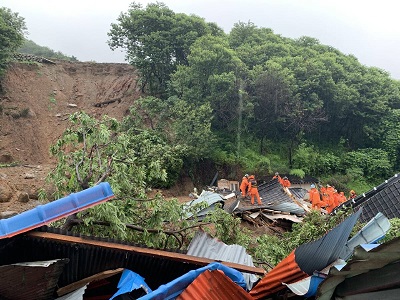
Heavy rains that hit the southern parts of the country overnight flooded houses and farmlands, and disrupted the power supply and train services, leaving one dead and forcing 47 people to evacuate, authorities said Tuesday.
The Central Disaster and Safety Countermeasures Headquarters said the downpour swept away a woman, in her 60s, in the southwestern county of Haenam early in the morning. The authorities said she was found dead from drowning.
In the nearby counties of Gangjin and Jindo, 47 people temporarily sought shelter in community centers and gymnasiums. In the region, eight houses and 35 shops were under water and mud, and more than 18 hectares of farmlands were submerged.
In Gwangyang, also in South Jeolla Province, a landslide washed away two houses and destroyed another two. A rescue operation is under way for a resident who is trapped under the rubble. The city had recorded 201.5 millimeters of rain as of 7 a.m.
Heavy rains destroyed roads in Goheung, South Jeolla Province, and knocked down trees in Daegu and some parts of North Chungcheong Province, disrupting traffic.
A total of 12 roads were closed for public safety in South Jeolla Province, Busan and Gwangju, as torrential rains could potentially trigger landslides and flooding.
The downpour disrupted five train services, including those connecting Suncheon and Iksan and Mokpo and Suncheon. Twenty-two ferries on 12 routes, including the one running between Yeosu and Geomun, were grounded.
In the region, 288 trekking courses in 11 national parks were closed out of safety concerns.
In Busan, 128 houses lost power temporarily but regained it.
The headquarters raised its internal alert level by one notch at 4 a.m. Tuesday, as some of the southwestern parts had received more than 300 mm of rainfall and were expected to be hit with more rain.
The weather agency forecast more rain to continue in the region and the southern resort island of Jeju on Tuesday, with some areas expected to receive around 50 mm to more than 200 mm per hour. It urged caution and asked people to stay away from dangerous areas prone to landslides and flooding. (Yonhap)
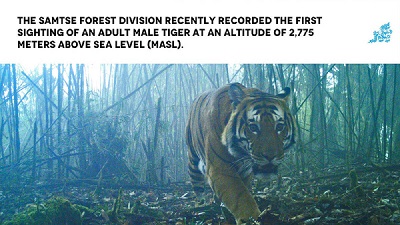
Samtse forest division recently recorded the first sighting of an adult male tiger in a remote camera trap at an altitude of 2,775 meters above sea level (masl).
The officiating chief forestry officer, Sonam Wangchuk, said that although the dzongkhag did not record even a single sighting in the nationwide tiger survey in 2014 and 2015, the current record was exciting. “We are happy that our division has tigers too.”
Bhutan is among the 11 countries in the world that have recorded the iconic species, which has been listed as endangered species under the IUCN red list since 1969.
The chief of Bhutan Tiger Centre in Gelephu, Tshering Tempa (PhD), said they are currently comparing the pictures caught on the camera trap to verify where the tiger came from. “Foresters in Samtse will monitor the tiger using remote camera traps and will also increase patrolling intensity in the area.”
He said that tiger presence in Samtse was important, as they are in the process of planning for the second nationwide tiger survey scheduled this year. “Now we are sure that tigers are present everywhere in the country. Our colleagues in the field had been working hard to get the tiger record.”
According to Tshering Tempa, the new record of a tiger in Samtse is a success story of conservation in Bhutan. “Tigers in Bhutan have favourable conditions for survival compared to other countries.
It is unique that Bhutan is home to tigers living in 100masl in the south to 4,500masl in the north.”
Meanwhile, more than 93 percent of tiger habitats have been lost in the last century alone in the world.
Experts warn that if appropriate conservation measures are not taken, the risk of tigers going extinct is imminent.
Records show there are less than 4,000 tigers in the wild today. Studies show that poaching, prey depletion, and habitat loss continue to threaten the survival of tigers in the wild.
Over 1.3b doses of COVID-19 vaccines administered in China
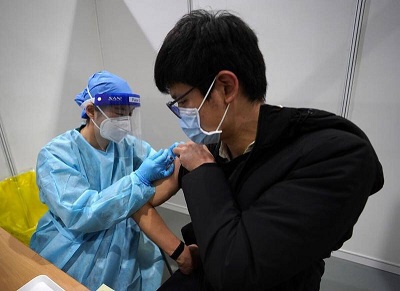
BEIJING – More than 1.3 billion doses of COVID-19 vaccines have been administered in China as of Sunday, as the country continues to ramp up its inoculation drive, the National Health Commission announced on Monday.
China accelerated its pace of free COVID-19 vaccinations for the whole nation in late March. It took China 25 days to climb from 100 million doses to 200 million doses, 16 days to increase from 200 million to 300 million, and just six days to move from 800 million to 900 million.
By June 19, China had administered in excess of 1 billion doses, the commission announced on June 20. By June 24, the accumulative figure exceeded 1.1 billion, and by June 28, the number surpassed 1.2 billion.
Experts with the Chinese Center for Disease Control and Prevention have called for vaccine dose schedules to be completed in full to achieve the best possible preventative effect.
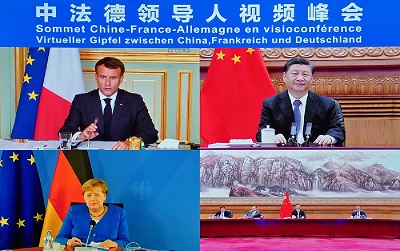
President Xi Jinping has called on China and the European Union to expand consensus and cooperation and rationally deal with their disputes in a world that more than ever needs cooperation instead of a zero-sum game mentality.
He made the remark in Beijing on Monday while participating in a video summit with French President Emmanuel Macron and German Chancellor Angela Merkel. It followed a similar summit with the leaders in April.
Guided by the principles of mutual respect and seeking common ground while shelving differences, China and the EU have expanded the convergence of interests through their strategic partnership, Xi said, calling on the two sides to maintain a steady course on bilateral relations.
He said that China is willing to facilitate the flow of people with France, Germany and other European countries while ensuring control of the COVID-19 pandemic.
Xi said that China stands ready to work with the EU to hold the 23rd China-EU leaders’ meeting at an early date, start preparations for high-level dialogues in a number of areas, and promote the mutual recognition and protection of trusted products, which will bring more benefits to the daily lives of people on both sides.
Since the bilateral agreement between China and the European Union on geographical indications took effect in March, a total of 134 EU products are protected in China and 110 Chinese products are protected in the EU, he noted.
As China keeps on opening up, Xi said, it hopes that the EU will provide a fair, transparent and nondiscriminatory business environment for Chinese companies in accordance with market principles.
The president underlined the importance of upholding true multilateralism, saying that international affairs should be calmly addressed by all parties through negotiations.
What China wants most is its own development instead of replacing others, Xi said, noting that the Belt and Road Initiative was aimed at creating more opportunities for shared development.
China hopes that the EU will play a more positive role in international affairs, demonstrate its strategic autonomy and jointly safeguard world peace, stability and development, he said.
During the meeting, Xi also said China actively supported Africa to improve its capacity to manufacture vaccines.
According to Xi, China has signed debt suspension agreements, or reached similar understandings, with 19 African countries.
He also called on the EU to provide more vaccines for African countries in urgent need, and assist Africa in dealing with its debt pressure to help the continent realize economic recovery and low-carbon development at an early date.
Macron said France is committed to pushing ahead cooperation with China with a pragmatic attitude. France also supports the signing of the EU-China investment deal and welcomes more Chinese companies to invest in the country, he said.
The French side stands ready to communicate with China on issues including the reform of the World Trade Organization and dealing with climate change, he added.
Macron said his country praised China’s important role in providing equitable access for developing countries to vaccines.
Merkel congratulated China on overcoming the impact of the pandemic and resuming its economic development.
Noting that the EU-China relationship is of crucial importance, she said that the two sides have reached consensus in many areas. Both sides should respect each other and narrow their divisions by strengthening dialogue, she added.