Third wave Covid-19 hits Myanmar #SootinClaimon.Com

#SootinClaimon.Com : ขอบคุณแหล่งข้อมูล : หนังสือพิมพ์ The Nation.

https://www.nationthailand.com/international/40002618

Third wave Covid-19 hits Myanmar


YANGON – Three regions are reporting highest numbers of Covid-19 cases – Sagaing, Yangon Region, Bago Region.
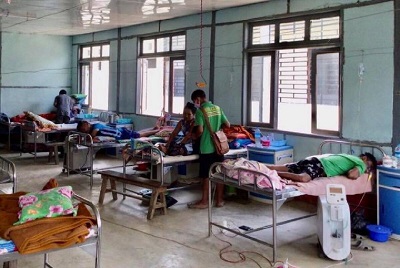
According to data from the Ministry of Health and Sports (MOHS), Sagaing Region has the highest number  with over 1100 new cases in 10 days between June 13 to 23. Yangon has over 700 and Bago is at over 600.

Tests conducted at the Mahawthadar private basic education high school after a female student lost her sense of smell revealed over 300 more positive cases in Hlegu, Yangon Region.

MOHS said that Hlegu General Hospital, Hlaingtharyar’s General Hospital and Covid-19 center (Phaungyi) will systematically treat patients that showed symptoms.

In townships across Mandalay, over 400 new Covid-19 cases were found between June 1 and 24.

In select townships across some regions and states, rising number of Covid-19 cases has forced schools that had recently reopened to close indefinitely with some fresh markets also shut down.

“It used to be that if one became positive in a family of five, maybe one or two will get infected. But now, if one is positive in a family of six, five people are getting infected so the infection is fast spreading. As of the severity, it isn’t confirmed but there are relations between severe symptoms, hospitalization and death after hospitalization. We cannot make light of this,” said an official from the Communicable Diseases Eradication Department.

Townships ordered to stay home

So far, as of the end of May to June 25, there have been nine townships that were placed under the stay-at-home programme. These are in Chin State, two in Sagaing Region and two more in Bago Region.

“If people from those townships are to visit other places, they will be checked and if results are negative, they will be quarantined for 10 days. If positive, guidelines already in place will be followed. Those not from there can proceed on as normal but it may change depending on the situation,” said the official.

Even those that have been vaccinated but are living in stay-at-home townships must follow directives set up for them.

“People cannot leave their homes unless it is necessary. Only one person can leave home at one time. For medical reasons, one person can accompany another. If needed, permission must first be sought from respective authorities. It doesn’t matter if they are vaccinated or not, they cannot roam outside. This needs to be made clear,” said the official.

The status of the vaccination

The vaccination began in January with Covishield vaccines given to selected groups of people for the first phase. The second phase began on May 31 at the Myanmar Convention Center in Mindamma Road.

“If we can get our hands on vaccines, the vaccination is the most important. The US and UK’s vaccination is at 40 per cent of the population. Only Israel is over 50 percent. There is low level of vaccination in 92 developing countries, including ours,” said the same official from the Communicable Diseases Eradication Department.

Myanmar currently has access to India-made Covishield and Sinopharm from China. Both are recognized by the World Health Organisation amongst 8 types to be used in emergency.

An agreement has been made with India for the purchase of 30 million doses of the vaccine but had since been halted as India has seen rapid climb in Covid-19 infections.

The MOHS’s data say that there are 1.4 million people already vaccinated twice while 1.8 people have been vaccinated once.

here are 300 thousand more doses of vaccines donated by China. So those are for 150,000 people. Since schools have been reopened, priority have been given to vaccinating teachers, according to rations depending on each state and regions.

“Some places already saw two vaccinations while some only has one. It depends on our priority list and the amount of vaccines available to us. Since we only have enough for 150,000 people, it is limited. So we cannot fully inject Sinopharm for all citizens but efforts are being made in multiple ways to obtain more vaccines from different countries. Also the ones that we bought from India,” said the official.

WHO had persuaded member nations to assist other nations in achieving at least 10 percent of population to be vaccinated by September this year.

The variants

Lab results from cases, especially those from Sagaing Region and Chin State, show the presence of the mutated variants.

There were 11 found so far with traces of the mutant strains. One in Kalay, three in Myeik, four in Mandalay, two in Tamu and one in Yangon.

The Alpha variant infected two, Delta five and Kappa with four. They were originally found and reported in India, the USA, France, Germany, Spain, Ireland and Switzerland.

“Alpha and Delta are special because out of all the variants of concern, they are much more infectious. Even comparing Alpha and Delta, the latter is 60 percent more infectious than the former. However, it is 60 percent and not 60 times faster. Alpha, while not having the exact measurement of its infection rate, is definitely faster than the normal version. The other quality of the two variants is that it is much more likely to infect the family members,” said the official.

Treatment programs

As of now, the Yangon General Hospital and North Oakkalapa General Hospital is accepting Covid-19 patients with severe symptoms, 24 hours and free of charge.

“The YGH and the NOGH is accepting patients around the clock. Some don’t even know that the YGH Is accepting patients. But that doesn’t mean that if you cough, have a fever or show other Covid-19 symptoms, you can straight away come to the YGH. You have to first go to respective public health clinics or hospitals. After they check and results show to be positive, respective hospitals will handle the case first.”

According to the MOHS, the YGH, NOGH and Phaung Gyi General Hospital are reserved for those with severe symptoms and are elderly with chronic underlying diseases with oxygen levels below 90.

Close contacts of positive cases will be sent to quarantine centers that relates to each respective townships with many public hospitals readying isolation wards to be able to treat all positive patients.

“If Covid-19 is found, judgement will be made depending on whether sympytoms are showing or not. If no symptoms show or just show regular symptoms, depending on the differences, they will be kept isolated and treated. So they may or may not need to be hospitalized. For example, the Mahaw Thadar School cases were kept in isolation. We check their blood pressure, measure oxygen levels, check for fevers and other health check ups every day. A separate medical team handles those tasks,” said the official from from the communicable diseases eradication department.

Published : June 30, 2021

By : Eleven Media/ANN
Bali, Jakarta bombings suspect Hambali to be tried on Aug 30 by US military #SootinClaimon.Com

#SootinClaimon.Com : ขอบคุณแหล่งข้อมูล : หนังสือพิมพ์ The Nation.

https://www.nationthailand.com/international/40002582

Bali, Jakarta bombings suspect Hambali to be tried on Aug 30 by US military


WASHINGTON – The world will soon get a new look at the man accused of plotting the October 2002 bombing in Kuta, Bali, that killed 202 people, and the 2003 attacks at the JW Marriot and Ritz Carlton hotels in Jakarta that killed 11.

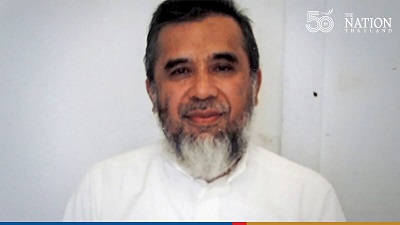
Riduan Isamuddin, also known as Hambali, and his two associates will face a formal arraignment in front of a United States military commission in Guantanamo Bay on Aug 30.

It has been some 18 years coming. Hambali, now about 57, was captured in Ayutthaya, Thailand, on Aug 14, 2003 in a joint US-Thai operation and transferred to Guantanamo in September 2006.

He is believed by investigators to have masterminded the strategy of the Jemaah Islamiyah (JI) terror organisation of striking at soft targets. JI has previously been linked to Al-Qaeda and later to the Islamic State.

Hambali was not formally charged in the US with any crime until January this year and remains wanted in Malaysia, Singapore and the Philippines in connection with terrorist plots.    

In Dec 2001, 15 JI operatives were arrested in Singapore for planning attacks on government buildings, embassies and US servicemen in the Republic.

In 2002 came the Bali bombing – the worst terrorist attack ever on Indonesian soil. Then in 2003, the group carried out the twin suicide bombings on the JW Marriot and Ritz Carlton in Jakarta.

ADVERTISEMENT

The charges list Hambali as “Encep Nurjaman, also known as Riduan bin Isomudin, alias HAMBALI”.

Two others who will stand trial with him are Mohammed Nazir Lep, alias Lillie, and Mohammed Farik Amin, also known as Zubair.

An appendix provides a long list of other aliases of the three.

The charge sheet dated April 2019 lays out, in chilling detail, planning by the three as “principals, as co-conspirators, and as participants” of the Bali and Jakarta attacks, and a string of other plans for attacks against Americans and American interests – including the idea of attacking American servicemen and sinking an American warship in Singapore.

The three are classified as “alien unprivileged enemy belligerents”.

The trio is standing trial on Aug 30 for “offences triable by military commission, including murder in violation of the law of war, attempted murder in violation of the law of war, intentionally causing serious bodily injury, terrorism, attacking civilians, attacking civilian objects, and destruction of property in violation of the law of war”.

Defence attorneys appointed by the military will speak in their defence. One of the principal points they will be making is that Hambali was tortured in detention.

Additionally, the charge sheet states that “From on or about August 1996 to on or about August 2003, at multiple locations in or around Afghanistan, South-east Asia and elsewhere, the three knowingly conspired and agreed with… Usama bin Laden, Khalid Shaikh Mohammad, Abu Ba’aysir, Abdullah Sungkar and others, known and unknown”.

The Pakistani militant Khalid Shaikh Mohammad is accused of masterminding the Sept 11, 2001 attacks in the US and is also being held at the Guantanamo Bay prison on terrorism-related charges.

As the 20th anniversary of the Sept 11 attacks approaches, Khalid Shaikh Mohammad may also finally see a long-delayed formal trial. In summer 2019, a military judge set the date for January 2021, but amid the Covid-19 pandemic, it was again postponed. A new date has not been set.

Published : June 29, 2021

By : The Straits Times/ANN

In Korea’s online vaccine hunts, the tech-savvy and time-rich are often at ‘unfair’ advantage #SootinClaimon.Com

#SootinClaimon.Com : ขอบคุณแหล่งข้อมูล : หนังสือพิมพ์ The Nation.

https://www.nationthailand.com/international/40002581

In Korea’s online vaccine hunts, the tech-savvy and time-rich are often at ‘unfair’ advantage


Older generations, workers in poor conditions fear they don’t stand a chance

Fifty-six-year-old Yun Mi-sun has never really felt like she was out of touch with the digital world. She has always been quite handy with the technology in her life: She knows her way around her brand new Samsung smartphone, and when she drives, she routinely relies on the car’s built-in navigation system. That was until she tried to book a leftover vaccine for herself.

Being in her mid-50s, she is not eligible for a COVID-19 vaccine yet under Korea’s age-based vaccination scheme. Her turn does not come until August, but she wants to get vaccinated early to visit her mother-in-law who is bed-bound in a nursing home.

“I had no problem going on the portal. But, I didn’t know where to go from there,” she said. The virtual map indicating availability of extra shots at clinics seemed to always say “fully booked” every time she checked. She also struggled with issuing a “digital signature” required for the process.

“Later my son taught me how I could bookmark certain clinics on the map and then get alerted immediately when a slot opens up,” she said. “There was no way I could have figured this out on my own. I was clueless, and for the first time, I felt like a grandma.”

The online system for booking leftover vaccines — resulting from appointments canceled by eligible people, usually in small numbers — is ultracompetitive, and disproportionately favors the young, according to official statistics posted Thursday.

Slightly over 88 percent of 253,000 people who were able to get vaccinated ahead of schedule with the leftover doses so far were in their 30s and 40s. The remaining 11 percent were in their 50s. Since only the most widely supplied AstraZeneca vaccine was up for grabs, anyone younger than 30 was excluded over risks of rare blood clots.

In the latest development in the frenzied vaccine hunt, police said last week they were looking into social media posts from users who said they scored their appointments through a macro, or a computer program that automates repetitive steps.

Hwang Nam-hui, a senior policy researcher at Korea Institute for Health and Social Affairs, said smartphone-savvy younger people having an edge over their older peers in online vaccine hunting was a “prime example of the digital divide leading to inequities.”

Korea is a country with exceptionally high digital literacy, even among older people, but about a third of people in their 60s and older considered themselves “digitally disconnected” in a survey by the institute. Within the cohort of 50-somethings, the trend tended toward two extremes. People with higher incomes and advanced degrees were likely to have more expertise with the internet and digital devices.

“This divide can be even more consequential in a pandemic, case in point being the online vaccine registration system,” she said. “The costs of not being tech-savvy should not be one’s health.”

There have been other times throughout the pandemic when those with limited information technology familiarity were left out of access and opportunities to essential resources, according to Hwang. In the early months of the pandemic, older people collapsing while waiting in line at stores for face masks made headlines, while younger people bought theirs online.

“Technology is evolving faster than many people can afford to get used to,” she said. “Policies should recognize these gaps and aim to bridge them.”

Despite the apparent imbalance, people younger than 50, who are collectively grouped as “less at risk” and at the very bottom of the priority ladder, will have to vie for vaccines online from August when their eligibility opens.

A member of a call center workers’ union, who is in his early 40s, said when he found out vaccine appointments were to be offered to people his age on a first-come, first-served basis online, he wondered if he would “stand a chance.”

He said he hardly had time to look at his phone at work. Even bathroom breaks were a “luxury” during busy hours. “But some people at other call centers have it worse. Their phones are taken away when they come into work for security and productivity purposes,” he said.

“For people like us, who would get vaccinated but whose jobs make it hard, the online sign-ups feel like the government is saying, ‘sorry, you’re on your own.’”

Chung Hae-joo, a professor at Korea University’s public health sciences department, said a need-based, rather than random, approach, should be adopted in public health services such as vaccine distribution.

“An open-for-all competition bears a facade of fairness, but it only works by overlooking the advantages that some groups — in this case, the IT-competent — have over others.”

ADVERTISEMENT

Published : June 29, 2021

By : The Korean Herald/ANN

As coronavirus infections fall, Nepal relaxes restrictions for arrivals #SootinClaimon.Com

#SootinClaimon.Com : ขอบคุณแหล่งข้อมูล : หนังสือพิมพ์ The Nation.

https://www.nationthailand.com/international/40002580

As coronavirus infections fall, Nepal relaxes restrictions for arrivals https://tkpo.st/3dn2xRo


Fully vaccinated need not stay in hotel quarantine and can self isolate at home. For the non-vaccinated mandatory hotel quarantine has been reduced to seven days from 10 days earlier.

Nepal has eased travel protocols allowing fully vaccinated arrivals to isolate at home and has also cut the mandatory 10 days hotel quarantine to seven days for those who have not been vaccinated.

Nepal has also allowed a limited number of scheduled international flights following a drop in the Covid-19 cases in the country. Nepal on Monday reported 1,509 new coronavirus cases in the last 24 hours down from a high of 9,317 on May 11.

“The new rules approved by the Cabinet on June 21 has been implemented and are applicable for both Nepalis and foreigners entering Nepal,” Pratap Babu Tiwari, general manager at the Tribhuvan International Airport, told the Post.

He said that fully vaccinated travellers should stay in home isolation for 10 days.

According to him, all travellers to Nepal need to submit a photo attached barcode or quick response (QR) code, including a negative PCR report from within 72 hours before departure, at the check-in counters.

These codes are based on a combination of data and information submitted by the users themselves.

However, if the country of origin does not issue a photo attached barcode or QR code documents, it should follow the rules of the country by coordinating with the Nepalis diplomatic mission abroad.

Travellers coming to Nepal have to fill up details in the Abroad Returnee Management System at the Covid-19 Crisis Management Centre (CCMC) website.

In case it is not possible to fill the details before check-in, the concerned airlines in coordination with Nepal’s Tourism Ministry should arrange to fill the relevant form at the Tribhuvan International Airport before the health screening test upon landing in Nepal.

Upon arrival, incoming passengers, provided they get through the health screening, have to spend seven days in quarantine at government-listed hotels and rooms must be booked prior to arrival.

Returning Nepali migrant workers who have no hotel booking should mandatorily stay at the quarantine facilities made available by the government.

Nepali nationals need to do a PCR test on the seventh day of quarantine at their own expense and if the report is negative they are allowed to go home. They, however, have to stay an additional four days in home isolation.

In the case of Nepalis who have been deported, are returning home after being released from jail or who don’t have enough finances, Nepali diplomatic missions will investigate and recommend them for government support. They will be kept in quarantine in government facilities and all expenses related to their trip and PCR test will be borne by the government.

Those coming for mourning will be allowed to go home after a negative antigen test but need the recommendation of the local government or the Covid-19 Crisis Management Centre. But they have to do a PCR test 11 days after arrival.

People with disability, sickness and other long-term illness, or chronic health conditions and their carers [maximum of two], will be sent for 10 days’ home isolation or hospital after an antigen test if they have the necessary health reports.

Those above 70 years, children below 5 and their travelling carers are allowed to go home if their antigen test is negative. After spending 10 days in home isolation, they have to do a PCR test on the 11th day of arrival.

Those coming for mourning, the disabled or ill, those over 70 years and below 5 years and their carers will be sent to the government isolation centres or hospitals if their antigen test is positive.

Members of the diplomatic community and international organisations and their family members are allowed to spend 10 days at quarantine arranged by their respective offices or organizations. They are allowed to work after 10 days if they tested negative.

The government has not allowed foreigners entry from the land points.

However, 13 land entry points have been opened for returning Nepalis.

The government has announced prohibitory orders in most parts of the country at the end of April to help check the spread of the virus as the second wave of the pandemic hit Nepal. Prohibitory orders continue to be in place but have been relaxed since last week to allow movement of people and operation of businesses following health protocols. 

Published : June 29, 2021

By : The Kathmandu Post/ANN

Ruling CPP celebrates 70th anniversary #SootinClaimon.Com

#SootinClaimon.Com : ขอบคุณแหล่งข้อมูล : หนังสือพิมพ์ The Nation.

https://www.nationthailand.com/international/40002579

Ruling CPP celebrates 70th anniversary


The ruling Cambodian People’s Party (CPP) leaders outlined their views on the history of struggle and achievements under the CPP-led government over the past 42 years, saying the party will continue to maintain the Kingdom’s independence, peace, freedom, democracy, neutrality and social progress.

They made the remarks on the occasion of the 70th anniversary of the founding of the party – June 28, 1951.

The CPP was originally known as the Khmer Revolutionary People’s Party, with its origins in the resistance movement that was formed by Cambodian people to fight against the colonialist regime in order to achieve national independence, CPP president and Prime Minister Hun Sen recounted.

In his message marking the occasion, Hun Sen said that for the past 70 years the CPP has led the people in a valiant fight to liberate the country from foreign aggressors.

He noted that the CPP overthrew the genocidal regime of Pol Pot and rescued the nation, ending the darkest period in Cambodian history and starting fresh with the commencement of the nation reconstruction on the path of peace, national unity, democracy and development.

Since the end of 1998 – through his win-win policy, the promotion of democracy, civil liberties and socio-economic development – the people have improved their lives and are living together in harmony, he said.

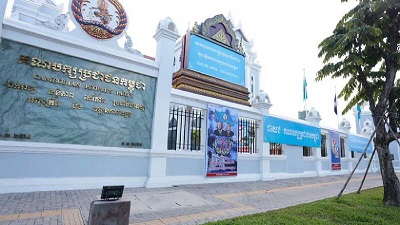
The Cambodian People’s Party headquarters on Norodom Blvd on June 27. Heng Chivoan

“The people believe that the CPP is leading the country in the right direction – one that brings peace, stability, prosperity and happiness to the people,” he said.

In response to the power entrusted to them by the people, he said the CPP will continue to do everything in its power to defend national independence and sovereignty, maintain peace, political stability, security and macroeconomic stability, strengthen democracy, promote social harmony and promote economic development to enrich the people’s lives.

“We, the Cambodian people, are determined to turn this spirit into a strong, united action with a single will to continue to build and defend our homeland, leading towards a bright future,” he said.

CPP’s honorary president Heng Samrin said the party has strived, dedicated and actively participated in serving, protecting and developing the country, overcoming hundreds of obstacles along the way.

“We cannot describe all that we have gone through in the last 70 years … but the CPP stands with the people in all circumstances. That means the CPP is born from the people and is for the people.”

Echoing Hun Sen’s remarks, Samrin said that after the victory over the Khmer Rouge on January 7, 1979, the CPP led the restoration and rebuilding of the nation from scratch.

He said that together the CPP rebuilt the nation and worked to unite the nation and to end the civil war completely so that the entirety of the Khmer people could live under the same motto: Nation, Religion and King.

Chinese President and General Secretary of the Communist Party of China Xi Jinping sent a congratulatory message on June 28 to the CPP and Hun Sen on the occasion of the 70th anniversary.

In his message, Xi pointed out that for a long time the CPP has been uniting and leading the Cambodian people and advancing the cause of national construction and development, making positive contributions to regional stability and prosperity.

Political analyst Em Sovannara was sceptical. He said the CPP was originally formed by the Indochina Communist Party and was now ruling the country with similar practices to those of China.

“I would give a grade of ‘incomplete’ to the leadership by the CPP. There are still many gaps, such as the lack of criticism from opposition parties. Any criticism is considered by the ruling party to be treasonous, so it no longer exists. And so there is no improvement.

“In a democracy, criticism is valued and heeded so that society can be improved,” he said.

Kin Phea, director of the Royal Academy of Cambodia’s International Relations Institute, was of the view that the CPP has built many great achievements for the country after going through many stages in the past 70 years.

He said that from 1979 to the present, the CPP brought about the liberation of the people from the Khmer Rouge regime, brought about national unification, brought complete peace, leading the way for national development in all areas.

He said the CPP has also brought national prestige to Cambodia, which is now playing an increasingly important role on the international stage.

“These are my key points about the CPP’s leading Cambodia over the past 70 years,” Phea said.

Published : June 29, 2021

By : The Phnom Penh Post/ANN

Singapore and UK launch negotiations for digital economy agreement #SootinClaimon.Com

#SootinClaimon.Com : ขอบคุณแหล่งข้อมูล : หนังสือพิมพ์ The Nation.

https://www.nationthailand.com/international/40002538

Singapore and UK launch negotiations for digital economy agreement


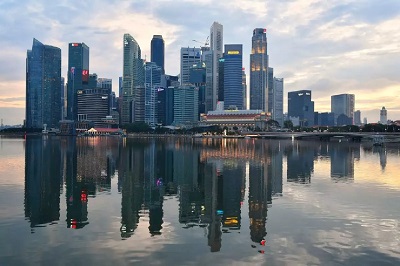
SINGAPORE – Businesses and consumers can look forward to a UK-Singapore Digital Economy Agreement that will establish rules to enable trusted cross-border data flows and ensure high standards in data protection.

The launch of negotiations between the Republic and the United Kingdom was announced in a joint statement by the Ministry of Trade and Industry, Ministry of Communications and Information, and Infocomm Media Development Authority.

On Monday (June 28) there will be a videoconference between Minister-in-charge of Trade Relations S. Iswaran and British Secretary of State for International Trade Elizabeth Truss.

Mr Iswaran, who is also Transport Minister, said in a statement that the digital economy is a bright spot that has remained resilient despite the challenges of the Covid-19 pandemic.

“It is a catalyst for economic growth and the transformation of enterprises… I am pleased that Singapore is enhancing our network of digital economy agreements with a like-minded and digitally progressive partner like the UK.”

He added that the agreement will build on the momentum of the UK-Singapore Free Trade Agreement signed last December, and promote trusted, robust and connected digital markets for people and businesses.

As the first digital economy agreement between an Asian and a European country, it will “also enhance our region-to-region digital connectivity, enabling businesses to use Singapore and the UK as digital gateways to access new opportunities in Asia and Europe”.

The agreement has been a subject of discussion between both sides since at least last year.

In February last year, British Foreign Secretary Dominic Raab met his counterpart Vivian Balakrishnan in Singapore, where they discussed ways to boost cooperation, including the digital economy.

In another visit to Singapore last Thursday, Mr Raab said he hoped to quickly conclude ongoing talks for the agreement, with both countries being global leaders in the digital economy arena.

The joint statement said businesses of all sizes stand to benefit from the increased clarity and reduced costs associated with seamless digital transactions.

The agreement “also seeks to leverage Singapore’s and the UK’s strengths as innovation and financial hubs in our respective regions… We aim to explore cooperation to connect our technology ecosystems, and open up opportunities for start-ups”.

The statement added that feedback from businesses and consumers on what to include in the agreement is welcome.

Singapore has so far finalised two digital economy agreements.

One with Chile and New Zealand was signed in June last year. The other agreement with Australia was inked two months later.

Negotiations on another agreement started with South Korea last June.

Published : June 28, 2021

By : Lim Min Zhang/The Straits Times/ANN

S. Korean firms donate to Vietnam’s vaccine fund #SootinClaimon.Com

#SootinClaimon.Com : ขอบคุณแหล่งข้อมูล : หนังสือพิมพ์ The Nation.

https://www.nationthailand.com/international/40002537

S. Korean firms donate to Vietnam’s vaccine fund


South Korean firms operating large-scale factories in Vietnam have forked out tens of billions of won for the Southeast Asian country’s COVID-19 vaccines procurement plan, Korean media outlets reported said Sunday.

To date, Samsung Electronics has offered 2 billion won ($1.7 million) to Vietnam’s central government and 770 million won to local governments. The amount is the largest donation made by a multinational company operating in Vietnam to the country’s vaccine supply program.

The electronics giant was the first South Korean company to make a contribution to the COVID-19 vaccine fund launched by Hanoi, the reports said.

Samsung currently operates two plants in northern Vietnam, which together produce more than half of the company’s global smartphone output.

SK also made a donation of $1 million to the Vietnamese government, the reports added.

Nguyen Thanh Long, the Minister of Health of Vietnam, on Friday met with officials from SK Group and Samsung Electronics to thank them for their support.

LG Electronics donated 1.55 billion won to the local government of Haiphong in northern Vietnam, where the company operates a home appliance manufacturing facility.

Other South Korean firms that have made donations to Vietnam’s COVID-19 vaccine fund include food and entertainment giant CJ Group and Shinhan Bank. CJ Group donated 320 million won, and Shinhan Bank provided 290 million won.

The Vietnamese government last month announced the launch of the state-led vaccine fund as the country fights the resurgence of coronavirus infections. Multinational manufacturers from South Korea, Japan and Taiwan, which operate in Vietnam, have been asked by Prime Minister Pham Minh Chinh to contribute.

Japanese car maker Toyota and Taiwanese electronics manufacturer Foxconn have also donated 500 million won each to the Vietnamese government.

Published : June 28, 2021

By : Shim Woo-hyun/The Korea Herald/ANN

Bomb explodes near Mayangone immigration office #SootinClaimon.Com

#SootinClaimon.Com : ขอบคุณแหล่งข้อมูล : หนังสือพิมพ์ The Nation.

https://www.nationthailand.com/international/40002536

Bomb explodes near Mayangone immigration office


Nearby locals report that there was a bomb blast near Mayangone Townships (1) Ward Immigration Office at around 2pm.

They also say that sounds of gunfire was heard afterwards with many security forces conducting checks in Tapin Shwe Htee Street afterwards.

“The explosion occurred at around 2.30pm. There were two loud explosion sounds. I was told it was at the back of the LaWaKa (immigration) office. And then sounds of gunfire followed. Security forces are conducting checks at Tapin Shwe Htee Street.

Similarly, there also were three explosions in the morning at Insein Township at three separate locations which were No.1, Ywar Thit and Bo Chan bus stops.

No one was reported to be injured.

Published : June 28, 2021

By : Eleven Media/ANN

Vietnam worried about continued violence, extreme racial discrimination #SootinClaimon.Com

#SootinClaimon.Com : ขอบคุณแหล่งข้อมูล : หนังสือพิมพ์ The Nation.

https://www.nationthailand.com/international/40002535

Vietnam worried about continued violence, extreme racial discrimination


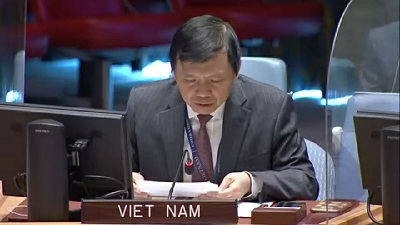
NEW YORK — Ambassador Đặng Đình Quý, Permanent Representative of Việt Nam to the United Nations (UN), has urged Israeli to exercise maximum restraint and take measures to prevent hostile and racist acts in all forms.

Addressing a meeting on June 24 of the UN Security Council (UNSC) on the Middle East situation, including the Palestinian issue, the Vietnamese diplomat also expressed deep concerns at the continued demolition and confiscation of Palestinians’ property, including humanitarian projects financed by the international community.

He called on stakeholders to promote efforts for resuming negotiations towards a two-state solution to the Israeli-Palestinian conflict.

Regarding the humanitarian issue, Quý applauded the UN’s May appeal to raise US$164 million USD for assistance in the Gaza Strip.

He called for the international community’s support to the appeal and emergency response actions undertaken by the UN Relief and Works Agency for Palestine Refugees in the Near East (UNRWA) in the Gaza Strip and the West Bank.

Representatives from UNSC member nations expressed their opposition and called on Israel to end all settlement activities in the West Bank, including East Jerusalem, and the destruction and confiscation of Palestinian houses and property.

They also condemned Israel’s recent air strikes on the Gaza Strip which violated the ceasefire. —— VNS 

Published : June 28, 2021

By : Viet Nam News/ANN

25% of youth, 50% of 45+ vaccinated in Delhi: AAP #SootinClaimon.Com

#SootinClaimon.Com : ขอบคุณแหล่งข้อมูล : หนังสือพิมพ์ The Nation.

https://www.nationthailand.com/international/40002534

25% of youth, 50% of 45+ vaccinated in Delhi: AAP


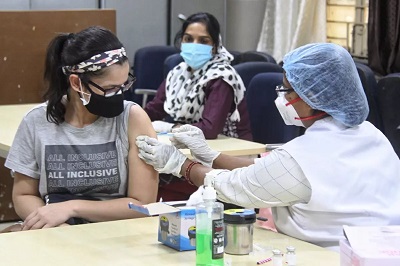
Senior Aam Aadmi Party leader Atishi informed on Sunday that more than 25 per cent of the youth in Delhi has been vaccinated with a single dose of Covid-19 vaccine while the primer dose immunisation among the age group of 45+ years has reached 50 per cent.

The development has come after a record vaccination of 2,07,559 people was done on Saturday, out of which more than 1.5 lakh doses were administered to the youth.

So far, 73, 29,652 people have been given vaccine doses in Delhi. Of them, more than 56 lakh people have received the first dose and more than 17 lakh people have received both the shots of two-dose regimen Covid-19 vaccines.

The MLA from Kalkaji constituency informed that a total of 7.06 lakh vaccine doses are currently available in Delhi while the city requires at least 45 lakh doses in the month of July.

“Delhi’s vaccination speed is increasing on an everyday basis. For the last two days, the city has administered more than 1.5 lakh doses. More than 45 lakh doses will be needed if the pace of vaccination increases,” she said.

The city has 7.06 lakh vaccine doses, including 5.4 lakh Covishield doses, available at present. If the authorities continue to vaccinate people at the current pace of 2 lakh daily, this stock will be over in three days, she said.

“We have also written to the Centre that Delhi needs 45 lakh vaccine doses to keep vaccinating people at the rate of 1.5 lakh jabs per day,” Atishi said while presenting the vaccination bulletin.

Meanwhile, Delhi recorded 89 new COVID-19 cases and four deaths in the last 24 hours. The national capital had witnessed 85 fresh infections on Saturday.

Published : June 28, 2021

By : The Statesman/ANN