Delhi lockdown relaxations: Markets to resume on odd-even basis, metro to restart from Monday
Delhi has been under strict lockdown since April 19 and with continuous decline in daily cases.
Delhi Chief Minister Arvind Kejriwal has announced the reopening of markets and other activities in the city from Monday. However, he said that the lockdown will continue.
Kejriwal has said that the markets will open on an odd-even basis from Monday.
“Delhi’s Covid situation is now under control as below 500 new cases are reported and the daily positivity rate has reduced to 0.5 per cent in the last 24 hours. In view of the third possible wave, the government has decided to continue the lockdown, but we are going to re-open markets and malls on an odd-even basis from Monday,” Delhi CM said.
The shops will remain open from 10 a.m. to 8 p.m.
Moreover the private offices too will resume services with 50 per cent of manpower. And Delhi Metro Rail will will restart services with 50 per cent capacity from Monday.
Delhi has been under strict lockdown since April 19 and with continuous decline in daily cases.
The government has already re-opened construction and manufacturing units, while the lockdown restrictions have been extended.
[China] Workers try to guide elephant herd away from city
Fifteen wild Asian elephants that headed north from their habitat in Xishuangbanna National Nature Reserve in Yunnan province last March have been lingering in the provincial capital Kunming for about two days, the provinces publicity department said.
The herd, which had largely been moving north, headed southwest 6.6 kilometers by 5 pm on Friday, it said in a statement.
Animal workers have been trying to guide the herd moving southwest by putting about 2 metric tons of elephant food in that direction. Some 630 personnel and 103 large vehicles were deployed to prevent the elephants from coming into contact with residents. Nearly 500 residents were evacuated.
On Thursday, Cheng Lianyuan, Party chief of Kunming, urged authorities to ensure the safety of people, the elephants and property, local media said.
The herd had moved to Shuanghe village, Jinning district in Kunming’s outskirts, on Wednesday night, according to Yunnan’s publicity department.
By May 27, the herd hadn’t hurt anyone but had damaged crops and houses, the department said.
“We need to be fully prepared for the elephant herd entering downtown Kunming. Be sure to minimize the damage caused by the herd and reduce the risk of conflicts between crowds and the herd,” Cheng said.
He added that authorities should put sufficient personnel and materials into the case, and draw on experiences of other cities that have dealt with such emergencies.
Experts from both the national and provincial forestry departments are advising how to control the elephants.
According to Xie Yi, a professor with Beijing Forestry University, the number of Asian elephants in China rose from 180 in 1985 to about 300 now.
“It proves China’s protection efforts. However, their migration showed that food and living space cannot satisfy the elephants,” he was quoted by China Central Television as saying.
Zhang Jinshuo, a PhD from the Institute of Zoology, Chinese Academy of Sciences, told China National Radio that the habitats of Asian elephants have been shrinking so they are migrating long distances.
“The lead elephant of the 15 may be inexperienced and did not find a suitable habitat in the beginning. As a result, the farther they go, the more nervous they are because they can’t find a good habitat,” he said.
Elsewhere, another herd of 17 wild Asian elephants that recently broke into the Xishuangbanna Tropical Botanical Garden, a research institution under the Chinese Academy of Sciences in Yunnan, is posing threats to endangered plant species.
The herd tried to cross the river surrounding the garden, but failed due to quickly rising water levels caused by heavy rain.
Chinese govt vessels seen in Japan’s contiguous zones for record 112 days
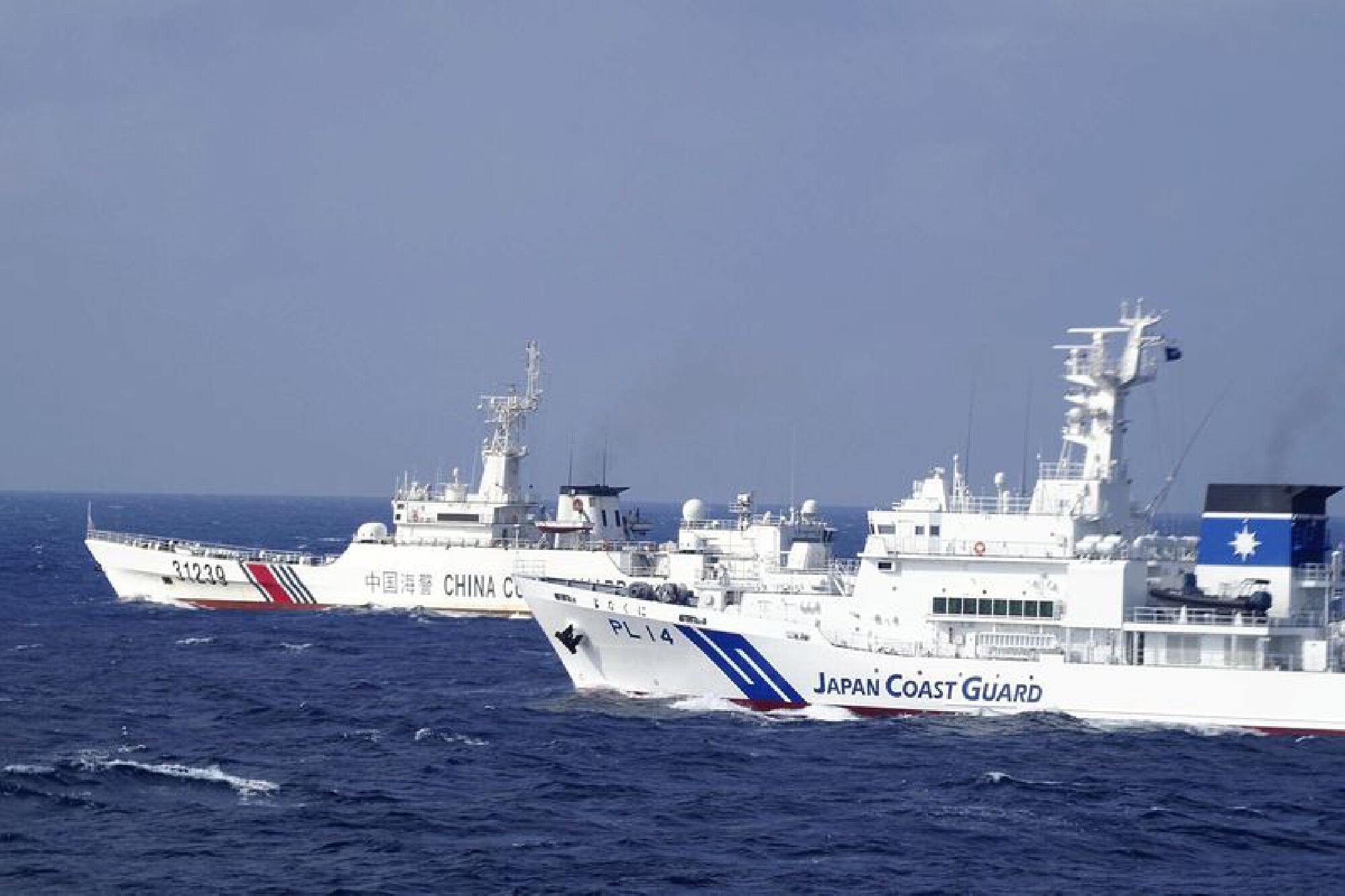
Four China Coast Guard vessels were confirmed to be in Japan’s contiguous zones off the Senkaku Islands in Okinawa Prefecture on Friday, making it a record 112 consecutive days that such ships were in the zones, surpassing by a day the record set from April to August last year. As the Japan Coast Guard steps up vigilance, China’s provocations have been intensifying.
The vessels were sailing in the contiguous zones of the Senkaku Islands, including those around Taisho and Minamikojima islands, on Friday.
“This is an extremely serious situation. We have always deployed more patrol vessels than the other side, taking all possible measures to keep guard,” Chief Cabinet Secretary Katsunobu Kato said at a Thursday press conference. The Japan Coast Guard has 12 patrol vessels with the duty of monitoring China Coast Guard vessels and protecting Japanese fishing ships.
Contiguous zones extend 12 nautical miles (about 22 kilometers) beyond territorial waters, which are the area within 12 nautical miles of the coast. Although foreign vessels are allowed to sail in the zones freely, the coastal state is given certain types of authority such as exercising measures to prevent criminal activities.
The frequency of China Coast Guard vessels entering the contiguous zones increased sharply after Japan nationalized the Senkaku Islands in 2012, becoming an almost regular occurrence from around 2019.
This year, there have been 12 incidents of Chinese vessels approaching Japanese fishing ships, already exceeding last year’s eight incidents. Recently, there have been some cases in which Chinese vessels followed Japanese fishing ships’ movements into Japan’s territorial waters, after lingering in the contiguous zones as if lying in wait for the fishing ships.
In a late February incident, a fishing ship of a 60-year-old fisherman from Miyakojima, Okinawa Prefecture, was followed by two China Coast Guard vessels in territorial waters near Taisho Island. “Two coast guard vessels were following our fishing ship as if they were trying to pincer us. We even feared they might hit us,” the fisherman said. He said the Chinese vessels had been watching his fishing ship from the contiguous zone.
Tokyo is also concerned about Beijing’s introduction of domestic legislation to pursue its maritime interests. Following China’s implementation of the Coast Guard Law in February, its revised Maritime Traffic Safety Law, which strengthens maritime authorities’ power, is scheduled to take effect in September.
The revised law claims that other countries’ right of innocent passage through territorial seas, which is stipulated in the United Nations Convention on the Law of the Sea, may not be respected in China’s territorial waters. It does not specify areas covered by the law; instead, it simply states that it covers the waters under China’s jurisdiction.
Takehiro Funakoshi, Director General of the Foreign Ministry’s Asian and Oceanian Affairs Bureau, conveyed his concerns about the law amendment during a teleconference on Thursday held with his Chinese counterpart Hong Liang, director general of the Chinese Foreign Affairs Ministry’s Boundary and Ocean Affairs Department.
Kim Jong-un’s disappearance from public view stokes speculation
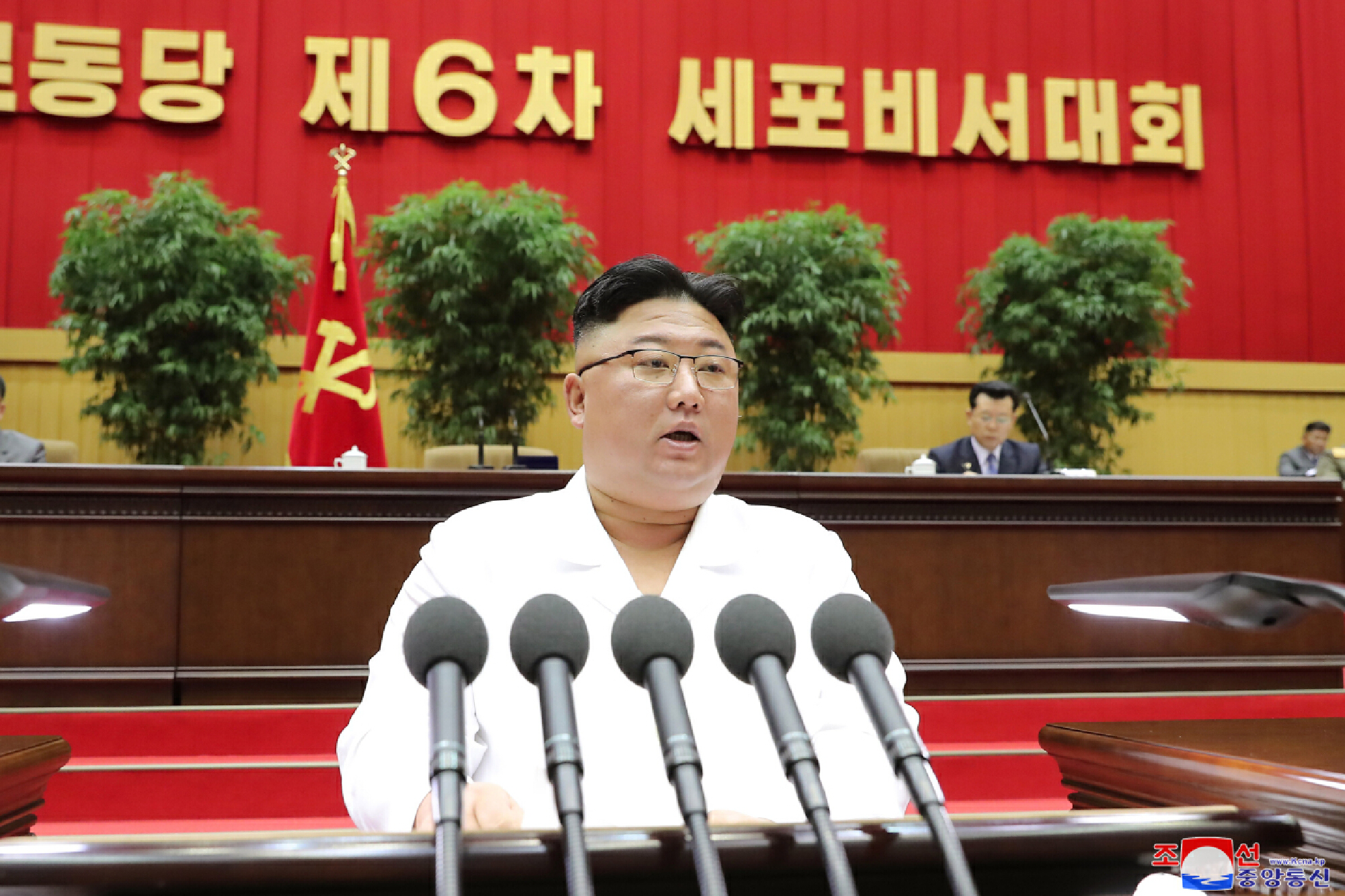
North Korean leader Kim Jong-un’s monthlong disappearance from state media has fueled speculation over his whereabouts, as it marked his longest absence this year.
The last time Kim appeared in a public setting was on May 6 when he held a photo session with military family members, according to state media.
Since then, there have been reports of him sending letters to foreign leaders and his people, but he was not seen in any official events.
When asked whether the Seoul government detects anything unusual about Kim’s hiatus, the Unification Ministry on Friday said it doesn’t have anything to add, but will continue to monitor the related situation.
Observers say Kim’s absence this time could mean that the North is mulling responses to the US’ recently completed policy review on Pyongyang and the two allies’ future action toward the reclusive regime.
Washington has publicized its commitment to engage with Pyongyang during the summit between South Korean President Moon Jae-in and US President Joe Biden last month in the US. Biden’s recent appointment of Sung Kim as a new special envoy for North Korea signals Washington’s readiness for dialogue with the reclusive regime, according to US Deputy Secretary of State Wendy Sherman on Wednesday.
Pyongyang has not responded to the Biden administration’s diplomatic outreach since mid-February.
It is not the first time Kim has gone missing, as the leader had stayed out of the limelight from time to time since taking power in 2011.
A Unification Ministry official said earlier that the COVID-19 pandemic has prompted Kim to stay out of the public eye, except for large political activities such as the party congress in January.
Earlier this year, the leader had been noticeably absent from state media for about 20 days. No further explanation was given after he reappeared.
Last year, Kim’s three-week disappearance sparked global speculation that he was gravely ill after a botched heart surgery, while some reports suggested he was dead. The rumor mill stopped churning when Kim reappeared at a ceremony marking the completion of a fertilizer plant.
[Myanmar] Authorities detain 13 people and seize weapons in Mandalay
The authorities detained 13 people in Mandalay and seized weapons including 21 M-22 rifles, one M-16 rifle, their ammunitions, a homemade gun, 16 homemade bombs, 133 hand grenades, 2,400 detonators, 19 TNT bullets, a mine detector and 18 strings to explode bombs and they confessed that the weapons are intended for People Defence Force (PDF) in Tamu, announced Tatmadaw True News Information Team on June 3.
The authorities received a tip-off that terrorist leaders are arrived in a tea shop near Zivita Dana Sangha Hospital in Chanmyathazi Township on the night of May 24 and detained Ye Lin Aung, Sai Yan Naung Soe, Aung Khaing Win, Thant Zin Win and Htet Shan Aung, it said.
After interrogation, the authorities detained two more people: Aung Zaw Latt and Kyaw Thiha in ward F at the corner of 126th Street and 52nd Road in Pyigyitagon Township in the same day. They seized eight M-22 rifles, eight cartridges, 103 bullets and ten hand grenades from them.
The authorities interrogated Aung Zaw Latt and they detained Yarzar Min Thant aka Bo Chuk at Anyarmyay teashop between 62nd Street and Theikpan Road in Chanmyathazi Township and Sai Wunna Tun, Chan Thar Kyaw and Myo Khaing at Room No. 113 in Minthargyi Hotel on Yangon-Mandalay Road in Chanmyathazi Township on the night of May 25.
The authorities interrogated Sai Wunna Tun and they detained Htay Win and Min Khaing at OK Mandalar car sale center located at 131st Street between 61st and 62nd streets in Pyigyitagon Township on the night of May 25. They seized 12 M-22 rifles, 13 cartridges, 46 bullets and 123 hand grenades. They also seized one M-22 rifle, one M-16 rifle, a homemade gun, one M-22 cartridge, two M-16 cartridges, 19 M-22 bullets, 49 M-16 bullets, 2,400 detonators and a mine detector from Htay Win’s mother house in the same night, it said.
The authorities searched Htay Win’s mother house again the next day and found 19 TNT bullets weight 200 grams, six homemade bombs and 18 strings to explode bombs after interrogating to Htay Win.
Sai Wunna Tun confessed that he is one of the six members of central committee to form PDF for Tamu and the weapons seized by the authorities are for Tamu PDF. Shar Mee, member of Committee Representing Pyidaungsu Hluttaw (CRPH) and former MP of Kalay Constituency for NLD party transferred 500,000 Rupees and about five million Kyats via Salai Izkham, in-charge of western military region for fund to form Tamu PDF. They also received cash donations from businessmen in Tamu and Myanmar citizens in overseas.
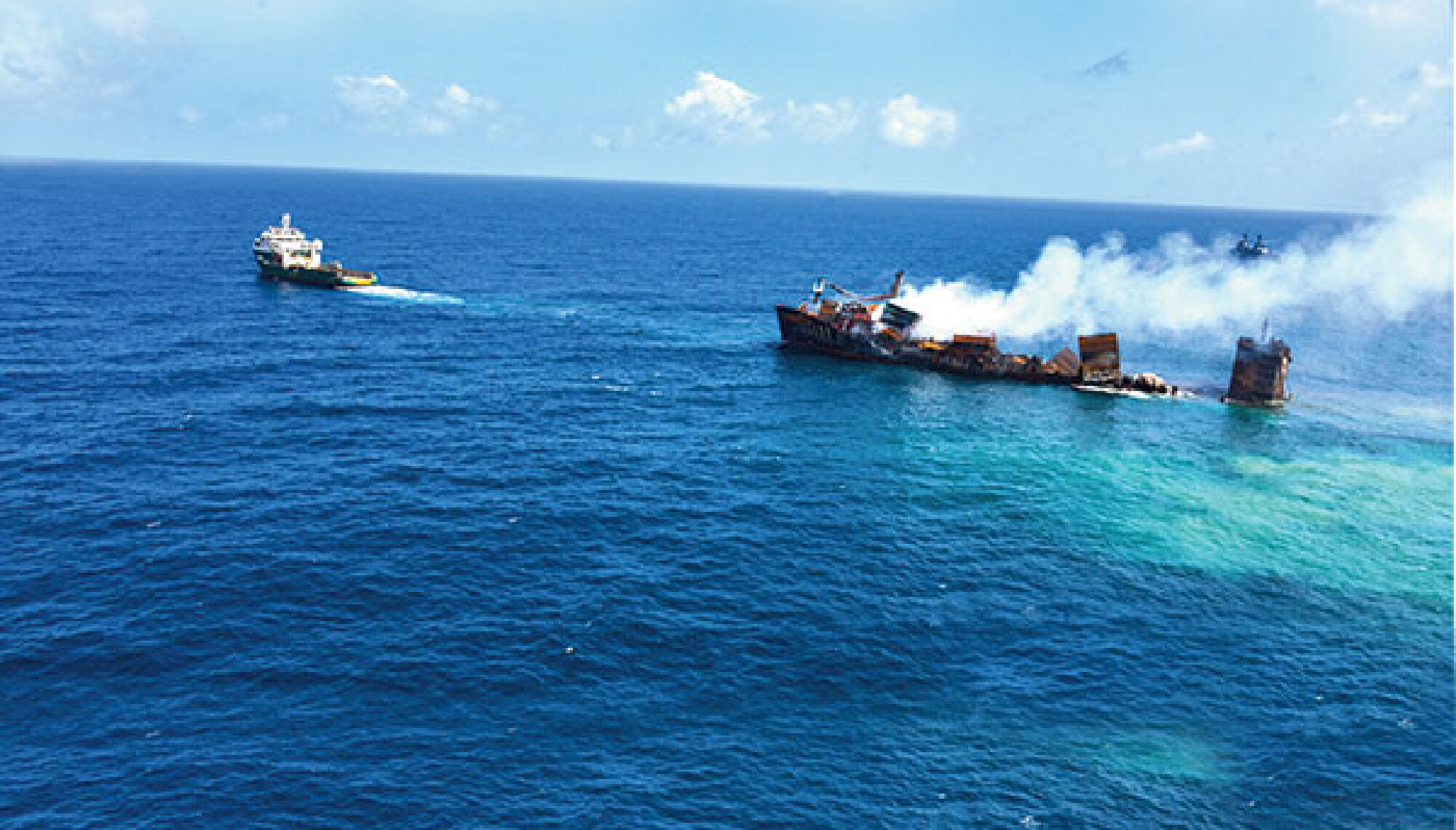
Damage caused by X-Press Pearl would last century – experts
Environmental damage caused by the sinking of the Singapore-flagged MV X-Press Pearl would affect Sri Lanka for over 100 years, a top state official told The Island yesterday.
The official, who wished to remain anonymous, said that the damage to sea grasses and rare aquatic species couldn’t be estimated. “I don’t know how we can place a monetary value on the damages,” the official said.
A senior marine scientist also said the sinking of the Singapore-flagged MV X-Press Pearl would have a disastrous impact on Sri Lanka’s fishing industry.
The scientist noted that the impact on the fisheries industry would be colossal and felt for at least three years. “Three years is a very optimistic estimate. And I am talking only about fish that we harvest for food,” he said.
The Hikkaduwa Wildlife Office was ordered by the Galle Additional Magistrate to investigate the carcass of a turtle found on the Unawatuna beach yesterday. They were asked to send the carcass to the Attidiya Wildlife Veterinary Office.
The Additional Magistrate ordered officials to determine if the death of the turtle was caused by the chemicals released from the X-PRESS PEARL vessel.
Efforts to tow the ship into deeper waters away from the Port of Colombo failed as the ship’s stern got stuck on the seabed. The ship operator said that the ship’s stern was resting on the seabed about 21 metres below and the ship’s bow was settling down slowly. The company said salvage experts were there “to monitor the ship’s condition and oil pollution.”
The company said its experts were cooperating with Sri Lanka Navy to deal with a possible oil spill or other pollution.
Navy spokesman Capt. Indika de Silva said the navy and coast guard were ready to handle an oil spill with assistance from India, which has sent three ships to help, including one specifically equipped to deal with marine pollution.
Marine Environment Protection Authority Chief Darshani Lahandapura said Oil containment booms would be positioned around the vessel and chemical dispersants would also be dropped from air in the event of an oil leak.
“If the weather is not on our side, we will have to be ready for a beach clean-up and we are prepared for those operations as well,” she said.
The Centre for Environmental Justice (CEJ) said it was in the process of filing a public interest litigation against the company that owns X-Press Pearl. “This may involve certain government officials as well,” opined CEJ Chairman, Attorney-at-Law Ravindranath Dabare.
“According to the Marine Pollution Prevention Act No. 35 of 2008, a civil suit can be filed under Section 35 and criminal action can be filed as per Section 26. We had a bitter experience with MT New Diamond as we claimed compensation based on the Polluter Pays Principle.”
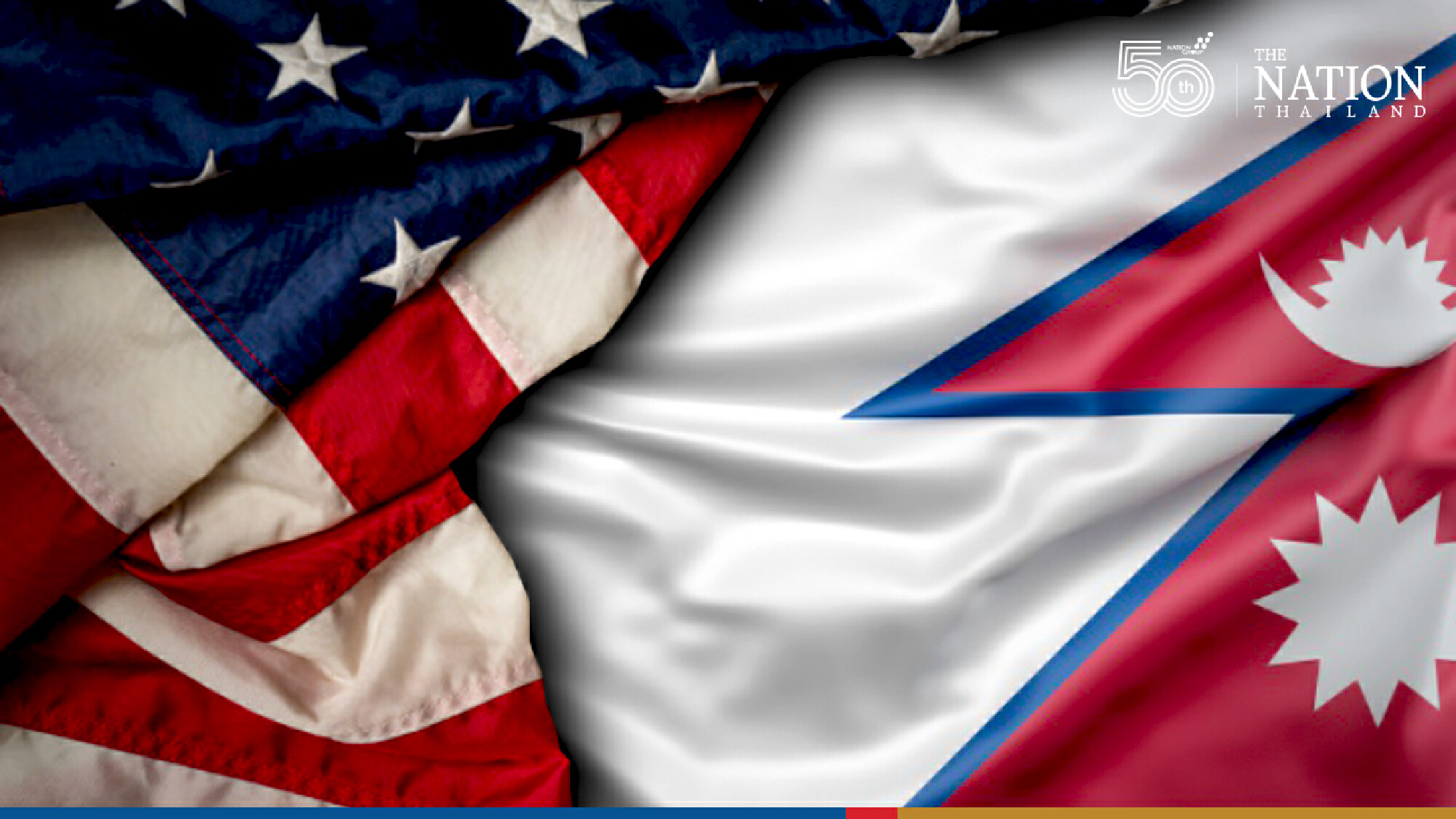
US announces Covid-19 vaccines to Nepal and other nations
It is not immediately clear how many doses Nepal would get of the 7 million doses it has allocated for more than a dozen Asian countries.
The United States said on Thursday that it would distribute 7 million Covid-19 vaccines with Asian countries, including Nepal.
Though it was not immediately clear how many doses Nepal would receive, the announcement could come as a respite for the country which is struggling to secure vaccines as the coronavirus crisis has been deepening.
In its announcement, the White House said, “Approximately 7 million for Asia to the following countries and entities: India, Nepal, Bangladesh, Pakistan, Sri Lanka, Afghanistan, Maldives, Malaysia, Philippines, Vietnam, Indonesia, Thailand, Laos, Papua New Guinea, Taiwan, and the Pacific Islands.”
Thursday’s announcement is part of an earlier pledge the United States had made that it would share at least 80 million doses of vaccine doses globally by the end of June.
The recent plan is for the first 25 million doses, according to the White House.
After coming under intense pressure with reports suggesting that the United States was sitting on a stockpile of vaccines, the White House on April 26 announced that it would share around 60 million doses of AstraZeneca vaccine with the world.
Remaining 20 million doses that the United States can share are from other companies.
Nepal has for long been asking the US to provide vaccines, given the coronavirus crisis it has been battling. The United States had come forward to offer medical supplies but it had not provided vaccines.
Nepalis at home and abroad had even petitioned, demanding that the United States provide vaccines to Nepal.
The second wave has hit Nepal hard. Around 40-50 percent of total tests are returning positive results. The country’s health system is cracking under pressure.
Experts say the only way to control the spread of the virus is vaccinating as many people as quickly as possible. But the government has been struggling to secure vaccines.
Despite being one of the first countries to launch the vaccination drive, Nepal is struggling to inoculate its population, as the government has not been able to acquire vaccines.
Nepal so far has vaccinated around 5 percent of the 30 million population. Just a little over 1 percent of people have been fully vaccinated.
In a desperate bid, President Bidya Devi Bhandari last week had written to US President Joe Biden to help provide vaccines to Nepal.
After the US announcement to provide vaccines to Asian countries, Prime Minister KP Sharma Oli on Thursday night thanked the American government for the support.
“We welcome the US decision to provide Covid-19 vaccines to Nepal,” Oli said on Twitter. “Thank you @POTUS, @VP for responding to our appeal for these precious life-saving doses! Nepal and Nepali people remain grateful. This reaffirms the strength of Nepal-US friendship.”
Nepal started its vaccination drive on January 27 with the 1 million doses of Covishild, the AstraZeneca type vaccine manufactured by the Serum Institute of India. The government then in February paid the Serum for 2 million more doses. After supplying 1 million doses, the Serum on March 3 said it won’t be able to provide additional doses, given the demand in India, which was seeing an unprecedented surge of coronavirus cases.
On March 7, Nepal received 348,000 doses of Covishield under COVAX, an international vaccine-sharing scheme backed by the United Nations.
On March 29, the China-gifted 800,000 doses of Sinopharm’s BBIP-CorV arrived in Nepal.
Thereafter, the supplies halted.
The government was in a fix and it scrambled for getting more vaccines, as the country was reporting around 7000-8,000 daily new cases and over 100 new deaths a day.
Amid this, China last week announced that it would provide 1 million doses of vaccines under grant assistance. A little over 800,000 doses arrived in Kathmandu on Tuesday.
After COVAX came under pressure, failing to get vaccines, Nepal’s vaccine crisis has deepened.
According to the White House, Thursday’s plan to share vaccines would be under COVAX.
It was not immediately clear when the vaccines announced by the US would arrive in Nepal.
A Nepali diplomat in Washington DC said the Nepali embassy is waiting for the breakdown to ascertain how many doses Nepal would actually receive.
“We have just heard about the announcement,” said the official at the Embassy of Nepal in the United States over the phone. “We are trying to work out on the number of doses, as we have sought some directly from the US government also.”
Japan to increase vaccine support for developing nations by $800 mil.
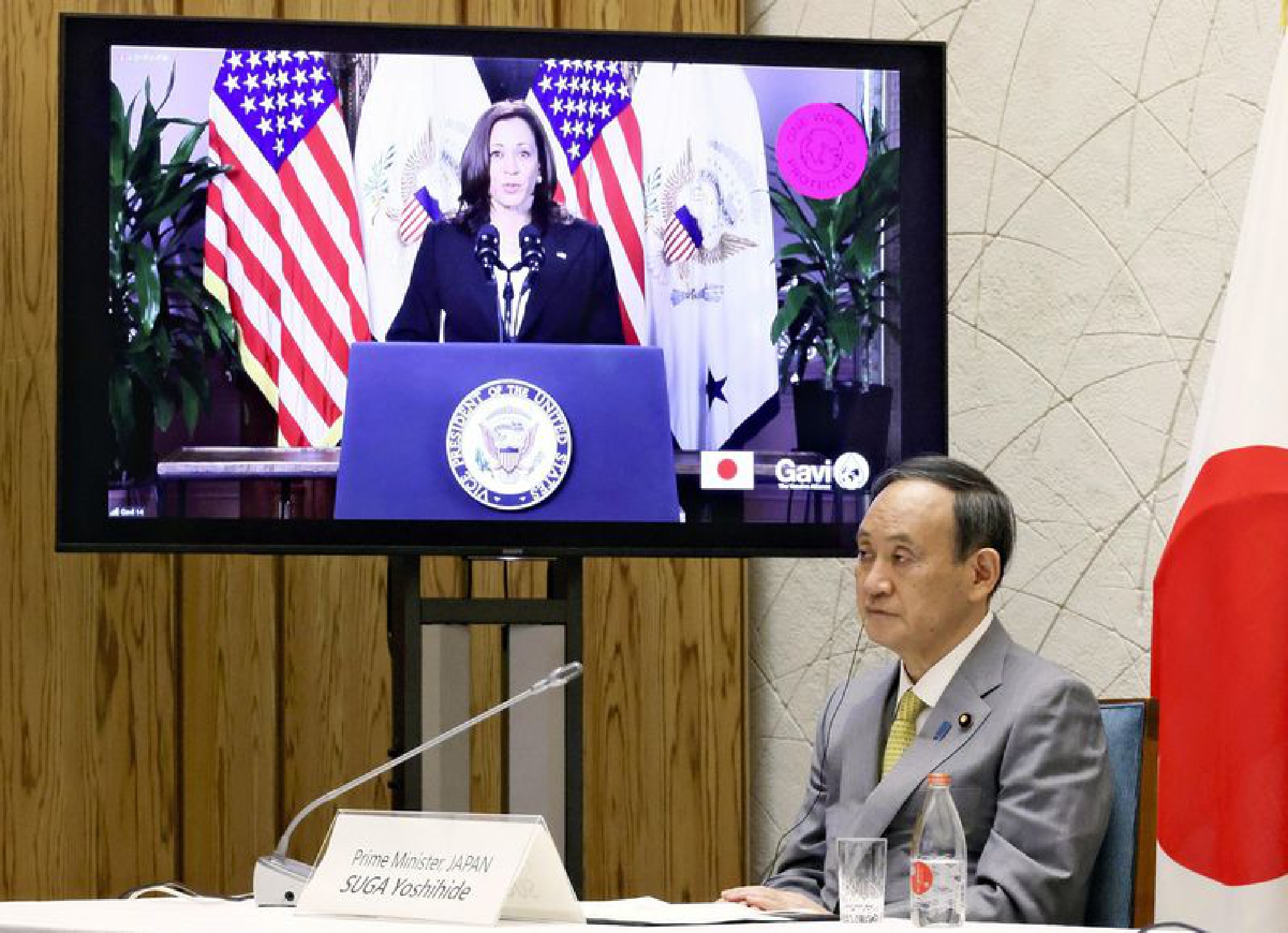
Prime Minister Yoshihide Suga has said that Japan will donate an additional $800 million (¥87.7 billion) and provide vaccines that domestic makers are licensed to produce to COVAX, an international framework aimed at the fair distribution of novel coronavirus vaccines.
Suga made the pledge on Wednesday during an online summit co-organized by the Japanese government and the Gavi vaccine alliance, an international organization to support vaccinations in developing countries.
Among participants in the summit were heads of government, ministerial-level officials and others, including U.S. Vice President Kamala Harris, European Commission President Ursula von der Leyen and Microsoft Corp. cofounder Bill Gates. Suga spoke to the participants about Japan’s efforts to provide vaccines.
In an address, Suga called on each country to cooperate regarding the provision of vaccines to developing nations.
“The efforts cannot be accomplished by one nation alone. I hope a network of international assistance will expand as a sign of solidarity,” he said.
The Japanese government has already contributed $200 million to COVAX. The total donation to COVAX that Japan has announced now amounts to $1 billion.
With a shortage of vaccines becoming a serious problem in developing countries and elsewhere, Suga said that Japan intends to provide around 30 million doses. He seems to have in mind the product of British drug giant AstraZeneca Plc, which is still not in use in Japan.
Japan is considering providing the vaccines through COVAX to developing countries and providing them to Taiwan directly. Suga indicated that Japan will start providing the vaccines when the environment is in place.
COVAX has set a goal of providing 1.8 billion doses of vaccines, enough for 30% of the total population of developing nations, within this year. However, as of the end of May, its funding was $1.3 billion short of the necessary $8.3 billion.
Suga said that funds far exceeding the necessary amount of $8.3 billion have now been secured because countries other than Japan also announced in the online summit their plans to donate.
China has been expanding its influence through such measures as providing its own Chinese-made vaccine to more than 80 countries. Japan, which has not developed its own vaccine, has been lagging behind China in that regard. Holding the COVAX summit was a move apparently aimed to counter China.
Consumer finance firm of Ant Group approved for business
BEIJING – China on Thursday approved the opening of a consumer finance company of Ant Group, a major financial services technology provider in the country.
As a licensed financial institution, the consumer finance company of Ant must strictly abide by relevant regulations, the China Banking and Insurance Regulatory Commission said.
The company, approved in September last year, had completed the preparation work within the statutory period and met the opening requirements, the commission said.
Under Ant Group’s rectification plan, the new company will take over the consumer credit businesses, in line with regulations of two micro-credit firms. The two micro-credit firms will exit the market within the one-year transitional period after the consumer finance company opens.
The country’s financial regulators asked Ant Group to rectify its operations in December last year after regulatory checks identified problems, including corporate governance flaws and foul play in regulatory arbitrage.
S. Korean companies rush to develop mRNA vaccine tech
South Korean pharmaceutical and biotechnology companies are taking the initiative in the messenger RNA vaccine sector in hopes of developing new COVID-19 vaccines and building their capabilities to counter the next pandemic.
Samsung Biologics, a major contract manufacturer of drugs, plans to add an mRNA vaccine production line at its facility in Songdo, Incheon, to potentially manufacture ingredients for new mRNA vaccines. ST Pharm, GeneOne Life Science and Hanmi Science are bent on developing homegrown mRNA vaccine products.
Samsung Biologics on Monday announced the plan to build a new line that could produce mRNA vaccine ingredients by 2022. When finished, Samsung Biologics will be able to offer end-to-end mRNA vaccine manufacturing services from making the drug to the fill-finish process, which includes labeling, packaging and cold-chain storage.
Samsung Biologics said it was part of the company’s long-term plan to establish a more comprehensive business portfolio.
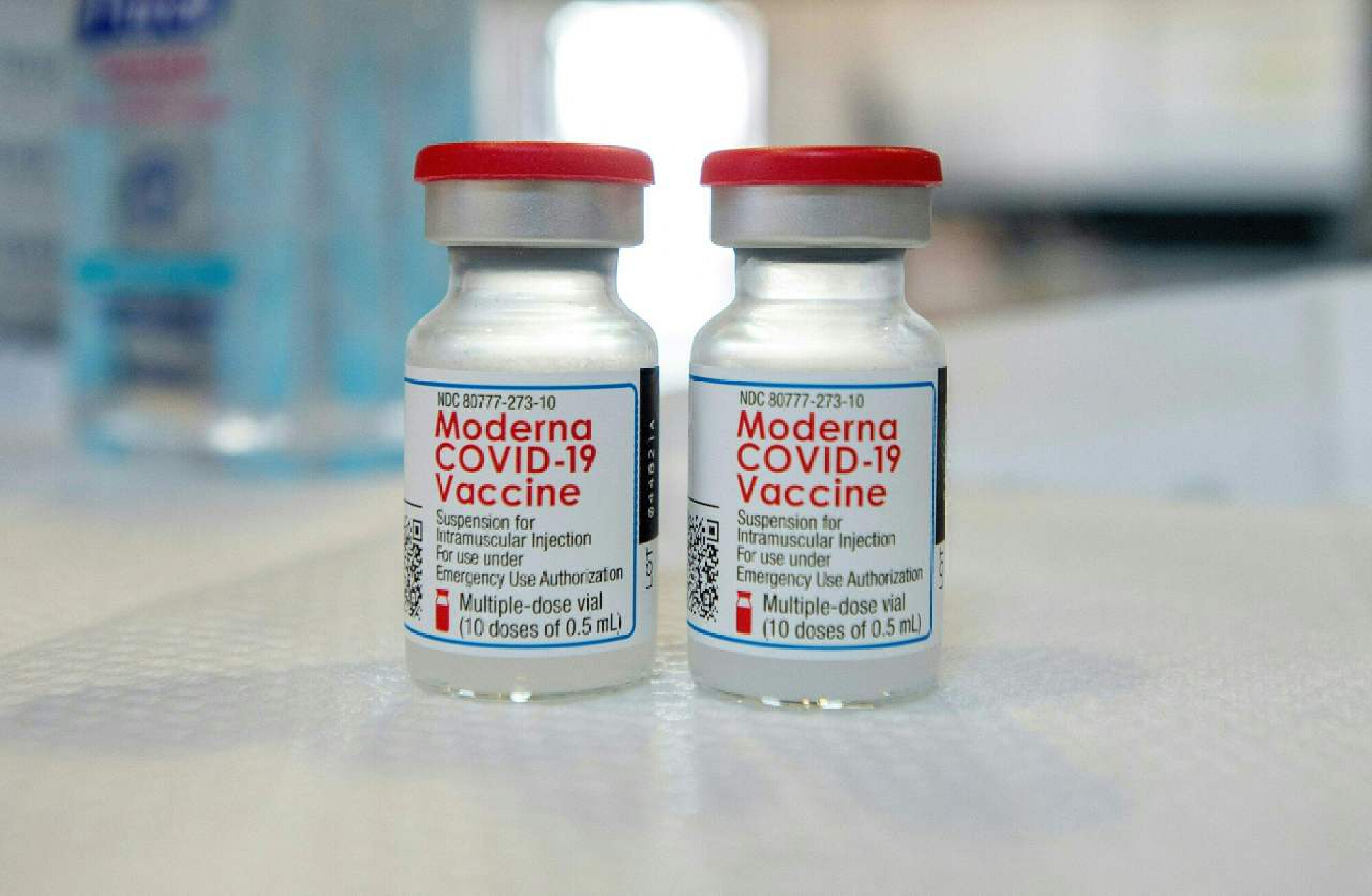
Although it is not clear whether the Korean firm has a particular vaccine or vaccine developer in mind for the expansion plan, many local media outlets linked the news to the firm’s existing partnership with Moderna, which has developed one of the world’s two available messenger RNA-based vaccines against the novel coronavirus.
Under a deal between the two firms, Samsung Biologics will handle the fill-finish process for the Moderna vaccine, which will be imported from elsewhere.
Also on the same day, local vaccine developers GeneOne Life Science and Hanmi Science announced the launch of a partnership for joint research to acquire the technologies needed to develop the new breed of vaccines. Unlike conventional vaccines, which usually contain inactivated disease-causing organisms or proteins made by the pathogen (antigens), mRNA vaccines do not contain any viral proteins.
GeneOne Life Science is expected to use its know-how in the manufacturing of nucleic acid-based products, including DNA plasmids and mRNA. Hanmi could also contribute to the partnership by bringing its ability to manufacture enzymes for nucleotide, plasmid DNA and mRNA synthesis.
The latest agreement between the two companies is part of a larger mRNA vaccine development strategy initiated by a local consortium, which includes 10 pharmaceutical and biotech firms here.
ST Pharm, another company that has joined the local consortium, made a separate announcement Monday that the company would develop the nation’s first lipid nanoparticle-based COVID-19 mRNA vaccine. ST Pharm added that the company would begin a phase one clinical trial within this year, while expanding drug manufacturing facilities to ramp up its production capacity to over 100 million doses by the second half of next year.
ST Pharm is currently the only local company that has secured five prime capping LNP drug delivery technologies for developing mRNA vaccines. ST Pharm last year completed a domestic patent application for the technology and purchased Genevant Science’s LNP technology, used in the Pfizer and Moderna vaccines, in April this year.
Some sources in the pharmaceutical industry, however, said ST Pharm’s plans to begin a clinical study this year were far-fetched given that the company had not even chosen a drug candidate.

![[China] Workers try to guide elephant herd away from city](https://media.nationthailand.com/uploads/images/md/2021/06/WNzyaLF7mpPx04XHxsxJ.jpg?x-image-process=style/lg)
![[Myanmar] Authorities detain 13 people and seize weapons in Mandalay](https://media.nationthailand.com/uploads/images/md/2021/06/S0N91BafQsg753KzUsIw.jpg?x-image-process=style/lg)