Myanmar Crisis: News Analysis #SootinClaimon.Com

#SootinClaimon.Com : ขอบคุณแหล่งข้อมูล : หนังสือพิมพ์ The Nation.

https://www.nationthailand.com/ann/30403725

Myanmar Crisis: News Analysis

Mar 15. 2021
By Asia News Network/Bangkok

Foggyy road ahead in Myanmar crisis China and the US are rapidly zeroing in on the Myanmar crisis, threatening to derail initiatives by Asean, particularly those of Indonesia and Thailand. Asia News Network reports.

Four events on Sunday (March 14) are proving pivotal to the outcome of the escalating crisis in Myanmar.

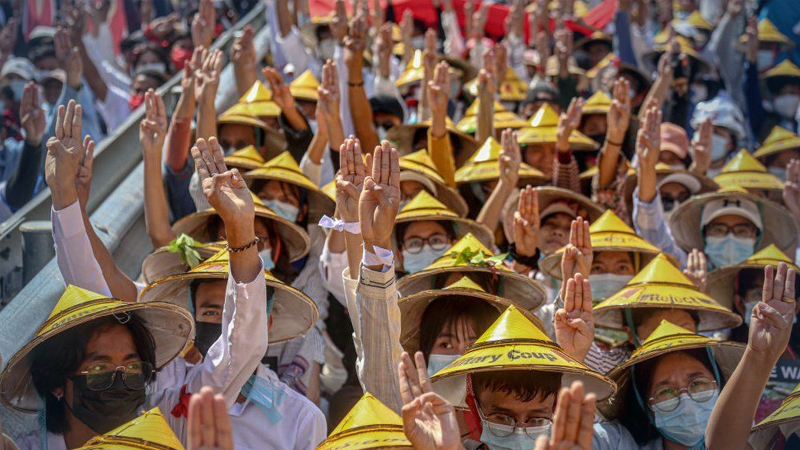
First, the acting leader of Myanmar’s ousted lawmakers under an entity called the Committee for Representing Pyidaungsu Hluttaw (CRPH), backed by the US, issued a call to arms for the protesters to defend themselves in a “revolution”.

Second, unidentified assailants set fire to scores of garment factories in an industrial zone – some of which were Chinese-owned. Both the protesters and the junta are blaming the other for the arson attacks. The incidents followed weeks of “hate” messages in social media over China’s opposition alongside Russia when the UN Security Council sought to condemn and impose sanctions on the Myanmar military junta over the February 1 coup.

Third, deaths of anti-junta protesters on Sunday hit a high of at least 39, bringing the total death toll to well over 100.

Fourth, the Tatmadaw, as the Myanmar military is known, has imposed martial law in two townships, one of which is in Yangon. More were underway yesterday.

The upsurge in violence comes as blow to Asean, which was hopeful of further engaging the Tatmadaw to convince it to open a dialogue with all stakeholders, including the National League for Democracy; and also to allow a humanitarian channel to aid the people as Myanmar already faces an uphill task controlling the Covid-19 pandemic.

Separate initiatives by Indonesia and Thailand, which managed to establish preliminary “trust” with the junta as evidenced by the visit of Myanmar Foreign Ministry representative Wunna Maung Lwin to Bangkok on February 24 to meet Thai Foreign Minister Don Pramudwinai and Indonesian Foreign Minister Retno Marsudi, now appear to be in tatters following Sunday’s call to arms and the consequent violence.

Greater involvement by superpowers and their taking sides in the conflict could further complicate matters.

The US had earlier initiated a series of sanctions on Myanmar military personnel and stopped the military junta from withdrawing Myanmar’s US$1 billion deposit in New York, as well as a World Bank loan freeze. The US has backed the CRPH, which is now seeking recognition as a government in exile. It is also trying to bring on board the ethnic minorities, including those who have been fighting for independence under a federal principle.

These signals are heightening the challenges for the Tatmadaw to hold the country together and avoid a potential civil war, a scenario which Asean, especially Thailand as well as China, is most wary of. Unlike the 1940s when the Tatmadaw began as the only institution in Myanmar able to build a nation state, now the NLD and its allies have a blanket presence in all parts of the country, although with few arms.

Meanwhile China, with its controversial economic relations with Myanmar plus complex activities along the borders, is poised for greater intervention following Sunday’s arson attacks on the properties of Chinese investors.

China had earlier signalled its intention to enter the fray. Foreign Minister Wang Yi was unequivocal in stating: “China and Myanmar are a community with a shared future through thick and thin. China will not waver in its commitment to advancing China-Myanmar relations, and will not change the course of promoting friendship and cooperation, no matter how the situation evolves.”

One Thai diplomat, who did not want to be named, expressed his apprehensions. “We are naturally worried because as the conflict intensifies, the reactions from major nations, especially western ones, will increase, with the consequent danger of everything getting irretrievably out of control. As we are seeing, moral support, financing etc to keep the protests going may lead to supply of arms and weapons. The entire environment can lead to this as well as external interference reaching various groups of people, including ethnic minorities to fight the military government, triggering chaos. So, what does this lead to — a problem for Asean, particularly Thailand [sharing long borders with Myanmar].”

“If we talk about patience, we don’t want to say if they [the US] have or don’t have – but we would like them to have the same objectives and good aspirations for Myanmar. That’s what we would like to see,” he added.

Thai observers believe that co-existence of the Tatmadaw and the NLD is the best of the alternatives before Myanmar.
And there is nothing better than a return to normalcy. “It’s best for them to walk forward together, as it had proven throughout recent years that by sticking together, trying to depend on one another, or even with sporadic conflicts at times, it is the optimum option for their country,” Thai Foreign Minister Don Pramudwinai had said in an earlier interview with Asia News Network.

Don stressed the importance of dialogue and trust to achieve a peaceful resolution of the conflict in Myanmar.

Thais believe that if the two sides had tried to stay together and accommodated each other and not sought to annihilate the other, the crisis would not have taken place. And if they can nurture the relations as they did in the past several years, it would have created a “special” characteristic in themselves, and the role of the military would have then steadily evolved in tandem with domestic politics, benefiting the people in the process.

The failure at mutual accommodation had precipitated the present crisis, which is escalating by the day.

Amid threats of a civil war and martial law imposed on two townships on Sunday and more yesterday, the chance of the Tatmadaw imposing a nationwide martial law, blocking access to the internet and all communication with the outside world cannot be ruled out.

The Tatmadaw has woven tightly the fabric of the Myanmar nation for long and has become used to being in control of virtually every facet. The soldiers are industrious, serious, brutal, ruthless, and aloof, with distrust of everyone. It is as if the world changed little in the post-colonial time, and everybody is a virtual enemy.

But the world has changed from the time when the military held the country in a tight leash. The people of Myanmar strongly believe that life would be better for them with a democratically elected civilian government, and communication technology.

There is a fear in Asean that the crisis could spiral out of control and become complicated like in some other countries, such as foreign fighters intruding, or the use of drone bombs from outside. Even the Tatmadaw would not be in a position to tackle such a scenario.

A Thai diplomat added that Thailand had not talked to China, but if Beijing offered a solution that could work, it would be welcomed. And Bangkok is open to combining its approach with the Chinese and work together for mutual benefit.

But Thailand maintains that if trust and dialogue can be established without outside interference, it is best for Myanmar because it doesn’t have to share the “cake” with anyone.

While several Asean members have supported Indonesia’s initiative, they are sceptical of Thailand’s approach. “Yes, trust is key, but Thailand is mistaken in thinking that its special relationship with Myanmar could protect the region,” one Asean diplomat commented.

Meanwhile, on the ground the military still has the upper hand. A Myanmar source said the Tatmadaw is determined to carry out its objectives, despite the strong and inspired protests. There has been no significant switching of sides by soldiers and police to annul the coup, which is seen as a key determination of the outcome as international pressure has not been effective at the moment.

Some Myanmar analysts believe the best hope right now is to have a free and fair election after a year or two. The key challenge will be how best to hold the military accountable for its promises including maintaining basic human rights, freedom of the press and freedom of information flow. And also to make sure that Myanmar does not become a pariah state so that its citizens can recover from the Covid pandemic. Policy engagements are needed from the international community rather than isolation.

But they conceded that the fate of the NLD is not good unless something can be salvaged. In addition to voter fraud charges, the military is now piling on corruption charges. It is widely surmised that Ang San Suu Kyi’s political career is likely over. Some blamed her stubbornness and political naivete for a series of actions leading to the coup.

The events of Sunday have stirred more uncertainty about the end-game, as the competing interests and geopolitics of China and the US further muddy waters.

Even without a Grammy, BTS goes on #SootinClaimon.Com

#SootinClaimon.Com : ขอบคุณแหล่งข้อมูล : หนังสือพิมพ์ The Nation.

https://www.nationthailand.com/ann/30403700

Even without a Grammy, BTS goes on

Mar 15. 2021The members of BTS pose for a picture on the red carpet at the 63rd Grammy Awards in Los Angeles on Monday. (Big Hit Entertainment)The members of BTS pose for a picture on the red carpet at the 63rd Grammy Awards in Los Angeles on Monday. (Big Hit Entertainment)

By Choi Ji-won
The Korea Herald/ANN

South Korean boy band BTS left the Grammys without an award in hand on Sunday, Los Angeles time, but still the journey goes on.

BTS was nominated in the Best Pop Duo/Group Performance category at the 63rd Grammy Awards for its megahit single “Dynamite.” This year’s ceremony took place at the Los Angeles Convention Center without a live audience.

The group vied against four other nominees, and “Rain on Me” by Lady Gaga and Ariana Grande grabbed the final prize. The song is from Lady Gaga’s sixth studio album, “Chromatica,” released last May, and was the first collaborative work by female artists to debut atop the Billboard Hot 100 singles chart.

The other nominees in the category were Justin Bieber’s “Intentions” featuring Quavo, Taylor Swift’s “Exile” featuring Bon Iver and “Un Dia” by J Balvin, Dua Lipa, Bad Bunny and Tainy.

BTS is the first K-pop act ever to be nominated for a Grammy. The band is also the first Asian act to be shortlisted in the Best Pop Duo/Group Performance category, which was established in 2012.

“The chances didn’t seem so low, with ‘Dynamite’ staying long inside the topmost ranks of the music charts, and even climbing back up recently. But the other nominees were just too strong a competition,” pop music critic Jung Min-jae told The Korea Herald.

But the fact that BTS made it to the nomination stage at all can be seen as a huge step for the Grammys, which are notoriously conservative toward songs from new genres, those from non-Western artists and those sung in languages other than English.

“We cannot deny that nomination itself holds huge significance. Not just K-pop acts, such as BTS, but it’s not common that a boy band or a girl group gets nominated or wins an award at the Grammys,” Jung explained.

Indeed, the Backstreet Boys — a legendary US boy band — have been nominated eight times since their debut in 1993 but haven’t even won once. Jonas Brothers has also fallen short of a win despite two nominations since the band’s formation in 2005.

BTS was invited to the US music award ceremony for the third consecutive year, although it took place virtually due to the coronavirus pandemic. The group presented the best R&B album award at the 61st edition in 2019, then went on to perform at the annual event last year. Finally, this year, the seven musicians took part as both nominees and performers.

The members of BTS pose for a picture on the red carpet at the 63rd Grammy Awards in Los Angeles on Monday. (Big Hit Entertainment)The members of BTS pose for a picture on the red carpet at the 63rd Grammy Awards in Los Angeles on Monday. (Big Hit Entertainment)
The members of BTS pose for a picture on the red carpet at the 63rd Grammy Awards in Los Angeles on Monday. (Big Hit Entertainment)

Despite not winning a Grammy, BTS made history with “Dynamite.” Upon its release Aug. 21, the all-English single debuted atop the Billboard Hot 100, becoming the first song from a Korean artist to top the American singles chart. After staying there for three weeks at its peak, “Dynamite” has repeatedly rebounded back up the chart and ranked within the top 50 for 28 nonconsecutive weeks. The video garnered a record 101 million views within 24 hours of its release on YouTube.

Cultural studies professor Lee Gyu-tag of George Mason University Korea said of this year’s Grammy results, “It’s a shame as the members themselves had expressed anticipation. They had achieved almost everything else they could and seemed to consider this their final goal, in terms of winning an award. But I don’t doubt they’ll have another shot in the future, perhaps in the big four categories. After all, this was their first time being nominated.”

Starbucks Japan to sell reusable rubber straws #SootinClaimon.Com

#SootinClaimon.Com : ขอบคุณแหล่งข้อมูล : หนังสือพิมพ์ The Nation.

https://www.nationthailand.com/ann/30403699

Starbucks Japan to sell reusable rubber straws

Mar 15. 2021A selection of Starbucks’ silicone rubber straws (Courtesy of Starbucks Coffee Japan)A selection of Starbucks’ silicone rubber straws (Courtesy of Starbucks Coffee Japan)

By The Japan News/ANN

Starbucks Coffee Japan, Ltd. will launch the sale of silicone rubber straws at most of its stores nationwide on Wednesday as an effort to reduce plastic waste.

The reusable straws come in various colors with a wide diameter, making them usable for the company’s frozen drinks.

Each straw costs ¥990 and comes with its own carrying case and cleaning brush. The straws are also available for purchase online.

Since January 2020, Starbucks has been making a gradual switch from plastic to paper disposable straws.

Vietnam successfully clones pigs #SootinClaimon.Com

#SootinClaimon.Com : ขอบคุณแหล่งข้อมูล : หนังสือพิมพ์ The Nation.

https://www.nationthailand.com/ann/30403698

Vietnam successfully clones pigs

Mar 15. 2021The first pig born in Việt Nam thanks to the application of somatic cell nuclear transfer technology. Photo: Bnews.vnThe first pig born in Việt Nam thanks to the application of somatic cell nuclear transfer technology. Photo: Bnews.vn
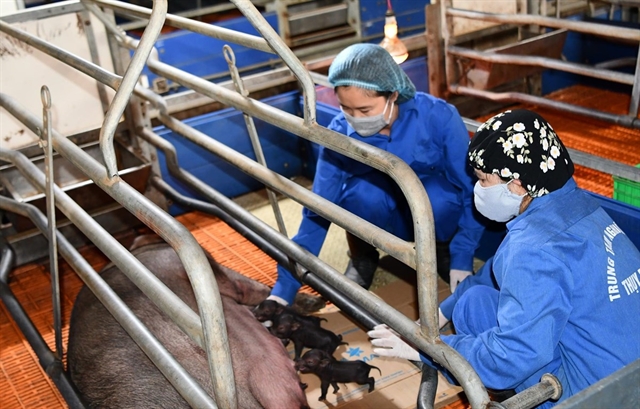
By Viet Nam News/ANN

HÀ NỘI — Vietnamese scientists have for the first time successfully cloned pigs using the somatic cells of ear tissue.

Four healthy pigs were born on March 10 using somatic cell nuclear transfer technology.

Visiting the National Institute of Animal Sciences on Sunday, Minister of Agriculture and Rural Development Nguyễn Xuân Cường said this was an important breakthrough for the animal cloning sector of Việt Nam, proving the country’s science and technology’s role and position in the regional and the world.

The institute launched the project to study the cloning of pigs by somatic cell nuclear transfer technology in July 2017.

Head of the institute Doctor Phạm Công Thiếu said although the facilities and equipment were limited, Vietnamese scientists have strived to study and apply animal cloning technology.

undefined

The pigs are taken care of by the institute staff. — Photo courtesy of the Ministry of Agriculture and Rural Development

This outstanding achievement has opened up new research opportunities to apply animal cloning technology in breeding, preserving rare and valuable animals as well as creating livestock resistant to diseases and the impacts of climate change. It could also help to create cloned pigs for organ transplants in the future, he said.

Somatic cell nuclear transfer technology was successfully carried out for the first time in 1996 in the UK, where scientists created Dolly the sheep.  

Minister Cường praised the efforts of the researchers of the institute for cloning the pigs, which make up a high proportion of Vietnamese food.

“Vietnamese scientists have been creative and determined to apply world achievements to develop Việt Nam’s own achievements in the context of limited equipment and facilities,” he said.

He asked the institute to review the process to strengthen the results and continue to study and uphold this technology to preserve native animals and develop livestock as part of the husbandry strategy. — VNS

Not possible for S’pore, many countries, to choose between US and China, PM Lee tells BBC #SootinClaimon.Com

#SootinClaimon.Com : ขอบคุณแหล่งข้อมูล : หนังสือพิมพ์ The Nation.

https://www.nationthailand.com/ann/30403697

Not possible for S’pore, many countries, to choose between US and China, PM Lee tells BBC

Mar 15. 2021Prime Minister Lee Hsien Loong noted that competition and tension between both superpowers is inevitable in the Asia-Pacific region. PHOTO: MCIPrime Minister Lee Hsien Loong noted that competition and tension between both superpowers is inevitable in the Asia-Pacific region. PHOTO: MCI

By Tham Yuen-C
The Straits Times/ANN

SINGAPORE – It will not be possible for Singapore to choose between the United States and China, given the extensive ties the Republic has with both superpowers, said Prime Minister Lee Hsien Loong on Sunday (March 14).

Many other countries are in a similar situation, he added during an interview with the BBC, saying they would be hard pressed if forced to pick a side.

“I hope the time does not come,” he said when asked which one Singapore will choose when the time comes.

“I do not think this is a dilemma only for Singapore. It is a problem for many countries, which is why we are all hoping and encouraging the two large powers to think very carefully before deciding that the other one is an adversary which has to be kept down, if not put down.”

The past few years have seen a significant deterioration in ties between the US and China, with their rivalry set to continue in spite of the change in administration in Washington.

With both sides exerting their influence on allies and partners, it has become harder for countries to stay in the middle. The administration of US President Joe Biden, for instance, has called for a review of how the country buys strategic goods, saying that it will work with like-minded countries.

Asked if it is realistic to sit on the fence in light of these developments, Mr Lee said: “I do not think we are the only ones in this boat.”

He cited the European Union, which had signed an investment agreement with China before Mr Biden took office.

He also said that for Singapore, having kerfuffles from time to time, with either China or America, cannot be helped.

“Between countries, this happens. It does not mean we are your opponents, but it does mean that we have problems which need to be worked through, and meanwhile (there are) other areas where we can continue to work together. That is how we do it,” he added.

Reiterating Singapore’s position of assessing and making a judgment as to which course of action is in its best interests, Mr Lee said: “Generally, it is that we want to be friends with both, but we have to find our own way forward.”

He also noted that competition and tension between both superpowers is inevitable in the Asia-Pacific region. But he emphasised that they have to coexist.

“These are two very major powers, neither of whom is going to be able to put the other one away, and neither of whom is going to curl up and die,” he said.

Unlike the former Soviet Union which had an unsustainable economy and was pushed to the brink during the Cold War, China’s economy has a lot of resilience, tremendous energy and creativity, and people who are on the move and are making great progress, he added.

The US, too, may have serious political schisms and problems, but has got tremendous vitality and attraction for people around the world, he added.

“It has come back from many difficult spots before. In that situation, unless the two powers decide to coexist, they are both in for a hard time, and so are we,” he said.

Asked whether the US had to accept that it is no longer number one, Mr Lee said: “The US is still number one, but number two is not so far behind. That is what is difficult for the US to accept.”

On tensions escalating, he pointed out that a real military conflict between both countries “could happen before you expect it, if there is a mishap”.

“If the countries are careful, it will not happen. During the Cold War, there were many near misses, but that went on for nearly 40 years, and we avoided a nuclear catastrophe.”

Mr Lee added that the odds of a military clash are not yet high, but it is more likely now than five years ago, as domestic calculations have become paramount for both sides.

“It is not so easy to say the external logic compels you to work together, because the internal logic may impel you to take a very hard line, and then you may find yourself at an impasse and clash. That can easily happen,” he added.

Asked what he hoped the US and China would do, Mr Lee said he would hesitate to give advice to other countries’ leaders.

On President Biden, he added: “We look to a President who has first, good domestic support. Second, a good understanding of the world and the US’ role in the world, believes in multilateralism and international trade, and is prepared to play America’s part to uphold the system from which America benefits so much.”

As for China, he said: “What we would like to see is China being able to be a country where its prosperity, development and its growing strength is welcomed by other countries in the world, who see this as an opportunity for them to prosper together and to live in a stable world together.”

This has been the case for quite a long time, he added, noting how over the last 40 years since its opening up, China’s liberalisation and growth have generated many opportunities for countries around the world, who want very much to maintain good relations with it in order to benefit from its development and prosper together with it.

“That is a very important factor which China has had in its favour, which would be a pity to miss out on in the next phase,” he added.

Mr Lee also noted that American businesses like Walmart were one of the strongest advocates for good relations with China, because they saw the opportunities it offered.

But attitudes have shifted in the last five to seven years and there is quite a lot of pushback, as these businesses see China has moved forward. They want to see a more open environment, where they get a bigger bite of the cherry, he added.

“It is understandable. China is in a new position now, and you have to set a different balance in your relationship with the world,” he added.

“What the world was prepared to grant you in an earlier phase now has to be reworked, and that is quite difficult for a country to accept.”

[Myanmar] Martial law imposed in Hlinethaya and Shwepyitha townships #SootinClaimon.Com

#SootinClaimon.Com : ขอบคุณแหล่งข้อมูล : หนังสือพิมพ์ The Nation.

https://www.nationthailand.com/ann/30403696

[Myanmar] Martial law imposed in Hlinethaya and Shwepyitha townships

Mar 15. 2021

By Eleven Media/ANN

Martial law has been imposed in Hlinethaya and Shwepyitha townships of Yangon Region as per Section 419 of the Constitution.

The State Administration Council issued the order No.1/2021 dated March 14, 2021 imposing martial law in Hlinethaya and Shwepyitha townships.

To be able to take more effective measures for the security, rule of law and community peace and tranquility, the order says that the Yangon Region Command Commander has been entrusted with administrative, judicial and military powers under Section 419 of the Constitution. The Commander has the authority to exercise martial law by himself or assign duties to regional military commanding officers depending on the situation.  

As per the martial law, any cases in defiance of the order issued by the government or the military commander will be heard via court martial. Regardless of the existing laws, anyone guilty of a crime decided by the court martial shall face death penalty, life imprisonment or a prison sentence of not less than three years plus labour and fine.

[Video] Will chat app Clubhouse reshape social media trends? #SootinClaimon.Com

#SootinClaimon.Com : ขอบคุณแหล่งข้อมูล : หนังสือพิมพ์ The Nation.

https://www.nationthailand.com/ann/30403679

[Video] Will chat app Clubhouse reshape social media trends?

Mar 14. 2021Photo Credit: The Korea HeraldPhoto Credit: The Korea Herald

By The Korea Herald/ANN

The invitation-only audio chat application named Clubhouse is surging in popularity around the globe by picking up millions of people on social media.

Launched in March 2020, the niche platform facilitates audio conversations between users. Once users are invited to join, they can enter various chat rooms and communicate about those topics.

The types of chat rooms are diverse and the most popular ones are operated by a handful of users speaking to a silent audience. The chat rooms range from talks within a small crowd to speeches by industry moguls. American business tycoon Elon Musk brought the service much attention recently.

The booming social media platform is piping hot because people can listen and speak freely without any visual component. The listeners lend their ears to people who want to be heard, allowing users to openly share their ideas on a specific topic. It also allows users to tune in live and leave the public meeting hall quietly.

Unlike other services, the voice-only social network is available only to Apple users at the moment. Check out the video if you learn about the latest fad on the internet.

In a first, govt working on mechanism to place ads on digital media #SootinClaimon.Com

#SootinClaimon.Com : ขอบคุณแหล่งข้อมูล : หนังสือพิมพ์ The Nation.

https://www.nationthailand.com/ann/30403678

In a first, govt working on mechanism to place ads on digital media

Mar 14. 2021

By Dawn/ANN

The government is currently working on a new policy to distribute advertisements across different digital platforms, the head of the government’s digital wing Imran Ghazali has said.

Speaking to Dawn, Ghazali — the general manager of the Digital Media Wing — said that once approved by the prime minister, the new policy will allow the federal government, through the information ministry, to run ads on different online platforms.

Earlier this week, Information Minister Shibli Faraz apprised Prime Minister Imran Khan of the Digital Media Advertising Policy, which was proposed by the information ministry.

The prime minister was told that currently there were 93 million internet users, including over 45 million social media users in Pakistan. Keeping in view the rising trend, a mechanism for releasing public-sector advertisements on digital media had been proposed.

The new policy aims to bring in place a set of procedures for the government to distribute its advertisements across different channels, similar to what already exists for print and broadcast media.

Once it is approved and implemented, news websites as well as individual content creators on social media platforms such as Instagram and YouTube will be able to register with the information ministry.

Subject to meeting yet-to-be finalised criteria, they will become eligible for the government’s advertisements.

While no specific outlay has been identified as yet, initially it will be for national campaigns such as Independence Day or Pakistan Day.

The advertisement tariffs will be based on a number of factors and an exact mechanism is currently being worked out.

“It will be in line with industry standards with variables such as monthly traffic, subscribers, placement on the page, and CPMs in the overall market,” Ghazali said.

Based on that, different tiers will be specified. Whether those rates will be higher than private sector advertisers is yet to finalised.

To verify a website’s traffic or impressions, the Digital Media Wing is proposing the use of third-party software like Google Analytics. However, for publications, that might be a step too far.

“There needs to be some sort of verification mechanism in place for the government to get a return on its money. That could be any credible tool, like Alexa or Google Analytics.”

Moving beyond just news platforms, the proposed policy also aims to tap on the growing list of Pakistani influencers on YouTube and Instagram.

“This will provide a good avenue for individual creators to monetise [their content] provided they meet certain criteria,” Ghazali said. In line with the industry conventions, these influencers will have to guarantee a mutually agreed upon number of views in a given period.

They will have to register with the information ministry as individuals while there would be another category covering platforms, which includes both fully digital news publishers as well as online arms of traditional news organisations.

Given the one platforms’ proliferation and digital advertising’s sophistication in tracking reach, it is likely that the federal government will be channeling an increasing share of its advertising spend towards these channels even though the exact details and plans are yet to materialise.

This still leaves the provinces, which devise their own rules for running ads.

In fact, Punjab included digital media in its Advertisement Policy of 2012 while there was some talk of Sindh doing the same a few years ago.

Ghazali stated he felt the federal administration’s lead will eventually roll down to the provincial level.

With print media’s circulation constantly falling for years and broadcast quickly ceding space to online platforms, the nature of advertising is rapidly changing. According to Aurora, the share of advertising spend in Pakistan increased by seven percentage points to 23pc in FY20, from 16pc in FY19.

In terms of absolute values, digital advertising spending jumped by 30pc to Rs13.65 billion in FY20, from Rs10.5bn in FY19.

Depsang impasse #SootinClaimon.Com

#SootinClaimon.Com : ขอบคุณแหล่งข้อมูล : หนังสือพิมพ์ The Nation.

https://www.nationthailand.com/ann/30403677

Depsang impasse

Mar 14. 2021

By The Statesman/ANN

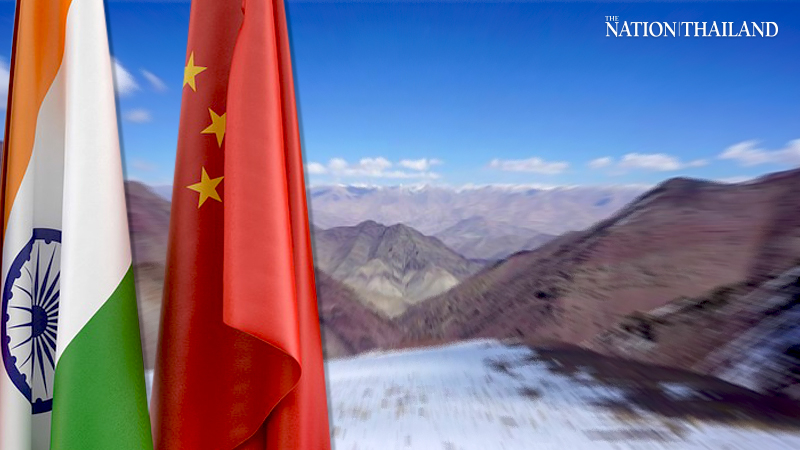
Indian and Chinese troops have implemented step-wise disengagement in eastern Ladakh’s Galwan and Pangong Tso areas, ending the long standoff between the two ground forces. However, the longstanding standoff persists at more than one location in the Depsang Plains region of Ladakh. The Depsang Plains represent a high-altitude gravelly plain at the northwest portion of the disputed Aksai Chin region of Kashmir, divided into Indian and Chinese administered portions across a Line of Actual Control (LAC).

India controls the western portion of the plains as part of Ladakh, whereas the eastern portion is controlled by China, but which is claimed by India. The Depsang plains are also part of the area called Sub-Sector North (SSN) by the Indian Army. In April 2013, the PLA had set up a temporary camp at the mouth of Depsang Bulge, where the Raki Nala and Depsang Nala meet, claiming it to be Chinese territory.

However, after a threeweek standoff, they withdrew as a result of an agreement with India. In 2015 China tried setting up a watchtower near Burtsa. Any threat to Depsang affects India’s DSDBO road. Initially India had stationed about 120 tanks in the SSN, and over the years the numbers have increased. During the 2020 China-India stand off, the Chinese had laid claims to the Depsang Bulge.

It came to light that Chinese troops had been blocking Indian patrols from proceeding along the Raki Nala valley near the “bottleneck” since 2017. After a resolution to the standoff at Pangong Tso in February, it was reported that the Chinese had started strengthening their positions at Depsang. The Indian military’s SSN is east of Siachen Glacier, located between the Saser Ridge on the southeastern side and the Saltoro Ridge on the Pakistan border.

With regard to a two front war for India this area can provide a linkage for Pakistan and China in Ladakh. The territorial wedge created by Depsang Plains-Karakoram Pass-Shyok Valley prevents this territorial link up, hence its great importance to India. The Depsang Plains are also close to China’s western highway G219.

Depsang at 16,000 feet north of Shyok River is strategically important as it provides India the Daulat Beg Oldie airstrip and Karakoram Pass further north. On its west is the Siachen Glacier under Indian control. Indian patrols have been blocked here by PLA in the Y junction area as the Chinese have intruded 18 km inside since 2013.

Regular patrols to patrol points 10,11, 11A, 12 and 13 have been blocked due to the impasse. Unlike the usual optical satellites, which rely on sunlight to capture images, the Synthetic Aperture Radar (SAR) generates a picture emitting microwaves and illuminating its target on the earth. The SAR has an advantage over traditional optical satellites as it can capture images at night as well as during bad weather conditions.

The SAR images of a permanent Chinese post, generated by illuminating radio waves during the night, provide glimpses of the Chinese buildup near the LAC. Situated at a distance of about 24 km opposite India’s highest airstrip Daulat Beg Oldie in Ladakh and PLA’s Tianwendian post is an all-season post in Aksai Chin.

The post was established after the 1962 war and has seen consistent upgrades over the past few years. According to the latest imagery, the Tianwendian post with its air defence systems, storages, additional shelters and vehicles for reinforcements serves as the core of the PLA operations in the region. Imagery suggests that its main building has seen additional auxiliary structures, camps, vehicles and fencing since August 2020.

The latest high-resolution imagery were captured on the night of 25 February by the SAR commercial satellites of the USbased space firm, Capella Space. During the current standoff, Chinese troops have brought in their tanks and troops close to Indian positions. The additional buildup of new camps and shelters were first seen in July last year after the brutal hand-to-hand combat between Indian and Chinese troops in the Galwan river valley.

The post initially had three large buildings possibly for accommodating a large number of troops; however, the facility seems to have been expanded to house additional PLA troops during the standoff period. Temporary shelters with defensive walls as well as observation posts are also visible in the new imagery.

India has been asserting that not just Pangong but all friction points across Eastern Ladakh including Depsang Plains and areas around Damchok where Indian grazers have been obstructed should be dealt with and status quo maintained. With India and China agreeing to restore status quo ante on the LAC, a meeting between National Security adviser Ajit Doval and Chinese foreign minister Wang Yi, both special representatives on boundary resolution, will soon take place to sort out differences in perception over the undefined border.

However, the back channel talks between the special representatives have ensured no side will unilaterally alter the status quo along the LAC and the status quo will be restored on all other friction points. Wang during his annual press meet on 7 March said India and China needed “to create enabling conditions for the settlement” of the boundary dispute, even as he reiterated China’s view that the “rights and wrongs” of last year’s crisis were clear.

However, defence experts feel that the Chinese are not keen on further disengagement and that is why they are dragging their feet. They claim Hot Springs and Gogra as their own territory. They are not even willing to talk about Depsang.

Vaccinated — now what? #SootinClaimon.Com

#SootinClaimon.Com : ขอบคุณแหล่งข้อมูล : หนังสือพิมพ์ The Nation.

https://www.nationthailand.com/ann/30403676

Vaccinated — now what?

Mar 14. 2021

By Philippine Daily Inquirer/ANN

The Philippines has inoculated more than 114,000 individuals against COVID-19 as of Thursday, since the government started its mass vaccination drive last March 1. This is still a long way to go from covering 70 percent, or about 75 million of the 108-million population, in order to reach herd immunity, which would allow the country to ease restrictions and revive the tattered economy.

Nevertheless, that the government has finally secured its first vaccine supply agreement (with US drug maker Moderna, for 13 million doses of its vaccine, last March 7) on top of donated doses so far should boost hopes that there is light emerging after a year of great uncertainty, even as new, more contagious variants continue to pose challenges.

The donated supplies for the initial roll-out of the COVID-19 vaccination program were from China’s Sinovac (600,000 doses) and British-Swedish AstraZeneca (487,200) via the COVAX global facility that aims to provide vaccines for 20 percent of a country’s population, enough to immunize target groups. The government said it is also aiming to close supply deals with Johnson & Johnson for 5 million doses, as well as with AstraZeneca and the Serum Institute of India for Novavax.

Most of the COVID-19 vaccines that are already available or are soon to arrive in the Philippines require two doses: AstraZeneca and Moderna (28 days apart), Pfizer-BioNTech and Novavax (21 days apart), and Sinovac (14 days apart). Those who receive these vaccines are not fully protected against COVID-19 until they get the second shot—and even then, scientists say it will take some time before a vaccine’s effectivity builds up. Johnson & Johnson requires only one dose, and those who receive the shot are considered fully vaccinated two weeks after.

Local government units have been conducting simulations ahead of the vaccine roll-out to smoothen the process and orient their constituents on the steps to be taken, particularly on when they need to come back for the second dose.

“Getting vaccinated is one of many steps you can take to protect yourself and others from COVID-19,” according to the US Centers for Disease Control and Prevention (CDC), adding that protection from the coronavirus is “critically important” because, without it, infection can cause severe illness or even death for some people—especially vulnerable ones like those with comorbidities, senior citizens, and frontline health workers who are constantly exposed to risks.

At least 13 people who received the Sinovac vaccine on the first day of the government’s immunization program reported “minor” adverse effects, including pain at the site of the injection, nausea, and itching. The CDC had earlier said that these are common side effects after getting COVID-19 shots and could also include fever, chills, tiredness, and headache, but they are not life-threatening.

Because the COVID-19 vaccines are new, with some still undergoing trials, there remain “knowledge gaps” about the drugs such as duration of immunity, immediate adverse reactions, and their long-term effects—areas that scientists across the world continue to study. Inquirer columnist Dr. Rafael Castillo wrote recently that these gaps must be addressed eventually, and that scientists must be “transparent to the international public and update them of what to expect as outcome data becomes more evident.”

The CDC, meanwhile, has emphasized that being fully vaccinated against COVID-19 does not mean ditching health protocols that have been in place since last year, such as mask-wearing, hand-washing, and social distancing. “After you are fully vaccinated against COVID-19, you may be able to start doing some things that you had stopped doing because of the pandemic. But we’re still learning how vaccines will affect the spread of COVID-19,” it said, and so basic preventive measures remain crucial.

Experts have warned that those who have been fully vaccinated can still spread the disease to others. Thus, reminded the CDC, precautions should still be taken especially in public places or when exposed to or interacting with unvaccinated people. Metro Manila mayors are right to insist that residents should continue to comply with the minimum health protocols even after getting inoculated, because the vaccine is not a replacement for such health safeguards. The wearing of face masks, for one, said Caloocan Mayor Oscar Malapitan, should still be required until COVID-19 is “totally eliminated.”

Dr. Carlos del Rio of Emory University in Atlanta is counseling patience and vigilance even with the arrival of vaccines: “It’s not like you’ll need to wear a mask for the rest of your life. You need to wear your mask until we have the data, and we’re trying to get the answers as fast as we can.”