[Philippines] Gov’t eyes use of P73.2 billion in loans to buy COVID-19 vaccines for 60 million people
Nov 24. 2020
By Gabriel Pabico Lalu Inquirer.net/ANN
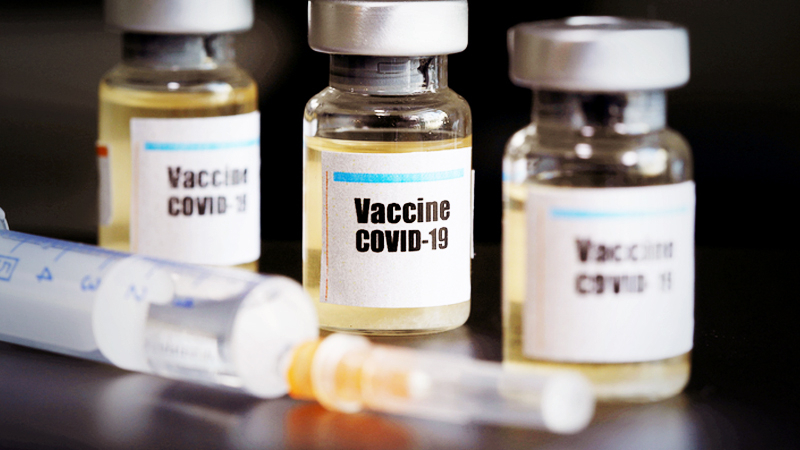
MANILA, Philippines — The Duterte administration is planning to use P73.2 billion worth of loans to buy COVID-19 vaccines for 60 million Filipinos.
That amount will come from several sources — P40 billion from the Asian Development Bank (ADB) and the World Bank, P20 billion from local banks and government corporations, and P13.2 billion from bilateral sources, Finance Secretary Carlos Dominguez III told the Cabinet during a pre-recorded briefing with President Rodrigo Duterte that aired late Monday night.
The P13.2 billion is the target amount that the Department of Finance hopes to raise from bilateral sources, while the P20 billion will come from Land Bank, DBP, and government-controlled corporations, according to Dominguez.
Much of the amount is “pretty much almost fixed,” with only the P13.2 billion “not completely negotiated,” he told the President.
According to Dominguez, the estimated cost of a vaccine dose is $25, or P1,200, per person. The loans mentioned, he said, would be enough to finance the vaccination of 60 million people.
Health Secretary Francisco Duque said immunizing 60 million people would be enough to achieve herd immunity, which would require 60 to 70 percent of the population to be immunized, as defined by the World Health Organization.
Duterte reiterated his desire to prioritize the vaccination of the military and the police to ensure security and the continuation of their efforts amid the pandemic.
Previously, he also vowed to place the poor people ahead of the pack for vaccination and then maybe leave the rich people to get the vaccines for themselves.
According to reports, pharma giants Pfizer and BioNTech have successfully developed COVID-19 vaccines, which may mean that United States citizens can get vaccines by the middle of December or before the year ends.
US wants to promote comprehensive partnership with Vietnam: US security advisor
Nov 24. 2020US National Security Adviser Robert O’Brien speaks to Sunday meeting at the Government Guest House in Hà Nội with students, lecturers and postgraduates from the Diplomatic Academy of Việt Nam. — VNA/VNS Photo Lâm Khánh
By Viet Nam News/ANN
HÀ NỘI — The US wants to promote the comprehensive partnership with Việt Nam in a stable and sustainable manner, based on mutual respect for each other’s independence, sovereignty, and territorial integrity and political institutions, said US National Security Advisor Robert O’Brien.
He was speaking during a meeting at the Government Guest House in Hà Nội with students, lecturers and postgraduates from the Diplomatic Academy of Việt Nam (DAV) during his official visit on November 20-22.
O’Brien affirmed the US supports a strong, independent and prosperous Việt Nam, and expressed his admiration for Việt Nam’s history and culture, as well as lasting impression on a dynamic and hospitable country.
Looking back at progress in the bilateral relations in the past 25 years, he spoke highly of their cooperative achievements in the fields of politics-diplomacy, defence-security, economy-trade, settlement of war consequences, and people-to-people exchanges.
He said that 25 years ago, the two nations set aside a difficult history, and established a friendship which has grown into a strong and comprehensive partnership, rooted in trust and understanding.
Over the past quarter of a century, Americans and Vietnamese have traded and invested in each other’s countries, creating countless jobs for people of the two nations, said the National Security Adviser.
He particularly stressed the flexible organisation of activities to celebrate the 25th anniversary of the diplomatic relations during the COVID-19 pandemic and thanked Việt Nam for its support in the search for US servicemen missing since wartime in Việt Nam.
The US will continue with projects on dioxin detoxification, bomb and mine clearance, support for people with disabilities, and search for remains of Vietnamese soldiers, making a contribution to increasing trust between the two nations.
Both countries are working closely to combat transnational crime and wildlife trafficking, strengthen water security, and increase energy security following the launch of the Mekong-US Partnership in September.
“As we have overcome the legacies of war, we have created opportunities for our children to grow while strengthening our bonds,” he said.
“One example of our partnership is the fact that nearly 30,000 Vietnamese students now study in the US.”
He also congratulated Việt Nam on successfully performing the role of ASEAN Chair in a very tough year, saying the US backs the ASEAN’s central role and will continue to develop the ASEAN-US strategic partnership and Mekong-US partnership.
Hailing the roles of Việt Nam as the ASEAN Chair 2020 and a non-permanent member of the United Nations Security Council during 2020-2021, O’Brien hoped both nations will enhance coordination in addressing common challenges, contributing to maintaining peace, stability, security and development in the region and the world.
“The US values Việt Nam’s partnership and close coordination on shared strategic concerns, including upholding peace and stability in the South China Sea and the Mekong,” he added.
“We share a deep commitment to an Indo-Pacific rooted in rules of respect, fairness, and principles of international law such as sovereignty and freedom of navigation,” he said.
The US national security advisor engaged in talks with DAV students, lecturers and postgraduates on the Việt Nam-US relations, and many regional and international issues. — VNS
CCI gives green signal to Reliance-Future Group deal
Nov 23. 2020As per the notice submitted to the CCI, there are at least seven target entities. (Photo: AFP)
By The Statesman
Amazon bought 49 per cent stake in one of Future Group’s unlisted firms, with the right to buy into the listed flagship Future Retail Ltd.
The Competition Commission has cleared Reliance’s proposed acquisition of Future Group. The Rs 24,713 crore deal that would boost Reliance Industries’ fast growing retail business was announced in August.
Announcing the decision on Twitter on Friday, CCI said, “Commission approves acquisition of retail, wholesale, logistics & warehousing businesses of Future Group by Reliance Retail Ventures Limited and Reliance Retail and Fashion Lifestyle Limited.”
Amazon had claimed before the CCI that the so called “injunction” of the Emergency Arbitrator was binding on CCI and that CCI should stop processing the application and should not give its approval. But CCI has now gone ahead and approved the deal.
As per the notice submitted to the CCI, there are at least seven target entities. They are Future Enterprises, Future Consumer Ltd, Future Lifestyle Fashions Ltd, Future Retail Ltd, Future Market Networks Ltd, Future Supply Chain Solutions Ltd and Futurebazaar India Ltd and its subsidiaries.
“The Transferor Companies consists of several listed and unlisted companies, primarily engaged in retail, wholesale, logistics and warehousing businesses. These businesses operate on a pan-India basis, and include retail operations across segments such as food and grocery, apparel, footwear and accessories, other merchandise, etc,” the notice said.
Last year, Amazon bought 49 per cent stake in one of Future Group’s unlisted firms, with the right to buy into the listed flagship Future Retail Ltd.
ASEAN the way to go: economists, business leaders say at webinar
Nov 23. 2020Photo Credit: The Daily Star
By The Daily Star
Economists and business leaders have suggested that Bangladesh sign free trade agreements with ASEAN for boosting exports to the bloc and ease regulations to draw foreign investments.
They also recommended rigorous efforts to diversify the export basket and their marketing overseas as the country will face stiff competition after graduating to a developing country by 2027 when the European market will withdraw its tariff concession.
The observations came at a webinar on “Expanding Bangladesh’s Business Ties with the ASEAN Countries” organised by the Ministry of Foreign Affairs today evening. Economists, Bangladesh ambassadors to the ASEAN countries and business leaders attended it.
In a presentation, Economics Professor Dr Selim Raihan said in 2019, against an import bill of roughly $9 billion, Bangladesh had export earnings as low as $846 million from ASEAN.
He said Bangladesh can gain significantly by integrating into ASEAN market.
Prof Raihan said signing of the Regional Comprehensive Economic Partnership (RCEP) made up of 10 Southeast Asian countries, as well as South Korea, China, Japan, Australia and New Zealand means that intra-regional trade and investment will be boosted significantly in the region.
As Bangladesh is not part of the free trading bloc, there are risks of reduction in exports to ASEAN countries, while rich countries of the bloc will invest within the regional countries, he said.
“Therefore, Bangladesh needs to be proactive in signing FTAs with ASEAN, improve our infrastructure, ease investment regulations and remove bureaucratic red tape,” Selim Raihan said.
BGMEA President Dr Rubana Huq said that by 2030 ASEAN as a bloc would be the fourth largest economy in the world and to enter that market Bangladesh should sign an FTA with a Rules of Origin clause favourable to ASEAN.
She said BGMEA itself has identified eight sectors for diversification of products and recommends forming an export diversification council as the country has been heavily dependent on the apparel sector for export earnings.
Metropolitan Chamber of Commerce and Industry President Nihad Kabir advocated for a pro-active and comprehensive trade policy, taking lessons from competing countries that are doing better in terms of drawing foreign investments and boosting exports.
She said that Bangladesh should appoint trade representatives overseas to promote trade and woo foreign investments.
“We need targeted and coordinated action, not scattered ones” Nihad Kabir said.
According to official data, RMG is still the major export item to the ASEAN market followed by pharmaceutical products.
Bangladesh Ambassador to Vietnam, Samina Naz, said high-skilled labour and government’s policy support are the major factors why Vietnam is going ahead of Bangladesh in terms of export as well as wooing foreign investments.
However, Vietnam could be a good market for Bangladesh’s pharmaceutical products, she said.
Foreign Secretary Masud Bin Momen, who chaired the webinar, said in order for Bangladesh to attain the goal of $60 billion export figure by the turn of the year, the performance on the South East Asian front has to be much better.
He asked all the high commissioners and ambassadors to find ways and means of boosting export to ASEAN and send reports to the ministry.
Foreign ministry’s Additional Secretary (East) Mashfee Binte Shams suggested that the missions in the ASEAN countries forge strategic partnership with prominent trade bodies and chambers in the host country to organise single country/single product fairs.
Asian Development Bank approves $150m loan to upgrade two international airports in Nepal
Nov 23. 2020
By Kathmandu Post This will be the largest funding package the multilateral agency has given to Nepal’s civil aviation sector so far.
The Asian Development Bank has approved a $150 million concessional loan to improve the capacity of Tribhuvan International Airport and Gautam Buddha Airport in Nepal.
This will be the largest funding package the multilateral agency has given to Nepal’s civil aviation sector so far. The Nepal government will chip in $48 million for the improvement project.
Tourism is a major source of economic activity in Nepal. In 2019, tourism generated an estimated $2.05 billion, which accounted for 6.7 percent of gross domestic product.
Tribhuvan International Airport in Kathmandu is the country’s only international airport and a major hub for domestic air transport. The Gautam Buddha International Airport in Lumbini will serve as an alternate international air transport facility for Nepal. Lumbini is the birthplace of the Buddha and is a pilgrimage and major tourist destination.
According to an Asian Development Bank official, $60 million will be spent on building a state-of-the-art international terminal building, known as Terminal 2 (T2), at Gautam Buddha International Airport in Bhairahawa.
Another $100 million has been earmarked for building a parallel taxiway at the southern side of the runway of Tribhuvan International Airport and a new hangar apron facility at the eastern side of the runway.
The total cost of the project, including value added tax, is $198 million.
“Asian Development Bank’s support will improve Tribhuvan International Airport’s safety, capacity, and operational efficiency. In addition, the new international terminal in Gautam Buddha International Airport will play a key role in boosting regional tourism in and around Lumbini,” said Asian Development Bank Senior Transport Specialist for South Asia Kai Wei Yeo.
“The project will help revive the country’s tourism industry and address the long-term negative effects of the Covid-19 pandemic.”
The loan will support the construction of a parallel taxiway extension and hangar aprons at Tribhuvan International Airport, and a new international terminal building at Gautam Buddha International Airport to increase capacity.
Another key component of the project is minimizing climate change impacts. This will be carried out by using clean energy materials, such as solar panels and installing energy-efficient lighting at the new airport terminal building.
Singapore economy to return to growth next year, forecast at 4% to 6%
Nov 23. 2020Singapore’s economy has contracted by 6.5 per cent on a year-on-year basis in the first three quarters of the year.ST PHOTO: KUA CHEE SIONG, Straits Times
By Ovais Subhani Straits Times
SINGAPORE – Singapore’s economic growth will rebound in 2021 by the most in a decade, helped by a low base, but gross domestic product will probably not return to pre-Covid-19 levels until the end of next year.
The economy will also contract by 6.5 to 6.0 per cent in 2020, compared to the previous estimate of -7 to -5 per cent, the Ministry of Trade and Industry said on Monday (Nov 23) while presenting the Economic Survey of Singapore.
The forecast for 2020 has been narrowed due to Singapore’s better than expected economic performance in the first three quarters, said Mr Gabriel Lim, Permanent Secretary for Trade and Industry, in his opening remarks at a virtual press briefing on Monday.
The economy is expected to grow by 4.0 to 6.0 per cent in 2021 – the highest since at least 2011 when the economy expanded by 6.3 per cent – helped by continued expansion of trade and manufacturing and a gradual recovery in construction and aviation- and tourism-related sectors, he said.
“While growth is expected to rebound from the low base this year, our economic recovery is expected to be gradual, with GDP not likely to return to pre-Covid levels until the end of 2021,” Mr Lim noted.
“Furthermore, there remains uncertainty over how the Covid-19 situation will evolve globally in the year ahead, which will depend in part on the progress in vaccine development, production and distribution,” he added.
In the third quarter this year, the economy expanded by 9.2 per cent on a quarter-on-quarter seasonally adjusted basis, a turnaround from the 13.2 per cent decline in the second quarter, latest data in the Economic Survey showed.
On a year-on-year basis, the economy shrank by 5.8 per cent, a smaller contraction than the 13.3 per cent slump in the second quarter. That was also better than the previous estimate of a 7 per cent contraction, though slightly worse than the 5.5 per cent drop tipped by economists in a Bloomberg poll.
The improved performance came on the heels of the phased resumption of activities in the third quarter following the circuit breaker that was implemented from April 7 to June 1, as well as the rebound in activity in major economies during the quarter as they emerged from their lockdowns.
The economy has contracted by 6.5 per cent on a year-on-year basis in the first three quarters of the year.
Trade-related services sectors such as wholesale trade are expected to benefit from the pick-up in external demand.
At the same time, the manufacturing sector may to continue to expand, with growth in the electronics and precision engineering clusters boosted by robust semiconductor demand from the 5G market.
Likewise, growth in the information and communications, and finance and insurance sectors is expected to remain healthy.
Aviation- and tourism-related sectors such as air transport and accommodation are projected to see a gradual recovery in air passenger volumes and visitor arrivals.
Improved visitor arrivals and consumer sentiment will in turn benefit consumer-facing sectors like retail and food services. However, economic activity in these sectors is not likely to return to pre-Covid-19 levels even by end-2021.
The construction sector is likely to recover from a low base this year, although construction activity will continue to be dampened by the implementation of safe management measures.
Mr Edward Robinson, the Monetary Authority of Singapore’s deputy managing director, hinted at no change in the central bank’s policy stance of a zero per cent appreciation of the trade-weighted Singapore dollar.
He said at Monday’s briefing that the MAS stance already takes into account possible alternative scenarios and outcomes for the projections going forward and the next policy meeting and decision will be in April as scheduled.
Mr Kenny Tan, a director at the Ministry of Manpower, said employers are likely to take a cautious view towards fresh hiring and, hence, unemployment will likely remain at elevated levels even as the economy rebounds next year.
Minister for Trade and Industry Chan Chun Sing said that while Singapore is turning the corner in its economic recovery, it still has a long way to go as it adapts to the new realities of the Covid-19 world.
While growth will improve from a quantitative perspective next year, the overall economy will change permanently qualitatively, he said at the briefing.
The Government will continue to support businesses and workers in their transformation in this new economy, said Mr Chan. He highlighted programmes such as Scale-Up and Enterprise Leadership for Transformation as part of this move aimed at improving the job matching between employers and employees, and helping companies seek new revenue streams.
“If we are able to help our businesses and workers make the necessary adjustments and pivot quickly, I have every reason to believe that we will emerge in a stronger position than before,” he said.
Ms Selena Ling, OCBC Bank’s chief economist and head of treasury research and strategy, said that Singapore’s labour market may continue to see some downward pressure in spite of the recovery next year.
“But the risk of a sharper spike in lay-offs and the unemployment rate may be somewhat limited by the extension of the Jobs Support Scheme (JSS), the various loan moratoriums and other assistance schemes into 2021,” she said.
The JSS, which was launched at the start of the pandemic to help companies retain staff by covering their salaries, was extended in August to March 2021.
Ms Ling said the Government has also hinted that the 2021 Budget due in February will still be expansionary and, hence, protecting local jobs and preserving livelihoods will likely remain a key focus, in addition to helping the economy and businesses transform to compete in a post-Covid-19 environment.
King Norodom enacts gambling law, betting on tighter control
Nov 23. 2020Under the new law, Cambodian citizens are still banned from entering casinos to gamble. Photo supplied
By Phnom Penh Post
King Norodom Sihamoni has promulgated a long-awaited gambling law that aims to create jobs, boost the economy and bolster tourism as well as establish safeguards against money laundering and corruption.
The law, which will dictate how casinos and gambling operators conduct business, has 12 chapters and 97 articles. It was passed by the National Assembly on October 5 and endorsed by the Senate on October 26.
The law was written to manage commercial gaming centres, like casinos, and all commercial gaming activities in the Kingdom. Article 1 of the law maintains that it will help protect social safety and security as well as boost the economy and generate tax revenue.
Called the Law on the Management of Integrated Resorts and Commercial Gambling (LMCG), the law sets forth the authority and procedures for managing commercial gaming and the rights and duties of individuals and entities that own and operate gaming businesses.
Article 4 states that a Cambodia Commercial Games Committee (CCGC), which consists of 11 members from different ministries and chaired by the Minister of Economy and Finance, will govern the gaming sector, issuing policies and regulations as well as conducting inspections, providing licences and collecting income.
It will also be charged with taking action against those commercial game operators who break the law.
The law lays out the responsibilities that gaming operators must honour in the fight against money laundering, bribery, corruption and the financing of terrorism. Gaming operators must keep strict accounting records and submit them to the committee for scrutiny.
Article 54 states: “Commercial game operators must have bookkeeping according to the standard accounting, which describes the operation and financial status of its commercial games. Bookkeeping must ensure that financial report preparation is correct with clear dates.
“It must also effectively ease the review, investigation, and auditing on financial reports.”
The law maintains that Cambodians are still not legally allowed to enter casinos.
Article 68 of the law states: “All Cambodian people, including members of the armed forces, public servants and elected officials, are banned from entering casinos or commercial game facilities to gamble.”
The CCGC has the authority to inspect material and record voices from closed-circuit television cameras installed at casinos and other commercial gaming centres. Article 80 bans all automated teller machines, or ATMS, from casinos and commercial gaming centres.
Pech Pisey, executive director of Transparency International Cambodia, said establishing a legal framework was just a first step in managing the gambling industry and preventing money laundering. He said Cambodia still faces significant gaps in law enforcement and lacks of effective mechanisms to enforce the law.
“Corruption in Cambodia remains widespread. And corruption remains an enabling factor behind the problems around money laundering, which continues to undermine the rule of law in Cambodia,” he said.
Hong Vannak, an economic researcher at the Royal Academy of Cambodia, said most countries allow casinos and integrated commercial games. The sector helps their economy by reducing the outflow of money and attracting income to the country through tourism, he said.
Vannak said the impact of commercial and integrated gaming was more positive than negative, citing the tax generated for the state and jobs created. He continued that demand from casinos and commercial game centres would help Cambodia’s agricultural sector in addition to boosting real estate.
But he also cautioned against the negative aspects of commercial gaming, especially if Cambodians are allowed to gamble.
“In short, we see more positive than negative if we can control this sector. If we cannot control it, the negative aspect will come out. That’s why some countries have many policies to allow just a specific number [of casinos] at specific locations.
“Cambodia established the area along the borders for building casinos and allows some in Phnom Penh. This is another strategy to control the sector,” he said.
Vietnam, US agree to further cooperation in handling common challenges
Nov 23. 2020Prime Minister Nguyễn Xuân Phúc meets US National Security Advisor Robert O’Brien on Saturday in Hà Nội. — VNA/VNS Photo Thống Nhất
By Vietnam News
HÀ NỘI — Prime Minister Nguyễn Xuân Phúc and US National Security Advisor Robert O’Brien on Saturday agreed that Việt Nam and the US will continue cooperating in order to cope with common challenges, thus significantly contributing to peace, stability, prosperity and cooperation in the region and the world.
At a meeting with O’Brien in Hà Nội, PM Phúc said he was happy at the developments in Việt Nam-US ties, especially at a time when the two countries are celebrating the 25th anniversary of diplomatic relations.
The relationship had made comprehensive and practical strides forward, significantly contributing to regional and global security, peace, cooperation and development, he said.
He spoke highly of the close and timely cooperation between the two countries in response to the COVID-19 pandemic, and thanked the US President and Government for extending sympathy and assistance to help Việt Nam deal with flood consequences in the central region.
The PM particularly appreciated the US Congress’ approval of US$20 million to fund the dioxin remediation project at Biên Hòa airbase during the upcoming fiscal year.
The US’ commitment to supporting Việt Nam in war aftermath settlement, such as decontaminating dioxin hotspots, assisting Agent Orange (AO)/dioxin victims, clearing bombs and mines, and identifying remains of fallen Vietnamese soldiers, as well as Việt Nam’s efforts to help with the search for missing-in-action US servicemen had contributed to enhancing mutual trust and creating a foundation for the bilateral relations to grow further, he said.
The Government leader affirmed Việt Nam regarded trade cooperation the centre and main driver of bilateral ties. He said the country welcomed and facilitated the operation of foreign businesses, including those from the US, in Việt Nam, especially hi-tech and innovation firms, while creating the best possible conditions for them to step up connectivity with local partners.
The leader suggested concerned agencies of the two countries maintain dialogue in a constructive spirit, and with mutual respect so as to seek solutions to differences between the two sides in a mutually beneficial manner.
O’Brien spoke highly of Vietnamese enterprises’ increasing import of US goods, adding that the signing of many big commercial contracts in the fields of energy infrastructure, oil and gas, industrial equipment, airplanes, and IT by businesses of both nations, along with measures taken by the Vietnamese Government, had significantly contributed to developing trade ties in a harmonious and sustainable manner.
He took the occasion to express his sympathy over the losses in the central region, which was battered by storms and flooding.
He added the US committed to strengthening bilateral relations.
O’Brien congratulated Việt Nam on its successful organisation of the 37th ASEAN Summit and Related Summits in a very challenging year, reiterating the US’ support for ASEAN’s central role in the Southeast Asian region. He said the US wanted to boost the ASEAN-US strategic partnership across economy, security, education, healthcare and science, among others in a more practical and effective fashion.
Talks held with deputy PM
Vietnamese Deputy Prime Minister and Foreign Minister Phạm Bình Minh (right) did an elbow greeting with the US National Security Advisor Robert O’Brien in Hà Nội on Saturday. — VNA/VNS Photo Lâm Khánh
Also on Saturday, Deputy Prime Minister and Foreign Minister Phạm Bình Minh held talks with US National Security Advisor Robert O’Brien.
At the meeting, both sides agreed the bilateral relations were developing more strongly than ever, and affirmed that the two countries attached importance to their comprehensive partnership based on mutual respect for each other’s independence, sovereignty, and territorial integrity and political institutions, as well as mutual benefits.
Deputy PM Minh expressed his belief in the prospect for comprehensive development of the bilateral ties, from politics-diplomacy, economy-trade, security-defence to people-to-people exchange.
He spoke highly of the flexible organisation of activities to celebrate the anniversary of bilateral diplomatic ties amid the COVID-19 pandemic, including the maintenance of contact and exchange of greetings between high-ranking leaders.
O’Brien affirmed that the US supported a strong, independent and prosperous Việt Nam, who plays an increasingly important role in the region.
The US committed to maintaining stable relations and continuing cooperation with Việt Nam to develop the bilateral ties in a practical, intensive, effective and sustainable manner, contributing to regional and global security, peace, cooperation and development.
The two sides discussed measures to deepen the bilateral ties in the future, with priority given to the early resumption of regular delegation exchange, joint work in humanitarian support and settlement of war consequences, and continued facilitation of trade and investment ties based on mutual benefits.
Minh welcomed the effective implementation of an action plan towards sustainable and harmonious trade balance between the two nations, laying stress on the potential for energy cooperation in bilateral economic ties.
Việt Nam pledged to create a favourable business climate for foreign firms, including those from the US, to successfully operate in the Southeast Asian country, he added.
Meanwhile, O’Brien spoke highly of the Vietnamese Government’s measures to promote sustainable and harmonious trade ties with the US, and welcomed the signing of many trade agreements between businesses of both nations. He affirmed support for continued dialogue and consultations to build stable trade relations between the two countries.
Touching on security-defence, Minh lauded cooperation between competent authorities of the two nations, including maintaining bilateral dialogue mechanisms, and increasing collaboration in search and rescue work and humanitarian support.
Minh and O’Brien said they were glad to see both nations’ efforts to surmount war consequences, contributing to building mutual trust.
Minh affirmed Việt Nam and other ASEAN member states would continue to support and coordinate with the US and other nations to maintain peace, security, stability, and rules-based order in the region and the whole world.
He asked the US to continue backing ASEAN’s central role, promoting the ASEAN-US strategic partnership, and the Mekong-US partnership.
O’Brien hoped both sides would enhance coordination in handling common challenges, contributing to regional and global peace, stability, security and development. — VNS
Navies of India, Singapore, and Thailand conducting trilateral maritime exercise Sitmex-20 in Andaman Sea
Nov 23. 2020Besides improving inter-operability between the friendly navies, SITMEX series of exercise also aim to strengthen mutual confidence and develop common understanding and procedures towards enhancing the overall maritime security in the region. (Image: Twitter/@indiannavy)
By The Statesman
The SITMEX series of exercises are conducted to enhance mutual inter-operability and imbibing best practices between IN, Republic of Singapore Navy (RSN) and Royal Thai Navy (RTN).
Indian Navy ships including indigenously built ASW corvette Kamorta and missile corvette Karmuk are participating in the 2nd edition of India, Singapore and Thailand Trilateral Maritime Exercise SITMEX-20 from 21 to 22 November 20 in the Andaman Sea.
The first edition of SITMEX, hosted by Indian Navy, was conducted off Port Blair in September 2019. The SITMEX series of exercises are conducted to enhance mutual inter-operability and imbibing best practices between IN, Republic of Singapore Navy (RSN) and Royal Thai Navy (RTN). The 2020 edition of the exercise is being hosted by RSN.
RSN is being represented by the ‘Formidable’ Class frigate ‘Intrepid’ and ‘Endurance’ Class Landing Ship Tank ‘Endeavour’ and RTN by the ‘Chao Phraya’ Class frigate ‘Kraburi’ in the exercise.
The exercise, being conducted as a ‘non-contact, at sea only’ exercise in view of COVID-19 pandemic, highlights growing synergy, coordination and cooperation in the maritime domain between the three friendly navies and maritime neighbours. The two days of maritime drills will witness the three navies participate in a variety of exercises including naval manoeuvres, surface warfare exercises and weapon firings.
Besides improving inter-operability between the friendly navies, SITMEX series of exercise also aims to strengthen mutual confidence and develop common understanding and procedures towards enhancing the overall maritime security in the region.
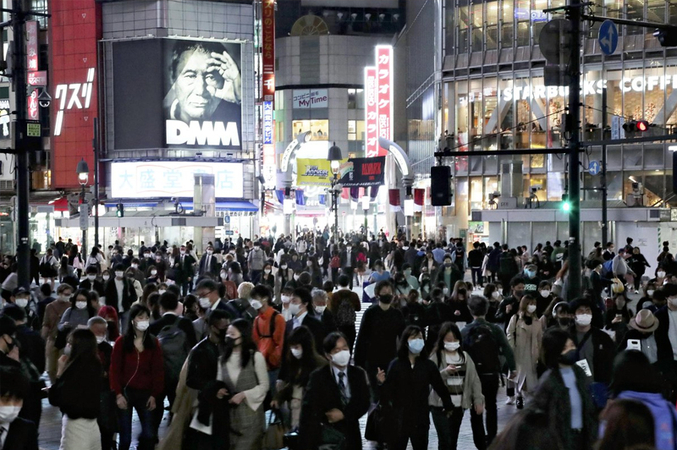
The number of newly confirmed cases of the novel coronavirus in Tokyo has surpassed 500 on consecutive days, with the number of people becoming infected at home increasing as well. Among infection routes in Tokyo that have been traced since the beginning of November, the highest proportion of 40% were infections spread at home.
Thus, experts are emphasizing a number of points to be aware of when sharing a meal with others. As the air has also become drier, humidifiers and air purifiers have also seen an increase in sales as a way to help curb infections at home.
■ 5 to keep in mind
“Home infections are the most common of infection routes,” Tokyo Gov. Yuriko Koike said during a regular press conference on Friday. “I want everyone to become more aware to avoid bringing the virus into your homes.”
As she did the previous day, Koike once again referred to the five things to keep in mind when dining with others: keep groups small, keep meals short, keep voices down, keep portions separate, keep masks on and rooms ventilated and disinfected. Koike said this applies even when at home.
This appeal reflects the way the virus outbreak has changed in Tokyo. The routes of infection in July were nightlife establishments accounting for 35% of the total while infections at home accounted for about 20%. However, by autumn, the percentage of home infections gradually increased, reaching the 30% level in October and surpassing 40% in November.
“There are many cases in which people become infected while out of their homes in places such as offices, care homes, schools, restaurants and bars, then spread the virus upon their return home,” a metropolitan government official said.
At a special press conference Friday, Haruo Ozaki, chairman of the Tokyo Medical Association, urged those within the capital to avoid meeting with anyone other than close friends and to avoid dining in groups of five or more. Ozaki also requested that people wear masks when conversing with others.
■ Humidifiers, purifiers sell
Sales of humidifiers and air purifiers are skyrocketing at electronics retail stores.
At the Yurakucho branch of BicCamera in Chiyoda Ward, Tokyo, more than 50 types of humidifiers of various sizes are available. It is said that the virus becomes active and enters the body more easily in environments with low-humidity, when mucous membranes in the throat and other areas of the body tend to dry out.
A 33-year-old company employee from Meguro Ward, Tokyo, who purchased a humidifier at the store on Thursday after learning of the recent rise in infection numbers, said, “I’m glad that I was able to buy a model that’s easy to maintain.”
According to BicCamera, sales of humidifiers and air purifiers usually begin to pick up around November, but this year, the sales spike began around mid-October. In November, humidifiers saw a sales increase 2.7 times higher than in the same period last year, while air purifier sales increased fourfold.
“More people are spending time at home, and there is a growing awareness of preventing home infections,” a BicCamera spokesperson said.
According to statistics compiled by the Japan Electrical Manufacturers’ Association, shipments of air purifiers in October more than doubled, while humidifiers saw a 50% increase compared to the same period last year.

 US National Security Adviser Robert O’Brien speaks to Sunday meeting at the Government Guest House in Hà Nội with students, lecturers and postgraduates from the Diplomatic Academy of Việt Nam. — VNA/VNS Photo Lâm Khánh
  As per the notice submitted to the CCI, there are at least seven target entities. (Photo: AFP)
  Photo Credit: The Daily Star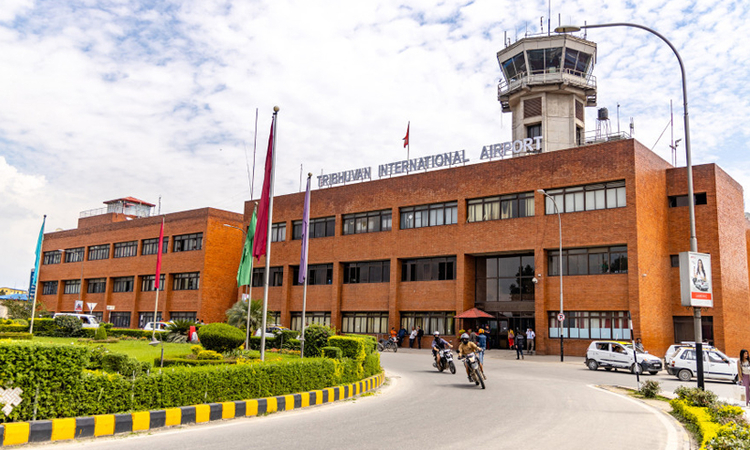
 Singapore’s economy has contracted by 6.5 per cent on a year-on-year basis in the first three quarters of the year.ST PHOTO: KUA CHEE SIONG, Straits Times
  Under the new law, Cambodian citizens are still banned from entering casinos to gamble. Photo supplied
  Prime Minister Nguyễn Xuân Phúc meets US National Security Advisor Robert O’Brien on Saturday in Hà Nội. — VNA/VNS Photo Thống Nhất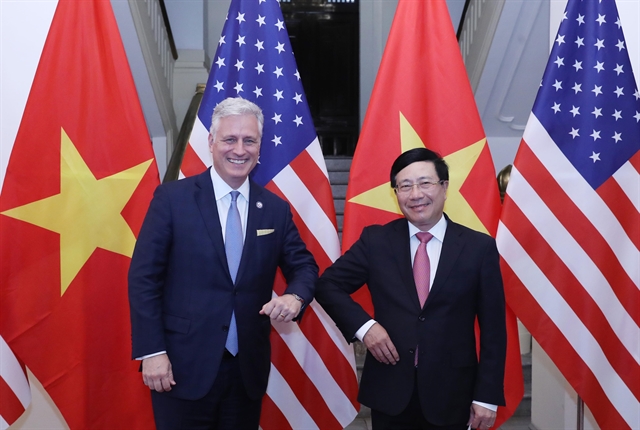
 Besides improving inter-operability between the friendly navies, SITMEX series of exercise also aim to strengthen mutual confidence and develop common understanding and procedures towards enhancing the overall maritime security in the region. (Image: Twitter/@indiannavy)