Auto production revs up in May but down 69 per cent year on year #ศาสตร์เกษตรดินปุ๋ย

#ศาสตร์เกษตรดินปุ๋ย : ขอบคุณแหล่งข้อมูล : หนังสือพิมพ์ The Nation.

Auto production revs up in May but down 69 per cent year on year

Jun 19. 2020

By THE NATION

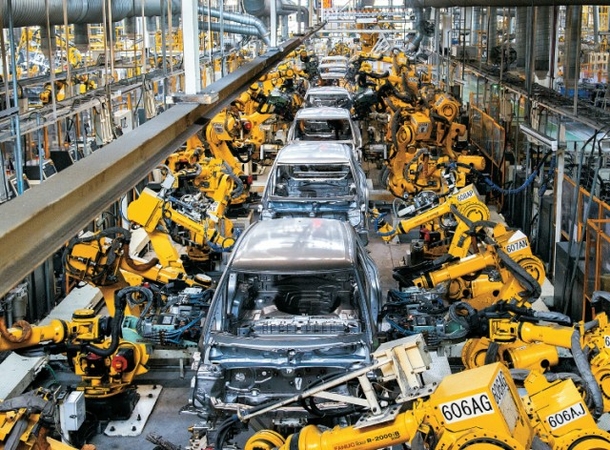
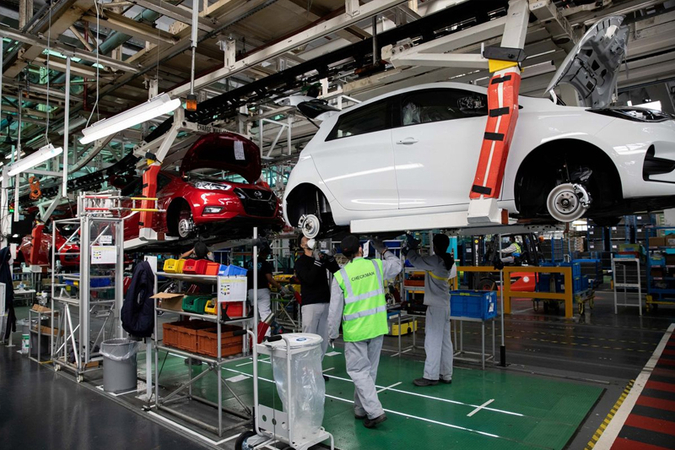
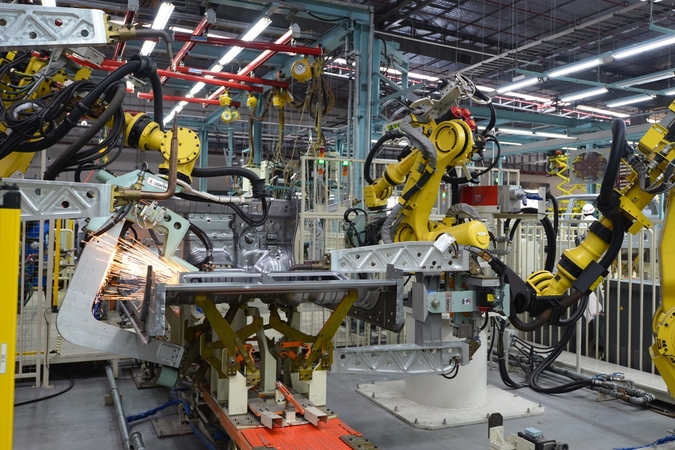
Auto production fell to 56,035 vehicles in May, plummeting 69.1 per cent year on year, but more than doubled the output in April, the Automotive Industry Club, under the Federation of Thai Industries, reported.

“This signals that the lowest point for automotive manufacturing has passed, as in April we only produced 24,711 vehicles, which is considered the lowest in 30 years due to the Covid-19 situation that has affected automotive manufacturers and markets globally,” said Surapong Pisitpattanapong, vice president and spokesman of the club.

“The production volume in May, although still low compared to the same period last year, has jumped 126.76 per cent from April, thanks to several factories that have resumed their manufacturing lines after almost two months of shutting down.”

Surapong predicted that if the Covid-19 situation were resolved by September, Thailand will have average production volume of 60,000 vehicle per month in the rest seven months of the year, totalling 420,000 vehicles.

“Combined with the 534,428 vehicles that were produced so far, the annual production volume should stand at around 900,000 vehicles, which is close to the estimated target of 1 million to 1.4 million vehicles,” he said. “In the best-case scenario, domestic factories must be able to produce at least 140,000 vehicles per month until the year-end in order to reach the 1.4 million vehicles annual target. However, this scenario is extremely unlikely considering the current economy.”

Surapong added that although the Covid-19 situation in Thailand is improving, the situation is escalating overseas which will impact automobile export markets. “Production for export in May stands at 35,965 vehicles, decreasing 61.93 per cent year on year, while the actual export volume stands at 29,894 vehicles, decreasing 68.64 per cent year on year,” he added.

“Meanwhile, production for domestic sales in May was 20,070 vehicles, also down 76.89 per cent year on year, due to sellers still having cars in showrooms,” added Surapong.

“Total domestic sales in May were 40,418 vehicles, decreasing 54.12 per cent year on year but increasing 34.24 per cent from April, thanks to the improving Covid-19 situation. We expect that total sales in 2020 will be in the range of 500,000 to 700,000 vehicles, depending on how fast the Covid-19 situation resolves.”

Jaguar Land Rover posts surprise sales surge in China #ศาสตร์เกษตรดินปุ๋ย

#ศาสตร์เกษตรดินปุ๋ย : ขอบคุณแหล่งข้อมูล : หนังสือพิมพ์ The Nation.

Jaguar Land Rover posts surprise sales surge in China

Jun 16. 2020Employees assemble a Jaguar E-Pace compact sport utility vehicle on the production line at the second phase of the Chery Jaguar Land Rover Automotive Co. plant in Changshu, China, on June 27, 2018. MUST CREDIT: Bloomberg photo by Qilai Shen.Employees assemble a Jaguar E-Pace compact sport utility vehicle on the production line at the second phase of the Chery Jaguar Land Rover Automotive Co. plant in Changshu, China, on June 27, 2018. MUST CREDIT: Bloomberg photo by Qilai Shen.
By Syndication Washington Post, Bloomberg · Nikhil Patwardhan, Anurag Kotoky, Siddharth Philip · BUSINESS, WORLD, US-GLOBAL-MARKETS, ASIA-PACIFIC, EUROPE 

Jaguar Land Rover said it’s seeing the beginnings of a demand rebound in China as the world’s second-largest economy opens up after months of inactivity following the coronavirus outbreak.

While JLR lost 501 million pounds ($630 million) before tax in the three months ended March 31, sales in China gained 4.2% in May from a year earlier as all of its retailers there reopened for business, according to in a statement Monday. Britain’s largest carmaker is also seeing improvements in the U.S. and Europe, though the U.K. and other countries have yet to recover from lockdowns.

JLR will still cut 1,100 contract workers engaged in manufacturing across various factories to help hold down costs. The unit of India’s Tata Motors held off eliminating permanent posts among its 38,000 workers. JLR is tapping the British government’s furlough scheme as it assesses how fast demand is likely to revive.

“In China, we are beginning to see recovery in vehicle sales and customers are returning to our showrooms,” Chief Executive Officer Ralf Speth said in the release. The company is gradually resuming production at its main Solihull and Halewood factories in the English Midlands, as well as at U.K. engine plants and its sites in Slovakia and Austria.

After struggling in China and dealing with uncertainty around Brexit, JLR initiated a 2.5 billion-pound cost-cutting drive that has already featured thousands of job losses worldwide. The plan, called Charge, has now been expanded to target savings of 5 billion pounds by March 2021, it said.

The U.K. manufacturer said it is reducing capital spending by about 25% by deferring “lower margin” and non-critical investments. It had a negative 1.5 billion-pound cash flow in April and May with its facilities shuttered.

Parent Tata Motors posted a quarterly loss of 98.94 billion rupees ($1.3 billion), the highest on record. The success of JLR is crucial for Tata, which is acquired the U.K. maker of sports cars and luxury SUVs in 2008, and is struggling with an Indian sales slump that began even before Covid-19 wiped out demand.

“The speed with which it has come has indeed been a pleasant surprise,” group finance chief P.B. Balaji said of the Chinese sales resurgence. “Obviously there is something happening there, but I would want to be cautious. Let’s watch it for a few more months before we say now there really is a roaring recovery.”

Tata plans to save 60 billion rupees in its domestic business, and is looking for a partner for its cars and SUV business in India, he said.

GM’s electric push risks market-share loss for top moneymakers #ศาสตร์เกษตรดินปุ๋ย

#ศาสตร์เกษตรดินปุ๋ย : ขอบคุณแหล่งข้อมูล : หนังสือพิมพ์ The Nation.

https://www.nationthailand.com/auto/30389483?utm_source=category&utm_medium=internal_referral

GM’s electric push risks market-share loss for top moneymakers

Jun 12. 2020
By Syndication Washington Post, Bloomberg · David Welch · BUSINESS, TRANSPORTATION, US-GLOBAL-MARKETS 
.
General Motors’s ambitious push into electric vehicles could pose a near-term risk as the automaker spends less to replace its more profitable gas-powered vehicles, according to an annual study published by Bank of America Global Research.

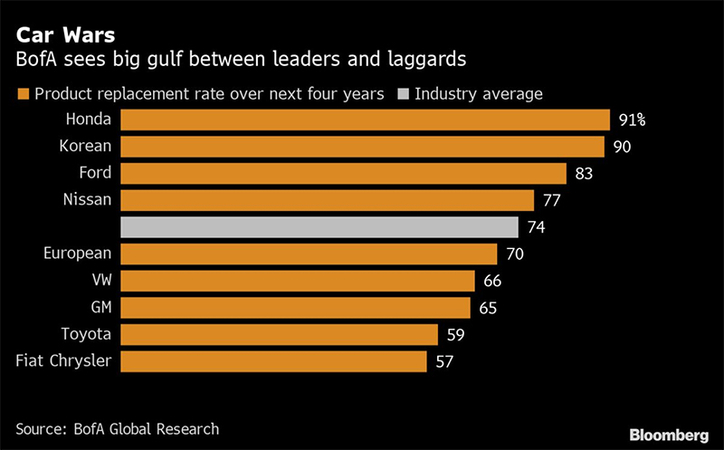
GM’s $20 billion investment in electric models and self-driving technology over the next five years makes it one of the most aggressive carmakers when it comes to rolling out plug-in models, along with Germany’s Volkswagen. But the Detroit-based company plans to refresh only about 65% of its current sales volume with revamped vehicles, which is third-to-last among major manufacturers. VW is just ahead of GM at 66%.

Fewer updates for popular gasoline-powered models may hurt market share, underscoring the quandary the industry faces as companies try to fund an electric-focused future. The billions spent on plug-in vehicles that typically lose money — and that no one besides Tesla has sold in large numbers — takes investment dollars away from their bread-and-butter gas burners at a time when the global pandemic has hurt sales.

“The very active shift GM is making shows the confidence that they have to move where the market is going,” said BofA analyst John Murphy on a conference call. “It may result in lost market share.”

Over the next four years, Toyota and Fiat Chrysler will refresh less than 60% of their current sales volume. That turnover ratio belies the cadence of product updates, which in Toyota’s case reflects a lull after a spurt of new models in the past few years, Murphy said. Honda Motor Co. topped the list with plans to refresh 91% of current models and Korean brands Hyundai Motor Co. and Kia Motors Corp. are set to revamp 90%. Ford Motor Co. was third at 83%.

GM will move 30% of its vehicles to electric-motor and battery power, up from just one U.S. model today: the Chevrolet Bolt. It plans to launch two more next year, the Cadillac Lyriq crossover SUV and a Hummer pickup truck. Both vehicles likely will sell for more than $50,000, which is what it takes to make money on electric models, Murphy said. But the bigger price tag means lower sales volume.

Making it tougher are the Covid-19 shutdowns, which will reduce sales in North America by 25% this year to 15.2 million vehicles and trigger a 20% drop globally to 71.4 million, the report said. Deliveries should recover next year to almost 80 million.

Murphy said GM’s strategy could be a game changer, giving the company a leadership position as consumers shift to electric vehicles. That’s GM’s goal, said company spokesman Jim Cain, who contests the notion it will cost GM market share. “We are very confident in our plan,” he said.

One change that could help GM bridge the gap in its transition to EVs is its recent launch of several new crossover SUVs and its all-new Chevy Silverado and GMC Sierra pickups. Later this year, the new Chevy Tahoe and GM Yukon large SUVs come to market. All of those have gasoline engines — and fat profit margins.

“They can ride the profit from those vehicles,” Murphy said.

Toyota vows to remain profitable as pandemic hits auto industry #ศาสตร์เกษตรดินปุ๋ย

#ศาสตร์เกษตรดินปุ๋ย : ขอบคุณแหล่งข้อมูล : หนังสือพิมพ์ The Nation.

https://www.nationthailand.com/auto/30389468?utm_source=category&utm_medium=internal_referral

Toyota vows to remain profitable as pandemic hits auto industry

Jun 11. 2020
A Toyota dealership in Tokyo on May 10, 2020. MUST CREDIT: Bloomberg photo by Toru Hanai.
Photo by: Toru Hanai — Bloomberg
Location: TokyoJapan

A Toyota dealership in Tokyo on May 10, 2020. MUST CREDIT: Bloomberg photo by Toru Hanai. Photo by: Toru Hanai — Bloomberg Location: TokyoJapan
By Syndication The Washington Post, Bloomberg · Shiho Takezawa

Toyota will remain profitable during the coronavirus pandemic, using lessons it learned during the global financial crisis more than a decade ago, Chief Executive Officer Akio Toyoda told shareholders at the Japanese automaker’s annual meeting.

As part of efforts to assist to cash-strapped customers, Toyota is relaxing auto-loan payment deadlines and offering used rental cars instead of new ones, Japan sales chief Yasuhiko Sato said at the meeting.

The pandemic has dented profits as carmakers around the world shutter showrooms and factories, although they have started to reopen gradually. Toyota and other automakers have sought loans and credit lines from banks, saying that they will keep investing in development. Although Japan has lifted its state of emergency, the outbreak has damaged the business of many smaller auto-industry players, with one Toyota supplier filing for bankruptcy last week.

“If we don’t win, we wouldn’t be able to support this industry and country,” Toyoda said. “We are different today from what we were during the financial crisis.”

Japan’s biggest automaker won’t change its plan to produce 3 million cars annually in the country, according to Mitsuru Kawai, Toyota’s chief human resources officer. The company has halted some domestic factories from April through June.

Toyota has warned profit will tumble 80% to a nine-year low and targeted operating profit of 500 billion yen ($4.65 billion) for the year through March. The target is not a plan, but rather a minimum standard that it’ll have to meet, said Toyoda.

At the meeting held at Toyota’s headquarters in Nagoya, the company took precautionary measures to contain the virus’s spread. Staff checked temperatures of attendees, set up transparent partitions in front of speakers, and reduced the number of seats to about a third.

Some 360 shareholders joined the meeting, far less than the previous meeting where more than 5,500 people attended, after the automaker asked shareholders not to come. The gathering ended after an hour and twenty minutes, the shortest annual shareholder meeting since 2000.

Volkswagen board weighs leadership change at main car brand #ศาสตร์เกษตรดินปุ๋ย

#ศาสตร์เกษตรดินปุ๋ย : ขอบคุณแหล่งข้อมูล : หนังสือพิมพ์ The Nation.

https://www.nationthailand.com/auto/30389276?utm_source=category&utm_medium=internal_referral

Volkswagen board weighs leadership change at main car brand

Jun 09. 2020
Volkswagen headquarters in Wolfsburg, Germany, on March 12, 2020. MUST CREDIT: Bloomberg photo by Krisztian Bocsi.

Volkswagen headquarters in Wolfsburg, Germany, on March 12, 2020. MUST CREDIT: Bloomberg photo by Krisztian Bocsi.
By Syndication Washington Post, Bloomberg · Christoph Rauwald · BUSINESS 

Volkswagen’s supervisory board members will discuss Monday if Chief Executive Officer Herbert Diess should cede direct control of the main VW passenger-car brand just two years after he reversed a decision by his predecessor to separate the jobs, according to people familiar with the matter.

The move would allow Diess to focus on the group while a new leadership at the biggest division could redouble efforts to tackle production problems that have affected the flagship Golf model and the electric ID.3 hatchback, said the people, who asked not to be identified as the deliberations are confidential and a decision hasn’t been made yet.

A spokesman for Volkswagen’s supervisory board declined to comment. The 20-member body includes representatives of the largest shareholders as well as labor officials.

Losing direct responsibility for the VW brand would mark a setback for Diess. The CEO is wrestling with internal tensions over concerns the two models might face greater difficulties as he tries to contain the fallout from the Covid-19 pandemic while weighing broader strategic decisions.

The Golf output is important to ensure sufficient utilization of Volkswagen’s largest factory in Wolfsburg, Germany, and the ID.3 electric car is key to meeting stricter European emission rules.

Toyota bets on China fuel cell future with FAW, other automakers #ศาสตร์เกษตรดินปุ๋ย

#ศาสตร์เกษตรดินปุ๋ย : ขอบคุณแหล่งข้อมูล : หนังสือพิมพ์ The Nation.

https://www.nationthailand.com/auto/30389117?utm_source=category&utm_medium=internal_referral

Toyota bets on China fuel cell future with FAW, other automakers

Jun 05. 2020
A Corolla Touring wagon sits at a dealership in Tokyo, Japan, on May 10, 2020. MUST CREDIT: Bloomberg photo by Toru Hanai

A Corolla Touring wagon sits at a dealership in Tokyo, Japan, on May 10, 2020. MUST CREDIT: Bloomberg photo by Toru Hanai
By Syndication The Washington Post, Bloomberg · Shiho Takezawa, Tian Ying

Toyota is teaming up with five Chinese companies including Beijing Automobile and China FAW to develop fuel cells for commercial vehicles, seeking to push deeper into China and the market for the alternate energy source.

The other joint venture partners are Beijing SinoHytec, Dongfeng and Guangzhou Automobile, the companies said Friday. The new Beijing-based entity, which will be 65% owned by Toyota, will be called United Fuel Cell System R&D and start with an initial investment of 5 billion yen ($46 million).

Toyota has been one of the biggest backers of fuel cells among global automakers, betting that they can become a source of energy for electric vehicles on par or even better than batteries. The new partnership underscores Toyota’s continued interest in fuel cells, especially for commercial applications such as buses and trucks. Annual sales of fuel cells are on track to reach 1 million vehicles by 2035, according to BloomberNEF, driven by growth of buses and commercial vehicles mainly in China, Korea, Japan and Europe.

“China is really trying to commit to fuel cells,” said Seiji Sugiura, an analyst at Tokyo Tokai.

The six companies will try to develop low-cost fuel cell systems while improving drive performance, fuel efficiency and durability, they said in a statement. FAW and Dongfeng are two of three central government-owned automaking groups in China, and Toyota has already partnered with Guangzhou Auto and China FAW to develop fuel cell vehicles. Beijing Auto and GAC are partners with foreign carmakers including Daimler and Honda.

Despite the backing of Toyota and other industry giants touting the benefits of fuel-cell vehicles — they refuel faster and are more suitable for driving long distances than all-electric vehicles — the technology hasn’t caught on due its expensive price tag. Price of hydrogen remains higher than other transport fuels, and there hasn’t been enough hydrogen refueling infrastructure, according to BNEF. Toyota has also recently put more resources into battery development.

China has the muscle to change the landscape should it make hydrogen-powered vehicles a national priority. The world’s biggest car market is set to embrace hydrogen fuel-cell vehicles in the same way that it did EVs, Wan Gang, who’s been called the father of China’s electric-car movement, said last year.

The government wants 1 million fuel-cell vehicles on the roads in a decade and is seeding that plan with hundreds of millions of yuan to spur research and development, and to subsidize purchases. And, as seen with EVs, a slew of startups and established companies are trying to capitalize.

“The fuel-cell electric vehicle market, primarily for commercial vehicles, is growing at a pace not seen anywhere else in the world,” Toyota said in the statement.

BNEF tracked more than $17 billion worth of announced investments in the industry through 2023. One of the largest is China National Heavy Duty Truck Group’s plan to spend $7.6 billion to manufacture fuel-cell vehicles in Shandong province on the east coast.

Even so, China still has a long way to go. The number of fuel-cell vehicles on the road –both passenger and commercial — will only reach 5,000 units next year, according to government projections.

Renault to cut 14,600 jobs worldwide in race to slash costs #ศาสตร์เกษตรดินปุ๋ย

#ศาสตร์เกษตรดินปุ๋ย : ขอบคุณแหล่งข้อมูล : หนังสือพิมพ์ The Nation.

https://www.nationthailand.com/auto/30388756?utm_source=category&utm_medium=internal_referral

Renault to cut 14,600 jobs worldwide in race to slash costs

May 29. 2020
By Syndication Washington Post, Bloomberg · Tara Patel · BUSINESS 

Renault plans to eliminate about 14,600 jobs worldwide and lower production capacity by almost a fifth in a move to dramatically reduce costs and outlast the downturn that has rocked the global auto industry.

The plan includes the politically delicate task of trimming 4,600 positions in France, or about 10% of the carmaker’s total in its home country, through voluntary retirement and retraining, according to a statement Friday. More than 10,000 further jobs will be scrapped in the rest of the world, pruning a global workforce of about 180,000 people.

The measures round off a decisive week for Renault and its Japanese partners Nissan Motor Co. and Mitsubishi Motors Corp., drawing a line under a two-decade era of aggressive expansion under the alliance’s former leader, Carlos Ghosn, who was arrested in late 2018. A slump in consumer demand and factory shutdowns to slow the Covid-19 pandemic have forced their hand, with shrinking head counts and production cuts now a priority.

“We have spent and invested too much and will now come back to our base,” Renault Acting Chief Executive Officer Clotilde Delbos said on a call with analysts. “We’re facing reality, not looking to be on top of the world.”

The company will turn its focus to profitability and away from the race for volumes at any cost, she said, citing a successful revamp at crosstown rival PSA Group, which makes Peugeot and Citroen brands. Renault’s poor 2019 results provided a necessary wake up call that shocked employees into changing their mind-set and working more closely with Japanese partners, she added. Under Ghosn, Renault had a sales target of 5 million sales annually by 2022, which has since been abandoned.

To achieve savings of more than 2 billion euros ($2.2 billion) over three years, Renault’s plan will cost about 1.2 billion euros to implement. While it “may not be enough” it can be put in place quickly, Delbos said.

The carmaker flagged possible adjustments to capacity in Russia, but held off on decisions about the future of six sites in France amid political furor and union opposition. Instead, talks will begin on various scenarios including phasing out car assembly at the Flins plant, which builds the Zoe model, and Dieppe, where the Alpine A110 sports car is assembled.

The shares declined 3.9% to 21.06 euros as of 10:10 a.m. in Paris, extending a decline for the year to more than 50%.

The European car industry is feeling particular hurt from the pandemic crisis, with the continent struggling with overcapacity before the virus hit. Fiat is asking for a $6.9 billion state-backed loan to save its Italian operations and Volkswagen AG is facing pressure from labor groups worried about job cuts. In Spain, Nissan is contending with angry workers protesting a plan to close a plant in Barcelona, underscoring the challenges of downsizing the industry.

Renault has been at the center of a political maelstrom in recent weeks over its plans to downsize in France while at the same time seeking a state-backed loan of 5 billion euros to bolster reserves.

French Finance Minister Bruno Le Maire warned Thursday he wouldn’t sign the check until he had examined the company’s strategy “site by site, job by job,” with closures being “a last resort.” At the same time, he said Renault’s manufacturing capacity is roughly three times what’s needed this year. Delbos said the credit facility has been agreed and would be available within days.

Highlights from the plan:

– Global production capacity to drop to 3.3 million vehicles by 2024 from 4 million in 2019 to save about 650 million euros

– Possible rationalization of worldwide gearbox making

– Generating savings from the engineering division of about 800 million euros

– Marketing, support savings of 700 million euros

– New focus on electric, commercial vehicles in France

The government is Renault’s most powerful shareholder and has representation on its board. In exchange for the auto-industry stimulus package, the state has called for manufacturers to commit to keeping production and research in France. Renault and PSA have pledged to increase local production of electrified vehicles and components.

“If we do nothing, Renault is in danger,” Le Maire has said. While pledging to stand by the company, he has urged the automaker not to close the Flins factory and give careful consideration to the situation at Maubeuge and Douai.

Renault said Friday it will consult unions on plans to transfer Choisy-le-Roi activities to Flins, where recycling could be developed. The company pledged to study a reconversion of Dieppe, the future of Caudan (Fonderie de Bretagne) and examine Maubeuge and Douai.

To qualify for the government’s support, Renault scrapped its dividend. It burned through 5.5 billion euros in the first quarter, bringing its liquidity down to 10.3 billion euros at the end of March. Renault’s incoming CEO, Luca de Meo, is scheduled to take the helm in July and Delbos said he would likely present a new strategy around year-end.

While she dismissed talk of any major overhaul in the lineup, those decisions would be made by him, she said.

Nissan to resume operations in second plant from Monday #ศาสตร์เกษตรดินปุ๋ย

#ศาสตร์เกษตรดินปุ๋ย : ขอบคุณแหล่งข้อมูล : หนังสือพิมพ์ The Nation.

https://www.nationthailand.com/auto/30388745?utm_source=category&utm_medium=internal_referral

Nissan to resume operations in second plant from Monday

May 29. 2020
By THE NATION

Nissan today (May 29) announced that it was resuming production at its second plant from June 1, while production at its first plant, which is also in Samut Prakan, will continue as normal.

Meanwhile, it said, adjustments will be made in associated operations, such as engine assembly and stamping.

The government extended the state of emergency until the end of June and is opening up the country in stages to continue mitigating the Covid-19 pandemic. It has also advised businesses to continue keeping the number of staff at workplaces to the minimum.

Nissan said it will continue following this advice and government guidelines to ensure the wellbeing of customers, employees and community. This includes limiting the number of workers at all facilities and implementing health and safety measures.

“Our goal is to resume normal business operations as soon as possible in a phased approach, but ensuring the safety and wellbeing of all our employees, their families and Thai society is our priority right now given the Covid-19 pandemic,” said Ramesh Narasimhan, president of Nissan in Thailand.

The company has already implemented an extensive work-from-home policy for office employees as part of the wider effort to curb the spread of the virus.

Nissan said it is confident that it has a sufficient supply of vehicles to meet local demands. The automaker’s dealership network nationwide is open and ready to tend to customers.

The automaker recently launched its “Care for You” programme designed to support its customers and ensure their safety during the pandemic. Under the programme, customers will be offered safe and convenient test drive options, including at their own homes, vehicle pickup services and promotions at dealers and service centres.

Nissan is also taking additional steps to implement several key preventive measures for Covid-19 at its showrooms and service centres nationwide. These include disinfecting the service centre every 30 minutes; checking the temperature of all employees and customers as they enter the dealership, ensuring that staff wear face masks at all times, providing alcohol gel throughout the premises, and consistently disinfecting key vehicle touchpoints like the steering wheel, gear shift, seats, door handles, and front console panels.

Nissan said it will continue prioritising the safety of its employees, partners and customers while following the government’s guidelines.

Nissan posts biggest loss in 20 years, unveils turnaround plan #ศาสตร์เกษตรดินปุ๋ย

#ศาสตร์เกษตรดินปุ๋ย : ขอบคุณแหล่งข้อมูล : หนังสือพิมพ์ The Nation.

https://www.nationthailand.com/auto/30388693?utm_source=category&utm_medium=internal_referral

Nissan posts biggest loss in 20 years, unveils turnaround plan

May 28. 2020
Demonstrators block the Ronda del Litoral highway following a protest outside the Nissan plant in Barcelona, Spain, on May 28, 2020. MUST CREDIT: Bloomberg photo by Angel Garcia.

Demonstrators block the Ronda del Litoral highway following a protest outside the Nissan plant in Barcelona, Spain, on May 28, 2020. MUST CREDIT: Bloomberg photo by Angel Garcia.
By Syndication Washington Post, Bloomberg · Shiho Takezawa · BUSINESS, WORLD, US-GLOBAL-MARKETS 

Nissan reported a 671 billion yen ($6.2 billion) net loss for the latest fiscal year and unveiled a plan to turn the carmaker around by eliminating about 300 billion yen in annual fixed costs, cutting capacity and reducing the number of vehicle models.

The result, the first loss in a decade and the biggest in 20 years, includes restructuring and impairment charges of 603 billion yen for the year that ended in March, the Yokohama-based company said Thursday. The four-year plan calls for production to be cut by 20% to about 5.4 million vehicles a year, and includes the closing of Nissan’s Barcelona plant in addition to one it is shuttering in Indonesia.

The reorganization is part of a broader push by Nissan and alliance partners Renault and Mitsubishi Motors to focus on costs and profitability to weather a collapse in car demand due to the coronavirus pandemic. Nissan has been in turmoil since the November 2018 arrest of former Chairman Carlos Ghosn, who had pushed for volume growth. This all comes as the industry is being disrupted by the shift to electric vehicles and autonomous driving.

“The numbers might leave a negative impression, but they are taking drastic steps and that’s worth noting,” said Naoki Fujiwara, chief fund manager at Shinkin Asset Management Co. “In the post-corona era, you won’t be able to survive unless you improve your efficiency.”

Sales for the fiscal year through March fell 15% to 9.9 trillion yen. Nissan didn’t issue an earnings outlook for the current period, citing uncertainty over the business because of the pandemic.

Shares of Nissan have slumped 29% this year, out-pacing the declines by Toyota Motor Corp. and Honda Motor Co. Underscoring the challenges facing Nissan, the automaker said output fell 62% in April as the pandemic continued to pummel the industry.

“I will do everything I can to return Nissan to a growth path,” Chief Executive Officer Makoto Uchida said at a news conference, adding that he other senior managers are taking voluntary pay cuts.

The automaker will cut the number of models to less than 55 from the current 69, with a plan to introduce 12 new vehicles in the next 18 months. The most anticipated new model is the Rogue sport-utility vehicle for the U.S.

As part of the three-way alliance, Nissan is focusing on its main markets of the U.S., Japan and China. Among the three regions, China is a bright spot as its economy sputters back to life after shutting down in the early days of the outbreak. Nissan’s sales volume in China rose 1.1% to 122,846 vehicles in April, helping it claw back some market share.

Nissan said it has “sufficient liquidity to steer through this challenging business environment,” with cash and cash equivalents of 1.5 trillion yen and access to about 1.3 trillion yen in credit.

Koji Endo, an analyst at SBI Securities Co. in Tokyo, said the coming year is a critical period, predicting that the company’s losses “will surge this year.”

“Nissan will likely have tremendous losses before its plan will have an effect,” Endo said. “It needs to think about how it’s going to get it through.”

Nissan’s loss will have a negative impact of 3.57 billion euros ($3.9 billion) for Renault, the French carmaker said in a statement. Alliance partner Renault is Nissan’s biggest shareholder, with a 43% stake.

Nissan, Renault and Mitsubishi Motors now need each other more than ever. On Wednesday, they announced an effort to work more closely, aiming to save as much as 40% in jointly developing vehicles. Nissan will take the lead on autonomous driving, Renault on the body of electric cars and some electric powertrains while Mitsubishi Motors will work on plug-in hybrids, they said.

Author Information:

Renault, Nissan abandon race for growth to focus on costs #ศาสตร์เกษตรดินปุ๋ย

#ศาสตร์เกษตรดินปุ๋ย : ขอบคุณแหล่งข้อมูล : หนังสือพิมพ์ The Nation.

https://www.nationthailand.com/auto/30388617?utm_source=category&utm_medium=internal_referral

Renault, Nissan abandon race for growth to focus on costs

May 27. 2020
Trees are reflected on the glass facade of the Renault SA flagship showroom on the Champs Elysee in Paris, France, on Wednesday, May 27, 2020. MUST CREDIT: Bloomberg photo by Adrienne Surprenant

Trees are reflected on the glass facade of the Renault SA flagship showroom on the Champs Elysee in Paris, France, on Wednesday, May 27, 2020. MUST CREDIT: Bloomberg photo by Adrienne Surprenant
By Syndication The Washington Post, Bloomberg · Tara Patel, Shiho Takezawa

Renault and Japanese partners Nissan and Mitsubishi unveiled a plan for deeper cooperation in developing and building vehicles as they seek to salvage their strained alliance and weather a collapse in car demand.

The measures will help deliver savings of as much as 40% in model investments for jointly developed vehicles, the companies said Wednesday. Nissan will take the lead on autonomous driving, Renault on the body of electric cars and some electric powertrains while Mitsubishi Motors will work on plug-in hybrids, they said.

Renault, Nissan and Mitsubishi Motors need each other more than ever after the global coronavirus pandemic forced automakers to shutter showrooms and factories. The industry is also facing a once-in-a-generation shift to electric vehicles and autonomous driving that will require significant investment. After coming under pressure last year, the partnership is seeking a fresh start, backed by new measures at the companies to improve profitability.

“The new model focuses on efficiency and competitiveness, rather than on volumes,” Jean-Dominique Senard, chairman of the alliance operating board and Renault, said at a news conference.

That marks a change from an emphasis on growth during the era of Carlos Ghosn, who built the alliance and led it for almost two decades before his arrest in late 2018. In the past, the partnership focused “too much on expansion,” said Osamu Masuko, chairman of Mitsubishi.

Any plans for a merger between Renault and Nissan are also off the table, according to Senard. “We are moving forward within the current framework,” he said. Ghosn had pressed to make the alliance irreversible.

Renault shares surged as much as 20%, the most on record, and were up 18% at 22.53 euros by 1:37 p.m. in Paris trading. Even after the gain, shares remain 47% lower than at the start of the year. Nissan advanced 5.5% and Mitsubishi Motors climbed 5.4% in Tokyo.

“Renault has provided relief that its Nissan and Mitsubishi alliance will deepen as global scale remains crucial amid the near-term challenge of a global auto-demand slump and the high costs associated with the transition to EVs,” said Michael Dean, Bloomberg Intelligence’s senior auto industry analyst, in a note.

Nissan will lead efforts in China, North America and Japan, while Renault will focus on Europe, Russia, South America and North Africa. Mitsubishi will continue its efforts in Southeast Asia, where it already has a strong footprint.

In designating the so-called leaders and followers for projects, the partners are tackling one of the most prickly issues they have faced during the past decades: infighting and power struggles between French and Japanese engineering teams. The goal is to have close to half of the car models in the alliance produced under the new operating model by 2025, they said.

One example Senard provided is Brazil, where the companies use four manufacturing platforms to produce six models. Under the plan, this will be distilled down to one platform for seven models.

In Europe, Renault will lead on commercial vehicles, smaller SUVs and compacts while Nissan will oversee bigger SUVs and take the global lead in this area in five years.

“All members of the alliance will have access to all the key technologies,” Senard said. He and other top managers of the three car companies outlined the plan during an online press conference. They mostly avoided giving details about any specific plant closures, plans that could be revealed in coming days by Renault and Nissan separately.

The alliance came under intense strain following Ghosn’s departure as the circumstances around his sudden arrest fueled mutual suspicion and management turmoil. Some analysts question whether the efforts to right the partnership are too little too late.

“After 21 years, what have they been up to?” said Koji Endo, an analyst at SBI Securities in Tokyo. “Saying that it will be better in 2022 through 2024 is not convincing.”

Renault is preparing to unveil on Friday a cost-cutting plan worth 2 billion euros ($2.2 billion) over three years that is expected to include site closures in France and staff reductions. The carmaker has been caught in a political maelstrom this week due to union opposition to shutting factories and talks with the government, its most powerful shareholder, on a 5 billion-euro state-backed loan.

The company is considering shutting an engine and transmission factory in Choisy-le-Roi, France, and mulling the future of four other production sites, Franck Daout, spokesman for the CFDT union, said by phone Tuesday following meetings with Senard and Finance Minister Bruno Le Maire. These include Flins, iron foundry Fonderie de Bretagne, a factory in Dieppe and its Maubeuge site.

Le Maire on Tuesday said Flins shouldn’t be closed and any plans for Maubeuge need to be closely examined, while acknowledging the company’s manufacturing capacity is twice production levels.

Clotilde Delbos, the interim chief executive officer, said it’s “too early” to give details on the future manufacturing footprint in Europe, dodging the question ahead of the announcement of Renault’s cost-cutting program.

Nissan is due to announce its own restructuring plan on Thursday that will cut costs by 300 billion yen ($2.8 billion) and phase out the Datsun brand, a person with knowledge of the matter has said.

Nissan has struggled since Ghosn’s arrest with an aging car lineup and management paralysis denting its outlook. The automaker warned last month it expects to post a loss for the latest fiscal year through March. The Yokohama-based company also plans to shut down one production line in addition to the recently closed operation in Indonesia and reach the reduced spending target this year by cutting marketing, research and other costs, the person said.

Although Nissan is forecasting a 12% decline in sales to 10.2 trillion yen for the just-ended fiscal year, the new mid-term plan calls for a return to revenue of 11.5 trillion yen within three years, with fixed costs kept at reduced levels, the person said.