The ultimate vintage unicorn isn’t a Ferrari – it’s a Bizzarrini #ศาสตร์เกษตรดินปุ๋ย

#ศาสตร์เกษตรดินปุ๋ย : ขอบคุณแหล่งข้อมูล : หนังสือพิมพ์ The Nation

https://www.nationthailand.com/auto/30384142?utm_source=category&utm_medium=internal_referral

The ultimate vintage unicorn isn’t a Ferrari – it’s a Bizzarrini
Mar 15. 2020
By Syndication Washington Post, Bloomberg · Hannah Elliott · BUSINESS, TRANSPORTATION 
There’s a theory that all the best cars have names that are fun to say. FerrrRRRRari. (Use your hands.) MUS-tang. (Say it with a growl.) Cor-VETTE. (It forces your mouth into a smile even as you say it.)

The same applies to Bizzarrini, the obscure Italian marque that produced fewer than 200 cars for four years in the 1960s. Say it the way your Italian grandmother pronounces a favorite dish of pasta: BITZAaRRini!!

Conceived by the same man who engineered the now multimillion-dollar 1950s racing Ferraris that form the pinnacle of the blue-chip collectable car world, Giotto Bizzarrini’s eponymous brand stands among the greats. Experts call it the evolution of Ferrari – a unicorn obtained only by those who work for years to afford, locate and then charm one into their stable. The world’s wealthiest collectors hoard Bizzarrini cars the way Gollum guarded the Precious.

Bizzarrinis occupy a strange space in the collecting world. They are rare, of course, and often mistaken for Ferraris. Unless you’re deep into that world, you probably haven’t heard of them. They were beloved for their low, curvy bodies and sporty, loud, adrenaline-junkie performance, influencing the design of such other famous, late-1960s-era cars as the Pantera and Mangusta, both made by Alejandro de Tomaso. But they were also derided in their day for being anti-Ferrari because they were made by Giotto Bizzarrini, who had departed that company under sour terms. (Bizzarrini had led an infamous “palace coup” at Ferrari in 1960, when he and four other key Ferrari staff members staged a walkout to protest internal politics.)

These days, enthusiasts such as Chuck Wray, an accomplished mechanic who specializes in Italian race cars, call Bizzarrini “the thinking man’s Ferrari” because they share obvious design cues and styling elements but are even rarer and more difficult to authenticate.

“The Bizzarrini is an evolution to the Ferrari,” Wray told a group of collectors at a Road Scholars forum in January in Scottsdale, Arizona. “My father had been a mechanic, so I had grown up with Ferrari GTs and had fallen in love with Italian cars. And when I found out about Bizzarrini, it was just … Wow! That was the next level.”

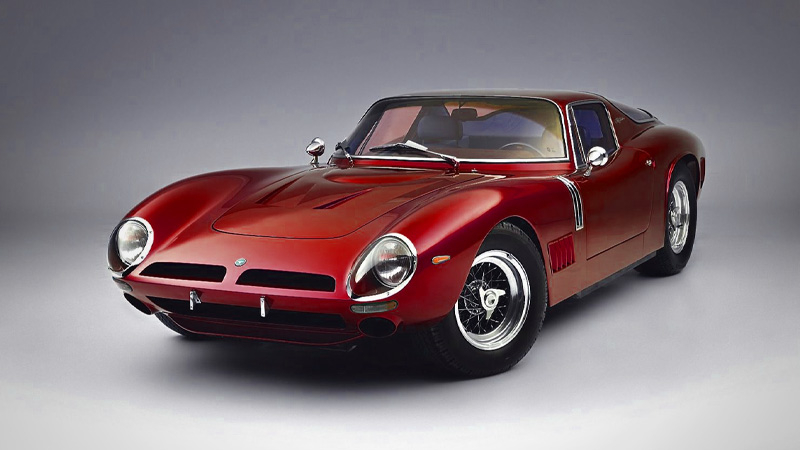
It took no time after his walkout for Bizzarrini to find work. Almost immediately, he started consulting for other Italian car brands, including Lamborghini and Iso. At Iso, he styled a chassis for the made-in-America Chevrolet V8 engine that became famous for powering the Corvette. The Iso Grifo cars were legends, having raced through the 1964 season at the 12 Hours of Sebring and winning a First in Class at the 24 Hours of Le Mans. These days, they sell for $400,000 to $800,000 at auction. More importantly, given our purposes here, one of the aluminum-bodied Iso A3/C race cars became the blueprint for the first in Bizzarrini’s line of self-branded cars. He called it the Bizzarrini GT 5300 Strada.

The GT 5300 Strada was special: It had had the ultra-low, wide styling of the A3/C with a front-mid-mounted, 365-horsepower Corvette V8 engine and four-speed manual gearbox. Its front fenders swooped like bananas over the wheels; its side vents breathed like gills on an eel. The car is incredibly low, the interior incredibly small – you’ll be lucky to get in if you have back or knee issues or a gut. It possesses no such modern comforts as power steering or crisp, biting brakes. But on the racetrack, the Strada was known for blazing, deafening speed and sophisticated handling that could match all comers among its Italian compatriots.

Most were built with aluminum alloy body work; others at that time used fiberglass panels over a pressed steel platform chassis. The original GT 5300 that was sold in the U.S. cost $10,500, roughly $78,500 at today’s rates, according to Hemmings’ Mark McCourt. The 1900 GT Europa and P538S would follow before Bizzarrini was declared bankrupt in 1969. (At age 94, Bizzarrini currently lives in Italy, teaches, and continues to build cars as personal projects and commissions.)

Bizzarini is such a rare brand that classic car insurer Hagerty barely compiles its model history data. The most recent sale on record at Hagerty was in 2018; other notable sales took place in 2014, 2013 and 2009. (Additional sales may have happened more recently, though data on them isn’t clear.)

“Consignments at auction peaked in 2015 at five,” says John Wiley, Hagerty’s senior analyst. Only one was publicly consigned in 2018 and one in 2019, he noted. (The 2019 consignment it is a race car prototype that doesn’t fit within the Hagerty database architecture, Wiley said.)

Most career car guys have never seen one in the wild. The cars exist by hearsay and ghost stories, literally. One Bizzarrini Chassis 0254 was hidden in Pennsylvania for 30 years in a garage watched over by a benevolent spirit – at least according to its owner. That car is in line to be restored by Paul Russell and Co. in Essex, Massachusetts, and set to be sold for what will undoubtedly be a king’s ransom.

Meanwhile, half of the people who think they’ve seen a Bizzarrini saw a fake. In 2018, RM Sotheby’s pulled a white Bizzarrini 5300 Strada, chassis 0323, from its Paris auction after the guy who owned the real car – also chassis 0323 – showed up. A representative from RM Sotheby’s did not respond to a request for comment.

The discrepancy is rampant: At the 2018 RM Sotheby’s auction in Paris, the 1900 Europa on sale was cataloged as from 1968. But it is listed in Hagerty’s records as a 1967. “It is plausible that replicas were built,” says Wiley.

Indeed, RM Sotheby’s sold that car for €212,750 ($244,000) at the 2018 sale. But records of just how many were made, and when, are scarce. Hagerty’s historian, Glenn Arlt, uses a book published in 1970, “The Complete Encyclopedia of Automobiles: 1885 to the Present,” to corroborate his data. According to Arlt, Bizzarrini built 15 Europas during the 1960s. After the company went bust, automotive scavengers co-opted the handful of extraneous body shells and over the next 40 years built them out into complete cars – to varying degrees of fidelity, although none is legitimate. In one official register by Jack Koobs de Hartog, three Bizzarrini 1900 Europas share the same chassis number.

“It’s a minefield,” says Steve Serio, an automotive broker who has sold nine in his three-decade-long career. If a Bizzarrini’s ownership history gets murky for the years prior to the 1980s, you can be sure it’s fake, he says.

That does nothing to deter those who want them. If anything, it adds pleasure to the pain of discovery. After all, the Bizzarrini 1900 Europa, a swooping study in la dolce vita, is like a sip of frosty limoncello on a sunny afternoon. The moment of seeing one for the first time will seep onto your memory like a tattoo. Serio recently uncovered a selection of period Bizzarrini photos for sale at a swap meet in Los Angeles. The seller wanted more than $13,700 for them – just the photos.

There is an upside to all the trouble. Bizzarrinis are still much more affordable; for decades, the presence of that Corvette engine kept Bizzarrini values well below those of the equivalent Ferrari, Lamborghini or Maserati cars because purists and collectors considered it sacrilegious to have American parts in Italian cars. Although Bizzarrini values began to increase in the late 2000s, with the greatest jump happening from late 2006 through the market crash toward the end of 2008, it wasn’t until late 2013 that values began to rise in earnest, matching that of the rest of the exotic Italian collector-car market. They have risen steadily since.

The average value of a Bizzarrini 5300 GT Strada in perfect condition is $1.2 million, triple what it was in 2010, according to Jonathan Klinger, a spokesman for Hagerty. Today a Bizzarrini 5300 GT America in perfect condition has an average value of $850,000 – more than 2 1/2 times its value in 2010.

Values are difficult to forecast because so few real Bizzarrini cars come to the public market; most trade via a whisper network of high-rolling collectors. The fakes that waft through from time to time contaminate that already delicate market, so when bona fide, above-reproach, authenticated examples are found, their prices skyrocket. In 2015, the Keno Brothers Fine Automobile Auctioneers set a record with a 1968 Bizzarrini 5300 Strada sold for just over $1 million, including fees. Five years later, an authentic, good-condition GT 5300 Strada with an alloy body requires $1.2 million to $1.5 million to own, Serio says. And the asking price will be higher.

Despite the dearth of official sale results, the rise in popularity of vintage racing and driving events such as the Colorado Grand, Mille Miglia and California Mille – all requiring specific marques and early model cars for entry among their ultra-elite ranks – as fed the interest as well. In 2016, Pebble Beach Concours d’Elegance organizers featured them in a special class on the lawn of the 18th fairway at the exclusive golf course, spotlighting the owners and those who aspire to own such a rare car.

“At a small fraction of the value of a (Ferrari) GTO, there is plenty of room for further appreciation,” Klinger says. “The cars are likely to continue to gain fans.”

Even better, that once-lamented Corvette engine makes them easier and cheaper to repair than other rare exotics, both on vintage rally drives and at home. “It takes nothing to maintain them,” says Serio. Now, that’s something you definitely can’t say for a Ferrari of the same vintage.

Detroit carmakers send office workers home, keep plants running #ศาสตร์เกษตรดินปุ๋ย

#ศาสตร์เกษตรดินปุ๋ย : ขอบคุณแหล่งข้อมูล : หนังสือพิมพ์ The Nation

https://www.nationthailand.com/auto/30384052?utm_source=category&utm_medium=internal_referral

Detroit carmakers send office workers home, keep plants running

Mar 14. 2020
By Syndication Washington Post, Bloomberg · Gabrielle Coppola, Daniele Lepido · BUSINESS, US-GLOBAL-MARKETS

Detroit’s three automakers are asking office employees to work remotely while pushing production staff keep running many of their factories — including one where a worker tested positive for the coronavirus.

Fiat Chrysler Automobiles’s salaried personnel, including 14,000 at its U.S. headquarters north of Detroit, were told to work from home as of Thursday, a spokesman said. A transmission factory in Indiana is continuing to operate despite a worker there testing positive for Covid-19.

General Motors and Ford followed suit Friday, issuing directives for their office personnel to work remotely. The companies continue to build vehicles despite analysts warning the virus will significantly curtail demand around the globe. In China, where the illness originated, car sales plunged a record 79% in February.

“Clearly we are now moving beyond regional hot spots and into planning for how this will impact every area of our business across the world,” Fiat Chrysler Chief Executive Officer Mike Manley wrote in a letter to employees Friday. “We are now managing the company to ensure business continuity, in particular focusing on how we keep production lines running and vehicle programs on track.”

Fiat Chrysler temporarily shut plants in Italy for cleaning as it tries to help combat spread of the virus in the country, where more than 1,000 have died. In Canada, employees at the company’s minivan assembly plant in Windsor, Ontario, have refused to work since mid-afternoon Thursday.

In the U.S., its Indiana worker is receiving medical care, and those who worked nearby or may have come in contact with him have been put in home quarantine.

On Friday, Fiat Chrysler’s U.S. shares recouped some of their losses from the biggest drop since the 2014 merger that formed the company. The stock was up 4.7% as of 1:13 p.m. in New York. GM rose 2.4%, while Ford declined 0.8%.

Fiat Chrysler declined to provide the Indiana worker’s name, age or other personal information such as his recent travel history for privacy reasons. The carmaker has disinfected his work station and is sanitizing the entire plant in Kokomo, Indiana, which employs roughly 4,000. Output is running at a normal pace, but the company is adjusting break times to avoid crowding and deploying social spacing to increase distances between workers.

The United Auto Workers is working closely with Fiat Chrysler on measures to protect its members, Cindy Estrada, a vice president of the union, said in a statement. The UAW said it’s in talks with automakers and companies in other sectors regarding paid leave for workers who have not been tested but have to quarantine themselves to prevent the spread of the virus.

Just last week, Mark Stewart, Fiat Chrysler’s chief operations officer for North America, visited Kokomo to christen a new investment at a separate, idled transmission plant that will be re-purposed for engine production. He said the company’s crisis teams were monitoring supply risks and that travel had been curtailed due to the virus, but operations were “progressing OK.”

The company does not foresee any production shutdowns in the U.S., Simon Sproule, its chief communications officer, said Thursday. Ford also doesn’t expect to idle major facilities, according to Mark Truby, the company’s top spokesman.

A day after Michigan announced its first coronavirus cases, Fiat Chrysler said it would limit in-person meetings, rely on video conferencing and refuse visitors from countries with acute outbreaks.

The company said Wednesday it may have to close some parts factories in northern Italy to support a nationwide campaign to contain the virus. It’s slowing production at some plants there to enable greater spacing between workers.

Fiat Chrysler’s instructions for salaried employees to work from home will vary by department, and remain in effect until further notice, the company said.

Ford CEO Jim Hackett wrote to employees that they needed to prepare as they left the office for the day to be away by taking home laptops, mobile devices and personal items. And GM CEO Mary Barra addressed workers who won’t be able to do their job remotely in her memo to staff.

“Given the current drop in use of public transportation and extensive flight cancellations, our customers are looking to us more than ever to ensure they have the vehicles, parts and services they need,” she said.

Tesla on the hunt for cybertruck plant location in central U.S. #ศาสตร์เกษตรดินปุ๋ย

#ศาสตร์เกษตรดินปุ๋ย : ขอบคุณแหล่งข้อมูล : หนังสือพิมพ์ The Nation

https://www.nationthailand.com/auto/30383888?utm_source=category&utm_medium=internal_referral

Tesla on the hunt for cybertruck plant location in central U.S.

Mar 11. 2020
Elon Musk, chief executive officer of Space Exploration Technologies Corp. (SpaceX) and Tesla Inc., speaks at the SpaceX headquarters in Hawthorne, Calif., on Oct. 10, 2019. MUST CREDIT: Bloomberg photo by Patrick T. Fallon.

Elon Musk, chief executive officer of Space Exploration Technologies Corp. (SpaceX) and Tesla Inc., speaks at the SpaceX headquarters in Hawthorne, Calif., on Oct. 10, 2019. MUST CREDIT: Bloomberg photo by Patrick T. Fallon.
By Syndication Washington Post, Bloomberg · Dana Hull · BUSINESS, US-GLOBAL-MARKETS 

Elon Musk announced Tesla is scouting locations to build its in-development Cybertruck in the U.S., likely triggering a state-by-state competition similar to one he set off six years ago.

Tesla will add a factory to produce both the electric pickup and the Model Y crossover for customers on the East Coast, the chief executive officer tweeted Tuesday. He didn’t elaborate on which states Tesla is considering beyond saying it will be somewhere in the central U.S.

By publicizing Tesla’s plans to construct a factory for the truck, slated for production late next year, Musk, 48, is repeating a strategy used in 2014 to score a $1.3 billion incentive package from Nevada. The state lured the company’s massive battery factory there after Musk held a bake-off in which Arizona, California, New Mexico and Texas were the finalists that came up short.

Musk unveiled the Cybertruck in November and pitched it as a radically different option from the highly lucrative pickups produced by Ford General Motors and Fiat Chrysler Automobiles. A botched demo in which Tesla’s design chief cracked supposedly shatter-proof glass generated enormous buzz and prompted the company to sell T-shirts featuring the broken windows.

People take pictures of the newly unveiled all-electric battery-powered Tesla’s Cybertruck with shattered windows after a failed resistance test, at Tesla Design Center in Hawthorne, California on November 21, 2019.

States with right-to-work laws that prohibit unions from requiring prospective hires to join their membership are likely to be contenders for Tesla’s facility, said John Boyd, principal of a manufacturing site-selection firm based in Princeton, New Jersey.

Tesla took advantage of its soaring stock price by raising $2.31 billion last month. The company disclosed just before announcing its equity offering that its annual capital expenditures budget will be as much as $3.5 billion through 2022, more than double what it spent in 2019.

Tesla shares were little changed at $645.38 as of 9:35 a.m. Wednesday in New York. The stock is up 54% this year.

Government incentives will play a role in Tesla’s decision-making on a plant location, along with logistics costs, access to big, talented workforces, and quality of life, Musk told the Wall Street Journal in an email. TechCrunch reported the company is in talks with officials in Nashville, Tennessee, citing a source familiar with the discussions.

The battle between states will play out as U.S. President Donald Trump, who’s vowed to revive the American auto industry, looks likely to face off against Joe Biden, the vice president in the Obama administration, which backed General Motors and Chrysler through their 2009 bankruptcies.

Trump praised Musk in an interview with CNBC in January, calling the South Africa-born CEO “one of our great geniuses” and predicting he would build “a very big plant in the United States.”

Tesla recently completed construction of its newest plant in China and started delivering locally assembled Model 3 sedans to consumers in January. It’s also planning a factory near Berlin.

Last month, Musk hinted that Tesla could build a factory in Texas. The Texas Enterprise Fund, created by the state’s legislature under former governor Rick Perry, has become one of the largest payers of economic-development incentives in the nation.

Texas offered $2.3 million to entice SpaceX, the rocket company Musk founded and runs, to locate a launch facility in Brownsville, on the Gulf Coast near the Mexican border. Tesla’s chip team is based both in Palo Alto, California, where the carmaker is headquartered, and in Austin, Texas.

The company’s sole U.S. auto-assembly plant is in Fremont, California, which makes the Model S, X and 3 and has begun producing the Model Y crossover.

GM promises profitable electric cars with Tesla-beating range #ศาสตร์เกษตรดินปุ๋ย

#ศาสตร์เกษตรดินปุ๋ย : ขอบคุณแหล่งข้อมูล : หนังสือพิมพ์ The Nation

https://www.nationthailand.com/auto/30383399?utm_source=category&utm_medium=internal_referral

GM promises profitable electric cars with Tesla-beating range

Mar 05. 2020
By Syndication Washington Post,  Bloomberg · David Welch · BUSINESS, US-GLOBAL-MARKETS

General Motors unveiled plans to roll out an electric vehicle for every one of its brands starting this year, vowing they’ll make money and boast top-end range better than any Tesla Inc. model currently on the market.

The first of GM’s flotilla of new EVs will be the Cadillac Lyriq luxury SUV debuting in April and a redesigned Chevrolet Bolt small car launching late this year. A bigger utility-vehicle version of the Bolt will land in showrooms in summer 2021, followed by the electric GMC Hummer pickup that LeBron James teased in a Super Bowl ad.

The battery packs powering GM’s next-generation EVs will be branded Ultium and have pouch-style cells that can be stocked vertically or horizontally. Their design allows engineers to tailor batteries to different vehicle sizes and body styles, and the company estimates they’ll achieve as much as 400 miles of range, more than the 390 miles Tesla now advertises for its top-end Model S.

Chief Executive Officer Mary Barra has been on a mission to remake GM — once the largest automaker in the world — by pulling the company out of regions where it underperformed and shutting down parts of the business that aren’t making money. The savings wrought by those moves are freeing up resources to invest $20 billion into self-driving and electric vehicles by 2025.

“This is a historic moment for GM,” Barra said in an interview Wednesday at the automaker’s tech center north of Detroit. “We will offer EVs from every brand, in every segment and every price point. The path we’re on will get us to an all-electric future profitably.”

The new battery packs will be built using cells made jointly with South Korea’s LG Chem at a cost of less than $100 per kilowatt hour, the price at which GM has said EVs will rival those of gasoline-powered cars. They’ll use a proprietary low-cobalt chemistry, though the company also said it will license technology to other manufacturers.

During an investor and media event in Warren, Michigan, GM went into greater detail than it has before on how it will be able to bring EV costs down. One way will be less complexity: The company plans just 19 different battery and drive-unit configurations initially, compared with 550 combinations of internal-combustion powertrain combinations available now.

In a nod to legendary Chairman Alfred Sloan’s goal to sell “a car for every purse and purpose,” GM showed off nine different vehicles that will come to market by 2025. Buick has two different SUVs coming, and GMC will get a Hummer-badged large SUV in addition to the pickup. There’s also a Chevrolet plug-in truck that GM showed on a video screen.

In addition to the Lyriq, GM showed a full-size Cadillac SUV with three rows that looks much like a battery-powered Escalade.

GM President Mark Reuss also revealed a long, hand-built Cadillac flagship sedan called Celestiq that’s envisioned to be the brand’s answer to Bentley. The idea is to make a statement that the struggling luxury division can build ultra-premium vehicles with the latest technology, he said.

“Do you think the Cadillac brand is in good shape? No, it isn’t,” Reuss said after the reveal. “But it will be. We will have a whole portfolio of new Cadillacs, one of which will be this transformational brand statement.”

The keys to offering other models at more affordable prices will be battery chemistry and pack design. Cobalt is the most expensive commodity in a battery cell, and GM will reduce the use of it by 70%, said Andy Oury, lead engineer for GM’s new packs.

The company also is working on a chemistry that has no nickel or cobalt that would eliminate the two most expensive ingredients for EV chemistry.

GM beat Tesla to the punch bringing out an affordable EV with more than 200 miles of range in 2016, a year ahead of the Model 3. But the company was said to expect to lose as much as $9,000 on each Chevy Bolt sold, and volumes have trailed well behind Tesla’s cheapest sedan.

Tesla CEO Elon Musk’s next model, the Model Y crossover, is now slated to start deliveries this month, getting a jump start on GM’s new Cadillac.

For Barra’s strategy to work, she will need to overcome some big challenges in the market. Tesla’s brand is as synonymous with trendy electric vehicles as Apple’s is with swank smartphones. GM’s brands are known more for their large SUVs and pickups that run on gasoline and diesel.

GM has more customers in the U.S. than anyone and high loyalty rates, she said, but they don’t shop Chevy or Cadillac dealerships for EVs.

Barra said companies have failed to beat Tesla because Musk’s models have better range. If a car can’t go 300 miles on a charge sales will be limited. The current Bolt goes 259 miles on a charge and its sales have been modest.

GM’s next generation of EVs will be different, Barra said. The modular construction of its packs allow the company to build a big family of vehicles using essentially the same battery platform and three motors. That lowers costs for each model beyond what some competitors can do.

As GM works with partners to build out charging infrastructure with a focus on cities and suburbs, it will help convince existing customers to go electric and draw coastal city dwellers who don’t buy GM’s products, Barra said.

“We’re solving the issues by making sure we have beautiful vehicles, making sure we have better range and developing workplace charging stations and making sure that people can afford the cars,” she said. “We have assets that people aren’t looking at to understand how we can win.”

Smart vehicle strategy set to put China strides ahead #ศาสตร์เกษตรดินปุ๋ย

#ศาสตร์เกษตรดินปุ๋ย : ขอบคุณแหล่งข้อมูล : หนังสือพิมพ์ The Nation

https://www.nationthailand.com/auto/30383196?utm_source=category&utm_medium=internal_referral

Smart vehicle strategy set to put China strides ahead

Mar 02. 2020
Japanese auto supplier Denso showcases its autonomous driving technology at the Shanghai auto show in April 2019. [Photo by Li Fusheng/China Daily]

Japanese auto supplier Denso showcases its autonomous driving technology at the Shanghai auto show in April 2019. [Photo by Li Fusheng/China Daily]
By By Li Fusheng | China Daily |

Standards blueprint to generate investment opportunities China has unveiled an ambitious blueprint to develop its own standards for autonomous vehicles by 2025, which analysts say would generate vast investment opportunities and transform the country’s automotive industry.

A total of 11 ministerial-level authorities, including the National Development and Reform Commission and the Ministry of Industry and Information Technology, promulgated the document called the Strategy on Developing Smart Vehicles last week.

According to the blueprint, China will basically finish its set of standards for autonomous vehicles covering such aspects as technological innovation, infrastructure, legislation, supervision and network safety by 2025.

Specifically, the country sets a target to realize “scale production of vehicles capable of conditional autonomous driving and commercialization of highly autonomous vehicles in certain circumstances “by the year.

It also expects to achieve progress by that year in smart transport and smart city programs.

According to the blueprint, some regions in the country will have full access to the LTE-V2X wireless network for vehicles and the new-generation wireless network for vehicles, the 5G-V2X, will be gradually adopted in some cities and expressways by 2025.

Some Chinese and foreign companies including Audi, Changan, and GM have been testing V2X technologies in China over the past few years.

The blueprint said China is expected to build a complete and sound set of standards for autonomous vehicles between 2035 and 2050.

“China has strategic advantages to develop autonomous vehicles,” said the blueprint.

Among others, it said China-made vehicles have seen steady progress in quality, the country has some world-class telecom and internet giants, China is leading in terms of 5G communication and navigation systems, and it has been the world’s largest vehicle market for a decade.

Li Jun, a member of the Chinese Academy of Engineering, said in addition to the automotive sector, many industries will benefit from the new strategy, including artificial intelligence chips, sensors, data and smart transport.

Many companies in relevant sectors saw their stock prices soar following the release of the strategy last week.

Analysts at securities companies said it will bring about vast investment opportunities.

According to Beijing News, the autonomous driving market in China is worth 170 billion yuan ($24.31 billion) in 2020.

Last week, several startups announced their latest fundraising results. Uisee, a Chinese startup focused on algorithms and systems for high-level autonomous driving, finished its round B financing, with investors including German industrial giant Bosch.

Wu Gansha, founder of the startup established in 2016, told local media that 2020 will mark the start of commercializing autonomous driving, and the funds it has raised will accelerate the company’s pace.

Another startup Pony.ai announced last week that it has raised $462 million, which its CEO James Peng said would speed up commercialization of its autonomous driving technology.

The fundraising, of which $400 million was from Japanese carmaker Toyota Motor Corporation, has put the three-year old startup’s valuation at over $3 billion.

Toyota’s money also marks its biggest investment in an autonomous driving company with a Chinese background.

This is not the first time that Toyota has partnered with Pony.ai. The two companies initiated a self-driving vehicle pilot project in China last year.

Consulting firm Mckinsey said China has the potential to become the world’s largest market for autonomous vehicles.

“In China, we believe fully autonomous vehicles will see mass deployment in nine or 10 years,” said analysts at the company in a research note last year.

It expected such vehicles could account for as much as 66 percent of the passenger-kilometers traveled in 2040, generating market revenue of $1.1 trillion from mobility services and $0.9 trillion from sales of autonomous vehicles by that year.

In unit terms, that means autonomous vehicles will make up just over 40 percent of new vehicle sales in 2040, and 12 percent of the vehicle installed base, Mckinsey said.

Harley-Davidson seeks new boss after CEO’s surprise departure #ศาสตร์เกษตรดินปุ๋ย

#ศาสตร์เกษตรดินปุ๋ย : ขอบคุณแหล่งข้อมูล : หนังสือพิมพ์ The Nation

https://www.nationthailand.com/auto/30383186?utm_source=category&utm_medium=internal_referral

Harley-Davidson seeks new boss after CEO’s surprise departure

Mar 02. 2020
Harley-Davidson motorcycles stand in a showroom. MUST CREDIT: Bloomberg photo by David Paul Morris

Harley-Davidson motorcycles stand in a showroom. MUST CREDIT: Bloomberg photo by David Paul Morris
By Syndication Washington Post, Bloomberg · Gabrielle Coppola · BUSINESS

Harley-Davidson is starting the week in search of a new boss, seeking someone who can stem years of declining sales at the iconic American motorcycle maker just as it’s starting to roll out some new products.

Chief Executive Officer Matt Levatich unexpectedly stepped down Friday, parting ways with the board after a 26-year career at Harley-Davidson — including five years as CEO in which the company lost more than half its market value. Board member Jochen Zeitz will fill the job for now, the company said after the close of business Friday.

Harley shares rose as much as 5%, to $32.06, in after-hours trading after the news, suggesting investors were ready for a change at the Milwaukee-based manufacturer.

“An external hire that can look at the business with fresh and critical eyes is needed,” Joseph Spak, analyst at RBC Capital Markets, wrote in a note to investors. That said, “the stock could be in limbo until a new, permanent CEO is named.”

Levatich had been wrestling with several headwinds as CEO, including an aging customer base in the U.S., its biggest market, and heightened tariff costs from President Donald Trump’s trade wars. Harley’s first electric motorcycle, LiveWire, won positive reviews but has yet to kickstart sales or help it achieve greater market share abroad.

Harley was caught flat-footed by competition from more affordable, lightweight bikes as heavy motorcycles like the one Marlon Brando rode in the movie “The Wild One” went out of style, said David MacGregor, an analyst at Longbow Research in Independence, Ohio.

“They’re finally figuring it out, but they’re three years behind the curve,” he said by phone. “The board members and investors were just not willing to wait.”

The new CEO would come aboard as Harley is entering new segments with less expensive middleweight bikes, small displacement motorcycles for Asia, and a slew of electric bikes. It’s also been tweaking its iconic logo and acquiring a kids e-bike company to attract younger riders.

Even with the yearslong slump in sales, “we are surprised by the timing of the leadership change ahead of major new product launches scheduled over the next few years,” analysts Sharon Zackfia and Tania Anderson of William Blair & Co., wrote in a note.

– – –

Harley’s shares have plunged 18% this year, and its $4.6 billion market capitalization is down by more than half from when Levatich took over.

U.S. sales dropped for a fifth straight year in 2019. That period covers most of Levatich’s tenure as CEO, which began in May 2015. Retail sales in the U.S. have risen once in the past 21 quarters. That inability to spur growth presaged an earnings miss when Harley reported its latest quarterly profits in January.

As recently as last month, Levatich expressed confidence that the company was on the road to recovery. “Our return to growth is not in the distance — it’s right around the corner, and 2020 is our pivotal year,” the CEO told investors on a Jan. 28 earnings call.

Levatich’s departure comes after the company moved in January to grant long-term shareholders the power to directly nominate board members, a concession meant to boost investor influence.

– – –

Harley’s effort to investing in new products to appeal to a younger demographic has added pressure to margins. To help find younger buyers, Levatich hired the company’s first-ever brand president in April, only to dismiss him six months later, citing unspecified conduct that didn’t align with its corporate culture.

The stock staged a recovery in late 2016 when a new engine briefly boosted U.S. sales volumes and Levatich, 55, announced a restructuring plan designed to save the company millions. But the boom proved short-lived.

“They had it, they lost it, they got it back and lost it again,” said Ken Harris, co-founder of Cadent Consulting, a Chicago-based marketing and sales consulting firm. “When people aged out, they had no one to replace those buyers.”

“A millennial would rather have a powered scooter than a Harley Davidson,” Harris said. “I’m not surprised that they had to make a change.”

– – –

Levatich’s tenure came at a time when many manufacturers were tested by mounting tensions between the U.S. and its biggest trading partners. The Harley CEO went from being one of the first company leaders to be welcomed to the White House in early 2017 to contending with angry tweets about closing a U.S. factory and adding production overseas to avoid tariffs.

Those extra costs dented profits at the company, which had pinned its near-term turnaround hopes on growth in international markets. After Harley announced in June 2018 that it would shift some production out of the U.S. to sidestep tariffs imposed by the European Union in retaliation for U.S. levies on imported aluminum and steel, Trump attacked the company for months — even threatening to back a boycott of the company’s bikes.

Harley went ahead with plans to ship motorcycles to Europe and China from a new factory in Thailand, which allowed it to mitigate almost all of a $100 million cost burden from the tariffs on U.S.-made bikes. This was part of an effort to get half of its revenue from outside the U.S. by 2027, but that promised growth hasn’t come fast enough to offset the drag from the steady decline in sales in its home market.

– – –

Levatich’s acting replacement, Zeitz, who’s been on Harley’s board since 2007, was named chairman as part of the reshuffling announced Friday. The company said he will remain in that role “once a new CEO is appointed” as a permanent replacement.

Zeitz was the youngest executive to head a German public company when he became CEO of sporting-goods maker Puma in 1993. The 56-year-old led the company for nearly 18 years, increasing sales about 15 times over his tenure.

He also is a philanthropist who collects African art, which is in the eponymous Zeitz Museum of Contemporary Art Africa in Cape Town, South Africa.

The plug-in electric car is having its moment. But despite false starts, Toyota is still trying to make the fuel cell happen. #ศาสตร์เกษตรดินปุ๋ย

#ศาสตร์เกษตรดินปุ๋ย : ขอบคุณแหล่งข้อมูล : หนังสือพิมพ์ The Nation

https://www.nationthailand.com/auto/30382918?utm_source=category&utm_medium=internal_referral

The plug-in electric car is having its moment. But despite false starts, Toyota is still trying to make the fuel cell happen.

Feb 27. 2020
By The Washington Post · Faiz Siddiqui · BUSINESS, TECHNOLOGY 

SAN FRANCISCO – Many Saturdays, amateur photographer Tadashi Ogitsu treks the roughly 160 miles up to Yosemite National Park to attempt the perfect shot, timing his arrival to the golden hour before sunset. But he wanted an electric vehicle to lessen the environmental impact.

Concerned about charge times and range limitations of the current crop of plug-in vehicles, the 54-year-old settled on a Honda Clarity, a sensible four-door sedan. But it doesn’t run on gasoline. Ogitsu’s car is a hydrogen-fuel-cell vehicle, which allows him make the round trip from the Bay Area and back on a single tank of fuel.

“I wouldn’t have any chance using battery-electric” said Ogitsu, who works as a physicist at the Lawrence Livermore National Laboratory. “There is no flexibility.”

Ogitsu is one of the 8,000 or so early adopters of hydrogen-fuel-cell vehicles in California, guinea pigs in an experiment by automakers, industry boosters and state officials to power an emissions-free driving future by turning to the universe’s most abundant element. The cars have electric motors, but are refueled with hydrogen in a style more like their gasoline-powered counterparts. The hydrogen mixes with oxygen to create electricity inside the fuel cell to power the motor. The only byproduct is water, which spews from the car like emissions from a gasoline car’s tailpipe.

In California, the vehicles typically come with up to $10,000 in tax savings and a $15,000 fuel card, good for about three years of free hydrogen fuel, lessening the blow of a $60,000 pricetag. Compared to typical plug-in cars that travel about 100 to 370 miles on a single charge, hydrogen-fuel-cell vehicles promise 300 to 400 miles per fill-up, similar to the highest-mileage gas-only cars.

But despite those selling points, hydrogen-fueled cars have long lagged behind their battery-electric counterparts in adoption, a gap that they appear increasingly unlikely to overcome. Although Tesla has helped drive widespread consumer adoption, along with easy ways to charge up at home and on the road, hydrogen-fueled vehicles haven’t made it past early buyers. With just 44 public fueling stations in California by January, the fleet has been persistently plagued by sparse coverage; the cars are also more expensive.

A review of U.S. Department of Energy data also showed that outside of California, the build-out of hydrogen refueling infrastructure stagnated over the past decade as electric vehicles rose. While there were 58 public and private hydrogen stations in the country in 2012, the number had grown to only 61 by the end of 2019 – as the share grew more and more concentrated in California, which doubled its network of stations over that time while states such as New York saw their hydrogen pumps close.

“What challenges fuel-cell technology faced 10 years ago have been compounded by the increased adoption of pure electric vehicles over the past 10 years,” said Karl Brauer, an auto industry analyst who is the executive publisher of Autotrader and Kelley Blue Book.

Tesla chief executive Elon Musk has blasted the technology as “mind-bogglingly stupid,” referring to the components as “fool cells.”

Meanwhile, the Golden State has more than half a million plug-in electric vehicles. Tesla’s affordability proposition – an electric car with far better range than competitors at a bargain-luxury price, combined with generous government tax incentives – attracted buyers to the cars. With the growth of those battery cars, fuel cells and their decades of investment risk being left behind, experts say.

Still, Japanese competitors are doubling down in a renewed effort to persuade drivers in California, Hawaii and East Asia to make the jump to hydrogen. Toyota, the world’s most valuable car company, is increasing its production of its Mirai fuel-cell car to 10 times its current output for the 2021 model year, when it introduces a fresh version of the car aimed at aspirational buyers, like Tesla’s Model S did for electric cars nearly a decade ago.

Honda and Hyundai are offering their own fuel-cell models to lure buyers in California, where Toyota first introduced its Mirai in 2015. Following the 2011 Fukushima nuclear disaster, resource-starved Japan began shifting to a cleaner hydrogen economy, and the country’s automakers followed suit by introducing consumer hydrogen cars.

The automakers say the fuel-cell bet represents an investment in democratizing electric vehicles.

“To put it bluntly, it’s too early to [favor] any single technology because people continue to want choice,” said Stephen Ellis, manager of fuel-cell vehicle marketing at Honda’s American division. “One of the things we’re learning is, for example, multiunit dwellings don’t lend themselves to having lots of charging opportunities for all the tenants in the building. That’s one example where fuel cell can work extremely well.”

But with minimal adoption of hydrogen vehicles so far, retailers have struggled to reach economies of scale to lower their prices – despite significant state funding. The vehicles are expensive to produce and dealers must rely on tax incentives and offers of free fuel to persuade buyers to gamble on hydrogen. A report by California says the most common price of hydrogen is $13.99 per kilogram, which translates to about $5.60 per gallon of gasoline, but that National Renewable Energy Laboratory has estimated hydrogen prices could fall to $10 to $8 per kilogram between 2020 and 2025. (According to AAA data as of Tuesday, a gallon of regular gas in California cost about $3.49.)

“I think I would say that fuel cell is probably 10 years behind the battery,” said Tyson Eckerle, a fuel-cell booster who serves as deputy director of zero emission vehicle market development in Democratic California Gov. Gavin Newsom’s Office of Business and Economic Development. “I mean, you’ve seen a proliferation of battery cars and it’s super exciting, right? The challenge will be now bridging [fuel-cell vehicles] from that early adopter into the mass market.”

The biggest challenge to California adoption stems from a lack of fuel, and a related lack of convenience.

For owners, the trouble began with sparse availability of fuel pumps, which are dotted around two major urban centers, Los Angeles and the San Francisco Bay area.

In June, an explosion rocked the facilities at Air Products and Chemicals Inc., which supplies hydrogen to many of the Bay Area’s hydrogen pumps. Because there was no backup plan, the single incident diminished supply to large parts of the state.

That led to a worsening fuel shortage, prompting owners to park their cars and turn to Toyota and Honda for loaners, lest the companies risk the perception of leaving early adopters out to dry.

Erin Fogarty, who leased a Toyota Mirai, was lured to the car by the promise of $15,000 of free fuel. The inability to fill up easily, however, made her experience more of a cautionary tale.

“There’s been many times that I’ve tried to fill up in San Jose; the [fuel] latches are broken or they need repair again,” said Fogarty, who held onto the car despite the challenges. “We’ve missed dance classes and personal training classes and stuff that really costs a lot of money and truly impacts our quality of life.”

Major automakers had to urge early buyers to stick with them through the trouble. Toyota forgave owners’ payments last fall and offered loaners to lessees who couldn’t get around. Jackie Birdsall, a senior engineer with Toyota who is involved in the research and development of fuel-cell vehicles, said that the supply shortage was an “unfortunate experience” and that the company has tried to alleviate the pain.

“California is a very unique use case in that we have the highest number of fuel-cell vehicles for the lowest amount of hydrogen dispensers,” said Birdsall, contrasting the state to Japan and Europe. “We’re really stretching the capabilities of the hydrogen infrastructure, and the entire world is watching California to see how it’s working.”

That’s true in Los Angeles, too, where fuel pumps remain sparse compared to widely available gasoline and electric-vehicle charging infrastructure. Ally Rose said she pulled up to the Woodland Hills fueling station in her 2018 Toyota Mirai one day when the driver of another hydrogen-fuel-cell vehicle abruptly approached from behind and slammed down the fuel lever.

“You’re done,” he said, according to Rose, who said the owner was wary that her car would suck the last drops of hydrogen from the only station for miles.

Amid her chronic inability to fuel, Rose persuaded Toyota to pay for her to rent a car: a Tesla Model 3.

Shane Stephens, founder and chief development officer of FirstElement Fuel, which runs the hydrogen retail network True Zero, said the Santa Clara explosion was a learning experience that resulted in suppliers and retailers putting redundancy in place – building backup plans – so that one incident doesn’t create a network-wide shortage.

California officials are promising to support dozens of new hydrogen fueling stations in the state over the next five years. The goal is to build 1,000 stations by the end of the decade, a network that could provide roughly the coverage of California’s 8,000 or so gas stations. By January, True Zero was operating 20 stations and hoping to expand its network to more than 70 stations over the next five years.

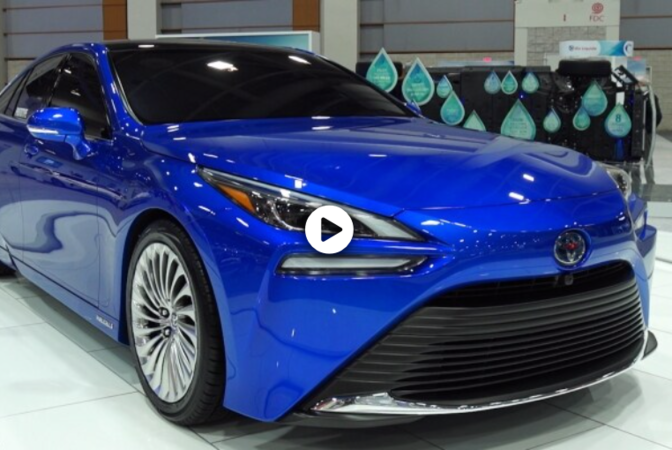
Toyota, meanwhile, is expanding Mirai production from 3,000 to 30,000 for the 2021 model year, aiming it at a more mainstream consumer. Going forward it, will have more of a sports-car feel: a lower, more minimalist profile and slanted roof, along with promised improved performance and handling through a driver-oriented switch from front- to rear-wheel drive.

“We initially launched the vehicle to demonstrate the technology will [work],” said Birdsall, the senior engineer with Toyota. “Now we want a vehicle that really gains mass appeal that people see and they want to drive,” she said, adding that it “is really meant to introduce hydrogen fuel cells in a sexy way to the customer and try to bring them on board.”

But even as some say it’s too soon to make any definitive conclusions about the path forward, automakers and public officials are under increasing pressure to solve hydrogen’s challenges, as early adopters turn in the first leased vehicles in a few years and consider whether to stick with hydrogen-powered cars for the long haul.

The fuel-cell vehicle, with a similar federal rebate and an even higher state rebate, has not taken off over the same period that Tesla gained a foothold on the battery-electric market. Beyond the differing timelines, Eckerle, the government official, thinks the fuel cell essentially democratizes the shift to electrification, which creates inherent challenges.

“I think really it comes down to infrastructure,” he said. “The major difference [is] you can launch a battery-electric car in a market based on single-family homes with garages. . . . But with hydrogen, that’s all public infrastructure. So until you have those stations and critical mass, you can’t really launch a market.”

Deadly Tesla crash tied to technology and human failures, NTSB says #ศาสตร์เกษตรดินปุ๋ย

#ศาสตร์เกษตรดินปุ๋ย : ขอบคุณแหล่งข้อมูล : หนังสือพิมพ์ The Nation

https://www.nationthailand.com/auto/30382861?utm_source=category&utm_medium=internal_referral

Deadly Tesla crash tied to technology and human failures, NTSB says

Feb 26. 2020
File Photo of Tesla/ Syndication Washington Post, Bloomberg

File Photo of Tesla/ Syndication Washington Post, Bloomberg
By The Washington Post · Michael Laris · NATIONAL, BUSINESS, TECHNOLOGY, TRANSPORTATION

Both car and driver contributed to the 2018 crash of a Tesla in California that left a father of two dead, and federal regulators have shown a “lack of leadership” in addressing safety problems with partly automated vehicles, investigators said Tuesday.

The investigation underscored questions about the safety and marketing of Tesla’s “Autopilot” system.

Robert L. Sumwalt III, chairman of the National Transportation Safety Board, pointed to a “lack of system safeguards to prevent foreseeable misuses of technology.”

“Industry keeps implementing technology in such a way that people can get injured or killed,” Sumwalt said. “If you own a car with partial automation, you do not own a self-driving car. Don’t pretend that you do.”

The NTSB also cited “shortfalls” in how the U.S. Department of Transportation has overseen partial automation in cars made by Tesla and other manufacturers. NTSB officials said that although the National Highway Traffic Safety Administration has numerous open investigations into Tesla vehicles, the regulator has been “misguided, because it essentially relies on waiting for problems to occur rather than addressing safety issues proactively.”

NHTSA said it is reviewing the findings and has long recommended that technology developers use “appropriate driver-vehicle interaction strategies in deployed technology” and has offered resources to make it easier for them to do so.

The March 23 crash that killed Walter Huang after he dropped off his son at preschool was just one of 36,560 road deaths in the United States in 2018.

But it drew broad – and, to Tesla, unwelcome – attention to the company and potential problems with the high-end technology that is so central to the Silicon Valley electric car pioneer’s brand. After the crash, Tesla placed blame on Huang, an Apple engineer, saying “the only way for this accident to have occurred is if Mr. Huang was not paying attention to the road.”

But days before Huang’s Tesla drove off Highway 101 and into a barrier in Mountain View, the car’s Autopilot had made a “left steering movement toward” the same area, the NTSB found. Huang caught it in time, investigators said, and he told relatives the same problem had occurred in the same place multiple times before.

Despite that history, Huang was over-reliant on the Autopilot system, the NTSB found, noting that he used his iPhone 8 while behind the wheel and that a strategy game called Three Kingdoms was “active during his commute to work.”

The five-member NTSB board on Tuesday unanimously found the crash was caused by “system limitations” in Tesla’s “Autopilot” feature, “and the driver’s lack of response due to distraction likely from a cellphone game application and overreliance on the Autopilot partial driving automation system.”

The NTSB also said Tesla’s” ineffective monitoring of driver engagement” – it gauges the “torque” a driver puts on the steering wheel as a proxy for whether the person is paying attention while using Autopilot – also contributed to the crash and “facilitated the driver’s complacency.”

And it said Huang likely would not have been killed if California state transportation officials had fixed a crash “attenuator” that was supposed to offer protection when a car hits a highway barrier; it had been hit earlier and not yet fixed.

Tesla’s collision avoidance systems “were not designed to, and did not, detect the crash attenuator,” so there was no warning to Huang as his car headed toward the barrier and there was no automatic emergency braking, the NTSB said.

The car veered off the road “due to limitations of the Tesla Autopilot vision system’s processing software to accurately maintain the appropriate lane of travel,” the NTSB said. And the company did not address an earlier recommendation that it should restrict use of Autopilot to the particular conditions it is designed to handle, investigators said.

Tesla executives did not respond to questions about the technological problems or what had been done to fix them.

The company, in a letter to Sen. Edward J. Markey (D-Mass.) in December, provided data indicating that its customers who use Autopilot are significantly less likely to crash and said “making sure the driver is attentive and able to take over at any time is a cornerstone of our feature development and validation, and something we continue to improve . . .”

In a 2018 statement, Telsa said, “according to the family, Mr. Huang was well aware that Autopilot was not perfect and, specifically, he told them it was not reliable in that exact location, yet he nonetheless engaged Autopilot at that location.”

Huang’s family has sued Tesla, saying that “based on Tesla’s advertising and promotional material” Huang “reasonably believed the 2017 Tesla Model X vehicle was safer than a human-operated vehicle because of Defendant’s claimed technical superiority regarding the vehicle’s autopilot system.”

“The vehicle should not leave a marked travel lane and accelerate, without the input of the operator, in such a way as to cause damage, harm or injury,” according to the lawsuit filed in Santa Clara County Superior Court.

Among its recommendations, the NTSB called on NHTSA to evaluate whether Tesla’s partially automated systems “pose an unreasonable risk to safety” and to use NHTSA’s “applicable enforcement authority to ensure that Tesla Inc. takes corrective action” if they do. It also called on phone and other electronics makers, including Apple, to install a “lockout mechanism” that would disable distracting functions when a car is moving, among other measures.

Tesla executives have bristled at the NTSB scrutiny, which led to an unusual public dust-up and flashes of mutual frustration.

In a rare move, Tesla was removed as a party to the investigation. The NTSB, an independent federal body that investigates airplane, boat and highway crashes, generally brings manufacturers, government officials and others together for the painstaking process of deciphering the probable causes of major crashes. That process can take a year or two, an eternity in the tech world, but the results are widely trusted.

Tesla’s party status was revoked after the automaker released information about the crash. Tesla says it chose to withdraw and accused the NTSB of being “more concerned with press headlines than actually promoting safety.”

At a November hearing on the federal investigation into the fatal crash of a self-driving Uber SUV, Sumwalt pointed to what he called Uber’s openness with investigators, and contrasted it with the approach of Tesla chief executive Elon Musk.

“I did notice when I talked to their CEO he did not hang up on me,” Sumwalt said, referring to Uber.

“We chose to withdraw from the agreement and issued a statement to correct misleading claims that had been made about Autopilot – claims which made it seem as though Autopilot creates safety problems when the opposite is true,” Tesla said in a 2018 statement.

The company also noted that NHTSA, which is part of the U.S. Department of Transportation, regulates automobiles, adding that the company has “a strong and positive relationship” with NHTSA.

“Lot of respect for NTSB, but NHTSA regulates cars, not NTSB, which is an advisory body. Tesla releases critical crash data affecting public safety immediately & always will. To do otherwise would be unsafe,” Musk tweeted in April 2018.

Huang’s crash was not the first time a Tesla driver was killed while using Autopilot, nor would it be the last, and NTSB officials voiced frustration because they said sufficient changes had not been made by the company and others.

In 2016, a speeding Tesla driver in Williston, Fla., crashed into a truck that turned in front of him. At the time, Tesla said “neither Autopilot nor the driver noticed the white side of the tractor-trailer against a brightly lit sky, so the brake was not applied.”

Musk later said that it was “very likely” a new radar-based braking system would have prevented the crash.

In 2017, NHTSA said it found no defects in the Autopilot system in use at the time of that crash. The regulator’s broader federal review of dozens of Autopilot crashes did point to industry-wide challenges.

“Many of the crashes appear to involve driver behavior factors, including traveling too fast for conditions, mode confusion, and distraction,” the investigators wrote. Mode confusion is the idea that it is unclear who is in control, the car or the driver, and occurred “during attempted Autopilot activations” and “after inadvertent overrides.”

In 2019, a driver using Autopilot in Delray Beach, Fla., crashed into a tractor-trailer that emerged from a private driveway and slowed in the middle of a highway, blocking the Tesla’s path, the NTSB said.

Neither the Tesla driver nor the Autopilot system “executed evasive maneuvers,” and the car’s roof sheared off as it went under the truck, according to the NTSB.

Tesla’s followers are trying to piggyback off Elon Musk’s sales wins #ศาสตร์เกษตรดินปุ๋ย

#ศาสตร์เกษตรดินปุ๋ย : ขอบคุณแหล่งข้อมูล : หนังสือพิมพ์ The Nation

https://www.nationthailand.com/auto/30382848?utm_source=category&utm_medium=internal_referral

Tesla’s followers are trying to piggyback off Elon Musk’s sales wins

Feb 26. 2020
By Syndication Washington Post, Bloomberg · Gabrielle Coppola · BUSINESS, US-GLOBAL-MARKETS

Tesla has been a trailblazer for direct-to-consumer sales, but the path for other electric-vehicle startups is still pretty thorny.

Plug-in truck maker Rivian Automotive Inc., which aims to begin selling its R1T pickup and R1S SUV late this year without a franchised dealer network, had hoped to build its first store in Colorado, where Tesla has three. But almost a year after raising the idea with state legislators, it’s still lobbying them — with EV enthusiasts and car dealers lining up to testify for and against.

Rivian will instead open its first showrooms in California, which makes it easier for newcomers than most other states that have tough, decades-old franchise laws designed to protect car dealers.

Tesla has spent years lobbying states to loosen these laws, which ban car manufacturers from owning or operating their own stores. Tesla, which sells cars at fixed prices online, now has showrooms or galleries — spaces to display vehicles without technically selling them — in 28 states. It did that largely by finding loopholes and negotiating deals limited to its own business.

The Model 3 maker reached a settlement last month in the home state of General Motors and Ford Motor when a Michigan court effectively allowed Tesla to bypass laws preventing most auto manufacturers from selling directly to consumers.

To pry open the door further, Rivian is waging a state-by-state campaign on behalf of its operations and those of others to come. The effort is led by Jim Chen, a former Tesla lobbyist who’s now vice president of public policy at the Michigan-based startup.

“These laws were never intended to shut out competition between different brands,” Chen said by phone last month. “A manufacturer should freely be able to choose whether it wants to enter the franchise system or sell directly.”

Dealers, of course, feel differently. They say cars aren’t suited for online-only sales and that franchise laws protect consumers. Tim Jackson, president of the Colorado Automobile Dealers Association and a vocal Tesla critic, helped kill Rivian’s proposal last year, which would have allowed any company solely making EVs to sell them in Colorado without dealers.

“We don’t want to further broaden, or further make accessible the factory-to-consumer direct sales model,” Jackson said in an interview last month. “We prefer, of course, the franchise model.”

Jackson was back at the legislature in Denver on Feb. 18 with a posse of dealers to thwart Rivian’s latest proposal, which would expand the carve-out to any car manufacturer with EVs to sell. The bill has survived in the state senate so far, in part with new language that addresses dealers’ fears by reiterating their exclusive rights to sell existing brands in specific geographic areas.

One might think Colorado, which became the 10th state to adopt California’s electric-vehicle mandate last September, would be relatively friendly territory for Rivian. But even with bipartisan sponsorship and the backing of newly elected Democratic Governor Jared Polis, passage seems far from assured.

With an onslaught of new electric models coming from automakers like Ford and Volkswagen, dealers worry that such exceptions could give all manufacturers free rein to compete directly against them.

Traditional carmakers are already beginning to shake up their retail models to sell EVs. Volkswagen announced Feb. 19 it’s using a new approach in Germany for its ID family of electric cars. Dealers will receive a commission and bonus but will no longer negotiate price or arrange financing or insurance — an important profit source.

Other startups intend to follow Tesla’s lead. California-based Lucid Motors wants to sell its luxury electric sedan, the Air, through its own network of stores.

Rivian, which raised nearly $3 billion last year from investors including Amazon.com and Ford, has also introduced bills in Washington, New York and Pennsylvania. At the same time, it plans to open stores in friendlier states including California, Florida, Massachusetts and Utah, Chen said. The first ones will open around Los Angeles and San Francisco in the next year.

Like Tesla, Rivian will allow people to set up a test drive, configure, order online and take home delivery.

It’s also planning a subscription service that will include finance and insurance, following the lead of Porsche and Volvo Cars, Chief Executive Officer R.J. Scaringe said in an interview last month. Volvo dealers in California last year petitioned state regulators to investigate the company’s Care by Volvo program, arguing it violates franchise laws.

The plan to service cars is still a bit opaque, leaving Rivian open to criticism that it can’t provide adequate maintenance for its vehicles. But Chen told legislators at the hearing in Denver this month that Rivian plans to establish service centers and mobile service teams — like Tesla does — and that it may rely on its strategic investors for help with infrastructure to distribute auto parts.

The automotive arm of privately held Cox Enterprises, which owns a stable of auto businesses including Kelley Blue Book and Manheim auction services, put $350 million into Rivian in September. That’s raised the hackles of some dealers, who share data and buy ads and used cars from Cox.

“We do business with Cox Automotive,” said Thom Buckley, a Colorado dealer who testified at the hearing. “I’m very concerned about doing business with a vendor who will compete with us.”

Nissan warns about future of European plants as Brexit weighs #ศาสตร์เกษตรดินปุ๋ย

#ศาสตร์เกษตรดินปุ๋ย : ขอบคุณแหล่งข้อมูล : หนังสือพิมพ์ The Nation

https://www.nationthailand.com/auto/30382787?utm_source=category&utm_medium=internal_referral

Nissan warns about future of European plants as Brexit weighs

Feb 25. 2020
By Syndication Washington Post, Bloomberg · Tara Patel · BUSINESS, WORLD, US-GLOBAL-MARKETS, ASIA-PACIFIC, EUROPE

Nissan gave the starkest warning yet on the future of the Japanese group’s car factories in western Europe, with a plant in the U.K. threatened by Brexit and another in Spain suffering from a slump in demand.

The Sunderland site in England, which makes models that account for the bulk of European sales, remains under a cloud of uncertainty, Gianluca de Ficchy, chairman of Nissan Europe, said Monday in a press conference near Paris.

Should Britain fail to reach a free-trade agreement with the European Union, a resulting 10% tariff on cars and parts could not only spell the demise of the plant, which sends about three-quarters of its output to the continent, but also of Nissan’s entire European strategy, the executive said.

“We would not be viable,” he said. “We just wouldn’t be able to sell our cars.”

Nissan’s latest warning on Sunderland, the U.K.’s biggest auto plant, comes after Prime Minister Boris Johnson began talks aimed at hammering out a trade deal with the EU before the end of the year. Adding to the pressure on the Asian manufacturer are declining sales and profitability.

Nissan cut its full-year profit outlook this month and scrapped its year-end dividend payout, with the carmaker’s stock down about 21% since the start of 2020. A turnaround plan isn’t due for another three months.

Sunderland makes the Qashqai, the Nissan’s European best-seller, along with the Juke and the electric Leaf. De Ficchy raised the possibility that the models could be made at partner Renault SA’s plants, but such a production upheaval would be costly and take years to put in place at a time when the car market is becoming increasingly competitive and undergoing an technological shift.

Read more: Nissan Warns U.K. Plant Won’t Be Viable If Brexit Triggers Tariffs

“My working hypothesis is to stay in Europe with a factory in England,” de Ficchy said. Nissan nevertheless sees lower European sales in 2020, mostly due to its model range, and last year opted not to make the X-Trail SUV in Britain.

To encourage a revival, Nissan unveiled a new version of its Juke crossover, aimed at the European market, earlier this month. The same platform is being used by Renault to assemble the latest versions of the Clio supermini and Captur crossover, built across the Channel in France.

In Spain, Nissan’s Barcelona plant is experiencing a drop in volumes and “is a subject that we are examining,” de Ficchy said. Nissan has met Spanish unions to explain a need “to review our strategy in Europe including in Barcelona.”

Nissan has already announced it will shed 600 jobs at the plant and any further decisions could be made in a few months, the executive said. The site also makes pickups for Daimler AG and Renault, with the German company recently announcing that it plans to pull production.

The Japanese firm has been mired in near-constant turmoil since the November 2018 arrest of former Chairman Carlos Ghosn on charges of financial misconduct. Hiroto Saikawa, Ghosn’s successor and accuser, was ousted over issues of his own compensation, while efforts are ongoing to improve fraught relations with partner Renault.

By slashing its dividend payout to the lowest level since 2011 and pursuing a plan to cut 12,500 jobs globally, Nissan is trying to free up cash for investment in the next-generation technology needed to stay competitive in electric vehicles and self-driving cars. It has promised a detailed mid-term plan in May, which will be coordinated with one by Renault.

The alliance, which also includes Mitsubishi Motors Corp., agreed last month to coordinate strategies and name leaders for regions and technologies in a move designed to reverse managerial paralysis and a rapid deterioration in profitability over the past year.

Nissan has also made cars for more than a decade at a plant in St. Petersburg to serve the Russian market.