Chinese giant Great Wall Motors signs deal to acquire GM’s Rayong plant
Sep 30. 2020Elliot Zhang, left, president, Great Wall Motors Asean and Thailand, and Joseph Urso, director of corporate development, Global Mergers & Acquisitions, GM International, pose after the signing ceremony.
By The Nation
China-based Great Wall Motors (GWM) on Tuesday signed a share sale and purchase agreement with General Motors (GM) to acquire GM’s production facilities in Rayong.
GWM aims to make Thailand its Asean production base for domestic sales and export of new energy vehicles and internal-combustion engine models.
GWM plans to begin production in the first quarter of 2021, as part of its vision to be a “Global Mobility Technology Company”.
GWM’s move to set up its production base in Thailand kicked off in February this year when the company started negotiations with GM to acquire, under a signed binding term sheet, GM Thailand and GM Powertrain Thailand legal entities, which include the Rayong vehicle assembly and powertrain facilities.
The two companies reached an agreement recently and officially signed the Share Sales and Purchase Agreement.
The Rayong plant will be the 11th full-scale automobile manufacturing base of GWM worldwide.
Elliot Zhang said that “while the Asean automotive industry is clearly on its growth trend, Thailand has strong fundamentals as a leader in this industry and is regarded as one of the world’s best locations to establish an automobile production base, thanks to its readiness in terms of workforce and well-developed automotive ecosystem”.
“Upon handover of assets as a result of the signing, this engine and vehicle production hub will be renovated and undergo system upgrades to become a smart factory by GWM’s global standards for an automobile production hub. It will boast GWM’s expertise and capability in SUV and pickup truck production, including advanced powertrain technologies, giving it the ability to produce internal combustion engine vehicles and electric vehicles such as hybrid electric vehicles, plug-in hybrid electric vehicles and battery electric vehicles.”
GWM will also invest in production equipment and product research and development for Thai and Southeast Asian markets as well as skills development of the production workforce, the president said.
The Chinese company is expanding its business and brand presence across the world. Currently, the company has 10 research and development centres in seven countries and operates 15 factories worldwide where Thailand will be the latest addition.
The Thai production hub will become operational in the first quarter of 2021 with automobile production capacity of 80,000 units per annum.
In addition to bringing job opportunities to people and growth to the automotive supply chain, the new investment by GWM will contribute to R&D progress in support of Thailand’s automotive industry development and help spur related industries to enable continued growth of the Thai economy at large, the company said.
Jim Farley is asking everyone he meets how to fix Ford
Sep 30. 2020Ford’s James Farley in Detroit on June 19, 2018. MUST CREDIT: Bloomberg photo by Jeff Kowalsky.
By Syndication Washington Post, Bloomberg · Keith Naughton · BUSINESS, US-GLOBAL-MARKETS A couple weeks from becoming Ford’s next chief executive officer, Jim Farley stopped to huddle with two young field sales representatives during an event to honor employees at a Dearborn, Michigan, dealership.
“What’s the one thing at Ford Motor Co. you’d like to change?” he asked them, eliciting responses about the need for more models on the lot and financial assistance to market them.
It’s a question Ford’s chief operating officer is asking everyone he encounters these days as he prepares to take control on Oct. 1 of the 117-year-old automaker, which is struggling to find its way in a new transportation reality of shared, electric and self-driving cars. He put the question to factory workers at Ford’s century-old Rouge manufacturing complex and middle managers at the automaker’s headquarters.
He’s even engaged the services of a “reverse mentor,” a staffer in Ford’s customer-experience area who is six levels below Farley on the org chart. “We need to invert the company,” Farley, 58, explained on the sidelines of the dealer event. “We need the decisions and the authority and autonomy to come from all of us to unleash Ford.”
Nicknamed Jimmy Car-Car by his parents for his love of all things with wheels, Farley was a rising star at Toyota’s North American operations where he worked for almost two decades. But his roots at Ford run deep. He spent summers with his grandfather — among the first Ford workers to build the Model T. At age 14, he drove from California to Michigan to visit his grandfather in a black 1966 Ford Mustang he had rebuilt. He didn’t yet have a driver’s license.
When asked on the day he was named CEO last month what it would mean to his late grandfather, Farley broke down. “For me on a personal level, it’s quite — sorry, I’m just getting a little emotional,” Farley said, choking back tears. “It’s quite humbling to think about my grandfather going into Highland Park and how humble his life was before that — how much opportunity happened because of Ford. I just feel very in debt to the company.”
Ford’s profits have declined for the last three years, and it expects its first annual loss in a decade this year. Electric-car leader Tesla and Alphabet Inc. self-driving unit Waymo have stolen the march from established automakers. Farley’s appointment is an acknowledgment the company needs to change to survive the seismic shifts upending the industry.
Long before covid-19 crashed auto sales, Ford was suffering an identity crisis: Is it simply an old-line manufacturer churning out almost a million (highly profitable) pickup trucks a year? Or can it become a purveyor of smart, connected transportation, selling both the metal and mind of an automobile that runs on batteries, not brawny combustion engines?
Those questions stymied the last two occupants of Ford’s corner office — company lifer Mark Fields, ousted by the board in 2017, and Jim Hackett, a former office-furniture executive whose $11 billion overhaul of the automaker has been slow to gain traction. Ford’s shares are down 60% since 2014.
“Ford stock has just been pummeled the past few years and then Covid made it worse,” said David Whiston, an analyst with Morningstar Inc., who rates Ford the equivalent of a hold. “The Street could use more clarity.”
Farley, the company’s third CEO in six years, has been coy about his plans, instead seeking plenty of advice from co-workers. Tapped to become Ford’s chief operating officer March 1, his internal listening tour belies a reputation as a blunt marketing specialist whose emotions occasionally boil over.
“He drives people hard because he drives himself hard,” said Bob Shanks, who retired last year as Ford’s chief financial officer. “But given what Ford is facing and the need for continued dramatic change, he’s in a really good place to lead the business because he can make the tough and hard decisions and really push people.”
Farley was recruited by charismatic CEO Alan Mulally and Executive Chairman Bill Ford in 2007 from Toyota, where he introduced the Scion brand of youthful cars and ran the Lexus luxury line. Not long after arriving at Ford, he famously shouted “F— GM! I hate them,” in an impassioned meeting with subordinates, according to the 2011 book “Once Upon a Car” by then-New York Times Detroit Bureau Chief Bill Vlasic.
In his first meeting to introduce himself to Ford’s top 300 executives in 2008, he became overwhelmed sharing the story about how he and his wife, Lia, had recently lost twins who were born prematurely.
“What struck me was how vulnerable he allowed himself to be in front of a group of essentially strangers,” recalled Shanks. “He let his feelings show, which is great, because in our business a lot of people, particularly men, wouldn’t be that way.”
Ford is turning to Farley to unleash that passion into a company that has sinking sales worldwide. The automaker has been adrift since Mulally retired in 2014 after guiding it through the Great Recession without resorting to the bankruptcies and bailouts that befell its crosstown rivals, GM and Chrysler.
“Everyone at Ford knows the situation we’re in,” Farley said in February before the pandemic shut Ford’s factories for two months. “I can see it on the faces of my colleagues, and it takes me back to about 10 years ago” during Ford’s near-death experience.
Farley has promised to accelerate the turnaround. “Now it’s time to go,” he says. His listening tour comes from Toyota’s philosophy of genchi genbutsu, or “go and see.” The frenetic CEO-to-be works out his stress on the race track and at speeds over 200 miles per hour. He has driven his vintage Ford GT40 at Le Mans in France. His garage also includes a Cobra and a Lola 298.
Wayne Rainey, a three-time world champion motorcycle racer and long-time friend, says his buddy is all business once he puts the helmet on.
“He’s inch perfect with his racing lines; I’ve never seen him spin out and he’s very aggressive,” Rainey said. “I’ve seen him in the dirt going after guys to try to pass them.”
As he takes the wheel at Ford, his hand is strengthened by new models on the launching pad, including a redesigned F-150 pickup, Ford’s biggest money maker, an electric Mustang Mach-E and a revival of the rugged Bronco SUV, which has already received 165,000 deposits of $100. He has promised the manufacturing roll-out of those new models will be “flawless” after last year’s botched launch of the Explorer SUV that cost Ford more than $1 billion.
Farley has sought the counsel of blue-chip corporate chieftains who have navigated existential crises, including JPMorgan Chase CEO Jamie Dimon, IBM Corp. Executive Chairman Ginni Rometty and Dell Technologies Inc. founder Michael Dell.”I’ve tried to learn as much as I can from other leaders who have had their base be a physical product and then go out and have to create a business on top of that,” Farley said. “Our growth as a company will come from not the four walls of the product. It will come from services.”
Those services include new businesses such as managing vast commercial fleets of trucks and vans — and could one day mean a vehicle that drives itself while ordering its occupant a latte.
The new CEO has some political capital to spend: Dealers like his passion, analysts respect his experience and he’s won the confidence of the founding family that still controls the company through a special class of stock.
The son of a banker, Farley was born in Argentina and grew up in Greenwich, Connecticut. After earning a bachelor’s degree from Georgetown University and an MBA from the University of California, Los Angeles, he worked at IBM for a couple years before accepting a job in 1990 to work in Toyota’s fledgling Lexus division.
One of his first jobs was as a field rep trying to meet the demands of cantankerous car dealers.”That was a tough, tough, tough assignment,” recalls Jim Press, Toyota’s former American chief who gave Farley that job. “But you could see him develop an understanding of the importance of dealers.”That education is paying off today as Ford’s retailers are already warming to Farley. Veteran dealer Jim Seavitt recalls Farley working the floor of a dealer convention in San Francisco.
“Jim’s a breath of fresh air because he’s talking cars,” Seavitt said.
Beyond his personal touch, Farley won over dealers with his relentless work ethic, which includes getting up throughout the night to answer emails. He lives alone in Detroit, doesn’t own a TV and voraciously reads books. His wife and three children live in London, a legacy of his time running Ford’s European operations. He says his family will join him in Detroit next year after the kids finish at their U.K. schools.
Family is a frequent focus for Farley. His most famous relative is his cousin, the late comedian Chris Farley, with whom he was close. But when it comes to cars, Farley draws inspiration from his maternal grandfather, Emmet Tracy, who was employee No. 389 when he hired into Henry Ford’s suburban Detroit factory in 1914. Tracy, an orphan, would go on to become a Lincoln dealer in the tony lakeshore community of Grosse Pointe.
“I’ve been preparing for this my whole life,” Farley said at the dealer event. “I feel a lot of pressure not to let my grandfather down.”
Uber wins long-running lawsuit over right to operate in London
Sep 29. 2020
By The Washington Post · Karla Adam · BUSINESS, WORLD, US-GLOBAL-MARKETS, EUROPE LONDON – Uber won a long-running legal battle on Monday that will allow it to continue operating in London, a major victory for the ride-hailing app that has repeatedly clashed with the city’s transport authorities and its traditional black cab drivers.
A judge on Monday said that Uber had overcome “historical failings” and was now a “fit and proper” operator in what is one of its biggest markets outside the United States.
He granted Uber an 18-month license with conditions.
Uber responded to the ruling, saying that they were “pleased” and “as always, safety is our priority as we work together to keep London moving.”
Last November, London’s transport authorities said that they would not renew Uber’s license to operate in the British capital after thousands of trips were made with someone other than the booked driver. One of the biggest concerns was that unauthorized drivers could upload their photographs to an authorized driver’s account, allowing them to pick up passengers. London authorities had estimated that at least 14,000 journeys were made this way.
It was the second time in two years that that London transport authorities rejected Uber’s license to operate in the British capital.
Uber appealed both decisions, and was allowed to continue to operate until a final decision was made.
The latest case was heard at the Westminster Magistrates’ Court earlier this month.
In his written verdict, Judge Tanweer Ikram wrote: “Despite their historical failings, I find them, now, to be a fit and proper person to hold a London PHV [private hire vehicle] operator’s licence.”
Uber, he said, “does not have a perfect record but it has been an improving picture.” He said that he was “satisfied that they are doing what a reasonable business in their sector could be expected to do, perhaps even more.”
London Mayor Sadiq Khan, who chairs Transport for London (TfL), warned that Uber will continue to face close scrutiny.”I can assure Londoners that TfL will continue to closely monitor Uber and will not hesitate to take swift action should they fail to meet the strict standards required to protect passengers,” he said.
The Licensed Taxi Drivers Association, a trade body for London’s black-cab industry, called Monday’s ruling “appalling.”
“Uber has demonstrated time and again that it simply can’t be trusted to put the safety of Londoners, its drivers and other road users above profit,” the group’s statement said. “Sadly, it seems that Uber is too big to regulate effectively, but too big to fail.”
London is one of Uber’s largest European markets. The company has around 45,000 drivers cruising its streets.
In a separate legal battle, Uber is appealing an employment tribunal ruling that found its drivers can be classified as workers and are entitled to workers’ rights, including minimum wage and vacation pay. Uber says its drivers are self-employed independent contractors.
Britain’s Supreme Court heard the case in July and is set to make a decision later this year.
Egat holds special event to boost use of electric vehicles
Sep 24. 2020
By The Nation
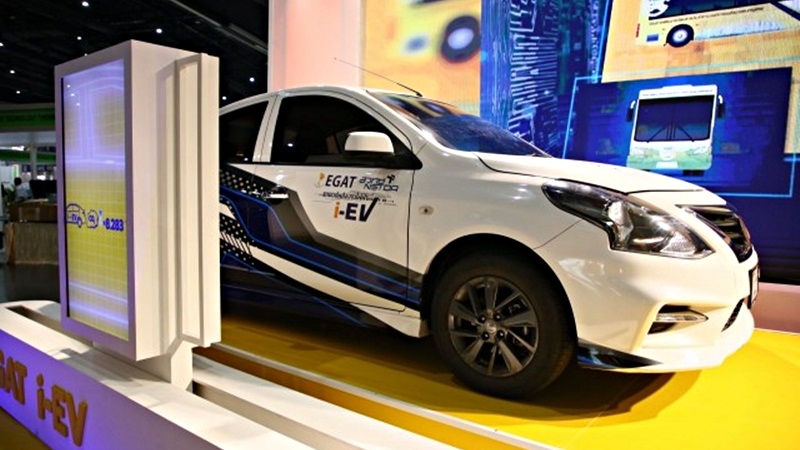
The Electricity Generating Authority of Thailand (Egat) has organised the Asean Sustainable Energy Week 2020 expo at Bitec Bangna in a bid to encourage wider use of electric vehicles.
The four-day expo wraps up on Saturday (September 24).
Showcased at the event are EV cars, e-bikes, e-buses and e-boats under the concept of Egat’s e-mobility and planned installation of charging stations.Sathit Krongsut, director of Egat’s research and innovation division, said the agency collaborated with Informa Markets to hold the event.
Egat also held a seminar on the “Role of Egat in Building Thailand’s Smart Energy Future” as well as a talk on “Policy of Bioenergy Power Plant in Thailand and Case Study” at the event.
California to stop sales of gas-powered cars by 2035
Sep 24. 2020
By The Washington Post · Dino Grandoni, Faiz Siddiqui, Brady Dennis · NATIONAL, BUSINESS, SCIENCE-ENVIRONMENT · California, the world’s fifth-largest economy and the state that created U.S. car culture, will stop selling gasoline-powered automobiles within 15 years, Gov. Gavin Newsom, a Democrat, announced Wednesday.
Facing record-breaking wildfire season and heat waves, made worse by climate change, California is moving to eliminate greenhouse gas emissions from automobiles, Newsom said.
“For too many decades, we have allowed cars to pollute the air that our children and families breathe,” Newsom said in a statement Wednesday. “You deserve to have a car that doesn’t give your kids asthma. Our cars shouldn’t make wildfires worse – and create more days filled with smoky air.”
The state’s clean air regulator, the California Air Resources Board, will develop regulations that ensure every new passenger car sold in the state is electric or is otherwise zero-emissions by 2035. Automakers would have until 2045 to make sure all medium- and heavy-duty trucks and other vehicles were zero-emissions, as well.
The order does not prevent Californians from owning or selling used cars with internal combustion engines, or buying them outside the state.
Because of its market muscle, California’s move could have ripple effects across the country and propel carmakers to ramp up production of electric vehicles. The state’s emissions standards are followed by 13 other states as well as the District of Columbia, and auto manufacturers build cars to meet its more stringent specifications.
“We’ve seen this show before where California does something and others jump on board,” said Karl Brauer, a veteran auto industry analyst now serving as executive analyst at the website iSeeCars. The auto industry is already embarking on a rapid shift toward connected cars, autonomous vehicles and electrification, he noted.
Newsom extolled the potential environmental and economic benefits the shift away from gas cars could bring his state during a news conference Wednesday.
“This is the next big global industry and California wants to dominate it,” he said. “Today California is making a big bold move in that direction.”
He painted a contrast between manufacturers embracing electrification and those attempting to resist the head winds. California is home to the country’s largest electric vehicle manufacturer, Tesla Motors, which is based in Fremont. Tesla announced a plan this week to vertically integrate its battery manufacturing, attempting to unite all the elements of battery production under a single umbrella to usher in a push to build 20 million vehicles per year, up from its current production, which is less than 1 million.
Newsom highlighted the example of another storied American car company, Ford Motor, which has introduced electric vehicles into its fleet.
“They’re not willing to suffer the fate of a future of dirtier air, dirtier water, and more climate disruption,” he said.
Still, Newsom said he expected some resistance from other automakers .”There are some automobile manufacturers that don’t (get it) and they’re pushing back against California’s leadership as they have in the past,” he said. “I’m not naive that everybody is going to join hands on this.”
Brauer, the analyst, said he was greeting Newsom’s move with some skepticism. “Whenever you’re putting out a prediction like that I always feel like there’s kind of an easy to win to look very environmentally progressive without any accountability. Because who is going to be in government in 2035 compared to who is there now?” he said.
He noted that California in the past has set targets for electric or zero emissions vehicles automakers had to sell, figures that were “constantly updated or revised or delayed” as the companies struggled to comply.
Still, a push to meet California’s deadline would represent a fundamental strategic shift for the auto industry, which is still heavily reliant on gas-guzzling pickup trucks and SUVs to meet its annual sales goals. Electric vehicles still make up only two percent of new car sales, Brauer said.
The move also comes as Newsom is under increased pressure from activists to do more to halt oil and gas drilling in the state.
Fueled by climate-warming pollution from gasoline-powered cars and other sources, fires burning more than 3.6 million acres have destroyed nearly 7,200 structures and killed 26 in what Newsom earlier in the month deemed to be a climate “emergency.”
Newsom also called for an end hydraulic fracturing, or fracking, for natural gas within four years, but left it to the state legislature to enact a ban. Fracking has earned the ire of environmentalists for its potential to contaminate drinking water as well as its release of greenhouse gases that are driving global warming.
Under Newsom’s watch, the state approved drilling permits for more than 1,400 new oil and gas wells in the first half of 2020, according to the Center for Biological Diversity. Kassie Siegel, director of the green group’s climate law institute, praised the phaseout of gas-powered cars as “a very big step” but said Newsom is not going far enough to curtail oil production.
“Newsom can’t claim climate leadership while handing out permits to oil companies to drill and frack,” she said. “He has the power to protect Californians from oil industry pollution, and he needs to use it, not pass the buck.”
Uber investors are pressuring CEO to revamp the self-driving division
Sep 22. 2020
By Syndication Washington Post, Bloomberg · Lizette Chapman · BUSINESS, TECHNOLOGY, US-GLOBAL-MARKETS
With deep pockets, some of the best brains in robotics and its hallmark hustle, Uber Technologies was once a serious contender in the race to build self-driving cars and revolutionize global transportation.
Today, the effort is lagging far behind rivals, and investors are getting antsy about the rationale for continuing a long-term science project that isn’t helping Uber become profitable or safeguarding its future.
In recent months, the company’s two largest shareholders, SoftBank Group and the venture firm Benchmark, have privately encouraged Chief Executive Officer Dara Khosrowshahi to find more investors for the division, which is expected to exhaust its funds by the end of 2021, and re-evaluate its strategy, according to people familiar with the situation.
Khosrowshahi is exploring various options. One would see Uber accelerating the project by open-sourcing it to coders around the world, said the people, who requested anonymity to speak about a private matter. Or the company could continue building a proprietary car with money from existing partners, Toyota Motor and Denso, and possibly new ones, they said.
It’s an existential decision because without a fleet of autonomous vehicles, Uber risks losing its grip on the ride-hailing market to any number of companies, from Alphabet’s well-established Waymo unit to upstarts like Amazon.com’s Zoox, which recently got the green light to test autonomous vehicles on California roads without a safety driver.
PitchBook mobility analyst Asad Hussain describes a nightmare scenario where Waymo develops its own network, Amazon gives free rides to Prime subscribers, and Uber becomes irrelevant. “Self-driving is the next smartphone,” he said. “You don’t want to get left out.”
When Khosrowshahi assumed Uber’s helm from ousted founder Travis Kalanick in 2017, he inherited a mess of cultural, strategic and financial problems. Khosrowshahi set to fixing the most pressing ones first, repairing Uber’s reputation and values and offloading losing bets in overseas food delivery and ride networks; the self-driving group went on the back burner.
Work didn’t stop, but the division was badly demoralized by a pair of events: the conviction and imprisonment of its former chief, Anthony Levandowski, for stealing intellectual property from Waymo, and the 2018 death of a pedestrian struck by an Uber vehicle in Phoenix, Arizona, while the human driver was watching “The Voice” on her cell phone.
Meanwhile, Uber’s rivals were making progress. Waymo cars have logged hundreds of thousands of miles in more than two dozen cities; Lyft recently surpassed 100,000 rides in Las Vegas using vehicles supplied by Motional. General Motors’s Cruise has completed 50,000 robo grocery deliveries during the pandemic alone. By contrast, Uber is operating fewer than 10 cars a week on public roads in Pittsburgh and Washington.
Last year Khosrowshahi bought himself some time by turning the autonomous driving division, called the Advanced Technologies Group, into an $8 billion subsidiary with its own set of investors, including SoftBank, Denso and Toyota, to help fund an operation that’s consuming about $500 million a year. The move got the unit off Uber’s balance sheet and helped silence critics. But it didn’t address the more fundamental question of strategy and whether Uber should be in the business of building its own autonomous driving technology.
Investors and executives including former Uber Chief Technology Officer Thuan Pham have said that open-sourcing ATG’s self-driving technology would speed development and establish Uber as a leader, similar to how Google’s open-source Android mobile operating system created an alternative to Apple. Going this route would require Uber to release the source code and grant rights to everyone interested in using, changing, studying and distributing it however they choose. Proponents say this would let Uber remain on the cutting edge while progressing faster because the work would be done collaboratively by coders around the globe.
“There’s no question in my mind that [open source] is the perfect solution for a highly complex problem,” said Benchmark’s Bill Gurley, who added that the move would boost Uber’s share price by as much as 20%. “I would sacrifice whatever value there might be to lead an open-source movement to get the company to a better place faster. I’m highly confident the market would respond to that.”
Khosrowshahi earlier this year directed ATG chief Eric Meyhofer to explore the idea, according to people with knowledge of the situation, who said the conversation quickly became “contentious.”
Meyhofer confirmed the conversation and, although he disagrees with that characterization, he does believe the idea of open-sourcing ATG’s technology is “too complicated.”
“Open sourcing opens a can of worms,” he said. “We don’t think it makes sense for our strategy.”
Amid the infighting, Uber’s partnerships with other self-driving companies have withered. The original idea was to have a backup in case Uber’s proprietary effort was late or didn’t come to fruition. That’s why Uber struck a deal with Daimler back in 2017 to put Daimler’s own self-driving cars on Uber’s ride network.
But all new work with the German-American automaker has ceased, according to people with knowledge of the matter. Uber tentatively agreed to work with Motional, with tests planned for later this year, but several ATG employees advocating for the partnership have left, putting the deal in purgatory, the people said. A spokeswoman for Daimler said cooperation with Uber is ongoing but “currently on hold.”
Meyhofer said ATG “remains interested in and committed to pursuing partnership opportunities that serve our mission of bringing safe, reliable self-driving technologies to the Uber platform.” He declined to comment on details of the existing Motional arrangement, but said no “deal” has been signed and nothing is set to be tested in 2020. Motional said it would be “premature” to comment on the status of conversations with Uber and other ride-share companies.
Work on Uber’s own autonomous technology isn’t going well either. ATG engineers are in the midst of replacing the software platform the company has been licensing from Carnegie Melon University since 2015. Originally, the project was going to take six months, but that deadline has been pushed out to more than 18 months, according to people familiar with the work. Earlier this year, cars running on the new platform occasionally lost computing power, going just a few hundred yards before stopping, the people said. Then, just as some of those initial kinks were being worked out, covid-19 hit.
ATG suspended all testing apart from simulation work for a “brief period,” until it could ensure employees would be able to safely resume work, according to its financial report for the period ending June 30.
Today, five years after Uber launched its self-driving effort, the company operates vehicles in the nation’s capital but only with the autonomous system turned off. In Pittsburgh, meanwhile, the autonomous system is engaged only “as needed,” with a human driving the rest of the time. Khosrowshahi has little in the way of milestones to show potential investors.
Sep 17. 2020The Nexo hydrogen fuel cell system exported by Hyundai Motor (Hyundai Motor)
By Shin Ji-hye The Korea Herald/ANN
Automaker plans to tap into US hydrogen car market with lineup that includes trailers
Hyundai Motor said Wednesday that it had exported hydrogen fuel cell systems to Swiss firm GRZ Technologies and an unnamed European energy solution start-up, in line with its efforts to expand its hydrogen business to the non-automotive sector.
The 95-kilowatt fuel cell system that is currently used for the Nexo hydrogen electric vehicle will be used by the two companies to produce mobile generators that supply emergency power. The name of the second firm was not disclosed due to business confidentiality.
GRZ has its own metal hybrid technology for hydrogen storage and is developing metal hybrid compressors and hydrogen adsorption analysis systems. It has been working with Hyundai Motor since late October last year on hydrogen storage technology.
The deal involving the core technology was approved by the Ministry of Trade, Industry and Energy in July, the automaker said.
Hyundai said the delivery was a good opportunity to promote Korea’s superior hydrogen technologies in Europe, an advanced eco-friendly market. In July, the European Union Commission announced its hydrogen economy strategy.
Last year, the automaker ranked No. 1 in sales of hydrogen-powered cars with its Nexo, which sold 4,987 units worldwide. The fuel-cell vehicle also sold 3,292 units by the first half of this year. In July, the firm mass-produced and exported 30-ton hydrogen-electric trucks to Europe for the first time in the world.
In the future, Hyundai Motor said it plans to expand sales of the hydrogen fuel cell system in the global market, including the US and China.
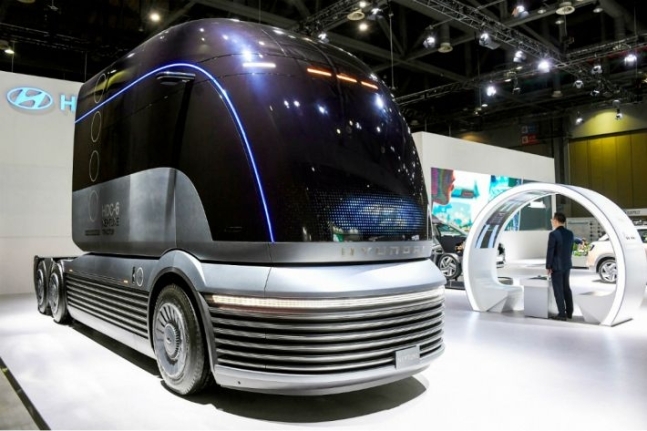
Hyundai Motor‘s concept hydrogen truck Neptune unveiled at the hydrogen mobility exhibition (Hyundai Motor)
Hyundai Motor‘s concept hydrogen truck Neptune unveiled at the hydrogen mobility exhibition (Hyundai Motor)
A day earlier, Hyundai held a briefing session with analysts to share the current status of technology development and business plans related to hydrogen commercial vehicles, according to the financial industry.
At the meeting, the automaker reaffirmed its existing business strategy to expand its annual production target for hydrogen cars from 11,000 units this year to 40,000 units in 2022, 130,000 units in 2025, and 500,000 units in 2030.
It then made it official that it will adopt a “two-track” strategy that applies electric cars to passenger cars and hydrogen cars to commercial vehicles such as trucks. According to analysts, Hyundai Motor plans to tap into the hydrogen commercial vehicle market in Europe next year, and the US and China in 2022.
“Hyundai is maintaining its lead in the hydrogen passenger and commercial markets,” said Chung Yong-jin, a senior researcher at Shinhan Investment Corp.
“The company seems to plan to actively respond to the US hydrogen commercial vehicle market by reinforcing some of its lineups, including trailers.”
Analysts said investors need to pay attention to Hyundai Motor’s commercial vehicle business strategy at a time when doubts about new hydrogen vehicle companies have grown as seen in the case of electric truck startup Nikola’s short-seller fraud allegations.
Lee Jae-il, a researcher at Eugene Investment & Securities, said, “Hyundai Motor did not directly mention its competitors at the briefing session. Hyundai’s hydrogen business needs to be paid attention to as its product reliability is very high compared to Nikola, which has recently been hit by its credibility, and it can supply its products immediately.”
Mercedes-Benz settles U.S. diesel cheating case for $1.5 billion
Sep 15. 2020
A customer shops for Mercedes-Benz automobiles at a car dealership. Photographer: Hannelore Foerster/Bloomberg via Getty Images
By Syndication Washington Post, Bloomberg · Keith Laing, Gabrielle Coppola · BUSINESS German automaker Daimler and its American subsidiary Mercedes-Benz USA agreed Monday to settle alleged violations of U.S. and California emission rules totaling $1.5 billion in penalties and other costs, according to an agreement filed in federal court.
The Environmental Protection Agency and Department of Justice filed the proposed settlement in U.S. District Court for the District of Columbia, in the latest instance of U.S. regulators bringing down the hammer on alleged emissions cheating in the auto industry.
The settlement includes a $875 million civil penalty, $436 million to pay for recalls and a federal environmental mitigation program, $110 million for mitigation efforts in California and more than $70 million in other penalties, the EPA said in a statement.
“When something ends up costing a manufacturer $1.5 billion, we would anticipate that has deterrent effects on other automakers as well,” Deputy U.S. Attorney General Jeffrey Rosen said during a virtual press conference on Monday afternoon with EPA Administrator Andrew Wheeler.
Daimler’s agreement with U.S. authorities covers civil and environmental claims related to the emission-control systems of about 250,000 cars and vans. Volkswagen AG admitted in 2015 to rigging as many as 11 million diesel engines worldwide, including roughly 600,000 in the U.S.
The U.S. government’s complaint alleges Daimler failed to disclose emissions devices to U.S. regulators in its Mercedes Sprinter vans and various passenger vehicles from 2009 to 2016. The devices caused vehicles’ emissions control systems to perform one way during testing, and another way when consumers were behind the wheel.
“Defendants knew or should have known that one or more undisclosed” devices “would have the principal effect of bypassing, defeating, removing or rendering inoperative” emissions controls systems in the vehicles, the government said in the complaint.
Daimler denied the allegations in the complaint and doesn’t admit any liability, according to the consent decree released Monday.
The pact resolves issues that arose when U.S. regulators stepped up their examination of diesel emissions after VW’s cheating scandal emerged in 2015. The Justice Department asked Daimler to investigate its vehicle-certification process the following year.
The case is U.S. V. Daimler AG, 20-2564, U.S. District Court for the District of Columbia (Washington).
Tesla plans to start shipping out cars made at Shanghai Gigafactory
Sep 13. 2020File photo
By Syndication Washington Post, Bloomberg · Bloomberg News · BUSINESS, WORLD, TECHNOLOGY, US-GLOBAL-MARKETS, ASIA-PACIFIC Tesla plans to ship cars made at its Shanghai Gigafactory to other markets in Asia and Europe, according to people familiar with the matter, as the company looks to realize its plan to reduce shipping costs and manufacture vehicles closer to customers.
China-built Tesla Model 3s intended for delivery outside the country will likely start mass production in the fourth quarter, the people said, asking not to be identified because the details are private. They said the markets targeted include Singapore, Australia, New Zealand, as well as Europe, where customers currently have to wait for a Tesla to be delivered from the U.S. Shipments could start as soon as the end of this year, or early 2021, according to the people.
The world’s biggest maker of electric vehicles is stepping up production as competition in the space intensifies, with traditional automakers starting to make EVs, especially for the China market, where local rivals like BYD already have a strong footing. General Motors said this week it will take a $2 billion equity stake in electric truck maker Nikola.
A representative for Tesla in China declined to comment.
Shares in Tesla, which rallied almost 500% from January to the end of August, were up 4.2% in pre-market trading Friday.
Tesla’s main factory is in Fremont, California, where it assembles the Model S, Model X, Model Y and Model 3. That’s also where the vast majority of the vehicles’ components are made. The company is also building a factory in Berlin, its first in Europe. Chief Executive Officer Elon Musk is pursuing an ambitious timetable, targeting mid-2021 for that plant to start production.
The billionaire tech entrepreneur has often spoken about his focus on the consumer, saying he just wants to make cars that people want to buy. Manufacturing the vehicles closer to where its customers are located will help Tesla reduce costs and speed up delivery times.
Demand for EVs globally is rising, bolstered by tighter emissions regulations in Europe and an increasing awareness of climate change and the negative impact fossil-fueled cars have on the environment. While the coronavirus pandemic has dented sales of all vehicles — global passenger EV sales were down 15% in the second quarter — the market for EVs is forecast to expand about 7% this year.
Europe has led the growth in 2020, with EV sales in the continent’s main auto markets more than doubling in January to July compared with the same period in 2019, according to BloombergNEF. Renault’s Zoe has dominated, and Tesla is also facing competition from Volkswagen and BMW’s new electric models.
“Exporting Model 3s to Europe would take advantage of China’s lower production cost base in a bid to improve profitability,” said Michael Dean, a Bloomberg Intelligence analyst. “It would follow BMW, who will soon begin exporting its new iX3 BEV from the region.”
While Tesla’s sales are increasing in several European countries, its total share remains small. In Germany, Europe’s biggest auto market, Tesla sold just over 8,000 cars in the first eight months of 2020 for a market share of 0.5%. That compares with some 327,000 cars sold by the main VW brand, and about 180,000 vehicles sold by Daimler’s Mercedes.
In a bid to grow in Europe, Tesla is expanding its charging infrastructure and its Berlin factory is expected to assemble as many as 500,000 cars a year.
EV adoption in Singapore, Australia and New Zealand, meanwhile, has trailed Europe and China, and could present a bigger challenge. Tesla may also need to make changes to its assembly set-up in Shanghai to target those right-hand drive countries.
In China, Tesla delivers around 11,000 cars a month, all for the domestic market. Upstart NIO has been averaging around 3,500 recently, by comparison.
Analysts at Credit Suisse Group described Tesla’s export plans as positive for the company, noting that China-made Model 3s have a lower cost than those built in the U.S. They added however that any move to export may signal that demand in China is below capacity.
Around 80% of the parts that Tesla uses at its Chinese plant will be sourced locally by the end of the year, Musk said during an earnings call in July. In December, before the outbreak of covid-19, Song Gang, the manufacturing director at the Shanghai facility, said Tesla wanted to source 100% of its parts locally by the end of the year.
Tesla has been slashing its prices in China as part of a push to increase sales in the world’s largest EV market. Musk has said that making Tesla cars more affordable is a key target, and local sourcing helps with lowering expenses. Cars equipped with lithium iron phosphate batteries are also expected to launch in the market soon.
Musk has seen wild swings in his net worth lately as retail traders accelerate buying and selling in stocks. He’s now worth $91.2 billion, ranking fourth on the list of the world’s richest people thanks to his moonshot compensation package linked to Tesla’s stock price.
An activist investor crusades against forced arbitration at Tesla
Sep 13. 2020Kristin Hull, founder and chief executive officer of Nia Impact Capital, in Oakland, Calif., on Aug. 10, 2020. MUST CREDIT: Bloomberg photo by Marissa Leshnov.
By Syndication Washington Post, Bloomberg · Dana Hull · BUSINESS, COURTSLAW, US-GLOBAL-MARKETS When Tesla Inc.’s shareholders gather September 22 for their annual meeting, Kristin Hull will have roughly three minutes to make the case against the company’s use of mandatory arbitration for employee sexual harassment and racial discrimination claims.
Hull is the founder and chief executive of Nia Impact Capital, a social impact fund based in Oakland, California that invests in several sustainable energy companies. Tesla is its biggest name and among its largest holdings. Late last year, she filed a first-of-its-kind proposal for a Tesla shareholder resolution. The ask: for the board of the Palo Alto, California-based electric-car maker, which has over 60,000 employees globally, to prepare a report on its use of employee arbitration.
Most people who work directly for Tesla sign away their rights to a trial. Hull wants to know how many discrimination and harassment cases go to arbitration, how much that’s costing the company, and investors, and the demographics of those bringing the claims.
“We are in this to win this,” said Hull during a socially distant interview in Oakland’s historic Preservation Park, near Nia’s office. “It’s the issue of our time, and it’s a civil rights issue. Elon Musk can’t be given a pass for that with the company he runs.”
The widespread use of forced arbitration has come under fire since the #MeToo movement exposed it as a tool that effectively keeps harassment complaints quiet. In recent years, employee and shareholder activists pushed several large companies, including Facebook, Microsoft, Uber and Lyft to end its use for sexual harassment cases. But racial dynamics are just as pernicious, and Black Lives Matter is now drawing more attention to its role in discrimination claims.
“Arbitration is used as a form of claim suppression,” Cliff Palefsky, a San Francisco employment lawyer, who has testified before Congress about mandatory arbitration, said of the practice broadly. “Instead of court, it’s a secret tribunal with no right of appeal.”
Tesla’s board opposes the proposal. In a proxy statement it said Nia has not stated “convincing support for a correlation between arbitration and harassment, discrimination or limits on employee grievances generally.” The company added that it is committed to maintaining a diverse and inclusive workforce and says arbitration offers an alternative form of adjudication that is often quicker than trial, and just as fair.
Tesla’s communications director, board Chair Robyn Denholm, and Vice President of People Valerie Workman did not respond to inquiries about the resolution.
Institutional Shareholder Services Inc. and Glass Lewis, the two leading proxy advisory firms, have recommended shareholders vote for the proposal. “Although the company’s code of conduct bans harassment and discrimination in the workplace, Tesla has faced multiple allegations of racial discrimination and harassment at its factory in Fremont, California,” said ISS in its analysis.
Tesla’s largest institutional shareholders, including Scottish investment firm Baillie Gifford and Vanguard, typically conduct their own research and do not discuss how they plan on voting. Calvert Research & Management has indicated it will vote for it. The proposal needs majority investor support to pass.
The electric-car behemoth’s stock, which recently split, is up almost 300% this year. Chief Executive Officer Elon Musk is the largest shareholder with an 18% stake, and even after Tuesday’s sell off, the world’s fifth richest person.
When it comes to transparency on diversity and inclusion, Tesla falls behind even some of its Silicon Valley neighbors. Unlike Facebook, Alphabet Inc. and Apple Inc., the company has never released diversity statistics. Its corporate website doesn’t include an organizational chart, and the only management officials listed on its investor relations page are four male executives.
In recent years, Tesla has faced high profile allegations of racial discrimination at its Fremont plant, where roughly 10,000 people work. In late 2017, a Black worker, Marcus Vaughn, filed a lawsuit saying the plant was a “hotbed of racist behavior.” Tesla responded to Vaughn’s case with a lengthy blog post titled “Hotbed of Misinformation” that said the company had investigated the alleged incidents and fired three people as a result.
In 2018, Owen Diaz and his son Demetric filed suit as well, alleging a pattern of racial harassment and hostility. Demetric dropped his suit voluntarily, but Owen’s case is slated for trial before a U.S. district court judge in San Francisco in October. The company said in an emailed statement to Bloomberg at the time that it takes discrimination and harassment of all forms “extremely seriously” and has a dedicated team focused on investigating and addressing workplace concerns.
All three men were contract workers, so they never signed arbitration agreements. Tesla argued that Vaughn’s case shouldn’t go to court anyway; the car-maker lost that appeal.
Since 2014, workers have filed 145 complaints with California’s Department of Fair Employment and Housing alleging discrimination at Tesla on the basis of race, age, gender, disability, medical leave, pregnancy, sexual orientation, and national origin, according to a synopsis provided by the agency after a California Public Records Act request. This May, three separate people alleged they were forced to quit because of their race. While the state issued right-to-sue letters in all three cases allowing them to proceed in court, it’s possible they’ll be bound by arbitration clauses. Tesla did not respond to a request for comment on the complaints.
Arbitration has long been the bane of employment discrimination lawyers. Instead of having a hearing before a jury, cases go in front of an arbitrator, which industry data shows are overwhelmingly older White men. Transcripts usually aren’t available to the public, keeping bad actors out of the public eye and allowing inappropriate behavior to go unchecked.
“The deck is stacked in a much less favorable way for employees,” said Hilary Hammell, an employment discrimination attorney at Levy Vinick Burrell Hyams in Oakland, who has written about how forced arbitration can hurt Black workers.
Employers, and their lawyers, argue that the process is expedient, just, and cost-effective. And in the era of Covid-19, arbitration proceedings can be conducted remotely, while jury trials have largely ground to a halt.
For Hull, this isn’t her first time pushing companies for more transparency. In June, she got 70% support from shareholders at cyber-security company Fortinet Inc. for a proposal requiring the firm to release an annual diversity report.
Tesla will be tougher: Hull doesn’t know if she’ll get enough support. The annual meetings tend to be lovefests for Musk and the company he built. Musk’s presentation takes center stage, while voting on resolutions is typically a short and straightforward affair.
“Some investors are like: ‘What are you doing? Tesla is way too big’,” Hull said.
But even if the resolution fails, she sees it as the opening salvo in a much larger, and longer, campaign.
“If we lose, we will come back with way more investors,” she said. “We’ve put a stake in the ground.”

 Elliot Zhang, left, president, Great Wall Motors Asean and Thailand, and Joseph Urso, director of corporate development, Global Mergers & Acquisitions, GM International, pose after the signing ceremony.
  Ford’s James Farley in Detroit on June 19, 2018. MUST CREDIT: Bloomberg photo by Jeff Kowalsky.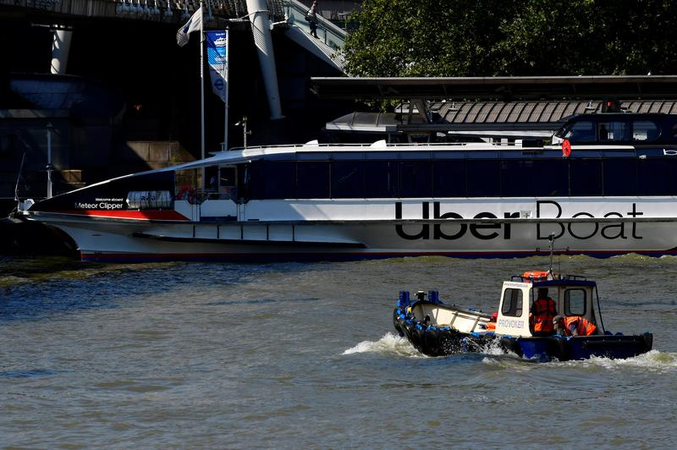
 Sathit Krongsut, director of Egat’s research and innovation division, said the agency collaborated with Informa Markets to hold the event.

 The Nexo hydrogen fuel cell system exported by Hyundai Motor (Hyundai Motor)
  Hyundai Motor‘s concept hydrogen truck Neptune unveiled at the hydrogen mobility exhibition (Hyundai Motor)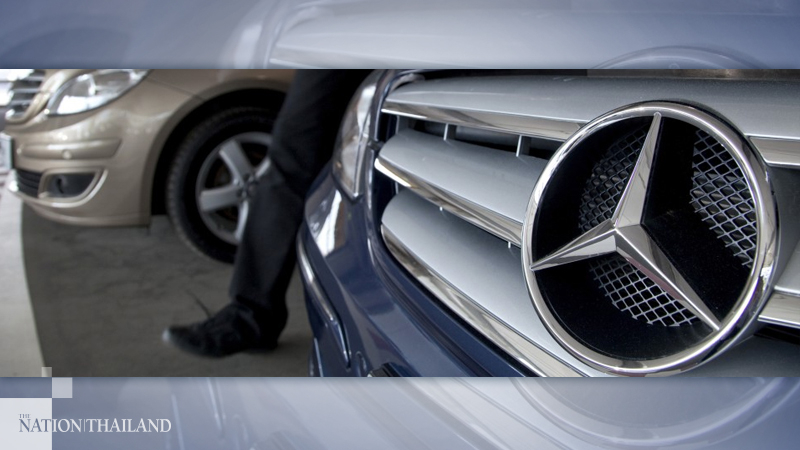
 File photo
  Kristin Hull, founder and chief executive officer of Nia Impact Capital, in Oakland, Calif., on Aug. 10, 2020. MUST CREDIT: Bloomberg photo by Marissa Leshnov.
  SootinClaimon.Com