Thai cuisine comes in at 13 in TripAdvisor’s latest ranking
MONDAY, FEBRUARY 06, 2023
Despite being a top travel destination for many, Thai cuisine only came in No 13 in the latest ranking by online travel information and booking website TripAdvisor.
The top three food destinations in the world were the Italian capital Rome, the Greek island of Crete and the Vietnamese capital Hanoi.
However, TripAdvisor sang Bangkok’s praises, saying: “Golden palaces, floating markets, majestic porcelain-laid spires … you’ve never seen a capital city quite like Bangkok.
“Thon Buri is home to the awesome Wat Arun temple, and over in Phra Nakhon, you’ll find the Wat Pho temple of the Reclining Buddha. Savour mango sticky rice at a food stall before taking in the gilded splendour of the Grand Palace.”
The top 10 food destinations according to TripAdvisor are:
HCM City’s Chilli Thai offers spicy kick that’s hard to beat
SUNDAY, JANUARY 29, 2023
For someone like me who loves Thai food and good old fried pork, Chilli Thai in HCM City’s District 1 was a delightful dining experience.
I wanted to try out its branch on Ly Tu Trong Street along with a friend, who also fancies Thai. Having gone there once before, she raved about the restaurant’s delicious tom yum soup and pad thai (stir-fried rice noodle), and also couldn’t wait to try more dishes.
When we arrived at the small restaurant, we were surprised to see a crowd of people waiting outside to be seated on a Tuesday evening, not exactly a peak day. The inside was also packed with customers, always a reliable indicator of quality.
But despite the crowd, it had a laidback vibe with some unobtrusive music playing in the background, groups of diners chatting and all the traditional statues and decorations you would expect in a Thai restaurant.
The Chili Thai branch in District 1’s Ly Tu Trọng Street. – VNS Photo Viet Dung
Chilli Thai has a variety of traditional dishes, including salads and street food, such as skewered meat and fried fish cakes. There are also “Chinatown-style” seafood dishes such as stir-fried squid and fish.
Once we ordered we did not have to wait too long to be served either (only around 15-20 minutes), which was a good thing since the menu with its colourful and mouth-watering pictures had us excited.
Our first dish was a soft-shell crab with salted egg yolk, which is rather popular. The crab, as we had expected, was delightfully soft inside and crispy on the outside and the rich, creamy salty egg yolk paired beautifully with the fried crab. While I would have personally preferred the crab to be a bit crispier, there was absolutely no reason to complain.
A plate of soft-shell crab with salted egg yolk. The creamy egg yolk pairs very well with the fried crab. – VNS Photo Viet Dung
While we were still scooping up the remaining egg yolk, our next dish arrived: Thai-style crispy deep-fried pork belly.
The first bite is with the eye, as the saying goes, and the juicy pork belly slices fried to an irresistible golden colour along with crispy pork skin and sprinkled with sesame certainly made an impression.
It was everything we had hoped for: delightfully crispy outer layer and tender and flavourful meat with tasty fat inside, dipped in savoury Thai sauce with a hint of sweet and sour taste. We gobbled up the dish in a flash, relishing every piece.
Our final dish was “moo ping”, or grilled pork skewer, one of Thailand’s many street foods that are adored by locals and tourists alike.
The soft and tender sliced pork was marinated well to get that sweet and savoury goodness, and, much like the deep-fried pork dish, it was impossible to put down once we started eating.
One cannot go wrong with a plate of Thai-style grilled pork skewer, a popular street food. – VNS Photo Viet Dung
Our bill came to just 400,000 dong (US$17), a reasonable price for a filling and satisfying meal. The soft shell crab cost 190,000 dong, and the pork belly and skewer cost 130,000 and 70,000 dong, respectively.
Chilli Thai has two other branches in the city: one at Vincom Dong Khoi in District 1 and another at Vincom Mega Mall Thao Dien in Thu Duc City.
Considering the popularity of Thai food among Vietnamese, HCM City has no shortage of excellent Thai restaurants, and you certainly cannot go wrong with Chilli Thai, though you may want to consider making a reservation in advance.
Chilli Thai
93 Ly Tu Trong Street, Ben Thanh Ward, District 1, HCM City
Prego expands its flavourful Italian fine dining to Pattaya
WEDNESDAY, JANUARY 25, 2023
Stephanie Adair
Amari Pattaya celebrated a new dining experience on January 20th with the official opening of Prego Pattaya. This is the chain’s third location, after Samui and Bangkok.
The Italian restaurant has been serving its dishes for 19 years, but what makes Prego stand out is its aromatic wood-fired pizza.
Prego chef Marco Boscaini brings his renowned classic Italian flavors to the shores of Pattaya. The rustic, trattoria-inspired design echoes Prego’s very first location on Koh Samui.
In 2018, chef Boscaini’s signature “Risotto Alla Montanara” was listed as one of the “100 Best Risottos” in the world in a book showcasing the famous dish.
At Prego Pattaya, guests can enjoy more of his signature dishes, including Prego Fettuccine alla Bolognese, homemade pizzas made fresh to order in a pizza oven located at the heart of the restaurant, the dessert tiramisu, and numerous other creations.
Prego Pattaya is located on the beachfront with a dining space seating up to 144 guests.
Its outdoor space is ideal for al-fresco dining while catching the beautiful sunset with a drink in hand. Prego’s wine, cocktail and mocktail lists are extensive.
Suphot Prakitjanuruk, area general manager, told The Nation that Prego’s ambition was to bring the ultimate Italian dining experience to one of Thailand’s most popular beach resorts.
Suphot said ONYX Hospitality Group CEO Yuthachai Charanachitta was so inspired by Prego that he encouraged its expansion.
The restaurant’s debut in Bangkok was at the Amari Watergate, which makes its Pattaya location the second collaboration with Amari hotels.
Suphot is confident in its success, as the soft launch in November last year was more popular than expected.
He said Prego will add a restaurant in Phuket and a second branch in Samui. “We aim that in 2023 we will have five branches,” he said.
Prego Pattaya is open daily for lunch and dinner from noon till 11am.
The concept of Zuma was born as a result of one chef’s obsessive passion with Japanese cuisine and his conviction that London was the place to develop his take on traditional Japanese food.
A fortuitous meeting between Rainer Becker and Arjun Waney not only resulted in the realisation of a vision, with Zuma restaurant opening in Knightsbridge in 2002, but was also the beginning of a partnership that successfully expanded the concept worldwide.
Zuma has successfully launched several locations across the world including Hong Kong (2007), Dubai (2008), Istanbul (2008), Miami (2010), Datca Peninsula (2013), Abu Dhabi (2014), New York (2015), Rome (2016), Las Vegas (2017) and most recently Boston (2019). Zuma Bangkok opened in November 2011.
Design
An essential component of Zuma is in its surroundings that are inspired by the 4 elements of Earth, Fire, Water and Air. The esteemed Japanese design company Super Potato was commissioned to materialise the vision. Designer, Noriyoshi Muramatsu, quickly developed an emotional attachment to the project and used his expertise, both spiritually and aesthetically. Amid his symbolic design, he introduced calming water features and used antique pine, re-cycled from old Japanese houses. He believes the wood to hold the goodwill of the previous owners. It took over 3 months of travel and research, to locate the exact granite and different woods that were ultimately selected for the project. Zuma is about a complete dining experience and complement the taste and flavour of the food.
Food and drinks
Zuma’s characteristic culinary concept features a main kitchen, sushi counter and robata grill offering modern, sophisticated Japanese cuisine.
Greatly influenced by his time in Japan, chef Rainer Becker has introduced a modern, elegant and sophisticated cuisine philosophy, which has been inspired by the more informal Japanese dining style – Izakaya. The menu is authentic but not traditional. Essentially it is made up of three different components: the main kitchen – offering a selection of contemporary dishes, the Sushi Bar – with dedicated sushi chefs, and the Robata Grill – a concept which originates from the cooking style of northern Japanese fishermen.
An exciting and innovative range of drinks perfectly complement the cuisine. Indeed, Zuma boasted the first sake sommelier in Europe. Such is Becker’s dedication to sake, that he serves 40 different varieties, including his own Biwa no Choju, which is brewed exclusively for Zuma from the waters of Lake Biwa in the Shiga prefecture. The lake’s natural mineral water was made legendary in Japan by the last shogun, Tokugawa Yoshiro, who in the 15th century created the rules that govern Japanese cooking styles and tea ceremonies today.
Zuma Bangkok also boasts an ample selection of fine wines.
Bar at Zuma
In addition to the wines and sakes offered in the restaurant, the award-winning bar at Zuma is a destination in its own right. This unique and celebrated venue is renowned for its signature cocktails- using premium ingredients and select Japanese spirits.
Southeast Asian countries have always had vibrant gastronomic scenes. This is evident in the never-ending stream of tourists who visit Southeast Asian countries, particularly for the food.
In 2023, gastronomy tourism is said to be one of the big trends in travel. Let’s check out what’s in store for tourists who come to Malaysia, as well as some of our neighbouring countries, to feast on our delicious fare.
Like the country’s diverse culture, Malaysian cuisine is also just as varied. And while Malaysian flavours may be distinct to locals, to international tourists the combination of spices, ingredients and traditional cooking styles from different cultures is truly unique.
Top favourites for both tourists and locals include nasi lemak, nasi kerabu, chicken rice, char kuay teow, laksa (almost every state has its own version, too!), Nyonya kueh, roti canai and pisang goreng. Travellers get an even wider variety of offerings in Sabah and Sarawak, like linopot, sinalau, umai, kampua mee, kuih cincin and manuk pansuh.
On top of that, the street food and cafe scenes in Malaysia are also worth checking out. In fact, one of the country’s most humble street foods, the Ramly burger, has been featured in many international food and travel videos on YouTube and other social media platforms.
Perhaps our biggest rival in Southeast Asia when it comes to gastronomy tourism is Thailand. Thai food has been a top destination choice for foodies for many years now. There’s a wide variety of cheap, fresh and delicious food available throughout the country – you can never go hungry in Thailand! The vibrant and dynamic street markets offer curious foodies a chance to feast on many delicacies, including deep-fried insects (if you’re into these kinds of things, that is).
If you’re ever in Bangkok, head to Sampeng Market, Srinagarindra Train Night Market, Jodd Fairs, Hua Mum Night Market, Khao San Road, Patpong Market, Chang Hui, Asiatique The Riverfront and Chatuchak Weekend Market, and send your taste buds on a scrumptious adventure. There’s also lots of shopping to be had in these markets so remember to bring your reusable shopping bags along.
Some of the iconic must-try dishes are pad thai, moo ping (Thai satay), pad kra pao, pad see ew and khao pad; try the Thai iced tea too.
Thailand also has plenty of top-notch fine dining restaurants, Michelin-selected eateries and award-winning bars, as well as innovative cafes. These are mostly found in bigger cities like Bangkok and Chiang Mai.
While the Philippines and Cambodia are not usually considered gastronomy tourism destinations, the cuisine in both these countries has their own distinct flavours.
When you take a voyage through the dynamic food scene in the Philippines, you’re in for an enticing dining experience. Pinoy cuisine promises a refreshing taste that will lead you to a sensory explosion.
One of the many popular dishes, sizzling sisig, maybe something of an acquired taste but it’s worth trying, if only for the experience. This dish is made up of pork (particularly meat from a pig’s head) and chicken liver and seasoned with vinegar or calamansi juice.
Another popular and truly unique Filipino delicacy is balut. This is a fertilised duck egg with a developing embryo, normally consumed fresh out of the shell. This famous snack is not for the faint-hearted, though.
In Cambodia, there’s fish amok (amok trei), a Cambodian steamed curried fish dish that has a 2,000-year-old history. Fish amok was once only served to the Khmer royals, but today you can get this in many restaurants, though not all will serve you the “authentic” version. Locals say that if the dish is not steamed in banana leaves – some restaurants and stalls steam them in bowls or ramekins, for example – then it is not amok (the word “amok” actually means “to steam in banana leaves” in the local dialect).
For comparison, fish amok is similar to the Malaysian otak-otak, only with different spices, and sometimes different types of fish, used.
This year, be sure to go on a gastronomy holiday anywhere in Southeast Asia, or plan some trips to a few states in Malaysia to try delicacies you’ve never had before.
‘Dangerous’ winter temptation in South Korea: blowfish
MONDAY, JANUARY 09, 2023
Blowfish, also known as puffer fish, is undeniably one of the top winter delicacies in South Korea. The clean, light taste of the fish meat with its unique chewy texture stands out among other types of edible fish.
Rich in the essential amino acid taurine, blowfish is known to help with blood circulation and warm up the body. It does not contain neutral fat, which can help with weight loss and protects healthy skin. The blowfish skin has abundant selenium, a source studied to have anti-cancer effects.
Called “bok” in Korean, there are over 10 different types of blowfish, but the common ones caught in Korea appear to have white bellies and dark grey backs with black dots.
When threatened, bok instantly inflates itself and turns into the form of a round-shaped ball to scare away predators.
Sinwon Bokjip, a blowfish specialty restaurant located in Hongdae, central Seoul (Kim Hae-yeon/The Korea Herald)
But contrary to their intention, self-inflation is not the real threat.
Some blowfish contain tetrodotoxin, a type of toxin that when consumed, can lead to extreme difficulty in breathing and can paralyze one’s body, ultimately resulting in death just several hours later. Historical archives show that countless people have died while consuming bok during the Joseon era, although this seldom happens today.
Therefore, in Korea, only trained chefs with special licenses can cook bok in restaurants.
Blowfish dishes can be enjoyed year-round in bok restaurants, but why are they the most popular during the winter season? The ones caught from December to early February tend to have less or weakened toxicity, and the flesh becomes full, which makes its chewy and succulent texture the best time to consume.
Boktang, blowfish soup
Sinwon Bokjip, located in a Hongdae alley in Seoul, has been in the same place since 1983, serving customers for nearly 40 years.
Many public figures have been patrons of the restaurant, including former President Kim Dae-jung and first lady Lee Hee-ho, who lived nearby, as told by the restaurant’s owner.
Boktang, boiled blowfish soup, also called bokguk, is one of the must-try signature dishes for first-time visitors and frequenters alike, at Sinwon Bokjip.
Generous portions of bright green minari are served in the hot pot, which gives the broth its clean flavour. The fleshy blowfish makes one dare to think that it is worth the try despite the danger.
Boktang, blowfish soup (Kim Hae-yeon/The Korea Herald)
Try the light taste of the soup first, then go ahead with the blowfish, by gently dipping some into the special soy sauce offered.
Those who favour drinking can easily grasp why Koreans have them as “hangover soup,” since they are neither too salty nor heavy but still possess a delicate earthy flavour.
Regular blowfish soup costs 29,000 won per person, and the one with chambok, a specific type of blowfish known to be of higher quality, at 90,000 won.
Bokbulgogi, pan-fried marinated blowfish
The flavour of bokbulgogi varies by the head chef at bok restaurants, having their unique seasonings and spices mixed on the fish meat.
Bokbulgogi comes out seasoned and served on a hot grill pan.
Bokbulgogi at Sinwon Bokjip has a brownish-red hue due to gochujang and red peppers used in the seasoning, but it falls on the less spicier side compared to other bok restaurants.
Bokbulgogi, pan-fried marinated blowfish (Kim Hae-yeon/The Korea Herald)
A nicely grilled bokbugogi should be crunchy on the outside and chewy on the inside. A cup of warm hire sake of which grilled chambok fins are boiled together is highly recommended to accompany the dish.
A set of side dishes that consist of bean sprouts, spinach, burdock and briefly boiled blowfish skin salad, is offered to be enjoyed and eaten together.
One can order a separate bowl of white rice with a savoury piece of bokbulgogi on top. Bokbulgogi is priced at 65,000 won per person.
Fried blowfish and sashimi
Deep-fried blowfish and vegetables (Kim Hae-yeon/The Korea Herald)
The two menu items — fried blowfish (boktwigim) and sashimi (bokhoe) — are usually ordered as side dishes, accompanied by a main meal such as boktang, bokbulgogi, bokjjim or bok-shabushabu.
A dish of fried blowfish consists of fried fish in a crispy golden batter and some other deep-fried vegetables including shiitake mushrooms, carrots and minari.
One can try fried fish with or without soy sauce.
Bok sashimi is served on a wide plate and consists of thin slices of raw blowfish, some lightly boiled blowfish meat, blanched blowfish skin, minari stems and slices of lemon.
Squeeze the lemon juice on top of the raw fish slices and place a slice of raw meat on your plate. Put a slice or two of boiled fish meat and blanched fish skin. Lay some minari stems on top, and fold the raw fish slice over to make it into a roll. Gently dip it into the restaurant’s own citrus ponzu sauce and enjoy.
Chef’s recommended way of enjoying blowfish sashimi (Kim Hae-yeon/The Korea Herald)
A medium-sized dish of fried blowfish, enough for two to three people, costs 59,000 won. A plate of bok sashimi is priced at 129,000 won.
Food loss and waste are huge problems that should be minimized. It is important that people should take action to promote their awareness against food waste and form healthy consumption behaviour, writes a veteran journalist with China Daily.
“Eating simple food and in moderate quantity” has become a popular mantra for many Chinese people, while high-calorie intake and excessive eating have become a social problem, forcing many people to go on a diet to control their weight.
While having lunch with colleagues in the China Daily canteen, I often see people picking just a sweet potato or an orange and leaving the canteen which serves more than a dozen dishes, including dumplings, noodles, cakes and soups. Then there are those that are not seen in the canteen in the daytime because they deliberately skip lunch.
Even at home, we have decided to reduce the four-dish dinner to a three-dish dinner because there was always food left over. As a person who grew up in poverty and knows what hunger is, I hate to waste food.
Last year’s statistics show that more than 50 % of Chinese people above the age of 18 are overweight. As a result, over 40 % of Chinese people have an abnormal lipid profile and 60 % have or need to guard against diabetes.
Excess calorie intake is the main reason behind the rising levels of cholesterol, high blood pressure and diabetes cases. To control their weight, many people either go on a diet, hit the gym, seek a doctor’s advice, or begin to play some sports to burn the excess calorie.
My family and I have taken all three measures. After a simple dinner, we take both Western and traditional Chinese medicines before going out for a walk for an hour or so. If it’s raining or very cold, we go to an indoor swimming pool to swim.
If we can control our weight, our lipid profile can be normal or close to normal. Trying to check my weight, I very often miss my “good old days” half a century ago when the supply of rice, cooking oil, meat and eggs was rationed. Since the food was rationed, people got a limited amount of food and therefore ate simple food in moderate quantity and hence did not have to worry about becoming overweight.
In the first two decades of my life, I didn’t have enough to eat. Then for the next three to four decades, I had plenty of food thanks to China’s economic boom. Now, I have perforce reduced my diet. The difference is that during my childhood and early youth, my longing for food was a compulsion — due to the country’s development level — while now “eating little and simple” is my own choice.
While excess calorie intake is believed to be the main reason behind the rising number of overweight people, including children, many nutritionists say that imbalanced nutrition pattern plays a big role in people gaining weight.
Their suggestion is to reduce the use of oil, salt and sugar in cooking, minimize the intake of meat and eggs, and eat more vegetables, fruits and coarse cereals. China Daily’s canteen has been serving food on the basis of this principle, although some colleagues have complained about the “bland, tasteless” food served in the canteen.
Rural areas have their own problem. While excess calorie intake has become a big problem for urban residents, many rural residents including better-off villagers in China’s eastern and southern coast are battling undernutrition.
China eradicated absolute poverty just two years ago. The poverty line — set at about 5,000 yuan ($724) per rural resident per year — may be enough to provide protection against hunger, but not enough to prevent undernutrition in some families that don’t earn that much.
Although the government has taken measures to help rural children by providing free lunches for them, the quality of the food needs to be improved to ensure students get sufficient nutrition, as well as prevent villagers from slipping back into poverty.
With increasing awareness of eating healthy and with the consistent support of the government, hopefully, excessive calorie intake, as well as undernutrition, will soon become things of the past.
Translation app gets Korean restaurant menu upgrade
THURSDAY, DECEMBER 29, 2022
Naver’s translation app Papago has added a service to help tourists understand Korean menus, in partnership with the Culture Ministry and the Korea Tourism Organization.
The service uses the app’s image translate function. Users can take a picture of a Korean menu to translate it as normal, but tapping “select all” at the bottom brings up a “Food info” tab, with translations that have been tailored for food, and provides additional information about some of the dishes.
The service currently supports translation into English, Chinese (simplified and traditional) and Japanese.
The food info tab also includes links to the KTO‘s “Food Trip in Korea” website, which has detailed information on popular Korean dishes, including recipes and how to enjoy each dish.
“We will work to add 500 new items to the list in the first half of next year, and also carry out another menu translation project with the restaurant reservation app Catchtable, for users to conveniently book restaurants while in Korea,” the leader of KTO’s tourism strategy team said.
Meanwhile, an e-book version of KTO’s 2021 publication, “Standards for Translating Foods in Korea,” a handbook of official translations of Korean food in foreign languages, can also be found on KTO’s food trip website. Restaurant operators can also create a foreign-language version of their menu for free by following the instructions on the website.
Kempinski Hotel Bangkok renamed “Hanuman Bar” after Hindu protest
WEDNESDAY, DECEMBER 28, 2022
Siam Kempinski Hotel Bangkok has reportedly renamed its bar carrying the name of Hindu deity Hanuman; after Hindus protested calling it “highly inappropriate”.
Its “Hanuman Bar” is now called “1897 Lounge”. A martini concoction of Hanuman Bar called “Hanumantini”, which included Vodka and which Hindus also objected; has also been renamed as “1897TINI”.
Hindu statesman Rajan Zed, who spearheaded the protest, in a statement in Nevada (USA) today, thanked Kempinski Hotels for understanding the concerns of Hindu community, which felt that such nomenclature was insensitive.
Zed, who is President of the Universal Society of Hinduism, had said that Lord Hanuman was highly revered in Hinduism and was meant to be worshipped in temples or home shrines and not for selling liquor and beef.
Inappropriate usage of sacred Hindu deities or concepts or symbols or icons for mercantile greed or other agenda was not okay, as it hurt the devotees.
We were still waiting for a formal apology from Kempinski Hotels and its CEO Bernold Schroeder for naming a bar and a martini after a sacred Hindu deity in the first place, Rajan Zed pointed out.
Selling beef and liquor in the name of a Hindu deity was a desecration. Cow, the seat of many deities, was sacred and had long been venerated in Hinduism. Kempinski, which claimed “people-centred principles”, should have shown some maturity when naming a bar; Zed had indicated.
Luxury hotels should not be in the business of religious appropriation, sacrilege, and ridiculing entire communities. It was deeply trivializing of the immensely venerated Lord Hanuman to be treated like this; Rajan Zed had emphasized.
Hinduism was the oldest and third largest religion in the world with about 1.2 billion adherents and a rich philosophical thought and it should not be taken frivolously. Symbols of any faith, larger or smaller, should not be mishandled; Zed had noted.
Rajan Zed stated that such trivialization of a greatly venerated Hindu deity was disturbing to the Hindus. Hindus were for free artistic expression and speech as much as anybody else if not more. But faith was something sacred and attempts at trivializing it were insensitive, Zed added.
In Hinduism, Lord Hanuman is known for incredible strength and was a perfect grammarian.
Menu of “Hanuman Bar” at Siam Kempinski Hotel Bangkok included wagyu beef tartare, grilled beef, angus beef burger, beef ragout, beef khao pad; besides various kinds of vodka, gin, tequila, whisky, rum, liqueurs, beer, brandy, etc.
Headquartered in Geneva and Munich, Kempinski, hoteliers since 1897 with reportedly about 81 hotels around the globe, claims to be “Europe’s oldest luxury hotel company” and also claims that their bars “are the epitome of elegance”. Siam Kempinski Hotel Bangkok describes itself as a “five-star luxury resort-inspired haven”.
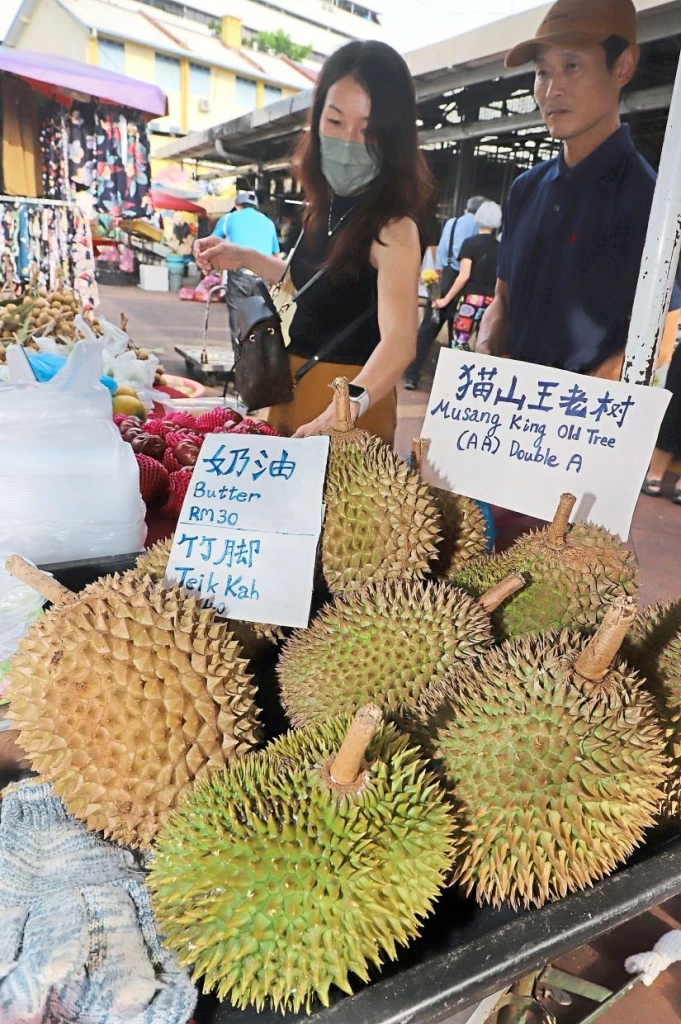
It’s the right time to eat like a king now where “high-end” durians are concerned. A kilo of Musang King, for example, is being sold for RM30 (234 baht) to RM45 (351 baht) per kilo, compared with last year’s price of RM80 (625 baht) to RM90 (782 baht) a kg.
And the wondrous, bittersweet XO variant, not commonly grown in Penang, is selling for as low as RM20 (156 baht) per kilo.
Previously, the price could go up to RM80 or RM100 during its peak season.
Penang’s durian season is typically from May to August.
Most of the durians sold here now come from Perak or Pahang, which are among the states that enjoy a short year-end durian season that lasts till next month.
But even after being transported here, a kilo of Musang King, for example, retailing for just RM30 to RM45 per kilo.
Durian seller Edward Lim, 30, said the durians are now cheap because of a bumper harvest in Pahang orchards.
“We get some from Tapah in Perak too, but the most popular ones are from Raub (Pahang),” said Lim, 30.
He said Pahang’s durian season started about two months ago and is expected to continue until the end of January.
The “lower grades” of Musang King, he said, cost about RM30 per kilo.
“And the same goes for other popular variants such as Teik Kah and Black Thorn.
“We are told that the lower price is also due to lower demand from China, which has been facing pandemic lockdowns and restrictions until recently,” he said.
Another durian seller, who only wanted to be known as Goh, said he is selling a kilo of top-grade Musang King by the roadside near Pulau Tikus market at RM45 per kilo.
“This is considered very cheap. Everyone who hasn’t tried Musang King because it’s expensive should really try now,” he said.
Durian farmer Nasir Sulaiman, 45, said the bumper crop of durian in Pahang is probably due to a change in the weather in the southern part of the peninsula.
“In April, the region experienced a bit of rain but through May and June, the weather was hot, which caused durian trees in Pahang to flower in abundance,” he said.
He said there are Musang King from Ipoh and central Perak, but those from Pahang are preferred because they are sweeter.
He hoped that durian prices would go up next year when durian fans, especially those from China, make a return following the easing of travel restrictions.
Incidentally, even the King and Queen took the chance to check out some durian stalls in Sungai Karang, Kuantan, last Sunday.
Istana Negara said in a Facebook post that Yang di-Pertuan AgongAl-Sultan Abdullah Ri’ayatuddin Al-Mustafa Billah Shah and Raja Permaisuri Agong Tunku Hajah Azizah Aminah Maimunah Iskandariah spent some time with the traders and chatted with visitors.
“His Majesty bought a meal as well as durian before departing for Abdulaziz Palace,” the post stated.



 The Chili Thai branch in District 1’s Ly Tu Trọng Street. – VNS Photo Viet Dung
 A plate of soft-shell crab with salted egg yolk. The creamy egg yolk pairs very well with the fried crab. – VNS Photo Viet Dung
 One cannot go wrong with a plate of Thai-style grilled pork skewer, a popular street food. – VNS Photo Viet Dung




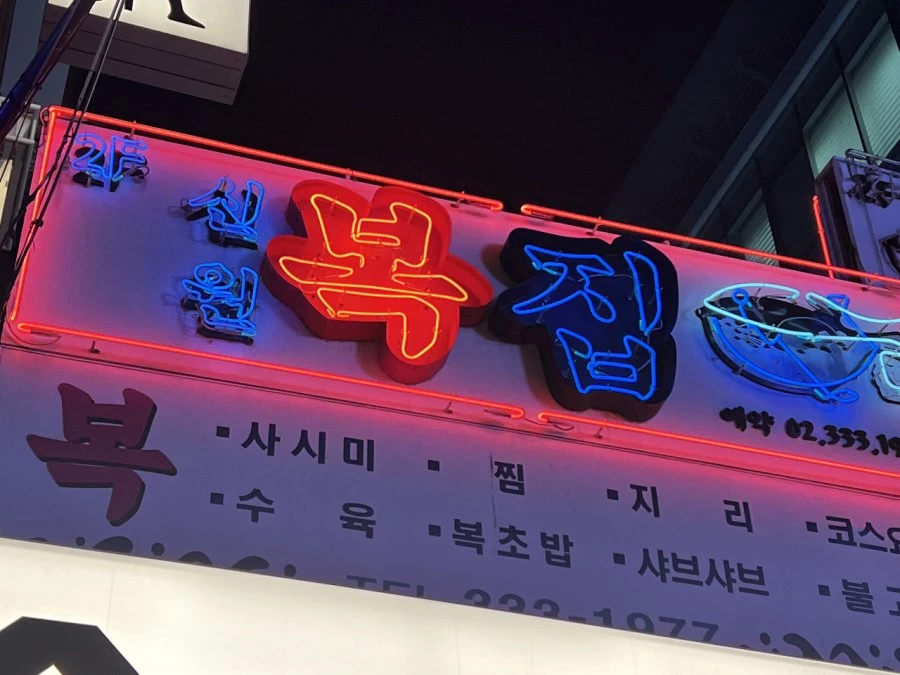 Sinwon Bokjip, a blowfish specialty restaurant located in Hongdae, central Seoul (Kim Hae-yeon/The Korea Herald)
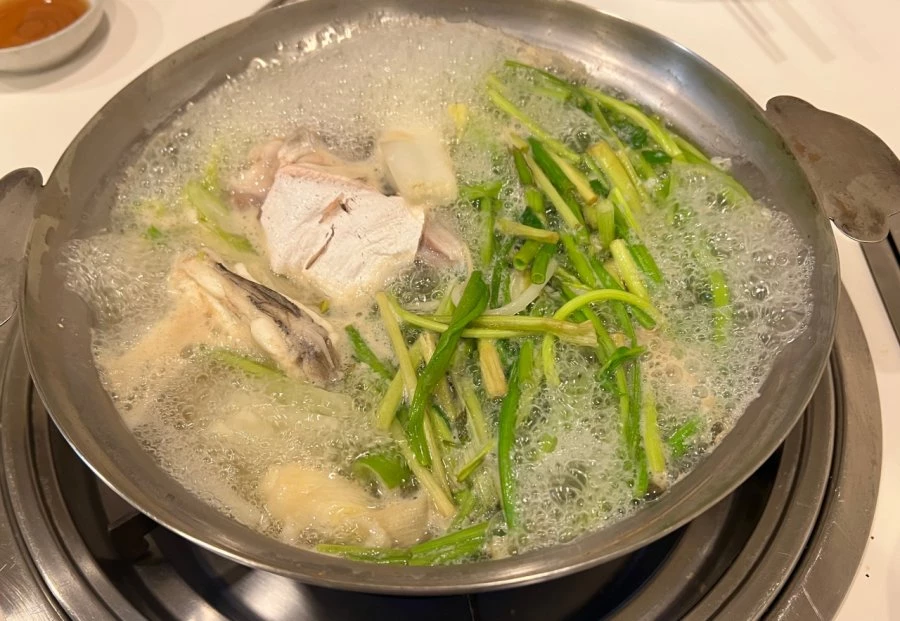 Boktang, blowfish soup (Kim Hae-yeon/The Korea Herald)
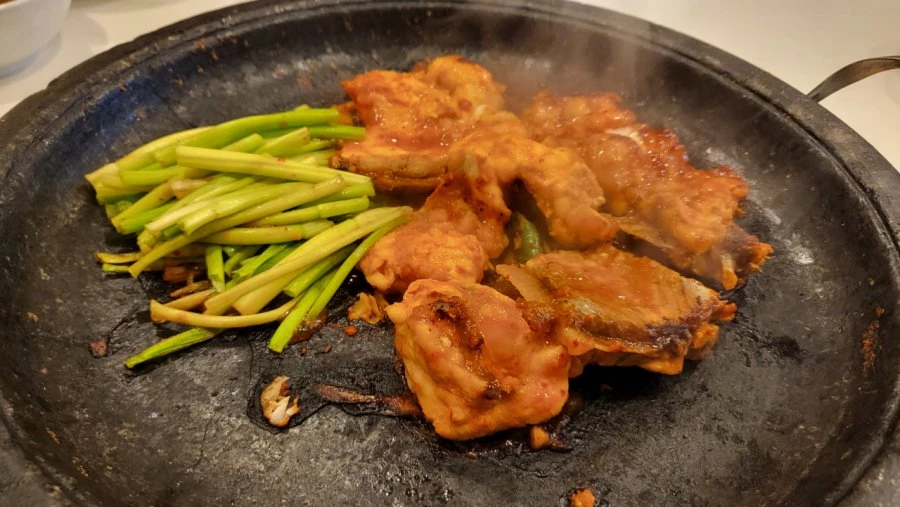 Bokbulgogi, pan-fried marinated blowfish (Kim Hae-yeon/The Korea Herald)
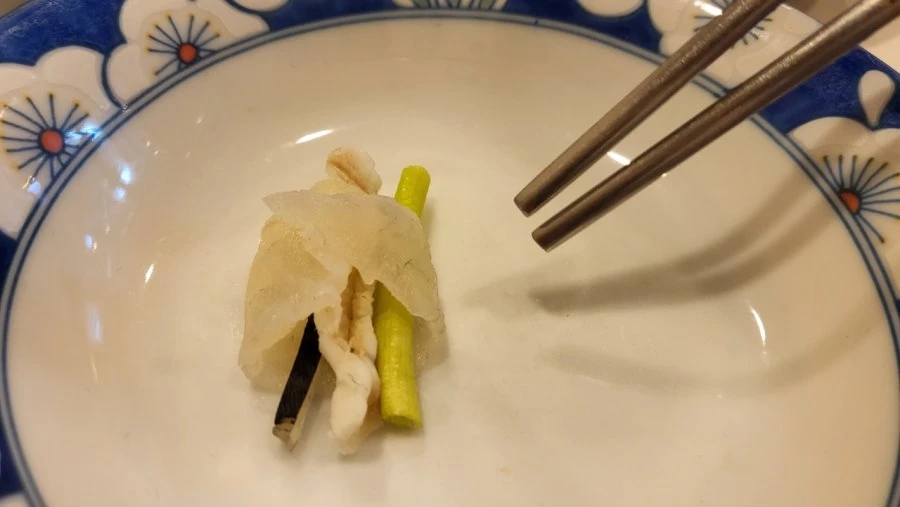 Chef’s recommended way of enjoying blowfish sashimi (Kim Hae-yeon/The Korea Herald)


 SootinClaimon.Com