Study finds people don’t require as much water as once believed
MONDAY, DECEMBER 05, 2022
A famous health tip says you’d better drink eight glasses of water (about two litres) a day. However, the results of a new study suggest that fewer are needed.
An international group led by scientists at the Shenzhen Institute of Advanced Technology in China found that the average daily water intake of a man in his 20s should be 1.5 to 1.8 litres, while it should be 1.3 to 1.4 litres for a female in the same age group.
The study published recently in the journal Science described, for the first time, a set of equations to predict human water turnover, an indicator reflecting the amount of water used by the body each day.
The researchers investigated 5,604 participants from the ages of 8 days to 96 years, and from more than 20 countries, using isotope-tracking methods.
They have found that a man aged 20 to 35 consumes 4.2 litres of water each day, while a woman aged 30 to 60 consumes 3.3 litres, with the water requirements dropping as he or she ages.
Since the metabolism and water exchange on the skin can provide 15 %, while food and drinking respectively contribute half of the remaining 85 %, people are encouraged to drink less than 45 % of the total daily turnover, according to the researchers.
“The majority of people perhaps don’t have to drink eight glasses of water a day,” says Zhang Xueying, co-first author of the paper and an assistant research fellow at the SIAT.
The total water input and output vary according to multiple factors, including body size, physical activity, air temperature, humidity and altitude, according to the study.
“The equations can be applied to individuals around the world,” says Zhang.
“Just input their basic physiological indicators and the temperature and humidity they live in.”
However, people living in countries with a low human development index have higher water turnover than people in high-HDI countries, she adds.
The study marks the first step towards a personalized prediction of water requirements, says the paper’s co-corresponding author John Speakman who also works at the SIAT.
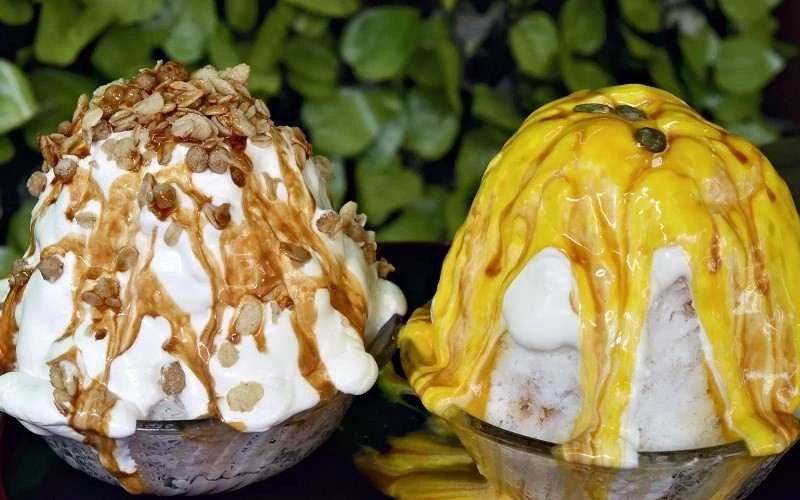
Seasonal flavors, luxury ingredients make kakigori shaved ice popular even in winter
FRIDAY, DECEMBER 02, 2022
Winter may be coming, but the number of stores specializing in kakigori shaved ice has continued to increase.
Shaved ice evokes an image of summer, but more businesses are offering it throughout the year with distinctive toppings made of fruit, salted caramel and other ingredients. Some shops offer seasonal flavours for autumn and winter, bringing customers back again and again. The popularity of shaved ice has also grown among young people eager to capture photogenic images for social media.
Yuki Usagi, a shaved ice speciality shop in Setagaya Ward, Tokyo, has remained open all year since opening its doors in 2014.
“It doesn’t give me a headache, and I can enjoy it like other sweets regardless of the season, not just summer,” said a 25-year-old stylist who lives in the ward.
“Pure ice” used at the shop is made after impurities such as chlorine have been removed from the water and frozen slowly at a factory for at least two days. Its ice crystals are firm and do not thaw easily, so it is easy to shave into thin slices. As thin slices of the ice melt quickly on the tongue, they are less likely to cause the so-called “ice cream headache,” which occurs when a cold sensation irritates the back of the throat.
During wintertime, the shop prepares warm tea, lap blankets and heat packs for customers.
“Our shop used to serve mainly local residents, but recently we’ve seen customers, especially young women, come from far away,” an employee of the shop said.
Power shortage triggers boom
When commercial shaved ice machines went on sale in Japan around 1950, cafes and sweet shops began adding shaved ice to their menus. At that time, the standard shaved ice was called “frappe” and had a rough texture created by shaving ice cubes made in-store. It was usually offered as a summer-only menu item.
According to the Tokyo-based Japan Kakigori Association, a power shortage in the summer of 2011 caused by the Great East Japan Earthquake in March of that year drew people’s attention to shaved ice as a way to feel cool while saving electricity. Furthermore, when Taiwan’s version of shaved ice topped with mango, tapioca and other ingredients was introduced to Japan, its distinctive appearance caused a boom among young people posting photos on social media.
In response to this wave of popularity, shops specializing in shaved ice opened one after another across the nation. More and more varieties of shaved ice appeared with the use of thick fruit sauces made from whole fruits and techniques such as espuma, in which ingredients are processed into a foamy consistency. As ingredients became more lavish, prices also rose, and it is not unusual now for some to cost nearly ¥2,000.
According to an estimate by the association, there were about 200 shaved ice speciality stores nationwide in 2019 before the coronavirus pandemic, but the figure has now doubled to about 400.
“The pace of new store openings in urban areas has slowed, but the trend has continued in rural areas,” said Ryusuke Koike, 50, the representative of the association’s board of members. “We expect the number to continue to rise for the time being.”
Seasonal features key
The boom has continued for years partly due to competition among shops to develop new varieties to keep attracting customers. Items used include a whole melon, Japanese-style shiratama mochi, and syrups flavoured by black tea and roasted green tea.
“There is a wide range of ingredients in both Japanese and Western-style flavours, and the flavours change greatly depending on spices and herbs used,” said Alice Saito, a 34-year-old fashion model who likes visiting shaved ice shops.
Sekka, another speciality shop in Toshima Ward, Tokyo, focuses on offering seasonal menu items using ingredients from each of the four seasons. In autumn, two types of syrup made from chestnut and its astringent peel are used, while in winter, shaved ice with rich flavours using cheese and zunda mashed green soybeans are offered.
“A sense of seasonality is becoming more important for shaved ice,” said Yuki Honda, the 39-year-old manager of the shop.
Tomoko Ogura, a food consultant, said: “Shaved ice has established its position as a slightly luxurious sweet. It has evolved into a year-round menu item that is not limited to summer.”
Saurus Coffee and Gallery is an ideal destination for people with a love for dinosaurs in Ho Chi Minh City.
Pham Cong Ly developed an interest in dinosaurs after watching the Jurassic Park movie in 1993 when he was a child. Through time, his passion raised in his mind the idea of a place for locals to enjoy those “extinct creatures”.
That is how Saurus Coffee and Gallery was born.
Located in HCM City, and open every day of the week from 7am to 10pm, Saurus is a complex building of galleries, restaurants, and cafes divided among three floors.
There are over 100 models of dinosaurs, including everything from handmade statues to extremely rare, discontinued models.
At the entrance, the first thing that blows visitors’ minds is the giant, magnificent, six-metre tall Brachiosaurus, a genus of sauropod dinosaur that lived in North America during the Late Jurassic period, a statue that can be seen from any floor of the building. The total cost to create this statue was VNĐ5 billion (over US$200,000).
Inside, customers can find a warm café space, a place not only for enjoying drinks but also cakes with dinosaur decorations. The highlight of the cafe area is a majestic plastic statue of a T-rex dinosaur.
A giant six-metre-tall Brachiosaurus model at the Saurus Coffee and Gallery entrance. – Photo courtesy of Saurus Coffee and Gallery
When visitors arrive on the second floor, the first thing that appears in front of them is a magnificent dinosaur gallery designed to look like Vietnamese terraced rice fields, and this is where the most special dinosaur statues of the whole building are located.
According to Ly, the owner of Saurus Coffee and Gallery, the plastic statues come from all over the world and are all limited editions, produced only in very small quantities.
An example of this is the “Baby Blue” dinosaur model version of the Jurassic Park movie. It is one of the few statues left in the world due to it being a limited edition and being no longer in production.
Most of the models here are made of resin and regularly cleaned with brushes. This helps the model not suffer from temperature changes, which can cause plastics to shrink, he added.
Moving up to the last floor of this fantastic building, the smell of the sweet scent of steak and other delicious foods fills the room. This section presents a large transparent glass cabinet containing dozens of different types of dinosaur designs, from little toy figures to massively detailed statues.
Saurus is crowded most of the time, especially on weekends. From the young to the old, from those looking for a new place to spend a boring weekend to those who are truly passionate about the ancient creatures and want to find a community to share their love, there is something for everyone.
Two rare
Therefore, the customers are most often families with children.
Thuy Duong, a visitor from Thu Duc City, said, “When I first heard about it [Saurus Coffee and Gallery], I thought it would be a great place for my daughter to spend time on the weekend. I was right, she loved it. It is good to know that there is a place where the child can see real models of dinosaurs that they can only see on television.”
According to Ly, the future target is to develop Saurus to become an amusement area with integrated dining. He is also working to build a model production area for all ages to connect and develop the Vietnamese model-making community.
“In the journey of learning about model collection, I have met many big brands from all over the world. It made me wonder why in Vietnam there isn’t anything like that. My future target is to develop a modelling production business that can reach the global market,” Ly told Viet Nam News.
Chau Nhat Tan from Phan Thiet, who joined a model-making community in HCM City, told Viet Nam News: “After joining this community, I have made friends with many people who are passionate about model making. I feel the love and fascination with dinosaurs from everyone here, especially from Ly. This is also a great opportunity to help people get closer to the dinosaur age through dinosaur models from around the world.”
The price for food and drinks is around VNĐ50,000 to VNĐ300,000, and there is no entrance fee.
Michelin awards 2 stars to six restaurants and 1 star to 29 in its 2023 guide
THURSDAY, NOVEMBER 24, 2022
Six eateries have retained 2 Michelin stars for excellent cuisine and 29 restaurants have earned 1 star – 24 again – signifying high-quality cooking, Michelin Guide Thailand announced at its 2023 Michelin Star Revelation ceremony in Bangkok on Thursday.
The sixth edition of the Michelin Guide in Thailand extended its recognition from Bangkok, Chiang Mai, Phuket & Phang-nga and Ayutthaya to include Nakhon Ratchasima, Udon Ratchathani, Udon Thani and Khon Kaen.
The latest listing sees 441 entries compared to 361 in the previous edition.
The six 2-star restaurants are all located in Greater Bangkok – R-Haan, Le Normandie by Alain Roux, Chef’s Table, Mezzaluna, Sühring, and Sorn.
The 24 restaurants that have retained their 1-star rating are: Saneh Jaan, Le Du, Nahm, PRU, Sushi Masato, Savelberg, Yu Ting Yuan, Cadence by Dan Bark, 80/20, J’aime by Jean-Michel Lorain, Elements, Chim by Siam Wisdom, Canvas, Khao Ekkamai, Sra Bua by Kiin Kiin, Methavalai Sorndaeng, Suan Thip, Paste, Blue by Alain Ducasse, Jay Fai, Igniv, Côte by Mauro Colagreco, Gaa and Aksorn.
Meanwhile, the five new 1-star entries are: Signature, Baan Tepa, Haoma, Potong and Maison Dunand.
Michelin Guide Thailand also handed out five special awards to outstanding individuals/establishments in fine-dining circles:
– The Service Award went to Uthit Songtho from Baan Phraya at the Mandarin Oriental Bangkok for demonstrating exceptional service and hospitality skills.
– The Young Chef Award went to Davide Garavaglia of Côte by Mauro Colagreco for having exceptional talent and potential.
– The Opening of the Year Award went to Pichaya Soontornyanakij from Potong restaurant for creativity and quality of service of a new restaurant opened in the past year.
– The Sommelier Award went to Guillaume Perdigues from Mezzaluna who has excelled in pairing food with wine.
– The Green Star Award went to PRU, Jampa, and Haoma restaurants for embracing sustainability in their everyday operations.
In a brief description of its star grading, the Michelin Guide says 1 star means high-quality cooking that is worth a stop for; 2 stars mean excellent cooking that is worth a detour, and 3 stars mean exceptional cuisine that is worth making a special journey for.
World’s first hybrid meat innovation centre to open in S’pore next year
WEDNESDAY, NOVEMBER 23, 2022
In a couple of years, consumers will get to try pulled pork and dumplings made by mixing cell-based meat with plant-based proteins, after an alternative novel meat innovation centre opens in the city-state in the second half of 2023.
The hybrid meat innovation centre – said to be the world’s first – is a tie-up between Dutch cultivated pork company Meatable and local plant-based butcher Love Handle.
Hybrid meat refers to a newer type of alternative protein where plant-based meat, animal cells and even fermented edible microbes or algae are mixed to form a fusion protein product. This takes the optimal properties of each alternative to enhance the final hybrid product’s taste, texture and nutrition, said Ken Kuguru, Love Handle’s co-founder and chief executive.
“Picture the marbling on a steak or a layered roast pork belly. Today’s plant-based options cannot create layers or variety, but by combining plant and cell bases, we can create new innovations,” he said. “Plant-based meat… sometimes lacks the same meaty texture or the nutritional profile that consumers are looking for in traditional meat, whereas cell-based meat is currently too expensive and not ready to be commercialised.”
But the hybrid meat the two companies are looking at differs from the plant-based ingredients, spices and herbs that currently play a supporting role in making cell-cultured meat dishes complete. For instance, the cell-based chicken nuggets by Californian company Eat Just – approved for sale in Singapore in 2020 – comprise about 75 per cent cultivated chicken and 25% plant-based ingredients to help with the nugget’s structure.
Instead of acting as supportive or filler ingredients in cell-based meat, plant-based foods will have a key role in hybrid products.
By 2024, Meatable and Love Handle are aiming to have hybrid meat items such as pork belly, meatballs, cold cuts and patties on the menus of local restaurants. By 2025, they hope the items will reach supermarket shelves.
The new innovation centre will have a kitchen and lab fitted with high-tech equipment suitable to make hybrid meat and plant-based products. These include industrial blenders, mixers, emulsification equipment and tools to analyse food texture.
The US$6-million (216.6 million baht) innovation centre will also act as a showroom where consumers and eatery owners will be able to taste the fusion meats. A retail space will also be set up at the centre, said Meatable in a statement last week.
The centre and Meatable’s expansion into Singapore will create more than 50 new jobs in the city-state in the coming years, which include cell and food biologists, said the company’s chief commercial officer Caroline Wilschut, who did not reveal the location of the centre.
Meatable’s cell-cultivation technology involves a genetic intervention that converts stem cells taken from a piglet’s umbilical cord into fat or muscle cells, two cell types found in conventional meat. Those cells are then multiplied to form masses of tissue in bioreactors.
With ambitions to have its slaughter-free pork land on menus here by 2024, the Dutch company is currently in advanced discussions with the Singapore Food Agency as it seeks regulatory approval, said Wilschut. As of October, Singapore had approved seven novel food products from five companies.
The new centre will also have space for local plant-based start-ups to help them commercialise their products. Wilschut added that the hybrid option also makes business sense for the small and niche-cultivated meat ecosystem. Tapping the larger plant-based sector, which is already in the market, will help the company reach customers faster.
Local cultivated meat start-ups said the innovation centre will be beneficial. Sandhya Sriram, group chief executive and founder of cultivated seafood and meat company Shiok Meats, noted that most start-ups will launch a hybrid product. Shiok Meats’ first dish prototype in 2019 was “siew mai” made with cell-based shrimp and plant-based pork.
Ong Shujian, co-founder of alternative protein company Ants Innovate, said: “We see the cultivated meat industry gradually learning from the innovations and achievements of the plant-based and precision fermentation industry. This new centre can potentially be a blessing to Ants Innovate and the entire industry by lowering the borders between cultivated, plant-based, fermentation and other proteins such as insects.”
Pork jowl, a cut from the pig’s cheek, has been used to process different kinds of food in many countries. In Vietnam, this cut is used to create many delicacies.
This small area of a pig’s cheek weighs only about 300 grams after the fat is removed and has a special structure. It is both soft and chewy, fatty but not greasy. It is often sold together with the nose and ears to make minced pork.
Many people add pork jowl to boost the consistency of fish stew.
In Vietnam, there are many dishes made from pork jowl.
Stew with quail eggs
The recipe for this dish is nearly the same as normal pork stew dishes. The pork jowl must be rinsed properly before it is marinated with salt, fish sauce, chopped shallot and chilli. Quail eggs should be boiled and shelled.
After some 20 minutes, stir the pork jowl with some coconut milk, before adding eggs and cook for a few more minutes. Add some caramel liquid to give the stew a dark red colour. This dish should be served with hot steamed rice.
“Eating the sweet and salty sauce with hot rice is especially great in winter when you need more energy to warm up your body,” said Le Anh, a housewife in Hanoi.
Pork jowl stir-fried with vegetables and roots provide lots of nutrition and vitamins. Photo bachhoaxanh.vn
Fried with vegetables
The tender pork jowl goes well with vegetables like bell pepper, peas, carrot, kohlrabi, broccoli, and baby corn. The delicious taste and nutrition will please any demanding diner.
The pork should be cut in thin slices and marinated with some salt and black pepper for about 15 minutes.
In the meantime, cut the carrot, kohlrabi or bell pepper into thin pieces. Slice some onion, tomatoes, garlic, shallots and red chillies.
Fry the garlic and shallots first, then add the meat and stir well. Remove from heat when well cooked.
In the same pan, add vegetables to the fat with a splash of fish sauce and sugar to taste. Stir well until cooked.
Then add the meat and stir well before adding chilli and onions.
This dish can be sprinkled with some minced black pepper and decorated with herbs.
“This dish is suitable for people who want to cut starch from meals, but maintain protein and vitamins,” Anh said. “This dish can be eaten without rice.”
Grilled pork jowl is both tender and soft. Photo banhran.vn
Grilled pork jowl
Normal pork can be dry after grilling, but pork jowl maintains its soft, fatty texture after being marinated.
“To save time, you can use readymade spices for grilling pork,” chef Vu Manh Dung said. “You can also bake some vegetables and roots.”
Pork jowl should be rubbed with some salt, then rinsed well, and allowed to dry. Meanwhile, cut onions and carrots into 1-centimetre pieces.
Cut garlic, lemongrass and dried shallots for the marinade, along with two spoons of barbecue sauce, one spoon of oyster oil, one spoon of soya sauce, some powdered black pepper, annatto oil/powder, turmeric powder and sesame oil. Stir well and marinate for up to two hours.
“The pork jowl can then be grilled on charcoal for 20-30 minutes until it turns a little brown,” Dũng said, adding an air fryer can also be used.
“Cover the tray with some silver foil, then grill at 170 degrees Celsius for six minutes,” he said. “Then cover the meat surface with some oil, turn the meat around and grill again at 170 degrees for another six minutes. Add vegetables and grill at 190 degrees for three minutes. Then turn the meat and vegetables to grill at 190 degrees for another three minutes.”
“The pork jowl will be firm outside and soft inside with a savoury taste and a fragrance of vegetables,” he said.
The dish can be served with kimchi or fresh salad.
Real German Oktoberfest returns to Thailand after two-year hiatus
WEDNESDAY, NOVEMBER 02, 2022
With the pandemic situation getting better, the German-Thai Chamber of Commerce (GTCC) and the German embassy are organising Oktoberfest this Thursday and Friday.
The GTCC in collaboration with the German embassy will organise Oktoberfest, the world’s largest authentic Bavarian beer festival on November 3-4 at Sofitel Bangkok’s grand ballroom.
Since the event first started in Bangkok in 1980, the number of people attending has been increasing continuously, reaching 1,700 people in 2019, before being suspended for two years owing to the Covid-19 outbreak.
“In spite of the minimisation of the event as compared to the pre-pandemic period, the quality and determination to deliver our guests the best Oktoberfest experience will never be diminished”, the GTCC said in a statement.
The event will brim with Thai and foreign attendees dressing up in traditional Bavarian costumes — women will wear a “Dirndl” (female Bavarian dress) while men will appear with “Lederhosen” (Bavarian male leather breeches). There will be Bavarian traditional dishes such as sausages, braised pork legs, pretzel, sauerkraut, butter-grilled chicken, and especially Paulaner Oktoberfestbier, Oktoberfest’s popular beer from Paulaner, together with other alcoholic brands.
During the first day of the festival, German AmbassadorGeorg Schmidt and GTCC president Michael Welser will be tapping the first keg, a traditional opening ceremony for the festival.
Obscure Saphan Kwai restaurant serves authentic Thai food with a royal flavour
FRIDAY, OCTOBER 28, 2022
Neena ML.
Saphan Kwai may not be one of Bangkok’s hip hangout areas, but many travellers do stop over here. Unlike its upmarket Ari neigbourhood, Saphan Kwai is known as a transit junction for both local and international travellers, a kind of gateway to the North and Northeastern regions of Thailand.
The lack of alluring attractions around the area has meant that travellers would seek out a place where they could rest, look for a meal at a reasonable price, before moving on to their final destination.
But even a stopover, at the right place, can be memorable. One of Saphan Khwai’s hidden gems is “Khaomali”, a Thai restaurant situated right next to Big C. It’s decor is not going to win awards. It follows a simple, minimalist pattern, is painted in white and green, but distinguishes itself by the fare it serves — fusion, but with good quality and authentic Thai taste.
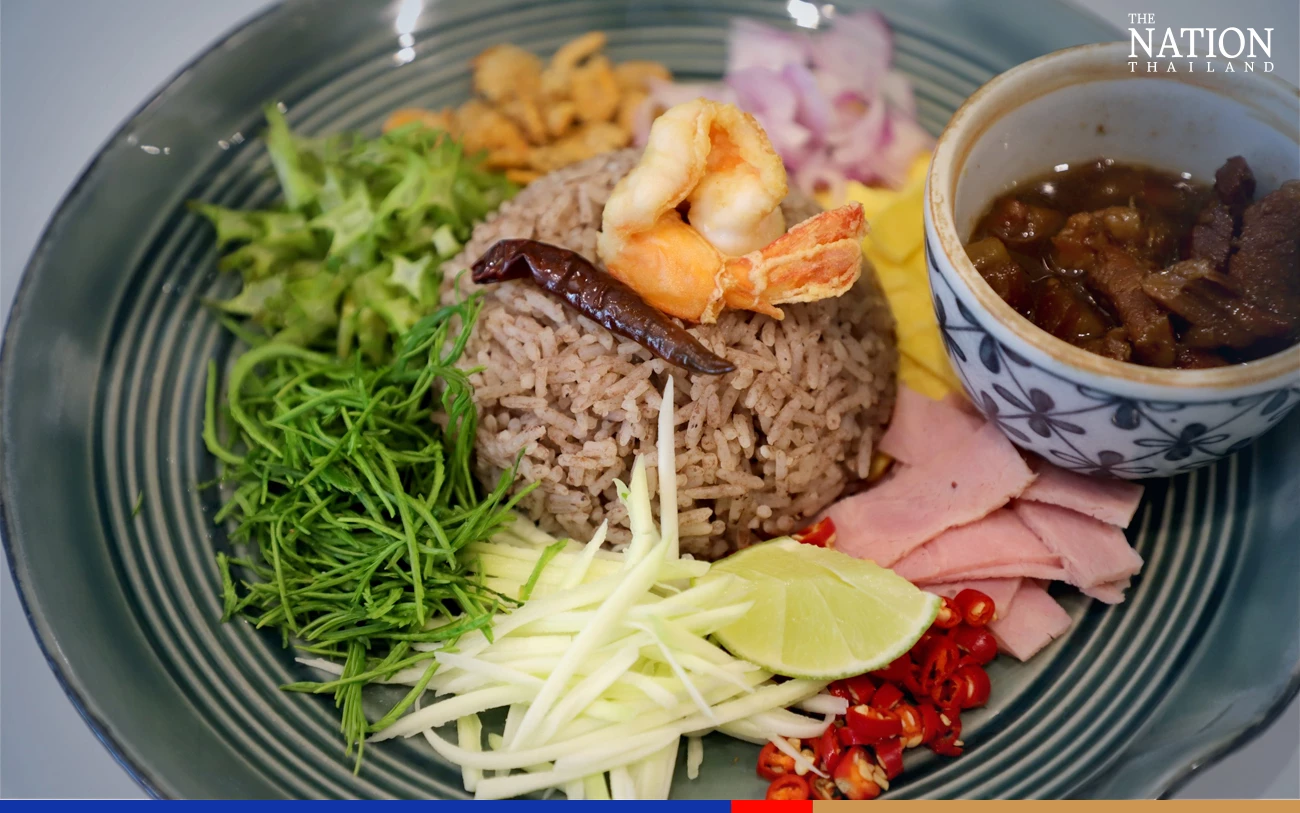
Khao Kluk Kapi, or rice mixed with Thai fermented shrimp paste, served with assorted condiments, is one standout item on the menu. The history of the dish apparently dates back a 100 years to the reign of King Rama V while he was abroad on an official visit. The restaurant explains, “At Khaomali, this dish is served with unusual ingredients as part of the condiments.” Ham, surely, is not a Thai ingredient but the restaurant explains: “While on his visit, the King craved for food cooked by his grandmother and this dish came to his mind. The next day, he started to cook this dish with the Thai ingredients that he had taken along with him on the trip, while adding local ingredients found in the foreign land. After the meal, the king said, ‘So easy to devour, it helps remove the feeling of having heavy hard bread and meat going down my throat’.”
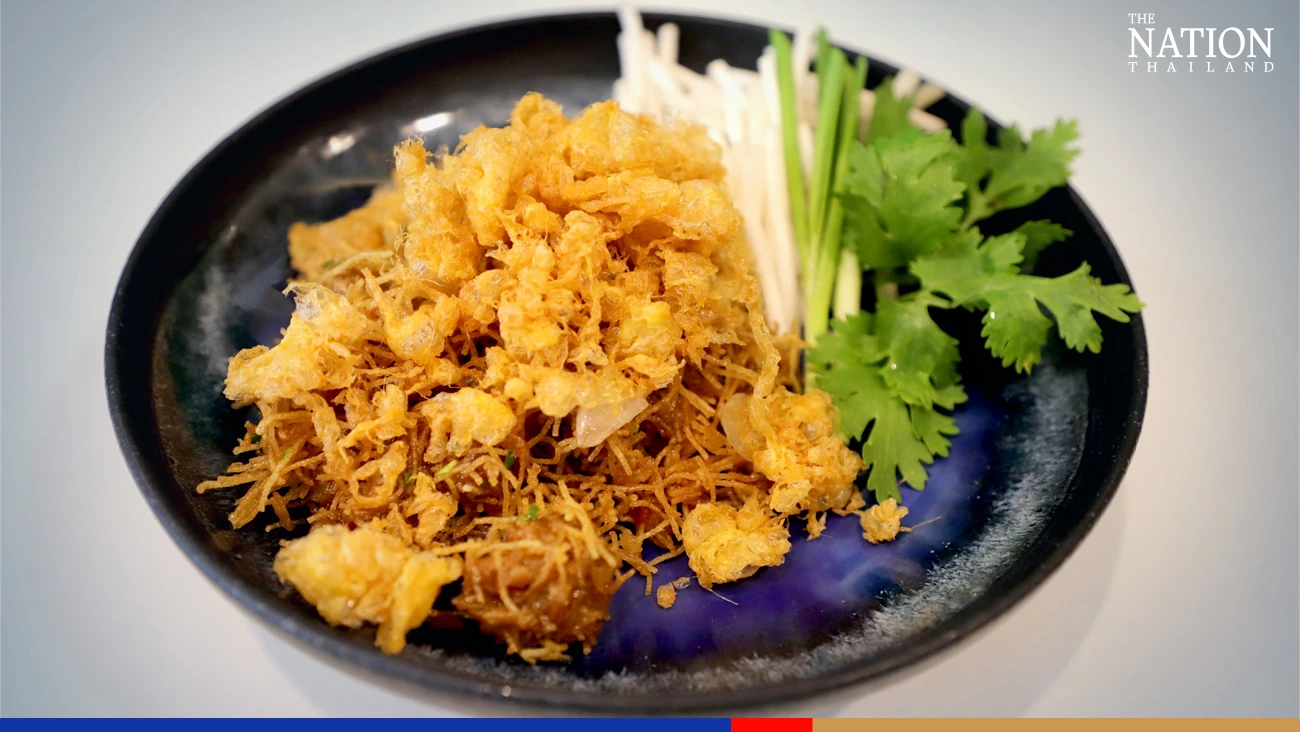
The restaurant serves homely Thai food that can be enjoyed at a gathering of friends, like “mee krob” (crispy rice noodle coated in tamarind sauce), vermicelli and crab meat, topped with the restaurant’s signature sauce, beef shanks green curry.
If you are in a hurry, “A-Harn Jan duan”, or a quick meal plate, is also available, such as Thailand’s favourite quick meals like: ● Khao Pad Krapao Kai Dao (rice topped with basil sauce and fried egg). You can pick your favourite meat
● Khao pad Namprik Long Ruea (rice mixed with chilli paste and assorted condiments)
● Khao Kai Kua Prik Kluea (rice with fried chicken in salt and chilli)
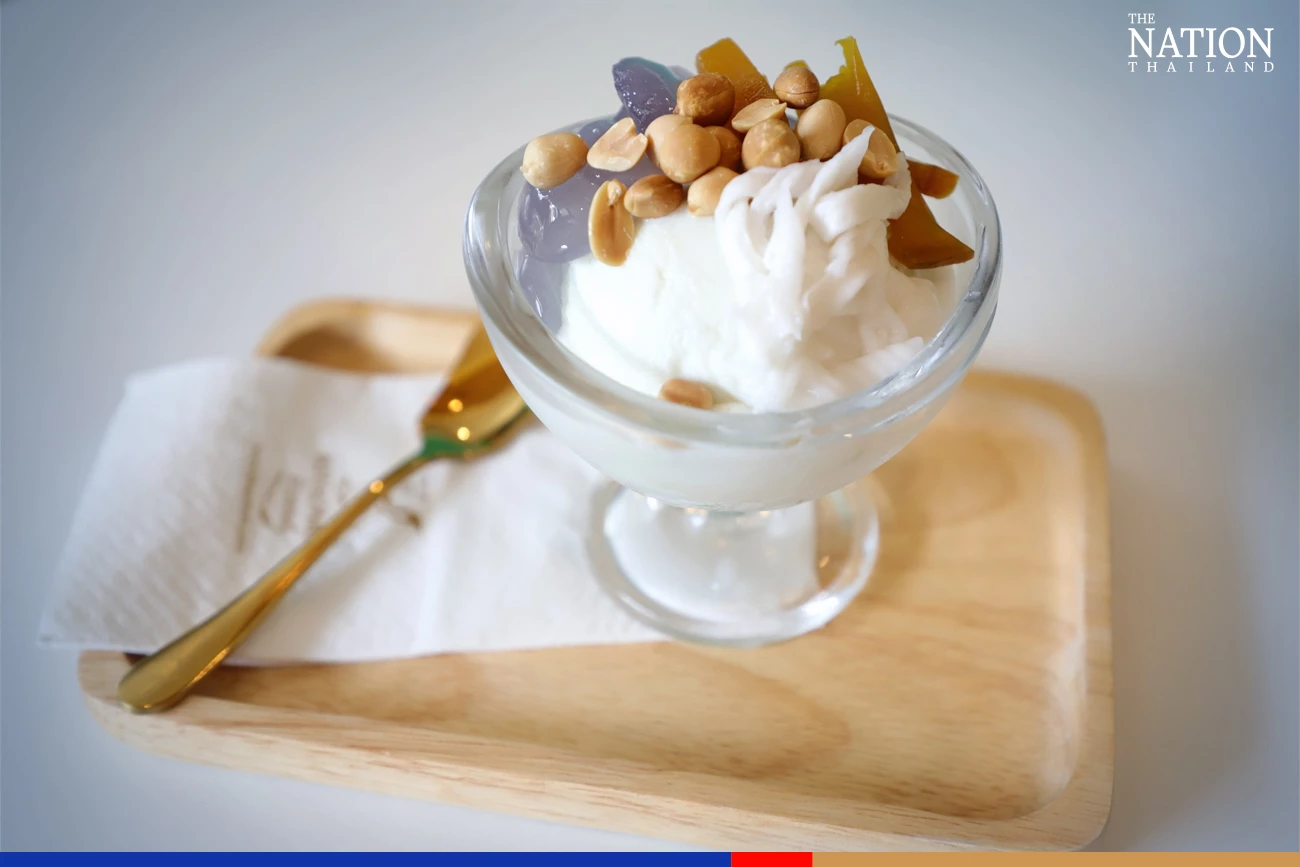
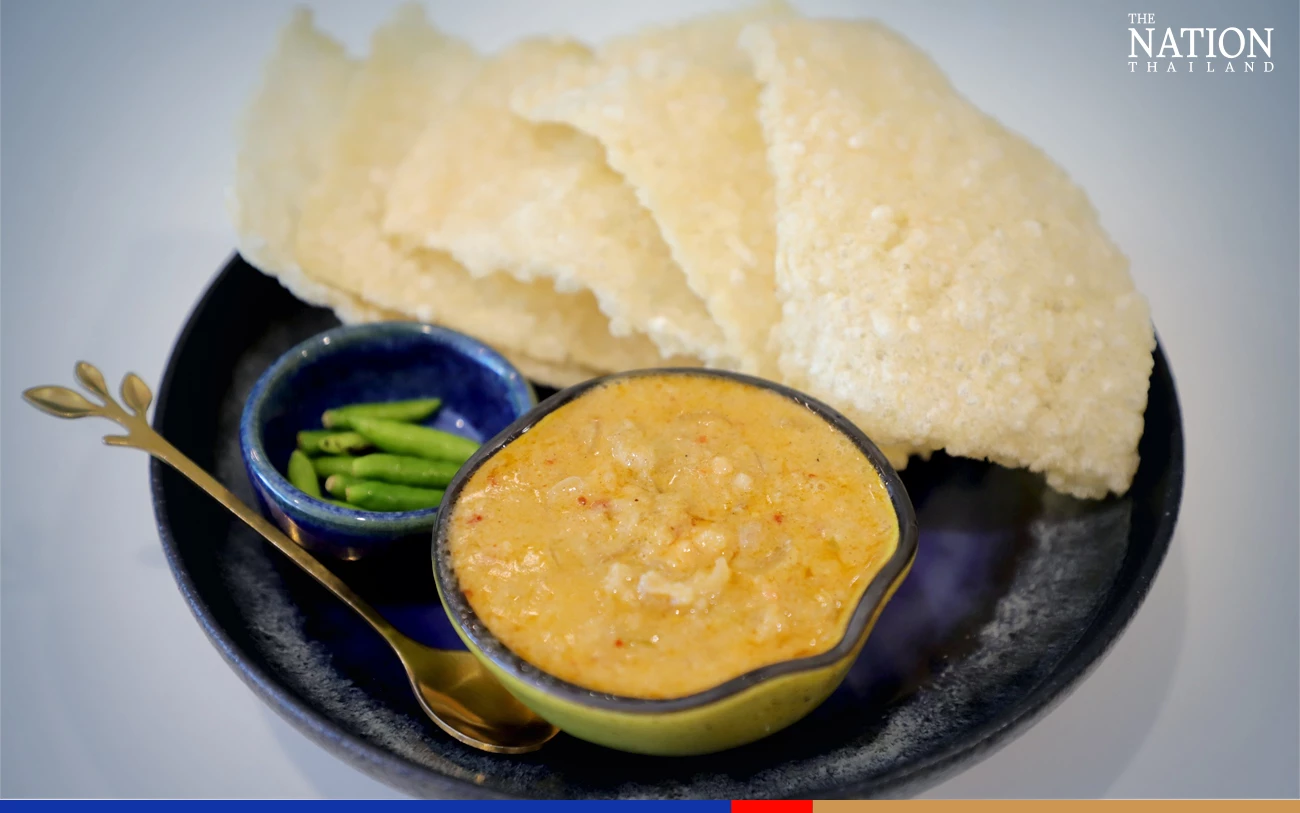
But if you are looking for something to snack on, The Nation would like to recommend the star of their menu: Khao Tang Na Tang (crispy rice crackers with coconut pork dip). Somtam and spicy Thai vermicelli salad are also a must try! For a cool, soothing dessert, coconut ice-cream is highly recommended!
Next generation of Thai chefs getting an education on Australian Food and Wine
FRIDAY, OCTOBER 21, 2022
THE NATION
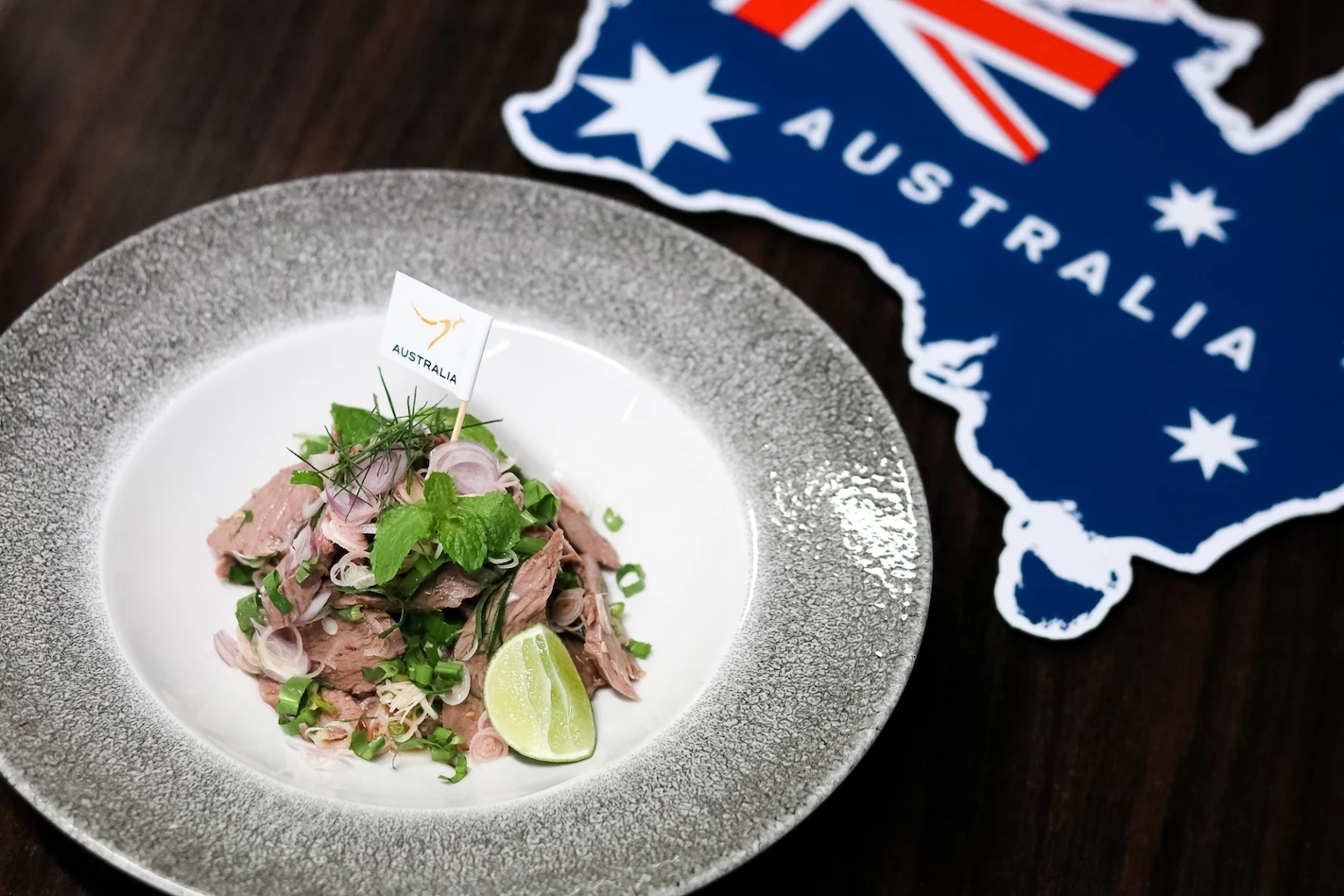
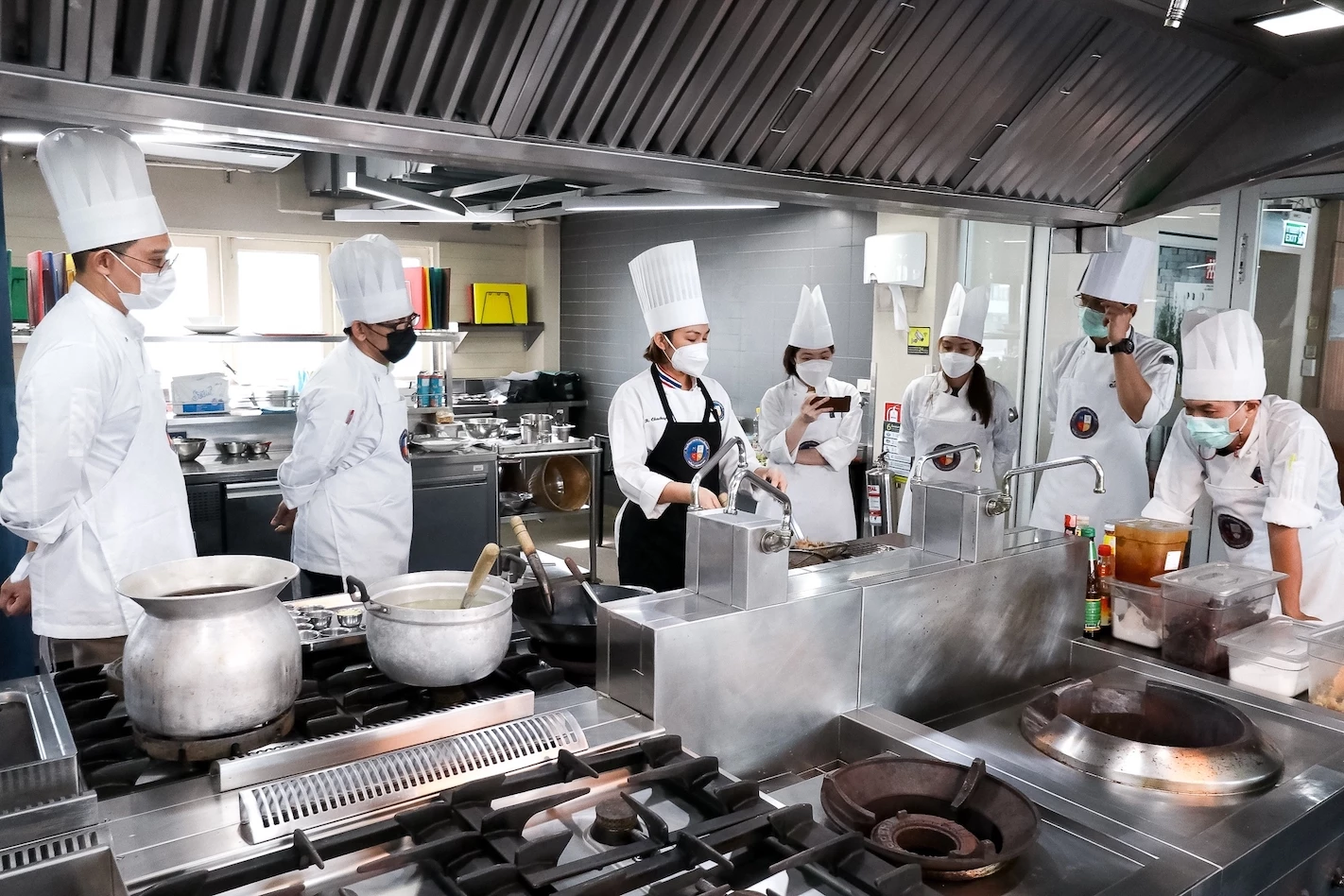
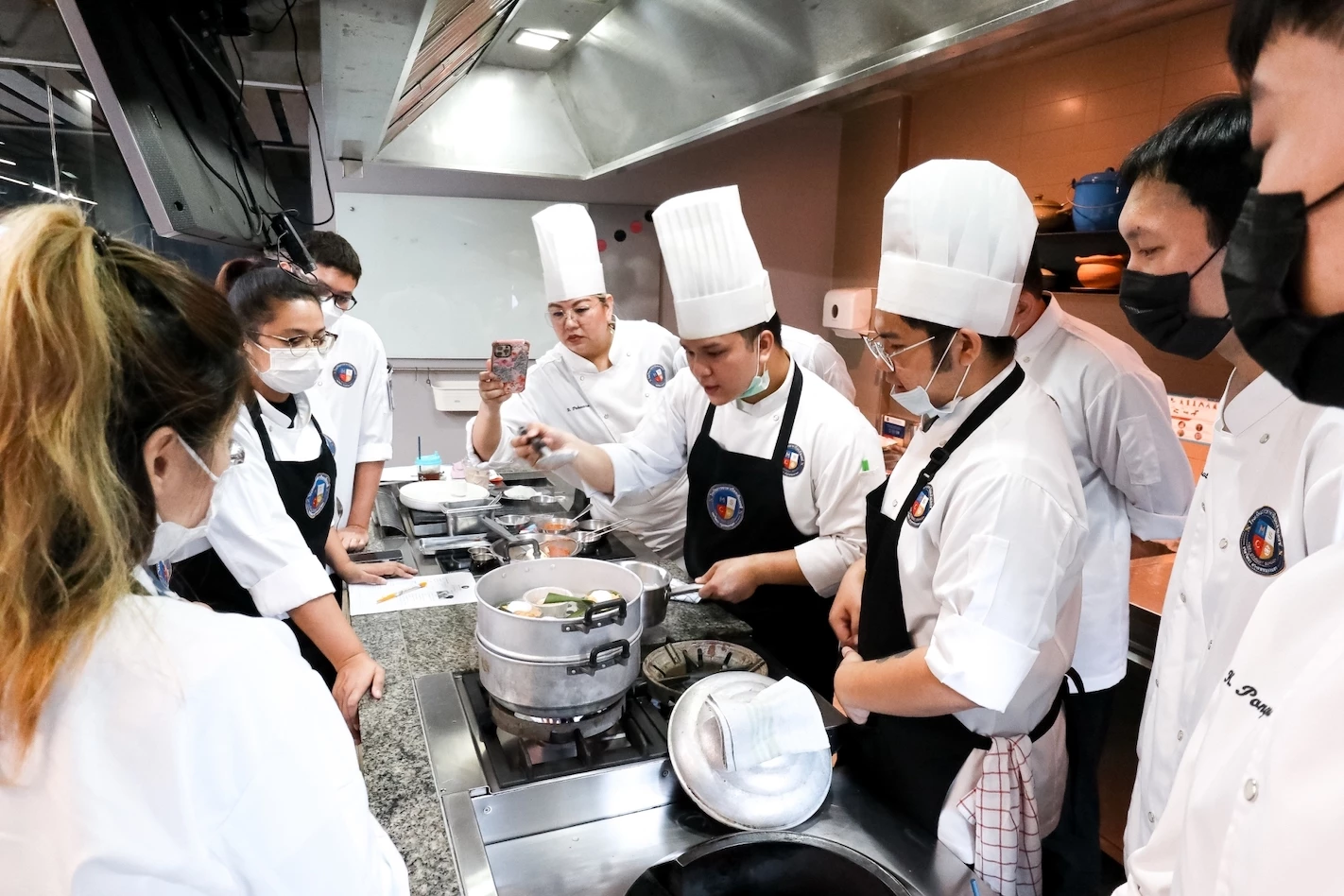
A group of industry bodies representing Australian red meat, dairy, seafood, horticulture and wine have banded together to help educate students at the MSC Culinary School in Bangkok about Australian products.
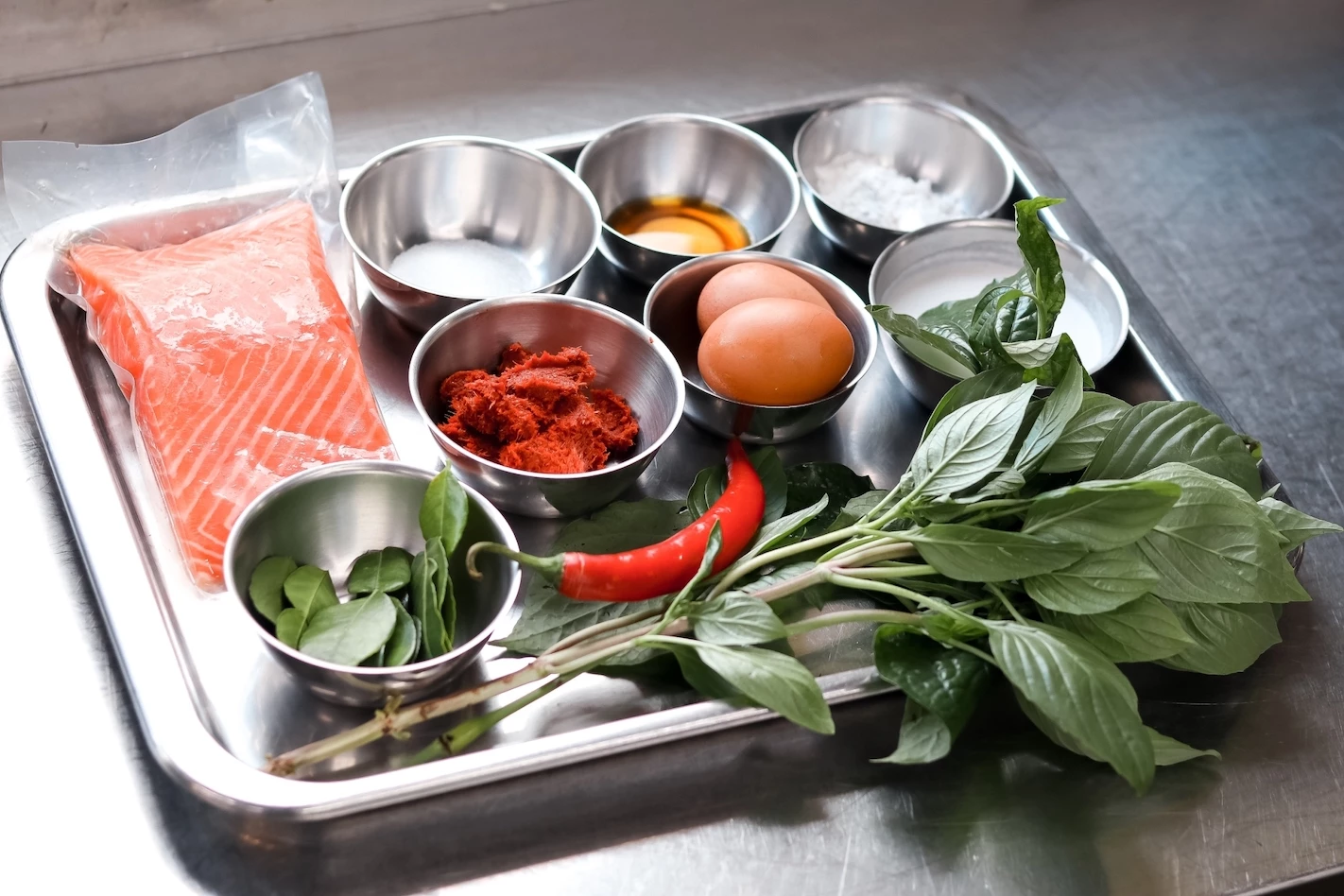
The sponsorship, from September to October, will enable the student chefs to get a better understanding and hands-on experience with products from Australia.
It was arranged by Australia’s Agricultural Trade and Market Access Cooperation (ATMAC) Programme, which was created to expand trade in Australian agricultural, forestry and fisheries into emerging and high-growth potential export markets worldwide.
Australian products are getting more popular as Thai consumers are increasingly paying more attention to the importance of a healthy diet, and view Australia as a reliable and reputable supplier of clean, nutritious, and flavourful products, the organisers said.
This unique sponsorship and collaboration will not only benefit the chefs but also Thai consumers who will one day be dining on dishes created by these chefs with Australian ingredients, the organisers said.
Moreover, the student and their instructors will be cooking a showcase of dishes at a VIP Australian Food & Wine event in Bangkok on November 1.
It will be attended by a select group of leading food industry professionals, Thailand and Australian government officials, importers, and distributors, the organisers.
FWD Life Insurance serves up a special menu at Maguro sushi restaurant as part of brand awareness campaign
THURSDAY, OCTOBER 20, 2022
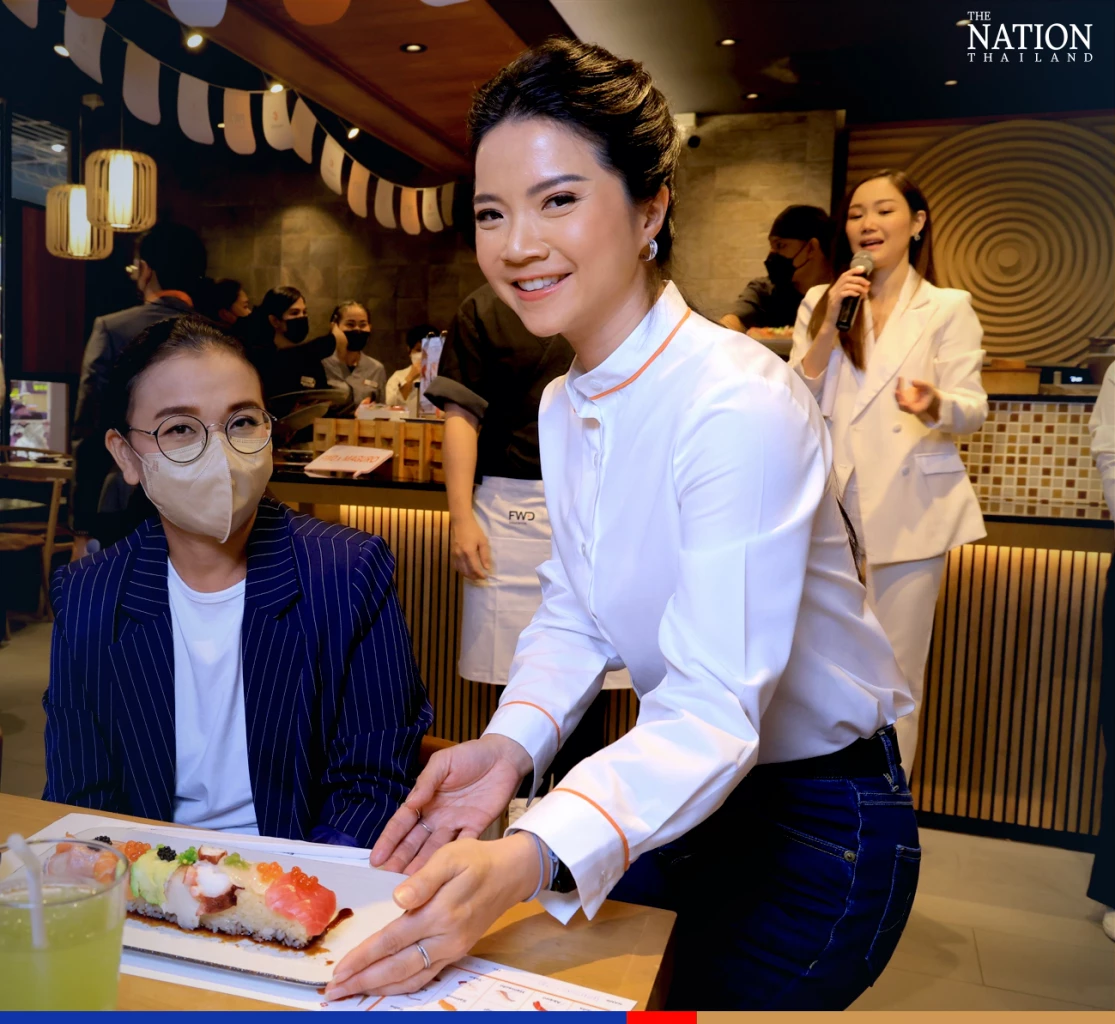
FWD Life Insurance has joined hands with the Japanese sushi restaurant Maguro with a special collaboration menu to improve its image as an insurance company.
Pavarisa Chumvigrant, the company’s chief brand and communications officer, revealed that the company continued to create a brand experience, continuing from previous projects, to highlight itself as an insurance company with a difference.
She said that the company aimed to change people’s vision of the insurance company with brand communication involving the five senses of sight, taste, smell, hearing, and touch under the concept of “Experiences of Celebrate living”.

The company had earlier released a photobook “100 Life-Celebrating Stories” to inspire everyone to pursue their passions on October 17.
FWD is also collaborating with Donna Chang, a cosmetics and fragrance shop, to release the limited edition “Scent of Celebrate living” sachet to deliver a distinctive fragrance from August 25 to December 31.
Pavarisa said, “A key principle of the brand experience strategy that we have continued to implement over the past year is to build brand awareness of FWD Insurance by collaborating with lifestyle leaders so that everyone can fulfil their happiness goals.”
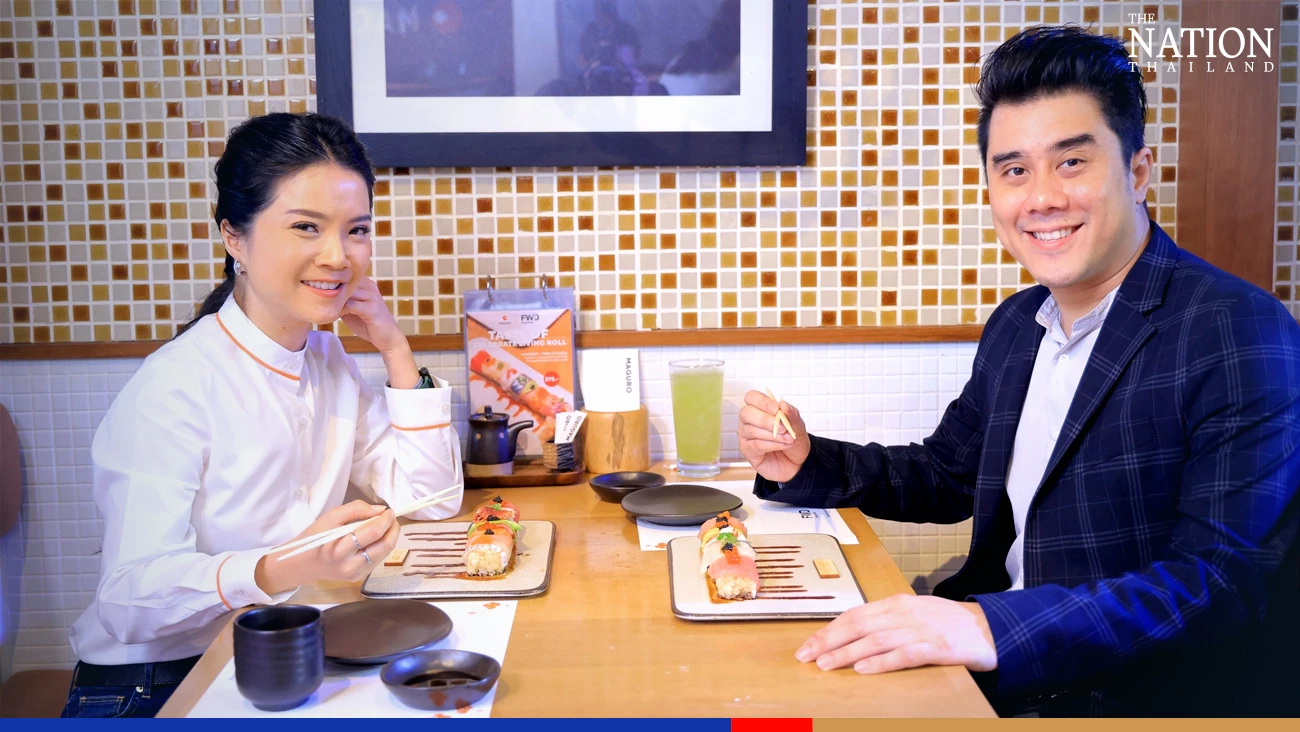
“We chose to collaborate with Maguro because it is a Japanese restaurant that serves fresh and delicious menus from high-quality ingredients and offers great value for money and happiness to its customers, and that is exactly consistent with the brand promise of FWD Insurance,” she said.
The menu “Taste of Celebrate living Roll” consists of eight premium ingredients:
Akami — Maguro’s red meat is high in omega fatty acids, which are essential for cell repair and nourishment in the body.
Hotate from Japan is sweet-aromatic and high in calcium, iron, and vitamin B12.
The soft, gummy texture of Tako nourishes the body and supports the functioning of the bones, muscles and skin.
Mellow-flavoured pickled Saba aids in improving brain neuron function and the memory system.
Hamachi, a soft-textured white fish, is rich in vitamins A, B1, B2, and D.
Salmon, a popular ingredient, nourishes the brain and sights. It also helps in weight control as well.
Chutoro, the mouthwatering portion of Maguro, the King of Sea Fish, contains a good kind of protein that can aid in repairing wear and tear.
Madai, a white fish, is a rare seasonal ingredient that is high in protein, easily digestible, and low in fat.
The menu “Taste of Celebrate living Roll” will be available to everyone, not only to FWD customers, in 11 branches of Maguro restaurant and on delivery applications from October 21 to December 31.