Gold edged lower as investors weighed mixed labor data from the U.S., the Federal Reserves hawkish tilt and the threat of the omicron variant to global growth.
Data Friday showed U.S. job growth registered its smallest increase this year while the unemployment rate fell by more than forecast to 4.2%, offering a mixed picture that may nevertheless push the Fed to quicken the wind-down of pandemic stimulus. It came after Chair Jerome Powell signaled faster tapering of asset purchases amid elevated inflation.
Meanwhile, Goldman Sachs economists cut their forecasts for the U.S. economy this year and next after deciding that the spread of the omicron strain of the coronavirus would exert a “modest downside” drag on growth. Moderna President Stephen Hoge said there’s a “real risk” that existing Covid-19 vaccines will be less effective against omicron, while U.S. medical adviser Anthony Fauci said the variant’s severity may be limited.
Bullion climbed Friday, paring a third straight weekly loss, the longest stretch since September, amid the prospects of less accommodative monetary policy and omicron risks. U.S. consumer prices due this Friday are projected to show the largest annual advance in decades, keeping pressure on the Fed to deliver swifter tightening.
“Gold is still struggling to break above the $1,800 level and we are yet to see any significant safe-haven flows from the recent omicron development,” said John Feeney, business development manager at Sydney-based bullion dealer Guardian Gold Australia. “Gold investors will be paying very close attention to the U.S. inflation numbers out this Friday, so we might see a reaction if we get another beat to the upside.”
Spot gold was 0.2% lower at $1,780.43 an ounce by 10:19 a.m. in London after rising 0.8% Friday. The Bloomberg Dollar Spot Index was steady. Silver, platinum and palladium fell.
WASHINGTON – Senate Democrats are aiming to vote and approve a roughly $2 trillion package to overhaul the nations health care, education, climate, immigration and tax laws before Christmas, hoping to muscle through a jam-packed schedule to deliver the remaining piece of President Bidens economic agenda.
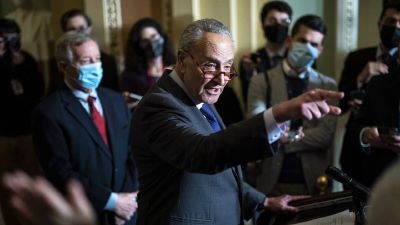
Writing to lawmakers on Monday, Senate Majority Leader Chuck Schumer, D-N.Y., affirmed the aggressive timeline, warning that there are “more long days and nights” on the horizon as the chamber races to resolve a wide array of fiscal and economic issues before the end of the year.
“This is arduous work. It takes time, precision and a lot of pieces moving together,” he later said on the Senate floor.
Yet the path to passage for Democrats’ signature spending plan appears especially precarious, as party lawmakers continue to contend with political dissent among their own ranks. A pivotal swing vote, Sen. Joe Manchin, D-W.Va., has yet to offer his endorsement of the legislation, even after months of wrangling with the White House.
On Monday, Manchin signaled again that he harbors “concerns” with the size and scope of the bill. And he affirmed his trepidations about advancing so much new spending at a time when inflation continues to raise the price of goods, which Manchin said reflected an economy that is “vulnerable” to other disruptions.
“We’re talking about major changes in our tax code, we’re talking about [a] major overhaul of our social [programs], and we’re talking about a tremendous overhaul of our climate positions that we have,” the senator said.
The $2 trillion proposal, known as the Build Back Better Act, aims to expand Medicare coverage, invest new sums to combat climate change, authorize universal prekindergarten and provide new aid to low-income families, all financed through tax hikes targeting rich Americans and corporations. House Democrats adopted the bill in November, teeing it up for the Senate, where party lawmakers at times have been divided over its size and scope.
From here, the Senate still must rejigger critical parts of the bill to ensure it is compatible with the process known as reconciliation. The legislative maneuver allows Democrats to approve the legislation with 51 votes, rather than the usual 60, sidestepping a guaranteed Republican filibuster in the narrowly divided chamber.
But reconciliation carries its own set of potential headaches, as Democrats must ensure every element of their sprawling tax-and-spending proposal directly implicates the federal budget – or else it is at risk of being stripped out of the measure entirely. Anticipating those issues, lawmakers have been meeting behind the scenes with the chamber’s parliamentarian, a customary process that Schumer said is expected to continue “this week and next.”
In the meantime, Democrats have not settled on some of the finer details of the bill itself. Manchin continues to battle with lawmakers over the inclusion of a program to provide paid family and medical leave to millions of Americans. And other party lawmakers are locked in a still-unresolved dispute over a state-and-local tax proposal that some liberals see as too generous to the wealthy.
The wrangling over the bill only reflects the vast work ahead of Congress just 25 days before the end of the year. Democrats and Republicans still have to approve a bill that would authorize nearly $778 billion in defense spending, for example, which has been mired in bitter disputes around U.S. policy toward China and Russia.
Some lawmakers also have discussed using the annual Pentagon measure to address the unrelated yet critical issue of the debt ceiling, which permits the country to borrow to pay its bills. Congress has nine days until the U.S. government may begin to face difficulty issuing new debt, according to the Treasury Department, though other analyses have said Washington has more time until it crosses that dire fiscal threshold.
Speaking to reporters Monday, House Majority Leader Steny Hoyer, D-Md., said he hopes the chamber can address the debt limit as soon as this week. But he cautioned that the issue is “up in the air,” as Democrats and Republicans work out a potential deal in the Senate. Lawmakers from both parties in recent weeks have labored to avert another political showdown, after GOP lawmakers initially refused to supply votes in the narrowly divided chamber as part of a broader opposition to Biden’s spending priorities.
Schumer, for his part, said Monday that Democrats plan to address the issue soon – declining to offer additional details. But he praised Senate Minority Leader Mitch McConnell, R-Ky., for engaging in productive talks, raising the prospect that Congress could come to a resolution on the debt ceiling well before the debate can wreak any political and economic havoc.
In setting a Christmas deadline for the Build Back Better Act, meanwhile, Schumer sought to continue a strategy of keeping pressure on the Senate, a chamber that isn’t exactly known for swift action. The timing is significant, since the proposal extends a key aid program – expanded, monthly child tax credit – that is set to expire at the end of the year. Unless Congress takes action, millions of Americans will receive their final payments this month, a possibility that prompted some lawmakers on Monday to call on the Senate to make haste.
“American families cannot afford to lose this critical middle-class tax cut, which has cut child poverty in half and helped millions of families afford child care, pay their bills, and put food on the table,” said Rep. Suzan DelBene, D-Wash., the chair of the centrist-leaning New Democrat Coalition, which has pushed for the provision.
Biden himself sounded an eager yet patient note Monday. Asked whether lawmakers can accomplish Schumer’s goal, adopting the spending bill before holiday, he briefly told reporters: “As early as we can get it. We want to get it done no matter how long it takes.”
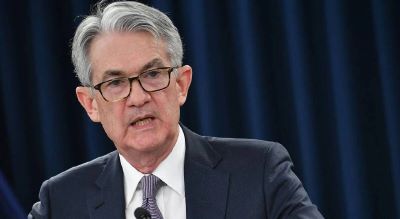
Jerome Powells pivot toward a quicker withdrawal of stimulus paves the way for a more agile Federal Reserve in 2022, one thats willing to raise interest rates faster than expected if inflation lingers or hold back if the pandemic worsens.
Powell, recently picked for another four years as chair, is responding to hot readings on the economy that caught officials by surprise, including signs that inflation is spreading and labor supply is still limited despite falling unemployment.
Investors can expect stepped-up Fed communication of an evolving outlook for employment and inflation that stresses flexibility amid uncertainty over the pandemic and new virus strains. The ultra-gradual normalization that marked the Fed’s retreat from stimulus after the 2008-2009 financial crisis is not a template for this Fed, which is facing something policy makers haven’t had to confront in decades: booming growth and soaring prices.
“They are shifting,” said Anna Wong, chief U.S. economist at Bloomberg Economics and a former Fed Board staffer. “What we are seeing is more weight being put on the discretionary part of policy-making, given the large forecast errors on inflation.”
Powell told U.S. lawmakers last week it was time to “retire” the Fed’s description of high inflation as “transitory,” a stance it held fast to for most of 2021 and which left it doling out stimulus even as some called for it to pull back on as inflation accelerated.
During hearings in which he heard bipartisan complaints about the harm of high prices, he also said officials meeting Dec. 14-15 would consider ending their asset purchase program a few months earlier than initially planned in mid-2022. They will also release fresh rate forecasts, which in September saw them evenly split over raising rates next year.
The broadly-signaled policy pivot, coming shortly before the meeting, already has some analysts boosting their outlook for interest rates next year.
“We are moving to a three-hike baseline for 2022 with 25 basis-point rate increases in June, September and December,” Evercore’s Krishna Guha and Peter Williams wrote in a note Friday.
Such a path may depend on the impact of the new omicron variant of the coronavirus. In a weekend report, Goldman Sachs economists cut their forecasts for the U.S. economy this year and next after deciding the strain’s spread would exert a “modest downside” drag on growth.
Powell’s signal, just weeks after the Nov. 2-3 Fed meeting at which the taper was announced, responds to an economic recovery that has surprised officials at every turn. That intensified in the days leading up to and shortly after the decision.
Employment costs rose at a record pace, according to data just days before officials gathered. A week later, a government report showed consumer prices rose in October by the fastest pace in three decades. That month’s jobs report also came in strong. But the labor market continued to see fewer workers re-entering than anticipated, despite the wide availability of coronavirus vaccines and the reopening of schools. And underlying demand is solid — retail sales rose in October by the most in 7 months — with estimates of fourth-quarter growth remaining strong.
Other Fed officials began suggesting the need to remove policy support faster soon after the taper was announced.
Fed Vice Chair Richard Clarida, Governor Chris Waller, Cleveland Fed President Loretta Mester and Atlanta Fed President Raphael Bostic have all said they were open to a faster removal of policy support, as did San Francisco Fed President Mary Daly, who is usually a policy dove. James Bullard of St. Louis, who’s been pushing to speed up the taper for a while, said Friday he favored wrapping up in March.
“When inflation is a problem, there are no doves,” said Laurence Meyer, a former Fed governor, who was struck by how fast officials began publicly questioning their own policy decision. “Can you ever think of a time when they announced a decision, and before they actually start it, are changing it? I can’t.”
Notably silent throughout this period were two prominent U.S. central bankers: Powell himself, and Governor Lael Brainard, who were both being considered for the chairmanship.
President Joe Biden announced Nov. 22 that Powell would be renominated while Brainard would be elevated to vice chair to replace Clarida, whose term as a governor expires in January.
Eight days later, Powell added his voice to the discussion, telling senators that it was time to discuss whether the Fed should “wrap up” asset purchases more quickly.
He also told the Senate Banking Committee that, given the wedges in the labor market now with the virus still out there, it would take more time to get workers back. That’s why getting inflation under control now was critical to his labor market goal, he explained.
“We’re going to need a long expansion; to get that we’re going to need price stability,” Powell said. “And in a sense, the risk of persistently high inflation is also a major risk to getting back to such a labor market.”
In part because the Fed made much of its maximum employment goal being “broad-based and inclusive” when it updated its policy framework last year, progressives are likely to hold Powell accountable to those terms as the central bank approaches tightening in 2022.
In the near term, though, both Democrats and Republicans want Powell to do something about inflation. That’s a big political gift for the Fed, since historically lawmakers tend to pressure the central bank to keep borrowing costs low.
“We’ve got to get control of inflation; it’s ravaging our people,” Louisiana Republican Senator John Kennedy told Powell during the hearing.
U.S. equities rebounded from Fridays selloff as investors took comfort in reports that cases of the omicron variant have been relatively mild.
The S&P 500 rose 1.6%, erasing last week’s losses, while the technology-heavy Nasdaq 100 gained 1.1%.
The mood across markets was calmer on Monday as investors pointed to good news from South Africa that showed hospitals haven’t been overwhelmed by the latest wave of Covid cases. However, the Cboe volatility index remains elevated.
“Although we do expect this volatility to continue, it very well could be a buying opportunity,” said Ryan Detrick, chief market strategist at LPL Financial, in a note. “We’ve been living with Covid-19 for more than 20 months now. We’ve seen several variants and managed to move forward, and we expect a similar playbook to work once again.”
Oil rose after Saudi Arabia boosted crude prices, signaling confidence in the demand outlook. U.S. natural gas fell on forecasts for warmer weather, easing some previous inflationary pressures. And the 10-year Treasury yield advanced to 1.43%.
Initial data from South Africa are “a bit encouraging regarding the severity,” Anthony Fauci, U.S. President Joe Biden’s chief medical adviser, said on Sunday. Though, at the same time, he cautioned that it’s too early to be definitive.
“Admittedly, we don’t know how effective current vaccines are against omicron, or how transmissible it is, but we do know that the appetite for another nationwide shutdown is quite low and that these questions should be answered over the coming weeks,” Detrick said.
The VIX, or so-called fear gauge, fell roughly four points to 27 on Monday after it failed to initially match a high corresponding to when the S&P 500 dropped below its Sept. 20 low last week.
“That marked the beginning of what turned out to be the strongest October rally since 2015,” said Chris Larkin, managing director of trading at E*Trade Financial. “While past is rarely prologue, it should give seasoned traders out there something to think about. This suggests reduced volatility concerns even though the market had fallen to fresh lows.”
The Stoxx Europe 600 index gained 1.3% while shares in Japan, China and Hong Kong fell. Evergrande’s dollar bonds fell sharply and shares plunged 20% to a record low after the firm moved closer to a debt restructuring. China also cut the amount of cash most banks must hold in reserve, acting to counter the economic slowdown in a move that puts its central bank on a different policy path than many of its peers.
Later this week, attention will turn to U.S. consumer price index, which is expected to show the largest annual advance in decades, keeping pressure on the Federal Reserve to deliver swifter policy tightening.
“As it stands, the Fed are increasingly likely to accelerate their taper next week with a market that is worried that it’s a policy error,” said Jim Reid, head of thematic research at Deutsche Bank. “I don’t think it is as I think the Fed is way behind the curve.”
– – –
Some of the main moves in markets:
Stocks
–The S&P 500 rose 1.6% as of 2:05 p.m. New York time
–The Nasdaq 100 rose 1.1%
–The Dow Jones Industrial Average rose 2.1%
–The MSCI World index rose 1%
Currencies
–The Bloomberg Dollar Spot Index was little changed
–The euro fell 0.3% to $1.1282
–The British pound rose 0.2% to $1.3263
–The Japanese yen fell 0.6% to 113.53 per dollar
Bonds
–The yield on 10-year Treasuries advanced nine basis points to 1.44%
–Germany’s 10-year yield was little changed at -0.39%
–Britain’s 10-year yield declined one basis point to 0.74%
Commodities
–West Texas Intermediate crude rose 4.3% to $69.14 a barrel
Bitcoin plunged 5.5 per cent to $53,435.9 at 22:04 GMT on Friday (December 4), losing $3,112.06 from its previous close, the website Investing.com reported.
On Wednesday CEO of digital payment platform “Square”, Jack Dorsey, announced that Square will change its corporate name to “Block.” Additionally, its cryptocurrency division — Square Crypto — will be renamed “Spiral” — both changes are scheduled to occur next week on December 10.
The announcement came only two days after his resignation as CEO of Twitter, as Dorsey is reinforcing Square’s position in cryptocurrency and blockchain.
Parag Agrawal, Twitter’s chief technology officer, is taking over as CEO effective immediately since Monday.
It is speculated that Dorsey is following facebook’s footstep in diverting from social media to cryptocurrency and blockchain technology, after the company had announced the rebranding into Meta in October.
The Stock Exchange of Thailand (SET) Index closed at 1,588.19 on Friday, down 3.65 points or 0.23 per cent. Transactions totalled 55.19 billion baht with an index high of 1,597.25 and a low of 1,587.53.
The index fell after a sharp rise totalling 1.47 per cent on Thursday and Wednesday.
The 10 stocks with the highest trade value today were KBANK, EA, PTT, MAKRO, ADVANC, RCL, PTTEP, SCB, SABUY and CPALL.
Other Asian indices were mixed:
Japan’s Nikkei Index closed at 28,029.57, up 276.20 points or 1.00 per cent.
China’s Shanghai SE Composite closed at 3,607.43, up 33.60 points or 0.94 per cent, while the Shenzhen SE Component closed at 14,892.05, up 126.49 points or 0.86 per cent.
Hong Kong’s Hang Seng Index closed at 23,766.69, down 22.24 points or 0.093 per cent.
South Korea’s KOSPI Index closed at 2,968.33, up 23.06 points or 0.78 per cent.
Taiwan’s TAIEX Index closed at 17,697.14, down 27.74 points or 0.16 per cent.
The baht opened at 33.88 to the US dollar on Friday, unchanged from Thursday’s closing rate.
The Thai currency is likely to move between 33.75 and 33.95 to the greenback during the day, Krungthai Bank market strategist Poon Panichpibool predicted.
The market is in a risk-on state because investors are hoping that the Omicron variant of Covid-19 will not be worse than the Delta variant even it might spread quicker. They also believed that the current vaccine might work against the Omicron variant.
The price of gold rose by THB50 in morning trade on Friday.
A9.25am report from the Gold Traders Association showed the buying price of gold bar at THB28,400 per baht weight and selling price at THB28,500, while the buying and selling price of gold ornaments is THB27,894.40 and THB29,000, respectively.
At close on Thursday, the buying price of gold bar was THB28,350 per baht weight and selling price THB28,450, while gold ornaments were THB27,833.76 and THB28,950, respectively.
The spot gold price on Friday morning was moving around US$1,772 (THB60,070) per ounce after Comex gold at close on Thursday crashed by $21.6, hit the lowest level in more than 7 weeks to $1,762.7 per ounce due to pressure from the forecast that The US Federal Reserve (Fed) may raise interest rates sooner than expected. In addition, the fading concerns over the Covid-19 Omicron variant was also another pressure to sell gold as a safe-haven asset.
Krungsri Securities forecast the Stock Exchange of Thailand (SET) Index on Friday (December 3) would fluctuate between 1,585-1,600 points.
It said the index gained positive sentiment from the US House lawmakers on Thursday adopted a bipartisan bill to fund the government into early next year.
“However, uncertainty over Omicron Covid-19 variant, US Federal Reserve’s signal to end quantitative easing programme and mass sell-offs of shares to deal with risks during three days holiday would pressure the index,” Krungsri Securities said.
It also recommended buying of the following companies’ shares as an investment strategy: ▪︎ COM7, SYNEX, BCH, CHG and MEGA, which benefit from the Covid-19 crisis. ▪︎ HANA, KCE, TU, ASIAN, EPG and XO, which benefit from the weakening baht.
Stocks pushed higher after the biggest back-to-back selloff since October 2020 as dip buyers scooped up some of the hardest-hit shares. Treasuries retreated.
Companies that stand to benefit the most from an economic rebound led gains in the S&P 500, with small caps and travel stocks surging. Trading volume in the gauge was 30% above the average of the past month. Boeing jumped as China was on the cusp of lifting a nearly three-year grounding of the 737 Max plane. Tech underperformed as Bloomberg News reported that Apple Inc. told its component suppliers demand for the iPhone 13 lineup has weakened.
Volatility has gripped financial markets this week, stirred by Federal Reserve Chair Jerome Powell’s hawkish tone and the spread of the omicron coronavirus strain. The turmoil may offer investors a chance to position for a trend reversal in reopening and commodity trades, according to JPMorgan Chase & Co. strategists. While it’s likely that the variant is more transmissible, early reports suggest it may also be less deadly, they added.
“What we’re seeing is the propensity to buy the dip,” said Aoifinn Devitt, chief investment officer at Moneta Group. “And why are we buying the dip? Because there’s just so much money sitting on the sidelines. Even though these short bouts of volatility are surprising and certainly have sent a chill through markets, we still have a significant bank of equity returns to enjoy year to date.”
Traders continued to assess the latest developments on the new coronavirus strain, with a growing chorus of companies and officials seeking to reassure the public about vaccinations. Novavax said it’s developing an omicron-specific vaccine construct, while a Pfizer executive expects its shot to hold up against the variant.
Treasury Secretary Janet Yellen said that it’s the Fed’s job to avert any wage-price spiral, and that she understands the “reasoning” behind the central bank’s plans to scale back its asset purchases. Wage and price behavior will be the key signs to watch to detect whether the U.S. economy is “overheating,” she added, speaking virtually on Thursday to a conference organized by Reuters.
Bond traders have slashed their inflation expectations, putting the so-called breakeven rate for Treasuries linked to consumer-price gains over the next five years on track for its biggest one-week drop since the early months of the Covid pandemic.
Applications for U.S. state unemployment benefits rose by less than forecast last week, suggesting additional progress in the job market. The figures come a day before the monthly employment report, which is projected to show payrolls increased by 546,000 in November.
The swoon in the S&P 500 in the last two days depressed one measure of its breadth to a level that has coincided with bargain hunting and a recovery in the gauge. The measure is the proportion of stocks trading above the 50-day simple moving average.
Elsewhere, oil whipsawed after OPEC and its allies said they will proceed with their next oil-production hike, but could revisit the decision at any moment as the risk to demand from the omicron variant of Covid-19 becomes clearer.
Stocks:
– The S&P 500 rose 1.7% as of 12:33 p.m. New York time.
– The Nasdaq 100 rose 1.1%.
– The Dow Jones Industrial Average rose 1.9%.
– The MSCI World index rose 0.9%.
– The Russell 2000 Index rose 2.3%.
Currencies:
– The Bloomberg Dollar Spot Index was little changed.
– The euro fell 0.2% to $1.1298.
– The British pound rose 0.2% to $1.3304.
– The Japanese yen fell 0.4% to 113.22 per dollar.
Bonds:
– The yield on 10-year Treasuries advanced six basis points to 1.46%.
– Germany’s 10-year yield declined three basis points to -0.37%.
– Britain’s 10-year yield declined one basis point to 0.81%.
Commodities:
– West Texas Intermediate crude rose 2.3% to $67.10 a barrel.