Chinas electric car sales war is being waged inside the cabin #SootinClaimon.Com

#SootinClaimon.Com : ขอบคุณแหล่งข้อมูล : หนังสือพิมพ์ The Nation.

https://www.nationthailand.com/business/40008281


Around lunchtime at an Xpeng showroom in Beijing last month, a man in a three-piece suit strolled inside and straight past rows of the companys sleek P7 and P5 electric sedans.

Watching on, I saw him make a beeline for a display of a model of the company’s proposed flying car. “When will it be available?” he eagerly asked a member of sales staff. “I hope it’s in use as soon as possible.”

Other customers were focused on in-car karaoke features. Xpeng executives have recently been hyping prospects for other innovations too, like facial recognition technology and the company’s cutesy, ride-on robotic pony.

As electric-vehicle sales surge in the world’s top auto market – they’re forecast to more than double to 3 million units this year from 1.37 million in 2020 – it seems the performance of the cars themselves is becoming far less of a concern to consumers. Most models across leading brands offer ample driving range between recharging, comparable reliability and comfort, and similar sticker prices for equivalent products.

It means electric carmakers in China are competing on what happens inside the cabin: whether navigation systems are the most advanced, how effective and useful the voice-recognition software is, which social media platforms can be integrated directly with on-board systems. Other recent selling points for top brands have been car seats that can be turned into airline-style flat beds and movie projection screens.

A car’s digital technology is particularly key to lure China’s consumers and a challenge for brands seeking to add market share, Christoph Grote, BMW’s digital car chief, said last month.

As passenger vehicles increasingly resemble a smart device with wheels, manufacturers are also seizing on opportunities to expand into related technology segments. In September, Geely detailed its plans to begin making cell phones, and has also started manufacturing satellites from a center in Taizhou, Zhejiang province.

The lines are blurring in the opposite direction, too. Smartphone giant Xiaomi has pledged an initial investment of $10 billion over the next decade to push into the EV sector, and in August announced the acquisition of an autonomous driving technology startup. Foxconn Technology, the Taiwanese electronics manufacturer that’s a key partner for Apple, recently unveiled its first EV.

Faced with those competitors in the passenger-car segment, China’s EV makers are seeking to accelerate progress on innovations in transportation, including with flying cars.

Xpeng’s affiliate HT Aero, which last month raised more than $500 million, is developing a lightweight vertical take-off and landing model with a foldable rotor that’ll be able to drive on roads and fly at low-altitudes. Geely is among the companies, including competitor Toyota, working on an airborne product.

The Xpeng unit aims to keep the cost below $156,196 (1 million yuan) and to enter mass production by 2024. As the impatient customer in the Beijing showroom demonstrated, for some consumers, the next leap forward for China’s EV giants can’t come soon enough.

Published : November 02, 2021

By : Bloomberg

Squid Game is memecoin warning with wipeout after 230,000% gain #SootinClaimon.Com

#SootinClaimon.Com : ขอบคุณแหล่งข้อมูล : หนังสือพิมพ์ The Nation.

https://www.nationthailand.com/business/40008280


Investors drawn to cryptocurrencies can be forgiven for having an expectation of high returns, especially lately. After all, even as the S&P 500 Index more than doubled in the past five years, Bitcoin rocketed more than 80-fold — albeit with much of the rally occurring in the past year. “Memecoins” such as Dogecoin and Shiba Inu have also surged, often for no particular reason.

Big gains aren’t a given, though, especially in a market as untamed, sprawling and speculative as crypto. And the inflation in value is often ephemeral. For evidence, there’s Squid Game, or SQUID, the latest memecoin sensation, inspired by the Netflix hit. It surged more than 230,000% in the past week to $2,861.80, according to CoinMarketCap pricing — only to plunge 100% to less than half a cent as of Monday in New York.

“Betting on the right coin can lead to jaw-dropping riches,” said Antoni Trenchev, co-founder of crypto lender Nexo, in an email Sunday. “The problem is, what goes up in a straight line tends to retreat in a similar fashion.” He added, “you hear that some memecoin investors don’t care about the losses. They are in it for the ride,” but that “once the selling starts, a cascading effect can play out, so it’s wise to only use money you can afford to lose.”

Some digital assets have had eye-popping gains, with the past year’s bull market spreading beyond the likes of Bitcoin and Ether to other tokens, decentralized finance projects and more. Dogecoin, which started in 2013 as a joke, has soared 10,000% in the past year, according to CoinGecko pricing. Shiba Inu, which was created just last year, has soared more than 90,000,000%; it soared 800% in October alone.

Squid Game’s boom and bust reveals another side of the crypto frenzy: The potential for demand to suddenly dry up, or worse, for developers to abandon a project and abscond with the funds in a scam known as a rug pull. Whether that’s what happened with Squid Game is still unclear, but even before the drop, there were inconsistencies around trading. CoinMarketCap posted a warning that it had received “multiple reports” that users weren’t able to sell the token on PancakeSwap, a decentralized exchange.

“Please do your own due diligence and exercise extreme caution. This project, while clearly inspired by the Netflix show of the same name, is not affiliated with the official IP,” it says at the top of the SQUID page, referring to intellectual property.

Indeed, the Squid Game white paper says it “will implement an innovative anti-dump mechanism.” Buying in the market releases “selling credits,” it says, but adds that if there is no selling credit left “in the pool,” someone won’t be able to sell any more.

“The reality is that very few retail buyers of these memecoins actually spend the time to read the white paper or try to understand the tokenomics and governance frameworks of these coins,” said Henri Arslanian, PwC crypto leader and partner. “And that comes with risks.”

It can even be hard to know what one is investing in, with crypto opportunists creating tokens that have similar names to high-fliers. A search for “Floki” (that’s the name of Tesla Inc. founder Elon Musk’s puppy) on CoinGecko comes up with Floki Inu, Floki Musk, Shiba Floki, Baby Moon Floki, FlokiSwap and FlokiMooni.

Some have suggested that there are broader societal reasons for the moves, which dovetail with the Reddit-fueled rides in stocks such as GameStop Corp. and AMC Entertainment Holdings Inc. this year, as well as the breakout prices of many non-fungible tokens, or NFTs.

All of these have benefited from a grass-roots enthusiasm that spurns the old order and has little to do with the type of fundamental analysis that justifies more traditional investments.

Raoul Pal, the co-founder of crypto investment platform Real Vision Group, said in a recent Twitter thread that this is part of a “seismic” shift driven by younger people who aren’t looking for modest returns, but are instead willing to take huge risks in order to make huge amounts of money.

Others trace the speculative frenzy to the mountains of cash floating around the global financial system as the Federal Reserve and other central banks keep monetary spigots open to counter the effects of the covid-19 pandemic. But these easy-money policies have an eventual expiration date.

“There’s just a lot of money looking for the best theme. Silly or otherwise! The ‘hot ball of money’ effect,” said Jonathan Cheesman, head of over-the-counter and institutional trading at crypto derivatives exchange FTX.

One consequence is that crypto projects that have invested significant time and energy from knowledgeable people who want to apply the technology to create utility — whether it’s in financial tools like with DeFi, or ownership rights like with NFTs, or myriad other potential areas — find themselves outranked by tokens that were seemingly created with almost no effort at all.

“It is somewhat intellectually insulting to see a meme coin like #SHIB have a higher market cap than other projects like #Algorand, #Avalanche #Polygon #Stellar (just to name a few) where years of R&D, innovation and PhD talent and time has been dedicated to advancing this space,” PwC’s Arslanian said.

Crypto has delivered some wild rides, and not just memecoins. This reality may be easy to forget with Bitcoin and Ether both trading near all-time highs. Bitcoin, for example, dropped more than 80% from high to low between December 2017 and December 2018. And one need not go back that far to find an example — just look at Dogecoin earlier this year.

“On April 13 it was priced at 7 cents; 25 days later it peaked at 74 cents, and raced into the top 10 cryptos before slumping almost 80% in the next six weeks,” Nexo’s Trenchev said. “That’s how fast the crypto market can turn against you.”

Investment history is strewn with examples of booms and busts. The verdict on this current craze has yet to be determined, but individuals who are piling in now risk learning a hard lesson somewhere down the line. Squid Game investors already did.

Published : November 02, 2021

By : Bloomberg

Stocks climb toward record as earnings roll in #SootinClaimon.Com

#SootinClaimon.Com : ขอบคุณแหล่งข้อมูล : หนังสือพิมพ์ The Nation.

https://www.nationthailand.com/business/40008279


Stocks traded near their all-time highs as solid corporate earnings overshadowed disappointing manufacturing data. Treasuries fell.

The S&P 500 rebounded from session lows, led by commodity and retail shares. The Dow Jones Industrial Average earlier touched the 36,000 level for the first time. A gauge of small caps climbed about 2%.

More than 80% of S&P 500 companies reporting third-quarter results have beaten Wall Street estimates, according to data compiled by Bloomberg. That has laid the groundwork for a nearly 6% gain in the benchmark since the season began — the best performance over a comparable period in seven years.

Meanwhile, data showed persistent supply-chain challenges continued to weigh on U.S. manufacturers in October. The average time it takes for materials and supplies to reach U.S. factory floors increased to a record last month. Federal Reserve officials meet this week as consumers and companies fret the U.S. economy is facing the most-widespread supply crunch since the oil crisis of 1973.

“There are always risks to the outlook,” said Evan Brown, head of asset allocation at UBS Asset Management. “But stocks have a habit of climbing the wall of worry as long as underlying economic fundamentals are sound.”

For Morgan Stanley strategist Michael Wilson, the bullish trend for stocks may continue into the Thanksgiving holiday later this month, but “not much longer” as the Fed is expected to start tapering and earnings growth will slow further into next year.

Stocks

– The S&P 500 rose 0.1% as of 12:53 p.m. New York time

– The Nasdaq 100 rose 0.1%

– The Dow Jones Industrial Average rose 0.3%

– The Stoxx Europe 600 rose 0.7%

– The MSCI World index rose 0.4%

Currencies

– The Bloomberg Dollar Spot Index was little changed

– The euro rose 0.3% to $1.1592

– The British pound fell 0.1% to $1.3665

– The Japanese yen fell 0.2% to 114.18 per dollar

Bonds

– The yield on 10-year Treasuries advanced three basis points to 1.59%

– Germany’s 10-year yield was little changed at -0.10%

– Britain’s 10-year yield advanced three basis points to 1.06%

Commodities

– West Texas Intermediate crude rose 0.7% to $84.17 a barrel

– Gold futures rose 0.5% to $1,792.40 an ounce

Published : November 02, 2021

By : Bloomberg
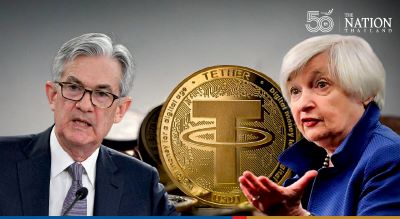
Biden administration calls on Congress to take the lead regulating stablecoins #SootinClaimon.Com

#SootinClaimon.Com : ขอบคุณแหล่งข้อมูล : หนังสือพิมพ์ The Nation.

https://www.nationthailand.com/business/40008278


A high-level task force of financial regulators recommended Monday that firms that issue stablecoins – a type of cryptocurrency linked to real-world assets – be more tightly regulated but called on Congress to write the necessary laws, suggesting they lacked the power themselves.

The report – written by a Treasury-led group that includes Secretary Janet Yellen, Federal Reserve Chairman Jerome Powell and Securities and Exchange Commission Chairman Gary Gensler – was widely anticipated as the administration’s first attempt at establishing a framework for the $2 trillion cryptocurrency industry.

The report advocates requiring each firm that issues stablecoins to register with a federal or state banking regulator – which it did not specify – and maintain an adequate cushion of capital and enough liquidity to meet any short-term obligations. It also suggests investors in stablecoins should get at least some of their holdings covered by deposit insurance.

At the same time, the report suggested that existing regulators don’t have the authority to impose such requirements on the industry under current laws.

“If well-designed and appropriately regulated, stablecoins could support faster, more efficient, and more inclusive payments options,” the report says. But it notes stablecoins also present “a variety of risks” and there are “key gaps” in regulators’ ability to address them.

Stablecoins are a subset of the cryptocurrency industry. Unlike bitcoin and other popular digital currencies, which are purely speculative assets, stablecoins’ value is pegged to that of hard currencies like the dollar or metals like gold.

Currently, stablecoins mainly serve to make it easier for crypto investors to conduct trades. In the future, boosters of stablecoins say a much broader swath of consumers could use them for everyday retail purposes.

Critics argue firms issuing stablecoins – whose circulation has skyrocketed from $29 billion at the start of the year to more than $133 billion today – too often make it impossible for regulators and consumers alike to see what assets are backing up the tokens and how easily those who buy them could trade the tokens back in for their face value.

These critics worry without stronger oversight, a misstep could prompt a sort of bank run that poses a risk to the broader financial system. They slammed the report for punting the matter to Congress, where they said crypto lobbyists will overrun the process.

“I have deep concerns about this report,” said Todd Phillips, who focuses on financial regulation at the left-leaning Center for American Progress. “I don’t think this Congress is interested in addressing stablecoins alone. So if Congress were to intervene, I expect they’d work to weaken the regulatory apparatus for all cryptocurrencies currently in existence.”

The SEC and the Commodity Futures Trading Commission already are flexing some regulatory power over stablecoins. Gensler, who has described the tokens as “poker chips at the casino” of the crypto trading frenzy, argues stablecoins display properties of securities and should be overseen by his agency. The SEC recently threatened to sue Coinbase if it launched a program that allowed stablecoin investors to earn interest on their holdings by lending them out; the company shelved the plan.

And the CFTC last month announced a $41 million settlement with Tether, the largest stablecoin issuer in the world, over charges it lied for years about holding a dollar in reserve for each of its tokens.

Rostin Benham, nominated to chair the commission, said at a confirmation hearing last week that almost 60% of the crypto market consists of commodities and the CFTC should therefore work with the SEC to regulate it.

The Treasury-led group in its report acknowledged a role for those agencies, specifically focused on the use of stablecoins for trading and lending. In the absence of congressional action, regulators “are committed to taking action to address risks falling within each agency’s jurisdiction, including efforts to ensure that stablecoins and related activity comply with existing legal obligations, as well as continued coordination and collaboration on issues of common interest,” the report says.

And the group recommends the Financial Stability Oversight Council, a super committee of regulators formed after the 2008 financial crisis, examine any risks stablecoins could pose to the stability of the broader financial system. If any activities associated with stablecoins are even on the way toward becoming such a threat, the council could move to impose new restrictions.

Published : November 02, 2021

By : The Washington Post

OPEC+ heads for a clash with Biden as members reject call for more oil #SootinClaimon.Com

#SootinClaimon.Com : ขอบคุณแหล่งข้อมูล : หนังสือพิมพ์ The Nation.

https://www.nationthailand.com/business/40008277


OPEC+ headed for a clash with the U.S. as more members rejected President Joe Bidens call for the group to raise oil production faster and help reduce gasoline prices.

On Monday, Kuwait said the cartel should stick with its plan to increase output gradually because oil markets were well-balanced. That followed similar statements from other key members in recent days, including Iraq, Algeria, Angola and Nigeria.

The Organization of Petroleum Exporting Countries and its allies — led by Saudi Arabia and Russia — meet on Thursday with pressure from oil consumers mounting as prices climb toward $85 a barrel. American gasoline is at a seven-year high of $3.70 a gallon.

The U.S., India, Japan and other importers are waging a campaign to force the group to ease last year’s pandemic-triggered supply curbs more quickly.

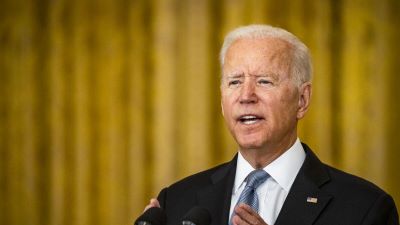
“The idea that Russia and Saudi Arabia and other major producers are not going to pump more oil so people can have gasoline to get to and from work, for example, is not right,” Biden said Sunday.

While Biden declined to say how he would react if OPEC+ doesn’t change tack, analysts have speculated the U.S. might sell some of its strategic petroleum reserves.

OPEC+’s plan of boosting daily production by 400,000 barrels each month “is working well and there is no need to deviate from it,” Angola’s oil minister, Diamantino Pedro Azevedo, said Sunday.

Many members, including Saudi Arabia, have argued they shouldn’t pump crude any faster because the pandemic is still sapping demand. Some are already struggling to reach their higher output quotas after last year’s deep cuts, and say bringing production back more rapidly would make their task even more difficult.

“We are not yet out of the woods,” Saudi Energy Minister Abdulaziz bin Salman told Bloomberg Television on Oct. 23. “We don’t take things for granted, we still have Covid.”

OPEC+ has said that increasing crude exports would do little to bring down power prices, which have soared in parts of Europe and Asia due to shortages of natural gas and coal.

Still, OPEC+ has often surprised the market with sudden changes of policy. And while Riyadh and Moscow have both praised the group’s strategy, neither has directly addressed Biden’s comments in public, giving themselves room for maneuver.

The dispute comes as world leaders convene for the COP26 climate talks in Glasgow. The U.S has said it will push for more action to fight climate change while also trying to ensure the global economic recovery isn’t derailed by higher energy prices.

Published : November 02, 2021

By : Bloomberg
Fed confronts economy with most widespread shortages since 1970s #SootinClaimon.Com

#SootinClaimon.Com : ขอบคุณแหล่งข้อมูล : หนังสือพิมพ์ The Nation.

https://www.nationthailand.com/business/40008276


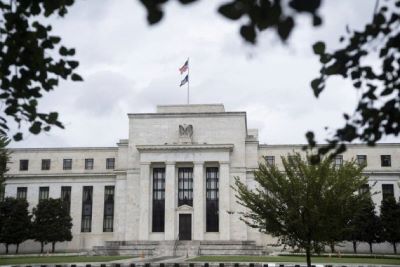
Federal Reserve officials meet this week as consumers and companies fret the U.S. economy is facing the most widespread supply crunch since the oil crisis of 1973.

Chair Jerome Powell and his Federal Open Market Committee meet Tuesday and Wednesday as supply chains fray at multiple junctions for trade. The hard part of their job: deciding if snarls are localized and temporary, or are longer-term headwinds that’ll fan inflation if supply and demand remain out of balance.

Ports including Los Angeles and Savannah, Georgia, are congested, key manufacturing materials such as semiconductors are tricky to source, commodity prices are soaring and some employers are struggling to find even unskilled workers. Yet problems are uneven, with ports in Boston and Oakland, California, promoting the relative ease of moving goods across their docks.

In the Fed’s recent snapshot of the economy, 10 of its 12 regional banks reported anxiety of some form of scarcity, be it of workers, inputs or goods. Forms of the word “shortage” appeared 70 times, six of the districts cited “bottlenecks” and most reported “significantly elevated prices.” Added together, use of “shortage” in the so-called Beige Book is around its highest since the early 1970s, according to MetLife Investment Management.

The central bank’s dilemma is whether the supply squeeze represents so great an inflationary threat that will need addressing with tighter monetary policy or will soon pass as the economy returns to normal, meaning policy can remain super loose for longer. The upcoming holiday season will pose a further test to the outlook.

“In the U.S. and in other advanced economies with these supply constraints and shortages and therefore elevated inflation, they are likely to last longer than previously expected — likely well into next year,” Chair Jerome Powell said Oct. 22. “But it is still the most likely case that as supply-side constraints abate, as they eventually will, and as job gains move back up, inflation will move back down closer to our 2% goal.”

The Fed districts are keeping tabs on how the risks break down regionally.

In an October survey of businesses by the Atlanta Fed, 52% of respondents said they had hired new suppliers to mitigate disruptions and 34% had changed their products or services. Thirty-three percent had shifted from “just in time” management of inventories to “just in case.”

In another poll, the Richmond Fed found almost three-quarters of large and small firms alike experiencing tangled supply chains. Availability of materials, shipping problems and production delays were the most cited challenges.

In response to questions from the Dallas Fed, where winter storms earlier this year pummeled manufacturers of chemicals, plastics and other industrial ingredients, a metals maker said “it is beginning to feel like we are headed to a slowdown in a few months with inflation kicking in.”

A chemical maker added, “the potential for recession is ever increasing without major fiscal policy improvement.”

“In some cases the economy is clearly supply constrained, and some people are hanging back from working during Covid,” said Stephen Stanley, chief economist at Amherst Pierpont Securities. “But some of the supply disruptions are also a function of demand being unusually high.”

Published : November 02, 2021

By : Bloomberg
EU gas surges on disturbance to Russian shipments #SootinClaimon.Com

#SootinClaimon.Com : ขอบคุณแหล่งข้อมูล : หนังสือพิมพ์ The Nation.

https://www.nationthailand.com/business/40008273


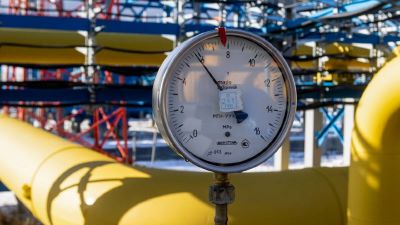
Europe faced a tightening squeeze on natural gas after some Russian supplies reversed direction and Algeria stopped shipments to Spain.

Benchmark gas futures surged as much as 15%, before paring those gains as traders weighed lower prices in Asia and Russia’s promises to boost supplies against disruptions in some parts of Europe. The market was roiled in early trading as Russian gas started flowing eastward from Germany to Poland, reversing the usual direction. Spain is also getting less gas after a 25-year transit deal to ship Algerian gas via Morocco expired.

European gas futures broke records several times this year as Russia capped flows to the region just as cargoes of liquefied natural gas were diverted to Asia. Soaring energy costs helped send euro-zone inflation to a 13-year high in October, fueling concerns about an economic slowdown. President Vladimir Putin has promised more gas supplies to Europe, but that has yet to flow.

“Gas prices are currently all about signals and especially those being sent from Russia,” said Ole Hansen, head of commodity strategy at Saxo Bank A/S. The market is “in flux and still very worried.”

LNG prices in North Asia meanwhile fell as moves by China’s authorities to raise coal production reduced concern over tight energy supplies this winter in the region.

Russian gas shipments entering Germany’s Mallnow compressor station dropped to zero on Saturday, according to data from grid operator Gascade. The Yamal-Europe pipeline was instead sending gas eastward from Germany to Poland, and those flows increased further early on Monday.

Russian gas shipments through Yamal-Europe pipeline, one of several routes used to deliver fuel to the region, were already expected to be capped this month after Gazprom PJSC only booked 35% of the monthly pipeline capacity offered at Mallnow. The reverse flows, however, left traders scratching their heads after Putin signaled a potential increase in supplies from Nov. 8, when Russian storage sites will be full.

Gazprom said on Saturday that it was meeting requests from its European customers in full, and “fluctuations in demand for Russian gas depend on the actual needs of buyers.”

The reverse flows suggest Poland is ordering more gas from the west. That’s leaving less supplies for Germany, which also receives its fuel via a Baltic Sea pipeline from Russia.

The Polish network operator Gaz-System said on Sunday that there was no demand for gas transit toward Germany. Gascade said reverse flows are not unusual.

“I think Yamal forward flow will rebound after Nov. 8, when Gazprom will start sending gas for refilling European storages,” said Katja Yafimava, a senior research fellow at the Oxford Institute for Energy Studies.

Traders will be watching closely for any signs Russia will top up shipments this heating season. Auctions on Tuesday for pipeline capacity to move Russian gas via Ukraine and Poland will provide clues as to whether Gazprom intends to boost supplies in the first three quarters of 2022.

Russian gas transit to the European Union via Ukraine fell to 57 million cubic meters a day on Nov. 1, down from 86 million a month ago, Gas Transmission System Operator of Ukraine said Monday. Bulgaria halted gas transit to some neighboring countries because of a damaged pipeline.

Spain, which has limited to connections to other European countries, was also facing a supply crunch. Algerian President Abdelmadjid Tebboune ordered a halt to gas flowing to Spain via Morocco amid a diplomatic spat between the two North African nations. He also told state-run energy company Sonatrach not to renew its transit accord with Morocco.

Published : November 02, 2021

By : Bloomberg
Thailand gives RCEP its stamp of approval #SootinClaimon.Com

#SootinClaimon.Com : ขอบคุณแหล่งข้อมูล : หนังสือพิมพ์ The Nation.

https://www.nationthailand.com/blogs/business/40008270


Thailand ratified the Regional Comprehensive Economic Partnership (RCEP) on October 28, Commerce Minister Jurin Laksanawisit said on Monday, adding that the pact should come into force by January.

The pact will remove export tariff on 39,366 items and expand the market for many Thai products such as fresh and processed fruit, fishery products, rubber etc.

urin said Singapore, Brunei, Laos, Cambodia and Vietnam, along with non-Asean countries China and Japan have ratified the pact.

If one more non-Asean country sanctions the pact, all conditions will have been met, he said.

Terms stipulate that RCEP must be ratified by at least six of 10 Asean members and three out of five non-Asean signatories.

RCEP is a free-trade agreement among 15 Asia-Pacific countries, namely Australia, Brunei, Cambodia, China, Indonesia, Japan, Laos, Malaysia, Myanmar, New Zealand, the Philippines, Singapore, South Korea, Thailand and Vietnam.

With 15 members, RCEP is seen as the largest FTA ever, covering 2.3 billion people or 30 per cent of the global population. The member states account for 33.6 per cent or a third of the world GDP and a third of global trade.

Published : November 01, 2021

By : THE NATION

Thailand’s BAAC grants fewest loans this year #SootinClaimon.Com

#SootinClaimon.Com : ขอบคุณแหล่งข้อมูล : หนังสือพิมพ์ The Nation.

https://www.nationthailand.com/blogs/business/40008269


Loans granted by the Bank for Agriculture and Agricultural Cooperatives (BAAC) during the first half of 2021 was the lowest in three to five years owing to low economic activity due to Covid-19.

So far, the bank has only granted new credit worth around 9 billion baht or just 15.77 per cent of its full-year target of 57 billion baht, BAAC president Tanaratt Ngamvalairatt said on Monday.

Farmers have been earning very little because their exports have been blocked due to sealing measures employed by different countries. At the same time, Thailand’s tourism industry has slowed down, with many operators in the service sector such as restaurants, bars and hotels shutting down. Stimulus and remedy packages offered by the government have also reduced the number of people seeking loans, he said.

BAAC’s non-performing loans (NPLs) as of September 30 stood at 4.2 per cent of outstanding credit. This was slightly higher than the 3.9 per cent in the same period last year. However, Tanaratt reckons NPLs will drop to 4 per cent by the end of the year.

Published : November 01, 2021

By : THE NATION

SET drops 0.59 per cent despite positive news of Thailand reopening #SootinClaimon.Com

#SootinClaimon.Com : ขอบคุณแหล่งข้อมูล : หนังสือพิมพ์ The Nation.

https://www.nationthailand.com/business/40008266


The Stock Exchange of Thailand (SET) Index closed at 1,613.78 on Monday, down 9.65 points or 0.59 per cent. Transactions totalled 69.80 billion baht with an index high of 1,632.73 and a low of 1,611.39.

The index dropped for the fourth day running after falling by 0.05 per cent on Friday, 0.20 per cent on Thursday and 0.51 per cent on Wednesday.

In the morning session, Krungsri Securities forecast the SET Index on Monday would fluctuate between 1,615 and 1,635 points despite the rise in other Asian indices in response to Japan’s election result and Thailand reopening.

It said the fall in China’s manufacturing Purchasing Managers Index and investors’ move to delay investment to follow the result of US Federal Open Market Committee and Opec+ meetings would pressure the index.

The 10 stocks with the highest trade value today were BANPU, KBANK, PTT, PTTEP, AOT, CPALL, OR, KCE, HANA and TRUE.

Other Asian indices were mixed:

Japan’s Nikkei Index closed at 29,647.08, up 754.39 points or 2.61 per cent.

China’s Shanghai SE Composite closed at 3,544.48, down 2.86 points or 0.081 per cent, while the Shenzhen SE Component closed at 14,476.53, up 25.14 points or 0.17 per cent.

Hong Kong’s Hang Seng Index closed at 25,154.32, down 222.92 points or 0.88 per cent.

South Korea’s KOSPI Index closed at 2,978.94, up 8.26 points or 0.28 per cent.

Taiwan’s TAIEX Index closed at 17,068.24, up 80.83 points or 0.48 per cent.

Related stories:

Published : November 01, 2021

By : THE NATION