Nobel Prize for Economics goes to David Card, Joshua Angrist, Guido Imbens #SootinClaimon.Com

#SootinClaimon.Com : ขอบคุณแหล่งข้อมูล : หนังสือพิมพ์ The Nation.

https://www.nationthailand.com/business/40007388


Three U.S.-based economists were awarded the Nobel Memorial Prize in Economic Sciences on Monday for their work drawing conclusions by observing the cause and effect of real-world economic actions.

Nobel Prize for Economics goes to David Card, Joshua Angrist, Guido Imbens

In Stockholm, the Royal Swedish Academy of Sciences divided this year’s prize between David Card of the University of California at Berkeley, who received one-half of the award, and two other economists, Joshua Angrist of the Massachusetts Institute of Technology and Guido Imbens of Stanford University.

The men will share 10 million Swedish kronor, or more than $1.1 million.

ADVERTISEMENT

Card was honored for his pioneering work in labor economics. Angrist and Imbens were recognized for their methodological contributions to an understanding of causal relationships, the prize committee said.

The ceremony was live-streamed on the institution’s website.

The committee highlighted Card’s study of the impact of wages on employment. After New Jersey raised its minimum wage in 1992, he analyzed employment patterns along the border with Pennsylvania and concluded that the higher wage had not discouraged hiring.

Card’s work upended the conventional wisdom and led to additional research showing that a firm’s behavior often swamps the impact of wage policy.

Angrist and Imbens developed a framework demonstrating what “precise conclusions” can be drawn from observations, which has been widely adopted by researchers working with observational data, the committee said.

“Card’s studies of core questions for society and Angrist and Imbens’s methodological contributions have shown that natural experiments are a rich source of knowledge. Their research has substantially improved our ability to answer key causal questions, which has been of great benefit to society,” said Peter Fredriksson, chair of the Economic Sciences Prize Committee.

Taken together, the three economists have revolutionized empirical work in the social sciences, the committee said.

“I was absolutely thrilled to hear the news,” said Imbens, 58, who noted that the three men are friends and that Angrist had been the best man at his wedding.

The Stanford economist joined the award news conference by telephone.

Card received the news in a phone call from the Nobel committee’s Adam Smith, which he “suspected might be a ‘made-up name,’ ” according to a Nobel tweet. In a photo taken by his wife, Cynthia Gessele, Card was shown receiving the news, clad in a bathrobe.

The committee was unable to reach Angrist before the ceremony, according to Eva Mork, a Swedish economist and member of the prize committee.

Card is a U.S. and Canadian citizen, while Angrist has joint Israeli-U.S. citizenship. Imbens is a Dutch and American national.

The men were honored for their work showing what conclusions can be drawn from observations of economic forces when it is not possible to conduct randomized experiments, Mork said.

The committee said it can be hard to analyze questions such as the impact of immigration on employment or the income boost linked to additional years of education. “These questions are difficult to answer because we have nothing to use as a comparison. We do not know what would have happened if there had been less immigration or if that person had not continued studying,” the committee said.

But Card, Angrist and Imbens showed that it is possible to reach important conclusions about the effects of social and economic policies by observing natural experiments, “situations in which chance events or policy changes result in groups of people being treated differently, in a way that resembles clinical trials in medicine,” the committee said.

Monday’s announcement comes amid shifts in economic thought on multiple fronts. The global economy is struggling to escape the delta coronavirus variant, leaving economists puzzling over unusual developments in labor markets, supply chains and product pricing.

In winning the Nobel, Card, Angrist and Imbens join previous winners such as Paul Samuelson of the Massachusetts Institute of Technology, Milton Friedman of the University of Chicago and Joseph Stiglitz of Columbia University.

Last year, two Stanford University economists, Paul Milgrom, a professor of humanities and sciences, and Robert Wilson, an emeritus professor of management at the Stanford Graduate School of Business, were honored for pioneering work in auction theory.

Before Monday’s announcement, a total of 86 laureates had received the prize, known formally as the Sveriges Riksbank Prize in Economic Sciences in Memory of Alfred Nobel.

Published : October 12, 2021

By : The Washington Post
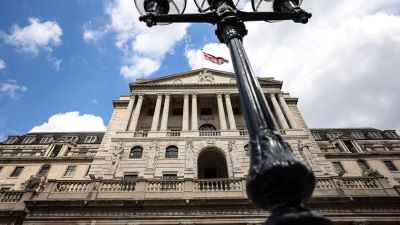
Traders bet BOE will raise rates this year amid hawkish signals #SootinClaimon.Com

#SootinClaimon.Com : ขอบคุณแหล่งข้อมูล : หนังสือพิมพ์ The Nation.

https://www.nationthailand.com/business/40007382


Traders are preparing for the Bank of England to lift borrowing costs by the end of this year after two officials moved to reinforce signals of an imminent increase to curb inflation.

Money markets priced in at least 15 basis points of tightening by the BOE’s December 2021 meeting on Monday, according to sterling overnight index swaps, which would take the key rate to 0.25%. The market was previously betting the first increase would be in February.

Michael Saunders, one of the most hawkish members of the Monetary Policy Committee, suggested in remarks published Saturday that investors were right to bring forward bets on rate hikes. Hours earlier, Governor Andrew Bailey warned of a potentially “very damaging” period of inflation unless policy makers take action.

ADVERTISEMENT

The repricing reflects mounting concern over the lasting impact of the latest surge in prices, with consumers facing higher costs for energy and goods, due in part to shortages that resulted from the nation’s departure from the European Union. A market-based measure of inflation 10 years from now rose to more than 4% last week, double the BOE’s target.

The BOE “appears concerned about inflation credibility,” said Robert Wood, Bank of Amercia’s U.K. economist, adding that policy makers will “hike early” to avoid more increases later. BofA expects a 15-basis-point increase in December, followed by another 25 basis points in February, in line with market bets.

Money markets see an additional quarter-of-a-percentage point hike to take the key rate to 0.75% by August. That’s even as some investors warn that higher interest rates risk undermining the U.K.’s fragile recovery from the pandemic.

“We see the BOE jawboning in a bid to ward off the threat of inflation expectations becoming entrenched,” said Richard McGuire, head of rates strategy at Rabobank. “It seems remarkable to conceive of the BOE increasing borrowing costs as we head into Christmas.”

The moves reverberated across U.K. markets, with government bonds falling across the curve, sending benchmark 10-year yields to as high as 1.22%, a level last seen in May 2019.

“Saunders is not quite representative of the entire MPC as he tends to be the most extreme,” said Peter Schaffrik, global macro strategist at RBC Europe. “Bailey’s comments are important as he seems to embrace tightening as well.”

A combination of higher energy prices, supply chain disruptions and rising wages in some industries has undercut the BOE’s original view that much of the jump in prices will prove transitory. The central bank last month said it expects inflation to exceed 4% in the last quarter.

Published : October 12, 2021

By : Bloomberg

Global energy crisis piles pressure on aluminum supply #SootinClaimon.Com

#SootinClaimon.Com : ขอบคุณแหล่งข้อมูล : หนังสือพิมพ์ The Nation.

https://www.nationthailand.com/business/40007381


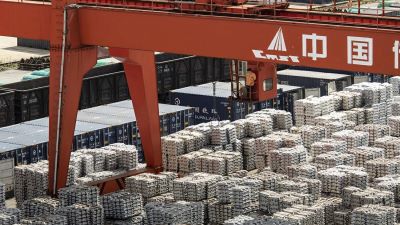
Aluminum jumped to its highest price since 2008 as a deepening power crisis squeezes supplies of the energy-intensive metal thats used in everything from beer cans to iPhones.

Industry insiders like to joke that aluminum is basically “solid electricity.” Each ton of metal takes about 14 megawatt hours of power to produce, enough to run an average U.K. home for more than three years. If the 65 million ton-a-year aluminum industry was a country, it would rank as the fifth-largest power consumer in the world.

That meant aluminum was one of the first targets in China’s efforts to curb industrial energy usage. Even beyond the current power crisis, Beijing has placed a hard cap on future capacity that promises to end years of over-expansion and raises the prospect of deep global deficits. Now, with energy costs surging across Asia and Europe, there’s growing risk of further supply cuts.

ADVERTISEMENT

For investors looking to bet on a future price spike, LME options contracts offer a popular and low-risk way.

In recent weeks, investors have been buying calls with strike prices of up to $4,000 a ton, according to traders active in the market — effectively betting that prices could move significantly beyond that level to reach new all-time highs.

“It feels very much like a structural hedge-fund play,” said Keith Wildie, head of trading at Romco Metals, who’s been trading LME options for more than 20 years. “What they’re positioning for is a significant market dislocation, and a sharp move higher in the price.”

As the global metals world prepared to gather in London for the annual LME Week, signs of pressure on the aluminum industry have continued to mount. China’s State Council announced Friday it will allow higher power prices in a bid to ease the worsening energy crunch. In the Netherlands, aluminum producer Aldel will curtail production from this week due to high electricity prices, Dutch Broadcaster NOS reported.

A number of aluminum plants in China are being mothballed and the country’s production has probably peaked, at least in the short term, said Mark Hansen, CEO at London-based trading house Concord Resources. With the market in a deficit and needing to stimulate investment in new production outside China, prices could hit $3,400 a ton in the next 12 months, he said.

Next, traders and analysts say investors are watching for a possible hit to Chinese aluminum exports. With its own production under pressure and demand booming, the country has been importing ever-greater quantities of primary metal. However, it’s still exporting huge volumes of semi-finished aluminum, in part supported by tax rebates.

“Given the acuteness of the power shortages and the curtailments we’ve seen, it just doesn’t seem rational for China to be exporting that volume of aluminium products every single month,” James Luke, commodities fund manager at Schroders, said by phone from London. “It’s essentially just a net export of energy resources.”

Analysts including those at Goldman Sachs say there’s potential for Beijing to lower or remove the value-added tax rebates on exports to slow the flow of metal beyond its borders. With China likely to continue importing huge volumes of aluminum next year, that could leave the rest of the world desperately short, and raises the risk of a violent price spike.

Separately, prices got an extra boost Monday after the European Union imposed an anti-dumping duty on flat-rolled aluminum from China, although it suspended the duty initially for nine months and excluded some key material, including metal used by the drinks cans, car and aircraft industries.

This year’s surge in aluminum prices would typically prompt producers elsewhere to reopen old plants and consider adding new supply. Yet the even-bigger jump in power costs is putting pressure on smelters and may make restarts difficult.

As an example, if a smelter in Germany was exposed to one-month baseload rates for power, it would need to pay about $4,000 for the energy needed to produce a ton of metal, far outstripping current aluminum prices.

“The global metal market in 2022 will be the tightest it’s ever been,” Eoin Dinsmore, head of aluminum primary and products research at CRU, said by phone from London. “The rest of the world cannot deliver these quantities to China indefinitely.”

Published : October 12, 2021

By : Bloomberg

Chinese builders scramble for ways to avoid bond defaults #SootinClaimon.Com

#SootinClaimon.Com : ขอบคุณแหล่งข้อมูล : หนังสือพิมพ์ The Nation.

https://www.nationthailand.com/business/40007380


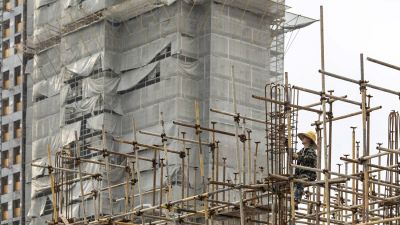
Chinese builders are looking to payment extensions or debt exchanges to avoid default on imminent bond obligations as liquidity conditions tighten for the real estate sector.

Modern Land (China) is asking holders for a three-month extension on $250 million dollar bond due to mature Oct. 25 while also announcing two top executives plan to loan the builder about $125 million. Xinyuan Real Estate has proposed paying just 5% of principal on a note due Oct. 15 and swapping that debt for bonds due 2023. Fitch Ratings called the move a distressed debt exchange while downgrading the firm to C.

Modern Land and Xinyuan respectively have $1.35 billion and $760 million of dollar bonds outstanding, according to data compiled by Bloomberg. In comparison, China Evergrande Group has $19.2 billion.

ADVERTISEMENT

Beijing’s clampdown on the real estate sector and uncertainty over Evergrande’s future have sent the nation’s dollar junk bond yields soaring to their highest in about a decade. That debt market, dominated by developers, saw notes fall as much as 10 cents on the dollar Monday, according to credit traders.

Rising borrowing costs have increased refinancing risks as firms may struggle to access the offshore bond market. That could trigger a wave of defaults across the real estate sector. Property firms’ missed payments have made up 36% of the record $27.2 billion (175 billion yuan) in onshore corporate bond defaults this year, Bloomberg-compiled data show.

Still, for borrowers that can afford it, the selloff may also provide an opportunity to buy back bonds at deep discount and help shore up balance sheets. Yuzhou Group Holdings’ chairman recently bought $5.6 million of the company’s dollar notes through his associates, according to a filing last week.

In the meantime, investors are still waiting for clarity from Evergrande over a potential restructuring or solution for its liquidity crisis which some analysts say could drag on for months. Some of the firm’s bondholders fear Evergrande may sell assets that they’re counting on to back up their claims if the company collapses. It has $148 million due Monday involving three dollar-bond coupons, Bloomberg-compiled data show, after having given no signs it made interest payments expected in September.

More defaults from Chinese property firms are expected under Beijing’s deleveraging campaign, said Kenneth Ho, Goldman Sachs Group’s head of Asia credit strategy. The sector “needs some kind of policy change in order to restore confidence.”

Published : October 12, 2021

By : Bloomberg

Bitcoin pierces $57,000 as traders resume push for record highs #SootinClaimon.Com

#SootinClaimon.Com : ขอบคุณแหล่งข้อมูล : หนังสือพิมพ์ The Nation.

https://www.nationthailand.com/business/40007377


Bitcoin climbed above $57,000 for the first time since May as speculators bet that the largest cryptocurrency will retest the record highs reached earlier this year.

Bitcoin pierces $57,000 as traders resume push for record highs

It reached almost $65,000 in April, and has roughly doubled this year. The Bloomberg Galaxy Crypto Index increased as much as 2.4% on Monday.

As in past rallies, a myriad of reasons are being cited for the latest surge, from an easing of concern about regulatory efforts in the U.S. and China, as well as renewed optimism about a possible U.S. Securities and Exchange Commission approval of a Bitcoin exchange-traded fund. Investors are particularly excited that a Bitcoin futures ETF may be soon green-lighted by the U.S. regulator, as SEC chair Gary Gensler has signaled openness to a fund focused exclusively on the derivatives-based product.

ADVERTISEMENT

“A lot of investors and advisors have had crypto on their to do list, and are finally making the move with allocations that start with Bitcoin,” or crypto funds like the Bitwise 10 that invest heavily in Bitcoin, said Hunter Horsley, the chief executive of Bitwise Invest. Bitwise has seen “hundreds” of advisors make their first allocations to crypto over the last several weeks, with many flocking to the asset class amid macro-fears about inflation and low yields, he said.

Some strategists are also cheering the resilience of the Bitcoin as seen by the recovery in its so-called hash rate, a measure of computing power being contributed to the network, following China’s latest crackdown on mining earlier this year. As mining operations in China shut down, transaction processors across North America ramped up. A metric that tracks the hash rate’s power has jumped 103% since late June, according to a report from Luxor Technology.

“The time-honored FUD that China controls (or will attempt to control Bitcoin) is now moot. Hash rate is being distributed around the globe with North America emerging as the new dominant hub,” said the report.

Analysts who look at patterns in price charts say that $60,000 is the next level of resistance, though Bitcoin’s relative strength index above 70 suggests that its now in overbought territory.

Elsewhere, Shiba Inu — a Dogecoin-inspired meme cryptocurrency –climbed 20% after more than tripling over the last week, according to CoinMarketCap.

Published : October 12, 2021

By : Bloomberg

Thailand urged to join CPTPP trade pact soon #SootinClaimon.Com

#SootinClaimon.Com : ขอบคุณแหล่งข้อมูล : หนังสือพิมพ์ The Nation.

https://www.nationthailand.com/blogs/business/40007370


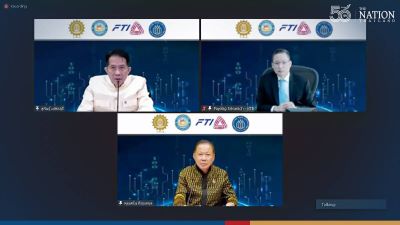
The Joint Standing Committee on Commerce Industry and Banking (JSCCIB) said that it will call on the PM as well as ministers of foreign affairs and commerce to reconsider the Comprehensive and Progressive Agreement for Trans-Pacific Partnership (CPTPP).

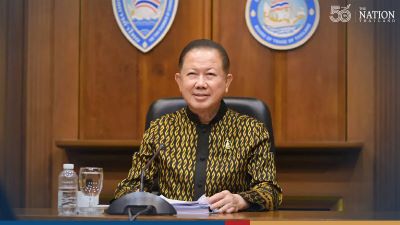
Sanan Angubolkul, chair of the Thai Chamber of Commerce and Board of Trade, said China, the United Kingdom and Taiwan have already started negotiating with CPTPP’s existing 11 members. He pointed out that if Thailand keeps putting off the decision, it may lose out on trade opportunities with neighbouring countries like Vietnam, Malaysia and Singapore.

CPTPP currently comprises Australia, Brunei, Canada, Chile, Japan, Malaysia, Mexico, New Zealand, Peru, Singapore and Vietnam.

Published : October 11, 2021

By : THE NATION

JSCCIB revises up Thailand’s growth despite THB15 billion loss from severe flooding #SootinClaimon.Com

#SootinClaimon.Com : ขอบคุณแหล่งข้อมูล : หนังสือพิมพ์ The Nation.

https://www.nationthailand.com/blogs/business/40007371


The Joint Standing Committee on Commerce, Industry and Banking (JSCCIB) revised Thailand’s GDP growth for 2021 to between 0 and 1 per cent from its previous projection of -1.5 per cent.

The committee said there are several positive factors that will enhance the country’s economic outlook at the end of this year, including the vaccination rollout and clear moves toward reopening the country.

It also said that though schemes like co-payment subsidy Khon La Khrueng (Let’s Go Halves) and Rao Tiew Duay Kan (We Travel Together) campaign were good, more “money bag” schemes are needed to inject cash into the economy.

ADVERTISEMENT

The committee also said it is closely monitoring the pandemic to see if the number of infections rises once lockdown measures are eased. It is also keeping an eye on the impact of severe flooding.

Though flooding has eased in some areas, heavy rains have damaged large swathes of farming land, especially in the Northeast and Central regions. Damage has been estimated at 15 billion baht or 0.1 per cent of the GDP.

Meanwhile, exports are expected to grow 12 to 14 per cent thanks to a recovering global economy, a drop in freight price, a curb on infections in the industrial sector and mass vaccination of workers.

Headline inflation should be in the range of 1 to 2 per cent

Published : October 11, 2021

By : THE NATION

SET drops slightly after rising in previous days #SootinClaimon.Com

#SootinClaimon.Com : ขอบคุณแหล่งข้อมูล : หนังสือพิมพ์ The Nation.

https://www.nationthailand.com/business/40007367


The Stock Exchange of Thailand (SET) Index closed at 1,633.44 on Monday, down 5.97 points or 0.36 per cent. Transactions totalled 82.97 billion baht with an index high of 1,646.50 and a low of 1,629.95.

The index fell slightly after increasing by 0.35 per cent on Friday and 0.88 per cent on Thursday last week.

In the morning session, Krungsri Securities predicted the day’s index would fluctuate between 1,630 and 1,650 points despite rising oil price in response to tightening supply and hope over Thailand reopening after domestic Covid-19 cases have declined.

ADVERTISEMENT

The brokerage firm, meanwhile, said uncertainty over the US Federal Reserve signalling it would taper its quantitative easing and fund flow volatility would pressure the index.

Related stories:

The 10 stocks with the highest trade value today were TRUE, KBANK, STARK, BANPU, PTT, PTTEP, SCC, SVT, SCB and MONO.

Other Asian indices were mixed:
Japan’s Nikkei Index closed at 28,498.20, up 449.26 points or 1.60 per cent.
China’s Shanghai SE Composite closed at 3,591.71, down 0.46 points or 0.013 per cent, while the Shenzhen SE Component closed at 14,367.60, down 46.56 points or 0.32 per cent.
Hong Kong’s Hang Seng Index closed at 25,325.09, up 487.24 points or 1.96 per cent.

South Korea’s KOSPI Index was closed for Hangeul Day, while Taiwan’s TAIEX Index was closed for National Day.

Published : October 11, 2021

By : THE NATION

Ministry comes up with new strategy to lift Thai rubber sector #SootinClaimon.Com

#SootinClaimon.Com : ขอบคุณแหล่งข้อมูล : หนังสือพิมพ์ The Nation.

https://www.nationthailand.com/business/40007350


The Agriculture and Cooperatives Ministry on Sunday released guidelines and strategies for the Thai rubber sector to penetrate the global market.

Alongkorn Ponlaboot, an adviser to the ministry, said the six guidelines and seven strategies have been devised to develop products, boost farmers’ income and open more trading channels.

He added that the strategies also cover income guarantees, application of new market mechanisms and projects, such as online auctions, rubber futures exchange market and the Rubber Valley project.

ADVERTISEMENT

“We are making changes in the rubber industry to meet market demands amid the Covid-19 crisis and to generate income for the 1.83 million rubber farmers nationwide,” he said.

He added that Asia was the world’s biggest rubber supplier, while Thailand is the largest rubber manufacturer in the region.

“Thailand is still the largest exporter of concentrated rubber latex and smoked rubber sheets in the world,” he said.

Alongkorn said he expects Thailand’s rubber production and exports to grow further as the country can produce 92-per-cent fresh rubber latex and hold almost 70 per cent of the global market share. He also pointed out that there is a rising demand for medical rubber products like gloves due to the Covid-19 crisis.

“Thailand has the opportunity to penetrate another 100 countries in addition to Malaysia, China and South Korea, which are the largest importers of Thai rubber,” he added.

Published : October 11, 2021

By : THE NATION

Worse-than-expected NFP pulls down Thai baht #SootinClaimon.Com

#SootinClaimon.Com : ขอบคุณแหล่งข้อมูล : หนังสือพิมพ์ The Nation.

https://www.nationthailand.com/business/40007338


The baht opened at 33.90 to the US dollar on Monday, weakening from the previous closing rate of 33.85.

The Thai currency is likely to move between 33.85 and 34.00 during the day and between 33.50 and 34.00, Krungthai Bank market strategist Poon Panichpibool predicted.

Poon said that investors should speculate on the upcoming bond auction. Foreign investors will invest in Thai stocks if the demand was more than expected, which caused the baht to strengthen.

ADVERTISEMENT

However, the baht will not strengthen soon because it was affected by many domestic factors such as floods and the Covid-19 situation.

Meanwhile, Poon said the dollar might weaken as the market opens for more risks which decrease the possession of the dollar as a safe-haven asset.

Moreover, the dollar might continue to weaken if the US Federal Reserve expressed its concern for economic recovery or does not decrease the quantitive easing (QE). The dollar’s momentum was supported by many risk factors such as stagflation or Evergrande’s crisis.

Related News

Baht unchanged, may strengthen after release of NFP report

Baht strengthens as investors eye Thai stocks

Baht faces further weakening

Poon said that the baht almost weaken past the level of 34.00 to the dollar many times. He said that the weakening momentum might slow down in the short term. 

The key resistance level for the baht would be at 34.00 to the dollar, which is the level at which exporters might sell the US currency. 

The baht’s key support level would be from 33.60 to 33.70, the level some importers are waiting for so they can buy dollars, he added.

In the previous week, the market opened for more risks after it eased its worries about the US debt ceiling negotiation. The market is waiting for the Fed’s economic statement and QE decreasing policy this week after the lastest Nonfarm Payrolls was worse than expected.

Published : October 11, 2021

By : THE NATION