The Stock Exchange of Thailand (SET) Index closed at 1,582.07 on Monday, up 28.89 points or 1.86 per cent. Transactions totalled THB114.58 billion with an index high of 1,583.13 and a low of 1,565.93.
In the morning session, Krungsri Securities expected the day’s index to move between 1,560 and 1,565 points on hopes that lockdown measures would be eased in response to falling domestic Covid-19 cases and the improving vaccination rate.
However, it predicted the index would be pressured by the US Federal Reserve’s signal that it would taper quantitative easing, investment fund outflows and the ongoing anti-government protests in Thailand.
The 10 stocks with the highest trade value today were KBANK, BBL, CPALL, SCB, PTT, GUNKUL, AOT, GPSC, KTC and HANA.
ADVERTISEMENTx
Other Asian indices were on the rise:
Japan’s Nikkei Index closed at 27,494.24, up 480.99 points or 1.78 per cent.
China’s Shanghai SE Composite Index closed at 3,477.13, up 49.80 points or 1.45 per cent, while the Shenzhen SE Component Index closed at 14,535.88, up 282.34 points or 1.98 per cent.
Hong Kong’s Hang Seng Index closed at 25,109.59, up 259.87 points or 1.05 per cent.
South Korea’s KOSPI closed at 3,090.21, up 29.70 points or 0.97 per cent.
Taiwan’s TAIEX closed at 16,741.84, up 399.90 points or 2.45 per cent.
Upswing in SET expected on hopes lockdown would be eased, but index still faces pressure
The Stock Exchange of Thailand (SET) Index rose by 14.99 points or 0.97 per cent to 1,568.17 on Monday morning.
Krungsri Securities expected the index would move between 1,560 and 1,565 points on Monday on hopes that the lockdown would be eased as domestic Covid-19 cases were seen to be declining and the vaccination rate improving.
However, it predicted that the US Federal Reserve signalling a tapering of its quantitative easing programme, investment fund outflows and the ongoing anti-government protests in Thailand would pressure the index.
ADVERTISEMENTx
It recommended selective buying of the following companies’ shares as an investment strategy:
▪︎ Hana, KCE, TU, CPF, GFPT, Asian, EPG and NER, which benefit from a weakening baht.
▪︎ PSL, TTA and RCL, which would benefit from a rise in the freight rate.
▪︎ AOT, CPN, CRC, HMPro, AAV, BA, Mint, Centel, Amata and WHA, which would benefit from the country reopening.
The SET Index closed at 1,553.18 on Friday, up 8.90 points or 0.58 per cent. Transactions totalled THB82.37 billion with an index high of 1,554.45 and a low of 1,545.92.
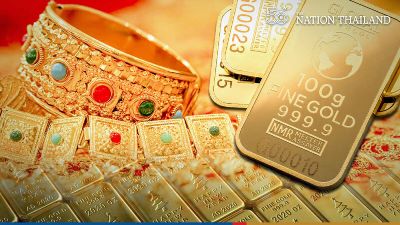
The price of gold on Monday morning was unchanged from Fridays closing rate.
AGold Traders Association report at 9.25am said the buying price of a gold bar was THB28,050 per baht weight and selling price THB28,150, while gold ornaments cost THB27,545.72 and THB28,650, respectively.
The spot gold price on Monday morning was moving around US$1,786 (THB59,516) per ounce after Comex gold rose slightly, by 80 cents to $1,784 per ounce, at close on Friday, due to support in buying the precious metal as a safe-haven asset amid concerns over the uncertain situation in Afghanistan after the Taliban took control of most of the country.
ADVERTISEMENTx
The Hong Kong gold price meanwhile dropped heavily, by HK$80 to $16,530 (THB70,717) per tael, the Chinese Gold and Silver Exchange Society reported.
Baht performance hinges on Covid situation, Fed’s QE decision
The baht opened at 33.30 to the US dollar on Monday, strengthening from last week’s closing rate of 33.36.
The Thai currency is likely to move between 33.25 and 33.40 during the day and between 33.00 and 33.50 this week, Krungthai Bank market strategist Poon Panichpibool said.
Poon predicted the baht would move sideways as investors were waiting for important factors such as the US Federal Reserve’s move to reduce quantitative easing (QE).
Moreover, the Covid-19 situation could affect the baht, he pointed out.
Investors believed that the Bank of Thailand might decrease the policy interest rate by 0.25 per cent in their August meeting, causing the baht to weaken, Poon said.
ADVERTISEMENTx
Meanwhile, short-term demand for safe-haven assets is supporting the dollar’s momentum, he said.
The US currency is likely to fluctuate and weaken if the Fed does not signal that it will decrease its QE or voices concern about the Covid-19 situation.
Poon expected the key resistance level for the baht would be between 33.40 and 33.50 to the US dollar.
He added that the key support level would be around 33.00-33.10 to the dollar, the price range importers are waiting for to exchange their dollars.
Top 10 net buys and net sales last week by foreign investors
Bangkok Chain Hospital Pcl (BCH) had the highest net buys among foreign investors last week, worth THB398.12 million, thanks to the rise in its second-quarter net profit, according to NVDR data on Friday.
BCH’s net profit in the second quarter this year was THB1.14 billion, up 311 per cent year on year.
Meanwhile, PTT Global Chemical Pcl (PTTGC) saw the highest net sales among foreign investors of THB1.14 billion due to the falling oil price.
The Stock Exchange of Thailand (SET) Index closed at 1,553.18 on Friday, up 1.62 per cent compared to 1,528.32 at close the previous week.
Considering the types of investors, local institutions, proprietary trading and local individuals on Friday made net purchases of THB523.43 million, THB267.65 million, and THB1.78 billion, respectively.
However, foreign investors made net sales of THB2.57 billion.
ADVERTISEMENTx
Top ten stocks with the highest net buys among foreign investors last week were:
Bangkok Chain Hospital Pcl (BCH): THB398.12 million
Banpu Pcl (BANPU): THB200.02 million
CP All Pcl (CPALL): THB171.10 million
Eastern Polymer Group Pcl (EPG): THB161.51 million
ADVERTISEMENT
Advanced Info Service Pcl (ADVANC): THB159.61 million
Krungthai Card Pcl (KTC): THB156.87 million
Gunkul Engineering Pcl (GUNKUL): THB140.16 million
BGrimm Power Pcl (BGRIM): THB131.76 million
Minor International Pcl (MINT): THB127.48 million
ADVERTISEMENT
Tisco Financial Group Pcl (TISCO): THB123.43 million
The top 10 stocks with the highest net sales among foreign investors last week:
PTT Global Chemical Pcl (PTTGC): THB1.14 billion
PTT Pcl (PTT): THB335.65 million
Airports of Thailand Pcl (AOT): THB244.12 million
Total Access Communication Pcl (DTAC): THB190.45 million
PTT Oil and Retail Business Pcl (OR): THB154.18 million
Home Product Center Pcl (HMPRO): THB116.43 million
Srisawad Corporation Pcl (SAWAD): THB98.05 million
Precious Shipping Pcl (PSL): THB89.18 million
Charoen Pokphand Foods Pcl (CPF): THB88.76 million
U.S. Fed moves closer to tapering asset purchases despite Delta variant uncertainty
“Consumers may pull back from some in-person services amid the spread of the more contagious strain and some may be reluctant to return to work, further delaying the labor market recovery,” says the Economics Group of Wells Fargo Securities.
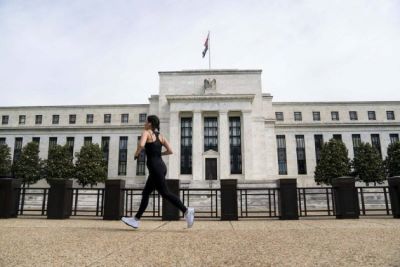
The U.S. Federal Reserve is moving closer to announce a plan to taper its asset purchases later this year despite the uncertainty caused by the Delta variant, Fed officials and economists have said.
ADVERTISEMENTx
“Looking ahead, most participants noted that, provided that the economy were to evolve broadly as they anticipated, they judged that it could be appropriate to start reducing the pace of asset purchases this year,” the Fed said Wednesday in the minutes of its July 27-28 meeting.
Various Fed officials thought that economic and financial conditions would likely warrant a reduction in asset purchases in the coming months, the minutes said.
The Fed has pledged to keep its benchmark interest rate unchanged at the record-low level of near zero, while continuing its asset purchase program at least at the current pace of 120 billion U.S. dollars per month until “substantial further progress” has been made on employment and inflation.
“There are two main arguments for tapering. The first is that with such strong budget support and with the economy showing signs of continuing its strong recovery, the economy no longer needs the same strong monetary policy support as it did earlier,” Desmond Lachman, resident fellow at the American Enterprise Institute and a former official at the International Monetary Fund, told Xinhua.
“The second reason is that we are seeing unhealthy signs of excessive asset price inflation in the housing and equity markets that could cause financial instability down the road,” Lachman said, expecting the Fed to begin tapering by the end of the year.
Several Fed officials, including Dallas Federal Reserve Bank President Robert Kaplan and Boston Federal Reserve Bank President Eric Rosengren, have called for the central bank to announce a plan for tapering asset purchases as soon as September and end the purchases by the middle of next year.
In an interview with the Financial Times earlier this week, Rosengren noted that the cost-benefit analysis around the Fed’s asset purchase program changes a bit as a result of the pandemic creating these supply constraints.
“We’re having more of an impact on temporary surges of prices and less of an impact on trying to get back to full employment and a more sustainable inflation rate,” Rosengren said, adding the rising debt loads fueled in part by the asset purchases could eventually jeopardise economic recovery.
U.S. inflation remained elevated in July due to pandemic-related supply constraints. The consumer price index increased 5.4 percent over the past 12 months through July, the same increase as the period ending June and the largest 12-month increase since 2008, according to the Labor Department.
People wait in line at a mobile COVID-19 vaccination center in the Brooklyn borough of New York, the United States, Aug. 18, 2021.
“There are two reasons to think that inflation might have peaked. The first is that supply bottlenecks might ease. The second is that the economy might now slow as a result of a delta wave in the pandemic,” Lachman said.
Lachman expected that U.S. inflation rate would slow to 4 percent by year-end and to 3 percent by the end of 2022, still well above the central bank’s target of 2 percent.
Meanwhile, the spread of the more contagious Delta variant has also rekindled concerns about the labor market recovery.
People wearing face masks visit a market in New Orleans, Louisiana, the United States, on Aug. 3, 2021.
“Consumers may pull back from some in-person services amid the spread of the more contagious strain and some may be reluctant to return to work, further delaying the labor market recovery,” the Economics Group of Wells Fargo Securities led by chief economist Jay Bryson said Friday in a report.
“Overall, the increased uncertainty surrounding the Delta variant supports our view that the Fed will wait to see how the labor market evolves from here prior to removing accommodation,” the report said.
Fed Chairman Jerome Powell is expected to give a speech virtually on Aug. 27 during the annual Jackson Hole economic policy symposium, which may offer further clues on the Fed’s taper plan.
At a press conference in July, Powell seemed less concerned about economic effects from the spread of the Delta variant. “What we’ve seen is with successive waves of COVID-19 over the past year and some months now, there has tended to be less economic implications from each wave,” he said.
The Wells Fargo Economics Group continues to expect that the Fed will officially announce tapering near the end of this year and kick off the actual tapering of purchases at the start of next year.
A survey released by Bloomberg last month showed that most economists expected a formal announcement of tapering by the Fed in December and actual reductions starting in the first quarter of 2022.
People spend their leisure time at a pier in San Francisco, the United States, on Aug. 15, 2021.
SET rises as hinted QE tapering hits other Asian markets
The Stock Exchange of Thailand (SET) Index closed at 1,553.18 on Friday, up 8.90 points or 0.58 per cent. Transactions totalled THB82.37 billion with an index high of 1,554.45 and a low of 1,545.92.
In the morning session, Krungsri Securities forecast the index on Friday would fluctuate between 1,535 and 1,555 points amid a mix of positive and negative sentiment.
It said the index would face downward pressure from the US Federal Reserve signalling tapering of its quantitative easing programme, the falling oil price and ongoing anti-government protests in Thailand.
“However, hopes of the lockdown easing as domestic Covid-19 cases stabilise, and the improving vaccination rate, will help boost the index,” Krungsri Securities said.
The 10 stocks with the highest trade value today were PTTGC, GULF, KBANK, AOT, PTT, INTUCH, ADVANC, DTAC, OR and SCB.
ADVERTISEMENTx
Other East Asian indices were on the fall:
Japan’s Nikkei Index closed at 27,013.25, down 267.92 points or 0.98 per cent.
China’s Shanghai SE Composite Index closed at 3,427.33, down 38.22 points or 1.10 per cent, while the Shenzhen SE Component Index closed at 14,253.54, down 233.83 points or 1.61 per cent.
Hong Kong’s Hang Seng Index closed at 24,849.72, down 466.61 points or 1.84 per cent.
South Korea’s KOSPI closed at 3,060.51, down 37.32 points or 1.20 per cent.
Taiwan’s TAIEX closed at 16,341.94, down 33.46 points or 0.20 per cent.
The price of gold in Thailand dropped by THB50 on Friday morning.
The Gold Traders Association report at 9.28am showed buying price of a gold bar at THB28,050 per baht weight and selling price at THB28,150, while gold ornaments were priced at THB27,545.72 and THB28,650, respectively.
At close on Thursday, buying price of a gold bar was THB28,100 per baht weight and selling price THB28,200, while gold ornaments were priced at THB27,591.20 and THB28,700, respectively.
ADVERTISEMENTx
Spot gold on Friday morning was moving at around US$1,783 (THB59,463) per ounce after Comex gold price at close on Thursday dropped by $1.3 to $1,783.1 per ounce, due to pressure from the appreciation of the US dollar, including the recent meeting results of the US Federal Reserve which signalled that it would start reducing the limit in the bond purchase programme under the quantitative easing (QE) measures this year.
Hong Kong gold, meanwhile, rose by HK$10 to $16,550 (THB70,849) per tael, the Chinese Gold and Silver Exchange Society reported.
SET expected to see fluctuation amid mixed signals
The Stock Exchange of Thailand (SET) Index rose by 8.61 points, or 0.56 per cent, to 1,552.89 on Friday morning.
The SET Index closed at 1,544.28 on Thursday, down 7.59 points or 0.49 per cent. Transactions totalled THB78.14 billion with an index high of 1,553.90 and a low of 1,543.75.
Krungsri Securities forecast the index on Friday would fluctuate between 1,535 and 1,555 points amid mixed positive and negative sentiments.
It predicted the index would be under pressure after the US Federal Reserve signalled it would reduce its quantitative easing programme, the falling oil price and ongoing anti-government protests in Thailand.
“However hopes of the lockdown being eased, as domestic Covid-19 cases stabilise, and the improving vaccination rate would help boost the index,” Krungsri Securities said.
ADVERTISEMENTx
It recommended selective buying as an investment strategy:
▪︎ HANA, KCE, TU, CPF, GFPT, ASIAN, EPG and NER, which benefit from the weakening baht.
▪︎ PSL, TTA and RCL, which would benefit from a rise in the freight rate.
▪︎ AOT, CPN, CRC, HMPRO, AAV, BA, MINT, CENTEL, AMATA and WHA , which would benefit from the country’s reopening.
Exporters sale of dollars checks bahts slide despite strengthening US currency
The baht opened at 33.35 to the US dollar on Friday, unchanged from Thursday’s closing rate.
The Thai currency is likely to move between 33.30 and 33.45 during the day, Krungthai Bank market strategist Poon Panichpibool said.
Poon explained that the baht had not weakened in proportion with the strengthening of the dollar, as exporters continued to sell dollars, while investors were short-selling the Thai currency as the Covid-19 situation has almost reached its worst point.
He said the baht was likely to fluctuate and weaken due to the Covid-19 crisis and the rising dollar, amid demand for safe-haven assets and the Federal Reserve’s likely decision to reduce quantitative easing (QE) this year.
Investors’ stocks might be affected if the Fed decides to decrease liquidity support or QE. Investors will temporarily decrease their investments in Asian emerging markets, as they might be worried about the effects of a reduction in QE, such as the QE Taper Tantrum incident in 2013.
ADVERTISEMENTx
He expected the key resistance level would be between 33.40 and 33.50 to the US dollar, as exporters are waiting to offload more dollars.
He said the key support level would be around 33.00 to the dollar, which is the price range importers are waiting for before they make purchases. If there are large transactions, the baht might be volatile on Friday.




 People wait in line at a mobile COVID-19 vaccination center in the Brooklyn borough of New York, the United States, Aug. 18, 2021.
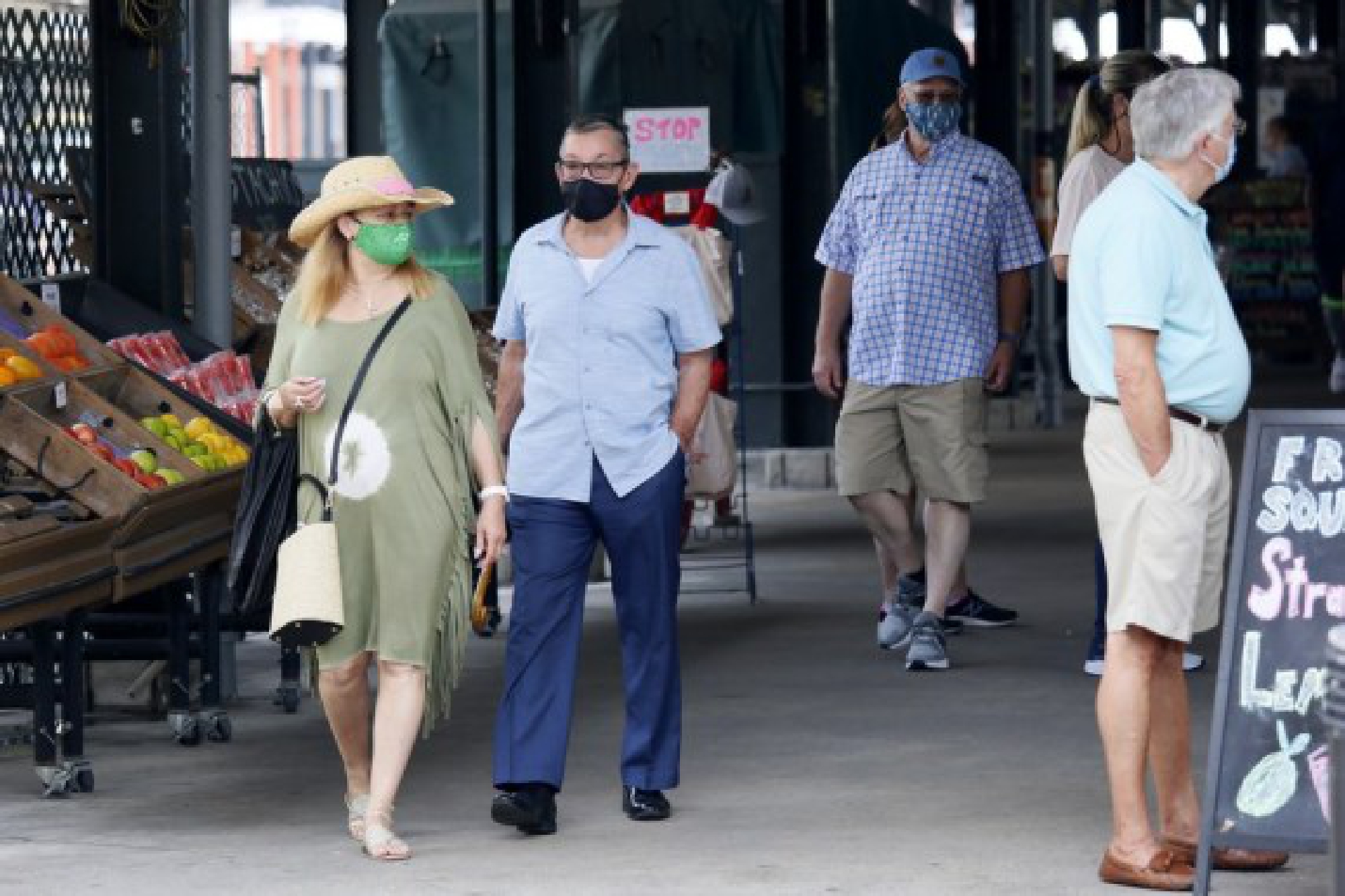 People wearing face masks visit a market in New Orleans, Louisiana, the United States, on Aug. 3, 2021.
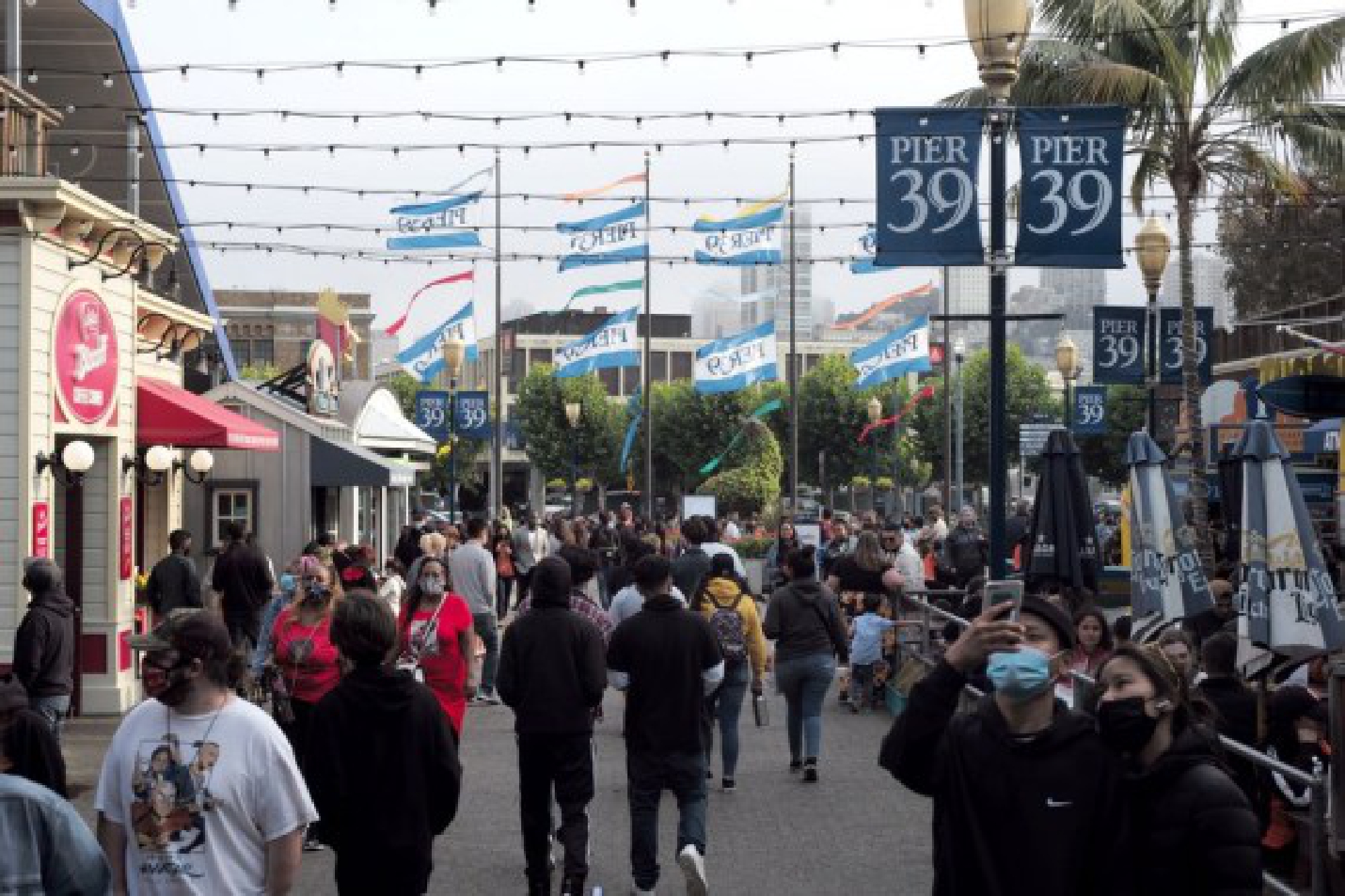 People spend their leisure time at a pier in San Francisco, the United States, on Aug. 15, 2021.

