China partly shuts worlds third-busiest port, risking trade
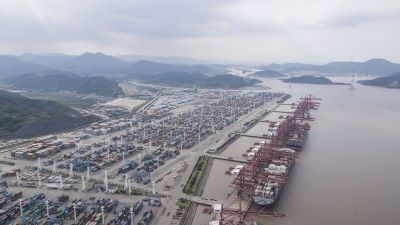
China partly shut the worlds third-busiest container port after a worker became infected with Covid, threatening more damage to already fragile supply chains and global trade as a key shopping season nears.
All inbound and outbound container services at Meishan terminal in Ningbo-Zhoushan port were halted Wednesday until further notice due to a “system disruption,” according to a statement from the port. An employee tested positive for coronavirus, the eastern Chinese city’s government said.
The closed terminal accounts for about 25% of container cargo through the port, calculates security consultant GardaWorld, which said “the suspension could severely impact cargo handling and shipping.” Germany’s Hapag-Lloyd said there will be a delay in sailings.
This is the second recent shutdown of a Chinese port due to the coronavirus, after the closure of Yantian port in Shenzhen from late May for about a month. That led goods to back up in factories and storage yards and also likely lifted soaring freight rates, which are at record levels and a source of inflation.
ADVERTISEMENTx
The fear is that this new disruption will further strain shipping and supplies of goods, dampening growth and driving up prices. An extended shuttering at Ningbo could be especially painful for the world economy because seaborne trade usually rises toward the end of the year as companies ship Christmas and holiday products.
“There may be far-reaching downstream consequences going into Black Friday and holiday shopping seasons” and the next 24 hours will determine whether there is a large outbreak or not, said Josh Brazil, vice president of marketing at project44, a supply-chain intelligence firm. “One of the few givens in 2021 is endemic delays, and the fact that conditions can change almost overnight.”
In addition to the closed terminal, containers for shipment through the other terminals in the port will likely slow. The port will now only accept containers within two days of a ship’s estimated arrival time, according to a statement from shipping and logistics firm CMA CGM.
The biggest exports through Ningbo in the first half of this year were electronic goods, textiles and low and high-end manufactured goods, according to the city’s Customs Bureau. Top imports included crude oil, electronics, raw chemicals and agricultural products.
Speaking about the outbreak, Hugo De Stoop, CEO of oil shipper Euronav said “there will be an impact on China’s oil demand, but the length of the impact is unclear.”
For port outbreaks “the Chinese authorities are very very strict. When they find a case they will be very quick to shutdown, isolate the workers, isolate the coworkers who have had contact with that specific worker and then reopen as quickly as possible,” he told Bloomberg Television Thursday, adding that this strictness in dealing with outbreaks can disrupt markets.
All the close contacts of the infected worker have been identified and are in quarantine, according to Ningbo City’s statement. A port spokesman who declined to give his name said there was no new information when contacted Thursday.
The port was the third busiest globally in terms of container shipments in 2020 and the second busiest in China after Shanghai, according to maritime publication Lloyd’s List.
The discovery of the port worker that tested positive for Covid-19 shows that virus-prevention measures in Ningbo City still has loopholes, the local government said in a statement on its website Thursday, which urged officials to implement quarantines, disinfection and close affected areas to prevent the virus’ spread.
IEA cuts oil demand outlook on virus, sees new surplus in 2022
The International Energy Agency cut forecasts for global oil demand “sharply” for the rest of this year as the resurgent pandemic hits major consumers, and predicted a new surplus in 2022.
It’s a marked reversal for the Paris-based agency, which just a month ago was urging the OPEC+ alliance to open the taps or risk a damaging spike in prices. The oil cartel heeded calls to hike supply, which is now arriving just as consumption slackens.
The analysis also jars with Wednesday’s call from the U.S. — the IEA’s most influential member — for the Organization of Petroleum Exporting Countries and its allies to ramp production up faster.
“The immediate boost from OPEC+ is colliding with slower demand growth and higher output from outside the alliance, stamping out lingering suggestions of a near-term supply crunch or super cycle,” the IEA said in its monthly report.
ADVERTISEMENTx
Oil prices have retreated 6% this month as the contagious delta variant triggers renewed lockdowns in China and other key Asian consumers where vaccination rates are lagging. Brent futures are trading near $71 a barrel, having hit a two-year high near $78 in early July.
The “recent rally has lost steam on concerns that a surge in Covid-19 cases from the Delta variant could derail the recovery just as more barrels hit the market,” the IEA said.
The 23-nation OPEC+ coalition led by Saudi Arabia and Russia agreed last month on a roadmap for restoring the rest of the oil supplies it shuttered when the pandemic emerged. The additional barrels are, however, starting to flow at an inauspicious moment.
Global oil demand “abruptly reversed course” last month, falling slightly after surging by 3.8 million barrels a day in June, the IEA said. The agency lowered estimates for consumption in the second half of the year by 550,000 barrels a day.
Still, the IEA projects that world fuel use will continue to increase as the global economic recovery gathers pace, reaching an average of 98.9 million barrels a day in the last three months of this year.
The recovery achieved so far is already having unwanted side-effects.
As U.S. motorists grapple with $3-a-gallon gasoline and fears over inflation, the Biden administration is insisting that OPEC+ accelerate its supply increases. “At a critical moment in the global recovery,” OPEC’s plans are “simply not enough,” National Security Advisor Jake Sullivan said in a statement on Wednesday.
The IEA significantly bolstered forecasts for supplies outside of OPEC in 2022 as the U.S. and other producers recover from the pandemic slump in investment. The projection for non-OPEC output was increased by an average of 1.1 million barrels a day next year.
As a result, OPEC is already producing the volume of crude needed in 2022, the report showed. With output at 26.7 million barrels a day in July, proceeding with plans to restore more production will likely tip the market back into oversupply.
“The scale could tilt back to surplus in 2022 if OPEC+ continues to undo its cuts and producers not taking part in the deal ramp up in response to higher prices,” the agency said.
Published : August 13, 2021
By : Syndication Washington Post, Bloomberg · Grant Smith
Biden calls for action to reduce prescription drug prices
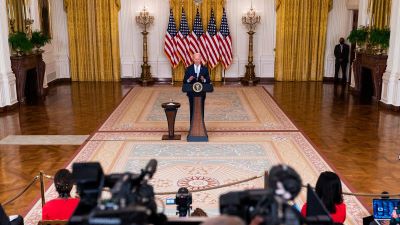
WASHINGTON – President Joe Biden stepped up his battle over drug costs on Thursday, calling on Congress to pass legislation that would let Medicare negotiate directly with pharmaceutical manufacturers and penalize drugmakers that increase prices faster than inflation.
Biden’s remarks from the White House were less a set of new policy ideas than a reminder that he is eager to make headway on an issue of keen concern to voters – one he describes as critical to helping Americans recover economically from the pandemic.
“Alzheimer’s diabetes, cancer – they don’t care if you’re Democrat or Republican,” Biden said in the East Room. “This is about whether or not you and your loved ones can afford prescription drugs.”
That formulation overlooks the considerable difference between the parties, and among powerful interest groups, over how big a role the government should play in taming drug costs. And Biden’s initiative comes at a delicate time, as drugmakers have earned some of their best headlines in years for the lightning-fast development of coronavirus vaccines.
ADVERTISEMENTx
Citing those inoculations, Biden said, “We can make a distinction between developing these breakthroughs and jacking up prices on a range of medications for a range of everyday diseases and conditions.” He told the story of a woman he’d met whose insulin cost $32 a vial in 2001, saying now that same vial costs $280.
In a reflection of the turbulent political climate on health matters, Biden began his comments by excoriating those, including Republican governors, who are politicizing covid-19 mask requirements, citing a recent incident in Tennessee where doctors and nurses were threatened after testifying before a school board.
Many Democrats, including Biden, have long supported the idea of allowing Medicare to negotiate the price of medicines directly with pharmaceutical companies – something forbidden under the 2003 law that created the program’s drug benefits.
Giving the government such negotiating power was part of Biden’s campaign health-care plan, and it is woven into what the White House calls the American Families Plan that the president proposed in April. He has urged Congress to adopt such an arrangement by the end of the year.
While negotiating with drugmakers was the centerpiece, Biden listed a series of other ideas for lowering drug prices.
ADVERTISEMENT
He touted a proposal for penalizing drugmakers that raise prices more rapidly than the rate of inflation. He said Medicare should cap the amount beneficiaries have to pay out-of-pocket for drugs each year. He said he favors accelerating the development of generic drugs, as the Food and Drug Administration is striving to do.
And he reiterated his support for allowing the importation of drugs from Canada, where they tend to be sold at lower prices. This idea is favored by many Democrats and was embraced by President Donald Trump over the objections of the pharmaceutical industry.
Importing drugs was also part of an executive order Biden issued last month to spur economic competition. Among other things, the order directed his administration to work with states to devise plans to import medicines safely from Canada.
Biden’s remarks came as he began an intensified effort to promote the American Families Plan, a $3.5 trillion spending package that focuses on areas from health care to education. His comments were intended in part to counter Republican charges that the plan is recklessly expensive, portraying it instead as a collection of vital measures that will help ordinary Americans.
“All of us, whatever our background or our age and where we live, can agree that prescription drug prices are outrageously expensive in America,” Biden said, adding, “Right now, right here in America, we pay the highest prescription drug costs of any developed nation in the world . . . about two to three times what other countries pay.”
ADVERTISEMENT
Taking on drug prices allows Biden to emphasize an issue that affects millions of people, and one where many Americans favor government action. And it dovetails with the goal of Biden and other Democrats to expand health coverage.
Americans spend an average of $1,200 a year on prescription drugs, the highest of any industrialized nation, in large part because of high drug costs, according to recent estimates.
Concern over the future cost of medicines has been amplified as pharmaceutical research has led to treatment breakthroughs, some of them exceedingly expensive. American consumers and the government face growing concerns about whether those and other drugs will be within reach for the people who need them.
The Food and Drug Administration recently prompted a backlash by approving an Alzheimer’s drug called Aduhelm, which is not only expensive – $56,000 a year per patient – but which many doctors believe has not been shown to work.
On Thursday, Biden ticked off price increases for insulin to treat diabetes and common medicines for multiple sclerosis and rheumatoid arthritis.
A report by Reuters showed that drugmakers raised prices on more than 500 drugs in 2021, in part to offset declining revenue during the coronavirus pandemic, as wary Americans visited doctors’ offices less and were prescribed fewer pills.
The price hikes included more than 300 manufactured by Pfizer, the manufacturer widely praised for producing an early coronavirus vaccine. “While the pharmaceutical companies have done enormous work by developing lifesaving covid-19 vaccines alongside the United States’ best scientists, crippling drug prices are unacceptable,” Biden said.
The government is paying for Americans to get the coronavirus vaccines, so their cost is not an issue for the public.
The pandemic has pushed health costs and disparities into the center of the national conversation. Infections and deaths from covid-19, the illness caused by the virus, have been disproportionately common among people of color and the poor.
Public health leaders warn that people unable to afford a doctor, or take off work for a fever or a cough, could contribute to the spread of a virus that has killed more than 617,000 Americans.
The pharmaceutical industry has long opposed a greater federal role in drug prices, and PhRMA, the industry’s main trade group, is currently sponsoring an ad campaign criticizing direct negotiation of Medicare drug prices.
In response to Biden’s effort Thursday to focus attention on the issue, PhRMA issued a “myth vs. fact” statement, contending that government-negotiated Medicare drug prices would be accompanied by “a harsh reality: reduced access to prescription medicines and choices for patients.”
PhRMA CEO Stephen Ubl argued that Biden’s proposals, by wringing money out of Medicare, would only hurt its beneficiaries and vulnerable patients.
“Many in Congress know that access to medicine is critical for millions of patients and Medicare is not a piggy bank to be raided to fund other, unrelated government programs,” Ubl said in a statement. “This is a misguided approach.”
Biden had harsh words for the industry. “Too may pharmaceutical companies don’t use the profit nearly enough to innovate or on research,” he said. “Too many companies use it to buy back their own stock, inflate their worth, drive up CEO salaries and compensation and find ways to box out the competition.”
He added, “Look, folks, they should be able to make a significant profit. But why should we be paying two or three times what every other country in the world is paying for similar drugs?”
While he did not issue new proposals Thursday, Larry Levitt, executive vice president for health policy at the Kaiser Family Foundation, a nonpartisan policy and research organization, said Biden was seeking to raise his profile in the debate in a new way.
“President Biden is putting his political weight behind the effort to lower drug prices,” Levitt said. “There was a sense that the president was to some extent sitting on the sidelines in the debate over drug prices, but that is clearly not the case anymore.”
And he was aligning with the view of most Americans.
Nationwide, recent surveys suggest that lowering drug prices remains a significant priority with the American public. In a Kaiser Family Foundation poll from May, two-thirds of the respondents said that it should be a top congressional priority to adopt legislation that allows the federal government and private insurers to negotiate lower prices on prescription drugs.
That was the highest ranking among eight health-care proposals included in the poll. And 59 percent said states should have the same authority, the poll found.
Biden stressed the public support for his prescription drug proposal, as well as other aspects of his infrastructure plan, which he said would help American families rebound faster from an economy damaged by the coronavirus pandemic.
The president has spent this week bolstering his spending agenda, which includes a bill to improve traditional infrastructure, like roads and bridges, as well as a more ambitious – and expensive – effort aimed at what the White House calls “human infrastructure,” or the American Families Plan.
The Senate passed the bipartisan physical infrastructure plan this week, and now the measure moves to the House, which is narrowly controlled by Democrats. Lawmakers have only just begun tackling the American Families Plan, which would include the drug pricing proposals.
Any plan to reduce prescription drug prices could run into hurdles in Congress. Thirteen of the 20 largest drug companies, and hundreds of smaller biotechnology companies, are headquartered in New Jersey, representing billions in research and development spending. Some Garden State lawmakers have resisted efforts to fund other progressive priorities by cracking down on pharmaceutical company revenue. And they are only some of the powerful supporters the drug industry has in Congress.
But Biden argued that the country’s overriding need is to bring down costs for working Americans.
“These challenges were with us long before the pandemic took off,” he said. “But as we recover from this crisis, now is the moment to put in place a long term plan to build back America better.”
Published : August 13, 2021
By : The Washington Post · Cleve R. Wootson Jr., Amy Goldstein
Stocks set another record as trading range narrows
U.S. stocks set another record high even as the S&P 500 Index settles into the narrowest trading range since before the Covid pandemic roiled global financial markets. The dollar strengthened and Treasury yields were mostly higher.
Health care and technology shares helped push the S&P to a closing high for a third consecutive session and for the 47th time this year. The benchmark has almost doubled in value from the pandemic lows reached in March last year, though the rate of change is slowing. It has swung an average 0.5% each day in August, and is poised for the calmest month since November 2019. Micron Technology led chipmakers lower amid concern over the market for memory chips.
“Equities become the proverbial term — there is no alternative — and that’s ultimately a money-flow story,” David Kostin, chief equity strategist at Goldman Sachs, said during a Bloomberg TV interview. “From a valuation perspective, equities are reasonably valued in the context of interest rates.”
Treasuries were mostly lower. An earlier report showed applications for U.S. state unemployment benefits dropped for the third week in a row.
“This is yet another data point indicating continued labor market recovery,” Anu Gaggar, global investment strategist at Commonwealth Financial Network, said of Thursday’s jobless claim data.
Investors are continuing to evaluate the implications of a likely Federal Reserve tapering announcement in the months ahead, the spread of the delta virus variant and China’s clampdown. Global stocks are up about 90% since the pandemic nadir in March 2020, spurring questions about how much further they can climb.
ADVERTISEMENTx
These are the main moves in markets:
Stocks
–The S&P 500 rose 0.3% as of 4 p.m. New York time
–The Nasdaq 100 rose 0.4%
–The Dow Jones Industrial Average was little changed
ADVERTISEMENT
–The MSCI World index was little changed
Currencies
–The Bloomberg Dollar Spot Index rose 0.1%
–The euro was little changed at $1.1734
–The British pound fell 0.5% to $1.3805
ADVERTISEMENT
–The Japanese yen was little changed at 110.42 per dollar
Bonds
–The yield on 10-year Treasuries advanced three basis points to 1.36%
–Germany’s 10-year yield was little changed at -0.46%
–Britain’s 10-year yield advanced three basis points to 0.60%
Commodities
–West Texas Intermediate crude fell 0.5% to $68.91 a barrel
–Gold futures were little changed
Published : August 13, 2021
By : Syndication Washington Post, Bloomberg · Lu Wang, Vildana Hajric
Markets wrap: Stocks, bonds rise as taper debate take spotlight
U.S. stocks rose to record highs and bonds rallied after a report showing inflation moderated reduced concern about the urgency for the easing of the stimulus that helped the economy recover from the Covid pandemic.
The S&P 500 and Dow Jones Industrial Average indexes climbed to fresh records after data showed CPI rose 0.5% in July after rising 0.9% in June. The S&P has almost doubled from its low reached in March last year. The tech-heavy Nasdaq 100 declined as investors rotated to cyclical shares from traditional growth favorites such as Amazon.com. Treasuries extended gains after the government’s auction of 10-year notes was met with strong demand.
Investor had focused on U.S. price data as Federal Reserve Chair Jerome Powell and other officials discuss the prospects of unwinding stimulus. Kansas City Fed President Esther George said the central bank needs to move ahead with reducing monetary stimulus, citing expectations for continued labor-market gains.
“The Fed should find comfort in this report, but the Fed’s taper announcement in September is not a done deal,” said Anastasia Amoroso, iCapital Network’s chief investment strategist. “Policy makers should be focused on how the delta variant is impacting leisure and hospitality sector. Possibly we’ll see lower activity in August due Covid-19.”
While the CPI figures were in line with estimates, it could take several more months of data to settle the debate over whether inflation proves transitory or not. Year-over-year CPI rose 5.4%, compared with an estimate of 5.3%.
“Today’s softer-than-expected readings in the CPI core seem to validate the views of Powell, Williams and some of the other more moderate Fed members who are focusing on a slower path to normalization,” said Giorgio Caputo, senior portfolio manager at J O Hambro Capital Management.
Elsewhere, crude oil rose as the dollar weakened after earlier falling in the wake of a report that the U.S. will urge OPEC to revive production more quickly.
The Stoxx Europe 600 Index edged higher amid strong earnings from the likes of ABN Amro Bank NV and Stop & Shop owner Royal Ahold Delhaize NV.
Bitcoin rose back above $46,000 even as the Senate passed an infrastructure bill containing broad oversight of virtual currencies. Palm oil posted its biggest daily advance since 2009 after a report showed stockpiles contracting.
Here are some key events to watch out for this week:
– OPEC Monthly Oil Market Report due Thursday
ADVERTISEMENTx
These are the main moves in markets:
– – –
– The S&P 500 rose 0.2% as of 4:01 p.m. New York time
– The Nasdaq 100 fell 0.2%
– The Dow Jones Industrial Average rose 0.6%
ADVERTISEMENT
– The MSCI World index rose 0.3%
– – –
– The Bloomberg Dollar Spot Index fell 0.2%
– The euro rose 0.2% to $1.1742
– The British pound rose 0.2% to $1.3870
ADVERTISEMENT
– The Japanese yen rose 0.1% to 110.41 per dollar
– – –
– The yield on 10-year Treasuries declined two basis points to 1.33%
– Germany’s 10-year yield was little changed at -0.46%
– Britain’s 10-year yield declined two basis points to 0.57%
– – –
– West Texas Intermediate crude rose 1.5% to $69.33 a barrel
– Gold futures rose 1.3% to $1,754.20 an ounce
Published : August 12, 2021
By : Syndication Washington Post, Bloomberg · Elaine Chen, Natalia Kniazhevich
Prices rise 5.4% in July over last year as the economy claws back from pandemic depths
WASHINGTON – Prices rose 5.4% in July compared with a year ago, as policymakers at the Federal Reserve and the Biden administration grapple with how long – and how high – inflation could climb as the economy rebounds.
Data released by the Bureau of Labor Statistics on Wednesday showed prices rose 0.5% in July compared with June, a slight easing of the monthly pace of inflation.
For months, the Fed and White House have said inflation will keep climbing as consumer demand surges while supply chains struggle to catch up. Their expectation is that as supply backlogs have time to clear, inflation will settle back down closer to the Fed’s 2% annual target.
But that message is increasingly difficult to grasp for households facing rising grocery bills, rent or expensive airline tickets. The longer it takes for supply chains to clear up or for pandemic-battered sectors to reboot, the tougher it may be for consumers to swallow higher prices.
As more people hit the road during summertime, gas prices are on an upward climb, the inflation report showed. On Wednesday, the White House called on global oil producers to boost production.
The cost of many grocery items – including meats, poultry, eggs and dairy – also ticked higher again in July, according to the report. Groceries have been trending higher for well over a year, with the Bureau of Labor Statistics showing a 2.6% rise in the “food at home” category compared with last year.
For the Fed and White House, price challenges are compounded by the fact that inflation can be driven by what people expect it will be in the future. For example, if businesses shift their plans for investment or consumers change their spending habits because they think prices for construction materials or hotel rooms will continue to soar, that behavior could drive prices up, too.
Michael Strain, director of economic policy studies at the right-leaning American Enterprise Institute, said it matters to households that “we’re on month five of this, and we might be in for another year of it.”
“I think the Fed could be less dismissive of the concern,” Strain said. “The Fed may be absolutely right to keep its zero interest rate policy. But I think the Fed has been too blasé, too serene, too dismissive of this potential risk.”
ADVERTISEMENTx
Meanwhile, Republicans have long argued that inflation is an urgent concern and that the Fed will be too late once it decides prices have reached dangerous levels. Conservatives were also quick to chastise Senate Democrats for adopting a $3.5 trillion budget early Wednesday morning, saying such massive spending will heat up the economy even more.
For now, survey data isn’t suggesting baked-in expectations for widespread, sustained inflation over the long term. But the Fed is on alert for any signs suggesting otherwise.
“All the evidence is that it’s not happening,” Fed Chair Jerome Powell said last month. “But, nonetheless, we have to watch this very carefully. . . . Price stability for us means inflation averaging 2% over time. And so we’ve got to be very careful about that.”
July’s top-line inflation figure of 5.4% was the same as the June reading. Economists and policymakers have been looking for any clues that suggest the breakneck pace of price growth is beginning to cool down. But they are also hesitant to jump to conclusions too quickly, especially since there’s no playbook for this recovery.
“One month does not make a trend . . . and we know supply constraints persist in various sectors,” the White House’s Council of Economic Advisers tweeted Wednesday.
ADVERTISEMENT
A look at used cars illustrates some inflation dynamics at play. Demand for cars is high, but supply has been hampered by ongoing chip shortages. The consequence of that mismatch is hard to miss: Compared with last year, prices for used cars and trucks have soared 41.7%.
But a look at the month-to-month data suggests prices are not climbing as fast as they had been for much of this year. For example, used car prices jumped 10.5% in June compared with May. But in July, they grew only 0.2%, compared with June.
Similarly, the cost of hotels and motels are still high as travelers rebook vacations. But the rate of price growth eased a bit in July compared with June. In June, prices rose 7.9% compared with the month before. In July, they rose 6.8% over the same period.
Still, economists and policymakers are staying alert for any signs of sustained price increases that pulse through the entire economy. For example, rising rents and soaring home prices have concerned some economists who are unsure whether the cost of shelter will fall back down. (Rent rose 0.2% in July, mirroring figures from the month before.)
“We’re in a very turbulent space in terms of pricing,” Atlanta Federal Reserve President Raphael Bostic told reporters Monday. “There are lots of moving parts, and I’m monitoring that closely.”
ADVERTISEMENT
As Americans hit the road despite the delta variant’s looming threat, the increased demand for gasoline has driven gas prices higher. The national average for a gallon of gas was $3.19 on Wednesday, according to AAA, a new high for 2021. That is up more than a dollar from this time in 2020 and up four cents from last month.
“We continue to see very robust gasoline demand for the peak summer driving season,” Jeanette McGee, a AAA spokeswoman, said in a statement Wednesday. “The latest demand rate was 2% higher than the same time period in 2019, while gasoline stocks are about 1% below.”
Rising gas prices spurred the White House to call on global oil producers to boost production. The Organization of the Petroleum Exporting Countries (OPEC) and its allies have been navigating production cuts since the early days of the pandemic flatted oil demand.
Tyson Foods, one of the nation’s largest meat producers, has hiked prices for its restaurant customers amid strong demand, as rising grain, freight, packaging and labor prices dragged on its bottom line, chief executive Donnie King told reporters Monday on the company’s earnings call.
Tyson’s retail orders have risen 30% compared with pre-covid levels, King said, but the company has dealt with turnover and struggled to fill open positions. Meanwhile, “we have seen accelerating and unprecedented inflation,” King said. “So what do you do about that?”
Last quarter, Tyson increased its average price for pork nearly 40%. It raised chicken prices more than 15% and beef prices nearly 12%. This week, it lifted its full-year revenue forecast due to the strong demand for its products. “Costs are hitting us faster than we can get pricing at this point,” he told reporters.
Customers will start seeing the difference at supermarkets Sept. 5, when retail price hikes kick in. And more price increases are planned, King said.
When it comes to thinking about prices, leaders at the Fed are tasked with keeping prices stable while also keeping employment high. In the past, the Fed would rush to clamp down on inflation, including by raising interest rates.
But now, even though inflation is climbing faster than expected, the Fed says there is still a long way to go in the labor market, which remains about 5.7 million jobs short of where it was before the pandemic hit in March 2020.
The Fed needs to see significant progress in the labor market before it starts scaling back its support for the markets, including $120 billion a month in bond purchases.
Fed leaders have made clear that they will not rush to “taper” asset purchases, or eventually raise interest rates, until the economy has made significant progress. When it comes to the labor market, economists celebrated the 943,000 jobs added in July as hiring gained speed and employers raised wages to bring people back on the payrolls.
If the economy keeps gaining momentum, economists think the Fed could announce a plan to begin peeling back asset purchases later this year or in early 2022. The Fed has also made clear it will give plenty of warning before it starts to “taper,” suggesting an announcement, let alone action, is at least a few weeks or months away.
Published : August 12, 2021
By : The Washington Post · Rachel Siegel, Taylor Telford
Malaysia may import more Thai rice this year now that it is cheaper
A drop in prices and a bigger, better harvest is expected to boost the export of Thai rice to Malaysia, the Department of Foreign Trade said this week.
Keerati Rushchano, the department’s director-general, said his agency along with the Thai Rice Exporters Association and Office of Overseas Trade Promotion in Kuala Lumpur held a virtual meeting with Malaysia’s rice import regulator, Bernas (Padiberas Nasional Berhad), on Monday.
The agencies told Bernas that Thailand’s rice harvest this year is expected to be bountiful thanks to good rainfall as well as an increase in the workforce because more people have returned to their villages due to the outbreak.
This boost in production, coupled with an expected depreciation in the baht, should bring the price of Thai rice close to that of competitors like India and Vietnam.
Meanwhile, Bernas conceded that Malaysia does not produce enough rice for local consumption and normally must import about 900,000 tonnes every year. This year, Malaysia is expected to import 1.08 million tonnes of rice due to a poor local harvest.
Thai rice has always been popular with Malaysian consumers, but the price increase pushed Bernas to opt for cheaper but inferior versions from India, Pakistan and Vietnam.
Bernas, however, believes that in the second half of this year, demand for Thai rice will rise because it has become more affordable. Apart from it becoming cheaper, Malaysian consumers also prefer Thai rice over other strains as indicated by the increase in orders over the past couple of months.
From January 1 to July 29, Thailand has exported 2.74 million tonnes of rice worth US$1.67 billion, though the volume and value of the shipment have dropped 17.07 per cent and 24.84 per cent respectively compared to last year.
SET falls after daily caseload surges above 21,000 in Thailand
The Stock Exchange of Thailand (SET) Index closed at 1,532.71 on Wednesday, down 9.91 points or 0.64 per cent. Transactions totalled THB99.75 billion with an index high of 1,550.74 and a low of 1,531.58.
In the morning session, Krungsri Securities predicted the index would fluctuate between 1,530 and 1,550 points amid hopes of the lockdown easing if the domestic Covid-19 infection rate slows.
However, the daily Covid caseload surged above 21,000 new infections again on Wednesday.
It added that the index would be buoyed by mass buy-ups of export-related stocks and shares in companies whose second-quarter business turnover is expected to improve.
“However, the falling oil price and outflow of foreign funds would pressure the index,” Krungsri Securities said.
ADVERTISEMENTx
The 10 stocks with the highest trade value today were INTUCH, GUNKUL, ADVANC, PTT, KCE, GULF, KBANK, STA, TIDLOR and STGT.
Other Asian indices were mixed:
Japan’s Nikkei Index closed at 28,070.51, up 182.36 points or 0.65 per cent.
China’s Shanghai SE Composite Index closed at 3,532.62, up 2.69 points or 0.076 per cent, while the Shenzhen SE Component Index closed at 15,021.17, down 36.42 points or 0.24 per cent.
Hong Kong’s Hang Seng Index closed at 26,660.16, up 54.54 points or 0.20 per cent.
South Korea’s KOSPI closed at 3,220.62, down 22.57 points or 0.70 per cent.
Taiwan’s TAIEX closed at 17,227.18, down 96.46 points or 0.56 per cent.
Stock buy-ups, hopes over lockdown easing may beef up SET Index
The Stock Exchange of Thailand (SET) Index rose by 3.94 points or 0.26 per cent to 1,546.56 on Wednesday morning.
Krungsri Securities predicted the index would fluctuate between 1,530 and 1,550 points amid hopes of the lockdown being eased as domestic Covid-19 cases are seen to be declining.
It added that mass buy-ups of stocks related to export, and stocks of companies whose second-quarter business turnover is expected to improve, would help boost the index.
“However, the falling oil price and outflow of foreign funds would pressure the index,” Krungsri Securities said.
It advised investors to follow the US Consumer Price Index for July as consensus expectation is that it would rise by 4.3 per cent year on year.
ADVERTISEMENTx
It recommended selective buying of the following companies’ shares as an investment strategy:
▪︎ Hana, KCE, TU, CPF, GFPT, Asian, EPG, Sun and NER, which benefit from a weakening baht.
▪︎ BCH, CHG, DoHome, CKP, CBG, OSP, Ichi, BEC, Gunkul, JWD, Wice, Sonic, TTA, RCL and Lanna, whose second-quarter business turnover is expected to improve.
The SET Index closed at 1,542.62 on Tuesday, up 2.43 points or 0.16 per cent. Transactions totalled THB81.61 billion with an index high of 1,551.61 and a low of 1,539.40.
The price of gold dropped by THB50 per baht weight in morning trade on Wednesday.
AGold Traders Association report at 9.24am showed the buying price of a gold bar at THB27,300 per baht weight and selling price at THB27,400, while gold ornaments cost THB26,802.88 and THB27,900, respectively.
At close on Tuesday, the buying price of a gold bar was THB27,350 per baht weight and selling price THB27,450, while gold ornaments cost THB26,863.52 and THB27,950, respectively.
The spot gold price on Wednesday morning was moving around US$1,732 (THB57,832) per ounce after Comex gold at close on Tuesday rose by $5.20 to $1,731.70 due to support in gold purchases after the price has been falling heavily. Furthermore, weak US economic data is proving a supporting factor in buying the metal as a safe-haven asset.
ADVERTISEMENTx
The Hong Kong gold price also dropped by HK$90 to $16,020 (THB68,732) per tael, the Chinese Gold and Silver Exchange Society reported.