The Stock Exchange of Thailand (SET) Index rose by 3.06 points, or 0.20 per cent, to 1,528.17 on Tuesday morning.
The SET Index closed at 1,525.11 on Monday, up 3.19 points or 0.21 per cent. Transactions totalled THB66.33 billion with an index high of 1,525.73 and a low of 1,513.71.
A Krungsri Securities analyst expected the SET Index on Tuesday to fluctuate between 1,515-1,535 points. The market’s condition indicated negative sentiment from the weakening of crude oil price and manufacturing sector figures of the US and China in July.
The extension of pandemic lockdown measures for an additional month and the expansion of the “dark red” zones to 29 provinces are also factors in the negative sentiment.
However, mass buy-ups of shares on specific positive sentiment sectors, such as the export sector and improved second quarter corporate results are expected to support the rebound of the index.
ADVERTISEMENTx
Selective buying is recommended for the following stocks as an investment strategy:
▪︎ Exporters like HANA, KCE, TU, CPF, ASIAN and EPG, which will benefit from the baht’s depreciation.
▪︎ BCH, CHG, BDMS, DOHOME, BEM, CKP, CBG, OSP, ICHI, GPSC, BEC, GUNKUL, JWD, WICE, SONIC and NER, which are expected to report improved results for the second quarter.
Covid situation still casts shadow over baht as foreign investors head for exit
The baht opened at 32.94 to the US dollar on Tuesday, unchanged from Monday’s closing rate.
The Thai currency is likely to move between 32.90 and 33.00 during the day, Krungthai Bank market strategist Poon Panichpibool said.
Poon said the baht was weakening while the US dollar could swing sideways. The baht was unlikely to strengthen soon as the Covid-19 situation in Thailand could worsen.
Foreign investors were still offloading their assets, such as stocks in Thailand, which would lead to a weakening of the baht, he predicted.
Poon believed the Thai currency would not weaken below 33 per US dollar if investors felt “safe” from the worldwide Covid-19 situation and hence did not need to hold onto safe-haven assets.
Gold holds firm in Thai market despite slide in spot price
The price of gold in Thailand on Tuesday morning was unchanged from Monday close.
The Gold Traders Association report at 9.26am showed buying price of a gold bar at THB28,150 per baht weight and selling price at THB28,250, while gold ornaments were priced at THB27,636.68 and THB28,750, respectively.
Spot gold on Tuesday morning dropped to US$1,812 (THB59,718) per ounce after Comex gold price at close on Monday rose by $5 to $1,822.2 per ounce, due to the depreciation of the US dollar and the drop in the US government bond yield.
ADVERTISEMENT
Hong Kong gold price, meanwhile, rose by HK$20 to $16,790 (THB71,167) per tael, the Chinese Gold and Silver Exchange Society reported.
Stocks erase gain as yields dip on growth concerns
U.S. equities erased gains on Monday after Treasury yields extended a decline following softer-than-expected U.S. manufacturing growth amid lingering supply constraints.
The S&P 500, Dow Jones industrial average and Nasdaq 100 fell from earlier highs as investors considered the impact of the 10-year Treasury yield hitting as low as 1.15% on Monday, putting concerns about growth in focus.
“I think people are looking at the sharp drop in long rates and flattening of the yield curve and they are getting worried about economic growth,” said Peter Boockvar, chief investment officer for Bleakley Advisory Group. “That growth concern comes from the inflation-driven slowdown we’re seeing in some sectors in addition to delta variant worries in emerging markets.”
U.S. equities initially followed stocks in Europe and Asia higher amid upbeat earnings and a surge in corporate dealmaking, which had offset concerns over the spread of the delta virus variant and China’s regulatory crackdown. Square Inc.’s $29 billion deal for Afterpay Ltd. has put global dealmakers on course for the busiest-ever summer. Meanwhile, China’s market regulator has called for more cooperation with the U.S. on initial public offerings.
The unsteady moves at the start of the month come as August has historically been a month that starts off weak, especially if the S&P 500 is already up over 10%, according to Bespoke Investment Group LLC.
“Maybe in a year in which the S&P 500 performs so strongly heading into August, a pause is just what it needs before finishing off the year strong,” the Harrison, New York-based firm wrote in a note Monday.
But while August may be weaker, stock market bulls can claim to have history on their side. The S&P 500 rose for a sixth straight month in July — the longest such streak since 2018 — and the average 12-month return after similar runs in the past half century is 8.3%, according to data compiled by Bloomberg. Many risks remain, however.
A surge in the covid-19 delta variant could harm the U.S. recovery and keep some Americans from looking for work, Minneapolis Fed President Neel Kashkari said ahead of Friday’s U.S. jobs report.
Unexpectedly weak growth in manufacturing could also add to expectations for a steadier recovery after a key factory reading from China also slipped.
Meanwhile, tensions with Iran over a deadly attack on a tanker could also weigh on markets. Crude oil was lower on Monday after the U.S., Israel and the U.K. vowed to respond to the attack.
Matt Maley, chief market strategist for Miller Tabak + Co., said Monday’s performance could be attributed to bond yields and the drop in oil prices facing lower demand.
“If that is signaling lower growth, that could be a problem for stocks,” he said.
ADVERTISEMENTx
Here are the main moves in the markets:
Stocks
Futures on the S&P 500 fell 0.2% as of 4:18 p.m. EDT
Futures on the Dow Jones industrial average fell 0.2%
The MSCI World index rose 0.4%
ADVERTISEMENT
Currencies
The Bloomberg Dollar Spot Index was little changed
The euro was little changed at $1.1871
The British pound fell 0.1% to $1.3888
The Japanese yen rose 0.4% to 109.31 per dollar
ADVERTISEMENT
Bonds
The yield on 10-year Treasurys declined five basis points to 1.17%
Germany’s 10-year yield declined three basis points to -0.49%
Britain’s 10-year yield declined four basis points to 0.52%
Commodities
West Texas Intermediate crude fell 3.4% to $71.46 a barrel
Gold futures were little changed
Published : August 03, 2021
By : Syndication Washington Post, Bloomberg · Kamaron Leach, Vildana Hajric
SET up slightly despite expansion of lockdown measures in Thailand
The Stock Exchange of Thailand (SET) Index closed at 1,525.11 on Monday, up 3.19 points or 0.21 per cent. Transactions totalled THB66.33 billion with an index high of 1,525.73 and a low of 1,513.71.
In the morning session, Krungsri Securities predicted the index would fluctuate between 1,510 and 1,530 points after lockdown measures were extended to more provinces to curb the spread of Covid-19, impacting the economy and foreign fund flows.
“However, mass buy-ups of shares that have gained positive sentiment would help boost the index,” Krungsri Securities said.
ADVERTISEMENTx
The 10 stocks with the highest trade value today were CPALL, AMR, PTT, CPF, TOP, AS, RCL, TTA, KBANK and AOT.
Other Asian indices were on the rise:
Japan’s Nikkei Index closed at 27,781.02, up 497.43 points or 1.82 per cent.
China’s Shanghai SE Composite Index closed at 3,464.29, up 66.93 points or 1.97 per cent, while the Shenzhen SE Component Index closed at 14,798.16, up 324.95 points or 2.25 per cent.
Hong Kong’s Hang Seng Index closed at 26,235.80, up 274.77 points or 1.06 per cent.
South Korea’s KOSPI closed at 3,223.04, up 20.72 points or 0.65 per cent.
Taiwan’s TAIEX closed at 17,503.28, up 255.87 points or 1.48 per cent.
Thailand set to resume rice export to Iraq after seven years
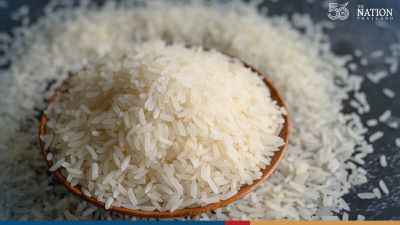
Thai exporters are currently preparing to export 44,000 tonnes of 100 per cent white rice to Iraq for the first time in seven years after Baghdad had suspended the import of Thai rice.
Government spokesman Anucha Burapachaisri said on his Facebook post on Sunday that he expected the export in the middle of August this year, after which Thai exporters could gradually export more rice to Iraq.
“The government is ready to promote Thai exporters to open more rice markets in addition to the three main markets — premium, general and niche — which will be a positive sentiment for Thai rice farmers as well,” he said.
ADVERTISEMENTx
He added that the government is also ready to promote Thai exporters to trade agricultural products in Asia, the Middle East and other regions.
“Prime Minister Prayut Chan-o-cha has instructed the Commerce Ministry to promote rice and other Thai agricultural products to increase their share in the global market and compensate for the slowdown in domestic consumption due to Covid-19 and the economic slowdown,” he added.
Limited upside for SET amid extension of lockdown, increase in dark red Covid provinces
The Stock Exchange of Thailand (SET) Index fell by 4.77 points, or 0.31 per cent, to 1,517.15 on Monday morning.
The SET Index closed at 1,521.92 on Friday, down 15.86 points or 1.03 per cent. Transactions totalled THB87.72 billion with an index high of 1,539.03 and a low of 1,516.77.
Krungsri Securities predicted the index on Monday would fluctuate between 1,510 and 1,530 points due to the Centre for Covid-19 Situation Administration‘s move to extend lockdown measures and include more provinces in the high-risk “dark red” zone to curb rising Covid-19 cases, which would impact the economy and foreign funds flow.
“However, mass buy-ups of shares that have gained positive sentiment would help boost the index,” Krungsri Securities said.
ADVERTISEMENTx
It recommended that investors buy:
▪︎ HANA, KCE, TU, CPF, ASIAN and EPG, which would benefit from the weakening baht.
▪︎ BCH, CHG, BDMS, DOHOME, BEM, CKP, CBG, OSP, ICHI, GPSC, BEC, GUNKUL, JWD, WICE, SONIC and NER, whose second-quarter business turnover is expected to improve.
Gold faces downward pressure after weeks riding high
The price of gold in Thailand was unchanged from Saturday close on Monday morning.
The Gold Traders Association report at 9.31am showed the buying price of a gold bar at THB28,200 per baht weight and selling price at THB28,300, while gold ornaments were priced at THB27,697.32 and THB28,800, respectively.
Gold price rose by THB200 per baht weight last week and by THB1,600 per baht weight in July, with the year’s highest price at THB28,400 per baht weight.
ADVERTISEMENTx
Spot gold on Monday was US$1,812 (THB59,696) per ounce after Comex gold on Friday dropped by $18.6 to $1,817.2 per ounce due to mass sell-offs of the precious metal after its price rose to the highest in six weeks.
Hong Kong gold price, meanwhile, dropped by HK$130 to $16,830 (THB71,321) per tael, the Chinese Gold and Silver Exchange Society reported.
Singapore expat angst forces simmering political debate
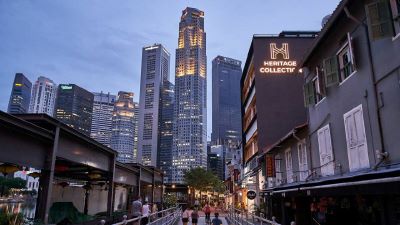
Singapore success as a financial hub has long been tied to its openness to global talent. But as the city-state battles to recover from its worst recession, a backlash in some quarters against overseas workers has again forced its way up the political agenda.
Opposition politicians are stepping up scrutiny of jobs taken up by expats, as this perennial debate about Singapore’s reliance on foreign labor sharpens. Some 70% of residents called for strict limits on the number of foreigners coming into the country, according to a survey by the Institute of Policy Studies released earlier this year, even as ministers have recently tried to drive home the importance of attracting talent. More debate in parliament is expected in the coming months.
“We have about four to five local universities that produce so many graduates every year. Things aren’t like 60 years ago,” said Kian Peng, a freelance photographer. “Is the government sure that we still need so many foreign PMEs?” he said, using a common abbreviation for white-collar workers including professionals, managers and executives.
For many foreign companies, Singapore’s low taxes and modern infrastructure make it one of the most attractive places in Asia to do business – particularly as Hong Kong gets caught in the crossfire of U.S.-China tensions. But Singapore’s growing angst about foreign workers, an issue that’s particularly heated in the local press and social media, is putting the government under pressure to explain its approach and could complicate hiring decisions, right as the country is trying to stoke post-pandemic growth.
In response to the backlash, two top ministers issued statements in parliament last month, defending the government’s balancing act of promoting local jobs while ensuring international talent can help the economy thrive.
“We must not inadvertently shake the bedrock that has enabled Singapore to succeed,” Health Minister Ong Ye Kung, a former trade negotiator, told lawmakers. “We cannot survive, we cannot earn a living, without being connected to the world, without being welcoming to the world.”
Singapore’s central bank chief has also weighed in on this debate. In a series of lectures that ended last week, Ravi Menon, the managing director of the Monetary Authority of Singapore, said Wednesday that even though net jobs for locals rose and there were plenty of vacancies during the first quarter, there are still many others who are unemployed. While that feeds into concerns over jobs, he also noted that the economy has benefited from the contributions of foreign talent.
“We are a labor short economy facing acute skills shortages that we have had to rely on well-qualified foreigners to fill,” said Menon, who was speaking in a personal capacity. “Let us also acknowledge that many foreigners who come here to work are highly qualified, passionate about their work, and decent people. They work hard, keep late nights, deliver good products and services, and contribute to our society.”
Still, the environment has undeniably shifted.
Banks, fund managers and consulting firms are among companies that have come under heightened scrutiny as the government cracks down on suspected pre-selection of foreigners for jobs or not giving Singaporeans a fair chance.
The framework for granting employment passes has been tightened, with the minimum qualifying salary threshold for executive and mid-level roles rising in the past year.
Unlike before, foreigners living as dependents now need a company sponsored visa to work – a contrast to employment rules in Hong Kong where dependents of permanent residents and foreign professionals face no prohibitions. And while the government introduced a two-year visa to attract global technology professionals last year, the program is not open to mid-career talent that could compete against locals for jobs.
The shift is also being felt in blue-collar industries. The government said during the budget in February it will reduce the proportion of foreign workers in the manufacturing sector to 15% by 2023 from the current 20%. Two years ago, it announced it would reduce foreign-worker quotas for the service industry to 35% by 2021 from 40% in 2019.
“To an extent, the economic effects of the pandemic have muted the effects of these restrictions,” said Devadas Krishnadas, CEO of Future-Moves Group, a boutique consultancy focused on public policy and corporate strategy. “However, should these restrictions remain in place during the economic recovery, it will be a cause of frustration in the sourcing of the best available talent from a global hinterland.”
ADVERTISEMENTx
Covid-related travel restrictions, including delays in processing entry permits, are compounding hiring challenges, according to the Singapore International Chamber of Commerce.
“City-states are fragile economic units, they need a vibrant economy to survive,” said Victor Mills, the chamber’s chief executive officer. “We all need to recognize that this is about team work, local and foreign talent working together for the benefit of their companies, their customers and for society at large.”
Nevertheless, foreign labor has long been a flash point in Singaporean politics. A decade ago, discontent over immigration saw the ruling party get 60.1% of the popular vote, its worst ever election result.
In last year’s general election, the leading opposition party, the Workers’ Party, which secured its best-ever performance with 10 out of 93 parliamentary seats, published a manifesto that included tightening employment pass approvals and giving firms incentives for hiring citizens.
Foreign labor has been a hot button issue during elections “due to their far-reaching impact, including contributing toward increasing perceptions of unfair job opportunities for locals, an overcrowded transport system as well as rising property prices,” said Nydia Ngiow, Singapore-based senior director at BowerGroupAsia, a strategic policy advisory firm.
ADVERTISEMENT
The number of permanent residency visas granted – an immigration status that is second to full citizenship – has been falling, hovering around 30,000 since 2010 from a high of 79,167 in 2008.
The number of employment passes – issued for professional roles that pay at least S$4,500 ($3,323) per month – fell 8.6% in 2020 from the previous year, according to Ministry of Manpower data. That’s in part due to the pandemic-induced recession and the tighter restrictions.
According to a mid-year business sentiment survey by the British Chamber of Commerce Singapore, the number of foreigners working in the city state contracted by 18% in the first half of 2021.
The decline isn’t enough for some.
“While it’s undeniable that there is a need for foreign workers in a lot of industries and jobs, it’s inevitable that they have replaced Singaporeans in some sectors such as technology,” said Ethan Tan, a fresh graduate looking to pursue postgraduate studies, summing up the view of those in his social circle. “The government must accept that what they thought was balancing, is obviously not working as well as it should.”
ADVERTISEMENT
According to the study released in March by the Institute of Policy Studies, some 43.6% of the 2,012 Singapore residents said they believed immigration increases unemployment, though this was lower than those polled in Hong Kong, Malaysia and Taiwan. As for the 70% in Singapore who sought strict entry limits for foreigners, this figure was higher only in Malaysia and Taiwan, out of nine countries polled.
In the July 6 parliamentary debate, Health Minister Ong said foreign professionals “help cushion the impact on the local workforce when times are bad” and “bear the brunt of job losses” during a downturn. During the pandemic for the 12 months to April this year, the number of employment pass holders dropped by about 21,600, he added.
Even so, the country’s citizen unemployment rate hit 4.9% in the third quarter of 2020, the highest since the same period in 2009, government data show. This rate fell to 3.8% in the second quarter, according to preliminary data on Friday from the manpower ministry. It said that tightened virus measures and flare up in Covid-19 cases globally had “dampened hiring sentiments among companies.”
Mustafa Izzuddin, a senior international affairs analyst at consultancy firm Solaris Strategies Singapore, said the tightening of rules around foreign labor shouldn’t be read as the country closing its doors.
The government maintains a “delicate balancing act, between people and businesses” and such policy tweaks would remain necessary as it seeks to find common ground, he said.
Published : August 02, 2021
By : Syndication Washington Post, Bloomberg · Kwan Wei Kevin Tan
THAI sells prime properties in bid to generate cash flow
Thai Airways International (THAI) on Saturday announced the sale of its assets at prime locations, such as Lan Luang, Si Lom, Don Mueang and Phuket, to boost cash flow.
The announcement was made via “TG Property For Sale” Facebook page, which posts properties for sale at several locations in Bangkok, Phuket, Khon Kaen, Udon Thani, and Phitsanulok provinces.
THAI had sought permission from the bankruptcy court to sell the assets. The company’s crew centre in Lak Si, in Bangkok’s Don Muang district, was sold in an auction to Energy Complex, a subsidiary of PTT, for THB1.81 billion.
The flight prohibition order in the “dark red” zones due to the new Covid-19 wave has forced THAI to further curtail its flights. The company is only allowed to operate special flights to transport Thai citizens back to Thailand, cargo flights, and five international flights to Phuket, routing from Frankfurt, Paris, London, Zurich, and Copenhagen. International flights from Copenhagen to Phuket will be temporarily paused from August 1 to September 30.
Thai Airways is currently in the process of financial sourcing under its business rehabilitation plan, which is time consuming, as a result the company is unable to generate enough cash flow. It has had to put its assets up for sale in a bid to stay solvent.
For information on THAI properties on sale, call (02) 545 2176, (081) 813 5968 or email Propertyforsale@thaiairways.com.