Strengthening dollar and Covid crisis pull baht down
The baht opened at 32.81 to the US dollar on Friday, weakening from Thursday’s closing rate of 32.75.
The Thai currency is likely to move between 32.75 and 32.90 on Monday and between 32.60 and 33 this week, Krungthai Bank market strategist Poon Panichpibool said.
Poon explained that there were two negative factors affecting the baht, the dollar’s direction and the Covid-19 situation in Thailand and other countries.
He said the dollar tended to be supported by the demand as a safe haven asset when market players were still concerned about the Covid-19 crisis around the world. The worse the situation, the more the dollar will strengthen, Poon concluded.
At the same time, some foreign investors have sold their assets in Thailand amid uncertainty in the country, causing the baht to drop.
Poon said that the baht’s resistance was at 32.80 to the US dollar. If the baht passed that point, it could possibly reach 33.
Rubber exports expected to grow by 25 per cent this year
Thailands rubber exports shot up by over 50 per cent year on year during the first five months of 2021, the Ministry of Commerce said.
Exports were valued at THB70.34 billion, an increase of 50.80 per cent from the same period last year when it was valued at 46.65 billion baht. Export volume increased to 1.39 million tons from 1.17 million tons during the same period last year.
Lakchai Kittipol, honorary president of Thai Rubber Association, revealed that the substantial growth in rubber exports was due to the low export base last year. He said the economy around the world is starting to recover and many countries are placing more orders.
He said the price of rubber exports this year was higher than last year. Exports continue to expand but at a lower rate because trade partners have already bought some of the stock.
“Rubber exports in volume this year should be close to last year because the production of rubber in Thailand is still not much. During this time, the rain is also an obstacle to production and foreign workers are unable to enter due to the spread of Covid-19,” said Lakchai.
Value-added exports, this year, are expected to grow at least 25 per cent (valued at THB136.125 billion) due to improvement in the world economy as compared to last year.
The top 5 export markets for Thai rubber are: China, Malaysia, Japan, the US and South Korea. All markets saw double-digit growth. In the first five months, the Chinese market grew 33 per cent, Malaysia grew 61 per cent, Japan grew 82 per cent, the US grew 52 per cent, and South Korea grew 36 per cent.
OPEC+ set to meet as cartel edges toward end of standoff
OPEC and its allies will meet on Sunday, the latest sign that a bitter standoff between Saudi Arabia and the United Arab Emirates has been resolved.
Oil ministers will meet at noon Vienna time, the group confirmed. Officials have said privately in recent days that a full meeting would only be called if a deal was in reach.
A truce would open the way to more oil coming onto the market, easing a looming supply squeeze and averting an inflationary price spike. It would also put an end to a diplomatic spat that has unnerved oil traders, as the fight between the two long-time allies risked unraveling the broader OPEC+ accord that’s underpinning the recovery in crude prices.
The UAE has been arguing that the way its quota is calculated is unfair. To make its point, the country blocked a deal that the rest of the cartel had agreed to, which would have added 400,000 barrels a day each month.
The collapse of talks briefly sent crude to a six-year high in New York, although prices have dropped since to trade just below $72 a barrel on Friday.
Earlier this week, there were signs of progress between Saudi Arabia and the UAE toward an outline agreement that would have given the UAE a more generous output quota. Then on Saturday, ministers from Saudi Arabia, Kuwait, the UAE, Bahrain and Oman met online to discuss the matter, delegates said, asking not to be named because the information isn’t public.
The spat has been unusually public as tensions between the two countries go beyond oil diplomacy amid growing economic rivalry. As the ministers of each country used media interviews to make their case, memories were stirred of the 2020 price war, and Abu Dhabi’s veiled threat later that year to leave the alliance.
“Over the past year it has become increasingly clear that a necessary if not sufficient condition for OPEC+ cohesion is alignment between not only Russia and Saudi Arabia, but also the UAE,” said Bob McNally, president of Rapidan Energy and a former White House official, predicting a deal would be done. “Odds favor success.”
If there is a deal on Sunday, it is unclear how quickly additional supplies can be delivered to the market. August sales volumes are largely locked in and most Gulf countries are preparing for an Islamic holiday that will close government offices and businesses for most or all of next week.
Without extra output from OPEC+, the International Energy Agency warned on Tuesday that the oil market will “tighten significantly” and potentially damage the economic recovery.
The UAE’s dispute with OPEC+ centers around its demand for a higher production limit next year, in return for backing an extension of the cartel’s current agreement from April 2022 until December 2022.
At the previous OPEC+ meeting, Abu Dhabi asked to reset the baseline for its production cuts to about 3.8 million barrels a day next year, potentially increasing its production limit by more than 600,000 barrels a day.
Last week, the UAE was ready to set its new baseline at 3.65 million barrels a day, one delegate said. Another delegate said that figure was likely to change.
Oil analysts have warned that the UAE’s demand could open a “Pandora’s Box” for OPEC+ as other members seek better terms to redress grievances of their own. Sure enough, Iraq is also pursuing a higher production baseline, according to a delegate, who didn’t specify the number it’s requesting or when it would take effect.
Published : July 18, 2021
By : Syndication Washington Post, Bloomberg · Javier Blas, Salma El Wardany, Grant Smith
The Stock Exchange of Thailand (SET) Index closed at 1,574.37 on Friday, up 2.36 points or 0.15 per cent. Transactions totalled THB80.44 billion with an index high of 1,575.66 and a low of 1,567.17.
In the morning session, Krungsri Securities forecast the index on Friday would fluctuate between 1,560 and 1,580 points despite the US Federal Reserve signalling it would maintain its interest rate and quantitative easing programme.
It expected the index to come under pressure from a fall in oil price, outflow of foreign funds, and the surge in domestic Covid-19 cases.
The 10 stocks with the highest trade value today were GPSC, GUNKUL, BANPU, RCL, KBANK, STGT, ACE, MTC, CPF and ASIAN.
Other Asian indices were down except for Hong Kong:
Japan’s Nikkei Index closed at 28,003.08, down 276.01 points or 0.98 per cent.
China’s Shanghai SE Composite Index closed at 3,539.30, down 25.29 points or 0.71 per cent, while the Shenzhen SE Component Index closed at 14,972.21, down 197.12 points or 1.30 per cent.
Hong Kong’s Hang Seng Index closed at 28,004.68, up 8.41 points or 0.030 per cent.
South Korea’s KOSPI closed at 3,276.91, down 9.31 points or 0.28 per cent.
Taiwan’s TAIEX closed at 17,895.25, down 138.94 points or 0.77 per cent.
Increasing Covid cases, funds outflow to pile pressure on SET
The Stock Exchange of Thailand (SET) Index fell by 3.83 points, or 0.24 per cent, to 1,568.18 on Friday morning.
The SET Index closed at 1,572.01 on Thursday, up 2.31 points or 0.15 per cent. Transactions totalled THB83.26 billion with an index high of 1,580.43 and a low of 1,570.96.
Krungsri Securities predicted the index on Friday would fluctuate between 1,560 and 1,580 points despite the US Federal Reserve signalling it would maintain its interest rate and quantitative easing programme.
It forecast that a fall in oil price, the outflow of foreign funds and an increase in domestic Covid-19 cases would pressure the index.
It recommended that investors buy:
▪︎ HANA, KCE, TU, CPF, ASIAN and EPG, which benefit from the weakening baht.
▪︎ BCH, CHG, BDMS, HMPRO, GLOBAL, DOHOME, BEM, CKP, CBG, ICHI, GPSC, BEC, GUNKUL, JWD, WICE, SONIC and NER, whose second-quarter business turnover is expected to improve.
The price of gold in Thailand rose by THB50 per baht weight on Friday morning, as the US Federal Reserve signalled it would maintain the interest rate as well as its quantitative easing programme.
However, the price has risen slightly due to the strengthening dollar.
The Gold Traders Association report at 9.23am showed buying price of a gold bar at THB28,200 per baht weight and selling price at THB28,300, while gold ornaments were priced at THB27,697.32 and THB28,800, respectively.
At close on Thursday, the buying price of a gold bar was THB28,150 per baht weight and selling price THB28,250, while gold ornaments were priced at THB27,636.68 and THB28,750, respectively.
Spot gold price on Friday was US$1,827 (THB59,869) per ounce after Comex gold on Thursday rose by $4 to $1,829 per ounce.
Hong Kong gold price, meanwhile, dropped by HK$20 to $16,950 (THB71,495) per tael, the Chinese Gold and Silver Exchange Society reported.
Netflix plans to offer video games in push beyond films, TV
Netflix, marking its first big move beyond TV shows and films, is planning an expansion into video games and has hired a former Electronic Arts and Facebook executive to lead the effort.
Mike Verdu will join Netflix as vice president of game development, reporting to Chief Operating Officer Greg Peters, the company said on Wednesday. Verdu was previously Facebook’s vice president in charge of working with developers to bring games and other content to Oculus virtual-reality headsets.
The idea is to offer video games on Netflix’s streaming platform within the next year, according to a person familiar with the situation. The games will appear alongside current fare as a new programming genre — similar to what Netflix did with documentaries or stand-up specials. The company doesn’t currently plan to charge extra for the content, said the person, who asked not to be identified because the deliberations are private.
Netflix shares gained as much as 2.8% to $563.45 in premarket trading Thursday. The stock had been up 1.3% this year through Wednesday’s close.
Netflix has been seeking ways to keep growing, especially in more saturated markets such as the U.S. That’s included building out its kids’ programming, opening an online shop to sell merchandise, and tapping Steven Spielberg to bring more prestigious movies to its lineup. The company remains well ahead of streaming rivals such as Disney+ or HBO Max, but it added fewer subscribers than expected in its most recently reported quarter.
Pushing into games would be one of Netflix’s boldest moves yet. In Verdu, the company has an executive who worked on popular mobile games at Electronic Arts, including titles in the Sims, Plants vs. Zombies and Star Wars franchises. He also served as chief creative officer for Zynga between 2009 and 2012.
Netflix will be building out its gaming team in the coming months, according to the person familiar with the matter. The company has already started advertising for game-development related positions on its website.
“This feels like a significant event with broad ramifications across the video-games landscape,” Citi analyst Jason Bazinet wrote in a note Thursday. He said Netflix’s move creates “obvious risks” for larger game developers and publishers.
Video games give Netflix another way to lure new customers and also offer something none of its direct competitors currently provides. Walt Disney Co., AT&T Inc.’s WarnerMedia and Amazon.com Inc. all have access to live sports, but they don’t have gaming within their main video services.
Ultimately, the move may make it easier for Netflix to justify price increases in coming years. Games also serve the purpose of helping market existing shows.
Many of the largest tech companies do sell gaming options in addition to their video services. Apple Inc. has a platform called Arcade for games — as well as a TV+ service for original video projects. But it charges extra for the gaming.
What Bloomberg Intelligence Says
“This is a natural extension of its Netflix’s content strategy, allowing it to mine intellectual property from popular shows like ‘Stranger Things,'” Bloomberg Intelligence media analyst Geetha Ranganathan wrote. “Though it may not generate much additional revenue, it will help deepen engagement and increase the service’s appeal and pricing power. Don’t expect this to be a turning point, but it shows that the company will explore new formats to increase time spent on the platform.”
The news jolted shares of GameStop Corp., the video-game retailer that’s been attempting a comeback. It fell as much as 7.5% in premarket trading Thursday.
Evidence of Netflix’s plans to add games has already begun to appear in files hidden deep within the company’s app, according to research conducted by iOS developer Steve Moser that was shared with Bloomberg.
Netflix has previously licensed the rights to games based on its shows — including “Stranger Things” — but this new initiative is much larger in scope. The Los Gatos, California-based company has yet to settle on a game-development strategy, said the person. In typical Netflix fashion, the company may start with just a few games and build from there.
Netflix also has made earlier forays into interactive programming, such as choose-your-own-adventure-style shows. It created versions of programs like “Carmen Sandiego” and “Black Mirror” in that format, which stops short of being a true video game.
Netflix co-Chief Executive Officers Reed Hastings and Ted Sarandos have shared their interest in pushing into gaming in recent calls with analysts. They’ve also identified the battle-royale shooter game Fortnite as a competitor for its customers’ time.
Still, Hollywood studios have a checkered history in the video-game business. Some companies have had a lot of success licensing their movies or TV shows for games, and Warner Bros. has created a handful of hit titles in-house over the years.
But Disney, the world’s largest entertainment company, shut down most of its in-house gaming operations after years of unsuccessful efforts. It has since focused on licensing Marvel and Star Wars properties for games.
Published : July 16, 2021
By : Syndication Washington Post, Bloomberg · Lucas Shaw, Mark Gurman
Biden faces hard sell in asia for anti-China digital trade pact
As the U.S. mulls a digital trade agreement to counter China, it faces a key problem: Many countries in Asia dont want to join any deal seen as challenging Beijing, whose tech giants are deeply entrenched in the region.
China’s largest corporations like Alibaba Group Holding and Tencent Holdings have in recent years led a wave of investment into Southeast Asia, which has more than half a billion people rapidly migrating online. Governments in the region have largely resisted U.S. calls in recent years to avoid Huawei Technologies Co. for 5G networks even as they look to America as a counterweight to China on security issues.
While the White House hasn’t made a decision on whether to pursue a deal, people familiar with the plans told Bloomberg this week it could set out standards for the digital economy, including rules on the use of data, trade facilitation and electronic customs arrangements. It would potentially include many of the countries in the Asia-Pacific trade deal that Donald Trump exited from in 2017.
Yet even the 11 countries in that deal — now known as the Comprehensive and Progressive Agreement for Trans-Pacific Partnership — say it remains open to all applicants. And China is now pushing ahead with behind-the-scenes talks to join the pact, which at one time was envisioned to cement U.S. economic power and trade ties in the region.
Beyond the enormous technical difficulties the U.S. would face in completing a wide-ranging digital trade agreement, the question over how it’s perceived in Beijing will prove crucial, said Deborah Elms, founder of the Singapore-based Asian Trade Center, which has extensive contacts with companies and governments in the region.
“If this becomes seen as or is in fact a method to contain China, then, in my view, it’s dead in the water,” she said. “Even countries that are ambitious on digital who broadly would agree, who are even worried about China in the digital space, would say, ‘That is a commitment that I’m not ready to make. I don’t want to join an agreement that is explicitly about containing China, or anti-China, or in any way carves out China.'”
Chinese state-run media warned countries against joining any U.S.-backed digital deal that excludes Beijing, likening it to “shackles restricting trade and their freedom of cooperation.” The China Daily newspaper said the world’s two largest economies cannot decouple and it was “therefore absurd for it to try to force other countries to do that without finding them new sources of goods, services and capital to fill the vacuum caused by it forcing them to sever ties with China.”
The digital trade deal may come up in a special meeting Friday of leaders from 21 Asia-Pacific Economic Cooperation economies, where Presidents Joe Biden and Xi Jinping are expected to outline their visions for the region. Biden has proposed a “Build Back Better World” program to finance infrastructure as an alternative to Xi’s Belt and Road Initiative, which has a “Digital Silk Road” component that includes “the protection of data security and policy communication and coordination.”
Several Asian countries this week voiced support for a U.S.-backed digital trade agreement while avoiding any suggestion it would be used to counter China. Malaysian Trade Minister Azmin Ali welcomed the move and called on American businesses to use his country as a “gateway” to Southeast Asia, while Singapore touted the potential to create an “open, trusted global digital commons.”
After removing the U.S. from regional trade discussions, Trump focused on pressuring countries to avoid using Huawei and embracing a so-called Clean Network with communications networks free from Chinese companies and equipment. That proposal was shunned by close partners like Japan and Singapore, whose prime minister, Lee Hsien Loong, said last year that “not very many countries would like to join basically a coalition against those who have been excluded, chief of whom will be China.”
Still, the U.S. has an incentive to take action on data rules. While Biden revoked Trump’s orders banning ByteDance Ltd.’s TikTok and Tencent’s WeChat, his administration is currently reviewing what data would be considered too sensitive for China to access. Claire Chu, a senior analyst at Washington-based RWR Advisory, said that was a worry for any government that welcomes Chinese companies, as “data transfer is inevitable due to Beijing’s data-appropriation powers and oversight mechanisms.”
Beijing, meanwhile, has sought to set global standards adhering to its concept of “cybersovereignty,” even raising the plan with Group of 20 counterparts last year. The control of data — everything from private details like locations and emails to personal profiles and online behavior — was a key facet in Beijing’s move this month to add barriers for data-heavy firms to conduct U.S. initial public offerings.
Ultimately China’s approach toward data could clash with Western values on issues like data privacy, transparency and surveillance that could lead to a “general splintering of the digital landscape,” said Alex Capri, author and research fellow at the Asia-based Hinrich Foundation set up by U.S. entrepreneur Merle Hinrich. “Thus, more exposure in Southeast Asia to Western rules and digital trade frameworks will put Chinese tech companies between a rock and hard place.”
China has been working hard to ensure that doesn’t happen. In January, Beijing signed an agreement with Indonesia — Southeast Asia’s largest economy — on internet security and tech cooperation, which state-run media dubbed a “strategic counterattack” against the U.S.’s Clean Network. Chinese companies have also thrived: Southeast Asia has become the springboard for Alibaba’s global expansion, one of Tencent’s most lucrative media markets and a center for the fintech ambitions of ByteDance and Ant Group Co.
Although that aggressive expansion has slowed over the past year due to the pandemic and Xi’s debilitating regulatory crackdown, China’s tech giants are expected to continue seeking new sources of growth abroad. In March, China Telecom bought a 40% stake in the Philippine telecom company Dito Telecommunity, while Tencent opened a new data center in Indonesia in April and is poised to open others in Bangkok, Hong Kong, Tokyo, Frankfurt and Bahrain by the end of the year to support its expanding cloud services.
“Chinese hardware and software and networks are so pervasive in the Indo-Pacific region that actually trying to apply norms to encourage a free-and-open cyberdomain just will be very difficult,” said Alexander Neill, a consultant on Asia Pacific geopolitical risk and security, foreign affairs and defense.
And then there are the technical problems. The bilateral digital trade agreements cited as models — one between the U.S. and Japan, and the other between Singapore and Australia — are effectively add-ons to already-existing wider free-trade pacts, while the other option is to join the Digital Economic Partnership Agreement spearheaded by Chile, New Zealand and Singapore.
But that is even less ambitious than the CPTPP and would raise questions about why the U.S. wasn’t simply rejoining the agreement Trump abandoned, according to Elms from the Asian Trade Center. The digital standards the U.S. would push for, such as those in the revamped deal with Mexico and Canada, “are a non-starter for many other governments,” she said, citing provisions like an inability to tax electronic transactions or limit data flows.
“The political obstacles to getting that level of ambition by a lot more countries — I think it’s high,” Elms said. “That gets you back to this: What would the U.S. be able to agree to that everyone else would be able to agree to that does something interesting?”
Jobless claims fall to pandemic low, underscoring U.S. rebound
Applications for U.S. state unemployment insurance fell last week to a fresh pandemic low, indicating that dismissals are easing as business conditions improve and firms look to increase headcounts.
Initial claims in regular state programs decreased by 26,000 to 360,000 in the week ended July 10, Labor Department data showed Thursday. The median estimate in a Bloomberg survey of economists called for 350,000 initial applications.
The drop in new unemployment claims is in line with a broader economic recovery in the U.S., with businesses back to full capacity and demand for travel and leisure surging.
Even so, initial claims remain above pre-pandemic levels and employers continue to point out trouble with finding qualified workers, which could be holding back the pace of the labor market recovery.
“Conditions in the labor market have continued to improve, but there is still a long way to go,” Federal Reserve Chair Jerome Powell told the House Financial Services Committee Wednesday.
“Job gains should be strong in coming months as public-health conditions continue to improve and as some of the other pandemic-related factors currently weighing them down diminish,” he said.
More than half of U.S. governors have announced plans to end enhanced federal unemployment benefit programs early amid an ongoing debate about whether they are holding back job growth.
Lawsuits in some of those states challenging the governors’ legal authority to end the aid could restore the halted benefits or keep them in place until they officially expire in September.
Continuing claims for ongoing state benefits fell to a 3.24 million in the week ended July 3. That could reflect more Americans taking jobs and falling off benefit rolls now that the $300 weekly supplement has ended in many states.
States including Minnesota, Mississippi and Wyoming — which have ended Pandemic Unemployment Assistance for self-employed workers — saw no initial claims in that program last week.
Initial claims in Indiana, Missouri, Tennessee and Texas jumped last week, which could reflect attempts to transition to regular state programs now that PUA has been phased out in those states.
Georgia, Kentucky and Rhode Island reported the biggest declines in initial claims last week.
Published : July 16, 2021
By : Syndication Washington Post, Bloomberg · Olivia Rockeman
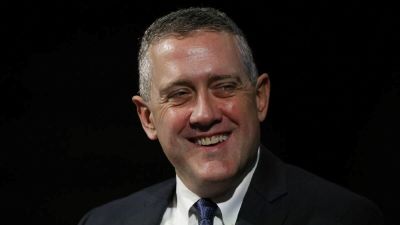
Feds Bullard urges start of bond taper with jobs goals met
Federal Reserve Bank of St. Louis President James Bullard said the central bank has met its goal of achieving “substantial further progress” on both inflation and employment, urging policymakers to move forward in reducing stimulus.
“Ithink we are in a situation where we can taper,” Bullard said Thursday during a Bloomberg Television interview with Michael McKee. “We don’t want to jar markets or anything — but I think it is time to end these emergency measures.”
Fed officials are considering how quickly to trim monetary policy support for the economy as it reopens from pandemic lockdown. Consumer prices have risen sharply amid supply glitches, but the central bank has argued for patience.
Chair Jerome Powell, beginning two days of congressional testimony, said Wednesday that the U.S. economic recovery still hasn’t progressed enough to start reducing the $120 billion monthly pace of its asset purchases. He will appear before the Senate Banking Committee at 9:30 a.m. in Washington.
“On the labor market I think we have made substantial progress,” Bullard said, using the phrase policymakers have used as a benchmark for tapering. As for whether to pull forward the move into the fourth quarter, “The committee is going to debate that in earnest now at the July meeting.”
The Federal Open Market Committee will meet July 27-28 to discuss the economic outlook and its plans on the appropriate timing of scaling back its asset purchases. The committee wants to achieve “substantial further progress” on inflation and employment before tapering its $80 billion a month of Treasury purchases and $40 billion of mortgage-backed securities.
“The pandemic is coming under very sharp control here,” Bullard said. “You’ve got bottlenecks and shortages everywhere.”
Bullard, who next votes on monetary policy in 2022, has sometimes been viewed as a bellwether for the FOMC and was the first to push for a second round of asset purchases coming out of the 2007-2009 recession. The committee eventually adopted that.
Even if the FOMC agrees to taper, there are multiple issues to discuss, Bullard noted, including when to start the process, whether to reduce buying of MBS first rather than Treasuries, the pace of tapering and the possibility of adjusting that tempo in response to data.
Bullard said he expected progress on employment to continue at a rapid pace. He said new variants of the virus, while being monitored as a risk, don’t change the outlook for a continued decline in deaths from Covid-19.
U.S. employers added 850,000 jobs last month, increasing by the most since August. At the same time, labor shortages continue to trouble some employers and U.S. payrolls are still nearly 7 million below their pre-pandemic level.
After the taper begins, the FOMC needs to be prepared to speed up reductions in response to incoming data if necessary, Bullard said. For now, market measures of inflation expectations suggest investors are confident in the Fed, he said.
“You probably don’t want to be on automatic pilot in this situation,” Bullard said. “We are not quite sure where this inflation process is going to go. We need some optionality on the upside with respect to possible inflation shocks.”
The consumer price index in June rose by the most since 2008, increasing 5.4% compared with a year earlier. Fed officials argue that the increase is largely due to transitory factors associated with supply-chain bottlenecks and the reopening of service industries as the pandemic recedes.
Published : July 16, 2021
By : Syndication Washington Post, Bloomberg · Steve Matthews