Thailand eyes dry ports in Khon Kaen, Nakhon Ratchasima
FRIDAY, FEBRUARY 03, 2023
The Port Authority of Thailand (PAT) is looking into developing dry ports in Khon Kaen and Nakhon Ratchasima and expects the entire project to cost about 14 billion baht.
PAT director-general Kriengkrai Chaisiriwongsuk said the agency is studying two investment formats for the projects and expects the study to be completed within this year.
Once the study is completed, the project will be proposed to the PAT board of directors, Transport Ministry and the Cabinet for consideration, he said.
The two investment types being studied are:
• Public-private partnership (PPP): PAT will be responsible for the investment, but it will take at least five years.
• A private company with shareholders: Capital will be raised via the sale of shares, while PAT will be responsible for operations. Operations should be up and running within three years.
“However, we must consider this issue thoroughly by considering both advantages and disadvantages,” Kriengkrai said.
He added that the first dry port will cover up to 2,000 rai (3.2 square kilometres) in Khon Kaen’s Nam Phong district. He added that Sung Noen district in Nakhon Ratchasima is being considered for the second dry port.
He said he expects a decision to be made on the areas to be earmarked for dry port development within this year.
“It is up to the private sectors’ readiness and locals’ cooperation where the dry port will be developed first,” he said.
PAT is confident the dry ports will support international logistics as both Khon Kaen and Nakhon Ratchasima have the potential to connect with neighbouring countries via road and rail. Dry ports are directly connected by road or rail to a seaport and operate as a centre for the transhipment of sea cargo.
Minister forecasts 4% growth for Thai economy this year
THURSDAY, FEBRUARY 02, 2023
The Thai economy is expected to expand by 4% a year under the leadership of Prime Minister Prayut Chan-o-cha, Energy Minister Supattanapong Punmeechaow said on Thursday.
He made the forecast during a talk with Top News on “Thailand’s future under Prayut’s guidance”.
The Covid-19 crisis curbed the economy’s growth for three years as revenue plunged due to the dramatic decline in foreign tourists – from 40 million people per year before the pandemic.
Thailand attracted 11.81 million foreign visitors last year, according to the Tourism Authority of Thailand.
“The government focused on propping up the economy amid the Covid-19 crisis,” he said.
The economy will be better this year despite the impact of the trade war between the US and China, the minister said,
The economy will return to normal soon and the number of foreign visitors this year could exceed 20 million people, he said.
Supattanapong said that because Thailand was able to maintain financial discipline during the pandemic, rating agencies had not downgraded the country.
He also said the government would drive growth by developing infrastructure, increasing access to digital technology, promoting new industries, and expanding trade.
He said the fact that demand for electric vehicles in Thailand exceeded 30,000 last year was a signal that the country accepts environmentally friendly technology.
Thailand’s reengagement with Saudi Arabia resulted in cooperation worth more than 100 billion baht, the minister said.
Saudi Arabia restored its relationship with Thailand this year after 32 years of frostiness following the so-called Blue Diamond Affair in 1989, which was sparked by the theft of jewels from a Saudi prince by a Thai worker.
The minister expects the value of investment in Thailand to hit 1 trillion baht this year, up from 700 billion baht last year.
“We would like to ask people to be confident,” he said. The Thai economy will be better this year and the lingering effects of the pandemic will be gone within two years, he said.
Thailand signs MOU with Ishikawa in Japan to link local businesses, investment
WEDNESDAY, FEBRUARY 01, 2023
The Industry Ministry has signed a memorandum of understanding with Ishikawa prefecture in Japan to forge links between local Japanese and Thai businesses, government spokesman Anucha Burapachaisri said on Tuesday.
Ishikawa is the 23rd of Japan’s 47 prefectures to sign an MOU with Thailand to promote industrial cooperation under the theme of “Otagai”, which means “to help each other”, said Anucha.
On the Thai side, the Department of Industrial Promotion will match cluster industries in Ishikawa – including machinery, textile and fibre, food and agriculture – with suppliers and partners in Thailand.
Both sides also agreed to participate in the 22nd Otagai Forum in Nanao City, Ishikawa, on February 22 to promote collaboration in the carbon-fibre-reinforced polymer and food processing industries and the bio-circular and green (BCG) economy.
The ministry will also promote Thai industries to Japanese investors in Ishikawa.
Over 6,000 Japanese businesses currently operate in Thailand, said Anucha.
“The government believes that industrial cooperation with Japan can be expanded to related aspects that help maximise Thailand’s potential in product development and contribute to the growth of our industrial estates,” he added.
The MOU follows a January 11-15 roadshow held by the ministry in Ishikawa to generate Japanese investment for Thailand’s electric vehicle and smart technologies industries. The roadshow was expected to bring up to 10 billion baht in investment, focused on the 12 targeted S-Curve industries in the Eastern Economic Corridor.
SCB EIC expects stronger CLMV economic growth in 2023, despite a global economic slowdown
WEDNESDAY, FEBRUARY 01, 2023
CLMV countries will gain a stronger growth momentum in 2023 but remain below their growth potential prior to the Covid-19
The rebound would be uneven across countries, depending on economic fundamentals and country-specific risks. SCB EIC expects that Cambodia‘s economy will grow 5.5% this year, 3.0% in Laos and Myanmar, and 6.2% in Vietnam.
Domestic demand and tourism will be key drivers for CLMV‘s economic recovery in 2023. Domestic demand will gain support from improvements in the labour market, as seen in Vietnam’s Q4/22 employment soaring to its highest level since the Covid-19 outbreaks.
Meanwhile, the service sector will benefit from rising tourist arrivals this year – particularly Chinese visitors, who made up about 30-35% of total foreign tourists in 2019.
China has authorized outbound group tours travelling to Cambodia and Laos starting from February 6, 2023, and is expected to add more destinations to the list soon. In particular, Cambodia and Vietnam are poised to benefit the most from the tourism rebound, considering the high contribution of tourism (both domestic and foreign) to GDP at 18.2% and 9.8%, respectively.
In contrast, external demand will decline alongside a subdued global economy. Such a gloomy backdrop could affect CLMV exports and foreign direct investment (FDI). Among CLMV countries, Vietnam would take the hardest hit due to its extensive ties to the global supply chain. SCB EIC thus expects only Vietnam to witness a gradual slowdown this year, after a profound growth of 8% in 2022.
China’s reopening might somewhat cushion adverse impacts on exports and FDI. Still, there remain risks that weak external demand could depress CLMV domestic demand, manufacturing production, and employment.
CLMV central banks will likely implement a tighter monetary policy in 2023, but policy normalization will be gradual after inflation tends to cool down. Based on our assessment, CLMV inflation will start to wind down in line with falling global commodity prices in 2023, albeit slowly, as prices should remain elevated. Weak currencies – such as the Lao kip (LAK) and the Myanmar kyat (MMK) – will also keep import prices persistently high.
Against this backdrop, CLMV central banks will raise the policy rate slightly to curb inflation and stabilize national currencies. SCB EIC anticipates a slower rate hike in H2/23 because
1) The US Federal Reserve has signalled a slower rate increase, which would alleviate downward pressure on CLMV currencies,
2) Overall economic recovery remained fragile,
3) In some countries – such as Vietnam, local firms began to face hardship in refinancing debt and thus fell into a liquidity crunch. This could fuel economic risks if the tight financial condition continues.
The economic recovery in Laos and Myanmar are expected to be slower than in other countries due to country-specific risks.
Laos’ economic stability is fragile from price stability, to fiscal and external balances – which would keep future growth below its potential. Laos also faces high inflation, partly from rapid LAK depreciation and deteriorating fiscal positions, which depressed domestic economic activities Laos’ external public debt burden is expected to average USD 1.2-1.5 billion annually in the next four years, while the foreign reserve buffer remained low at around USD 1.1 billion as of September 2022.
Meanwhile, in Myanmar, ongoing political uncertainty would weigh down economic growth in the medium term. Investors will continue to have lower sentiment, and domestic economic activities in Myanmar should remain subdued. Despite the incoming general election in 2023, SCB EIC views that it will not significantly ease political uncertainties. Hence, these drawbacks will likely keep Myanmar’s growth below its potential for the time being.
Thailand’s direct investment in CLMV is expected to grow this year, albeit slowly, from a subdued reading in 2022. Negative factors in recent years include a fragile and teetering economic rebound, soaring inflation that heightened business costs, and country-specific risks such as Myanmar’s political unrest that hampered investor sentiment. Furthermore, as foreign investment usually takes time for preparation, the Covid-19 outbreaks thus aggravated many FDI project postponements. These setbacks would still exist in 2023, yet improving conditions – from more upbeat economic momentum, cooling inflation, and the easing of regional travel restrictions—should help ignite a gradual rebound in FDI to CLMV countries.
In the medium term, SCB EIC views that the CLMV region would remain an appealing investment destination for Thai and foreign investors, thanks to low wages, a growing domestic market, and free-trade agreements (bilateral and multilateral FTAs) with major trade partners.
Given those strategic advantages, CLMV countries could become an attractive manufacturing base for exports to large markets such as China and India.
Lastly, ongoing geopolitical tensions are risks that could lead to both advantages and disadvantages for the CLMV region. The top issue that warrants monitoring is the China-US-Taiwan dispute. The friction might expand into the South China Sea – a major regional trade route – and thus trigger a supply chain disruption in the manufacturing sector.
Meanwhile, leading economies tend to impose higher trade barriers to safeguard local industries, implying higher business costs and posing risks to CLMV exporters. On the other hand, geopolitical tensions could also benefit CLMV through a potential manufacturing relocation from China to the region.
In such cases, CLMV countries would enjoy an upper hand from geographical advantage with close proximity to China, low wages, and broad FTA networks. Besides, as major powers step up efforts to gain regional influence, CLMV could benefit from economic partnerships – such as China’s Belt and Road Initiative or the US’ Indo-Pacific Economic Framework – to uplift their economic potential.
Cabinet approves adjustments to basic daily wages for 17 professions
TUESDAY, JANUARY 31, 2023
The Cabinet on Tuesday approved the Labour Ministry’s proposal to adjust the wages for skilled workers in 17 fields, which would see them earning between 465 and 700 baht daily.
Labour Minister Suchart Chomklin said the Cabinet agreed to adjust the minimum daily rate for the 17 professions, provided they receive a certificate from the Skill Development Department.
The professions to be covered are divided into three groups, namely the industrial sector, technicians and workers in the service sector. Suchart said there is a big demand for people in these fields.
In 2014, the Labour Ministry’s proposal to set a minimum wage rate for 112 professions was approved by the Cabinet, and now with 17 more, the number of professions under the radar has risen to 129.
The new minimum daily wages for some of the 17 professions are:
• Pump and valves technicians: 515 baht
• Mechatronics and industrial robot controllers:
Level 1: 545 baht
Level 2: 635 baht
Level 3: 715 baht
• Mechanics
Tractor repairs:
Level 1: 465 baht
Level 2: 535 baht
Level 3: 620 baht
Excavator controllers: 585 baht
• Service sector
Holistic food therapist, aqua therapist, aromatherapist
Thai rice export target set at 7.5 tonnes this year, down from 2022
TUESDAY, JANUARY 31, 2023
Thailand expects to export about 7.5 million tonnes of rice this year, down from 7.9 million tonnes last year, the Foreign Trade Department said on Tuesday.
The department’s director-general, Narong Poolpipat, said rice exports last year had exceeded the target of 7.5 million tonnes, mainly because of the depreciation of baht, which dropped to around 38 baht to the US dollar.
Last year’s rice export was 22.06% higher year on year in terms of volume, while rice export value was US$3.971 billion, up 14.67% year on year, Narong said.
He said the top five markets for Thai rice exports last year were:
– Iraq, 1.6 million tonnes, up 458%
– South Africa, 775,000 tonnes, down 2.26%
– China, 745,200 tonnes, up 18.81%
– United States, 653,000 tonnes, up 13.21%
– Benin, 320,000 tonnes, down 15.38%
Although the department eyes 7.5 tonnes of rice exports this year, it cannot not yet estimate the export value due to fluctuations in the value of the baht, Narong said.
He explained that the baht had appreciated to about 32.50-33.00 baht against the US dollar, but it was expected to depreciate to 35-40 baht by the middle of the year and appreciate again later this year.
Narong added that his department would hold several activities this year to promote rice exports, including holding the Thailand Rice Convention 2023 and sending delegations of state officials and private firms to visit trading partner nations, such as Germany, China, United Arab Emirates and Australia.
Academics call for more diversified global currency basket, less dependent on US dollar
TUESDAY, JANUARY 31, 2023
Nongluck Ajanapanya
Asian emerging markets and developing economies should deepen regional financial market integration in order to mitigate the risk resulted from the US dollar’s dominance, experts and economists have suggested.
The remarks were part of the statement released on Monday by the Asian Shadow Financial Regulatory Committee (ASFRC) at their 35th annual meeting on “What can Asian Economies do about the USD Global Financial Cycle?” hosted by NIDA Business School in Thailand and its MSc in Corporate Finance, Investment, and Risk Management (CIFRM) program.
ASFRC members are all academics in finance and economics from the Asia Pacific. The statement aimed to persuade governments throughout Asia Pacific of the significance of diversifying the global currency basket.
Such a step will make countries in the region more resilient to external factors. They referenced the current impact on countries across the world from the US Federal Reserve raising policy rates to tame its own inflation.
“Tightening of monetary policy may be appropriate for the United States, but this exerts a recessionary tendency in the world as the United States’ tightening raises yields on US treasuries and induces capital outflows from other countries,” the statement explained.
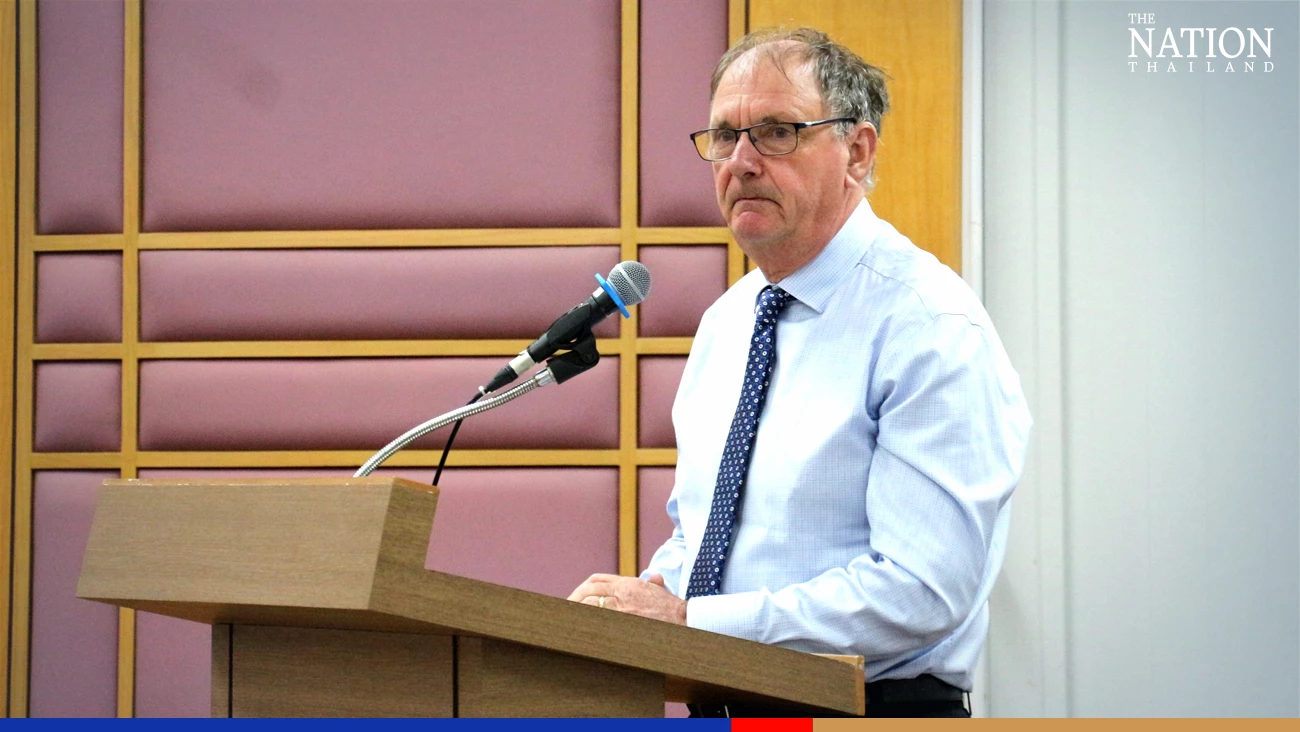
One of the committee members, Martin Young, a professor at Massey University in New Zealand, said that the dollar remains powerful because the United States has the largest global economy.
However, in terms of cross-border trade and investment, reliance on a single currency threatens the financial market’s stability.
According to Obstfeld and Zhou’s 2022 study, despite the switch to a floating exchange rate system 50 years ago, the world remains largely on the dollar standard.
The majority of trade and invoicing is done in US dollars. The US dollar is used approximately 50% of the time in global trade invoicing, and around 90% of the time in global foreign exchange transactions where one side is in US dollars.
Martin Young
Young emphasised that the ASFRC committee has no intention of toppling the dollar. They simply require a greater balance in the global currency basket.
He declared that the dollar’s dominance in the global financial market should be reduced.
According to Maria Socorro Gochoco-Bautista of the University of the Philippines, allowing one currency to dominate the global market would inevitably have an impact on others, particularly small and open market Asian countries like Thailand and the Philippines.
Each country has its own economic cycle and development, she explained. Because countries all over the world are involved in the global supply chain and demand, the global economy may have some effects. However, the impact should not be so severe that a single government’s monetary policy deprives the others of financial stability and the ability to control their economies.
Jian-Xin Wang from the University of Technology Sydney, Australia, stated that the committee’s recommendations are a long-term process for each country to collaborate together to find a better system of global financial currency which the committee dubbed as a multi-polar currency system.
According to the committee statement, a multi-polar currency system will be better because it will be less reliant on the actions of a single monetary authority and reduce the risk of negative externalities on the rest of the world.
“The dominance of US monetary policy limits the ability of authorities elsewhere to respond to external shocks more independently under the current dominant US dollar standard,” the committee explained.
Besides encouraging Asean and other Asian economies to enhance and expand regional economic integration, the committee’s recommendations include:
● Establish a regional corporate bond market, such as the Asian Bond Market Initiative, with common issuance standards. ● Create an inter-dealer regional trading platform to provide liquidity in exchange for certain benefits such as preferential access to a regional repo market. ● Have a regional centralised counter-party for Asean names in credit default swaps. ● Create an Asean+3 zone of free capital mobility, including mutual recognition of funds and instruments from different jurisdictions. ● Remove withholding taxes on intraregional flows. ● Harmonise macro-prudential rules for managing external capital flows. ● Expand the Chiang Mai Initiative Multilateralisation into a regional repo market to provide additional liquidity on a daily basis rather than just during a crisis. ● Central banks could agree to accept cross-border collateral in the form of Asean+3 government and corporate bonds. ● With the help of multilateral institutions such as the Asian Development Bank, build regional financial infrastructure to facilitate regional market integration. ● Encourage the use of regional currencies through bilateral agreements. ● Increase local risk management capacity at the firm level, as part of central bank initiatives to encourage the use of fintech in transactions. ● Use digital currencies and distributed ledger technologies to make cross-border payments and settlements easier, faster and more secure.
Young expected that these suggestions would encourage Asia Pacific governments to adopt a multi-polar currency system. He believes that while the system may not be implemented in the next 10 years, Asia Pacific countries will eventually achieve the goal if they begin taking decisive actions.
Other panel members this time included Qian Sun of Fudan University in China, David K. Ding of Singapore Management University, Robin K.Chou of National Chengchi University in Taiwan, Aekkachai Nittayagasetwat of NIDA Business School, Sunti Tirapat of NIDA Business School, and Kridsda Nimmanunta of NIDA Business School in Thailand.
Thai tourism industry ups forecast to 30 million foreign arrivals this year
TUESDAY, JANUARY 31, 2023
Thailand’s tourism industry expects foreign arrivals to exceed 30 million this year, significantly higher than government estimates of 25-27.5 million.
Making the forecast on Tuesday, the Tourism Council of Thailand (TCT) predicted foreign and domestic tourists would generate over 3 trillion baht in revenue this year.
However, TCT president Chamnan Srisawat warned the huge volume of customers will pose challenges for the Thai tourism industry, which is still recovering from the ravages of Covid-19.
Most tourism businesses are still suffering liquidity and labour shortages, he explained, while some are missing out on new opportunities.
TCT is tackling the problems by cooperating with the Office of SMEs Promotion to help entrepreneurs tap new trends like wellness- and metaverse-based tourism, he said.
On the liquidity front, it is liaising with the Government Savings Bank and National Credit Bureau for access to soft loans for tourism operators.
Finally, the TCT is collaborating with the Labour Ministry, Vocational Education Commission and Thailand Professional Qualification Institute to fill gaps in the tourism labour market.
About 86% of workers have now returned to the tourism industry after the Covid downturn, said Pakakrong Theparak, a tourism expert at Rajamangala University of Technology Srivijaya.
Only 13% of tourism-related businesses plan to recruit employees in the first quarter of this year, with demand for workers strongest among spa/massage operators, followed by entertainment venues.
Many businesses had been forced to increase employee hours, allow more overtime and offer higher wages, she added.
Most operators plan to hike the price of their products and services in the first quarter, especially restaurants, Pakakrong said.
Sisdivachr Cheewarattanaporn, president of Association of Thai Travel Agents, agreed that foreign arrivals this year could exceed 30 million.
He cited the return of Chinese tour groups from February 6.
“However, China’s economy has suffered from a prolonged Covid-19 crisis, so the number of Chinese visitors must be monitored quarterly,” he said, adding that he expected foreign arrivals from China to jump in the third quarter.
However, Sisdivachr said recent scandals involving Thai police had damaged confidence in Thailand’s tourism industry. He cited police extortion of a Taiwanese actress and a police VIP siren service for a Chinese tourist, urging the government to tackle such abuses urgently. He also asked authorities to reduce queues at immigration checkpoints.
Duopoly warning for Thai e-commerce market after JD Central pulls out
TUESDAY, JANUARY 31, 2023
The founder of Tarad.com has urged the competition regulator to investigate whether Thailand’s e-commerce market will become a duopoly when JD Central bows out in March, leaving Lazada and Shopee to dominate the scene.
JD Central announced on Monday it will stop operating in Thailand from March 3, though customer deals will be honoured until March 31.
Pawoot Pongvitayapanu, who founded e-commerce website Tarad.com in 2001, said on Monday that the Trade Competition Commission of Thailand (TCCT) must guard against unfair market conditions that damage consumer interests.
A duopoly in e-commerce would likely have a more severe effect on sellers and customers than retail channels, he said.
“Having only two major players will limit the choices for sellers and customers, while platform operators can pressure sellers into following their policy.”
Lazada raised the fee for sellers on its platform only last year, Pawoot pointed out.
Shopee and Lazada are Thailand’s top two online shopping platforms, dominating the market with an average of 63.1 and 50.3 million visitors per month, respectively. JD Central ranks 8th with around 2 million visitors per month.
JD Central was launched in 2018 by Thailand’s Central Group and Chinese e-commerce operator JD.com. A source said that Central, which had invested 17.5 billion in the platform, has decided to pull out.
Fierce competition between giant players in Thailand’s e-commerce market also saw Japan’s Rakuten and South Korea’s 11Street withdraw in 2016 and 2018 respectively.
Fewer smokers, surging taxes hitting Thai tobacco industry hard
MONDAY, JANUARY 30, 2023
The Tobacco Curers Development Association is calling on the Tobacco Authority of Thailand (TOAT) and the Finance Ministry to review the current tax structure as the dual cigarette tax rates is affecting them financially.
TOAT recently announced that it was earmarking 56.16 billion baht to provide a 50% subsidy for production to tobacco farmers and independent tobacco curers.
Arun Pothita, secretary-general of Chiang Mai’s TOAT branch and a representative of an alliance of tobacco farmers in Thailand, said farmers under contract with TOAT are aware that the agency’s earnings are also affected by the tax structure.
Since TOAT’s profits have taken a downturn, it has been buying 50 to 60% less tobacco from farmers for the past five years, which has dropped farmers’ income by 900 million baht annually. Hence, Arun said, farmers have had to depend on support from the government’s central budget.
The new tax structure has limited TOAT to just covering half of the increased production cost for tobacco farmers, while the farmers are hoping that the other half of the subsidy will be allocated from the central budget, Arun added.
“But we are not sure when the farmers will get this other half of the subsidy,” he said.
He added that over the past five years, the government has implemented dual rates to cigarette tax and increased the rate twice, resulting a dramatic surge in cigarette prices.
“There is a price competition between imported cigarettes and TOAT cigarettes. They are priced at between 66 and 70 baht per pack.”
TOAT said the sale of cigarettes has been dropping now that people are kicking the habit, which has resulted in a large stockpile of tobacco. This is also forcing TOAT to cut down on the amount it purchases from farmers.
“If the government reviewed the cigarette tax structure based on the August 2021 Cabinet resolution to not increase the tax, the TOAT would have been able to resume stable sales and profits, as well as supported farmers without interfering with or burdening the central budget,” he said.
The tobacco industry has contracted significantly since the restructuring of the tobacco excise tax in 2017, during which the dual tobacco tax rate, which includes a 10% domestic tax, was adopted.
Tobacco tax revenue collected by the government dropped from 6.8 billion baht in 2019 to 5.9 billion baht in 2022.
This brought TOAT’s profits down by more than 98%, from 9 billion baht in 2017 to about 100 million baht in 2022.
During the 20th academic conference on tobacco and its impact on national health held recently, a senior official said the Finance Ministry has been encouraging tobacco farmers to grow alternative crops to boost their earnings.
The conference covered the hazardous impact of e-cigarettes and was jointly held by the Medical Association of Thailand, the Tobacco Control Research and Knowledge Management Centre (TRC) and the Thai Health Promotion Foundation.
Damrongsak Wan-aeloh, director of the Excise Standard and Collection Division 2, told the conference that the Finance Ministry has measures for compensating for the reduction in income for tobacco farmers due to the new tax structure, which resulted in a lower purchasing quota by the TOAT.
He said the ministry has been helping farmers and has set up a committee to launch campaigns urging tobacco farmers to switch to other plants like corn, onion or fruit.
Damrongsak said the committee also encouraged tobacco farmers to plant potatoes that can generate the same amount of money as tobacco.
“But some farmers harbour a die-hard belief that the tobacco purchase quota will return to the same as in the past, so they refuse to find alternative ways of earning income,” Damrongsak explained.
He added that tobacco was not on the list of cash crops, so the government agencies in charge of agricultural promotion often ignore tobacco farmers and do not seek funds to help them.
Damrongsak called on agencies in charge of agricultural promotion to start playing a bigger role in changing tobacco farmers’ attitude and getting them to grow other cash crops.



 • Service sector
 Although the department eyes 7.5 tonnes of rice exports this year, it cannot not yet estimate the export value due to fluctuations in the value of the baht, Narong said.
 Martin Young






 SootinClaimon.Com