MPC lowers policy rate amid negative factors #ศาสตร์เกษตรดินปุ๋ย

#ศาสตร์เกษตรดินปุ๋ย : ขอบคุณแหล่งข้อมูล : หนังสือพิมพ์ The Nation

https://www.nationthailand.com/business/30381632?utm_source=category&utm_medium=internal_referral

MPC lowers policy rate amid negative factors

Feb 05. 2020
By THE NATION

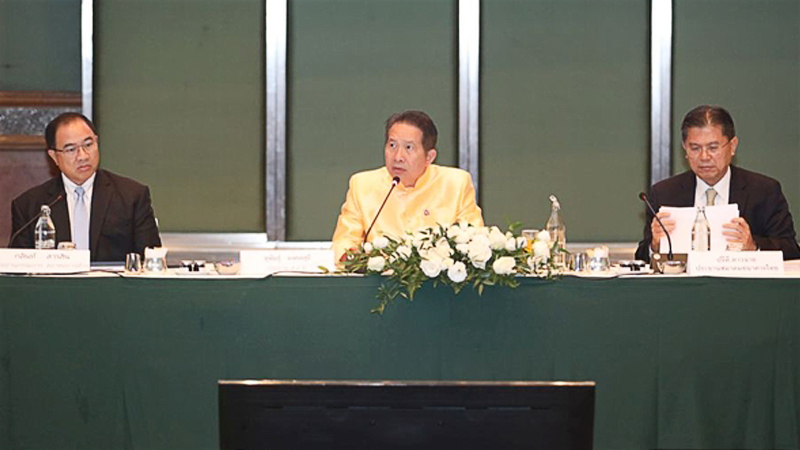
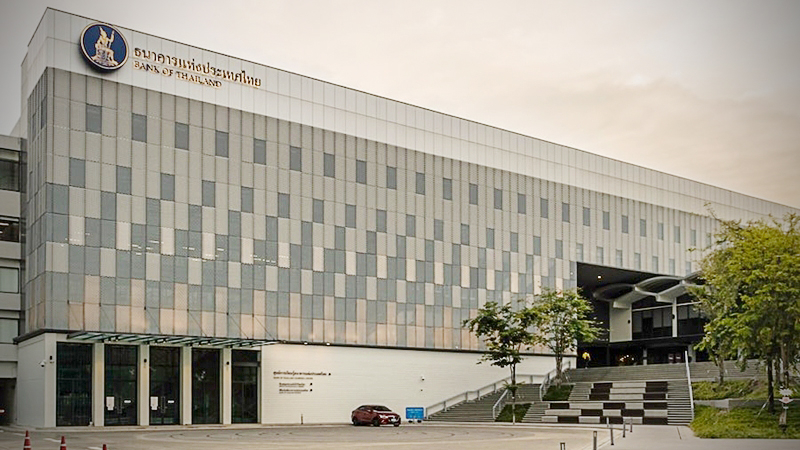
The Monetary Policy Committee (MPC) of the Bank of Thailand voted unanimously to cut the policy rate by 0.25 percentage point from 1.25 per cent to 1 per cent, effective immediately, at its meeting on Wednesday (February 5), said the committee’s secretary Titanun Mallikamas.

He added that the reduction was in line with MPC’s estimate that Thai economy growth would be lower than its previous forecast, due mainly to the new coronavirus outbreak, delay of the 2020 fiscal budget disbursement and drought.

According tothe central bank statementon Wednesday, the MPC would keep a close watch on economic growth, inflation and financial stability relative to the risks of the coronavirus outbreak, delay to enactment of the Annual Budget Expenditure Act, and the drought. These will be taken into consideration in deliberating monetary policies.

The committee stands ready to deploy policy tools if needed. In addition, the MPC would monitor structural problems that impair competitiveness and economic growth, to be addressed by all related parties.

The Joint Standing Committee on Commerce, Industry and Banking hasrevised downward the country’s gross domestic product (GDP) growth this year to between 2 per cent and 2.5 per cent from the previously projection of 2.5 to 3 per cent, according to its statement on Wednesday.

TMB Analytics, an economic analysis division of TMB Bank, has also revised downward its 2020 GDP forecast for Thailand to between 1.7 per cent and 2.1 per cent from 2.7 per cent, due to the impacts from the virus outbreak, the drought, and the delayed budget disbursement.

The Cabinet on Tuesday (February 4) approved the Finance Ministry’s proposed measures to mitigate the impact of the novel coronavirus outbreak and global uncertainties on the tourism sector.

Thai GDP growth forecast for the year slashed #ศาสตร์เกษตรดินปุ๋ย

#ศาสตร์เกษตรดินปุ๋ย : ขอบคุณแหล่งข้อมูล : หนังสือพิมพ์ The Nation

https://www.nationthailand.com/business/30381628?utm_source=category&utm_medium=internal_referral

Thai GDP growth forecast for the year slashed

Feb 05. 2020
By THE NATION

The Joint Standing Committee on Commerce, Industry and Banking has revised downward the country’s gross domestic product (GDP) growth this year to between 2 per cent and 2.5 per cent from the previously forecast 2.5 to 3 per cent.

The revision is in line with the number of local and global uncertainties and risks, particularly the outbreak of the novel coronavirus, according to its statement on Wednesday (Feburary 5).

The committee has estimated that if the virus situation drags on for between three to six months, it could cost the Thai tourism sector between Bt108 billion to Bt220 billion.

Other risks factors include the protracted delay in the disbursement of the 2020 fiscal budget, the ongoing drought, and impacts from the PM2.5 particulate dust pollution.

However, it has maintained the forecast for exports this year to between minus 2 per cent to flat growth.

TMB Analytics, an economic analysis division of TMB Bank, has also revised downward its 2020 GDP forecast for Thailand to between 1.7 per cent and 2.1 per cent from 2.7 per cent, due to the impacts from the virus outbreak, the drought, and the delayed budget disbursement.

The Cabinet on Tuesday (February 4) approved the Finance Ministry’s proposed measures to mitigate the impact of the novel coronavirus outbreak and global uncertainties on the tourism sector.

Among the measures approved is the extension of the deadline for filing personal income tax returns to June this year from March. Companies will be allowed to enjoy tax deductions for expenses on local seminar activities taking place during January-December 31, 2020, with the deduction being two times the actual cost.

It also approved the reduction of jet fuel excise tax for domestic flights from Bt4.726 per litre to Bt0.20 per litre until September 30.

The Cabinet also approved plans by state-run banks to offer soft loans and extend debt repayment periods to tourism businesses affected by the big decrease in the number of tourists amid the virus outbreak.

Sontirat hails community power projects in Northeast, warns of zero tolerance for bribery #ศาสตร์เกษตรดินปุ๋ย

#ศาสตร์เกษตรดินปุ๋ย : ขอบคุณแหล่งข้อมูล : หนังสือพิมพ์ The Nation

https://www.nationthailand.com/business/30381625?utm_source=category&utm_medium=internal_referral

Sontirat hails community power projects in Northeast, warns of zero tolerance for bribery

Feb 05. 2020
By The Nation

Energy Minister Sontirat Sontijirawong was in Khon Kaen this week singing the praises of community-based power plants and alternative energy sources in the Northeast, but warning of stiff punishment for any officials trying to take advantage of the progress being made.

He reported “a good response” to the energy policy from citizens and entrepreneurs, saying community power plants can benefit the local economy while ensuring that everyone has access to electricity.

It will create jobs, bring in added income, reduce relocations in the workforce and increase investment in the area, such as in the cultivation of crops that can be used as fuel, he said. It will even reduce PM2.5 dust pollution because farmers will be burning less cropland debris.

Sontirat said a committee would be established to work with communities and address issues and complaints. “If any officials seek to profit from these projects, they will face the penalty punishment,” he warned. “I want everyone to be our eyes and share what they suspect.”

He stressed that the ministry has clear guidelines for implementing community-based power plants and is ready to support entrepreneurs and communities that are ready to invest.

Trump considers withdrawing from WTO’s $1.7 trillion purchasing pact #ศาสตร์เกษตรดินปุ๋ย

#ศาสตร์เกษตรดินปุ๋ย : ขอบคุณแหล่งข้อมูล : หนังสือพิมพ์ The Nation

https://www.nationthailand.com/business/30381605?utm_source=category&utm_medium=internal_referral

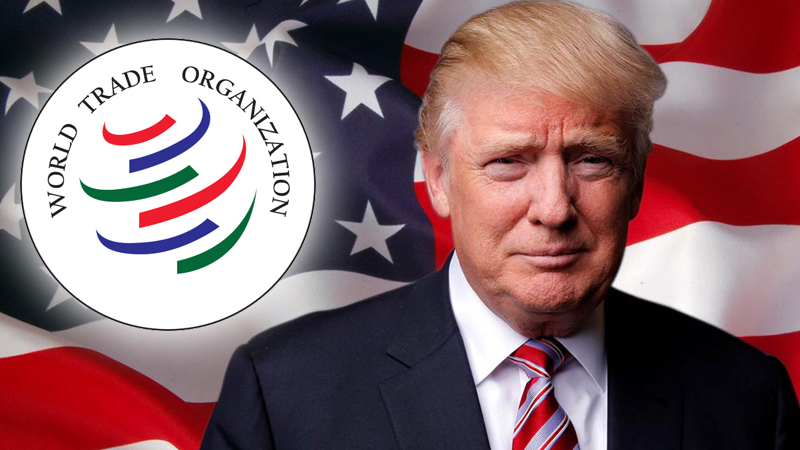
Trump considers withdrawing from WTO’s $1.7 trillion purchasing pact

Feb 05. 2020
By Syndication Washington Post, Bloomberg · Bryce Baschuk 

The U.S. is mulling a plan to withdraw from a global pact worth $1.7 trillion in government contracts, a person familiar with the matter said, in a move that may anger close allies during a delicate moment for trade.

Officials in President Donald Trump’s administration are circulating a draft executive order that would trigger a U.S. exit from the World Trade Organization’s Government Procurement Agreement, or GPA, if the pact isn’t reformed in line with American views, according to the person, who asked not to be identified because discussions are ongoing.

A spokesman at the office of the U.S. Trade Representative didn’t immediately respond to emails seeking comment.

The purpose of the GPA is to open government procurement markets to foreign competition, and to help make public purchasing more transparent. An American withdrawal would create chaos for foreign companies that bid for access to the U.S.’s $837 billion public procurement market and complicate nascent trade talks Washington is planning with the U.K. and European Union.

It could also pose problems for Canadian Prime Minister Justin Trudeau, who still needs to broker deals with his political rivals to ensure ratification of the U.S.-Mexico-Canada Agreement; Canada is the only signatory of the updated Nafta deal that still needs to ratify the free-trade accord. Procurement was a contentious issue in USMCA.

A U.S. withdrawal from the GPA would mean members including the U.K., Japan, South Korea, Canada and the EU will lose their preferential access to U.S. public procurement tenders. GPA members would instead become subject to the Buy American Act, which bars most foreign access to the U.S. government contracts without a specific waiver. The law does not apply to foreign procurement of U.S. public services contracts.

The U.S. awarded $12 billion of government contracts to foreign firms in 2015, according to a 2019 report by the Government Accountability Office. About $2.8 billion of those contracts went to the EU, $1.1 billion to Japan, $755 million to South Korea and $623.6 million to Canada.

If acted upon, the U.S. move would fit Trump’s pattern of threatening to exit international pacts in order to increase leverage in negotiations, even when the party across the table is a close ally. Washington claims it scored a win using a similar approach with the Universal Postal Union, led by White House trade adviser Peter Navarro.

“It seems to me par for the course given the way the administration is operating,” according to Stuart Harbinson, a former senior WTO official and a senior consultant on international trade for the Brussels-based Hume Brophy communications agency. “Their general attitude is that the WTO needs them more than they need the WTO.”

The U.S. imposed tariffs on steel and aluminum imports before negotiating an updated free-trade agreement with Mexico and Canada. Trump has also renewed threats of placing levies on car exports from the EU as the two sides try to restart stalled talks on a trade agreement.

Dow surges a second day as manufacturing data, strong earnings offset coronavirus fears #ศาสตร์เกษตรดินปุ๋ย

#ศาสตร์เกษตรดินปุ๋ย : ขอบคุณแหล่งข้อมูล : หนังสือพิมพ์ The Nation

https://www.nationthailand.com/business/30381600?utm_source=category&utm_medium=internal_referral

Dow surges a second day as manufacturing data, strong earnings offset coronavirus fears

Feb 05. 2020
By The Washington Post · Taylor Telford 

Global markets were in recovery mode Tuesday following last week’s coronavirus-fueled sell-off, with the Dow Jones industrial average climbing 470 points.

The virus responsible for 427 deaths and more than 20,400 infections has weighed heavily on investors who fear it will have a chilling effect on the global economy and throw a wrench into the supply chains of some of the world’s most powerful companies. But manufacturing data in recent days showing the United States had emerged from a five-month contraction in January and that global output had been recovering from an extended, pre-virus slowdown assuaged some concerns.

“Manufacturing was one of the tea leaves arguing the U.S. economy was sliding toward recession, and now that company executives are more bullish about the 2020 outlook, the word recession needs to be banished by stock market investors permanently,” Chris Rupkey, chief financial economist at MUFG Union Bank, wrote in a note to investors Monday.

At the close of markets Tuesday, the Dow was trading up nearly 1.4%. Standard & Poor’s 500 had gained 1.5% and tech-heavy Nasdaq had bounced nearly 2.1%. The Shanghai Composite index, which shed 8% Monday in its first day of trading since the Lunar New Year, rebounded and closed with a 1.3% gain after the People’s Bank of China injected liquidity to support the market for the second day in a row. China-exposed companies whose stocks took a beating last week saw their shares rise, with Apple climbing 2.7%, Delta up 3.3% and American Airlines up 5%.

Oil prices, which sunk to a one-year low beneath $50 a barrel Monday, were mixed Tuesday. Brent crude closed at $53.87, and West Texas Intermediate closed at $49.46. The virus has all but halted travel in China, the world’s leading oil consumer, and prompted air carriers and tourism companies to announce widespread cancellations. Gold, a safe-haven for investors in turbulent times, was down 1.6%.

Strong fourth-quarter earnings from giants such as Amazon, Apple, Tesla and Coca-Cola have also sparked positive sentiment in recent days. But Google parent Alphabet saw its shares plummet in early trading after the company reported income and revenue misses thanks to weak performance in its advertising business. Ford reported that it lost $1.6 billion in the fourth quarter, and shares plunged in after-hours trading.

Despite the turnaround, storm clouds lie ahead. Experts having been using the 2003 SARS outbreak to gauge the potential fallout from the coronavirus on global growth, and a 2004 study from The Brookings Institution, Korea University and the Australian National University estimated that the outbreak delivered a $40 billion hit to the global economy; that would amount to about $56 billion today, adjusting for inflation. But the stakes are far higher now, as China is now one of the world’s most vital economic engines: its GDP is roughly $13 trillion, compared with $1.6 trillion during the SARS outbreak. Even if the virus is contained quickly, economists are predicting China’s growth rate will fall to between 3 and 4% this quarter.

“While I fully acknowledge the strong earnings and data from the United States, indeed pre Wuhan crisis, I fully expected the U.S. to continue to outperform the rest of the developed world,” Jeffrey Halley, an analyst with OANDA, wrote in commentary Tuesday. “Those earnings and data points though are backwards facing, and the potential impact of the Wuhan virus is nowhere near yet being able to be fully quantified in its implications for global growth.”

At a Bipartisan Policy Center event Tuesday, former Federal Reserve chair Janet Yellen said that, while past epidemics such as SARS delivered a short-term economic blow that then faded, it’s unclear whether that will be the case with the coronavirus.

“China is such a significant piece of the global economy that it’s bound to have spillover effects,” she said.

The outbreak comes at a pivotal moment, when the global economy was expected to rebound thanks to the trade truce between the United States and China. The outbreak has forced Starbucks to close half its stores in China, while McDonald’s, KFC, Ikea and Apple have also announced closures. Delta, United and American joined a large group of European air carriers in suspending service to China, and casinos in Macao – the world’s largest gambling market – are closing their doors for two weeks.

Hyundai became the first global automaker to suspend operations because of the virus Tuesday. The South Korean auto giant said it would be forced to stop factory production in the country because China’s shuttered factories spawned a components shortage. Its shares closed down more than 7.2%.

State banks, others to come under market conduct rules #ศาสตร์เกษตรดินปุ๋ย

#ศาสตร์เกษตรดินปุ๋ย : ขอบคุณแหล่งข้อมูล : หนังสือพิมพ์ The Nation

https://www.nationthailand.com/business/30381590?utm_source=category&utm_medium=internal_referral

State banks, others to come under market conduct rules

Feb 05. 2020
By THE NATION

The Bank of Thailand is expected to introduce market conduct rules for the supervision of state banks, nano finance operators and asset management firms in the second quarter this year.

The rules are to ensure that the bank customers will get fair services, appropriate and clear advice and given products or services with fair prices and conditions.

Thanyanit Niyomkarn, BOT Assistant Governor/Supervision Group 2, said that the rules will be piloted at five state banks in the initial phase: Government Savings Bank, Bank for Agriculture and Agricultural Cooperatives, Government Housing Bank, Islamic Bank of Thailand, and Small and Medium Enterprise Development Bank of Thailand.

Market conduct rules for commercial banks practice have already been launched.

Cabinet okays extension for filing income tax returns, loans for tourism businesses, jet fuel tax reduction #ศาสตร์เกษตรดินปุ๋ย

#ศาสตร์เกษตรดินปุ๋ย : ขอบคุณแหล่งข้อมูล : หนังสือพิมพ์ The Nation

https://www.nationthailand.com/business/30381595?utm_source=category&utm_medium=internal_referral

Cabinet okays extension for filing income tax returns, loans for tourism businesses, jet fuel tax reduction

Feb 04. 2020
Finance Ministry spokesman Lavaron Sangsnit, right

Finance Ministry spokesman Lavaron Sangsnit, right
By THE NATION

The cabinet on Tuesday (February 4) approved the Finance Ministry’s proposed measures to mitigate the impact of the novel coronavirus outbreak and global uncertainties on the tourism sector, said Finance Ministry spokesman Lavaron Sangsnit.

Among the measures approved are:

– Extension of the deadline for filing individual income tax returns to June this year from March.

– Companies will be allowed to enjoy tax deductions from expenses on local seminar activities taking place during the January 2020-December 31, 2020, period, with the deduction being two times the actual cost.

– Reduction of jet fuel excise tax for domestic flights from Bt4.726 per litre to Bt0.20 per litre until September 30, 2020.

The cabinet also approved plans by state-run banks to offer soft loans and extend debt repayment periods to tourism businesses affected by the big decrease in the number of tourists amid the virus outbreak.

Winners and losers amid the coronavirus outbreak #ศาสตร์เกษตรดินปุ๋ย

#ศาสตร์เกษตรดินปุ๋ย : ขอบคุณแหล่งข้อมูล : หนังสือพิมพ์ The Nation

https://www.nationthailand.com/business/30381587?utm_source=category&utm_medium=internal_referral

Winners and losers amid the coronavirus outbreak

Feb 04. 2020
By The Nation

Outbreak of the new coronavirus, with its epicentre in Wuhan city of Hubei Province of China, is now a global issue after the World Health Organisation (WHO) declared the epidemic a public health emergency with the situation yet to be contained, citing increasing cases of infection and deaths.

Thailand is facing a decline in the numbers of tourists from China and other countries. The Fiscal Policy Office estimated that the incident might lower Thailand’s GPD to 2.8 per cent in 2020 from the previous forecast of 3.3 per cent.

Centre for International Trade Studies at The University of the Thai Chamber of Commerce said if China was able to contain the virus within the first three months, Thailand’s export to China would decrease by Bt9.7 billion or 1.03 per cent. But in the event the crisis lasting for more than three monrths, Bt19.84 billion will be lost in exports to China.

However, vice chairman of Federation of Thai Industries Montri Mahaplerkpong, said some businesses have benefited from the crisis with wood-pulp and paper makers receiving huge export orders for raw materials to be used in the production of face masks in China. Others include manufacturers of medical items such as syringes, hand wash gel, germ protection suit, and related equipment.

Meanwhile, the rubber product industry has increased the productivity of anti-infection gloves for exports to hospitals in China.

“With the restrictions on movement having an impact on the food delivery service in Wuhan, Thai food exporters are stepping up exports to the city. Food exports from Thailand could reach the city in a short time and they can be stored for up to a month. Besides, Thai food are known for safety and long expiry dates, especially ready-to-eat food, canned food, instant food, and frozen food,” Montri said.

However, many sectors and businesses have been hit hard, including shops in areas popular with tourists. Thai auto-part suppliers were also affected by the closures of electric-car assembling factories in Wuhan.

Visit Limlurcha, vice-president of Thai National Shippers’ Council, said the lock down of Wuhan had affected the supply of necessities in the city. “This is a chance to export processed fruit, canned food, medicine and medical supplies to China”. He believed that if the crisis ended in three months, the economic situation in China will soon recover.

Dr Luckchai Kittipol, Honourable President of Thai Rubber Association, said the coronavirus crisis had pushed up the exports of rubber gloves and masks to China. However, the price of the rubber is on a downtrend, the price of rubber smoked sheets 3 (RSS 3) for future contracts with Japan and Singapore decreased by almost Bt10 per kilogram last week, leading to a drop of Bt2 per kilogram in overall rubber price in Thailand.

Oil tumbles below $50 a barrel as virus saps Chinese demand #ศาสตร์เกษตรดินปุ๋ย

#ศาสตร์เกษตรดินปุ๋ย : ขอบคุณแหล่งข้อมูล : หนังสือพิมพ์ The Nation

https://www.nationthailand.com/business/30381551?utm_source=category&utm_medium=internal_referral

Oil tumbles below $50 a barrel as virus saps Chinese demand

Feb 04. 2020
By  Syndication Washington Post, Bloomberg · Jackie Davalos 

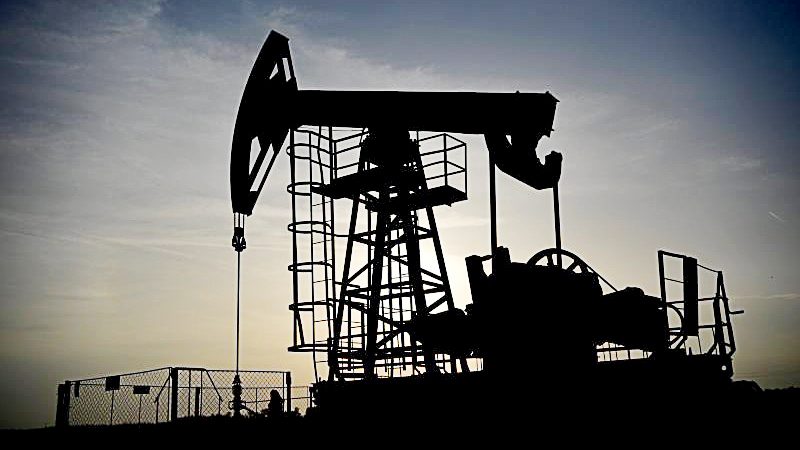
Oil fell below $50 a barrel for the first time in more than a year as China’s oil consumption was said to plunge by 20% amid the spread of coronavirus, threatening what could be the largest demand shock since the since the global financial crisis.

Futures sank as much as 3.2% in New York and 4.2% in London on Monday as oil demand in the world’s biggest importer dropped by around 3 million barrels a day, according to people with inside knowledge of the country’s energy industry. The front-month Brent contract sank to a discount below further out futures for the first time since July, another sign of slack demand for crude.

The loss of demand as the world’s’ second-largest economy quarantines cities to limit the outbreak is starting to ripple around the globe, as some Chinese refineries slow down or halt operations. Concerns that a global glut will form may force OPEC and its allies to hold an emergency meeting to discuss cutting crude production further in an effort to stabilize prices.

“The fears are justified when you consider just how massively important China is to oil demand,” said Robbie Fraser, senior commodities analyst at Summit Energy Services. “The sentiment has been bearish for a while and you have the data backing it up.”

Beijing has locked millions of people in quarantine and the New Year holiday has been extended. Flights have been canceled and authorities across the globe are trying to contain the virus’s spread. Traditionally during the New Year holiday, gasoline and jet-fuel demand increase as hundred of millions go back home, while gasoil consumption drops as industrial activity slows.

Citigroup Inc. slashed its price forecasts for across commodities as it said the impact of the coronavirus looks much worse than it initially thought.

Chinese government measures amount to a “major shutdown of the economy” and even with a deeper OPEC+ production cut it will drive weaker oil balances, Ed Morse, the global head of commodities research, said in a note. “There would be critical knock-on indirect effects for all commodities.”

Brent for April delivery fell $2.26 to $54.36 a barrel at 11:50 a.m. on the London-based ICE Futures Europe exchange after sinking to $54.27, the lowest level a year. The April contract traded as much as 12 cents below May futures.

West Texas Intermediate for March delivery lost $1.53 to $50.03 on the New York Mercantile Exchange, after touching $49.92.

Chinese refineries are storing unsold petroleum products such as gasoline and jet fuel, according to the executives. But stockpiles are growing every day, and some refineries may soon reach their storage limits. If that were to happen, they would have to cut the amount of crude they process. One executive said that refinery runs were likely to be cut soon by 15-20%.

Dow rebounds as coronavirus fears send Chinese markets plunging #ศาสตร์เกษตรดินปุ๋ย

#ศาสตร์เกษตรดินปุ๋ย : ขอบคุณแหล่งข้อมูล : หนังสือพิมพ์ The Nation

https://www.nationthailand.com/business/30381546?utm_source=category&utm_medium=internal_referral

Dow rebounds as coronavirus fears send Chinese markets plunging

Feb 04. 2020
By The Washington Post · Rachel Siegel, Will Englund 

The coronavirus battered Chinese markets and sent oil prices tumbling amid growing questions about the nation’s ability to contain the deadly outbreak before it exacts lasting damage on the global economy.

The Dow Jones industrial average rebounded from Friday’s 603-point rout, surging as much as 350 points Monday before scaling back. The coronavirus already is cutting off American companies from their Chinese-made parts and materials, and analysts fear the longer the outbreak persists, the harder it will be for intertwined global economies to shield themselves from the crisis.

“When you think about the airlines that have stopped flying, fuel prices, oil prices . . . we don’t live in an isolated world economically anymore,” said Michael Farr, president of Farr, Miller & Washington. “China is the second-largest economy in the world, and if it starts to lag, the rest of the world starts to lag.”

Chinese stock markets dropped sharply as coronavirus infections on the mainland surged past 17,200, paralleling the sell-off that wracked Wall Street last week. The benchmark Shanghai Composite Index fell more than 8% Monday, the first day of trading since the Lunar New Year break began Jan. 24, for its steepest one-day dive in four years. Many nonessential businesses have gone dark as the outbreak has grown, severely undercutting tourism and consumer spending.

China is the world’s leading oil consumer. And several analysts agreed Monday that the oil market is falling prey to worst-case fears.

“It’s impossible for anyone to put a hard number on this,” said Greg Priddy, of Stratfor, which calls itself a geointelligence platform. “That’s why everyone is so spooked.”

The tumble in oil prices is strictly about a projected decline in Chinese demand, he said, as flights are canceled, 50 million people are under quarantine, and vehicle traffic throughout the country has dwindled. Global effects of the coronavirus would not be expected to hit oil markets for another month or so, he said.

But, in China alone, consumption is expected to be cut by millions of barrels a day. Priddy said Chinese oil refineries have reportedly cut back their “run rates” by 10%, or about 2 million barrels a day.

Crude tankers are said to be facing delays in unloading at Chinese ports, he said.

“We know it’s big,” he said. “Is it huge?”

Analysts expect what Priddy called a “sharp but short” decline in demand. By summer, the market should have rebounded. But that’s not to say it will be robust: Oil reserves are already high, and the global economy has been slowing. Last month, before the outbreak, Saudi Arabia pushed for a million-barrel-a-day cutback in production.

“The lack of visibility vis-a-vis this situation is what is so frustrating,” wrote Pavel Molchanov, an analyst with Raymond James, in an email. “As was the case last year, during the U.S.-China trade war as well as Brexit-related uncertainty, the oil market is fixating entirely on demand concerns, while ignoring the bullish things that are happening on the supply side of the equation.”

On Tuesday, a technical committee for the Organization of the Petroleum Exporting Countries is scheduled to meet in Vienna to analyze the available information. Analysts expect that it will propose further cuts to production, not to boost the price but to stave off its collapse. Russia is likely to go along for a short-duration cut, but push back if the Saudis try to extend it into the summer, Priddy said.

Still, U.S. markets clawed back Monday, with the Dow advancing 143 points, or more than 0.5%, at the markets’ close. The Standard & Poor’s 500 and tech-heavy Nasdaq advanced nearly 0.7 and 1.3%, respectively. European indexes also flashed green.

Those gains stood in stark contrast to Friday, when the Dow plunged 2%, wiping out January’s gains. The S&P 500 lost 1.8% and Nasdaq shed 1.6%. The declines came as the World Health Organization declared a public health emergency, and Delta Air Lines and American Airlines joined other major carriers in suspending all service to China.

“We don’t know how long this will last, but history would suggest that you have short-term concerns and then the markets get over it within a three- to-six month period,” said Wayne Wicker, chief investment officer at Vantagepoint Investment Advisers. “And I think that’s what you’re seeing this morning in the markets.”

U.S. factory activity, after contracting for five months, unexpectedly rebounded in January, Wicker noted. Add in strong first-quarter results from companies that have already reported, and the markets started the week on a high note.

Farr was less optimistic. On Sunday, China’s central bank said it would inject 1.2 trillion yuan, or roughly $173 billion, worth of liquidity into the markets – a move that Farr said helped alleviate short-term anxiety.

But it won’t resolve the most pressing question on when global effects will end.

“As conditions return to normal, as this disease is brought into check, things can turn around – everyone is focused on that,” Farr said. “What they’re missing is how long that could take.”

Also Monday, Allianz chief economic adviser Mohamed El-Erian warned investors against buying dips in the stock market and said the outbreak would deal a heavy blow to China’s economy and global growth.

“For a long time I thought the market sentiment was so strong that we could overcome a mounting list of economic uncertainty,” El-Erian said on CNBC. “But the coronavirus is different. It is big. It’s going to paralyze China. It’s going to cascade throughout the global economy.”

Shares of Carnival, the cruise ship and tour company, were down 1.7% Monday afternoon after the company confirmed that a recent passenger had the virus.

Before the outbreak, which has spread to 23 countries outside China, economists had expected global manufacturing to pick up at the beginning of 2020, in part due to the recent trade deal between Washington and Beijing.

But the outbreak is sending jolts through the supply chains on which American companies are so reliant. From consumer electronics to automobiles to medications, China is a major economic engine where production could grind to a halt until the public health crisis is under control.

So far, the White House has downplayed the threat. Trump’s top economic aide, Larry Kudlow, said last week that he expects the virus to have “no material impact” on the U.S. economy.

Many economic analyses point to the limited repercussions of the 2003 SARS epidemic. At the time, the Chinese economy bounced back relatively quickly when consumer spending returned to normal and businesses reopened. But China’s $14 trillion economy is four times as large as it was then and much more entrenched in global trade.

About 150 million Chinese business executives and tourists took an international flight in 2018, the most recent data available, more than seven times the 2003 figure, according to JPMorgan. Globally, the number of shipping containers moving among the world’s ports has almost tripled, according to the United Nations.