‘Splatoon 3,’ ‘Skyward Sword’ and new ‘Smash Ultimate’ fighters highlight Nintendo Direct
EntertainmentFeb 18. 2021“Splatoon 3.” MUST CREDIT: Nintendo
By The Washington Post · Elise Favis
It’s been more than a year since Nintendo graced us with a Direct announcement of new games. On Wednesday, the company announced a suite of upcoming games, including a remastered “Legend of Zelda: Skyward Sword” for Nintendo Switch and “Splatoon 3,” which will debut in 2022.
“Splatoon 3,” the third entry in the ink-splattering colorful shooter, concluded the show with a short teaser showing off a desert setting. If it releases in 2022 as scheduled it will land five years after the release on “Splatoon 2” on Nintendo Switch.
Arguably the biggest news: “Legend of Zelda: Skyward Sword” is being remastered in HD for Nintendo Switch. “Skyward Sword” has remapped controls for its transition onto the Switch, including using joy-cons as motion controllers instead of the previous nunchuck and Wii Remote combination on Wii. Nintendo Switch Lite users can use button controls instead.
To start off the show, the company announced that Pyra and Mythra, the co-protagonists of “Xenoblade 2,” will be joining the ever-growing roster of the fighting game “Super Smash Bros. Ultimate.” Pyra and Mythra are technically one fighter and players can change between them like they can in “Xenoblade 2.” It’s not surprising; there’s a saying in the games community that there are an overwhelming amount of Smash fighters from JRPGs, for better or worse, often dubbed “anime sword fighters.” Pyra and Mythra will join the game in March.
For those hoping for more classic Nintendo games on Switch, “Legend of Mana,” the JRPG classic that debuted on SNES, will be making its first appearance on the modern platform June 24, with remastered visuals. The Direct also revealed several ports, including Telltale’s “Tales from the Borderlands” (the narrative-driven Borderlands spinoff) coming March 24 and multiplayer battle royal “Apex Legends” on March 9.
The event also gave a first sneak peek of “Samurai Warriors 5,” the spinoff Dynasty Warriors franchise from Koei Tecmo.
Though already announced, “Monster Hunter Rise” will be arriving on Nintendo Switch on March 26. The most noteworthy announcement here is that its release will coincide with a specially themed Nintendo Switch and controller based on the franchise.
Other notable announcements included:
– – –
Mario content coming to ‘Animal Crossing: New Horizons’
Soon, gaming’s favorite plumber is making his way to “Animal Crossing: New Horizons.” Players will be able to purchase the super mushroom, the warp pipe and the question block with Bells (in-game currency). You can also get cosmetics to make characters look like personalities such as Mario, Luigi and Wario. The update comes Feb. 25
– – –
‘Mario Golf Speed Rush’
Mario Golf, a series last seen on Nintendo 3DS, is making the move to Switch. You can use motion controls by using a Joy-Con like a golf club, too, but there are plenty of other wrinkles.
A “speed golf” round features characters using special dashes and other moves to make shots in a race around the course. A story mode, using a Mii character, will be introduced as well, in which you can customize and level up your character. “Mario Golf” comes June 25, with preorders now available.
– – –
‘Star Wars: Hunters’
This competitive free-to-play shooter, made by Zynga, is coming to Nintendo Switch on 2021. A brief teaser was shown Wednesday. The game is set between the end of “Return of the Jedi” and the events of “The Force Awakens.”
– – –
‘No More Heroes III’
Suda51’s “No More Heroes III” comes to Nintendo Switch. Players can wield a new death glove that can be customized and upgraded before each match, giving you new moves. The game arrives Aug. 27.
– – –
‘Neon White’
From Annapurna Interactive, “Neon White” meshes platforming with card battling as you slay demons. Coming winter 2021.
– – –
‘DC Super Hero Girls: Teen Power’
A game based off the popular cartoon series in which DC Comics characters including Wonder Woman and Super Girl mix school life and battles. Available June 4.
– – –
‘Plants vs Zombies: Battle for Neighborville’
The kid-friendly multiplayer shooter is coming to Nintendo Switch on March 19.
– – –
‘Miitopia’
“Miitopia,” which originally launched on 3DS, is making its way to Nintendo Switch this May. The RPG lets you play as customizable Mii characters in a fictional kingdom in which you can build homes and battle enemies.
– – –
‘Project Triangle Strategy’
This tactical RPG tells the story of a world rife with conflict and conspiracies. You play as a group from the Kingdom of Glenbrook, and you journey to battle enemy forces. These fights take place on battlefields in which features (such as elevated areas) grant tactical advantages. A demo is now available.
The suddenly buzzy saga of Britney Spears and her controversial conservatorship went to court once again Thursday – with positive but somewhat underwhelming results for fans and supporters of the #FreeBritney movement, who have long hoped to see the singer released from the arrangement that has for years given her father significant control over her daily life and finances.
Judge Brenda Penny ruled on Thursday afternoon that Bessemer Trust, the financial office that Spears requested replace her father as conservator of her estate, will co-manage her finances alongside Jamie Spears, and set another hearing date of March 17.
In the days since the Feb. 5 release of “Framing Britney Spears,” the documentary devoted to explaining the prolonged and controversial conservatorship, a number of prominent media figures from the 1990s and 2000s have come under renewed scrutiny. Viewers of the documentary have condemned journalists and jokesters alike for their comments to and about Spears years ago – about her sexuality, her mental health, her parenting – which now in hindsight seem invasive, rude and often downright disrespectful, while other celebrities have been retrospectively commended for their compassion and insight at the time. Meanwhile, the people closest to Spears have used the documentary’s popularity as an opportunity to make the rare public statement about her conservatorship.
Over the past week, viewers of “Framing Britney Spears” have resurfaced old interviews and news stories – and some have demanded apologies. Old comments from Justin Timberlake, Spears’s ex-boyfriend at the height of her fame, were among the many that surged back into public view. The documentary revisits an interview with Timberlake in which he claims to have had sex with Spears (despite her statements at the time that she was waiting for marriage to have sex), and released a music video that heavily implies Spears cheated on him. Now, unrelated posts on Justin Timberlake’s Instagram feed have been overrun with comments like “#freebritney” and “So when are you apologizing to Britney?”
ABC journalist Diane Sawyer, meanwhile, has also been criticized online in recent days for interview footage that appears in the “New York Times Presents” episode. After questions about why Spears “did something that caused [Timberlake] so much pain, so much suffering” in the wake of their breakup, Sawyer informs Spears that the wife of the governor of Maryland said she would “shoot Britney Spears” if she could, then appears to defend the statement.
Former NBC anchor Matt Lauer was roundly chastised, too, for the footage that appears in the documentary. Lauer asked Spears in a tense 2006 interview to respond to accusations that she was a bad parent; later in the conversation, Spears cried.
The rest of that interview resurfaced after “Framing Britney Spears” debuted. As many pointed out, it also contains troubling voice-over segments in which Lauer, who was fired in 2017 after multiple former colleagues came forward with allegations of his inappropriate sexual behavior at work, casts doubt on Spears’s claims of virginity because of her “sexy videos.”
Many viewers of the Hulu documentary, though, praised and recirculated video clips of other celebrities coming to Spears’s defense when her mental health issues were being ridiculed. A Larry King interview with filmmaker Michael Moore that is included in the episode sees Moore remarking offhandedly that “It would be less sad if we just left her alone. Why don’t we just leave her alone and let her just go on with her life?” As writer Natalie Shure remarked on Twitter, “Between his defense of Britney Spears and his anti-war Oscars speech, Michael Moore’s cultural commentary from the 2000s has aged pretty damn well.”
Former late-night host Craig Ferguson was also among those who sounded the alarm as to what the relentlessly invasive press attention was likely doing to Spears and others like her. In a clip from his 2007 monologue that went viral this week, Ferguson compares the tabloid-consumption culture of the day to the injury videos often depicted on “America’s Funniest Home Videos” – entertaining until you realize the person filming is taking videos instead of helping the child who’s just hurt herself in an unfortunately comical way.
“We’re holding the camera,” Ferguson says, “and people are falling apart.”
The discussion online about “Framing Britney Spears” has grown to such a volume that even those close to Spears who have remained quiet for years about her legal situation made statements about it. Her ex-husband Kevin Federline told E! News via his attorney on Monday that while he has “stayed out of her conservatorship issues,” he believes Jodi Montgomery – the professional conservator appointed to supervise Spears’s daily life on an interim basis after her father stepped down temporarily in 2019 – “has done an admirable job.”
Spears’s boyfriend since 2016, however, personal trainer Sam Asghari, chose a slightly less polite route. He called Jamie Spears a curse word on his Instagram story on Tuesday, then later told TMZ he hopes they’ll be on good terms in the future once Jamie “starts treating his daughter right.”
Even Spears herself appeared to address the allegations presented in the documentary. Maybe. Cryptically, if so.
On Instagram, Spears posted a video from a past concert. “Can’t believe this performance of Toxic is from 3 years ago !!! I’ll always love being on stage,” she wrote. “But I am taking the time to learn and be a normal person ….. I love simply enjoying the basics of every day life !!!! Each person has their story and their take on other people’s stories !!!! We all have so many different bright beautiful lives !!! Remember, no matter what we think we know about a person’s life it is nothing compared to the actual person living behind the lens !!!!”
Fans and supporters of the #FreeBritney movement will of course likely know more when Spears, her father and the lawyers involved in their case reconvene in a little over a month. Those fans can take today’s hearing as a step, however small, in the direction of Spears’s increased autonomy.
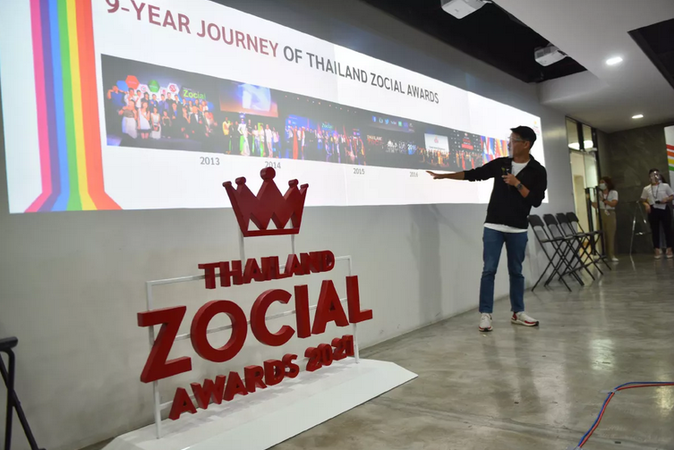
Social media analytics consultancy Wisesight said on Friday that new categories would be added to the 9th Thailand Zocial Awards.
The new awards aim to celebrate brand influencers and entertainment persons who have good work on social media platforms, under the “Wisesight Metric” standard and others, they said.
The awards to be announced this year include:
Best Brand Performance on Social Media
Best Entertainment Performance on Social Media
Best Influencer Performance on Social Media
Best Brand Performance on Social Media by Platform
Best Media Innovation
Special Award
Person of the Year
Wisesight said that of the four famous social media in Thailand – Twitter, Facebook, Instagram and YouTube – Twitter posts increased by 15.6 per cent in 2020, compared to 2019.
However, most brands have used Facebook as their main platform to communicate with their supporters, the company added.
EntertainmentJan 25. 2021Daniel Kaluuya, Ashton Sanders, Algee Smith, Dominique Thorne and Lakeith Stanfield appear in “Judas and the Black Messiah,” directed by Shaka King. The film is an official selection of the premieres section at the 2021 Sundance Film Festival. The event is making a pandemic-era pivot to streaming, holding a pared-down virtual edition. MUST CREDIT: Glen Wilson/Sundance Institute Photo by: Glen Wilson — Courtesy of Sundance Institute
By The Washington Post · Ann Hornaday
The Sundance Film Festival, which Robert Redford founded in 1978 as a showcase for work by emerging independent filmmakers, has become a cinematic harbinger: Every January, thousands of filmmakers, distributors, publicists, journalists and garden-variety film fans trudge to Utah’s Wasatch Mountains to sit in dark rooms for 10 days.
The sojourn – part ritual, part slog – marks the beginning of the new cinematic year: a fresh start featuring highly anticipated new work by revered directors, as well as career-making debuts by complete unknowns.
This year, no one will be packing snow boots and goosedown to brave Park City’s notorious snowdrifts and sardine-packed shuttles. Instead, following the lead of many festivals last year, Sundance 2021 will make the pandemic-era pivot to streaming, holding a pared-down virtual edition. Because of a pushed-back awards season (the Academy Awards will take place April 25, two months later than usual), the result will be a first: a movie year that laps itself, with the latest Sundance premieres becoming eligible to compete for Oscars alongside movies that debuted at the festival in 2020.
Sundance 2021 will be a hybrid of virtual and in-person presentations. Although the core program will be online, festival director Tabitha Jackson introduced a “Satellite Screens” program, in which 30 art houses throughout the country will present specifically curated programs and coronavirus-safe screenings.
Plenty of festivals last year made the shift to online relatively seamlessly, including AFI Docs and the Toronto International Film Festival. What was missing was the ineffable charge that audiences feel when a movie is working: the all-important moment when a potential distributor reads the room and realizes they could have a hit on their hands.
But a more modest, hype-free Sundance might have its compensations. When I interviewed Redford in 2005, he was worried that Sundance had been taken over by “swag and too much celebrity.”
Having become a proving ground for such directors as Steven Soderbergh, Quentin Tarantino and Catherine Hardwicke, Redford’s indie-centric showcase had turned Park City into Paparazzi Central every winter, with everyone from Britney Spears to Paris Hilton showing up to jump-start their movie careers. (When Spears came in 2003, her quote instantly became festival folklore: “Sundance is weird. The movies are weird – you actually have to think about them when you watch them.”)
Scores of promotional parties and pop-ups arrived, having nothing to do with the films being shown, but looking to leverage Sundance’s sex appeal. “Suddenly you have all these gift bags,” Redford noted ruefully. “And all I could think about was the cost of that going to the filmmakers. And it bothered me a lot.”
In subsequent years, Sundance took pains to decouple from what Redford called “ambush marketers.” But those forces will be banished entirely from this year’s festival, which will take place Jan. 28 through Feb. 3. With the event stripped down (73 feature films, compared with last year’s 118), shorter (one week as opposed to 10 days) and far less noisy, viewers will be able to focus on the movies. The latest offerings feature fewer recognizable names than in years past – more than half the films are directed by first-timers – but they hew to what Sundance has always been about at its purest: artistic audacity and audience discovery. (The festival is aiming to create noise in a new way, offering a plethora of free talks and special events on their online Festival Village.)
There are some stars at this year’s festival: The actresses Robin Wright and Rebecca Hall will be making their directorial debuts, with “Land” and “Passing,” respectively. Daniel Kaluuya and Lakeith Stanfield star in “Judas and the Black Messiah,” about the FBI’s surveillance of Black Panther party leader Fred Hampton. But for the most part, Sundance this year will be dominated by unknown quantities: No one knows what, if anything, will emerge with the all-important buzz that made Soderbergh’s “Sex, Lies and Videotape” and Tarantino’s “Reservoir Dogs” overnight sensations. And, absent the electricity of live screenings, it’s not guaranteed that a hit will be immediately obvious when it happens.
That’s just one of several things that will make covid-era Sundance a weird – but maybe not so bad – experience. During a normal stint at the festival, journalists covering the event have the dissonant experience of reporting about the Golden Globes and Oscar nominations from the year before while watching possible awards contenders for the year to come. In 2021, the year isn’t even the “year,” in any conventional sense: The Oscar eligibility window has been extended until Feb. 28 (the same day as the Globes).
That means films like “Judas and the Black Messiah,” which will be released in theaters and on HBO Max on Feb. 12, will be up for last year’s awards, possibly competing with such Sundance 2020 hits as “Minari,” “Promising Young Woman” and “The 40-Year-Old Version.” But the overlap doesn’t bother publicist Cynthia Swartz. ” ‘Judas’ wasn’t really finished until the end of the year,” she notes. “So this gives (the film) time to find an audience and create word of mouth before the nominations are announced. There’s a longer runway.”
Connie White, who programs films for the Middleburg Film Festival and 25 independent art houses throughout the country, is determined to make her virtual Sundance experience as similar as possible to the in-person version. She intends to travel from her home in Western Massachusetts to Boston, where she will watch in a hotel room close to one of her clients, the Coolidge Corner Theatre in nearby Brookline. She has already signed up for the links she wants to see, and has identified films she’ll see on-demand, subject to capacity. (Like most virtual festivals, Sundance has put limits in place having to do with numbers of viewers and geographic availability, although all films in the program will be available in the United States.) “I’ll be alone in my hotel room, but I’ll be in the little Boston community,” White says.
Like several other theaters throughout the country, the Coolidge will participate in the “Satellite Screens” program, offering locally focused talks and events to compliment the films on the Sundance platform. Which raises the question: If programmers like White are attending Sundance to scout films for regional festivals that occur later in the year, aren’t they concerned that their audience will already have seen them?
“I’m not worried,” White says. “We have yet to know which films at Sundance will be films we pursue for Middleburg, and our Middleburg audience doesn’t know, either. They look to us.”
For his part, Baltimore-based programmer Scott Braid, who attended Sundance while working for the Maryland Film Festival for 13 years, agrees that this year’s pared-down program returns the festival to the roots that Redford had in mind so many decades ago.
“It’s not so much driven around who’s going to be there and what the big buzz movies will be,” he observes, “and I hope that’s something that we won’t lose sight of once this is over.”
As for tromping through snow and slush, standing in endless lines and making mad dashes to make the next screening, Braid is equally sanguine. “I do look forward to getting back to the public sphere when it’s safe,” he says. “But as someone who has gotten the flu more times than not from visiting Park City, I wouldn’t be looking forward to that trip right now.”
Larry King, TV host who gave boldface names a cozy forum, dies at 87
EntertainmentJan 24. 2021Larry King is interviewed by Leon Harris, left, at the Newseum in downtown Washington, D.C., for a special event, “A Life in Broadcasting: A Conversation With Larry King,” in March 2015. Washington Post photo by Jonathan Newton
By The Nation
Larry King, the suspendered impresario of cable television whose popular CNN interview program – with its guest-friendly questions and conversational banter – was a premier safe haven for the famous and infamous to spill their secrets, hype their projects and soften their image, died Jan. 23 at a hospital in Los Angeles. He was 87.
Ora Media, the production company he co-founded, announced his death but did not provide a cause, according to the Associated Press. CNN reported earlier this month that King was hospitalized for complications from covid-19. The TV host, who was long beset by medical problems, such as diabetes and heart attacks, underwent an operation to remove early-stage lung cancer in 2017 and had a stroke in 2019.
In a career that included print and radio, King was best known for sitting behind a bulbous RCA microphone in the anchor chair of his prime-time CNN show “Larry King Live” from 1985 to 2010. He began as a Miami disc jockey in the late 1950s, wrote a USA Today column of stream-of-consciousness musings for nearly 20 years, and hosted a late-night Mutual Broadcasting System radio show that was beamed to more than 200 stations. He played himself in dozens of TV shows and movies.
CNN founder Ted Turner called King “the most famous interviewer in the world,” which, at King’s peak, was closer to understatement than hyperbole. His show, with its colored-dot map of the world in the background, garnered more than 1.5 million nightly viewers for segments with guests as varied as George H.W. Bush, Frank Sinatra, Snoop Dogg, Magic Johnson, Donald Trump, Michelle Obama, Lady Gaga, Moammar Gadhafi, the Dalai Lama and Marlon Brando, who, at once playful and bizarre, sang an old pop song and planted a kiss on King.
Others to appear included sex therapists, ufologists and Kermit the Frog and Miss Piggy. The Muppets donned suspenders in the host’s honor.
Audiences responded to King’s gentle probing, smoky baritone and casual manner. His CNN show served as an antidote to the network’s otherwise round-the-clock breaking news coverage and partisan shoutfests. If other interview programs could resemble beds of nails, with “gotcha” inquisitions of newsmakers, King’s show was a plush chaise longue.
New York Times columnist Maureen Dowd referred to him as “the resort area of American journalism, the media’s Palm Springs, where politicians and other figures of controversy or celebrity can go to unwind, kick back and reflect.”
King said he preferred to avoid reading background material on his guests in favor of a spontaneous approach of asking questions on the fly. He described himself as insatiably curious and said his favorite query was also the shortest: “Why?”
One of King’s chief talents was his ability to put guests instantly at ease. He shunned the stiff suits favored by other newscasters for a jacketless look and rolled cuffs. His shoulders hunched as he leaned toward his guests. He seemed perpetually wide-eyed behind his windowpane glasses, keenly interested in what anyone sitting across from him had to say.
When nuclear physicist Edward Teller, a father of the hydrogen bomb, balked at an invitation to speak with King on his Mutual show, the host offered a deal: Stay for the first question and, if desired, leave afterward. At the interview, according to a 1980 account in People magazine, King asked Teller why high school students found physics so intimidating. Teller launched into a heartfelt response about the importance of scientific study – and then answered the rest of King’s questions.
His impromptu methods caught some subjects off guard. When Vice President Dan Quayle appeared on “Larry King Live” in 1992, the conservative Republican politician stumbled into a question about abortion.
“What if your daughter grew up, had a problem, came to you with that problem all fathers fear, how would you deal with it?” King asked.
“Well, it is a hypothetical situation, and I hope I never do have to deal with it, but obviously I would counsel her and talk to her and support her on whatever decision she’d make,” Quayle said.
“And if the decision was abortion, you’d support her?” King asked.
“I’d support my daughter,” Quayle said.
Other times, King made news in spite of himself. Hosting Texas business magnate H. Ross Perot in 1992, King asked about his political prospects. On the spot, Perot announced it was possible he would make an independent bid for the presidency, immediately shaking up the campaign in which he would tap into voters’ frustration with the two major political parties.
Speaking with Richard M. Nixon that same year, King asked the former president what he thought about as he drove past the Watergate apartment and office complex in Washington, the site of the political burglary and coverup that led to Nixon’s resignation in 1974.
“Well, I’ve never been to the Watergate,” Nixon replied. “Other people were in there, though, unfortunately.”
Sometimes, King was caught flat-footed. He was upbraided by Jerry Seinfeld when he intimated that the comedian’s extremely popular sitcom had been terminated by NBC, when in fact the actor-producer chose to end it.
When O.J. Simpson made a surprise call to King’s show live on air in 1995, the day after the football star had been acquitted of murder charges, King’s first question was, “Uh, how are you?”
While his style was purposely simple, King’s line of inquiry occasionally had an unintentional comedic effect.
Initially thinking the Dalai Lama was a Muslim, he asked the Tibetan Buddhist leader: “Do you pray? And if so, who do you pray to?”
King said he was only posing the questions that members of his audience were too embarrassed to ask.
King, who collected Emmy and Peabody awards, conducted 50,000 interviews before leaving CNN in 2010 amid declining ratings. Into his 80s, he continued to appear on smaller cable outlets, notably the state-financed Russian television network RT, and on shows streamed online through a production company King founded with Mexican billionaire and telecom mogul Carlos Slim, Ora TV.
The son of Jewish immigrants from Russia, King was born Lawrence Harvey Zeiger in Brooklyn on Nov. 19, 1933. His father, who ran a bar and grill, died of a heart attack when Larry was a boy. His mother raised him and a younger brother. He later told New York magazine that he attributed their survival to government assistance, a belief that fueled his “undying liberalism.”
After dropping out of high school, he held odd jobs before moving to Florida. At a radio station, he found work as a janitor but made clear his ambition to go on the air. He got his chance in 1957, when a disc jockey missed his shift. The station manager, advising a less Jewish-sounding name, christened him Larry King.
King soon started an interview program at Pumpernik’s Deli, a well-known hangout for celebrities. Before long he had his own radio show, television program and a column in the Miami Herald. But by the end of the 1960s, he was gambling compulsively, on his fifth marriage and deeply in debt.
He allegedly stole $5,000 from industrialist Louis E. Wolfson, leading to grand larceny charges against King in 1971. The charges were eventually dropped because the statute of limitations had expired, but the host continued over the next several years to face problems over bad checks and debts exceeding $300,000.
He was fired from the radio station, and his lucrative connections to the TV and newspaper industries disintegrated. King worked as a publicist for a thoroughbred racetrack, among other jobs. In 1975, a sympathetic radio station manager gave him back his old job, and he slowly rebuilt his career, even as he filed for bankruptcy protection in 1978.
Around that time, Mutual radio lured King for a national late-night talk show based at studios in Arlington, Va. This incarnation of the “The Larry King Show,” which featured show business and government newsmakers as well as offbeat personalities, ran from midnight to 5:30 a.m. (later cut back to 5) and drew a following that made him a star.
Soon, he was offered a column in the start-up newspaper USA Today, where he shared random, koanlike thoughts (“Jell-O is still one of the all-time great desserts,” “I get a good feeling when I see a police officer on a horse”) and occasional witticisms (“Is there a better feeling than having to sneeze and then sneezing?”). He ended his run in 2001.
Into his 80s, King maintained a loyal Twitter following numbering more than 2.4 million. Although he still used a flip phone, he mastered social media with tweets he tagged #ItsMy2Cents that featured a variety of underexplored ideas and questions: “Don’t know why but corn tastes different off the cob,” and “Of what possible use is the pinkie toe?”
King, known for his wandering eye and monumental self-regard, had a complicated private life. He was married eight times (“I love the chase!” he once declared), including twice to former Playboy bunny Alene Akins. His last marriage was to singer Shawn Southwick.
“My career always came first,” he told USA Today in 2020 after his divorce from Southwick. “I used to say if CNN called with an emergency and my wife called with an emergency, I’d call CNN back first.”
Two of his children from Akins died, Andy King in July 2020 after a heart attack and Chaia King of lung cancer in August 2020. He had three other children, including a son, Larry Jr., from Annette Kaye, and two sons, Chance and Cannon, from Southwick. A complete list of survivors was not immediately available.
King, who wrote several memoirs, was a natural raconteur, a skill he said he developed in childhood on the stoops of Brooklyn. Many of his stories, often involving sexual invitations, strained credulity. Some were outright false.
For years, King spoke in detail of his friendship as a teenager with a fellow Brooklyn native, the baseball Hall of Famer Sandy Koufax, and a bet that led to a trip in New Haven, Conn., and some high jinks in that college town. But Koufax told The Washington Post in 1991 that he had never been to New Haven and did not meet King until both were adults. King admitted that the story was a fabrication aimed to aggrandize the sorrowful childhood of Larry Zeiger.
“I’m a funny storyteller,” King told The Post. “Now, that answers what I am. Who I am? It’s a question I’ve never asked.”
“Then how about Larry Zeiger? Who was he?” a reporter asked.
“He was an acne-faced, overweight, Jewish kid whose father died, who was on welfare, whose mother spoiled him. And then, in the course of his life, in his mid-20s, he became Larry King,” he said.
“And who is Larry King?” he was asked.
“All the things that Larry Zeiger never was,” he said.
“So who was telling that story . . . Larry Zeiger or Larry King?”
“Probably Larry Zeiger,” he said. “Larry King wouldn’t have to exaggerate anything.”
Jennifer Lopez worked the dance track ‘Let’s Get Loud’ into her inauguration medley. It actually made perfect sense.
EntertainmentJan 21. 2021Jennifer Lopez sings before Joe Biden is sworn in as president on Jan. 20. MUST CREDIT: Washington Post photo by Jonathan Newton
By The Washington Post · Bethonie Butler · NATIONAL, ENTERTAINMENT, POLITICS, WHITEHOUSE, MUSIC
Jennifer Lopez had already sung the famed folk song “This Land is Your Land” and was midway through “America the Beautiful” when she paused to deliver a patriotic message at President Biden’s inauguration: “One nation, under God,” she said in Spanish. “Indivisible, with liberty and justice for all.”
Then Lopez started singing again, but it wasn’t either of the numbers she had previously announced. “Let’s get loud!” she belted as the United States Marine Band soared into a crescendo.
Lopez has been singing “Let’s Get Loud” for decades. The dance track, which first appeared on her 1999 debut studio album “On the 6,” has since become a signature song for the multihyphenate entertainer – despite the fact that it was actually written by Gloria Estefan.
The reaction on social media was swift and collective. (To paraphrase: Did that really just happen?) “Let’s Get Loud” is a definitive party song, the kind that might get wallflowers onto the dance floor or amp up an early-morning Zumba class. The up-tempo dance track has an important message – calling us to live in the moment and be comfortable in our own skin – but it’s not necessarily the music we associate with inauguration performances. But this was an inauguration like none other.
Wednesday’s ceremony celebrated the transition of power from President Donald Trump to Biden at a pivotal and largely solemn moment for the country. Biden and Vice President Harris took their oaths of office in front of the U.S. Capitol, exactly two weeks after a violent mob – buoyed by Trump’s persistent efforts to undermine the results of the presidential election – stormed the hallowed building.
During his inaugural speech, Biden asked the nation to join him in silent prayer for the “400,000 fellow Americans” who have died of covid-19. On his first day in office, Biden signed executive orders aimed at getting the pandemic under control and undoing controversial measures enacted by the previous administration, including hard-line immigration policies that left hundreds of migrant children separated from their parents at the U.S.-Mexico border.
Despite all of the challenges faced by the Biden administration, the inaugural ceremony struck a hopeful tone – not least because it featured Harris’s historic inauguration as the first woman, first Black person and first person of South Asian descent to become vice president.
Lopez’s presence – alongside other celebrities including Lady Gaga, who sang the national anthem, and Garth Brooks – was itself a signal that change is on the horizon. Despite his long-looming presence in pop culture, Trump never attracted A-list celebrities to the White House. Biden, meanwhile, was vice president during an administration that was groundbreaking in its embrace of pop culture.
In that regard, “Let’s Get Loud” wasn’t as out of place in Lopez’s medley as it might have seemed at first listen. It was the song Lopez mashed up with Bruce Springsteen’s “Born in the U.S.A.” at last year’s Super Bowl halftime show, which she co-headlined with Shakira. That performance, which featured Lopez’s daughter Emme, made less-than-subtle statements about the Trump administration’s policies on immigration and aid to hurricane-ravaged Puerto Rico. Children sat in illuminated cages as Lopez, clad in a large Puerto Rican flag, shouted out “Latinos!”
A children’s choir, wearing hoodies that evoked the U.S. flag, crooned a snippet of “Let’s Get Loud”: “Every feeling, every beat can be so very sweet you got to taste it,” they sang. “Let’s get loud, let’s get loud, turn the music up / let’s do it / come on people / let’s get loud.”
If the Super Bowl performance was a call to action – a demand to be heard – Biden’s inauguration marked a fitting reprise. On Wednesday, Lopez seemed to take in the magnitude of the moment as she sang out the familiar line from one of her most popular songs. It was unexpected and very J-Lo. It was anything but meaningless.
New Batwoman Javicia Leslie always wanted to be a superhero
EntertainmentJan 18. 2021With Kate Kane gone, Ryan Wilder (Javicia Leslie) is the new Batwoman. MUST CREDIT: CW
By The Washington Post · David Betancourt
Last year, Javicia Leslie was asked on a podcast what she wanted her next acting role to be.
“I said I wanted to be a superhero,” Leslie recalled recently toThe Washington Post.
In July, just two months after stating her desire, the star of “God Friended Me” and “The Family Business”answered the call to a bat-signal put up in the sky just for her – finding out she was the new star of the CW’s “Batwoman.” The announcement instantly made her the new face of the network’s successful tradition of televised superheroes.
The black-and-red cape and cowl of the DC Comics-inspired character had become available in May, when actress Ruby Rose made the shocking announcement that she was leaving the titular role(due to both injury and rethinking her future while isolating during the pandemic). Leslie self-taped her audition in her Los Angeles home due to covid-19 restrictions.
She spoke to The Post from Vancouver, where Season 2 of “Batwoman” is filmed – but had arrived from the United States three days prior, so she was in a required quarantine. Leslie’s official superhero debut is Sunday, when the season premieres on the CW at 8 p.m. ET.
Leslie says she’s always been a Batman fan. Which Batman? Val Kilmer in 1995′s “Batman Forever.”
Leslie and Kilmer are kindred acting spirits of sorts, both having dealt with the attention that comes with replacing a high-profile Bat-person upon their departure. Kilmer’s solo venture as Batman followed Michael Keaton’s two-film run as the Dark Knight just as Leslie must now cast a new shadow over the one Rose left behind.
And just like Kilmer’s blond Batman didn’t attempt to mimic what Keaton accomplished under the mask a quarter century ago, Leslie isn’t trying to do what’d been done before.
“What makes me me will always be different than what makes someone else who they are,” Leslie said. “We’re talking about two completely different characters that are obviously going to be two completely different Batwomen.”
Despite a change in secret identities from Rose’s Kate Kane to Leslie’s Ryan Wilder, Batwoman will remain a gay character. Leslie, who identifies as bisexual, says that was a key characteristic that had to be kept.
“Batwoman (is) gay in the comics. I think that is really important that (it) continues to be represented in our iteration of Batwoman as well,” Leslie said. “Representation is so important. I can’t wait until there is a trans superhero that is live-action. I think that … this role and other roles like this are constantly breaking the barriers of what normalcy is. And it’s creating a new normal that should represent everyone and not just what people think is the majority.”
One norm going away is the trademark black eye makeup that every on-screen bat-hero since Keaton has worn under the mask – Rose eventually parted with it and Leslie will also decline.
“Being a woman of color, it was important that we didn’t black out my eyes,” Leslie said. “We wanted to play with light instead of playing with darkness to help accentuate me being a black woman in playing this role.”
Leslie auditioned to be Batwoman while the Black Lives Matter movement was protesting the death of George Floyd, which happened on thesame day in May that Christian Cooper was racially harassed while birdwatching in Central Park. “Batwoman’s” new season debuts less than two weeks after the violence and death that took place at the Capitol, a day where a noose and Confederate flag breached the United States’ beacon of democracy not far from where Leslie grew up in Upper Marlboro, Md.
The significance of being Batwoman now is not lost on Leslie.
“I’m really saddened by the events that have happened within the last year. But it really just revealed that we have a lot of work to do as a world, more specifically as a country,” Leslie said. “Life imitates art, so it’s very important that what we see on television represents who we really are and that it continues to inspire people that may be voiceless or scared to (be) who they are.”
Diversity in comic storytelling has shown gradual improvement over the years. It has been almost a decade since Miles Morales debuted as the half-Puerto Rican, half-African American Spider-Man over at Marvel Comics. Since then, the wall-crawler has starred in an Academy Award-winning animated film and is currently the star of one of the most popular video games on the PS5.
DC is finally catching up to Marvel’s progress. Leslie is the CW’s second Black superhero in a lead role, after DC’s “Black Lightning.” Her character’s alter ego, Ryan Wilder, recently made her comics debut. The company also just introduced a Black Batman and a Brazilian Wonder Woman in the pages of its new publishing initiative, “Future State.” Milestone Comics, a DC imprint, will resume publishing some of the world’s most popular Black superheroes after a long hiatus, with plans to grow on big and small screens.
Leslie is proud to take part in such bold ideas.
“To be a part of (the Batman franchise) in the capacity where I’m the one saving the day … I think it’s so powerful,” Leslie said. “I never in my wildest dreams would have thought that my version of a superhero would have been something that was so groundbreaking.”
‘The Dig’ is a movie about archaeology, but it’s also a lovely meditation on what lasts
EntertainmentJan 14. 2021From top, Carey Mulligan, Archie Barnes and Ralph Fiennes in “The Dig.” MUST CREDIT: Larry Horricks/Netflix Photo by: Larry Horricks — Netflix
By The Washington Post · Michael O’Sullivan
On the eve of World War II, a self-taught English archaeologist, working at the behest of a Suffolk widow with a curiosity about what lay beneath several earthen mounds on her property, made what is considered to be one of the more significant discoveries in British archaeology.
That may be the summary description of the plot of “The Dig” – or at least the historical facts on which the film, and its source material, a 2007 novel by John Preston – is based. But it doesn’t begin to describe what this poetic little film is really about, or what it manages to say about the human condition. Gradually, and with the methodical patience of someone unearthing buried treasure with a tiny brush, “The Dig” reveals itself to be a story of love and estrangement, of things lost and longed for, of life and death – of what lasts and what doesn’t.
Directed by actor/filmmaker Simon Stone, from a richly allusive screenplay by Moira Buffini (“Tamara Drewe”), “The Dig” begins in a straightforward manner: Edith Pretty (Carey Mulligan) has just engaged the services of Basil Brown (Ralph Fiennes), a local man who hides his sharp archaeological instincts behind his job description: “excavator” – a designation he has chosen for himself that, like the film itself, engages in misdirection.
Ralph Fiennes and Carey Mulligan in “The Dig.” MUST CREDIT: Larry Horricks/Netflix
Photo by: Larry Horricks — Netflix
Soon Basil’s discovery – that Edith’s estate is a burial ground of sorts – is laid bare, and the film proceeds with the standard fare of so many prestige British dramas. The coming war threatens the project, along with inclement weather and academic snobbery, personified by a pompous archaeologist from the British Museum (Ken Stott), who attempts to bigfoot Brown, commandeering his work site and dismissing his expertise, when word of the dig leaks out.
But slowly, slyly, the film deepens, becoming so much more than a period drama with pretty costumes, plummy accents and petty melodramas. In a sense, the tale of Brown’s work – while momentous both historically and personally, as a tale of stolen credit – is, like what has been dug up in the dirt, merely a vessel for larger meaning.
Subplots involving Edith’s health, her worries for her cousin (Johnny Flynn), who is about to go off to battle, and the unhealthy marriage of a couple hired to work on the dig (Lily James and Ben Chaplin) enrich the sidelines of the story. What might have been mere embellishments, meant to juice up a dusty narrative, are, in the hands of Buffini and Stone, by the end of the film, the whole point.
And what is that point?
On the most superficial level, it’s that archaeology – even when the practice is explicitly being undertaken in a place where a corpse has been lain – isn’t about the dead, but the living. “The Dig” is about the yearning, so human and, yes, so elusive and so futile, to fix the past so that it can be preserved.
Of course, it can’t, in any literal sense. Even the bits of iron, bronze and gold that get saved in museums won’t last forever, any more than the people who made them, or the emotions we feel, and sometimes fail to show, for a loved one.
Brown’s dig dispelled myths about the “Dark Ages,” but “The Dig” explodes another greater and more haunting illusion, with grace and at times exquisite sadness: that we are anything more than ghosts.
– – –
Three and one-half stars. Rated PG-13. Available Jan. 29 on Netflix. Contains brief sensuality and partial nudity. 112 minutes.
Ratings Guide: Four stars masterpiece, three stars very good, two stars OK, one star poor, no stars waste of time.
Like every other place in Theater Land, Tryout Town has resettled on the Web. It actually proves to be an advantageous setting for works-in-progress like the embryonic and revolutionarily assembled “Ratatouille: The TikTok Musical” that made its debut Friday, in a benefit digital production for The Actors Fund.
At a running time of 51 minutes, and with perhaps only half the numbers required for a full adaptation of the 2007 animated Oscar-winner, this “Ratatouille” is a mere appetizer. But with a winning Tituss Burgess as the human embodiment of Remy, the Parisian rodent who can stir up a mean beef bourguignon, it is a promising first course. And the harbinger of a future property on the school circuit or maybe even in some professional incarnation. (Another leading indicator: The Actors Fund announced that the production surpassed $1 million in ticket sales on its premiere night.)
Let’s acknowledge the affirmative circumstances of this virtual performance, which also offers up the talents of Wayne Brady, Ashley Park, Adam Lambert, Andrew Barth Feldman and André De Shields as Anton Ego, the restaurant critic whose effete heart Remy melts. It augurs the arrival, in the midst of a fraught time for theater and other performing arts, of a bona fide new musical. Even more remarkably – as its title suggests – it came together via TikTok, the digital platform on which users create videos of up to a minute.
Emily Jacobsen, a Disney-adoring teacher in Hartsdale, N.Y., prompted other contributors to add their imaginations to a “Ratatouille” musical on TikTok. A result was the 11 numbers for this production by nearly a dozen songwriters – including one, “Anyone Can Cook,” by Broadway actor Kevin Chamberlin, who performs it himself, as the story’s venerable chef, Auguste Gusteau. The material, massaged into a skeletal narrative by Michael Breslin and Patrick Foley, was handed over to a capable team including director Lucy Moss, orchestrator Macy Schmidt, music supervisor Daniel Mertzlufft and choreographer Ellenore Scott.
David Bengali’s video design provides a coherent scaffolding for the story, which relates the arc of Remy’s culinary coming-of-age, with the help of kitchen staff played by Feldman and Park. (The idea of multiplying the images of a pair of male and female dancers to make a full chorus is delightful, and the accompaniment of the 20-piece Broadway Sinfonietta – all female-identifying and mostly women of color – applies a welcome orchestral polish.)
This live-action version suffers a bit from the pandemic-imposed limitations on performers recorded in isolation. (The show remains online until Monday.) Still, one is inclined to adjust one’s expectations, allowing both for the novel manner in which this project has come to fruition and an understanding that gaps in the storytelling have yet to be filled. An interlude definitely in need of elaboration: The moment that De Shields’s Anton tastes Remy’s ratatouille. The movie’s depiction of the critic’s ecstasy was a cartoon coup – and served as inspiration, in point of fact, for one of “Hamilton’s” most spectacular numbers, “Satisfied.” Here, in RJ Christian’s song, “Ratatouille,” Anton’s epiphany feels insufficiently theatricalized.
Though the insider musical-theater jokes are fun – Priscilla Lopez, for instance, makes a cameo to send up her own performance in the original “A Chorus Line” – more attention must be paid to the basics of plot development. One would hope for deeper exploration of the magnetism between the buoyantly matched Feldman and Park, as Linguini and Colette. With Moss’s guidance, they both leap wittily from animation to three dimensions. Brady provides a charismatic rat-father for Remy, and the more screen time accorded Mary Testa, as a cantankerous Gallic cook, the better.
Burgess is no stranger to anthropomorphic portrayal: he originated the role of Sebastian the crab in Disney’s Broadway rendition of “The Little Mermaid.” Here in gray turtleneck and trademark self-dramatizing ebullience, he’s promoted from supporting crustacean to leading mammal. “I won’t let a narrow-minded view determine what vermin can do,” Burgess sings, in the musical’s best number, Mertzlufft’s “Remember My Name.” It’s a safe bet that as “Ratatouille: The TikTok Musical” makes its way in the world – digitally or otherwise – the producers will remember his.
– – –
Ratatouille: The TikTok Musical, by numerous songwriters, directed by Lucy Moss. About 51 minutes. Contribute-what-you-can tickets start at $5. Available on demand through Monday at 7 p.m. todaytix.com.
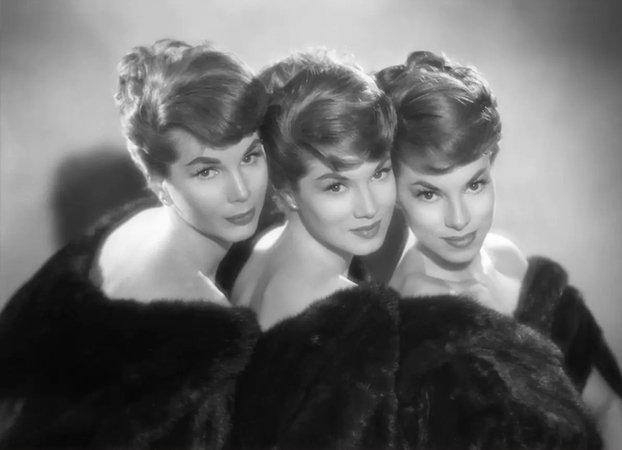
In the 1950s, when Elvis Presley was leading the rock-and-roll revolution, the McGuire Sisters were genteel holdovers from an earlier time.
In their proper, unthreatening way, Christine, Dorothy and Phyllis McGuire had a popularity rivaling that of Elvis himself. They were on countless magazine covers and TV shows, appeared in nightclubs and concert halls, and had 10 songs in the Billboard Top 20.
Their two No. 1 hits – “Sincerely” and “Sugartime” – reflected the trio’s sweet, earnest image. The sisters, who began singing in church in Ohio during the 1930s, had an uncanny sense of timing and close harmony, matched by a perky, ever-smiling stage manner.
They were so close that they sometimes held hands as they sang or took their bows. Yet the spotlight seemed to shine the brightest on Phyllis McGuire, the youngest sister, who always stood in the center and sang the lead.
McGuire, who was 89 and the last surviving McGuire sister, died Dec. 29 at her home in Las Vegas. Her death was announced in a paid notice in the Las Vegas Sun newspaper. The cause was not disclosed.
Even as musical tastes began to change, the McGuire Sisters kept going strong. By 1960, each of the sisters was earning more than $1 million a year.
After a final appearance on “The Ed Sullivan Show” in 1968, they parted ways. Christine and Dorothy were married and raising families. Phyllis, who had been married once in the 1950s, was single and raising eyebrows.
Rumors began circulating, then were confirmed without apology by McGuire that she was the girlfriend of Chicago mob boss Sam Giancana.
They had met in 1959, when McGuire and her sisters were performing at the Desert Inn, one of the Las Vegas casinos run by Giancana. “Who’s the one in the middle?” he reportedly asked.
McGuire, who had a weakness for the blackjack tables, ran up a debt of tens of thousands of dollars at the Desert Inn. Giancana, watching from afar, told his casino boss to “eat it” – or forgive the debt.
Thus began one of the most unlikely romances in show business. Giancana, who got his start as Al Capone’s driver in Chicago, was widowed, bald and in his 50s. He had been arrested dozens of times, linked to crimes from illegal gambling to murder, and had served time in prison.
McGuire was still in her 20s and had a public image as benign and carefully arranged as one of the McGuire Sisters’ hit songs. Giancana sent her lavish gifts of jewelry and furs and often met her overseas, wherever the sisters were performing. Strange as it may seem, everyone who knew them agreed they were in love.
“It’s amazing that it ever took place,” William Roemer, an FBI agent who tracked Giancana for years, told the Los Angeles Times in 1995. “She had everything. She had beauty. She had money. Yet, she fell in love with this gangster. I could never figure it out.”
In 1961, FBI agents wiretapped their room in a Phoenix motel. Later, after being questioned about Giancana’s activities, McGuire pleaded ignorance. Federal authorities asked her to cooperate, with the implicit threat that her career would be ruined if her affair with a mafia kingpin were exposed.
“She said she would, but she never did,” Roemer said. “She never cooperated with us. She double-crossed us really.”
In 1965, McGuire testified before a grand jury investigating Giancana for racketeering. She admitted that they had a relationship and that she was aware of his reputation, but maintained she knew nothing about his life of crime.
The revelation “really hurt our career,” McGuire told the Chicago Tribune in 1989. “We were blacklisted for a while on TV. . . . We were America’s sweethearts, and for one of America’s sweethearts to be with that man . . .”
Giancana went to prison for a year in 1965, then lived in Mexico and South America, where he was visited by McGuire. He later moved back to suburban Chicago and was cooking in his basement in 1975 when an assailant entered and shot him seven times in the head. The murder was never solved.
“I just knew that I liked the man,” McGuire told the Los Angeles Times in 1986. “He was very nice to me. And if he had done all those things they said he did, I wondered why in God’s name he was on the street and not in jail.”
Phyllis Jean McGuire was born Feb. 14, 1931, in Middletown, Ohio, and grew up in the nearby town of Miamisburg.
Her father was a steelworker and her mother was a minister. Phyllis was 4 when she and her sisters began singing in their mother’s church. (Christine was five years older than Phyllis, Dorothy three years older.) Before long, they were performing at weddings, revival meetings and the USO. They had a long engagement at a hotel in Dayton, Ohio, and appeared on radio and television.
In 1952, the McGuire Sisters moved to New York and landed an eight-week engagement on Kate Smith’s radio show. They later won a talent contest and were featured on Arthur Godfrey’s popular TV show. Their first Top 10 hits came in 1954, with “Goodnight, Sweetheart, Goodnight” and “Muskrat Ramble,” and “Sincerely” reached No. 1 in 1955.
Two years later, they recorded “Sugartime,” by Charlie Phillips and Odis Echols, which climbed to No. 1 in 1958 and became the sisters’ signature tune:
Sugar in the mornin’
Sugar in the evenin’
Sugar at suppertime
Be my little sugar
And love me all the time
Even before the sisters broke up in 1968, Phyllis McGuire began to work on her own, including an acting role in the 1963 Frank Sinatra film “Come Blow Your Horn.”
By 1985, the McGuire Sisters were ready to launch a comeback, but they struggled to re-create the instinctive harmonies they had in their youth.
“We rehearsed eight hours a day, five days a week for six months,” Phyllis McGuire told the Tribune in 1989. “Then one day, after perspiring and toiling and worrying, we started rehearsing and all in the same instance we looked at each other and said, ‘My God, thank you, that’s it.’ We had it back.”
Wearing matching dresses and hairstyles, the sisters performed in nightclubs and concert venues until 2004. Dorothy McGuire died in 2012, Christine McGuire in 2018.
Phyllis McGuire’s early marriage to Neal Van Ells ended in divorce. After Giancana’s death, she was occasionally linked to wealthy men, but she never remarried and had no immediate survivors.
A 1995 HBO film, “Sugartime,” starring Mary-Louise Parker and John Turturro, portrayed McGuire’s life with Giancana. She denounced it as “riddled with blatant inaccuracies, exaggerations and distortions.”
In 1999, after Las Vegas police stopped her limousine and questioned her driver, the 68-year-old McGuire emerged from the car “screaming, waving and flailing her arms” and was arrested for head-butting and kicking a police officer. Charges were dropped after a plea deal.
McGuire was an astute investor, and it is widely believed that much of Giancana’s fortune came into her hands. She had a jewelry collection said to rival those of Elizabeth Taylor and Philippine first lady Imelda Marcos.
She lived on one of the grandest estates in Las Vegas, in a house that contained, under its roof, a 40-foot replica of the Eiffel Tower and another of the Arc de Triomphe. Steel shutters could cover the bulletproof windows with the touch of a button. She had five gardeners and a pond with black swans floating by.
“I’m not ashamed of my past,” she told Vanity Fair, describing everything from music to the mob. “I was doing what I honestly felt.”
 “Splatoon 3.” MUST CREDIT: Nintendo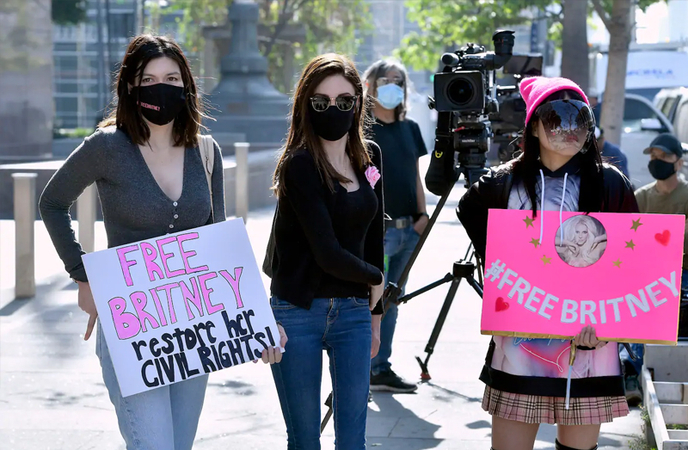
 Daniel Kaluuya, Ashton Sanders, Algee Smith, Dominique Thorne and Lakeith Stanfield appear in “Judas and the Black Messiah,” directed by Shaka King. The film is an official selection of the premieres section at the 2021 Sundance Film Festival. The event is making a pandemic-era pivot to streaming, holding a pared-down virtual edition. MUST CREDIT: Glen Wilson/Sundance Institute Photo by: Glen Wilson — Courtesy of Sundance Institute
 Larry King is interviewed by Leon Harris, left, at the Newseum in downtown Washington, D.C., for a special event, “A Life in Broadcasting: A Conversation With Larry King,” in March 2015. Washington Post photo by Jonathan Newton
 Jennifer Lopez sings before Joe Biden is sworn in as president on Jan. 20. MUST CREDIT: Washington Post photo by Jonathan Newton
 With Kate Kane gone, Ryan Wilder (Javicia Leslie) is the new Batwoman. MUST CREDIT: CW
 From top, Carey Mulligan, Archie Barnes and Ralph Fiennes in “The Dig.” MUST CREDIT: Larry Horricks/Netflix Photo by: Larry Horricks — Netflix
 Ralph Fiennes and Carey Mulligan in “The Dig.” MUST CREDIT: Larry Horricks/Netflix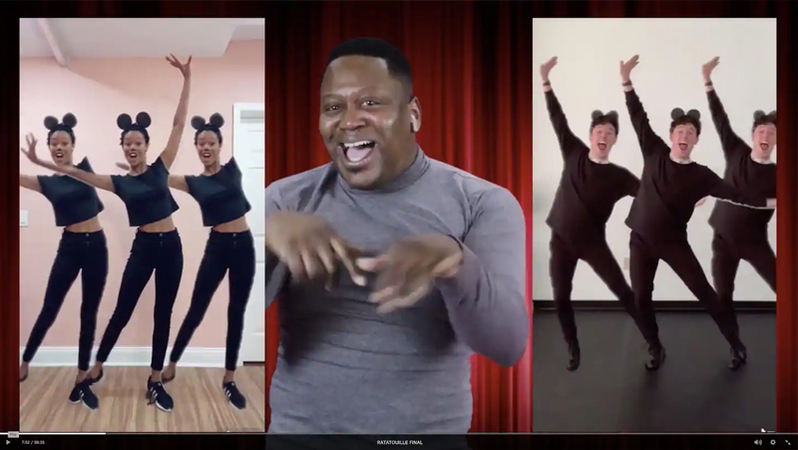
 SootinClaimon.Com