Wonder Woman survives a pandemic and polarizing reactions to remain one of the top superhero franchises #SootinClaimon.Com

#SootinClaimon.Com : ขอบคุณแหล่งข้อมูล : หนังสือพิมพ์ The Nation.

Wonder Woman survives a pandemic and polarizing reactions to remain one of the top superhero franchises

EntertainmentDec 29. 2020

By The Washington Post · David Betancourt

The Wonder Woman franchise isn’t going anywhere.

Despite a limited theatrical release, lukewarm reviews and social media chatter that can best be described as polarizing, “Wonder Woman 1984” opened to $16.7 million domestically at the box office this past weekend, beating all other three-day 2020 pandemic releases and boosting its worldwide total to $85 million. The film also debuted simultaneously on HBO Max and was viewed by nearly half of the streaming service’s subscribers on the day of arrival according to The Hollywood Reporter.

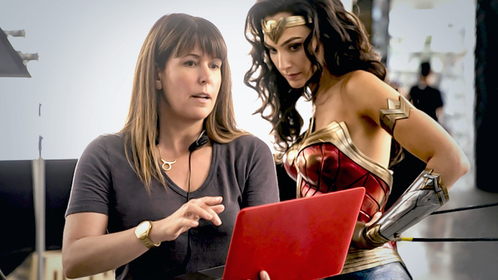
Warner Bros. studio chief Toby Emmerich announced on Sunday that the studio and DC Entertainment are moving forward with a third film, with director Patty Jenkins and star Gal Gadot returning.

So the franchise has come out pretty well, all things considered. And the announcement puts it into rarefied air.

A trilogy has been an uncommon feat for DC Comics on film in the modern superhero cinema era that clocks back to Fox’s first X-Men movie in 2000.

There’s Christopher Nolan’s “The Dark Knight” trilogy. And that’s it.

Gone are the days of four Superman movies and four Batman movies that both marveled and disappointed from the ’70s to the late ’90s. Post-Nolan, DC has struggled to find respectability in the shadow of Marvel Studios’ decade-long reign, but salvation finally arrived with the first “Wonder Woman” film that wowed audiences to the tune of $822 million worldwide in 2017.

Gadot and Jenkins became DC’s true heroines, helping the brand become a legit contender for the crown of best superhero movie maker that was once theirs alone. Gadot had the gargantuan task of following in the footsteps of Lynda Carter, the world’s forever Wonder Woman. She passed that test memorably, and is equally impressive in “Wonder Woman 1984” despite not being handed as strong a script as in her first go-round with the Lasso of Truth.

Before the first film, Jenkins had the outsized expectations that came from telling a tale with not only DC’s top female superhero, but the female superhero, and had to make it work when DC was building a reputation for being too moody on screen. A movie had been devoted to Batman and Superman beating each other up, after all. Jenkins made a film full of light and hope. It’s DC’s best film post-Nolan, and set the franchise on firm footing, making it a good bet to join DC’s trilogy club.

Even if the reviews for “Wonder Woman 1984” haven’t been as universally praising as the first film’s, it’s bright (maybe too bright, but it is the 80s) and shiny and very expensive, and helps add to a world that’s worth revisiting. Perhaps it is finally time to bring Wonder Woman to the present day, as Jenkins has hinted at previously, while keeping the character as far away from the Justice League as possible until that on-screen brand has been repaired.

But one question is when Gadot and Jenkins will have the time.

The daughter of a fighter pilot, Jenkins is scheduled to direct “Rogue Squadron,” a movie centered around the coolest pilots of the Star Wars universe. Gadot is also set to star as the queen of Egypt in “Cleopatra,” once again working alongside Jenkins.

This could be a situation reminiscent of the long four-year gap between Nolan’s “The Dark Knight” and “The Dark Knight Rises” that allowed him to film “Inception.” At that point Nolan had the power to do the projects he wanted to do. He didn’t need Batman. Batman needed him. Gadot and Jenkins are now in similar territory with Wonder Woman.

Another factor is: Will theaters return to their pre-pandemic audience levels by the time a new Wonder Woman film comes out? In his statement, Emmerich said Gadot and Jenkins would return to conclude “the long-planned theatrical trilogy.” The key word being theatrical. That makes it seem like Warner Bros. is betting on this movie arriving in a post-pandemic, vaccinated world a few years from now. Those words also give the vibe that a trilogy was always in the cards.

And then there are the optics to consider. Trilogies are old hat for Marvel Studios. Look at all the Avengers that have had three solo films. Iron Man. Captain America. Thor (with a fourth on the way). Heck, even Ant-Man has a third movie in the works. Seriously. It’s called “Ant-Man and The Wasp: Quantumania.”

For DC to maintain respectability in the shadow of all that Marvel Studios has done, its superheroes need equal longevity on the big screen. And while other contenders at DC have arisen with trilogy potential (“Shazam,” the billion-dollar grossing “Aquaman,” a promising “Black Adam” franchise starring Dwayne Johnson that will soon be in production, and even “The Suicide Squad” with director James Gunn at the helm), DC’s current top hero on film was the obvious choice to begin a new trilogy streak.

However long it takes, we will see Princess Diana one more time. Warner Bros. and DC just need to hope the third time can charm like the first one did.

Hospital discharges Toon Bodyslam #SootinClaimon.Com

#SootinClaimon.Com : ขอบคุณแหล่งข้อมูล : หนังสือพิมพ์ The Nation.

Hospital discharges Toon Bodyslam

EntertainmentDec 28. 2020

By The Nation

Rock-star Artiwara “Toon” Kongmalai is on the way to recovery after being released from hospital on Monday, his girlfriend Rachwin “Koi” Wongviriya said on Instagram.

On December 14, lead singer of the group Bodyslam was rushed to Bangkok’s Phramongkutklao Hospital after suffering a bulging disc in his cervical vertebrae.

The 41-year-old rock star created history last year when his epic, 55-day run across the country raised Bt1.2 billion for cash-strapped public hospitals.

Cervical herniated disc is a recognised condition among athletes, though it is not known whether Toon sustained the injury through running.

A nephew of Aed Carabao, Toon founded Bodyslam with Thanadol Changsawek and Nathaphol Phannachet in 2002. The band have released seven hit albums so far, mostly under GMM Grammy.

Book World: Dissecting athletic greatness: Nature, nurture, lucky breaks and a ‘quiet eye’ #SootinClaimon.Com

#SootinClaimon.Com : ขอบคุณแหล่งข้อมูล : หนังสือพิมพ์ The Nation.

Book World: Dissecting athletic greatness: Nature, nurture, lucky breaks and a ‘quiet eye’ (nationthailand.com)

Book World: Dissecting athletic greatness: Nature, nurture, lucky breaks and a ‘quiet eye’

EntertainmentDec 12. 2020

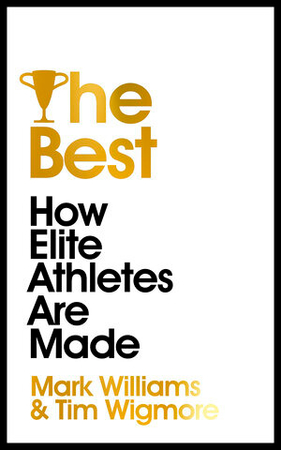
The Best
Photo by: Nicholas Brealey — Handout

The Best Photo by: Nicholas Brealey — Handout 

By Special To The Washington Post · Liz Robbins 

The Best: How Elite Athletes Are Made

By Mark Williams and Tim Wigmore

Nicholas Brealey. 353 pp. $24.95

– – –

When Brandi Chastain scored the winning penalty kick in the 1999 Women’s World Cup and ripped off her jersey to celebrate victory for the United States, she sent a thunderous thrill through the Rose Bowl crowd and inspired generations of athletes to come.

I was fortunate to witness such unbridled moments of triumph, superhuman feats from once-in-a-generation athletes like Roger Federer and LeBron James, in my years as a sportswriter. Journalists, fans and fellow athletes alike cannot help but marvel at greatness as something often intangible.

Now a new book breaks down the championship process, from birth to retirement, and the practice hours in between, making it at least relatable. In “The Best: How Elite Athletes Are Made,” British sports scientist Mark Williams and sportswriter Tim Wigmore offer an engrossing guidebook for youth athletes, parents, coaches and perhaps even fantasy-league fans looking for a little insight.

It should not be taken as a bible. Sports do involve variables – a lucky bounce here, a freak break there. How athletes react to such changes, the authors argue, is a measure of their training and their will.

“We do not claim there is a simple template to becoming the best, or even maximizing your chances of becoming the best you can be – sport, like life, is altogether more complicated,” they write in the prologue. “Leading athletes benefit from a complex, and interrelated, mixture of nature and nurture.”

For readers used to literary sports narratives in the vein of John McPhee or David Halberstam, this is a much more academic enterprise. At times, the work is reminiscent of Malcom Gladwell’s “Outliers: The Story of Success,” which it references.

The strength of “The Best” is in its synthesis of hundreds of sports science journals, which Williams and Wigmore condense into clear sections amplified by original interviews with stars such as Steph Curry, Annika Sorenstam and Pete Sampras. The book covers sports as diverse as the National Football League and Norwegian cross-country skiing, soccer’s Premier League and England women’s field hockey. Even the underhanded free throw shooter Rick Barry gets a couple of pages.

Easy to follow, the chapters are divided into three sections, starting at the beginning: who becomes a champion based in part on siblings, birth date and community support.

“Part Two: Inside the Minds of Champions” is the meat of the material, showing the training and mental makeup athletes need under pressure. The best athletes have intense focus, but where they direct that focus is illuminating.

Joan Vickers, a scientist at the University of Calgary, introduced the concept of the “quiet eye,” when in the final milliseconds of preparation for a shot, athletes fixate on one target – like the rim of a basket or the upper corner of the goal. The longer the duration of the “quiet eye,” the more successful the outcome.

The tips range from useful to delightful in chapters like “The art of the con” (not a political reference) and “How to hit a ball in 0.5 seconds,” which shows how athletes study their opponents’s tics that might provide clues in returning a serve in tennis or hitting a ball in baseball or cricket. The Zen master Andre Agassi solved Boris Becker’s serve by figuring out that Becker stuck his tongue out on his lip, literally pointing to where he was going to place it in the service box – center, left or right. The chapter “How to win a penalty shoot-out” does not mention Chastain but relays how England’s men’s soccer team overcame its penalty-kick curse. The little black book of opposing players’ tendencies kept by Britain’s field hockey goalie Maddie Hinch is a rich detail.

“Why athletes choke” had me nodding in sympathy. What golfer does not remember Jean Van de Velde’s epic meltdown in the 1999 British Open? With a three-shot lead coming into the 18th hole, he somehow ended up in a river with no socks and shoes, trying to play the ball from there. Van de Velde lost the tournament in a playoff.

“When athletes are anxious, they reinvest attention on the technical execution of the skill, those aspects of the movement that have generally become automated – ‘paralysis by analysis,’ ” the authors write. (It is a phrase they repeat often.)

And it relates to the “quiet eye” concept: “Athletes weighed down by anxiety also use their eyes less efficiently, in both dynamic and static tasks.”

Although the lessons here are widely applicable, a caveat: This book does have a distinct British accent. When talking about the National Basketball Association in the chapter on neighborhood pickup games, the authors refer to them as “ad-hoc games.” They call a playoff game a “match.” There is football (never soccer) and American football. And spellings have not been changed for American readers, so we have the British versions of some words: practise and defence. And there is a whole lot of cricket.

The authors couldn’t include everything, yet there is only a half-page mention of doping. It comes in a brief section on mental health. Athletes cheat for reasons beyond internal pressure; they often face financial incentives and government mandates. Then again, this game within the game could be – and has been – worthy of many separate books.

Part Three concludes with training methods and the science of success. I was pleased to see the authors include the famous team-bonding dinners led by Gregg Popovich, the oenophile coach of the five-time champion San Antonio Spurs, and the intense practice techniques of Women’s National Basketball Association star Elena Delle Donne, who led the Washington Mystics to their first WNBA championship in 2019.

In “The next frontier,” the final chapter about technology, the authors leave us, appropriately, with an eye to the future. Analytics make the scene, but the discussion of how teams are using virtual reality to assist injured players and simulate pressure situations left me thinking of the next generation of champions.

Still, for all the technological advantages of the Nike Vaporfly shoe, which has transformed the running world, the authors include the benefits of a low-tech training solution for any athlete: naps. Finally, something attainable for us mere mortals.

– – –

Robbins is a freelance writer in New York. She covered tennis for the New York Times from 2000 to 2010.

The Game Awards hosted Zoom calls with hundreds of fans. They were surprisingly orderly. #SootinClaimon.Com

#SootinClaimon.Com : ขอบคุณแหล่งข้อมูล : หนังสือพิมพ์ The Nation.

The Game Awards hosted Zoom calls with hundreds of fans. They were surprisingly orderly. (nationthailand.com)

The Game Awards hosted Zoom calls with hundreds of fans. They were surprisingly orderly.

EntertainmentDec 11. 2020

By The Washington Post · Gene Park

The Game Awards have always been distinct from peer shows in the entertainment industry. With less formality and more announcements than any other prestige show, the video games industry has an awards show that tries to be its mirror.

Showrunner Geoff Keighley extended this philosophy this past year after the coronavirus lockdowns kicked in. He missed the in-person interactions from traveling to expos and other industry shows across the world. So instead, he used The Game Awards platform to host weekly fireside chats with industry titans like Xbox chief executive Phil Spencer, “Elder Scrolls” legend Todd Howard or the elusive Gabe Newell, co-founder of Valve and an early key figure in the creation of Microsoft Windows.

One day during the summer, Keighley tweeted to his 1.2 million followers asking who would want to show up on a Zoom call and chat about The Game Awards, what they want to see and how the show can be improved. To be selected, viewers were asked to send an email explaining why The Game Awards or gaming means so much to them. Keighley received over 2,000 emails. He invited about 150 people on the first call.

“Everyone online was telling me, ‘Oh it’s going to be a madhouse, everyone talking over each other,” Keighley said. “It was not at all like that. It was such a polite, respectful group of people, and we just really had a great conversation about games. And I’m blown away at how global it was.”

Keighley showed some of the emails to The Washington Post, where respondents raised a range of reasons for why they love The Game Awards, including the representation it showcases and the excitement it can bring – especially as trade shows like E3 lose some of their luster. They appreciate seeing the faces behind the works, especially in a medium that’s struggled to properly recognize the hundreds of people that can stand behind the creation of a single game.

The Post was invited to one of these calls, and can confirm that they were orderly, polite conversations. Viewers and listeners would often raise their hand to speak and wait their turn.

“It was inspiring because, you know, on Twitter we often see a lot of loud voices, but in the midst, there are tons of people who are really amazing, thoughtful people that love video games,” Keighley said. “I often live in a bubble where I go to PAX and E3 and see the same people, while a lot of these fans might never get a chance to talk to Todd Howard or Phil Spencer.”

Keighley said much of the feedback was affirmation for him and his team. It was a good “temperature check” on how people felt about the show, and how it could change moving forward after this tumultuous year.

Probably the most distinctive aspect of The Game Awards is that its also a vehicle for announcements. Nintendo debuted its trailer for “The Legend of Zelda: Breath of the Wild” at the 2016 show, and Microsoft made its first public unveiling of the Xbox Series X at last year’s show.

“People have crazy expectations about what’s going to be announced, and we don’t really control whether it’s going to be on the show or not,” Keighley said. “That’s always the hardest part for me, seeing games get requested that you know might not be there, but that’s not our choice.”

Keighley said the decision to run announcements or trailers largely depends on the work being done at the publisher or studio level, and this year has proven that the entire industry has struggled to meet its deadlines thanks to the pandemic.

None of these Zoom meetings are available for public viewing. Keighley said they were meant to be intimate, personal conversations, although none were really “off the record.” They were meant only as an interactive way to talk to his fans. Keighley is keen on interactivity as a core pillar of The Game Awards, and he’s worked with publishers in the past to offer free playable demos and discounts for award winners.

“I wasn’t going to turn this into a video that we were going to put up on YouTube and monetize, this was very much for the community,” Keighley said.

Despite problems relating to the pandemic ailing the world, Keighley said 2020 proved to be a banner year for gaming’s reputation.

“The wider world has really started to realize the power of this medium, whether that was the Travis Scott Fortnite concert to the new console launches,” Keighley said. “I really think the meta narrative for me is that this is a year that gaming has finally been accepted at its rightful place as the biggest form of entertainment.”

Netflix’s foreign-language shows see popularity soar in the U.S. #SootinClaimon.Com

#SootinClaimon.Com : ขอบคุณแหล่งข้อมูล : หนังสือพิมพ์ The Nation.

Netflix’s foreign-language shows see popularity soar in the U.S. (nationthailand.com)

Netflix’s foreign-language shows see popularity soar in the U.S.

EntertainmentDec 11. 2020

By Syndication Washington Post, Bloomberg · Lucas Shaw

Netflix Inc.’s investment in foreign-language shows is paying off at home, with U.S. viewership of the titles growing more than 50% this year.

Shows from Spain, Germany and France ranked among the most popular shows on Netflix, while viewership of dramas from Korea almost tripled, the company said Thursday. The fourth installment of “Money Heist,” a crime show from Spain, was one of the 10 most popular shows in 92 different countries this year.

Once reluctant to share any data on what its customers watched, Netflix has released more and more information to underscore what is working and dispel criticism that programs get lost amid the onslaught of new shows on the service.

While most U.S. media companies have historically focused on producing shows in English, Netflix has spent billions of dollars to produce shows in dozens of countries around the world. That strategy has been a major factor in the company’s success in signing up customers abroad, both over the last decade and this year in particular.

The company is on track to add the most customers in its history, and has said it will eclipse 200 million subscribers worldwide in the year’s final quarter. More than 60% of its users hail from outside the U.S., including 62 million in Europe, the Middle East and Africa, its largest region abroad.

The majority of Netflix’s most popular programs are still in English. When Netflix released a list this summer of its 10 most popular original movies, they were all in English.

The Netflix statement Thursday also revealed some viewership trends during the pandemic. Interest in home baking shows surged almost 50% in March, while searches for sad movies climbed in April. October was the year’s biggest month for comedy viewing.

Bob Dylan just sold his entire catalogue of songs to Universal Music #SootinClaimon.Com

#SootinClaimon.Com : ขอบคุณแหล่งข้อมูล : หนังสือพิมพ์ The Nation.

Bob Dylan just sold his entire catalogue of songs to Universal Music (nationthailand.com)

Bob Dylan just sold his entire catalogue of songs to Universal Music

EntertainmentDec 07. 2020

By The Washington Post · Taylor Telford · BUSINESS, ENTERTAINMENT, US-GLOBAL-MARKETS, RETAIL, MUSIC 

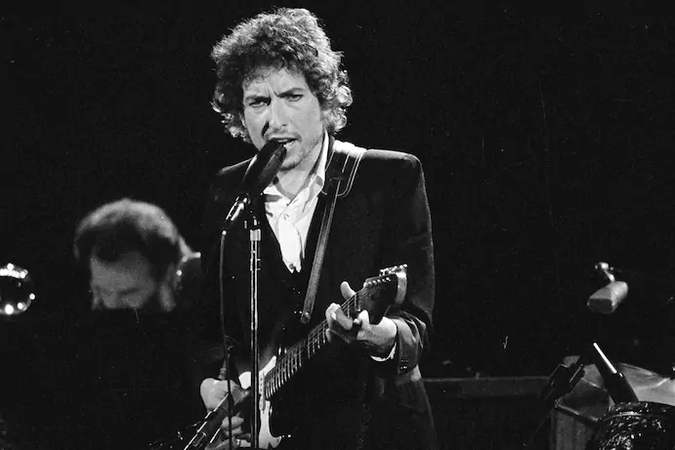
Universal Music Publishing Group has acquired Bob Dylan’s entire song catalogue, the company announced Monday, in a blockbuster deal that includes more than 600 songs spanning six decades.

Universal now owns the rights to Dylan’s 39 studio albums, from 1962′s self-titled debut to this year’s “Rough and Rowdy Ways.” Up until now, the rock icon and Nobel laureate had retained the rights to his own work. 

The terms of the deal were not made public, but Variety reported that it was worth “at least nine figures.”

“To represent the body of work of one of the greatest songwriters of all time – whose cultural importance can’t be overstated – is both a privilege and a responsibility,” UMPG’s chief executive Jody Gerson said in a news release Monday. “We look forward to working with Bob and the team in ensuring his artistry continues to reach and inspire generations of fans, recording artists and songwriters around the world.”

It’s been a devastating year for the music industry. Goldman Sachs predicted that global music business revenues would fall 25% this year and live music revenues would plunge 75 percent as the pandemic has silenced live music and taken touring off the table.

Copyrights have become big business, especially as streaming continues to dominate music and new platforms create licensing opportunities. Many musicians have taken to selling the rights to their work: Last month, DJ Calvin Harris and rock band the Killers struck deals with private equity firms for their catalogs. In recent months, TikTok signed licensing deals with the National Music Publishing Association and Sony Music to ensure popular music would still be allowed on its platform.

Universal, one of the biggest players in the global music industry, has weathered the storm well thanks to its streaming business. Despite the pandemic and second-quarter hit, Universal generated more than $1 billion in streaming revenues in the first nine months of 2020, Vivendi, its French parent company, announced in its third-quarter earnings report. After Chinese conglomerate Tencent took a 10% stake in Universal last year, the company’s value grew to more than $35 billion. Vivendi is planning to take Universal public in 2022.

The son of a Minnesota appliance-store owner, Dylan got his start as a folk singer and soon became one of the voices of political protest and cultural reshaping in the 1960s. His songs – driven by his distinctive nasal-twang vocals – are often seen as dense prose poems packed with flamboyant, surreal images. His oeuvre earned him the Nobel Prize for Literature in 2016, making him the only songwriter to ever win the award.

“It’s no secret that the art of songwriting is the fundamental key to all great music, nor is it a secret that Bob is one of the very greatest practitioners of that art,” Sir Lucian Grainge, chairman and chief executive of Universal Music Group, said in a news release. “Brilliant and moving, inspiring and beautiful, insightful and provocative, [Dylan’s] songs are timeless – whether they were written more than half a century ago or yesterday.”

Rolling Stone magazine once called Dylan “the most influential American musician rock-and-roll has ever produced.” His songs have been recorded more than 6,000 times by artists spanning many continents and genres. He has sold more than 125 million records throughout his career, according to a news release – not that money has ever been Dylan’s metric for success.

“What’s money?” Dylan famously said. “A man is a success if he gets up in the morning and gets to bed at night and in between does what he wants to do.”

BLACKPINK to hold first livestream concert this month #SootinClaimon.Com

#SootinClaimon.Com : ขอบคุณแหล่งข้อมูล : หนังสือพิมพ์ The Nation.

BLACKPINK to hold first livestream concert this month (nationthailand.com)

BLACKPINK to hold first livestream concert this month

EntertainmentDec 06. 2020Photo credit: BLACKPINKPhoto credit: BLACKPINK 

By Korea Herald

​​​​​​​K-pop group BLACKPINK is set to hold its first-ever online concert in collaboration with YouTube Music later this month, its management agency said Thursday.

K-pop girl group BLACKPINK (YG Entertainment)

K-pop girl group BLACKPINK (YG Entertainment)

The concert, titled “YG Palm Stage – 2020 BLACKPINK: The Show,” will take place at 2 p.m. on Dec. 27, according to YG Entertainment.

It will be the four-piece band’s first time performing in a concert in roughly 17 months since it wrapped up a successful global tour in 23 countries in four continents.

YG Entertainment said BLACKPINK will be holding a live YouTube session Friday where it will share the details on the upcoming gig.

BLACKPINK is one of the world’s most popular pop groups on YouTube, with 53.9 million people subscribing to its YouTube channel. It has 3 billion-view music videos, with view counts for the 2018 hit “Ddu-du Ddu-du” reaching 1.4 billion. (Yonhap)

Malaysian star Yeo Yann Yann wins Best Actress at Asian Academy Creative Awards #SootinClaimon.Com

#SootinClaimon.Com : ขอบคุณแหล่งข้อมูล : หนังสือพิมพ์ The Nation.

Malaysian star Yeo Yann Yann wins Best Actress at Asian Academy Creative Awards (nationthailand.com)

Malaysian star Yeo Yann Yann wins Best Actress at Asian Academy Creative Awards

EntertainmentDec 06. 2020Yeo Yann Yann won the award for her role as a single mother struggling to cope financially and mentally while taking care of her 19-year-old autistic son in 'Invisible Stories'. Photo: Yeo Yann Yann/InstagramYeo Yann Yann won the award for her role as a single mother struggling to cope financially and mentally while taking care of her 19-year-old autistic son in ‘Invisible Stories’. Photo: Yeo Yann Yann/Instagram 

By The Star

Malaysian actress Yeo Yann Yann has added another award to her long list of accolades. This time, the 43-year-old won the Best Actress In A Leading Role at the Asian Academy Creative Awards for her role in the HBO Asia series, Invisible Stories.

In the six-episode anthology, Yeo plays a single mother struggling to cope financially and mentally while taking care of her 19-year-old autistic son.

In an interview with The Star earlier this year, Yeo said she spent time with families with grown-up children with autism to understand what it is like to raise an autistic child.

“I actually knew very little about that sort of situation. But after visiting these families and doing all the research, I understand more, and and hope that this show will help more people to understand and have more compassion towards families who have autistic kids, ” Yeo said.

She also mentioned that the hardest part about filming Invisible Stories were the physical scenes.

“We actually spent a lot of time rehearsing scenes where the boy had meltdowns. I had to be very alert and be well prepared, because (these scenes have) a lot of struggling, and a lot of fighting and pushing,” the actress said, adding that she got some bruises shooting those scenes.

This role has also bagged her a nomination for Best Performance by an Actress nomination at the 2020 International Emmy Awards in September. The award was won by 84-year-old Glenda Jackson from Britain eventually.

In September, Yeo was also nominated for Best Actress at the Asian Film Awards for her role in the Singaporean film, Wet Season. China actress Zhou Dongyu was named the winner in this category.

The Asian Academy Creative Awards, part of the Singapore Media Festival, celebrates the region’s best content and creatives. This year’s ceremony was staged virtually on Dec 3 and 4.

Another winner from Malaysia is The Garden Of Evening Mists which took home the Best Feature Film. The movie is based on Malaysian author Tan Twan Eng’s novel of the same name.

Who actually wrote ‘Citizen Kane’? David Fincher’s ‘Mank’ revives the debate. #SootinClaimon.Com

#SootinClaimon.Com : ขอบคุณแหล่งข้อมูล : หนังสือพิมพ์ The Nation.

Who actually wrote ‘Citizen Kane’? David Fincher’s ‘Mank’ revives the debate. (nationthailand.com)

Who actually wrote ‘Citizen Kane’? David Fincher’s ‘Mank’ revives the debate.

EntertainmentDec 05. 2020Gary Oldman stars as the screenwriter Herman Mankiewicz in Gary Oldman stars as the screenwriter Herman Mankiewicz in “Mank.” MUST CREDIT: Netflix. Photo by: Netflix — Handout 

By The Washington Post · Sonia Rao 

One of the greatest films ever made also generated a great controversy. In 1971, the film critic Pauline Kael wrote a 50,000-word essay revisiting the debate over who wrote 1941′s “Citizen Kane,” officially credited to screenwriter Herman Mankiewicz and the film’s director, Orson Welles. The bold essay was published in back-to-back issues of the New Yorker.

Chief among Kael’s claims was that Mankiewicz was the principal author of “Citizen Kane,” an argument countering the auteurist stance that Welles – also the director, producer and star – was responsible for most of the work. Mankiewicz would have agreed with Kael. Though neither he nor Welles attended the Academy Awards, where the film won best screenplay, he said his acceptance speech would have been, “I am very happy to accept this award in Mr. Welles’s absence because the script was written in Mr. Welles’s absence.”

“Mank,” the new Netflix film directed by David Fincher, revives this age-old debate. The screenplay is credited to Fincher’s father, Jack, and favors Kael’s telling of events. Anchoring the flashback-filled story are the months Mankiewicz (Gary Oldman) spends on a ranch in Victorville, Calif., where he works on a draft while recovering from a car crash. Welles (Tom Burke) appears in the film, but it’s mostly about Mank.

The basic details are uncontested: Mankiewicz suffered terrible injuries in a crash and, while healing, wrote for Welles’s Mercury Theatre radio show. The two men agreed to work on a project inspired by the newspaper giant William Randolph Hearst (Charles Dance in “Mank”), and the film picks up with Mankiewicz heading off to the ranch with Welles’s former collaborator John Houseman (Sam Troughton), secretary Rita Alexander (Lily Collins) and a German nurse (Monika Gossmann) hired to look after Mankiewicz’s health.

“Mank” also includes his decision to sign a contract giving up any writing credit on the “Citizen Kane” script, an agreement he later went back on by filing a complaint with the Screen Actors Guild.

Kael interviewed both Houseman and Alexander, who took dictation from Mankiewicz and told the critic “that Welles didn’t write (or dictate) one line of the shooting script of ‘Citizen Kane.’ ” Welles might have made suggestions early on and pointed out potential cuts, Kael stated, but Alexander held that she never even met him until after Mankiewicz had finished his first draft. Much of Kael’s essay reads as a defense of screenwriters in the studio system, particularly a portion in which she remarked that “in that period, it was well known that if a producer of a film wanted a screenplay credit, it was almost impossible to prevent him from getting it.”

Kael, highly regarded as a critic, received praise from many peers. In the New York Times review of a 1971 book that contained both “Raising Kane” and the actual film script, Mordecai Richler praised Kael’s essay as a “highly intelligent and entertaining study of a bona-fide film classic.” He also argued that her “excellent case for Mank is in the end more than somewhat vitiated by the publication of the script itself,” describing it as smart but superficial. Welles’s direction therefore deserved all the credit for “Citizen Kane” being a “miracle,” Richler wrote, something he said “Miss Kael would be the last to deny him.”

But the authorship claims, which director Peter Bogdanovich disputed in a 1972 Esquire article, remained. He spoke to Welles, his friend, who many suspected had contributed more than just an interview to the piece. Regardless, Welles claimed he penned his own draft of the script while Mankiewicz was in Victorville: “At the end, naturally, I was the one who was making the picture, after all – who made the decisions,” he said. “I used what I wanted of Mank’s and, rightly or wrongly, kept what I liked of my own.”

Aspects of “Raising Kane” continued to be discredited in the years after it was published, in part by the claim that Kael stole some of the research from an academic, Howard Suber, as well as by the notion that “her piece contained many factual errors of her own, all undetected by New Yorker fact-checkers and all contrived to reinforce her anti-auteurist argument,” as Frank Rich wrote in a 2011 article for the Times.

Film scholar Robert Carringer aimed to settle the matter in his 1985 book “The Making of Citizen Kane” and the preceding 1978 essay “The Scripts of ‘Citizen Kane,’ ” which presented a version of events widely accepted today. After evaluating a “virtually complete” set of script records at the RKO archives, he determined that “the full evidence reveals that Welles’s contribution to the ‘Citizen Kane’ script was not only substantial but definitive.” Kael seemed to base most of the “Raising Kane” argument off an early draft, he stated.

In an interview with Vulture, even Fincher offered a gentle critique of Kael. In response to a question asking him about his response to a line from “Raising Kane” – specifically that “the director should be in control, not because he’s the sole creative intelligence, but because only if he is in control can he liberate and utilize the talents of his coworkers” – he said Kael knew loads more about watching movies than making them. Tons of work goes into the planning, he argued, but much of a film’s vision comes down to the on-set execution.

“The movie business is an incredibly couture boutique storytelling venture,” Fincher said, “and every single designer at the head of his house works in a different way. You are stitching those garments onto bodies up to the last 45 seconds before that person walks that runway.”

Andrew Lloyd Webber believes in the imminent return of Broadway and the West End #SootinClaimon.Com

#SootinClaimon.Com : ขอบคุณแหล่งข้อมูล : หนังสือพิมพ์ The Nation.

Andrew Lloyd Webber believes in the imminent return of Broadway and the West End (nationthailand.com)

Andrew Lloyd Webber believes in the imminent return of Broadway and the West End

EntertainmentDec 05. 2020British composer Andrew Lloyd Webber, at the Gillian Lynne Theatre in London on Nov. 19, is ready for a post-pandemic world. MUST CREDIT: Photo for The Washington Post by Tori Ferenc
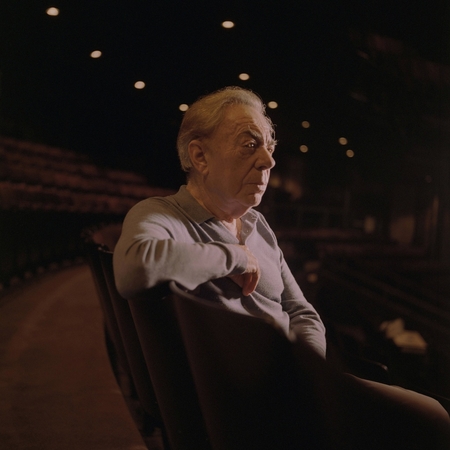
/Photo by: Tori Ferenc — For The Washington Post

British composer Andrew Lloyd Webber, at the Gillian Lynne Theatre in London on Nov. 19, is ready for a post-pandemic world. MUST CREDIT: Photo for The Washington Post by Tori Ferenc /Photo by: Tori Ferenc — For The Washington Post 

By The Washington Post · Peter Marks 

Andrew Lloyd Webber was not throwing away his shots. The first was administered in June, the follow-up in September. As a result, he is a billionaire Broadway songwriter and British lord with a new title to add: guinea pig in the University of Oxford coronavirus vaccine trials.

“I thought, if I’m going to try and start getting people into the theater again, I might as well have a go myself,” Lloyd Webber says by Zoom from one of the London theaters he owns, the Gillian Lynne, renamed for the late choreographer of his megahit “Cats.”

“They said, ‘Well, we really want old, dilapidated people like you for a trial with old, dilapidated people.’ So I got onto that one and the interesting thing in the Oxford vaccine results that were published: They find the vaccine is working better on older people. And I mean, I have had no bad response to it at all. None.”

Carrie Hope Fletcher, with Andrew Lloyd Webber, holds the titular role of Webber’s new version of “Cinderella.” MUST CREDIT: Really Useful Group

Photo by: Really Useful Group — Really Useful Group

At 72 years of age (that’s 14 in cat years), Lloyd Webber bears no signs of decrepitude. As the composer of 20 musicals – with a 21st, a new version of “Cinderella,” being prepped for the West End – and proprietor of six London theaters through his company, Really Useful Group, this lord is unique in the business. He’s an all-inclusive impresario, the one artist in musical theater who can dream up a show, write it, raise money for it, cast it, put it on one of his own stages and sell souvenir T-shirts to the clamoring crowds.

So maybe it makes sense that a creative force of this magnitude would be the antsiest theatermaker on either side of the Atlantic for a return to something like normality. On the topic of getting theaters reopened safely worldwide, Lloyd Webber is a Pied Piper, testifying at government hearings, pressing industry leaders, giving interviews – participating in vaccine trials.

He’s so invested in how to envelop theatergoers in a protective antiviral cocoon that he spent a fortune bringing to his 2,200-seat London Palladium devices from South Korea that emit antibacterial mist as ticket holders pass through them. He said he was about to install them – as they had been used for a Seoul production of “The Phantom of the Opera” – when authorities from Public Health England stopped him out of concern that the spray might damage contact lenses or cause skin rashes.

“So those machines are sitting around,” Lloyd Webber says. “I’m going to say they’re art installations.”

The composer describes such run-ins with British bureaucracy in the wearily incredulous tones of a person toggling between the worlds of fairy tale princesses and Kafka. He is, after all, trying to save theater.

“He’s a remarkable cheerleader,” says Charlotte St. Martin, president of the Broadway League, the trade organization for Broadway producers and theater owners. She has had a standing weekly call with Lloyd Webber and other Really Useful Group executives for seven months, and she notes that he has even kept her spirits up. While some have scoffed at Lloyd Webber’s optimism over reopening, St. Martin says, any naysaying “hasn’t slowed him down one bit.”

“You know, he volunteered for the vaccine,” she adds. “We were all trying to talk him out of it because he isn’t a spring chicken, But he was adamant. He wanted to prove people of a certain age could take it and be healthy.”
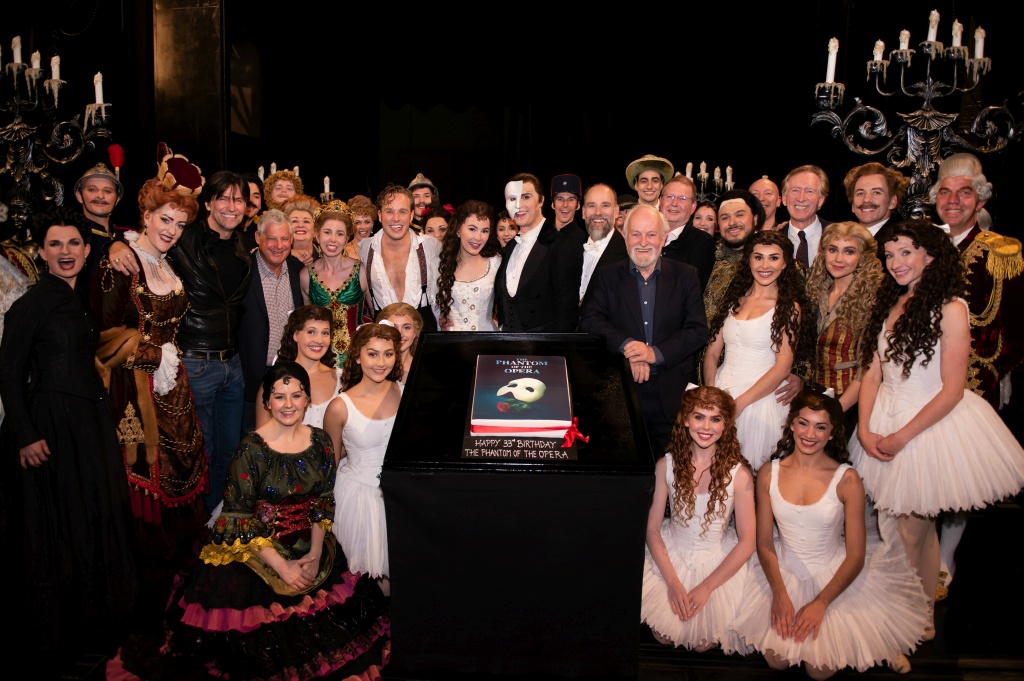
“The Phantom of the Opera” celebrated its 33rd birthday in London in 2019. MUST CREDIT: Tom Mraz/The Phantom of the Opera World Tour

Photo by: Tom Mraz — The Phantom of the Opera World Tour

Theater in Britain, as in the United States, has been on hold since early this year, although for a spell this fall, authorities allowed the Palladium to open again at 50 percent capacity. Van Morrison performed there in late September, and a concert of American composer Jason Robert Brown’s “Songs for a New World” was staged in October, before the lockdown was reimposed in London and other parts of Europe later that month.

On the recent morning we spoke, members of Lloyd Webber’s team met with government officials – “Hopefully, he’ll have fresh dish from No. 10!” his New York publicist emailed – for an update on the shutdown, as the novel coronavirus numbers rose. (Reality check, here: Can we Yanks possibly wrap our heads around the idea of an urgent White House confab with theater executives?)

“From what I’m hearing, it’s the usual three steps forward, two steps backwards,” Lloyd Webber avers. “It was another government committee today, one wanting to report back to the prime minister about where various businesses are.

“Of course, you keep having to educate them all the time about theater. I mean, the one question I had as I was getting debriefed was, ‘Do they realize that theater isn’t like a football match?’ That … even if it’s an old production, you’re going to have to take several weeks to rehearse and get it back up again?”

Lloyd Webber says his company, with its worldwide reach – his “Phantom,” produced with Cameron Mackintosh, is the longest-running show in Broadway history – has become a “little bit of a clearinghouse” for information on restarting. “Every other day, I get a call from producers in America and producers around the world,” he says, adding: “It’s what I love, theater is what I love! We’ve got to do this!”

That assertion goes unquestioned by his peers and by his Peers. As Mackintosh pointed out in an opinion piece in July for London’s Evening Standard that took health officialdom to task for overzealousness, Lloyd Webber’s exertions come from a place of passion. “Even the expensively imported Korean hygienic fog machine got condemned as unsafe by PHE – the Marx Brothers would have difficulty topping that,” he wrote. “Andrew is trying his best for the profession he loves, for goodness’ sake.”

A “Phantom” leaflet from May 1986 announcing the opening of show. MUST CREDIT: Tom Mraz/The Phantom of the Opera World Tour

Photo by: Tom Mraz — The Phantom of the Opera World Tour

The pandemic life of a particularly prolific composer does not, it turns out, offer all that much in the way of downtime. Lloyd Webber has turned the music room in his country house into a studio of sorts to produce the album for “Cinderella,” with music by him, lyrics by his “The Woman in White” collaborator David Zippel, and the title role performed by London-born actress Carrie Hope Fletcher. His name and work surfaces regularly in popular culture: An episode of Netflix’s recently released fourth season of “The Crown” features Emma Corrin’s Diana surprising Josh O’Connor’s Prince Charles with an onstage rendition of “Phantom’s” “All I Ask of You.” Lloyd Webber says it is possible that it really happened, but he cannot be sure: “Gillie (Lynne) may very well have directed her doing that. I can’t say 101 percent that I know it’s true.”

And only reluctantly does he get drawn into a regurgitation of how he stomached the film version last year of “Cats,” so widely reviled that some people were reported only to be able to watch it in an altered state. “I’ll be diplomatic,” he says, and then, entertainingly, he isn’t. “I just think it was an extraordinary, possibly, kind of one of the most unpleasant experiences that I’ve had, being in any way involved in it. But you know, what can you do?” Wistfully, he adds that years ago, Steven Spielberg had expressed a desire to make an animated version. “Anyway,” he declares, “it has come and gone.”

Right now, though, his focus is on lobbying officials and coaxing back audiences with a full palette of precautions and procedures. In contrast to generally more reticent American producers, who rarely go on the record on this subject, Lloyd Webber seems willing to talk about his efforts for as long as there is battery life in a recording device.

“If you went into the auditorium of, say, the Palladium, the first thing that would happen to you is your temperature is taken,” he begins. “They would do that very very quickly. … The second thing is everything to do with the ticketing … is contactless. There is no need for any kind of paper.”

He goes on to explain the ins and outs of contact tracing through ticket purchasers, the “fogging” of the auditorium with a disinfectant that “stays around for, oh, can be a month but in fact we do it every week.” Also, air circulation has been upgraded: “I’ve spent a lot of money on that,” he says. “The theater I’m in at the moment, the air is purer in here than it is outside.

“You would then obviously be asked to wear a mask,” he continues. “There would be other factors … door handles, and anything you touch on the doors are sanitized automatically.”

72-year-old Andrew Lloyd Webber has composed of 20 musicals, showing no signs of slowing down. A 21st, a new version of “Cinderella,” is being prepped for the West End. MUST CREDIT: Photo for The Washington Post by Tori Ferenc

Photo by: Tori Ferenc — For The Washington Post

The advances on the vaccine front further fuel Lloyd Webber’s optimism, a fervor you might describe as evan-Jellicle.

“I prefer not to wring my hands and moan,” he says. “I think it’s much, much better to try and find solutions, and I think we’re likely to see things get much better come about April. I’m reckoning for getting into rehearsal with ‘Cinderella’ in March and opening in May. And I want ‘Phantom of the Opera’ to open in June here. It would be good to think it could open on Broadway again – and we could get Broadway up earlier than people are saying. There’s talk of September, but maybe it can be earlier now that the vaccine exists.”

A vaccine, or at least one of them, that the lord of the theater has taken himself. Now, if only they’d let him turn on those South Korean anti-bacterial machines …