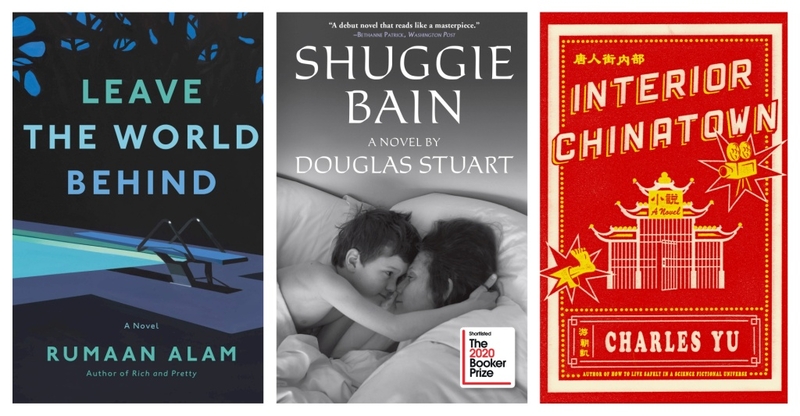
Books about race and the struggle for equality feature prominently among the finalists for the National Book Awards announced Tuesday. The 25 honored titles include a satire of Hollywood’s Asian American stereotypes, a history of the forced relocation of Native Americans, a biography of Malcolm X and a YA novel about the internment of Japanese Americans during World War II.
Selected from almost 1,700 submissions in five categories – fiction, nonfiction, poetry, young people’s literature and translated literature – the finalists are a strikingly fresh group: None of the authors has been a finalist for a National Book Award before, and almost a third are debuts. One of those debut authors, Scottish American writer Douglas Stuart, has impressed judges on both sides of the Atlantic. Stuart’s novel, “Shuggie Bain,” about a family in Glasgow, is now a finalist for a National Book Award, a Kirkus Prize and the Booker Prize.
Due to the pandemic, the National Book Awards ceremony, usually the country’s glitziest literary event, will be conducted entirely online on Nov. 18. The winners will receive $10,000 each (for the Translated Literature prize, the money is split with the translator); the finalists will receive $1,000 a piece. During the ceremony, novelist Walter Mosley will formally receive the Medal for Distinguished Contribution to American Letters, and the late Simon & Schuster CEO Carolyn Reidy will be honored with the Literarian Award for Outstanding Service to the American Literary Community.
Here is the complete list of finalists:
Fiction
– “Leave the World Behind,” Rumaan Alam (Ecco) (review)
– “A Children’s Bible,” by Lydia Millet (W.W. Norton) (review)
– “The Secret Lives of Church Ladies,” by Deesha Philyaw (West Virginia Univ. Press )
– “Shuggie Bain,” by Douglas Stuart (Grove) (review)
– “Interior Chinatown,” by Charles Yu (Pantheon) (review)
Nonfiction
– “The Undocumented Americans,” by Karla Cornejo Villavicencio (One World)
– “The Dead Are Arising: The Life of Malcolm X,” by Les Payne and Tamara Payne (Liveright)
– “Unworthy Republic: The Dispossession of Native Americans and the Road to Indian Territory,” by Claudio Saunt (W.W. Norton) (review)
– “My Autobiography of Carson McCullers,” by Jenn Shapland (Tin House)
– “How to Make a Slave and Other Essays,” by Jerald Walker (Mad Creek)
Young People’s Literature
– “King and the Dragonflies,” by Kacen Callender (Scholastic)
– “We Are Not Free,” by Traci Chee (HMH)
– “Every Body Looking,” by Candice Iloh (Dutton Books for Young Readers)
– “When Stars Are Scattered,” by Victoria Jamieson and Omar Mohamed (Dial Books for Young Readers)
– “The Way Back,” by Gavriel Savit (Knopf Books for Young Readers)
Poetry
– “A Treatise on Stars,” by Mei-mei Berssenbrugge (New Directions)
– “Fantasia for the Man in Blue,” by Tommye Blount (Four Way)
– “DMZ Colony,” by Don Mee Choi (Wave)
– “Borderland Apocrypha,” by Anthony Cody (Omnidawn)
– “Postcolonial Love Poem,” by Natalie Diaz (Graywolf)
Translated Literature
– “High as the Waters Rise,” by Anja Kampmann, translated from the German by Anne Posten (Catapult)
– “The Family Clause,” by Jonas Hassen Khemiri, translated from the Swedish by Alice Menzies (FSG)
– “Tokyo Ueno Station,” by Yu Miri, translated from the Japanese by Morgan Giles (Riverhead) (review)
– “The Bitch,” by Pilar Quintana, translated from the Spanish by Lisa Dillman (World Editions)
– “Minor Detail,” by Adania Shibli, translated from the Arabic by Elisabeth Jaquette (New Directions)
Book World: May meets September; love lives in the moment
EntertainmentOct 10. 2020Just Like You Photo by: Riverhead Books — Handout
By Special To The Washington Post · Lisa Zeidner
Just Like You
By Nick Hornby
Riverhead Books. 355 pp. $27.00
– – –
An ongoing critical debate is whether fiction featuring sympathetic characters can still qualify as “literary.” Serious writers tend to gravitate toward the distasteful and dastardly; Jennifer Weiner has complained that female novelists with likable heroines have been unfairly dismissed as “chick lit.” As the first to have his fiction dubbed “lad lit,” British novelist Nick Hornby knows this critical syndrome well. Hornby’s young male heroes might be a tad hapless – “High Fidelity” (and its movie iteration) preceded many of the failure-to-launch rom-coms that followed – but they have good hearts, and the love of a good woman goads them to mature.
Hornby himself has matured over his writing career, with his male and female protagonists getting older, getting married, having children, getting divorced, looking for love all over again. His ninth novel, “Just Like You,” continues this trajectory. He writes insightfully about the daily disappointments, both professional and personal, that haunt ordinary lives.
Lucy is a separated school administrator and mother of two young boys in her early 40s. She’s affable about her unreasonable expectations as she embarks on yet another blind date. “Imagine that this unlikely man loved fresh flowers and the films of Asghar Farhadi, that he preferred cities to the countryside, that he read fiction – proper fiction, not novels about terrorists and submarines – that, yes, he enjoyed both giving and receiving oral sex, that he was kind to her sons, that he was tall, dark, handsome, solvent, funny, clever, liberal, stimulating.” Matchmaking friends introduce her to a famous novelist who checks at least some of these boxes. However, improbably and inconveniently, she finds herself drawn to Joseph, a 22-year-old who works the counter at the local butcher shop.
This is not our first fictional May-September romance, and we know the odds are against it succeeding, especially when it’s the older woman being drawn to the young man she hires to babysit. In addition to the age difference, Joseph (don’t call him Joe!) is Black, working class and lives with his mother. He has never read Shakespeare, whereas Lucy is clueless about the kind of club music that Joseph aspires to compose. As far back as “High Fidelity,” published in 1995, an enduring theme of Hornby’s work has been how essential shared aesthetic tastes should be in a relationship. Joseph proves to be a fast learner. Lucy realizes that “she thought she could get away with not being her quickest self, because she was older than him, but she couldn’t. She could probably beat him in a quiz about Jane Austen, but that was about it.”
Not every novelist excels at writing screenplays. The key to Hornby’s success in both genres is his sharp dialogue, which manages to define character and introduce complicated questions while being breezy and congenial. It’s not easy to portray an uneducated character without seeming patronizing, but Joseph’s intelligence shines. This is no beer-guzzling bro: Despite his skill at video games that impresses Lucy’s boys, Joseph is thoughtful, kind, hard-working, reliable, self-aware. Although he’s more virile than Lucy’s middle-aged suitor, it isn’t the sex that wins her over. Indeed, their bond is more emotional, as Hornby shows through their companionable repartee. When Lucy bemoans the fact that “when you’re fifty, I’ll be seventy,” Joe deadpans, “Yep. Whether we’re together or not.”
The romance in “Just Like You” is set during the lead-up to the Brexit vote and its immediate aftermath. Hornby parses out how the vote split along socioeconomic lines, with the referendum “giving groups of people who didn’t like each other, or at least failed to comprehend each other, an opportunity to fight.” He identifies many of the semaphores of British class that factored in that debate, which are, after all, squarely in his wheelhouse: not just political leanings but taste in sports, clothes, music and books.
Some of the Brexit references will translate better than others – and be more compelling – to an American audience, which may be puzzled by details like “looted stores in Wood Green.” But Hornby’s readers across the Atlantic will certainly get that he’s using the referendum as a metaphor. Lucy “was uneasy about the future direction of the country, and she was also uneasy about the future of her relationship with Joseph.” As they discuss her possibilities with the far more appropriate novelist, Joseph wryly reminds her: “It’s not a choice between me and him. It’s a choice between me, him, and every other single man in Britain. Or Europe, really. If you factor in like Skype and cheap flights.”
Despite Joseph’s vacillation on Brexit (one of the novel’s running gags), the vote could go only one of two ways: in or out. About Lucy and Joseph’s relationship, perhaps there’s more wiggle room. Readers may think they know how the plot will resolve, but one of the pleasures of “Just Like You” is how skillfully Hornby takes his unlikely lovers, and the novel, to a conclusion that’s both convincing and surprising.
– – –
Zeidner is the author of “Love Bomb” and other novels. Her book of criticism, “Who Says?: Mastering Point of View in Fiction,” is forthcoming.
By Special To The Washington Post · Barbara J. King · ENTERTAINMENT, BOOKWORLD Tales from the Ant World By Edward O. Wilson Liveright. 227 pp. $26.95 – – –
When biologist Edward O. Wilson heads into a forest to study ants, he sometimes carries a portable cafeteria. The plaster-of-Paris device features two rooms, one that lets in more light than the other. Wilson places ants inside, then into the brighter room adds soil, leaf litter and wood scooped up from near the insects’ colony. The ants gravitate toward the buffet of mites, spiders, earthworms and beetles hidden in the soil, make their cafeteria selections, and carry them next door to the darker chamber that they prefer.
This kind of experiment has kept Wilson fascinated with ants for eight decades. In “Tales From the Ant World,” the latest of his more than 30 books, Wilson writes, “I have not until this book told the amazing stories of myrmecology as a physical and intellectual adventure – if you will, an adventure story.” With its modest and sometimes amusing tone, the book is a delight – and may coax readers to take up ant-watching themselves.
“The love of Nature is a form of religion,” Wilson observes, “and naturalists serve as its clergy.” If that’s so, Wilson got religion early. A child whose parents divorced when he was 8, Wilson was indifferent to his schoolwork, a situation exacerbated by his attending 16 schools in 16 cities through 11 grades. He reserved his enthusiasm for exploring the natural environment in places like Alabama and Rock Creek Park in Washington.
In 1942, at age 13, Wilson created what is now called the All Taxa Biodiversity Inventory (ATBI), a widely used census of all species of a chosen group of organisms in a single place. For teenage Wilson, it was ants in a vacant lot in Mobile, Ala. He found a variety of species familiar to him, then one nest teeming with ants strange and unexpected. “It turned out to be the imported fire ant Solenopsis invicta, the first record in the northern hemisphere,” which he calls “the find of a lifetime.” These South American ants – a mid-century example of an invasive species – had hitched a ride in cargo bound for Mobile from Argentina and Uruguay.
Young Wilson felt an overwhelming drive “to become an expert in some aspect of natural history, and to learn the science supporting it.” To note that he achieved his goal makes for vast understatement. He went on to a decorated academic career at Harvard University and to fame as an author, igniting furious scientific controversy with his 1975 book, “Sociobiology: The New Synthesis,” which attempted to explain the biological basis of social behavior in animals, including humans. Wilson has twice won the Pulitzer Prize in nonfiction, in 1979 for “On Human Nature” and in 1991 for “The Ants,” co-authored with Bert Hölldobler. The popularizer of the biophilia concept (humans feel an urge to connect with other creatures) and the conservation project aiming to set aside half the Earth to protect biodiversity, Wilson is today considered the world’s top ant expert.
In “Tales From the Ant World,” his explanations of ant “gender” (most scientists would grant to insects only “sex”) and raiding behavior make for exciting reading. Because males live inside the nest except for the one-time act of mating, any ant we may notice is female, including the soldiers. Males – Wilson describes them as “pathetic creatures” and “flying sperm missiles” – contribute nothing except that single mating, and then they die. Females are tiny powerhouses that rule and defend the nest and, of course, ensure the future. The queen’s power is absolute: She makes a choice either to allow a single sperm through a tube inside her body, resulting in a female egg, or to close off the tube, resulting in a male egg.
In Mozambique, Wilson studied the Matabele ant, a species that favors termites as food. Watching these ants raid a termite nest, he declares, “is one of the most dramatic wildlife spectacles of Africa.” One ant heads off to scout a termite mound. If she discovers a way to get inside, she lays down a chemical trail on her way back home. This trail recruits a large group of female raiders that rush into the mound and may carry off up to 10 dead termites each in their mandibles. Despite this level of Matabele aggression, Wilson anoints a garden ant of the Amazonian rainforest, Camponotus femoratus, with the “most ferocious” status. Ant tales ensue from the Amazon, indeed from all corners of the world, including the Australian outback and Mount Washington in New Hampshire.
We humans may wish to see ourselves as the Earth’s dominant species, but this assumption overlooks the ecological facts. “On arrival in a new land,” Wilson writes, “ants penetrate every available nest site, take control of most available food sources, and in so doing create an arthropod hegemony that controls every level of the land from the highest canopy to the lowest root mass.” Ants sculpt our planet, a process that began more than 100 million years ago. Take that, human ego!
At any one time, some 10,000 trillion ants of 15,000 species roam the Earth. Wilson offers suggestions for how we can better appreciate the ones that dwell near us. Find ants in your kitchen? Remember that they carry no disease and are fun to observe: Feed them, don’t smush them. These ants are “especially fond of honey, sugar water, chopped nuts, and canned tuna.” For Wilson, these home visitors – like ants everywhere – are beautiful little animals to be cherished.
– – –
King is emerita professor at William & Mary. Her seventh book, “Animals’ Best Friends: Putting Compassion to Work for Animals in Captivity and the Wild,” will be published in March.
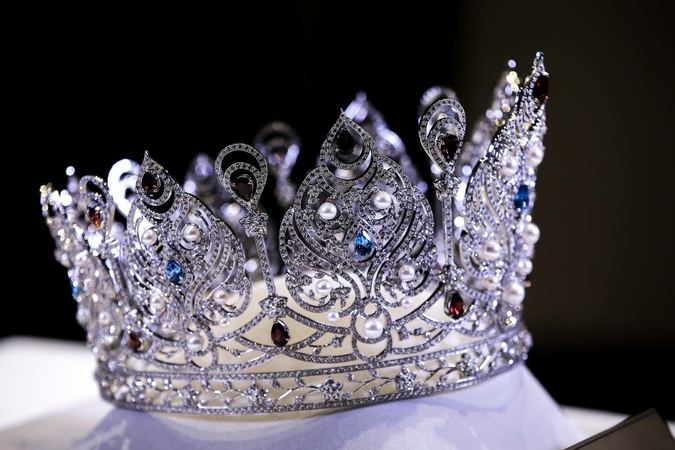
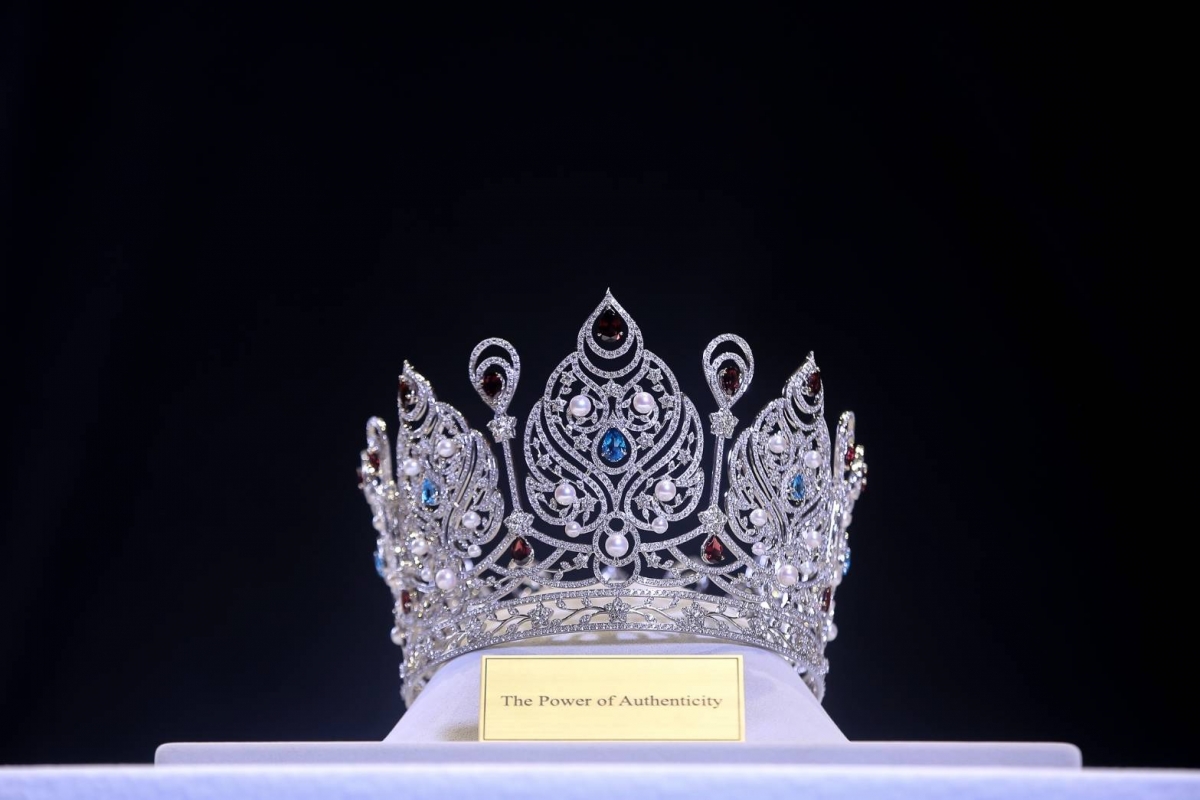
The bejewelled crown waiting to be worn by Miss Universe Thailand has arrived and is open to “private viewing” at Hyatt Regency Bangkok.
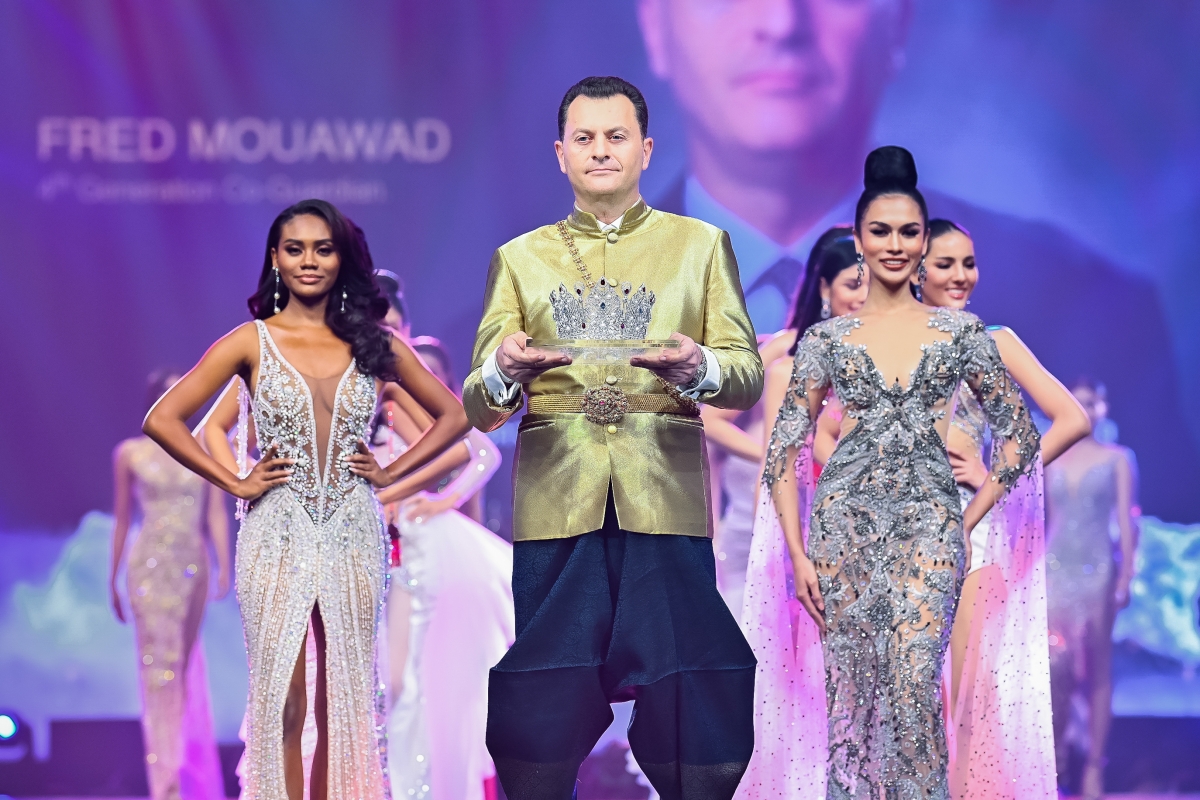
Last year, jewellery giant Mouawad entered into a partnership with the Miss Universe Organisation, and is providing a resplendent crown for Miss Universe Thailand this year worth Bt3.5 million.
The crown, designed to display the “power of authenticity”, recalls the motif of traditional headwear of Ayutthaya nobility and intricate patterns of Thai temples. It is decorated with red, white and blue gems to signify the Thai flag.
Mouawad has been a jeweller for royalty, high society and the uber rich for more than 120 years.
As Cineworld shutters, Japan’s movie king Toho nears new high
EntertainmentOct 08. 2020A Godzilla figurine sits on display at Toho Cinemas Hibiya in Tokyo on March 22, 2018. MUST CREDIT: Bloomberg photo by Noriko Hayashi. /Photo by: Noriko Hayashi — Bloomberg Location: TokyoJapan
By Syndication The Washington Post, Bloomberg · Gearoid Reidy, Shoko Oda While global cinemas are reeling from the coronavirus and delays to “Dune” and the latest James Bond release, shares of Japan’s biggest movie company are climbing back toward a record high as the world’s third-largest movie market slowly returns to normal.
Japan has weathered the pandemic better than most Western countries, with total infections at about 1% of the number of cases in the U.S. Gradual easing of social distancing measures have helped renew the upward trajectory for Toho Co., which operates movie theaters and produces film favorites including Godzilla.
Local audiences that once flocked to the likes of “Titanic” and Arnold Schwarzenegger hits started to favor domestic productions in the 2000s as quality and budgets rose. That’s helped isolate Japan’s movie market from the 2020 blockbuster drought that forced Cineworld Group Plc to suspend operations at American and British theaters.
Cineworld shares are down 87% this year while those of AMC Entertainment Holdings Inc. have dropped 44%. In contrast, Toho’s stock has recovered 45% from its March low, nearly erasing their 2020 loss and coming within 9% of their all-time record set last year.
Toho operates almost 20% of the nation’s movie screens and is also a major studio, thanks to Japan’s lack of an antitrust law like the one in the U.S. that has barred such arrangements. The company certainly hasn’t been immune to the pandemic, with its theaters shut for weeks at the height of the state of emergency earlier this year and forcing postponement of a Doraemon release. Attendance had been limited to 50% but now full shows are allowed, provided popcorns and drinks aren’t served.
A recent government campaign aimed at spurring entertainment and travel spending “gives people the impression that it’s safe to go see movies now, if theaters take precaution,” said Shoichi Arisawa, an analyst at Iwai Cosmo Securities Co.
While U.S. studios and cinemas play a chicken-and-egg game — with studios delaying releases because of low theater attendance, which is in turn due to a lack of hits — Toho has less to worry about. Domestic movies have made up more than half of the Japanese box office every year since 2008 and the country’s movie productions are back in business. Many of those movies are made by Toho itself, and are now facing even less competition with Hollywood hits.
Box office data for September will be announced in the coming days, a Toho spokesman said. Still, receipts in August were down 60% compared to a year earlier, which has some concerned.
“Looking at its longer term chart you wouldn’t know there is any crisis at all,” said Amir Anvarzadeh, a senior strategist at Asymmetric Advisors in Singapore. “It’s amazing to see how Toho has rallied since early August.” He recommends shorting the stock ahead of earnings, set to be reported on Oct. 13.
Hundreds of theaters are closing as the pandemic upends the film industry; here are the biggest releases you’ll have to keep waiting for
EntertainmentOct 08. 2020Timothée Chalamet, left, and Rebecca Ferguson appear in “Dune,” which has been delayed to October 2021. MUST CREDIT: Chiabella James/Warner Bros. Entertainment /Photo by: Chiabella James — Warner Bros. Entertainment
By The Washington Post · Sonia Rao
Regal Cinemas, the country’s second-largest movie theater chain after AMC Theatres, will be suspending operations at its 536 locations on Thursday – a bold move that its parent company, Cineworld, attributes to an “increasingly challenging theatrical landscape.” The decision affects approximately 40,000 jobs and was primarily driven by delayed release dates and continued closures in major markets like New York.
It seems America didn’t pass the “Tenet” test, as the highly anticipated Christopher Nolan release, which has amassed more than $300 million globally, fizzled out in theaters stateside. The likely reasoning is that people were nervous (or unable) to linger in enclosed spaces amid a surging pandemic, and who can blame them? Theater employees feel the same way. The lackluster response to the Hollywood tentpole seemed to set off another series of delays, including that of the new James Bond film, previously slated for Thanksgiving, and star-studded Warner Bros. projects like “Dune” and “The Batman.”
Cineworld announced the suspensions in the wake of Universal and MGM pushing Bond’s “No Time to Die” (again) to April 2021, a full year after its original release date. The film was among the first to be affected by the coronavirus outbreak, back when thousands of Chinese theaters remained closed. Nearly seven months later, the Chinese box office is reportedly hitting pre-coronavirus heights again. America is still scrambling.
Studios continue to shuffle titles as the theatrical landscape evolves, and it can be hard to keep track. Here’s a breakdown of where major studios stand, and which films to expect (for now) in late 2020 and beyond. (We have omitted far-off projects such as James Cameron’s four “Avatar” sequels, now slated to hit theaters between 2022 and 2028, and the “Star Wars” films set for 2023 onward.)
– Universal Pictures
“No Time to Die,” Daniel Craig’s final outing as James Bond, is now due for an April 2021 release. The star told Jimmy Fallon on “The Tonight Show” that this November, already a rescheduled date, “just isn’t the right time.”
“Candyman” was supposed to hit theaters in mid-October but will now premiere sometime in 2021. Director Nia DaCosta’s “spiritual sequel” to the 1992 film stars recent Emmy winner Yahya Abdul-Mateen II.
“F9,” the “Fast and Furious” installment originally scheduled for this past May, was pushed to April 2021 in the first couple weeks of the pandemic – a move that seemed drastic then, but seems quite prescient now. Universal has since delayed the movie again, this time just to May 2021.
“Minions: The Rise of Gru” and its bright yellow creatures will wreak havoc on young households in July 2021, a full year after the original date. Brace yourself, as the poster itself recommends.
– Warner Bros.
“The Batman” was directly hit by the pandemic when its lead, Robert Pattinson, reportedly tested positive for the coronavirus during production. Filming has since resumed, and the Matt Reeves-directed movie, as of Monday evening, is now on track to reach audiences in March 2022 (five months later than the previous date).
“Dune” was initially intended to close out the year for Warner Bros., a hopeful box-office hit starring A-listers like Timothée Chalamet, Zendaya, Oscar Isaac, Jason Momoa and Josh Brolin as Frank Herbert’s sci-fi novel characters. But on Monday afternoon, the December release date was pushed to October 2021.
“Godzilla vs. Kong,” planned as a second major faceoff for Americans to witness this November, will instead hit the big screen in May 2021. The film stars Alexander Skarsgard and Millie Bobby Brown, among others.
“In the Heights,” the movie version of Lin-Manuel Miranda’s Broadway musical, made the jump early on in the pandemic from summer 2020 to next June. It stars Anthony Ramos of “Hamilton” fame.
“The Matrix 4” was actually moved up from April 2022 to December 2021, a new date announced alongside the “Batman” delay. But in case that still isn’t soon enough, you can turn to HBO Max for more Keanu Reeves.
“Wonder Woman 1984” is the 2020 holdout. Originally intended as a June release, the superhero sequel starring Gal Gadot and Chris Pine was pushed to August, then October and, finally, to Christmas.
– Walt Disney Studios
Numerous titles fall under the Disney umbrella, given that the studio dominates the entertainment industry – reportedly accounting for around 33 percent of last year’s box office. The classic Disney label, as well as Marvel and former Fox studios, all belong to the House of Mouse, so we’ve divided up the movies accordingly.
Walt Disney Studios hasn’t moved “Soul,” an existential Pixar cartoon about a junior high band teacher, from its November release date, but Variety reported last month that it might head straight to Disney Plus (as the live-action “Mulan” did). “Raya and the Last Dragon,” featuring Kelly Marie Tran and Awkwafina as the lead voice actors, will hit theaters in March 2021, while the live-action “Cruella,” starring Emma Stone as the villain from “One Hundred and One Dalmatians,” will be released that May. “Jungle Cruise,” in which Dwayne Johnson and Emily Blunt play a riverboat captain and scientist, respectively, will come out in July.
Most of the Marvel Cinematic Universe’s Phase 4 films have been affected by the pandemic. The long-awaited “Black Widow” film, starring Scarlett Johansson as the titular Avenger, was delayed twice; originally scheduled for May 2020, it will now come out a year later. “Shang-Chi and the Legend of the Ten Rings” was shifted a few months to July 2021 in light of the “Black Widow” delay, while Benedict Cumberbatch’s “Doctor Strange in the Multiverse of Madness” was pushed from November 2021 to March of the next year. “The Eternals,” which features a star-studded cast as the immortal beings, took that November spot.
Disney acquired 21st Century Fox, meaning that films developed by Twentieth Century Fox – and adjacent studio Fox Searchlight Pictures – are also associated with the behemoth. (They have since dropped the “Fox” to become 20th Century Studios and Searchlight Pictures.) “Free Guy,” starring Ryan Reynolds as a video game character, was pushed from this past July to December. Steven Spielberg’s take on “West Side Story” leaped from its family- and Oscar-friendly Christmas release to an unspecified date next year. The Ben Affleck films “Deep Water,” co-starring real-life girlfriend Ana de Armas, and “The Last Duel,” co-starring real-life best friend Matt Damon, have each been bumped several months to August 2021 and October 2021, respectively. Both Searchlight’s “Antlers,” a horror film starring Keri Russell and Jesse Plemons, and 20th Century’s “The King’s Man,” the third film in the “Kingsman” series, are slated for February 2021.
– Paramount Pictures
“Mission: Impossible 7” is currently underway, with longtime star Tom Cruise taking on more death-defying stunts as secret agent Ethan Hunt. Production hit pause for a bit due to the pandemic, but the Christopher McQuarrie film is on track for a November 2021 release (with the eighth installment set for a year later).
“A Quiet Place Part II” joined “No Time to Die” in being one of the early films to have its release delayed. The sequel, again directed by John Krasinski, was postponed (for a second time) to April 2021.
“Top Gun: Maverick” will bring us even more Tom Cruise next year when it premieres in July 2021, roughly a year after the initial release date and a whopping 35 years after the original film.
– Sony Pictures
“Ghostbusters: Afterlife” stars Paul Rudd, Carrie Coon and Finn Wolfhard, who are joined by “Ghostbusters” actors Bill Murray, Dan Aykroyd, Ernie Hudson, Sigourney Weaver and Annie Potts. The film, directed by Jason Reitman, was another summer 2020 release booted to next year (March, specifically).
“Morbius” stars Jared Leto as a scientist who becomes a vampire after attempting to cure his rare blood disease. (Oops!) It also comes out in March and takes place in the same universe as “Venom.”
“Venom: Let There Be Carnage” – speak of the devil! – was delayed from this year’s spooky season to June 2021. Tom Hardy reprises the title role in this Andy Serkis-directed film, playing opposite Woody Harrelson’s Carnage, a serial killer who also hosts an alien symbiote. It should be a hoot.
By Special To The Washington Post · Chandra Manning
The Saddest Words: William Faulkner’s Civil War
By Michael Gorra
Liveright. 433 pp. $29.95
– – –
In one characteristically lyrical passage of “The Saddest Words: William Faulkner’s Civil War,” Michael Gorra describes a scene from Faulkner’s novel “The Unvanquished,” in which “time hangs suspended, and yet so does a sense of enduring crisis,” followed by “ever-faster change, faster fall.” When I first opened the book, we were all in quarantine, and nothing seemed to change except the rising covid-19 death toll. By Chapter 2, we had hurtled into protests, tear gas and statue removals, with the looming prospect of a tumultuous election hanging over everything. Gorra could not have foreseen our current moment when he began this work of biography, history and literary criticism. Yet his extended meditation on whether and why we should continue to read the work of a privileged White novelist from Jim Crow Mississippi often seems to describe exactly where we are.
The saddest words – “was” and “again” – come from Faulkner’s novel “The Sound and the Fury” (1929). Jason Compson, a lawyer corroded by drink and disappointment, tells his son, Quentin, that “was is the saddest word of all” because something that “was is fixed and unchangeable, forever in the past, an event – a mistake – that can be neither altered nor redressed.” Quentin later decides “that again is even sadder than was, saddest of all. For the term suggests that what was has simply gone on happening, a cycle of repetition that replays itself, forever.”
Repeated mistakes and cruelties trapping families over centuries in one Mississippi county make up Faulkner’s Yoknapatawpha fiction, which loops forward and backward in time, through prequels and sequels published over 30 years, to tell the story of this imagined county modeled on Faulkner’s Mississippi home. All of it wrestles with the legacy of the Civil War, “the central quarrel of our nation’s history,” caused by the problems of slavery and violent structural racism. The war resolved the first problem but not the second. Faulkner knew that truth, and though he could not meet its demands in his life, his fiction could not look away from it, which is why, according to Gorra, it remains necessary.
Gorra builds his case through three sections. The first is chiefly biographical, unspooling Faulkner’s own story from his birth in 1897 backward through prior generations and forward through a career that took him from Mississippi to Paris, to Hollywood, to Stockholm, and back to Mississippi. The section culminates by narrating Yoknapatawpha’s story in more straightforward chronological order than the novelist himself ever did. The second section recounts the Civil War and emancipation in Mississippi, noting where historical events appear in particular novels. The third section sifts and excavates Faulknerian passages for revelations about race.
Faulkner often falls short. His fiction developed Black characters less fully than Whites, sometimes portrayed enslaver families as the patrician paternalists they pretended to be, and never depicted the beatings or sales of enslaved people that made enslavers’ worlds possible. In his life, he represented Whites’ violent overthrow of Reconstruction as a noble crusade, “used racial epithets almost every day” and claimed that “Southern Negroes would be better off under the conditions of slavery.” Gorra does not shy away from these failings, but he does try to soften them with regretful sighs about how such views were typical of most Mississippians in Faulkner’s day. We say that sort of thing a lot, but we are wrong, because the majority of Mississippians – 57.6 percent when Faulkner was born, according to the census, and 56.2 percent when he began to write – were Black. We excuse the racism by refusing to see Black Mississippians, which is something Faulkner did not do.
The argument, then, for why we should still read Faulkner is not a “man of his time” apologia. Rather, the argument grows from Faulkner’s insistence that the only thing worth writing about was “the human heart in conflict with itself.” His fiction grapples with the conflict over race that roiled his own heart and that sent the heart of the nation to war with itself. That conflict entangles Yoknapatawpha families – the Sartorises, Sutpens, Compsons, McCaslins, Beauchamps, Bundrens – with one another and turns them against themselves. Faulkner’s refusal to look away explains why the novels return to the same places and characters. His fiction provides a landscape in which his failings – which were also his region’s and his nation’s – can be faced more squarely.
One example of the heightened clarity enabled by Faulkner’s famously opaque fiction comes in the character of Ike McCaslin in “Go Down, Moses” (1942). McCaslin first appears as a 16-year-old who walks away from his inheritance upon discovering that his family’s fortune grew from exploiting land and turning people into cash. Reappearing later as a childless old man, he meets a mixed-race woman and her baby, his relations, who could be his link to the future, but the embittered McCaslin banishes them. Turning away from a history of racist violence is one thing, remedying its consequences quite another. McCaslin could not do it. Neither could Faulkner, but he could craft scenes in which readers feel disappointment and loss about that failure.
By creating characters like McCaslin, Gorra demonstrates, Faulkner “became better than he was” and spoke in a voice we still need to hear. That voice tells us that slavery was. The Civil War was. Violent racist oppression was. And here we are again.
– – –
Manning is a professor of history at Georgetown University and the author of “Troubled Refuge: Struggling for Freedom in the Civil War.”
A psychological thriller about a young woman experiencing trauma and two new features from first-time directors are among the seven films that won support from the 2020 Lao Filmmakers Fund.
The Swiss Agency for Development and Cooperation (SDC) and Oxfam in Laos both supported the Lao Filmmakers Fund this year, and their contributions resulted in more than US$50,000 (Bt1.56 million) being shared out.
Since its creation by the Luang Prabang Film Festival (LPFF) in 2013, the has disbursed over $100,000 to more than 20 different projects.
LPFF executive director Sean Chadwell said the “pool of applications this year was outstanding”, adding that, “with projects addressing an impressive array of themes and styles, we were thrilled to be able to provide more funding to more Lao directors than ever before”.
Notable past projects include Xaisongkham Induangchanthy’s “Raising a Beast”, which got additional support at LPFF’s 2017 Talent Lab before winning the SEAFIC-TFL Award 2018 and the Talents Tokyo Special Mention Award 2018; and Mattie Do’s “The Long Walk”, which premiered in 2019 at the Giornate degli Autori section of the 76th Venice International Film Festival.
With Laos’ film industry still in the early stages of development, the fund is one of the few resources available to local filmmakers. The projects in the fund’s current cycle are expected to be completed in late 2020 and mid-2021.
Projects granted funds this year were:
Sepia (feature narrative)
Province: Vientiane
Director: Phanumad Disattha
Phanumad Disattha
“Sepia” follows Phet, a woman who has recently discovered she’s pregnant. However, the father has disappeared. Through a journey full of twists and turns, Phet travels to the small town of Thakek to learn about her mysterious past.
Absence of Sound (feature narrative)
Province: Luang Prabang
Director: Sonepasith Phanphila
Sonepasith Phanphila
“Absence of Sound” tells the story of Fai, a young woman who becomes a mentor of her young neighbour Noy, who is deaf-mute. Despite a series of obstacles, Fai becomes inspired to help people with hearing disabilities.
Stone Buddha Statues (documentary)
Province: Champasak
Director: Xam Keodouangdy
“Stone Buddha Statues” introduces viewers to Father Kikham, the son of the original stone carving master in his village in Pakse.
J-ID (short narrative)
Province: Vientiane Capital
Director: Phonesavanh Saengphachan
“J-ID” is a psychological thriller that centres on a young woman dealing with trauma from previous abuse.
Time Missing (short narrative)
Province: Houaphan
Director: Ting Veu
“Time Missing” portrays the triumphs of a teenage girl who accidentally becomes pregnant.
The Service (short narrative)
Province: Vientiane
Director: Anouphon Phomhacsar
In “The Service,” a young woman moves to the city, where she learns to overcome adversity in pursuit of education.
The Boy (short narrative)
Province: Vientiane Capital
Director: Thanouphet Onmavong
“The Boy” is the story of two boys who find themselves involved in a small crime. When only one is arrested, life takes them in different directions.
EntertainmentSep 15. 2020The Super Grover balloon floats down Broadway during the Macy’s Thanksgiving Parade in New York on Nov. 24, 2005. MUST CREDIT: Bloomberg photo by Andrew Harrer
By Syndication Washington Post, Bloomberg · John J. Edwards III · BUSINESS, ENTERTAINMENT, TV The Macy’s Thanksgiving Day Parade is going forward by standing still.
The 96-year-old holiday celebration, usually a 2 1/2-mile procession down Manhattan’s West Side to Macy’s flagship department store in Herald Square, will be a sharply reduced television-only spectacle this year, the company said in a statement Monday. Elements of the parade will be performed in and around Herald Square but won’t move.
A SpongeBob SquarePants balloon floats through Times Square during the Macy’s Thanksgiving Day Parade in New York on Nov. 25, 2010. MUST CREDIT: Bloomberg photo by Paul Goguen
The parade’s trademark giant character balloons will still appear, but rather than being held by the usual dozens of handlers, they’ll be anchored to specialty vehicles, Macy’s said.
The parade will be taped over two days, with 75% fewer participants and none under the age of 18. Masks and social distancing will be enforced. Local bands will replace the regional high-school and college marching bands this year.
And yes, Virginia, there will still be Santa Claus arriving at the end.
New York Mayor Bill de Blasio, D, welcomed the changes. “They are reinventing the event for this moment in history and you will be able to feel the spirit and joy of that day on television, online,” he said Monday at a coronavirus media briefing. “Not the live parade but something that will really give us that warmth, that great feeling we have on Thanksgiving Day.”
Large-scale spectator events like parades remain banned in New York as it continues to rebound from coronavirus restrictions. The U.S. Open tennis tournament concluded Sunday but was conducted without the thousands of fans who ordinarily attend.
The reimagined parade will air Nov. 26 on its longtime network, Comcast Corp.’s NBC.
By The Washington Post · Steven Zeitchik · NATIONAL, ENTERTAINMENT, RACE, FILM OSCARS-ANALYSIS
On Tuesday, the group that governs the Oscars announced changes marking a mainstream-entertainment first: a piece of content would need to meet a series of inclusion standards to be eligible for the top prize.
The Academy of Motion Pictures & Sciences said that, beginning in 2024, a movie that wished to be nominated for best picture had to promote diversity in measurable ways both behind and in front of the camera.
But it turns out the impact may be less than either advocates or critics of the new rules imagine.
The Post reviewed the last 15 years of best picture winners, dating back to 2005′s “Crash,” to see how much the new rules would change the landscape if those films came out now. That showed that the vast majority of winners – 73 percent – would have met the criteria without altering any casting practices or crew hires. Others could have done so with relatively minor changes.
The criteria are complicated, but they basically require that two of four elements be met: a) that a film’s story, lead actor or ensemble prominently feature the underrepresented b) that those working behind the scenes do the same c) that the production include paid internships and training for underrepresented groups and d) that a movie’s release team had “multiple in-house senior executives” from among the underrepresented.
Underrepresented is defined as women, people of color, and those from the LGBTQ+ or differently-abled communities, though some categories have requirements only for people of color.
The message communicated by the academy Tuesday night was clear: having spent years diversifying its voting body, Hollywood’s most prestigious organization now wanted to influence the movies that body voted on. The news immediately met with praise from many progressive critics of Hollywood who say the academy has historically not done enough to encourage diversity, and a backlash from those who said it amounted to a form of social and artistic legislation.
But publicly available information shows that most winners of the last decade and a half would have been vaulted into eligibility simply by meeting the first two standards of A and B – the forward-facing areas of actors and themes and the behind-the scenes realms of crew and department heads. At least 11 of the last 15 winners met those two standards without question and would have been eligible to compete.
They include many recent winners, such as the 2020 trophy-taker “Parasite” and the 2017 prize-getter “Moonlight.”
Some movies make it easily: “Crash,” with its themes of race and an African-American producer in Don Cheadle would have had no problem. Others, such as “Spotlight,” about the Boston Globe’s investigation of sexual abuse in the Roman Catholic Church, take a more circuitous path. But “Spotlight would qualify because its focus on sexual-assault victims would likely be seen as centering on an underrepresented group.
Curiously, the 2019 winner, “Green Book,” about an interracial friendship between a Black jazz pianist and his Italian-American driver and body guard, meets the standards, but not easily; most of its department heads are white, though Kris Bowers, who is Black, served as its composer.
The only four winners that would present potential challenges because they did not meet the criteria of A (in front of the camera) or B (behind the camera) are: “Argo” (the winner in 2013), “The Artist” (2012), “No Country for Old Men” (2008) and “The Departed” (2007).
Here is how they would have been adjudicated under the new rules:
Argo” (2013)
The movie would meet B thanks to a number of women as department heads and Rodrigo Prieto, a Mexican-born cinematographer, holding the camera. But with a heavily male lead cast and very few people of color in the ensemble, the movie would appear to strike out on the A requirements. Producers could argue that the main character of CIA officer Tony Mendez, of partial Mexican ancestry, gives it a person of color, though he was played by Ben Affleck. It could, alternatively, be argued that its Iran setting gives it a story line or theme centered on an underrepresented group.
“The Artist” (2012)
The silent film out of France about period Hollywood would have little trouble with A, thanks to a high proportion of women in the ensemble cast, including Berenice Bejo and Penelope Ann Miller. But B could pose a challenge; a review of the 14 departments did not immediately reveal a person known to be of color. Producers could argue that it has 30 percent of its essential crew as women, an argument that would depend on how that crew was counted.
“No Country for Old Men” (2008)
The Coen Bros. movie about a killer on the loose on the U.S.’s southern border would be fine on the ensemble count, but would face a hurdle on B, with no known department heads who were people of color. The crew could make the difference, especially if producers could argue they staffed the movie with many people of Mexican descent for the scenes shot in Mexico. Still, the movie highlights a potential snag: white filmmakers who like to serve in multiple key roles, as do the Coens, who frequently write, direct, produce and edit their own films.
“The Departed” (2007)
Based on a Korean hit and featuring the much-decorated Thelma Schoonmaker as editor, the film takes care of B without any issues. But with an overwhelmingly white male cast and its plot of police infiltration of an Irish gang, the Martin Scorsese film could run into obstacles with A, the requirement for underrepresented elements in front of the camera. The movie’s challenges suggest that the new rules could trip up films dealing with white masculinity. “The Irishman,” Scorsese’s mob drama that was nominated but did not win this year, would have faced similar hurdles given its principal white male cast and similar non-diversity-related themes.
Those on both sides of the debate Tuesday often came from within the film business, though among the seven people The Post contacted (four in favor, three opposed), none would go on the record, citing the issue’s sensitivity.
Conservative celebrities also weighed in quickly. Kirstie Alley, who has been vocal in lambasting Hollywood for its alleged liberalism, offered a stream of tweets criticizing the move.
“Can you imagine telling Picasso what had to be” in his paintings, she asked. “You people have lost your minds.” She called the move a “disgrace to artists everywhere.”
The changes could also face legal challenges. Attorneys say that under the Civil Rights Act and the 1978 Supreme Court decision in Regents of the University of California v. Bakke, race can be a factor in an institution’s eligibility requirements but quotas are not allowed. This presents a problem for any of the hard percentages set by the academy, experts said.
“The law is very clear on what organizations can do: they can take into account a wealth of circumstances, but those circumstances cannot be a determining factor,” said Sky Moore, a prominent entertainment lawyer and partner at the Los Angeles firm of Greenberg Glusker. “You cannot have quotas, and these appear to be quotas.”
Moore also cited California’s Unruh Act, which prohibits discrimination for all groups, and said the policy could face a challenge on those grounds, too.
Even bypassing A and B to satisfy C and D would be an issue, he said. “Once you say ‘multiple’ executives’ you’re saying two, and that’s a quota.” He added that lawsuits, while unlikely from a mainstream Hollywood studio or filmmaker, could come from other quarters. “I can see conservative groups lining up and suing immediately. And they’d have a good chance [of winning].” Such a lawsuit , he said, could seek damages as a result of a film’s disqualification.
Awards consultants said that the new policies had the potential to make the controversies about Oscar eligibility – an annual rite of passage in Hollywood – more dramatic, even moving it into contenders’ production phase. Many films would not want to move forward until they could be sure of Oscar eligibility.
But even the movies that didn’t meet the standards could solve their challenges pretty easily, supporters of the changes argued, with just a few hires or an intern program.
“I don’t think anyone is saying stop making movies about white men,” said one veteran awards consultant who asked for anonymity because of the topic’s sensitivity. “The academy is forcing people to make some small changes when they do. Which, let’s face it, they should be doing anyway.”

 Just Like You Photo by: Riverhead Books — Handout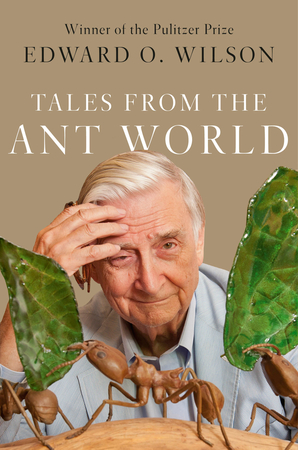
 A Godzilla figurine sits on display at Toho Cinemas Hibiya in Tokyo on March 22, 2018. MUST CREDIT: Bloomberg photo by Noriko Hayashi. /Photo by: Noriko Hayashi — Bloomberg Location: TokyoJapan
  Timothée Chalamet, left, and Rebecca Ferguson appear in “Dune,” which has been delayed to October 2021. MUST CREDIT: Chiabella James/Warner Bros. Entertainment /Photo by: Chiabella James — Warner Bros. Entertainment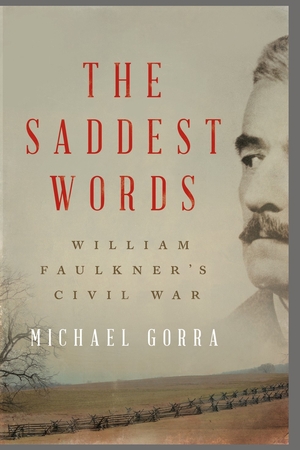



 The Super Grover balloon floats down Broadway during the Macy’s Thanksgiving Parade in New York on Nov. 24, 2005. MUST CREDIT: Bloomberg photo by Andrew Harrer

 SootinClaimon.Com